Blood Types,Blood Types,
Transfusion,Transfusion,
Tissue & OrganTissue & Organ
TransplantationTransplantation
Presented by:
Syed Kashif Shahid
Fellow in Physiology,
GC University, Faisalabad
Content:
A- Blood Types
B- Transfusion Reactions
C- Tissue & Organ Transplantation
• A-B-O Blood Type
History & Rule
A & B Antigens (Agglutinogens)
Agglutinins
Agglutination Process in Transfusion Reaction
Blood Typing
• Rh Blood Type
Rh Immune Response
• Bombay Blood Type
A-BLOOD TYPES
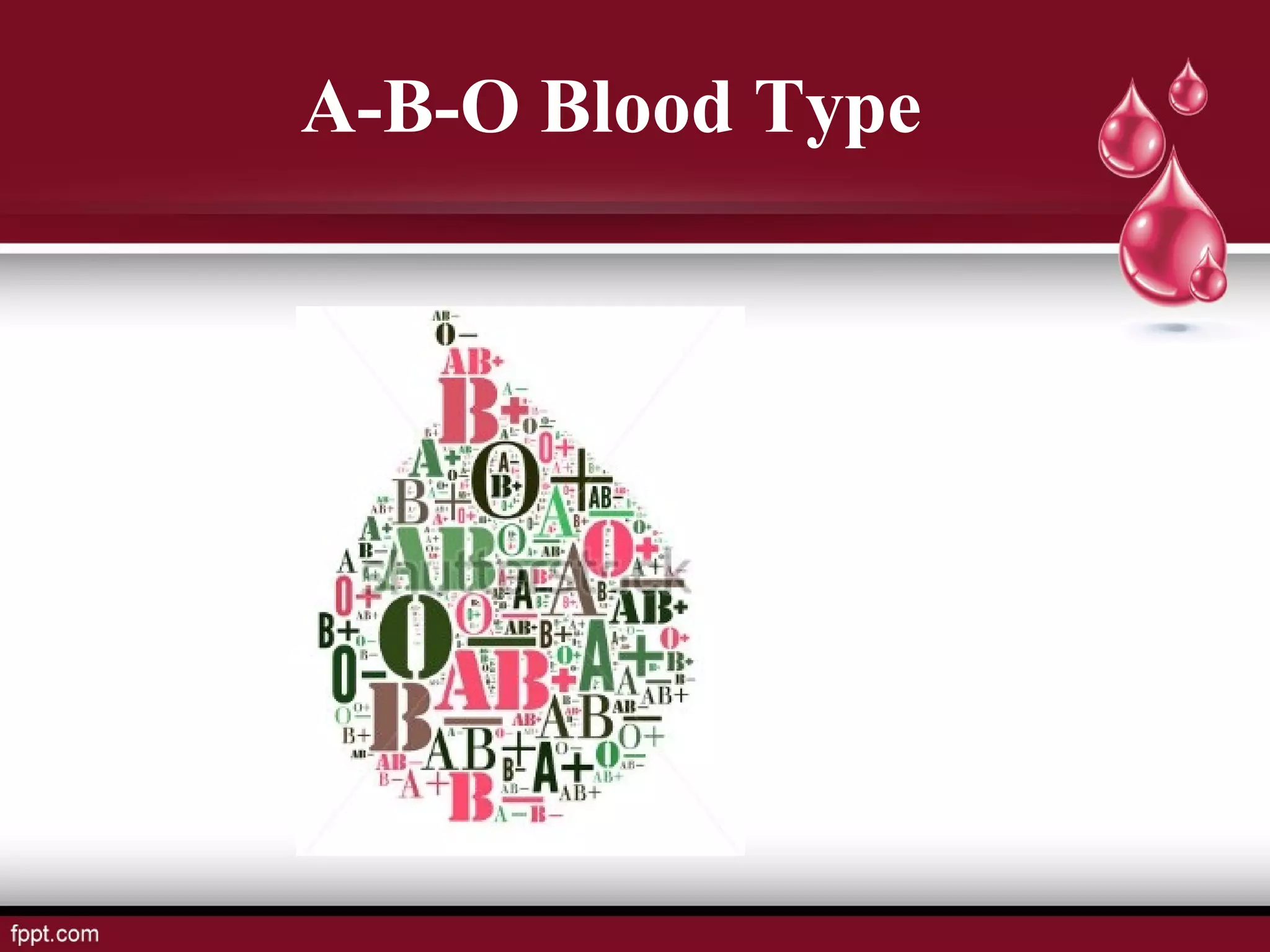
A-B-O Blood Type
History:
•Karl Landsteiner:
Discovered the ABO Blood Group System in 1901
Rule:
A-B-O Blood Type
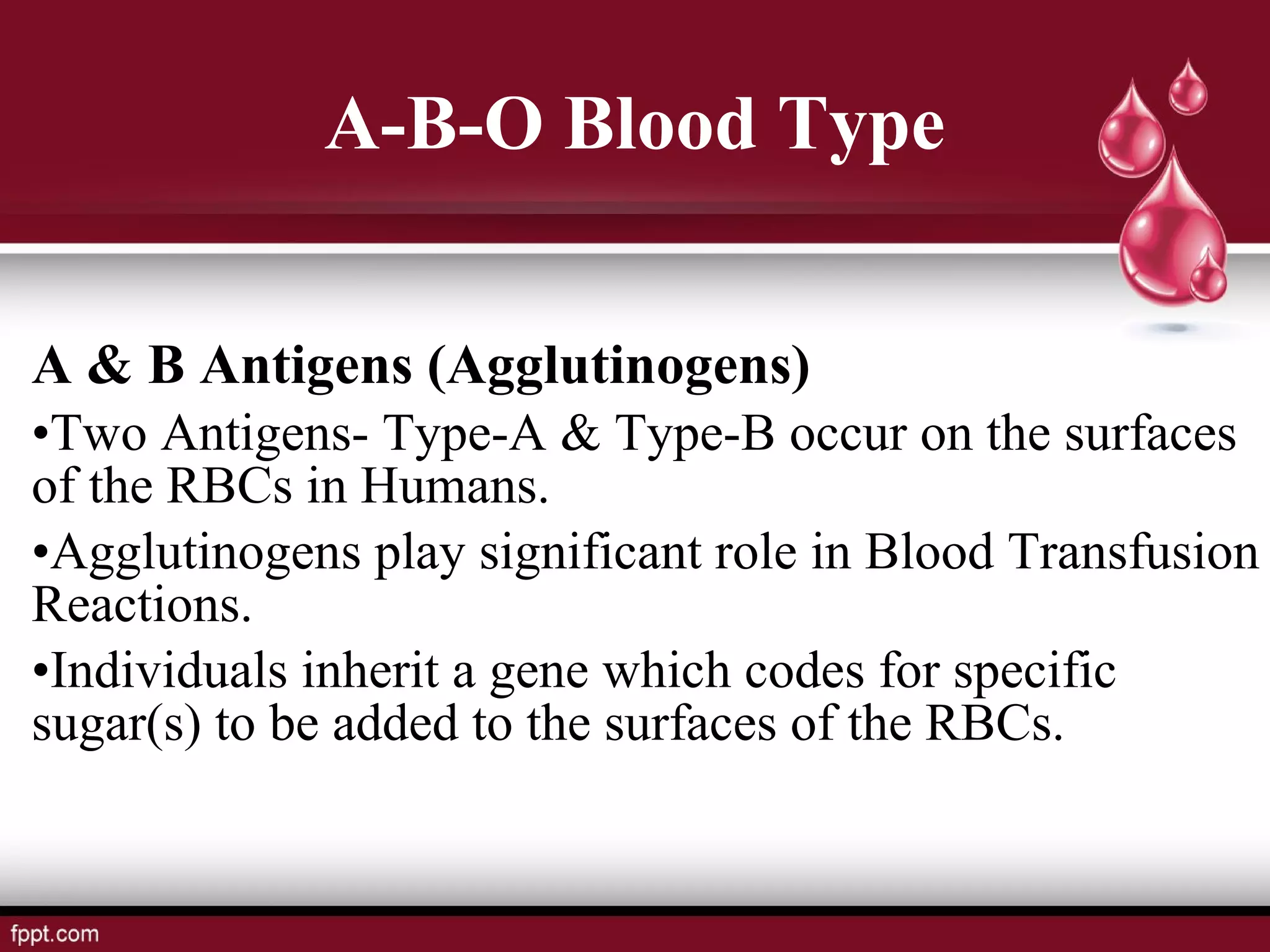
A & B Antigens (Agglutinogens)
•Two Antigens- Type-A & Type-B occur on the surfaces
of the RBCs in Humans.
•Agglutinogens play significant role in Blood Transfusion
Reactions.
•Individuals inherit a gene which codes for specific
sugar(s) to be added to the surfaces of the RBCs.
A-B-O Blood Type
Genetic Determination of the Agglutinogens
•ABO Blood Group genetic locus has Three Alleles
as IA
, IB
& IO
determine the Blood Group (while I
stands for Immunoglobulin).
•Type O allele is functionless & recessive while
Type A & B alleles do cause strong Agglutinogens
on the Cell.
A-B-O Blood Type
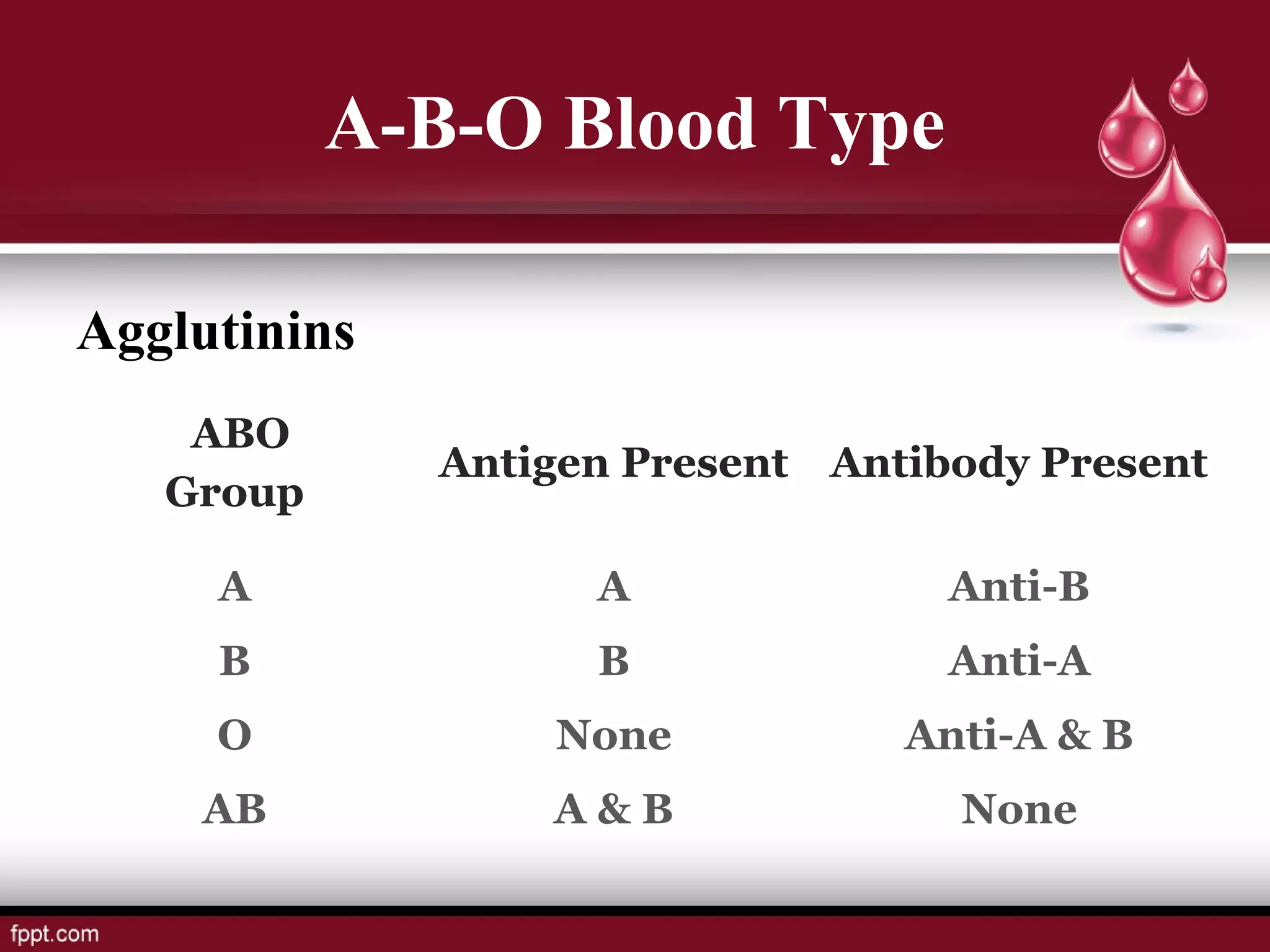
ABO
Group
Antigen Present Antibody Present
A A Anti-B
B B Anti-A
O None Anti-A & B
AB A & B None
A-B-O Blood Type
Agglutinins
Agglutination Process in Transfusion Reaction
Ig G: 02 Binding Sites
Ig M: 10 Binding Sites
Acute Hemolysis in some Transfusion Reactions
• Complement System=Proteolytic Enzymes (the Lytic Complex)
A-B-O Blood Type
Blood Typing / Blood Matching
• Cross Matching of Donor & Recipient
• Antigen Antibody Reaction
A-B-O Blood Type
A-B-O Blood Type
Blood Donor / Recipient
Rh Blood Type
Rh Blood Type
Rh Antigens (Rh +ve & Rh -ve)
Common Types (Rh Factors)
C c
D d
E e
If have C, D & E antigen present then c, d & e antigen absent
If have C, D & E antigen missing than c, d & e antigen present
D type is 85% antigenic & containing Rh Positive
 Rh Immune Response
Formation of Anti-Rh Agglutinins
• Anti Rh Agglutinins Develop Slowly (2-4 Months)
• Rh Neg-ve Strongly “Sensitized”
Characters of Rh Transfusion Reaction
• Neg-ve – Pos+ve Delayed Transfusion Reaction (2-4
Weeks)
• Neg-ve – Pos+ve Severe Transfusion Reaction
Erythroblastosis Fetalis
• Hemolytic Disease of the Newborn
Rh Blood Type
 Erythroblastosis Fetalis:
 Incidence of the Disease (1-No, 2-3%, 3-10% etc)
 Effects of the Mothers’ Antibodies on the Fetus
 (Diffuse from Mother to Fetus via Placenta-Jaundice)
 Clinical Picture
 Anemic, RBCs Destruction (1-2 M), Erythroblasts, Kernicterus
 Treatment of Neonates
 Blood Replacement-Repeated, Reduce Bilirubin Level, Prevent
Kernicterus
 Prevention (D Antigen, 1970, Rh Immunoglobulin globin Anti-D Antibody 28-30 Week of
Gestation)
Rh Blood Type
Rh Blood Type
Erythroblastosis Fetalis:
Bombay Blood Type
Blood Donor / Recipient
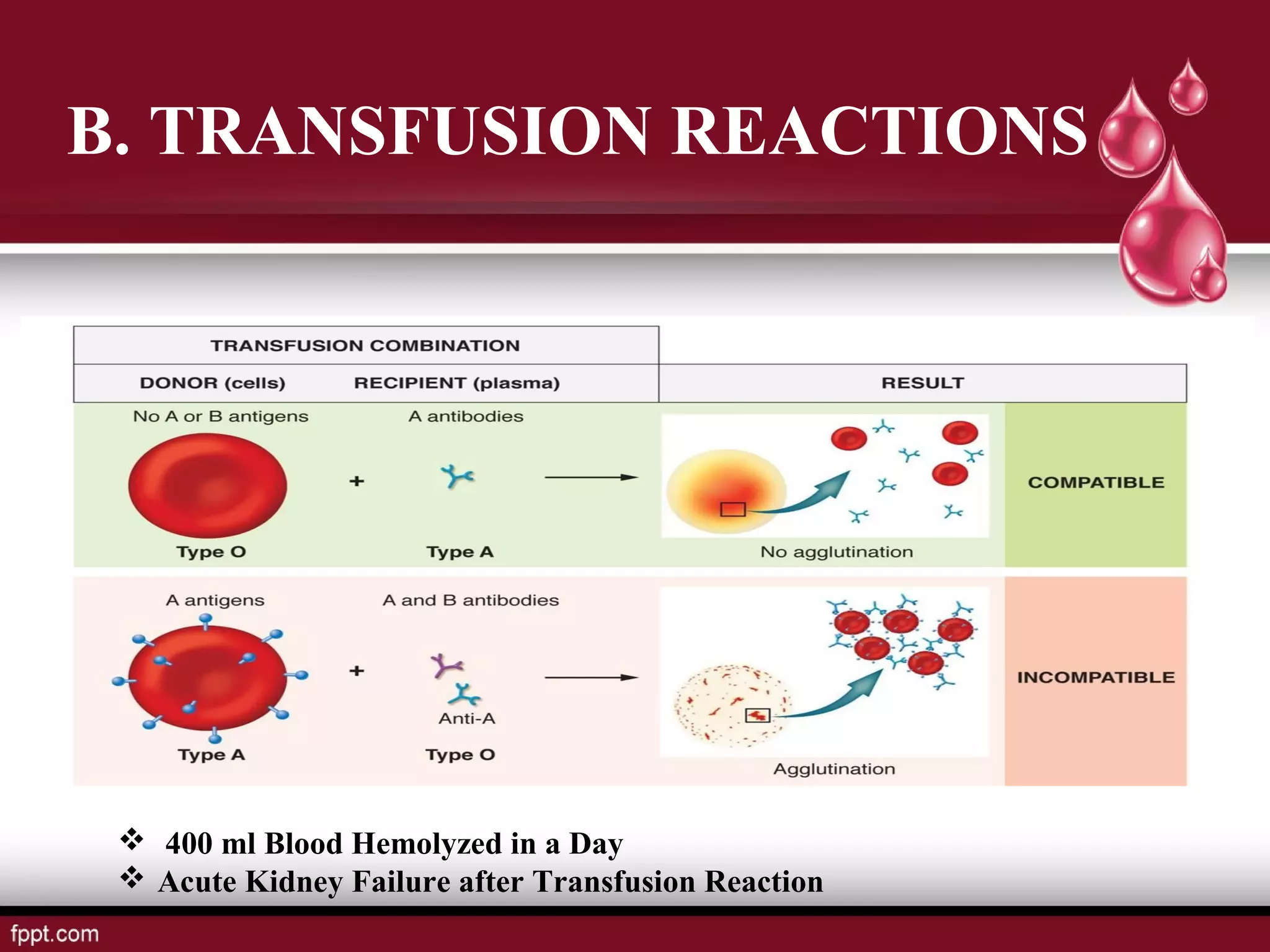
B. TRANSFUSION REACTIONS
 400 ml Blood Hemolyzed in a Day
 Acute Kidney Failure after Transfusion Reaction
Autografts (Tissue / Organ to Same Person)
Isografts (Tissue / Organ to Identical Twin- to Other Twin)
Allografts ( Tissue / Organ from one person to other-Same)
Xenografts (Tissue / Organ from Animal to
Human)
Transplantation of Cellular Tissues
Attempt to Overcome Immune Reactions in Transplanted
Tissue - Tissue Typing
(The Human Leukocyte Antigen Complex of Antigens)
Prevention of Graft Rejection by Suppressing the Immune
C. TISSUE & ORGAN
TRANSPLANTATION
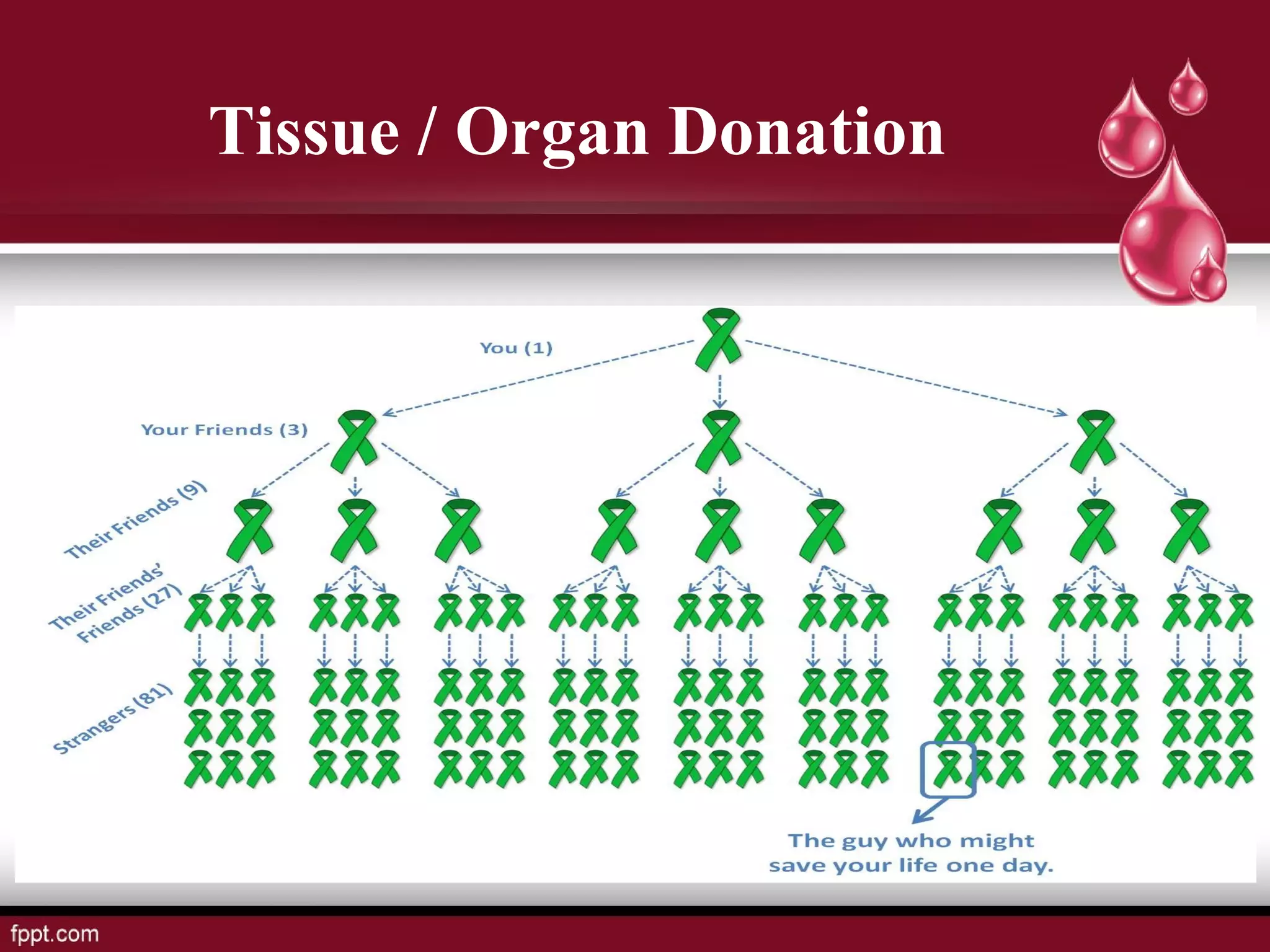
Tissue / Organ Donation
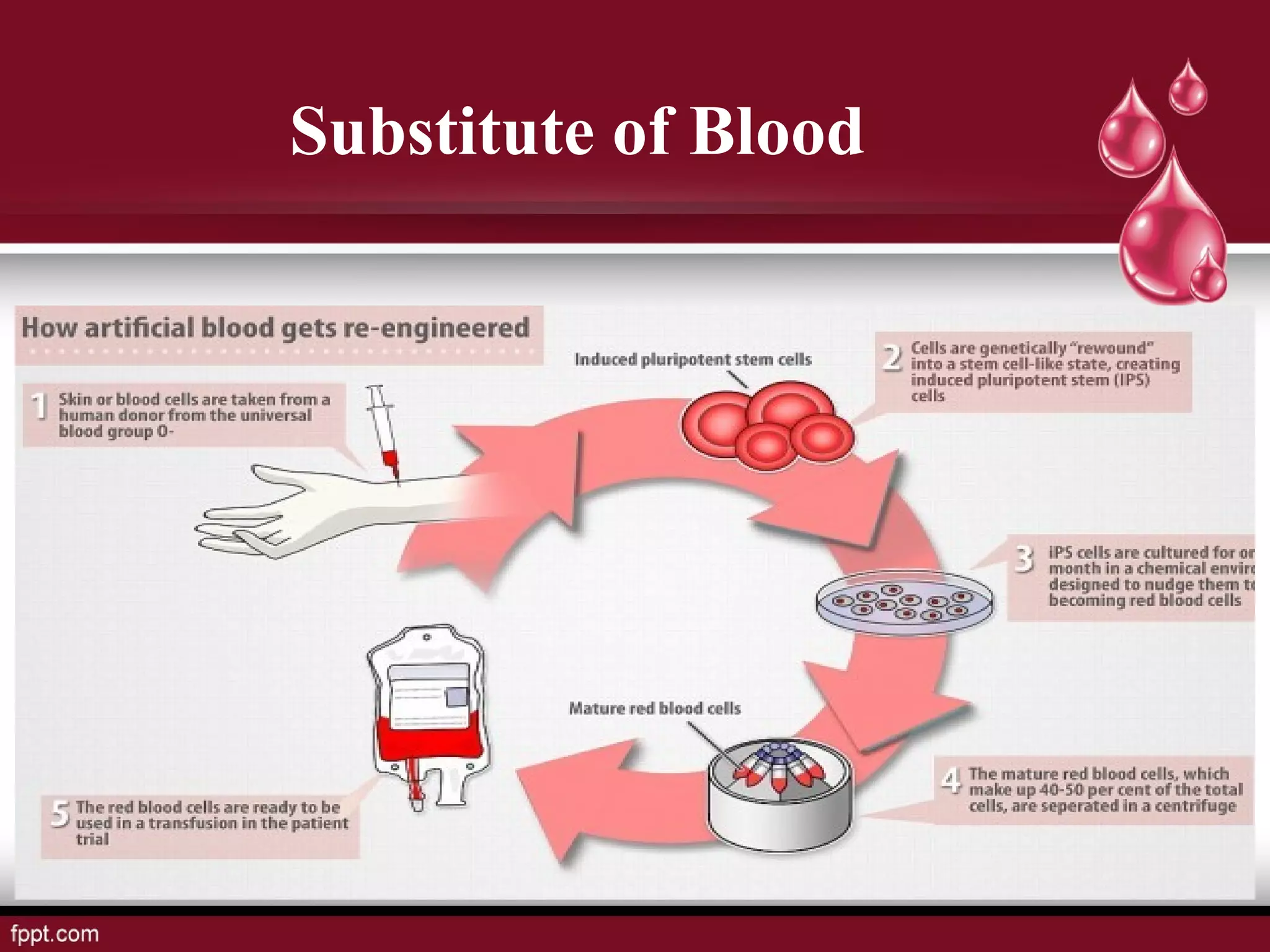
Substitute of Blood
Blood Types, Transfusion & Organ Transplantation

Blood Types, Transfusion & Organ Transplantation

  • 1.
    Blood Types,Blood Types, Transfusion,Transfusion, Tissue& OrganTissue & Organ TransplantationTransplantation Presented by: Syed Kashif Shahid Fellow in Physiology, GC University, Faisalabad
  • 2.
    Content: A- Blood Types B-Transfusion Reactions C- Tissue & Organ Transplantation
  • 3.
    • A-B-O BloodType History & Rule A & B Antigens (Agglutinogens) Agglutinins Agglutination Process in Transfusion Reaction Blood Typing • Rh Blood Type Rh Immune Response • Bombay Blood Type A-BLOOD TYPES
  • 4.
  • 5.
    History: •Karl Landsteiner: Discovered theABO Blood Group System in 1901 Rule: A-B-O Blood Type
  • 6.
    A & BAntigens (Agglutinogens) •Two Antigens- Type-A & Type-B occur on the surfaces of the RBCs in Humans. •Agglutinogens play significant role in Blood Transfusion Reactions. •Individuals inherit a gene which codes for specific sugar(s) to be added to the surfaces of the RBCs. A-B-O Blood Type
  • 7.
    Genetic Determination ofthe Agglutinogens •ABO Blood Group genetic locus has Three Alleles as IA , IB & IO determine the Blood Group (while I stands for Immunoglobulin). •Type O allele is functionless & recessive while Type A & B alleles do cause strong Agglutinogens on the Cell. A-B-O Blood Type
  • 8.
    ABO Group Antigen Present AntibodyPresent A A Anti-B B B Anti-A O None Anti-A & B AB A & B None A-B-O Blood Type Agglutinins
  • 9.
    Agglutination Process inTransfusion Reaction Ig G: 02 Binding Sites Ig M: 10 Binding Sites Acute Hemolysis in some Transfusion Reactions • Complement System=Proteolytic Enzymes (the Lytic Complex) A-B-O Blood Type
  • 10.
    Blood Typing /Blood Matching • Cross Matching of Donor & Recipient • Antigen Antibody Reaction A-B-O Blood Type
  • 11.
  • 12.
    Blood Donor /Recipient
  • 13.
  • 14.
    Rh Blood Type RhAntigens (Rh +ve & Rh -ve) Common Types (Rh Factors) C c D d E e If have C, D & E antigen present then c, d & e antigen absent If have C, D & E antigen missing than c, d & e antigen present D type is 85% antigenic & containing Rh Positive
  • 15.
     Rh ImmuneResponse Formation of Anti-Rh Agglutinins • Anti Rh Agglutinins Develop Slowly (2-4 Months) • Rh Neg-ve Strongly “Sensitized” Characters of Rh Transfusion Reaction • Neg-ve – Pos+ve Delayed Transfusion Reaction (2-4 Weeks) • Neg-ve – Pos+ve Severe Transfusion Reaction Erythroblastosis Fetalis • Hemolytic Disease of the Newborn Rh Blood Type
  • 16.
     Erythroblastosis Fetalis: Incidence of the Disease (1-No, 2-3%, 3-10% etc)  Effects of the Mothers’ Antibodies on the Fetus  (Diffuse from Mother to Fetus via Placenta-Jaundice)  Clinical Picture  Anemic, RBCs Destruction (1-2 M), Erythroblasts, Kernicterus  Treatment of Neonates  Blood Replacement-Repeated, Reduce Bilirubin Level, Prevent Kernicterus  Prevention (D Antigen, 1970, Rh Immunoglobulin globin Anti-D Antibody 28-30 Week of Gestation) Rh Blood Type
  • 17.
  • 18.
  • 19.
    Blood Donor /Recipient
  • 20.
    B. TRANSFUSION REACTIONS 400 ml Blood Hemolyzed in a Day  Acute Kidney Failure after Transfusion Reaction
  • 21.
    Autografts (Tissue /Organ to Same Person) Isografts (Tissue / Organ to Identical Twin- to Other Twin) Allografts ( Tissue / Organ from one person to other-Same) Xenografts (Tissue / Organ from Animal to Human) Transplantation of Cellular Tissues Attempt to Overcome Immune Reactions in Transplanted Tissue - Tissue Typing (The Human Leukocyte Antigen Complex of Antigens) Prevention of Graft Rejection by Suppressing the Immune C. TISSUE & ORGAN TRANSPLANTATION
  • 22.
  • 23.
  • 24.