Chest X-Ray: Basics
Interpreting the CXR
General format:
Check the technical aspects
-Name, date, projection, rotation, penetration, inspiration
Cardiac shadow
-Size, shape, calcification
Mediastinum
-Position, width, outline, density, tracheobronchial tree
Hila
-Position, size, density, concave
Lungs
-Size, transradiancy, fissures, focal or generalised pulmonary
infiltration
Pleural spaces
-Effusions, soft tissue masses, calcification, pneumothorax
Bones
-Fractures, lytic or sclerotic lesions
Soft tissues
-Masses, calcification
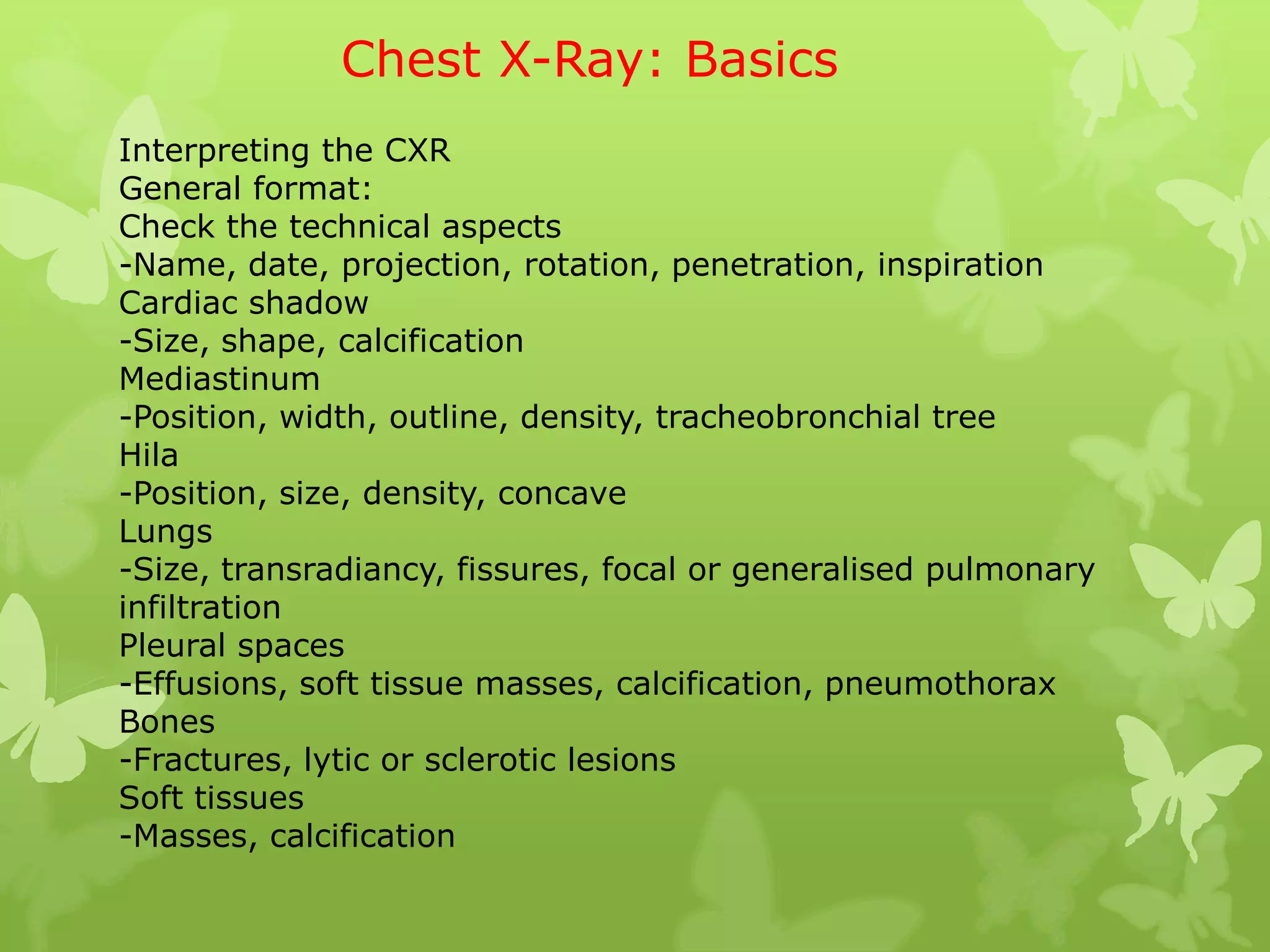
Technical Aspects


                    Check the side
                    markers
                    Have you got L
                    and R the right
                    way around?
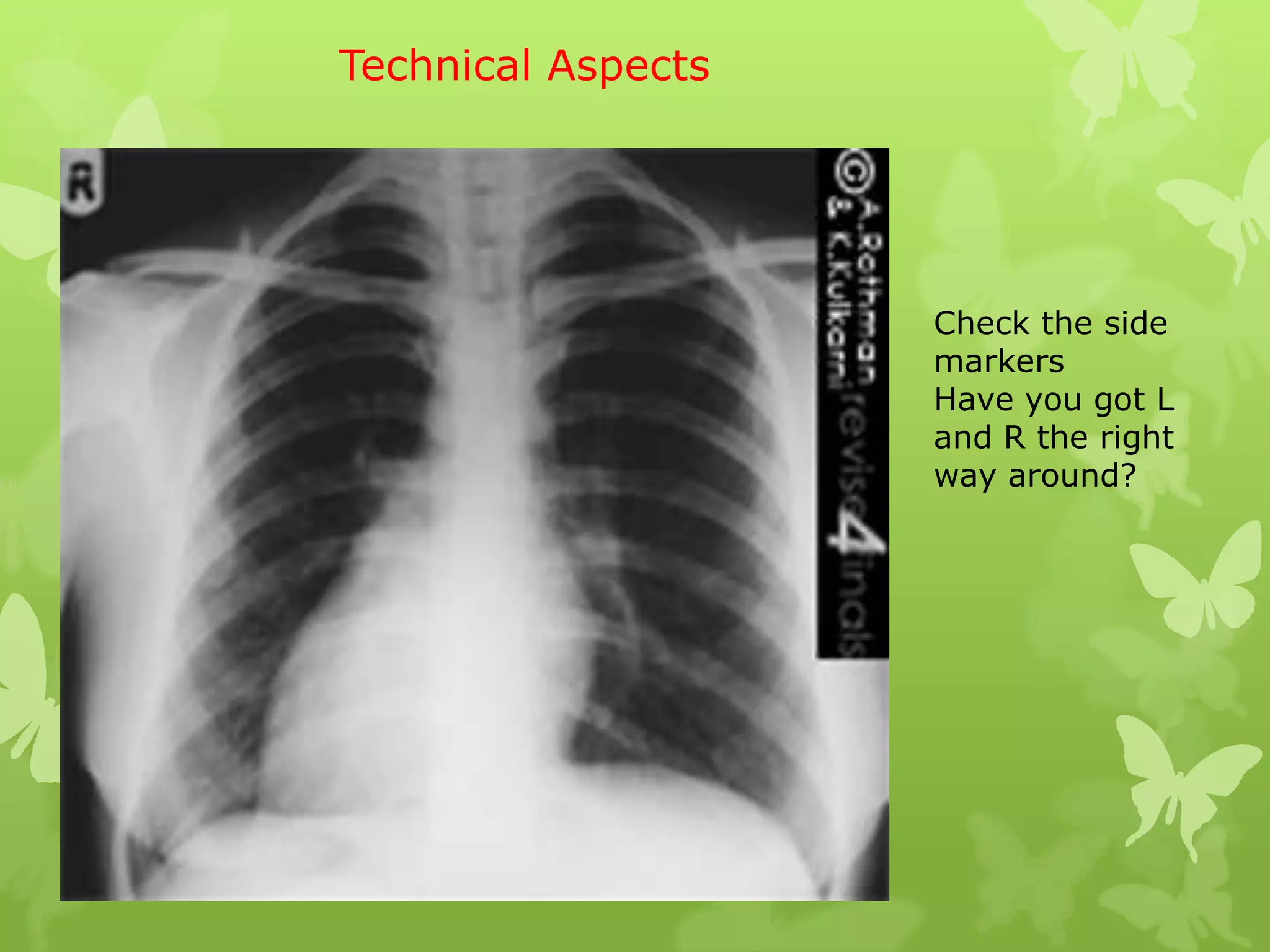
Assessment of rotation


                         Distance between medial
                         ends of the clavicles and
                         the spinous processes
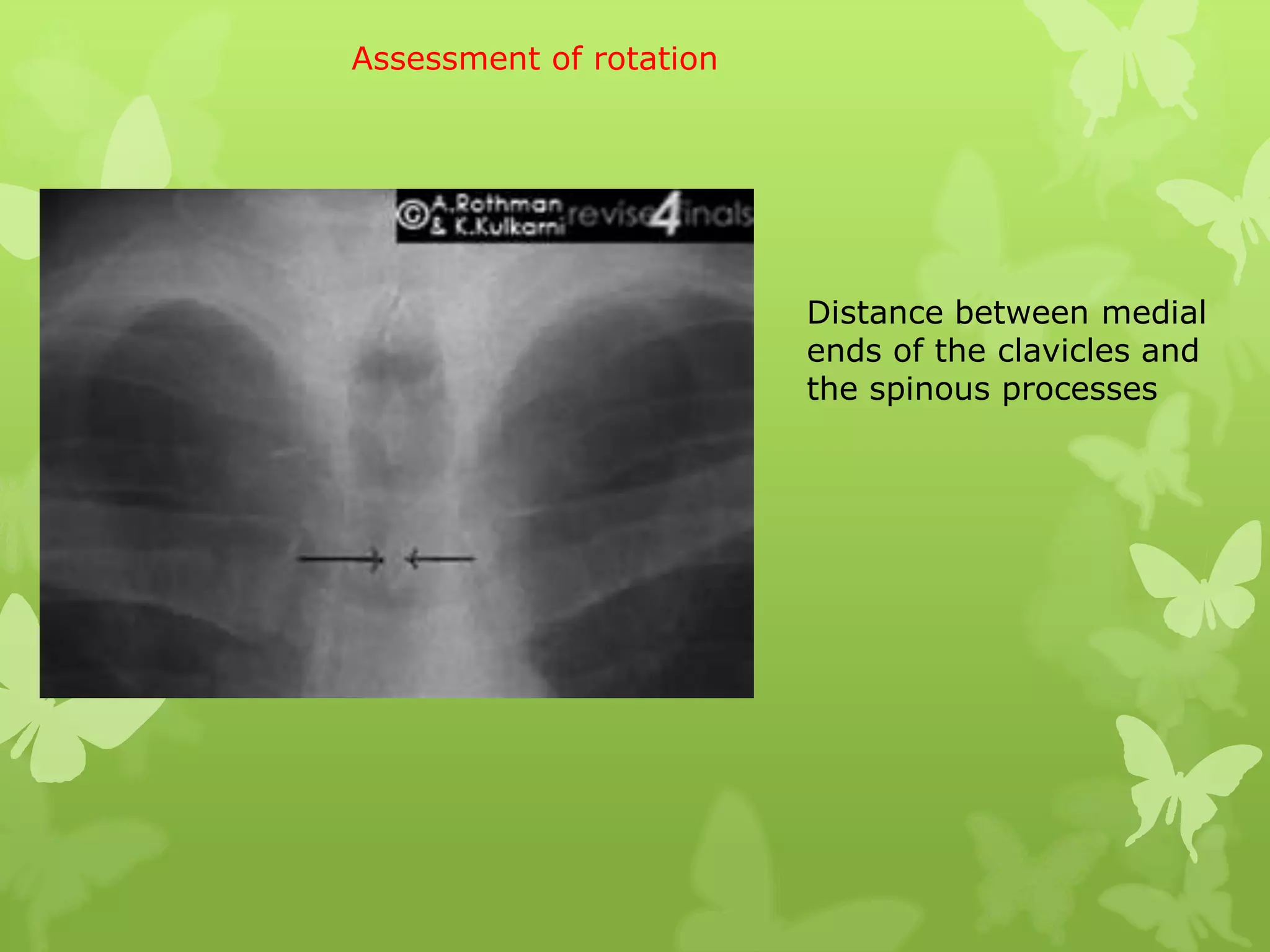
Penetration


              • Intervertebral disc
              spaces just visible
              through mid-cardiac
              shadow
              • Pulmonary structures
              visible with clarity
              • Few vessels in outer
              third
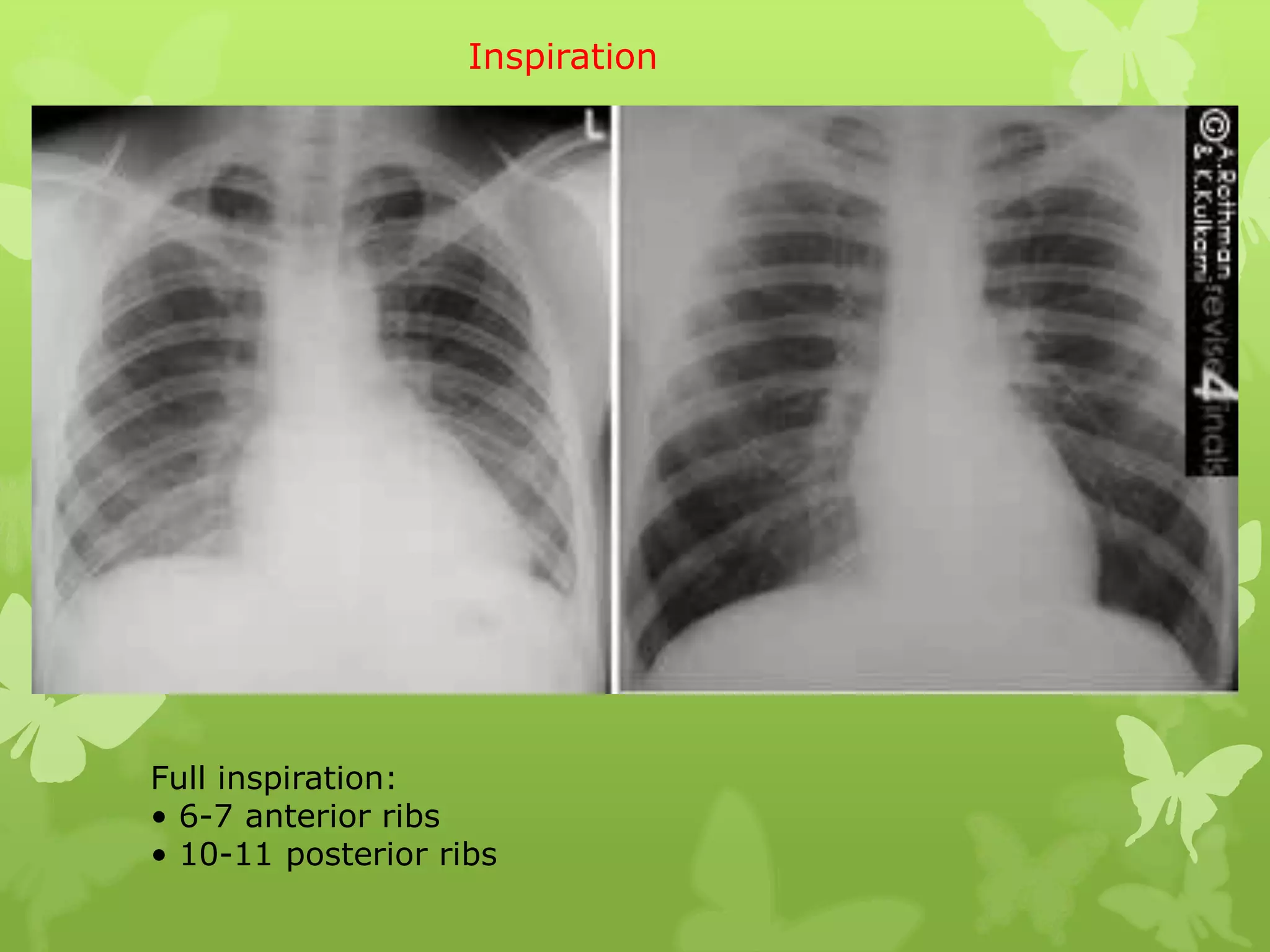
Inspiration


Full inspiration:
• 6-7 anterior ribs
• 10-11 posterior ribs
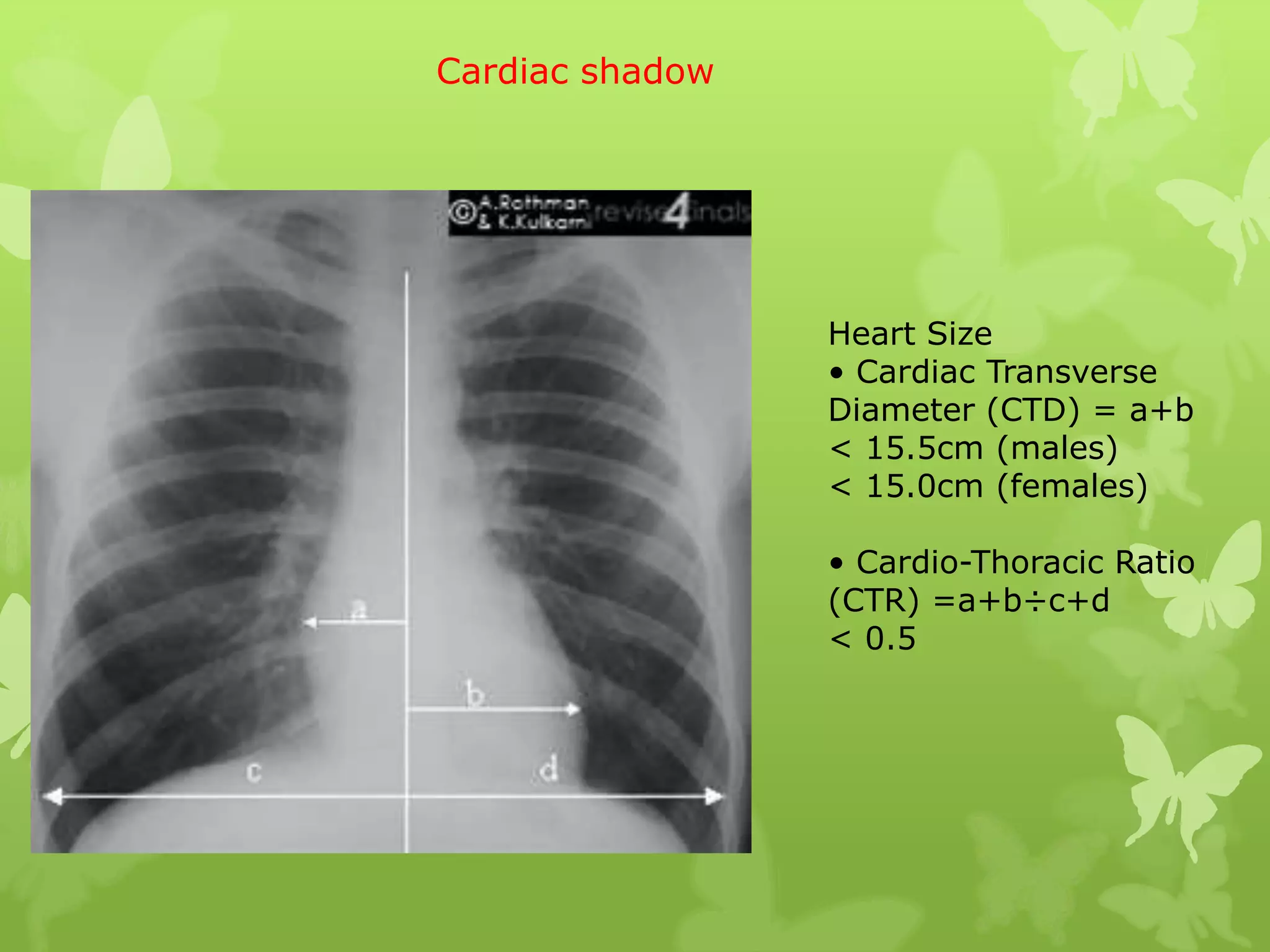
Cardiac shadow


                 Heart Size
                 • Cardiac Transverse
                 Diameter (CTD) = a+b
                 < 15.5cm (males)
                 < 15.0cm (females)

                 • Cardio-Thoracic Ratio
                 (CTR) =a+b÷c+d
                 < 0.5
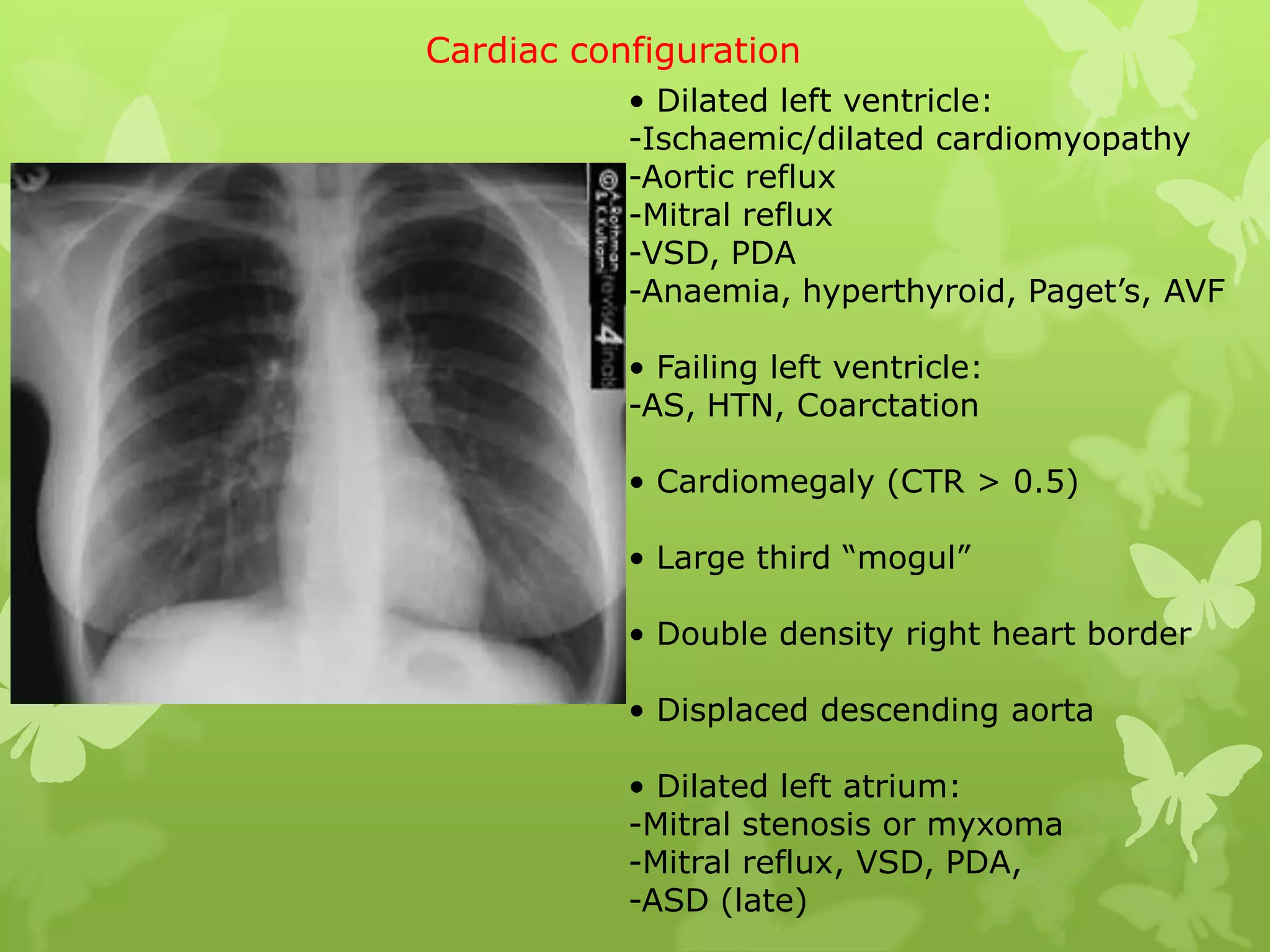
Cardiac configuration
           • Dilated left ventricle:
           -Ischaemic/dilated cardiomyopathy
           -Aortic reflux
           -Mitral reflux
           -VSD, PDA
           -Anaemia, hyperthyroid, Paget’s, AVF

           • Failing left ventricle:
           -AS, HTN, Coarctation

           • Cardiomegaly (CTR > 0.5)

           • Large third “mogul”

           • Double density right heart border

           • Displaced descending aorta

           • Dilated left atrium:
           -Mitral stenosis or myxoma
           -Mitral reflux, VSD, PDA,
           -ASD (late)
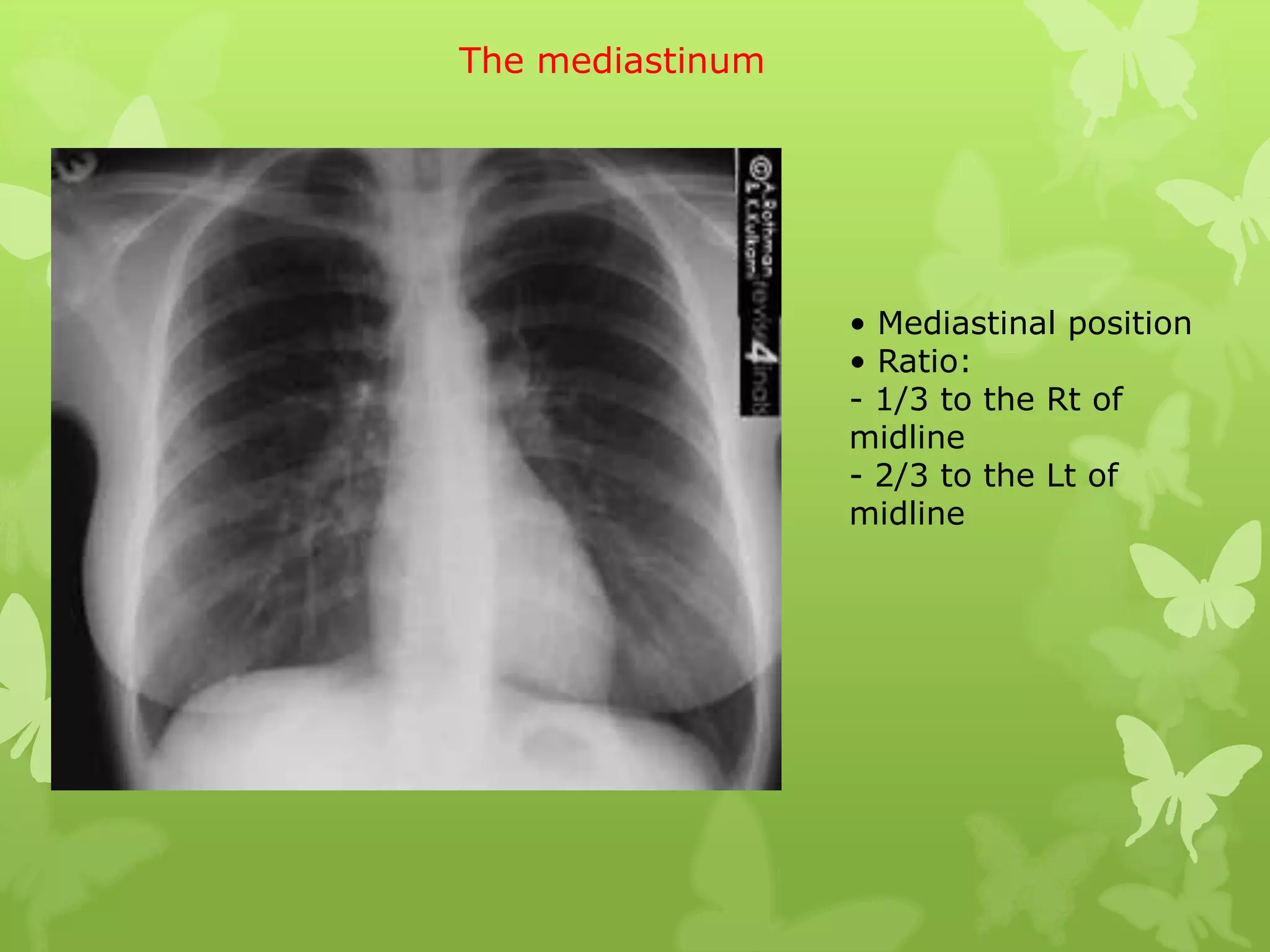
The mediastinum


                  • Mediastinal position
                  • Ratio:
                  - 1/3 to the Rt of
                  midline
                  - 2/3 to the Lt of
                  midline
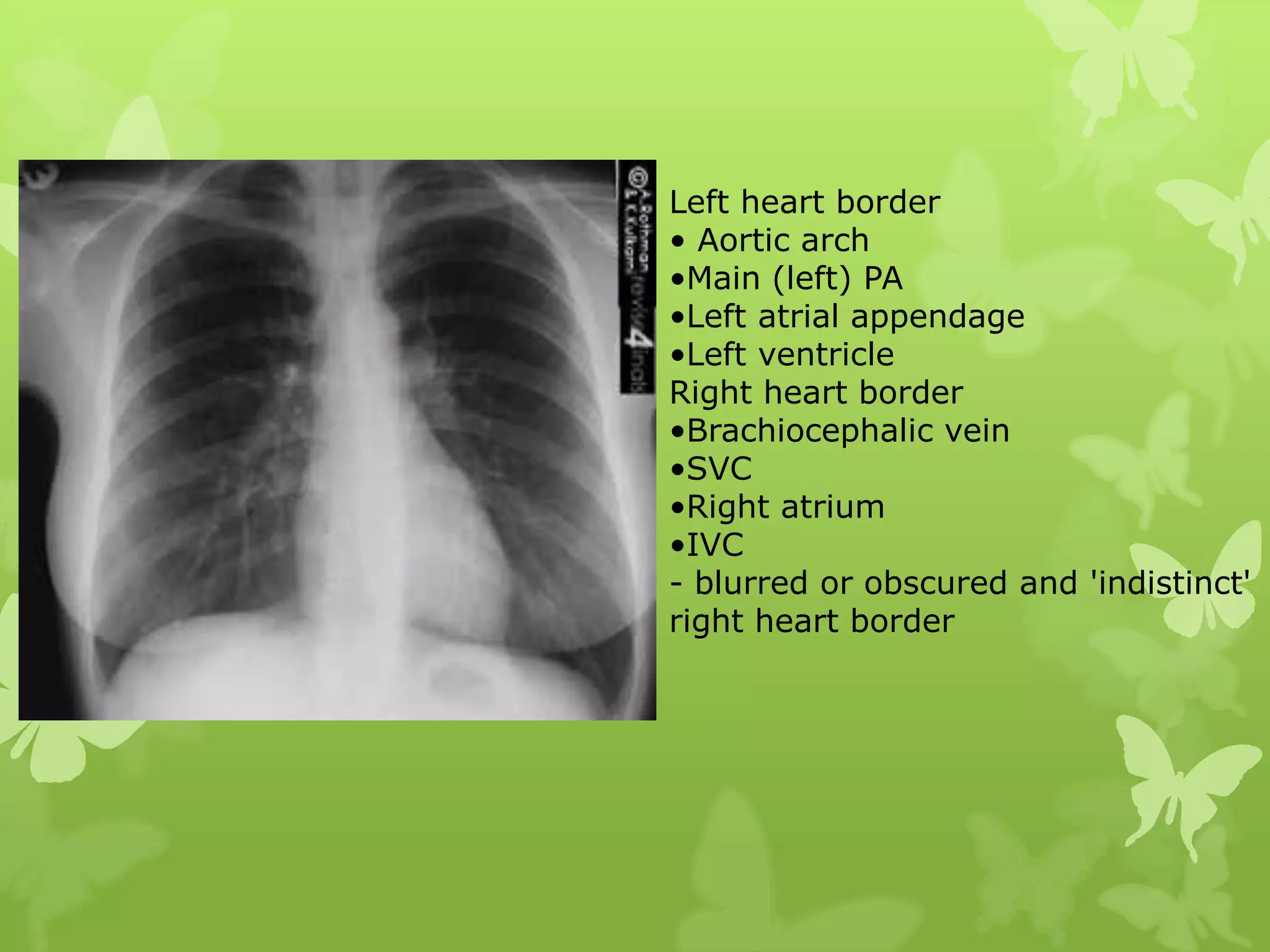
Left heart border
• Aortic arch
•Main (left) PA
•Left atrial appendage
•Left ventricle
Right heart border
•Brachiocephalic vein
•SVC
•Right atrium
•IVC
- blurred or obscured and 'indistinct'
right heart border
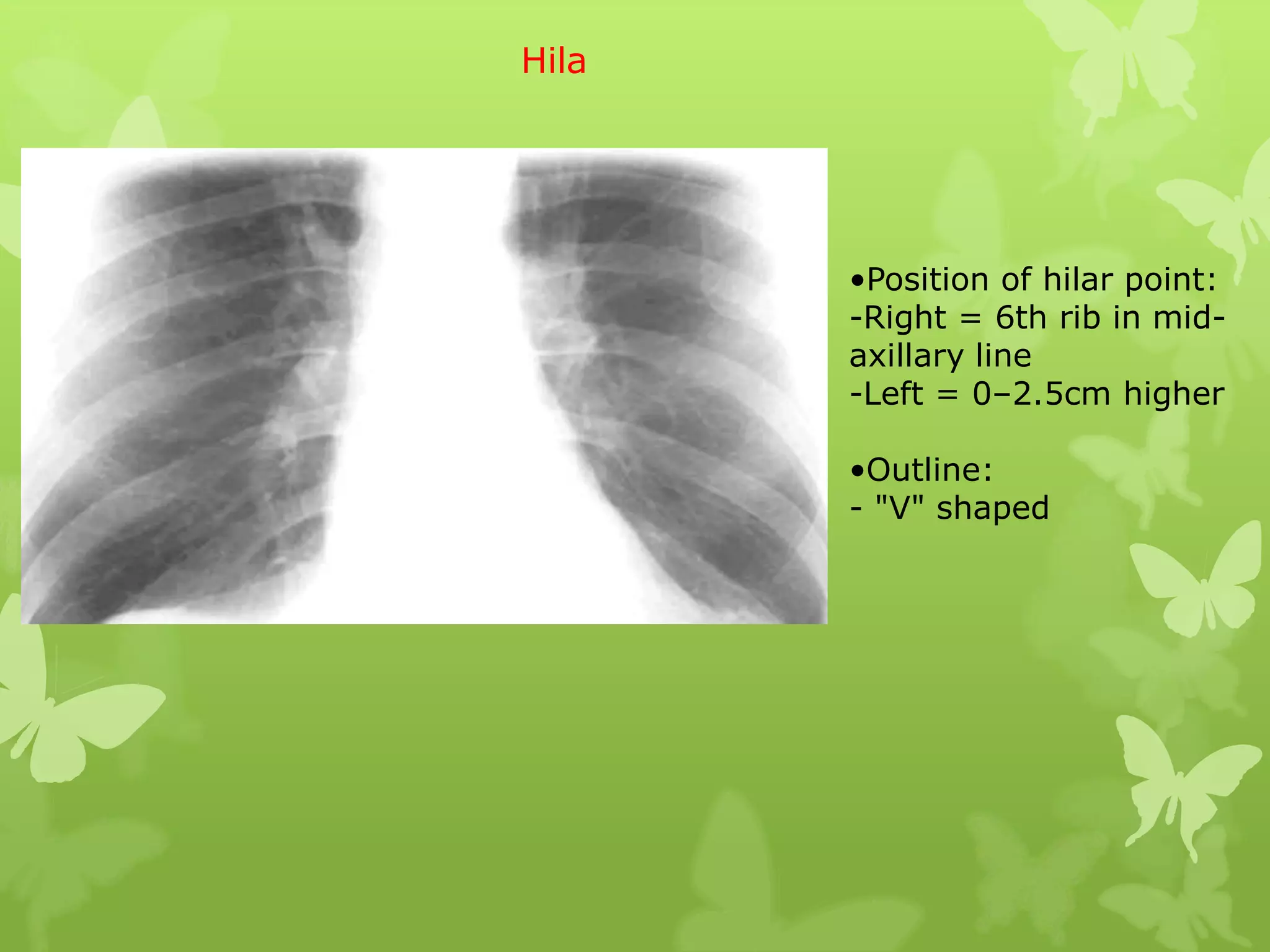
Hila


       •Position of hilar point:
       -Right = 6th rib in mid-
       axillary line
       -Left = 0–2.5cm higher

       •Outline:
       - "V" shaped
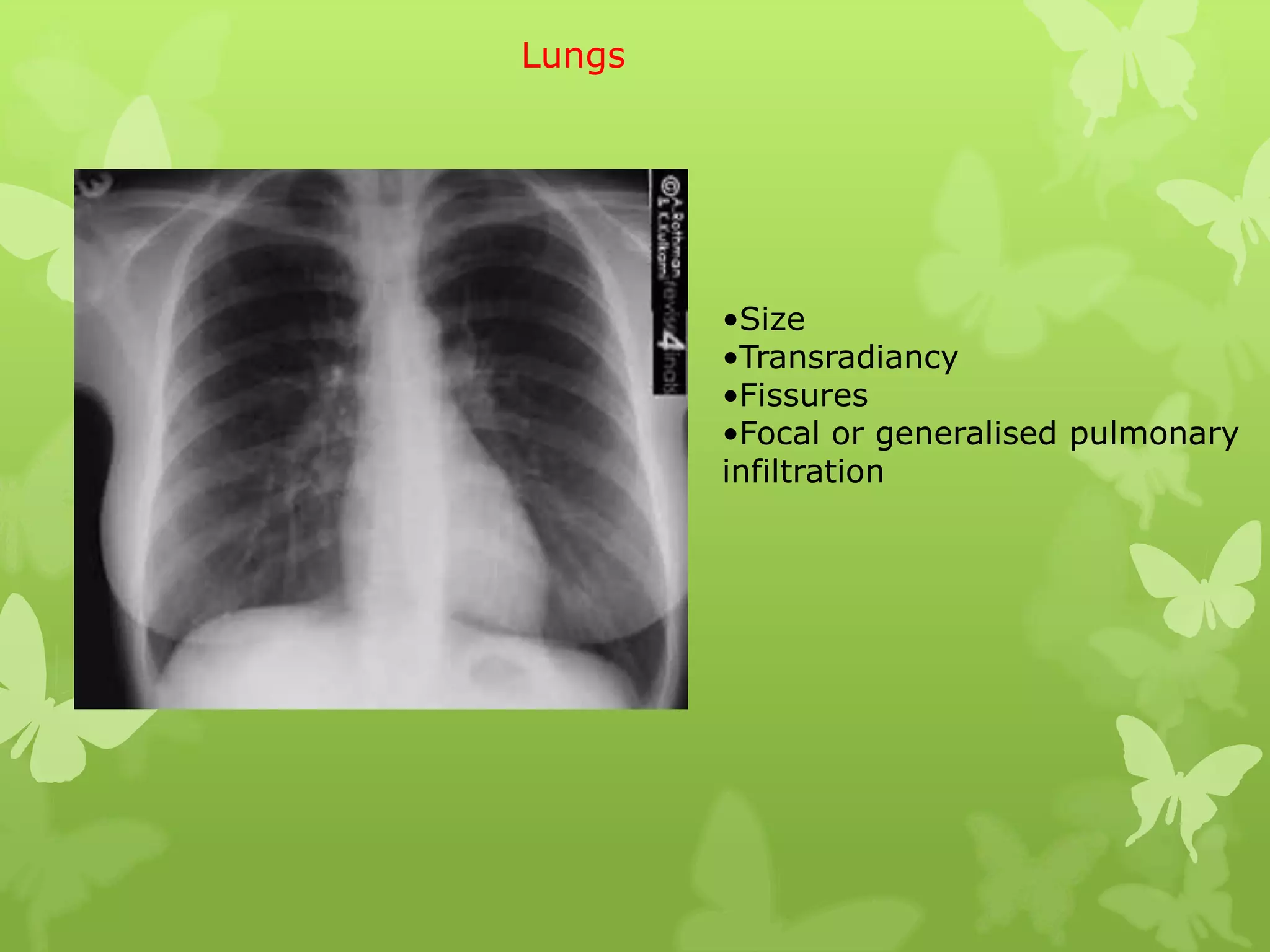
Lungs


        •Size
        •Transradiancy
        •Fissures
        •Focal or generalised pulmonary
        infiltration
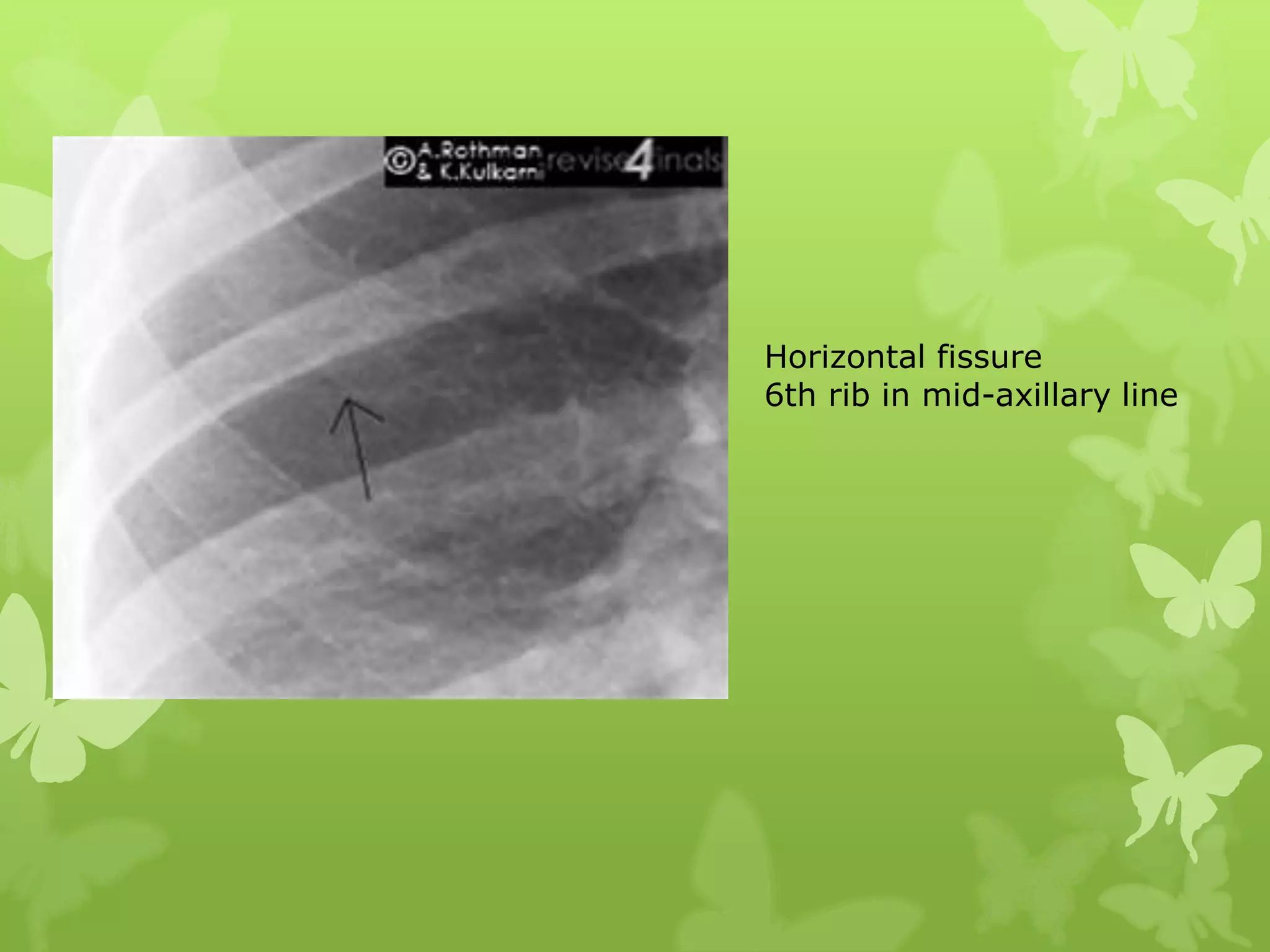
Horizontal fissure
6th rib in mid-axillary line
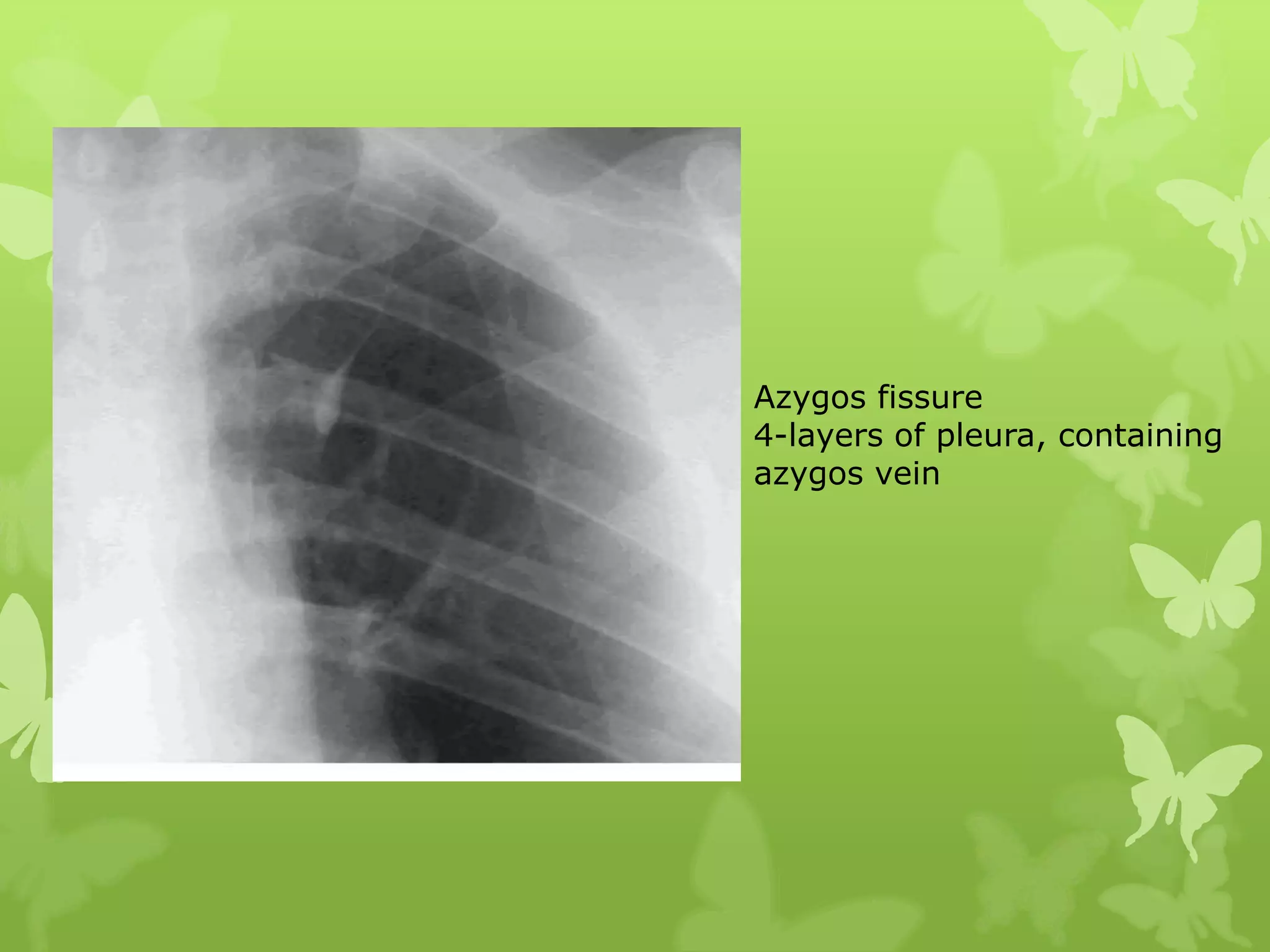
Azygos fissure
4-layers of pleura, containing
azygos vein
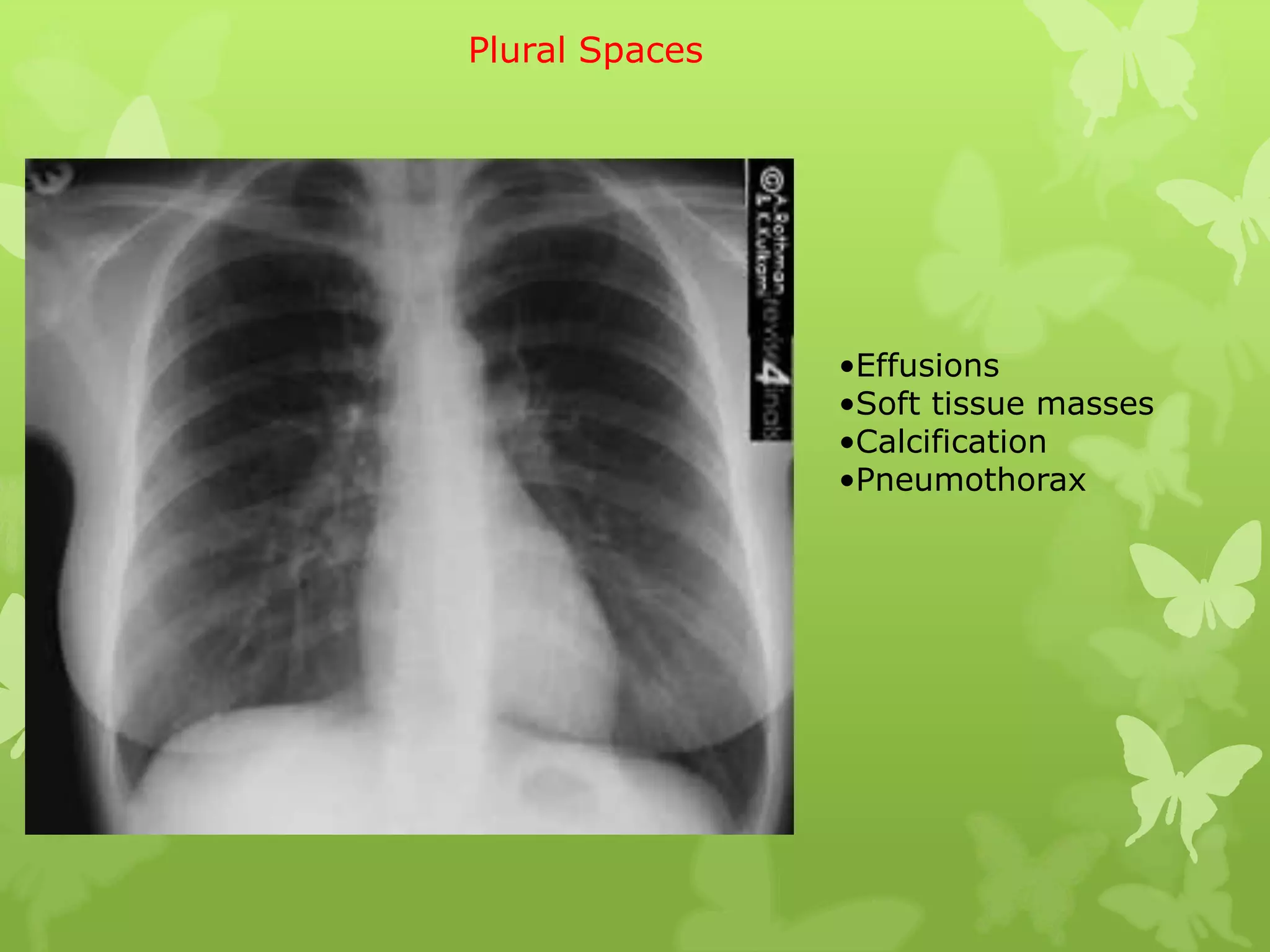
Plural Spaces


                •Effusions
                •Soft tissue masses
                •Calcification
                •Pneumothorax
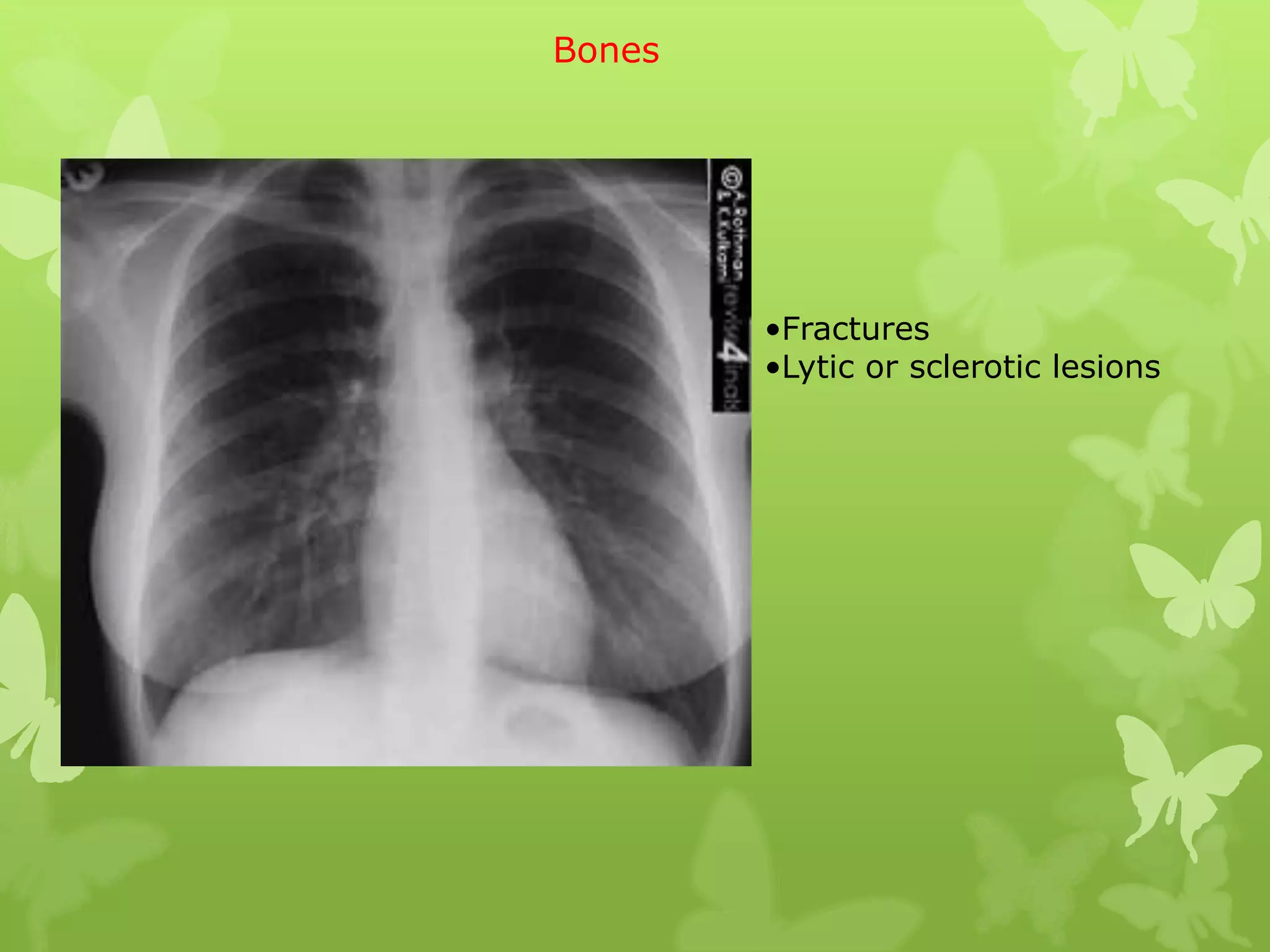
Bones


        •Fractures
        •Lytic or sclerotic lesions
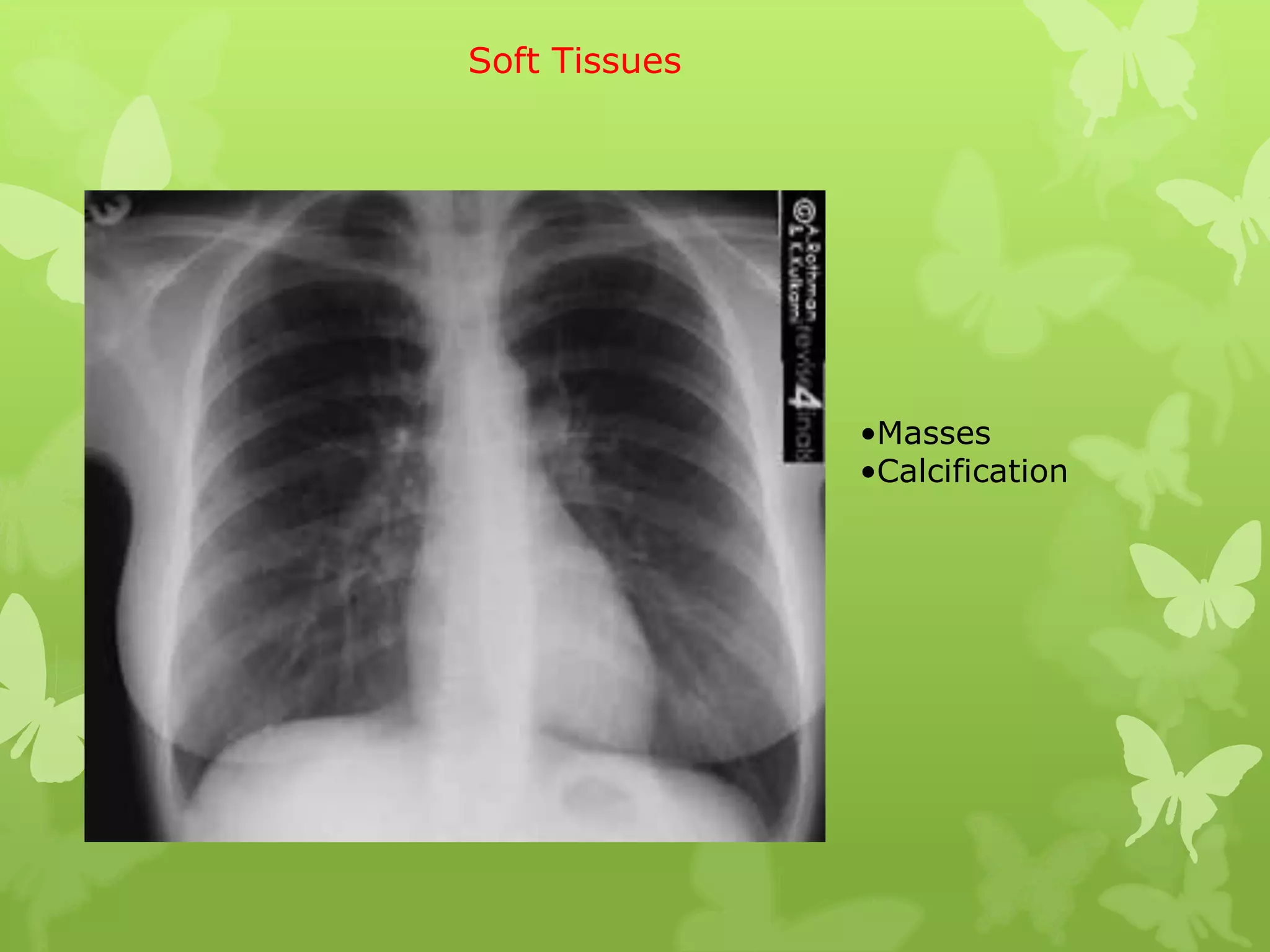
Soft Tissues


               •Masses
               •Calcification

Chest x ray basics

  • 1.
    Chest X-Ray: Basics Interpretingthe CXR General format: Check the technical aspects -Name, date, projection, rotation, penetration, inspiration Cardiac shadow -Size, shape, calcification Mediastinum -Position, width, outline, density, tracheobronchial tree Hila -Position, size, density, concave Lungs -Size, transradiancy, fissures, focal or generalised pulmonary infiltration Pleural spaces -Effusions, soft tissue masses, calcification, pneumothorax Bones -Fractures, lytic or sclerotic lesions Soft tissues -Masses, calcification
  • 2.
    Technical Aspects Check the side markers Have you got L and R the right way around?
  • 3.
    Assessment of rotation Distance between medial ends of the clavicles and the spinous processes
  • 4.
    Penetration • Intervertebral disc spaces just visible through mid-cardiac shadow • Pulmonary structures visible with clarity • Few vessels in outer third
  • 5.
    Inspiration Full inspiration: • 6-7anterior ribs • 10-11 posterior ribs
  • 6.
    Cardiac shadow Heart Size • Cardiac Transverse Diameter (CTD) = a+b < 15.5cm (males) < 15.0cm (females) • Cardio-Thoracic Ratio (CTR) =a+b÷c+d < 0.5
  • 7.
    Cardiac configuration • Dilated left ventricle: -Ischaemic/dilated cardiomyopathy -Aortic reflux -Mitral reflux -VSD, PDA -Anaemia, hyperthyroid, Paget’s, AVF • Failing left ventricle: -AS, HTN, Coarctation • Cardiomegaly (CTR > 0.5) • Large third “mogul” • Double density right heart border • Displaced descending aorta • Dilated left atrium: -Mitral stenosis or myxoma -Mitral reflux, VSD, PDA, -ASD (late)
  • 8.
    The mediastinum • Mediastinal position • Ratio: - 1/3 to the Rt of midline - 2/3 to the Lt of midline
  • 9.
    Left heart border •Aortic arch •Main (left) PA •Left atrial appendage •Left ventricle Right heart border •Brachiocephalic vein •SVC •Right atrium •IVC - blurred or obscured and 'indistinct' right heart border
  • 10.
    Hila •Position of hilar point: -Right = 6th rib in mid- axillary line -Left = 0–2.5cm higher •Outline: - "V" shaped
  • 11.
    Lungs •Size •Transradiancy •Fissures •Focal or generalised pulmonary infiltration
  • 12.
    Horizontal fissure 6th ribin mid-axillary line
  • 13.
    Azygos fissure 4-layers ofpleura, containing azygos vein
  • 14.
    Plural Spaces •Effusions •Soft tissue masses •Calcification •Pneumothorax
  • 15.
    Bones •Fractures •Lytic or sclerotic lesions
  • 16.
    Soft Tissues •Masses •Calcification