ROBOT HAZARDS IN THE
WORKPLACE AND
PREVENTION
Robots
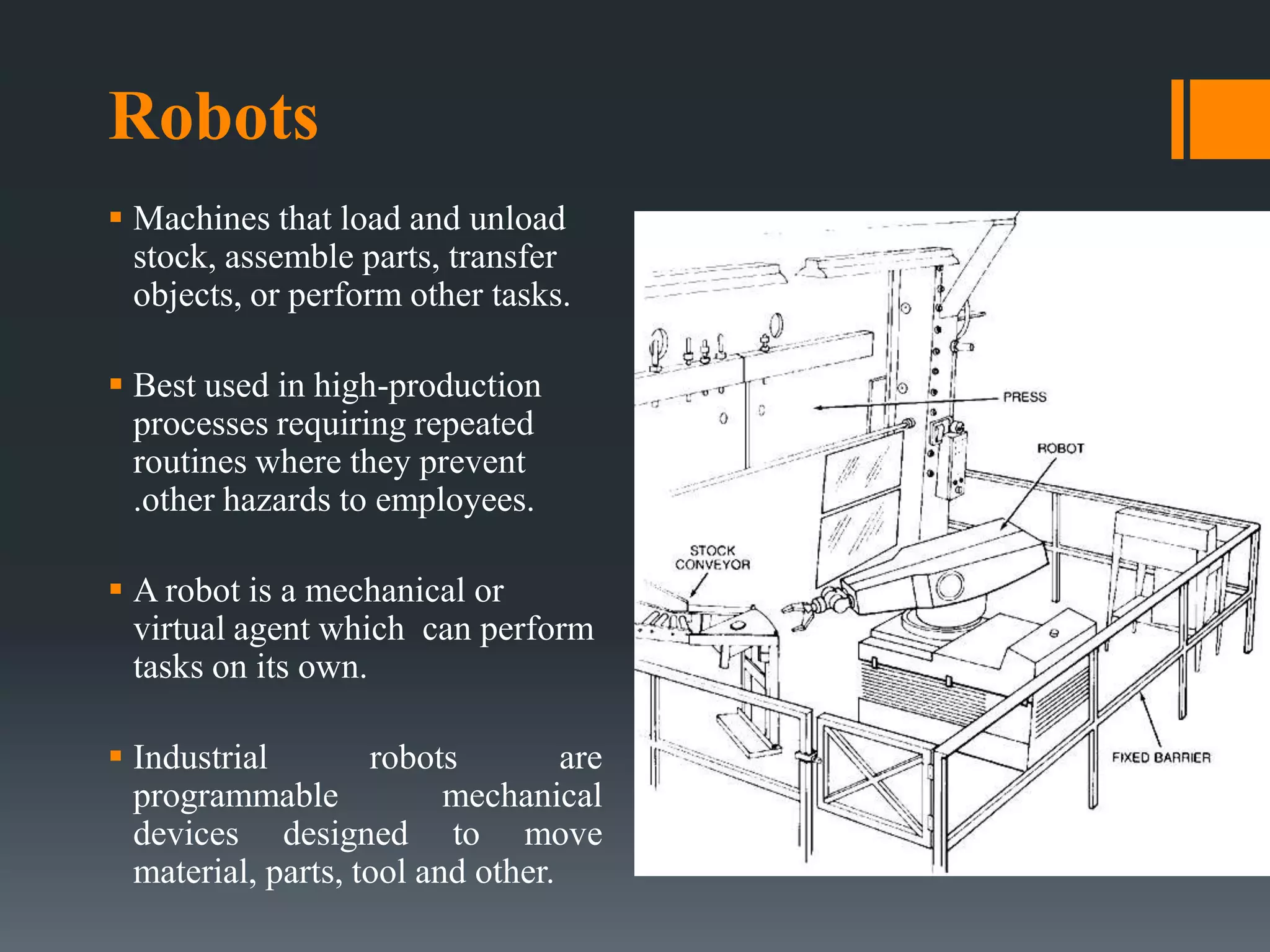
 Machines that load and unload
stock, assemble parts, transfer
objects, or perform other tasks.
 Best used in high-production
processes requiring repeated
routines where they prevent
.other hazards to employees.
 A robot is a mechanical or
virtual agent which can perform
tasks on its own.
 Industrial robots are
programmable mechanical
devices designed to move
material, parts, tool and other.
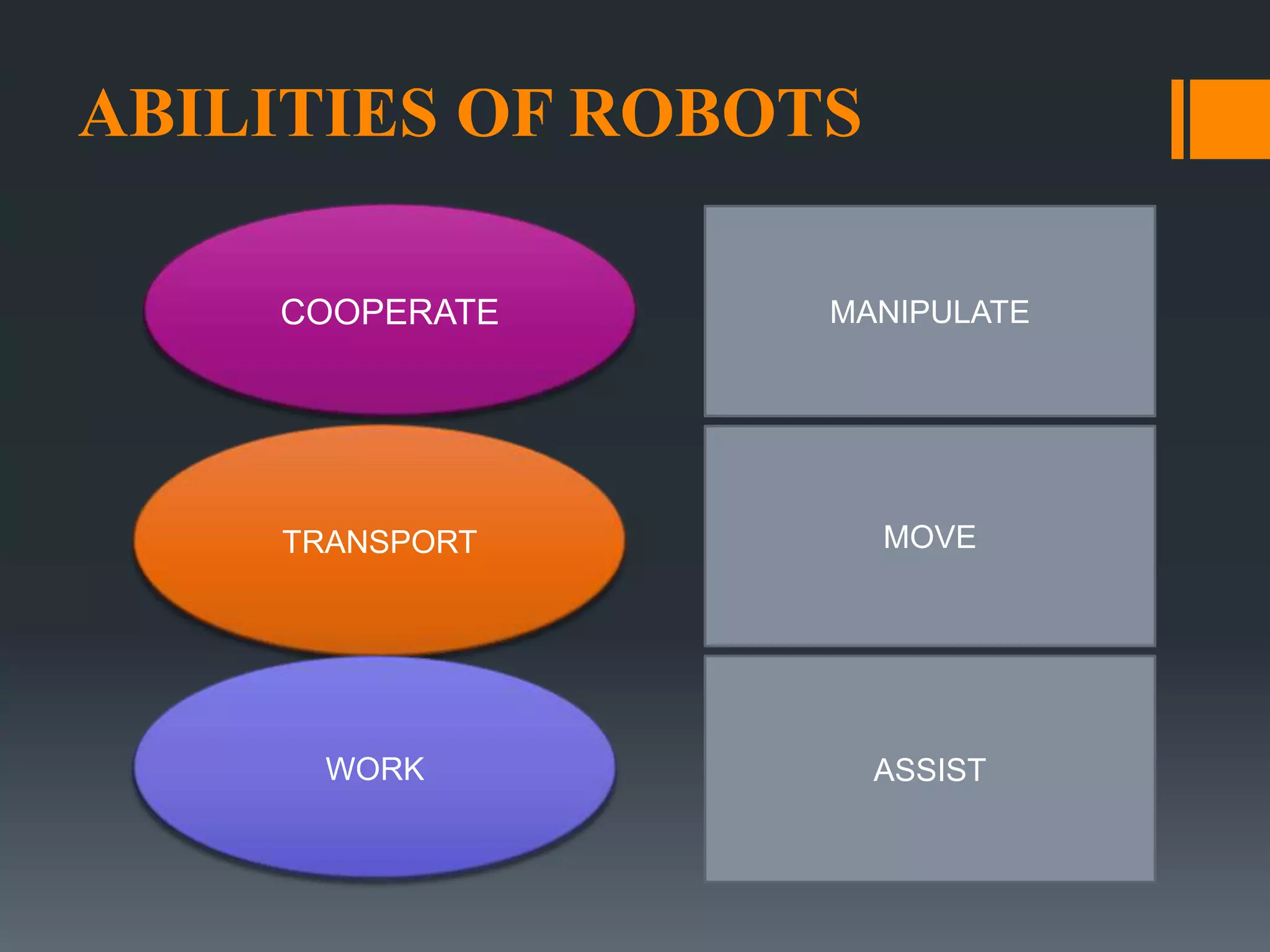
ABILITIES OF ROBOTS
COOPERATE MANIPULATE
MOVETRANSPORT
WORK ASSIST
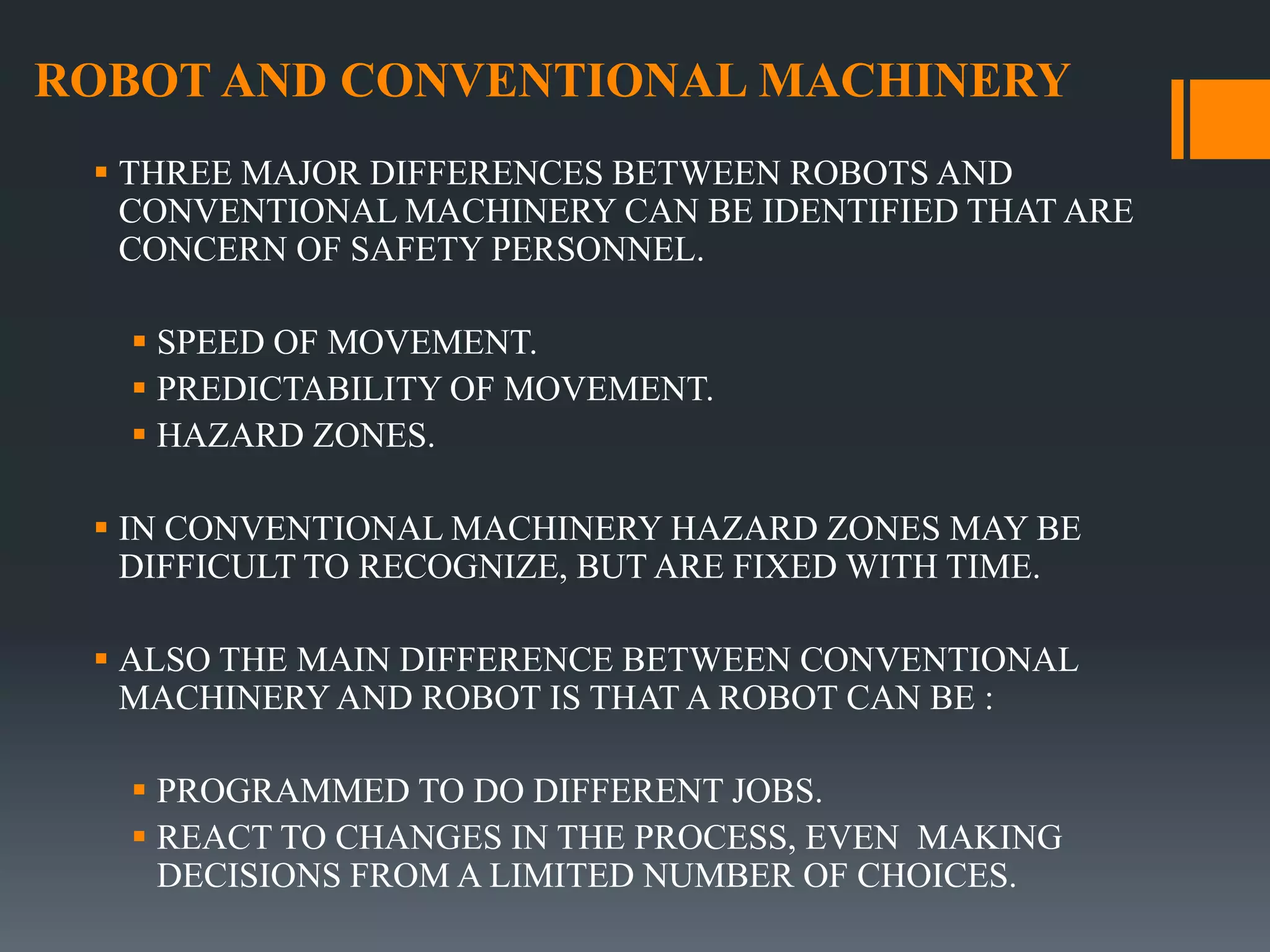
ROBOT AND CONVENTIONAL MACHINERY
 THREE MAJOR DIFFERENCES BETWEEN ROBOTS AND
CONVENTIONAL MACHINERY CAN BE IDENTIFIED THAT ARE
CONCERN OF SAFETY PERSONNEL.
 SPEED OF MOVEMENT.
 PREDICTABILITY OF MOVEMENT.
 HAZARD ZONES.
 IN CONVENTIONAL MACHINERY HAZARD ZONES MAY BE
DIFFICULT TO RECOGNIZE, BUT ARE FIXED WITH TIME.
 ALSO THE MAIN DIFFERENCE BETWEEN CONVENTIONAL
MACHINERY AND ROBOT IS THAT A ROBOT CAN BE :
 PROGRAMMED TO DO DIFFERENT JOBS.
 REACT TO CHANGES IN THE PROCESS, EVEN MAKING
DECISIONS FROM A LIMITED NUMBER OF CHOICES.
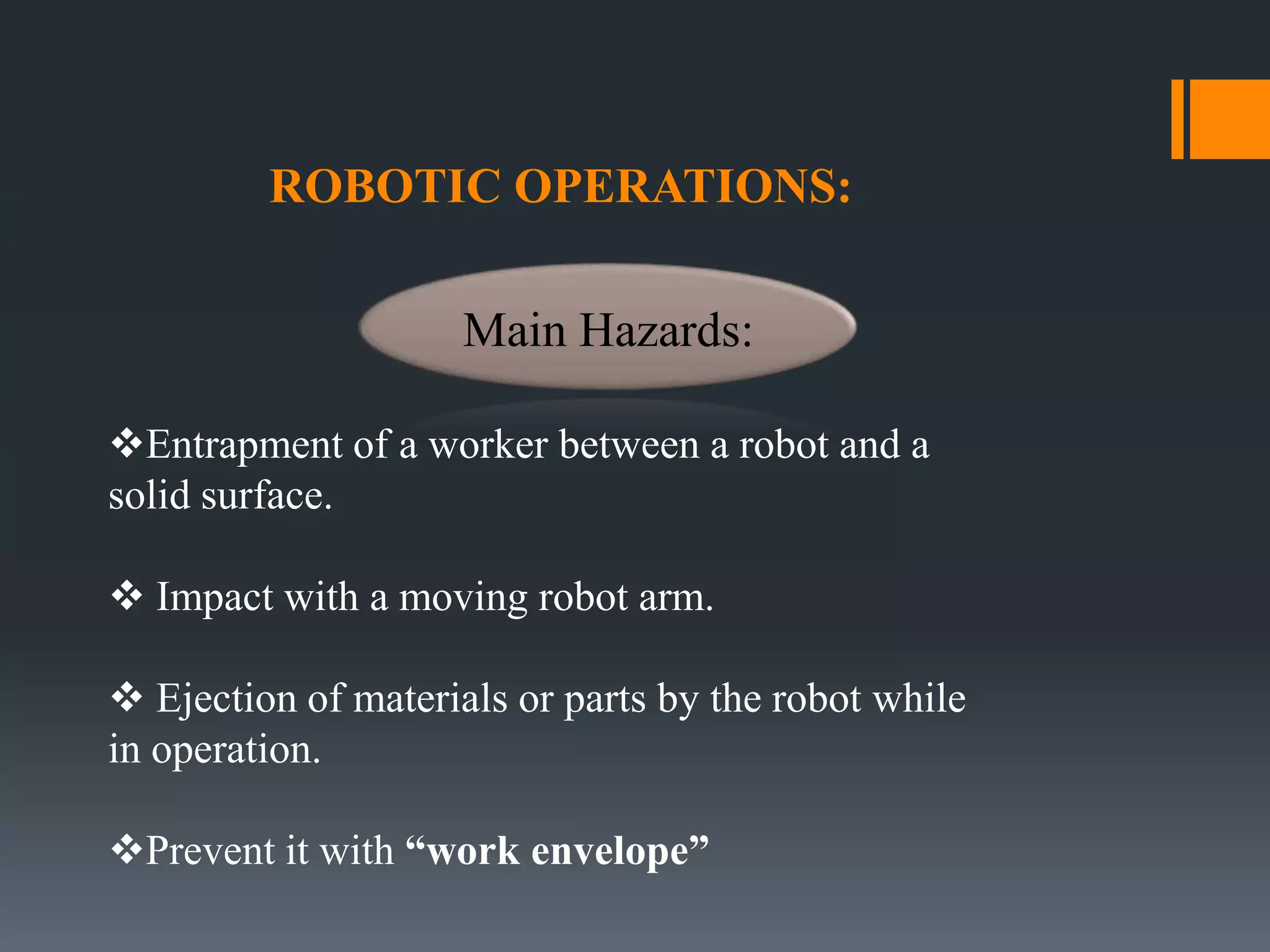
ROBOTIC OPERATIONS:
Entrapment of a worker between a robot and a
solid surface.
 Impact with a moving robot arm.
 Ejection of materials or parts by the robot while
in operation.
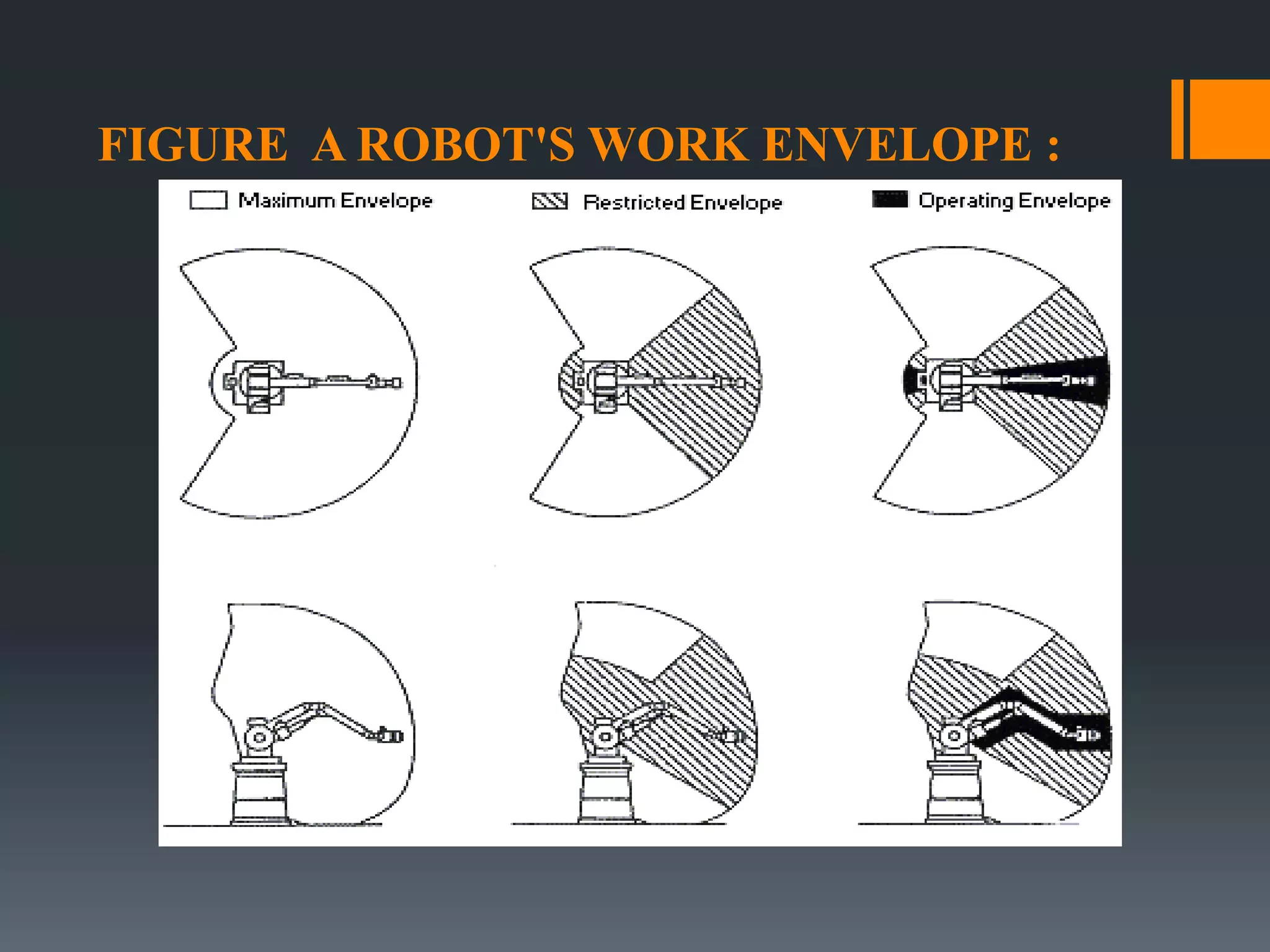
Prevent it with “work envelope”
Main Hazards:
SOURCES OF HAZARDS
 Human Errors
 Control Errors
 Unauthorized Access
 Mechanical Failures
 Environmental Sources
 Power Systems
 Improper Installation
Human Errors
 Inherent prior programming, interfacing activated peripheral
equipment, or connecting live input-output sensors to the
microprocessor or a peripheral can cause dangerous, unpredicted
movement or action by the robot from human error.
 The incorrect activation of the "teach pendant" or control panel is a
frequent human error.
Control Errors
 Intrinsic faults within the control system of the robot, errors in
software, electromagnetic interference, and radio frequency
interference are control errors.
 In addition, these errors can occur due to faults in the hydraulic,
pneumatic, or electrical subcontrols associated with the robot or
robot system.
Unauthorized Access
Entry into a robot's safeguarded area
is hazardous because the person
involved may not be familiar with
the safeguards in place or their
activation status.
Environmental Sources
Electromagnetic or radio-frequency interference
(transient signals) should be considered to exert an
undesirable influence on robotic operation and
increase the potential for injury to any person
working in the area.
 Solutions to environmental hazards should be
documented prior to equipment start-up.
Power Systems
Pneumatic, hydraulic, or electrical power sources that
have malfunctioning control or transmission elements in
the robot power system can disrupt electrical signals to
the control and/or power-supply lines. Fire risks are
increased by electrical overloads or by use of flammable
hydraulic oil. Electrical shock and release of stored
energy from accumulating devices also can be
hazardous to personnel.
Improper Installation
The design, requirements, and layout of
equipment, utilities, and facilities of a
robot or robot system, if inadequately
done, can lead to inherent hazards.
Mechanical Failures
 Operating programs may not
account for cumulative mechanical
part failure, and faulty or unexpected
operation may occur.
• ROBOT SAFEGUARD:
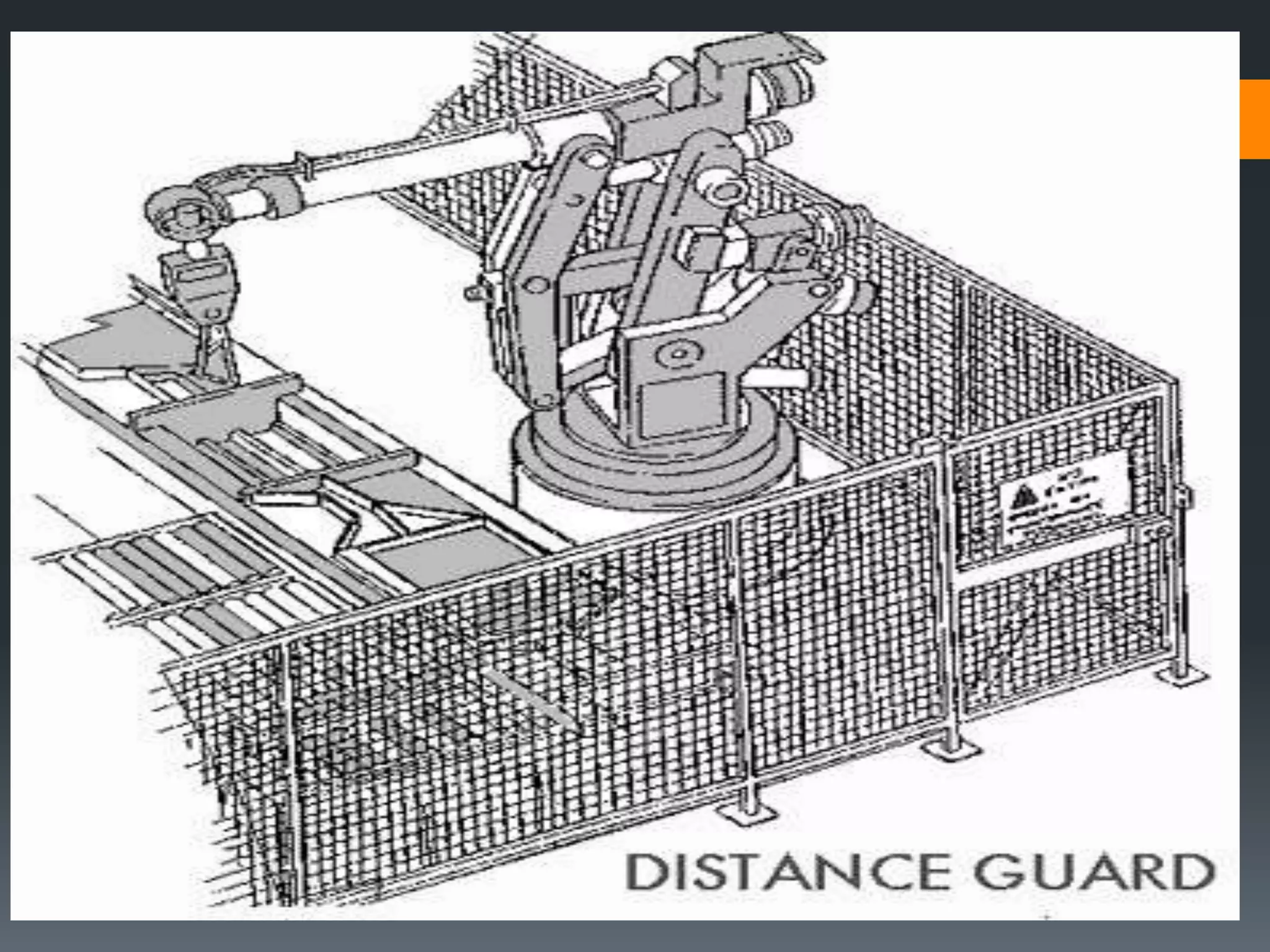
 TO ERECT A PHYSICAL BARRIER AROUND THE
ENTIRE PERIMETER OF A ROBOT’S WORK
ENVELOPE.
 A GUARD CONTAINING A SENSING DEVICE THAT
AUTOMATICALLY SHUTS DOWN THE ROBOT IF ANY
PERSON OR OBJECT ENTERS ITS WORK ENVELOPE
CAN BE EFFECTIVE.
 TO PUT SENSITIZED DOORS OR GATES IN THE
PERIMETER BARRIER THAT AUTOMATICALLY
SHUT DOWN THE ROBOT’S MOVEMENT WHEN
THEY ARE OPENED.
FIGURE A ROBOT'S WORK ENVELOPE :
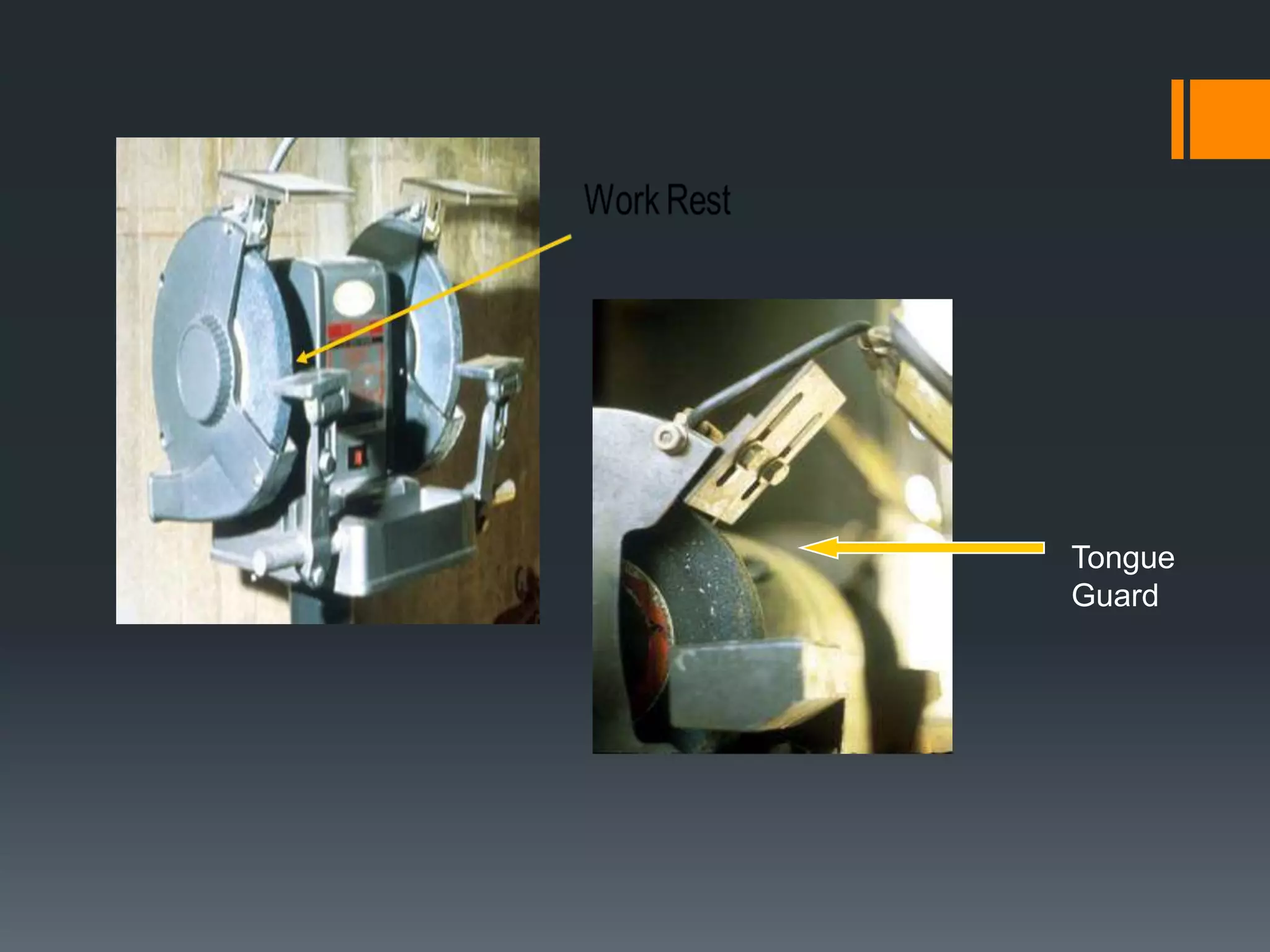
Tongue
Guard
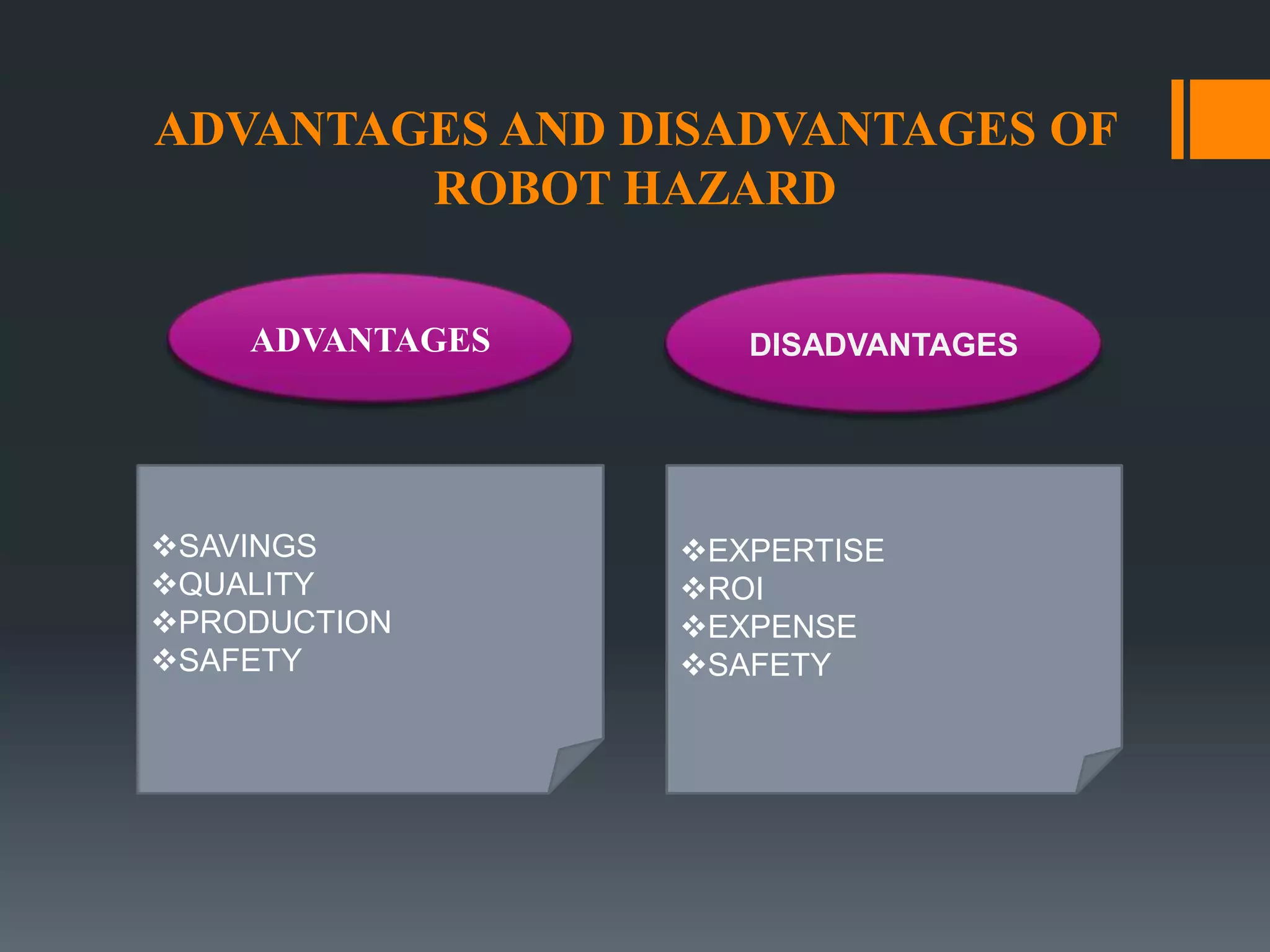
ADVANTAGES AND DISADVANTAGES OF
ROBOT HAZARD
ADVANTAGES DISADVANTAGES
SAVINGS
QUALITY
PRODUCTION
SAFETY
EXPERTISE
ROI
EXPENSE
SAFETY
ADVANTAGES OF ROBOT HAZARD
Quality:
Industrial robots have the capacity to dramatically
improve product quality. Applications are performed
with precision and high repeatability every time. This
level of consistency can be hard to achieve any other
way.
Production:
With robots, throughput speeds increase, which directly
impacts production. Because robots have the ability to
work at a constant speed without pausing for breaks,
sleep, vacations, they have the potential to produce
more than a human worker.
ADVANTAGES…
Safety:
Robots increase workplace safety. Workers are moved to
supervisory roles, so they no longer have to perform
dangerous applications in hazardous settings.
Savings:
Greater worker safety leads to financial savings. There
are fewer healthcare and insurance concerns for
employers. Robots also offer untiring performance
which saves valuable time. Their movements are always
exact, so less material is wasted.
DISADVANTAGES OF ROBOT
HAZARD
Expense:
The initial investment of robots is significant, especially
when business owners are limiting their purchases
to new robotic equipment. The cost of
automation should be calculated in light of a business'
greater financial budget. Regular maintenance needs can
have a financial toll as well.
ROI:
Incorporating industrial robots does
not guarantee results. Without planning, companies can
have difficulty achieving their goals.
DISADVANTAGES…
Expertise:
Employees will require training in programming and
interacting with the new robotic equipment.
This normally takestime and financial output.
Safety:
Robots may protect workers from some hazards, but in
the meantime, their very presence can create other
safety problems. These new dangers must be taken into
consideration
SUMMARY
 The way to prevent from hazards in needed to
overcome the safety in workplace.
 The development of machines within this field
is such a new area that in order to gain acceptance,
safety standards must be through applied in an
attempt to address all possible risks and hazards.
Robots are machines, and as such must be
safeguarded in ways similar to those presented for
any hazardous remotely controlled machine.
ROBOT HAZARD AND PREVENTION

ROBOT HAZARD AND PREVENTION

  • 1.
    ROBOT HAZARDS INTHE WORKPLACE AND PREVENTION
  • 2.
    Robots  Machines thatload and unload stock, assemble parts, transfer objects, or perform other tasks.  Best used in high-production processes requiring repeated routines where they prevent .other hazards to employees.  A robot is a mechanical or virtual agent which can perform tasks on its own.  Industrial robots are programmable mechanical devices designed to move material, parts, tool and other.
  • 3.
    ABILITIES OF ROBOTS COOPERATEMANIPULATE MOVETRANSPORT WORK ASSIST
  • 4.
    ROBOT AND CONVENTIONALMACHINERY  THREE MAJOR DIFFERENCES BETWEEN ROBOTS AND CONVENTIONAL MACHINERY CAN BE IDENTIFIED THAT ARE CONCERN OF SAFETY PERSONNEL.  SPEED OF MOVEMENT.  PREDICTABILITY OF MOVEMENT.  HAZARD ZONES.  IN CONVENTIONAL MACHINERY HAZARD ZONES MAY BE DIFFICULT TO RECOGNIZE, BUT ARE FIXED WITH TIME.  ALSO THE MAIN DIFFERENCE BETWEEN CONVENTIONAL MACHINERY AND ROBOT IS THAT A ROBOT CAN BE :  PROGRAMMED TO DO DIFFERENT JOBS.  REACT TO CHANGES IN THE PROCESS, EVEN MAKING DECISIONS FROM A LIMITED NUMBER OF CHOICES.
  • 5.
    ROBOTIC OPERATIONS: Entrapment ofa worker between a robot and a solid surface.  Impact with a moving robot arm.  Ejection of materials or parts by the robot while in operation. Prevent it with “work envelope” Main Hazards:
  • 6.
    SOURCES OF HAZARDS Human Errors  Control Errors  Unauthorized Access  Mechanical Failures  Environmental Sources  Power Systems  Improper Installation
  • 7.
    Human Errors  Inherentprior programming, interfacing activated peripheral equipment, or connecting live input-output sensors to the microprocessor or a peripheral can cause dangerous, unpredicted movement or action by the robot from human error.  The incorrect activation of the "teach pendant" or control panel is a frequent human error.
  • 8.
    Control Errors  Intrinsicfaults within the control system of the robot, errors in software, electromagnetic interference, and radio frequency interference are control errors.  In addition, these errors can occur due to faults in the hydraulic, pneumatic, or electrical subcontrols associated with the robot or robot system.
  • 9.
    Unauthorized Access Entry intoa robot's safeguarded area is hazardous because the person involved may not be familiar with the safeguards in place or their activation status.
  • 10.
    Environmental Sources Electromagnetic orradio-frequency interference (transient signals) should be considered to exert an undesirable influence on robotic operation and increase the potential for injury to any person working in the area.  Solutions to environmental hazards should be documented prior to equipment start-up.
  • 11.
    Power Systems Pneumatic, hydraulic,or electrical power sources that have malfunctioning control or transmission elements in the robot power system can disrupt electrical signals to the control and/or power-supply lines. Fire risks are increased by electrical overloads or by use of flammable hydraulic oil. Electrical shock and release of stored energy from accumulating devices also can be hazardous to personnel.
  • 12.
    Improper Installation The design,requirements, and layout of equipment, utilities, and facilities of a robot or robot system, if inadequately done, can lead to inherent hazards.
  • 13.
    Mechanical Failures  Operatingprograms may not account for cumulative mechanical part failure, and faulty or unexpected operation may occur.
  • 14.
    • ROBOT SAFEGUARD: TO ERECT A PHYSICAL BARRIER AROUND THE ENTIRE PERIMETER OF A ROBOT’S WORK ENVELOPE.  A GUARD CONTAINING A SENSING DEVICE THAT AUTOMATICALLY SHUTS DOWN THE ROBOT IF ANY PERSON OR OBJECT ENTERS ITS WORK ENVELOPE CAN BE EFFECTIVE.  TO PUT SENSITIZED DOORS OR GATES IN THE PERIMETER BARRIER THAT AUTOMATICALLY SHUT DOWN THE ROBOT’S MOVEMENT WHEN THEY ARE OPENED.
  • 15.
    FIGURE A ROBOT'SWORK ENVELOPE :
  • 16.
  • 18.
    ADVANTAGES AND DISADVANTAGESOF ROBOT HAZARD ADVANTAGES DISADVANTAGES SAVINGS QUALITY PRODUCTION SAFETY EXPERTISE ROI EXPENSE SAFETY
  • 19.
    ADVANTAGES OF ROBOTHAZARD Quality: Industrial robots have the capacity to dramatically improve product quality. Applications are performed with precision and high repeatability every time. This level of consistency can be hard to achieve any other way. Production: With robots, throughput speeds increase, which directly impacts production. Because robots have the ability to work at a constant speed without pausing for breaks, sleep, vacations, they have the potential to produce more than a human worker.
  • 20.
    ADVANTAGES… Safety: Robots increase workplacesafety. Workers are moved to supervisory roles, so they no longer have to perform dangerous applications in hazardous settings. Savings: Greater worker safety leads to financial savings. There are fewer healthcare and insurance concerns for employers. Robots also offer untiring performance which saves valuable time. Their movements are always exact, so less material is wasted.
  • 21.
    DISADVANTAGES OF ROBOT HAZARD Expense: Theinitial investment of robots is significant, especially when business owners are limiting their purchases to new robotic equipment. The cost of automation should be calculated in light of a business' greater financial budget. Regular maintenance needs can have a financial toll as well. ROI: Incorporating industrial robots does not guarantee results. Without planning, companies can have difficulty achieving their goals.
  • 22.
    DISADVANTAGES… Expertise: Employees will requiretraining in programming and interacting with the new robotic equipment. This normally takestime and financial output. Safety: Robots may protect workers from some hazards, but in the meantime, their very presence can create other safety problems. These new dangers must be taken into consideration
  • 23.
    SUMMARY  The wayto prevent from hazards in needed to overcome the safety in workplace.  The development of machines within this field is such a new area that in order to gain acceptance, safety standards must be through applied in an attempt to address all possible risks and hazards. Robots are machines, and as such must be safeguarded in ways similar to those presented for any hazardous remotely controlled machine.