Prepared by: 
Janice C. Vergara
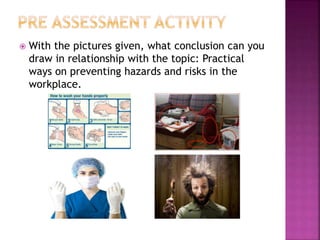
 With the pictures given, what conclusion can you 
draw in relationship with the topic: Practical 
ways on preventing hazards and risks in the 
workplace.
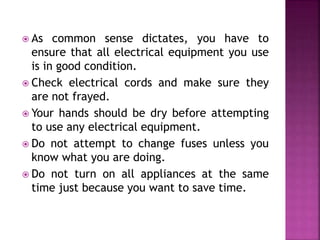
 As common sense dictates, you have to 
ensure that all electrical equipment you use 
is in good condition. 
 Check electrical cords and make sure they 
are not frayed. 
 Your hands should be dry before attempting 
to use any electrical equipment. 
 Do not attempt to change fuses unless you 
know what you are doing. 
 Do not turn on all appliances at the same 
time just because you want to save time.
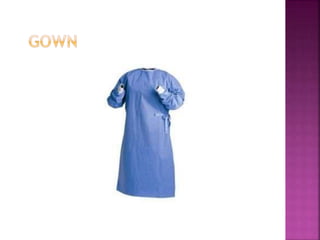
Wear gown that is long enough to cover 
your clothing. Because the outside of the 
gown is considered contaminated, this 
should not be touched when it is 
removed. A gown that is wet is, of course, 
considered contaminated also. A caregiver 
should wear a clean gown every client 
care. In case the gown is not available, 
apron should be worn to mask clothing 
during client contact.
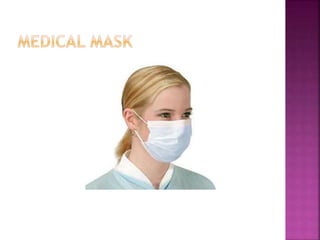
 Masks should fit comfortably over the nose 
and mouth. The same with a gown or apron, 
a wet mask is considered contaminated. The 
front of the mask is also contaminated. 
 Masks should not be worn around the neck. 
For each client contact, a clean mask should 
be used.
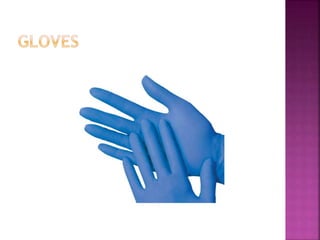
 Gloves should be used when issue on 
contamination is present. Also, when a 
caregiver has open wound on the hands, it 
is a must that he/she use gloves. The 
outside of the gloves should not be 
touched when removed as this is 
considered contaminated.
In order to reduce the burden of disease, health care 
wastes should be managed appropriately. Whether a 
caregiver is working in a hospital, a day care, or even 
at home, proper discarding of medical wastes should 
be of great consideration. 
 Human waste products. Obviously, these wastes 
should be flushed down the toilet without delay and 
should not be discarded in the street or in any public 
places. 
 Blood and bloody fluids. These must be removed right 
away. It is best if they can be directly flushed down the 
toilet. If clothes are contaminated, they should be 
washed separately using hot water and should be 
dried. Dressings with blood need to be double-bagged 
in plastic and disposed of based on existing 
community or local rules.
 Needles (sharps). Sharps should be kept in a 
container which is not easy to pierce like metal 
(coffee can). Some items may be kept while 
some should be discarded right away. It is 
advisable to discuss with the supervisor for the 
best disposal method. 
 Medical equipment. If the equipment is 
contaminated, it should be thrown away. It is 
ideal that the equipment be double-bagged and 
disposed of based on the existing regulations in 
the community. Also, this should be discussed 
with the immediate supervisor as to whether or 
not the said equipment can be kept or should be 
disposed of already.
 Prepare your materials before washing your 
hands: paper towel, bar or liquid soap. 
 Turn on the faucet and wet wrists and hands 
thoroughly. Use a generous amount of soap. 
 Rub your hands together and between fingers. Be 
sure to use friction when washing as this helps in 
cleaning your hands. Do not forget the surface of 
your hands, palms, the spaces within the fingers 
and above the wrists. Do this process for at least 
20 seconds. 
You might want to sing ―happy birthday‖ 
twice slowly to make sure you attained the 
minimum number of seconds in washing your 
hands.
 Clean your nails by rubbing the soap later 
through them. If your nails are long (it is 
advisable that health care workers do not grow 
their nails long), use a soft stick or the nails of 
the other hand to remove the dirt under them. 
 Rinse your hands thoroughly under running 
water. Remember to rinse from above the wrist 
down to the fingers. 
 Use a paper towel to dry hands and discard 
immediately. 
 Use a new paper towel to close faucet being 
careful not to contaminate your hands. This 
paper towel should be discarded right away.
Efficient control measures are now being utilized 
by employers to avoid ergonomic hazards among 
health care workers. Manual handling of 
patients, for example, has become less stressful 
due to some paraphernalia being used that 
facilitate the task. Adjustable height work 
stations, improved tool design, and adjusted 
work pace are now part of a worker’s life. 
Unfortunately, ergonomic hazard effects 
continue to happen. Why? At times, the workers 
themselves invite these hazards due to the 
wrong way they do their tasks. Conscious or not, 
they have to examine their work routine and 
consider these simple rules:
 Avoid twisting the body. 
 Bend knees if it is needed. 
 Avoid too much stretching when reaching for 
something. 
 Use a ladder when reaching for hard-to-reach 
materials or objects. 
 Ask for help from someone if the task cannot
 Learning module for TLE 8 
 Images from google 
To God Be The Glory

Practical ways to prevent hazards and risks (caregiving)

  • 1.
  • 2.
     With thepictures given, what conclusion can you draw in relationship with the topic: Practical ways on preventing hazards and risks in the workplace.
  • 4.
     As commonsense dictates, you have to ensure that all electrical equipment you use is in good condition.  Check electrical cords and make sure they are not frayed.  Your hands should be dry before attempting to use any electrical equipment.  Do not attempt to change fuses unless you know what you are doing.  Do not turn on all appliances at the same time just because you want to save time.
  • 6.
    Wear gown thatis long enough to cover your clothing. Because the outside of the gown is considered contaminated, this should not be touched when it is removed. A gown that is wet is, of course, considered contaminated also. A caregiver should wear a clean gown every client care. In case the gown is not available, apron should be worn to mask clothing during client contact.
  • 8.
     Masks shouldfit comfortably over the nose and mouth. The same with a gown or apron, a wet mask is considered contaminated. The front of the mask is also contaminated.  Masks should not be worn around the neck. For each client contact, a clean mask should be used.
  • 10.
     Gloves shouldbe used when issue on contamination is present. Also, when a caregiver has open wound on the hands, it is a must that he/she use gloves. The outside of the gloves should not be touched when removed as this is considered contaminated.
  • 13.
    In order toreduce the burden of disease, health care wastes should be managed appropriately. Whether a caregiver is working in a hospital, a day care, or even at home, proper discarding of medical wastes should be of great consideration.  Human waste products. Obviously, these wastes should be flushed down the toilet without delay and should not be discarded in the street or in any public places.  Blood and bloody fluids. These must be removed right away. It is best if they can be directly flushed down the toilet. If clothes are contaminated, they should be washed separately using hot water and should be dried. Dressings with blood need to be double-bagged in plastic and disposed of based on existing community or local rules.
  • 14.
     Needles (sharps).Sharps should be kept in a container which is not easy to pierce like metal (coffee can). Some items may be kept while some should be discarded right away. It is advisable to discuss with the supervisor for the best disposal method.  Medical equipment. If the equipment is contaminated, it should be thrown away. It is ideal that the equipment be double-bagged and disposed of based on the existing regulations in the community. Also, this should be discussed with the immediate supervisor as to whether or not the said equipment can be kept or should be disposed of already.
  • 16.
     Prepare yourmaterials before washing your hands: paper towel, bar or liquid soap.  Turn on the faucet and wet wrists and hands thoroughly. Use a generous amount of soap.  Rub your hands together and between fingers. Be sure to use friction when washing as this helps in cleaning your hands. Do not forget the surface of your hands, palms, the spaces within the fingers and above the wrists. Do this process for at least 20 seconds. You might want to sing ―happy birthday‖ twice slowly to make sure you attained the minimum number of seconds in washing your hands.
  • 17.
     Clean yournails by rubbing the soap later through them. If your nails are long (it is advisable that health care workers do not grow their nails long), use a soft stick or the nails of the other hand to remove the dirt under them.  Rinse your hands thoroughly under running water. Remember to rinse from above the wrist down to the fingers.  Use a paper towel to dry hands and discard immediately.  Use a new paper towel to close faucet being careful not to contaminate your hands. This paper towel should be discarded right away.
  • 19.
    Efficient control measuresare now being utilized by employers to avoid ergonomic hazards among health care workers. Manual handling of patients, for example, has become less stressful due to some paraphernalia being used that facilitate the task. Adjustable height work stations, improved tool design, and adjusted work pace are now part of a worker’s life. Unfortunately, ergonomic hazard effects continue to happen. Why? At times, the workers themselves invite these hazards due to the wrong way they do their tasks. Conscious or not, they have to examine their work routine and consider these simple rules:
  • 20.
     Avoid twistingthe body.  Bend knees if it is needed.  Avoid too much stretching when reaching for something.  Use a ladder when reaching for hard-to-reach materials or objects.  Ask for help from someone if the task cannot
  • 21.
     Learning modulefor TLE 8  Images from google To God Be The Glory