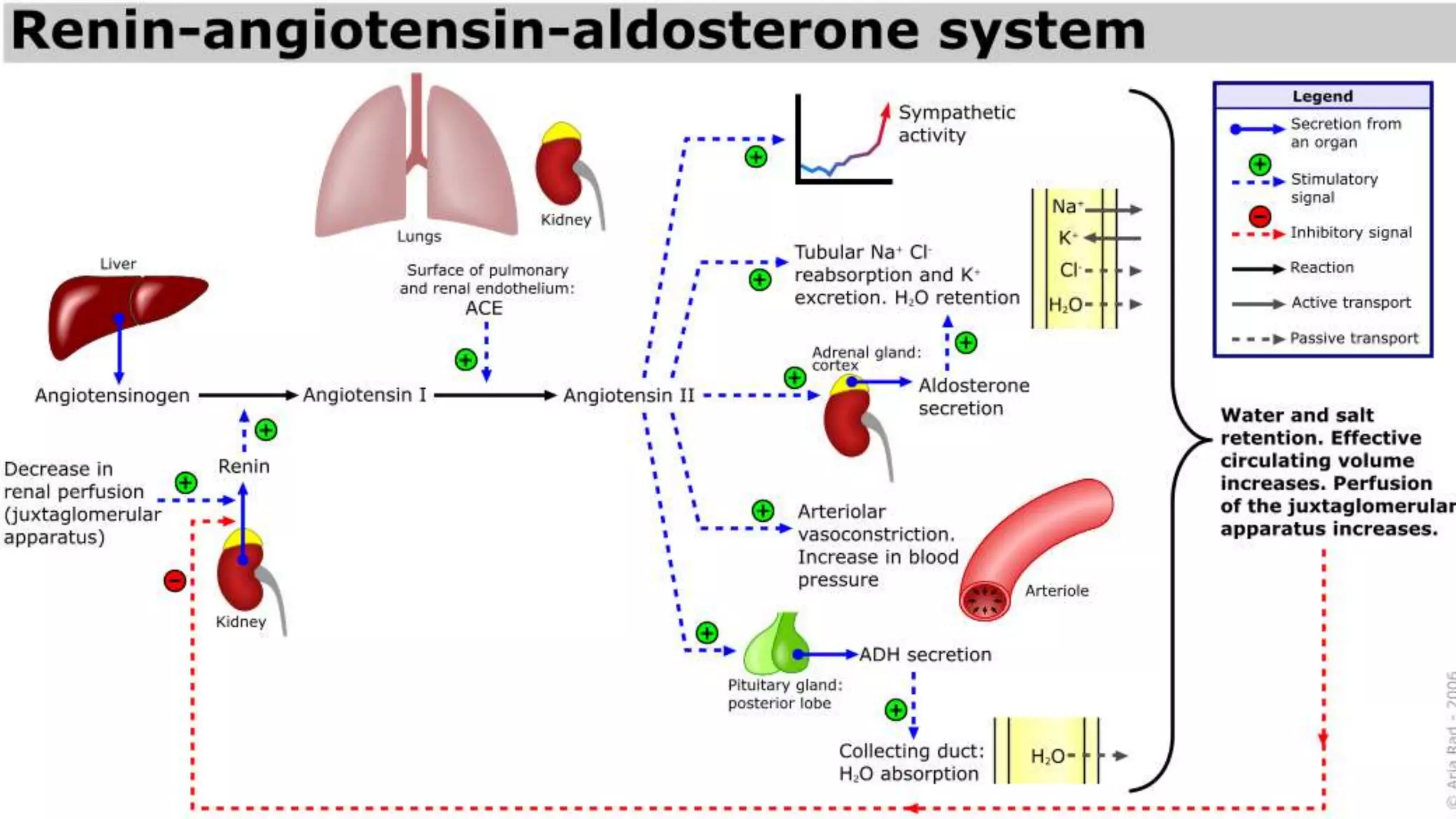
Its also called as RAAS system
• The renin–angiotensin system (RAS) or the renin–angiotensin–
aldosterone system (RAAS) is a hormone system that regulates blood
pressure and fluid balance.
• The renin-angiotensin-aldosterone system (RAAS) plays an important
role in regulating blood volume and systemic vascular resistance,
which together influence cardiac output and arterial pressure.
Blood Pressure
Rises
Vasoconstriction
- +
A schematic portrayal of the homeostatic roles of the renin-angiotensin system
Blood Volume
Rises
Renin
Release
Na+ Retention
Aldosterone
Secretion
Na+ Depletion
Blood Volume
Falls
Blood Pressure
Falls
Angiotensin
Formation
ANGIOTENSIN II
Altered
Peripheral
Resistance
Altered
Renal
Function
Altered
Cardiovascular
Structure
Rapid Pressor Response Slow Pressor Response
Vascular + Cardiac
Hypertrophy + Remodeling
I. Direct vasoconstriction
II. Enhancement of
peripheral noradrenergic
neurotransmission
III. Increased sympathetic
discharge (CNS)
IV. Catecholamine release
from adrenal medulla
I. Increased Na
reabsorption
by proximal tubule
II. Increased aldosterone
release
III. Altered renal
hemodynamics
(vasoconstriction)
+
I. Stimulation of cell growth
II. Hemodynamic changes
A. Increased cardiac
afterload + preload
B. Increased vascular
wall tension
• AII has several very important functions:
• Constricts resistance vessels (via AII [AT1] receptors) thereby
increasing systemic vascular resistance andarterial pressure
• Stimulates sodium transport (reabsorption) at several renal tubular
sites, thereby increasing sodium and water retention by the body
• Acts on the adrenal cortex to release aldosterone, which in turn acts
on the kidneys to increase sodium and fluid retention
• Stimulates the release of vasopressin (antidiuretic hormone, ADH)
from the posterior pituitary, which increases fluid retention by the
kidneys
• Stimulates thirst centers within the brain
• Facilitates norepinephrine release from sympathetic nerveendings
and inhibits norepinephrine re-uptake by nerve endings, thereby
enhancing sympathetic adrenergic function
• Stimulates cardiac hypertrophy and vascular hypertrophy
MECHANISM OF ACTION
ACE inhibitors
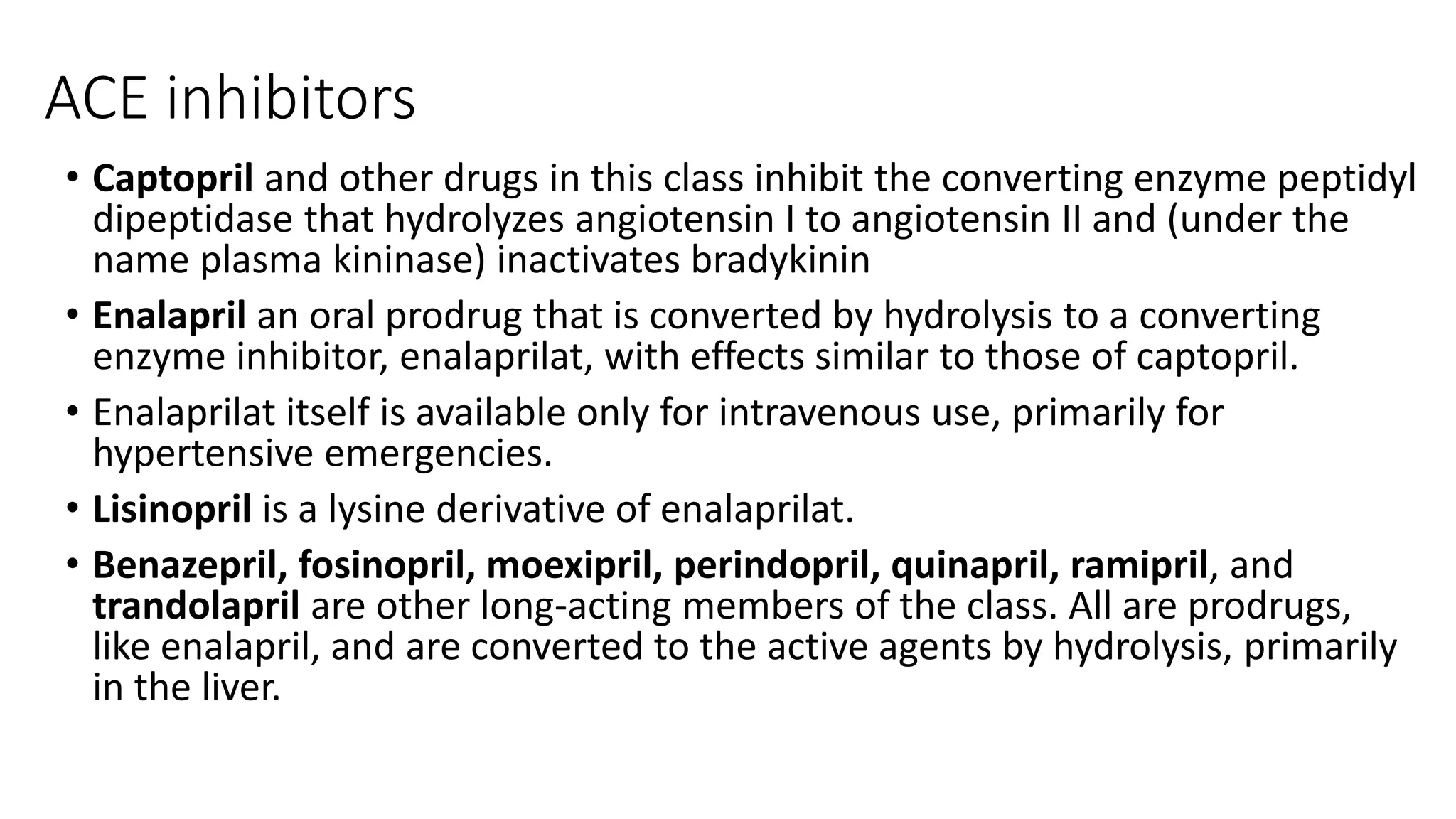
• Captopril and other drugs in this class inhibit the converting enzyme peptidyl
dipeptidase that hydrolyzes angiotensin I to angiotensin II and (under the
name plasma kininase) inactivates bradykinin
• Enalapril an oral prodrug that is converted by hydrolysis to a converting
enzyme inhibitor, enalaprilat, with effects similar to those of captopril.
• Enalaprilat itself is available only for intravenous use, primarily for
hypertensive emergencies.
• Lisinopril is a lysine derivative of enalaprilat.
• Benazepril, fosinopril, moexipril, perindopril, quinapril, ramipril, and
trandolapril are other long-acting members of the class. All are prodrugs,
like enalapril, and are converted to the active agents by hydrolysis, primarily
in the liver.
ACE inhibitors
• Angiotensin II inhibitors lower blood pressure principally by decreasing peripheral vascular resistance.
• Cardiac output and heart rate are not significantly changed.
• Unlike direct vasodilators, these agents do not result in reflex sympathetic activation and can be used safely in
persons with ischemic heart disease.
• ACE inhibitors have a particularly useful role in treating patients with chronic kidney disease because they
diminish proteinuria and stabilize renal function (even in the absence of lowering of blood pressure) but not in
renal failure
• These benefits probably result from improved intrarenal hemodynamics, with decreased glomerular efferent
arteriolar resistance and a resulting reduction of intraglomerular capillary pressure.
• ACE inhibitors have also proved to be extremely useful in the treatment of heart failure, and after myocardial
infarction, and there is recent evidence that ACE inhibitors reduce the incidence of diabetes in patients with high
cardiovascular risk.
Common Drugs
• benazepril
• captopril
• enalapril
• enalaprilat
• fosinopril
• lisinopril
• perinodopril
• quinapril
• ramipril
Adverse Effects
• First-Dose Hypotension
• Usually occurs with initial dose.
• Worse in patients with severe hypertension, or are on diuretics, or are sodium or volume
depleted.
• Cough
• “Persistent, dry, irritating, nonproductive cough can develop with all ACE inhibitors.”
(Lehne, 2007, pg. 466)
• Due to rise in bradykinin which occurs due to inhibition of kinase II.
• Occurs in 5-10% of patients and is more common in women and the elderly.
Adverse Effects
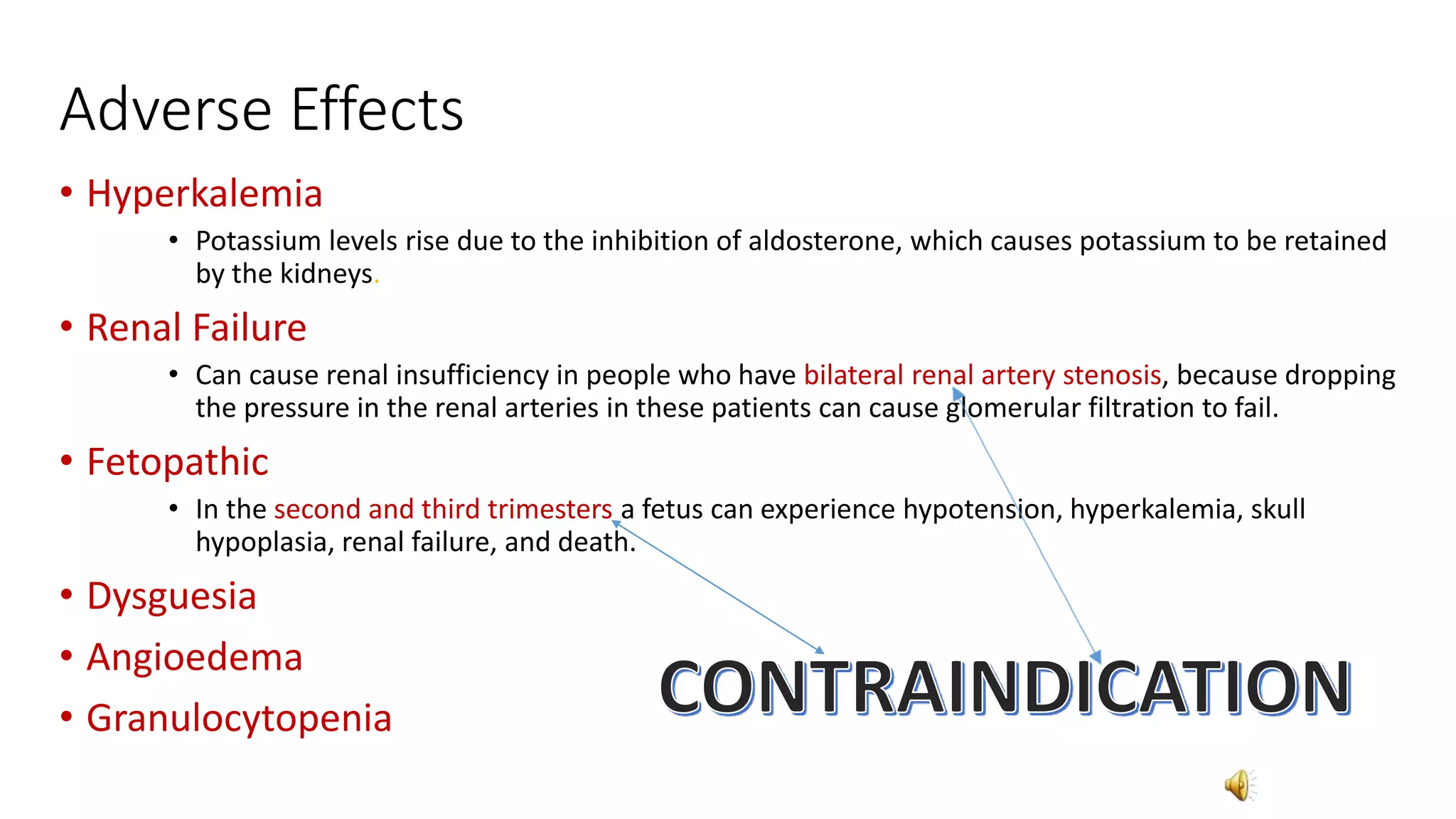
• Hyperkalemia
• Potassium levels rise due to the inhibition of aldosterone, which causes potassium to be retained
by the kidneys.
• Renal Failure
• Can cause renal insufficiency in people who have bilateral renal artery stenosis, because dropping
the pressure in the renal arteries in these patients can cause glomerular filtration to fail.
• Fetopathic
• In the second and third trimesters a fetus can experience hypotension, hyperkalemia, skull
hypoplasia, renal failure, and death.
• Dysguesia
• Angioedema
• Granulocytopenia
Drug Interactions
• Diuretics
• Can cause an increased effect of medications especially with diuretics.
• Potassium sparing diuretics
• Cause an increased risk of hyperkalemia due to the suppression of aldosterone.
• NSAIDS
• Reduce antihypertensive effects of medication.
Indications For Use
• Hypertension-used especially for malignant
hypertension and hypertension secondary to renal
arterial stenosis.
• Benefits of Using an ACE Inhibitor
• Do not interfere with cardiovascular reflexes
• Do not interfere with patients who have asthma like beta-blockers
• Do not decrease potassium levels.
• Do not cause lethargy, weakness and sexual dysfunction.
• “ACE inhibitors reduce the risk of cardiovascular mortality caused
by hypertension.”
Indications For Use
• Heart Failure
• By decreasing arteriolar tone region blood flow to the heart improves.
• By decreasing afterload, cardiac output increases.
• Venous dilation increases causing a decrease in pulmonary congestion and
peripheral edema.
• Dilates the vessels of the kidneys increasing renal flow and helps to
excrete sodium and water. This helps to decrease edema and blood
volume.
• Prevents pathologic changes in the heart that result from reducing the
angiotensin II levels in the heart.
Indications For Use
• Myocardial Infarction (MI)
• Decreases the chance of heart failure after an MI.
• Should be given for 6 weeks post MI. If heart failure occurs it
should be considered for permanent use.
• Nephropathy
• Slows renal disease of diabetic or nondiabetic origins
• Decreases glomerular filtration pressure.
Indications For Use
• Type 2 Diabetes
• Decreases morbidity in high risk patients.
• Increased levels of angiotensin II have a correlation to type 2
diabetes.
• ACE inhibitors increase kinin levels, which increase production
of prostaglandins and nitric oxide.
• Prostaglandins and nitric oxide improve muscular sensitivity to
insulin.
• May preserve pancreatic function and prevent onset of
diabetes especially with people who have hypertension.
Questions
1. Which of these patients would most likely be treated with an ACE
inhibitor?
a) A 38-year old women who has become hypertensive in the last trimester of
her pregnancy.
b) A 78-year old man who just had a heart attack and is in renal failure.
c) A 60-year old man who is a diabetic and suffers from hypertension.
d) A 72-year old female with a history of hypertenstion who comes to the ER in
septic shock.
Questions
1. Which of these lab values would be a contraindication for taking an
ACE inhibitor?
a) Potassium 3.3
b) Potassium 5.6
c) BUN 10
d) Creatinine 1.2

Ace

  • 2.
    Its also calledas RAAS system • The renin–angiotensin system (RAS) or the renin–angiotensin– aldosterone system (RAAS) is a hormone system that regulates blood pressure and fluid balance. • The renin-angiotensin-aldosterone system (RAAS) plays an important role in regulating blood volume and systemic vascular resistance, which together influence cardiac output and arterial pressure.
  • 4.
    Blood Pressure Rises Vasoconstriction - + Aschematic portrayal of the homeostatic roles of the renin-angiotensin system Blood Volume Rises Renin Release Na+ Retention Aldosterone Secretion Na+ Depletion Blood Volume Falls Blood Pressure Falls Angiotensin Formation
  • 5.
    ANGIOTENSIN II Altered Peripheral Resistance Altered Renal Function Altered Cardiovascular Structure Rapid PressorResponse Slow Pressor Response Vascular + Cardiac Hypertrophy + Remodeling I. Direct vasoconstriction II. Enhancement of peripheral noradrenergic neurotransmission III. Increased sympathetic discharge (CNS) IV. Catecholamine release from adrenal medulla I. Increased Na reabsorption by proximal tubule II. Increased aldosterone release III. Altered renal hemodynamics (vasoconstriction) + I. Stimulation of cell growth II. Hemodynamic changes A. Increased cardiac afterload + preload B. Increased vascular wall tension
  • 6.
    • AII hasseveral very important functions: • Constricts resistance vessels (via AII [AT1] receptors) thereby increasing systemic vascular resistance andarterial pressure • Stimulates sodium transport (reabsorption) at several renal tubular sites, thereby increasing sodium and water retention by the body • Acts on the adrenal cortex to release aldosterone, which in turn acts on the kidneys to increase sodium and fluid retention
  • 7.
    • Stimulates therelease of vasopressin (antidiuretic hormone, ADH) from the posterior pituitary, which increases fluid retention by the kidneys • Stimulates thirst centers within the brain • Facilitates norepinephrine release from sympathetic nerveendings and inhibits norepinephrine re-uptake by nerve endings, thereby enhancing sympathetic adrenergic function • Stimulates cardiac hypertrophy and vascular hypertrophy
  • 8.
  • 10.
    ACE inhibitors • Captopriland other drugs in this class inhibit the converting enzyme peptidyl dipeptidase that hydrolyzes angiotensin I to angiotensin II and (under the name plasma kininase) inactivates bradykinin • Enalapril an oral prodrug that is converted by hydrolysis to a converting enzyme inhibitor, enalaprilat, with effects similar to those of captopril. • Enalaprilat itself is available only for intravenous use, primarily for hypertensive emergencies. • Lisinopril is a lysine derivative of enalaprilat. • Benazepril, fosinopril, moexipril, perindopril, quinapril, ramipril, and trandolapril are other long-acting members of the class. All are prodrugs, like enalapril, and are converted to the active agents by hydrolysis, primarily in the liver.
  • 11.
    ACE inhibitors • AngiotensinII inhibitors lower blood pressure principally by decreasing peripheral vascular resistance. • Cardiac output and heart rate are not significantly changed. • Unlike direct vasodilators, these agents do not result in reflex sympathetic activation and can be used safely in persons with ischemic heart disease. • ACE inhibitors have a particularly useful role in treating patients with chronic kidney disease because they diminish proteinuria and stabilize renal function (even in the absence of lowering of blood pressure) but not in renal failure • These benefits probably result from improved intrarenal hemodynamics, with decreased glomerular efferent arteriolar resistance and a resulting reduction of intraglomerular capillary pressure. • ACE inhibitors have also proved to be extremely useful in the treatment of heart failure, and after myocardial infarction, and there is recent evidence that ACE inhibitors reduce the incidence of diabetes in patients with high cardiovascular risk.
  • 12.
    Common Drugs • benazepril •captopril • enalapril • enalaprilat • fosinopril • lisinopril • perinodopril • quinapril • ramipril
  • 13.
    Adverse Effects • First-DoseHypotension • Usually occurs with initial dose. • Worse in patients with severe hypertension, or are on diuretics, or are sodium or volume depleted. • Cough • “Persistent, dry, irritating, nonproductive cough can develop with all ACE inhibitors.” (Lehne, 2007, pg. 466) • Due to rise in bradykinin which occurs due to inhibition of kinase II. • Occurs in 5-10% of patients and is more common in women and the elderly.
  • 14.
    Adverse Effects • Hyperkalemia •Potassium levels rise due to the inhibition of aldosterone, which causes potassium to be retained by the kidneys. • Renal Failure • Can cause renal insufficiency in people who have bilateral renal artery stenosis, because dropping the pressure in the renal arteries in these patients can cause glomerular filtration to fail. • Fetopathic • In the second and third trimesters a fetus can experience hypotension, hyperkalemia, skull hypoplasia, renal failure, and death. • Dysguesia • Angioedema • Granulocytopenia
  • 15.
    Drug Interactions • Diuretics •Can cause an increased effect of medications especially with diuretics. • Potassium sparing diuretics • Cause an increased risk of hyperkalemia due to the suppression of aldosterone. • NSAIDS • Reduce antihypertensive effects of medication.
  • 16.
    Indications For Use •Hypertension-used especially for malignant hypertension and hypertension secondary to renal arterial stenosis. • Benefits of Using an ACE Inhibitor • Do not interfere with cardiovascular reflexes • Do not interfere with patients who have asthma like beta-blockers • Do not decrease potassium levels. • Do not cause lethargy, weakness and sexual dysfunction. • “ACE inhibitors reduce the risk of cardiovascular mortality caused by hypertension.”
  • 17.
    Indications For Use •Heart Failure • By decreasing arteriolar tone region blood flow to the heart improves. • By decreasing afterload, cardiac output increases. • Venous dilation increases causing a decrease in pulmonary congestion and peripheral edema. • Dilates the vessels of the kidneys increasing renal flow and helps to excrete sodium and water. This helps to decrease edema and blood volume. • Prevents pathologic changes in the heart that result from reducing the angiotensin II levels in the heart.
  • 18.
    Indications For Use •Myocardial Infarction (MI) • Decreases the chance of heart failure after an MI. • Should be given for 6 weeks post MI. If heart failure occurs it should be considered for permanent use. • Nephropathy • Slows renal disease of diabetic or nondiabetic origins • Decreases glomerular filtration pressure.
  • 19.
    Indications For Use •Type 2 Diabetes • Decreases morbidity in high risk patients. • Increased levels of angiotensin II have a correlation to type 2 diabetes. • ACE inhibitors increase kinin levels, which increase production of prostaglandins and nitric oxide. • Prostaglandins and nitric oxide improve muscular sensitivity to insulin. • May preserve pancreatic function and prevent onset of diabetes especially with people who have hypertension.
  • 20.
    Questions 1. Which ofthese patients would most likely be treated with an ACE inhibitor? a) A 38-year old women who has become hypertensive in the last trimester of her pregnancy. b) A 78-year old man who just had a heart attack and is in renal failure. c) A 60-year old man who is a diabetic and suffers from hypertension. d) A 72-year old female with a history of hypertenstion who comes to the ER in septic shock.
  • 21.
    Questions 1. Which ofthese lab values would be a contraindication for taking an ACE inhibitor? a) Potassium 3.3 b) Potassium 5.6 c) BUN 10 d) Creatinine 1.2