The Renin-Angiotensin Aldosterone System:
     Conventional RAS &Established Facts.


          Dr Ramachandra Barik
INTRODUCTION

In the quest to keep our self updated in the aura of 21st century- newer molecules and newer trials being poring in
everyday, we the upcoming cardiologists are forgetting/confused or do not give importance to the landmarks or
landmark trials in our day to day practice due to lack of time. In the rush of everything should be evidence base
Medicine to do everything at patient 'best and make oneself safest in bar, This is a tiny attempt to afresh our
knowledge of conventional RAS and established facts.


           “We repeat the same mistake again and again because we like practice without history.”
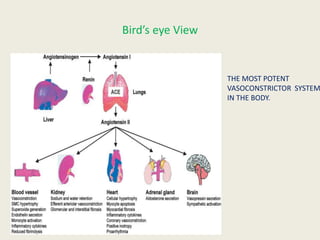
Bird’s eye View


                  THE MOST POTENT
                  VASOCONSTRICTOR SYSTEM
                  IN THE BODY.
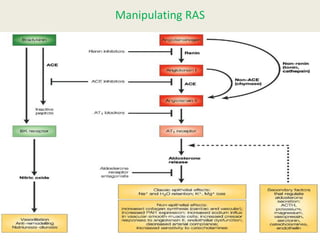
Manipulating RAS
Recapitulation

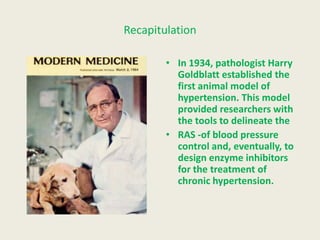
        • In 1934, pathologist Harry
          Goldblatt established the
          first animal model of
          hypertension. This model
          provided researchers with
          the tools to delineate the
        • RAS -of blood pressure
          control and, eventually, to
          design enzyme inhibitors
          for the treatment of
          chronic hypertension.
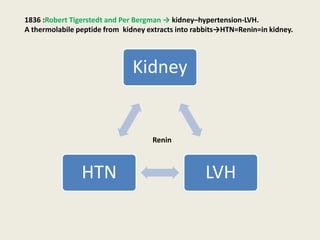
1836 :Robert Tigerstedt and Per Bergman → kidney–hypertension-LVH.
A thermolabile peptide from kidney extracts into rabbits→HTN=Renin=in kidney.


                              Kidney


                                    Renin


                HTN                                LVH
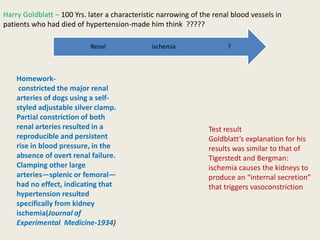
Harry Goldblatt – 100 Yrs. later a characteristic narrowing of the renal blood vessels in
patients who had died of hypertension-made him think ?????

                           Renal               ischemia                ?


    Homework-
     constricted the major renal
    arteries of dogs using a self-
    styled adjustable silver clamp.
    Partial constriction of both
    renal arteries resulted in a                                 Test result
    reproducible and persistent                                  Goldblatt’s explanation for his
    rise in blood pressure, in the                               results was similar to that of
    absence of overt renal failure.                              Tigerstedt and Bergman:
    Clamping other large                                         ischemia causes the kidneys to
    arteries—splenic or femoral—                                 produce an “internal secretion”
    had no effect, indicating that                               that triggers vasoconstriction
    hypertension resulted
    specifically from kidney
    ischemia(Journal of
    Experimental Medicine-1934)
“Goldblatt’s        discovery was spectacular, but nobody believed
it,” recalls cardiologist John Laragh. The skepticism, Laragh says, was largely because of the
technical difficulty of Goldblatt’s procedure, which few could reproduce.

Goldblatt’s confirmed- determining the identity of the “internal secretion”→ Renin.

 1939 -Eduardo Braun-Menendez and Irvine Page— purified Renin but found that the higher
the purity lesser the HTN effect .Hence pressure-raising substance not Renin itself rather a
catalyst for angiotensinogen. Purifying renin away from its substrate had abolished its activity .
They named “hypertensin” and “angiotonin,” respectively. They later compromised and
renamed it “angiotensin” and its precursor “Angiotensinogen”.

Leonard Skeggs et al.→ confirmed 2 forms of angiotensin .

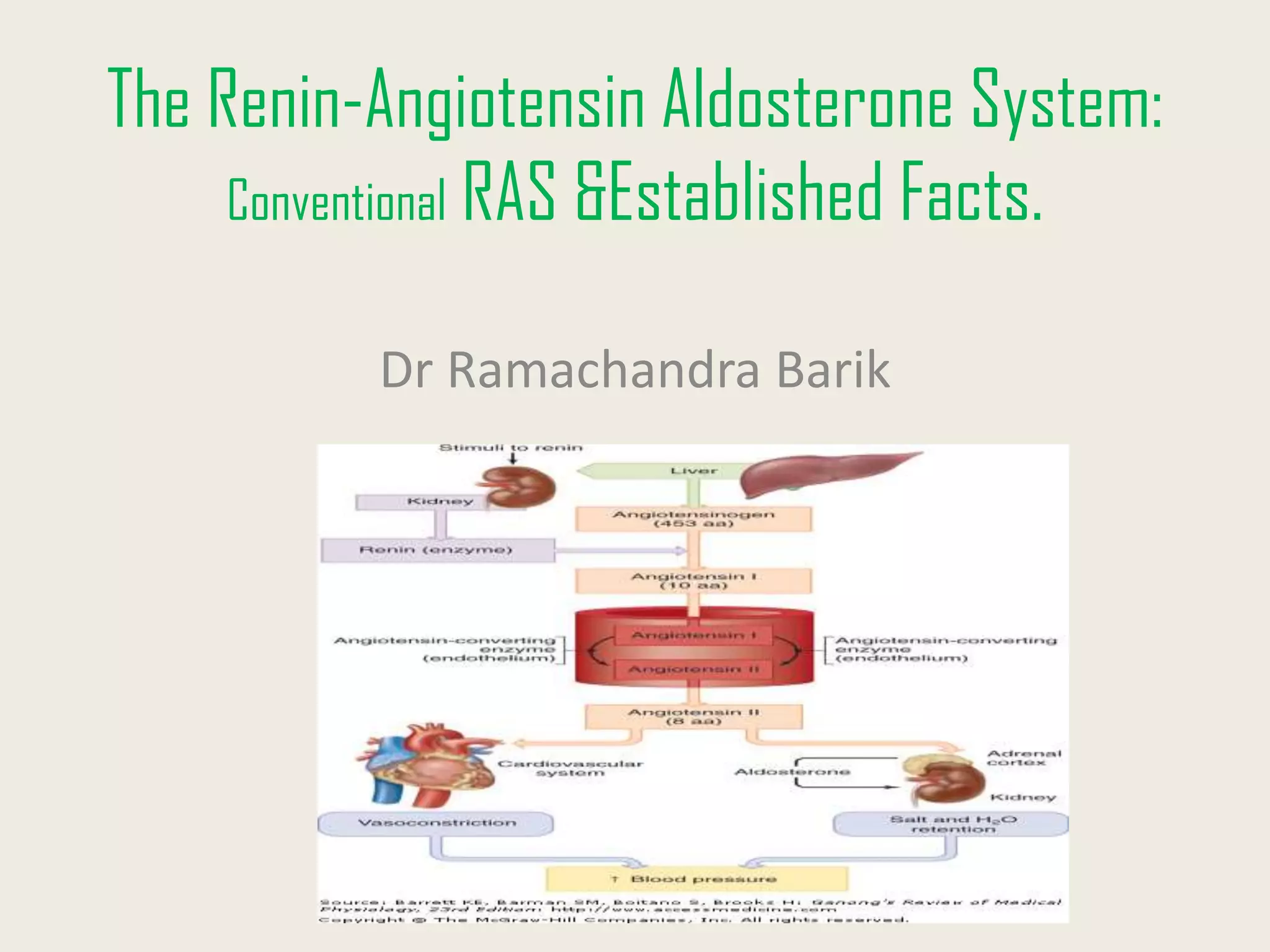
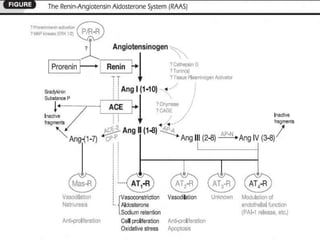
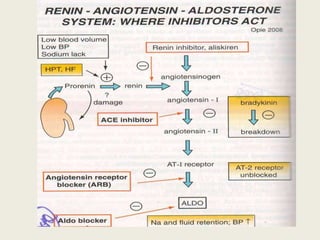
It is now known - Renin initiates an enzymatic cascade in which Angiotensinogen is converted
into angiotensin I, which is then processed by angiotensin converting enzyme (ACE) into
angiotensin II. Angiotensin        II is the true culprit of hypertension.
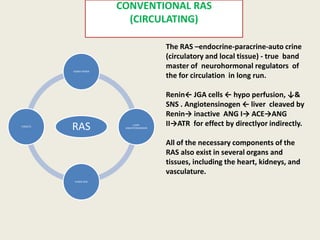
CONVENTIONAL RAS
                           (CIRCULATING)

                                            The RAS –endocrine-paracrine-auto crine
                                            (circulatory and local tissue) - true band
                                            master of neurohormonal regulators of
          KIDNEY-RENIN

                                            the for circulation in long run.

                                            Renin← JGA cells ← hypo perfusion, ↓&
                                            SNS . Angiotensinogen ← liver cleaved by
                                            Renin→ inactive ANG I→ ACE→ANG
                                            II→ATR for effect by directlyor indirectly.
TARGETS
          RAS                  LIVER-
                          ANGIOTENSINOGEN


                                            All of the necessary components of the
                                            RAS also exist in several organs and
                                            tissues, including the heart, kidneys, and
                                            vasculature.
          LUNGS-ACEI
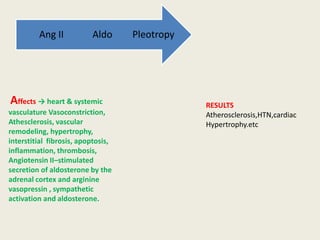
Ang II           Aldo      Pleotropy


Affects → heart & systemic                      RESULTS
vasculature Vasoconstriction,                   Atherosclerosis,HTN,cardiac
Athesclerosis, vascular                         Hypertrophy.etc
remodeling, hypertrophy,
interstitial fibrosis, apoptosis,
inflammation, thrombosis,
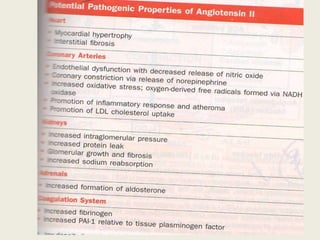
Angiotensin II–stimulated
secretion of aldosterone by the
adrenal cortex and arginine
vasopressin , sympathetic
activation and aldosterone.
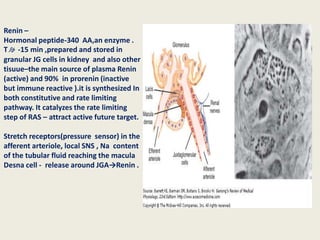
Renin –
Hormonal peptide-340 AA,an enzyme .
T½ -15 min ,prepared and stored in
granular JG cells in kidney and also other
tisuue–the main source of plasma Renin
(active) and 90% in prorenin (inactive
but immune reactive ).it is synthesized In
both constitutive and rate limiting
pathway. It catalyzes the rate limiting
step of RAS – attract active future target.

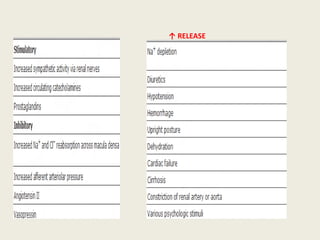
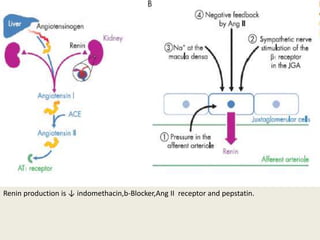
Stretch receptors(pressure sensor) in the
afferent arteriole, local SNS , Na content
of the tubular fluid reaching the macula
Desna cell - release around JGA→Renin .
↑ RELEASE
Renin production is ↓ indomethacin,b-Blocker,Ang II receptor and pepstatin.
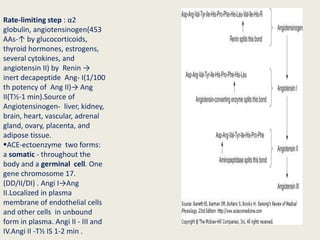
Rate-limiting step : α2
globulin, angiotensinogen(453
AAs-↑ by glucocorticoids,
thyroid hormones, estrogens,
several cytokines, and
angiotensin II) by Renin →
inert decapeptide Ang- I(1/100
th potency of Ang II)→ Ang
II(T½-1 min).Source of
Angiotensinogen- liver, kidney,
brain, heart, vascular, adrenal
gland, ovary, placenta, and
adipose tissue.
ACE-ectoenzyme two forms:
a somatic - throughout the
body and a germinal cell. One
gene chromosome 17.
(DD/II/DI) . Angi I→Ang
II.Localized in plasma
membrane of endothelial cells
and other cells in unbound
form in plasma. Angi II - III and
IV.Angi II -T½ IS 1-2 min .
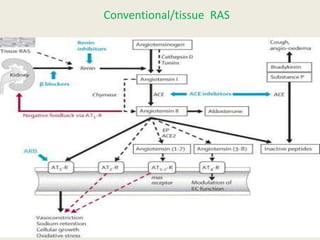
Conventional/tissue RAS
RAS WORKS-
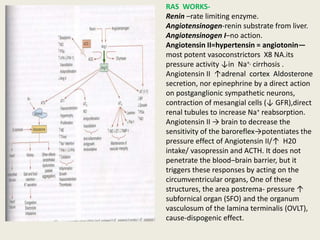
Renin –rate limiting enzyme.
Angiotensinogen-renin substrate from liver.
Angiotensinogen I–no action.
Angiotensin II=hypertensin = angiotonin—
most potent vasoconstrictors X8 NA.its
pressure activity ↓in Na+, cirrhosis .
Angiotensin II ↑adrenal cortex Aldosterone
secretion, nor epinephrine by a direct action
on postganglionic sympathetic neurons,
contraction of mesangial cells (↓ GFR),direct
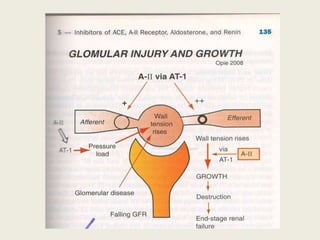
renal tubules to increase Na+ reabsorption.
Angiotensin II → brain to decrease the
sensitivity of the baroreflex→potentiates the
pressure effect of Angiotensin II/↑ H20
intake/ vasopressin and ACTH. It does not
penetrate the blood–brain barrier, but it
triggers these responses by acting on the
circumventricular organs, One of these
structures, the area postrema- pressure ↑
subfornical organ (SFO) and the organum
vasculosum of the lamina terminalis (OVLT),
cause-dispogenic effect.
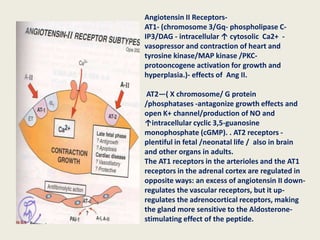
Angiotensin II Receptors-
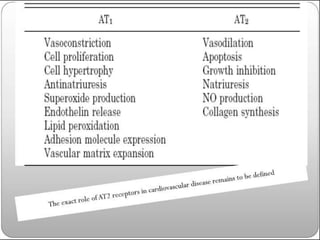
AT1- (chromosome 3/Gq- phospholipase C-
IP3/DAG - intracellular ↑ cytosolic Ca2+ -
vasopressor and contraction of heart and
tyrosine kinase/MAP kinase /PKC-
protooncogene activation for growth and
hyperplasia.)- effects of Ang II.

 AT2—( X chromosome/ G protein
/phosphatases -antagonize growth effects and
open K+ channel/production of NO and
↑intracellular cyclic 3,5-guanosine
monophosphate (cGMP). . AT2 receptors -
plentiful in fetal /neonatal life / also in brain
and other organs in adults.
The AT1 receptors in the arterioles and the AT1
receptors in the adrenal cortex are regulated in
opposite ways: an excess of angiotensin II down-
regulates the vascular receptors, but it up-
regulates the adrenocortical receptors, making
the gland more sensitive to the Aldosterone-
stimulating effect of the peptide.
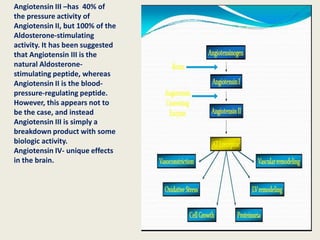
Angiotensin III –has 40% of
the pressure activity of
Angiotensin II, but 100% of the
Aldosterone-stimulating
activity. It has been suggested
that Angiotensin III is the
natural Aldosterone-
stimulating peptide, whereas
Angiotensin II is the blood-
pressure-regulating peptide.
However, this appears not to
be the case, and instead
Angiotensin III is simply a
breakdown product with some
biologic activity.
Angiotensin IV- unique effects
in the brain.
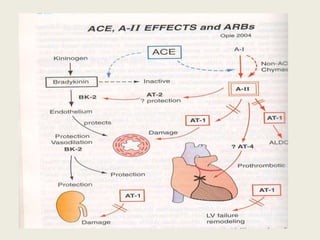
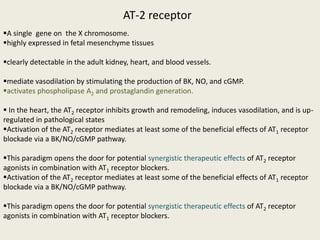
AT-2 receptor
A single gene on the X chromosome.
highly expressed in fetal mesenchyme tissues

clearly detectable in the adult kidney, heart, and blood vessels.

mediate vasodilation by stimulating the production of BK, NO, and cGMP.
activates phospholipase A2 and prostaglandin generation.

 In the heart, the AT2 receptor inhibits growth and remodeling, induces vasodilation, and is up-
regulated in pathological states
Activation of the AT2 receptor mediates at least some of the beneficial effects of AT1 receptor
blockade via a BK/NO/cGMP pathway.

This paradigm opens the door for potential synergistic therapeutic effects of AT2 receptor
agonists in combination with AT1 receptor blockers.
Activation of the AT2 receptor mediates at least some of the beneficial effects of AT1 receptor
blockade via a BK/NO/cGMP pathway.

This paradigm opens the door for potential synergistic therapeutic effects of AT2 receptor
agonists in combination with AT1 receptor blockers.
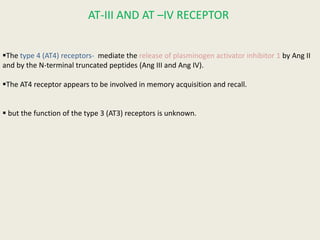
AT-III AND AT –IV RECEPTOR


The type 4 (AT4) receptors- mediate the release of plasminogen activator inhibitor 1 by Ang II
and by the N-terminal truncated peptides (Ang III and Ang IV).

The AT4 receptor appears to be involved in memory acquisition and recall.


 but the function of the type 3 (AT3) receptors is unknown.
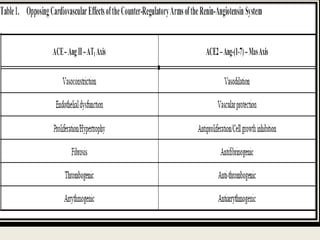
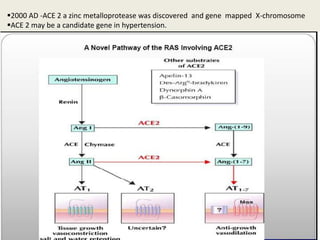
2000 AD -ACE 2 a zinc metalloprotease was discovered and gene mapped X-chromosome
ACE 2 may be a candidate gene in hypertension.
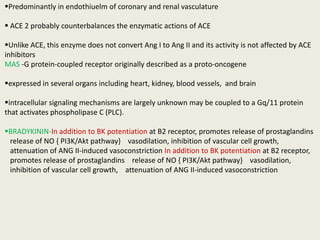
Predominantly in endothiuelm of coronary and renal vasculature

 ACE 2 probably counterbalances the enzymatic actions of ACE

Unlike ACE, this enzyme does not convert Ang I to Ang II and its activity is not affected by ACE
inhibitors
MAS -G protein-coupled receptor originally described as a proto-oncogene

expressed in several organs including heart, kidney, blood vessels, and brain

intracellular signaling mechanisms are largely unknown may be coupled to a Gq/11 protein
that activates phospholipase C (PLC).

BRADYKININ-In addition to BK potentiation at B2 receptor, promotes release of prostaglandins
 release of NO { PI3K/Akt pathway} vasodilation, inhibition of vascular cell growth,
 attenuation of ANG II-induced vasoconstriction In addition to BK potentiation at B2 receptor,
 promotes release of prostaglandins release of NO { PI3K/Akt pathway} vasodilation,
 inhibition of vascular cell growth, attenuation of ANG II-induced vasoconstriction
Prorenin receptor
Transmembrane protein consisting of 350 amino acids ;cloned from mesangial cells

 Prorenin/renin - not only aspartyl proteases but also hormones with specific cellular actions in
their own right.

Relevant to the pathophysiology of hypertension, preeclampsia, and diabetes mellitus.
pathogenic mechanism dually activates the tissue Renin-Angiotensin system (RAS) and RAS-
independent intracellular signaling via the receptor.

pathogenic mechanism dually activates the tissue Renin-Angiotensin system (RAS) and RAS-
independent intracellular signaling via the receptor.
 Activates mitogen-activated protein kinase (MAPK)-extracellular signal-regulated kinase (ERK)
pathway and increases several profibrotic mediators- (TGF-β), and (PAI-1), and the extracellular
matrix components, fibronectin and collagen
receptor acts as a cofactor by increasing the efficiency of ANG I generation on the cell surface
by receptor-bound prorenin and renin

 Activates mitogen-activated protein kinase (MAPK)-extracellular signal-regulated kinase (ERK)
pathway and increases several profibrotic mediators- (TGF-β), and (PAI-1), and the extracellular
matrix components, fibronectin and collagen
receptor acts as a cofactor by increasing the efficiency of ANG I generation on the cell surface
by receptor-bound prorenin and renin
Tissue RAS.

In addition to circulating Angiotensin II, many different tissues contain independent
renin–angiotensin systems that generate Angiotensin II, local use account for 90%
of total ANG II. found in the walls of blood vessels and in the uterus, the placenta,
and the fetal membranes. Amniotic fluid has a high concentration of prorenin. n the
eyes, exocrine portion of the pancreas, heart, fat, adrenal cortex, testis, ovary,
anterior and intermediate lobes of the pituitary, pineal, and brain. Tissue Renin
contributes very little to the circulating Renin pool, because plasma Renin activity
falls to undetectable levels after the kidneys are removed. The functions of these
tissue renin–angiotensin systems are unsettled, though evidence is accumulating
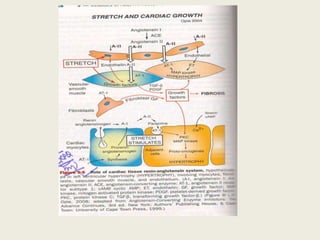
that Angiotensin II is a significant growth factor in the heart and blood vessels. ACE
inhibitors or AT1 receptor blockers are now the treatment of choice for congestive
heart failure, and part of their value may be due to inhibition of the growth effects
of Angiotensin II.
Manipulating RAS-Towards establishing facts


1.Sympathetic blocker-ᵦ  blocker, adrenergic neuron blocker, central sympatholytic ↓renin.
  and interventional therapy-SNS radio frequency ablation for RAS.
2.Renin inhibitory peptides and antibody ↓ Renin
3.ACEI
4.Ang AT1 receptor blocker
5.Ang II activator
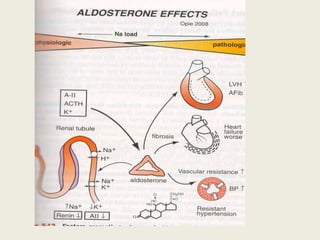
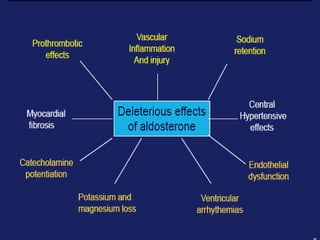
6.Aldosterone antagonist
7.AT2 receptor agonist
8.Prorenin receptor blocker?
7.Vasopeptidase inhibitor.?
7.Vaccines?
8.Genetic ?
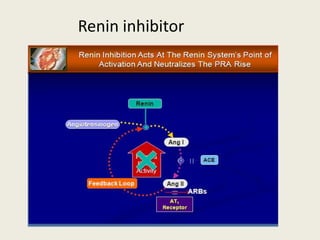
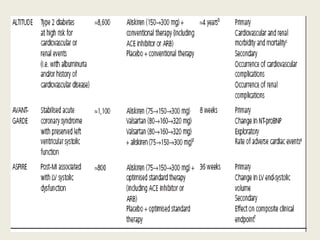
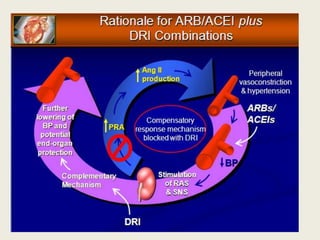
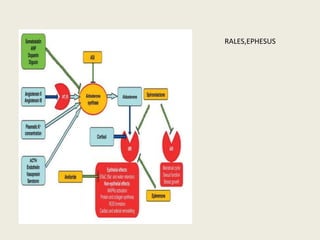
Renin inhibitor
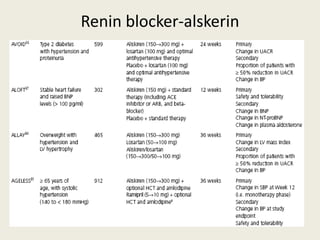
Renin blocker-alskerin
RALES,EPHESUS
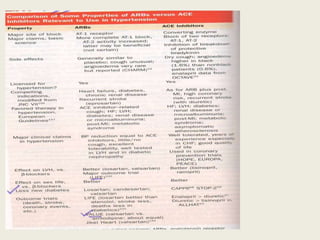
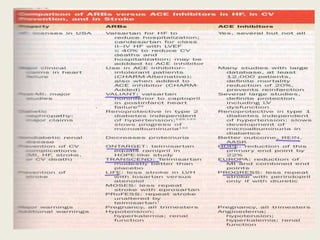
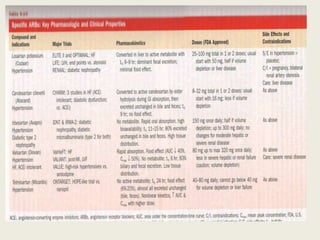
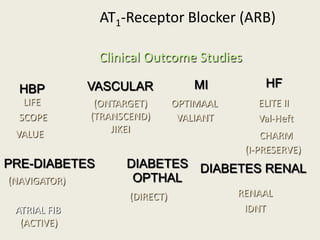
AT1-Receptor Blocker (ARB)

               Clinical Outcome Studies

  HBP         VASCULAR             MI           HF
   LIFE        (ONTARGET)       OPTIMAAL      ELITE II
  SCOPE       (TRANSCEND)        VALIANT      Val-Heft
 VALUE            JIKEI
                                                CHARM
                                            (I-PRESERVE)
PRE-DIABETES        DIABETES DIABETES RENAL
(NAVIGATOR)          OPTHAL
                     (DIRECT)              RENAAL
 ATRIAL FIB                                 IDNT
  (ACTIVE)
AECI/ARB COMBINED
cardiovascular outcomes [ CHARM-Added, Val-HeFT, VALIANT vs
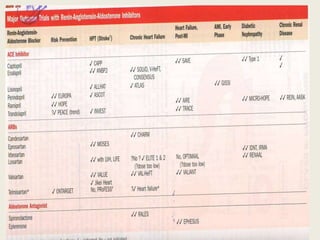
RESOLVD Pilot Study Investigators ] may relate to different
patient populations, previous or concurrent successful treatment
with other drugs, or study design

PRA is related to adverse clinical outcomes further raises the
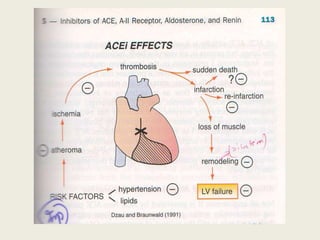
possibility that DRIs may be useful.
In heart failure –FDA approved
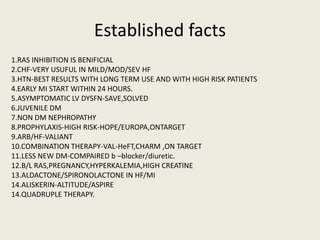
Established facts
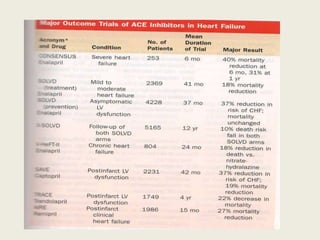
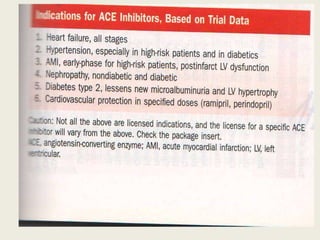
1.RAS INHIBITION IS BENIFICIAL
2.CHF-VERY USUFUL IN MILD/MOD/SEV HF
3.HTN-BEST RESULTS WITH LONG TERM USE AND WITH HIGH RISK PATIENTS
4.EARLY MI START WITHIN 24 HOURS.
5.ASYMPTOMATIC LV DYSFN-SAVE,SOLVED
6.JUVENILE DM
7.NON DM NEPHROPATHY
8.PROPHYLAXIS-HIGH RISK-HOPE/EUROPA,ONTARGET
9.ARB/HF-VALIANT
10.COMBINATION THERAPY-VAL-HeFT,CHARM ,ON TARGET
11.LESS NEW DM-COMPAIRED b –blocker/diuretic.
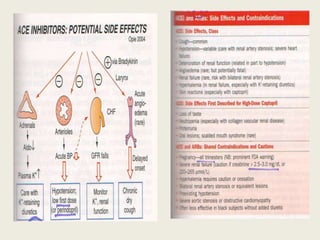
12.B/L RAS,PREGNANCY,HYPERKALEMIA,HIGH CREATINE
13.ALDACTONE/SPIRONOLACTONE IN HF/MI
14.ALISKERIN-ALTITUDE/ASPIRE
14.QUADRUPLE THERAPY.
THANK U

The renin angiotensin aldosterone system.

  • 1.
    The Renin-Angiotensin AldosteroneSystem: Conventional RAS &Established Facts. Dr Ramachandra Barik
  • 2.
    INTRODUCTION In the questto keep our self updated in the aura of 21st century- newer molecules and newer trials being poring in everyday, we the upcoming cardiologists are forgetting/confused or do not give importance to the landmarks or landmark trials in our day to day practice due to lack of time. In the rush of everything should be evidence base Medicine to do everything at patient 'best and make oneself safest in bar, This is a tiny attempt to afresh our knowledge of conventional RAS and established facts. “We repeat the same mistake again and again because we like practice without history.”
  • 3.
    Bird’s eye View THE MOST POTENT VASOCONSTRICTOR SYSTEM IN THE BODY.
  • 4.
  • 5.
    Recapitulation • In 1934, pathologist Harry Goldblatt established the first animal model of hypertension. This model provided researchers with the tools to delineate the • RAS -of blood pressure control and, eventually, to design enzyme inhibitors for the treatment of chronic hypertension.
  • 6.
    1836 :Robert Tigerstedtand Per Bergman → kidney–hypertension-LVH. A thermolabile peptide from kidney extracts into rabbits→HTN=Renin=in kidney. Kidney Renin HTN LVH
  • 7.
    Harry Goldblatt –100 Yrs. later a characteristic narrowing of the renal blood vessels in patients who had died of hypertension-made him think ????? Renal ischemia ? Homework- constricted the major renal arteries of dogs using a self- styled adjustable silver clamp. Partial constriction of both renal arteries resulted in a Test result reproducible and persistent Goldblatt’s explanation for his rise in blood pressure, in the results was similar to that of absence of overt renal failure. Tigerstedt and Bergman: Clamping other large ischemia causes the kidneys to arteries—splenic or femoral— produce an “internal secretion” had no effect, indicating that that triggers vasoconstriction hypertension resulted specifically from kidney ischemia(Journal of Experimental Medicine-1934)
  • 8.
    “Goldblatt’s discovery was spectacular, but nobody believed it,” recalls cardiologist John Laragh. The skepticism, Laragh says, was largely because of the technical difficulty of Goldblatt’s procedure, which few could reproduce. Goldblatt’s confirmed- determining the identity of the “internal secretion”→ Renin. 1939 -Eduardo Braun-Menendez and Irvine Page— purified Renin but found that the higher the purity lesser the HTN effect .Hence pressure-raising substance not Renin itself rather a catalyst for angiotensinogen. Purifying renin away from its substrate had abolished its activity . They named “hypertensin” and “angiotonin,” respectively. They later compromised and renamed it “angiotensin” and its precursor “Angiotensinogen”. Leonard Skeggs et al.→ confirmed 2 forms of angiotensin . It is now known - Renin initiates an enzymatic cascade in which Angiotensinogen is converted into angiotensin I, which is then processed by angiotensin converting enzyme (ACE) into angiotensin II. Angiotensin II is the true culprit of hypertension.
  • 9.
    CONVENTIONAL RAS (CIRCULATING) The RAS –endocrine-paracrine-auto crine (circulatory and local tissue) - true band master of neurohormonal regulators of KIDNEY-RENIN the for circulation in long run. Renin← JGA cells ← hypo perfusion, ↓& SNS . Angiotensinogen ← liver cleaved by Renin→ inactive ANG I→ ACE→ANG II→ATR for effect by directlyor indirectly. TARGETS RAS LIVER- ANGIOTENSINOGEN All of the necessary components of the RAS also exist in several organs and tissues, including the heart, kidneys, and vasculature. LUNGS-ACEI
  • 10.
    Ang II Aldo Pleotropy Affects → heart & systemic RESULTS vasculature Vasoconstriction, Atherosclerosis,HTN,cardiac Athesclerosis, vascular Hypertrophy.etc remodeling, hypertrophy, interstitial fibrosis, apoptosis, inflammation, thrombosis, Angiotensin II–stimulated secretion of aldosterone by the adrenal cortex and arginine vasopressin , sympathetic activation and aldosterone.
  • 11.
    Renin – Hormonal peptide-340AA,an enzyme . T½ -15 min ,prepared and stored in granular JG cells in kidney and also other tisuue–the main source of plasma Renin (active) and 90% in prorenin (inactive but immune reactive ).it is synthesized In both constitutive and rate limiting pathway. It catalyzes the rate limiting step of RAS – attract active future target. Stretch receptors(pressure sensor) in the afferent arteriole, local SNS , Na content of the tubular fluid reaching the macula Desna cell - release around JGA→Renin .
  • 13.
  • 14.
    Renin production is↓ indomethacin,b-Blocker,Ang II receptor and pepstatin.
  • 15.
    Rate-limiting step :α2 globulin, angiotensinogen(453 AAs-↑ by glucocorticoids, thyroid hormones, estrogens, several cytokines, and angiotensin II) by Renin → inert decapeptide Ang- I(1/100 th potency of Ang II)→ Ang II(T½-1 min).Source of Angiotensinogen- liver, kidney, brain, heart, vascular, adrenal gland, ovary, placenta, and adipose tissue. ACE-ectoenzyme two forms: a somatic - throughout the body and a germinal cell. One gene chromosome 17. (DD/II/DI) . Angi I→Ang II.Localized in plasma membrane of endothelial cells and other cells in unbound form in plasma. Angi II - III and IV.Angi II -T½ IS 1-2 min .
  • 16.
  • 18.
    RAS WORKS- Renin –ratelimiting enzyme. Angiotensinogen-renin substrate from liver. Angiotensinogen I–no action. Angiotensin II=hypertensin = angiotonin— most potent vasoconstrictors X8 NA.its pressure activity ↓in Na+, cirrhosis . Angiotensin II ↑adrenal cortex Aldosterone secretion, nor epinephrine by a direct action on postganglionic sympathetic neurons, contraction of mesangial cells (↓ GFR),direct renal tubules to increase Na+ reabsorption. Angiotensin II → brain to decrease the sensitivity of the baroreflex→potentiates the pressure effect of Angiotensin II/↑ H20 intake/ vasopressin and ACTH. It does not penetrate the blood–brain barrier, but it triggers these responses by acting on the circumventricular organs, One of these structures, the area postrema- pressure ↑ subfornical organ (SFO) and the organum vasculosum of the lamina terminalis (OVLT), cause-dispogenic effect.
  • 19.
    Angiotensin II Receptors- AT1-(chromosome 3/Gq- phospholipase C- IP3/DAG - intracellular ↑ cytosolic Ca2+ - vasopressor and contraction of heart and tyrosine kinase/MAP kinase /PKC- protooncogene activation for growth and hyperplasia.)- effects of Ang II. AT2—( X chromosome/ G protein /phosphatases -antagonize growth effects and open K+ channel/production of NO and ↑intracellular cyclic 3,5-guanosine monophosphate (cGMP). . AT2 receptors - plentiful in fetal /neonatal life / also in brain and other organs in adults. The AT1 receptors in the arterioles and the AT1 receptors in the adrenal cortex are regulated in opposite ways: an excess of angiotensin II down- regulates the vascular receptors, but it up- regulates the adrenocortical receptors, making the gland more sensitive to the Aldosterone- stimulating effect of the peptide.
  • 22.
    Angiotensin III –has40% of the pressure activity of Angiotensin II, but 100% of the Aldosterone-stimulating activity. It has been suggested that Angiotensin III is the natural Aldosterone- stimulating peptide, whereas Angiotensin II is the blood- pressure-regulating peptide. However, this appears not to be the case, and instead Angiotensin III is simply a breakdown product with some biologic activity. Angiotensin IV- unique effects in the brain.
  • 26.
    AT-2 receptor A singlegene on the X chromosome. highly expressed in fetal mesenchyme tissues clearly detectable in the adult kidney, heart, and blood vessels. mediate vasodilation by stimulating the production of BK, NO, and cGMP. activates phospholipase A2 and prostaglandin generation.  In the heart, the AT2 receptor inhibits growth and remodeling, induces vasodilation, and is up- regulated in pathological states Activation of the AT2 receptor mediates at least some of the beneficial effects of AT1 receptor blockade via a BK/NO/cGMP pathway. This paradigm opens the door for potential synergistic therapeutic effects of AT2 receptor agonists in combination with AT1 receptor blockers. Activation of the AT2 receptor mediates at least some of the beneficial effects of AT1 receptor blockade via a BK/NO/cGMP pathway. This paradigm opens the door for potential synergistic therapeutic effects of AT2 receptor agonists in combination with AT1 receptor blockers.
  • 27.
    AT-III AND AT–IV RECEPTOR The type 4 (AT4) receptors- mediate the release of plasminogen activator inhibitor 1 by Ang II and by the N-terminal truncated peptides (Ang III and Ang IV). The AT4 receptor appears to be involved in memory acquisition and recall.  but the function of the type 3 (AT3) receptors is unknown.
  • 31.
    2000 AD -ACE2 a zinc metalloprotease was discovered and gene mapped X-chromosome ACE 2 may be a candidate gene in hypertension.
  • 32.
    Predominantly in endothiuelmof coronary and renal vasculature  ACE 2 probably counterbalances the enzymatic actions of ACE Unlike ACE, this enzyme does not convert Ang I to Ang II and its activity is not affected by ACE inhibitors MAS -G protein-coupled receptor originally described as a proto-oncogene expressed in several organs including heart, kidney, blood vessels, and brain intracellular signaling mechanisms are largely unknown may be coupled to a Gq/11 protein that activates phospholipase C (PLC). BRADYKININ-In addition to BK potentiation at B2 receptor, promotes release of prostaglandins release of NO { PI3K/Akt pathway} vasodilation, inhibition of vascular cell growth, attenuation of ANG II-induced vasoconstriction In addition to BK potentiation at B2 receptor, promotes release of prostaglandins release of NO { PI3K/Akt pathway} vasodilation, inhibition of vascular cell growth, attenuation of ANG II-induced vasoconstriction
  • 33.
    Prorenin receptor Transmembrane proteinconsisting of 350 amino acids ;cloned from mesangial cells  Prorenin/renin - not only aspartyl proteases but also hormones with specific cellular actions in their own right. Relevant to the pathophysiology of hypertension, preeclampsia, and diabetes mellitus. pathogenic mechanism dually activates the tissue Renin-Angiotensin system (RAS) and RAS- independent intracellular signaling via the receptor. pathogenic mechanism dually activates the tissue Renin-Angiotensin system (RAS) and RAS- independent intracellular signaling via the receptor.  Activates mitogen-activated protein kinase (MAPK)-extracellular signal-regulated kinase (ERK) pathway and increases several profibrotic mediators- (TGF-β), and (PAI-1), and the extracellular matrix components, fibronectin and collagen receptor acts as a cofactor by increasing the efficiency of ANG I generation on the cell surface by receptor-bound prorenin and renin  Activates mitogen-activated protein kinase (MAPK)-extracellular signal-regulated kinase (ERK) pathway and increases several profibrotic mediators- (TGF-β), and (PAI-1), and the extracellular matrix components, fibronectin and collagen receptor acts as a cofactor by increasing the efficiency of ANG I generation on the cell surface by receptor-bound prorenin and renin
  • 34.
    Tissue RAS. In additionto circulating Angiotensin II, many different tissues contain independent renin–angiotensin systems that generate Angiotensin II, local use account for 90% of total ANG II. found in the walls of blood vessels and in the uterus, the placenta, and the fetal membranes. Amniotic fluid has a high concentration of prorenin. n the eyes, exocrine portion of the pancreas, heart, fat, adrenal cortex, testis, ovary, anterior and intermediate lobes of the pituitary, pineal, and brain. Tissue Renin contributes very little to the circulating Renin pool, because plasma Renin activity falls to undetectable levels after the kidneys are removed. The functions of these tissue renin–angiotensin systems are unsettled, though evidence is accumulating that Angiotensin II is a significant growth factor in the heart and blood vessels. ACE inhibitors or AT1 receptor blockers are now the treatment of choice for congestive heart failure, and part of their value may be due to inhibition of the growth effects of Angiotensin II.
  • 35.
    Manipulating RAS-Towards establishingfacts 1.Sympathetic blocker-ᵦ blocker, adrenergic neuron blocker, central sympatholytic ↓renin. and interventional therapy-SNS radio frequency ablation for RAS. 2.Renin inhibitory peptides and antibody ↓ Renin 3.ACEI 4.Ang AT1 receptor blocker 5.Ang II activator 6.Aldosterone antagonist 7.AT2 receptor agonist 8.Prorenin receptor blocker? 7.Vasopeptidase inhibitor.? 7.Vaccines? 8.Genetic ?
  • 42.
  • 43.
  • 49.
  • 50.
    AT1-Receptor Blocker (ARB) Clinical Outcome Studies HBP VASCULAR MI HF LIFE (ONTARGET) OPTIMAAL ELITE II SCOPE (TRANSCEND) VALIANT Val-Heft VALUE JIKEI CHARM (I-PRESERVE) PRE-DIABETES DIABETES DIABETES RENAL (NAVIGATOR) OPTHAL (DIRECT) RENAAL ATRIAL FIB IDNT (ACTIVE)
  • 51.
    AECI/ARB COMBINED cardiovascular outcomes[ CHARM-Added, Val-HeFT, VALIANT vs RESOLVD Pilot Study Investigators ] may relate to different patient populations, previous or concurrent successful treatment with other drugs, or study design PRA is related to adverse clinical outcomes further raises the possibility that DRIs may be useful. In heart failure –FDA approved
  • 52.
    Established facts 1.RAS INHIBITIONIS BENIFICIAL 2.CHF-VERY USUFUL IN MILD/MOD/SEV HF 3.HTN-BEST RESULTS WITH LONG TERM USE AND WITH HIGH RISK PATIENTS 4.EARLY MI START WITHIN 24 HOURS. 5.ASYMPTOMATIC LV DYSFN-SAVE,SOLVED 6.JUVENILE DM 7.NON DM NEPHROPATHY 8.PROPHYLAXIS-HIGH RISK-HOPE/EUROPA,ONTARGET 9.ARB/HF-VALIANT 10.COMBINATION THERAPY-VAL-HeFT,CHARM ,ON TARGET 11.LESS NEW DM-COMPAIRED b –blocker/diuretic. 12.B/L RAS,PREGNANCY,HYPERKALEMIA,HIGH CREATINE 13.ALDACTONE/SPIRONOLACTONE IN HF/MI 14.ALISKERIN-ALTITUDE/ASPIRE 14.QUADRUPLE THERAPY.
  • 53.