報告 : R1  林軒名醫師 指導 : VS 林聰明醫師     VS  陳業鵬醫師 Renin-Angiotensin system   “Progress in the future”
 
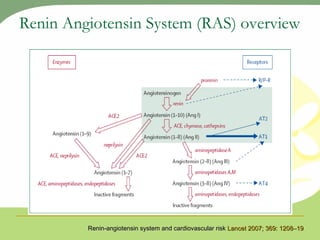
Renin Angiotensin System (RAS) overview Renin-angiotensin system and cardiovascular risk  Lancet 2007; 369: 1208–19
 
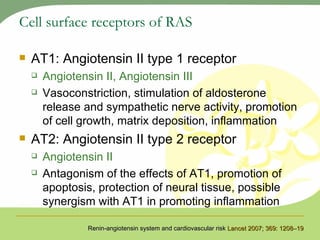
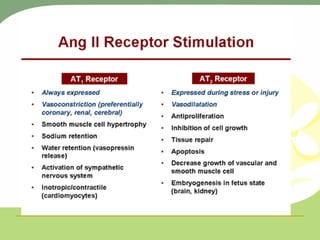
Cell surface receptors of RAS AT1: Angiotensin II type 1 receptor  Angiotensin II, Angiotensin III   Vasoconstriction, stimulation of aldosterone release and sympathetic nerve activity, promotion of cell growth, matrix deposition, inflammation AT2: Angiotensin II type 2 receptor  Angiotensin II Antagonism of the effects of AT1, promotion of apoptosis, protection of neural tissue, possible synergism with AT1 in promoting inflammation Renin-angiotensin system and cardiovascular risk  Lancet 2007; 369: 1208–19
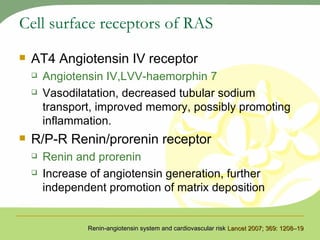
Cell surface receptors of RAS AT4 Angiotensin IV receptor  Angiotensin IV,LVV-haemorphin 7 Vasodilatation, decreased tubular sodium transport, improved memory, possibly promoting inflammation. R/P-R Renin/prorenin receptor  Renin and prorenin   Increase of angiotensin generation, further independent promotion of matrix deposition Renin-angiotensin system and cardiovascular risk  Lancet 2007; 369: 1208–19
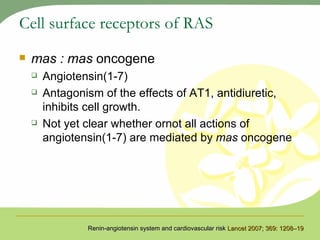
Cell surface receptors of RAS mas : mas  oncogene  Angiotensin(1-7) Antagonism of the effects of AT1, antidiuretic, inhibits cell growth.  Not yet clear whether ornot all actions of angiotensin(1-7) are mediated by  mas  oncogene Renin-angiotensin system and cardiovascular risk  Lancet 2007; 369: 1208–19
 
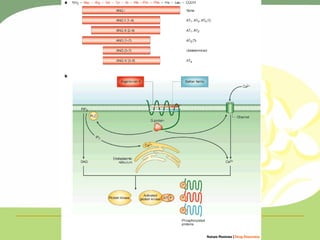
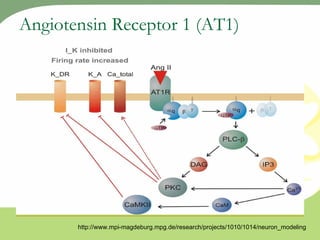
Angiotensin Receptor 1 (AT1) http://www.mpi-magdeburg.mpg.de/research/projects/1010/1014/neuron_modeling
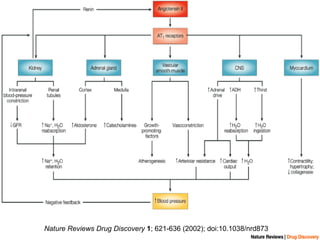
Nature Reviews Drug Discovery   1 ; 621-636 (2002); doi:10.1038/nrd873
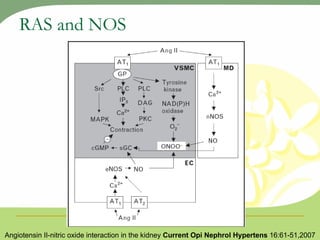
RAS and NOS Angiotensin II-nitric oxide interaction in the kidney  Current Opi Nephrol Hypertens  16:61-51,2007
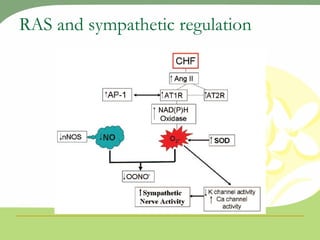
RAS and sympathetic regulation
 
What’s the relationship ? RAS and Left Ventricular Hypertrophy RAS and Atrial fibrillation RAS and Stroke RAS and Atherosclerosis RAS and type II DM RAS and sympathetic regulation RAS and Congestive heart failure
RAS and Left Ventricular Hypertrophy
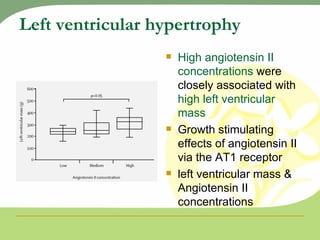
Left ventricular hypertrophy High angiotensin II concentrations  were closely associated with  high left ventricular mass Growth stimulating effects of angiotensin II via the AT1 receptor left ventricular mass &  Angiotensin II concentrations
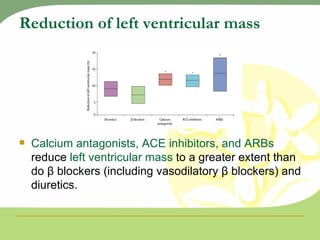
Reduction of left ventricular mass Calcium antagonists, ACE inhibitors, and ARBs  reduce  left ventricular mass  to a greater extent than do β blockers (including vasodilatory β blockers) and diuretics.
Reduction of left ventricular mass Losartan Intervention For Endpoint reduction in hypertension [LIFE] study:  Reduction of left ventricular hypertrophy was greater with the ARB losartan than with the β blocker atenolol Reduction of left ventricular hypertrophy translates into a reduced rate of cardiovascular complications and improved  prognosis .
RAS and Atrial fibrillation
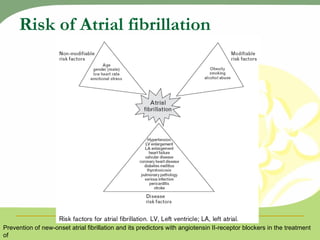
Risk of Atrial fibrillation Prevention of new-onset atrial fibrillation and its predictors with angiotensin II-receptor blockers in the treatment of hypertension and heart failure  Journal of Hypertension 2007, 25:15–23
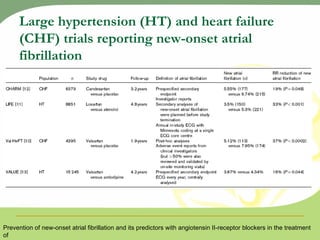
Large hypertension (HT) and heart failure (CHF) trials reporting new-onset atrial fibrillation Prevention of new-onset atrial fibrillation and its predictors with angiotensin II-receptor blockers in the treatment of hypertension and heart failure  Journal of Hypertension 2007, 25:15–23
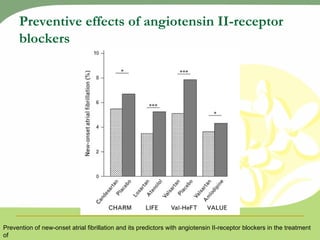
Preventive effects of angiotensin II-receptor blockers Prevention of new-onset atrial fibrillation and its predictors with angiotensin II-receptor blockers in the treatment of hypertension and heart failure  Journal of Hypertension 2007, 25:15–23
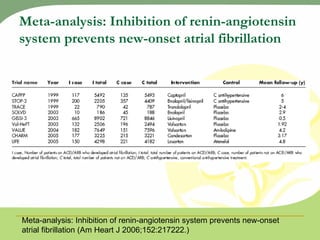
Meta-analysis: Inhibition of renin-angiotensin system prevents new-onset atrial fibrillation Meta-analysis: Inhibition of renin-angiotensin system prevents new-onset atrial fibrillation (Am Heart J 2006;152:217222.)
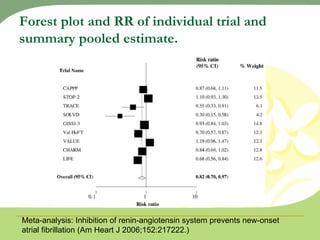
Forest plot and RR of individual trial and summary pooled estimate. Meta-analysis: Inhibition of renin-angiotensin system prevents new-onset atrial fibrillation (Am Heart J 2006;152:217222.)
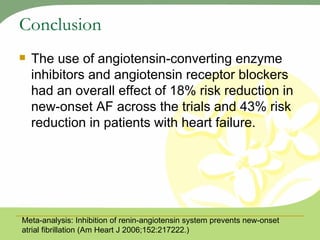
Conclusion The use of angiotensin-converting enzyme inhibitors and angiotensin receptor blockers had an overall effect of 18% risk reduction in new-onset AF across the trials and 43% risk reduction in patients with heart failure. Meta-analysis: Inhibition of renin-angiotensin system prevents new-onset atrial fibrillation (Am Heart J 2006;152:217222.)
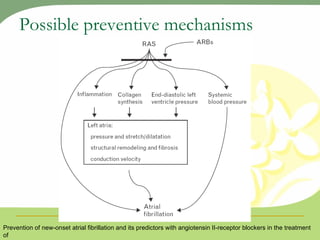
Possible preventive mechanisms Prevention of new-onset atrial fibrillation and its predictors with angiotensin II-receptor blockers in the treatment of hypertension and heart failure  Journal of Hypertension 2007, 25:15–23
RAS and Stroke
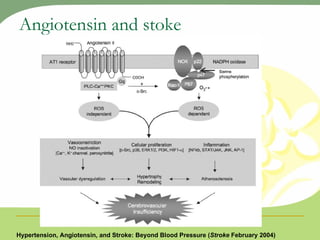
Angiotensin and stoke Hypertension, Angiotensin, and Stroke: Beyond Blood Pressure ( Stroke  February 2004)
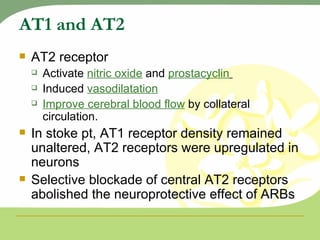
AT1 and AT2 AT2 receptor Activate  nitric oxide  and  prostacyclin   Induced  vasodilatation Improve cerebral blood flow  by collateral circulation. In stoke pt, AT1 receptor density remained unaltered, AT2 receptors were upregulated in neurons Selective blockade of central AT2 receptors abolished the neuroprotective effect of ARBs
AT4 Pharmacological doses of Angiotnesin IV are protective against acute cerebral ischemia by triggering an AT(4)-mediated, NO-dependent intracerebral hemodynamic mechanism. (Cerebroprotective effect of  angiotensin  IV in experimental ischemic stroke in the rat mediated by AT(4) receptors. Journal of Physiology & Pharmacology. 57(3):329-42, 2006 Sep. )
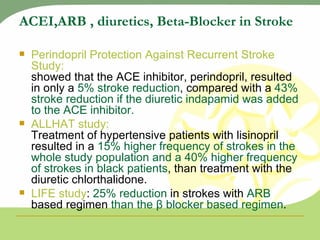
ACEI,ARB , diuretics, Beta-Blocker in Stroke Perindopril Protection Against Recurrent Stroke Study: showed that the ACE inhibitor, perindopril, resulted in only a  5% stroke reduction , compared with a  43% stroke reduction   if the diuretic indapamid was added to the ACE inhibitor. ALLHAT study: Treatment of hypertensive patients with lisinopril resulted in a  15% higher frequency of strokes in the whole study population and a 40% higher frequency of strokes in black patients , than treatment with the diuretic chlorthalidone. LIFE study :  25% reduction  in strokes with  ARB  based regimen  than the β blocker based regimen .
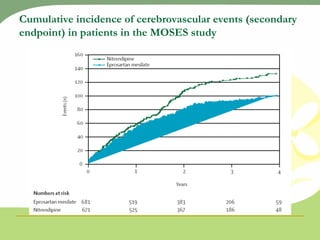
Cumulative incidence of cerebrovascular events (secondary endpoint) in patients in the MOSES study
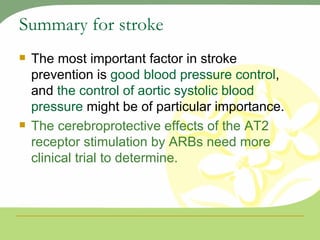
Summary for stroke The most important factor in stroke prevention is  good blood pressure control , and  the control of aortic systolic blood pressure  might be of particular importance. The cerebroprotective effects of the AT2 receptor stimulation by ARBs need more clinical trial to determine.
RAS and Atherosclerosis
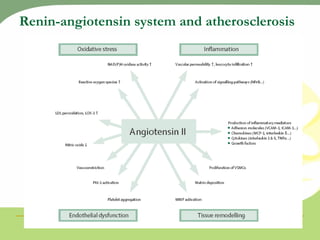
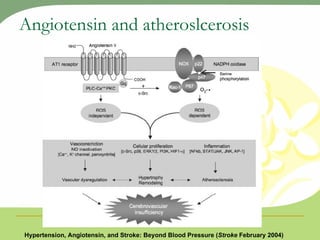
Renin-angiotensin system and atherosclerosis
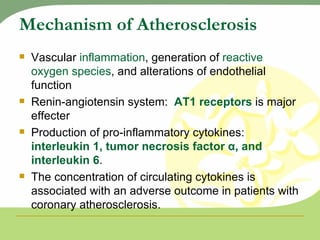
Mechanism of Atherosclerosis Vascular  inflammation , generation of  reactive oxygen species , and alterations of endothelial function Renin-angiotensin system:  AT1 receptors  is major effecter Production of pro-inflammatory cytokines:  interleukin 1, tumor necrosis factor α, and interleukin 6 . The concentration of circulating cytokines is associated with an adverse outcome in patients with coronary atherosclerosis.
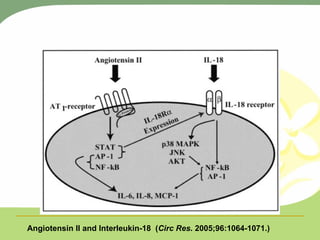
Angiotensin II and Interleukin-18  ( Circ Res . 2005;96:1064-1071.)
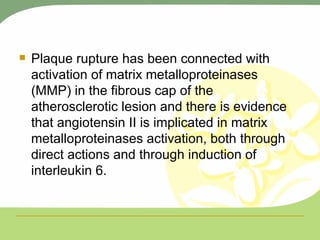
Plaque rupture has been connected with activation of matrix metalloproteinases (MMP) in the fibrous cap of the atherosclerotic lesion and there is evidence that angiotensin II is implicated in matrix metalloproteinases activation, both through direct actions and through induction of interleukin 6.
Angiotensin II stimulates the redox sensitive transcription factor nuclear factor kappa B (NF-κB), which could serve as a unifying signaling system for inflammatory stimuli in atherogenesis ,  through enhanced expression of adhesion molecules (intercellular and vascular adhesion molecules [ICAM-1 and VCAM-1], and E-selectin), monocyte chemo attractant proteins (MCP-1), and interleukin 8.
Angiotensin and atheroslcerosis Hypertension, Angiotensin, and Stroke: Beyond Blood Pressure ( Stroke  February 2004)
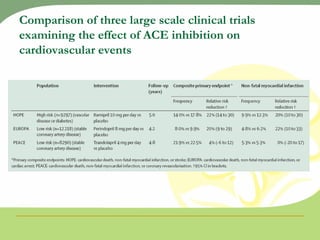
Comparison of three large scale clinical trials examining the effect of ACE inhibition on cardiovascular events
Renin Angiotensin system and type 2 diabetes
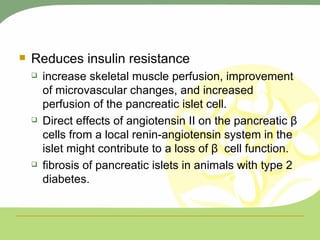
Reduces insulin resistance increase skeletal muscle perfusion, improvement of microvascular changes, and increased perfusion of the pancreatic islet cell. Direct effects of angiotensin II on the pancreatic β cells from a local renin-angiotensin system in the islet might contribute to a loss of β  cell function.  fibrosis of pancreatic islets in animals with type 2 diabetes.
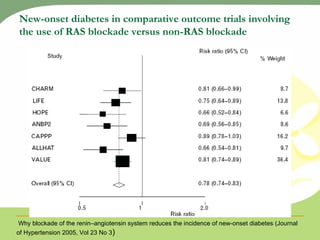
New-onset diabetes in comparative outcome trials involving the use of RAS blockade versus non-RAS blockade Why blockade of the renin–angiotensin system reduces the incidence of new-onset diabetes (Journal of Hypertension 2005, Vol 23 No 3 )
The Diabetes Reduction Assessment with Ramipril and Rosiglitazone Medication trial 5269 patients without cardiovascular disease but with impaired fasting glucose. Ramipril did not reduce the development of diabetes (primary endpoint) compared with placebo within the first 3 years.
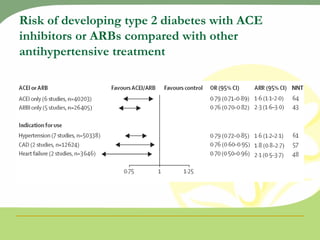
Risk of developing type 2 diabetes with ACE inhibitors or ARBs compared with other antihypertensive treatment
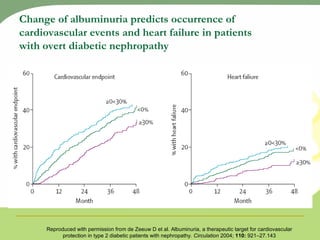
Change of albuminuria predicts occurrence of cardiovascular events and heart failure in patients with overt diabetic nephropathy Reproduced with permission from de Zeeuw D et al. Albuminuria, a therapeutic target for cardiovascular protection in type 2 diabetic patients with nephropathy.  Circulation  2004;  110:  921–27.143
T hanks for your attention
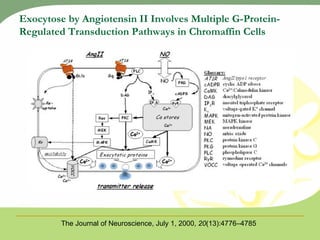
Exocytose by Angiotensin II Involves Multiple G-Protein-Regulated Transduction Pathways in Chromaffin Cells The Journal of Neuroscience, July 1, 2000,  20 (13):4776–4785

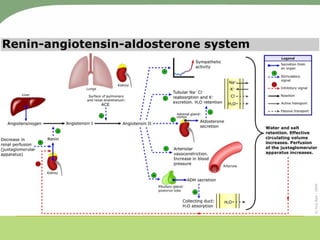
Renin-Angiotensin Aldosterone system

  • 1.
    報告 : R1 林軒名醫師 指導 : VS 林聰明醫師     VS 陳業鵬醫師 Renin-Angiotensin system “Progress in the future”
  • 2.
  • 3.
    Renin Angiotensin System(RAS) overview Renin-angiotensin system and cardiovascular risk Lancet 2007; 369: 1208–19
  • 4.
  • 5.
    Cell surface receptorsof RAS AT1: Angiotensin II type 1 receptor Angiotensin II, Angiotensin III Vasoconstriction, stimulation of aldosterone release and sympathetic nerve activity, promotion of cell growth, matrix deposition, inflammation AT2: Angiotensin II type 2 receptor Angiotensin II Antagonism of the effects of AT1, promotion of apoptosis, protection of neural tissue, possible synergism with AT1 in promoting inflammation Renin-angiotensin system and cardiovascular risk Lancet 2007; 369: 1208–19
  • 6.
    Cell surface receptorsof RAS AT4 Angiotensin IV receptor Angiotensin IV,LVV-haemorphin 7 Vasodilatation, decreased tubular sodium transport, improved memory, possibly promoting inflammation. R/P-R Renin/prorenin receptor Renin and prorenin Increase of angiotensin generation, further independent promotion of matrix deposition Renin-angiotensin system and cardiovascular risk Lancet 2007; 369: 1208–19
  • 7.
    Cell surface receptorsof RAS mas : mas oncogene Angiotensin(1-7) Antagonism of the effects of AT1, antidiuretic, inhibits cell growth. Not yet clear whether ornot all actions of angiotensin(1-7) are mediated by mas oncogene Renin-angiotensin system and cardiovascular risk Lancet 2007; 369: 1208–19
  • 8.
  • 9.
    Angiotensin Receptor 1(AT1) http://www.mpi-magdeburg.mpg.de/research/projects/1010/1014/neuron_modeling
  • 10.
    Nature Reviews DrugDiscovery 1 ; 621-636 (2002); doi:10.1038/nrd873
  • 11.
    RAS and NOSAngiotensin II-nitric oxide interaction in the kidney Current Opi Nephrol Hypertens 16:61-51,2007
  • 12.
  • 13.
  • 14.
    What’s the relationship? RAS and Left Ventricular Hypertrophy RAS and Atrial fibrillation RAS and Stroke RAS and Atherosclerosis RAS and type II DM RAS and sympathetic regulation RAS and Congestive heart failure
  • 15.
    RAS and LeftVentricular Hypertrophy
  • 16.
    Left ventricular hypertrophyHigh angiotensin II concentrations were closely associated with high left ventricular mass Growth stimulating effects of angiotensin II via the AT1 receptor left ventricular mass & Angiotensin II concentrations
  • 17.
    Reduction of leftventricular mass Calcium antagonists, ACE inhibitors, and ARBs reduce left ventricular mass to a greater extent than do β blockers (including vasodilatory β blockers) and diuretics.
  • 18.
    Reduction of leftventricular mass Losartan Intervention For Endpoint reduction in hypertension [LIFE] study: Reduction of left ventricular hypertrophy was greater with the ARB losartan than with the β blocker atenolol Reduction of left ventricular hypertrophy translates into a reduced rate of cardiovascular complications and improved prognosis .
  • 19.
    RAS and Atrialfibrillation
  • 20.
    Risk of Atrialfibrillation Prevention of new-onset atrial fibrillation and its predictors with angiotensin II-receptor blockers in the treatment of hypertension and heart failure Journal of Hypertension 2007, 25:15–23
  • 21.
    Large hypertension (HT)and heart failure (CHF) trials reporting new-onset atrial fibrillation Prevention of new-onset atrial fibrillation and its predictors with angiotensin II-receptor blockers in the treatment of hypertension and heart failure Journal of Hypertension 2007, 25:15–23
  • 22.
    Preventive effects ofangiotensin II-receptor blockers Prevention of new-onset atrial fibrillation and its predictors with angiotensin II-receptor blockers in the treatment of hypertension and heart failure Journal of Hypertension 2007, 25:15–23
  • 23.
    Meta-analysis: Inhibition ofrenin-angiotensin system prevents new-onset atrial fibrillation Meta-analysis: Inhibition of renin-angiotensin system prevents new-onset atrial fibrillation (Am Heart J 2006;152:217222.)
  • 24.
    Forest plot andRR of individual trial and summary pooled estimate. Meta-analysis: Inhibition of renin-angiotensin system prevents new-onset atrial fibrillation (Am Heart J 2006;152:217222.)
  • 25.
    Conclusion The useof angiotensin-converting enzyme inhibitors and angiotensin receptor blockers had an overall effect of 18% risk reduction in new-onset AF across the trials and 43% risk reduction in patients with heart failure. Meta-analysis: Inhibition of renin-angiotensin system prevents new-onset atrial fibrillation (Am Heart J 2006;152:217222.)
  • 26.
    Possible preventive mechanismsPrevention of new-onset atrial fibrillation and its predictors with angiotensin II-receptor blockers in the treatment of hypertension and heart failure Journal of Hypertension 2007, 25:15–23
  • 27.
  • 28.
    Angiotensin and stokeHypertension, Angiotensin, and Stroke: Beyond Blood Pressure ( Stroke February 2004)
  • 29.
    AT1 and AT2AT2 receptor Activate nitric oxide and prostacyclin Induced vasodilatation Improve cerebral blood flow by collateral circulation. In stoke pt, AT1 receptor density remained unaltered, AT2 receptors were upregulated in neurons Selective blockade of central AT2 receptors abolished the neuroprotective effect of ARBs
  • 30.
    AT4 Pharmacological dosesof Angiotnesin IV are protective against acute cerebral ischemia by triggering an AT(4)-mediated, NO-dependent intracerebral hemodynamic mechanism. (Cerebroprotective effect of angiotensin IV in experimental ischemic stroke in the rat mediated by AT(4) receptors. Journal of Physiology & Pharmacology. 57(3):329-42, 2006 Sep. )
  • 31.
    ACEI,ARB , diuretics,Beta-Blocker in Stroke Perindopril Protection Against Recurrent Stroke Study: showed that the ACE inhibitor, perindopril, resulted in only a 5% stroke reduction , compared with a 43% stroke reduction if the diuretic indapamid was added to the ACE inhibitor. ALLHAT study: Treatment of hypertensive patients with lisinopril resulted in a 15% higher frequency of strokes in the whole study population and a 40% higher frequency of strokes in black patients , than treatment with the diuretic chlorthalidone. LIFE study : 25% reduction in strokes with ARB based regimen than the β blocker based regimen .
  • 32.
    Cumulative incidence ofcerebrovascular events (secondary endpoint) in patients in the MOSES study
  • 33.
    Summary for strokeThe most important factor in stroke prevention is good blood pressure control , and the control of aortic systolic blood pressure might be of particular importance. The cerebroprotective effects of the AT2 receptor stimulation by ARBs need more clinical trial to determine.
  • 34.
  • 35.
  • 36.
    Mechanism of AtherosclerosisVascular inflammation , generation of reactive oxygen species , and alterations of endothelial function Renin-angiotensin system: AT1 receptors is major effecter Production of pro-inflammatory cytokines: interleukin 1, tumor necrosis factor α, and interleukin 6 . The concentration of circulating cytokines is associated with an adverse outcome in patients with coronary atherosclerosis.
  • 37.
    Angiotensin II andInterleukin-18 ( Circ Res . 2005;96:1064-1071.)
  • 38.
    Plaque rupture hasbeen connected with activation of matrix metalloproteinases (MMP) in the fibrous cap of the atherosclerotic lesion and there is evidence that angiotensin II is implicated in matrix metalloproteinases activation, both through direct actions and through induction of interleukin 6.
  • 39.
    Angiotensin II stimulatesthe redox sensitive transcription factor nuclear factor kappa B (NF-κB), which could serve as a unifying signaling system for inflammatory stimuli in atherogenesis , through enhanced expression of adhesion molecules (intercellular and vascular adhesion molecules [ICAM-1 and VCAM-1], and E-selectin), monocyte chemo attractant proteins (MCP-1), and interleukin 8.
  • 40.
    Angiotensin and atheroslcerosisHypertension, Angiotensin, and Stroke: Beyond Blood Pressure ( Stroke February 2004)
  • 41.
    Comparison of threelarge scale clinical trials examining the effect of ACE inhibition on cardiovascular events
  • 42.
    Renin Angiotensin systemand type 2 diabetes
  • 43.
    Reduces insulin resistanceincrease skeletal muscle perfusion, improvement of microvascular changes, and increased perfusion of the pancreatic islet cell. Direct effects of angiotensin II on the pancreatic β cells from a local renin-angiotensin system in the islet might contribute to a loss of β cell function. fibrosis of pancreatic islets in animals with type 2 diabetes.
  • 44.
    New-onset diabetes incomparative outcome trials involving the use of RAS blockade versus non-RAS blockade Why blockade of the renin–angiotensin system reduces the incidence of new-onset diabetes (Journal of Hypertension 2005, Vol 23 No 3 )
  • 45.
    The Diabetes ReductionAssessment with Ramipril and Rosiglitazone Medication trial 5269 patients without cardiovascular disease but with impaired fasting glucose. Ramipril did not reduce the development of diabetes (primary endpoint) compared with placebo within the first 3 years.
  • 46.
    Risk of developingtype 2 diabetes with ACE inhibitors or ARBs compared with other antihypertensive treatment
  • 47.
    Change of albuminuriapredicts occurrence of cardiovascular events and heart failure in patients with overt diabetic nephropathy Reproduced with permission from de Zeeuw D et al. Albuminuria, a therapeutic target for cardiovascular protection in type 2 diabetic patients with nephropathy. Circulation 2004; 110: 921–27.143
  • 48.
    T hanks foryour attention
  • 49.
    Exocytose by AngiotensinII Involves Multiple G-Protein-Regulated Transduction Pathways in Chromaffin Cells The Journal of Neuroscience, July 1, 2000, 20 (13):4776–4785