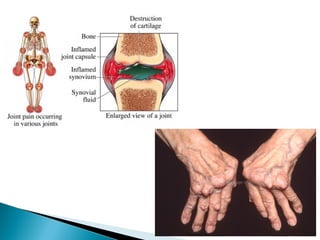
 Auto immune disease
 Joint inflammation, synovial proliferation and
destruction of articular cartilage
 IgM activates compliment and release cytokines
 Attracts neutrophils – lysosomal destruction
Non biologics
Immunosupressants – methotrexate
Sulfasalazine
Chloroquine
Leflunomide
Biologics
TNF inhibitors – infliximab, adalimumab
IL-1 antagonist – Anakinra
Others – prednisolone, gold salts
NSAIDs
Afford symptomatic relief
 Reduce inflammation, pain, swelling
and
morning stiffness
 Improve joint function
 Do not halt the disease progression
Methotrexate:
DMARD of 1st
choice
 Folate antagonist
 Potent immunosuppressant and anti-inflammatory
action
 Inhibits: proliferation of activated T-cells
cytokine production
chemotaxis of neutrophils
 Stimulates apoptosis in immune-inflammatory
cells
 AE: oral ulceration and g.i upset, dose dependent
progressive liver damage
 Contraindications: pregnancy, breastfeeding, liver
disease
 Sulfapyridine + 5ASA – antiinflammatory
 Suppress superoxide radicals and cytokine
production
 Limited effect – main effect in IBD
 AE: neutropenia, thrombocytopenia and hepatitis
 Remission in RA – 3-6 months
 Low toxicity – efficacy is also low
 Reduce monocyte IL1, antigen processing,
lysosomal stabilization
 Used when few joints involved
 Corneal opacity and retinal damage
 TNF 𝞪 inhibitors
 Suppress macrophage and T cell function
 Quick response – depress joint erosion
 Effective monotherapy
 Usually combined to MTX
 Gold salts:
 Depresses CMI
 Aurothiomalate (i.v.)and auranofin (oral)
 More AE – no longer used
 Immunosuppressant and anti-inflammatory
 Decreases the production of inflammatory
cytokines viz. TNF-α, IFN-γ, IL-1
 Rapid symptomatic relief; slows the rate of joint
destruction
 Relieves the severe systemic manifestations of
RA – pericarditis, vasculitis, scleral nodules
 Used on a short-term basis – immediate
relief /acute exacerbations/ to control systemic
manifestations
 Intrarticular injection – triamcinolone,
hydrocortisone, prednisolone involvement of
1 or 2 major joints
 Oral prednisolone
 Low doses and gradual withdrawal of steroids
- recommended
 Metabolic disorder – recurrent episodes of
acute and chronic arthritis
 Abnormal amounts of urates in the body
 Deposition of monosodium urate crystals in
joints and cartilages
 Hyperuricemia
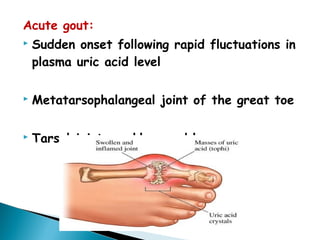
Acute gout:
 Sudden onset following rapid fluctuations in
plasma uric acid level
 Metatarsophalangeal joint of the great toe
 Tarsal joints, ankles, and knees
1. NSAIDs
2. Colchicine
3. Corticosteroids
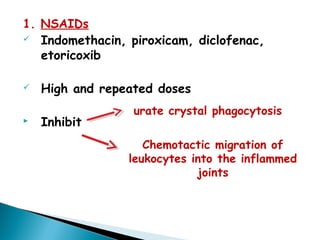
1. NSAIDs
 Indomethacin, piroxicam, diclofenac,
etoricoxib
 High and repeated doses
 Inhibit
urate crystal phagocytosis
Chemotactic migration of
leukocytes into the inflammed
joints
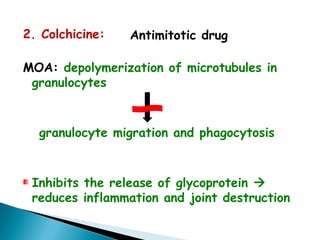
2. Colchicine:
MOA: depolymerization of microtubules in
granulocytes
granulocyte migration and phagocytosis
Inhibits the release of glycoprotein 
reduces inflammation and joint destruction
Antimitotic drug
 Relieves acute attacks of gout
 Used for the prophylaxis of recurrent
episodes of gouty arthritis
A/E:
 Diarrhea, nausea, vomiting
 Hepatic necrosis
 Rarely, bone marrow suppression
 Overdoses: bloody diarrhoea, hematuria,
shock, CNS depression and respiratory failure
Corticosteroids
 Intraarticular injection
 Refractory cases not responding to NSAIDs/
colchicine
Chronic gout:
Chronic hyperuricaemia  development of
tophi in the synovia  joint deformities
 Pain and stiffness in the joints
A. Uricosuric drugs: probenecid, sulfinpyrazone
B. Uric acid synthesis inhibitors : allopurinol
Probenecid
 Inhibits the active renal tubular reabsorption of
uric acid promotes its excretion
 Prevents formation of new tophi
 Plenty of fluid intake – to prevent formation of renal
urate calculi
 A/E: gastric irritation, dyspepsia, allergic dermatitis
Toxicity: convulsions, nephrotic syndrome
 Probenecid x penicillins :
Inhibits urinary excretion of penicillins
prolonged action of penicillins.
 Sulfinpyrazone
Prevents reabsorption of uric acid
 Gastric irritation
 C/I: peptic ulcer
URIC ACID SYNTHESIS INHIBITORS
Allopurinol:
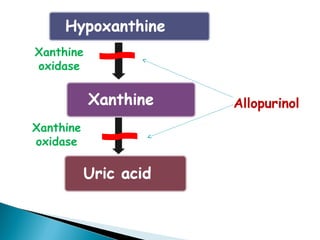
Reduces uric acid synthesis by competitively
inhibiting xanthine oxidase
Allopurinol Alloxanthine  noncompetitive
inhibitor of xanthine oxidase
Allopurinol
Xanthine
oxidase
Xanthine
oxidase
Uses:
 Chronic tophaceous gout
 Recurrent renal urate stones
 Secondary hyperuricemia - cancer chemotherapy/
thiazides
 During treatment of blood dyscrasias
 As antiprotozoal agent – kala-azar
A/E:
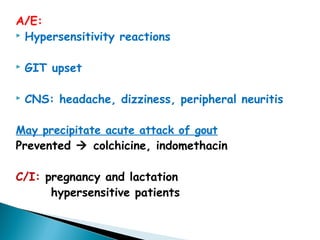
 Hypersensitivity reactions
 GIT upset
 CNS: headache, dizziness, peripheral neuritis
May precipitate acute attack of gout
Prevented  colchicine, indomethacin
C/I: pregnancy and lactation
hypersensitive patients
Thank youThank you