ANGIOTENSIN
CONVERTING ENZYME
INHIBITORS
Dr Mrunal Dhole
Layout
Pharmacology of ACEIs
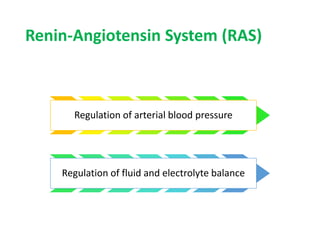
Renin-Angiotension System
Therapeutic Uses of ACEIs
Pharmacology of ACE
Inhibitors
ACEI – Angiotensin Converting Enzyme Inhibitors
History
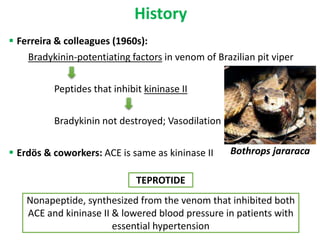
 Ferreira & colleagues (1960s):
Bradykinin-potentiating factors in venom of Brazilian pit viper
Peptides that inhibit kininase II
Bradykinin not destroyed; Vasodilation
 Erdös & coworkers: ACE is same as kininase II
Nonapeptide, synthesized from the venom that inhibited both
ACE and kininase II & lowered blood pressure in patients with
essential hypertension
TEPROTIDE
Bothrops jararaca
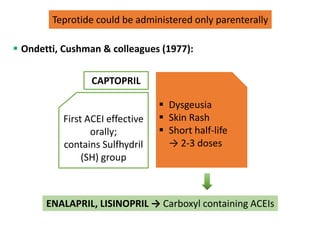
 Ondetti, Cushman & colleagues (1977):
CAPTOPRIL
Teprotide could be administered only parenterally
First ACEI effective
orally;
contains Sulfhydril
(SH) group
 Dysgeusia
 Skin Rash
 Short half-life
→ 2-3 doses
ENALAPRIL, LISINOPRIL → Carboxyl containing ACEIs
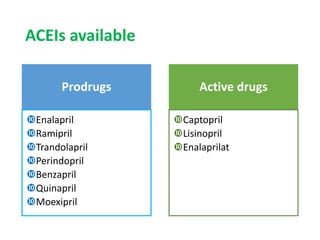
Prodrugs
Enalapril
Ramipril
Trandolapril
Perindopril
Benzapril
Quinapril
Moexipril
Active drugs
Captopril
Lisinopril
Enalaprilat
ACEIs available
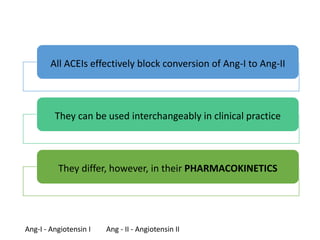
All ACEIs effectively block conversion of Ang-I to Ang-II
They can be used interchangeably in clinical practice
They differ, however, in their PHARMACOKINETICS
Ang-I - Angiotensin I Ang - II - Angiotensin II
ACEIs: Mechanism of
Action
Renin-Angiotensin System (RAS)
Regulation of arterial blood pressure
Regulation of fluid and electrolyte balance
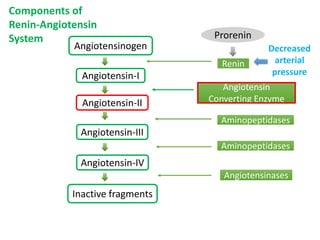
Angiotensinogen
Angiotensin-I
Angiotensin-II
Angiotensin-III
Angiotensin-IV
Inactive fragments
Renin
Angiotensin
Converting Enzyme
Aminopeptidases
Angiotensinases
Components of
Renin-Angiotensin
System Prorenin
Decreased
arterial
pressure
Aminopeptidases
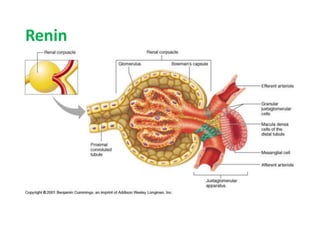
Renin
 Prorenin Renin
 Major determinant of rate of Ang-II production
 Synthesized and stored in the granular juxtaglomerular cells
located in the glomerular afferent arterioles
 Released via exocytosis into renal arterial circulation
 Enzyme; cleaves Ang-I from Angiotensinogen by proteolysis
Proconvertase I/Cathepsin B
Proteolysis
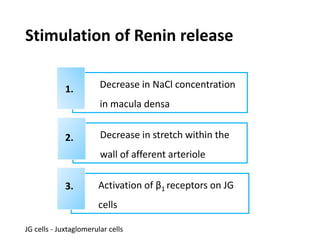
Stimulation of Renin release
Decrease in NaCl concentration
in macula densa
Decrease in stretch within the
wall of afferent arteriole
Activation of β1 receptors on JG
cells
1.
3.
2.
JG cells - Juxtaglomerular cells
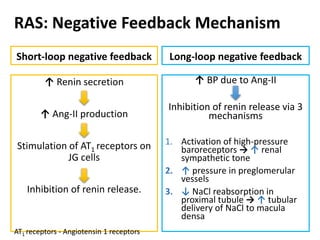
RAS: Negative Feedback Mechanism
Short-loop negative feedback
↑ Renin secretion
↑ Ang-II production
Stimulation of AT1 receptors on
JG cells
Inhibition of renin release.
Long-loop negative feedback
↑ BP due to Ang-II
Inhibition of renin release via 3
mechanisms
1. Activation of high-pressure
baroreceptors → ↑ renal
sympathetic tone
2. ↑ pressure in preglomerular
vessels
3. ↓ NaCl reabsorption in
proximal tubule → ↑ tubular
delivery of NaCl to macula
densa
AT1 receptors - Angiotensin 1 receptors
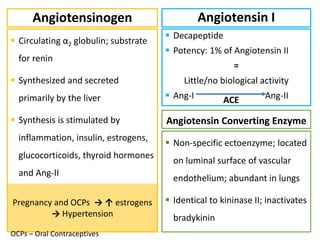
Angiotensinogen
 Circulating α2 globulin; substrate
for renin
 Synthesized and secreted
primarily by the liver
 Synthesis is stimulated by
inflammation, insulin, estrogens,
glucocorticoids, thyroid hormones
and Ang-II
Angiotensin I
 Decapeptide
 Potency: 1% of Angiotensin II
=
Little/no biological activity
 Ang-I Ang-II
Pregnancy and OCPs → ↑ estrogens
→ Hypertension
ACE
Angiotensin Converting Enzyme
 Non-specific ectoenzyme; located
on luminal surface of vascular
endothelium; abundant in lungs
 Identical to kininase II; inactivates
bradykinin
OCPs – Oral Contraceptives
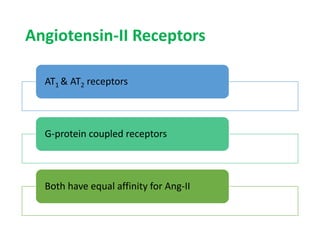
Angiotensin-II Receptors
AT1 & AT2 receptors
G-protein coupled receptors
Both have equal affinity for Ang-II
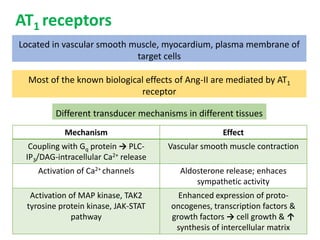
AT1 receptors
Different transducer mechanisms in different tissues
Located in vascular smooth muscle, myocardium, plasma membrane of
target cells
Most of the known biological effects of Ang-II are mediated by AT1
receptor
Mechanism Effect
Coupling with Gq protein → PLC-
IP3/DAG-intracellular Ca2+ release
Vascular smooth muscle contraction
Activation of Ca2+ channels Aldosterone release; enhaces
sympathetic activity
Activation of MAP kinase, TAK2
tyrosine protein kinase, JAK-STAT
pathway
Enhanced expression of proto-
oncogenes, transcription factors &
growth factors → cell growth & ↑
synthesis of intercellular matrix
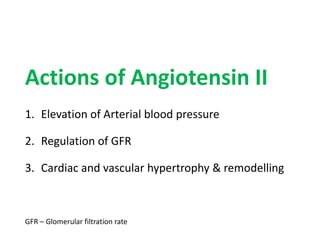
Actions of Angiotensin II
1. Elevation of Arterial blood pressure
2. Regulation of GFR
3. Cardiac and vascular hypertrophy & remodelling
GFR – Glomerular filtration rate
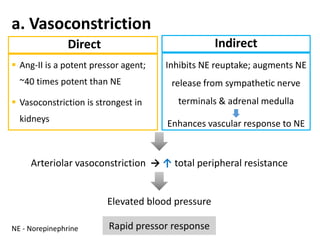
a. Vasoconstriction
Direct
 Ang-II is a potent pressor agent;
~40 times potent than NE
 Vasoconstriction is strongest in
kidneys
Indirect
Inhibits NE reuptake; augments NE
release from sympathetic nerve
terminals & adrenal medulla
Enhances vascular response to NE
Arteriolar vasoconstriction → ↑ total peripheral resistance
Elevated blood pressure
Rapid pressor responseNE - Norepinephrine
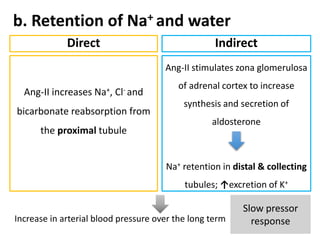
b. Retention of Na+ and water
Direct
Ang-II increases Na+, Cl- and
bicarbonate reabsorption from
the proximal tubule
Indirect
Ang-II stimulates zona glomerulosa
of adrenal cortex to increase
synthesis and secretion of
aldosterone
Na+ retention in distal & collecting
tubules; ↑excretion of K+
Increase in arterial blood pressure over the long term
Slow pressor
response
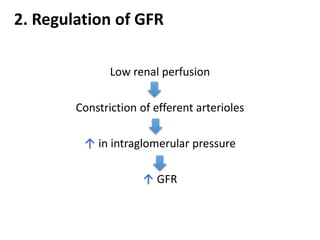
Low renal perfusion
Constriction of efferent arterioles
↑ in intraglomerular pressure
↑ GFR
2. Regulation of GFR
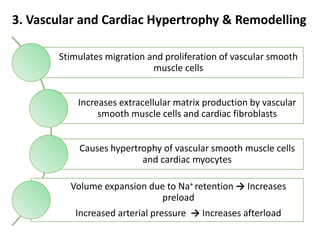
3. Vascular and Cardiac Hypertrophy & Remodelling
Stimulates migration and proliferation of vascular smooth
muscle cells
Increases extracellular matrix production by vascular
smooth muscle cells and cardiac fibroblasts
Causes hypertrophy of vascular smooth muscle cells
and cardiac myocytes
Volume expansion due to Na+ retention → Increases
preload
Increased arterial pressure → Increases afterload
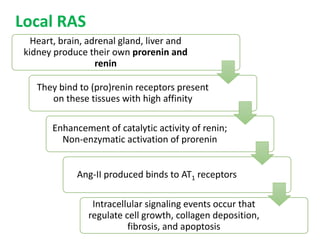
Local RAS
Heart, brain, adrenal gland, liver and
kidney produce their own prorenin and
renin
They bind to (pro)renin receptors present
on these tissues with high affinity
Enhancement of catalytic activity of renin;
Non-enzymatic activation of prorenin
Ang-II produced binds to AT1 receptors
Intracellular signaling events occur that
regulate cell growth, collagen deposition,
fibrosis, and apoptosis
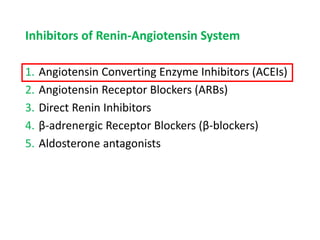
Inhibitors of Renin-Angiotensin System
1. Angiotensin Converting Enzyme Inhibitors (ACEIs)
2. Angiotensin Receptor Blockers (ARBs)
3. Direct Renin Inhibitors
4. β-adrenergic Receptor Blockers (β-blockers)
5. Aldosterone antagonists
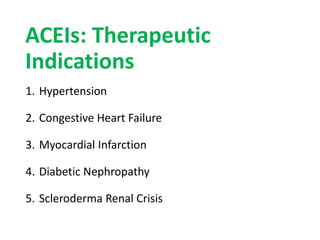
ACEIs: Therapeutic
Indications
1. Hypertension
2. Congestive Heart Failure
3. Myocardial Infarction
4. Diabetic Nephropathy
5. Scleroderma Renal Crisis
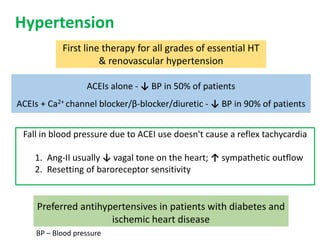
Hypertension
First line therapy for all grades of essential HT
& renovascular hypertension
ACEIs alone - ↓ BP in 50% of patients
ACEIs + Ca2+ channel blocker/β-blocker/diuretic - ↓ BP in 90% of patients
Preferred antihypertensives in patients with diabetes and
ischemic heart disease
Fall in blood pressure due to ACEI use doesn't cause a reflex tachycardia
1. Ang-II usually ↓ vagal tone on the heart; ↑ sympathetic outflow
2. Resetting of baroreceptor sensitivity
BP – Blood pressure
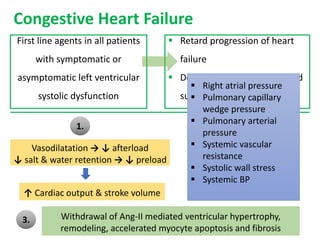
Congestive Heart Failure
First line agents in all patients
with symptomatic or
asymptomatic left ventricular
systolic dysfunction
 Retard progression of heart
failure
 Decrease incidence of MI and
sudden death
Vasodilatation → ↓ afterload
↓ salt & water retention → ↓ preload
↑ Cardiac output & stroke volume
Reduction in levels of
hemodynamic
parameters
1. 2.
Withdrawal of Ang-II mediated ventricular hypertrophy,
remodeling, accelerated myocyte apoptosis and fibrosis
3.
 Right atrial pressure
 Pulmonary capillary
wedge pressure
 Pulmonary arterial
pressure
 Systemic vascular
resistance
 Systolic wall stress
 Systemic BP
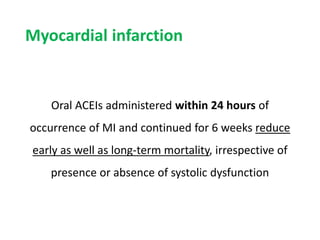
Myocardial infarction
Oral ACEIs administered within 24 hours of
occurrence of MI and continued for 6 weeks reduce
early as well as long-term mortality, irrespective of
presence or absence of systolic dysfunction
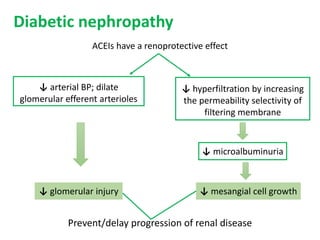
Diabetic nephropathy
ACEIs have a renoprotective effect
Prevent/delay progression of renal disease
↓ arterial BP; dilate
glomerular efferent arterioles
↓ hyperfiltration by increasing
the permeability selectivity of
filtering membrane
↓ glomerular injury ↓ mesangial cell growth
↓ microalbuminuria
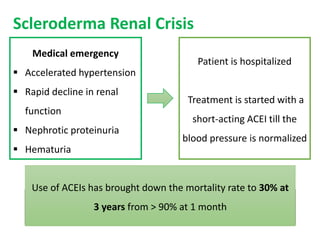
Scleroderma Renal Crisis
Medical emergency
 Accelerated hypertension
 Rapid decline in renal
function
 Nephrotic proteinuria
 Hematuria
Patient is hospitalized
Treatment is started with a
short-acting ACEI till the
blood pressure is normalized
↓ Systolic blood pressure by 20 mmHg
↓ Diastolic pressure by 10 mmHg
Every 24 hours
GOAL
Use of ACEIs has brought down the mortality rate to 30% at
3 years from > 90% at 1 month
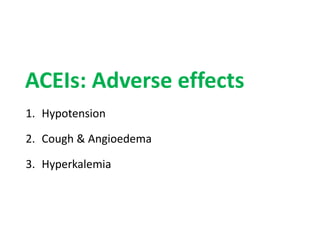
ACEIs: Adverse effects
1. Hypotension
2. Cough & Angioedema
3. Hyperkalemia
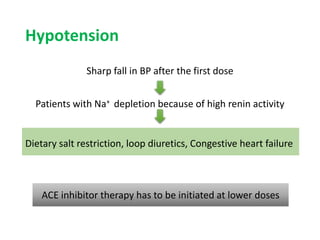
Hypotension
Sharp fall in BP after the first dose
Patients with Na+ depletion because of high renin activity
Dietary salt restriction, loop diuretics, Congestive heart failure
ACE inhibitor therapy has to be initiated at lower doses
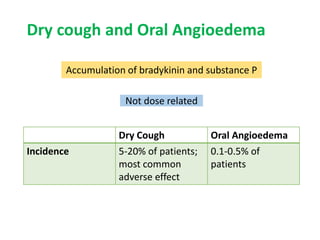
Dry Cough Oral Angioedema
Incidence 5-20% of patients;
most common
adverse effect
0.1-0.5% of
patients
Dry cough and Oral Angioedema
Accumulation of bradykinin and substance P
Not dose related
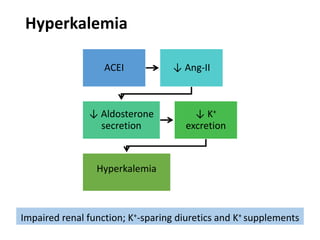
Hyperkalemia
ACEI ↓ Ang-II
↓ Aldosterone
secretion
↓ K+
excretion
Hyperkalemia
Impaired renal function; K+-sparing diuretics and K+ supplements
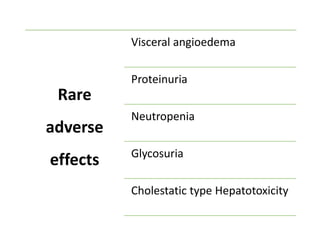
Rare
adverse
effects
Visceral angioedema
Proteinuria
Neutropenia
Glycosuria
Cholestatic type Hepatotoxicity
ACEIs: Contraindications
1. Pregnancy
2. Bilateral renal artery stenosis
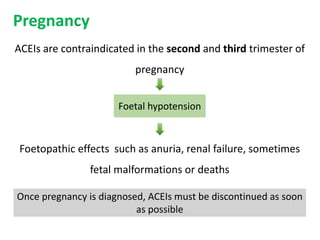
Pregnancy
ACEIs are contraindicated in the second and third trimester of
pregnancy
Foetopathic effects such as anuria, renal failure, sometimes
fetal malformations or deaths
Foetal hypotension
Once pregnancy is diagnosed, ACEIs must be discontinued as soon
as possible
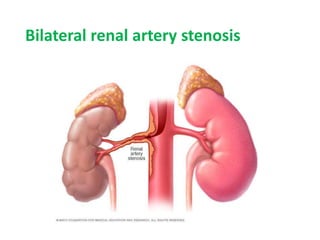
Bilateral renal artery stenosis
↓ Ang-II production
Dilatation of efferent glomerular arteriole
↓ GFR
Renal failure
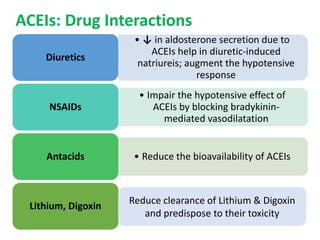
ACEIs: Drug Interactions
• ↓ in aldosterone secretion due to
ACEIs help in diuretic-induced
natriureis; augment the hypotensive
response
Diuretics
• Impair the hypotensive effect of
ACEIs by blocking bradykinin-
mediated vasodilatation
NSAIDs
• Reduce the bioavailability of ACEIsAntacids
Lithium, Digoxin
Reduce clearance of Lithium & Digoxin
and predispose to their toxicity
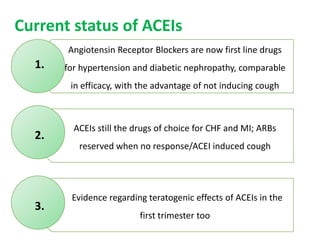
Angiotensin Receptor Blockers are now first line drugs
for hypertension and diabetic nephropathy, comparable
in efficacy, with the advantage of not inducing cough
ACEIs still the drugs of choice for CHF and MI; ARBs
reserved when no response/ACEI induced cough
Evidence regarding teratogenic effects of ACEIs in the
first trimester too
Current status of ACEIs
1.
2.
3.
References
1. Hilal-Dandan R. Renin and Angiotensin. In: Brunton LL, Chabner
BA, Knollmann BC, editors. Goodman & Gilman’s The
Pharmacological Basis of Therapeutics. 12th ed. New York. The
McGraw-Hill Companies, Inc.; 2011.
2. Michel T, Hoffmann BB. Treatment of Myocardial Ischemia and
Hypertension. In: Brunton LL, Chabner BA, Knollmann BC,
editors. Goodman & Gilman’s The Pharmacological Basis of
Therapeutics. 12th ed. New York. The McGraw-Hill Companies,
Inc.; 2011.
3. Maron BA, Rocco TP. Pharmacotherapy of Congestive Heart
Failure. In: Brunton LL, Chabner BA, Knollmann BC, editors.
Goodman & Gilman’s The Pharmacological Basis of
Therapeutics. 12th ed. New York. The McGraw-Hill Companies,
Inc.; 2011.
4. Reid IA. Vasoactive Peptides. In: Katzung BG, Trevor AJ, editors.
Basic & Clinical Pharmacology. 13th ed. New Delhi. McGraw Hill
Education (India) Private Limited; 2015.
5. Benowitz NL. Antihypertensive agents. In: Katzung BG, Trevor
AJ, editors. Basic & Clinical Pharmacology. 13th ed. New Delhi.
McGraw Hill Education (India) Private Limited; 2015.
References
6. Katzung BG. Drugs used in Heart Failure. In: Katzung BG, Trevor
AJ, editors. Basic & Clinical Pharmacology. 13th ed. New Delhi.
McGraw Hill Education (India) Private Limited; 2015.
7. Tripathi KD. Essentials of Medical Pharmacology. 7th Ed. New
Delhi: Jaypee Brothers Medical Publishers (P) Ltd; 2013.
Chapter 36, Drugs Affecting Renin-Angiotensin System and
Plasma Kinins; p.495-511.
8. Sharma HL, Sharma KK. Sharma’s & Sharma’s Principles of
Pharmacology. 3rd Ed. New Delhi: Paras Medical Publisher;
2017. Chapter 18, Renin-Angiotensin System and its Inhibitors;
p.254-61.
9. Sharma HL, Sharma KK. Sharma’s & Sharma’s Principles of
Pharmacology. 3rd Ed. New Delhi: Paras Medical Publisher;
2017. Chapter 19, Drug Therapy of Hypertension; p.262-81.
10. Sharma HL, Sharma KK. Sharma’s & Sharma’s Principles of
Pharmacology. 3rd Ed. New Delhi: Paras Medical Publisher;
2017. Chapter 18, Drug Therapy of Heart failure; p.315-27.
Thank you.

ACE inhibitors

  • 1.
  • 2.
  • 3.
    Pharmacology of ACE Inhibitors ACEI– Angiotensin Converting Enzyme Inhibitors
  • 4.
    History  Ferreira &colleagues (1960s): Bradykinin-potentiating factors in venom of Brazilian pit viper Peptides that inhibit kininase II Bradykinin not destroyed; Vasodilation  Erdös & coworkers: ACE is same as kininase II Nonapeptide, synthesized from the venom that inhibited both ACE and kininase II & lowered blood pressure in patients with essential hypertension TEPROTIDE Bothrops jararaca
  • 5.
     Ondetti, Cushman& colleagues (1977): CAPTOPRIL Teprotide could be administered only parenterally First ACEI effective orally; contains Sulfhydril (SH) group  Dysgeusia  Skin Rash  Short half-life → 2-3 doses ENALAPRIL, LISINOPRIL → Carboxyl containing ACEIs
  • 6.
  • 7.
    All ACEIs effectivelyblock conversion of Ang-I to Ang-II They can be used interchangeably in clinical practice They differ, however, in their PHARMACOKINETICS Ang-I - Angiotensin I Ang - II - Angiotensin II
  • 8.
  • 9.
    Renin-Angiotensin System (RAS) Regulationof arterial blood pressure Regulation of fluid and electrolyte balance
  • 10.
  • 11.
    Renin  Prorenin Renin Major determinant of rate of Ang-II production  Synthesized and stored in the granular juxtaglomerular cells located in the glomerular afferent arterioles  Released via exocytosis into renal arterial circulation  Enzyme; cleaves Ang-I from Angiotensinogen by proteolysis Proconvertase I/Cathepsin B Proteolysis
  • 12.
    Stimulation of Reninrelease Decrease in NaCl concentration in macula densa Decrease in stretch within the wall of afferent arteriole Activation of β1 receptors on JG cells 1. 3. 2. JG cells - Juxtaglomerular cells
  • 13.
    RAS: Negative FeedbackMechanism Short-loop negative feedback ↑ Renin secretion ↑ Ang-II production Stimulation of AT1 receptors on JG cells Inhibition of renin release. Long-loop negative feedback ↑ BP due to Ang-II Inhibition of renin release via 3 mechanisms 1. Activation of high-pressure baroreceptors → ↑ renal sympathetic tone 2. ↑ pressure in preglomerular vessels 3. ↓ NaCl reabsorption in proximal tubule → ↑ tubular delivery of NaCl to macula densa AT1 receptors - Angiotensin 1 receptors
  • 14.
    Angiotensinogen  Circulating α2globulin; substrate for renin  Synthesized and secreted primarily by the liver  Synthesis is stimulated by inflammation, insulin, estrogens, glucocorticoids, thyroid hormones and Ang-II Angiotensin I  Decapeptide  Potency: 1% of Angiotensin II = Little/no biological activity  Ang-I Ang-II Pregnancy and OCPs → ↑ estrogens → Hypertension ACE Angiotensin Converting Enzyme  Non-specific ectoenzyme; located on luminal surface of vascular endothelium; abundant in lungs  Identical to kininase II; inactivates bradykinin OCPs – Oral Contraceptives
  • 15.
    Angiotensin-II Receptors AT1 &AT2 receptors G-protein coupled receptors Both have equal affinity for Ang-II
  • 16.
    AT1 receptors Different transducermechanisms in different tissues Located in vascular smooth muscle, myocardium, plasma membrane of target cells Most of the known biological effects of Ang-II are mediated by AT1 receptor Mechanism Effect Coupling with Gq protein → PLC- IP3/DAG-intracellular Ca2+ release Vascular smooth muscle contraction Activation of Ca2+ channels Aldosterone release; enhaces sympathetic activity Activation of MAP kinase, TAK2 tyrosine protein kinase, JAK-STAT pathway Enhanced expression of proto- oncogenes, transcription factors & growth factors → cell growth & ↑ synthesis of intercellular matrix
  • 17.
    Actions of AngiotensinII 1. Elevation of Arterial blood pressure 2. Regulation of GFR 3. Cardiac and vascular hypertrophy & remodelling GFR – Glomerular filtration rate
  • 18.
    a. Vasoconstriction Direct  Ang-IIis a potent pressor agent; ~40 times potent than NE  Vasoconstriction is strongest in kidneys Indirect Inhibits NE reuptake; augments NE release from sympathetic nerve terminals & adrenal medulla Enhances vascular response to NE Arteriolar vasoconstriction → ↑ total peripheral resistance Elevated blood pressure Rapid pressor responseNE - Norepinephrine
  • 19.
    b. Retention ofNa+ and water Direct Ang-II increases Na+, Cl- and bicarbonate reabsorption from the proximal tubule Indirect Ang-II stimulates zona glomerulosa of adrenal cortex to increase synthesis and secretion of aldosterone Na+ retention in distal & collecting tubules; ↑excretion of K+ Increase in arterial blood pressure over the long term Slow pressor response
  • 20.
    Low renal perfusion Constrictionof efferent arterioles ↑ in intraglomerular pressure ↑ GFR 2. Regulation of GFR
  • 21.
    3. Vascular andCardiac Hypertrophy & Remodelling Stimulates migration and proliferation of vascular smooth muscle cells Increases extracellular matrix production by vascular smooth muscle cells and cardiac fibroblasts Causes hypertrophy of vascular smooth muscle cells and cardiac myocytes Volume expansion due to Na+ retention → Increases preload Increased arterial pressure → Increases afterload
  • 22.
    Local RAS Heart, brain,adrenal gland, liver and kidney produce their own prorenin and renin They bind to (pro)renin receptors present on these tissues with high affinity Enhancement of catalytic activity of renin; Non-enzymatic activation of prorenin Ang-II produced binds to AT1 receptors Intracellular signaling events occur that regulate cell growth, collagen deposition, fibrosis, and apoptosis
  • 23.
    Inhibitors of Renin-AngiotensinSystem 1. Angiotensin Converting Enzyme Inhibitors (ACEIs) 2. Angiotensin Receptor Blockers (ARBs) 3. Direct Renin Inhibitors 4. β-adrenergic Receptor Blockers (β-blockers) 5. Aldosterone antagonists
  • 24.
    ACEIs: Therapeutic Indications 1. Hypertension 2.Congestive Heart Failure 3. Myocardial Infarction 4. Diabetic Nephropathy 5. Scleroderma Renal Crisis
  • 25.
    Hypertension First line therapyfor all grades of essential HT & renovascular hypertension ACEIs alone - ↓ BP in 50% of patients ACEIs + Ca2+ channel blocker/β-blocker/diuretic - ↓ BP in 90% of patients Preferred antihypertensives in patients with diabetes and ischemic heart disease Fall in blood pressure due to ACEI use doesn't cause a reflex tachycardia 1. Ang-II usually ↓ vagal tone on the heart; ↑ sympathetic outflow 2. Resetting of baroreceptor sensitivity BP – Blood pressure
  • 26.
    Congestive Heart Failure Firstline agents in all patients with symptomatic or asymptomatic left ventricular systolic dysfunction  Retard progression of heart failure  Decrease incidence of MI and sudden death Vasodilatation → ↓ afterload ↓ salt & water retention → ↓ preload ↑ Cardiac output & stroke volume Reduction in levels of hemodynamic parameters 1. 2. Withdrawal of Ang-II mediated ventricular hypertrophy, remodeling, accelerated myocyte apoptosis and fibrosis 3.  Right atrial pressure  Pulmonary capillary wedge pressure  Pulmonary arterial pressure  Systemic vascular resistance  Systolic wall stress  Systemic BP
  • 27.
    Myocardial infarction Oral ACEIsadministered within 24 hours of occurrence of MI and continued for 6 weeks reduce early as well as long-term mortality, irrespective of presence or absence of systolic dysfunction
  • 28.
    Diabetic nephropathy ACEIs havea renoprotective effect Prevent/delay progression of renal disease ↓ arterial BP; dilate glomerular efferent arterioles ↓ hyperfiltration by increasing the permeability selectivity of filtering membrane ↓ glomerular injury ↓ mesangial cell growth ↓ microalbuminuria
  • 29.
    Scleroderma Renal Crisis Medicalemergency  Accelerated hypertension  Rapid decline in renal function  Nephrotic proteinuria  Hematuria Patient is hospitalized Treatment is started with a short-acting ACEI till the blood pressure is normalized ↓ Systolic blood pressure by 20 mmHg ↓ Diastolic pressure by 10 mmHg Every 24 hours GOAL Use of ACEIs has brought down the mortality rate to 30% at 3 years from > 90% at 1 month
  • 30.
    ACEIs: Adverse effects 1.Hypotension 2. Cough & Angioedema 3. Hyperkalemia
  • 31.
    Hypotension Sharp fall inBP after the first dose Patients with Na+ depletion because of high renin activity Dietary salt restriction, loop diuretics, Congestive heart failure ACE inhibitor therapy has to be initiated at lower doses
  • 32.
    Dry Cough OralAngioedema Incidence 5-20% of patients; most common adverse effect 0.1-0.5% of patients Dry cough and Oral Angioedema Accumulation of bradykinin and substance P Not dose related
  • 33.
    Hyperkalemia ACEI ↓ Ang-II ↓Aldosterone secretion ↓ K+ excretion Hyperkalemia Impaired renal function; K+-sparing diuretics and K+ supplements
  • 34.
  • 35.
    ACEIs: Contraindications 1. Pregnancy 2.Bilateral renal artery stenosis
  • 36.
    Pregnancy ACEIs are contraindicatedin the second and third trimester of pregnancy Foetopathic effects such as anuria, renal failure, sometimes fetal malformations or deaths Foetal hypotension Once pregnancy is diagnosed, ACEIs must be discontinued as soon as possible
  • 37.
    Bilateral renal arterystenosis ↓ Ang-II production Dilatation of efferent glomerular arteriole ↓ GFR Renal failure
  • 38.
    ACEIs: Drug Interactions •↓ in aldosterone secretion due to ACEIs help in diuretic-induced natriureis; augment the hypotensive response Diuretics • Impair the hypotensive effect of ACEIs by blocking bradykinin- mediated vasodilatation NSAIDs • Reduce the bioavailability of ACEIsAntacids Lithium, Digoxin Reduce clearance of Lithium & Digoxin and predispose to their toxicity
  • 39.
    Angiotensin Receptor Blockersare now first line drugs for hypertension and diabetic nephropathy, comparable in efficacy, with the advantage of not inducing cough ACEIs still the drugs of choice for CHF and MI; ARBs reserved when no response/ACEI induced cough Evidence regarding teratogenic effects of ACEIs in the first trimester too Current status of ACEIs 1. 2. 3.
  • 40.
    References 1. Hilal-Dandan R.Renin and Angiotensin. In: Brunton LL, Chabner BA, Knollmann BC, editors. Goodman & Gilman’s The Pharmacological Basis of Therapeutics. 12th ed. New York. The McGraw-Hill Companies, Inc.; 2011. 2. Michel T, Hoffmann BB. Treatment of Myocardial Ischemia and Hypertension. In: Brunton LL, Chabner BA, Knollmann BC, editors. Goodman & Gilman’s The Pharmacological Basis of Therapeutics. 12th ed. New York. The McGraw-Hill Companies, Inc.; 2011. 3. Maron BA, Rocco TP. Pharmacotherapy of Congestive Heart Failure. In: Brunton LL, Chabner BA, Knollmann BC, editors. Goodman & Gilman’s The Pharmacological Basis of Therapeutics. 12th ed. New York. The McGraw-Hill Companies, Inc.; 2011. 4. Reid IA. Vasoactive Peptides. In: Katzung BG, Trevor AJ, editors. Basic & Clinical Pharmacology. 13th ed. New Delhi. McGraw Hill Education (India) Private Limited; 2015. 5. Benowitz NL. Antihypertensive agents. In: Katzung BG, Trevor AJ, editors. Basic & Clinical Pharmacology. 13th ed. New Delhi. McGraw Hill Education (India) Private Limited; 2015.
  • 41.
    References 6. Katzung BG.Drugs used in Heart Failure. In: Katzung BG, Trevor AJ, editors. Basic & Clinical Pharmacology. 13th ed. New Delhi. McGraw Hill Education (India) Private Limited; 2015. 7. Tripathi KD. Essentials of Medical Pharmacology. 7th Ed. New Delhi: Jaypee Brothers Medical Publishers (P) Ltd; 2013. Chapter 36, Drugs Affecting Renin-Angiotensin System and Plasma Kinins; p.495-511. 8. Sharma HL, Sharma KK. Sharma’s & Sharma’s Principles of Pharmacology. 3rd Ed. New Delhi: Paras Medical Publisher; 2017. Chapter 18, Renin-Angiotensin System and its Inhibitors; p.254-61. 9. Sharma HL, Sharma KK. Sharma’s & Sharma’s Principles of Pharmacology. 3rd Ed. New Delhi: Paras Medical Publisher; 2017. Chapter 19, Drug Therapy of Hypertension; p.262-81. 10. Sharma HL, Sharma KK. Sharma’s & Sharma’s Principles of Pharmacology. 3rd Ed. New Delhi: Paras Medical Publisher; 2017. Chapter 18, Drug Therapy of Heart failure; p.315-27.
  • 42.

Editor's Notes

  • #5 Teprotide could be given only parenterally and had a short duration of action
  • #6 Lisinopril – Lysine derivative of Enalapril
  • #7 Inactive prodrugs Hydrolysed by hepatic esterases to their active form e.g. Enalapril → Enalaprilat Better oral bioavailabilty More potent
  • #9 No need to change the dose of Fosinopril
  • #14 Dietary salt intake & Arterial blood pressure influence renin secretion
  • #17 Ang-II is an octapeptide
  • #19 Preeclampsia is associated with the development of agonistic auto-antibodies against the AT1 receptor
  • #25 Direct cellular effects; non-hemodynamically mediated Hemodynamically mediated
  • #33 What is Scleroderma
  • #35 No correlation between the plasma renin activity and hypertensive response in the long term
  • #36 ACE is abundantly present on the vascular endothelium in lungs, ACEI inhibits ACE, bradykinin is not destroyed leading to cough
  • #41 Stenosis can be due to atherosclerosis or fibromuscular dysplasia In hypotension, effects of Ang-II on the efferent arteriole predominate so that Ang-II increases GFR
  • #42 Potassium supplements/ Potassium sparing diuretics will cause hyperkalemia Bradykinin is a potent vasodilator by its action on B2 receptor. Vasodilatation results due to release of EDRF (NO), PGE2 and PGI2.