CHAPTER 2: 
COMPONENTS & CLASSIFICATION OF ROBOTS 
AUTOMATION
Learning Outcomes: 
Upon completion this chapter, student should be 
able:- 
1. Explain the common major components of 
industrial robot automation 
2. Explain classification of robots automation
Contents 
1. Common major components of industrial robot 
automation 
2. Classification of robots automation
Components of Industrial Robot 
Automation 
 Controller 
 Manipulator 
 Actuator 
 End Effector 
 Sensor
Controller 
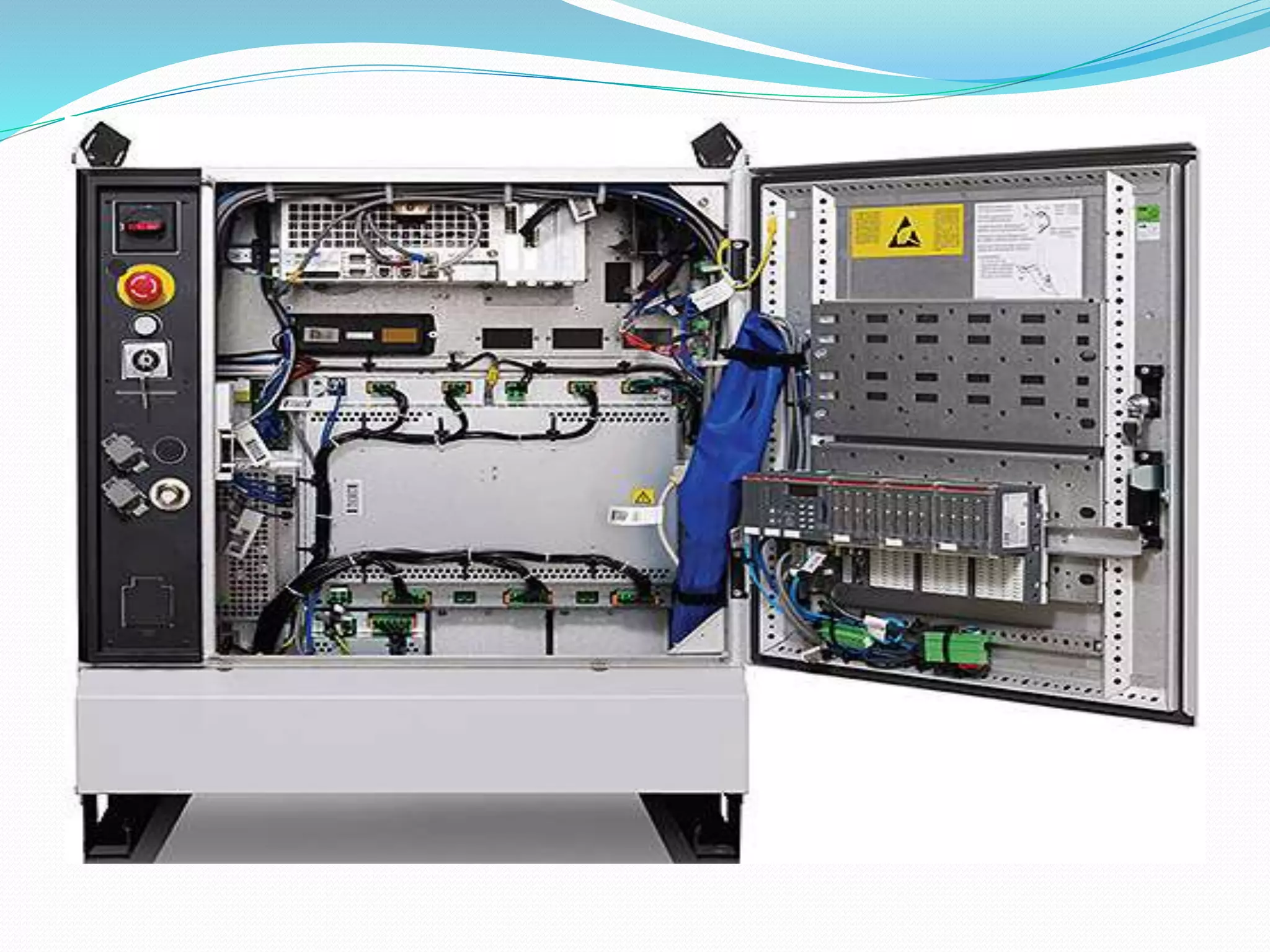
 Connected to a computer 
 Controller function as the brain of the robot 
 Controller also allows the robot to be networked to 
other systems. 
 Robot have controller that are run by programme set of 
instruction written in code.
Manipulator 
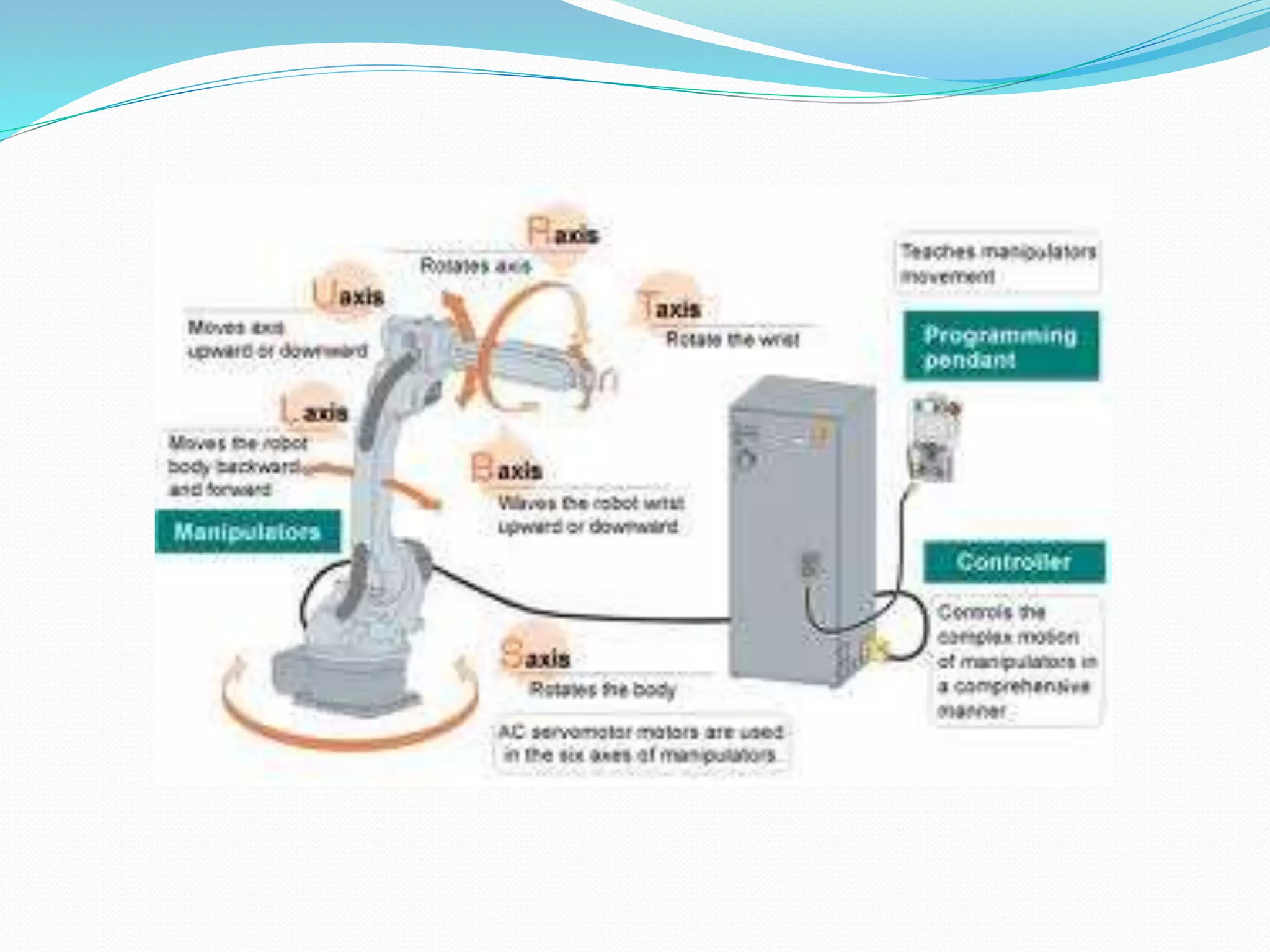
 Robot arm come in all shapes and size 
 The arm is the part of the robot that positions the end-effector 
and sensors 
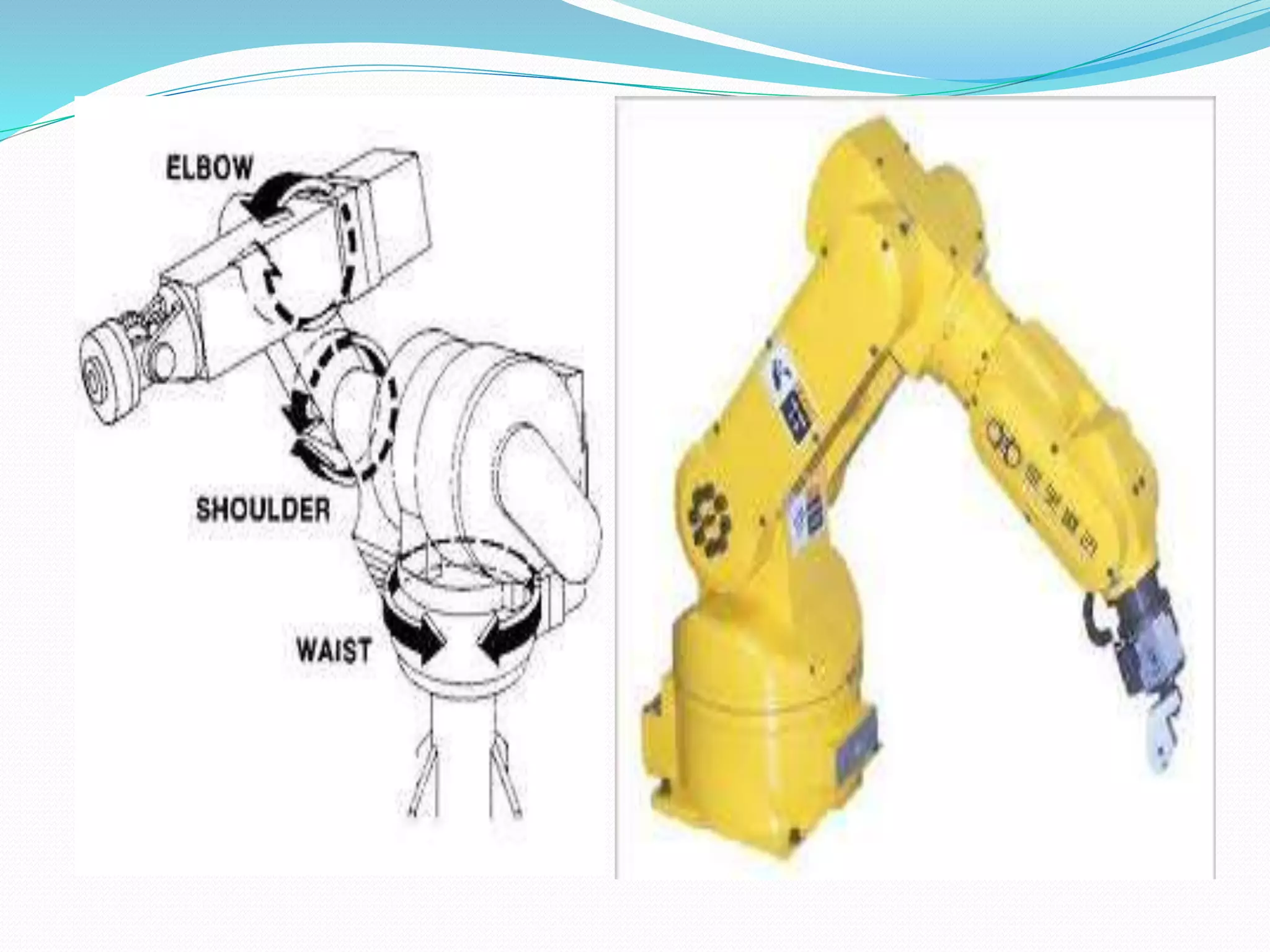
 Many resemble human arm and have shoulder, elbow, 
wrist, even fingers 
 A simple robot arm with 3 degrees of freedom could 
move 3 way; up and down, left and right, forward and 
backward.
Actuator 
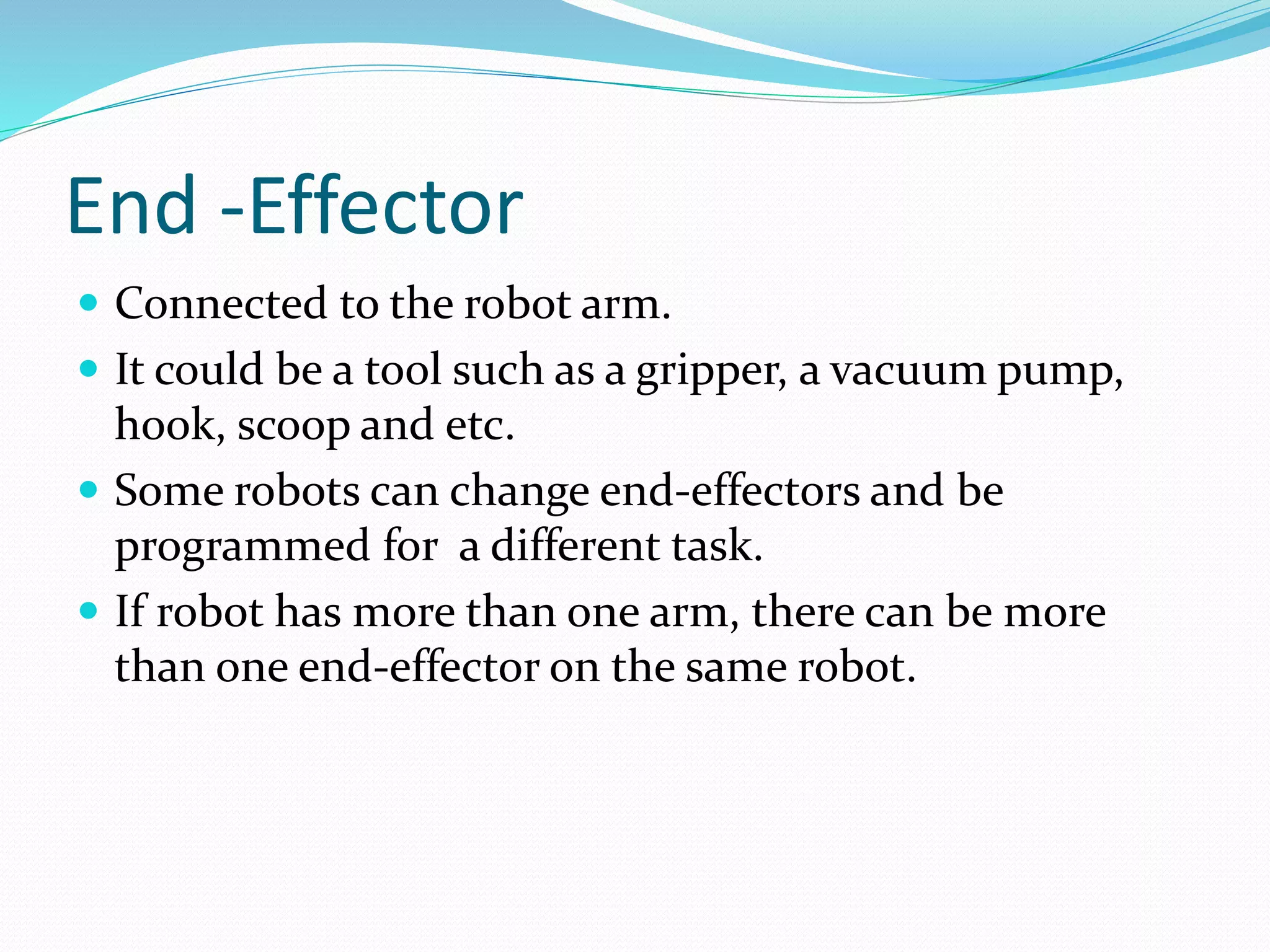
 actuator is a mechanism used to drive the processor to 
allow it to move to a predetermined point. 
 consists of components such as pneumatic and 
hydraulic cylinders, pneumatic and hydraulic rotary 
motor, and the electric motor. 
 robot position also depends on the combination of 
these components. 
 The robot has a simple movement is driven by a 
mechanical system that uses a cam.
End -Effector 
 Connected to the robot arm. 
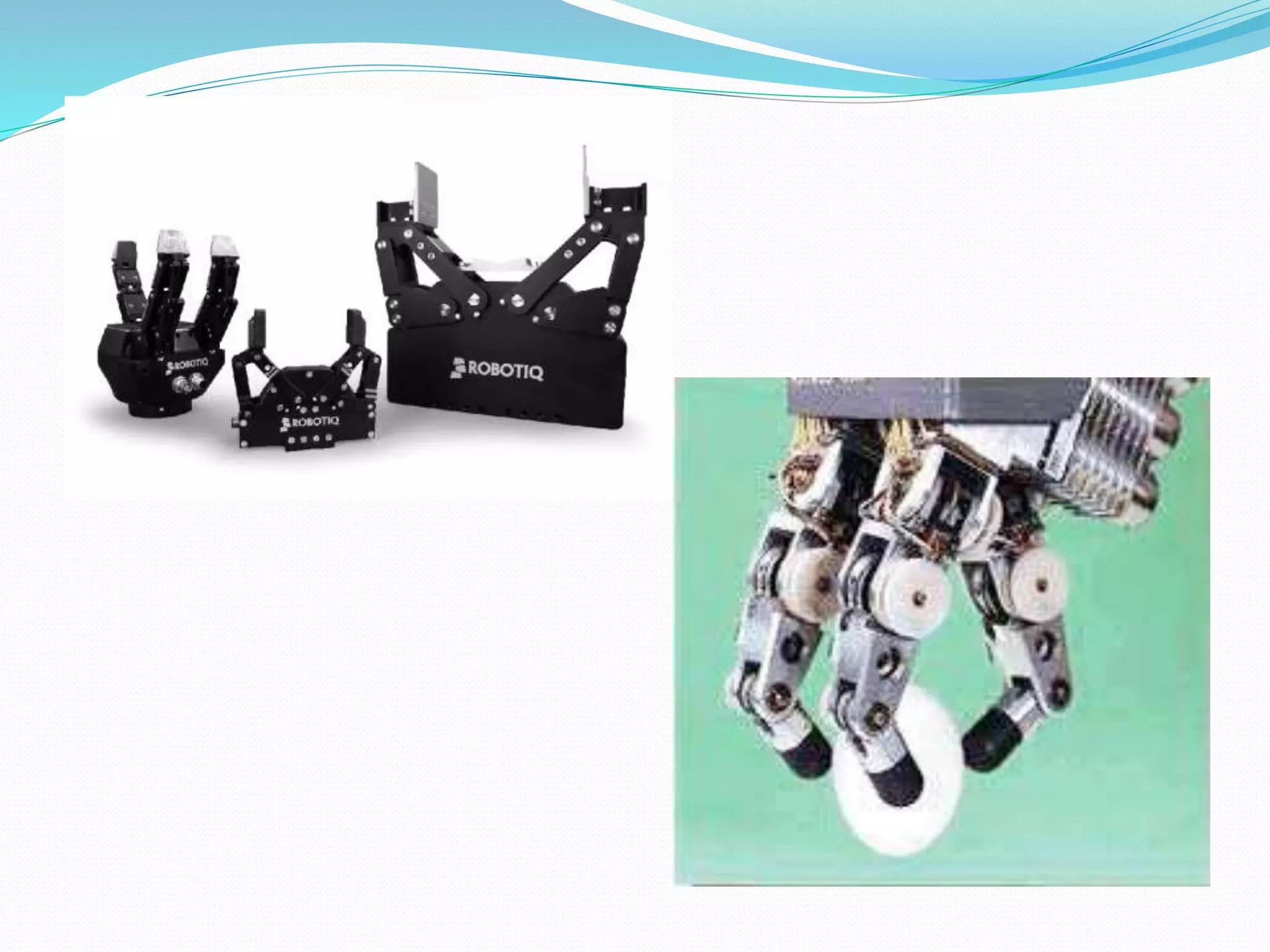
 It could be a tool such as a gripper, a vacuum pump, 
hook, scoop and etc. 
 Some robots can change end-effectors and be 
programmed for a different task. 
 If robot has more than one arm, there can be more 
than one end-effector on the same robot.
Sensor 
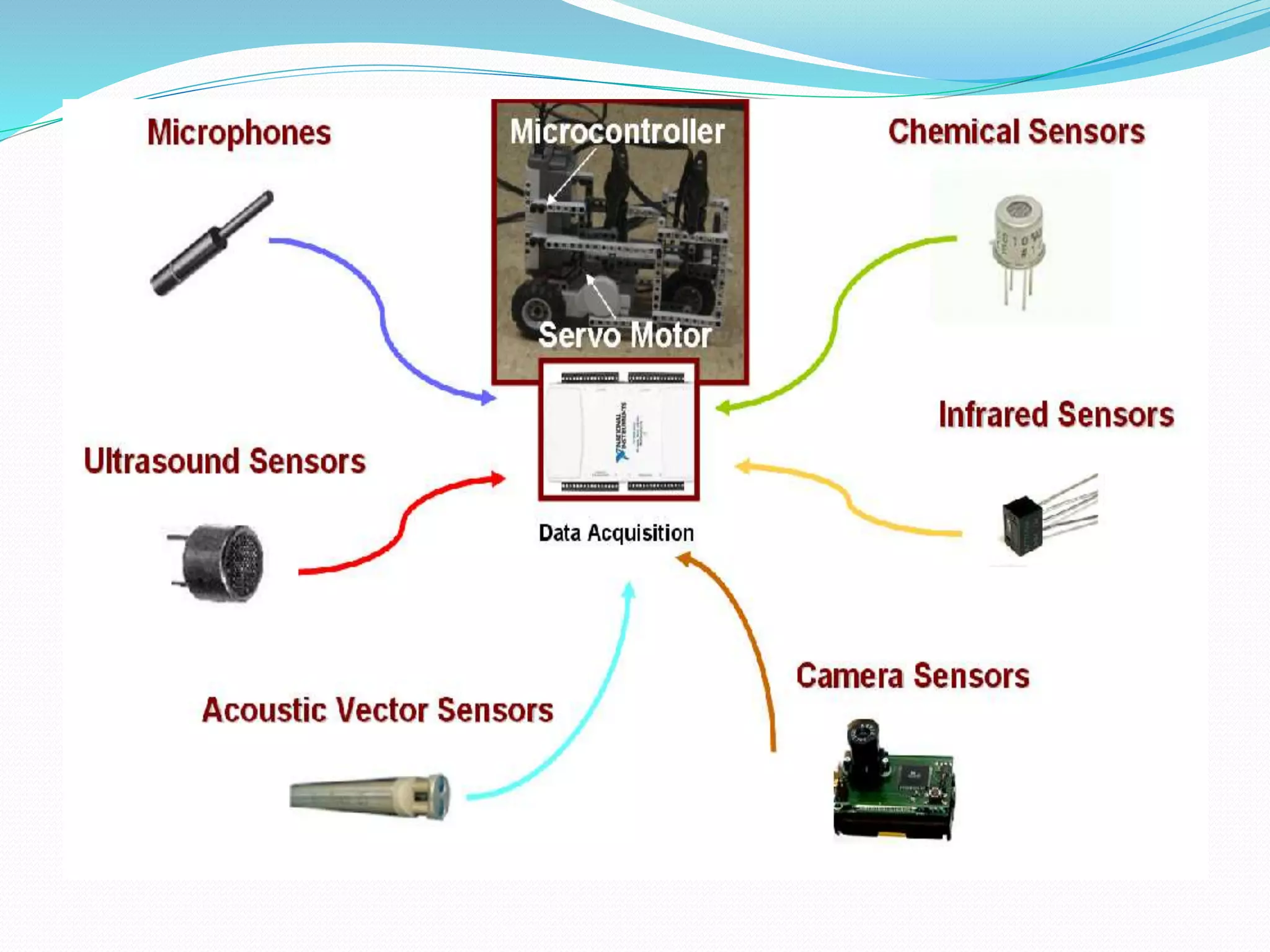
 Sensor can provide feedback to the control systems 
and give the robots more flexibility 
 Sensor such as visual sensor are useful in the building 
of more accurate and intelligent robots 
 Sensor can be classified as follows: 
 Position sensor 
 Range sensor 
 Velocity sensor 
 Proximity sensor
Classification Of Robots 
Automation 
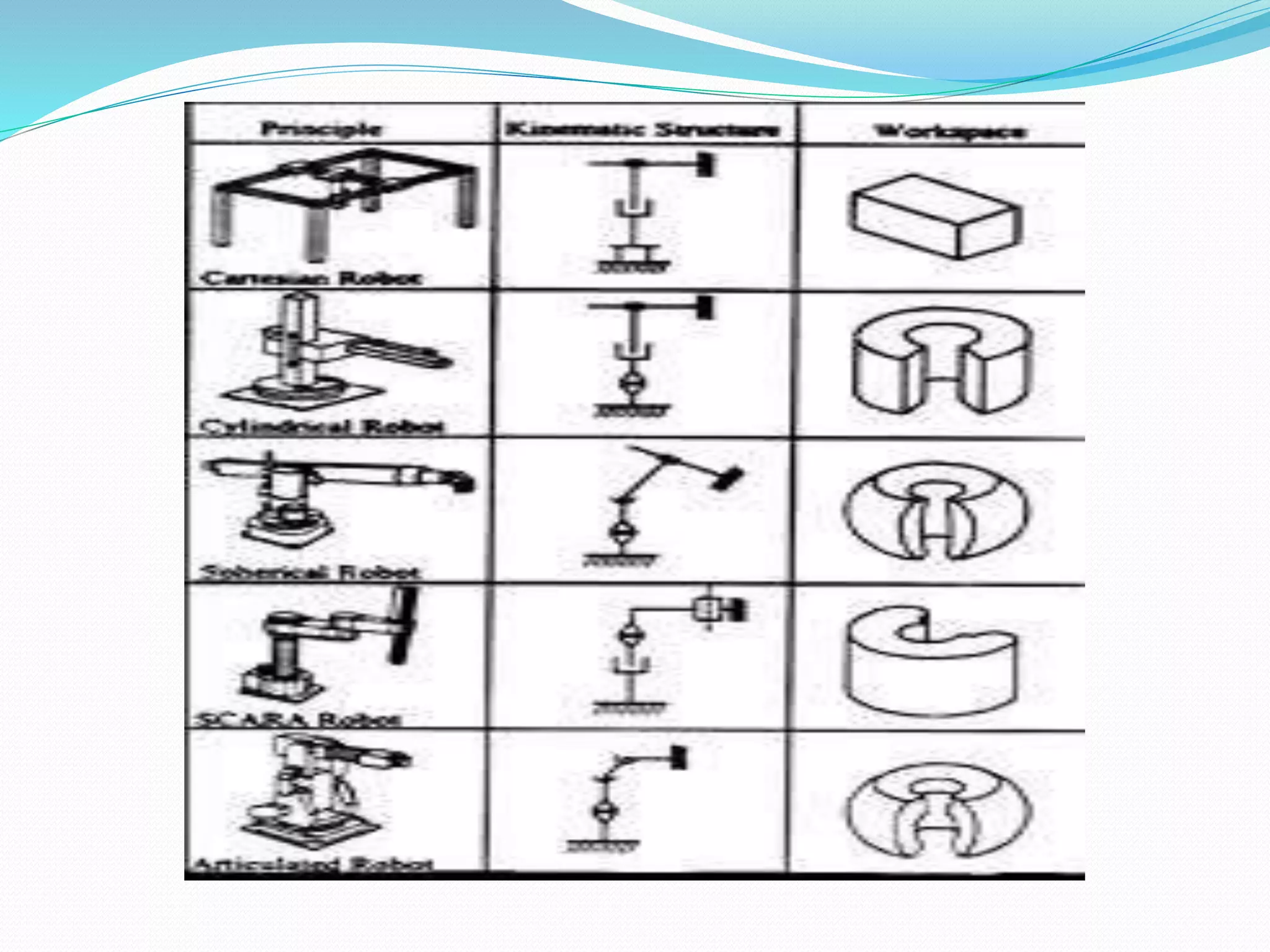
There are 6 types of robot : 
 Cartesian/Gantry Robot 
 Cylindrical Robot 
 Spherical/Polar Robot 
 SCARA Robot 
 Articulated Robot 
 Parallel Robot
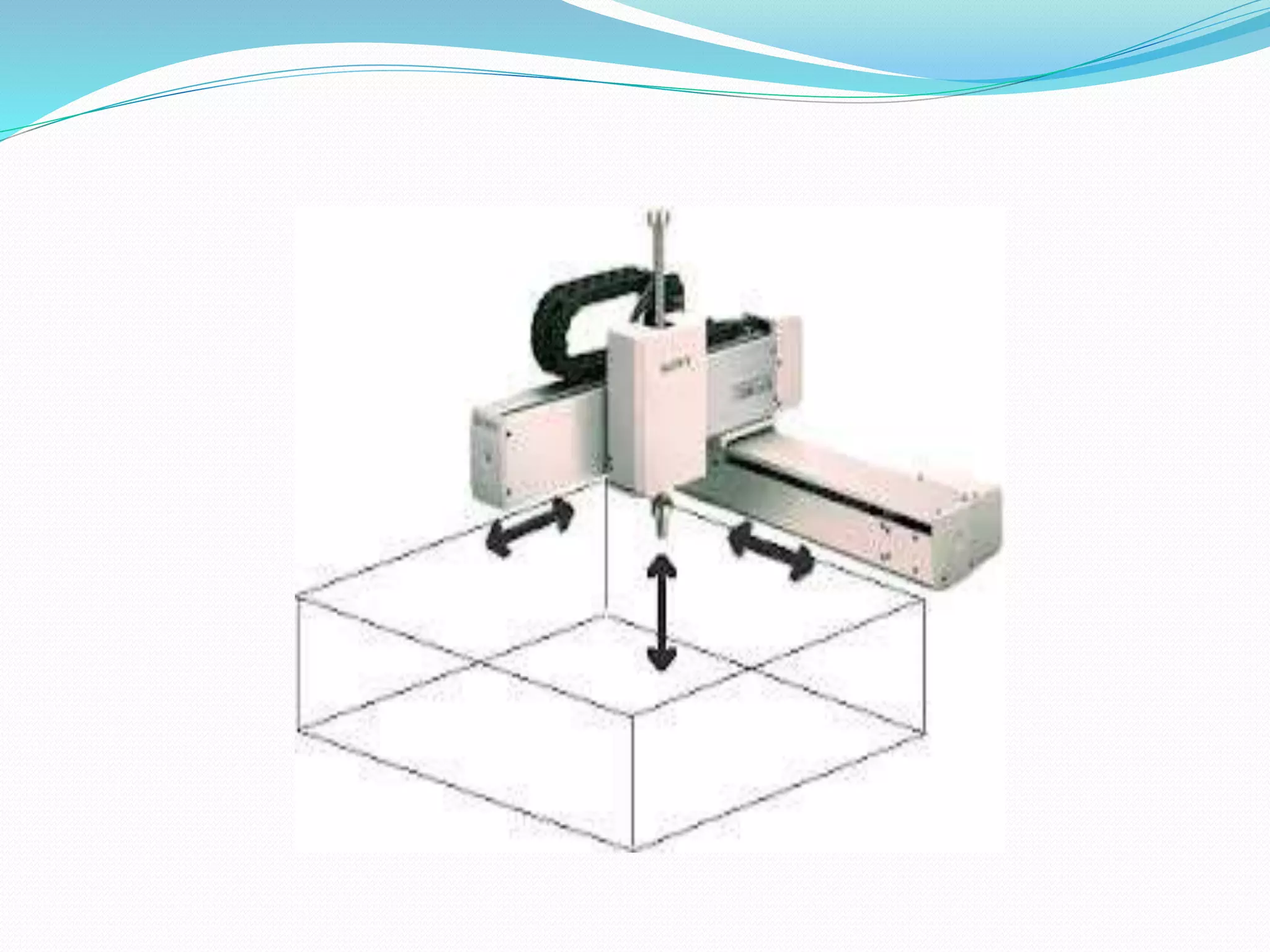
Cartesian Robot 
 It used for pick and place work, application of sealant, 
assembly operation, handling machine tools and arc 
welding 
 This arm robot has three prismatic joints, whose axes 
are coincident with a Cartesian coordinator 
 X =horizontal, left and right motions 
 Y = vertical, up and down motions 
 Z = horizontal, forward and backward motions
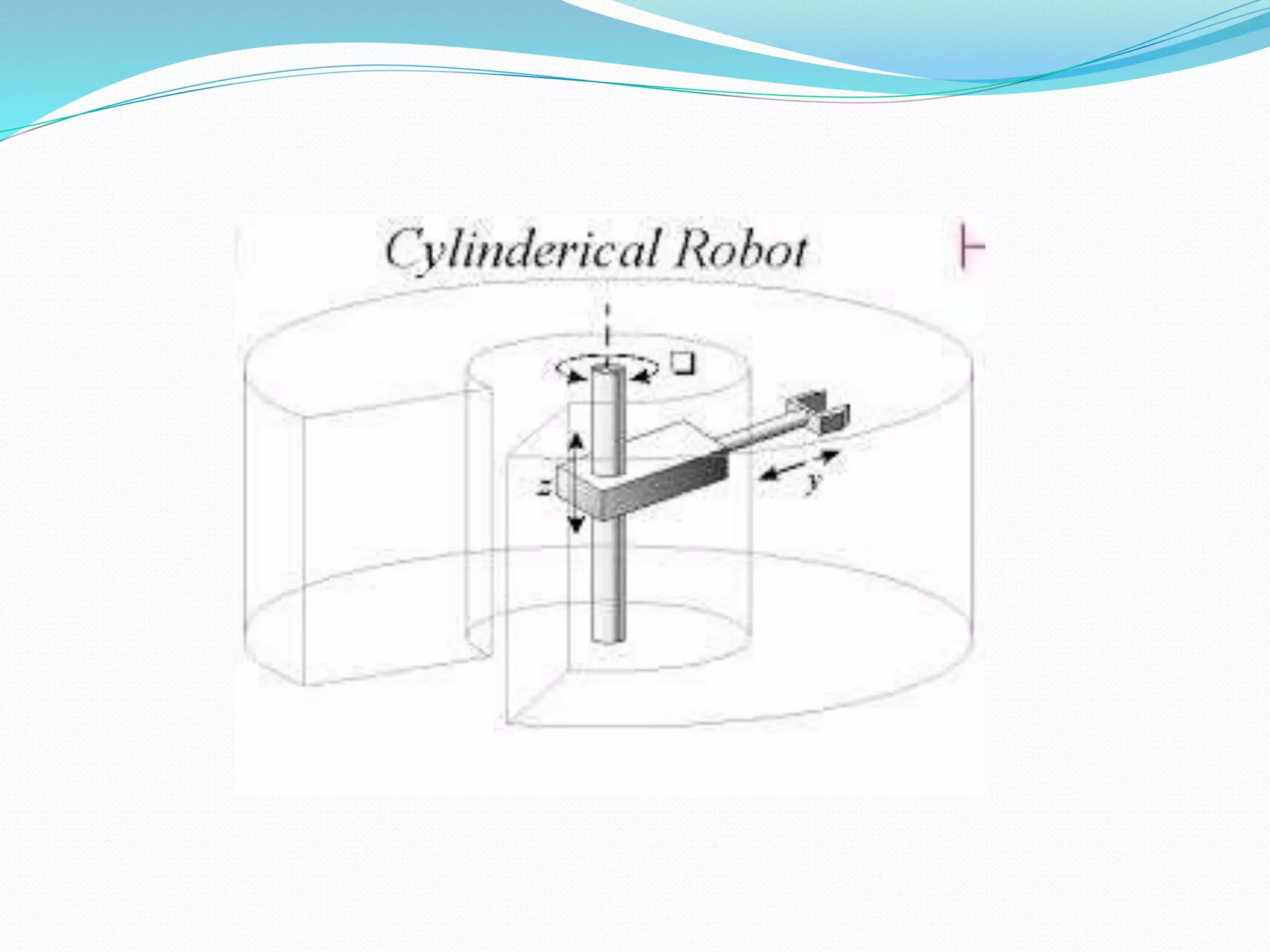
Cylindrical Robot 
 It used for assembly operations, handling at machine 
tools, spot welding and handling at die-casting 
machines 
 This robot axes form a cylindrical coordinate system 
 X = horizontal rotation of 360°, left and right motions 
 Y = vertical, up and down motions 
 Z = horizontal, forward and backward motions
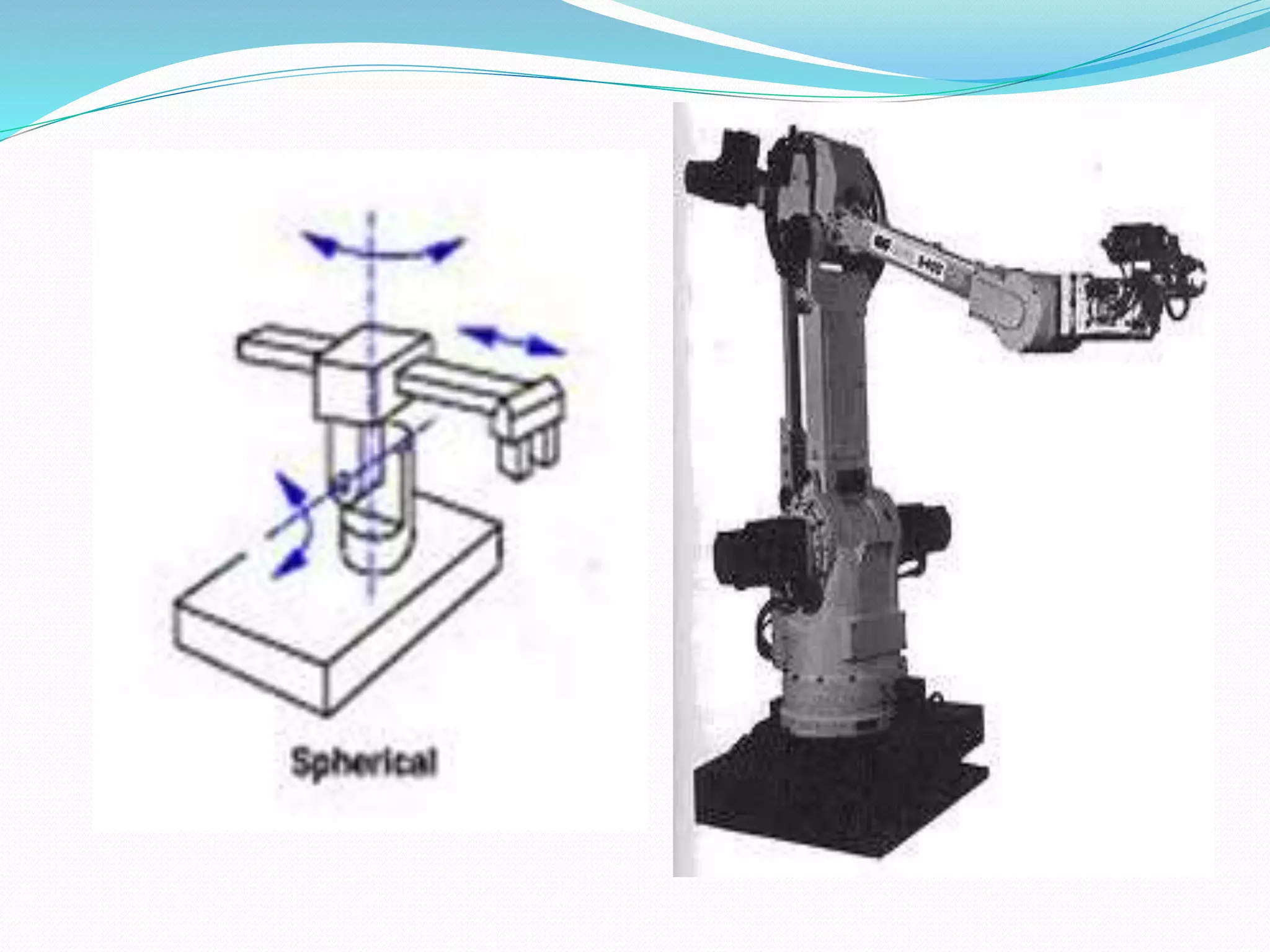
Spherical/Polar Robot 
 Used for handling at machine tools, spot welding, die-casting, 
fettling machines, gas welding and arc 
welding. 
 Robot axes form a polar coordinate system. 
 X = horizontal rotation of 360°, left and right motions 
 Y = vertical rotation of 270°, up and down motions 
 Z = horizontal, forward and backward motions
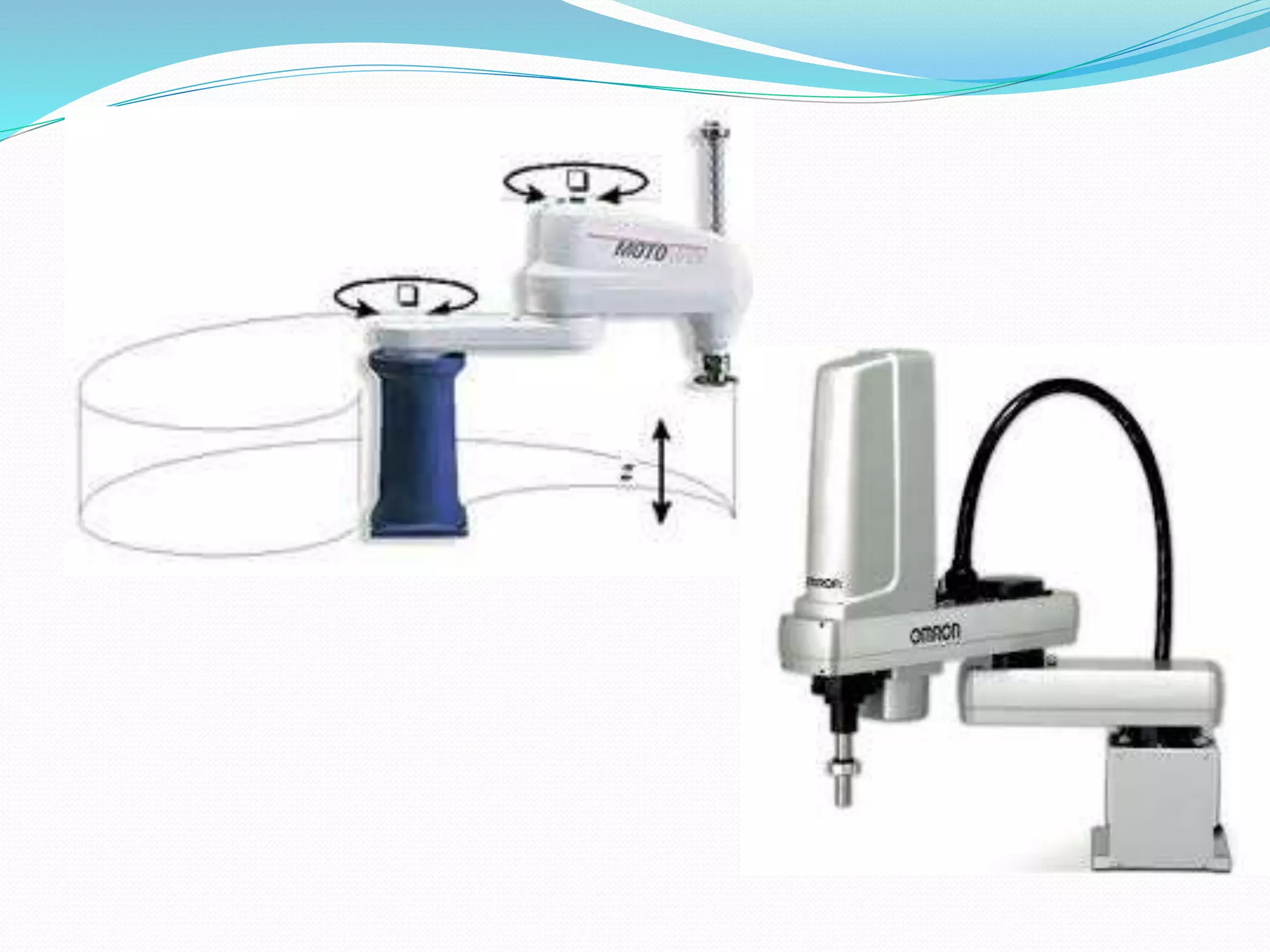
SCARA Robot 
 SCARA (Selective Compliant Assembly Robot Arm) 
 Used for pick and place work, application of sealant, 
assembly operations and handling machine tools 
 This robot has 2 parallel rotary joints to provide 
compliance in a plane
Articulated Robot 
 Used for assembly operations, die-casting, fettling 
machines, gas welding, arc welding and spray painting 
 This robot arm has at least 3 rotary joints 
 X = horizontal rotation of 360° left and right motions 
 Y = vertical rotation of 270°, up and down motions 
 Z = horizontal & vertical rotation of 90° to 180°, forward 
and backward motions
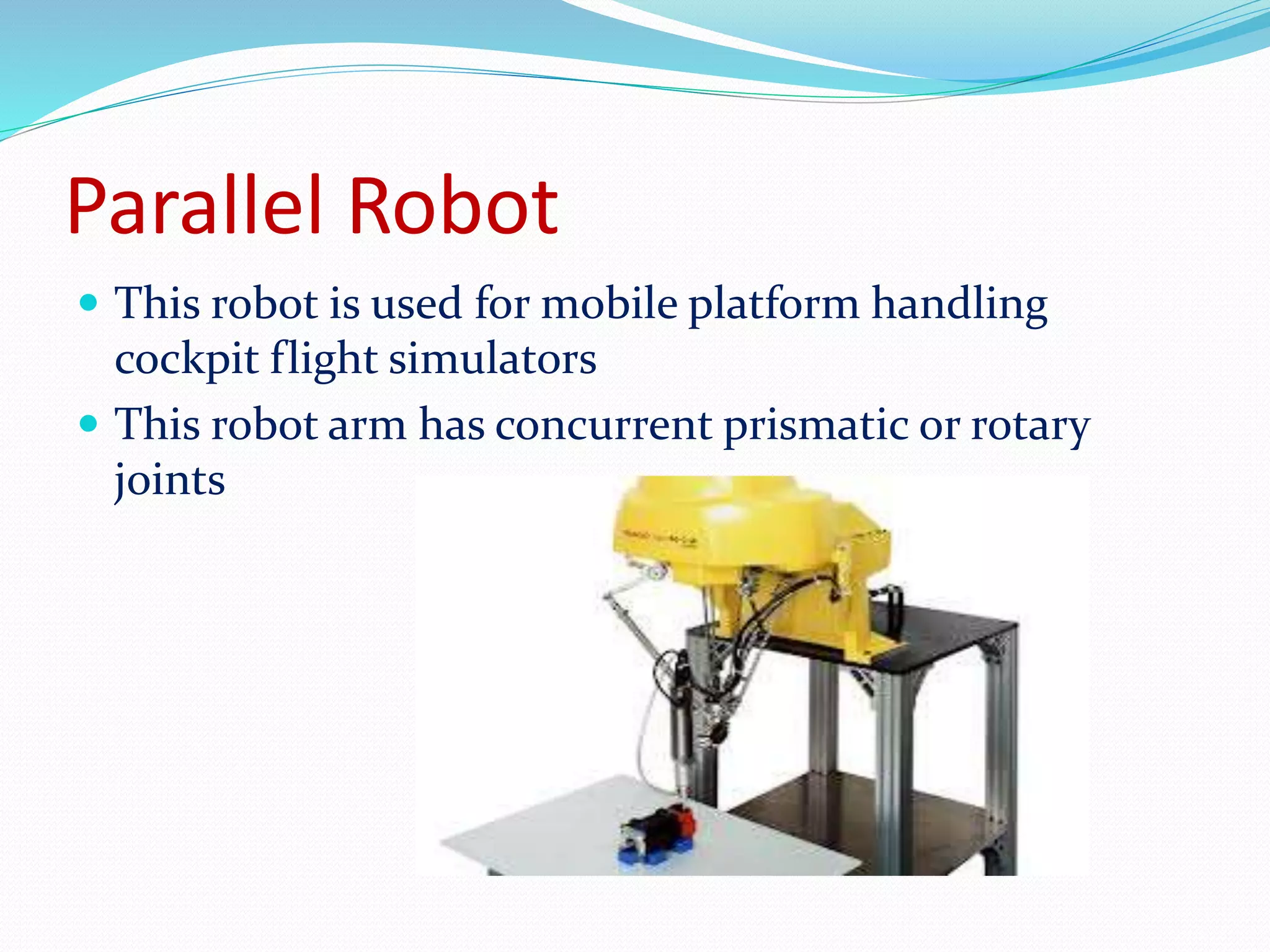
Parallel Robot 
 This robot is used for mobile platform handling 
cockpit flight simulators 
 This robot arm has concurrent prismatic or rotary 
joints
THANK YOU

Chapter 2 Comp & classification of robot automation

  • 1.
    CHAPTER 2: COMPONENTS& CLASSIFICATION OF ROBOTS AUTOMATION
  • 2.
    Learning Outcomes: Uponcompletion this chapter, student should be able:- 1. Explain the common major components of industrial robot automation 2. Explain classification of robots automation
  • 3.
    Contents 1. Commonmajor components of industrial robot automation 2. Classification of robots automation
  • 4.
    Components of IndustrialRobot Automation  Controller  Manipulator  Actuator  End Effector  Sensor
  • 5.
    Controller  Connectedto a computer  Controller function as the brain of the robot  Controller also allows the robot to be networked to other systems.  Robot have controller that are run by programme set of instruction written in code.
  • 7.
    Manipulator  Robotarm come in all shapes and size  The arm is the part of the robot that positions the end-effector and sensors  Many resemble human arm and have shoulder, elbow, wrist, even fingers  A simple robot arm with 3 degrees of freedom could move 3 way; up and down, left and right, forward and backward.
  • 9.
    Actuator  actuatoris a mechanism used to drive the processor to allow it to move to a predetermined point.  consists of components such as pneumatic and hydraulic cylinders, pneumatic and hydraulic rotary motor, and the electric motor.  robot position also depends on the combination of these components.  The robot has a simple movement is driven by a mechanical system that uses a cam.
  • 11.
    End -Effector Connected to the robot arm.  It could be a tool such as a gripper, a vacuum pump, hook, scoop and etc.  Some robots can change end-effectors and be programmed for a different task.  If robot has more than one arm, there can be more than one end-effector on the same robot.
  • 13.
    Sensor  Sensorcan provide feedback to the control systems and give the robots more flexibility  Sensor such as visual sensor are useful in the building of more accurate and intelligent robots  Sensor can be classified as follows:  Position sensor  Range sensor  Velocity sensor  Proximity sensor
  • 15.
    Classification Of Robots Automation There are 6 types of robot :  Cartesian/Gantry Robot  Cylindrical Robot  Spherical/Polar Robot  SCARA Robot  Articulated Robot  Parallel Robot
  • 16.
    Cartesian Robot It used for pick and place work, application of sealant, assembly operation, handling machine tools and arc welding  This arm robot has three prismatic joints, whose axes are coincident with a Cartesian coordinator  X =horizontal, left and right motions  Y = vertical, up and down motions  Z = horizontal, forward and backward motions
  • 18.
    Cylindrical Robot It used for assembly operations, handling at machine tools, spot welding and handling at die-casting machines  This robot axes form a cylindrical coordinate system  X = horizontal rotation of 360°, left and right motions  Y = vertical, up and down motions  Z = horizontal, forward and backward motions
  • 20.
    Spherical/Polar Robot Used for handling at machine tools, spot welding, die-casting, fettling machines, gas welding and arc welding.  Robot axes form a polar coordinate system.  X = horizontal rotation of 360°, left and right motions  Y = vertical rotation of 270°, up and down motions  Z = horizontal, forward and backward motions
  • 22.
    SCARA Robot SCARA (Selective Compliant Assembly Robot Arm)  Used for pick and place work, application of sealant, assembly operations and handling machine tools  This robot has 2 parallel rotary joints to provide compliance in a plane
  • 24.
    Articulated Robot Used for assembly operations, die-casting, fettling machines, gas welding, arc welding and spray painting  This robot arm has at least 3 rotary joints  X = horizontal rotation of 360° left and right motions  Y = vertical rotation of 270°, up and down motions  Z = horizontal & vertical rotation of 90° to 180°, forward and backward motions
  • 26.
    Parallel Robot This robot is used for mobile platform handling cockpit flight simulators  This robot arm has concurrent prismatic or rotary joints
  • 28.