Conference of Vocational Training:
                              Advanced Models on Training,
                              Business & Governance for the VTC


Dr. Leigh E. Zeitz
Instructional Technology
University of Northern Iowa


                          Workshop
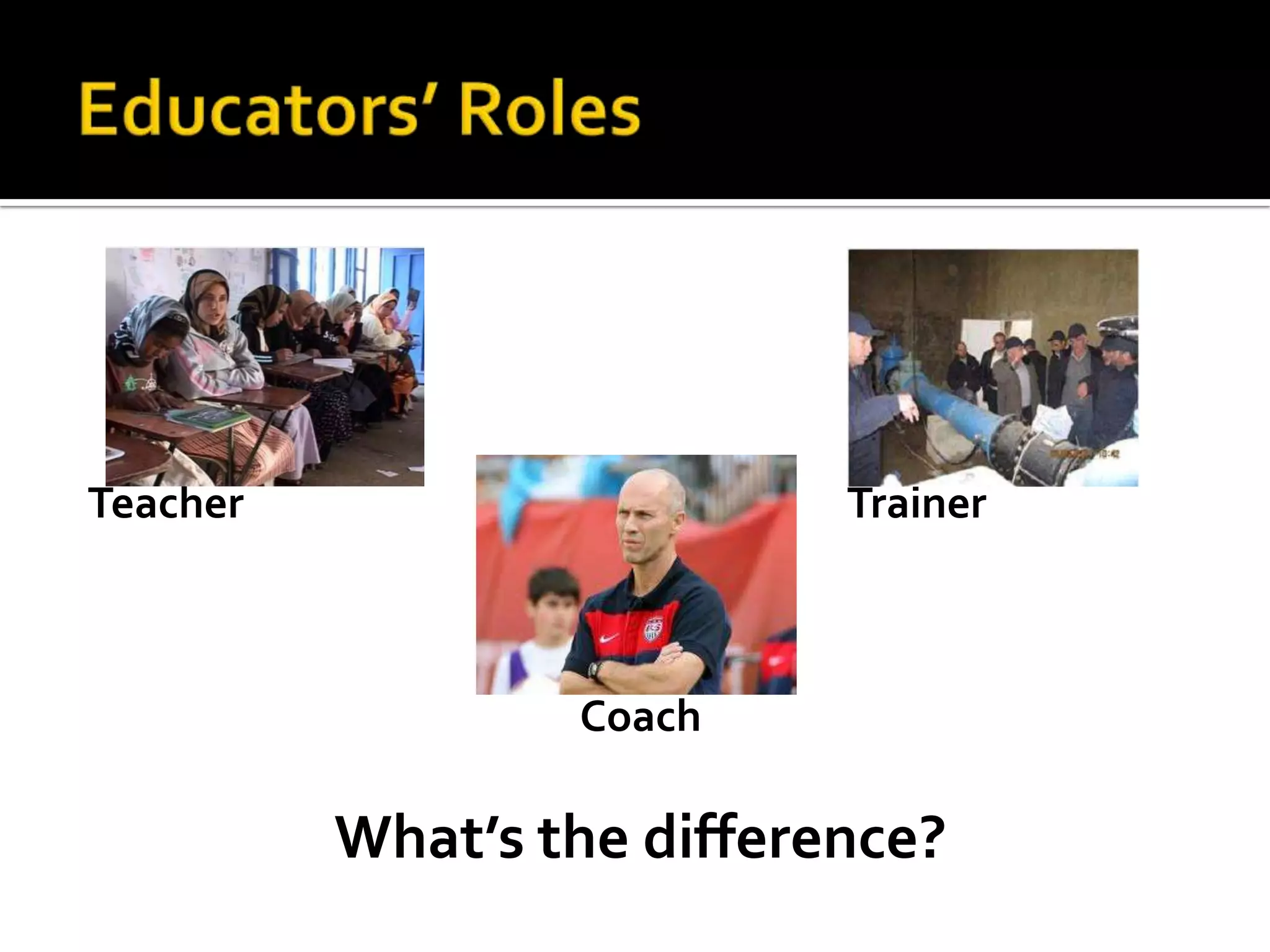
Teacher                     Trainer


                  Coach

          What’s the difference?
   Teaching – Art of assisting others in discovery.

   Training – Focusing on specific areas of
            development (technical & soft skill).

   Coaching – Observing strengths/weaknesses
            and developing weaknesses.

                                  Monica Paul, 2010
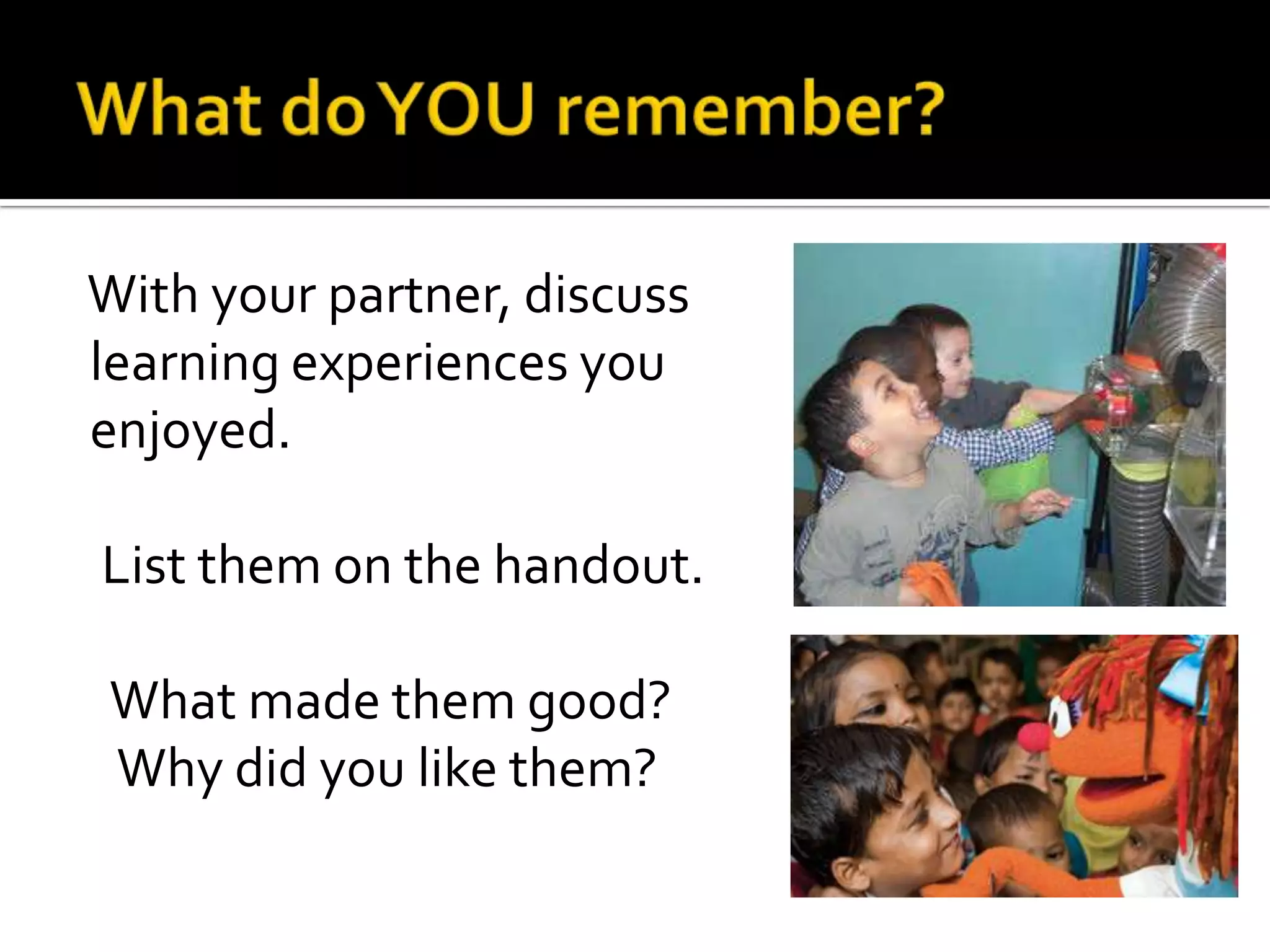
With your partner, discuss
learning experiences you
enjoyed.

List them on the handout.

What made them good?
Why did you like them?
 Problem Solving
 Decision-Making
 Communication
     Oral & Written
   Collaboration: Teams
   Business Analysis
   Project Leadership
   Ethics & Tolerance
   Functional Area Knowledge
          Luftman: Society for Information Management (2007)
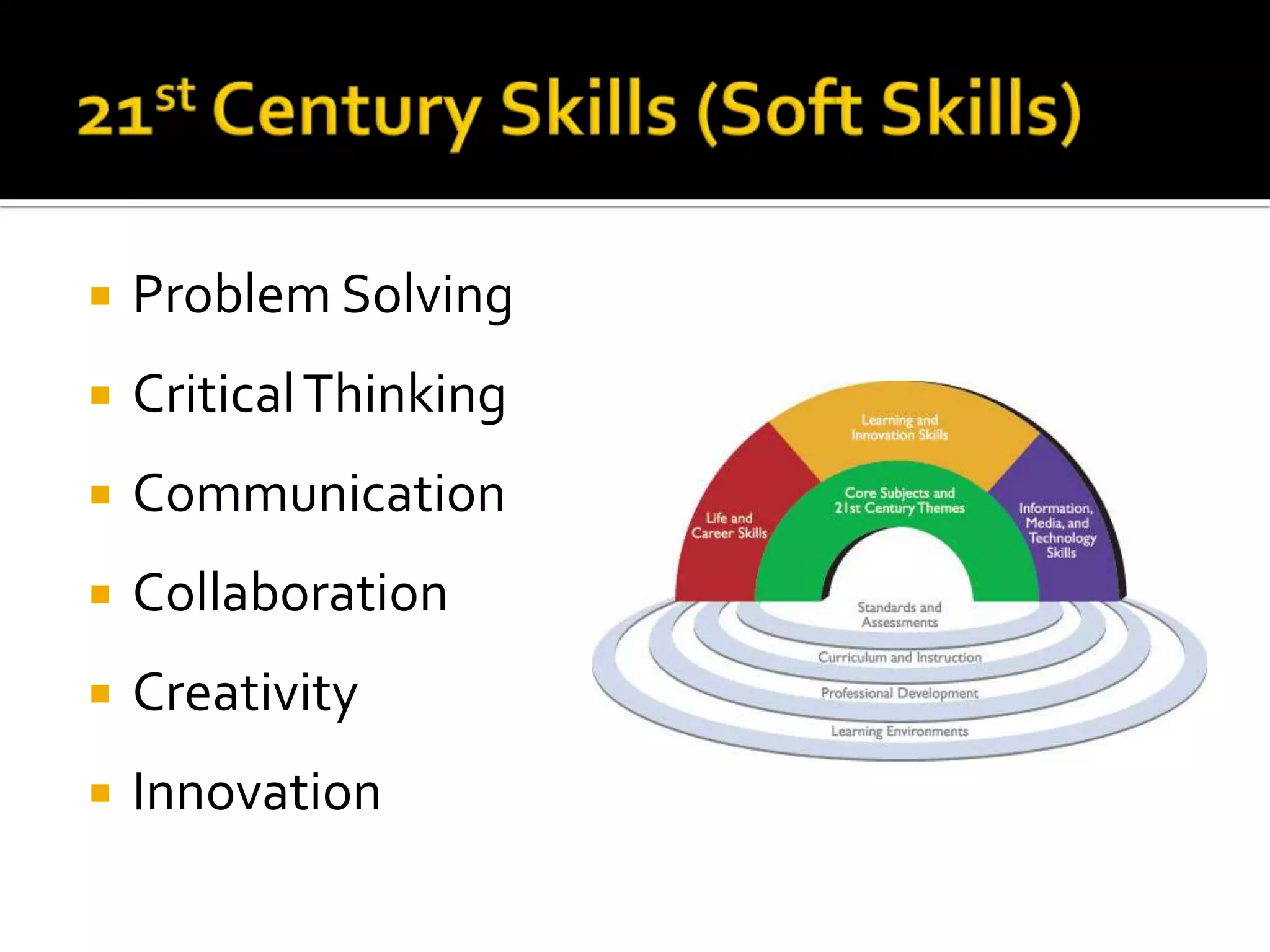
   Problem Solving
   Critical Thinking
   Communication
   Collaboration
   Creativity
   Innovation
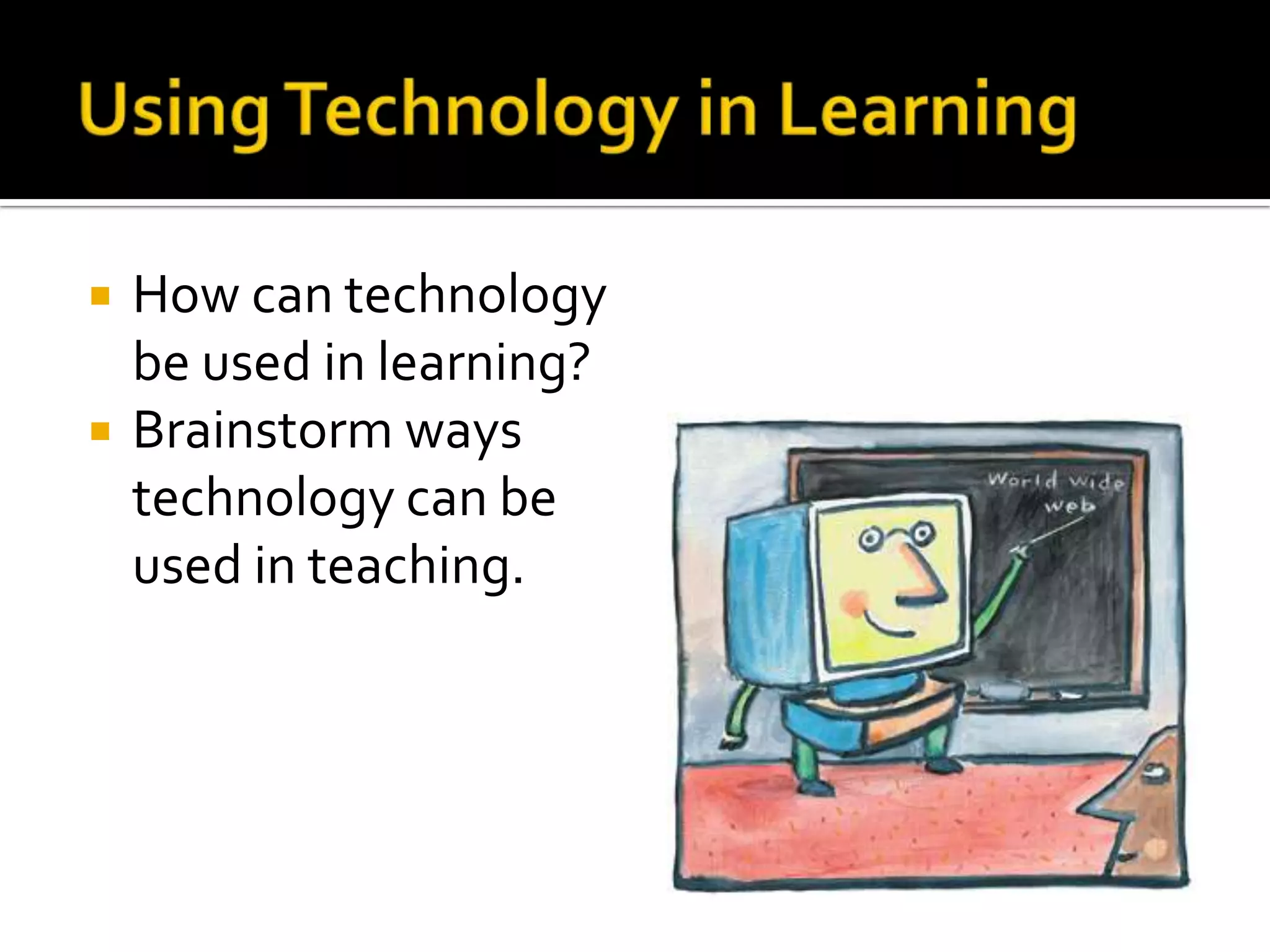
   How can technology
    be used in learning?
   Brainstorm ways
    technology can be
    used in teaching.
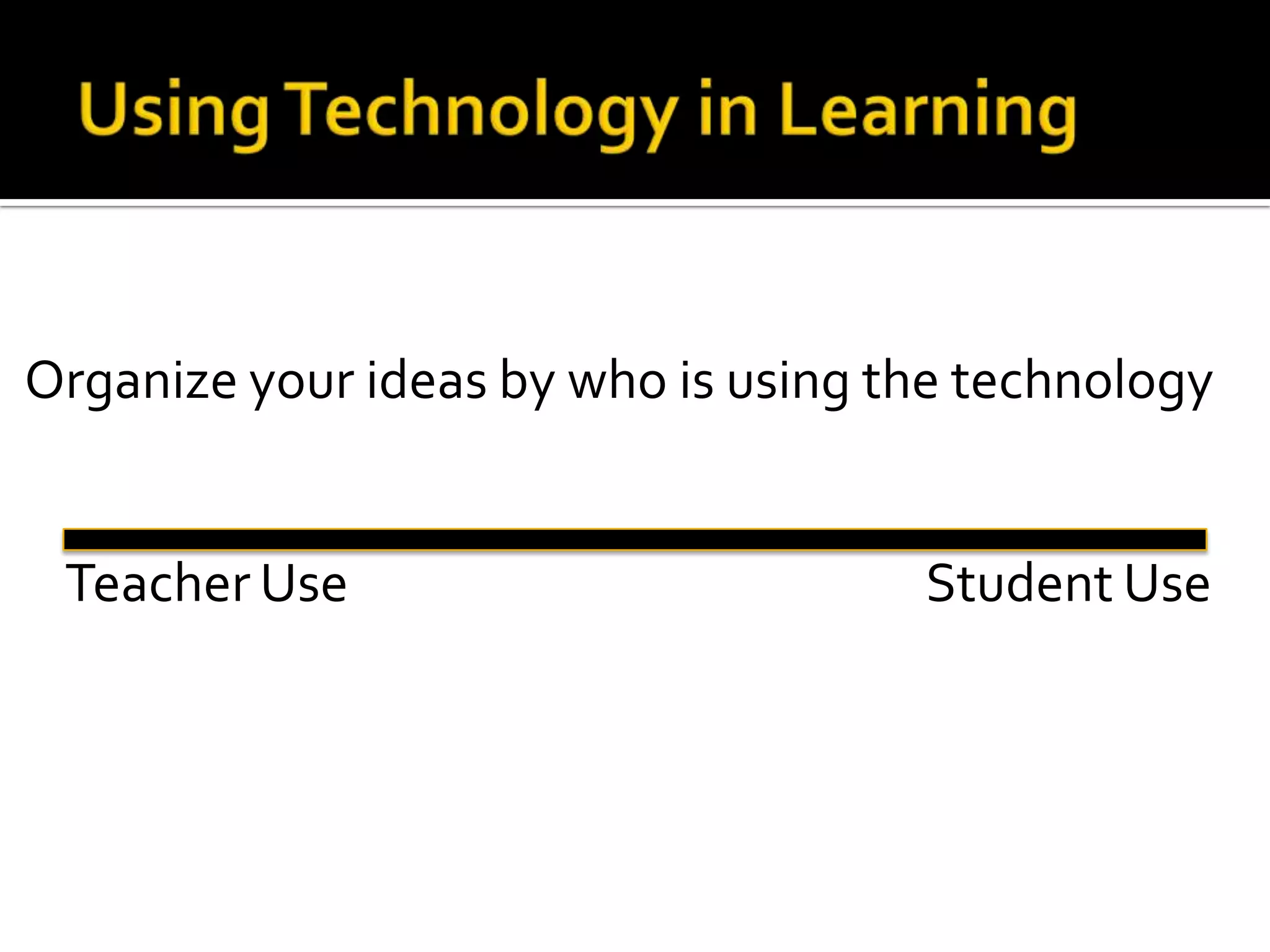
Organize your ideas by who is using the technology


 Teacher Use                         Student Use
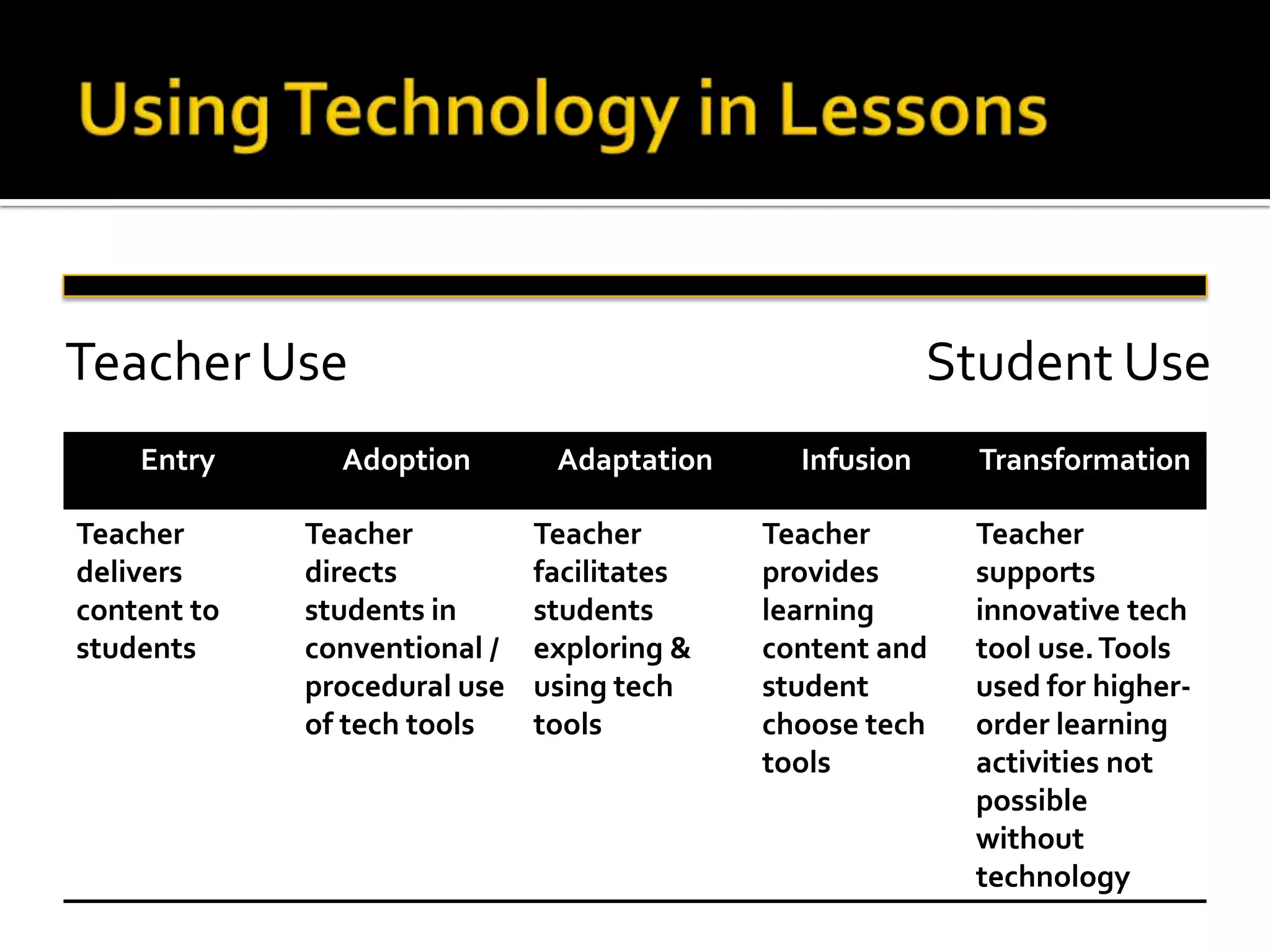
Teacher Use                                              Student Use
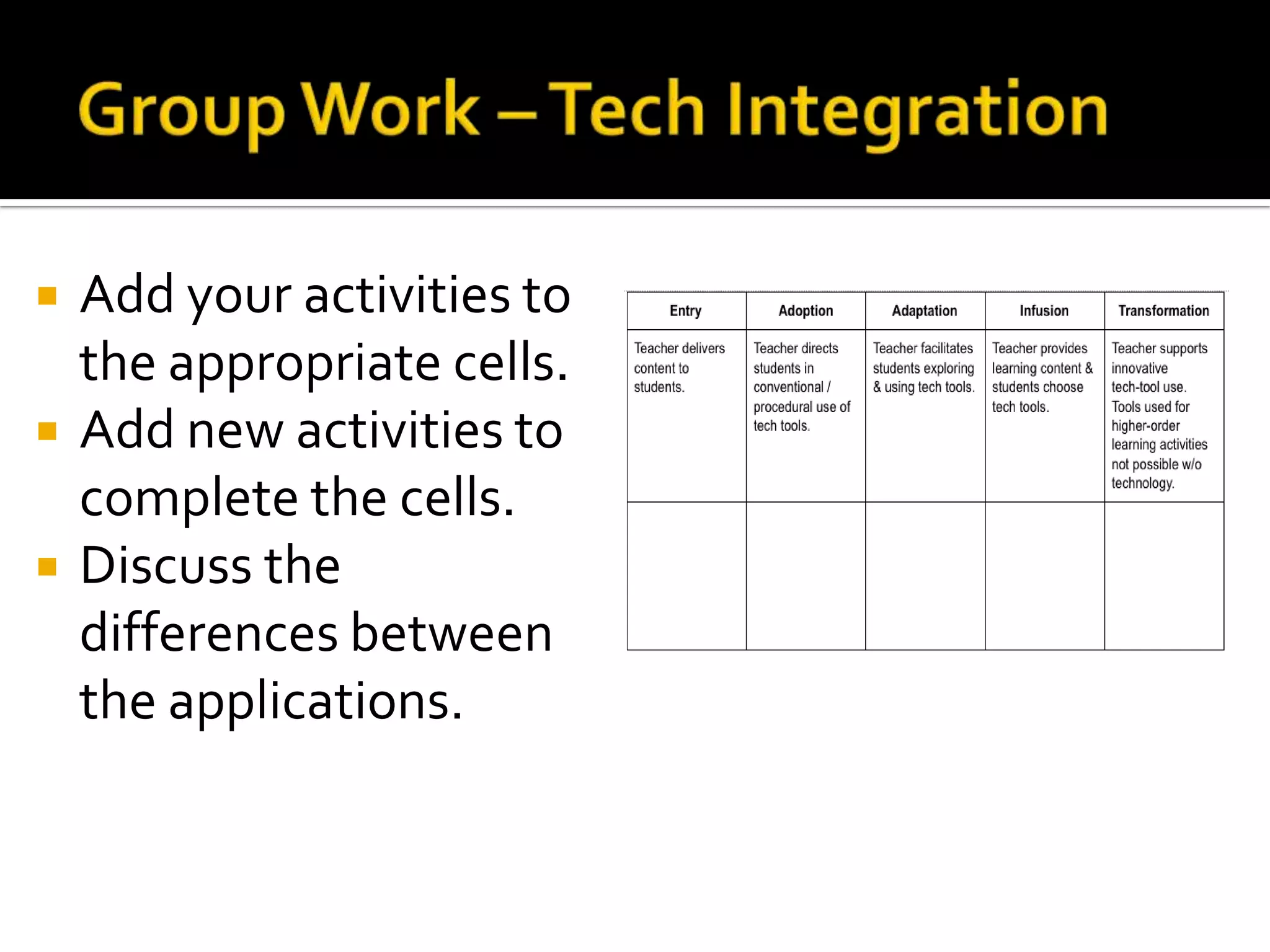
    Entry      Adoption        Adaptation     Infusion     Transformation

Teacher      Teacher          Teacher       Teacher       Teacher
delivers     directs          facilitates   provides      supports
content to   students in      students      learning      innovative tech
students     conventional /   exploring &   content and   tool use. Tools
             procedural use   using tech    student       used for higher-
             of tech tools    tools         choose tech   order learning
                                            tools         activities not
                                                          possible
                                                          without
                                                          technology
   Add your activities to
    the appropriate cells.
   Add new activities to
    complete the cells.
   Discuss the
    differences between
    the applications.
   Active – Actively Engaged w/ technology
   Collaborative – Use tech to work together
   Constructive – Use tech to connect new
                         information to prior
    knowledge
   Authentic – Use tech to link beyond
                         classroom
   Goal Directed – Use tech to set goals, plan
                          activities, monitor
    progress and                evaluate results.
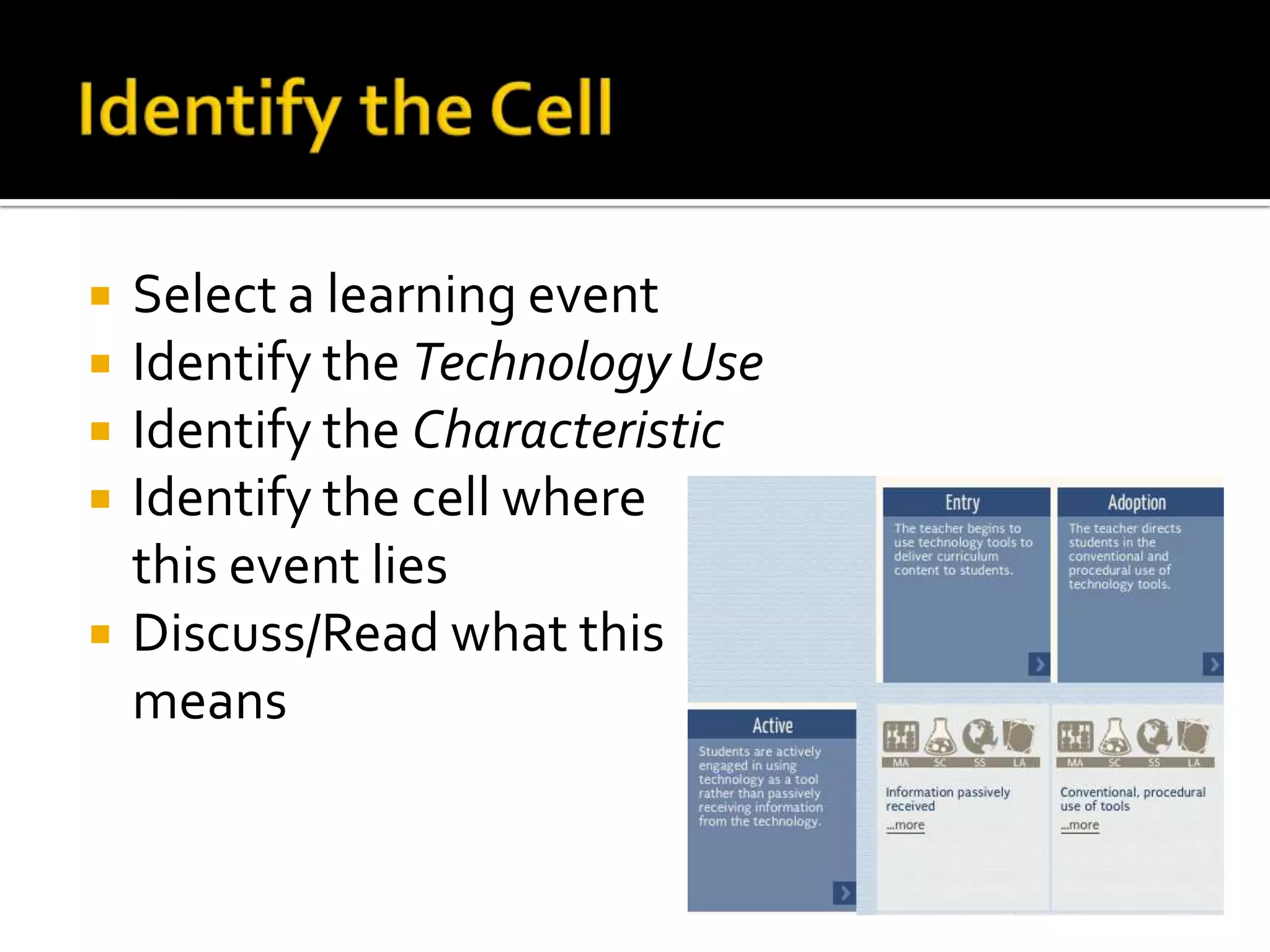
   Select a learning event
   Identify the Technology Use
   Identify the Characteristic
   Identify the cell where
    this event lies
   Discuss/Read what this
    means
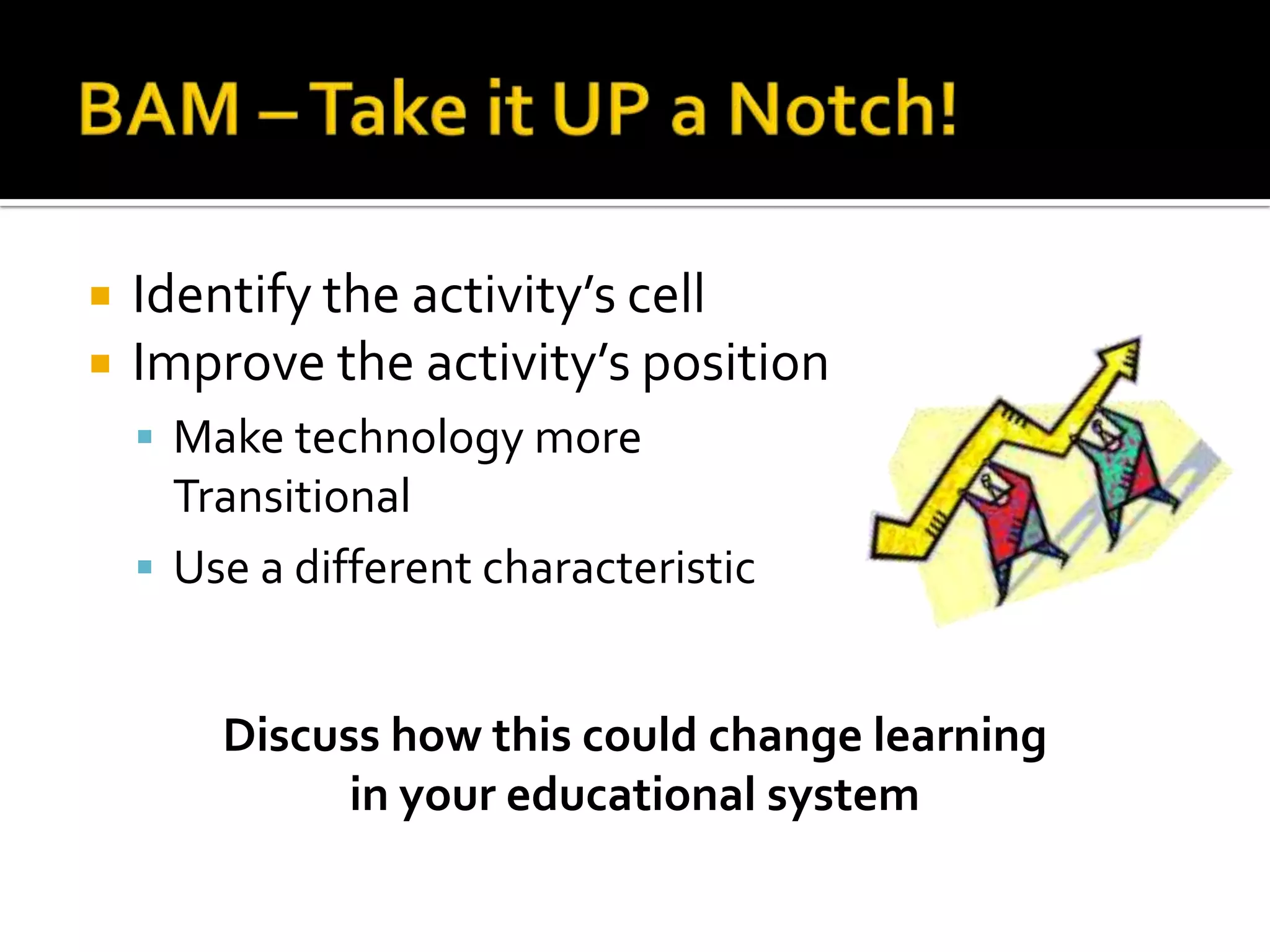
   Identify the activity’s cell
   Improve the activity’s position
     Make technology more
      Transitional
     Use a different characteristic


        Discuss how this could change learning
              in your educational system
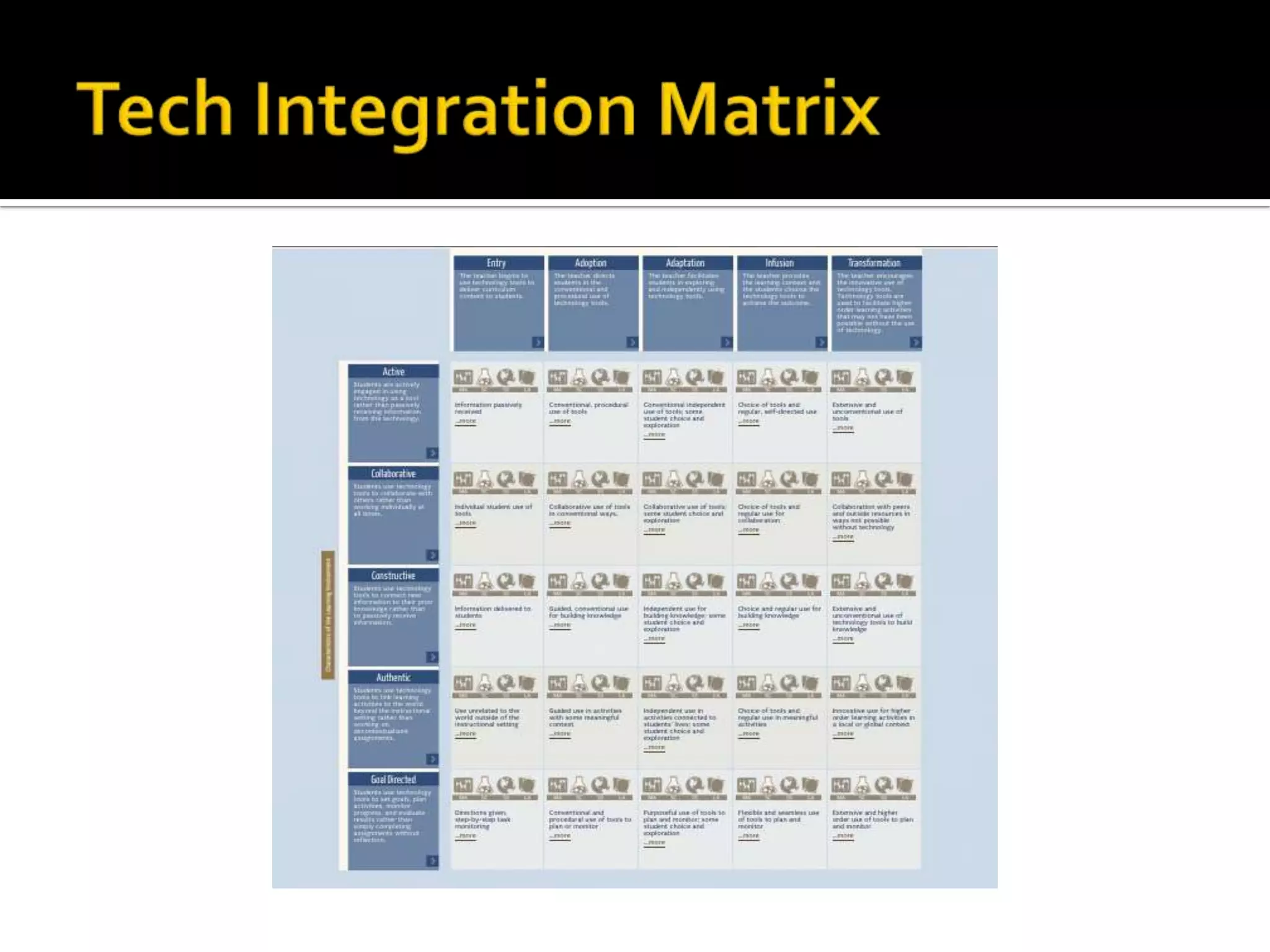
   Use the Technology Integration Matrix to
    review some of the lessons/activities in your
    curriculum.
   Identify the cells for 10 events.
   For each event, change the Technology Use
    or Learning Characteristic to better integrate
    the technology and learning.
“Well-integrated use of technology
resources by thoroughly trained teachers
makes twenty-first-century learning
possible.”
Edutopia, 2007

Empower Students Through Technology

  • 1.
    Conference of VocationalTraining: Advanced Models on Training, Business & Governance for the VTC Dr. Leigh E. Zeitz Instructional Technology University of Northern Iowa Workshop
  • 2.
    Teacher Trainer Coach What’s the difference?
  • 3.
    Teaching – Art of assisting others in discovery.  Training – Focusing on specific areas of development (technical & soft skill).  Coaching – Observing strengths/weaknesses and developing weaknesses. Monica Paul, 2010
  • 4.
    With your partner,discuss learning experiences you enjoyed. List them on the handout. What made them good? Why did you like them?
  • 5.
     Problem Solving Decision-Making  Communication  Oral & Written  Collaboration: Teams  Business Analysis  Project Leadership  Ethics & Tolerance  Functional Area Knowledge Luftman: Society for Information Management (2007)
  • 6.
    Problem Solving  Critical Thinking  Communication  Collaboration  Creativity  Innovation
  • 7.
    How can technology be used in learning?  Brainstorm ways technology can be used in teaching.
  • 8.
    Organize your ideasby who is using the technology Teacher Use Student Use
  • 9.
    Teacher Use Student Use Entry Adoption Adaptation Infusion Transformation Teacher Teacher Teacher Teacher Teacher delivers directs facilitates provides supports content to students in students learning innovative tech students conventional / exploring & content and tool use. Tools procedural use using tech student used for higher- of tech tools tools choose tech order learning tools activities not possible without technology
  • 10.
    Add your activities to the appropriate cells.  Add new activities to complete the cells.  Discuss the differences between the applications.
  • 11.
    Active – Actively Engaged w/ technology  Collaborative – Use tech to work together  Constructive – Use tech to connect new information to prior knowledge  Authentic – Use tech to link beyond classroom  Goal Directed – Use tech to set goals, plan activities, monitor progress and evaluate results.
  • 13.
    Select a learning event  Identify the Technology Use  Identify the Characteristic  Identify the cell where this event lies  Discuss/Read what this means
  • 14.
    Identify the activity’s cell  Improve the activity’s position  Make technology more Transitional  Use a different characteristic Discuss how this could change learning in your educational system
  • 15.
    Use the Technology Integration Matrix to review some of the lessons/activities in your curriculum.  Identify the cells for 10 events.  For each event, change the Technology Use or Learning Characteristic to better integrate the technology and learning.
  • 16.
    “Well-integrated use oftechnology resources by thoroughly trained teachers makes twenty-first-century learning possible.” Edutopia, 2007

Editor's Notes

  • #5 What was common amongst them? Any of them just learning skills?What did made these memorable?
  • #8 Brainstorm in groups of 3 or 4Dr. Z will get an assistant to collect on the screen in a Google DocShare the tinyurl and challenge to add themselves