
Leigh Zeitz
University of Northern Iowa
2015 Statewide Teaching and Learning Conference
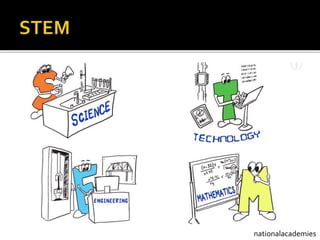
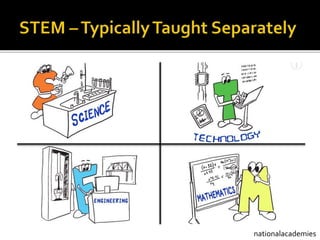
nationalacademies
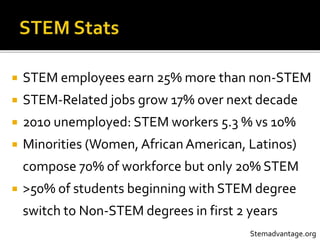
 STEM employees earn 25% more than non-STEM
 STEM-Related jobs grow 17% over next decade
 2010 unemployed: STEM workers 5.3 % vs 10%
 Minorities (Women, AfricanAmerican, Latinos)
compose 70% of workforce but only 20% STEM
 >50% of students beginning with STEM degree
switch to Non-STEM degrees in first 2 years
Stemadvantage.org
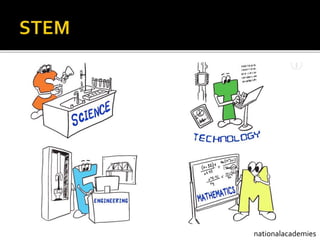
nationalacademies
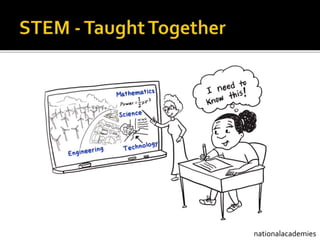
nationalacademies
nationalacademies
DOING PROJECTS
 Not relevant to students
 Based on Driving Question
 Doesn’t resemble RealWorld
 Non-collaborative
 Not many choices
 Graded by teacher perceptions
 Turned into the teacher
PROJECT BASED LEARNING
 Requires collaboration
 Follows teacher’s instructions
 Could provide real solutions
 Requires team collaboration
 Make most of the choices
 Based on rubric
 Public audience
Teachthought.com
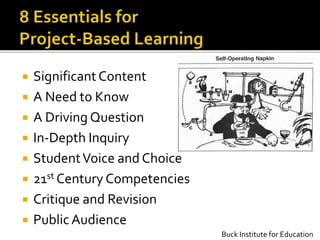
 Significant Content
 A Need to Know
 A Driving Question
 In-Depth Inquiry
 StudentVoice and Choice
 21st Century Competencies
 Critique and Revision
 PublicAudience
Buck Institute for Education
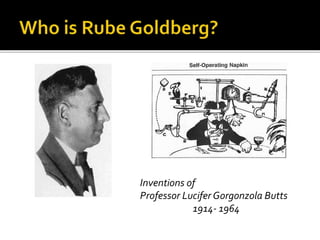
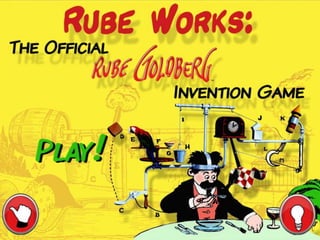
Inventions of
Professor Lucifer Gorgonzola Butts
1914- 1964
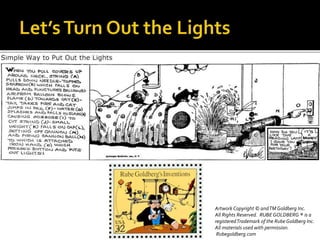
Artwork Copyright © andTM Goldberg Inc.
All Rights Reserved. RUBE GOLDBERG ® is a
registeredTrademark of the Rube Goldberg Inc.
All materials used with permission.
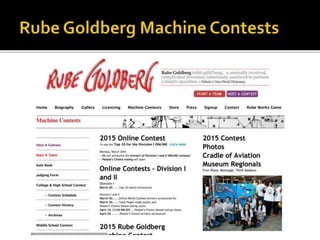
Rubegoldberg.com
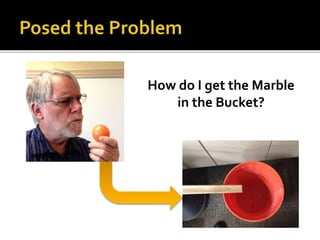
How do I get the Marble
in the Bucket?
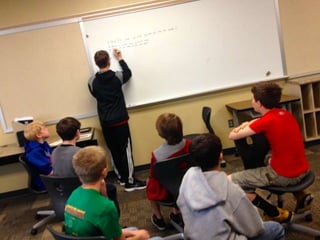
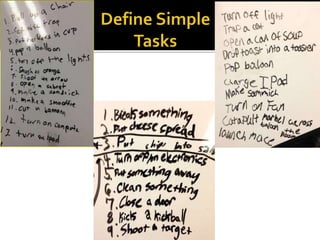
 Students Brainstorm 10 ways to get the ball
in the bucket
 Show photo of students brainstorming
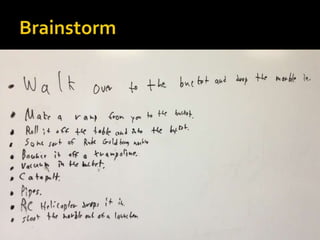
 Show list of ideas they created
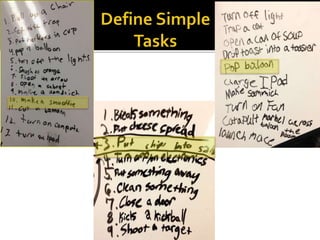
 Students Brainstorm 10 ways to get the ball
in the bucket
 Show photo of students brainstorming
 Show list of ideas they created
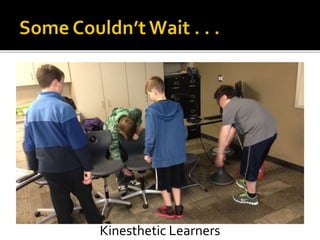
Kinesthetic Learners
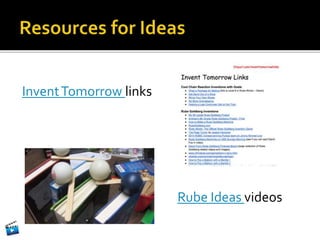
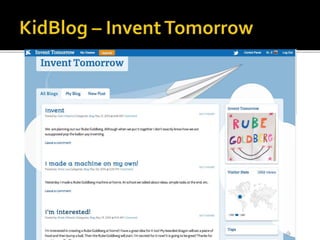
InventTomorrow links
Rube Ideas videos
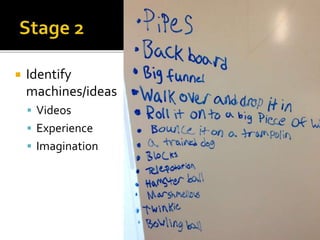
 Identify
machines/ideas
 Videos
 Experience
 Imagination
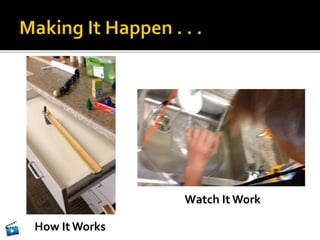
How It Works
Watch It Work
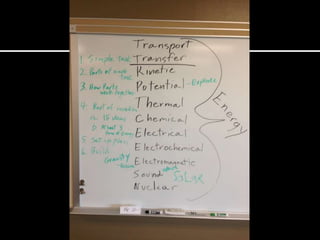
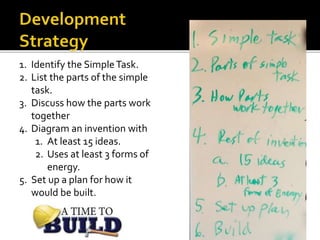
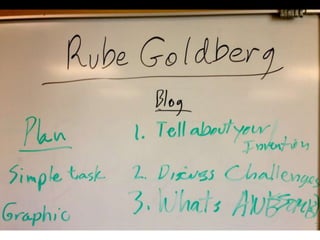
1. Identify the SimpleTask.
2. List the parts of the simple
task.
3. Discuss how the parts work
together
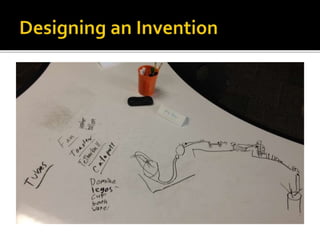
4. Diagram an invention with
1. At least 15 ideas.
2. Uses at least 3 forms of
energy.
5. Set up a plan for how it
would be built.
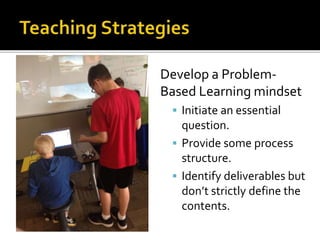
Develop a Problem-
Based Learning mindset
 Initiate an essential
question.
 Provide some process
structure.
 Identify deliverables but
don’t strictly define the
contents.
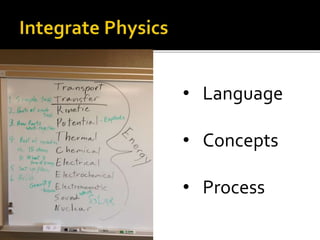
• Language
• Concepts
• Process
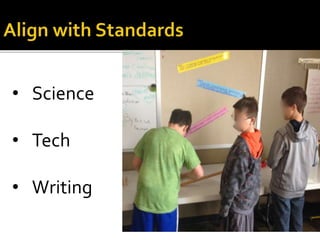
• Science
• Tech
• Writing
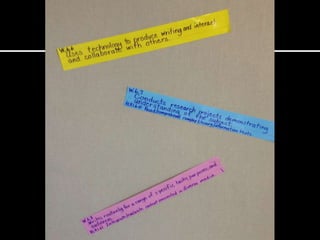
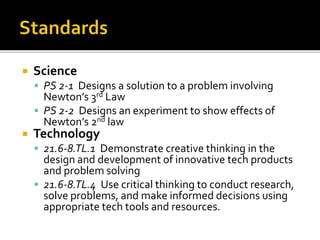
 Science
 PS 2-1 Designs a solution to a problem involving
Newton’s 3rd Law
 PS 2-2 Designs an experiment to show effects of
Newton’s 2nd law
 Technology
 21.6-8.TL.1 Demonstrate creative thinking in the
design and development of innovative tech products
and problem solving
 21.6-8.TL.4 Use critical thinking to conduct research,
solve problems, and make informed decisions using
appropriate tech tools and resources.
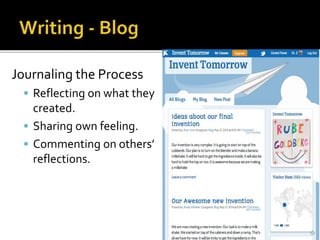
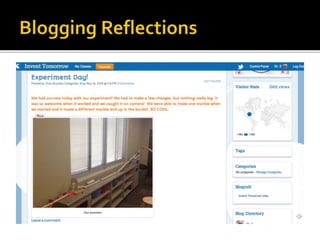
Journaling the Process
 Reflecting on what they
created.
 Sharing own feeling.
 Commenting on others’
reflections.
Inventing is like
writing a book.You get
to have fun imagining
new things, and when
you’re done you feel like
you accomplished
something.That why I
think inventing is cool
beans. - Griffin
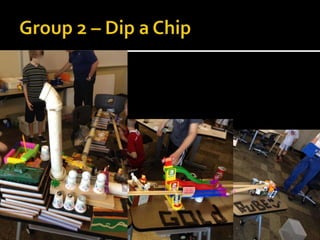
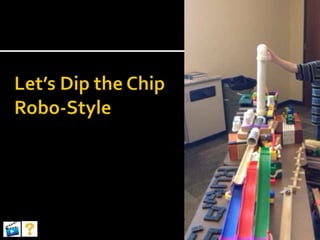
We’re starting a new project, and I think we
have some pretty good ideas!We’re creating a
Lego robot to transport a chip into a bowl of
salsa.The only thing is, we have to get the chip
back out, so that’s a challenge.
I think it’s awesome that we get to use our
creativity so much, and create machines that
you have fun thinking of. Also, getting to see
the other group inventions is pretty cool too.
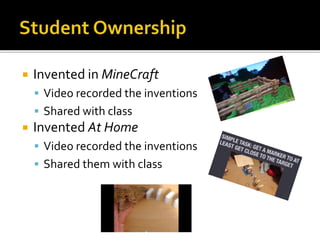
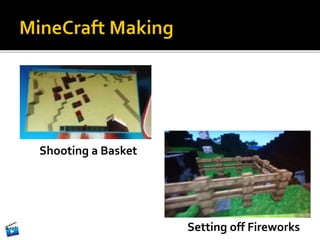
 Invented in MineCraft
 Video recorded the inventions
 Shared with class
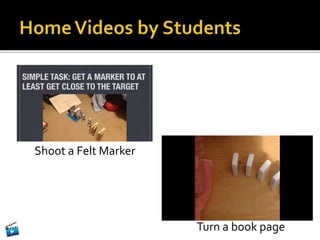
 Invented At Home
 Video recorded the inventions
 Shared them with class
Shooting a Basket
Setting off Fireworks
Turn a book page
Shoot a Felt Marker
Teaching STEM Elements Using Rube Goldberg Inventions

Teaching STEM Elements Using Rube Goldberg Inventions

  • 1.
    Leigh Zeitz University ofNorthern Iowa 2015 Statewide Teaching and Learning Conference
  • 2.
  • 3.
     STEM employeesearn 25% more than non-STEM  STEM-Related jobs grow 17% over next decade  2010 unemployed: STEM workers 5.3 % vs 10%  Minorities (Women, AfricanAmerican, Latinos) compose 70% of workforce but only 20% STEM  >50% of students beginning with STEM degree switch to Non-STEM degrees in first 2 years Stemadvantage.org
  • 4.
  • 5.
  • 6.
  • 7.
    DOING PROJECTS  Notrelevant to students  Based on Driving Question  Doesn’t resemble RealWorld  Non-collaborative  Not many choices  Graded by teacher perceptions  Turned into the teacher PROJECT BASED LEARNING  Requires collaboration  Follows teacher’s instructions  Could provide real solutions  Requires team collaboration  Make most of the choices  Based on rubric  Public audience Teachthought.com
  • 8.
     Significant Content A Need to Know  A Driving Question  In-Depth Inquiry  StudentVoice and Choice  21st Century Competencies  Critique and Revision  PublicAudience Buck Institute for Education
  • 9.
    Inventions of Professor LuciferGorgonzola Butts 1914- 1964
  • 11.
    Artwork Copyright ©andTM Goldberg Inc. All Rights Reserved. RUBE GOLDBERG ® is a registeredTrademark of the Rube Goldberg Inc. All materials used with permission. Rubegoldberg.com
  • 18.
    How do Iget the Marble in the Bucket?
  • 19.
     Students Brainstorm10 ways to get the ball in the bucket  Show photo of students brainstorming  Show list of ideas they created
  • 20.
     Students Brainstorm10 ways to get the ball in the bucket  Show photo of students brainstorming  Show list of ideas they created
  • 21.
  • 25.
  • 26.
  • 29.
  • 36.
    1. Identify theSimpleTask. 2. List the parts of the simple task. 3. Discuss how the parts work together 4. Diagram an invention with 1. At least 15 ideas. 2. Uses at least 3 forms of energy. 5. Set up a plan for how it would be built.
  • 45.
    Develop a Problem- BasedLearning mindset  Initiate an essential question.  Provide some process structure.  Identify deliverables but don’t strictly define the contents.
  • 46.
  • 47.
  • 49.
     Science  PS2-1 Designs a solution to a problem involving Newton’s 3rd Law  PS 2-2 Designs an experiment to show effects of Newton’s 2nd law  Technology  21.6-8.TL.1 Demonstrate creative thinking in the design and development of innovative tech products and problem solving  21.6-8.TL.4 Use critical thinking to conduct research, solve problems, and make informed decisions using appropriate tech tools and resources.
  • 51.
    Journaling the Process Reflecting on what they created.  Sharing own feeling.  Commenting on others’ reflections.
  • 54.
    Inventing is like writinga book.You get to have fun imagining new things, and when you’re done you feel like you accomplished something.That why I think inventing is cool beans. - Griffin
  • 55.
    We’re starting anew project, and I think we have some pretty good ideas!We’re creating a Lego robot to transport a chip into a bowl of salsa.The only thing is, we have to get the chip back out, so that’s a challenge. I think it’s awesome that we get to use our creativity so much, and create machines that you have fun thinking of. Also, getting to see the other group inventions is pretty cool too.
  • 56.
     Invented inMineCraft  Video recorded the inventions  Shared with class  Invented At Home  Video recorded the inventions  Shared them with class
  • 57.
  • 58.
    Turn a bookpage Shoot a Felt Marker

Editor's Notes

  • #21 Identify 10 ways to get the ball into the bucket
  • #25 What was your reaction to that first day of inventing?
  • #37 https://youtu.be/uF3nV0r87v8?t=2m
  • #46 What are your impressions about the learning experience? What were the challenges and benefits How can this be used to make learning more meaningful.
  • #62 What do you hope to see in future classes? Answer Questions of Audience