Mrs Teo CC
Video clips taken from
YouTube.
Solutions

What is a solution?


Watch the video clip to find out.
Solutions
1. In a solution,
• substance that dissolves
- ________.
     solute
• substance that does the dissolving
- ________.
    solvent


2. A solution is made up of
________ and _________.
 solute            solvent
3. The ________ is usually present in greater
         solvent
   amount than the ________ .
                      solute
Solutions


Watch the following video for an
explanation on dissolving.
Solutions

Simple explanation of dissolving:
When a substance dissolves in another, it breaks up into
particles and go in between the particles of the other.

For example when common salt or sugar is added to
water, its particles separate and go in between the
particles of water.

The attraction between the common salt particles and
water particles is greater than the attraction of the
common salt particles themselves.
Solutions

What does it mean when we say
a solution is dilute or
a solution is concentrated?

Watch the video to find out.
Solutions


A dilute solution contains less
solute than an equal volume of a
concentrated solution.

For example, dilute sugar solution
is less sweet than concentrated
sugar solution because it contains
less sugar dissolved in it.
Solutions

  When more and more sugar is dissolved in
  some water,
- solution becomes more and more
  concentrated
- soon some can no longer dissolve

 We say a saturated solution has been
 obtained.
Solutions

Are all substances soluble and is water the
only solvent?

Watch the video clip for the answer.
Solutions


       Let’s listen to a song
       -sung by a little kitten
       who is very glad that
       he's not soluble.
Solutions

Not all substances are soluble in water.

Some examples are:
• superglue dissolves in acetone
• grease dissolves in petrol
• some types of paint dissolve in turpentine

What is the solvent in a bottle of perfume?
Solutions
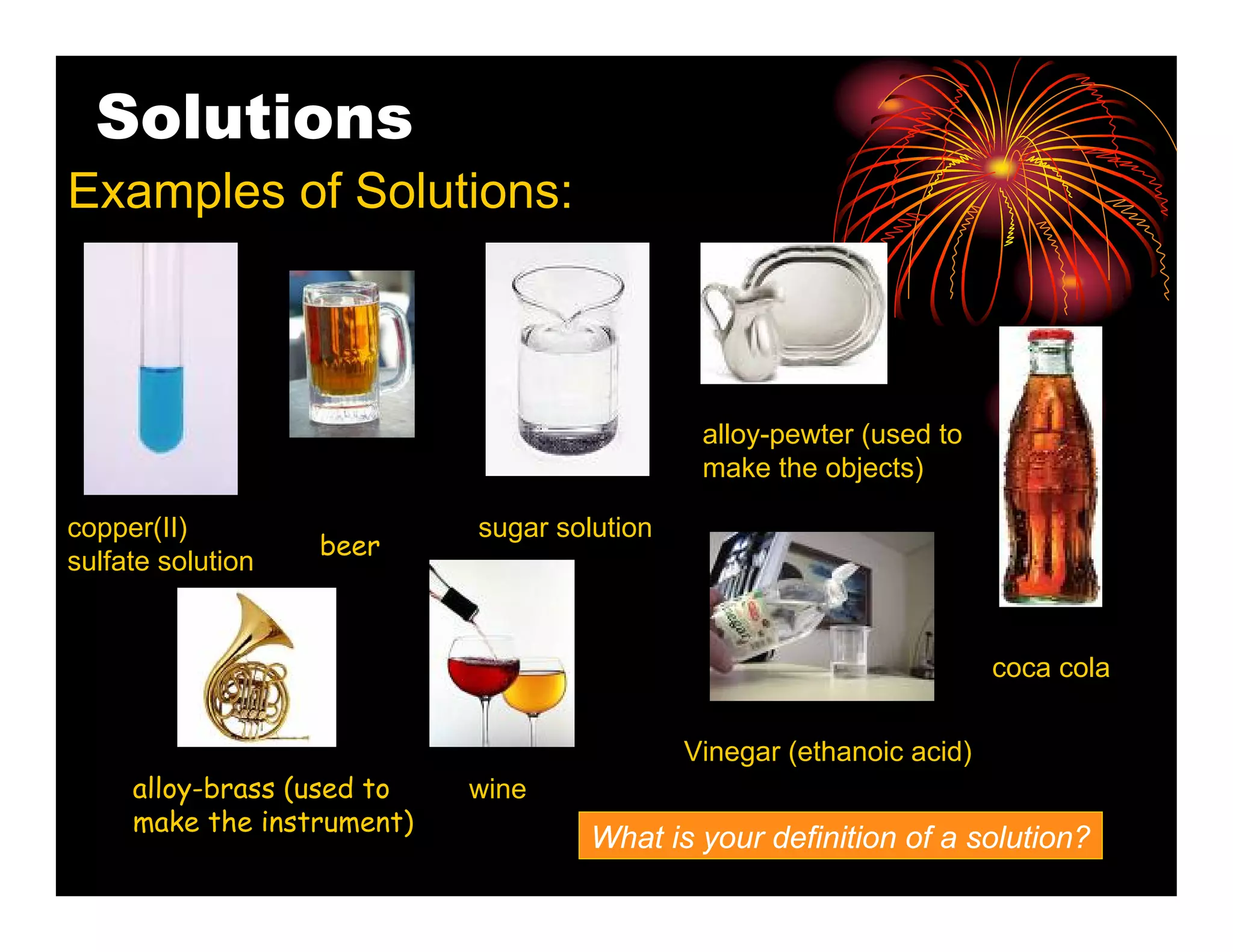
Examples of Solutions:


                                              alloy-pewter (used to
                                              make the objects)

copper(II)                  sugar solution
                   beer
sulfate solution


                                                                       coca cola


                                             Vinegar (ethanoic acid)
     alloy-brass (used to   wine
     make the instrument)
                                     What is your definition of a solution?
Solutions
 A solutions is a homogeneous mixture
 of substances.

• substances can be solids, liquids or
  gases
• homogeneous means the colour
  appearance, density and other physical
  and chemical properties are the same in
  in every part
Solutions


Water is called the universal solvent.
Why?
It can dissolve more substances than
any other solvent.

Solutions in which water is the solvent
are called aqueous solutions.
Solutions


There are other types of solutions
besides those consisting of solids
dissolved in liquids (e.g. sugar solution,
salt solution).
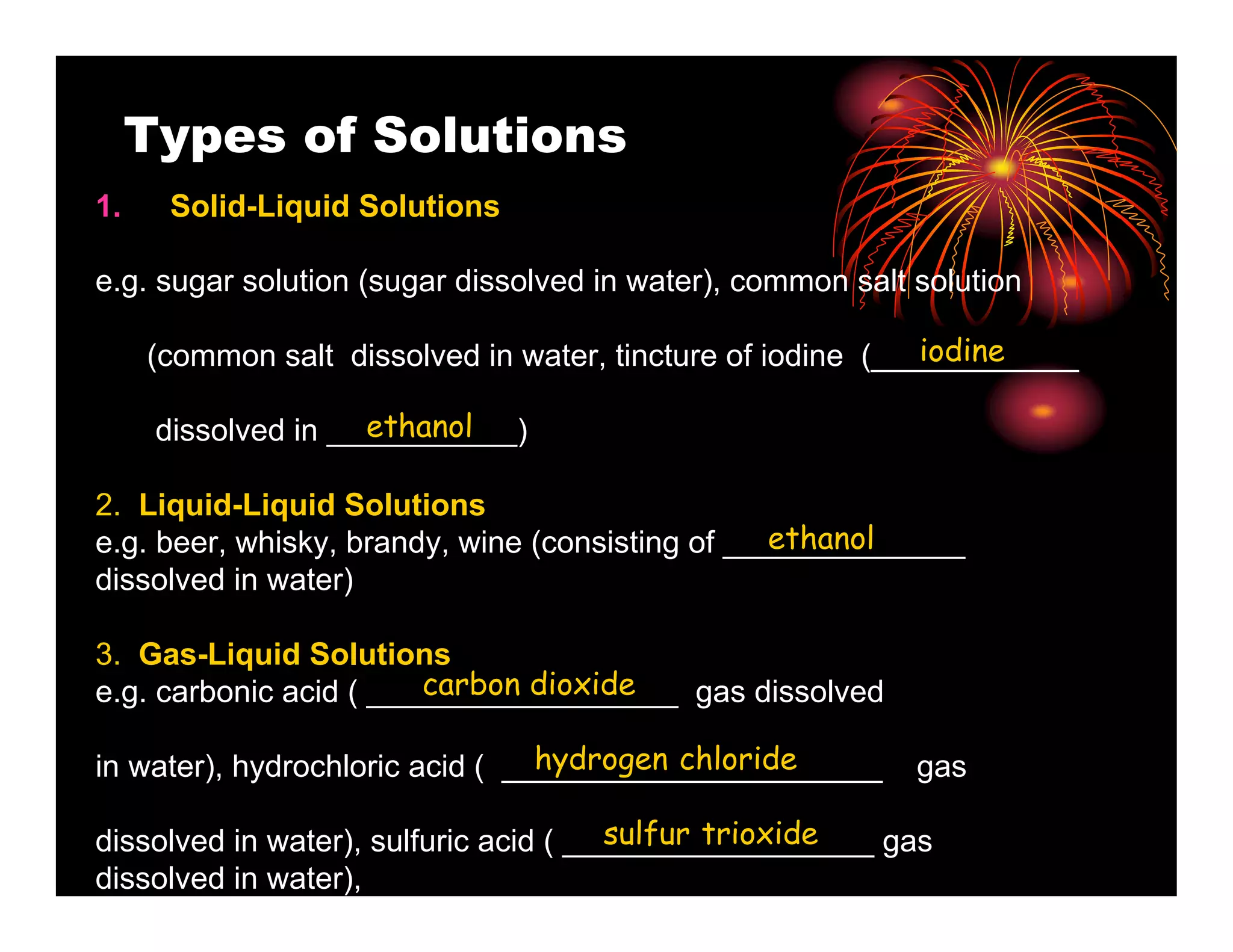
Types of Solutions
1.    Solid-Liquid Solutions

e.g. sugar solution (sugar dissolved in water), common salt solution

                                                             iodine
     (common salt dissolved in water, tincture of iodine (____________

                     ethanol
      dissolved in ___________)

2. Liquid-Liquid Solutions
                                                  ethanol
e.g. beer, whisky, brandy, wine (consisting of ______________
dissolved in water)

3. Gas-Liquid Solutions
                        carbon dioxide
e.g. carbonic acid ( __________________ gas dissolved

                                 hydrogen chloride
in water), hydrochloric acid ( ______________________       gas

                                       sulfur trioxide
dissolved in water), sulfuric acid ( __________________ gas
dissolved in water),
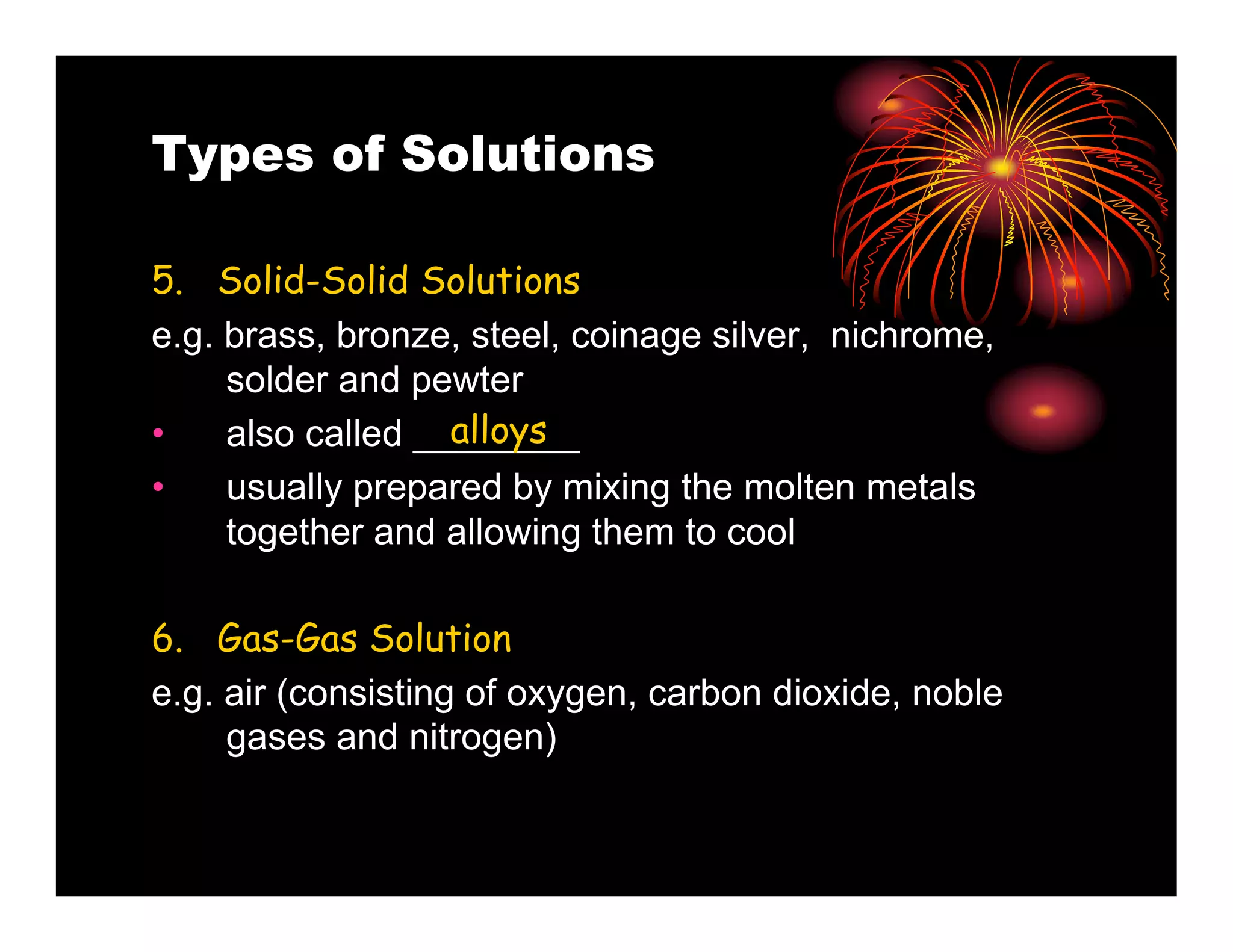
Types of Solutions

5. Solid-Solid Solutions
e.g. brass, bronze, steel, coinage silver, nichrome,
     solder and pewter
•                  alloys
     also called ________
•   usually prepared by mixing the molten metals
    together and allowing them to cool

6. Gas-Gas Solution
e.g. air (consisting of oxygen, carbon dioxide, noble
     gases and nitrogen)
Solutions
Interesting solutions

- amalgams
  - made up of metals such as silver, tin, copper
  or gold, dissolved in mercury
  - used in dentistry to fill tooth cavities

- tincture of iodine
  - made up of iodine dissolved in ethanol
  - used as an antiseptic
Solutions
There is a limit to the amount of solute that can
dissolve in a given amount of solvent at a
particular temperature.

For example, given some water in a beaker,
only a certain mass of sugar can dissolve in it
at a given temperature. Any extra sugar
added will be left undissolved

We say that a saturated sugar solution has
been produced.
Solutions

A solution that contains the maximum
amount of solute dissolved in it at a
given temperature is called a
  saturated
___________ solution.
Solutions


Solubility is the maximum mass of a
solute that can dissolve in 100 g of a
solvent at a particular temperature.
Solubility

For example,

- 30 g of copper(II) sulfate can dissolve in 100 water
at 42 deg C,
so we say the solubility of copper(II) sulfate at
42 deg C is 30g.

- 66 g of copper(II) sulfate can dissolve in 100 g water
at 90 deg C,
so we say the solubility of copper(II) sulfate at
90 deg C is 66 g.
Solubility
The three factors affecting solubility:
1. Temperature of the solvent
Generally the higher the temperature of a solvent
the greater is the solubility of a solid.
However, gases are less soluble when the
temperature rises.

For example, sugar is more soluble in hot water than cold
water. However, oxygen is more soluble in cold water than hot
water.
Solubility
2. Nature of the solute
A substance can be more soluble than another
substance in a given amount of the same
solvent at the same temperature


For example, common salt is more soluble than
baking soda in the same amount of water at the
same temperature.
Solubility

3. Nature of the solvent
A substance can be soluble in one solvent but
insoluble or only slightly soluble in an equal
volume of another solvent at the same
temperature.

For example, iodine is soluble in ethanol but almost
insoluble in water.
Rate of Dissolving

The three factors affecting rate
of dissolving:

1. Rate of stirring
The faster a solution is stirred, the faster
a solute will dissolve .


Stirring sugar in water makes it dissolve more quickly than
not stirring it.
Rate of Dissolving


2. Temperature of solvent
The higher the temperature of a solvent,
the faster a solute will dissolve in it.


Sugar dissolves faster in hot water than an equal volume
of cold water.
Rate of Dissolving

3. Surface area of the solute
The finer the particles or the bigger the
surface area of a solute, the faster it
will dissolve in a solvent.


Fine sugar dissolves faster in water than an equal mass
of rock sugar as it has bigger surface area.
THE END

Online Solutions

  • 1.
    Mrs Teo CC Videoclips taken from YouTube.
  • 2.
    Solutions What is asolution? Watch the video clip to find out.
  • 3.
    Solutions 1. In asolution, • substance that dissolves - ________. solute • substance that does the dissolving - ________. solvent 2. A solution is made up of ________ and _________. solute solvent 3. The ________ is usually present in greater solvent amount than the ________ . solute
  • 4.
    Solutions Watch the followingvideo for an explanation on dissolving.
  • 5.
    Solutions Simple explanation ofdissolving: When a substance dissolves in another, it breaks up into particles and go in between the particles of the other. For example when common salt or sugar is added to water, its particles separate and go in between the particles of water. The attraction between the common salt particles and water particles is greater than the attraction of the common salt particles themselves.
  • 6.
    Solutions What does itmean when we say a solution is dilute or a solution is concentrated? Watch the video to find out.
  • 7.
    Solutions A dilute solutioncontains less solute than an equal volume of a concentrated solution. For example, dilute sugar solution is less sweet than concentrated sugar solution because it contains less sugar dissolved in it.
  • 8.
    Solutions Whenmore and more sugar is dissolved in some water, - solution becomes more and more concentrated - soon some can no longer dissolve We say a saturated solution has been obtained.
  • 9.
    Solutions Are all substancessoluble and is water the only solvent? Watch the video clip for the answer.
  • 10.
    Solutions Let’s listen to a song -sung by a little kitten who is very glad that he's not soluble.
  • 11.
    Solutions Not all substancesare soluble in water. Some examples are: • superglue dissolves in acetone • grease dissolves in petrol • some types of paint dissolve in turpentine What is the solvent in a bottle of perfume?
  • 12.
    Solutions Examples of Solutions: alloy-pewter (used to make the objects) copper(II) sugar solution beer sulfate solution coca cola Vinegar (ethanoic acid) alloy-brass (used to wine make the instrument) What is your definition of a solution?
  • 13.
    Solutions A solutionsis a homogeneous mixture of substances. • substances can be solids, liquids or gases • homogeneous means the colour appearance, density and other physical and chemical properties are the same in in every part
  • 14.
    Solutions Water is calledthe universal solvent. Why? It can dissolve more substances than any other solvent. Solutions in which water is the solvent are called aqueous solutions.
  • 15.
    Solutions There are othertypes of solutions besides those consisting of solids dissolved in liquids (e.g. sugar solution, salt solution).
  • 16.
    Types of Solutions 1. Solid-Liquid Solutions e.g. sugar solution (sugar dissolved in water), common salt solution iodine (common salt dissolved in water, tincture of iodine (____________ ethanol dissolved in ___________) 2. Liquid-Liquid Solutions ethanol e.g. beer, whisky, brandy, wine (consisting of ______________ dissolved in water) 3. Gas-Liquid Solutions carbon dioxide e.g. carbonic acid ( __________________ gas dissolved hydrogen chloride in water), hydrochloric acid ( ______________________ gas sulfur trioxide dissolved in water), sulfuric acid ( __________________ gas dissolved in water),
  • 17.
    Types of Solutions 5.Solid-Solid Solutions e.g. brass, bronze, steel, coinage silver, nichrome, solder and pewter • alloys also called ________ • usually prepared by mixing the molten metals together and allowing them to cool 6. Gas-Gas Solution e.g. air (consisting of oxygen, carbon dioxide, noble gases and nitrogen)
  • 18.
    Solutions Interesting solutions - amalgams - made up of metals such as silver, tin, copper or gold, dissolved in mercury - used in dentistry to fill tooth cavities - tincture of iodine - made up of iodine dissolved in ethanol - used as an antiseptic
  • 19.
    Solutions There is alimit to the amount of solute that can dissolve in a given amount of solvent at a particular temperature. For example, given some water in a beaker, only a certain mass of sugar can dissolve in it at a given temperature. Any extra sugar added will be left undissolved We say that a saturated sugar solution has been produced.
  • 20.
    Solutions A solution thatcontains the maximum amount of solute dissolved in it at a given temperature is called a saturated ___________ solution.
  • 21.
    Solutions Solubility is themaximum mass of a solute that can dissolve in 100 g of a solvent at a particular temperature.
  • 22.
    Solubility For example, - 30g of copper(II) sulfate can dissolve in 100 water at 42 deg C, so we say the solubility of copper(II) sulfate at 42 deg C is 30g. - 66 g of copper(II) sulfate can dissolve in 100 g water at 90 deg C, so we say the solubility of copper(II) sulfate at 90 deg C is 66 g.
  • 23.
    Solubility The three factorsaffecting solubility: 1. Temperature of the solvent Generally the higher the temperature of a solvent the greater is the solubility of a solid. However, gases are less soluble when the temperature rises. For example, sugar is more soluble in hot water than cold water. However, oxygen is more soluble in cold water than hot water.
  • 24.
    Solubility 2. Nature ofthe solute A substance can be more soluble than another substance in a given amount of the same solvent at the same temperature For example, common salt is more soluble than baking soda in the same amount of water at the same temperature.
  • 25.
    Solubility 3. Nature ofthe solvent A substance can be soluble in one solvent but insoluble or only slightly soluble in an equal volume of another solvent at the same temperature. For example, iodine is soluble in ethanol but almost insoluble in water.
  • 26.
    Rate of Dissolving Thethree factors affecting rate of dissolving: 1. Rate of stirring The faster a solution is stirred, the faster a solute will dissolve . Stirring sugar in water makes it dissolve more quickly than not stirring it.
  • 27.
    Rate of Dissolving 2.Temperature of solvent The higher the temperature of a solvent, the faster a solute will dissolve in it. Sugar dissolves faster in hot water than an equal volume of cold water.
  • 28.
    Rate of Dissolving 3.Surface area of the solute The finer the particles or the bigger the surface area of a solute, the faster it will dissolve in a solvent. Fine sugar dissolves faster in water than an equal mass of rock sugar as it has bigger surface area.
  • 29.