NONINVASIVE AND INVASIVE
ASSESMENT OF SA NODE AND AV
NODE AND ITS CLINICAL
RELEVANCE
I.TAMMI RAJU
OVERVIEW OF TOPIC
 SA NODE INTRODUCTION
 SYMPTOMS
 DIAGNOSTIC ALGORYTHM
NONINVASIVE ASSESMENT
ECG
EXCERSICE
DRUGS
INVASIVE ASSESMENT
SNRT
SACT
 TREATMENT
AV NODE
INTRODUCTION
CLINICAL FEATURES
NON-INVASIVE
INVASIVE
ATRIAL EXTRA STIMULI
TREATMENT
INTRODUCTION OF SA NODE
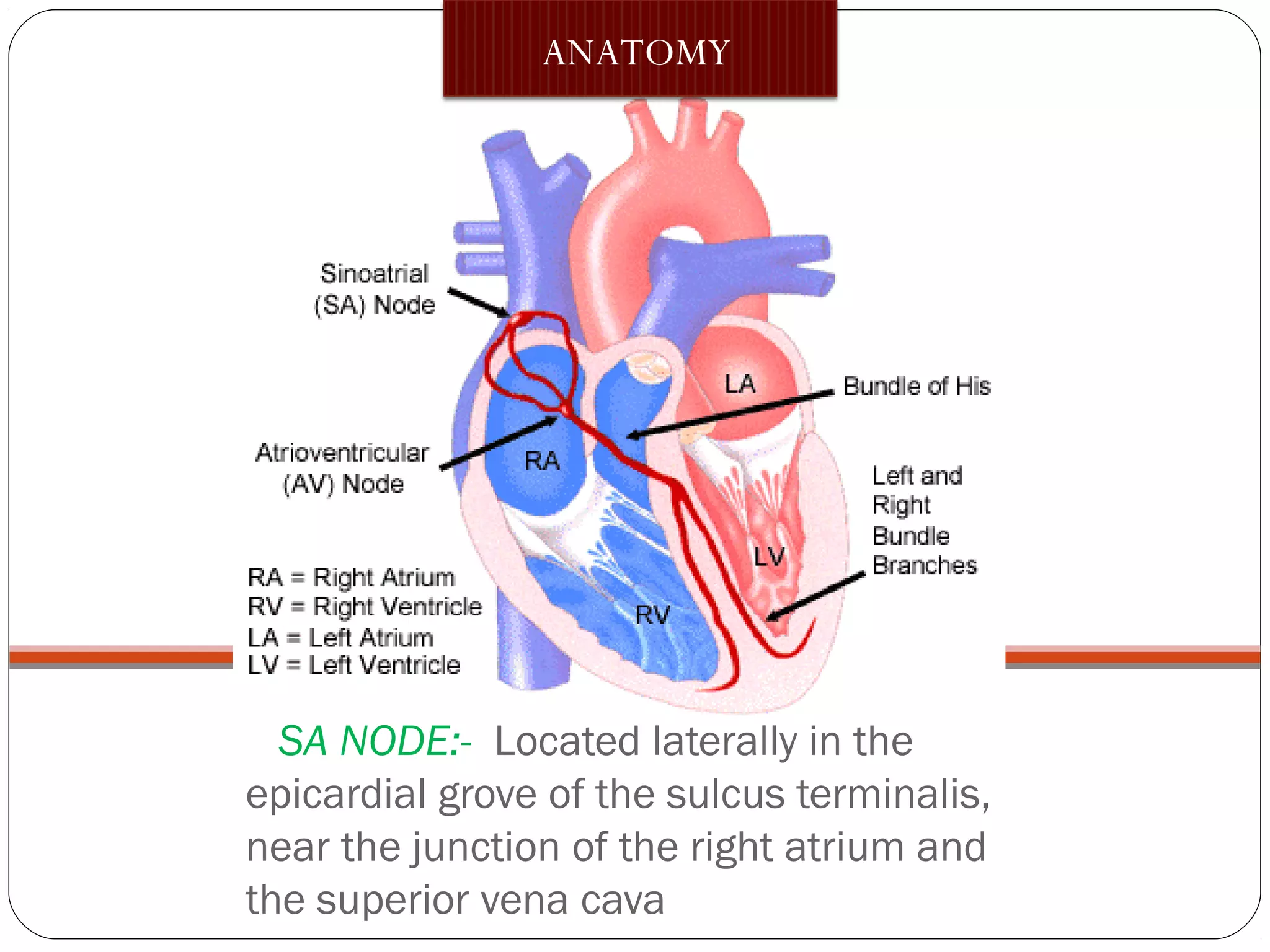
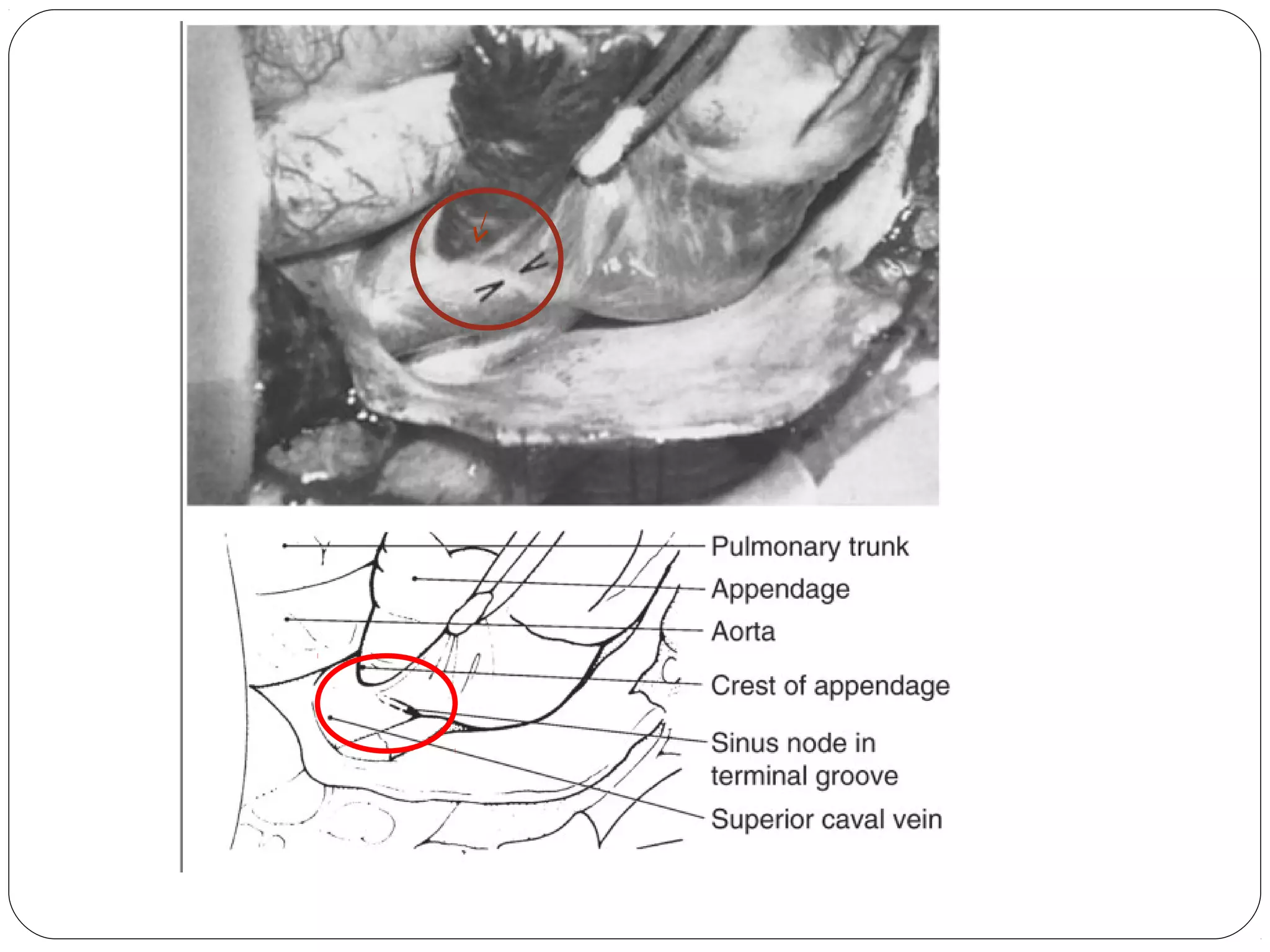
SA NODE:- Located laterally in the
epicardial grove of the sulcus terminalis,
near the junction of the right atrium and
the superior vena cava
ANATOMY
Blood Supply
Right coronary artery in 59 percent,
Left circumflex artery in 38 percent,
Dual blood supply in 3 percent.
Kyrialikdis MK, Kouraouklis CB, Papaioannou JT,
et al.. Am J Cardiol 1983;51:749–750
INNERVATION
Both the parasympathetic and sympathetic.
 The sinus node is richly innervated with postganglionic
adrenergic and cholinergic nerve terminals.
 Vagal stimulation-- slows the sinus node discharge rate and
increases the intranodal conduction time.
Adrenergic stimulation increases the sinus node discharge rate
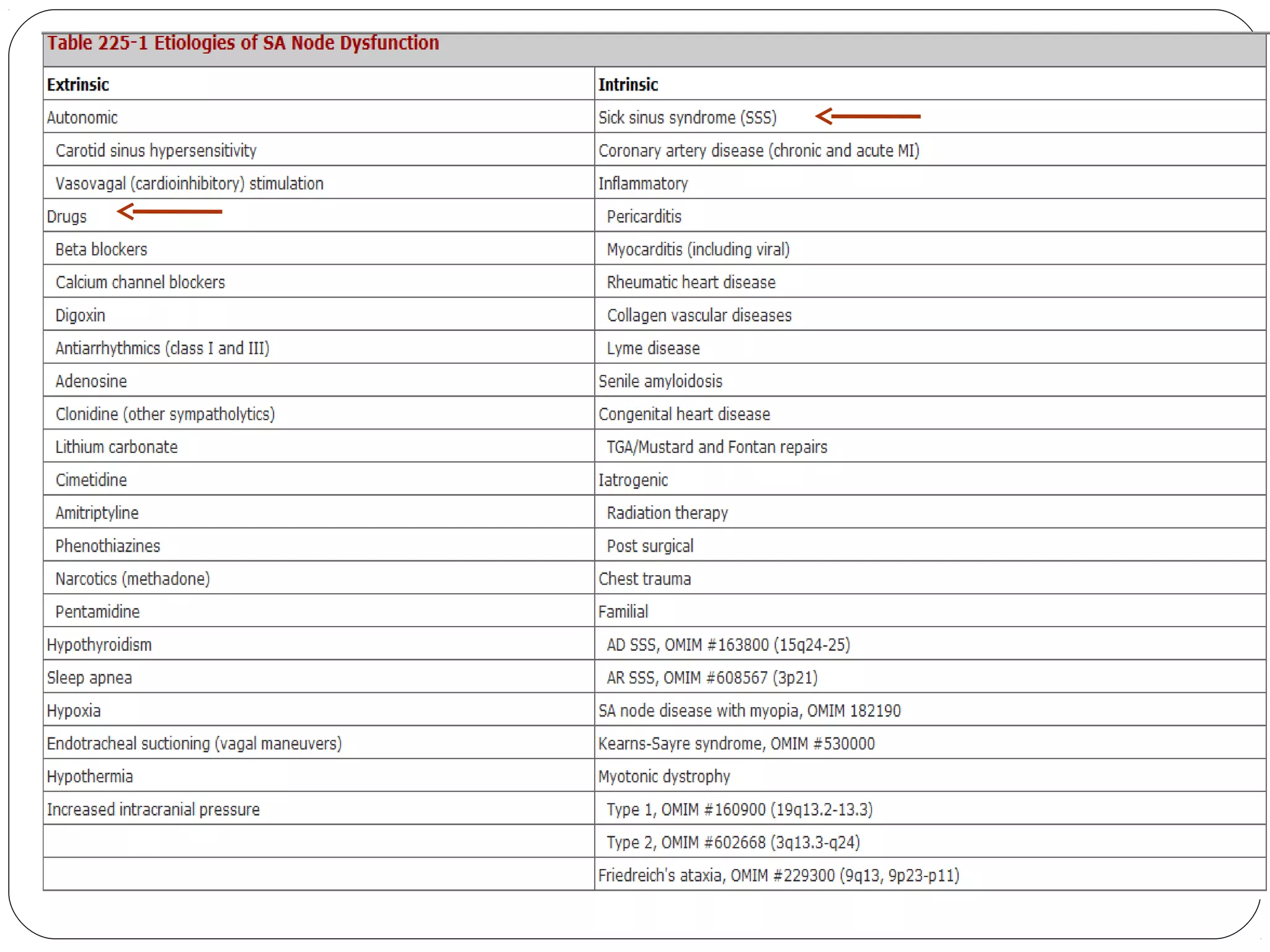
SINUS NODE DYSFUNCTION
Disorders of automaticity, conduction, or both.
Abnormal automaticity, / sinus arrest--
failure of sinus impulse generation.
Abnormal conduction, or sinoatrial delay or block- failure of
impulse transmission.
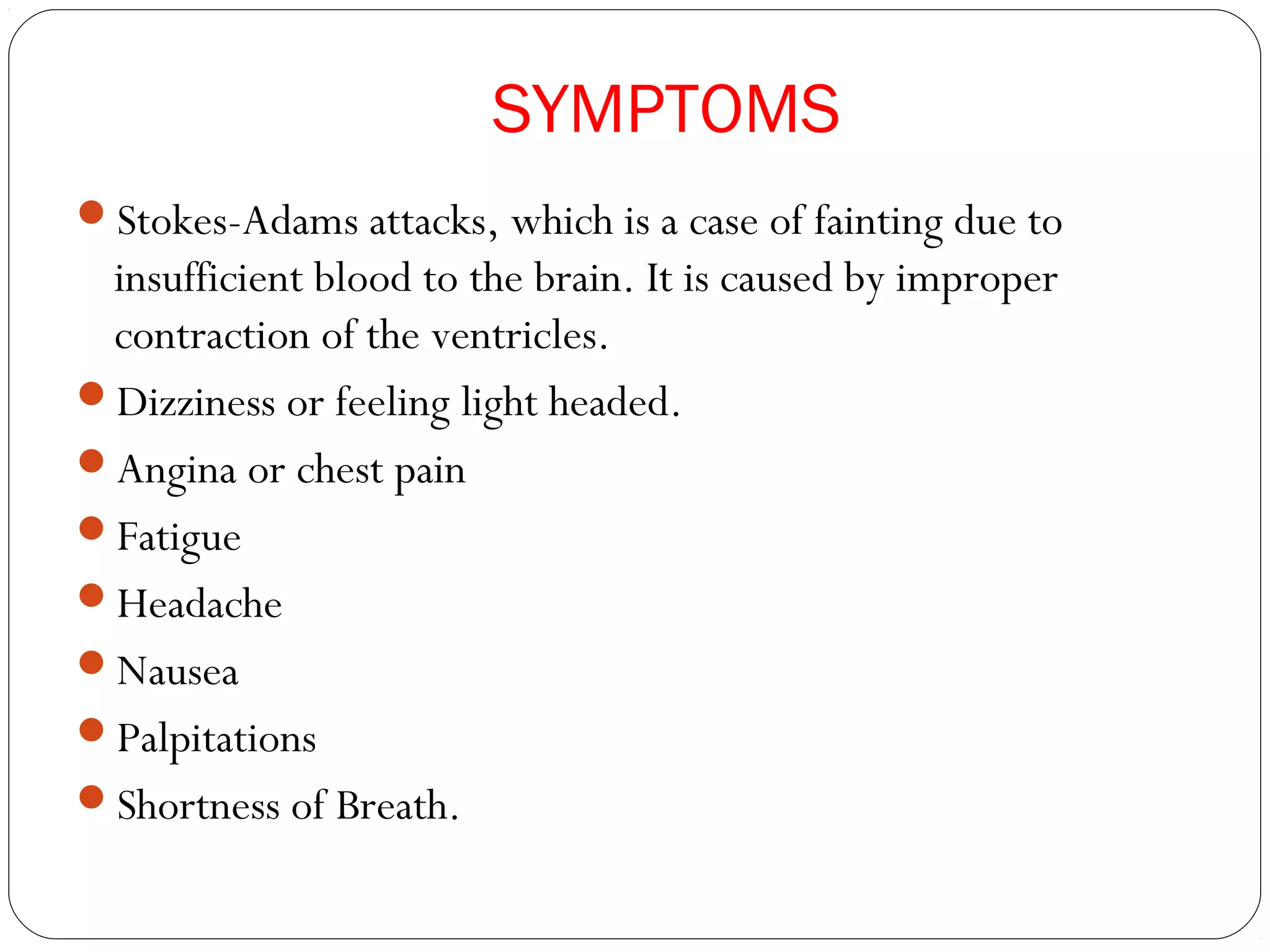
SYMPTOMS
Stokes-Adams attacks, which is a case of fainting due to
insufficient blood to the brain. It is caused by improper
contraction of the ventricles.
Dizziness or feeling light headed.
Angina or chest pain
Fatigue
Headache
Nausea
Palpitations
Shortness of Breath.
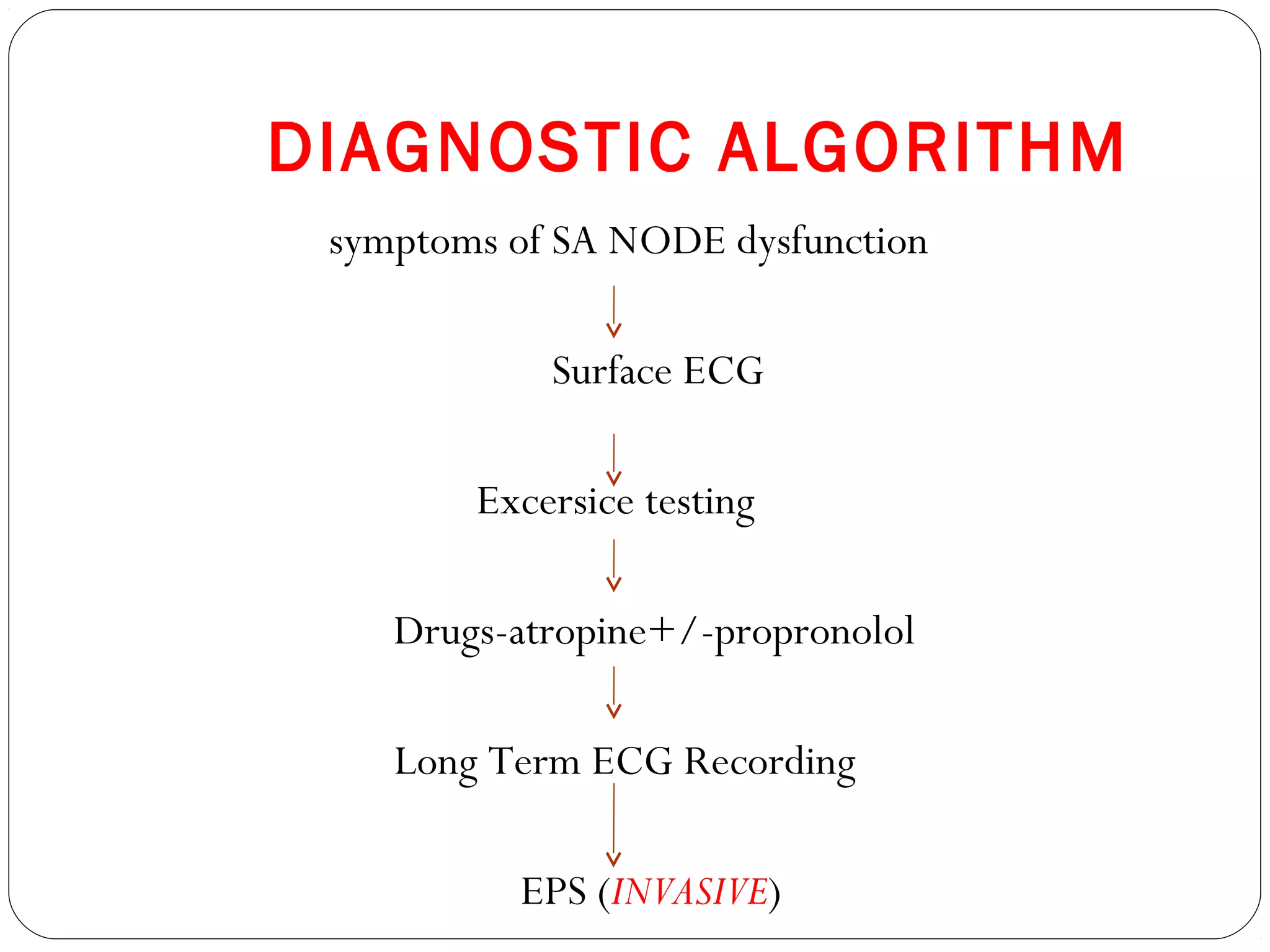
DIAGNOSTIC ALGORITHM
symptoms of SA NODE dysfunction
Surface ECG
Excersice testing
Drugs-atropine+/-propronolol
Long Term ECG Recording
EPS (INVASIVE)
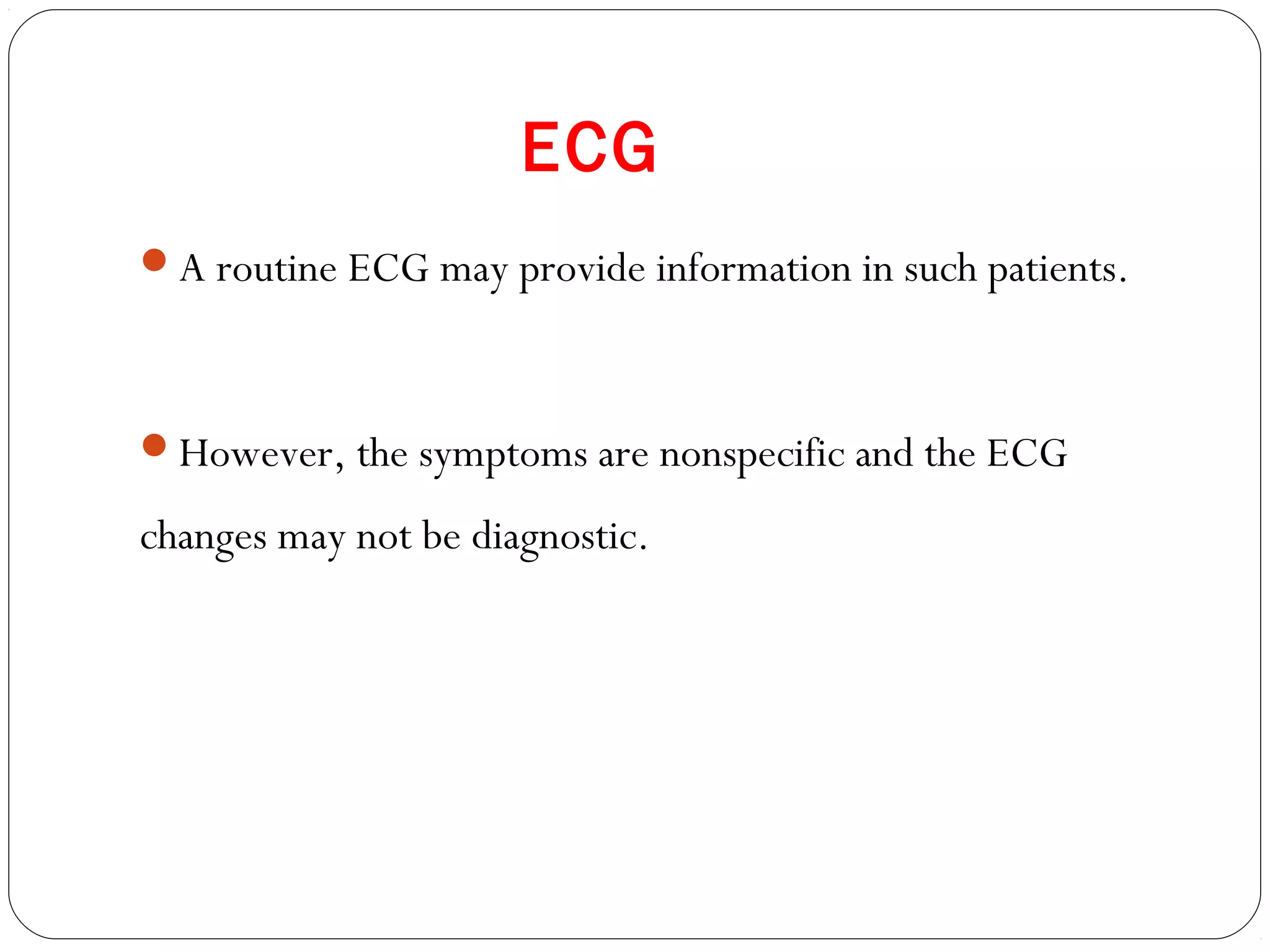
ECG
A routine ECG may provide information in such patients.
However, the symptoms are nonspecific and the ECG
changes may not be diagnostic.
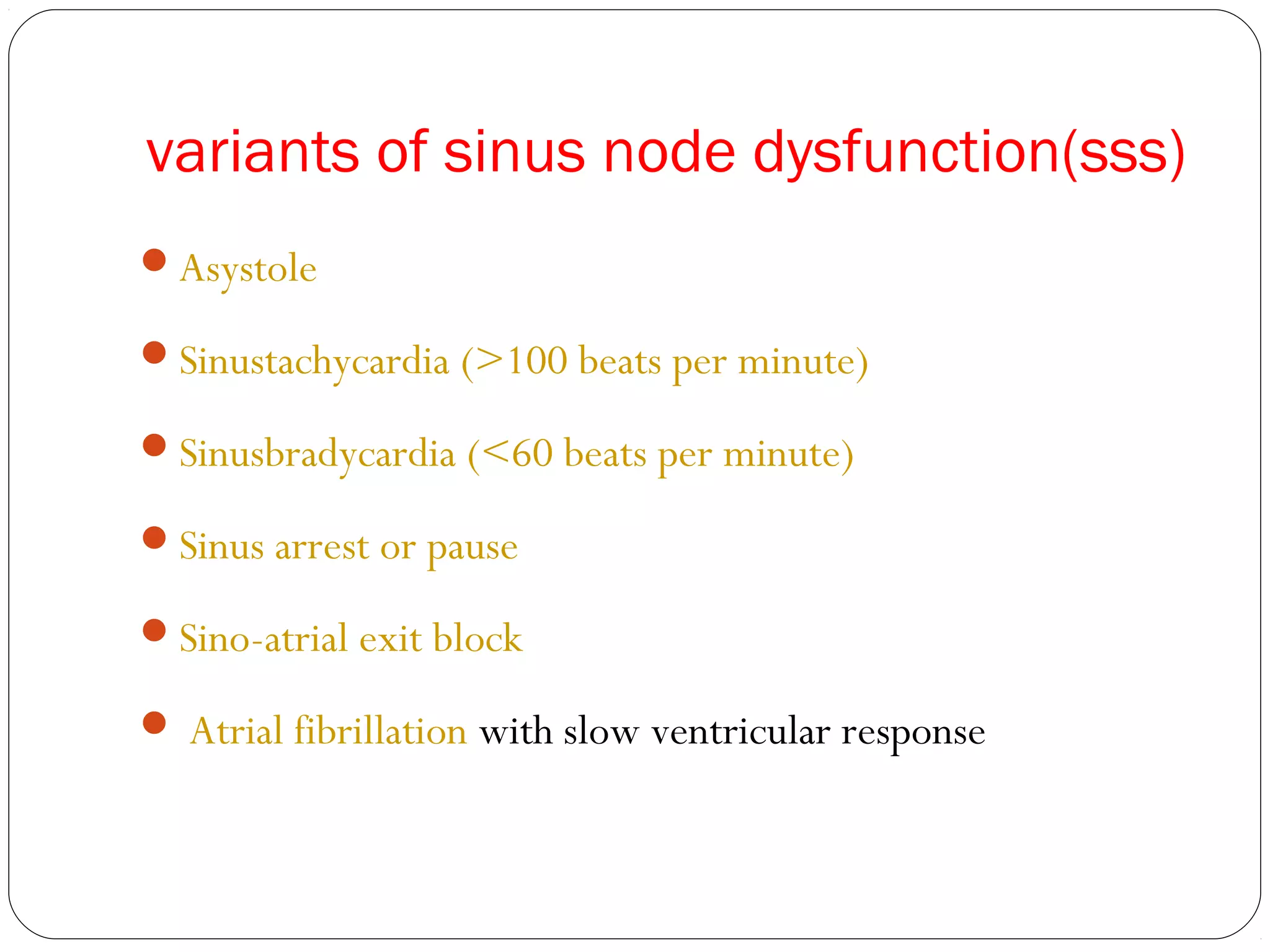
variants of sinus node dysfunction(sss)
Asystole
Sinustachycardia (>100 beats per minute)
Sinusbradycardia (<60 beats per minute)
Sinus arrest or pause
Sino-atrial exit block
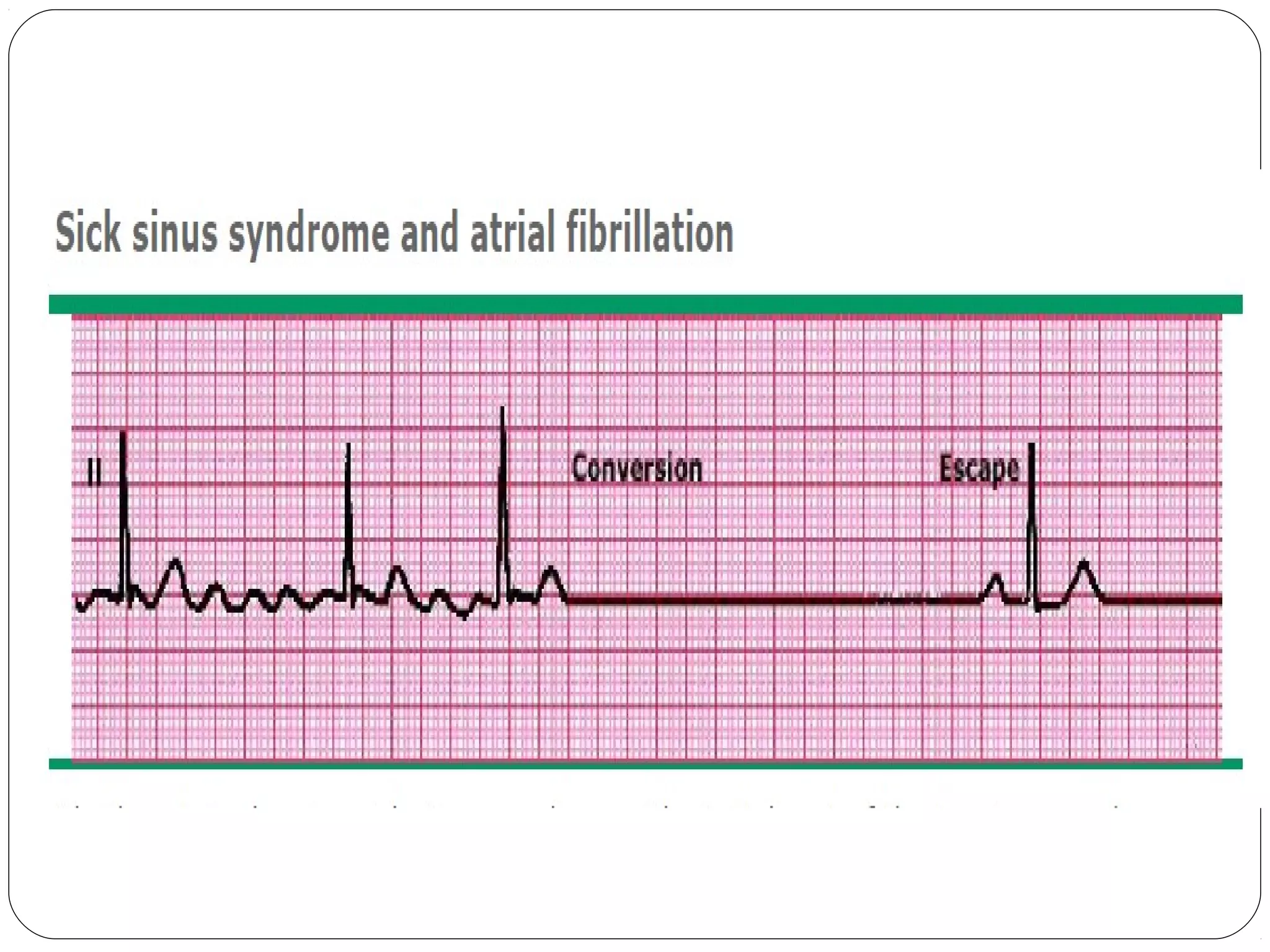
 Atrial fibrillation with slow ventricular response
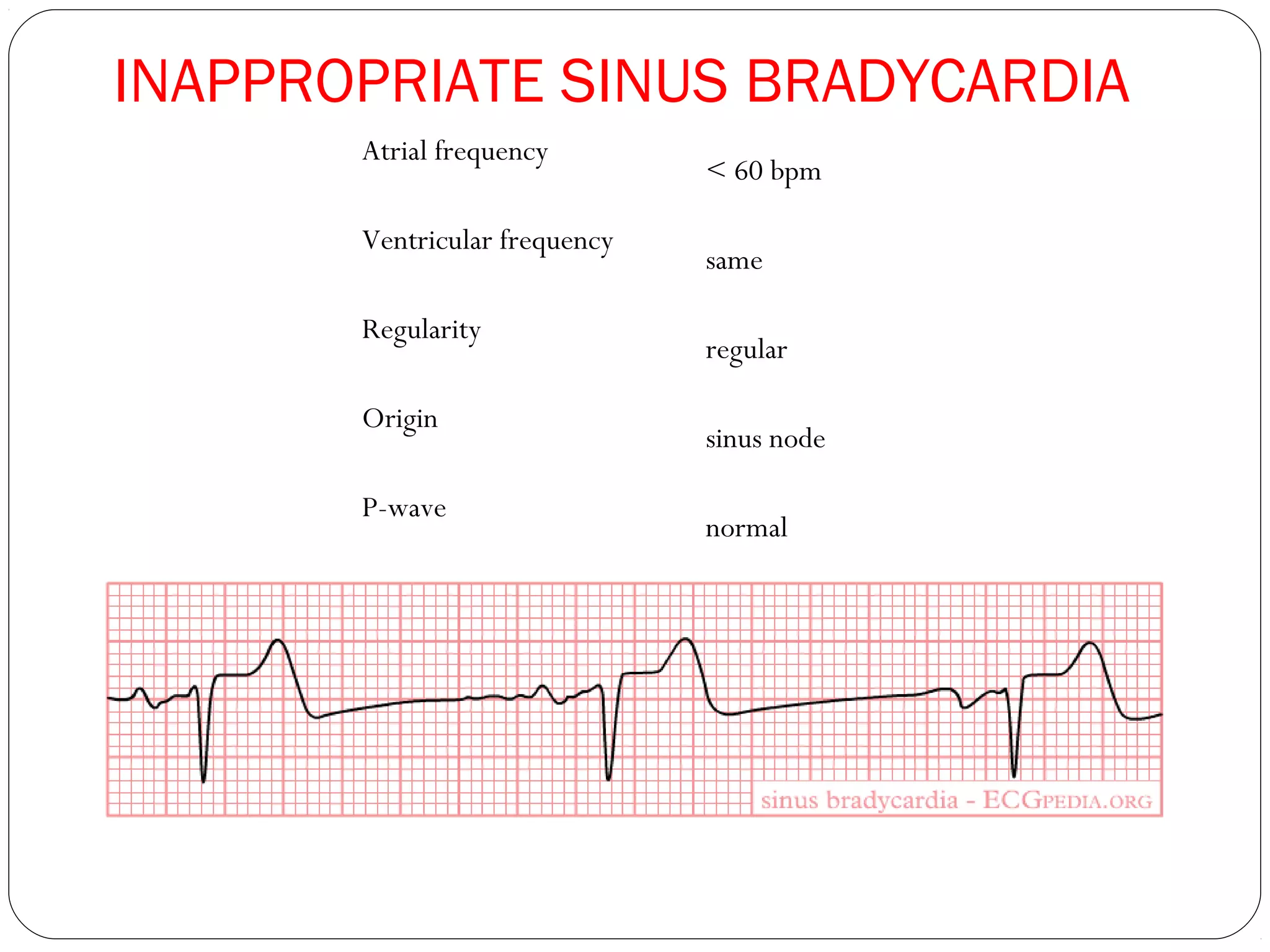
Atrial frequency
< 60 bpm
Ventricular frequency
same
Regularity
regular
Origin
sinus node
P-wave
normal
INAPPROPRIATE SINUS BRADYCARDIA
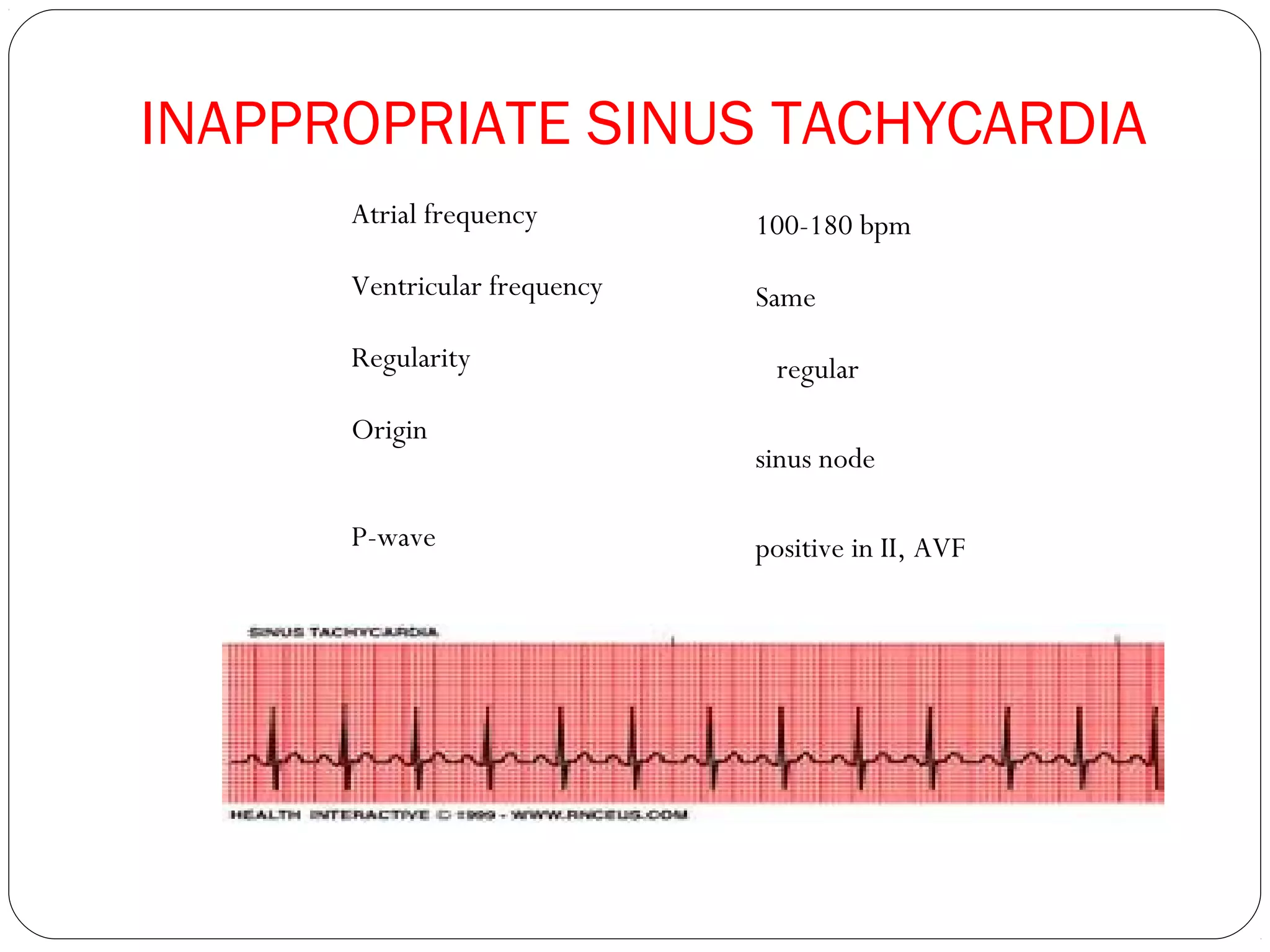
INAPPROPRIATE SINUS TACHYCARDIA
Atrial frequency 100-180 bpm
Ventricular frequency Same
Regularity regular
Origin
sinus node
P-wave positive in II, AVF
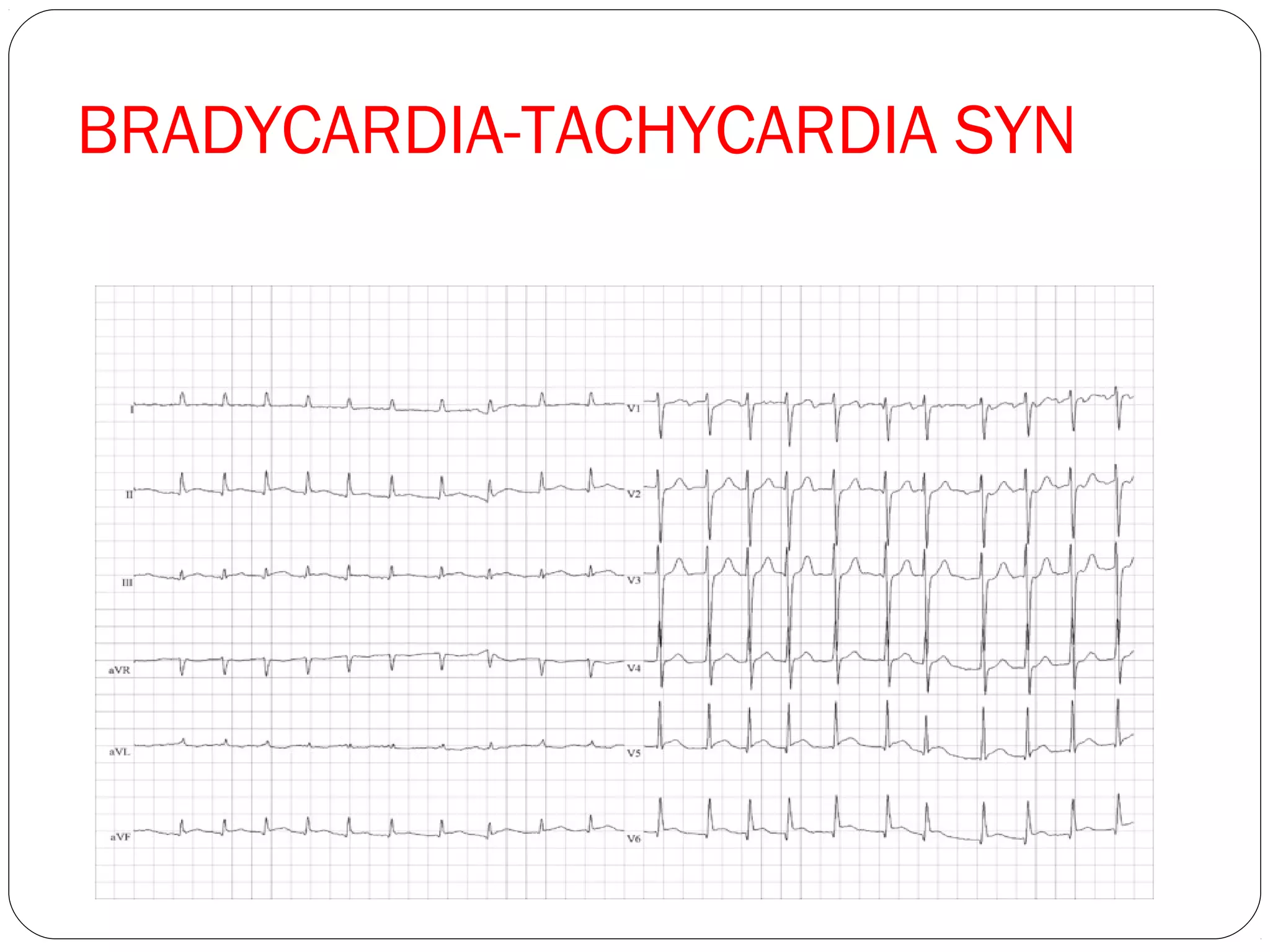
BRADYCARDIA-TACHYCARDIA SYN
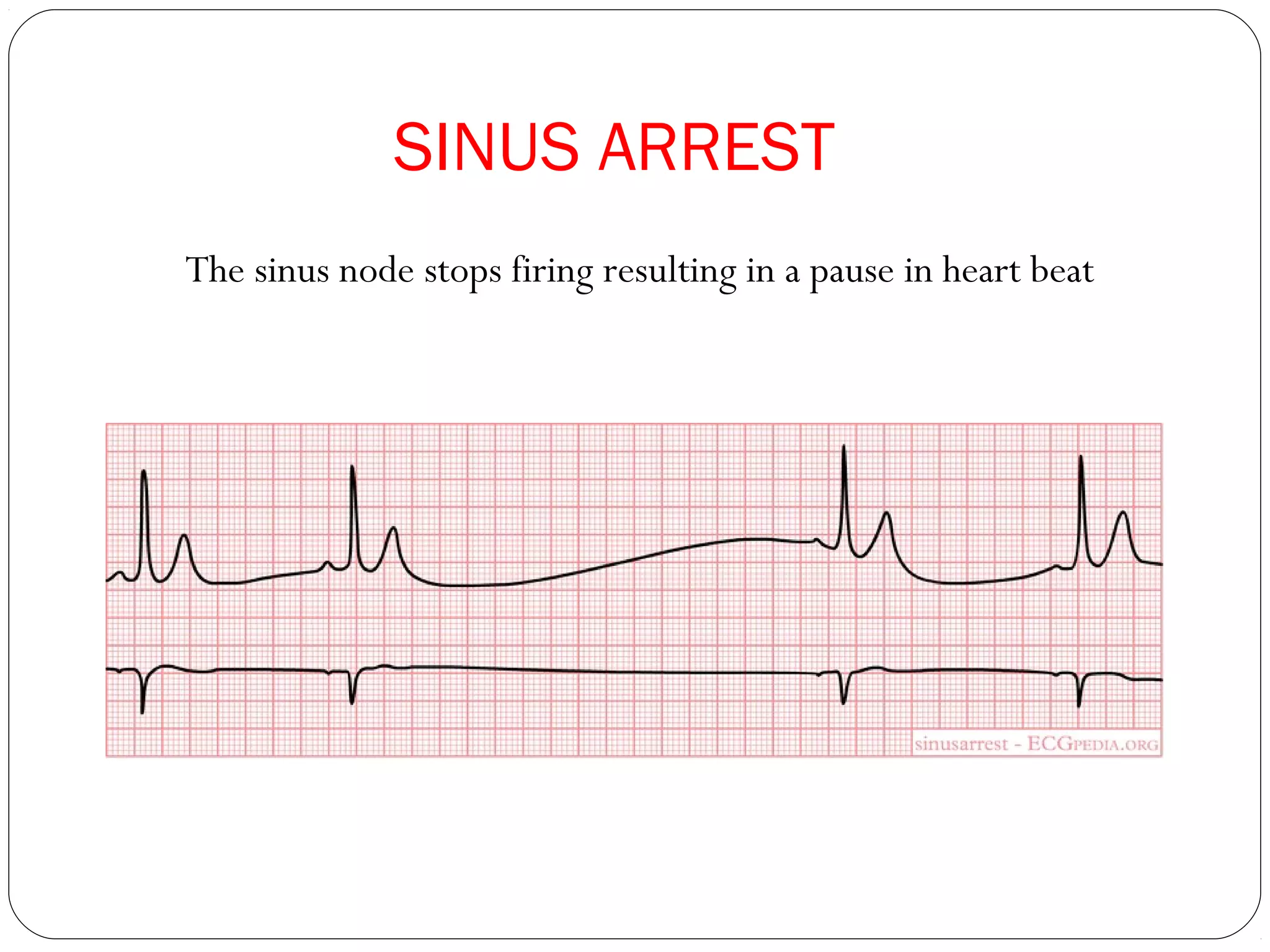
SINUS ARREST
The sinus node stops firing resulting in a pause in heart beat
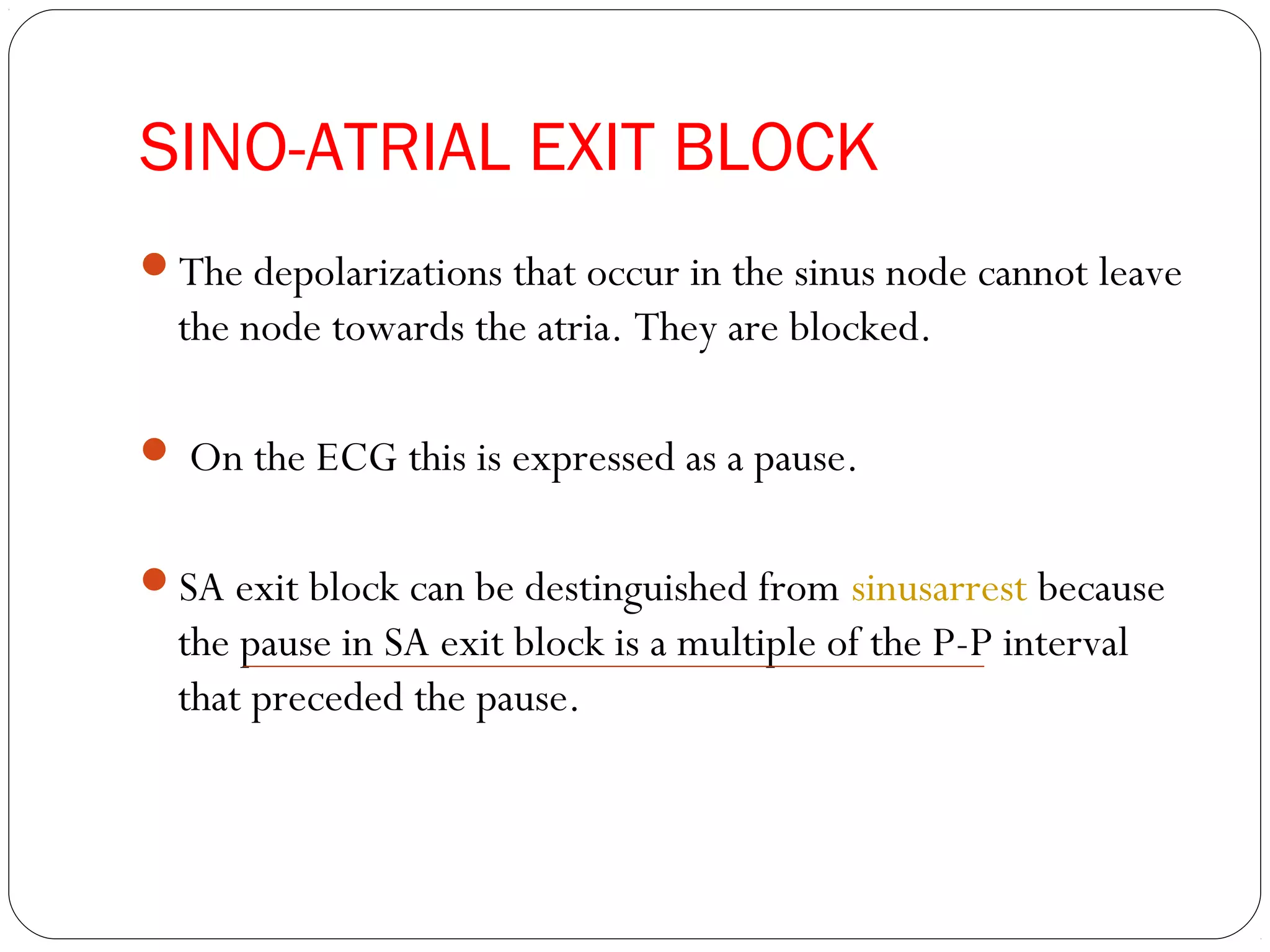
SINO-ATRIAL EXIT BLOCK
The depolarizations that occur in the sinus node cannot leave
the node towards the atria. They are blocked.
 On the ECG this is expressed as a pause.
SA exit block can be destinguished from sinusarrest because
the pause in SA exit block is a multiple of the P-P interval
that preceded the pause.
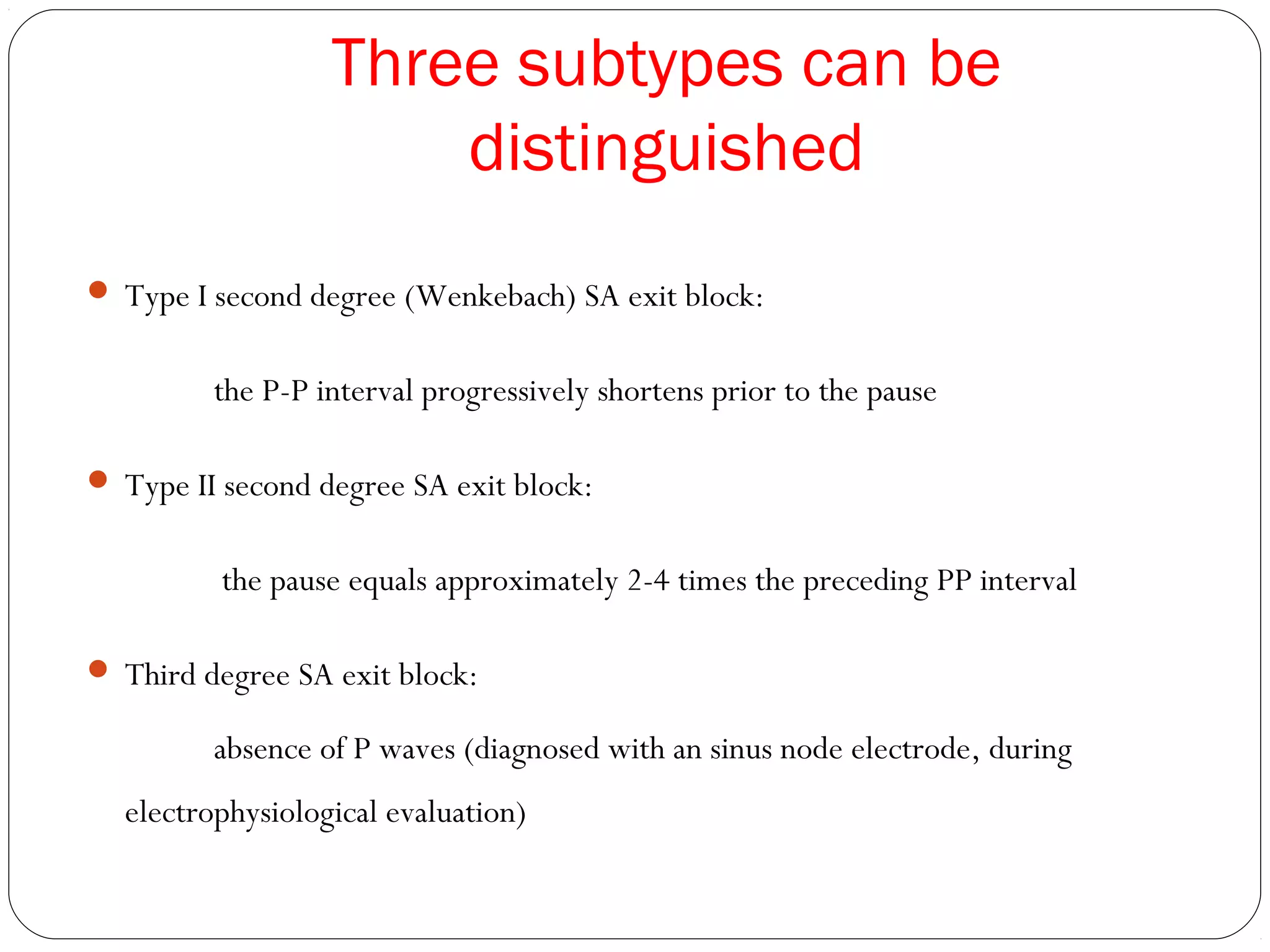
Three subtypes can be
distinguished
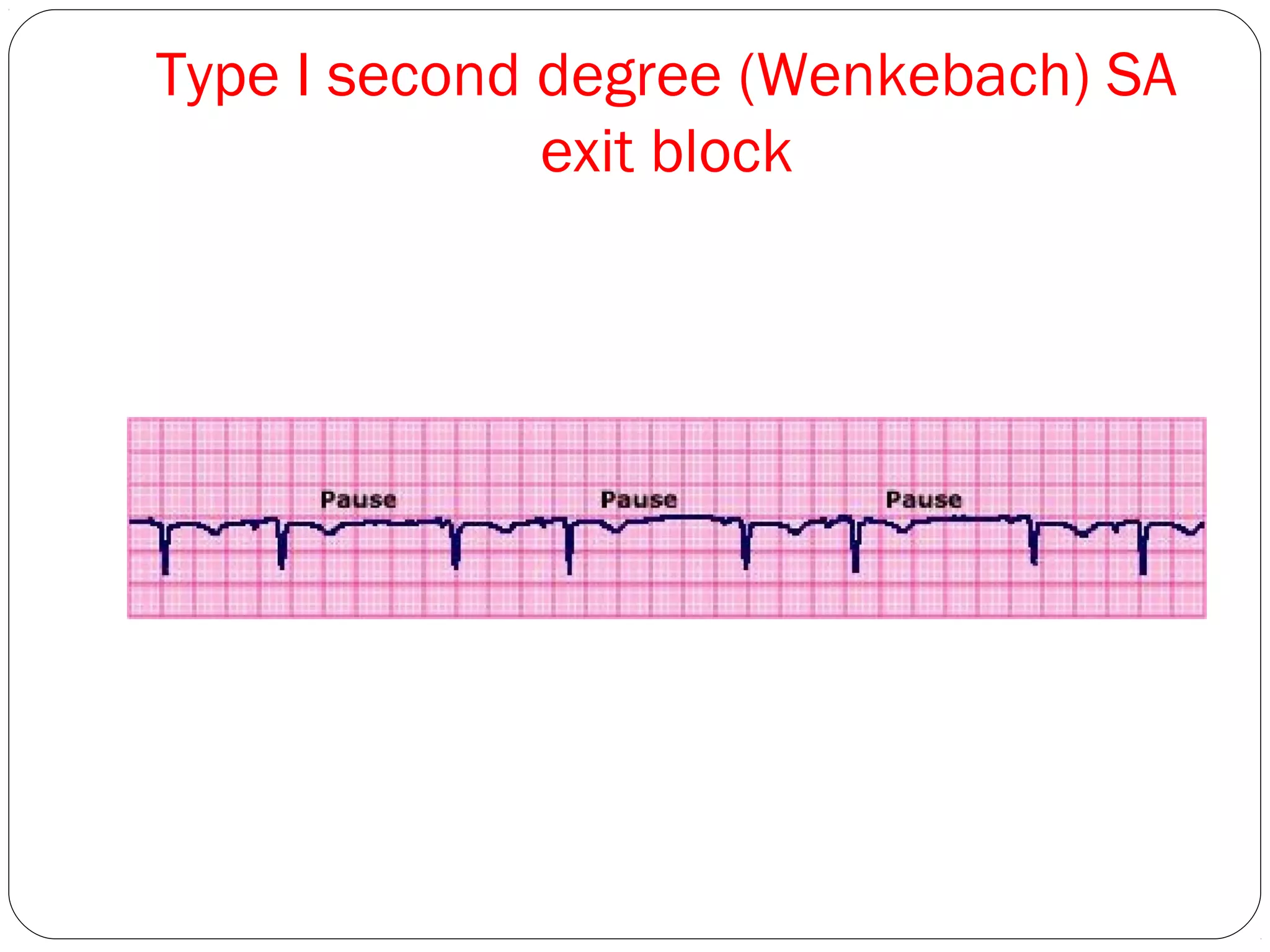
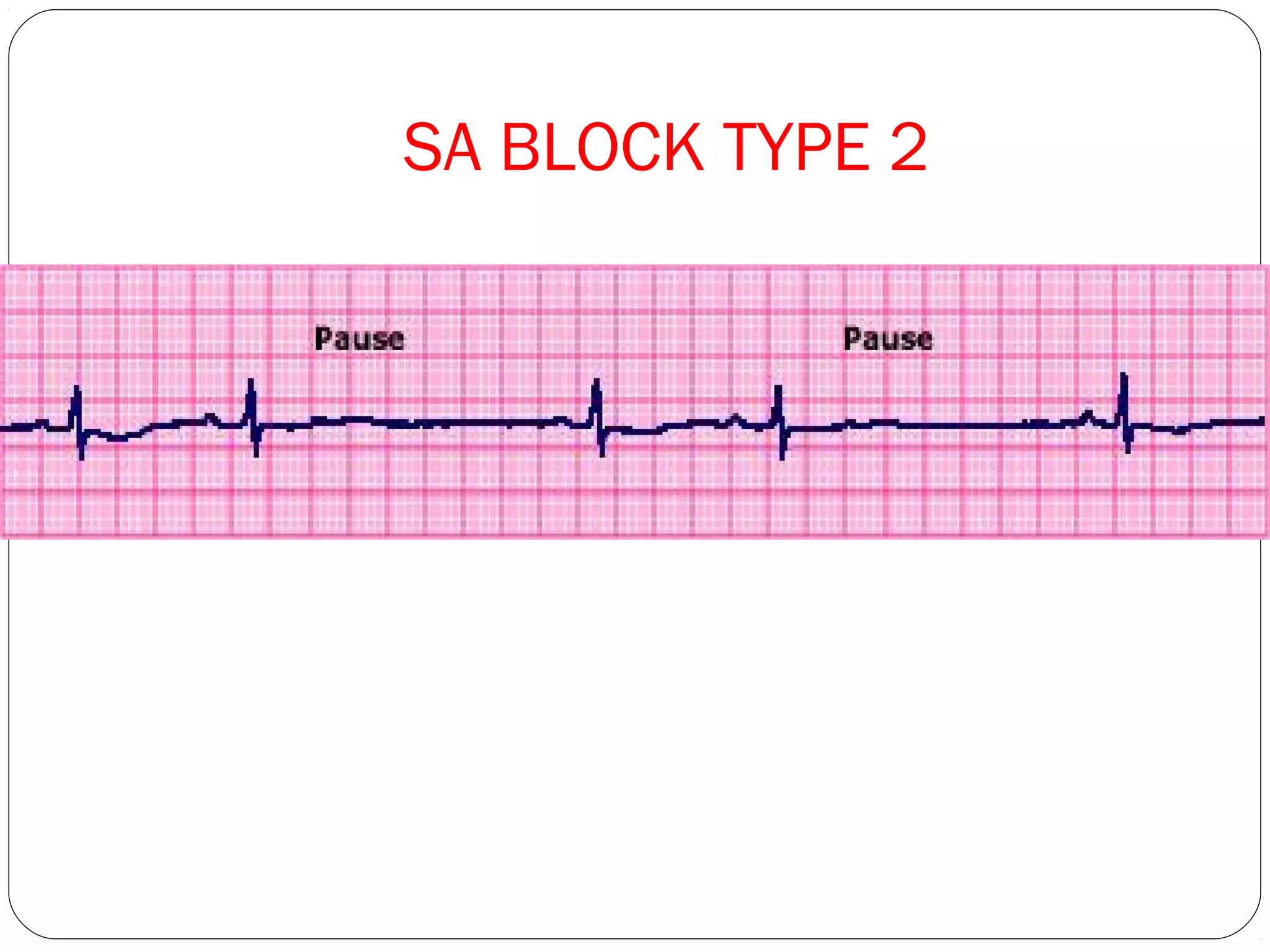
 Type I second degree (Wenkebach) SA exit block:
the P-P interval progressively shortens prior to the pause
 Type II second degree SA exit block:
the pause equals approximately 2-4 times the preceding PP interval
 Third degree SA exit block:
absence of P waves (diagnosed with an sinus node electrode, during
electrophysiological evaluation)
Type I second degree (Wenkebach) SA
exit block
SA BLOCK TYPE 2
Exercise testing
CHRONOTROPIC INCOMPETENCE
Inability of the sinus node to achieve at least 80 percent of the age
predicted heart rate.Astrand's formula (220- age) at peak
exercise.
 Seen in 20 to 60 percent of patients with sinus node dysfunction.
Although the resting heart rates may be normal,
may have inability to increase their heart rate during exerciseor
have unpredictable fluctuations in heart rate during activity.
-Gwynn N, R, Kratz, et al. Chronotropic incompetence. Am Heart J
1992;123:1216.
 Specific sinus node chronotropic incompetence is the inability of
the sinus node to accelerate in response to metabolic demands
secondary to intrinsic disease or negative chronotropic drugs.
Functional chronotropic incompetence manifests itself either as
atrial tachyarrhythmias or as retrograde ventriculoatrial
conduction
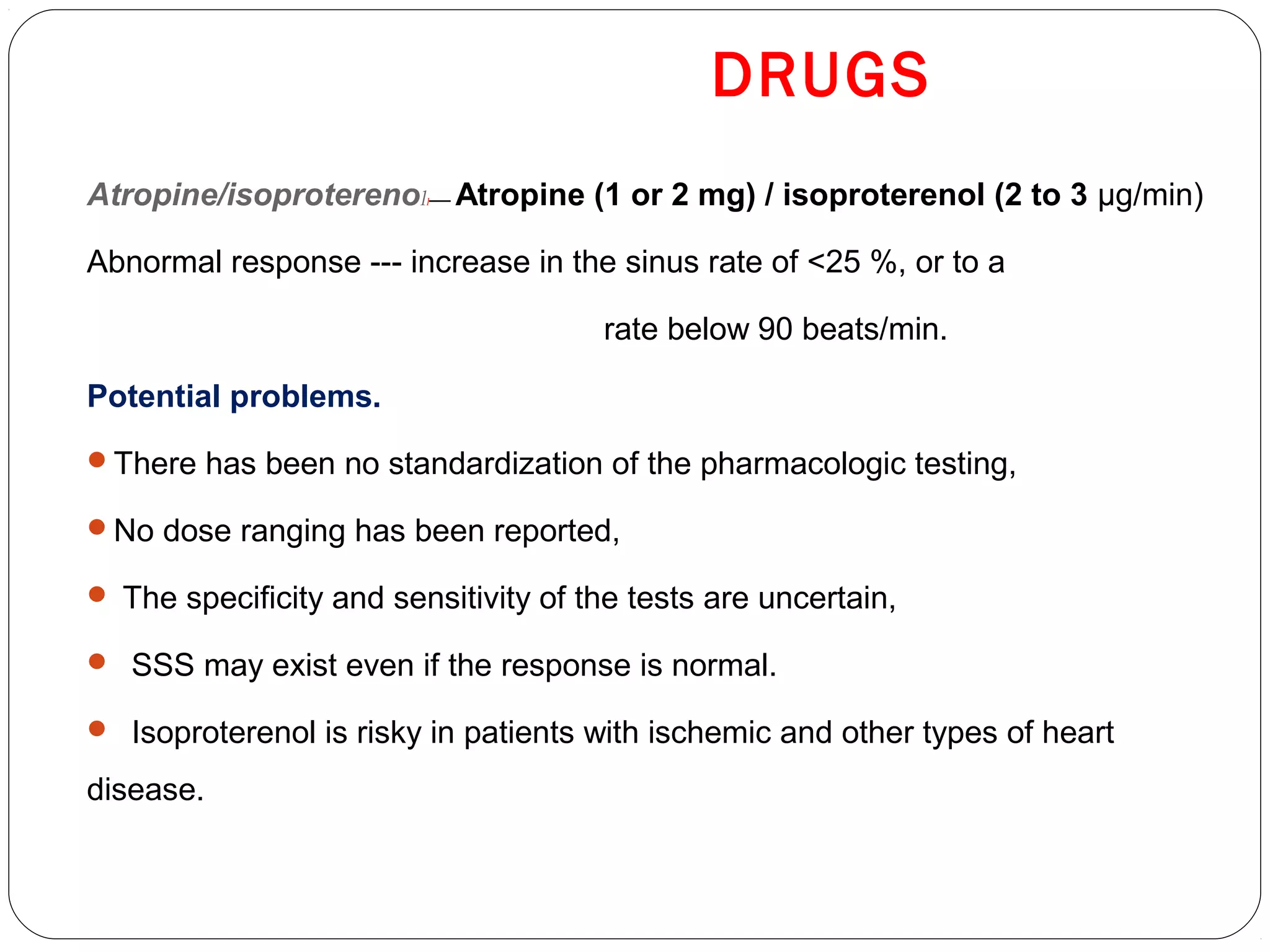
DRUGS
Atropine/isoproterenoll— Atropine (1 or 2 mg) / isoproterenol (2 to 3 μg/min)
Abnormal response --- increase in the sinus rate of <25 %, or to a
rate below 90 beats/min.
Potential problems.
There has been no standardization of the pharmacologic testing,
No dose ranging has been reported,
 The specificity and sensitivity of the tests are uncertain,
 SSS may exist even if the response is normal.
 Isoproterenol is risky in patients with ischemic and other types of heart
disease.
DRUGS
Beta blockers —
Propranolol has been used to assess sinus node
function on the assumption that the chronotropic response
may differ between patients with a normal and a sick sinus
node.
This approach, however, has been disappointing
DRUGS cont…
Adenosine directly inhibits sinus node activity
Due to increased potassium conductance
-hyperpolarization of the resting membrane potential.
Adenosine should be considered as an alternative to
invasive testing in patients with suspected SSS.
PHARMACOLOGICAL
DENERVATION
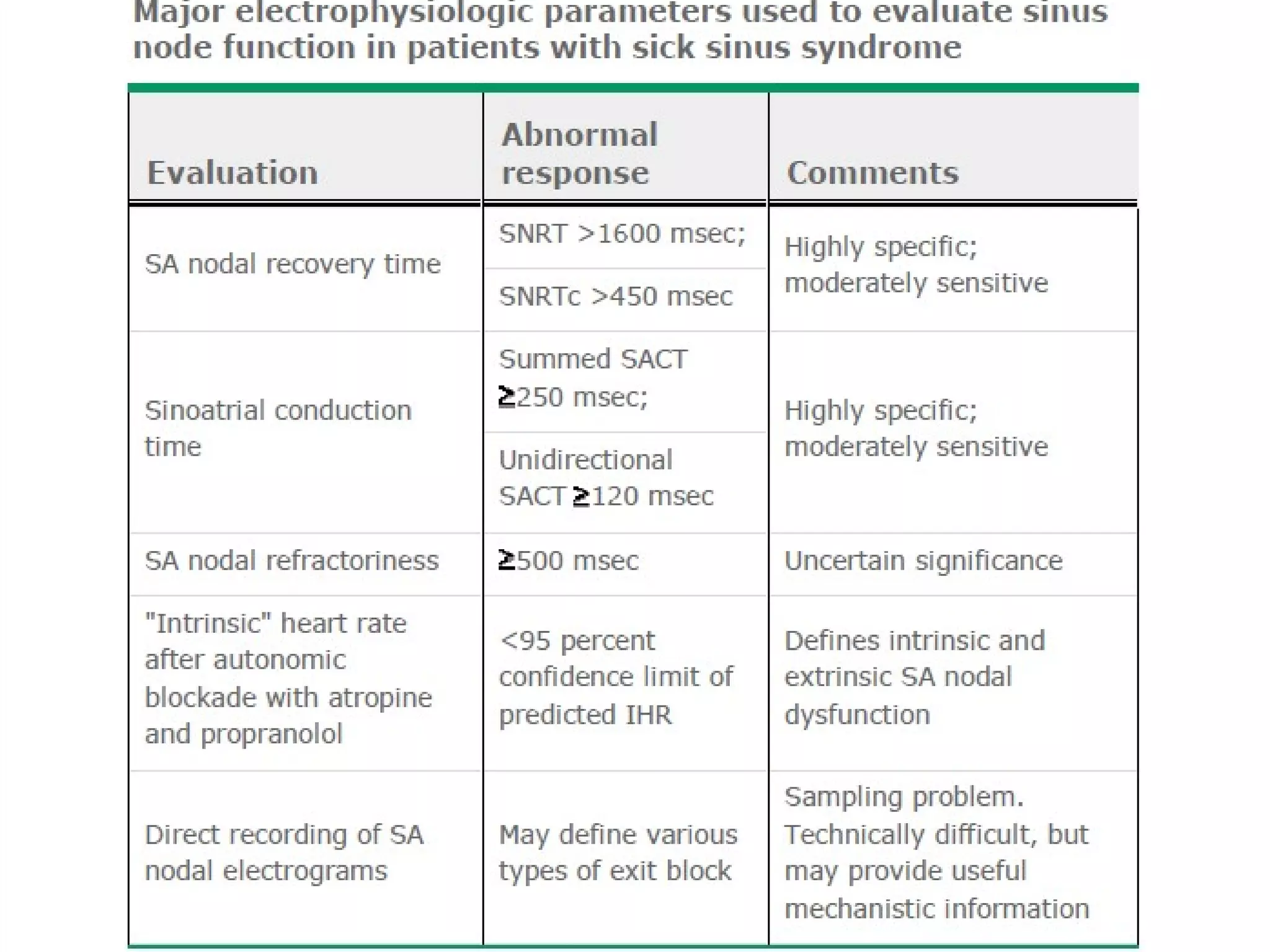
Intrinsic heart rate — Atropine (0.04 mg/kg) and
propranolol (0.2 mg/kg)
Heart rate at 30 minutes is called the (IHR) .
 The IHR is a function of age
IHR, in beats/min = 117.2 - [0.53 x age]
IHR separates intrinsic SSS from extrinsic SSS
 Intrinsic SSS is presumed to be present if the sinus rate does not
exceed the predicted IHR after atropine.
Long-Term
Electrocardiographic
Recording
In patients engaged in normal daily activities
 document and quantitate the frequency and complexity of an arrhythmia
 correlate the arrhythmia with the patient's symptoms, and
 evaluate the effect of antiarrhythmic therapy on spontaneous arrhythmia.
 For example, recording normal sinus rhythm during the patient's typical
symptomatic episode effectively excludes cardiac arrhythmia as a cause
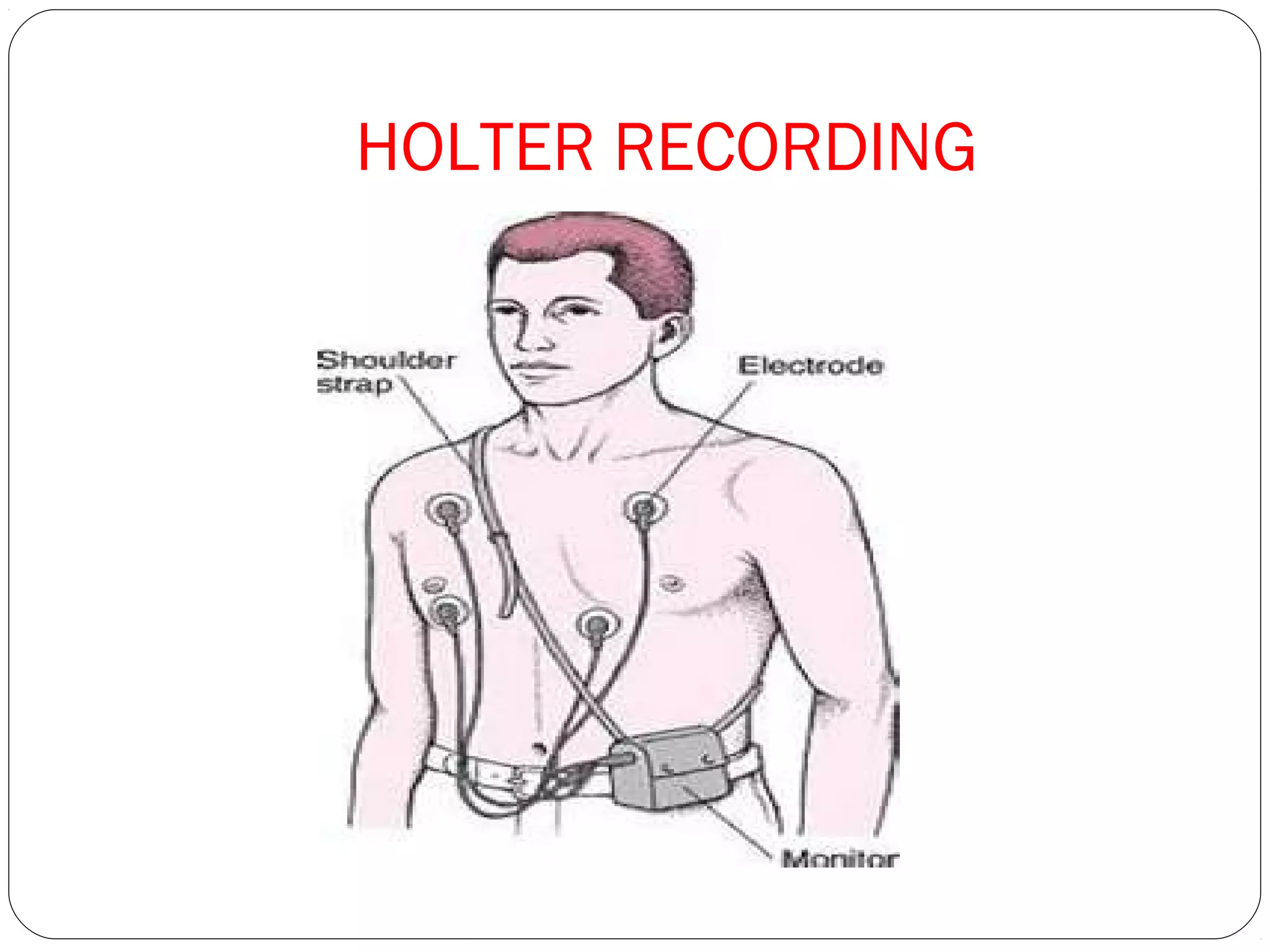
HOLTER RECORDING
HOLTER RECORDING
If symptoms are frequent, 24- or 48-hour ambulatory Holter
monitoring can be useful.
 Documentation of symptoms in a diary by the patient.
 Often the sinus pauses recorded are not associated with
symptoms.
Several Holter monitor studies demonstrated the futility of
treating asymptomatic pauses, even if they were 3 seconds or
longer.
 The length of the pause correlated poorly with symptoms
and prognosis
EVENT RECORDING.
In many patients, the 24-hour snapshot provided by the
Holter recording is incapable of documenting the cause of
the patient's symptoms.
These devices are about the size of a pager and are kept by
the patient for 30 days.
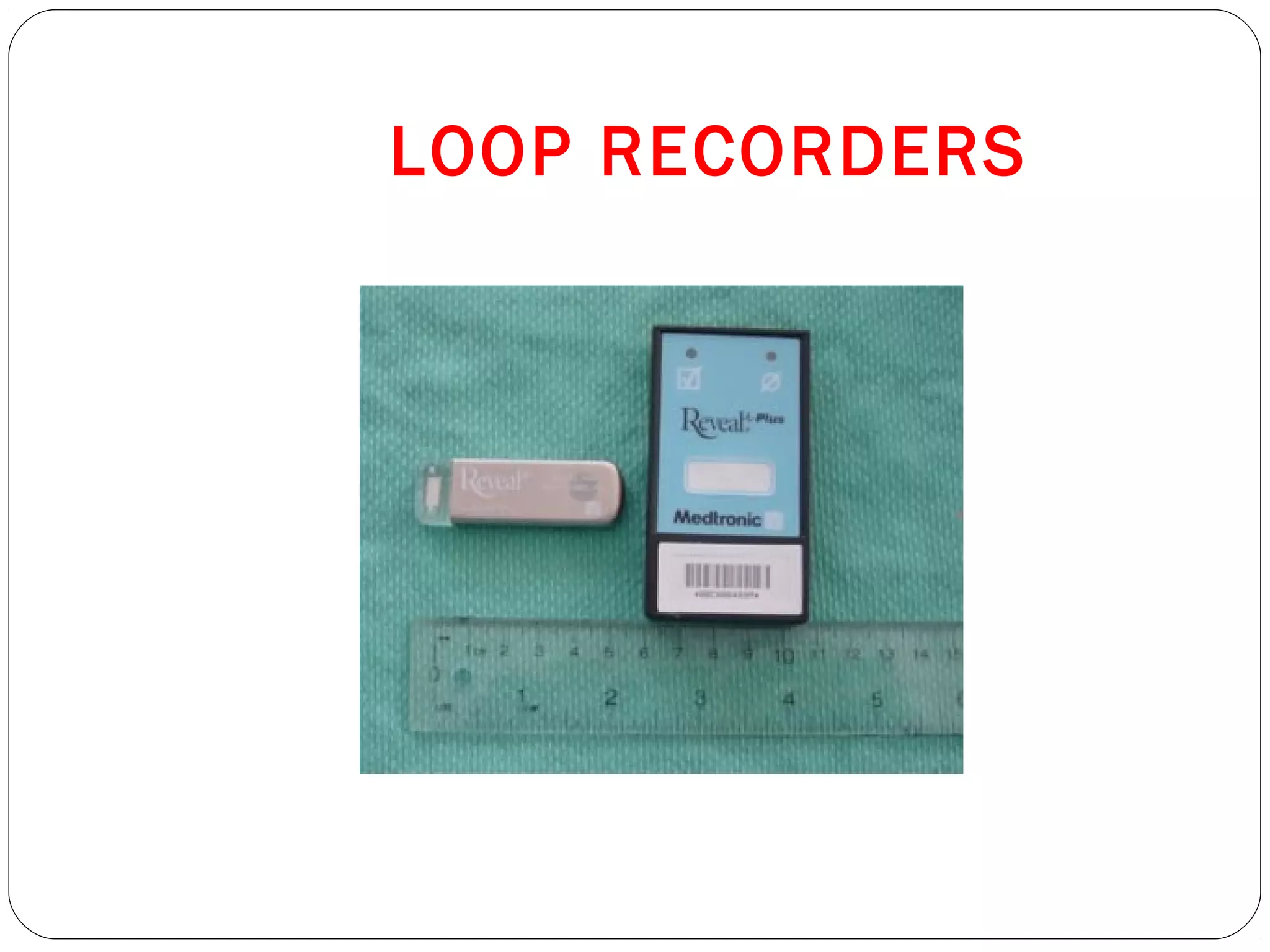
IMPLANTABLE LOOP
RECORDER
For patients with infrequent and transient symptoms, neither
Holter recorders nor 30-day event recorders may yield diagnostic
information.
 In such patients, implantable loop recorders may be used.
 This device (about the size of a pack of chewing gum) is inserted
under the skin at about the second rib on the left front of the chest
and is activated by passing a special magnet over the device.
LOOP RECORDERS
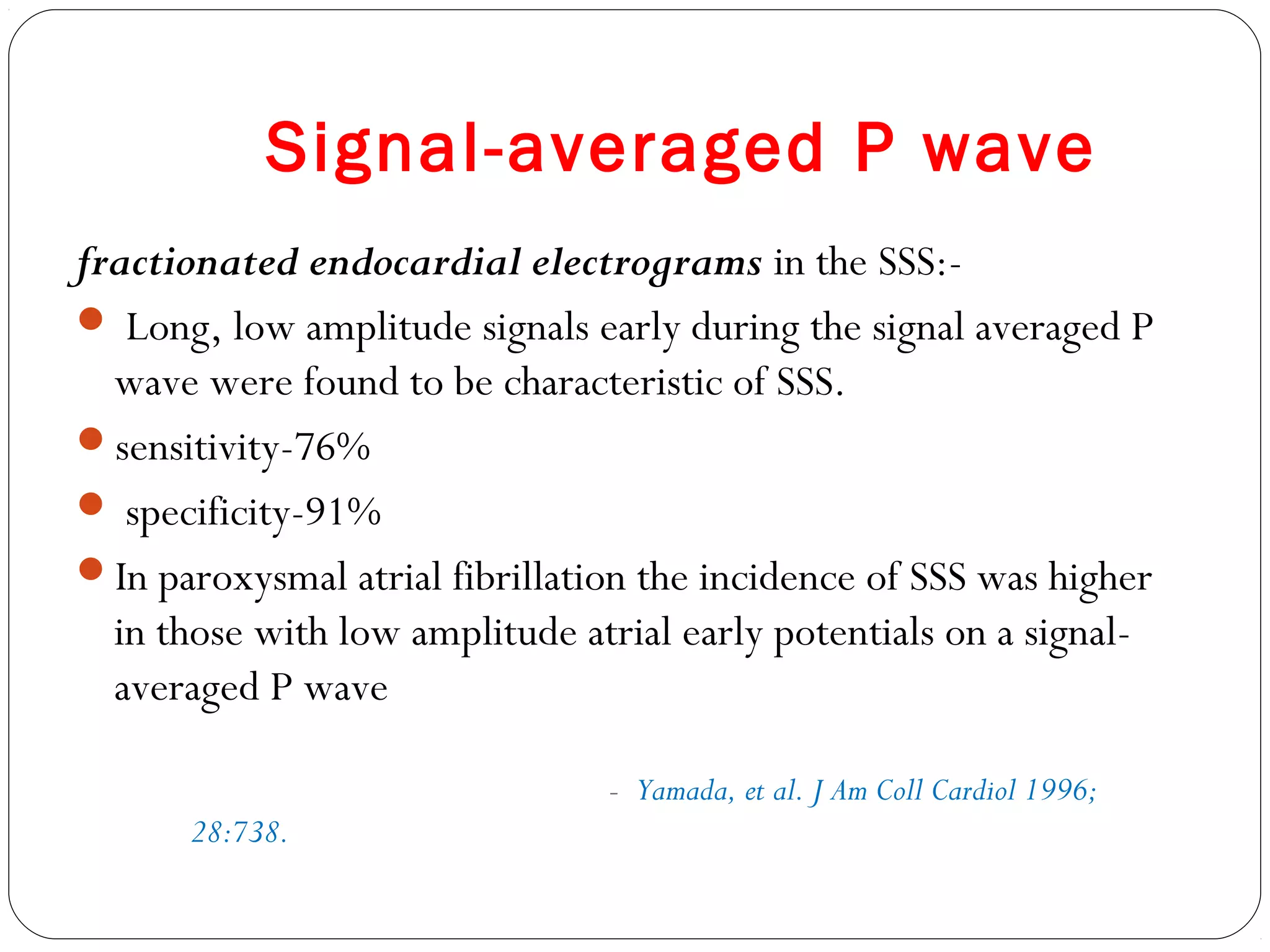
Signal-averaged P wave
fractionated endocardial electrograms in the SSS:-
 Long, low amplitude signals early during the signal averaged P
wave were found to be characteristic of SSS.
sensitivity-76%
 specificity-91%
In paroxysmal atrial fibrillation the incidence of SSS was higher
in those with low amplitude atrial early potentials on a signal-
averaged P wave
- Yamada, et al. J Am Coll Cardiol 1996;
28:738.
EPS
ELECTROPHYSIOLOGICAL
TESTING
Indications
The symptomatic patient who has no ECG findings
suggestive of SSS.
The symptomatic patient in whom ECG fail to correlate with
symptoms.
The patient who develops dysfunction of the SA node on usual
doses of drugs.
EPS indications cont…
The patient with syncope or near syncope who has bundle
branch or multifascicular block may require electrophysiologic
evaluation of the SA node, the AV node, and the infranodal His-
bundle branch-Purkinje system.
Electrophysiologic testing that shows SA nodal dysfunction
allows the selection of appropriate therapy in up to 50 percent
of these patients.
CONTRAINDICATIONS
Unstable angina
Bacteremia or septicemia
Acute decompensated congestive heart failure not caused by
the arrhythmia
Major bleeding diathesis
Acute lower extremity venous thrombosis if femoral vein
cannulation is desired.
SINOATRIAL NODE RECOVERY
TIME
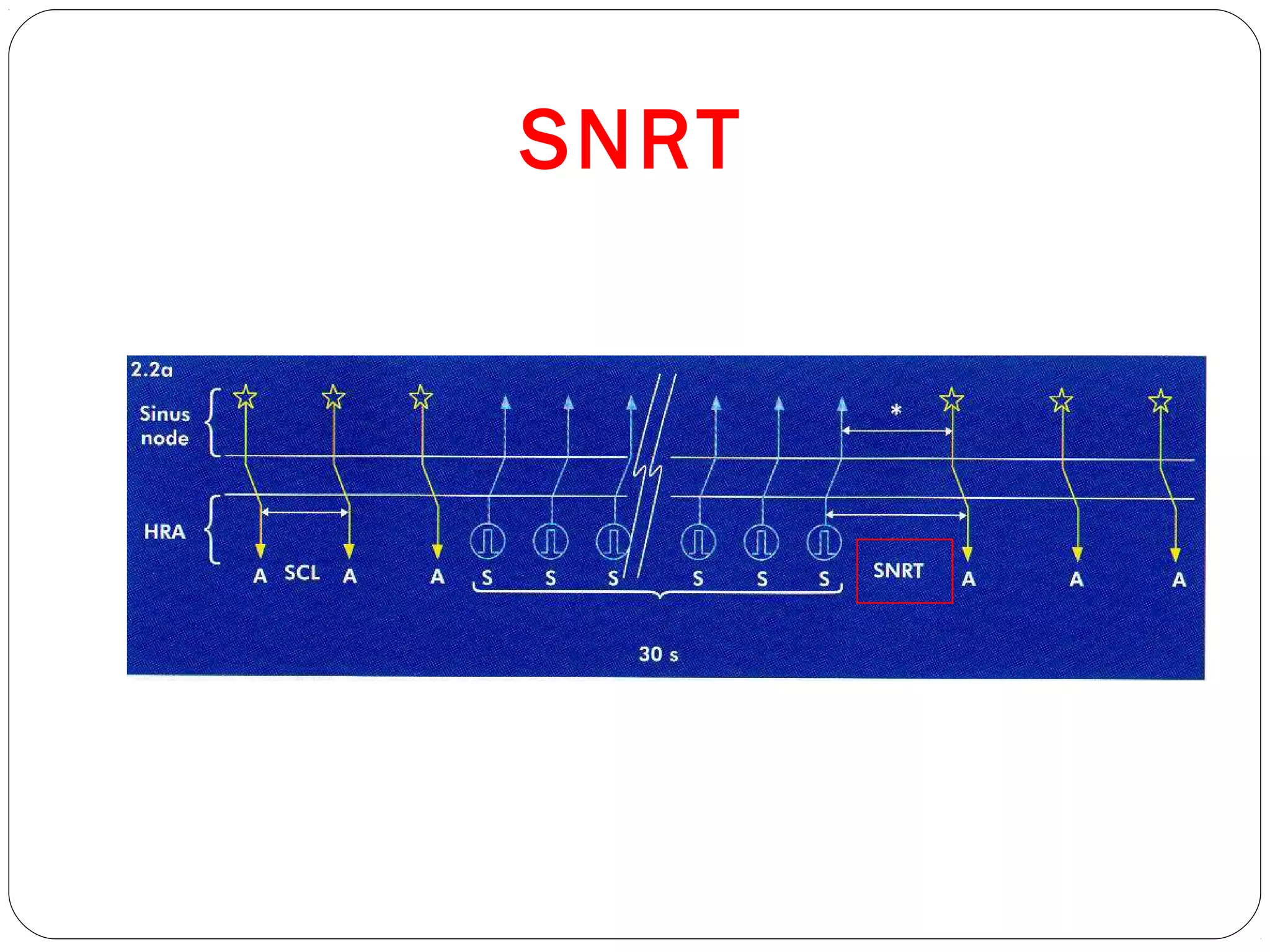
— The SNRT is perhaps the most useful test of overall
sinus nodal automaticity.
 The atria are driven rapidly:
a normal SA node will have a recovery time within
certain limits,
while recovery will be delayed in a depressed or sick sinus
node.
SNRT cont….
It is performed by placing a catheter near the SN.
Overdrive stimulation is performed at a rate higher than that of
the SA node for about one minute (the range in most published
reports is 30 to 180 sec).
Pacing is then stopped, and the time from the last paced atrial beat
to the first spontaneous electrical beat with a sinus morphology is
measured. Pacing is increased 10 to 20 beats/min up to 200
beats/min, if tolerated.
SNRT cont….
 SNRTc
corrected by subtracting the sinus cycle length from the
SNRT
SNRTn
a function of the cycle length-,
SNRT/sinus cycle length.
 Total recovery time (TRT)
which is the time required to return to thebasal sinus rate..
SNRT
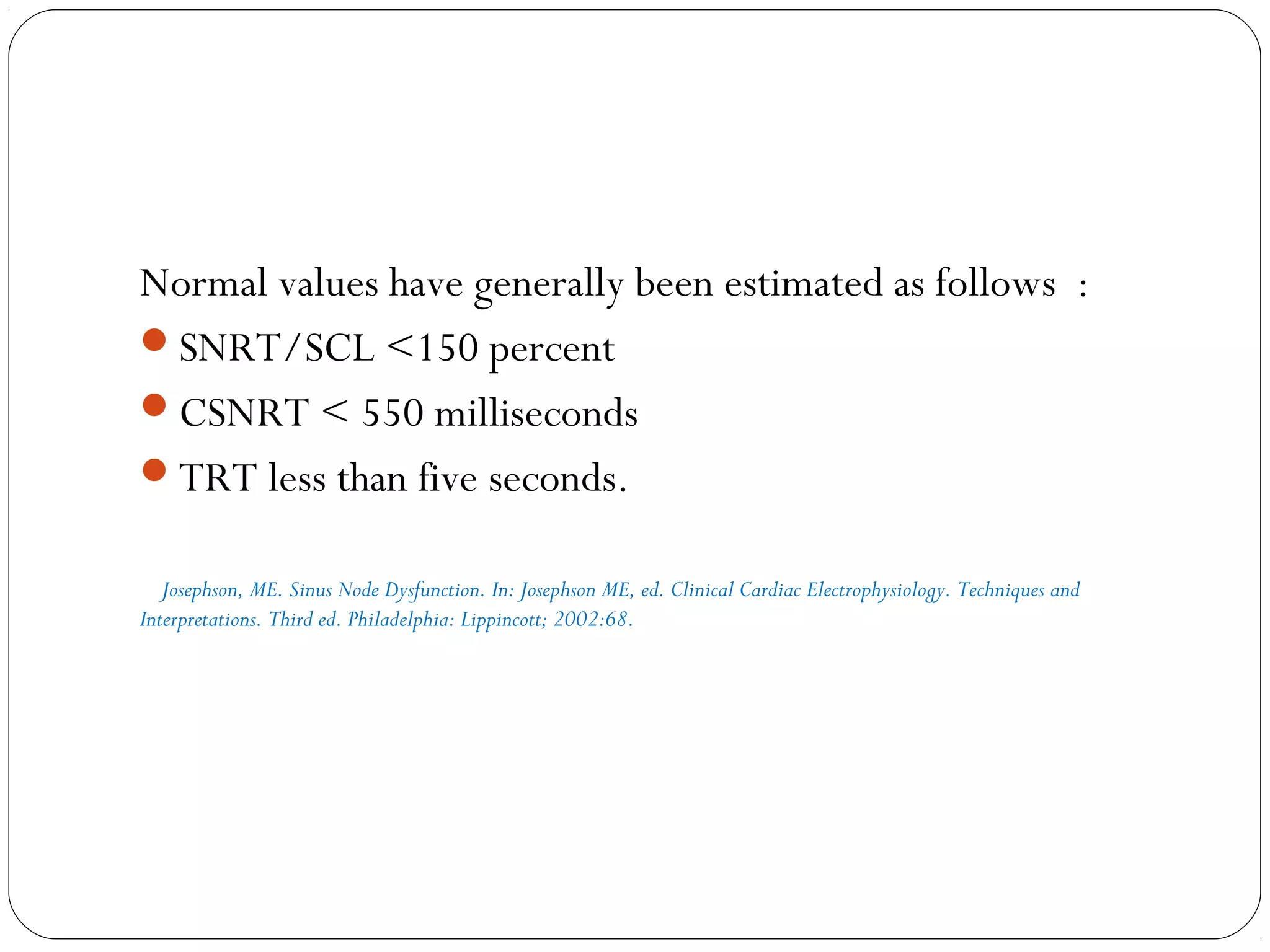
Normal values have generally been estimated as follows :
SNRT/SCL <150 percent
CSNRT < 550 milliseconds
TRT less than five seconds.
Josephson, ME. Sinus Node Dysfunction. In: Josephson ME, ed. Clinical Cardiac Electrophysiology. Techniques and
Interpretations. Third ed. Philadelphia: Lippincott; 2002:68.
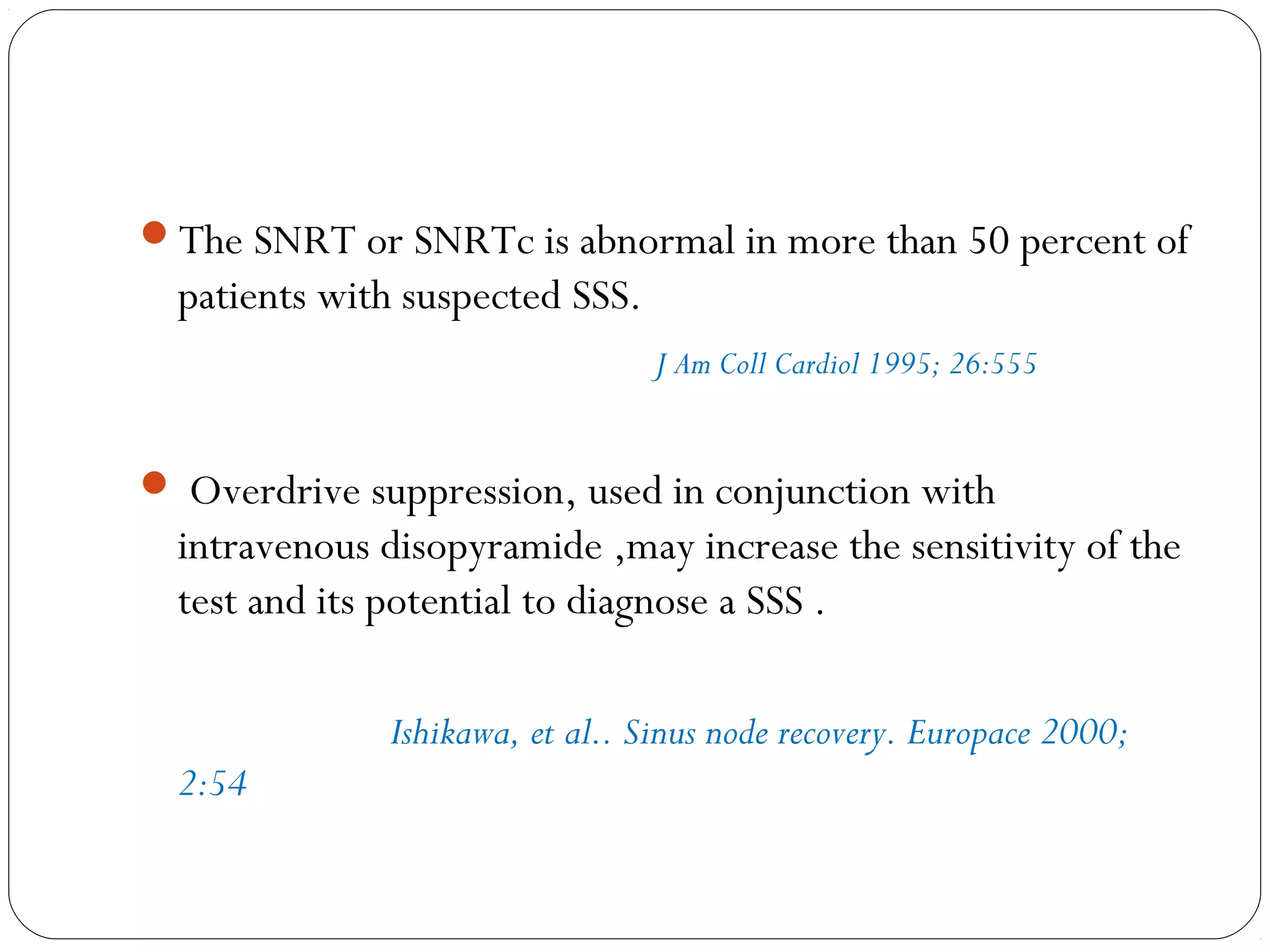
The SNRT or SNRTc is abnormal in more than 50 percent of
patients with suspected SSS.
J Am Coll Cardiol 1995; 26:555
 Overdrive suppression, used in conjunction with
intravenous disopyramide ,may increase the sensitivity of the
test and its potential to diagnose a SSS .
Ishikawa, et al.. Sinus node recovery. Europace 2000;
2:54
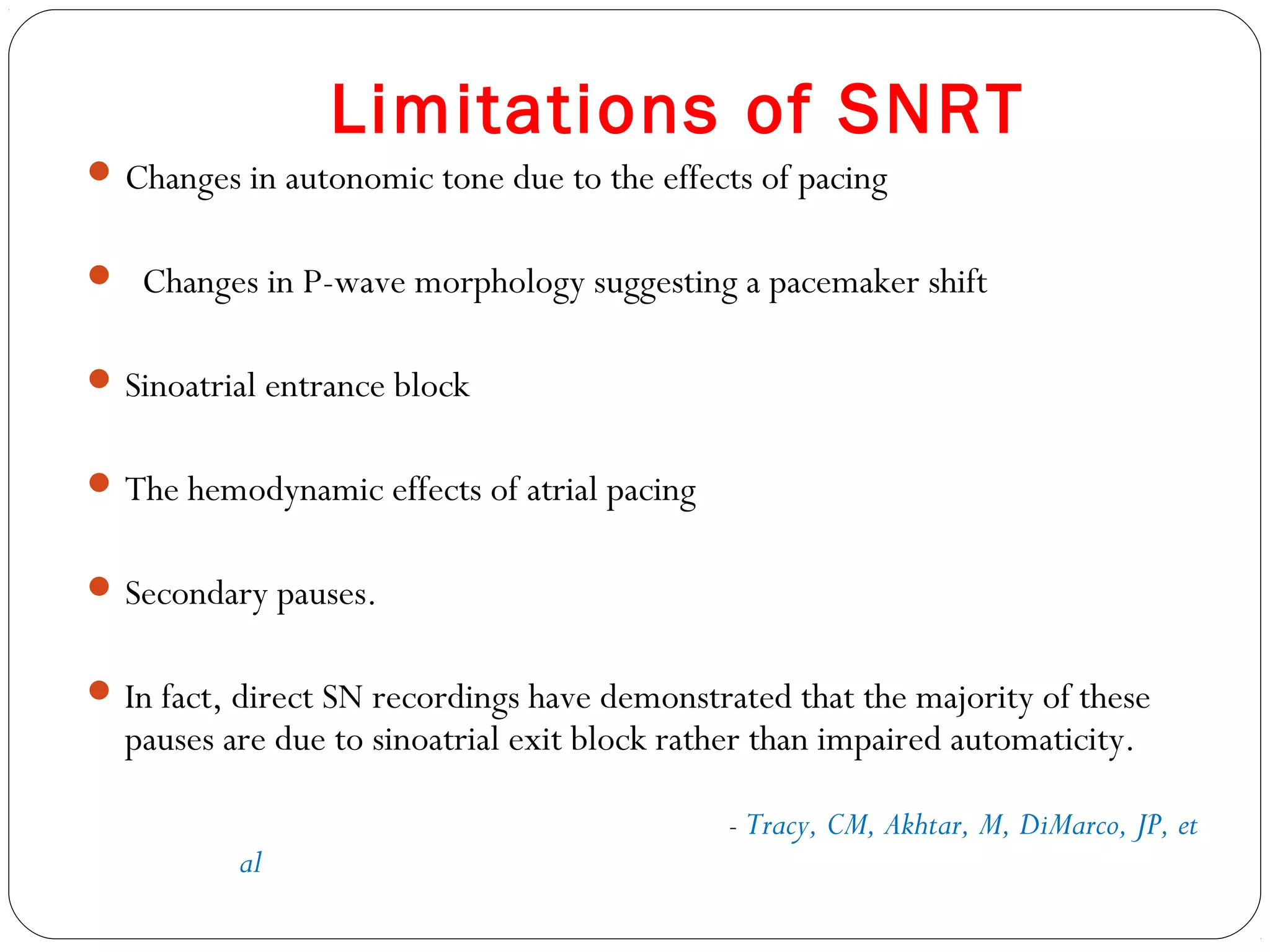
Limitations of SNRT
Changes in autonomic tone due to the effects of pacing
 Changes in P-wave morphology suggesting a pacemaker shift
Sinoatrial entrance block
The hemodynamic effects of atrial pacing
Secondary pauses.
In fact, direct SN recordings have demonstrated that the majority of these
pauses are due to sinoatrial exit block rather than impaired automaticity.
- Tracy, CM, Akhtar, M, DiMarco, JP, et
al
THE USE OF TRANSESOPHAGEAL
ATRIAL PACING
Transesophageal pacing has been used to assess sinus node
dysfunction, primarily by assessing SNRT, and has been
recommended in the evaluation of patients with syncope.
Brembilla-Perrot, B, Beurrier, D, Houriez, P, et al. Utility oftransesophageal
atrial pacing in the diagnostic evaluation of patientswith unexplained syncope
associated or not with palpitations. Int JCardiol 2004; 96:347.
SACT
Sino Atrial Conduction Time
Can be measured in two ways
Indirect
Direct
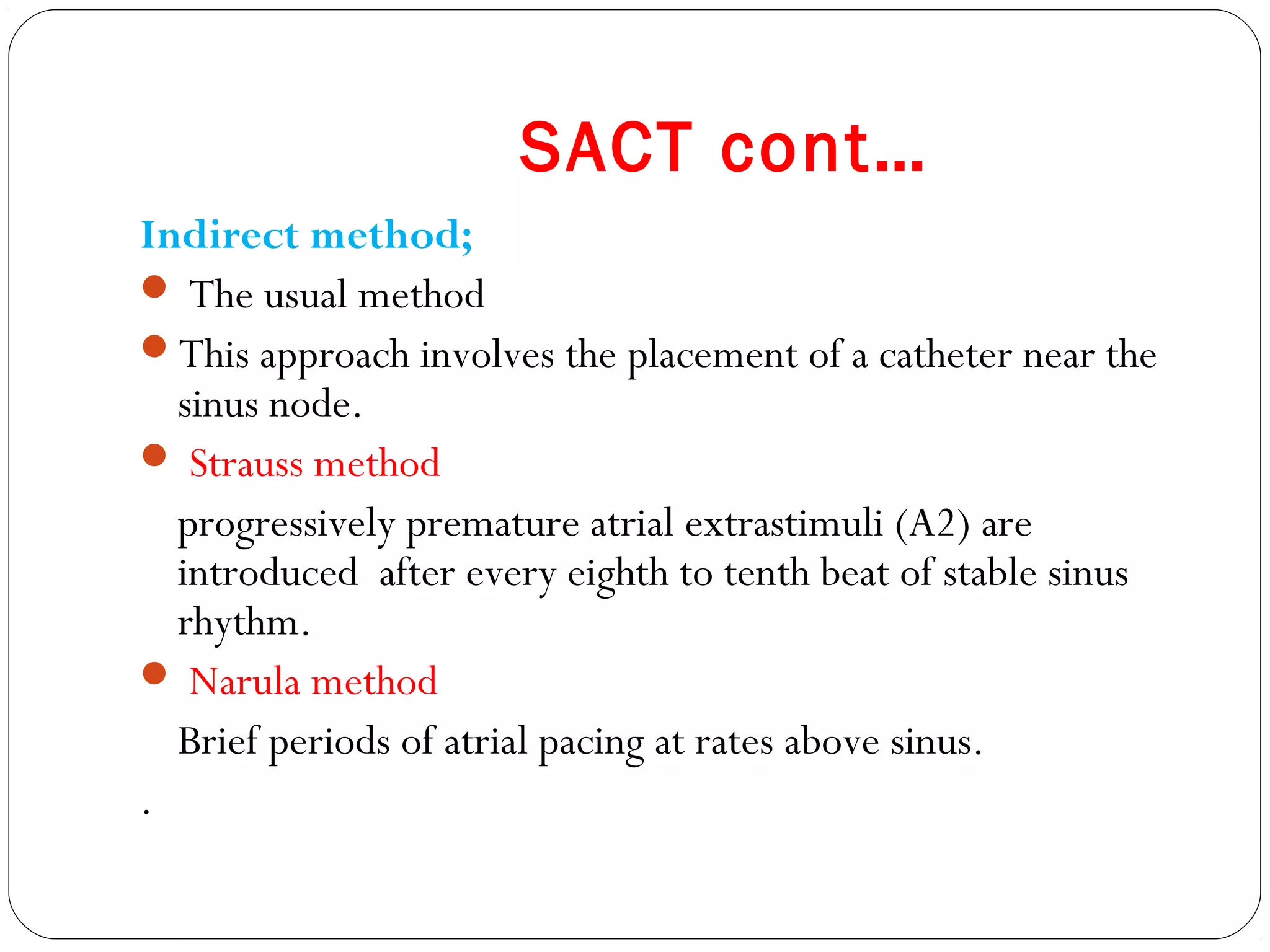
SACT cont…
Indirect method;
 The usual method
This approach involves the placement of a catheter near the
sinus node.
 Strauss method
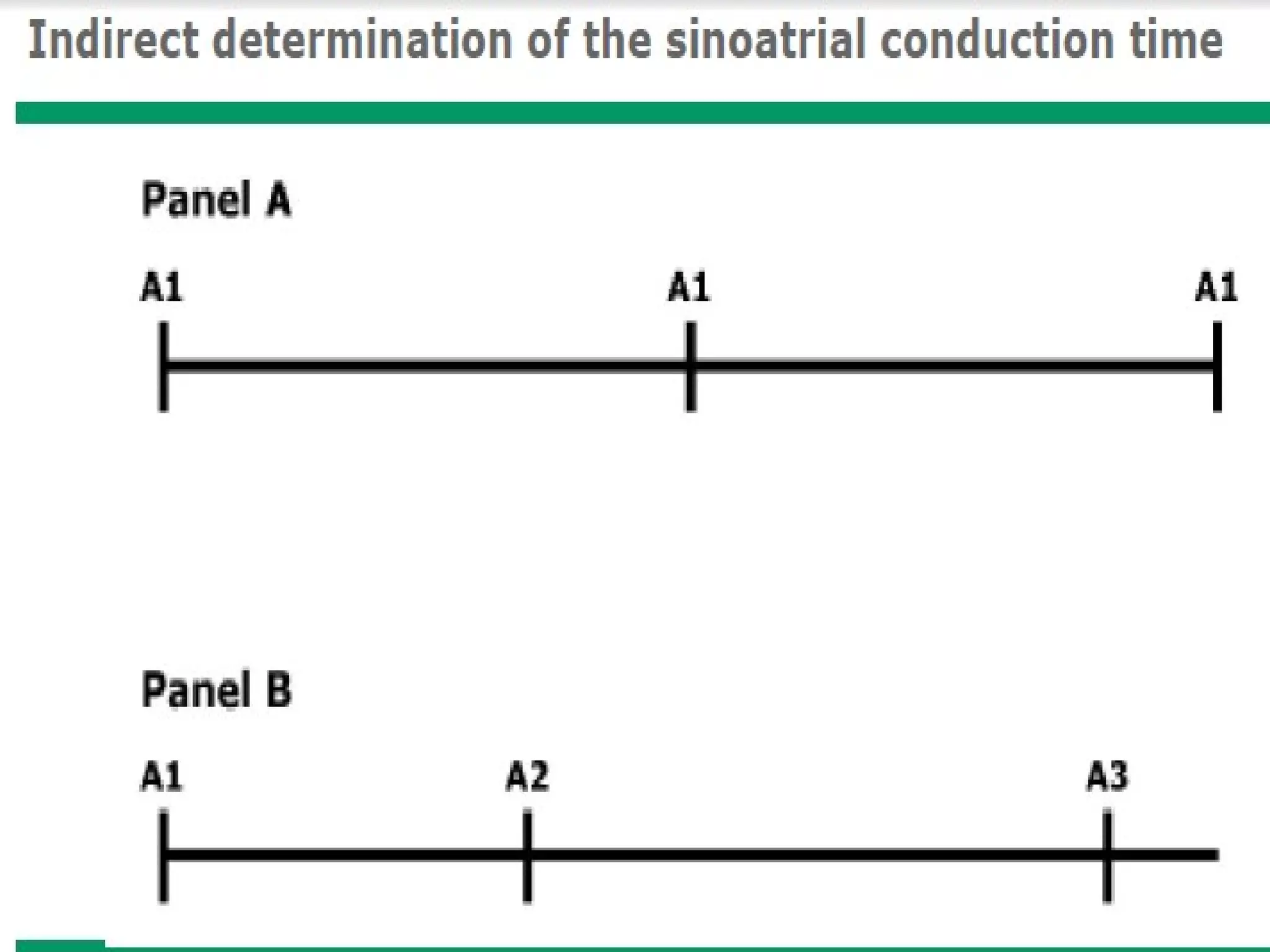
progressively premature atrial extrastimuli (A2) are
introduced after every eighth to tenth beat of stable sinus
rhythm.
 Narula method
Brief periods of atrial pacing at rates above sinus.
.
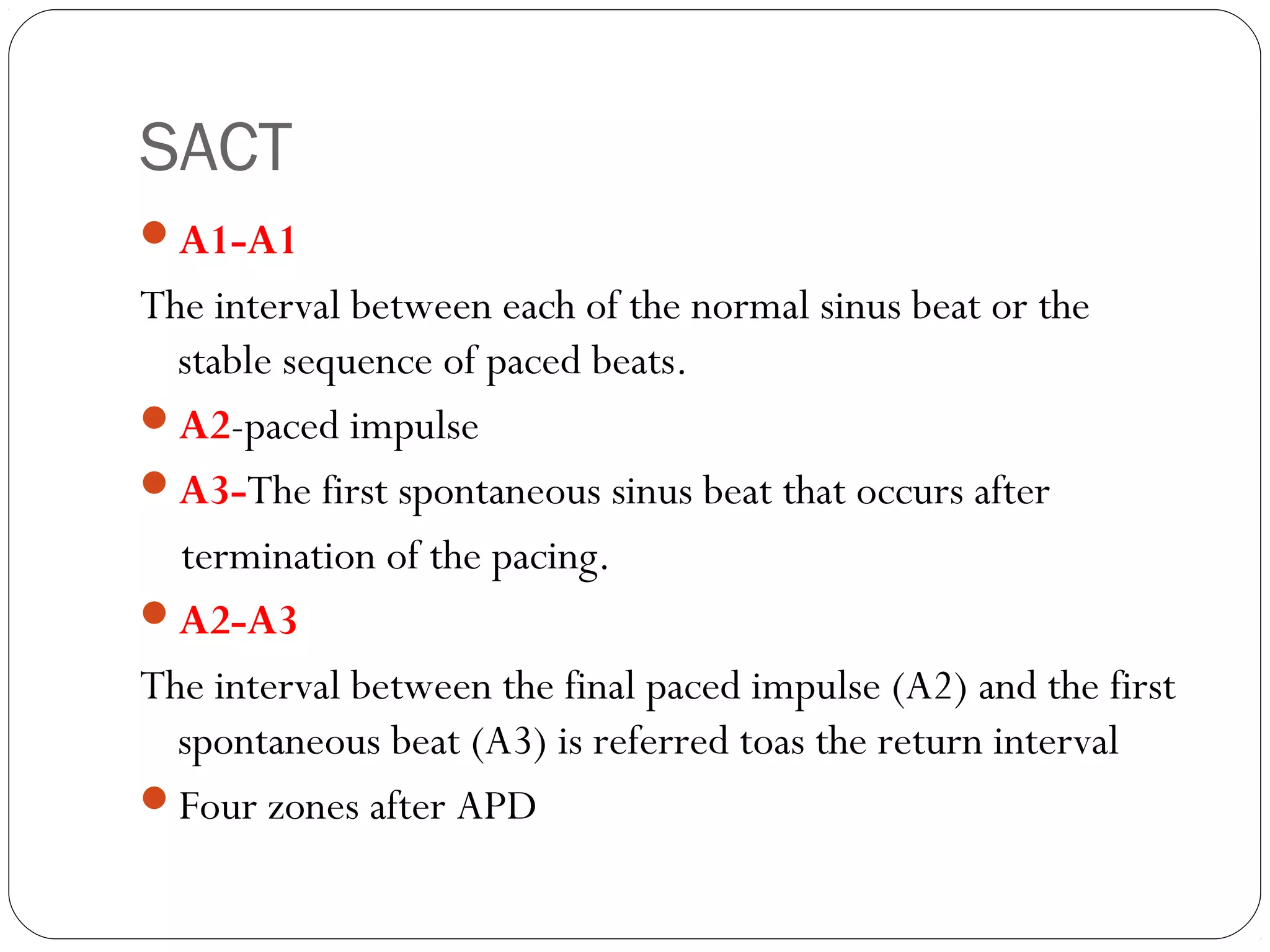
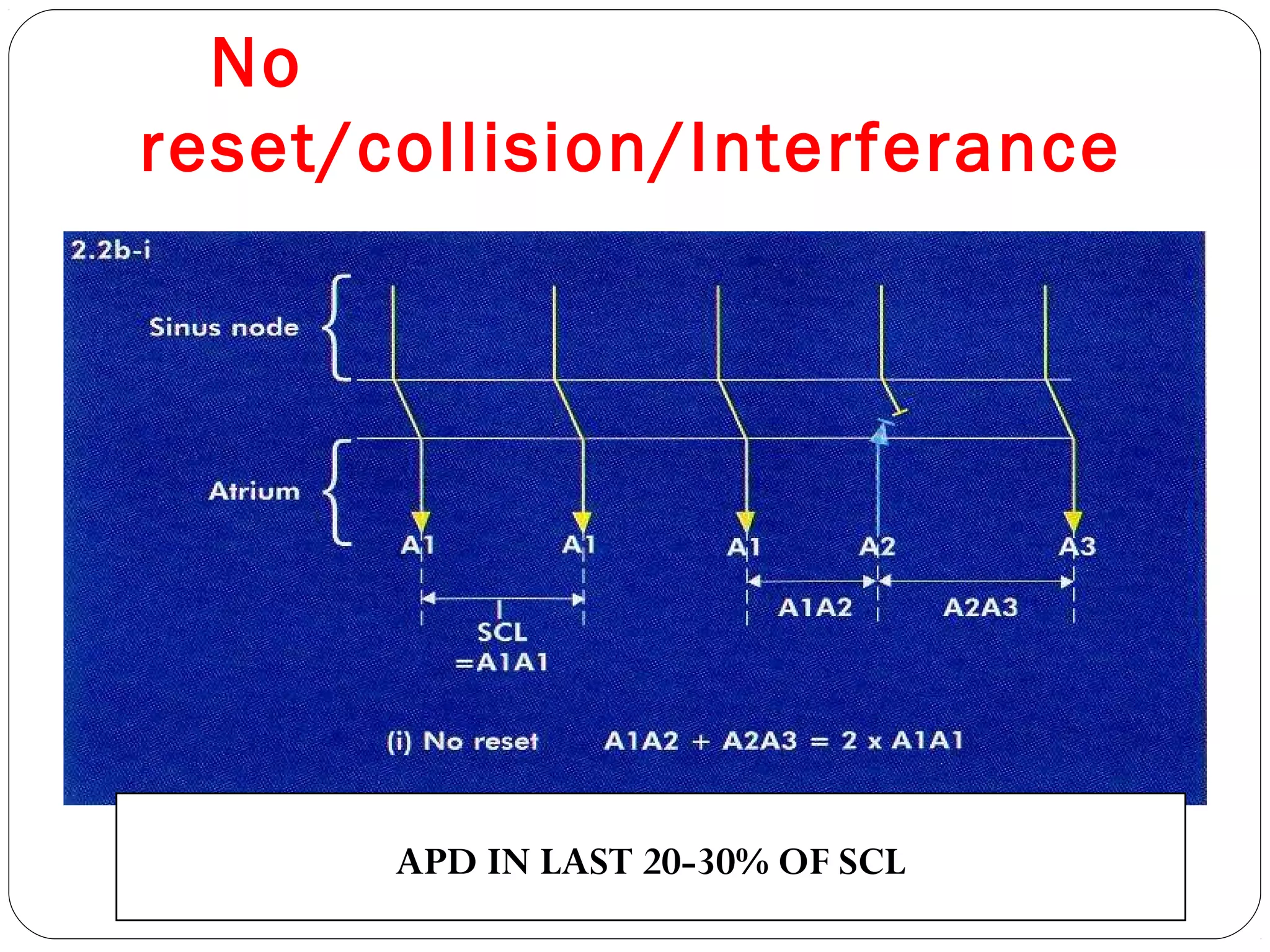
SACT
A1-A1
The interval between each of the normal sinus beat or the
stable sequence of paced beats.
A2-paced impulse
A3-The first spontaneous sinus beat that occurs after
termination of the pacing.
A2-A3
The interval between the final paced impulse (A2) and the first
spontaneous beat (A3) is referred toas the return interval
Four zones after APD
No
reset/collision/Interferance
APD IN LAST 20-30% OF SCL
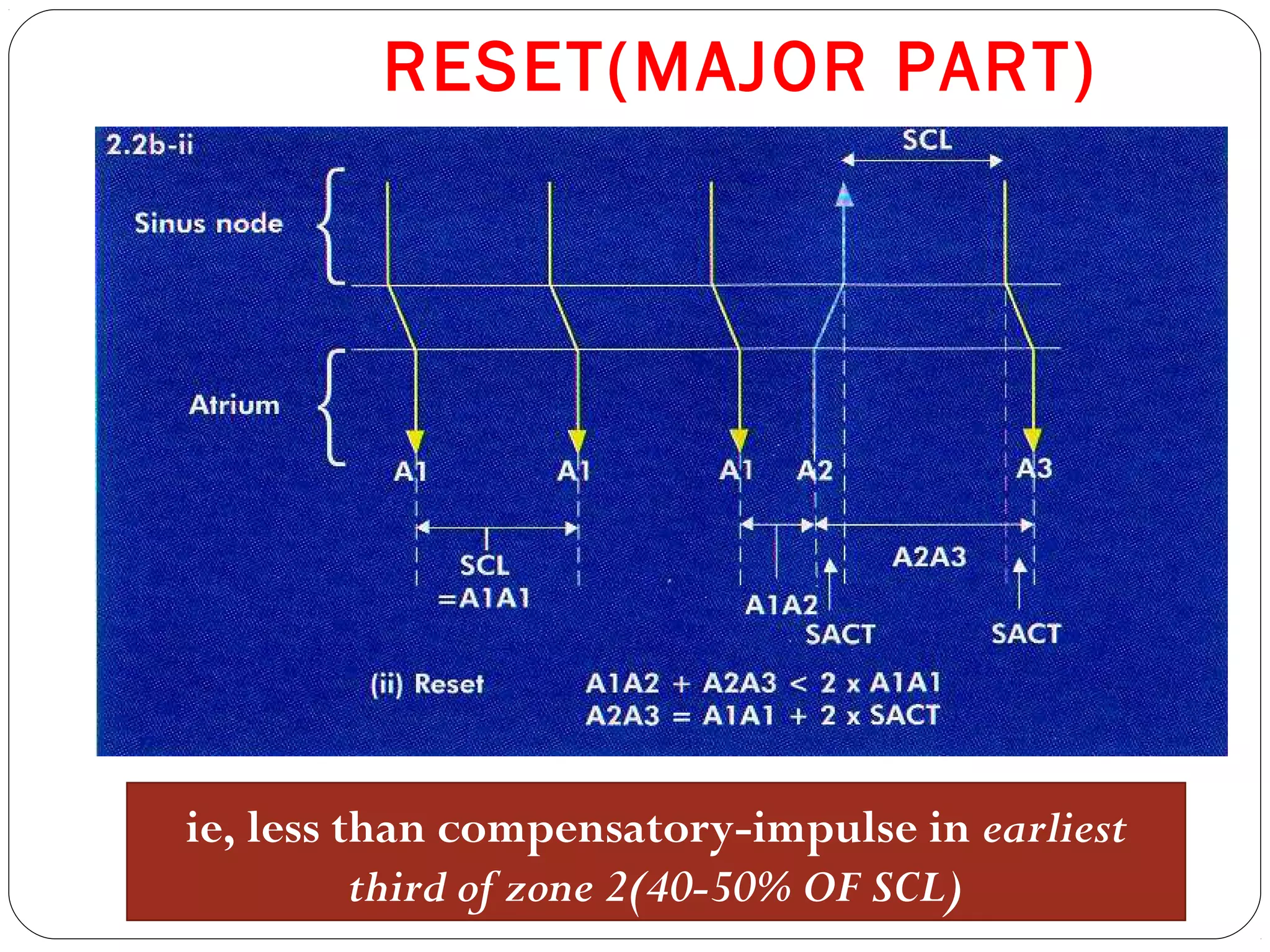
RESET(MAJOR PART)
ie, less than compensatory-impulse in earliest
third of zone 2(40-50% OF SCL)
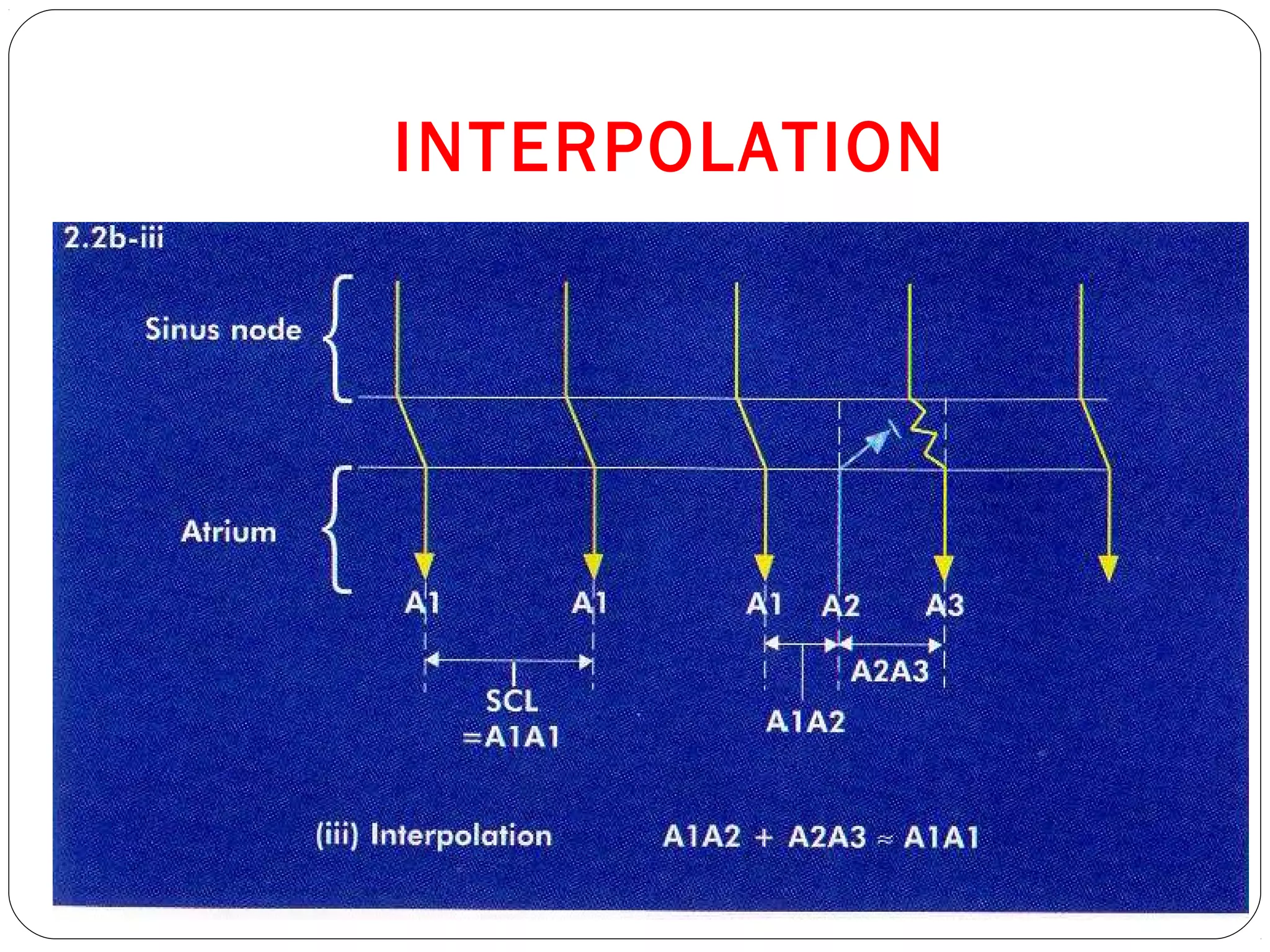
INTERPOLATION
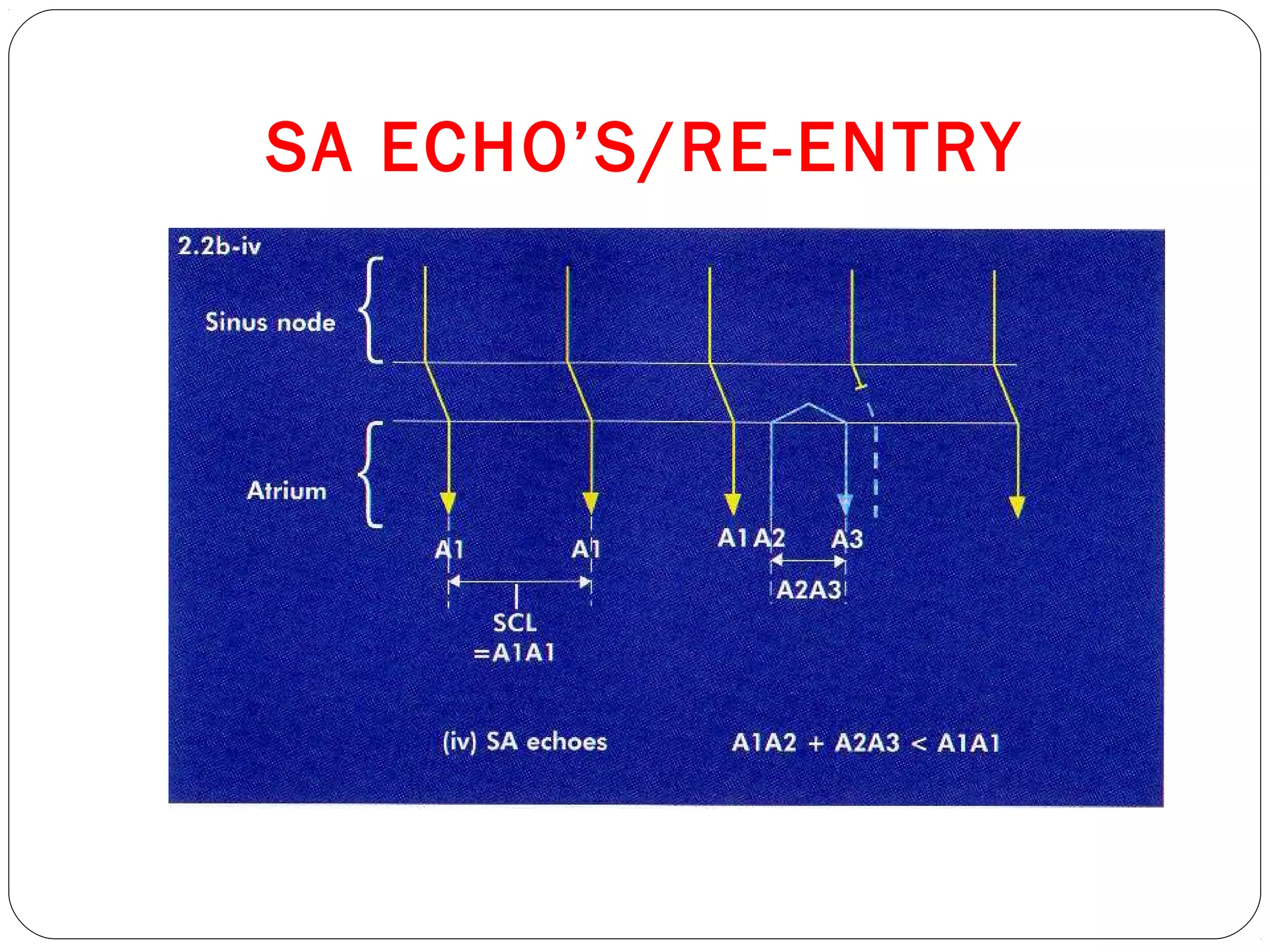
SA ECHO’S/RE-ENTRY
SACT
The A1-A1 interval
Time required to generate a sinus impulse., conduction time
does not contribute to A1-A1.
A2-A3 (Because A2 resets the SN, the return cycle length) =
generation of the next sinus beat (reflecting SNautomaticity)
+
conduction of the impulse into and out of SN tissue.
 (A2-A3) –(A1-A1) =
Total time it takes to enter and exit the SN tissue.
This number represents twice the SACT
SACT = [(A2-A3) – (A1-A1)] / 2
Normal SACT times generally range from 40 to 150 milliseconds
Limitations of SACT
 The assumption that entrance into and exit out of the SN takes the same
amount of time is not necessarily valid
 Distance of the stimulation site from the SN is another source of error. The
farther the site is from the SN, the greater the potential for overestimation of
the SACT due to conduction delays in both atrial and perinodal tissues.
 Reproducibility of results
 sinus arrhythmia
 shift in intrinsic pacemaker site
 Depression of automaticity, and
 sinus entrance block
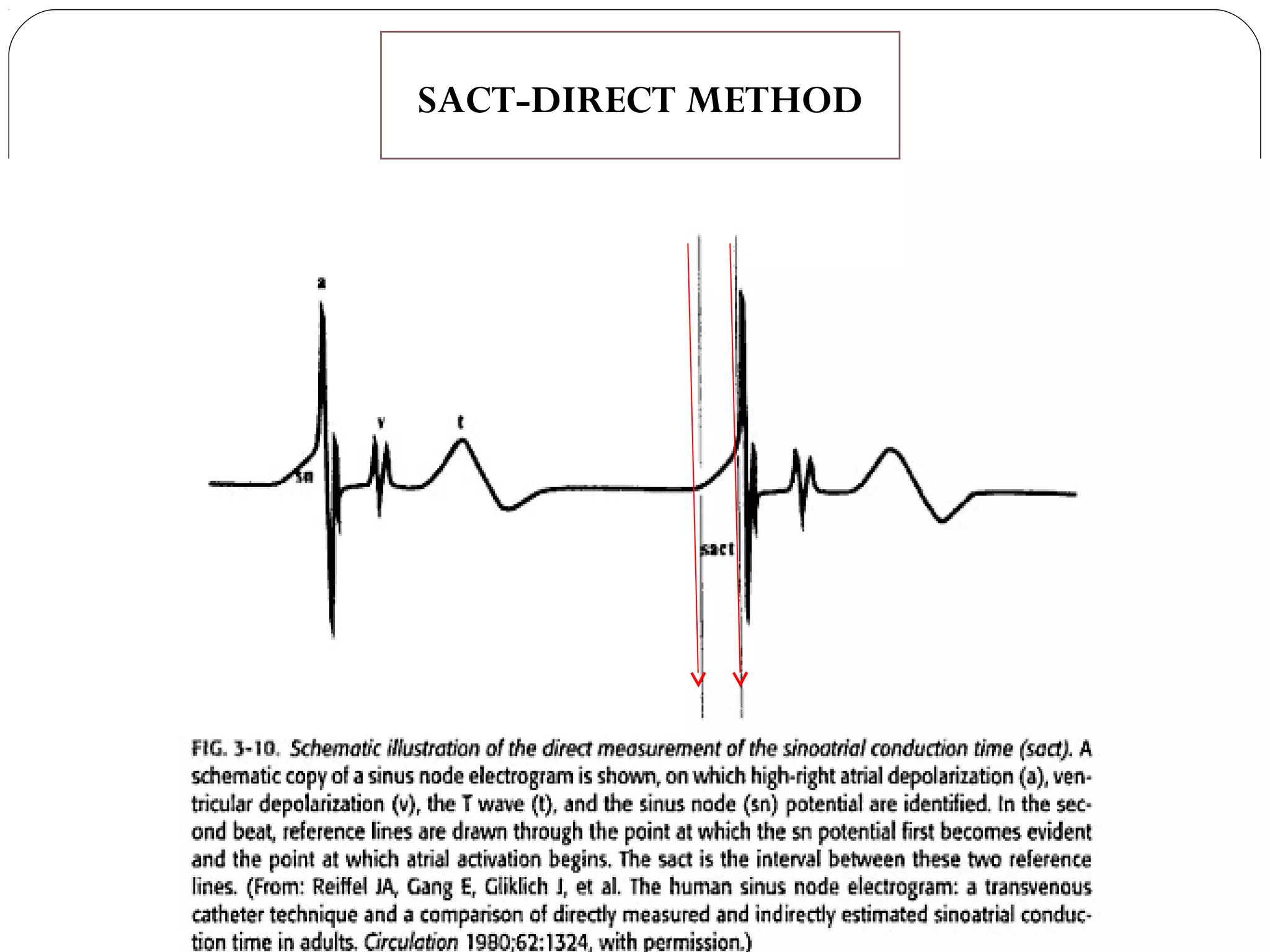
Direct recording of the
sinoatrial conduction time (sinus
node electrogram)
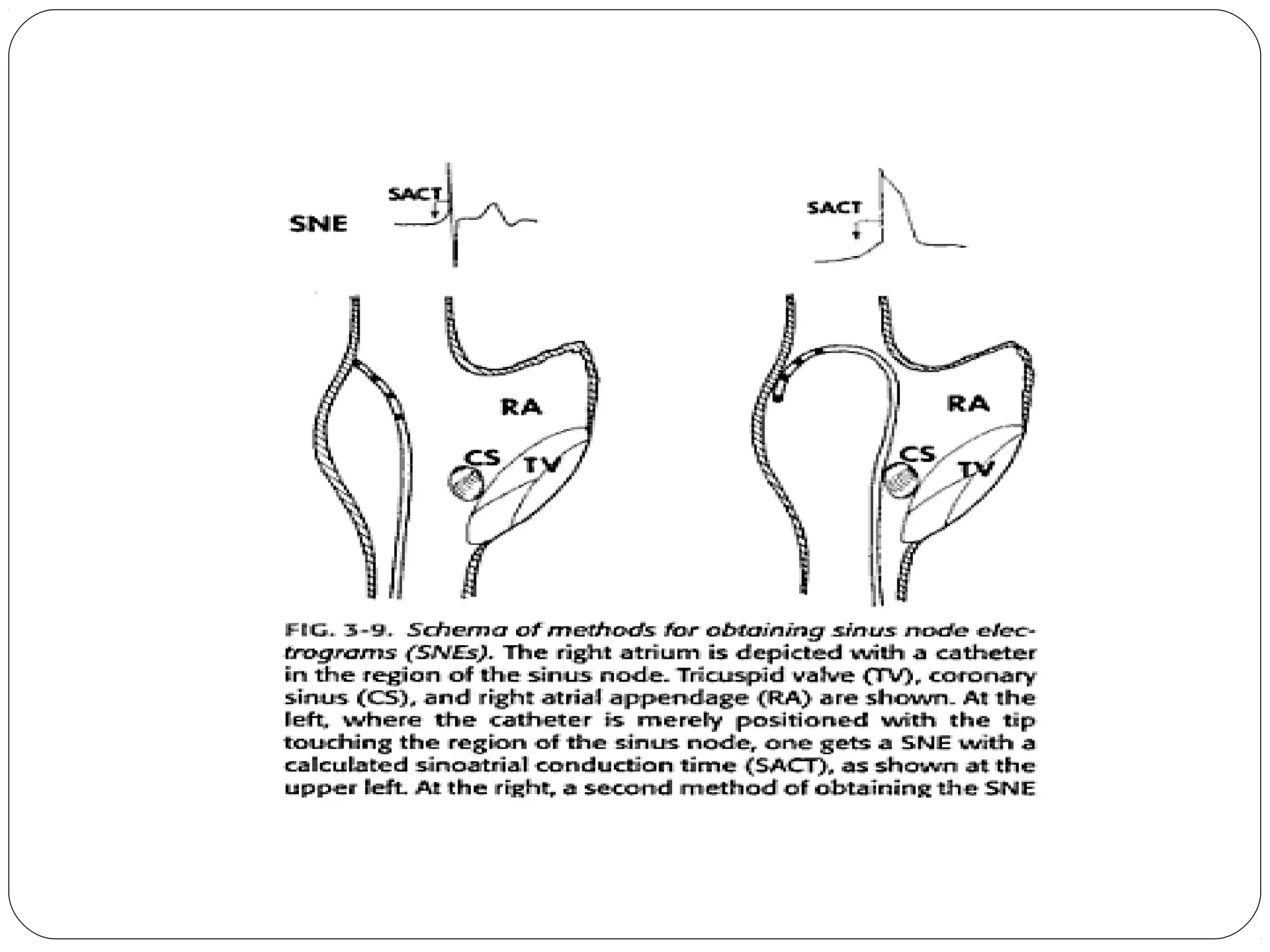
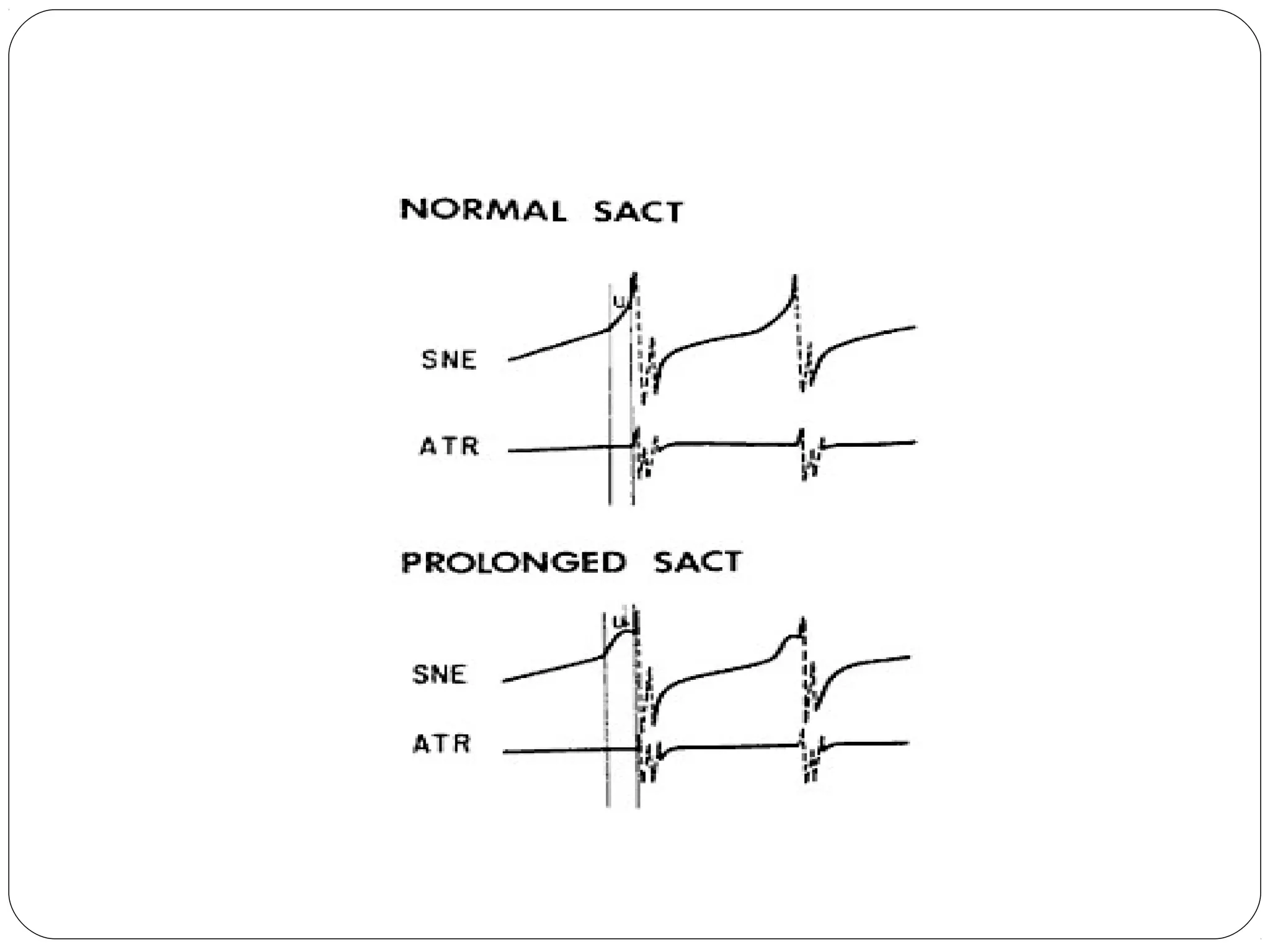
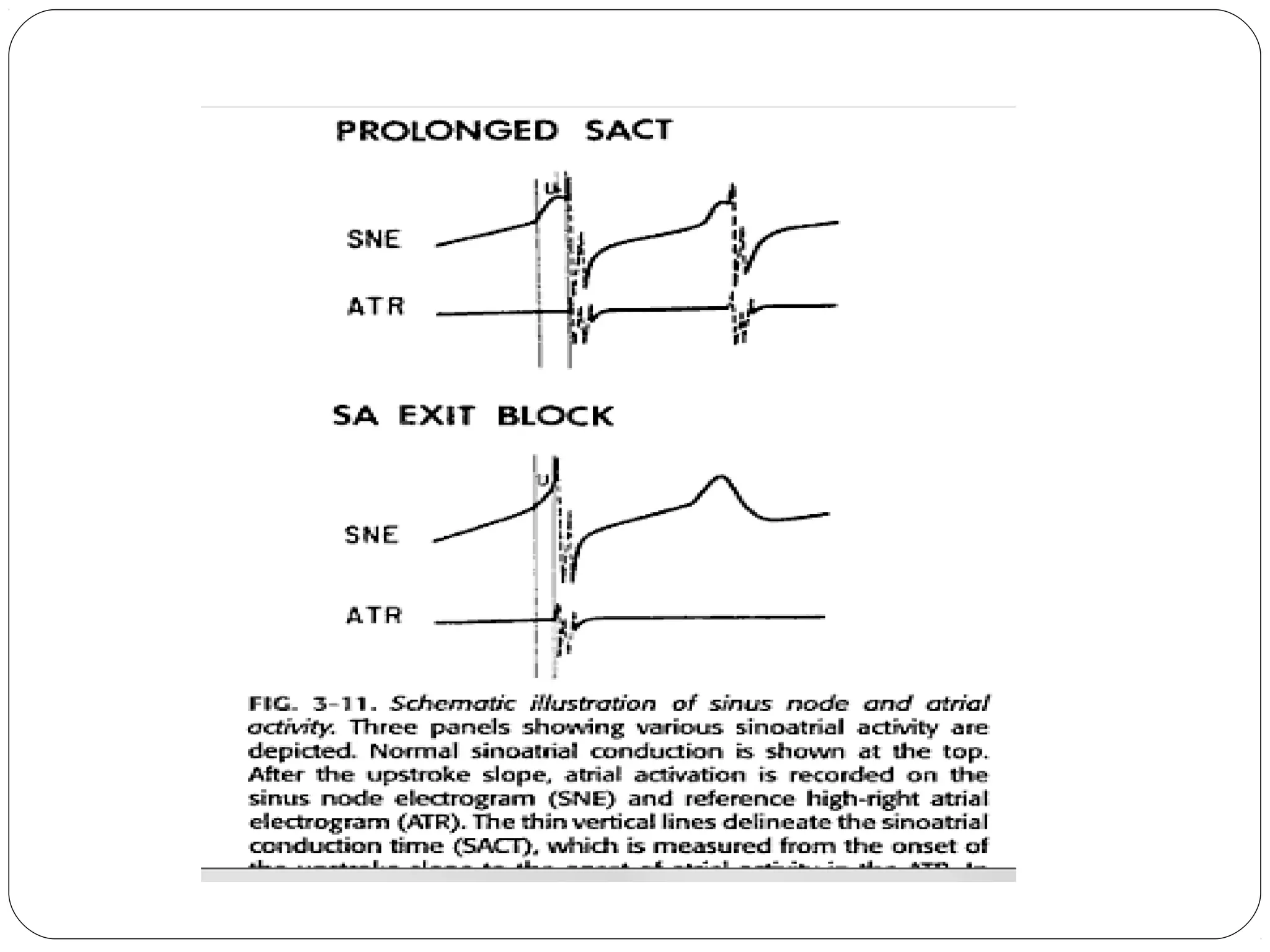
Endocardial recordings demonstrate diastolic phase 4 activity
followed by a slow upstroke culminating in a rapid atrial
EGM.
The directly measured SACT was defined as the interval
between the local EGM and the rapid atrial deflection.
Sinoatrial block occurs when the local EGM was seen in the
absence of an atrial deflection
SACT-DIRECT METHOD
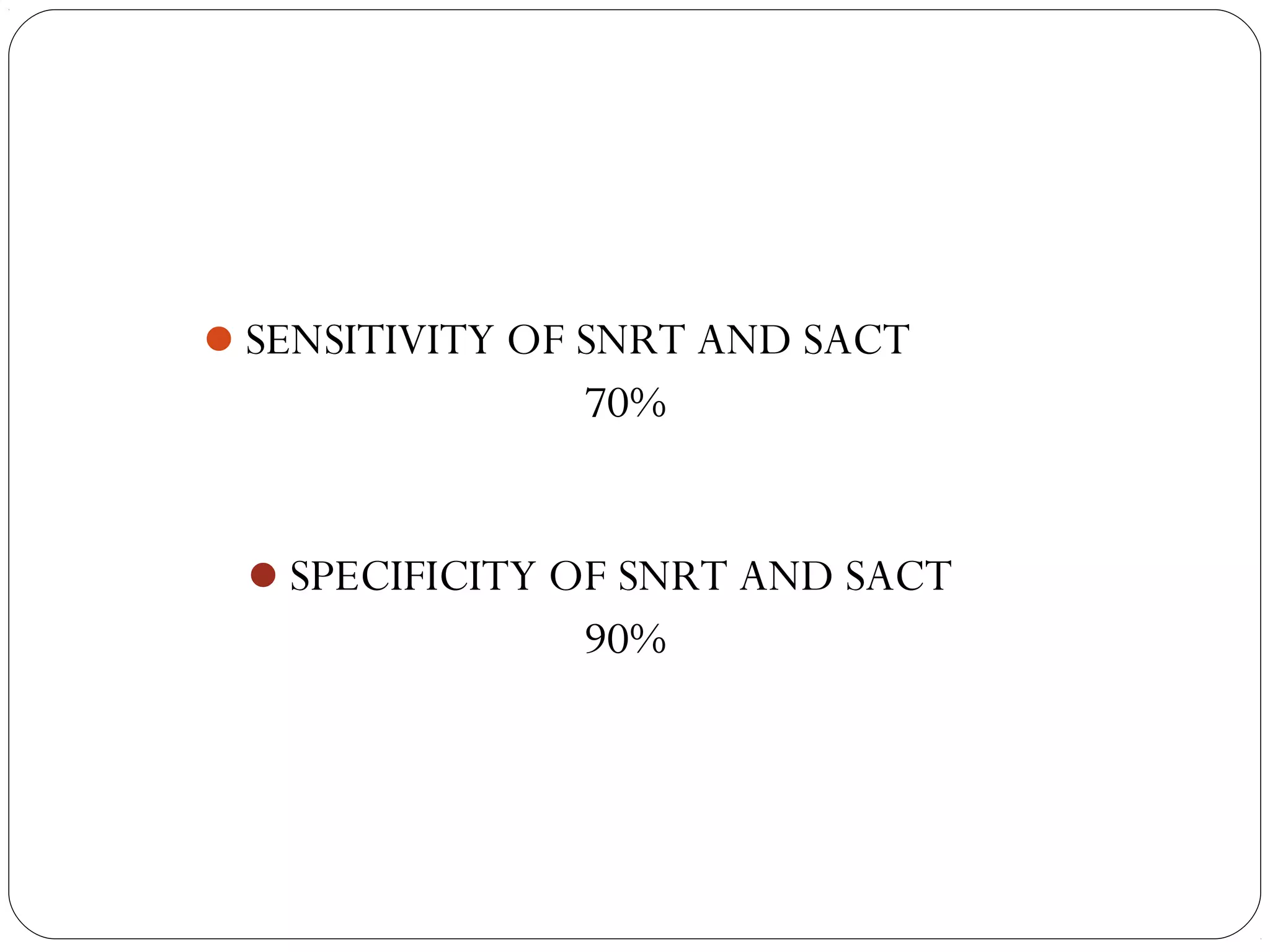
SENSITIVITY OF SNRT AND SACT
70%
SPECIFICITY OF SNRT AND SACT
90%
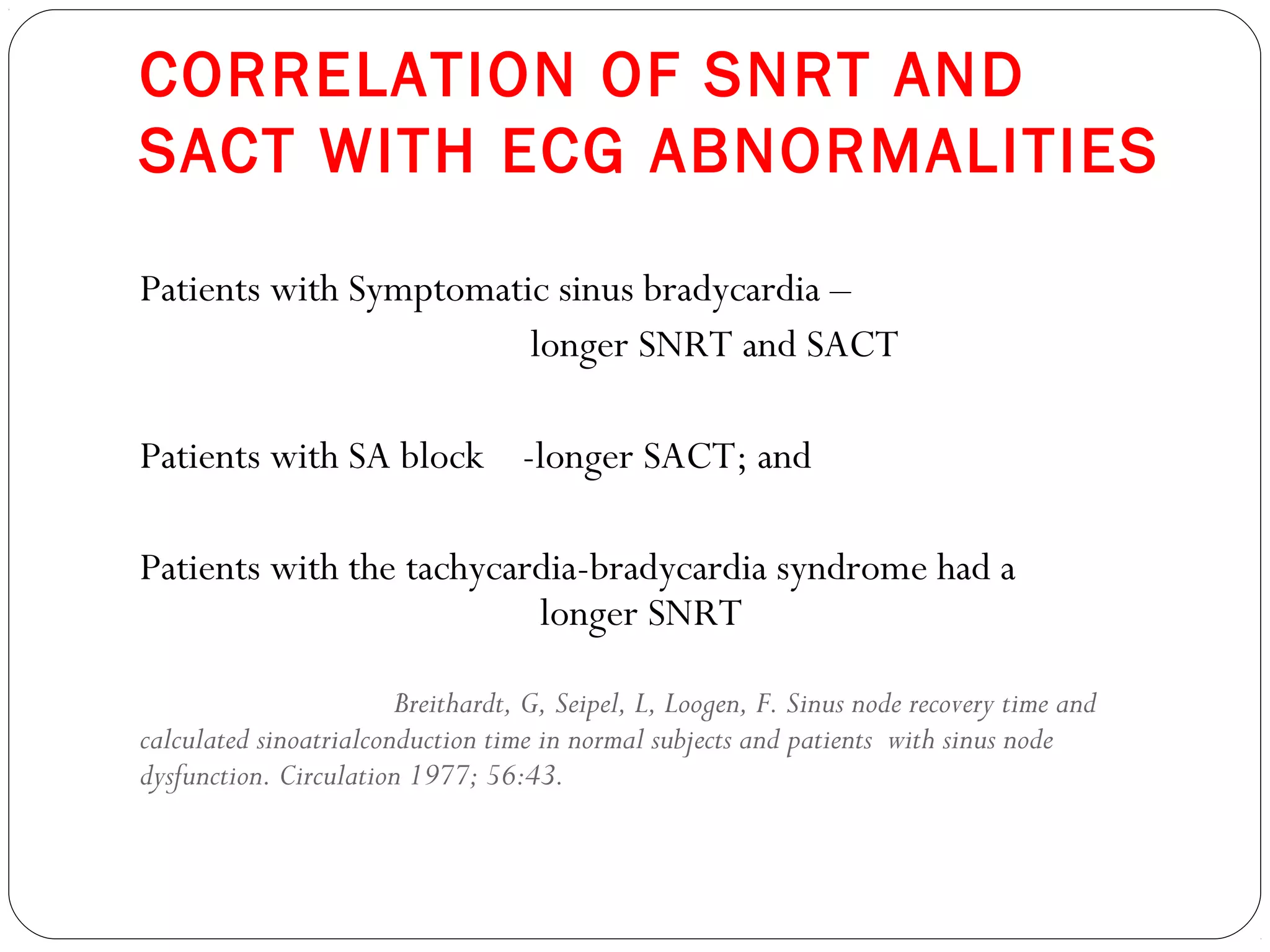
CORRELATION OF SNRT AND
SACT WITH ECG ABNORMALITIES
Patients with Symptomatic sinus bradycardia –
longer SNRT and SACT
Patients with SA block -longer SACT; and
Patients with the tachycardia-bradycardia syndrome had a
longer SNRT
Breithardt, G, Seipel, L, Loogen, F. Sinus node recovery time and
calculated sinoatrialconduction time in normal subjects and patients with sinus node
dysfunction. Circulation 1977; 56:43.
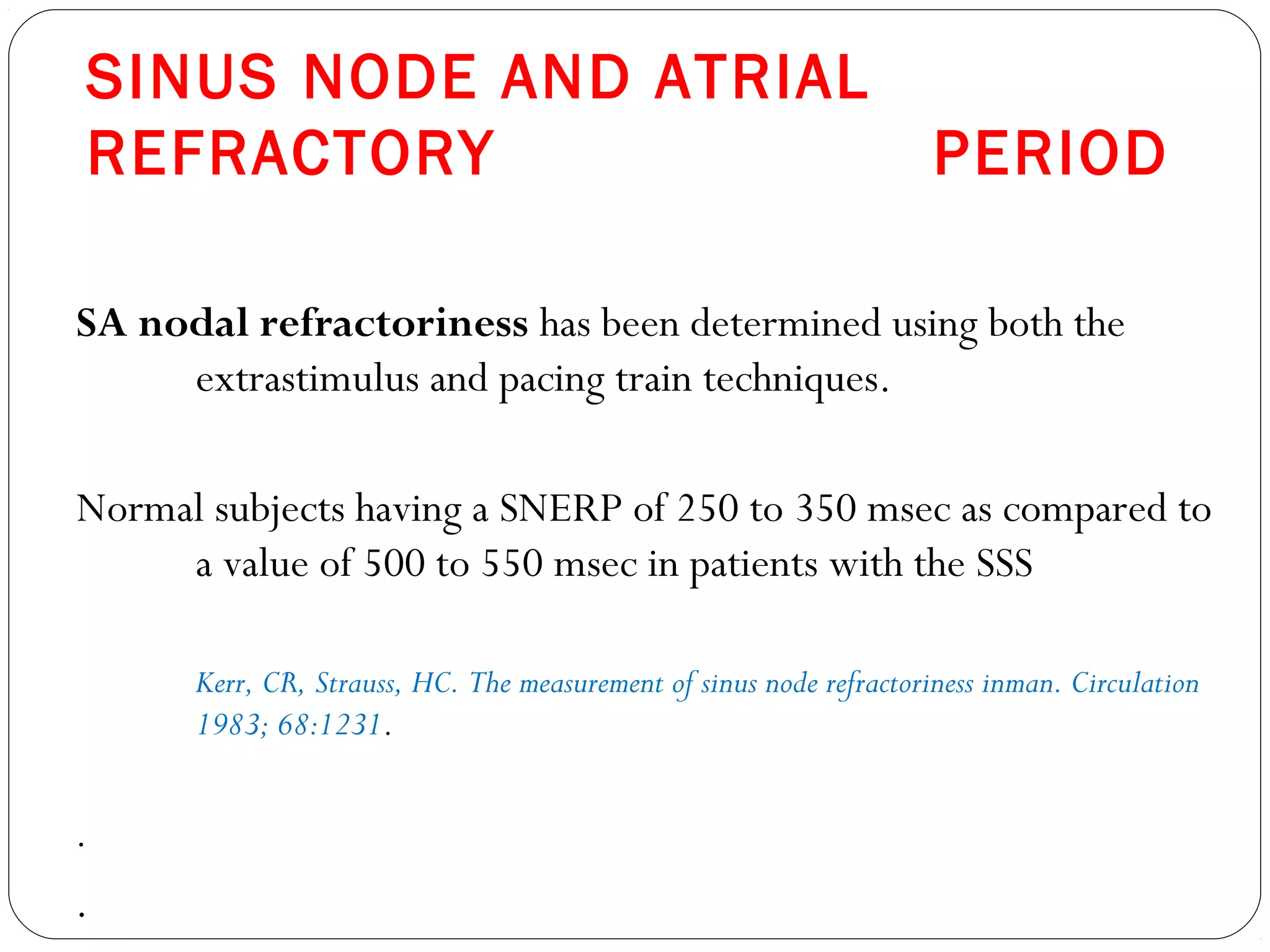
SINUS NODE AND ATRIAL
REFRACTORY PERIOD
SA nodal refractoriness has been determined using both the
extrastimulus and pacing train techniques.
Normal subjects having a SNERP of 250 to 350 msec as compared to
a value of 500 to 550 msec in patients with the SSS
Kerr, CR, Strauss, HC. The measurement of sinus node refractoriness inman. Circulation
1983; 68:1231.
.
.
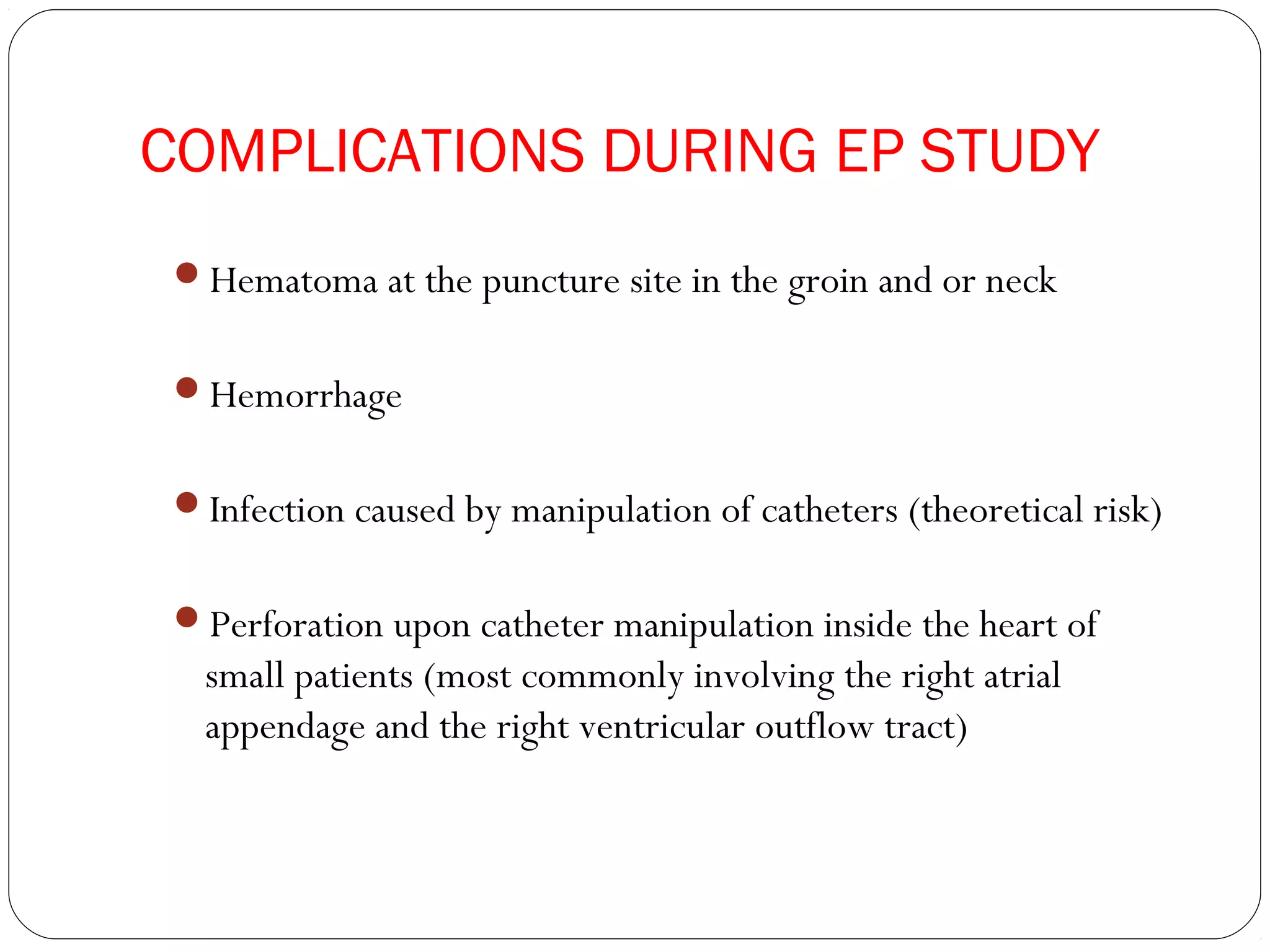
COMPLICATIONS DURING EP STUDY
Hematoma at the puncture site in the groin and or neck
Hemorrhage
Infection caused by manipulation of catheters (theoretical risk)
Perforation upon catheter manipulation inside the heart of
small patients (most commonly involving the right atrial
appendage and the right ventricular outflow tract)
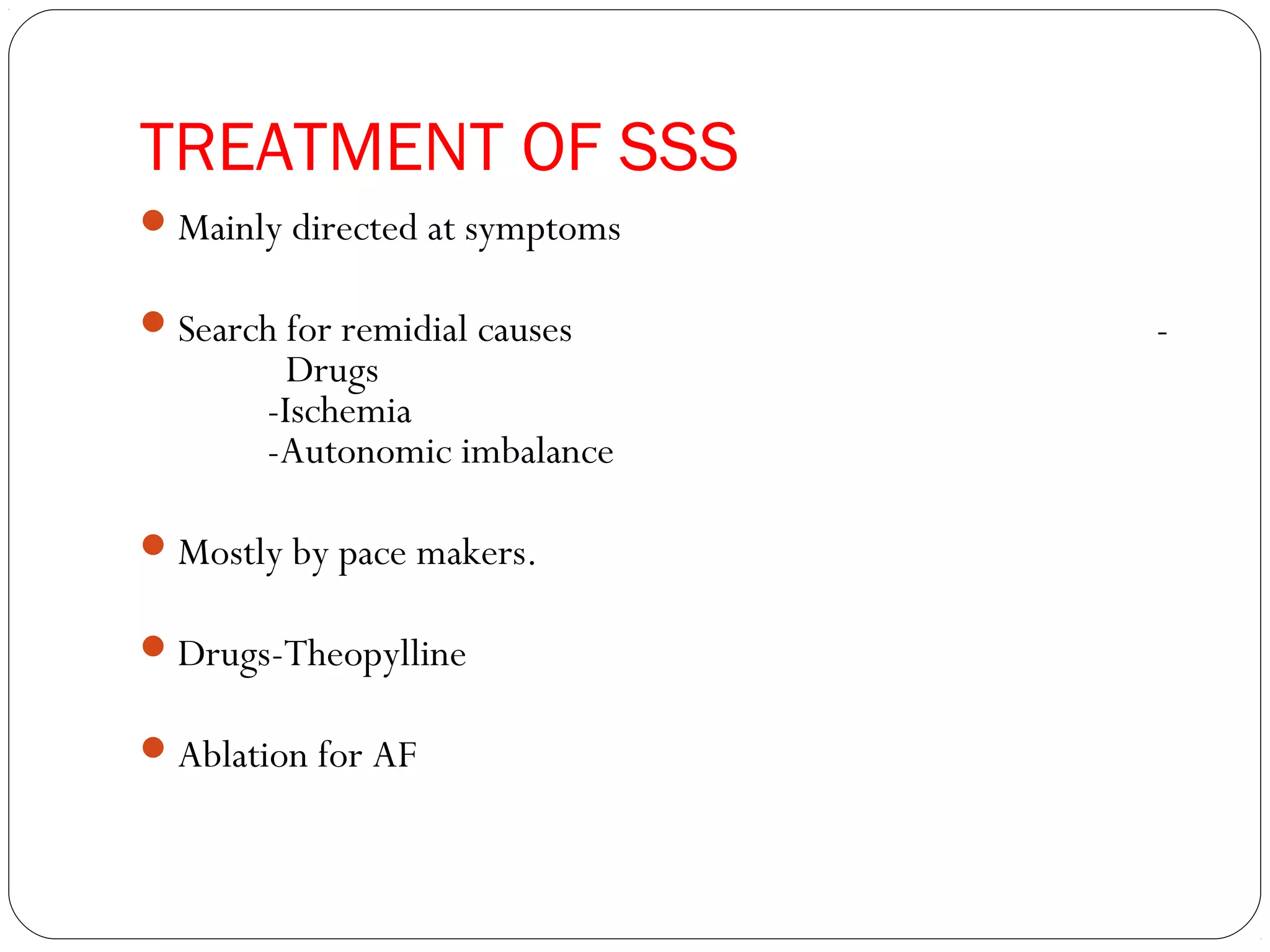
TREATMENT OF SSS
Mainly directed at symptoms
Search for remidial causes -
Drugs
-Ischemia
-Autonomic imbalance
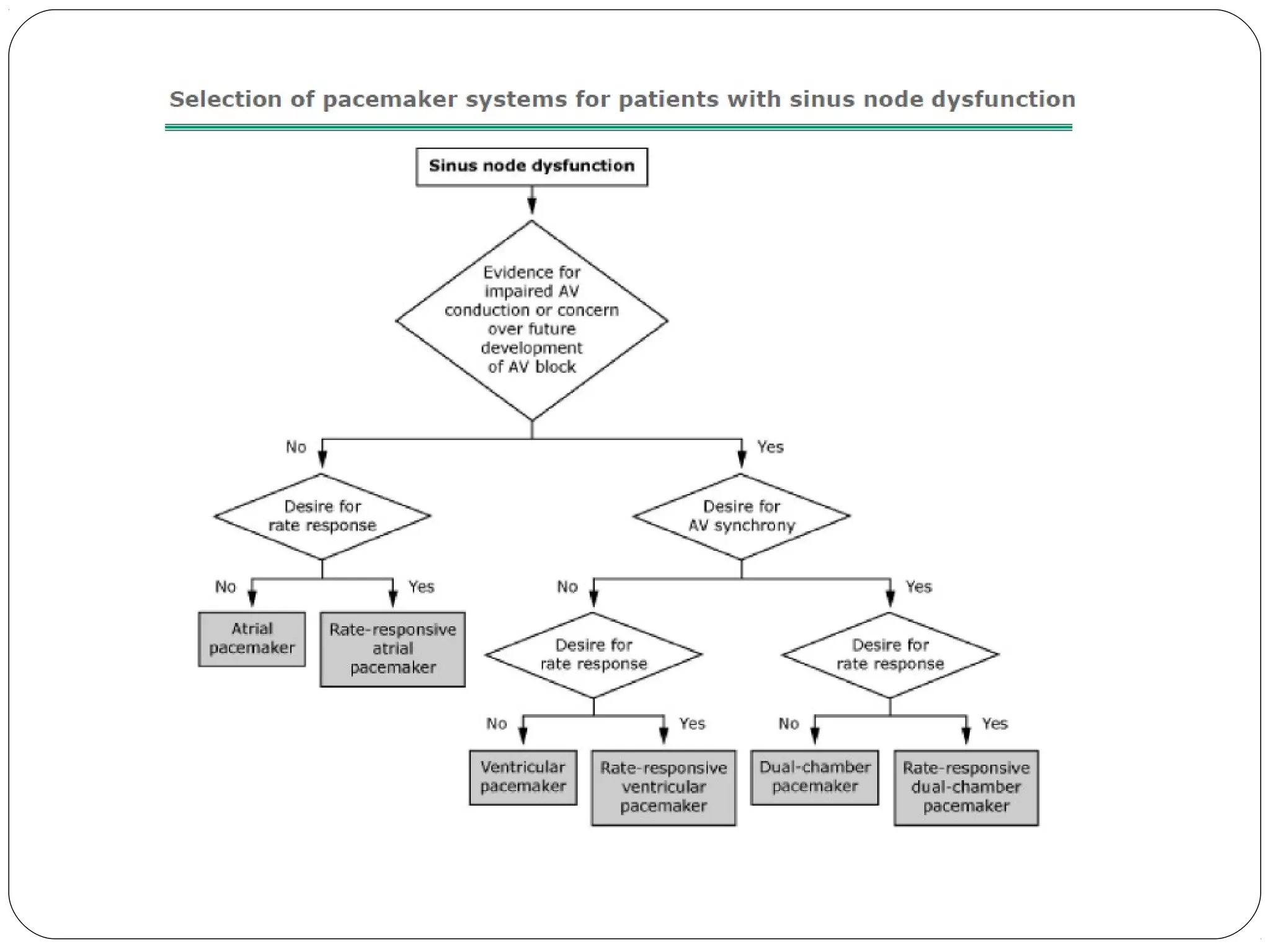
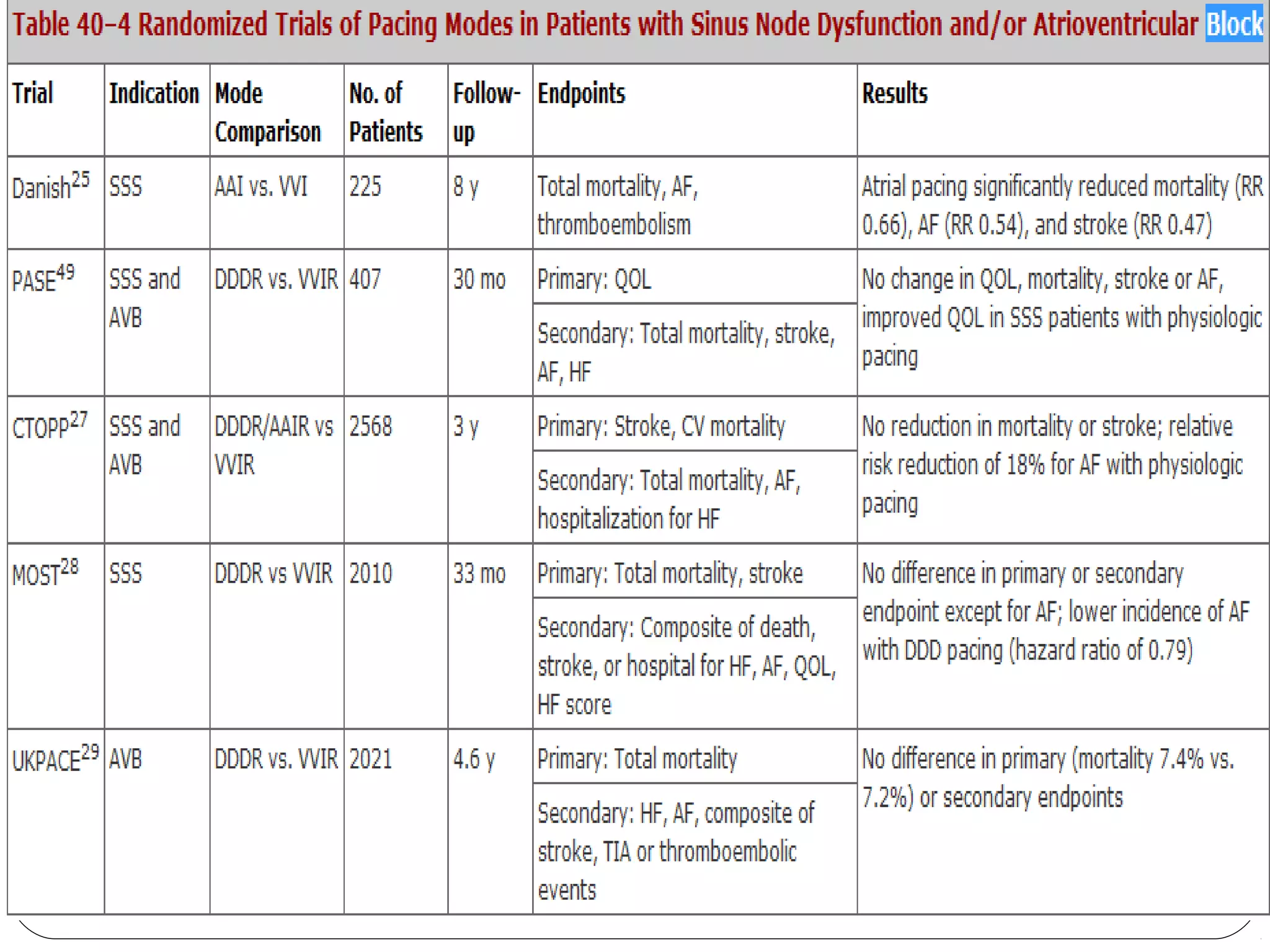
Mostly by pace makers.
Drugs-Theopylline
Ablation for AF
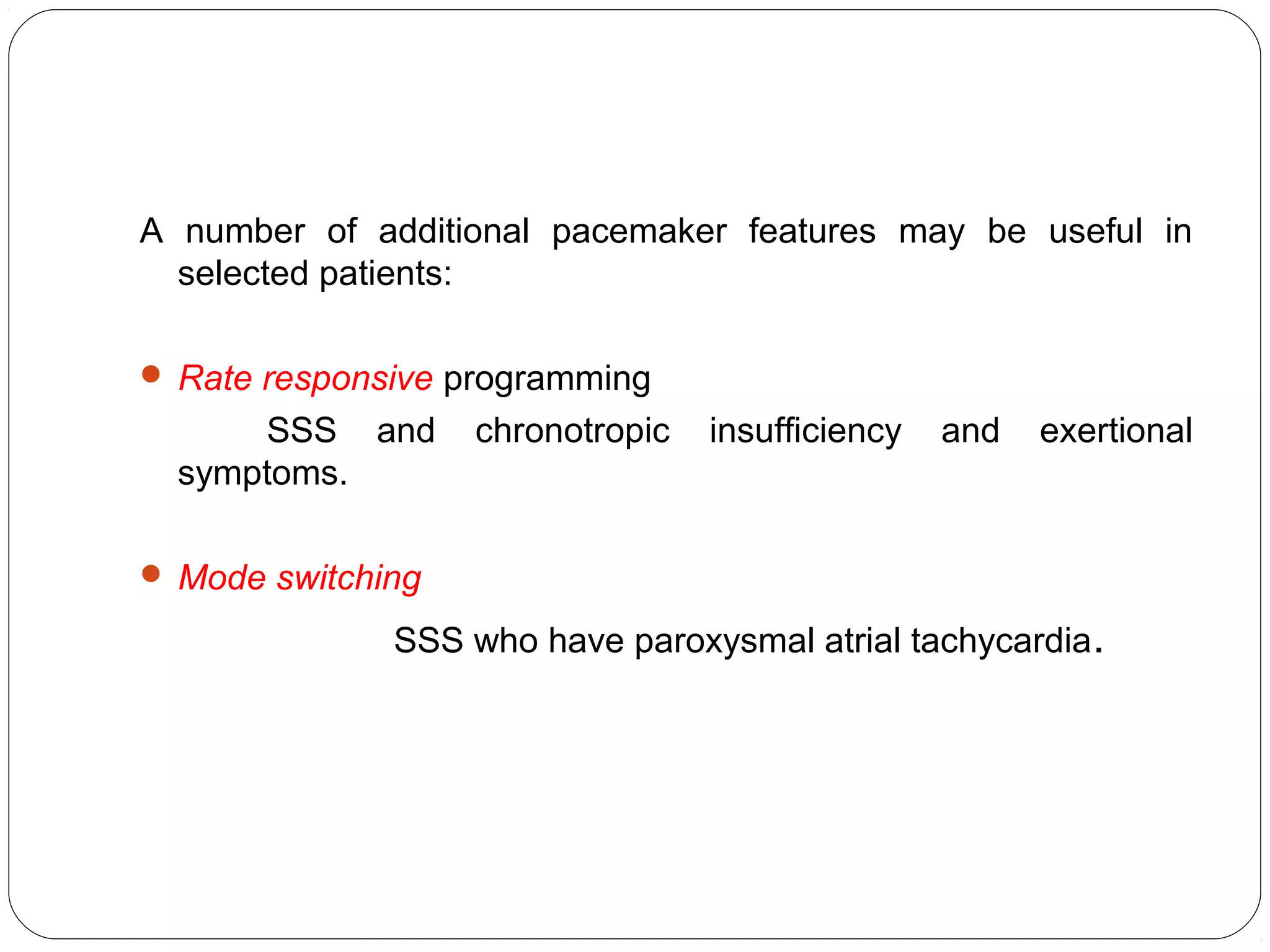
A number of additional pacemaker features may be useful in
selected patients:
 Rate responsive programming
SSS and chronotropic insufficiency and exertional
symptoms.
 Mode switching
SSS who have paroxysmal atrial tachycardia.
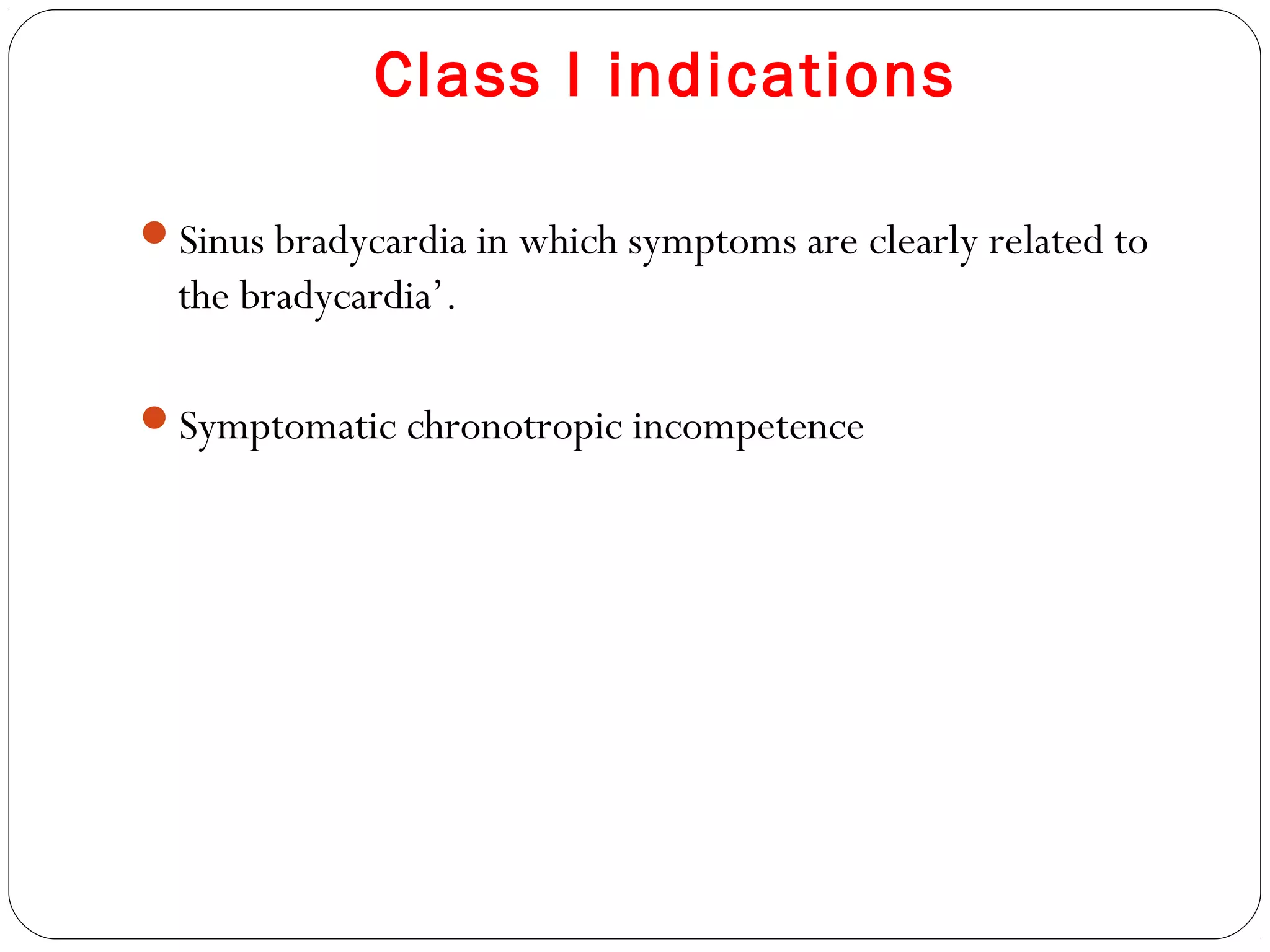
Class I indications
Sinus bradycardia in which symptoms are clearly related to
the bradycardia’.
Symptomatic chronotropic incompetence
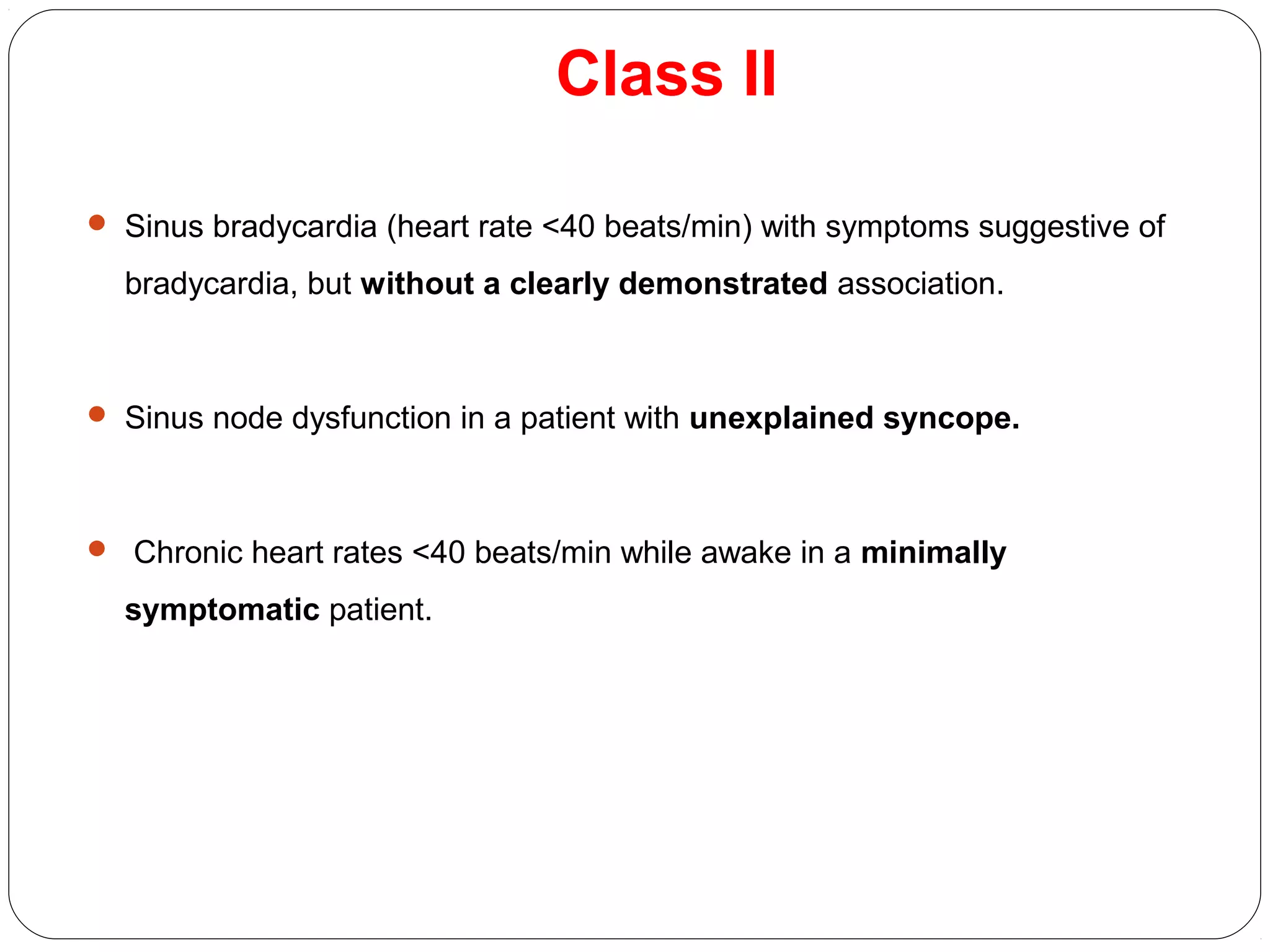
Class II
 Sinus bradycardia (heart rate <40 beats/min) with symptoms suggestive of
bradycardia, but without a clearly demonstrated association.
 Sinus node dysfunction in a patient with unexplained syncope.
 Chronic heart rates <40 beats/min while awake in a minimally
symptomatic patient.
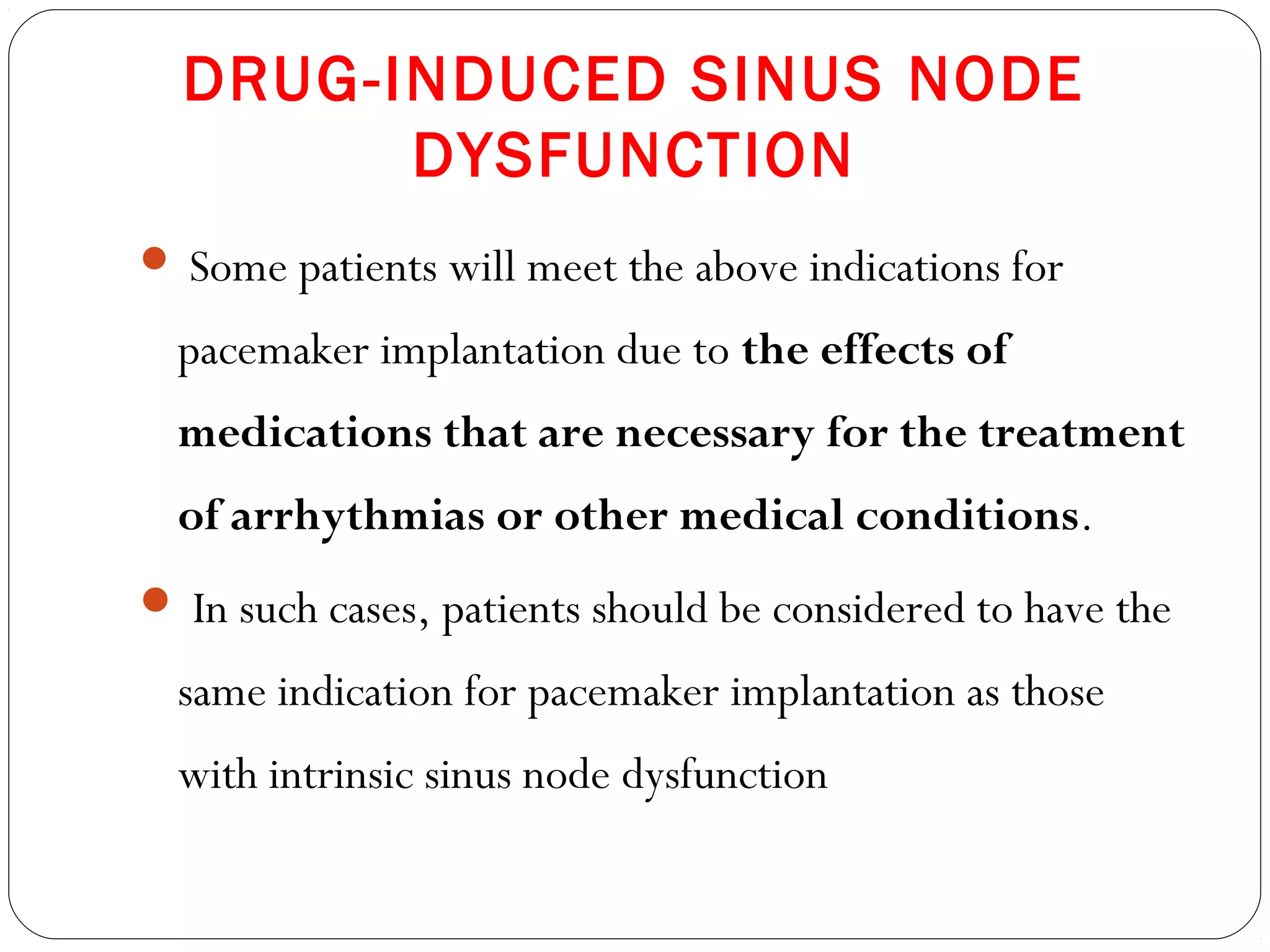
DRUG-INDUCED SINUS NODE
DYSFUNCTION
 Some patients will meet the above indications for
pacemaker implantation due to the effects of
medications that are necessary for the treatment
of arrhythmias or other medical conditions.
 In such cases, patients should be considered to have the
same indication for pacemaker implantation as those
with intrinsic sinus node dysfunction
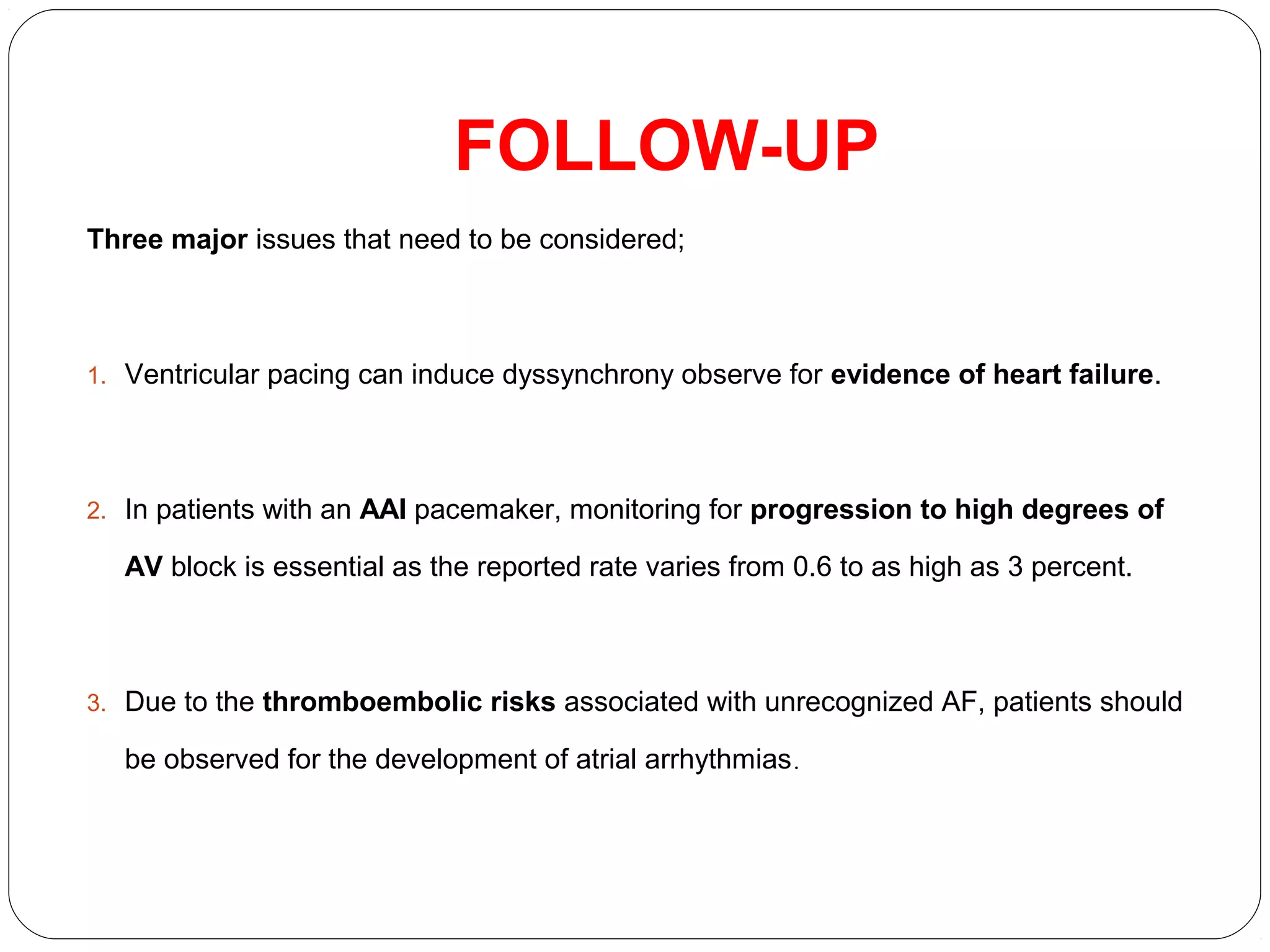
FOLLOW-UP
Three major issues that need to be considered;
1. Ventricular pacing can induce dyssynchrony observe for evidence of heart failure.
2. In patients with an AAI pacemaker, monitoring for progression to high degrees of
AV block is essential as the reported rate varies from 0.6 to as high as 3 percent.
3. Due to the thromboembolic risks associated with unrecognized AF, patients should
be observed for the development of atrial arrhythmias.
AV NODE
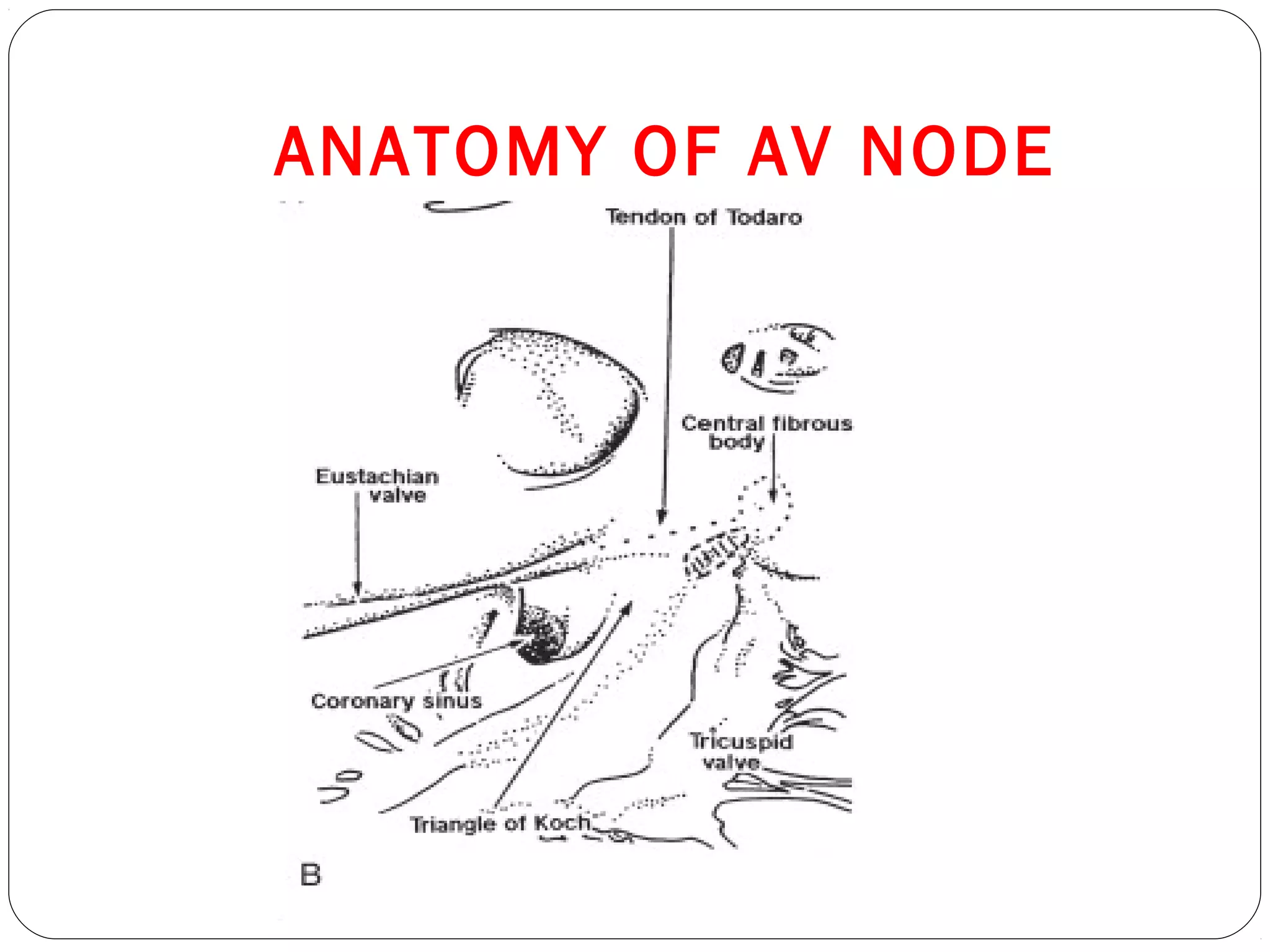
ANATOMY OF AV NODE
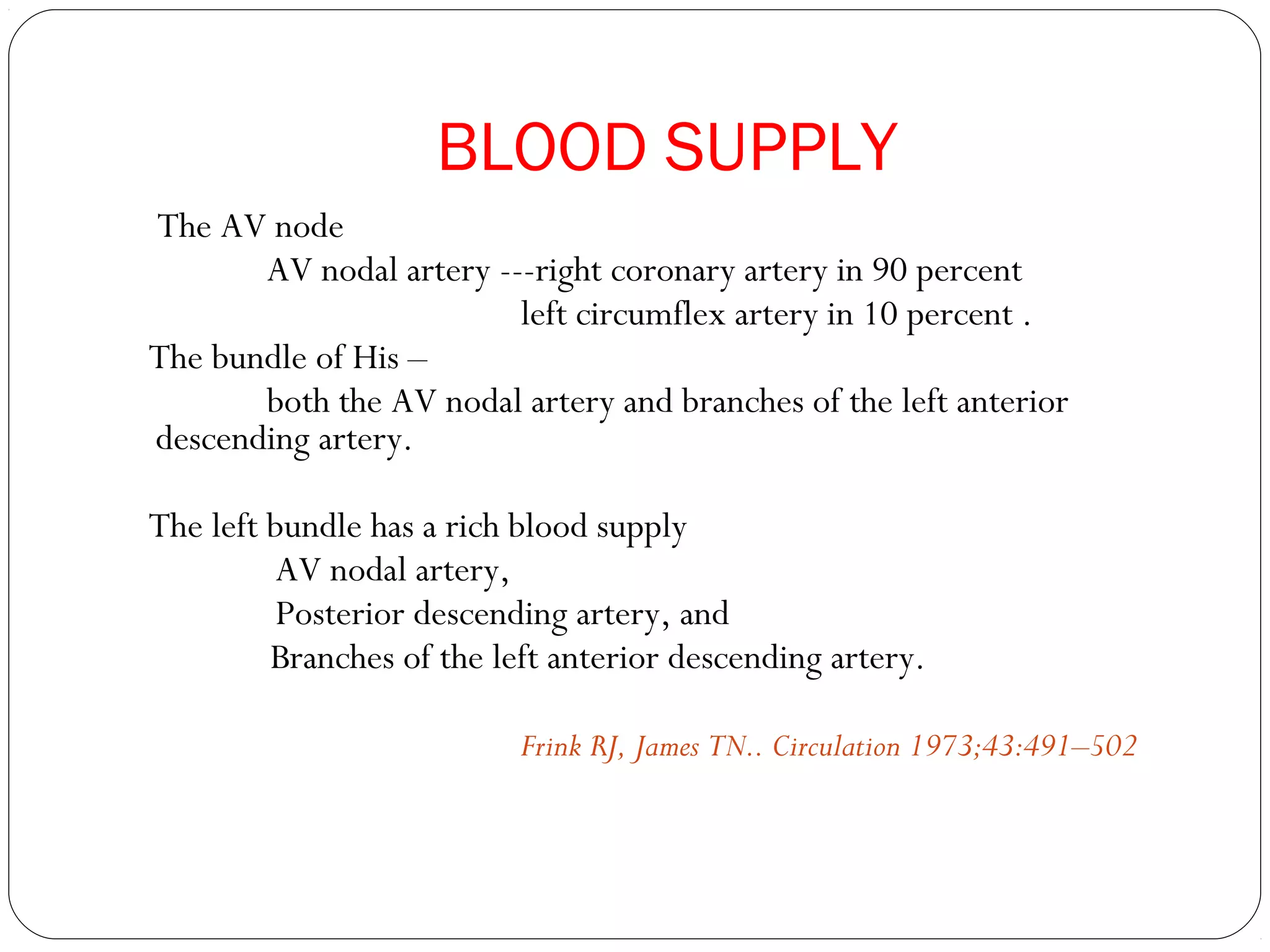
BLOOD SUPPLY
The AV node
AV nodal artery ---right coronary artery in 90 percent
left circumflex artery in 10 percent .
The bundle of His –
both the AV nodal artery and branches of the left anterior
descending artery.
The left bundle has a rich blood supply
AV nodal artery,
Posterior descending artery, and
Branches of the left anterior descending artery.
Frink RJ, James TN.. Circulation 1973;43:491–502
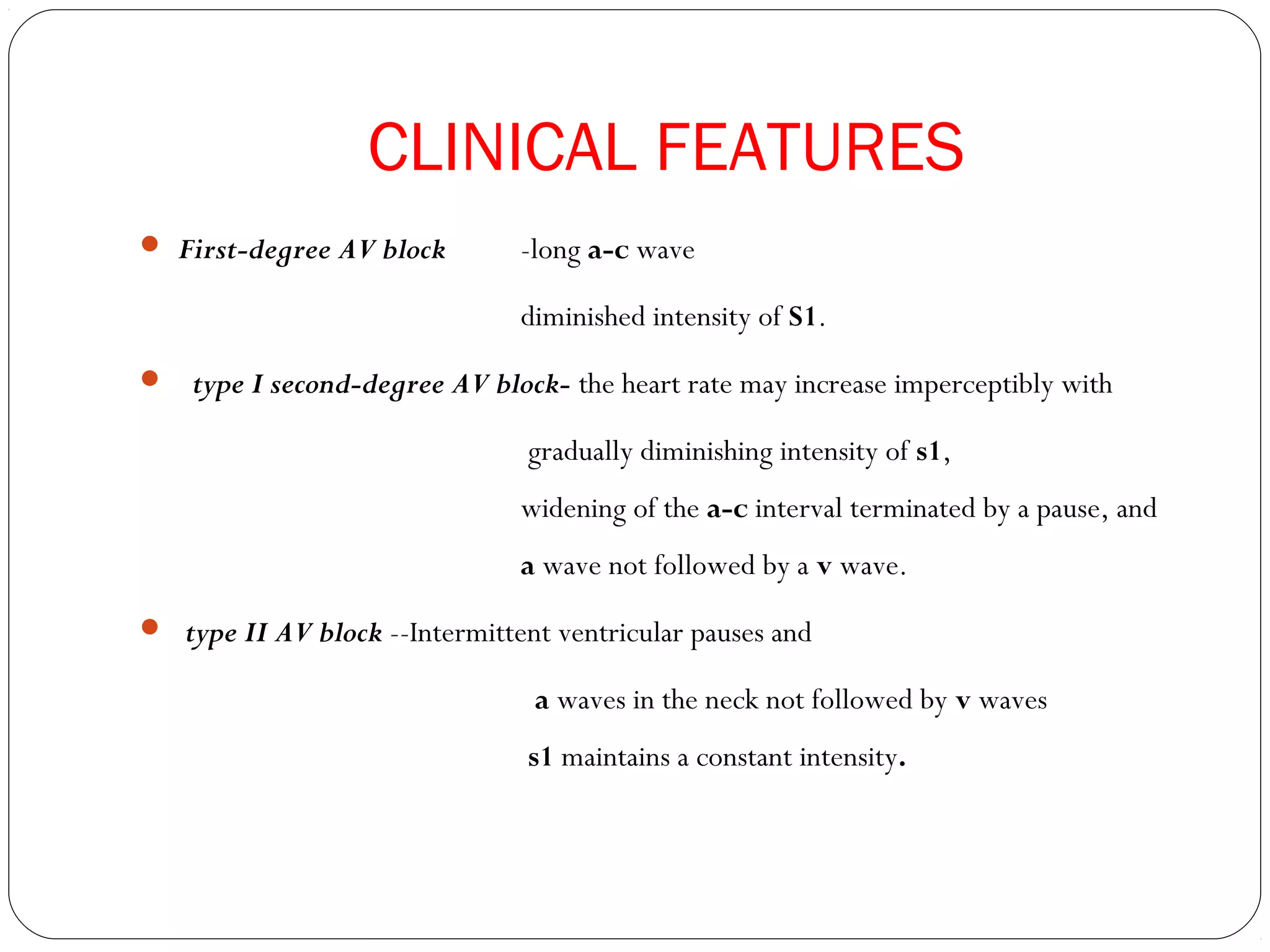
CLINICAL FEATURES
 First-degree AV block -long a-c wave
diminished intensity of S1.
 type I second-degree AV block- the heart rate may increase imperceptibly with
gradually diminishing intensity of s1,
widening of the a-c interval terminated by a pause, and
a wave not followed by a v wave.
 type II AV block --Intermittent ventricular pauses and
a waves in the neck not followed by v waves
s1 maintains a constant intensity.
 In complete AV block
-variable intensity of s1
-a waves in the jugular venous pulse --lacking a consistent
relationship to ventricular contraction.
-Intermittent large (cannon) a waves may be seen in
the jugular venous pulse when atrial and ventricular contractions
occur simultaneously.
The second heart sound can split normally or paradoxically,
depending on the manner of ventricular activation.
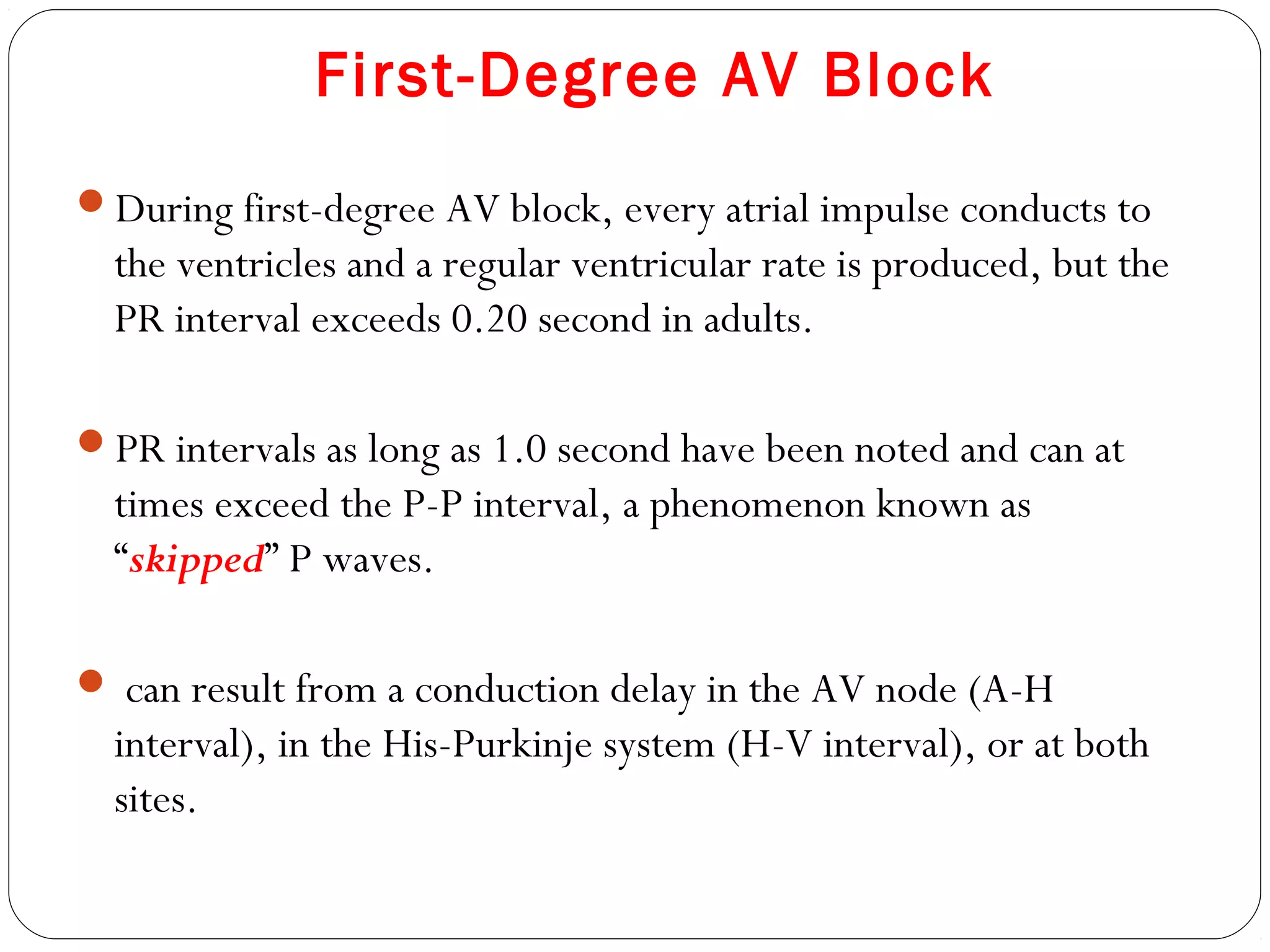
First-Degree AV Block
During first-degree AV block, every atrial impulse conducts to
the ventricles and a regular ventricular rate is produced, but the
PR interval exceeds 0.20 second in adults.
PR intervals as long as 1.0 second have been noted and can at
times exceed the P-P interval, a phenomenon known as
“skipped” P waves.
 can result from a conduction delay in the AV node (A-H
interval), in the His-Purkinje system (H-V interval), or at both
sites.
First-degree and type I second-degree AV block can occur in
normal healthy children, and a Wenckebach AV block can be
a normal phenomenon in well-trained athletes, as noted
earlier, probably related to an increase in resting vagal tone
Third-Degree (Complete) AV Block
No atrial activity is conducted to the ventricles
Atria and ventricles are controlled by independent
pacemakers.
A type of complete AV dissociation.
 The atrial pacemaker can be sinus or ectopic
The ventricular focus is usually located just below the region
of the block, which can be above or below the His bundle
bifurcation.
ventricular pacemaker activity
closer to the His bundle appear to be more stable and a
faster escape rate than can those located more distally in the
ventricular conduction system.
 The ventricular rate in acquired complete heart block is less
than 40 beats/min but can be faster in congenital complete AV
block
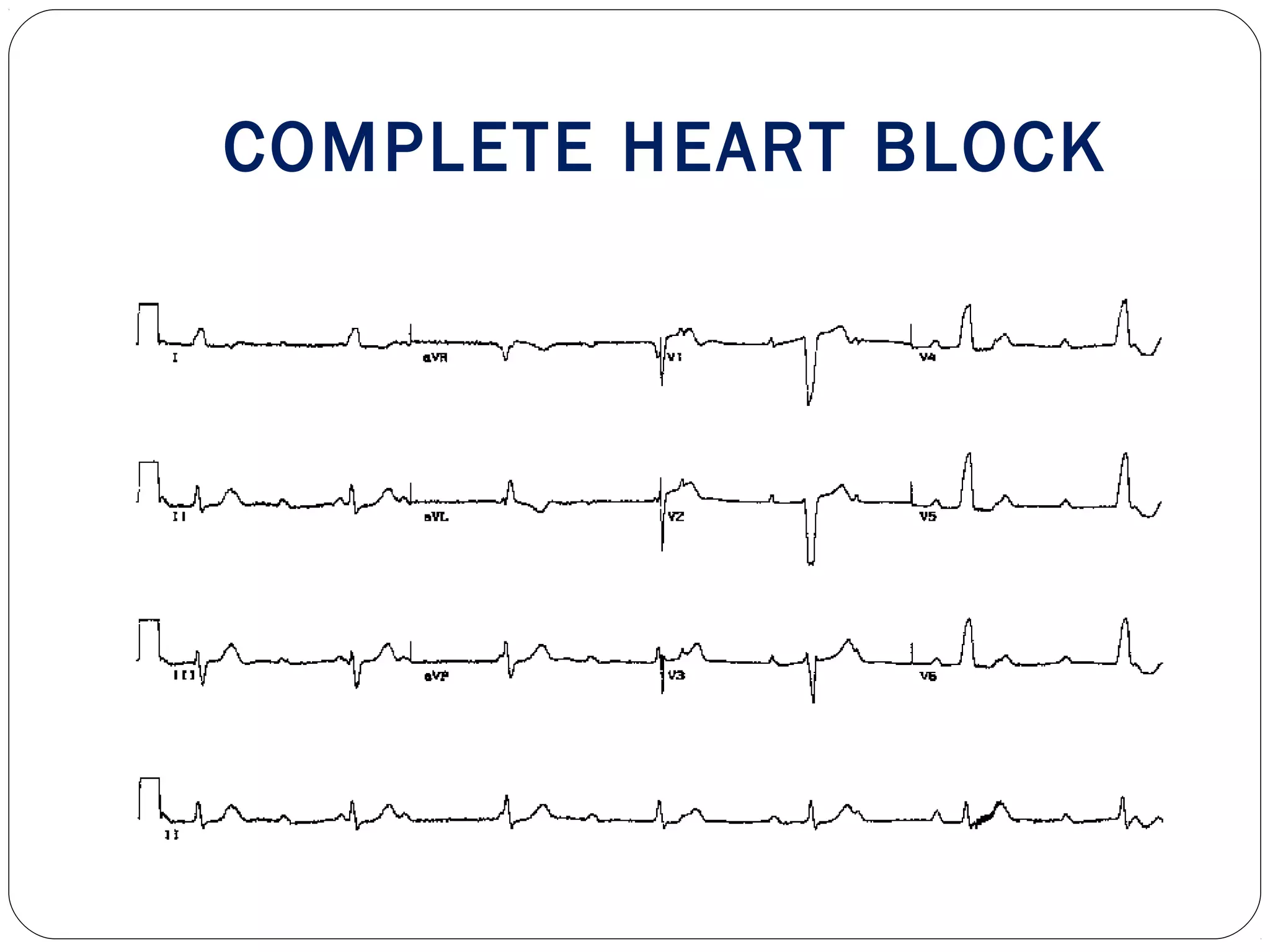
COMPLETE HEART BLOCK
COMPLETE AV BLOCK cont…
Can result from block at
the AV node (usually congenital)
 within the bundle of His/intra-hisian or
Infra Hisian/distal to it in the Purkinje system (usually acquired)
Block proximal to the His bundle –escape focus in or near the
His bundle.
normal QRS
rates of 40 to 60 beats/min
His bundle recording –
differentiate AV nodal from intrahisian block.
High-Grade Atrioventricular Block
When two or more consecutive atrial impulses do not
conduct to the ventricle, it is defined as high-grade
AV block.
 It may be associated with a junctional or ventricular
escape rhythm. .
 Unless a clearly defined reversible etiology is
identified, permanent pacing is indicated.
EPS IN AV NODE DYSFUNCTION
Patients with AV block without clear symptom association.
Patients with symptoms suggestive of bradyarrhythmias, but
in whom significant AV block has not been documented.
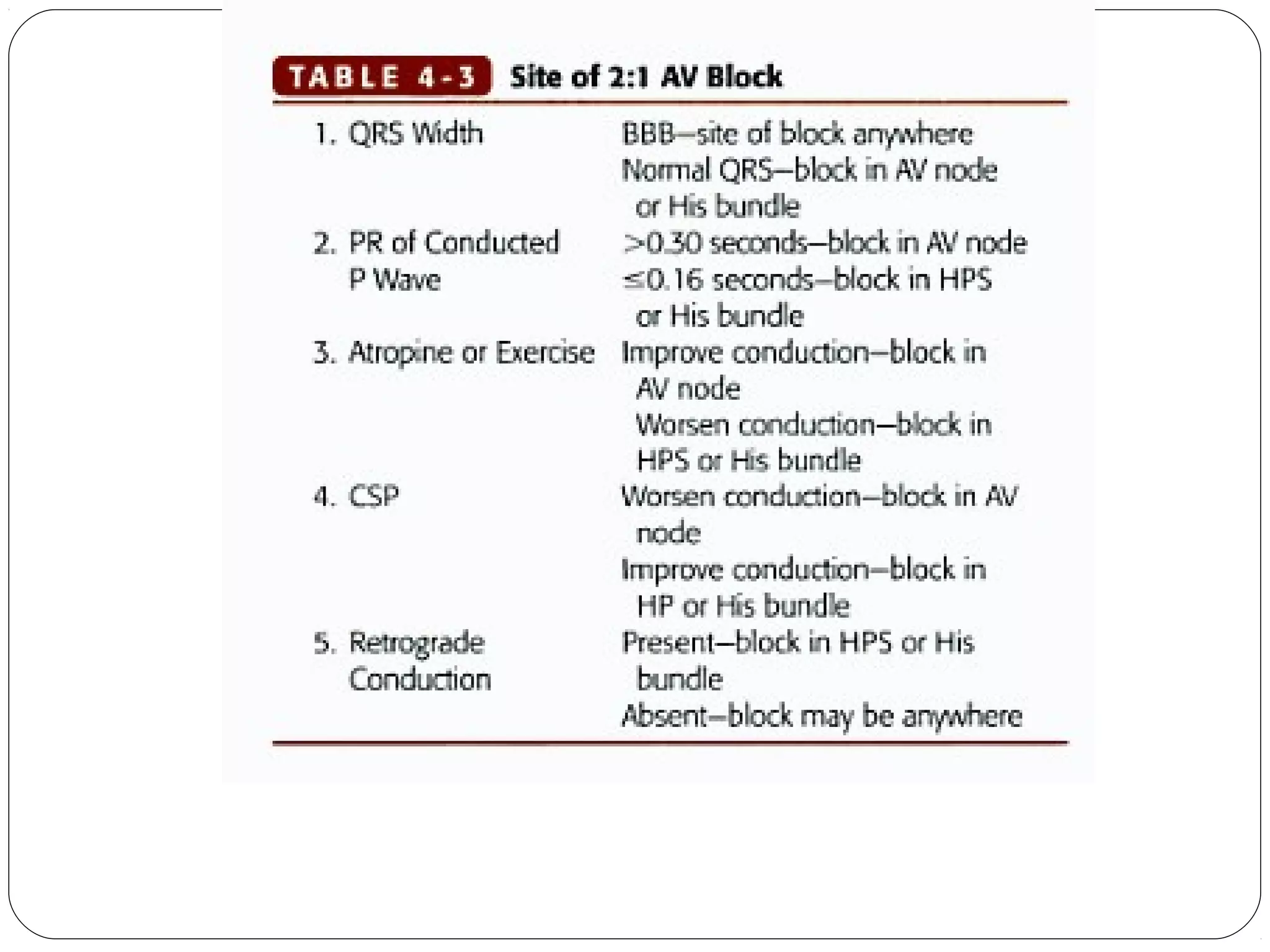
When the site of AV block cannot be determined by surface
tracings.( 2: 1 AV block ).
BASE LINE RECORDINGS
The first intracardiac tracing is a recording from the high right
atrium (HRA) close to the sinus node.
Pacing at this position allows evaluation of sinoatrial node
function and atrioventricular conduction;
Recordings from this site also help determine the direction of
atrial activation (eg, high-low versus low-high, and right-left
versus left-right).
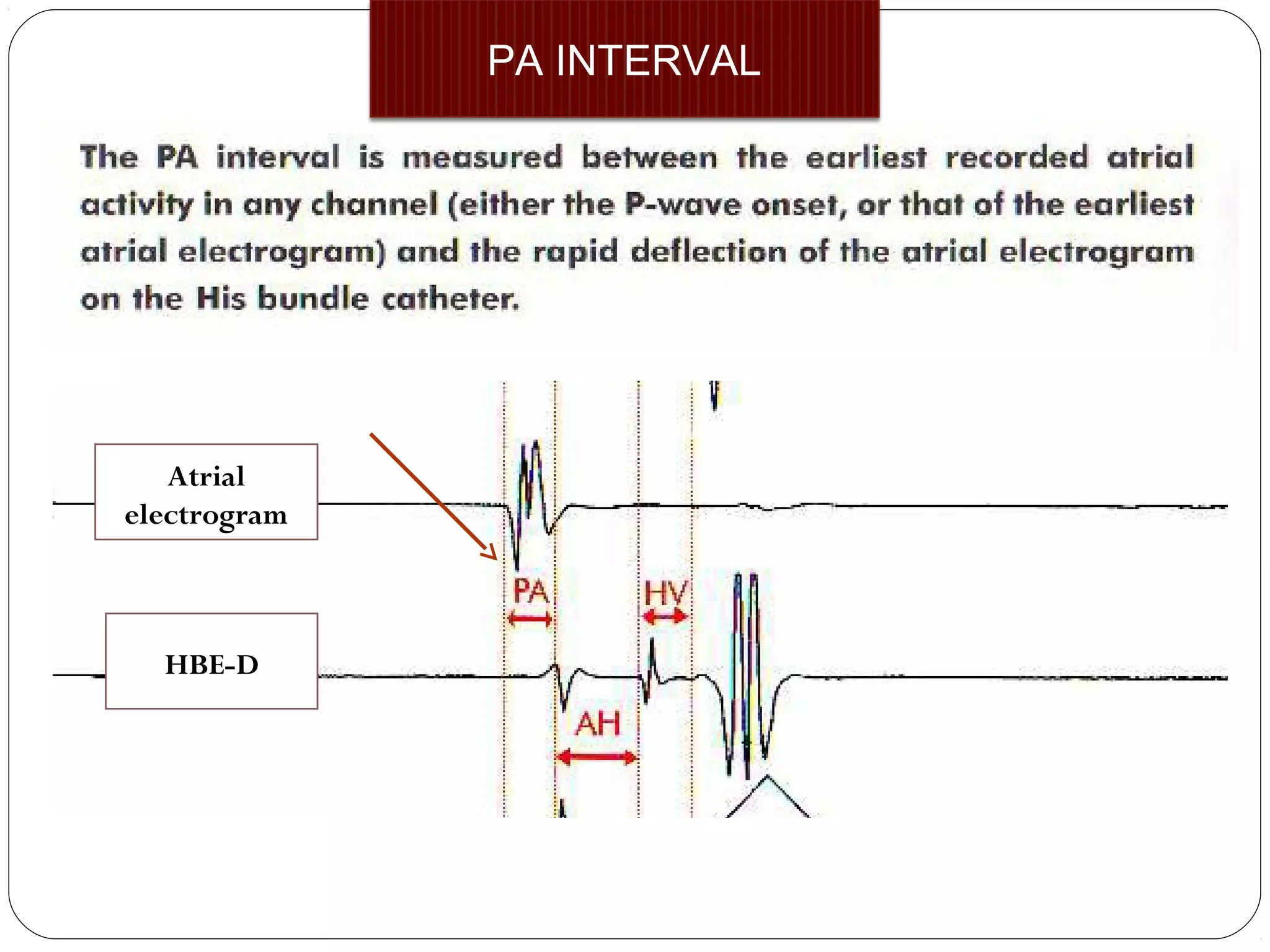
PA INTERVAL
Atrial
electrogram
HBE-D
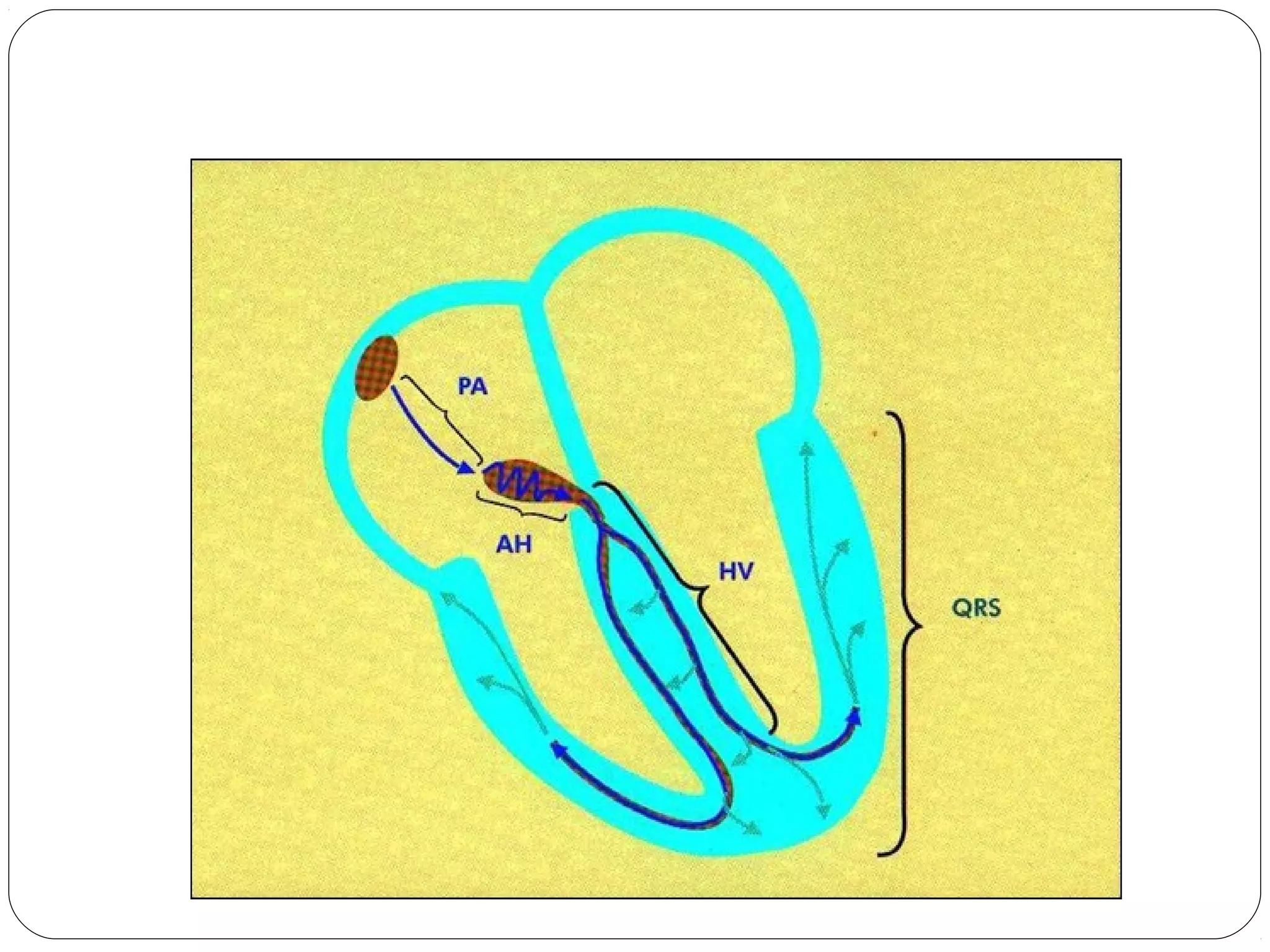
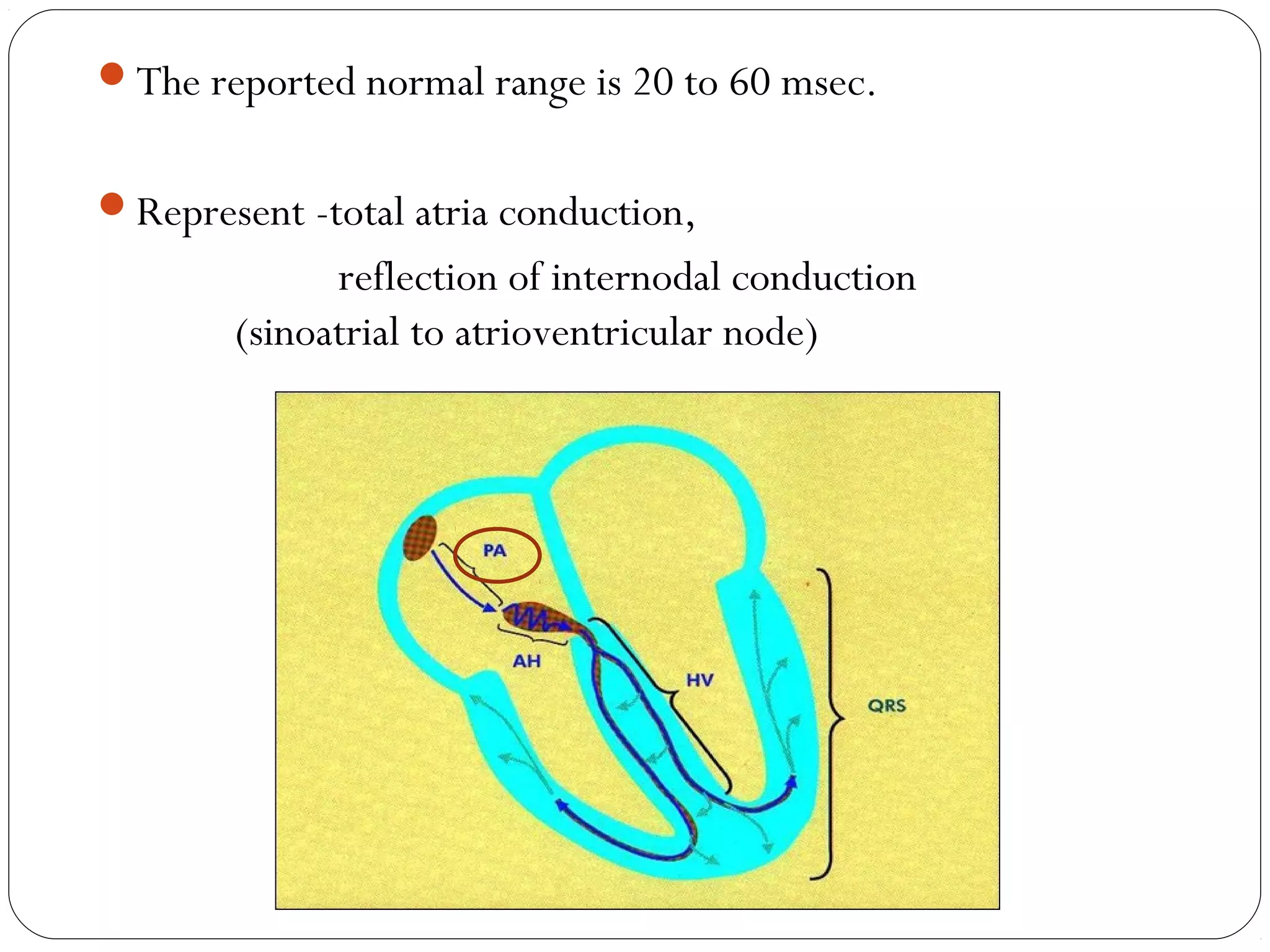
The reported normal range is 20 to 60 msec.
Represent -total atria conduction,
reflection of internodal conduction
(sinoatrial to atrioventricular node)
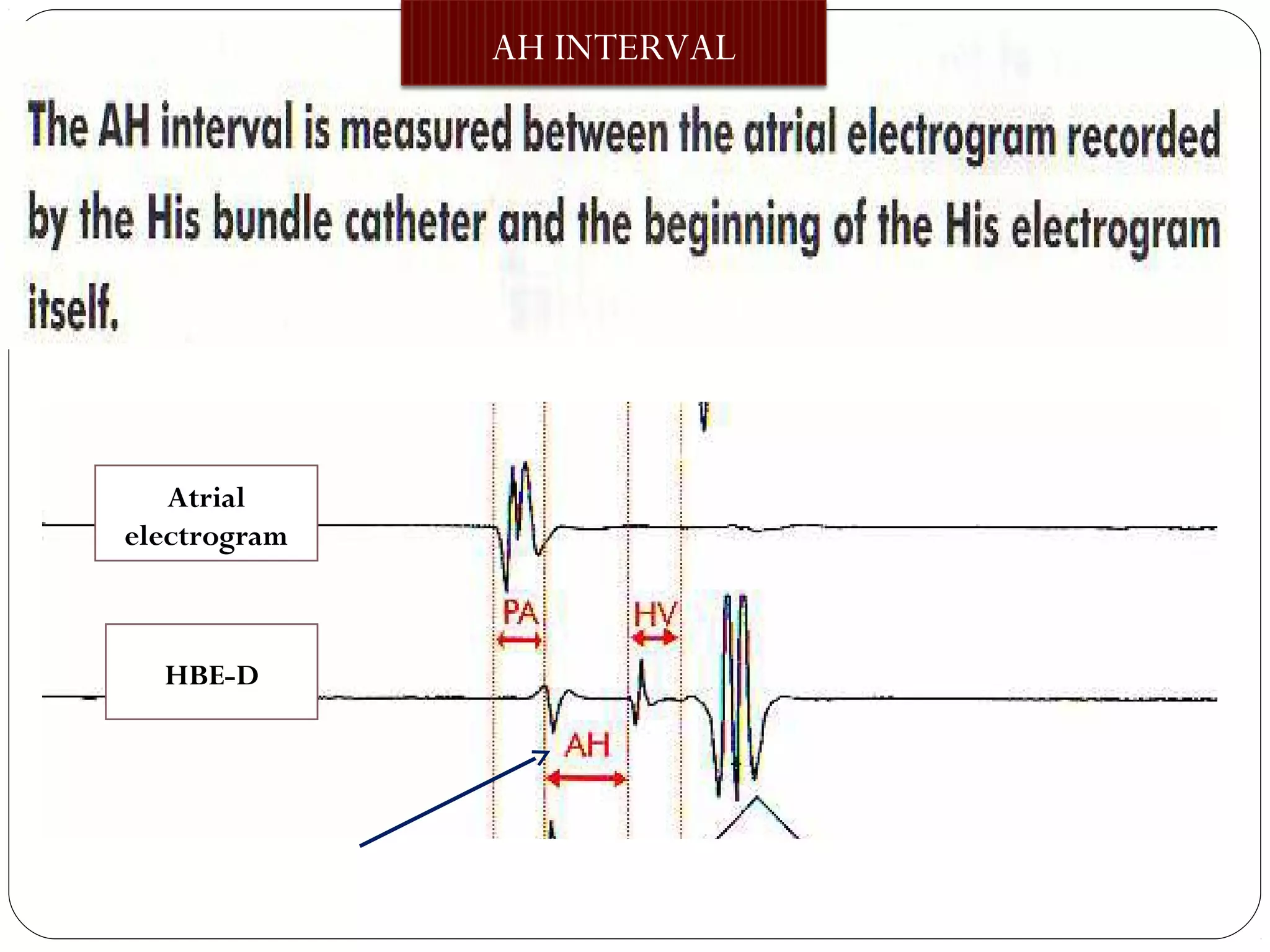
AH INTERVAL
AH INTERVAL
Atrial
electrogram
HBE-D
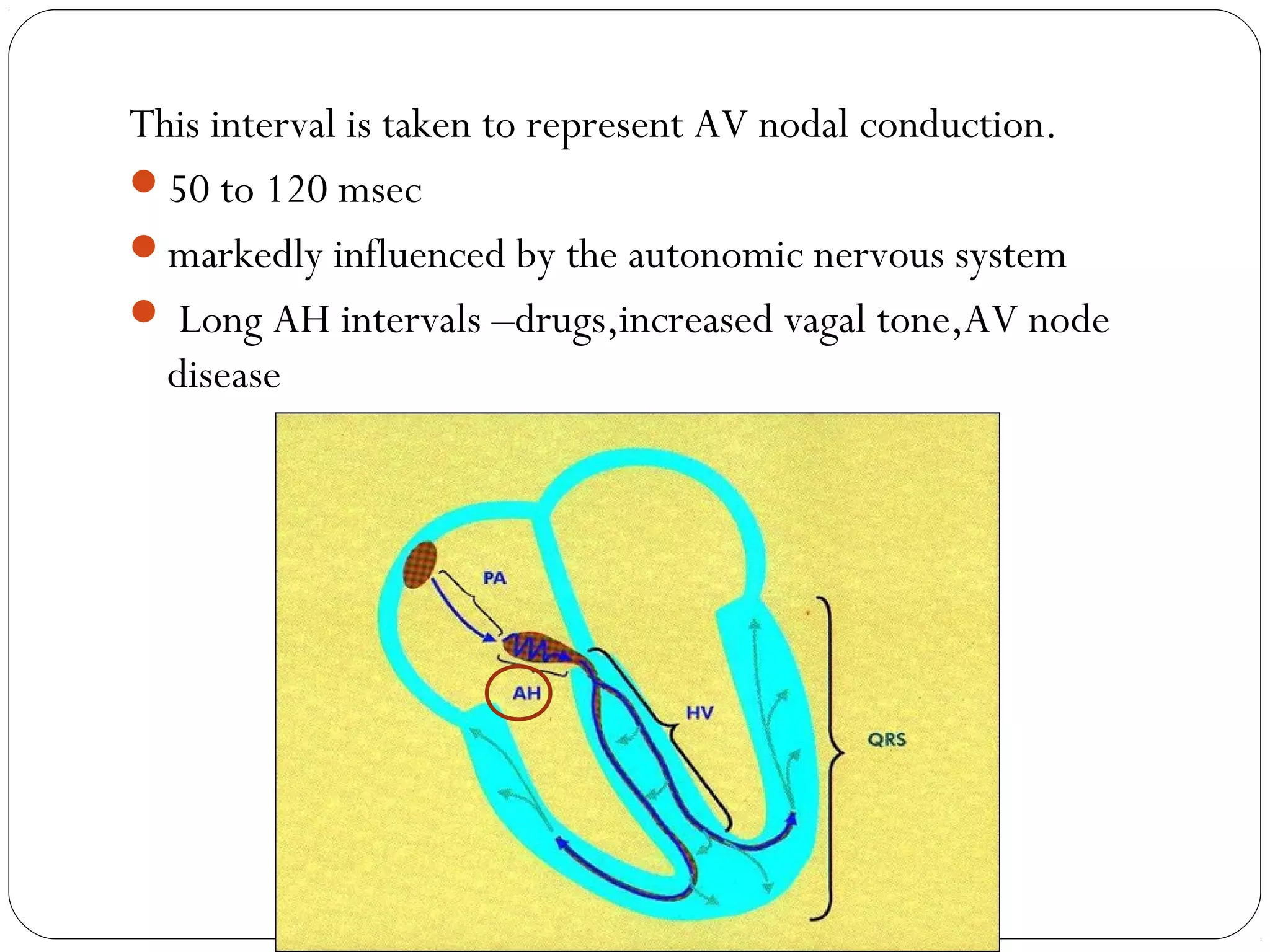
This interval is taken to represent AV nodal conduction.
50 to 120 msec
markedly influenced by the autonomic nervous system
 Long AH intervals –drugs,increased vagal tone,AV node
disease
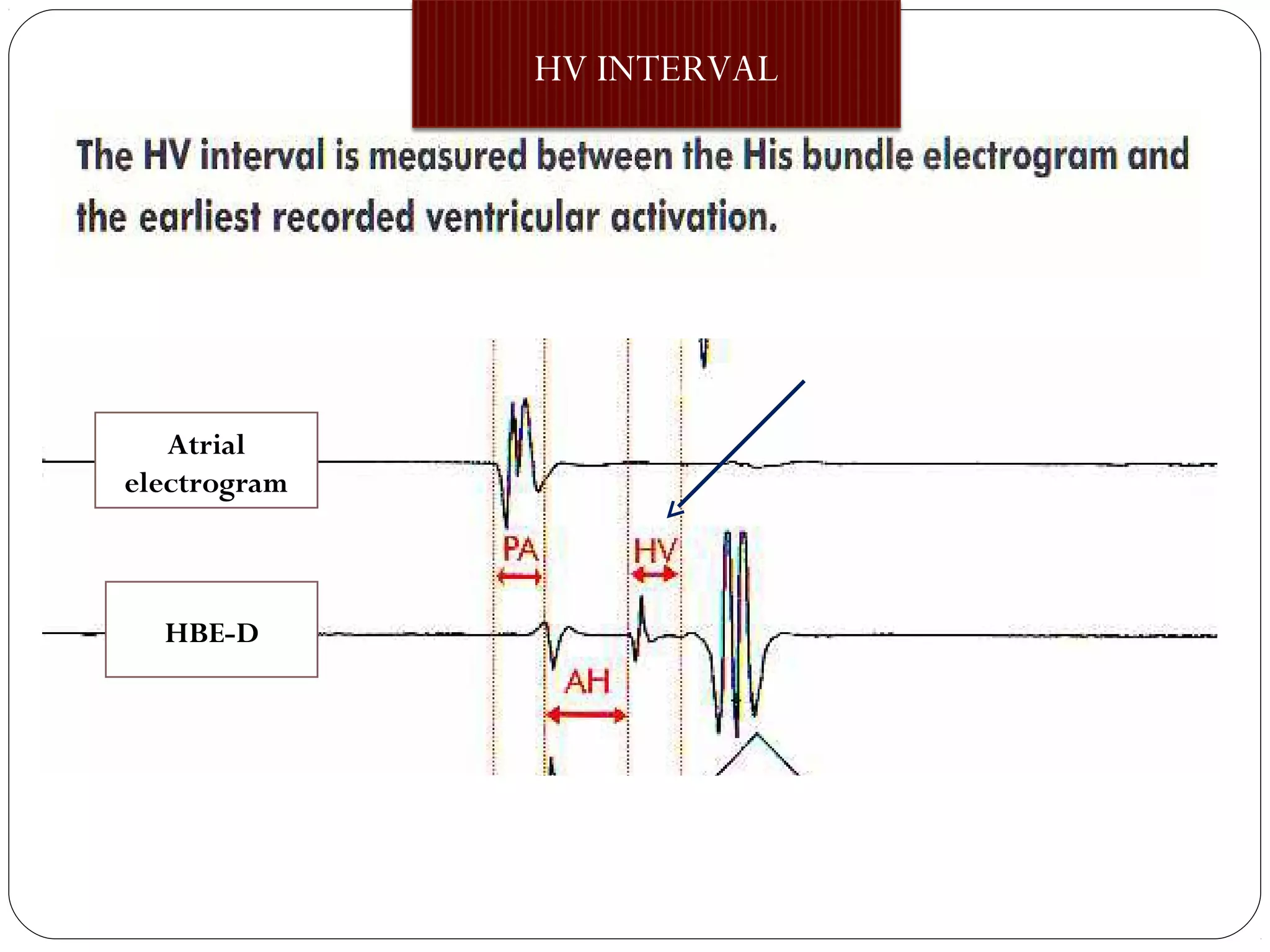
HV INTERVAL
Atrial
electrogram
HBE-D
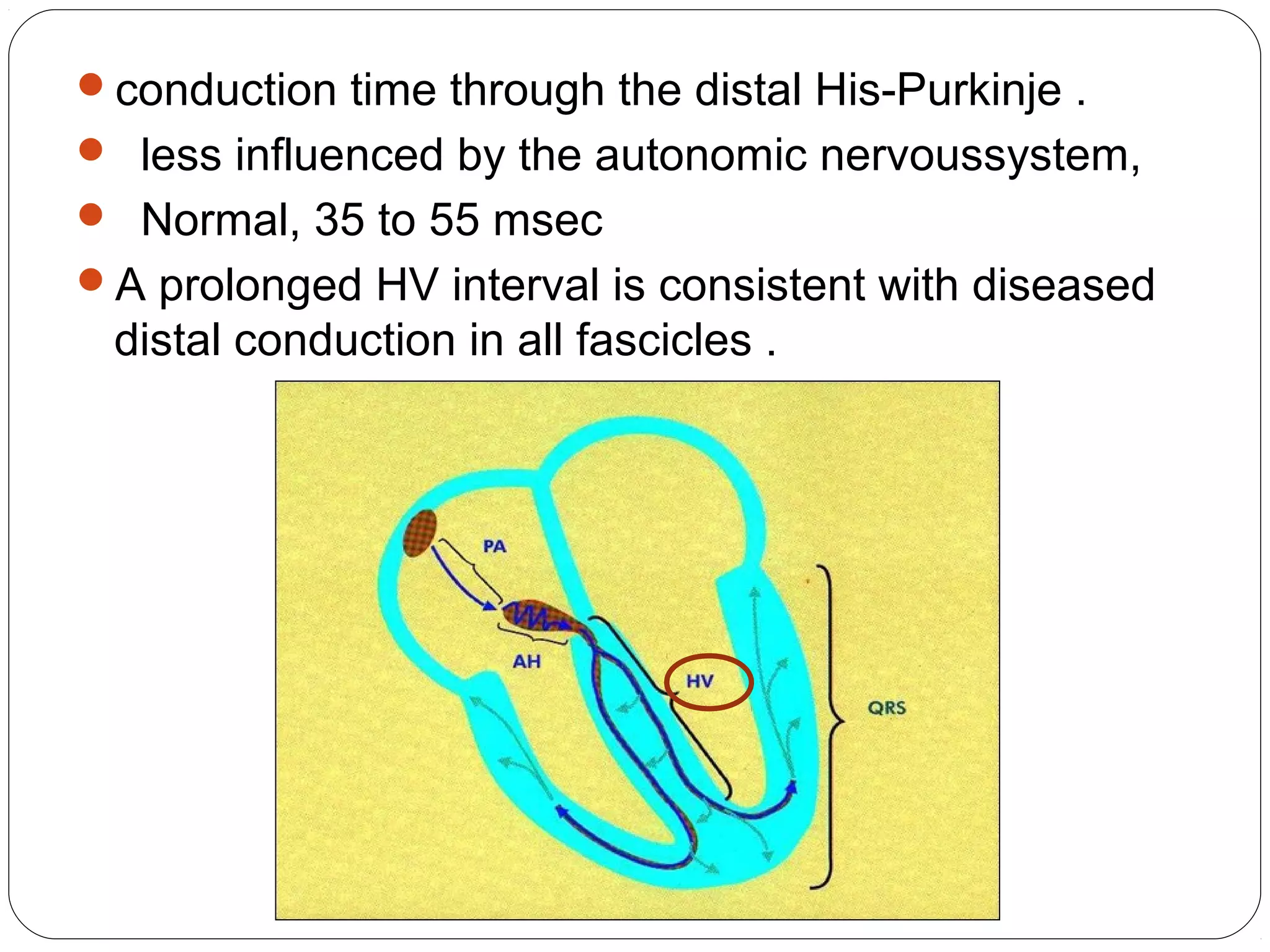
conduction time through the distal His-Purkinje .
 less influenced by the autonomic nervoussystem,
 Normal, 35 to 55 msec
A prolonged HV interval is consistent with diseased
distal conduction in all fascicles .
HBE-D
first-degree AV block
most common EPS finding in patients with P-R prolongation
is a long A-H interval because intra- and infra-Hisian
conduction compromise only a minor portion of the P-R
interval
Second-degree AV block —
Type I
Wenckebach almost always occurs in the AV node.
During EPS, this process is most evident on a His bundle
EGM.
progressively longer A-H interval and a stable H-V interval
until the final beat of the series in which there is an atrial
EGM with no ventricular EGM.
True type II second-degree
block Mobitz II
 almost always, if not always, occurs in the HPS.
His bundle EGM follows the atrial EGM prior to the
dropped ventricular EGM confirming the site of block.
Third-degree (complete) AV
block
Most patients with complete AV block are treated with
permanent pacemakers
 EPS is not generally indicated.
 Among patients with complete AV block, EPS may be
indicated
when symptoms are not present,
the site of block is not apparent, or
the block is potentially reversible
Findings suggestive of high
risk
alternating left bundle branch block (LBBB) and right bundle
branch block (RBBB), or those with
 RBBB with alternating left anterior and left posterior
fascicular block.
Symptomic- prolonged H-V interval (>55 milliseconds)
Asymptomatic -H-Vinterval >100 milliseconds
Highest progression to complete heart block and should
receive pacemakers
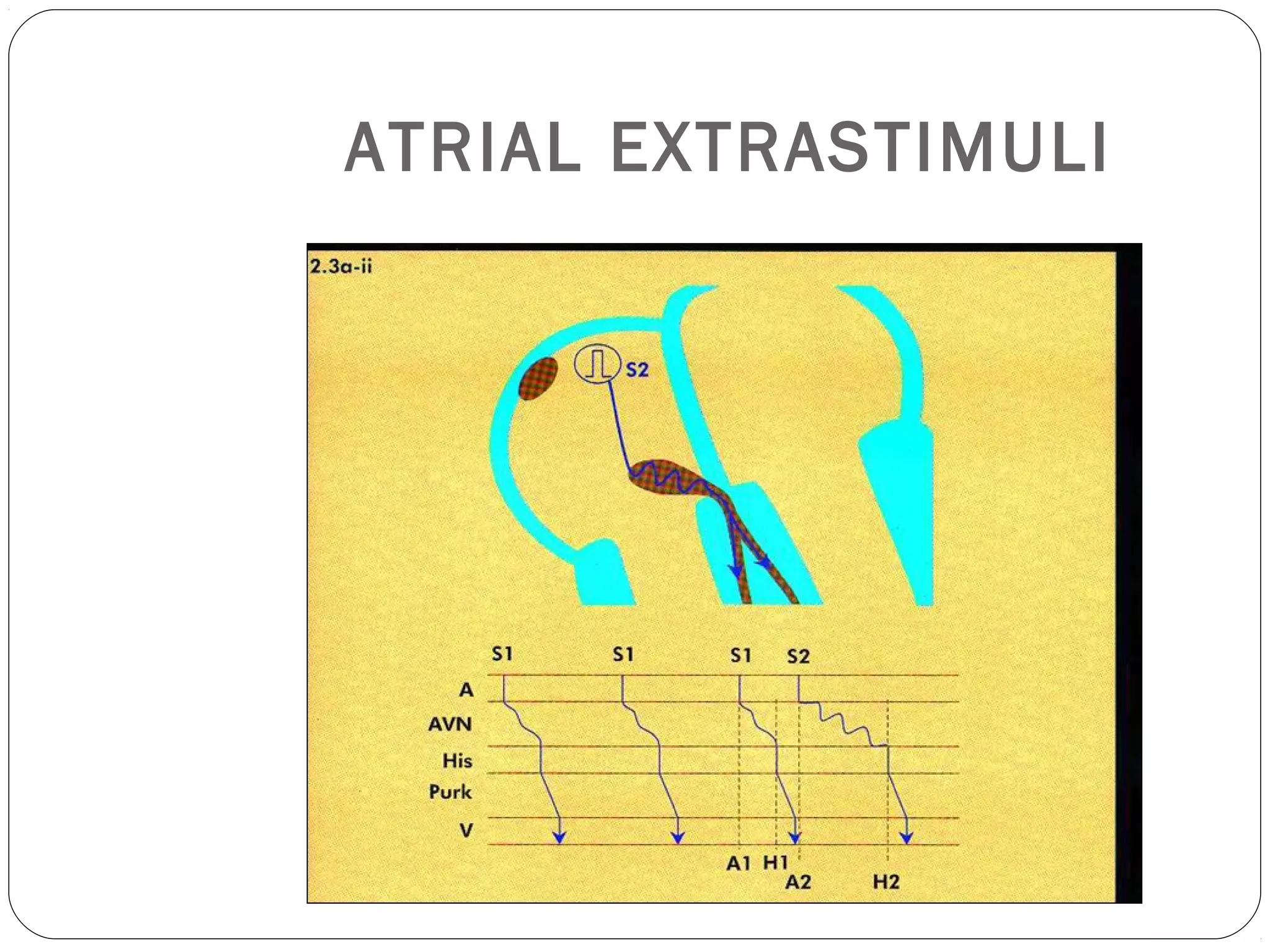
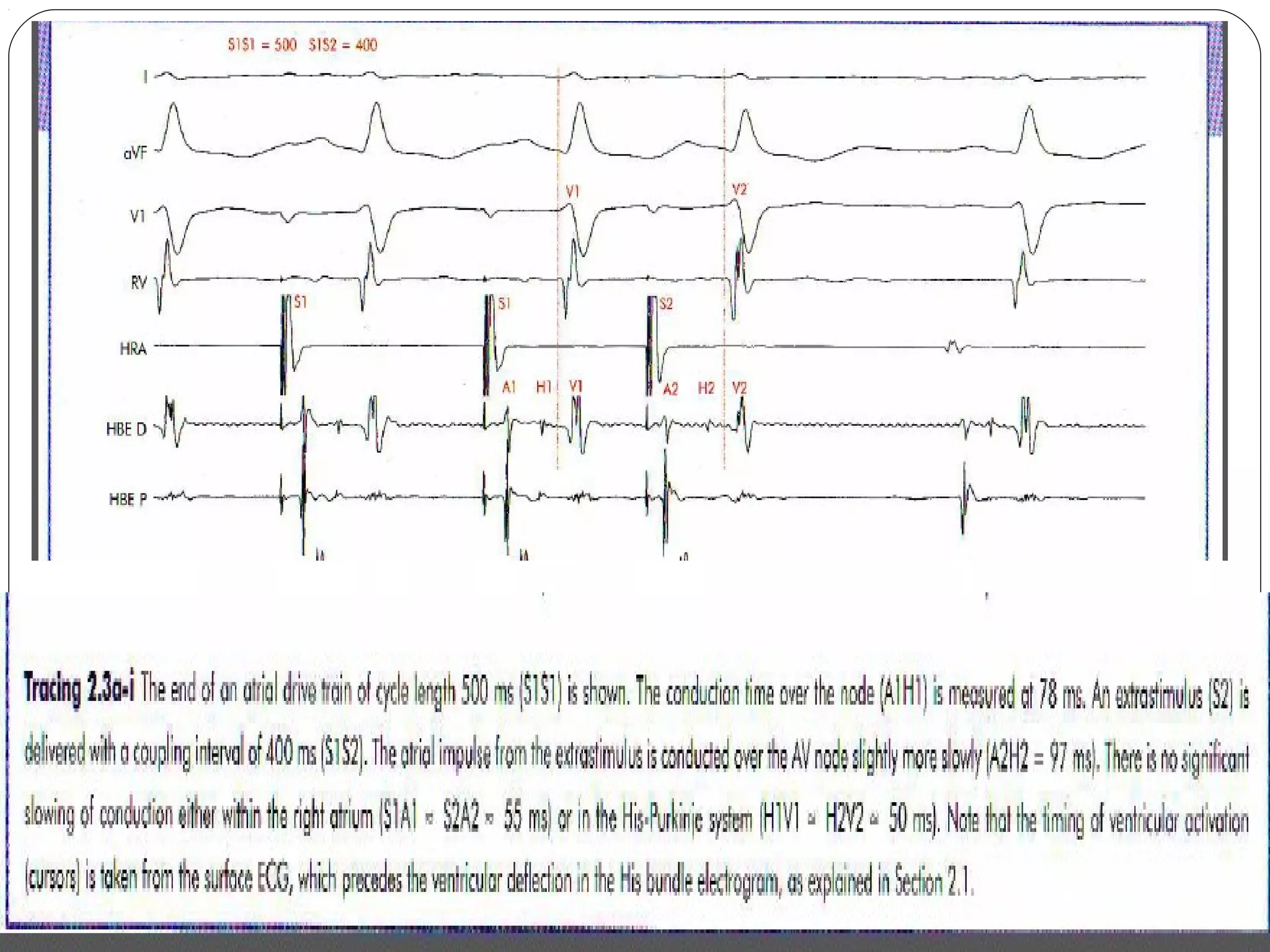
ATRIAL EXTRASTIMULI
ATRIAL EXTRASTIMULI
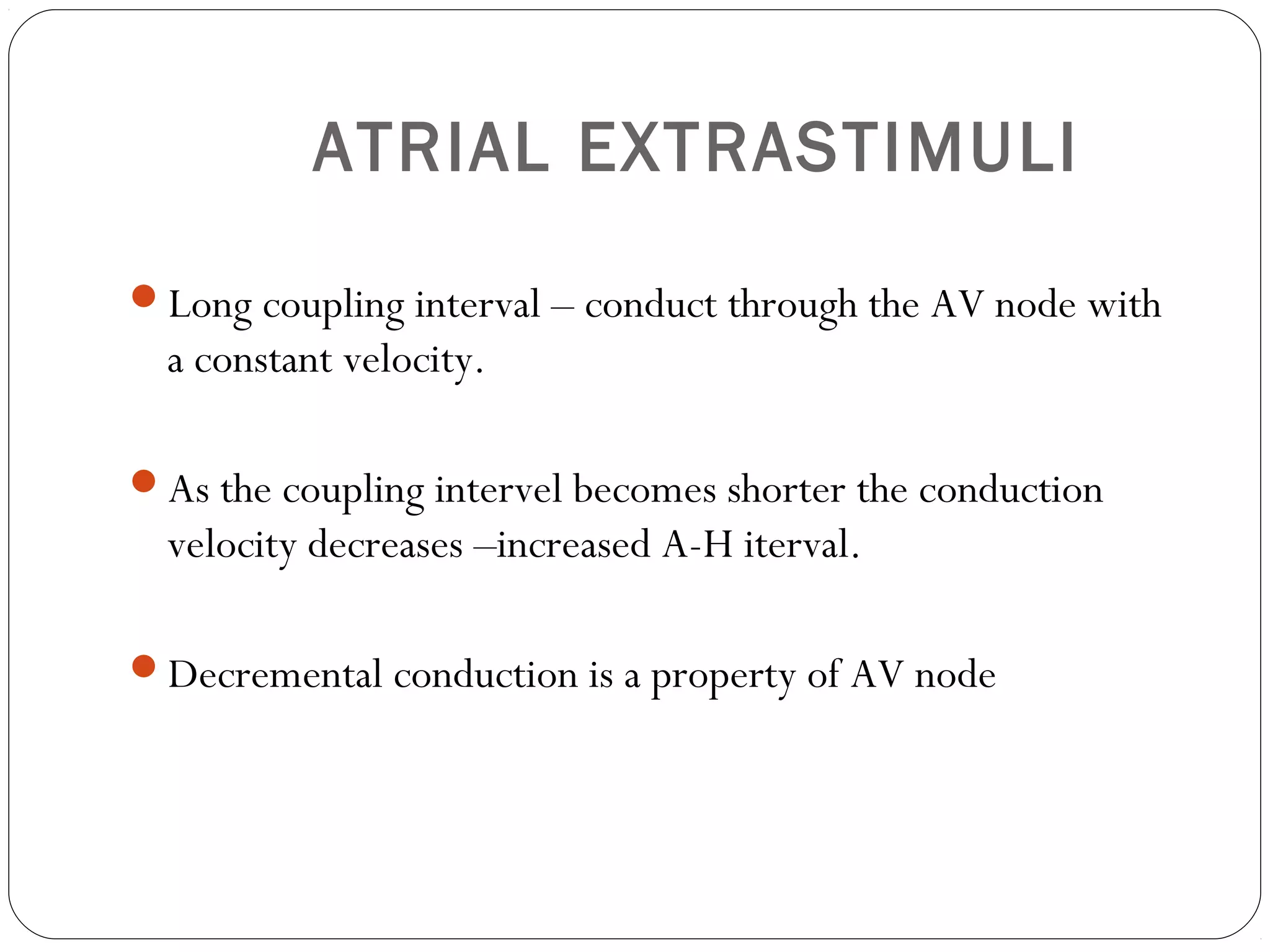
Long coupling interval – conduct through the AV node with
a constant velocity.
As the coupling intervel becomes shorter the conduction
velocity decreases –increased A-H iterval.
Decremental conduction is a property of AV node
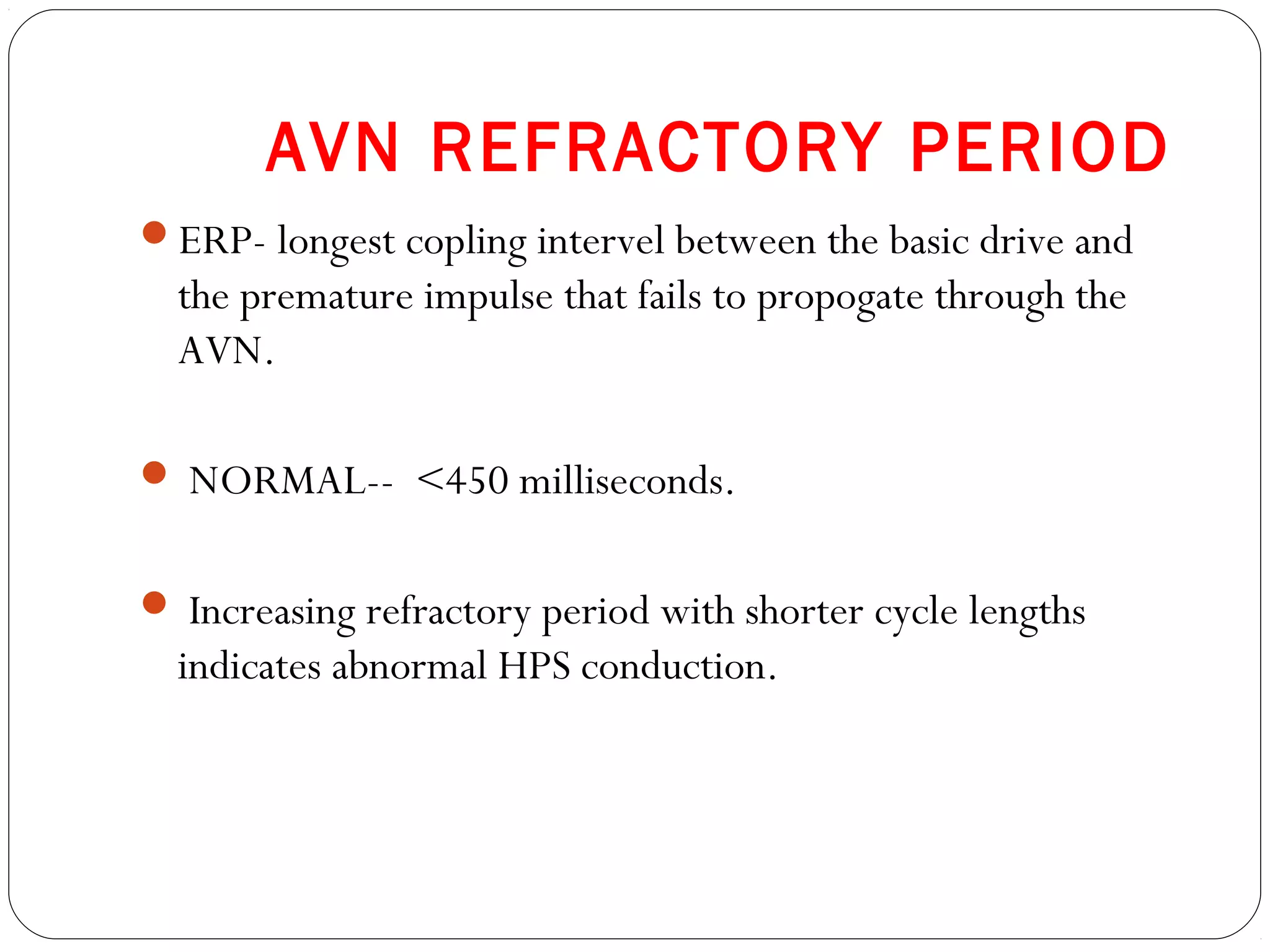
AVN REFRACTORY PERIOD
ERP- longest copling intervel between the basic drive and
the premature impulse that fails to propogate through the
AVN.
 NORMAL-- <450 milliseconds.
 Increasing refractory period with shorter cycle lengths
indicates abnormal HPS conduction.
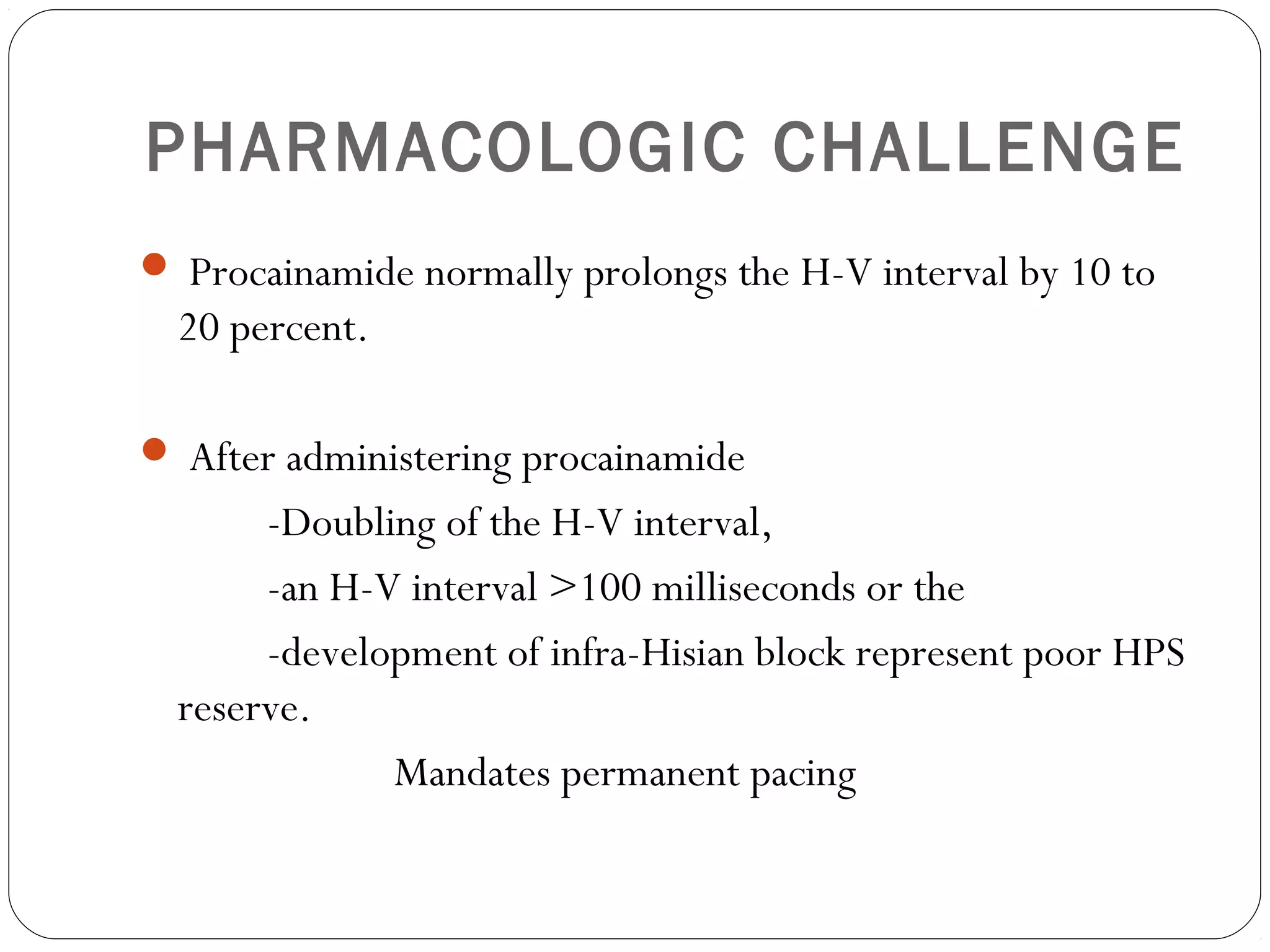
PHARMACOLOGIC CHALLENGE
 Procainamide normally prolongs the H-V interval by 10 to
20 percent.
 After administering procainamide
-Doubling of the H-V interval,
-an H-V interval >100 milliseconds or the
-development of infra-Hisian block represent poor HPS
reserve.
Mandates permanent pacing
TREATMENT OF AV
DYSFUNCTION
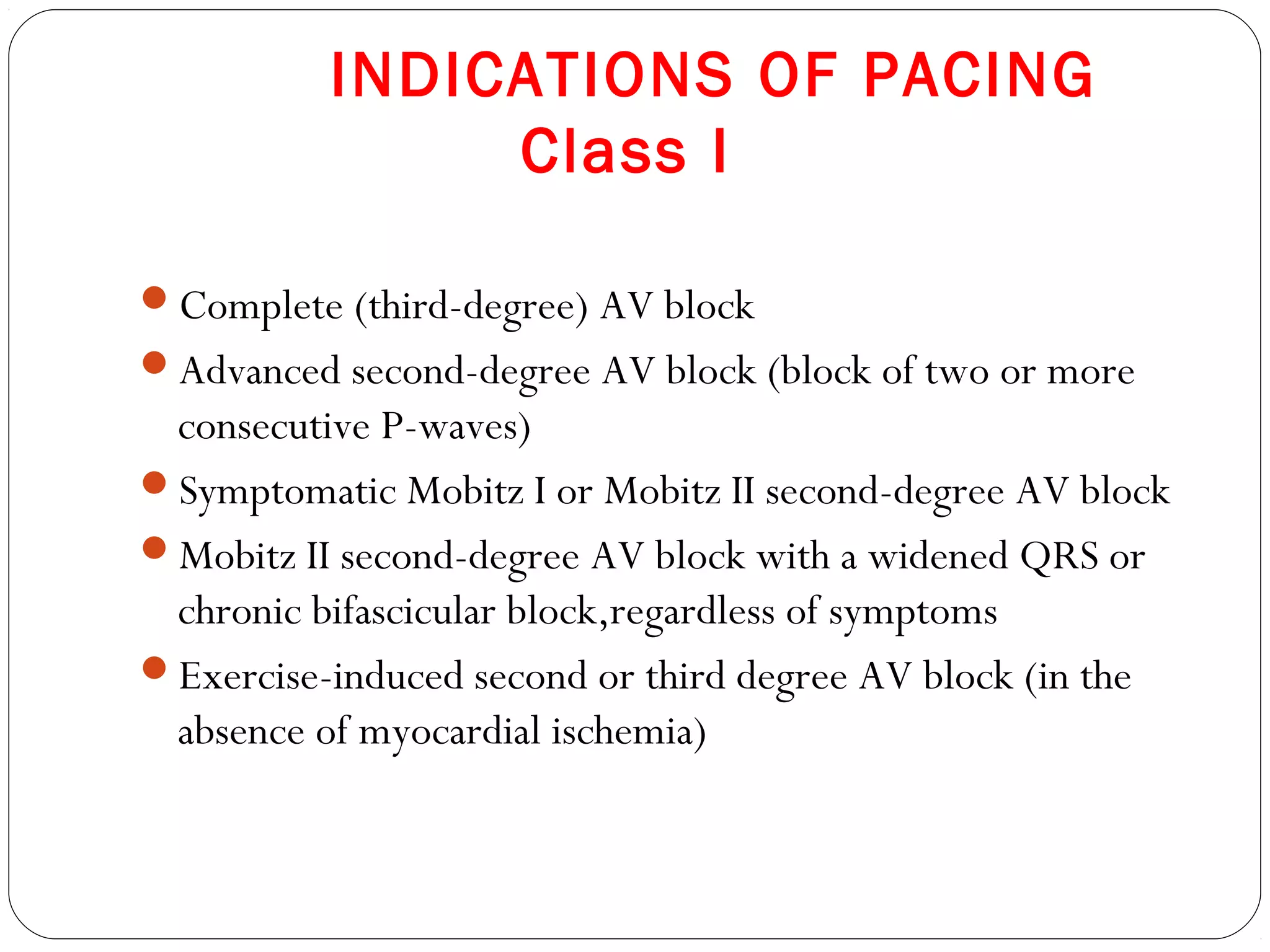
INDICATIONS OF PACING
Class I
Complete (third-degree) AV block
Advanced second-degree AV block (block of two or more
consecutive P-waves)
Symptomatic Mobitz I or Mobitz II second-degree AV block
Mobitz II second-degree AV block with a widened QRS or
chronic bifascicular block,regardless of symptoms
Exercise-induced second or third degree AV block (in the
absence of myocardial ischemia)
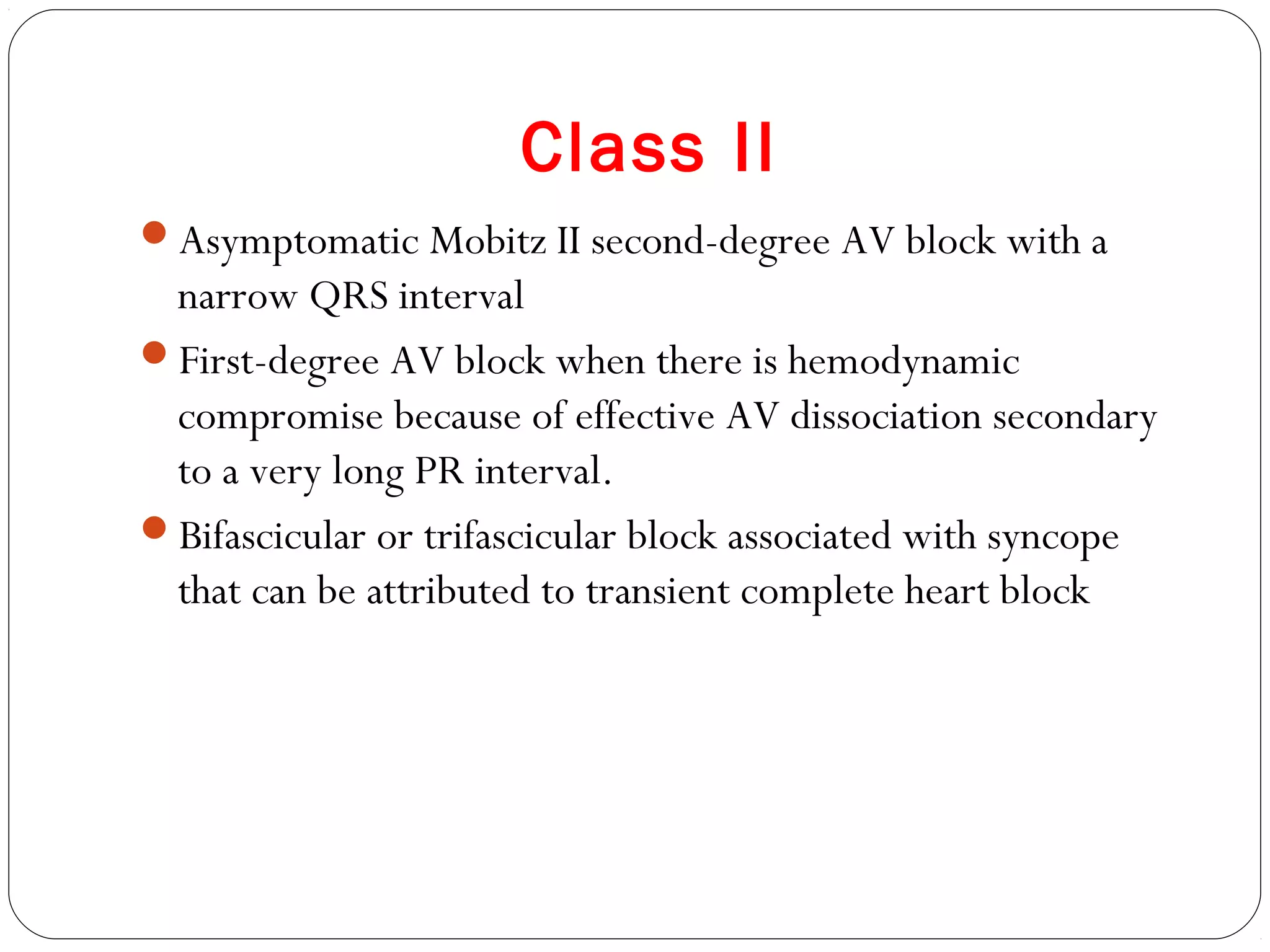
Class II
Asymptomatic Mobitz II second-degree AV block with a
narrow QRS interval
First-degree AV block when there is hemodynamic
compromise because of effective AV dissociation secondary
to a very long PR interval.
Bifascicular or trifascicular block associated with syncope
that can be attributed to transient complete heart block
PACING IN CONGENITAL CHB
congestive heart failure
 average heart rate of less than 50 beats/min in the awake
infant
 history of syncope or presyncope
 significant ventricular ectopy or
exercise intolerance
THANK YOU

Assessment of sa node and av node dr.i tammi raju

  • 1.
    NONINVASIVE AND INVASIVE ASSESMENTOF SA NODE AND AV NODE AND ITS CLINICAL RELEVANCE I.TAMMI RAJU
  • 2.
    OVERVIEW OF TOPIC SA NODE INTRODUCTION  SYMPTOMS  DIAGNOSTIC ALGORYTHM NONINVASIVE ASSESMENT ECG EXCERSICE DRUGS INVASIVE ASSESMENT SNRT SACT  TREATMENT AV NODE INTRODUCTION CLINICAL FEATURES NON-INVASIVE INVASIVE ATRIAL EXTRA STIMULI TREATMENT
  • 3.
  • 4.
    SA NODE:- Locatedlaterally in the epicardial grove of the sulcus terminalis, near the junction of the right atrium and the superior vena cava ANATOMY
  • 6.
    Blood Supply Right coronaryartery in 59 percent, Left circumflex artery in 38 percent, Dual blood supply in 3 percent. Kyrialikdis MK, Kouraouklis CB, Papaioannou JT, et al.. Am J Cardiol 1983;51:749–750
  • 7.
    INNERVATION Both the parasympatheticand sympathetic.  The sinus node is richly innervated with postganglionic adrenergic and cholinergic nerve terminals.  Vagal stimulation-- slows the sinus node discharge rate and increases the intranodal conduction time. Adrenergic stimulation increases the sinus node discharge rate
  • 8.
    SINUS NODE DYSFUNCTION Disordersof automaticity, conduction, or both. Abnormal automaticity, / sinus arrest-- failure of sinus impulse generation. Abnormal conduction, or sinoatrial delay or block- failure of impulse transmission.
  • 10.
    SYMPTOMS Stokes-Adams attacks, whichis a case of fainting due to insufficient blood to the brain. It is caused by improper contraction of the ventricles. Dizziness or feeling light headed. Angina or chest pain Fatigue Headache Nausea Palpitations Shortness of Breath.
  • 11.
    DIAGNOSTIC ALGORITHM symptoms ofSA NODE dysfunction Surface ECG Excersice testing Drugs-atropine+/-propronolol Long Term ECG Recording EPS (INVASIVE)
  • 12.
    ECG A routine ECGmay provide information in such patients. However, the symptoms are nonspecific and the ECG changes may not be diagnostic.
  • 13.
    variants of sinusnode dysfunction(sss) Asystole Sinustachycardia (>100 beats per minute) Sinusbradycardia (<60 beats per minute) Sinus arrest or pause Sino-atrial exit block  Atrial fibrillation with slow ventricular response
  • 14.
    Atrial frequency < 60bpm Ventricular frequency same Regularity regular Origin sinus node P-wave normal INAPPROPRIATE SINUS BRADYCARDIA
  • 15.
    INAPPROPRIATE SINUS TACHYCARDIA Atrialfrequency 100-180 bpm Ventricular frequency Same Regularity regular Origin sinus node P-wave positive in II, AVF
  • 16.
  • 17.
    SINUS ARREST The sinusnode stops firing resulting in a pause in heart beat
  • 18.
    SINO-ATRIAL EXIT BLOCK Thedepolarizations that occur in the sinus node cannot leave the node towards the atria. They are blocked.  On the ECG this is expressed as a pause. SA exit block can be destinguished from sinusarrest because the pause in SA exit block is a multiple of the P-P interval that preceded the pause.
  • 19.
    Three subtypes canbe distinguished  Type I second degree (Wenkebach) SA exit block: the P-P interval progressively shortens prior to the pause  Type II second degree SA exit block: the pause equals approximately 2-4 times the preceding PP interval  Third degree SA exit block: absence of P waves (diagnosed with an sinus node electrode, during electrophysiological evaluation)
  • 20.
    Type I seconddegree (Wenkebach) SA exit block
  • 21.
  • 23.
    Exercise testing CHRONOTROPIC INCOMPETENCE Inabilityof the sinus node to achieve at least 80 percent of the age predicted heart rate.Astrand's formula (220- age) at peak exercise.  Seen in 20 to 60 percent of patients with sinus node dysfunction. Although the resting heart rates may be normal, may have inability to increase their heart rate during exerciseor have unpredictable fluctuations in heart rate during activity. -Gwynn N, R, Kratz, et al. Chronotropic incompetence. Am Heart J 1992;123:1216.
  • 24.
     Specific sinusnode chronotropic incompetence is the inability of the sinus node to accelerate in response to metabolic demands secondary to intrinsic disease or negative chronotropic drugs. Functional chronotropic incompetence manifests itself either as atrial tachyarrhythmias or as retrograde ventriculoatrial conduction
  • 25.
    DRUGS Atropine/isoproterenoll— Atropine (1or 2 mg) / isoproterenol (2 to 3 μg/min) Abnormal response --- increase in the sinus rate of <25 %, or to a rate below 90 beats/min. Potential problems. There has been no standardization of the pharmacologic testing, No dose ranging has been reported,  The specificity and sensitivity of the tests are uncertain,  SSS may exist even if the response is normal.  Isoproterenol is risky in patients with ischemic and other types of heart disease.
  • 26.
    DRUGS Beta blockers — Propranololhas been used to assess sinus node function on the assumption that the chronotropic response may differ between patients with a normal and a sick sinus node. This approach, however, has been disappointing
  • 27.
    DRUGS cont… Adenosine directlyinhibits sinus node activity Due to increased potassium conductance -hyperpolarization of the resting membrane potential. Adenosine should be considered as an alternative to invasive testing in patients with suspected SSS.
  • 28.
    PHARMACOLOGICAL DENERVATION Intrinsic heart rate— Atropine (0.04 mg/kg) and propranolol (0.2 mg/kg) Heart rate at 30 minutes is called the (IHR) .  The IHR is a function of age IHR, in beats/min = 117.2 - [0.53 x age] IHR separates intrinsic SSS from extrinsic SSS  Intrinsic SSS is presumed to be present if the sinus rate does not exceed the predicted IHR after atropine.
  • 29.
    Long-Term Electrocardiographic Recording In patients engagedin normal daily activities  document and quantitate the frequency and complexity of an arrhythmia  correlate the arrhythmia with the patient's symptoms, and  evaluate the effect of antiarrhythmic therapy on spontaneous arrhythmia.  For example, recording normal sinus rhythm during the patient's typical symptomatic episode effectively excludes cardiac arrhythmia as a cause
  • 30.
  • 31.
    HOLTER RECORDING If symptomsare frequent, 24- or 48-hour ambulatory Holter monitoring can be useful.  Documentation of symptoms in a diary by the patient.  Often the sinus pauses recorded are not associated with symptoms. Several Holter monitor studies demonstrated the futility of treating asymptomatic pauses, even if they were 3 seconds or longer.  The length of the pause correlated poorly with symptoms and prognosis
  • 32.
    EVENT RECORDING. In manypatients, the 24-hour snapshot provided by the Holter recording is incapable of documenting the cause of the patient's symptoms. These devices are about the size of a pager and are kept by the patient for 30 days.
  • 33.
    IMPLANTABLE LOOP RECORDER For patientswith infrequent and transient symptoms, neither Holter recorders nor 30-day event recorders may yield diagnostic information.  In such patients, implantable loop recorders may be used.  This device (about the size of a pack of chewing gum) is inserted under the skin at about the second rib on the left front of the chest and is activated by passing a special magnet over the device.
  • 34.
  • 35.
    Signal-averaged P wave fractionatedendocardial electrograms in the SSS:-  Long, low amplitude signals early during the signal averaged P wave were found to be characteristic of SSS. sensitivity-76%  specificity-91% In paroxysmal atrial fibrillation the incidence of SSS was higher in those with low amplitude atrial early potentials on a signal- averaged P wave - Yamada, et al. J Am Coll Cardiol 1996; 28:738.
  • 36.
  • 37.
    ELECTROPHYSIOLOGICAL TESTING Indications The symptomatic patientwho has no ECG findings suggestive of SSS. The symptomatic patient in whom ECG fail to correlate with symptoms. The patient who develops dysfunction of the SA node on usual doses of drugs.
  • 38.
    EPS indications cont… Thepatient with syncope or near syncope who has bundle branch or multifascicular block may require electrophysiologic evaluation of the SA node, the AV node, and the infranodal His- bundle branch-Purkinje system. Electrophysiologic testing that shows SA nodal dysfunction allows the selection of appropriate therapy in up to 50 percent of these patients.
  • 39.
    CONTRAINDICATIONS Unstable angina Bacteremia orsepticemia Acute decompensated congestive heart failure not caused by the arrhythmia Major bleeding diathesis Acute lower extremity venous thrombosis if femoral vein cannulation is desired.
  • 40.
    SINOATRIAL NODE RECOVERY TIME —The SNRT is perhaps the most useful test of overall sinus nodal automaticity.  The atria are driven rapidly: a normal SA node will have a recovery time within certain limits, while recovery will be delayed in a depressed or sick sinus node.
  • 41.
    SNRT cont…. It isperformed by placing a catheter near the SN. Overdrive stimulation is performed at a rate higher than that of the SA node for about one minute (the range in most published reports is 30 to 180 sec). Pacing is then stopped, and the time from the last paced atrial beat to the first spontaneous electrical beat with a sinus morphology is measured. Pacing is increased 10 to 20 beats/min up to 200 beats/min, if tolerated.
  • 42.
    SNRT cont….  SNRTc correctedby subtracting the sinus cycle length from the SNRT SNRTn a function of the cycle length-, SNRT/sinus cycle length.  Total recovery time (TRT) which is the time required to return to thebasal sinus rate..
  • 43.
  • 44.
    Normal values havegenerally been estimated as follows : SNRT/SCL <150 percent CSNRT < 550 milliseconds TRT less than five seconds. Josephson, ME. Sinus Node Dysfunction. In: Josephson ME, ed. Clinical Cardiac Electrophysiology. Techniques and Interpretations. Third ed. Philadelphia: Lippincott; 2002:68.
  • 45.
    The SNRT orSNRTc is abnormal in more than 50 percent of patients with suspected SSS. J Am Coll Cardiol 1995; 26:555  Overdrive suppression, used in conjunction with intravenous disopyramide ,may increase the sensitivity of the test and its potential to diagnose a SSS . Ishikawa, et al.. Sinus node recovery. Europace 2000; 2:54
  • 46.
    Limitations of SNRT Changesin autonomic tone due to the effects of pacing  Changes in P-wave morphology suggesting a pacemaker shift Sinoatrial entrance block The hemodynamic effects of atrial pacing Secondary pauses. In fact, direct SN recordings have demonstrated that the majority of these pauses are due to sinoatrial exit block rather than impaired automaticity. - Tracy, CM, Akhtar, M, DiMarco, JP, et al
  • 47.
    THE USE OFTRANSESOPHAGEAL ATRIAL PACING Transesophageal pacing has been used to assess sinus node dysfunction, primarily by assessing SNRT, and has been recommended in the evaluation of patients with syncope. Brembilla-Perrot, B, Beurrier, D, Houriez, P, et al. Utility oftransesophageal atrial pacing in the diagnostic evaluation of patientswith unexplained syncope associated or not with palpitations. Int JCardiol 2004; 96:347.
  • 48.
    SACT Sino Atrial ConductionTime Can be measured in two ways Indirect Direct
  • 49.
    SACT cont… Indirect method; The usual method This approach involves the placement of a catheter near the sinus node.  Strauss method progressively premature atrial extrastimuli (A2) are introduced after every eighth to tenth beat of stable sinus rhythm.  Narula method Brief periods of atrial pacing at rates above sinus. .
  • 50.
    SACT A1-A1 The interval betweeneach of the normal sinus beat or the stable sequence of paced beats. A2-paced impulse A3-The first spontaneous sinus beat that occurs after termination of the pacing. A2-A3 The interval between the final paced impulse (A2) and the first spontaneous beat (A3) is referred toas the return interval Four zones after APD
  • 51.
  • 52.
    RESET(MAJOR PART) ie, lessthan compensatory-impulse in earliest third of zone 2(40-50% OF SCL)
  • 53.
  • 54.
  • 56.
    SACT The A1-A1 interval Timerequired to generate a sinus impulse., conduction time does not contribute to A1-A1. A2-A3 (Because A2 resets the SN, the return cycle length) = generation of the next sinus beat (reflecting SNautomaticity) + conduction of the impulse into and out of SN tissue.  (A2-A3) –(A1-A1) = Total time it takes to enter and exit the SN tissue. This number represents twice the SACT SACT = [(A2-A3) – (A1-A1)] / 2 Normal SACT times generally range from 40 to 150 milliseconds
  • 57.
    Limitations of SACT The assumption that entrance into and exit out of the SN takes the same amount of time is not necessarily valid  Distance of the stimulation site from the SN is another source of error. The farther the site is from the SN, the greater the potential for overestimation of the SACT due to conduction delays in both atrial and perinodal tissues.  Reproducibility of results  sinus arrhythmia  shift in intrinsic pacemaker site  Depression of automaticity, and  sinus entrance block
  • 58.
    Direct recording ofthe sinoatrial conduction time (sinus node electrogram) Endocardial recordings demonstrate diastolic phase 4 activity followed by a slow upstroke culminating in a rapid atrial EGM. The directly measured SACT was defined as the interval between the local EGM and the rapid atrial deflection. Sinoatrial block occurs when the local EGM was seen in the absence of an atrial deflection
  • 60.
  • 63.
    SENSITIVITY OF SNRTAND SACT 70% SPECIFICITY OF SNRT AND SACT 90%
  • 64.
    CORRELATION OF SNRTAND SACT WITH ECG ABNORMALITIES Patients with Symptomatic sinus bradycardia – longer SNRT and SACT Patients with SA block -longer SACT; and Patients with the tachycardia-bradycardia syndrome had a longer SNRT Breithardt, G, Seipel, L, Loogen, F. Sinus node recovery time and calculated sinoatrialconduction time in normal subjects and patients with sinus node dysfunction. Circulation 1977; 56:43.
  • 65.
    SINUS NODE ANDATRIAL REFRACTORY PERIOD SA nodal refractoriness has been determined using both the extrastimulus and pacing train techniques. Normal subjects having a SNERP of 250 to 350 msec as compared to a value of 500 to 550 msec in patients with the SSS Kerr, CR, Strauss, HC. The measurement of sinus node refractoriness inman. Circulation 1983; 68:1231. . .
  • 66.
    COMPLICATIONS DURING EPSTUDY Hematoma at the puncture site in the groin and or neck Hemorrhage Infection caused by manipulation of catheters (theoretical risk) Perforation upon catheter manipulation inside the heart of small patients (most commonly involving the right atrial appendage and the right ventricular outflow tract)
  • 68.
    TREATMENT OF SSS Mainlydirected at symptoms Search for remidial causes - Drugs -Ischemia -Autonomic imbalance Mostly by pace makers. Drugs-Theopylline Ablation for AF
  • 70.
    A number ofadditional pacemaker features may be useful in selected patients:  Rate responsive programming SSS and chronotropic insufficiency and exertional symptoms.  Mode switching SSS who have paroxysmal atrial tachycardia.
  • 72.
    Class I indications Sinusbradycardia in which symptoms are clearly related to the bradycardia’. Symptomatic chronotropic incompetence
  • 73.
    Class II  Sinusbradycardia (heart rate <40 beats/min) with symptoms suggestive of bradycardia, but without a clearly demonstrated association.  Sinus node dysfunction in a patient with unexplained syncope.  Chronic heart rates <40 beats/min while awake in a minimally symptomatic patient.
  • 74.
    DRUG-INDUCED SINUS NODE DYSFUNCTION Some patients will meet the above indications for pacemaker implantation due to the effects of medications that are necessary for the treatment of arrhythmias or other medical conditions.  In such cases, patients should be considered to have the same indication for pacemaker implantation as those with intrinsic sinus node dysfunction
  • 75.
    FOLLOW-UP Three major issuesthat need to be considered; 1. Ventricular pacing can induce dyssynchrony observe for evidence of heart failure. 2. In patients with an AAI pacemaker, monitoring for progression to high degrees of AV block is essential as the reported rate varies from 0.6 to as high as 3 percent. 3. Due to the thromboembolic risks associated with unrecognized AF, patients should be observed for the development of atrial arrhythmias.
  • 76.
  • 77.
  • 78.
    BLOOD SUPPLY The AVnode AV nodal artery ---right coronary artery in 90 percent left circumflex artery in 10 percent . The bundle of His – both the AV nodal artery and branches of the left anterior descending artery. The left bundle has a rich blood supply AV nodal artery, Posterior descending artery, and Branches of the left anterior descending artery. Frink RJ, James TN.. Circulation 1973;43:491–502
  • 79.
    CLINICAL FEATURES  First-degreeAV block -long a-c wave diminished intensity of S1.  type I second-degree AV block- the heart rate may increase imperceptibly with gradually diminishing intensity of s1, widening of the a-c interval terminated by a pause, and a wave not followed by a v wave.  type II AV block --Intermittent ventricular pauses and a waves in the neck not followed by v waves s1 maintains a constant intensity.
  • 80.
     In completeAV block -variable intensity of s1 -a waves in the jugular venous pulse --lacking a consistent relationship to ventricular contraction. -Intermittent large (cannon) a waves may be seen in the jugular venous pulse when atrial and ventricular contractions occur simultaneously. The second heart sound can split normally or paradoxically, depending on the manner of ventricular activation.
  • 81.
    First-Degree AV Block Duringfirst-degree AV block, every atrial impulse conducts to the ventricles and a regular ventricular rate is produced, but the PR interval exceeds 0.20 second in adults. PR intervals as long as 1.0 second have been noted and can at times exceed the P-P interval, a phenomenon known as “skipped” P waves.  can result from a conduction delay in the AV node (A-H interval), in the His-Purkinje system (H-V interval), or at both sites.
  • 84.
    First-degree and typeI second-degree AV block can occur in normal healthy children, and a Wenckebach AV block can be a normal phenomenon in well-trained athletes, as noted earlier, probably related to an increase in resting vagal tone
  • 85.
    Third-Degree (Complete) AVBlock No atrial activity is conducted to the ventricles Atria and ventricles are controlled by independent pacemakers. A type of complete AV dissociation.  The atrial pacemaker can be sinus or ectopic The ventricular focus is usually located just below the region of the block, which can be above or below the His bundle bifurcation.
  • 86.
    ventricular pacemaker activity closerto the His bundle appear to be more stable and a faster escape rate than can those located more distally in the ventricular conduction system.  The ventricular rate in acquired complete heart block is less than 40 beats/min but can be faster in congenital complete AV block
  • 87.
  • 88.
    COMPLETE AV BLOCKcont… Can result from block at the AV node (usually congenital)  within the bundle of His/intra-hisian or Infra Hisian/distal to it in the Purkinje system (usually acquired)
  • 89.
    Block proximal tothe His bundle –escape focus in or near the His bundle. normal QRS rates of 40 to 60 beats/min His bundle recording – differentiate AV nodal from intrahisian block.
  • 90.
    High-Grade Atrioventricular Block Whentwo or more consecutive atrial impulses do not conduct to the ventricle, it is defined as high-grade AV block.  It may be associated with a junctional or ventricular escape rhythm. .  Unless a clearly defined reversible etiology is identified, permanent pacing is indicated.
  • 91.
    EPS IN AVNODE DYSFUNCTION Patients with AV block without clear symptom association. Patients with symptoms suggestive of bradyarrhythmias, but in whom significant AV block has not been documented. When the site of AV block cannot be determined by surface tracings.( 2: 1 AV block ).
  • 92.
    BASE LINE RECORDINGS Thefirst intracardiac tracing is a recording from the high right atrium (HRA) close to the sinus node. Pacing at this position allows evaluation of sinoatrial node function and atrioventricular conduction; Recordings from this site also help determine the direction of atrial activation (eg, high-low versus low-high, and right-left versus left-right).
  • 94.
  • 95.
    The reported normalrange is 20 to 60 msec. Represent -total atria conduction, reflection of internodal conduction (sinoatrial to atrioventricular node)
  • 96.
  • 97.
    This interval istaken to represent AV nodal conduction. 50 to 120 msec markedly influenced by the autonomic nervous system  Long AH intervals –drugs,increased vagal tone,AV node disease
  • 98.
  • 99.
    conduction time throughthe distal His-Purkinje .  less influenced by the autonomic nervoussystem,  Normal, 35 to 55 msec A prolonged HV interval is consistent with diseased distal conduction in all fascicles .
  • 100.
  • 101.
    first-degree AV block mostcommon EPS finding in patients with P-R prolongation is a long A-H interval because intra- and infra-Hisian conduction compromise only a minor portion of the P-R interval
  • 102.
    Second-degree AV block— Type I Wenckebach almost always occurs in the AV node. During EPS, this process is most evident on a His bundle EGM. progressively longer A-H interval and a stable H-V interval until the final beat of the series in which there is an atrial EGM with no ventricular EGM.
  • 103.
    True type IIsecond-degree block Mobitz II  almost always, if not always, occurs in the HPS. His bundle EGM follows the atrial EGM prior to the dropped ventricular EGM confirming the site of block.
  • 104.
    Third-degree (complete) AV block Mostpatients with complete AV block are treated with permanent pacemakers  EPS is not generally indicated.  Among patients with complete AV block, EPS may be indicated when symptoms are not present, the site of block is not apparent, or the block is potentially reversible
  • 105.
    Findings suggestive ofhigh risk alternating left bundle branch block (LBBB) and right bundle branch block (RBBB), or those with  RBBB with alternating left anterior and left posterior fascicular block. Symptomic- prolonged H-V interval (>55 milliseconds) Asymptomatic -H-Vinterval >100 milliseconds Highest progression to complete heart block and should receive pacemakers
  • 106.
  • 107.
    ATRIAL EXTRASTIMULI Long couplinginterval – conduct through the AV node with a constant velocity. As the coupling intervel becomes shorter the conduction velocity decreases –increased A-H iterval. Decremental conduction is a property of AV node
  • 109.
    AVN REFRACTORY PERIOD ERP-longest copling intervel between the basic drive and the premature impulse that fails to propogate through the AVN.  NORMAL-- <450 milliseconds.  Increasing refractory period with shorter cycle lengths indicates abnormal HPS conduction.
  • 110.
    PHARMACOLOGIC CHALLENGE  Procainamidenormally prolongs the H-V interval by 10 to 20 percent.  After administering procainamide -Doubling of the H-V interval, -an H-V interval >100 milliseconds or the -development of infra-Hisian block represent poor HPS reserve. Mandates permanent pacing
  • 111.
  • 112.
    INDICATIONS OF PACING ClassI Complete (third-degree) AV block Advanced second-degree AV block (block of two or more consecutive P-waves) Symptomatic Mobitz I or Mobitz II second-degree AV block Mobitz II second-degree AV block with a widened QRS or chronic bifascicular block,regardless of symptoms Exercise-induced second or third degree AV block (in the absence of myocardial ischemia)
  • 113.
    Class II Asymptomatic MobitzII second-degree AV block with a narrow QRS interval First-degree AV block when there is hemodynamic compromise because of effective AV dissociation secondary to a very long PR interval. Bifascicular or trifascicular block associated with syncope that can be attributed to transient complete heart block
  • 114.
    PACING IN CONGENITALCHB congestive heart failure  average heart rate of less than 50 beats/min in the awake infant  history of syncope or presyncope  significant ventricular ectopy or exercise intolerance
  • 115.