2. PROKARYOTES & THEIR
CELL STRUCTURE
1.2 – Prokaryotes have a
simple cell structure
without
compartmentalization
1.2 – Eukaryotes have a
compartmentalized cell
structure
A CELL
o A cell is the smallest unit capable of performing the functions of life
o There are TWO types of cells – Prokaryotic cells and Eukaryotic cells
o Prokaryotic cells are much smaller and simpler (most are less than
1µm in diameter). They are thought to have appeared on Earth first.
o Examples of prokaryotes are Bacteria
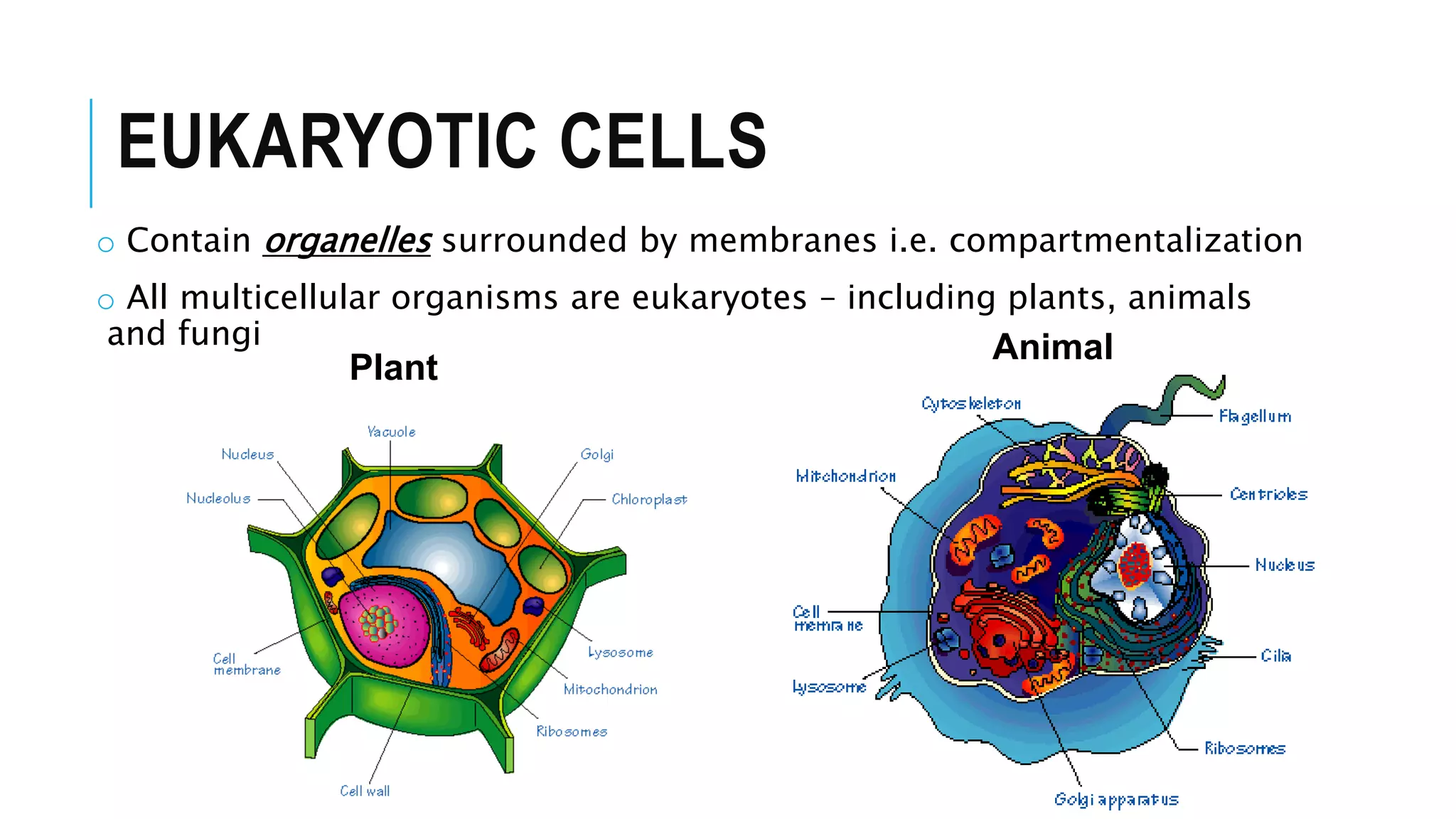
EUKARYOTIC CELLS
o Contain organelles surrounded by membranes i.e. compartmentalization
o All multicellular organisms are eukaryotes – including plants, animals
and fungi
Plant
Animal
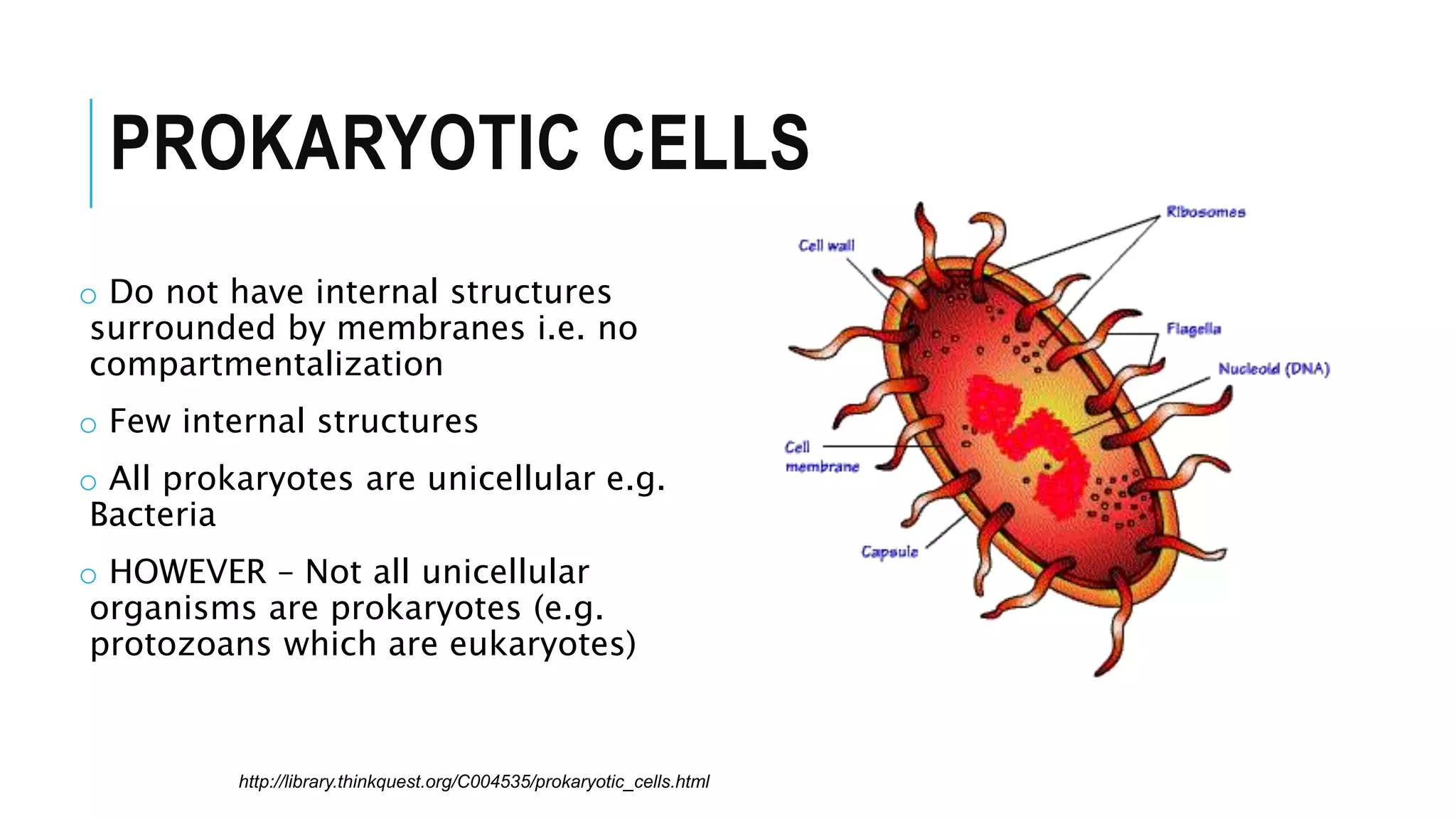
PROKARYOTIC CELLS
o Do not have internal structures
surrounded by membranes i.e. no
compartmentalization
o Few internal structures
o All prokaryotes are unicellular e.g.
Bacteria
o HOWEVER – Not all unicellular
organisms are prokaryotes (e.g.
protozoans which are eukaryotes)
http://library.thinkquest.org/C004535/prokaryotic_cells.html
FEATURES OF PROKARYOTES
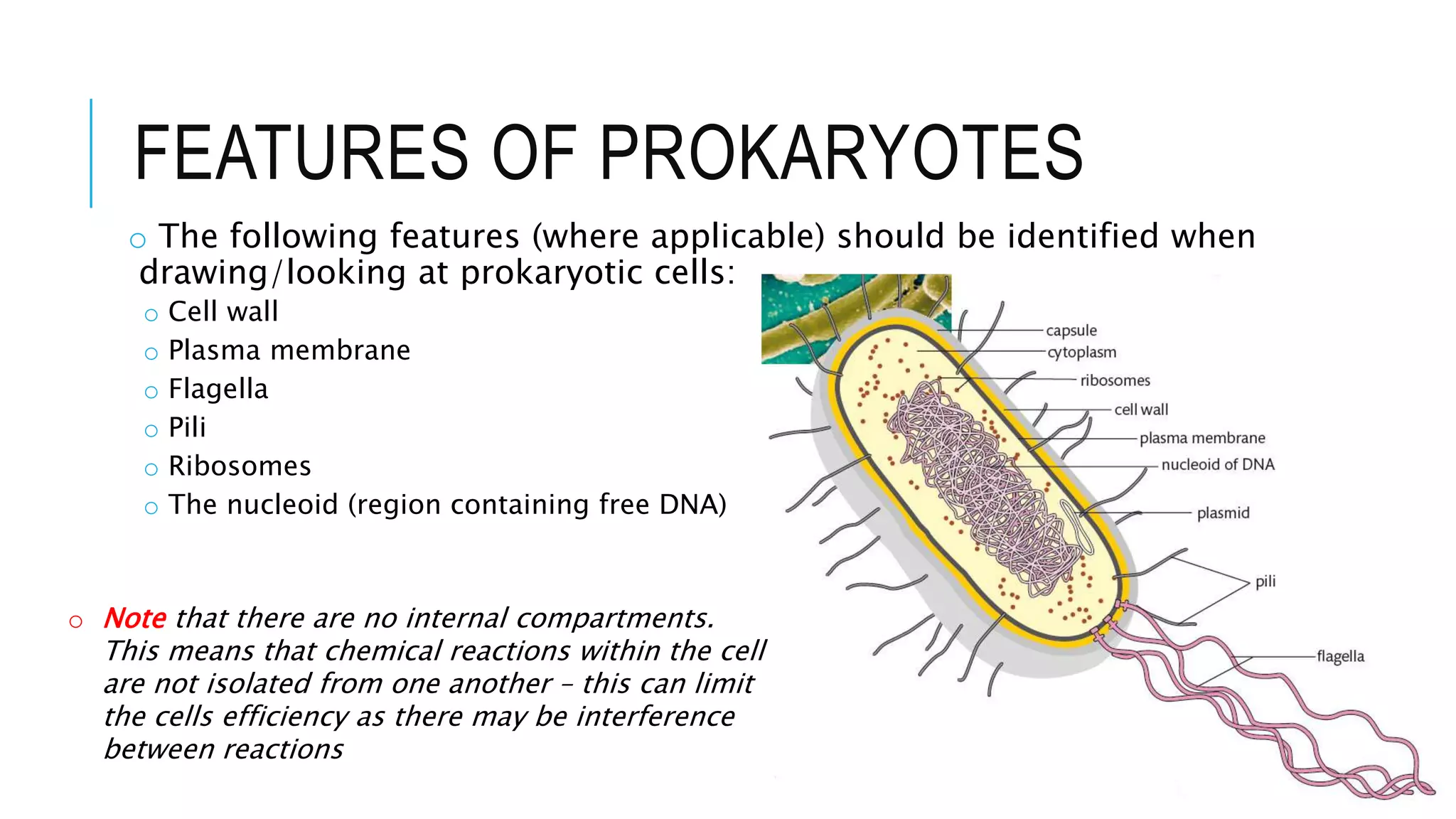
o The following features (where applicable) should be identified when
drawing/looking at prokaryotic cells:
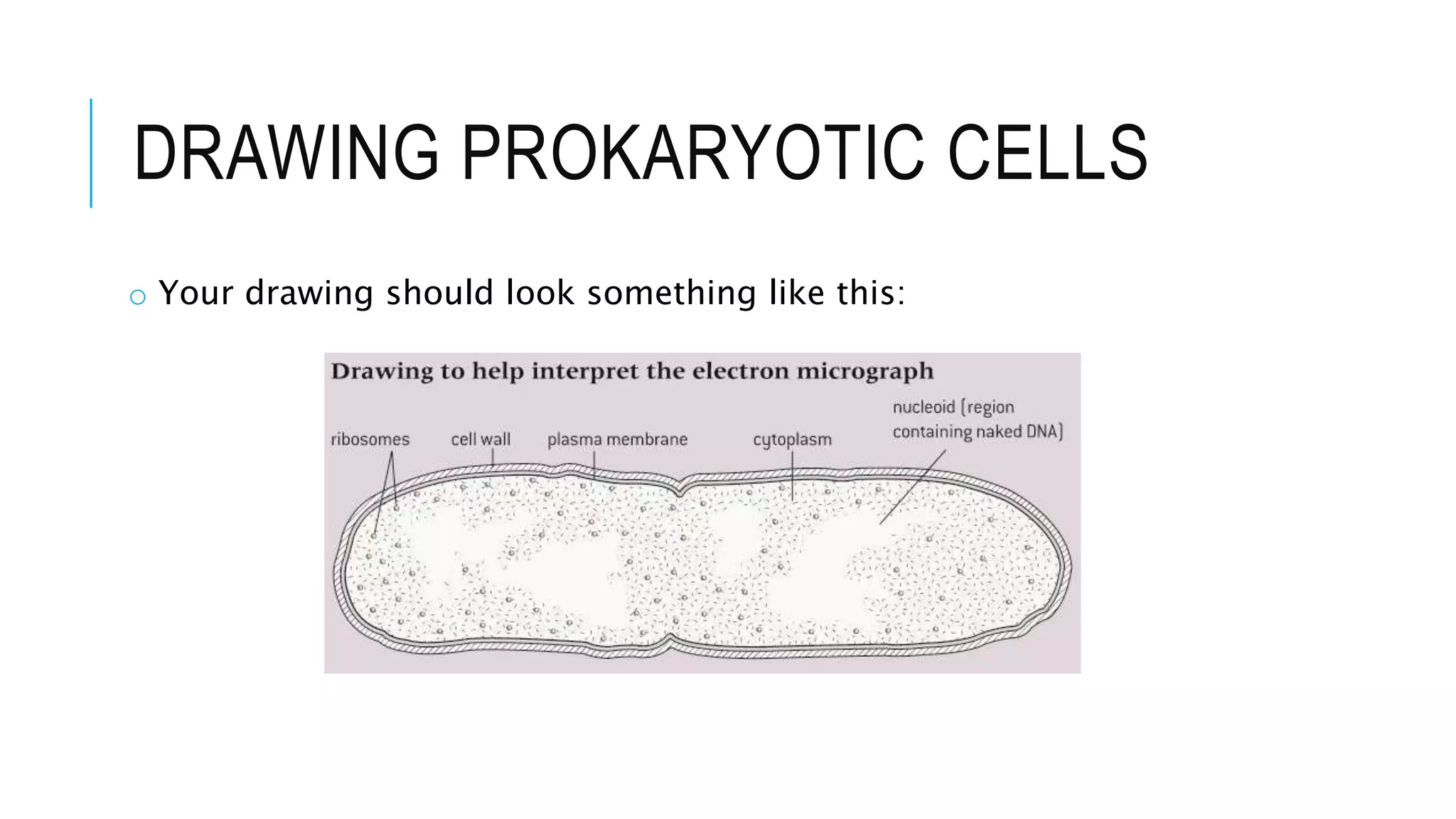
o Cell wall
o Plasma membrane
o Flagella
o Pili
o Ribosomes
o The nucleoid (region containing free DNA)
o Note that there are no internal compartments.
This means that chemical reactions within the cell
are not isolated from one another – this can limit
the cells efficiency as there may be interference
between reactions
FEATURES OF PROKARYOTES
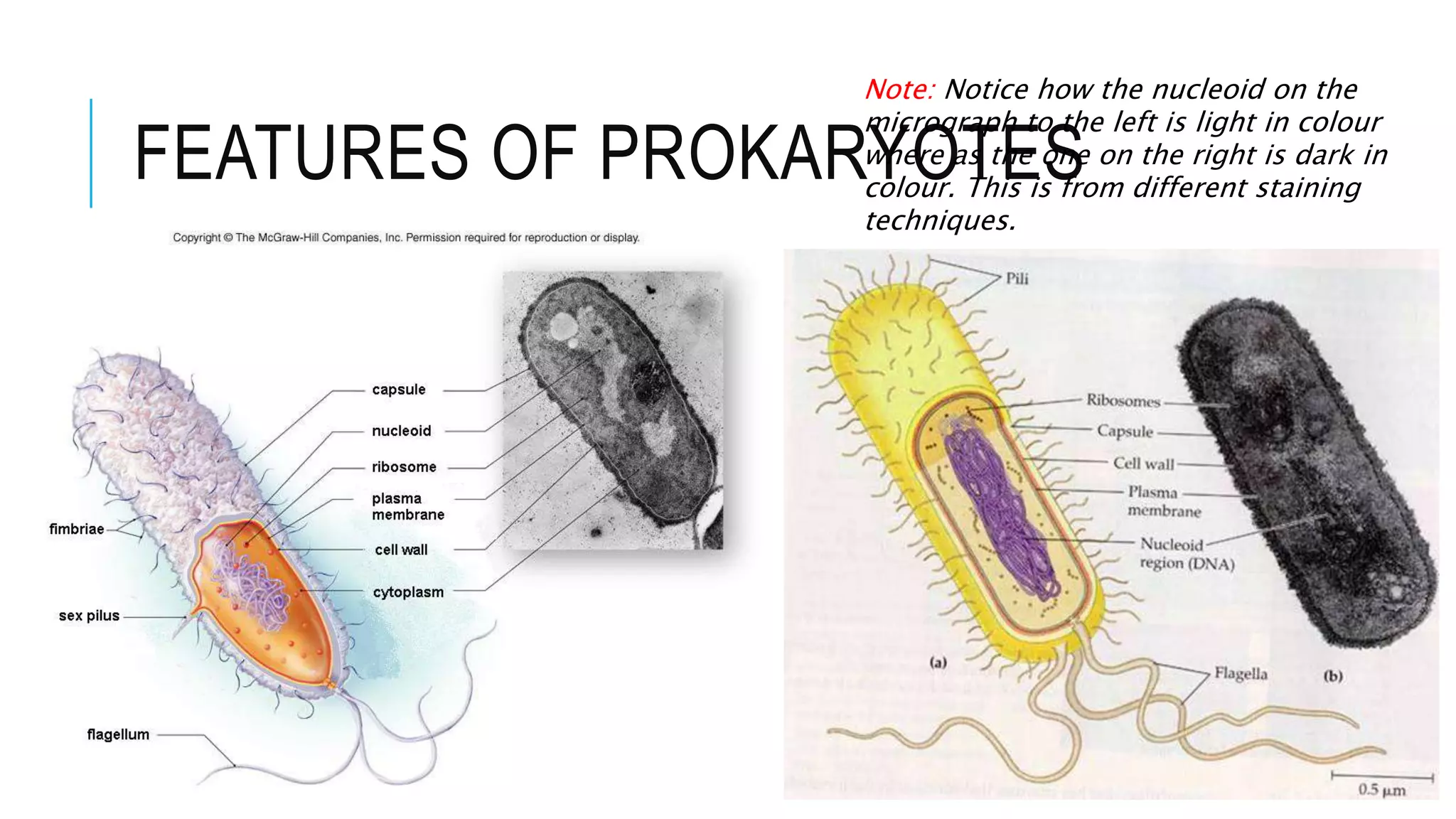
Note: Notice how the nucleoid on the
micrograph to the left is light in colour
where as the one on the right is dark in
colour. This is from different staining
techniques.
FEATURES OF PROKARYOTES
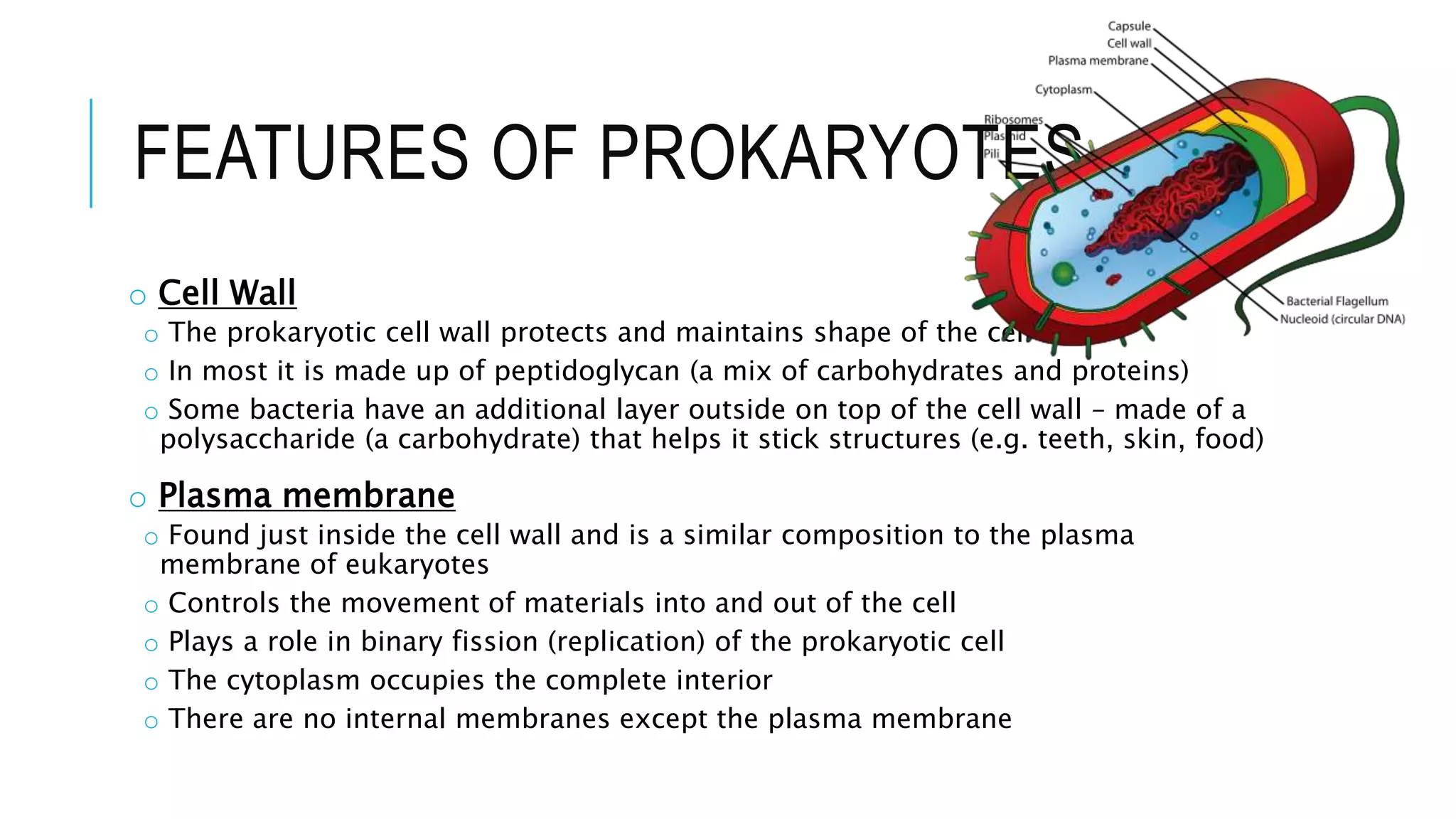
o Cell Wall
o The prokaryotic cell wall protects and maintains shape of the cell
o In most it is made up of peptidoglycan (a mix of carbohydrates and proteins)
o Some bacteria have an additional layer outside on top of the cell wall – made of a
polysaccharide (a carbohydrate) that helps it stick structures (e.g. teeth, skin, food)
o Plasma membrane
o Found just inside the cell wall and is a similar composition to the plasma
membrane of eukaryotes
o Controls the movement of materials into and out of the cell
o Plays a role in binary fission (replication) of the prokaryotic cell
o The cytoplasm occupies the complete interior
o There are no internal membranes except the plasma membrane
FEATURES OF PROKARYOTES
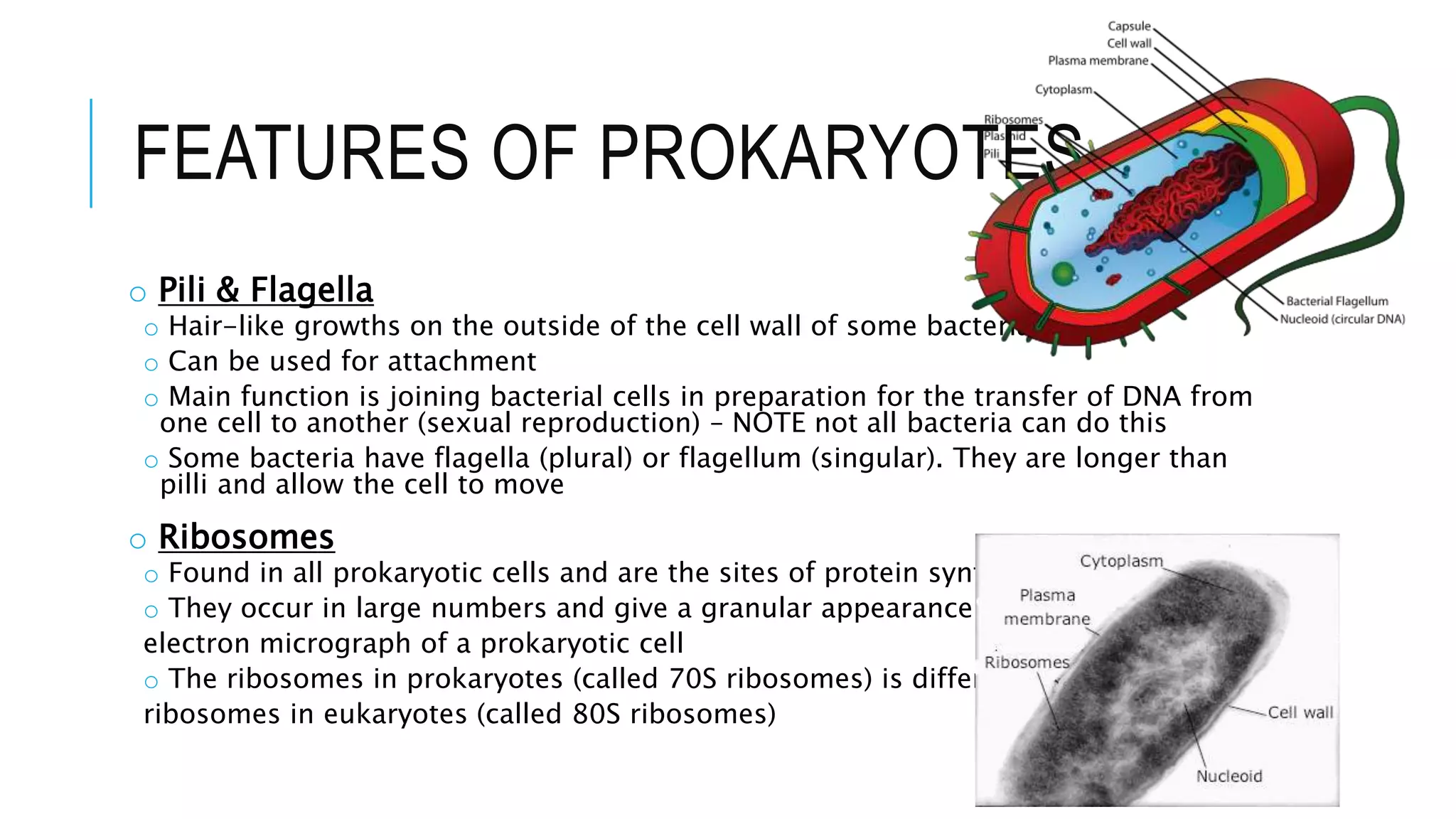
o Pili & Flagella
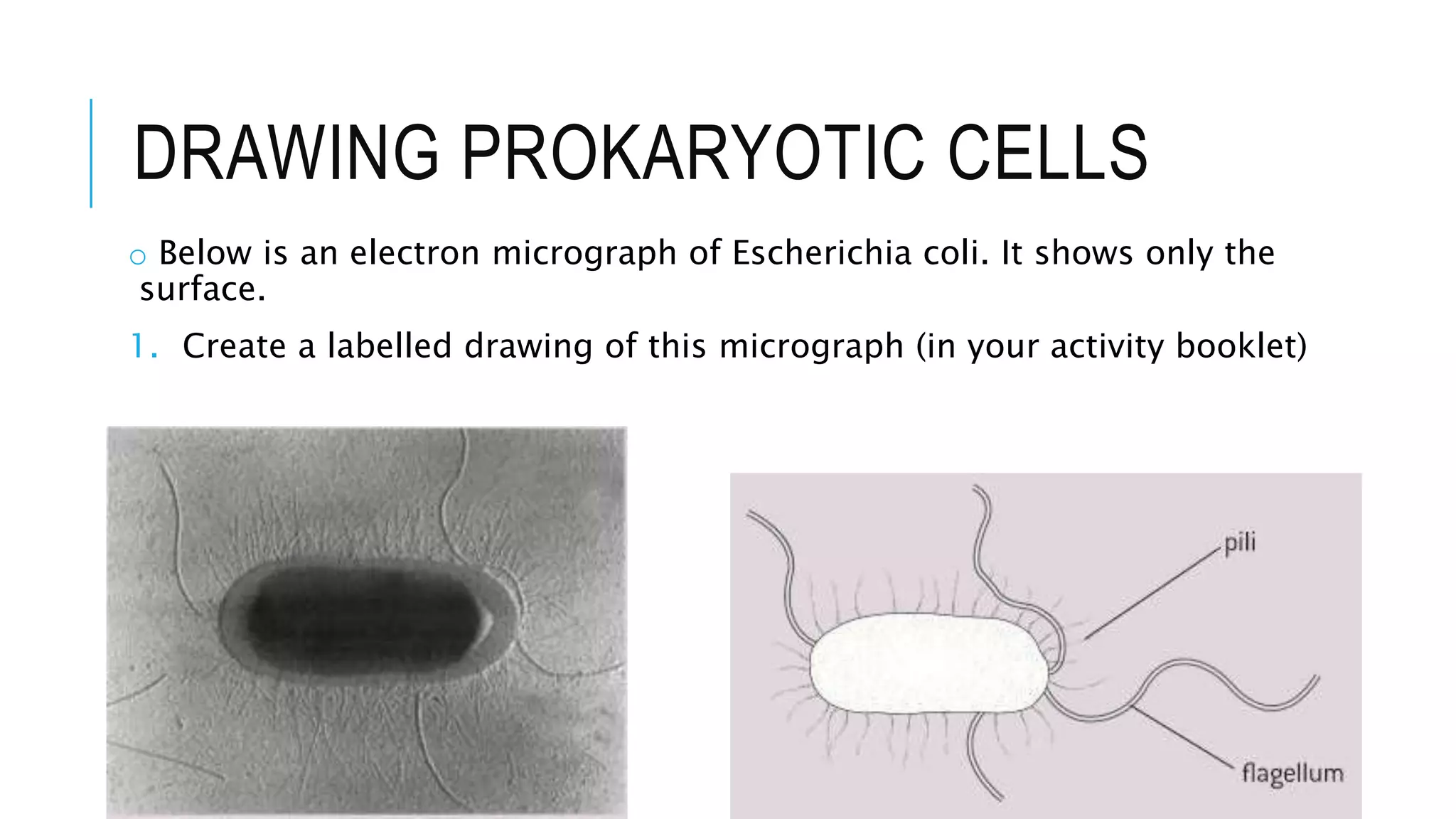
o Hair-like growths on the outside of the cell wall of some bacteria
o Can be used for attachment
o Main function is joining bacterial cells in preparation for the transfer of DNA from
one cell to another (sexual reproduction) – NOTE not all bacteria can do this
o Some bacteria have flagella (plural) or flagellum (singular). They are longer than
pilli and allow the cell to move
o Ribosomes
o Found in all prokaryotic cells and are the sites of protein synthesis
o They occur in large numbers and give a granular appearance to an
electron micrograph of a prokaryotic cell
o The ribosomes in prokaryotes (called 70S ribosomes) is different to
ribosomes in eukaryotes (called 80S ribosomes)
FEATURES OF PROKARYOTES
o Nucleoid region
o Is non-compartmentalized and contains a single, long, continuous, circular
thread of DNA
o This region is involved with cell control and reproduction
o In addition to this region some bacteria may have plasmids – small circular
DNA molecules not connected to this region
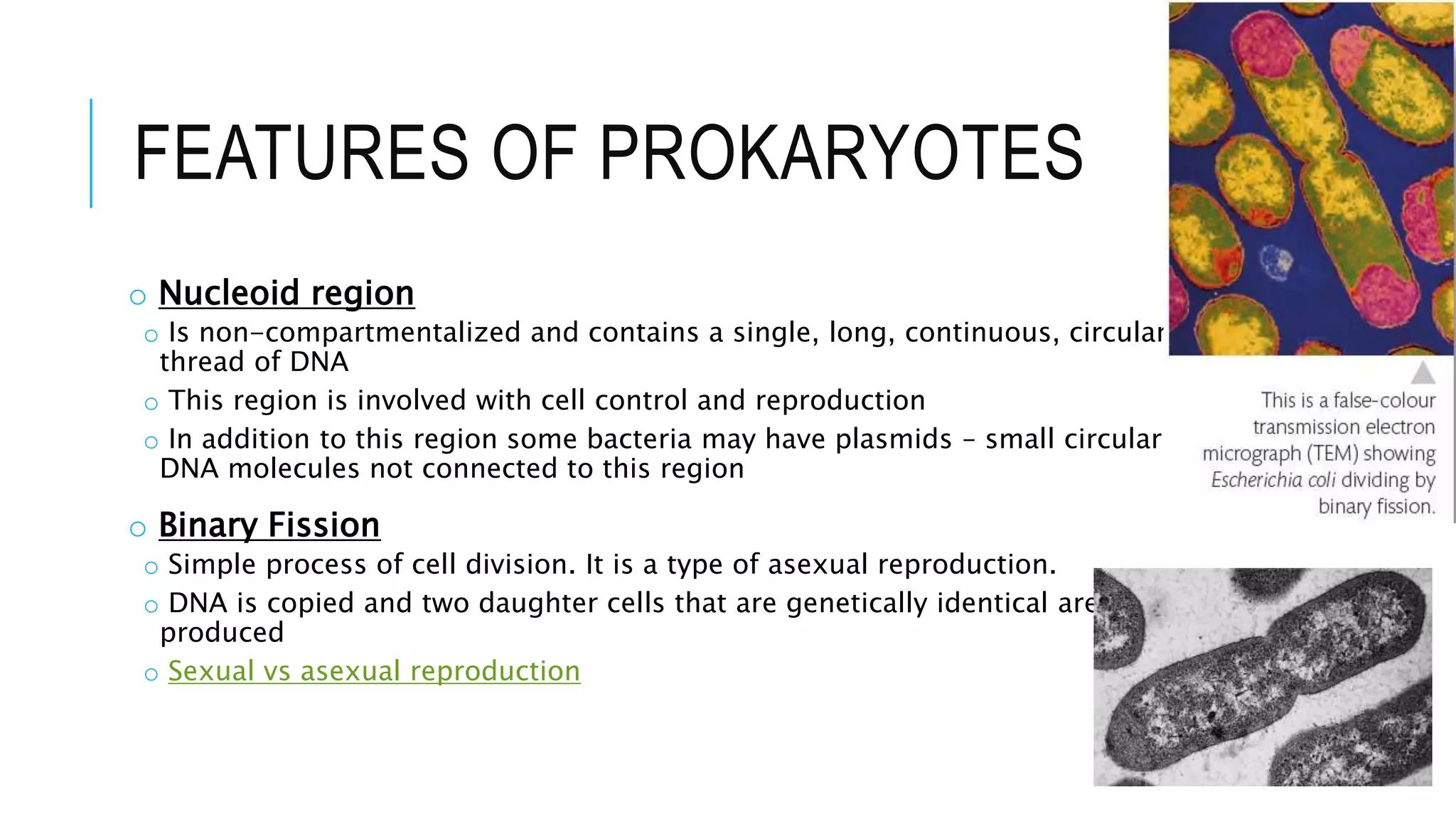
o Binary Fission
o Simple process of cell division. It is a type of asexual reproduction.
o DNA is copied and two daughter cells that are genetically identical are
produced
o Sexual vs asexual reproduction
DRAWINGS
1.2 – Skill – Drawing the
ultrastructure of
prokaryotic cells based on
electron micrographs
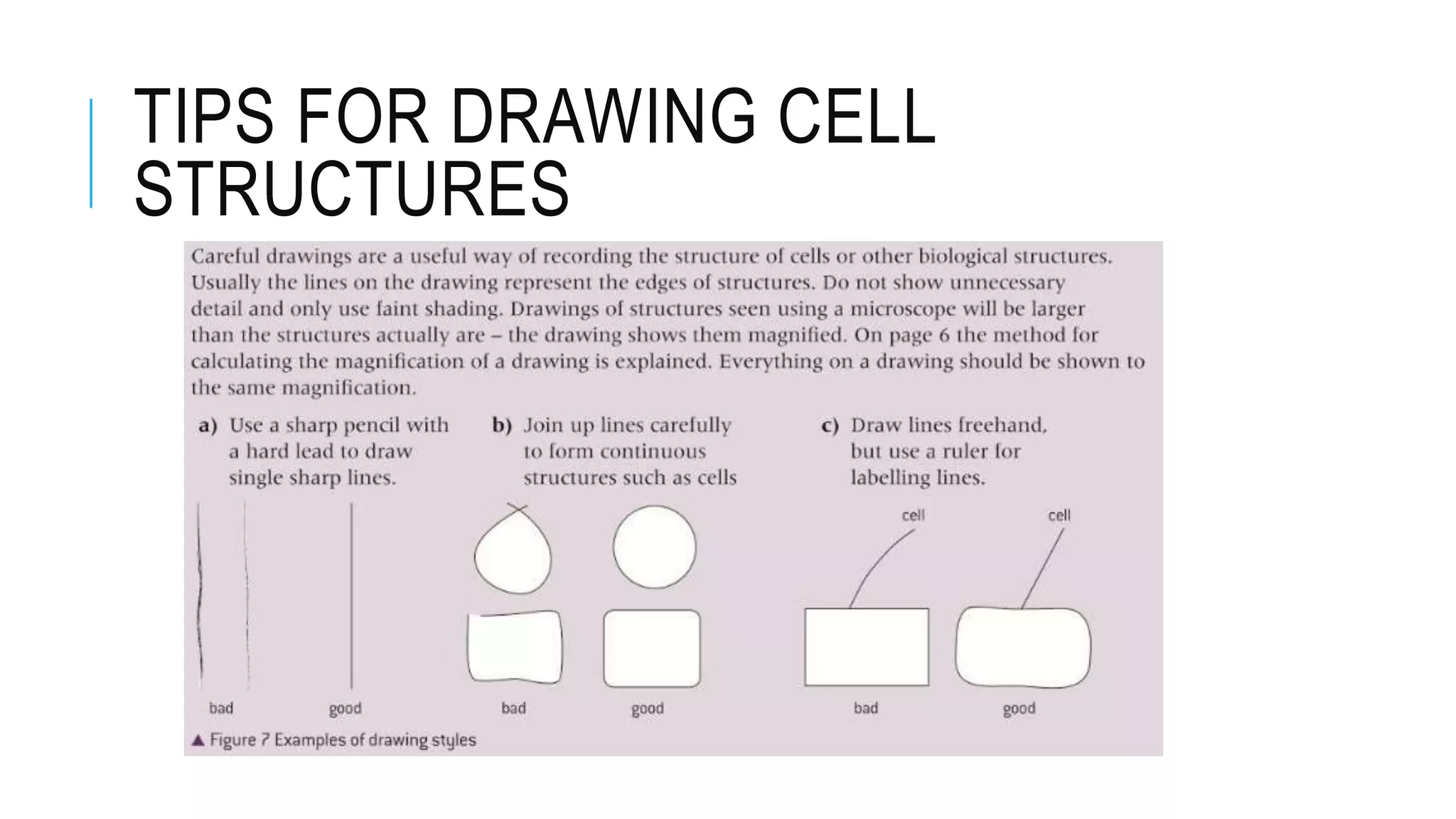
TIPS FOR DRAWING CELL
STRUCTURES
DRAWING PROKARYOTIC CELLS
o Because prokaryotes are mostly very small, their internal structure
cannot be seen with the light microscope.
o It is only with the electron microscope that we can see the details of
the structure (called the ultrastructure)
o Drawings of the ultrastructure of prokaryotes are therefore based on
electron micrographs
o NOTE: The following activity is in your activity booklet.
DRAWING PROKARYOTIC CELLS
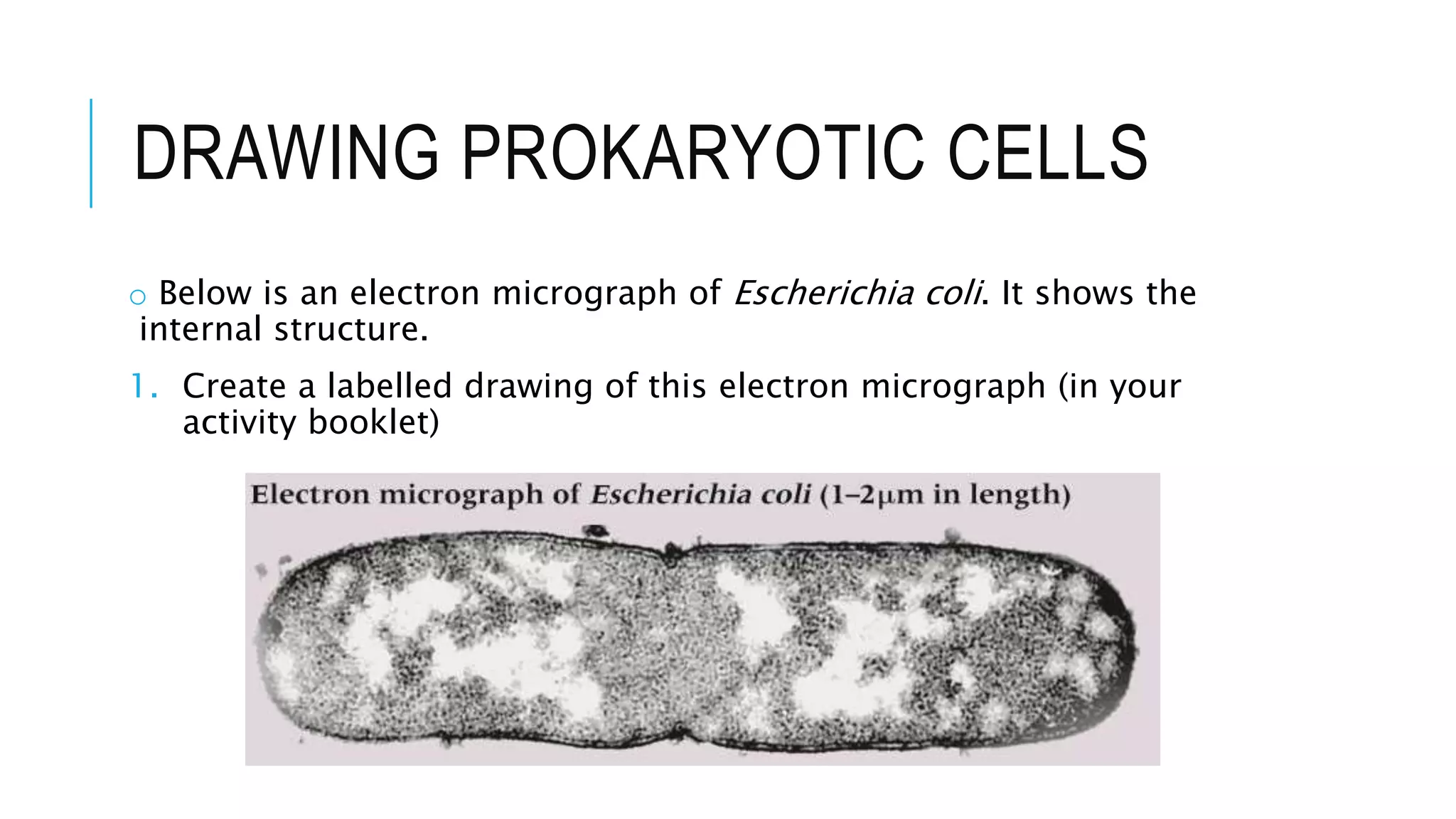
o Below is an electron micrograph of Escherichia coli. It shows the
internal structure.
1. Create a labelled drawing of this electron micrograph (in your
activity booklet)
DRAWING PROKARYOTIC CELLS
o Your drawing should look something like this:
DRAWING PROKARYOTIC CELLS
o Below is an electron micrograph of Escherichia coli. It shows only the
surface.
1. Create a labelled drawing of this micrograph (in your activity booklet)

2. prokaryotes and their structure

  • 1.
    2. PROKARYOTES &THEIR CELL STRUCTURE 1.2 – Prokaryotes have a simple cell structure without compartmentalization 1.2 – Eukaryotes have a compartmentalized cell structure
  • 2.
    A CELL o Acell is the smallest unit capable of performing the functions of life o There are TWO types of cells – Prokaryotic cells and Eukaryotic cells o Prokaryotic cells are much smaller and simpler (most are less than 1µm in diameter). They are thought to have appeared on Earth first. o Examples of prokaryotes are Bacteria
  • 3.
    EUKARYOTIC CELLS o Containorganelles surrounded by membranes i.e. compartmentalization o All multicellular organisms are eukaryotes – including plants, animals and fungi Plant Animal
  • 4.
    PROKARYOTIC CELLS o Donot have internal structures surrounded by membranes i.e. no compartmentalization o Few internal structures o All prokaryotes are unicellular e.g. Bacteria o HOWEVER – Not all unicellular organisms are prokaryotes (e.g. protozoans which are eukaryotes) http://library.thinkquest.org/C004535/prokaryotic_cells.html
  • 5.
    FEATURES OF PROKARYOTES oThe following features (where applicable) should be identified when drawing/looking at prokaryotic cells: o Cell wall o Plasma membrane o Flagella o Pili o Ribosomes o The nucleoid (region containing free DNA) o Note that there are no internal compartments. This means that chemical reactions within the cell are not isolated from one another – this can limit the cells efficiency as there may be interference between reactions
  • 6.
    FEATURES OF PROKARYOTES Note:Notice how the nucleoid on the micrograph to the left is light in colour where as the one on the right is dark in colour. This is from different staining techniques.
  • 7.
    FEATURES OF PROKARYOTES oCell Wall o The prokaryotic cell wall protects and maintains shape of the cell o In most it is made up of peptidoglycan (a mix of carbohydrates and proteins) o Some bacteria have an additional layer outside on top of the cell wall – made of a polysaccharide (a carbohydrate) that helps it stick structures (e.g. teeth, skin, food) o Plasma membrane o Found just inside the cell wall and is a similar composition to the plasma membrane of eukaryotes o Controls the movement of materials into and out of the cell o Plays a role in binary fission (replication) of the prokaryotic cell o The cytoplasm occupies the complete interior o There are no internal membranes except the plasma membrane
  • 8.
    FEATURES OF PROKARYOTES oPili & Flagella o Hair-like growths on the outside of the cell wall of some bacteria o Can be used for attachment o Main function is joining bacterial cells in preparation for the transfer of DNA from one cell to another (sexual reproduction) – NOTE not all bacteria can do this o Some bacteria have flagella (plural) or flagellum (singular). They are longer than pilli and allow the cell to move o Ribosomes o Found in all prokaryotic cells and are the sites of protein synthesis o They occur in large numbers and give a granular appearance to an electron micrograph of a prokaryotic cell o The ribosomes in prokaryotes (called 70S ribosomes) is different to ribosomes in eukaryotes (called 80S ribosomes)
  • 9.
    FEATURES OF PROKARYOTES oNucleoid region o Is non-compartmentalized and contains a single, long, continuous, circular thread of DNA o This region is involved with cell control and reproduction o In addition to this region some bacteria may have plasmids – small circular DNA molecules not connected to this region o Binary Fission o Simple process of cell division. It is a type of asexual reproduction. o DNA is copied and two daughter cells that are genetically identical are produced o Sexual vs asexual reproduction
  • 10.
    DRAWINGS 1.2 – Skill– Drawing the ultrastructure of prokaryotic cells based on electron micrographs
  • 11.
    TIPS FOR DRAWINGCELL STRUCTURES
  • 12.
    DRAWING PROKARYOTIC CELLS oBecause prokaryotes are mostly very small, their internal structure cannot be seen with the light microscope. o It is only with the electron microscope that we can see the details of the structure (called the ultrastructure) o Drawings of the ultrastructure of prokaryotes are therefore based on electron micrographs o NOTE: The following activity is in your activity booklet.
  • 13.
    DRAWING PROKARYOTIC CELLS oBelow is an electron micrograph of Escherichia coli. It shows the internal structure. 1. Create a labelled drawing of this electron micrograph (in your activity booklet)
  • 14.
    DRAWING PROKARYOTIC CELLS oYour drawing should look something like this:
  • 15.
    DRAWING PROKARYOTIC CELLS oBelow is an electron micrograph of Escherichia coli. It shows only the surface. 1. Create a labelled drawing of this micrograph (in your activity booklet)