DIABETIC RETINOPATHY
1. Adverse risk factors
2. Pathogenesis
5. Clinically significant macular oedema
6. Preproliferative diabetic retinopathy
3. Background diabetic retinopathy
4. Diabetic maculopathies
• Focal
• Diffuse
• Ischaemic
7. Proliferative diabetic retinopathy
Adverse Risk Factors
1. Long duration of diabetes
• Obesity
• Hyperlipidaemia
2. Poor metabolic control
3. Pregnancy
4. Hypertension
5. Renal disease
6. Other
• Smoking
• Anaemia
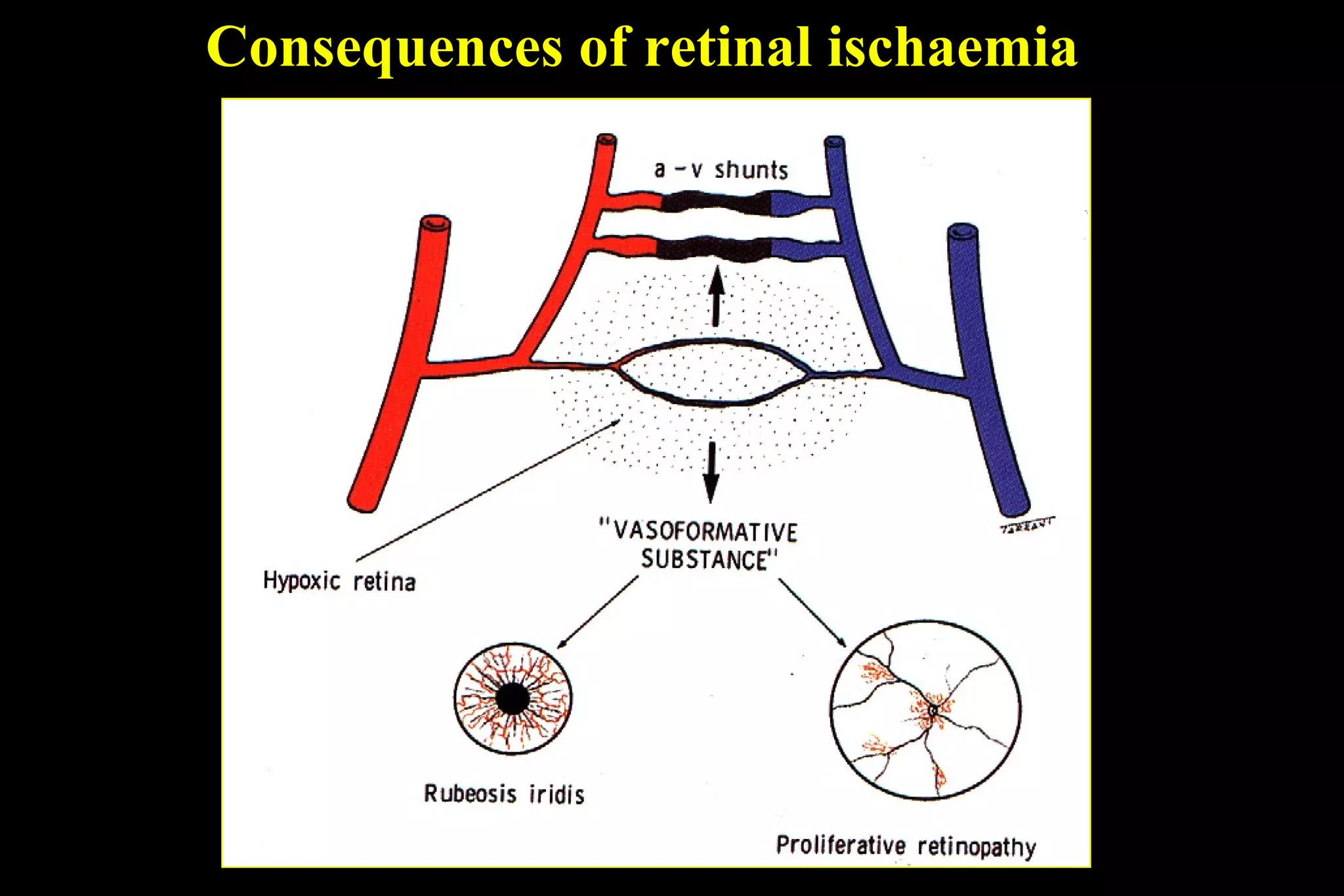
Pathogenesis of diabetic retinopathy
Consequences of retinal ischaemia
Consequences of chronic leakage
Location of lesions in background
diabetic retinopathy
Signs of background diabetic retinopathy
Microaneurysms usually
temporal to fovea
Intraretinal dot and
blot haemorrhages
Hard exudates frequently
arranged in clumps or
rings
Retinal oedema seen as
thickening on biomicroscopy
Focal diabetic maculopathy
• Circumscribed retinal thickening
• Associated complete or incomplete
circinate hard exudates
• Focal leakage on FA
• Focal photocoagulation
• Good prognosis
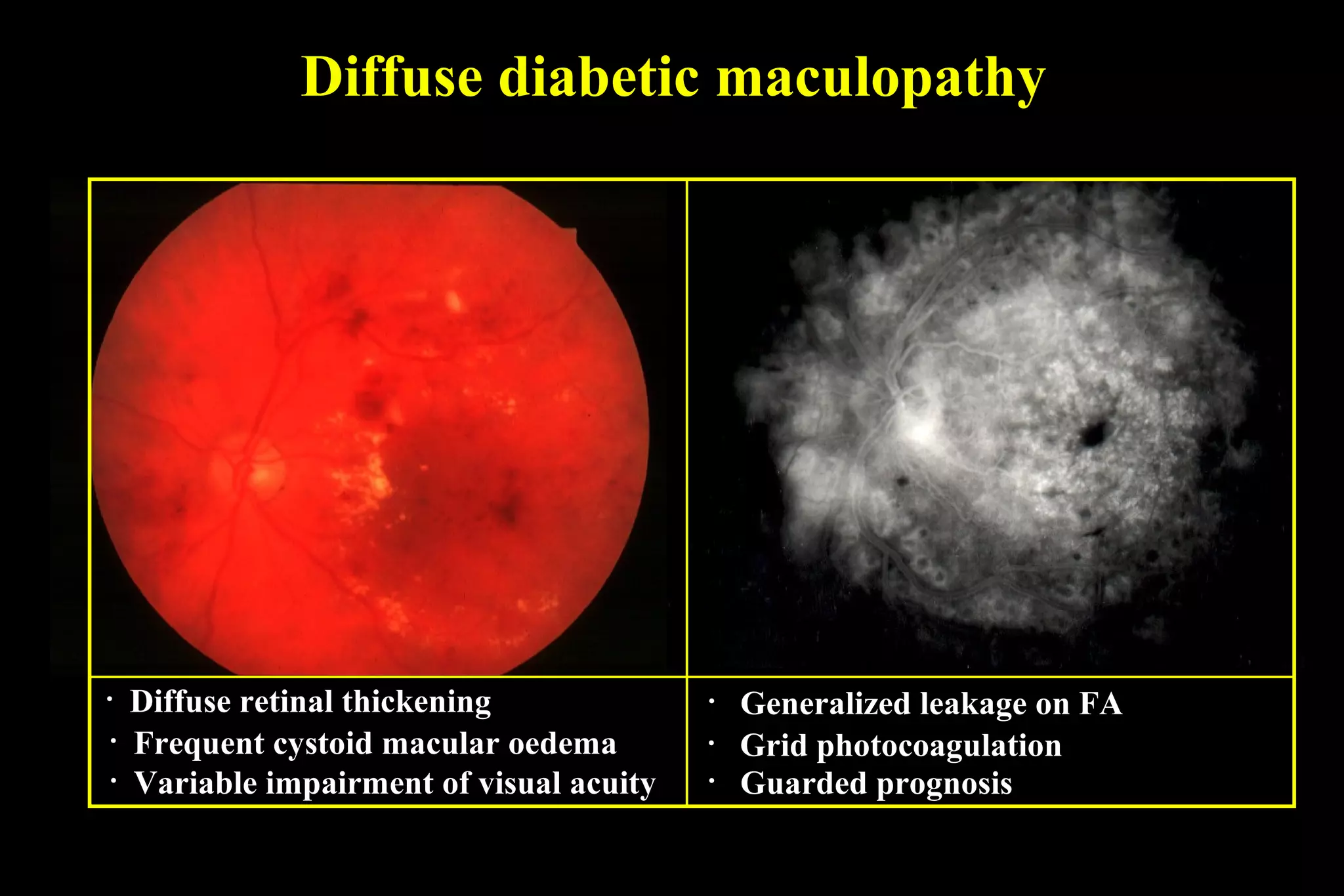
Diffuse diabetic maculopathy
• Diffuse retinal thickening • Generalized leakage on FA
• Guarded prognosis
• Grid photocoagulation• Frequent cystoid macular oedema
• Variable impairment of visual acuity
Ischaemic diabetic maculopathy
• Macula appears relatively normal • Capillary non-perfusion on FA
• Poor visual acuity • Treatment not appropriate
Clinically significant macular oedema
Hard exudates
within 500 µm
of centre of
fovea with adjacent
oedema which may
be outside 500 µm
limit
Retinal oedema one disc area or larger any
part of which is within one disc diameter
(1500 µm) of centre of fovea
Retinal oedema
within 500 µm
of centre of fovea
Treatment of clinically significant
macular oedema
• For microaneurysms in centre of hard
exudate rings located 500-3000 µm
from centre of fovea
Focal treatment
• Gentle whitening or darkening of
microaneurysm (100-200 µm, 0.10 sec)
• For diffuse retinal thickening located more
than 500 µm from centre of fovea and
500 µm from temporal margin of disc
Grid treatment
• Gentle burns (100-200 µm, 0.10 sec),
one burn width apart
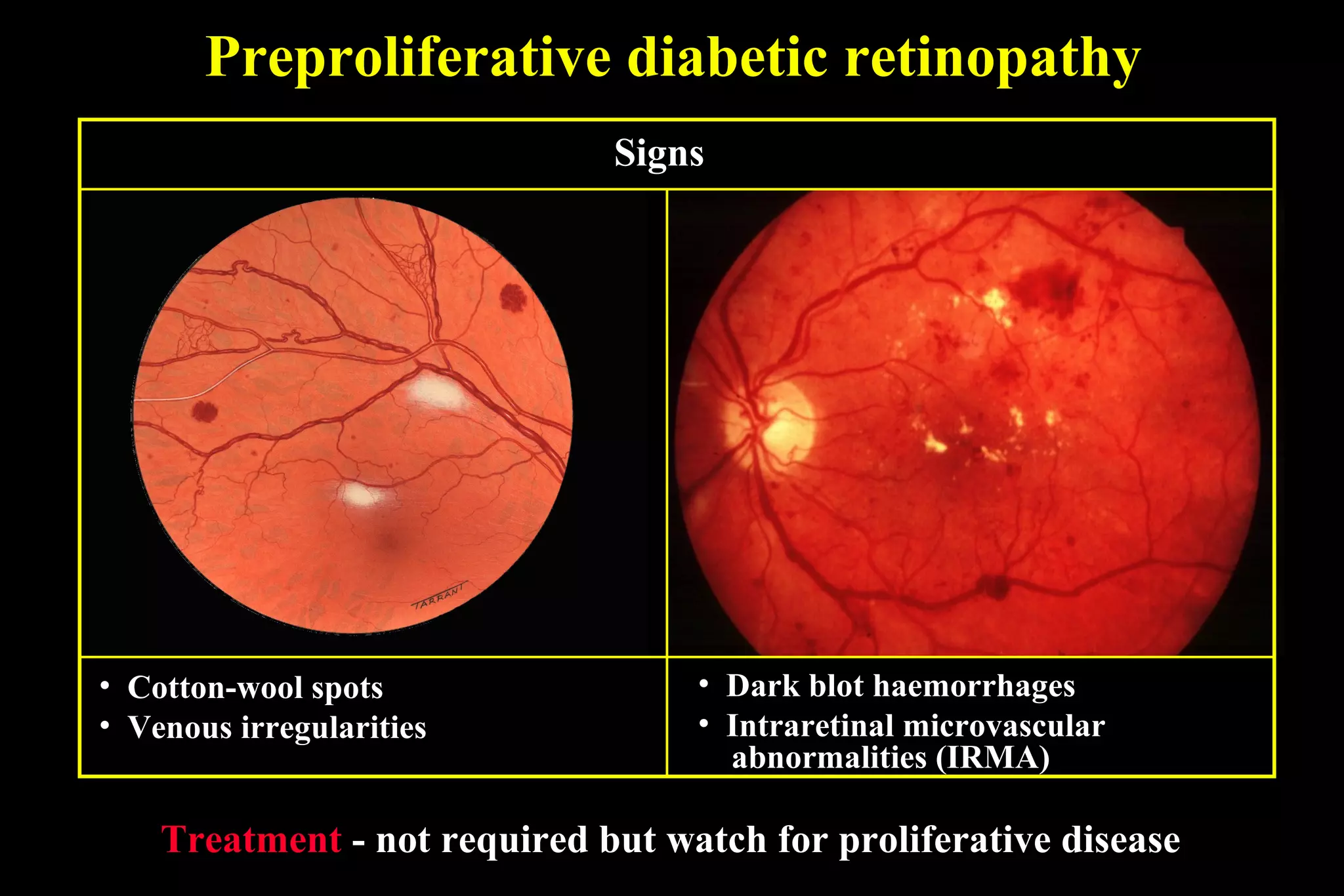
Preproliferative diabetic retinopathy
Treatment - not required but watch for proliferative disease
• Cotton-wool spots
• Venous irregularities
• Dark blot haemorrhages
• Intraretinal microvascular
abnormalities (IRMA)
Signs
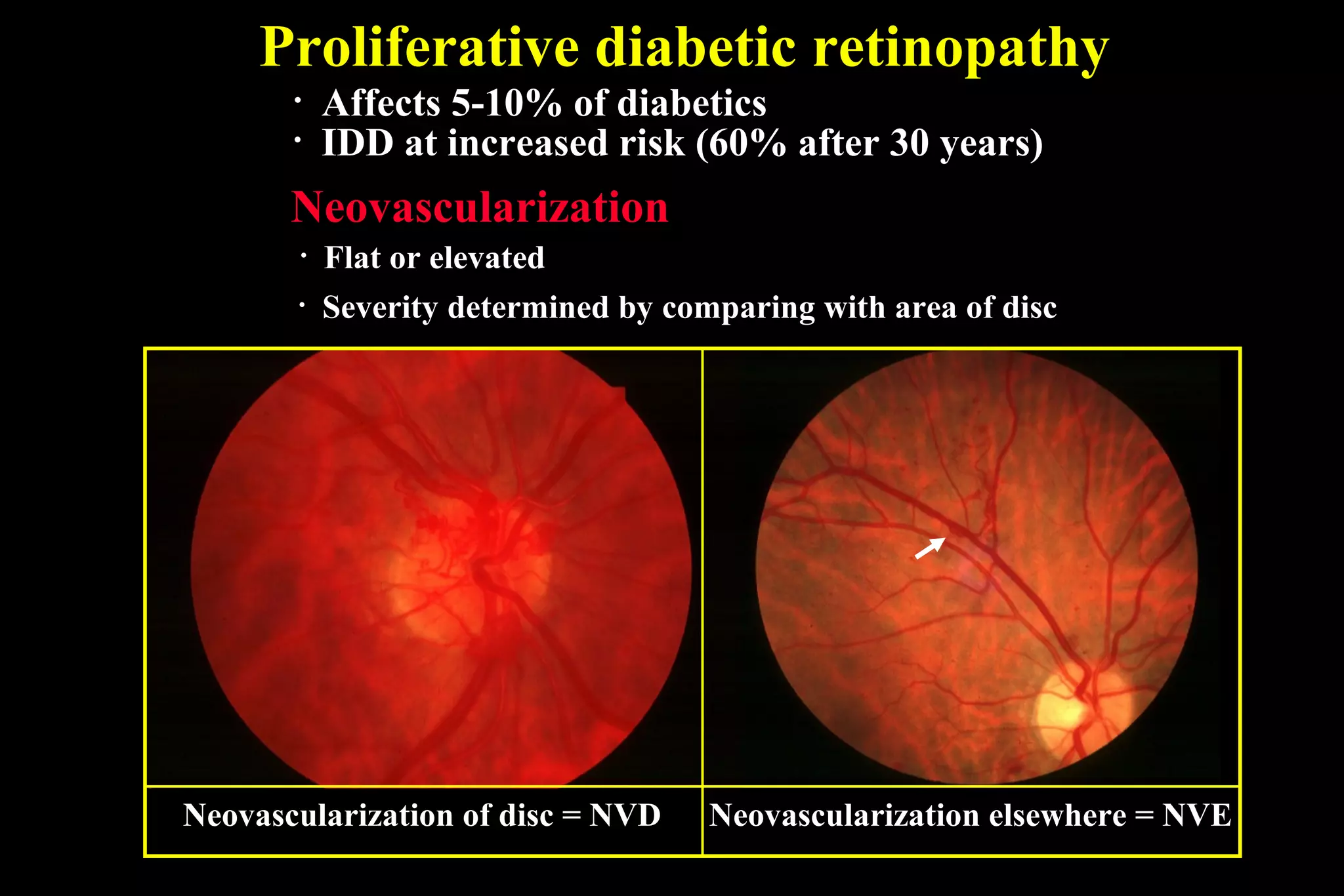
Proliferative diabetic retinopathy
• Flat or elevated
• Severity determined by comparing with area of disc
Neovascularization
Neovascularization of disc = NVD
• Affects 5-10% of diabetics
• IDD at increased risk (60% after 30 years)
Neovascularization elsewhere = NVE
Indications for treatment of proliferative
diabetic retinopathy
NVD > 1/3 disc in area Less extensive NVD
+ haemorrhage
NVE > 1/2 disc in area
+ haemorrhage
• Spot size (200-500 µm) depends
on contact lens magnification
• Gentle intensity burn (0.10-0.05 sec)
• Follow-up 4 to 8 weeks
• Area covered by complete PRP• Initial treatment is 2000-3000 burns
Laser panretinal photocoagulation
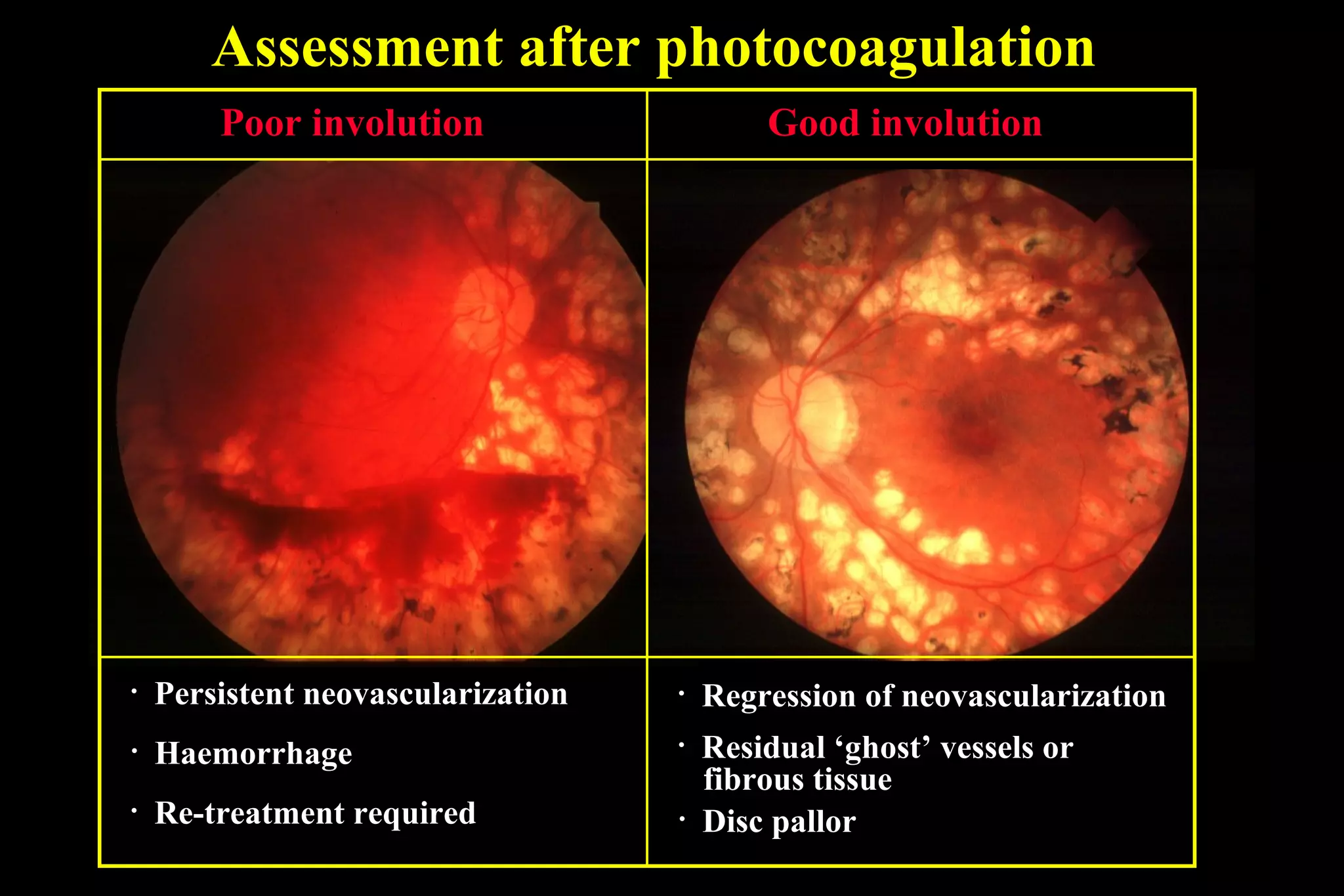
Assessment after photocoagulation
• Persistent neovascularization
• Haemorrhage
Poor involution
• Re-treatment required
• Regression of neovascularization
• Residual ‘ghost’ vessels or
fibrous tissue
Good involution
• Disc pallor
Indications for vitreoretinal surgery
Retinal detachment involving
macula
Severe persistent vitreous
haemorrhage
Dense, persistent premacular
haemorrhage
Progressive proliferation
despite laser therapy

49 diabetic retinopathy

  • 1.
    DIABETIC RETINOPATHY 1. Adverserisk factors 2. Pathogenesis 5. Clinically significant macular oedema 6. Preproliferative diabetic retinopathy 3. Background diabetic retinopathy 4. Diabetic maculopathies • Focal • Diffuse • Ischaemic 7. Proliferative diabetic retinopathy
  • 2.
    Adverse Risk Factors 1.Long duration of diabetes • Obesity • Hyperlipidaemia 2. Poor metabolic control 3. Pregnancy 4. Hypertension 5. Renal disease 6. Other • Smoking • Anaemia
  • 3.
  • 4.
  • 5.
  • 6.
    Location of lesionsin background diabetic retinopathy
  • 7.
    Signs of backgrounddiabetic retinopathy Microaneurysms usually temporal to fovea Intraretinal dot and blot haemorrhages Hard exudates frequently arranged in clumps or rings Retinal oedema seen as thickening on biomicroscopy
  • 8.
    Focal diabetic maculopathy •Circumscribed retinal thickening • Associated complete or incomplete circinate hard exudates • Focal leakage on FA • Focal photocoagulation • Good prognosis
  • 9.
    Diffuse diabetic maculopathy •Diffuse retinal thickening • Generalized leakage on FA • Guarded prognosis • Grid photocoagulation• Frequent cystoid macular oedema • Variable impairment of visual acuity
  • 10.
    Ischaemic diabetic maculopathy •Macula appears relatively normal • Capillary non-perfusion on FA • Poor visual acuity • Treatment not appropriate
  • 11.
    Clinically significant macularoedema Hard exudates within 500 µm of centre of fovea with adjacent oedema which may be outside 500 µm limit Retinal oedema one disc area or larger any part of which is within one disc diameter (1500 µm) of centre of fovea Retinal oedema within 500 µm of centre of fovea
  • 12.
    Treatment of clinicallysignificant macular oedema • For microaneurysms in centre of hard exudate rings located 500-3000 µm from centre of fovea Focal treatment • Gentle whitening or darkening of microaneurysm (100-200 µm, 0.10 sec) • For diffuse retinal thickening located more than 500 µm from centre of fovea and 500 µm from temporal margin of disc Grid treatment • Gentle burns (100-200 µm, 0.10 sec), one burn width apart
  • 13.
    Preproliferative diabetic retinopathy Treatment- not required but watch for proliferative disease • Cotton-wool spots • Venous irregularities • Dark blot haemorrhages • Intraretinal microvascular abnormalities (IRMA) Signs
  • 14.
    Proliferative diabetic retinopathy •Flat or elevated • Severity determined by comparing with area of disc Neovascularization Neovascularization of disc = NVD • Affects 5-10% of diabetics • IDD at increased risk (60% after 30 years) Neovascularization elsewhere = NVE
  • 15.
    Indications for treatmentof proliferative diabetic retinopathy NVD > 1/3 disc in area Less extensive NVD + haemorrhage NVE > 1/2 disc in area + haemorrhage
  • 16.
    • Spot size(200-500 µm) depends on contact lens magnification • Gentle intensity burn (0.10-0.05 sec) • Follow-up 4 to 8 weeks • Area covered by complete PRP• Initial treatment is 2000-3000 burns Laser panretinal photocoagulation
  • 17.
    Assessment after photocoagulation •Persistent neovascularization • Haemorrhage Poor involution • Re-treatment required • Regression of neovascularization • Residual ‘ghost’ vessels or fibrous tissue Good involution • Disc pallor
  • 18.
    Indications for vitreoretinalsurgery Retinal detachment involving macula Severe persistent vitreous haemorrhage Dense, persistent premacular haemorrhage Progressive proliferation despite laser therapy