DIABETIC
RETINOPATHY
PRESENTED BY:KUSHAL KAPOOR
B-TECH (IT)
1147413018
 Diabetic

retinopathy
 Diabetic retinopathy epidemology
 Risk factors
 Diagnosing diabetic retinopathy
 Stages of diabetic retinopathy
 Diabetic retinopathy treatment
 Prevention
 conclusion
DEFINITION:
PROGRESSIVE DYSFUNCTION OF THE RETINAL
BLOOD VESSELS CAUSED BY CHRONIC HYPER
GLYCEMIA.
 DR

can be a complication of diabetes type 1
or diabetes type 2.
 Initially DR is asymptomatic , if not treated
though it can cause low vision or blindness.
 After

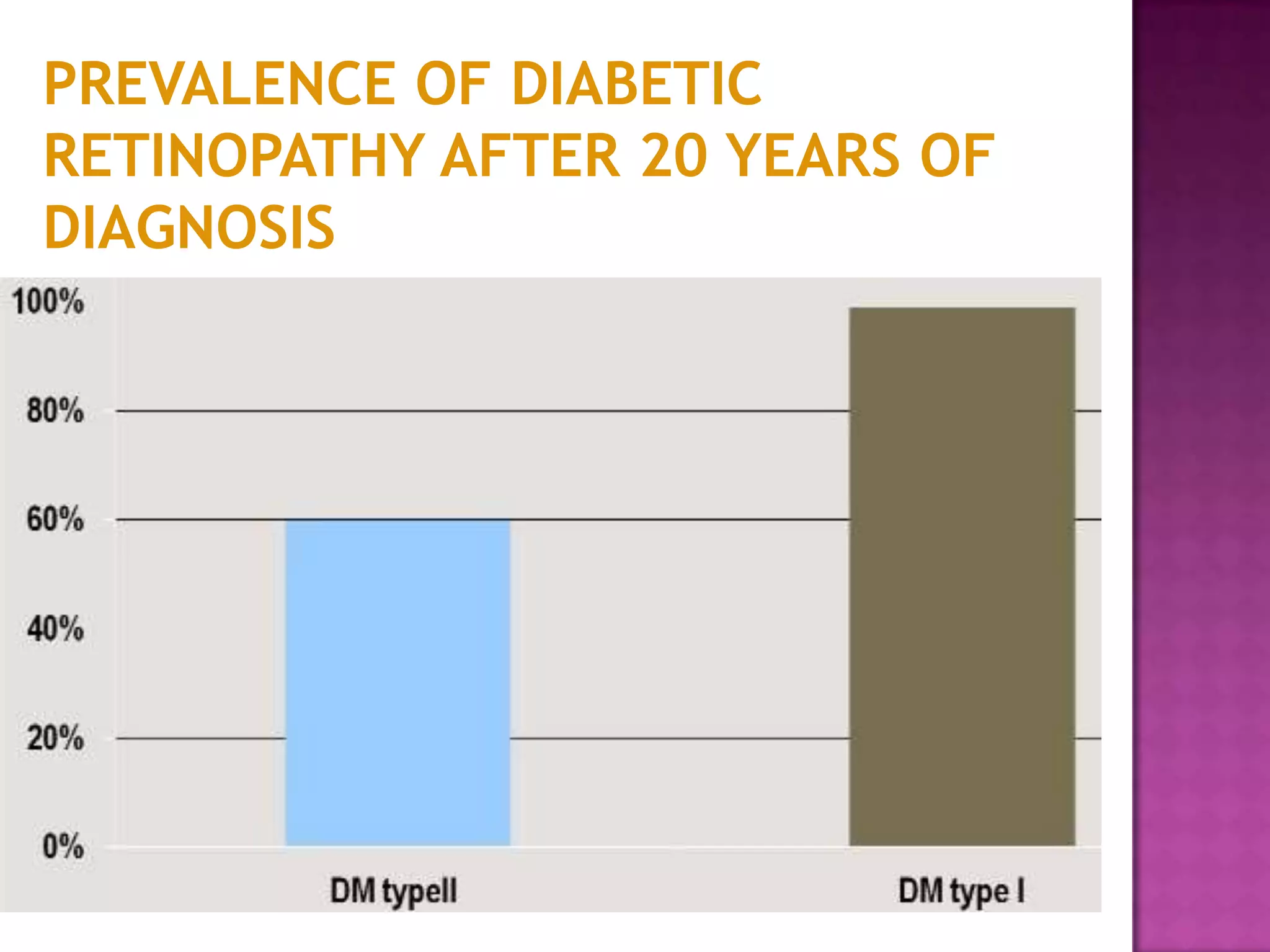
20 years of diabetes ,nearly 99% of
patients of type 1 diabetes and 60%of type 2
have some degree of diabetic retinopathy.
 33% of patients with diabetes have signs of
diabetic retinopathy.
PREVALENCE OF DIABETIC
RETINOPATHY AFTER 20 YEARS OF
DIAGNOSIS
 RISK

FACTORS OF DIABETIC RETINOPATHY
ARE:-

•HIGH BLOOD SUGAR
•HYPERTENSION
•HYPERLIPIDEMIA
 DIABETES

CAN CAUSE VISION IN BOTH EYES
TO CHANGE EVEN IF YOU DO NOT HAVE
RETINOPATHY
 RAPID CHANGES IN BLOOD SUGAR LEVEL
ALTER THE SHAPE OF YOUR EYES LENS AND
THE IMAGE ON THE RETINA WLL BECOME OUT
OF FOCUS
 YOU CAN REDUCE EPISODES OF BLURRED
VISION BY MAINTAINING GOOD CONTROL OF
YOUR BLOOD SUGAR
 PEOPLE

WITH DIABETES SHOULD SEE THEIR
OPTHALMOLOGIST IMMEDIATELY IF THEY HAVE
HAVE VISUAL CHANGES THAT:-

 AFFECT

ONLY ONE EYE.
 LAST MORE THAN A FEW DAYS.
 ARE NOT ASSOCIATED WITH A CHANGE IN
BLOOD SUGAR
Having difficulty with fine details (e.g. when
reading or watching television)
 Having difficulty in outdoor travel.
 Experiencing visual fluctuation from hour to
hour or day to day.
 Seeing images as rippled (e.g. straight lines
appears bent).
 Experiencing blurred ,hazy or double vision.
 Losing some visual fields.
 Having difficulty seeing at night , or at low light.
 Being particularly sensitive to glare and light.
 Having difficulty focussing.

 1.

Mild Nonproliferative Retinopathy
 2.Moderate Nonproliferative Retinopathy
 3. Severe Nonproliferative Retinopathy
 4.proliferative Retinopathy
 This

happens when the tiny blood vessels of
the retina begin to swell.
 Characteristics: Microanuerysms only
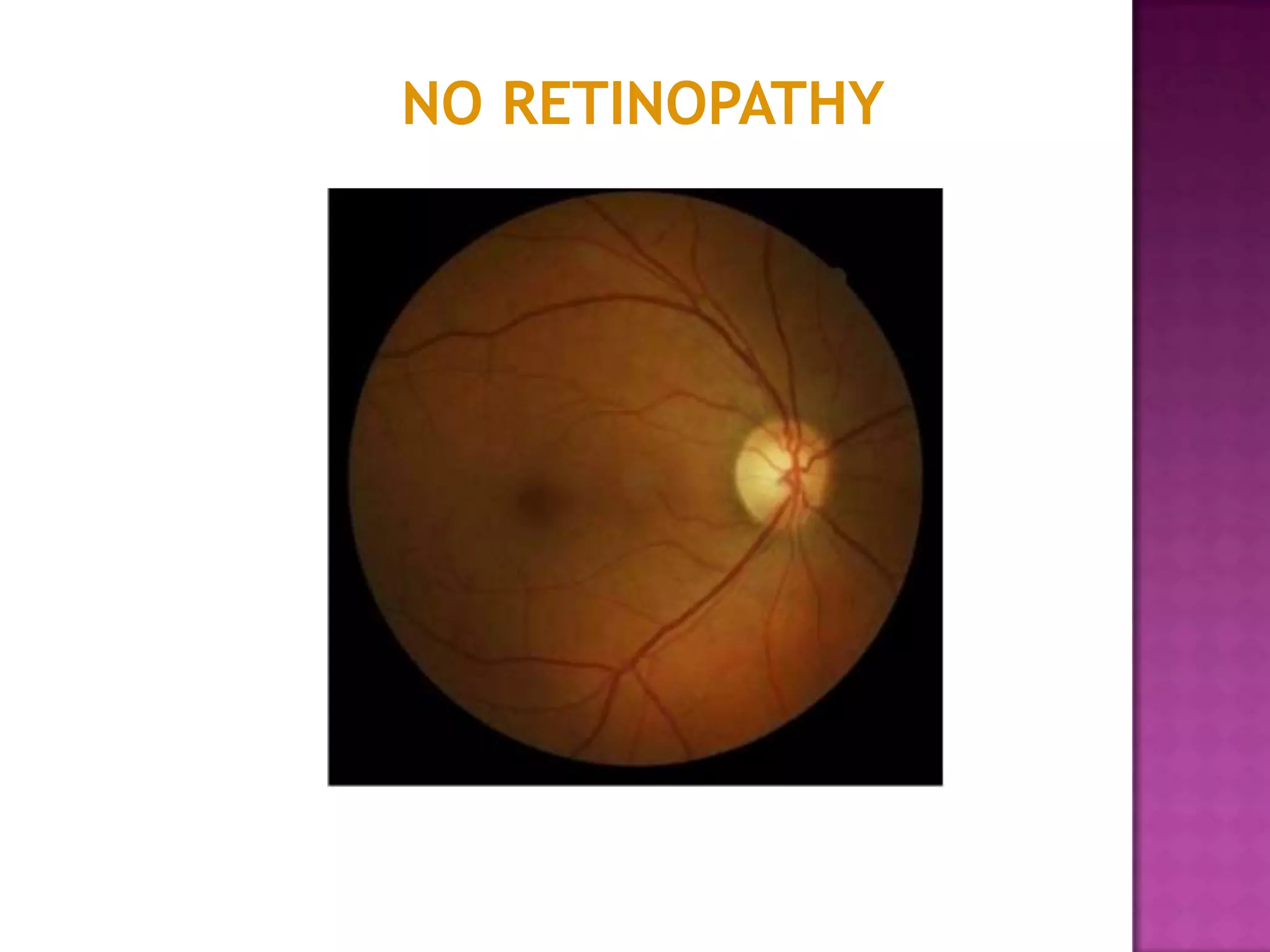
NO RETINOPATHY
MILD PROLIFERATIVE DIABETC
RETINOPATHY
Characteristics: Microaneurysms
 Hard exudates
 Flamed shaped hemorrhage
 Damage to the blood vessel growth.
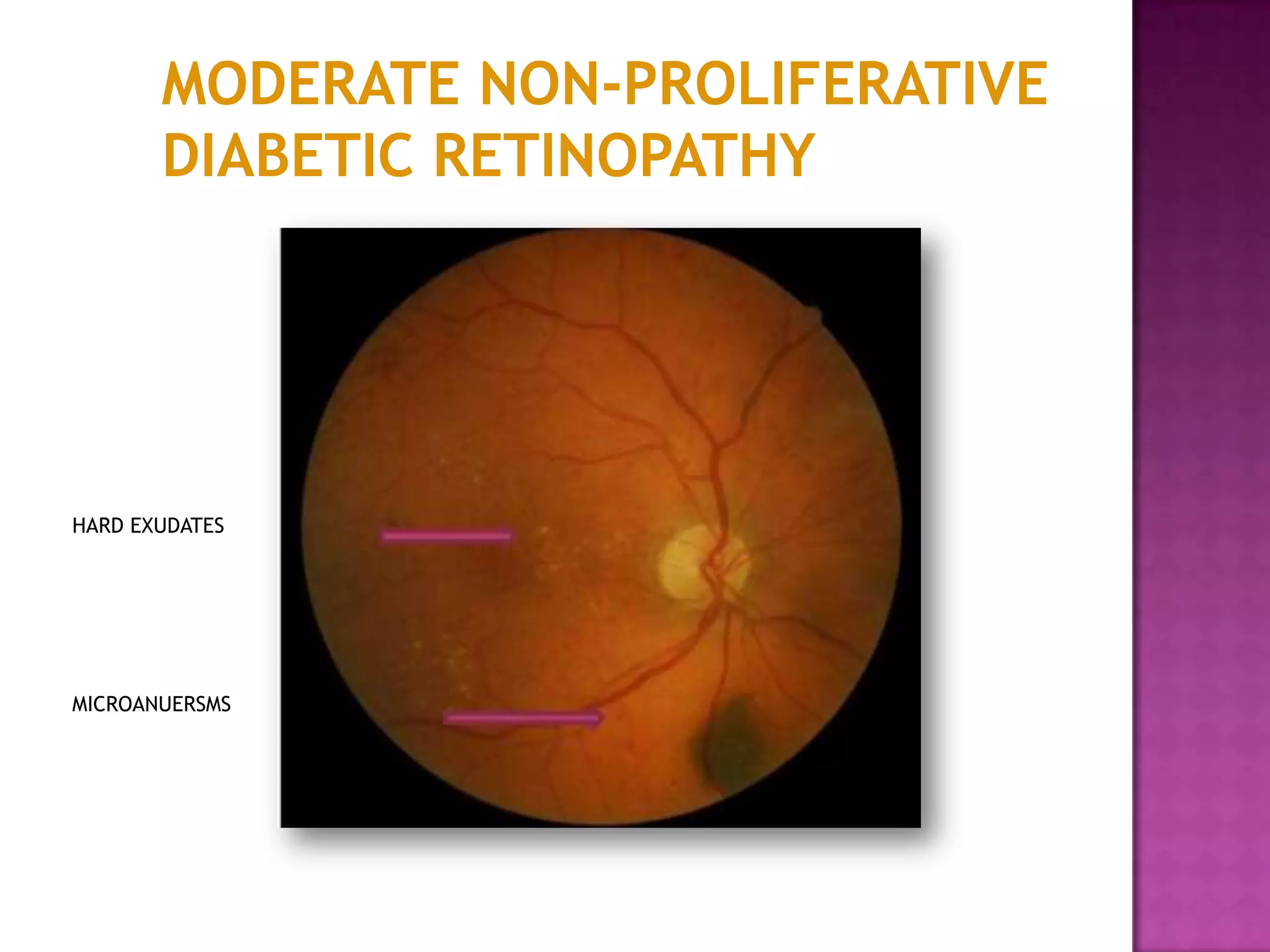
MODERATE NON-PROLIFERATIVE
DIABETIC RETINOPATHY

HARD EXUDATES

MICROANUERSMS
Any of the following:





More than 20 intraretinal hemorrhage in each of four
quadrants
Definite venous beading in two or more quadrants
Prominent Intraretinal Microvascular Abnormalities
(IRMA) in one or more quadrants
And no signs of proliferative retinopathy
 Blood

supply is blocked causing the need to
signal the need for new blood vessels
SEVERE NON-PROLIFERATIVE
DIABETIC RETINOPATHY

VENOUS
BEADING
 The

retina sends signals so new blood vessels
are created . These blood vessels are
abnormal and more likely to hemorrhage due
to the thin walls of the blood vessels . The
walls of these blood vessels are weak and
soon became to haemorrhage.
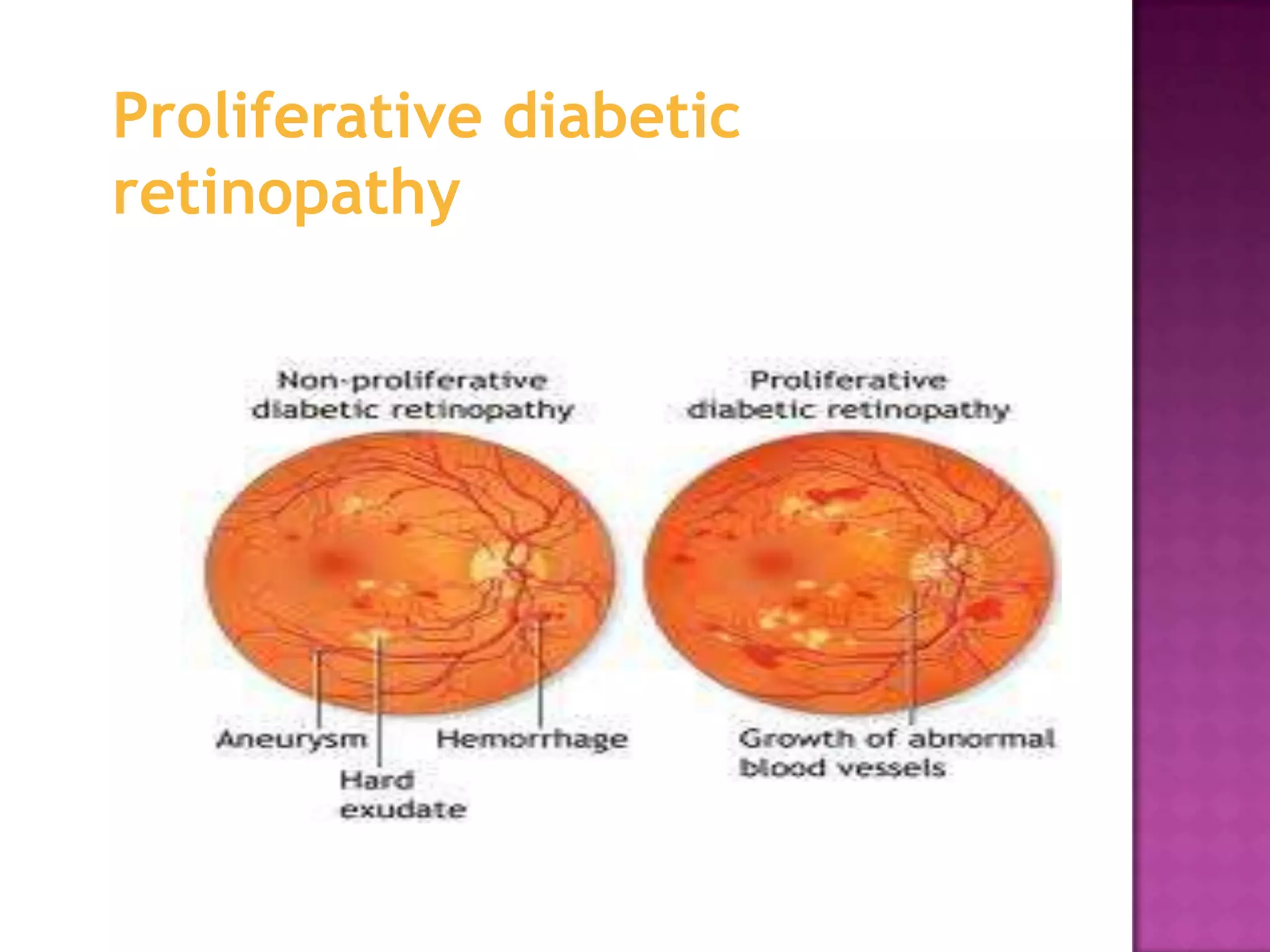
characteristics: Neovascularization
 Vitreous hemorrhage
Proliferative diabetic
retinopathy
 Treatment

of diabetic retinopathy

The best measure for
prevention of loss of vision
from diabetic retinopathy
is strict glycemic control
 Once

Dr threatens vision treatment can
include:Laser therapy to seal leaking blood
vessels (focal laser)

Laser therapy to reduce retinal oxygen
demand (scatter laser)

Surgical removal of blood from the eye
(vitrectomy)
90 PERCENT OF DIABETIC EYE DISEASE
CAN BE PREVENTED SIMPLY BY REGULAR
EXAMINATION ,TREATMENT AND BY
CONTROLLING BLOOD SUGAR
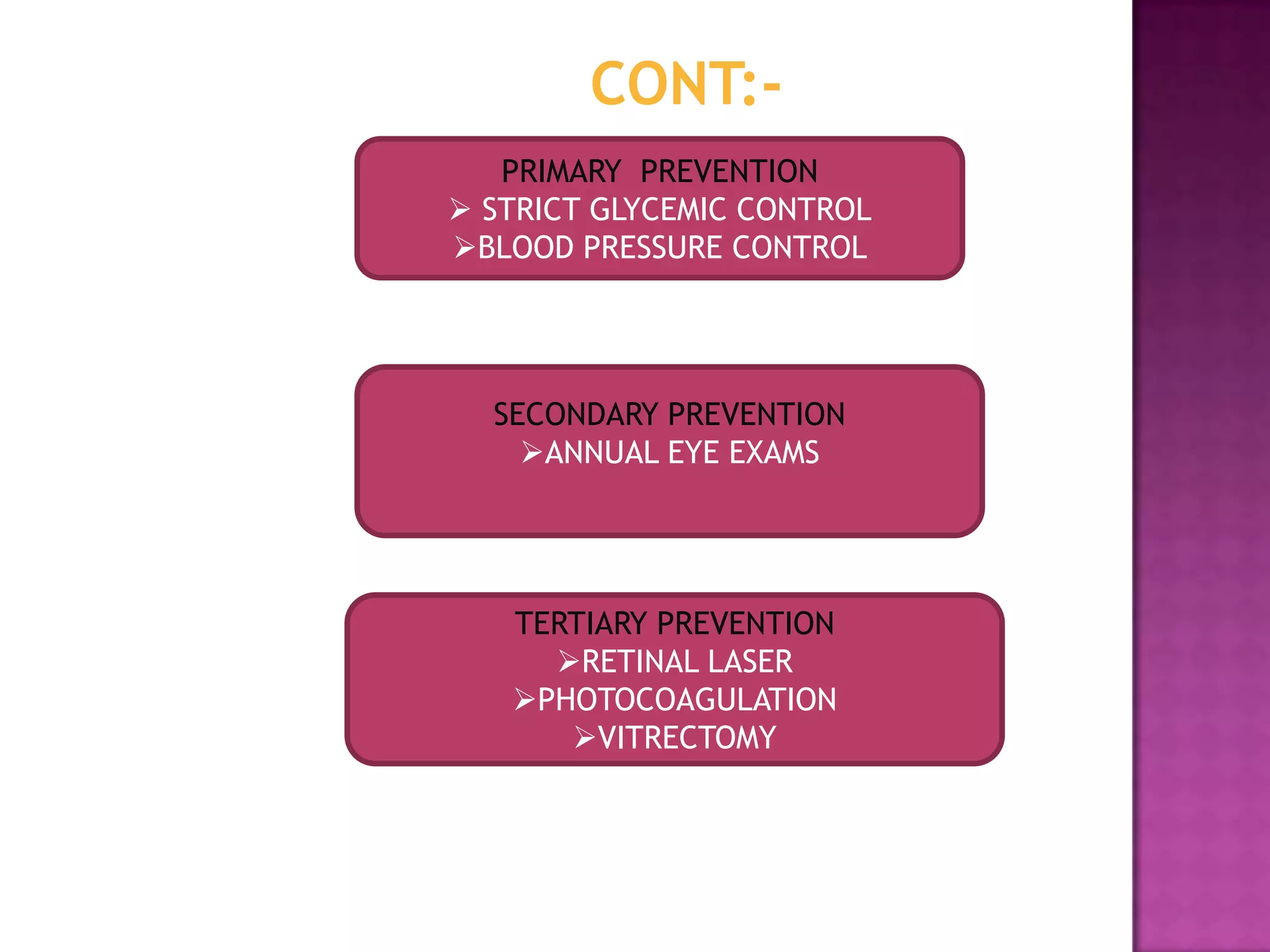
CONT:PRIMARY PREVENTION
 STRICT GLYCEMIC CONTROL
BLOOD PRESSURE CONTROL

SECONDARY PREVENTION
ANNUAL EYE EXAMS

TERTIARY PREVENTION
RETINAL LASER
PHOTOCOAGULATION
VITRECTOMY
Diabetic retinopathy is
preventable through
strict glycemic control
and annual dilated eye
exams by an
opthalmologist
Diabetic retinopathy.ppt

Diabetic retinopathy.ppt

  • 1.
  • 2.
     Diabetic retinopathy  Diabeticretinopathy epidemology  Risk factors  Diagnosing diabetic retinopathy  Stages of diabetic retinopathy  Diabetic retinopathy treatment  Prevention  conclusion
  • 3.
    DEFINITION: PROGRESSIVE DYSFUNCTION OFTHE RETINAL BLOOD VESSELS CAUSED BY CHRONIC HYPER GLYCEMIA.
  • 4.
     DR can bea complication of diabetes type 1 or diabetes type 2.  Initially DR is asymptomatic , if not treated though it can cause low vision or blindness.
  • 5.
     After 20 yearsof diabetes ,nearly 99% of patients of type 1 diabetes and 60%of type 2 have some degree of diabetic retinopathy.  33% of patients with diabetes have signs of diabetic retinopathy.
  • 6.
    PREVALENCE OF DIABETIC RETINOPATHYAFTER 20 YEARS OF DIAGNOSIS
  • 7.
     RISK FACTORS OFDIABETIC RETINOPATHY ARE:- •HIGH BLOOD SUGAR •HYPERTENSION •HYPERLIPIDEMIA
  • 8.
     DIABETES CAN CAUSEVISION IN BOTH EYES TO CHANGE EVEN IF YOU DO NOT HAVE RETINOPATHY  RAPID CHANGES IN BLOOD SUGAR LEVEL ALTER THE SHAPE OF YOUR EYES LENS AND THE IMAGE ON THE RETINA WLL BECOME OUT OF FOCUS  YOU CAN REDUCE EPISODES OF BLURRED VISION BY MAINTAINING GOOD CONTROL OF YOUR BLOOD SUGAR
  • 9.
     PEOPLE WITH DIABETESSHOULD SEE THEIR OPTHALMOLOGIST IMMEDIATELY IF THEY HAVE HAVE VISUAL CHANGES THAT:-  AFFECT ONLY ONE EYE.  LAST MORE THAN A FEW DAYS.  ARE NOT ASSOCIATED WITH A CHANGE IN BLOOD SUGAR
  • 10.
    Having difficulty withfine details (e.g. when reading or watching television)  Having difficulty in outdoor travel.  Experiencing visual fluctuation from hour to hour or day to day.  Seeing images as rippled (e.g. straight lines appears bent).  Experiencing blurred ,hazy or double vision.  Losing some visual fields.  Having difficulty seeing at night , or at low light.  Being particularly sensitive to glare and light.  Having difficulty focussing. 
  • 11.
     1. Mild NonproliferativeRetinopathy  2.Moderate Nonproliferative Retinopathy  3. Severe Nonproliferative Retinopathy  4.proliferative Retinopathy
  • 12.
     This happens whenthe tiny blood vessels of the retina begin to swell.  Characteristics: Microanuerysms only
  • 13.
  • 14.
  • 15.
    Characteristics: Microaneurysms  Hardexudates  Flamed shaped hemorrhage  Damage to the blood vessel growth.
  • 16.
  • 17.
    Any of thefollowing:     More than 20 intraretinal hemorrhage in each of four quadrants Definite venous beading in two or more quadrants Prominent Intraretinal Microvascular Abnormalities (IRMA) in one or more quadrants And no signs of proliferative retinopathy
  • 18.
     Blood supply isblocked causing the need to signal the need for new blood vessels
  • 19.
  • 20.
     The retina sendssignals so new blood vessels are created . These blood vessels are abnormal and more likely to hemorrhage due to the thin walls of the blood vessels . The walls of these blood vessels are weak and soon became to haemorrhage.
  • 21.
  • 22.
  • 23.
     Treatment of diabeticretinopathy The best measure for prevention of loss of vision from diabetic retinopathy is strict glycemic control
  • 24.
     Once Dr threatensvision treatment can include:Laser therapy to seal leaking blood vessels (focal laser) Laser therapy to reduce retinal oxygen demand (scatter laser) Surgical removal of blood from the eye (vitrectomy)
  • 25.
    90 PERCENT OFDIABETIC EYE DISEASE CAN BE PREVENTED SIMPLY BY REGULAR EXAMINATION ,TREATMENT AND BY CONTROLLING BLOOD SUGAR
  • 26.
    CONT:PRIMARY PREVENTION  STRICTGLYCEMIC CONTROL BLOOD PRESSURE CONTROL SECONDARY PREVENTION ANNUAL EYE EXAMS TERTIARY PREVENTION RETINAL LASER PHOTOCOAGULATION VITRECTOMY
  • 27.
    Diabetic retinopathy is preventablethrough strict glycemic control and annual dilated eye exams by an opthalmologist