Shehxad Hussain
Technologist
 Introduction
 In human anatomy, the ulnar nerve is a nerve which
runs near the ulna bone.The ulnar collateral ligament
of elbow joint is in relation with the ulnar nerve.The
nerve is the largest unprotected nerve in the human
body (meaning unprotected by muscle or bone), so
injury is common.
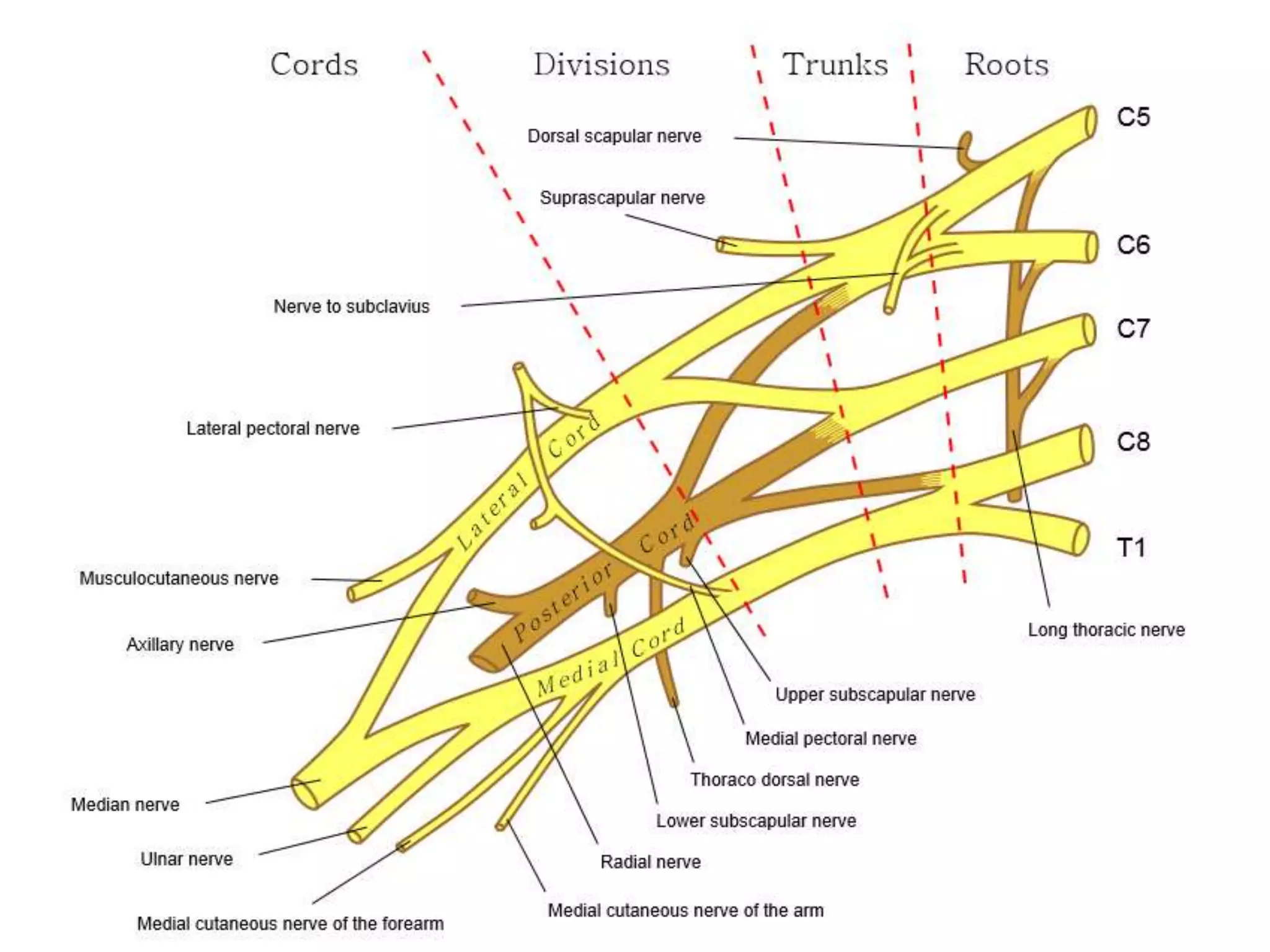
 The ulnar nerve originates from the C8-T1 nerve roots
(and occasionally carries C7 fibres) which form part of
the medial cord of the brachial plexus, and descends
on the postero-medial aspect of the humerus.The
ulnar nerve is derived from the brachial plexus. It is a
continuation of the medial cord, containing fibres
from spinal roots C8 andT1.
 After arising from the brachial plexus, the ulnar
nerve descends down the medial side of the
upper arm ( postero-medial aspect of
the humerus).
 From axilla to arm:
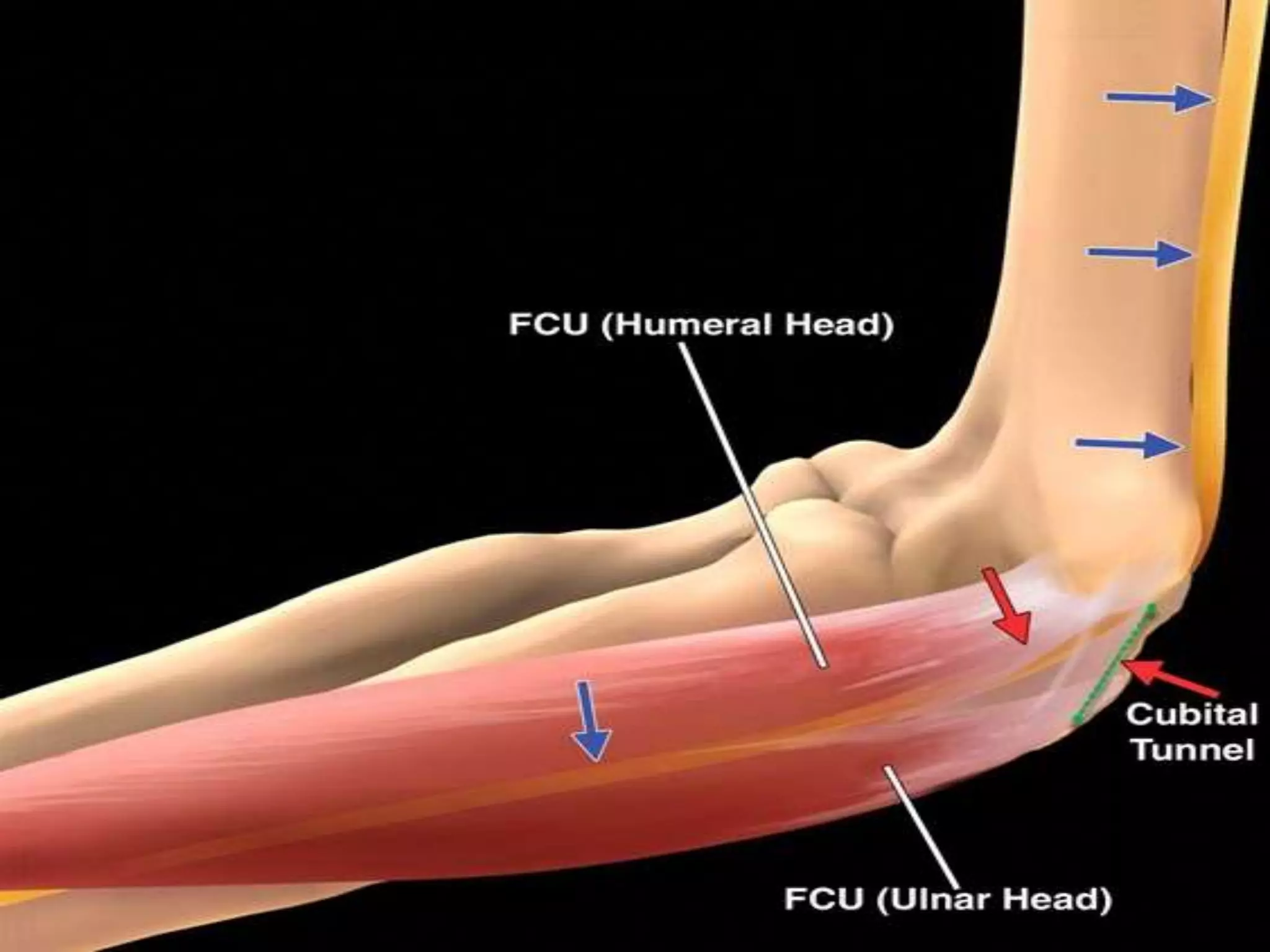
From the axilla it enters in the arm and stays
between the brachial artery and vein , through
the cubital tunnel at elbow.
Because of the mild pain and tingling throughout
the forearm associated with an inadvertent
impact of the nerve at this point, this is usually
called the “FUNNY BONE”.
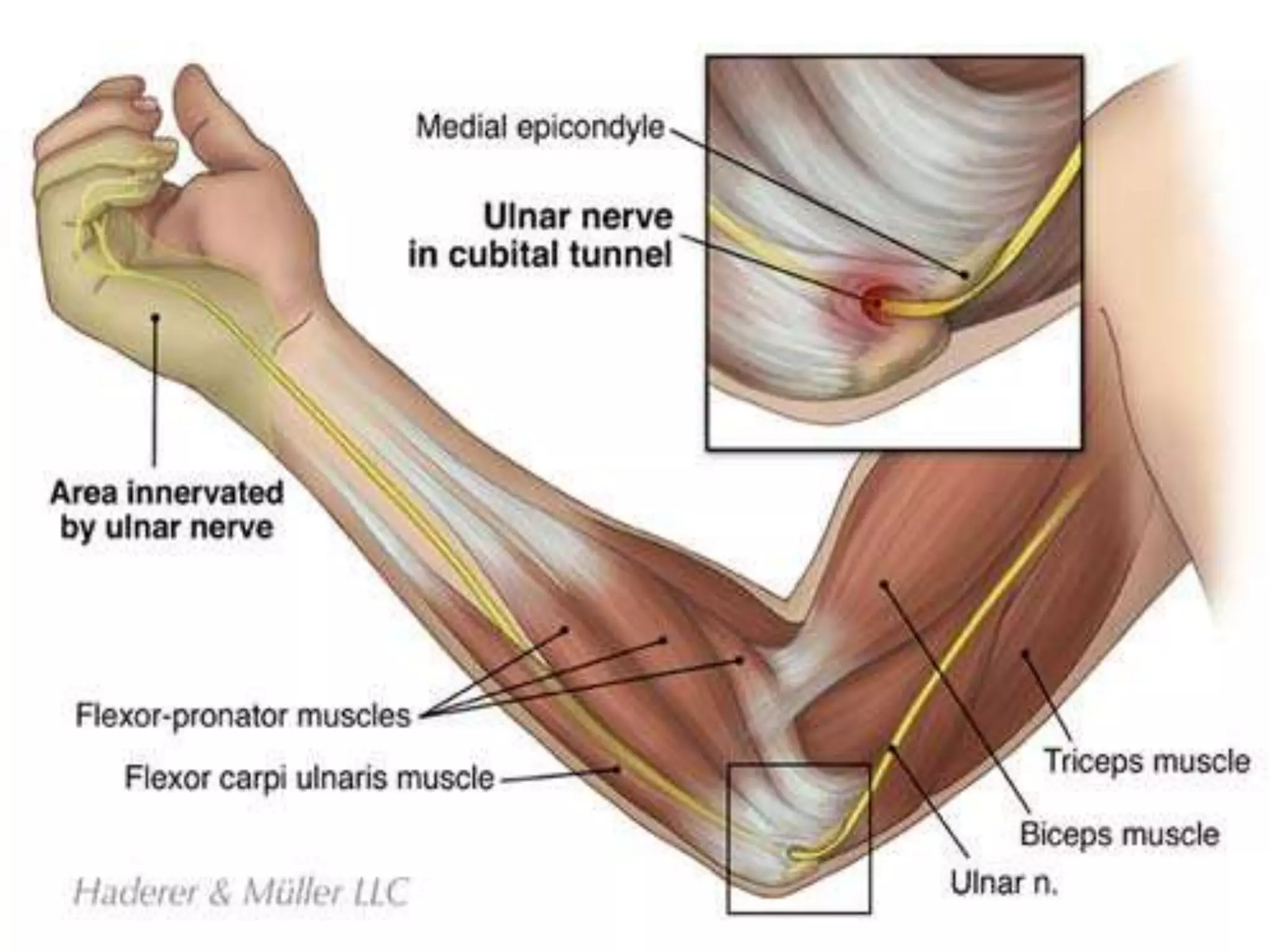
 At the elbow the ulnar nerve lies in a groove
(Retrocondylar groove) which is formed by
medial epicondyle humerus and olecranon
process of ulna, referred as "funny bone".
 The ulnar nerve is trapped between the bone
and the overlying skin at this point.
It enters the forearm through the aponeurotic
arcade (CubitalTunnel)
 It enters the anterior (flexor) compartment of
the forearm between the humeral and ulnar
heads, lying under the aponeurosis of flexor
carpi ulnaris alongside the ulna.There it
supplies one and a half muscles (flexor carpi
ulnaris and the medial half of flexor digitorum
profundus) and courses with the ulnar artery,
travelling inferiorly with it deep to the flexor
carpi ulnaris muscle.
The ulnar nerve enters the anterior (flexor)
compartment of the forearm through the two
heads of flexor Carpi ulnaris and runs alongside
the ulna bone.
There it innervates purely the Flexor Carpi Ulnaris
(FCU) muscle & medial half of Flexor Digitorum
Profundus III & IV (FDP) muscle.
 No further muscle is supplied by the ulnar nerve
in the medial forearm until it enters the wrist
through guyon’s canal.
In the forearm the ulnar nerve gives 2 superficial
sensory branches before entering the Guyon’s
canal. These two sensory branches are as;
1. Dorsal Cutaneous Nerve
2. Palmar cutaneous Nerve
 In the forearm the ulnar nerve runs distally on
the ulnar artery, and about five to eight
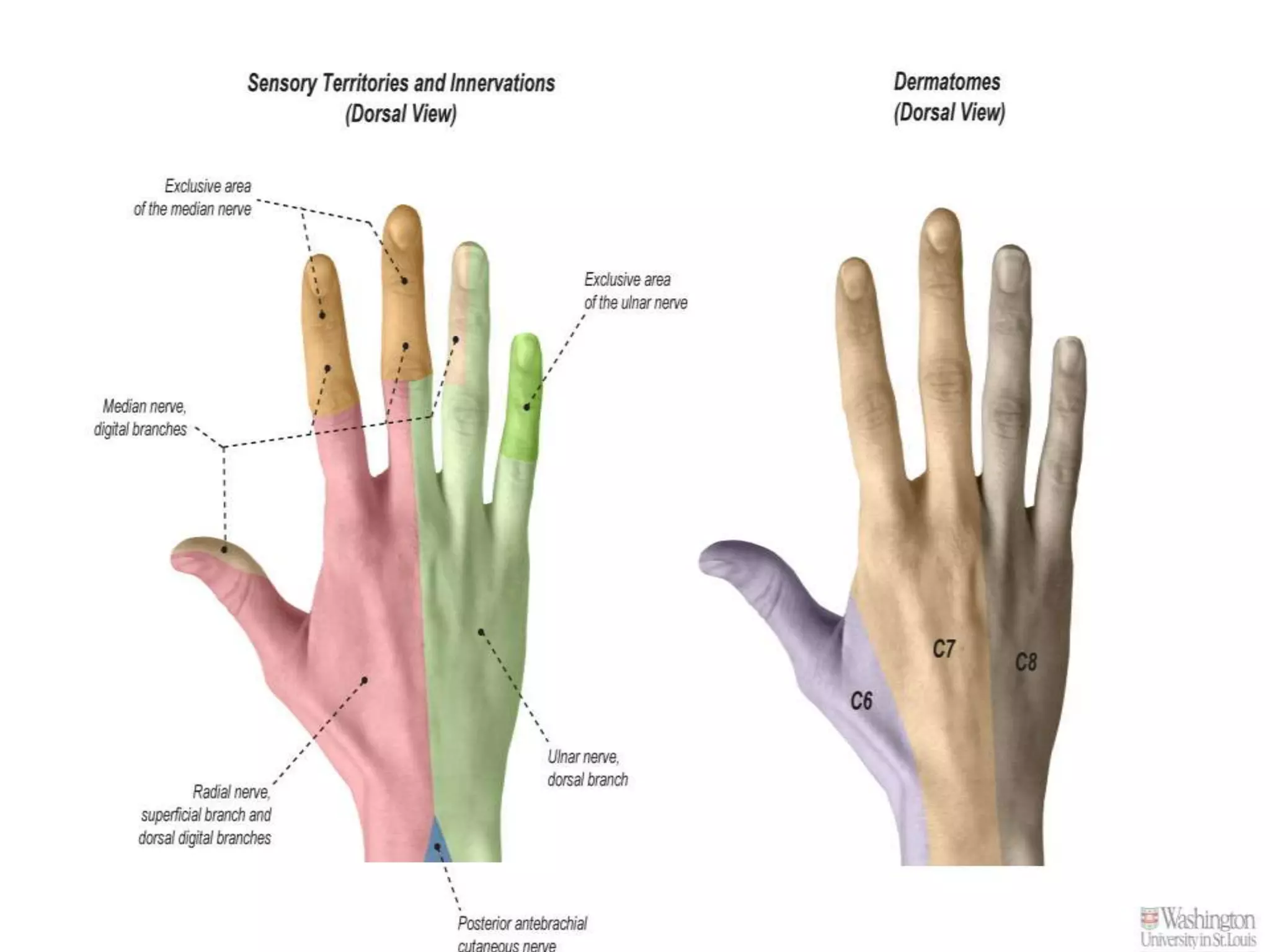
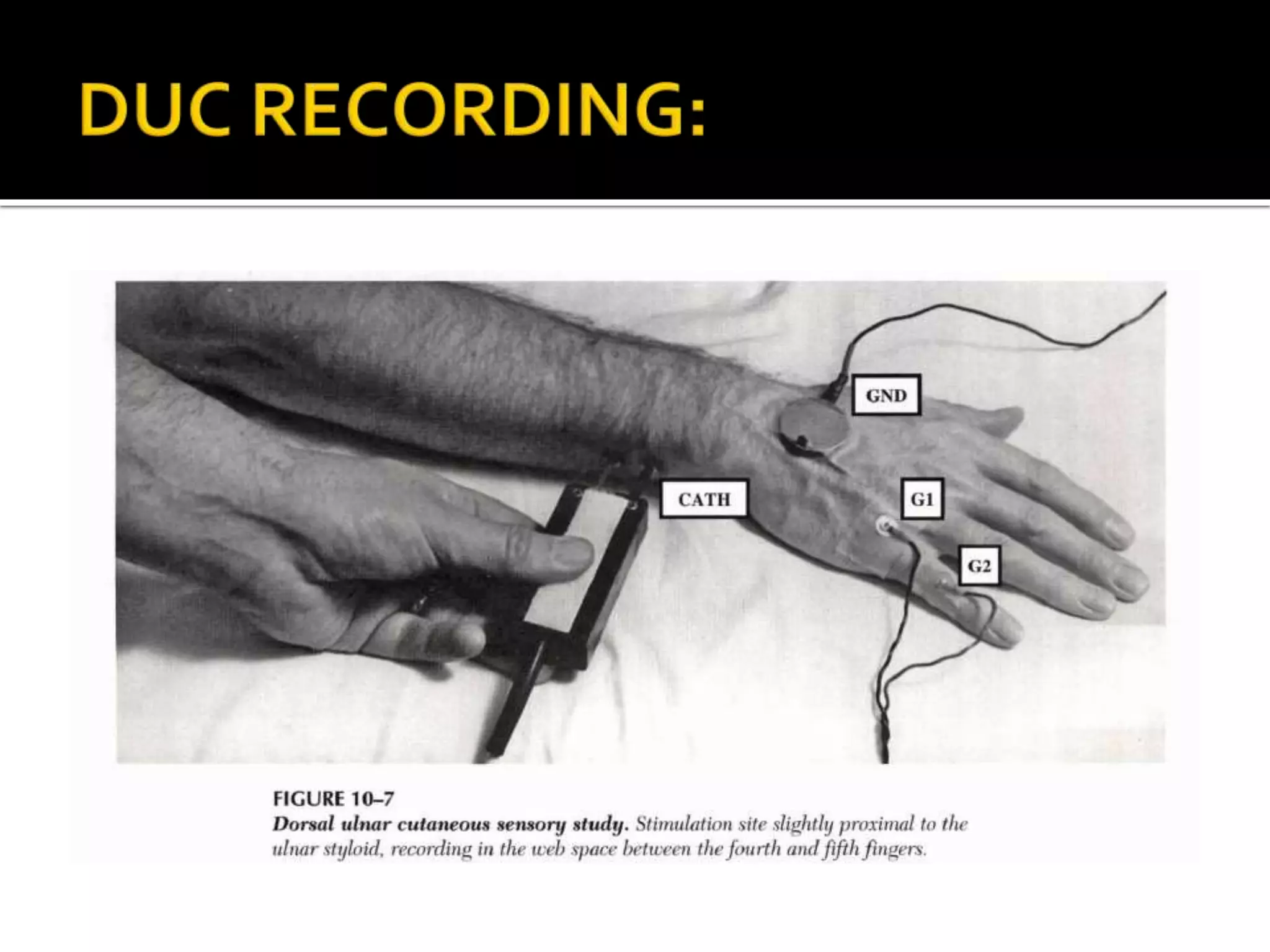
centimeters proximal to the wrist , the dorsal
ulnar cutaneous sensory branch exits, which
supplies sensation to the dorsal medial hand
and the dorsal little finger as far distally as
the nail & the 4 finger (3) digit.
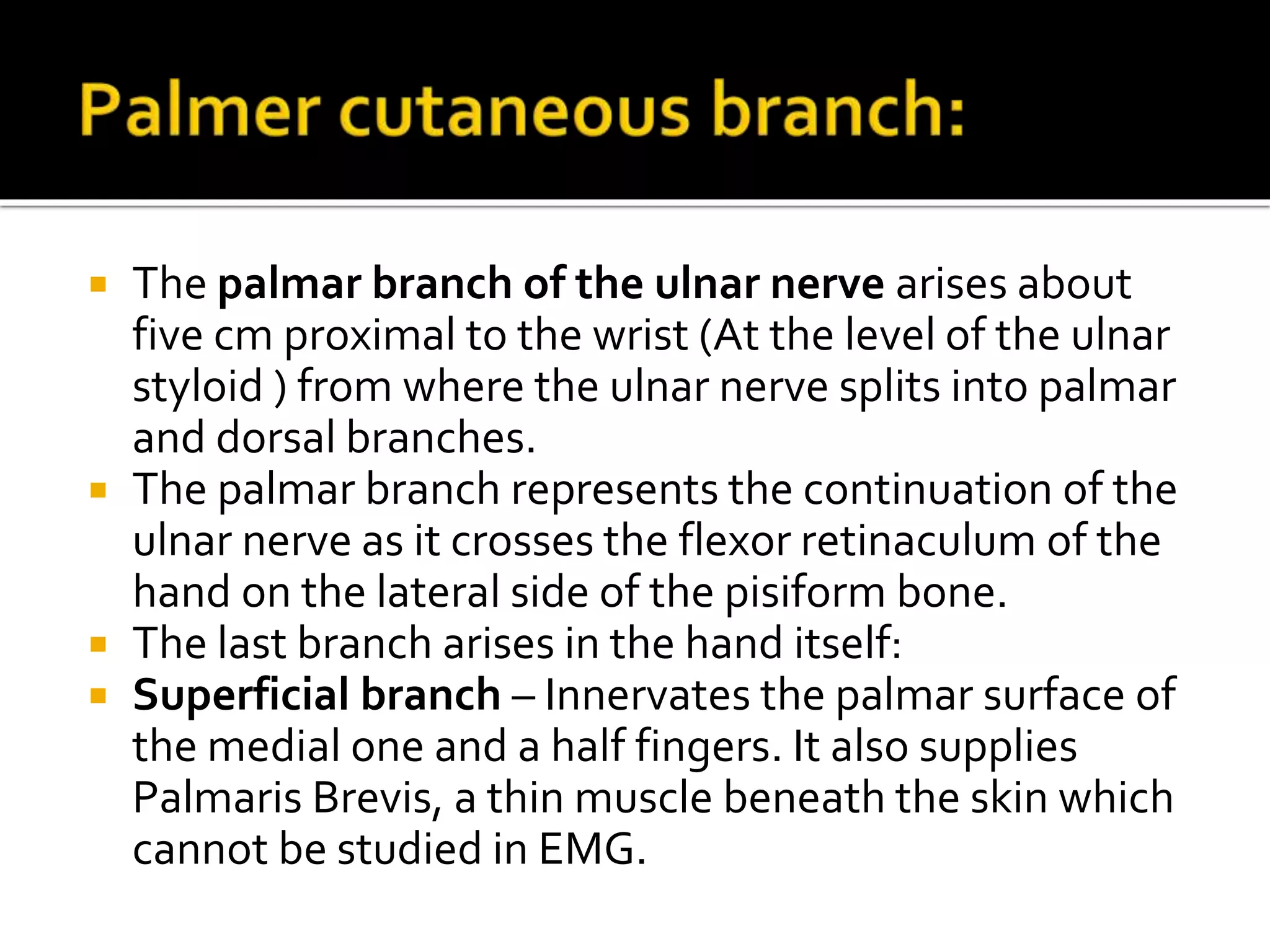
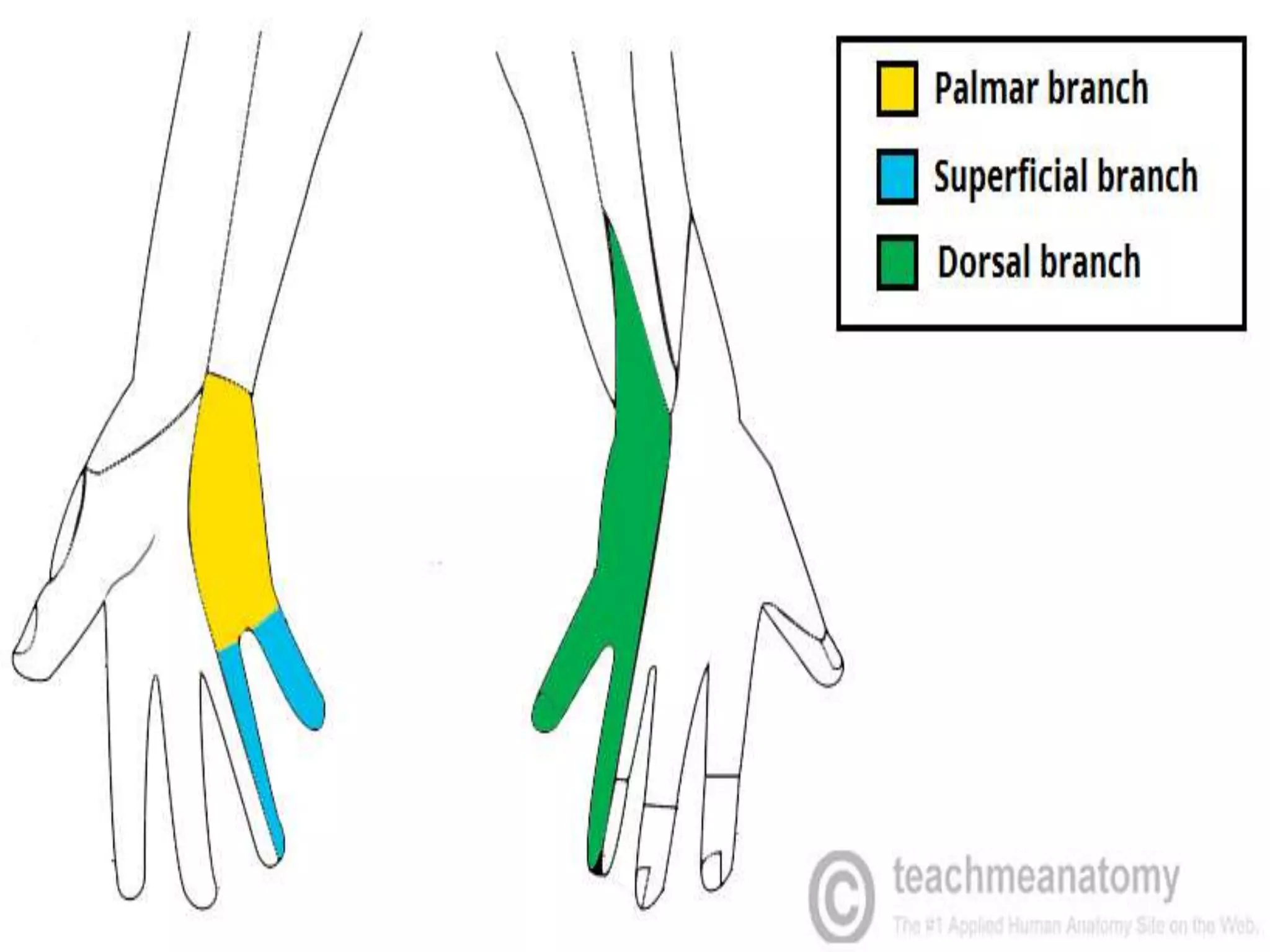
 The palmar branch of the ulnar nerve arises about
five cm proximal to the wrist (At the level of the ulnar
styloid ) from where the ulnar nerve splits into palmar
and dorsal branches.
 The palmar branch represents the continuation of the
ulnar nerve as it crosses the flexor retinaculum of the
hand on the lateral side of the pisiform bone.
 The last branch arises in the hand itself:
 Superficial branch – Innervates the palmar surface of
the medial one and a half fingers. It also supplies
Palmaris Brevis, a thin muscle beneath the skin which
cannot be studied in EMG.
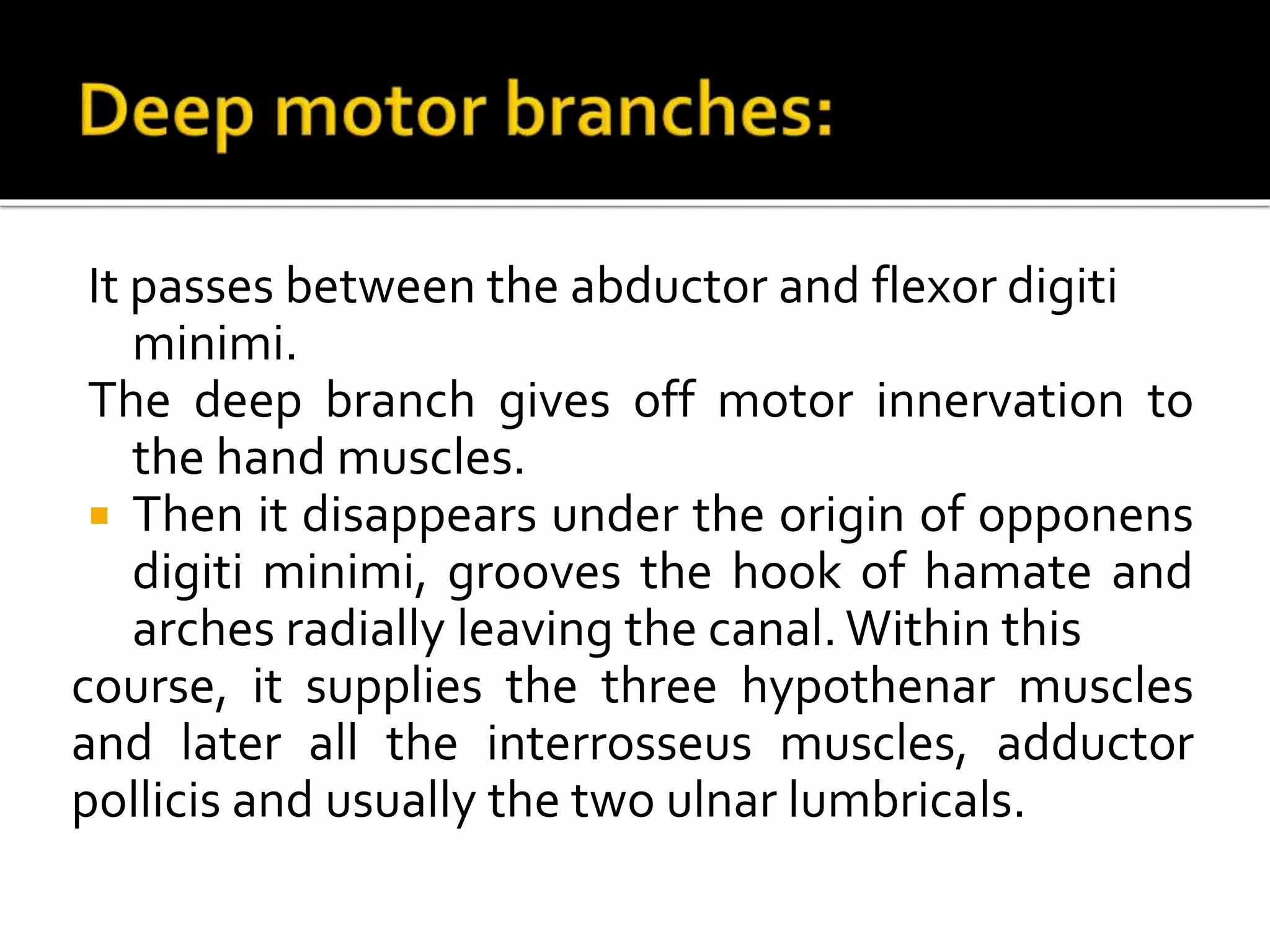
It passes between the abductor and flexor digiti
minimi.
The deep branch gives off motor innervation to
the hand muscles.
 Then it disappears under the origin of opponens
digiti minimi, grooves the hook of hamate and
arches radially leaving the canal. Within this
course, it supplies the three hypothenar muscles
and later all the interrosseus muscles, adductor
pollicis and usually the two ulnar lumbricals.
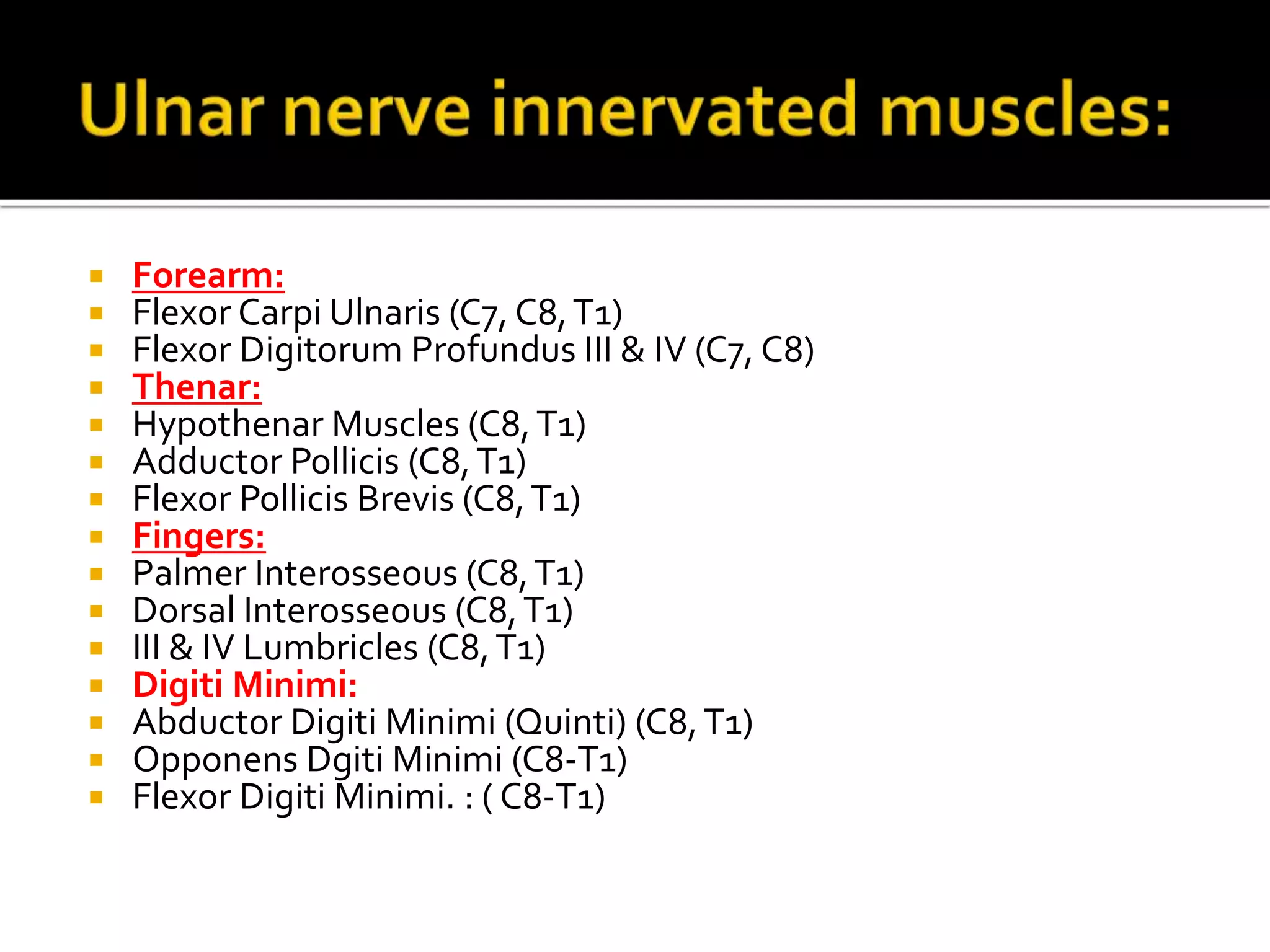
 Forearm:
 Flexor Carpi Ulnaris (C7, C8,T1)
 Flexor Digitorum Profundus III & IV (C7, C8)
 Thenar:
 Hypothenar Muscles (C8,T1)
 Adductor Pollicis (C8,T1)
 Flexor Pollicis Brevis (C8,T1)
 Fingers:
 Palmer Interosseous (C8,T1)
 Dorsal Interosseous (C8,T1)
 III & IV Lumbricles (C8,T1)
 Digiti Minimi:
 Abductor Digiti Minimi (Quinti) (C8,T1)
 Opponens Dgiti Minimi (C8-T1)
 Flexor Digiti Minimi. : ( C8-T1)
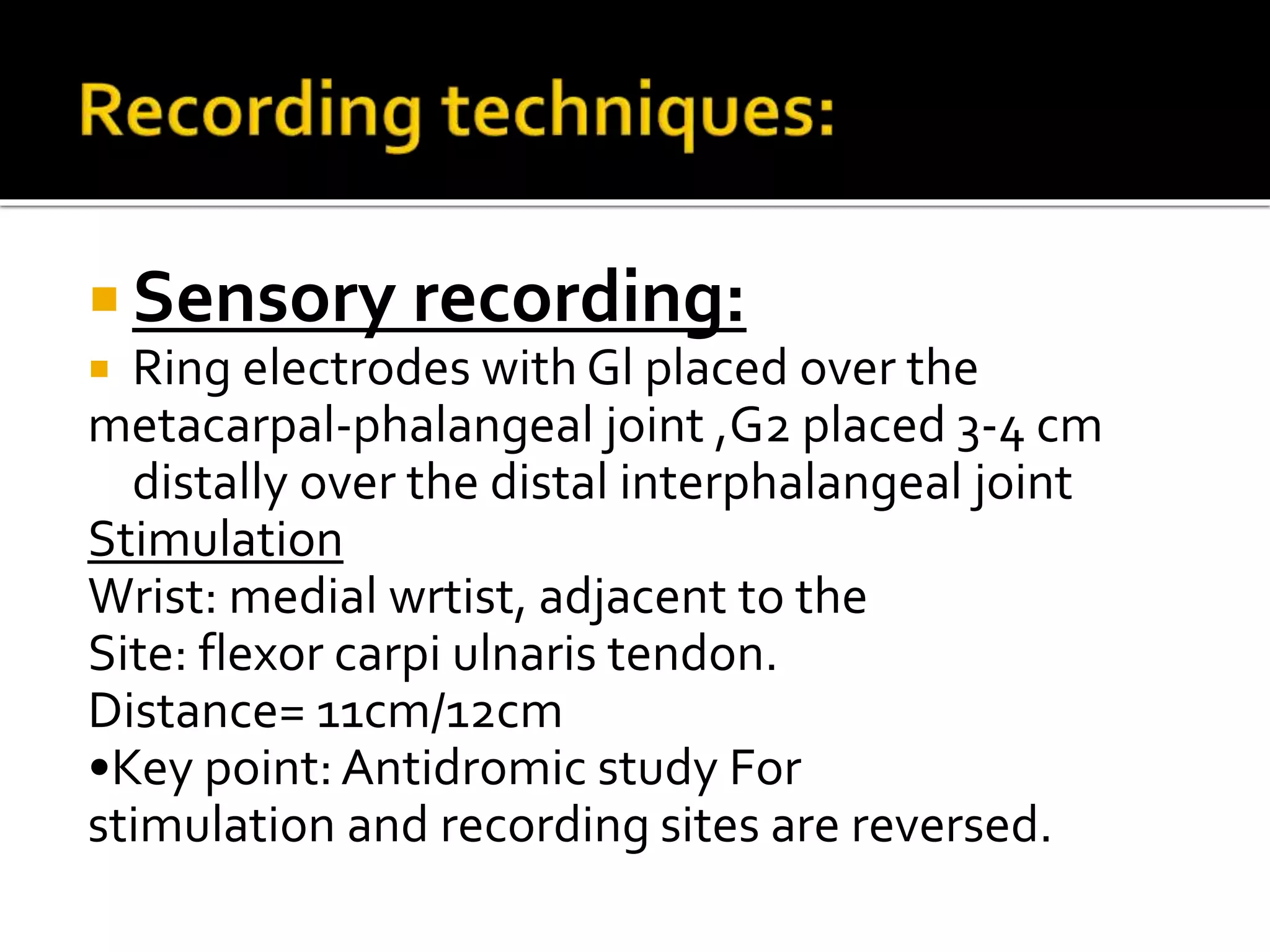
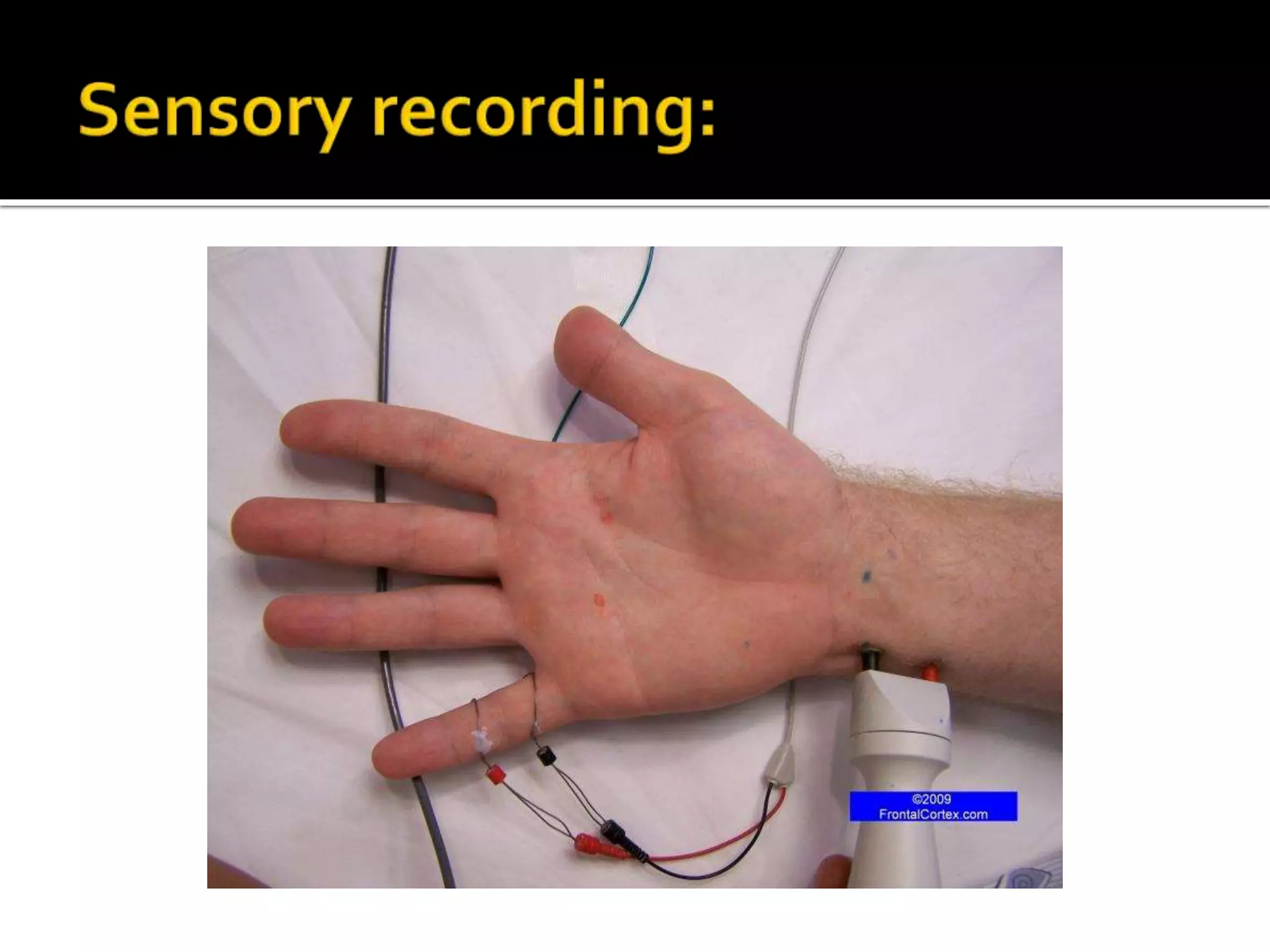
 Sensory recording:
 Ring electrodes with Gl placed over the
metacarpal-phalangeal joint ,G2 placed 3-4 cm
distally over the distal interphalangeal joint
Stimulation
Wrist: medial wrtist, adjacent to the
Site: flexor carpi ulnaris tendon.
Distance= 11cm/12cm
•Key point:Antidromic study For
stimulation and recording sites are reversed.
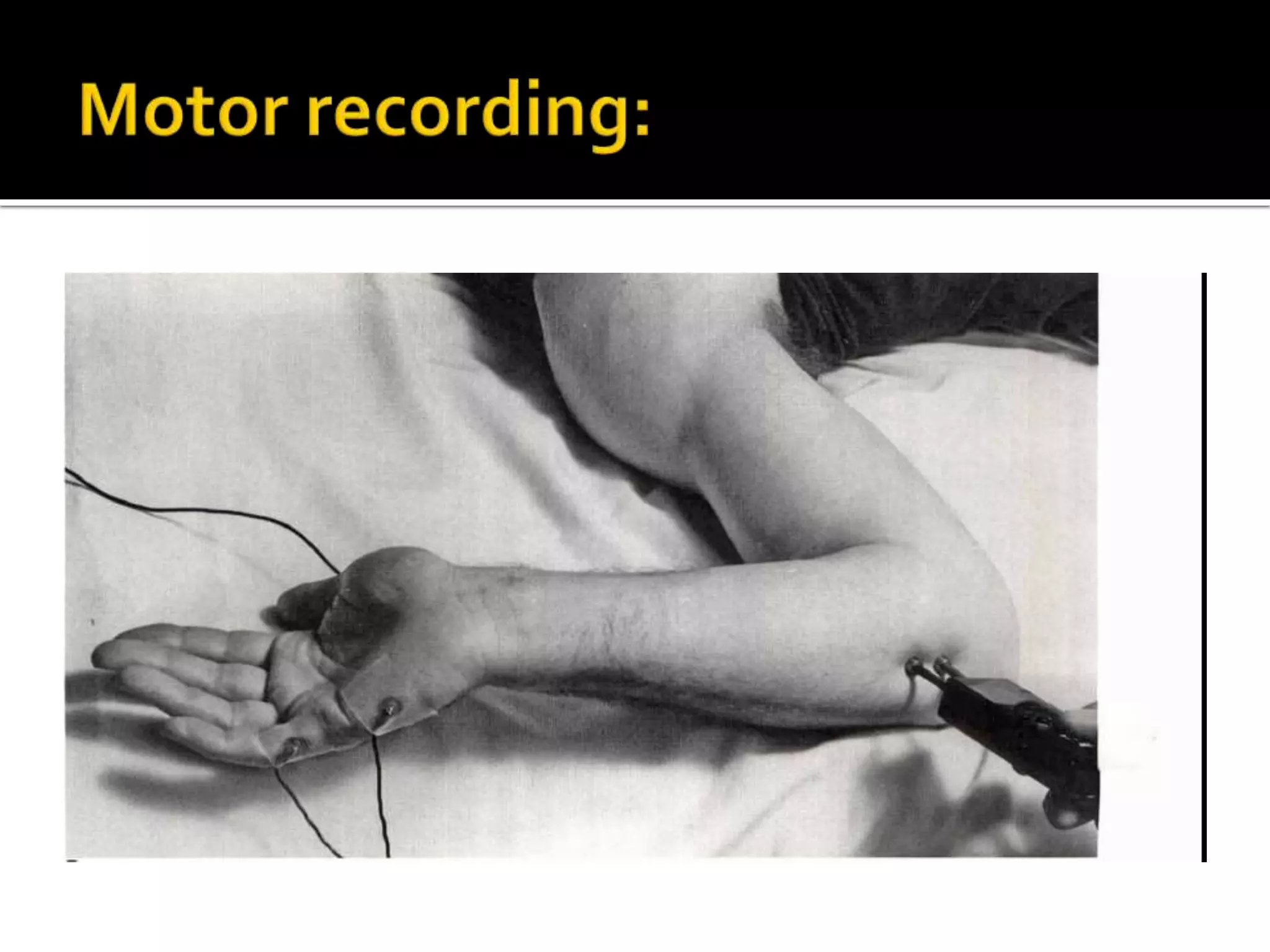
 In a motor NCS, the active electrode G1
placed over the belly of a muscle supplied by
the nerve.The reference electrode G2 placed
3-4 cm distal to G1 electrode, preferably on a
bony predominance. Ground is placed in b/w
active recording and stimulation electrode.
Ulnar nerve antomy and recording techniques

Ulnar nerve antomy and recording techniques

  • 1.
  • 2.
  • 3.
     In humananatomy, the ulnar nerve is a nerve which runs near the ulna bone.The ulnar collateral ligament of elbow joint is in relation with the ulnar nerve.The nerve is the largest unprotected nerve in the human body (meaning unprotected by muscle or bone), so injury is common.  The ulnar nerve originates from the C8-T1 nerve roots (and occasionally carries C7 fibres) which form part of the medial cord of the brachial plexus, and descends on the postero-medial aspect of the humerus.The ulnar nerve is derived from the brachial plexus. It is a continuation of the medial cord, containing fibres from spinal roots C8 andT1.
  • 5.
     After arisingfrom the brachial plexus, the ulnar nerve descends down the medial side of the upper arm ( postero-medial aspect of the humerus).  From axilla to arm: From the axilla it enters in the arm and stays between the brachial artery and vein , through the cubital tunnel at elbow. Because of the mild pain and tingling throughout the forearm associated with an inadvertent impact of the nerve at this point, this is usually called the “FUNNY BONE”.
  • 7.
     At theelbow the ulnar nerve lies in a groove (Retrocondylar groove) which is formed by medial epicondyle humerus and olecranon process of ulna, referred as "funny bone".  The ulnar nerve is trapped between the bone and the overlying skin at this point. It enters the forearm through the aponeurotic arcade (CubitalTunnel)
  • 9.
     It entersthe anterior (flexor) compartment of the forearm between the humeral and ulnar heads, lying under the aponeurosis of flexor carpi ulnaris alongside the ulna.There it supplies one and a half muscles (flexor carpi ulnaris and the medial half of flexor digitorum profundus) and courses with the ulnar artery, travelling inferiorly with it deep to the flexor carpi ulnaris muscle.
  • 10.
    The ulnar nerveenters the anterior (flexor) compartment of the forearm through the two heads of flexor Carpi ulnaris and runs alongside the ulna bone. There it innervates purely the Flexor Carpi Ulnaris (FCU) muscle & medial half of Flexor Digitorum Profundus III & IV (FDP) muscle.  No further muscle is supplied by the ulnar nerve in the medial forearm until it enters the wrist through guyon’s canal.
  • 11.
    In the forearmthe ulnar nerve gives 2 superficial sensory branches before entering the Guyon’s canal. These two sensory branches are as; 1. Dorsal Cutaneous Nerve 2. Palmar cutaneous Nerve
  • 12.
     In theforearm the ulnar nerve runs distally on the ulnar artery, and about five to eight centimeters proximal to the wrist , the dorsal ulnar cutaneous sensory branch exits, which supplies sensation to the dorsal medial hand and the dorsal little finger as far distally as the nail & the 4 finger (3) digit.
  • 14.
     The palmarbranch of the ulnar nerve arises about five cm proximal to the wrist (At the level of the ulnar styloid ) from where the ulnar nerve splits into palmar and dorsal branches.  The palmar branch represents the continuation of the ulnar nerve as it crosses the flexor retinaculum of the hand on the lateral side of the pisiform bone.  The last branch arises in the hand itself:  Superficial branch – Innervates the palmar surface of the medial one and a half fingers. It also supplies Palmaris Brevis, a thin muscle beneath the skin which cannot be studied in EMG.
  • 16.
    It passes betweenthe abductor and flexor digiti minimi. The deep branch gives off motor innervation to the hand muscles.  Then it disappears under the origin of opponens digiti minimi, grooves the hook of hamate and arches radially leaving the canal. Within this course, it supplies the three hypothenar muscles and later all the interrosseus muscles, adductor pollicis and usually the two ulnar lumbricals.
  • 17.
     Forearm:  FlexorCarpi Ulnaris (C7, C8,T1)  Flexor Digitorum Profundus III & IV (C7, C8)  Thenar:  Hypothenar Muscles (C8,T1)  Adductor Pollicis (C8,T1)  Flexor Pollicis Brevis (C8,T1)  Fingers:  Palmer Interosseous (C8,T1)  Dorsal Interosseous (C8,T1)  III & IV Lumbricles (C8,T1)  Digiti Minimi:  Abductor Digiti Minimi (Quinti) (C8,T1)  Opponens Dgiti Minimi (C8-T1)  Flexor Digiti Minimi. : ( C8-T1)
  • 18.
     Sensory recording: Ring electrodes with Gl placed over the metacarpal-phalangeal joint ,G2 placed 3-4 cm distally over the distal interphalangeal joint Stimulation Wrist: medial wrtist, adjacent to the Site: flexor carpi ulnaris tendon. Distance= 11cm/12cm •Key point:Antidromic study For stimulation and recording sites are reversed.
  • 21.
     In amotor NCS, the active electrode G1 placed over the belly of a muscle supplied by the nerve.The reference electrode G2 placed 3-4 cm distal to G1 electrode, preferably on a bony predominance. Ground is placed in b/w active recording and stimulation electrode.