Introduction to Matter and the Metric System 7 th  Grade Physical Science  Mr. Riordan
What is Matter? Matter is all things that we can see, touch, and smell in our daily lives.
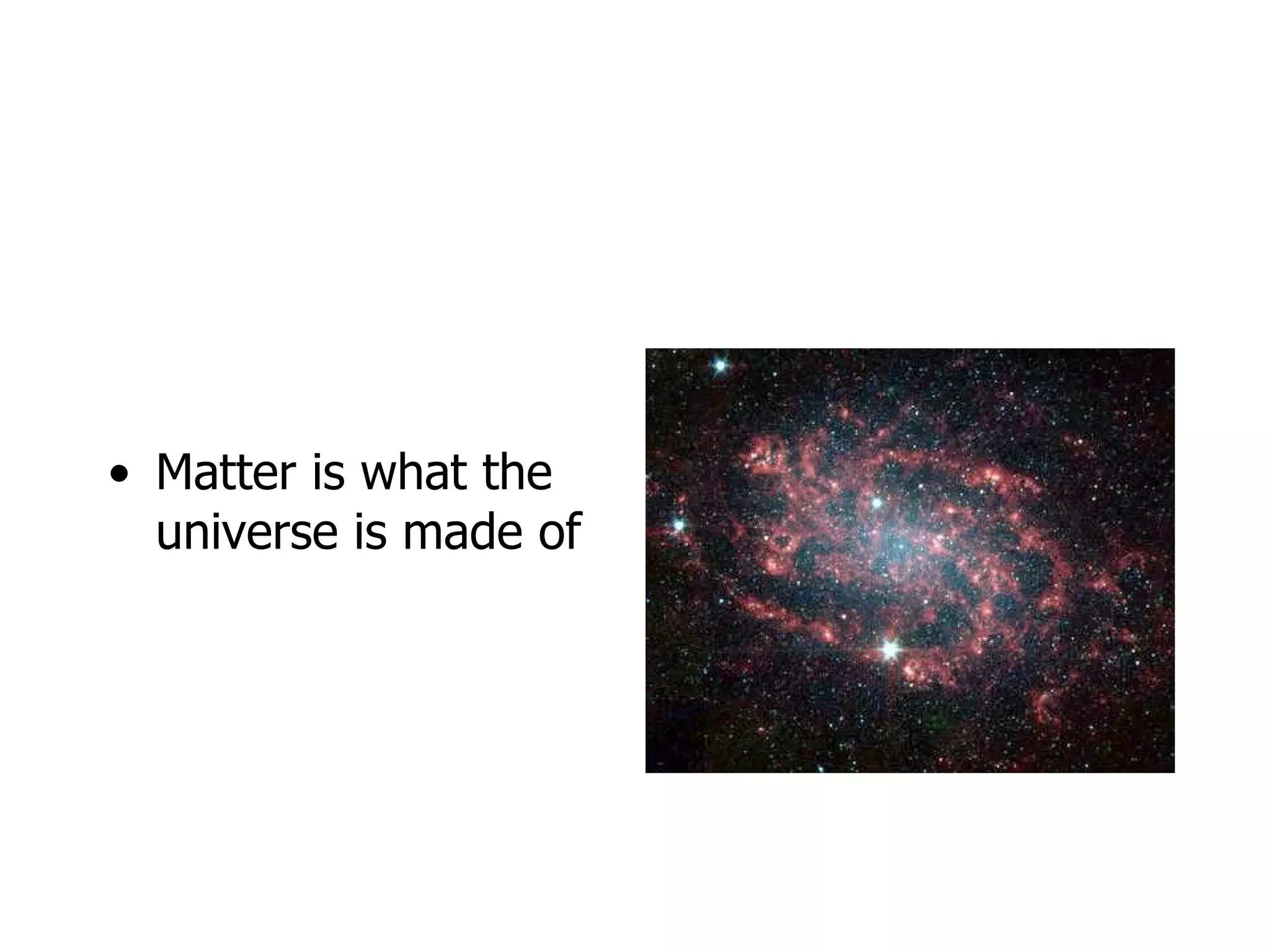
Matter is what the universe is made of
We are made of matter
Matter has  properties. A property is a  characteristic  of something that helps identify it, and which makes it unique. Properties  describe an object .
Properties of Matter There are some properties of matter.  These properties are  mass, weight, volume, and density . Our working definition of matter is any substance that has  mass and volume
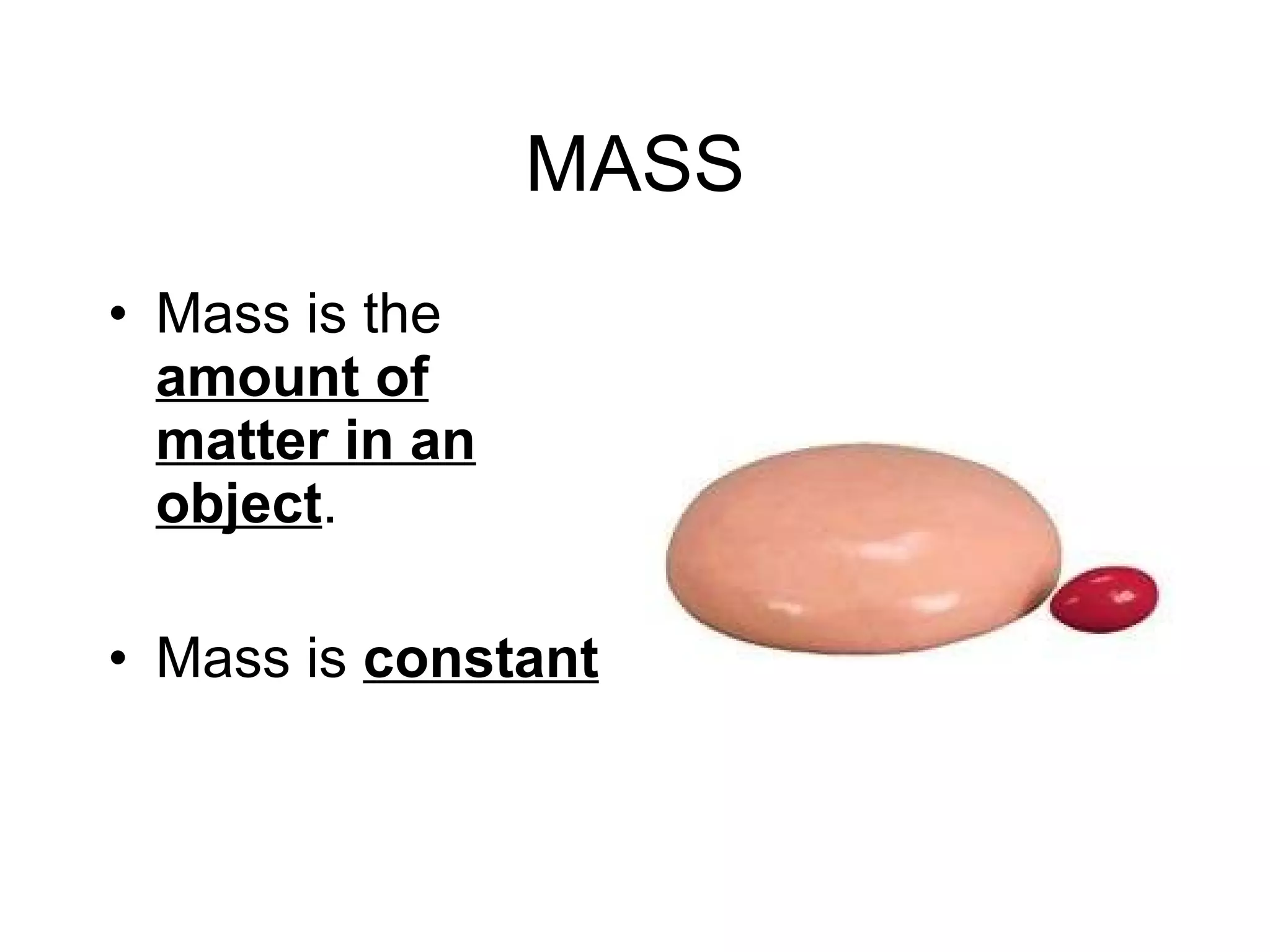
MASS Mass is the  amount of matter in an object . Mass is  constant
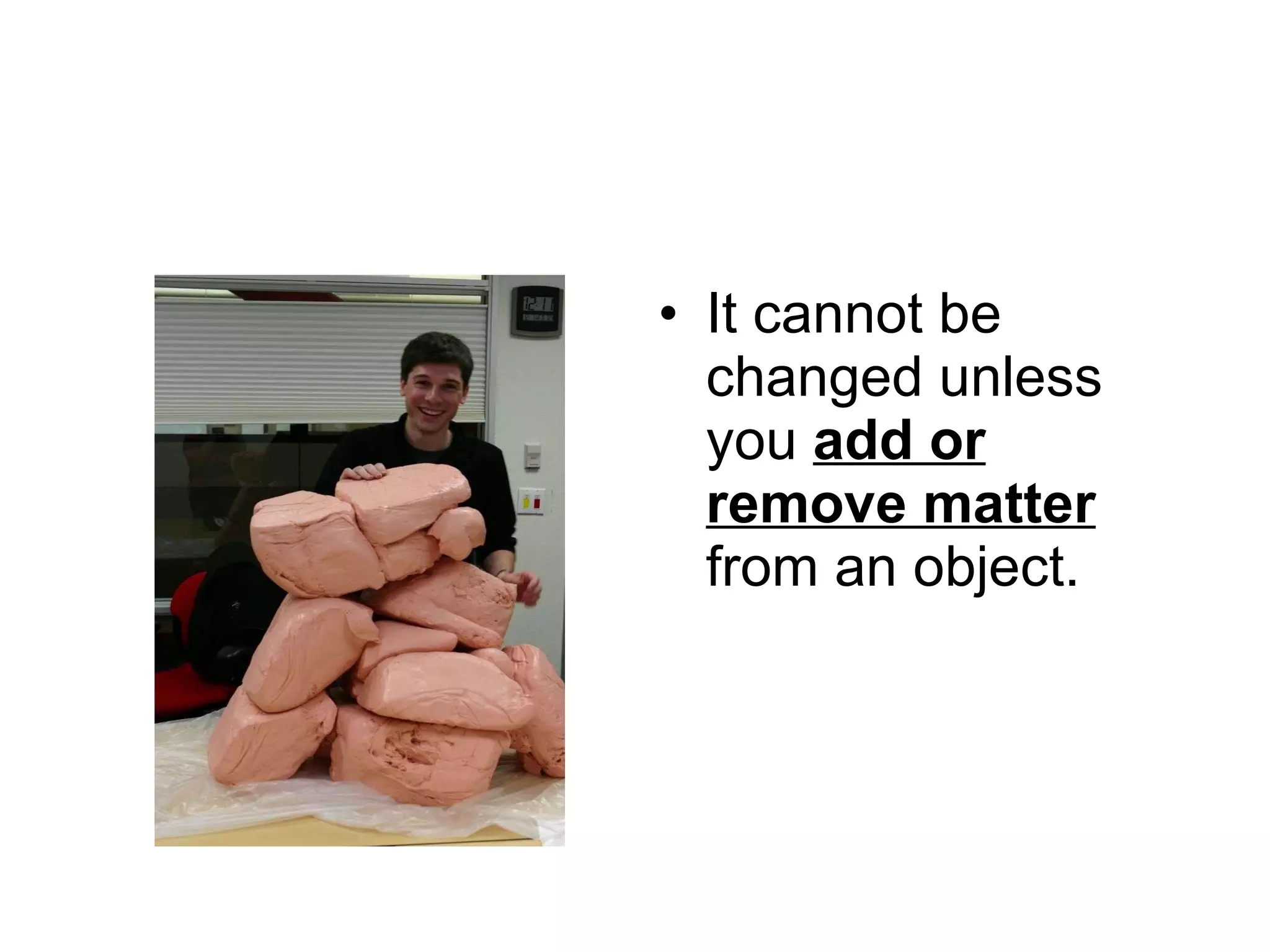
It cannot be changed unless you  add or remove matter  from an object.
The metric units that are used to express mass are the  gram (g),   milligram (mg) , and the  kilogram (kg).
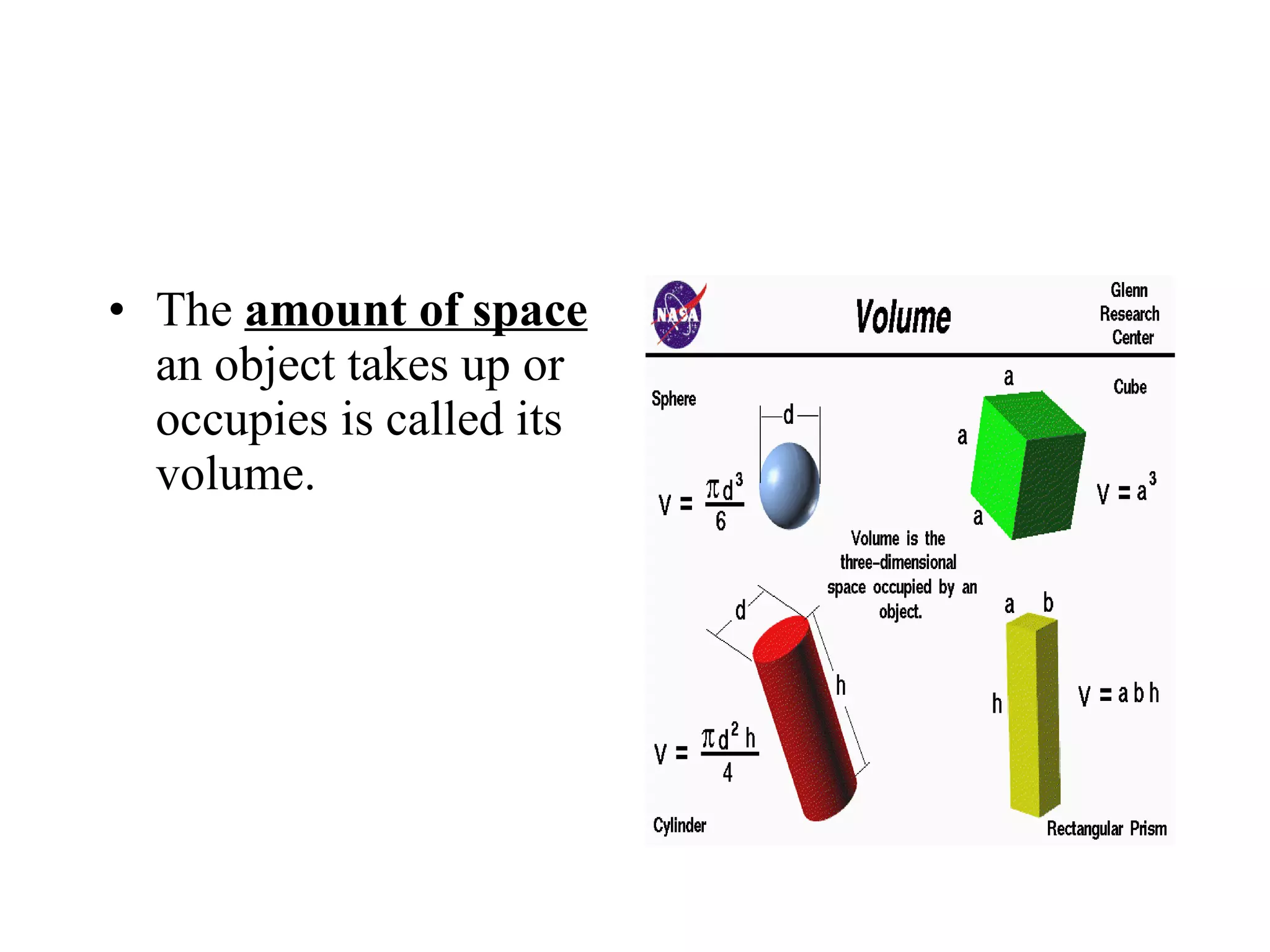
The  amount of space  an object takes up or occupies is called its volume.
The metric units that are used to express volume are the  liter (L),   milliliter (mL) , and the  cubic centimeter (cm 3 ). Liters and milliliters are used to measure the volume of  liquids . Cubic centimeters are used to measure the volume of  solids .
History of the Metric System Developed in Lyon, France, ~1670 Created to make  consistent  units for measurement Based on  “powers of 10” …what does this mean?
The Basic Metric Units Meter :  base unit for  length Liter :  base unit for  volume Gram :  base unit for  mass
Powers of 10 Prefixes   in front of the base unit tell if the measurement is  greater or less  than the base unit. Each prefix is a  factor of ten .  This makes it easy to convert between units.
How big is a …. Kilometer?  1000x larger then a meter Meter?  Height of a standard countertop Centimeter?  100x smaller then a meter, the    width of a dime Millimeter?  1000x smaller then a meter, the thickness of a dime
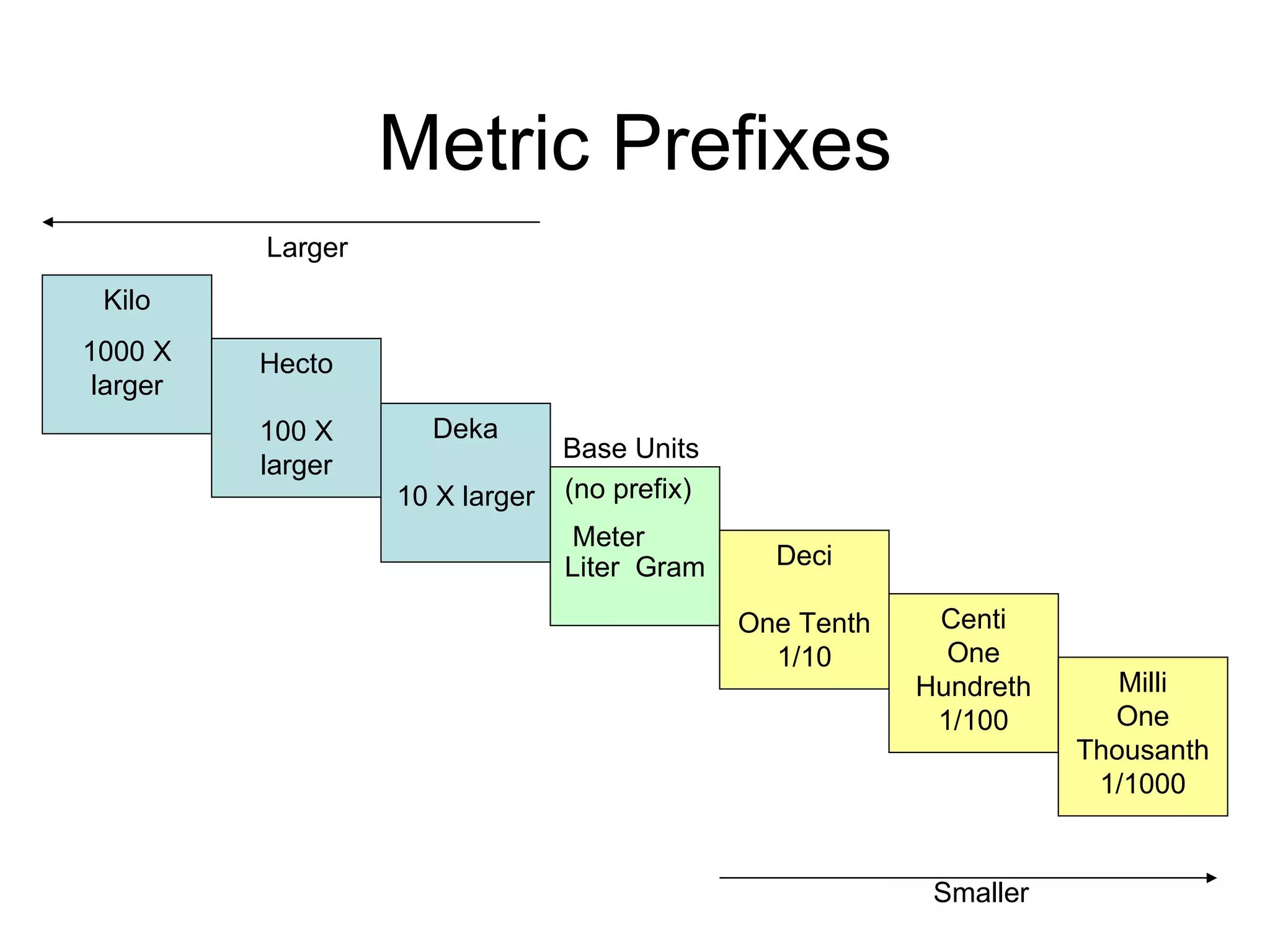
Metric Prefixes Kilo 1000x Larger Smaller Base Units Kilo 1000 X larger Hecto 100 X larger Deka 10 X larger (no prefix) Meter  Liter  Gram Deci One Tenth 1/10 Centi One Hundreth 1/100 Milli One Thousanth 1/1000
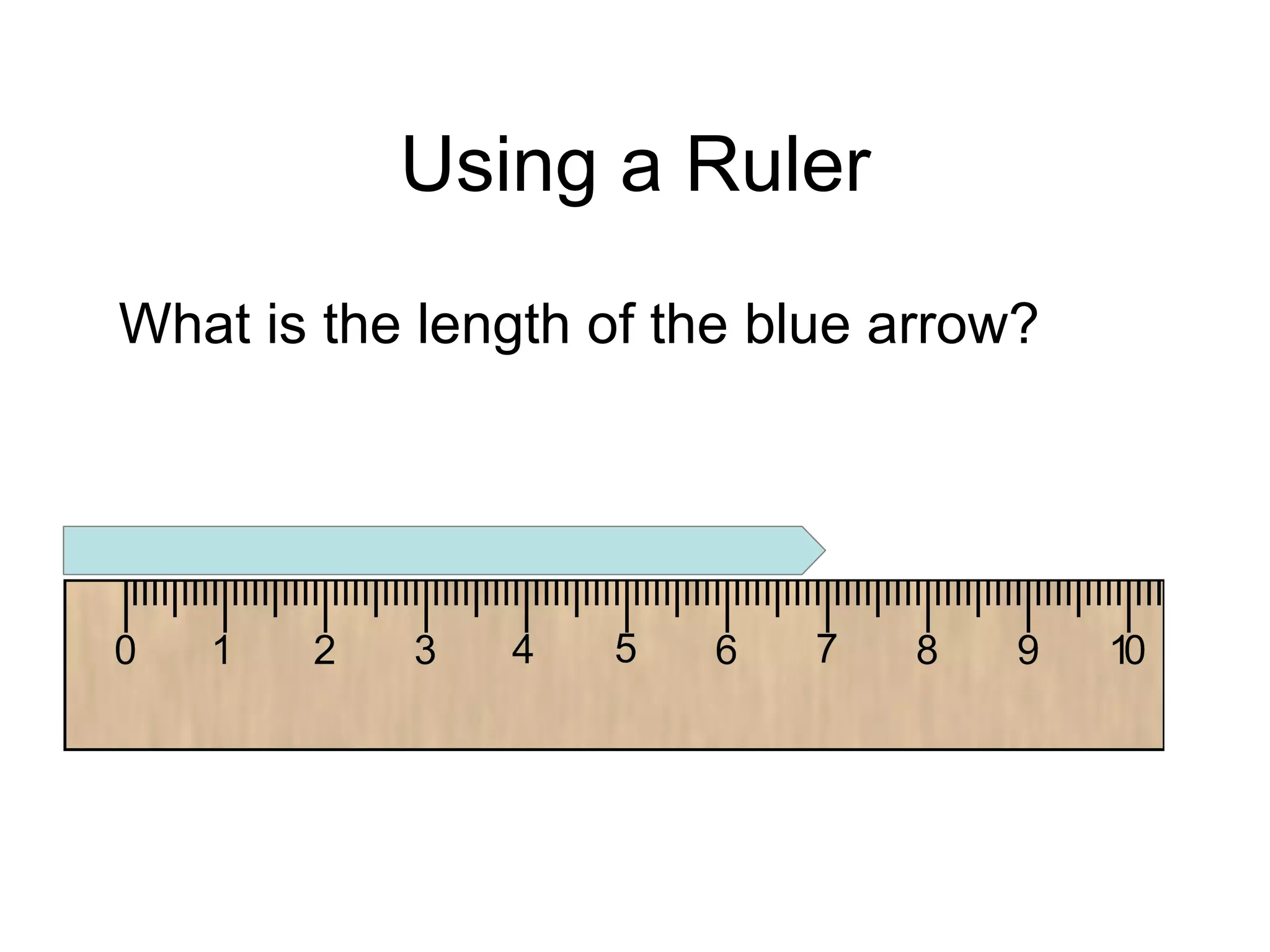
Using a Ruler What is the length of the blue arrow?
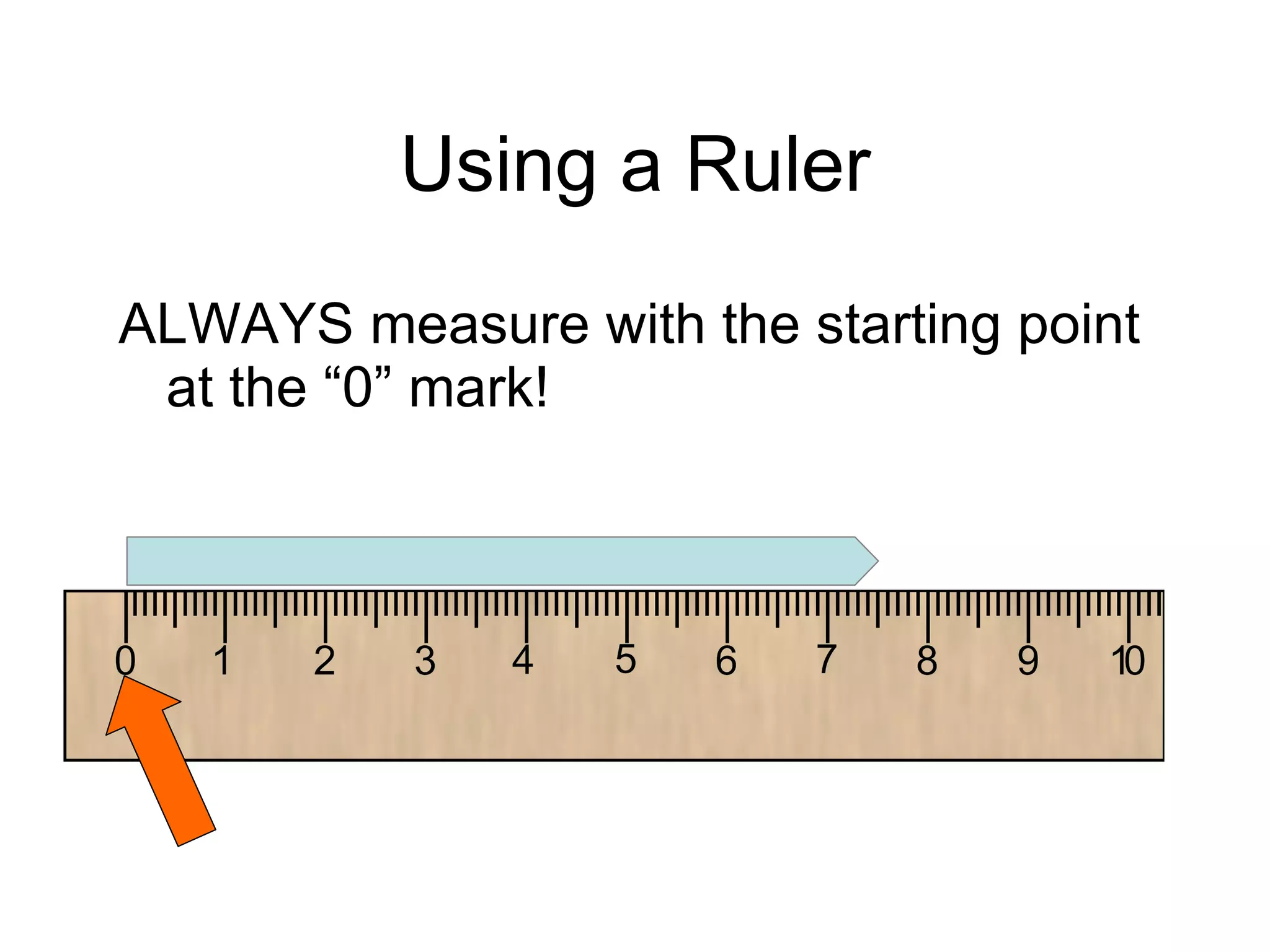
Using a Ruler ALWAYS measure with the starting point at the “0” mark!
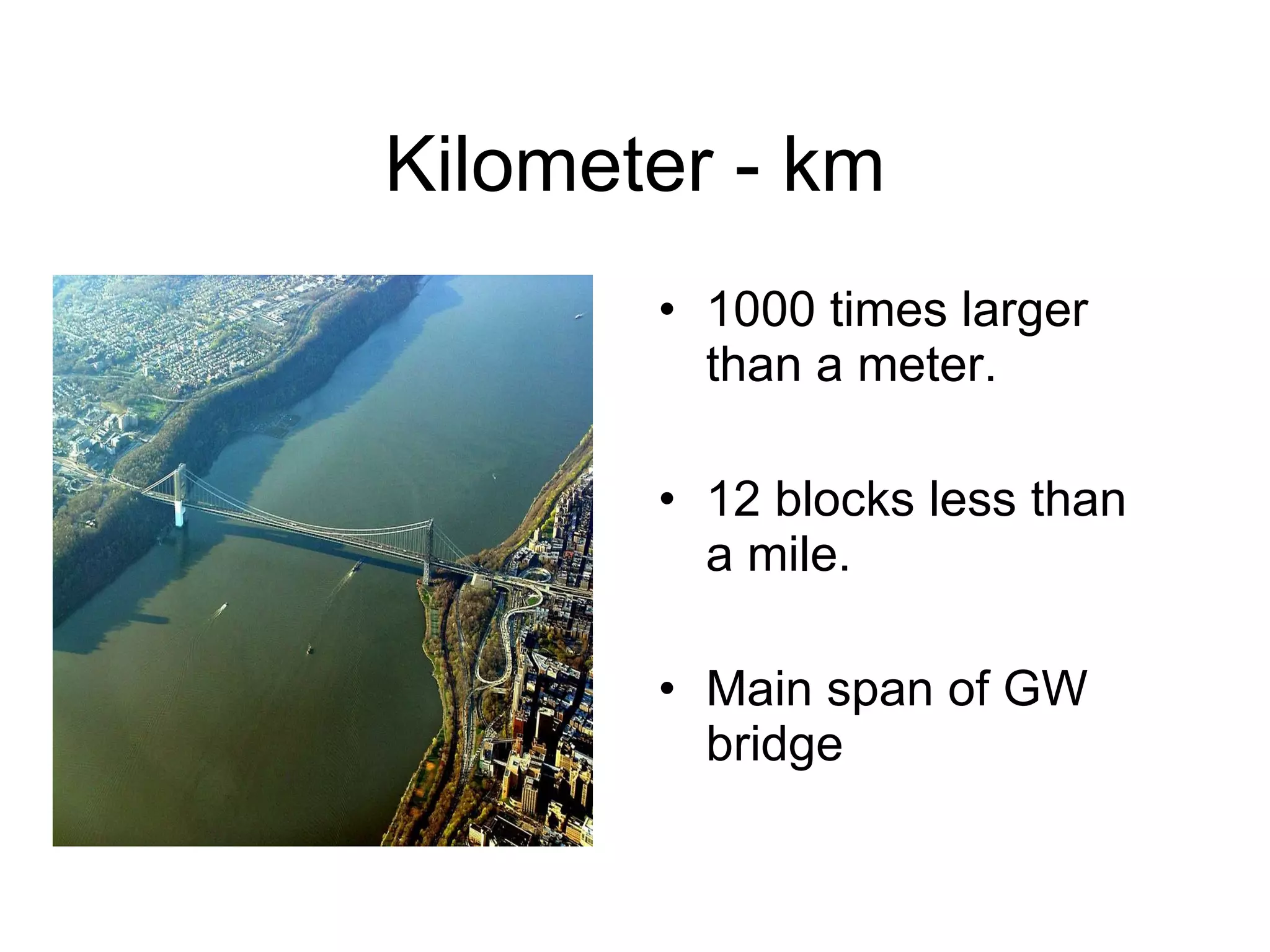
Kilometer - km 1000 times larger than a meter. 12 blocks less than a mile. Main span of GW bridge
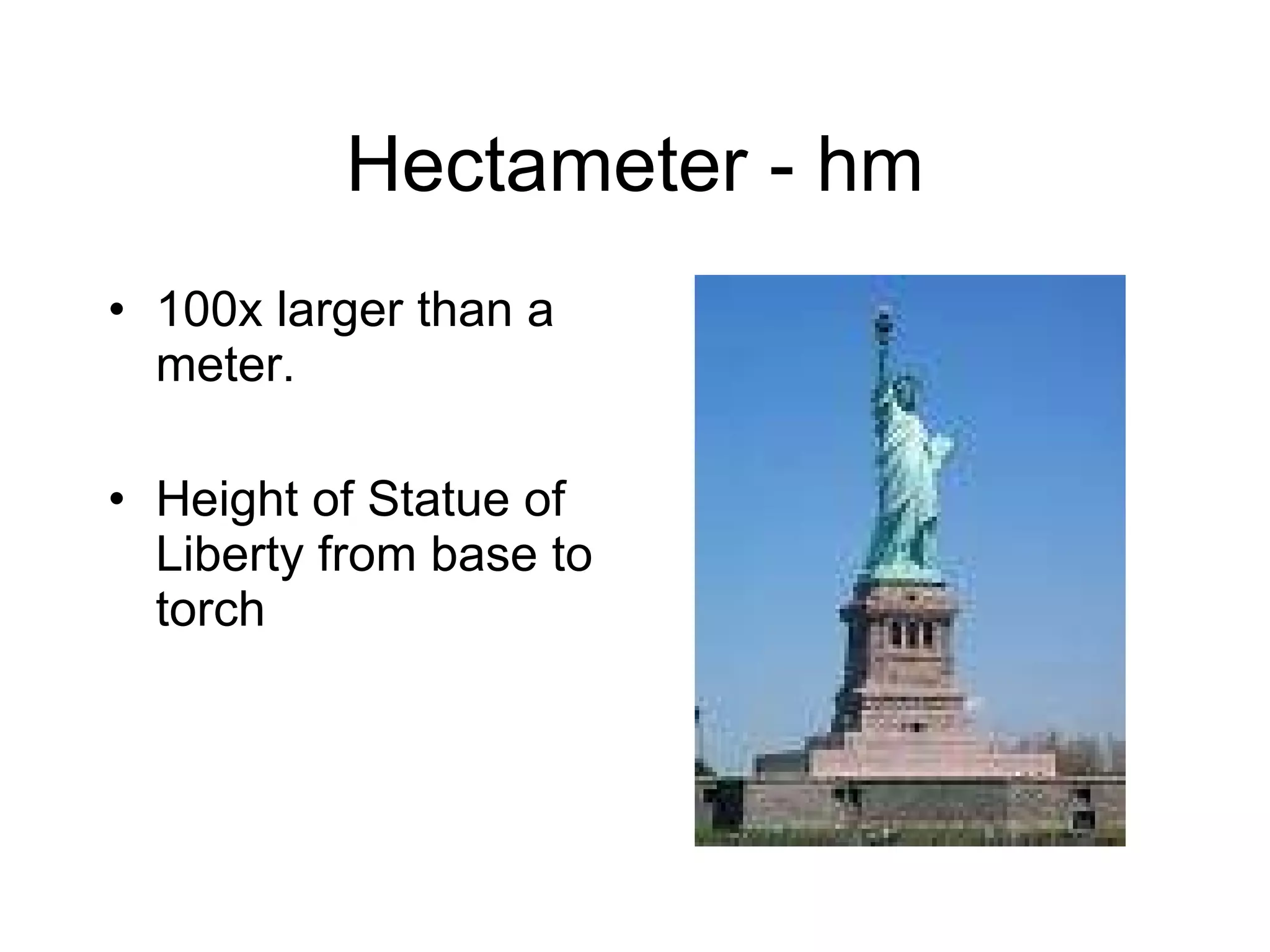
Hectameter - hm 100x larger than a meter. Height of Statue of Liberty from base to torch
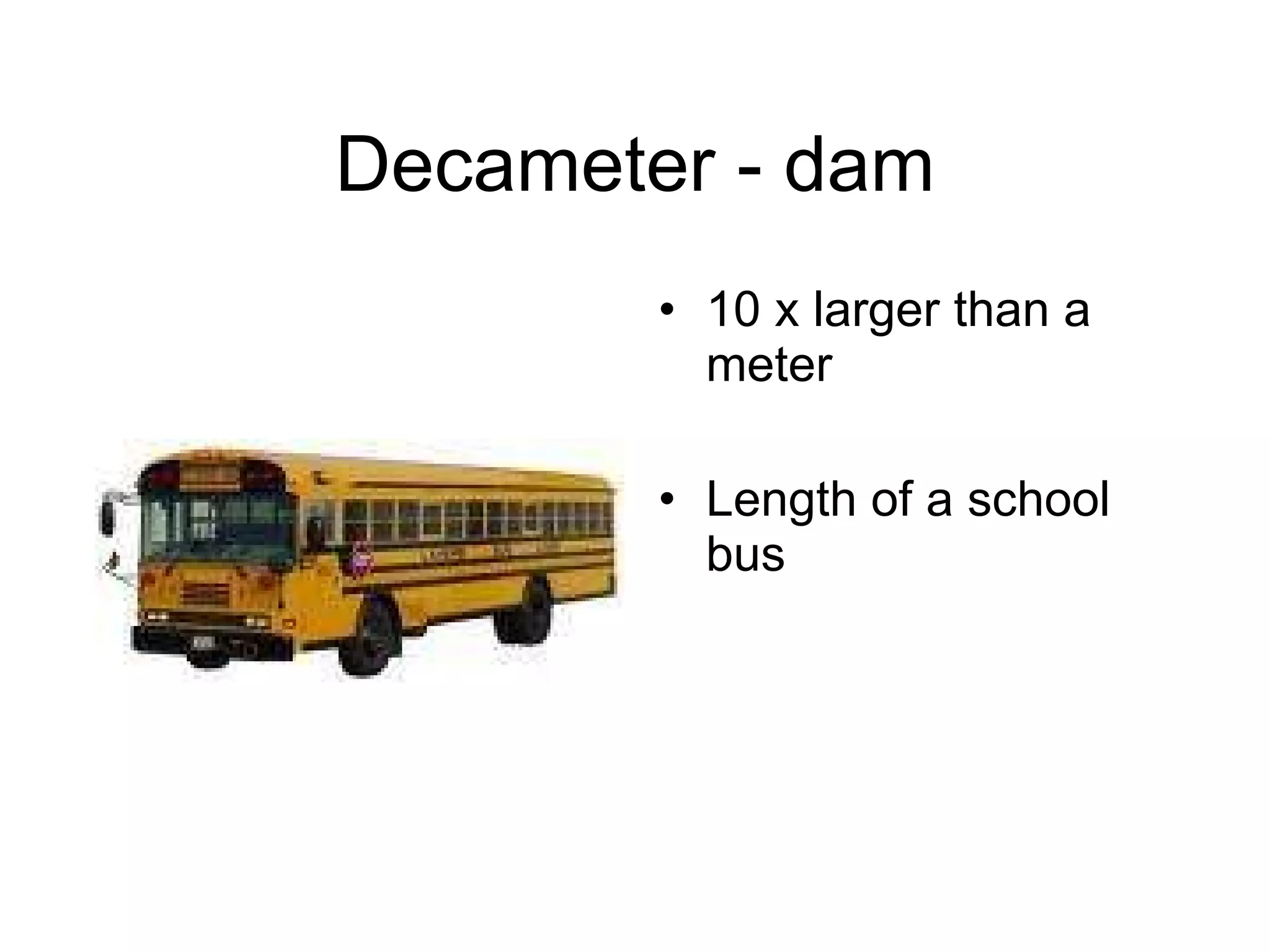
Decameter - dam 10 x larger than a meter Length of a school bus
Meter - m Length of a meter stick. Height of a counter top
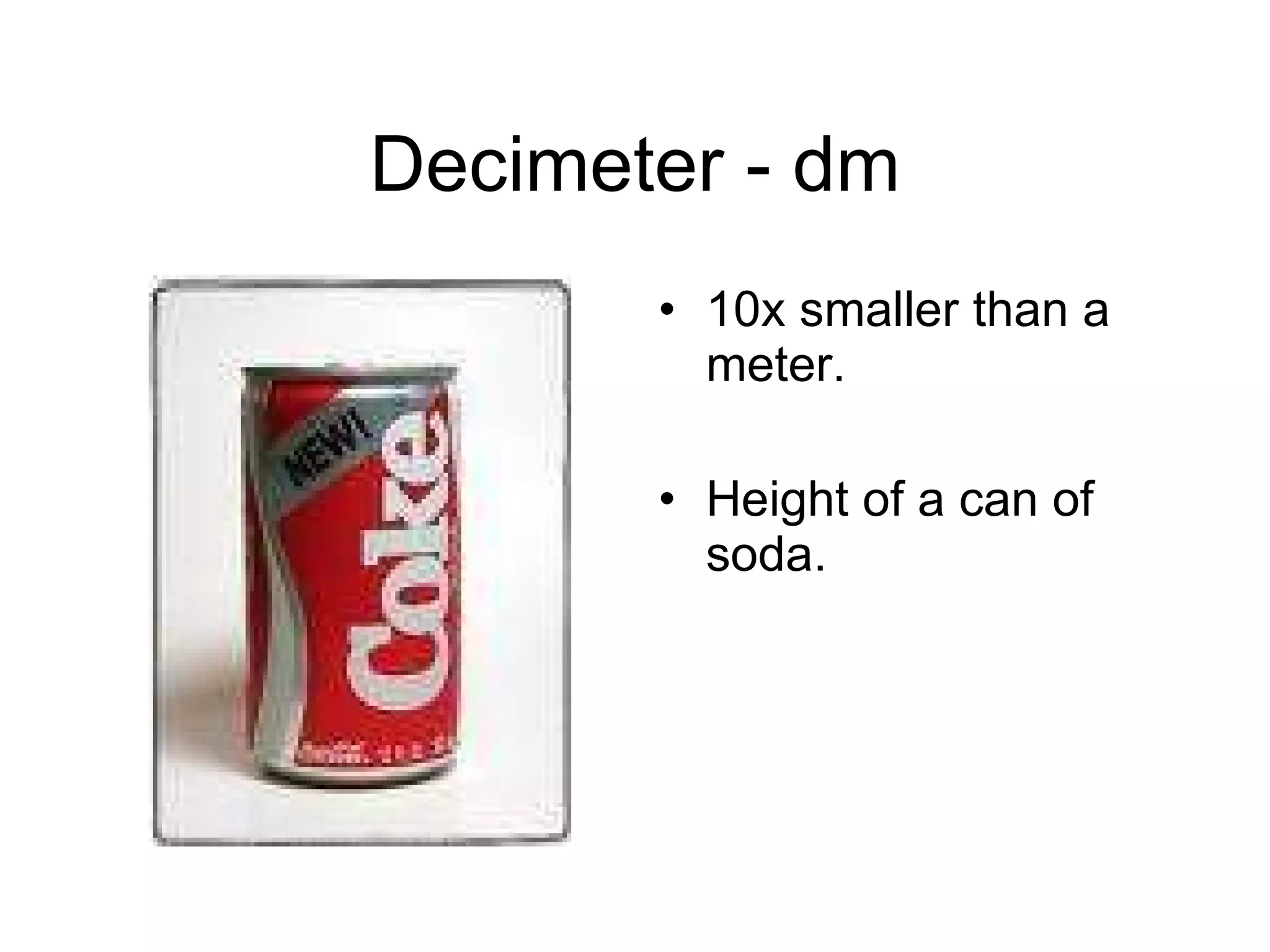
Decimeter - dm 10x smaller than a meter. Height of a can of soda.
Centimeter - cm 100x smaller than a meter ½ width of a dime
Millimeter - mm 1000x smaller than a meter The thickness of a dime
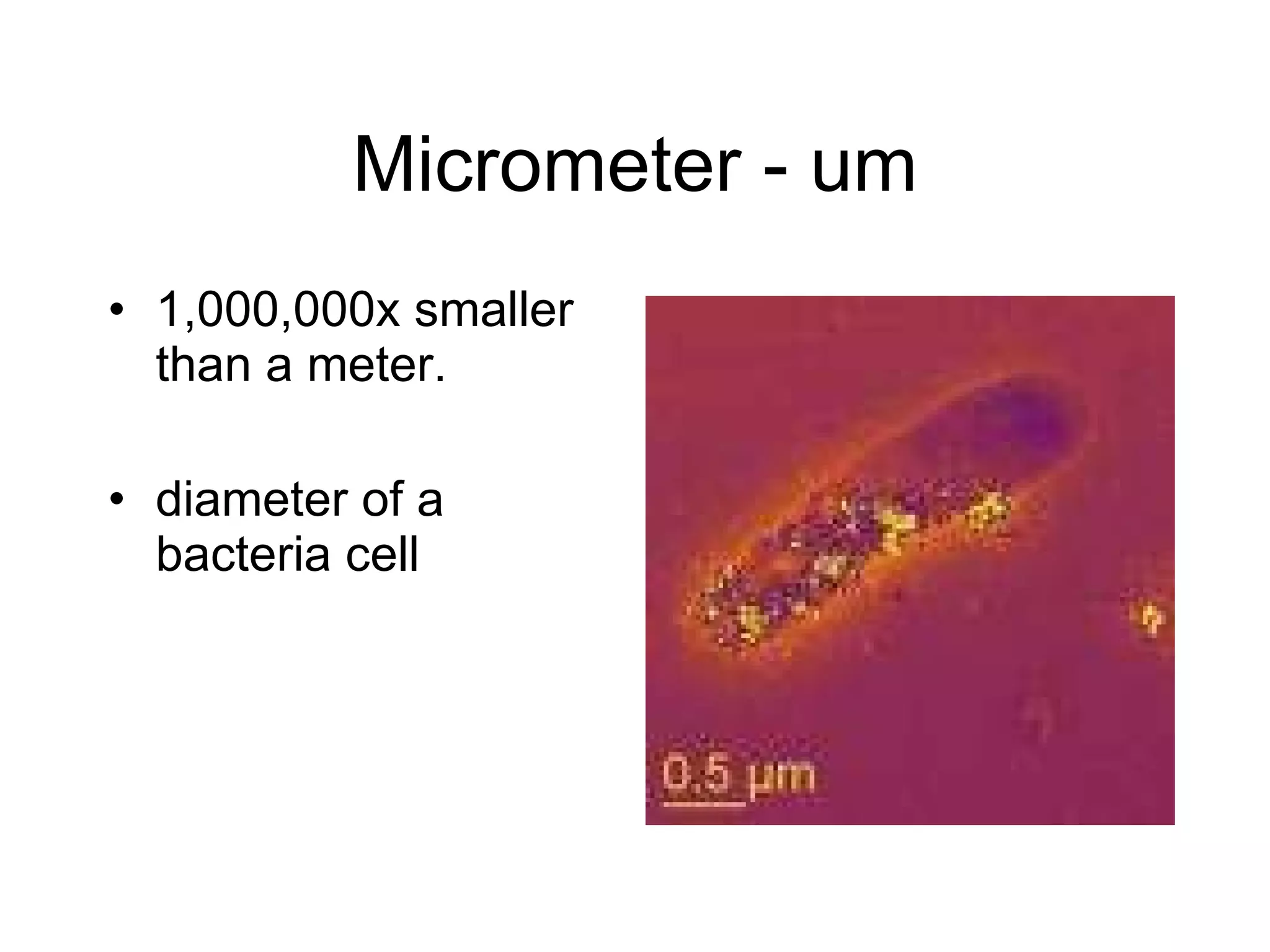
Micrometer - um 1,000,000x smaller than a meter. diameter of a bacteria cell
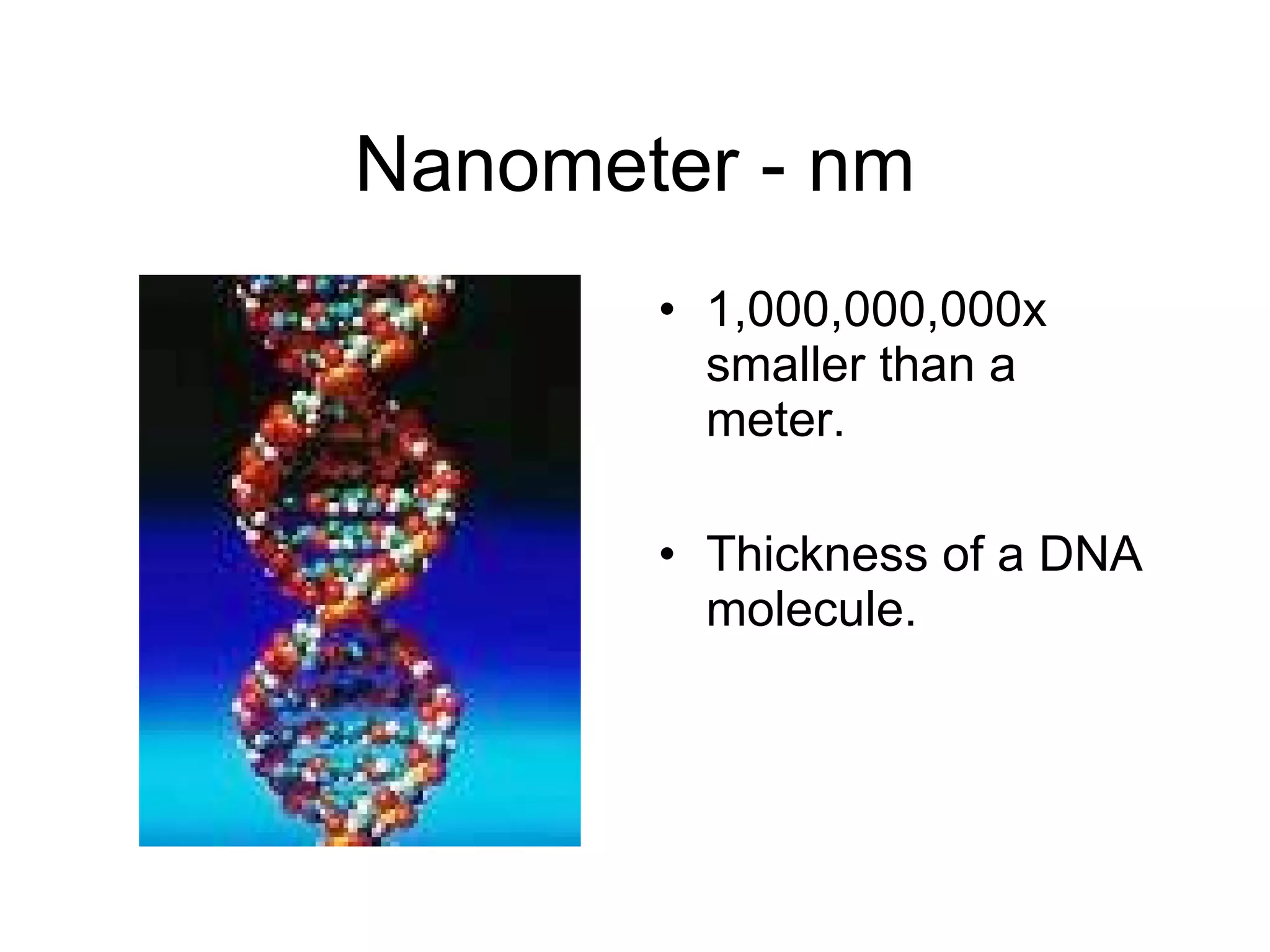
Nanometer - nm 1,000,000,000x smaller than a meter. Thickness of a DNA molecule.
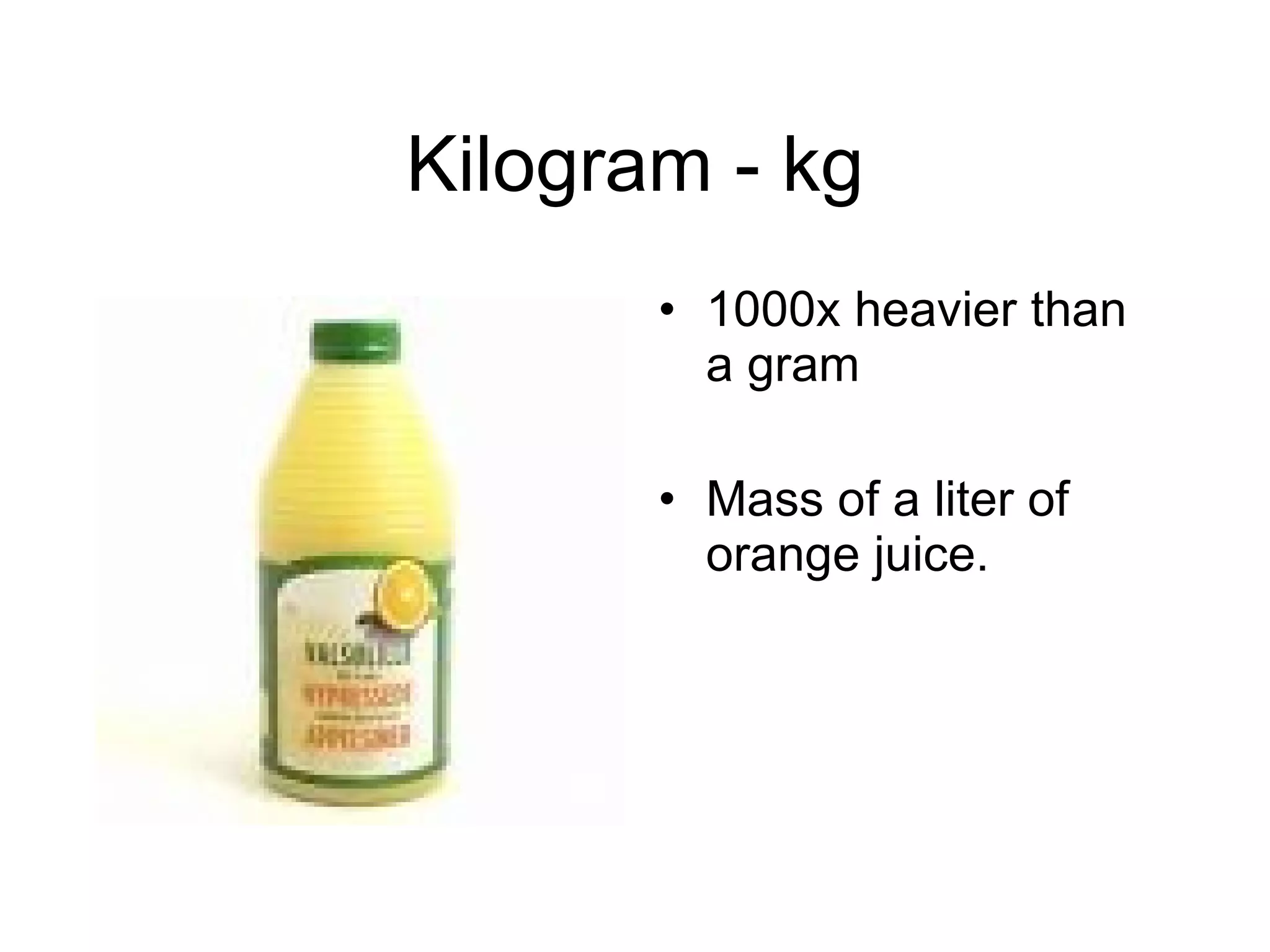
Kilogram - kg 1000x heavier than a gram Mass of a liter of orange juice.
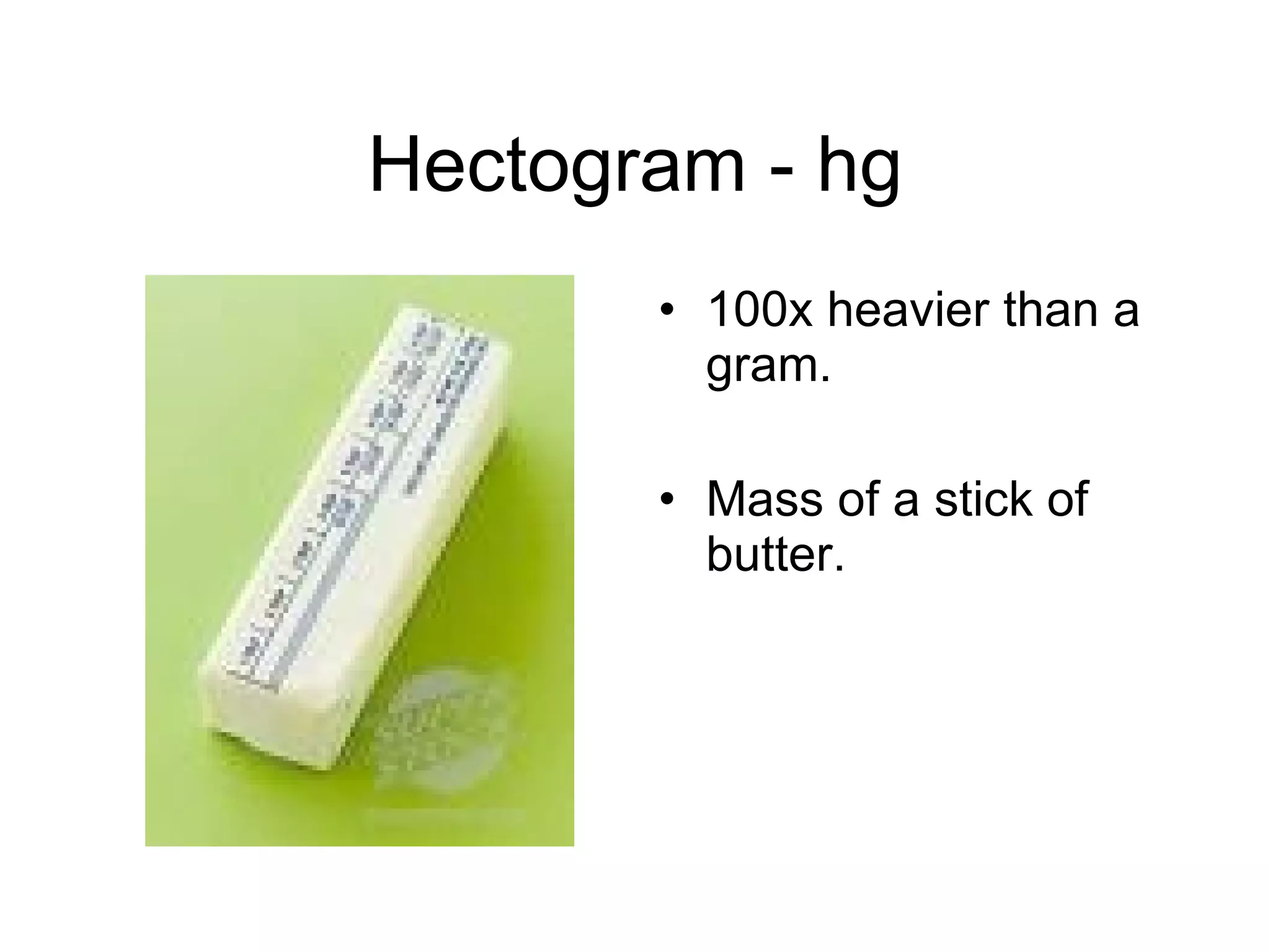
Hectogram - hg 100x heavier than a gram. Mass of a stick of butter.
Decagram - dkg 10 x heavier than a gram Mass of 2 nickels
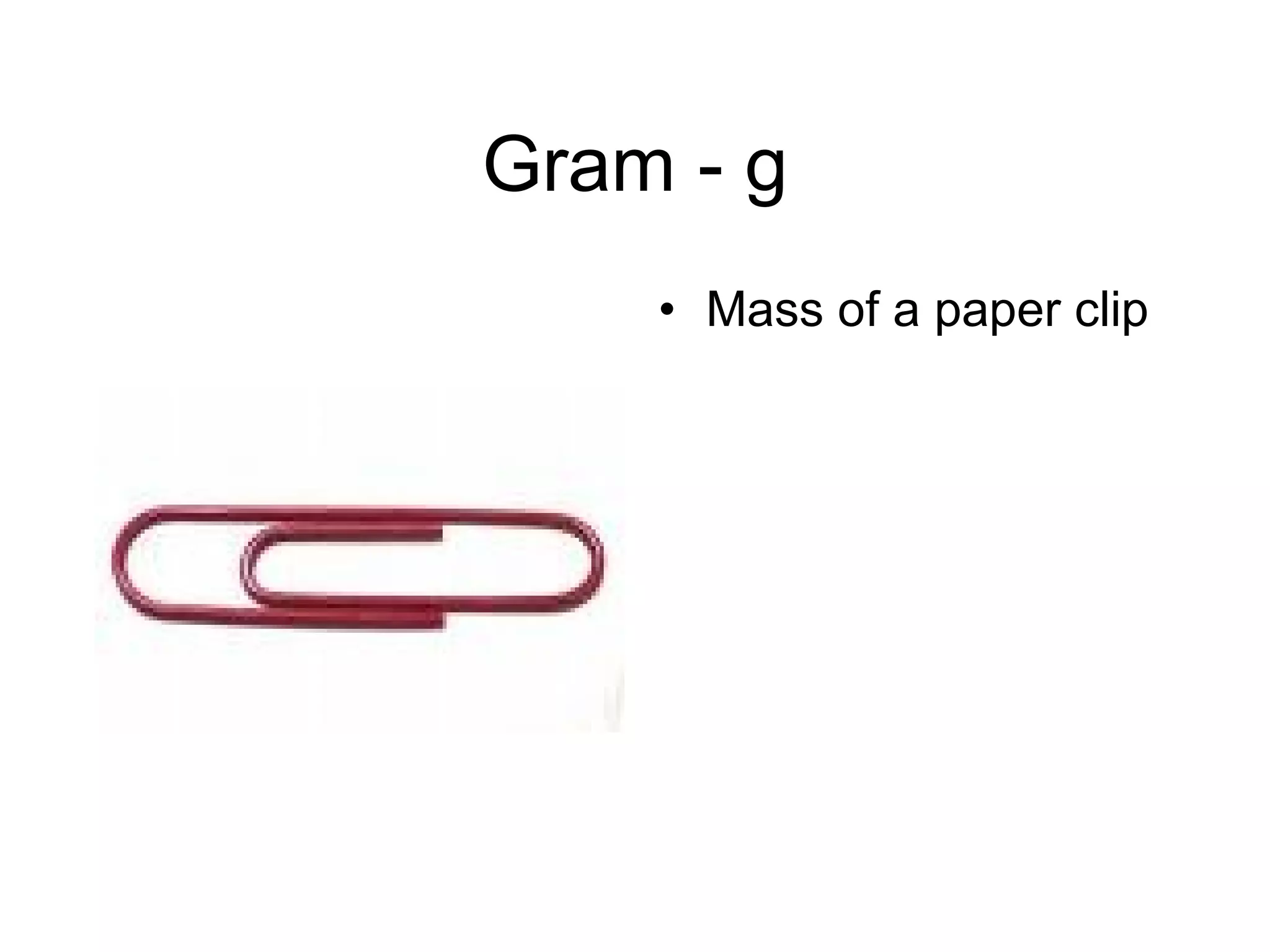
Gram - g Mass of a paper clip
Decigram - dg 10 x lighter than a gram. Mass of 10 grains of salt
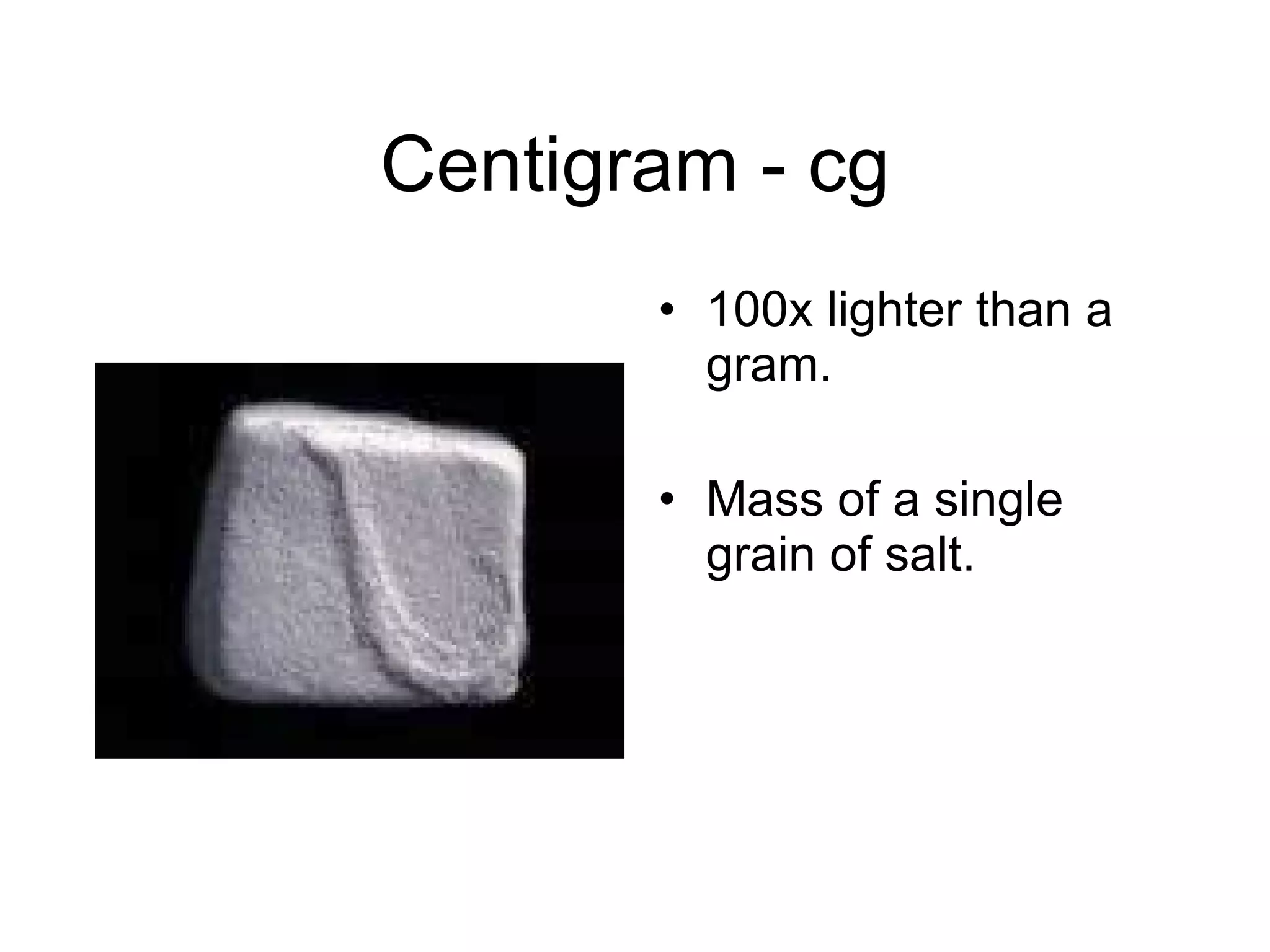
Centigram - cg 100x lighter than a gram. Mass of a single grain of salt.
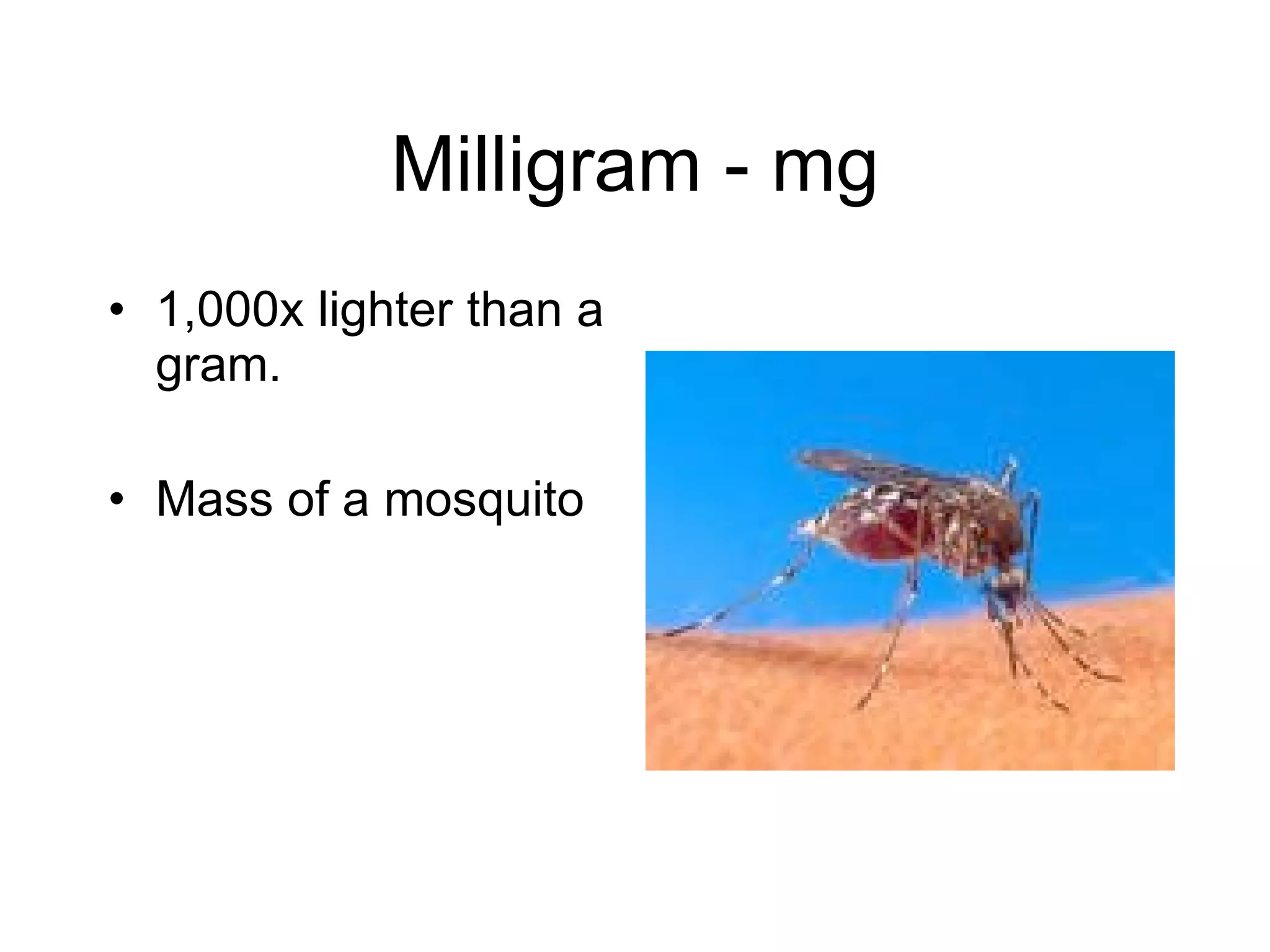
Milligram - mg 1,000x lighter than a gram. Mass of a mosquito
Microgram - ug 1,000,000x lighter than a gram Mass of a flour particle
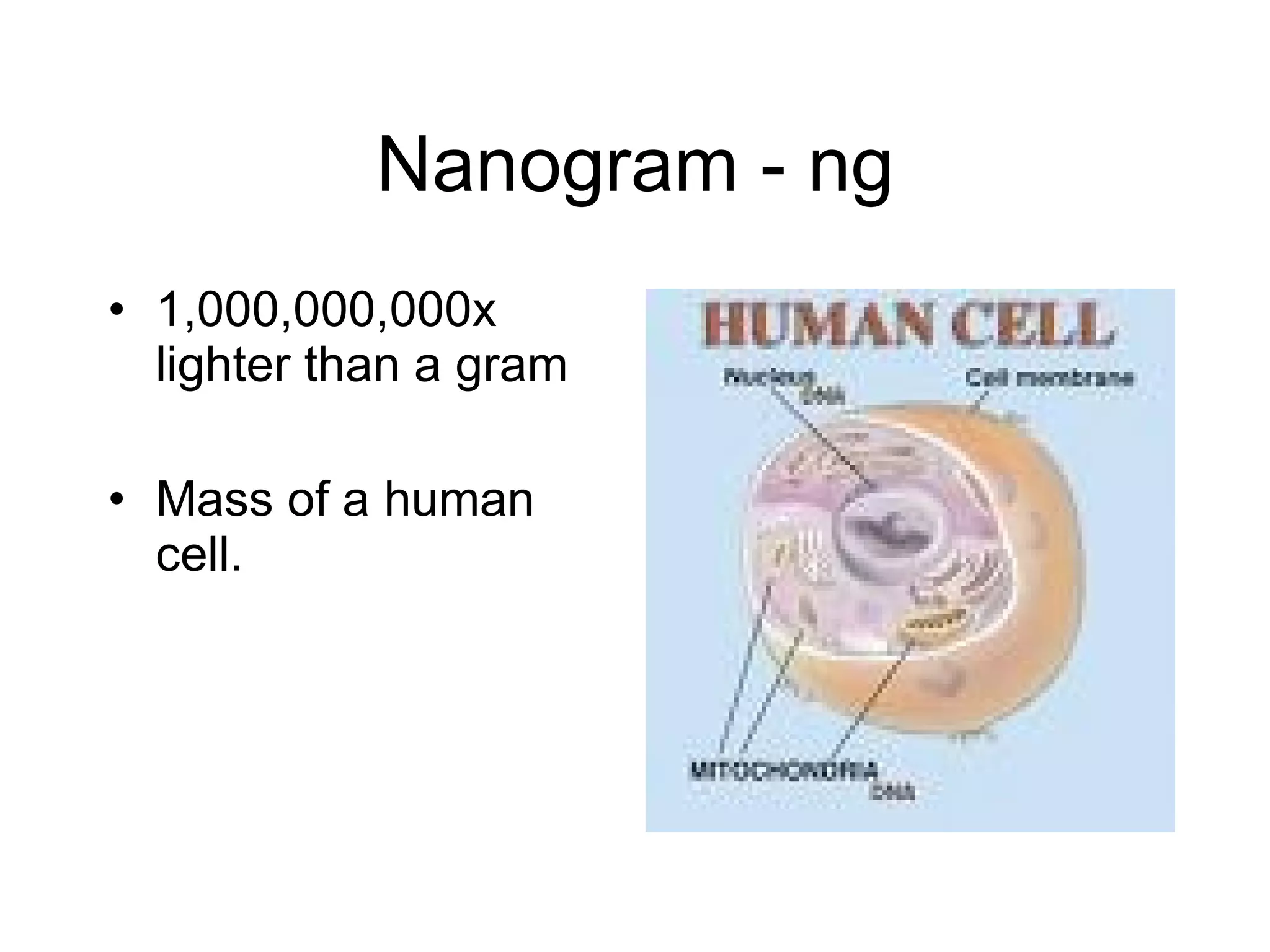
Nanogram - ng 1,000,000,000x lighter than a gram Mass of a human cell.
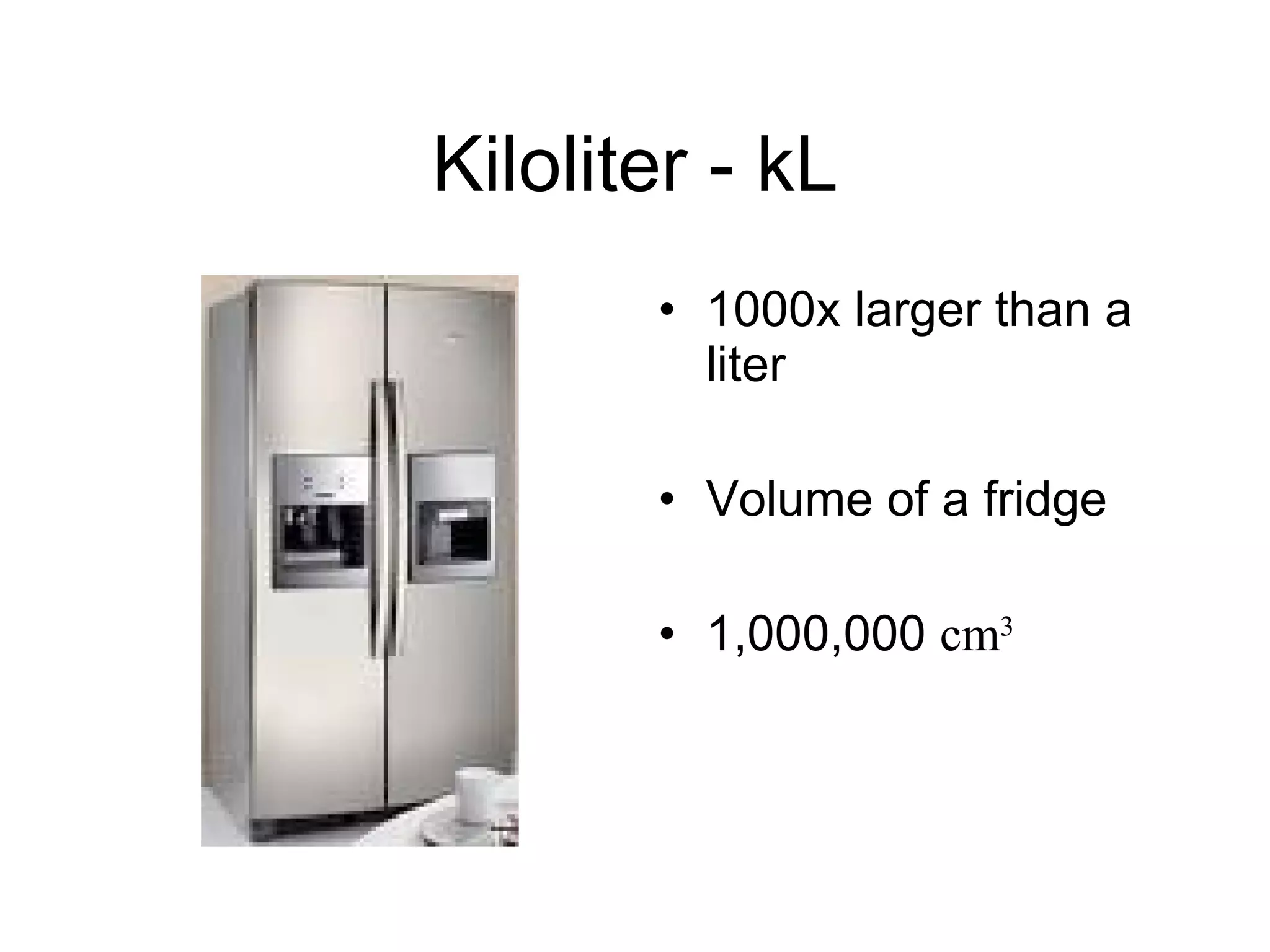
Kiloliter - kL 1000x larger than a liter Volume of a fridge 1,000,000  cm 3
Hectoliter - hL 100x larger than a liter. 100,000 cm 3 Volume of two kitchen trashcans
Decaliter - dkL 10 x larger than a liter. 10,000  cm 3 Volume of 3 gallons of milk
Liter - L 100  cm 3 Volume of 3 cans of soda
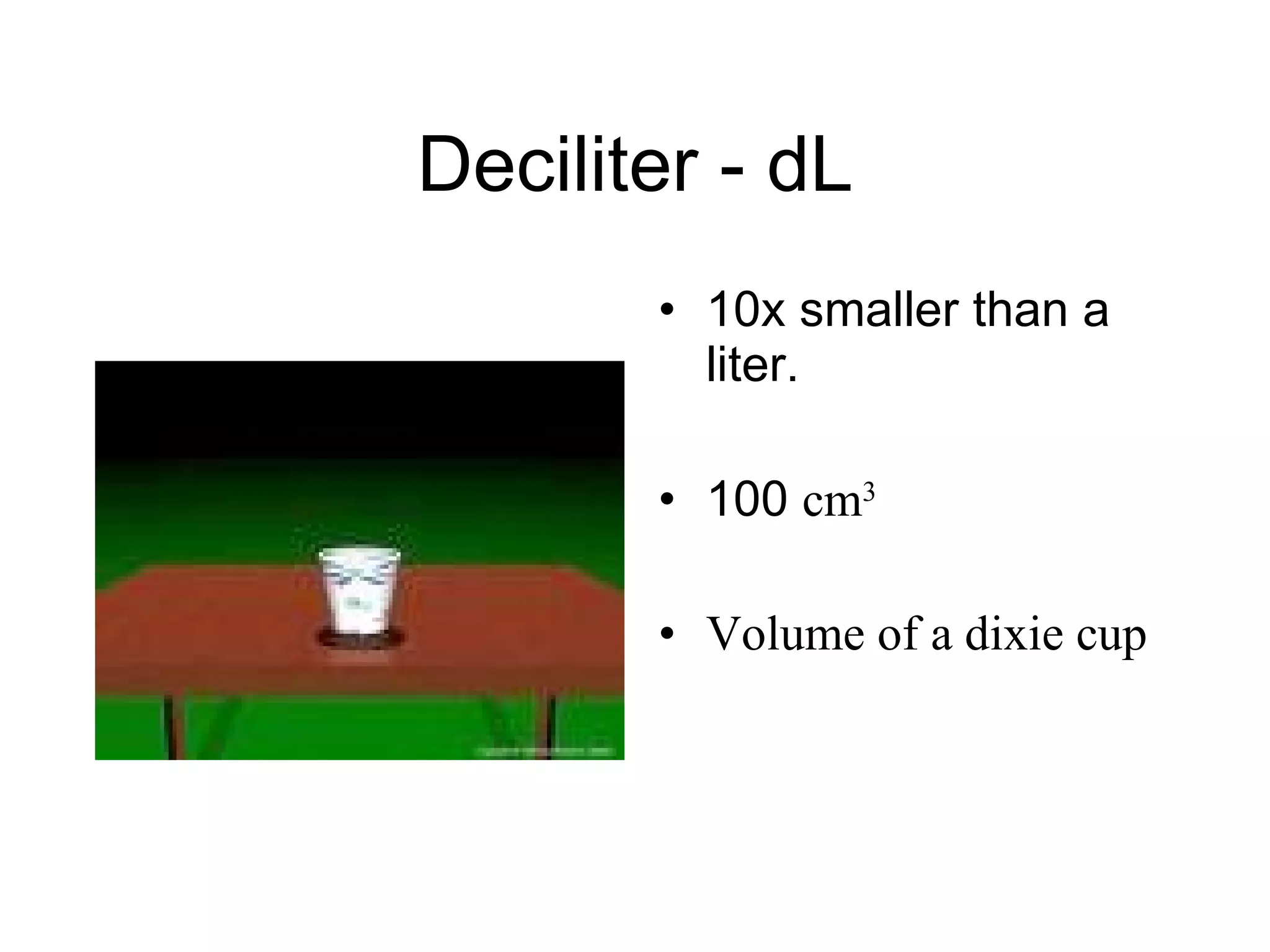
Deciliter - dL 10x smaller than a liter. 100  cm 3 Volume of a dixie cup
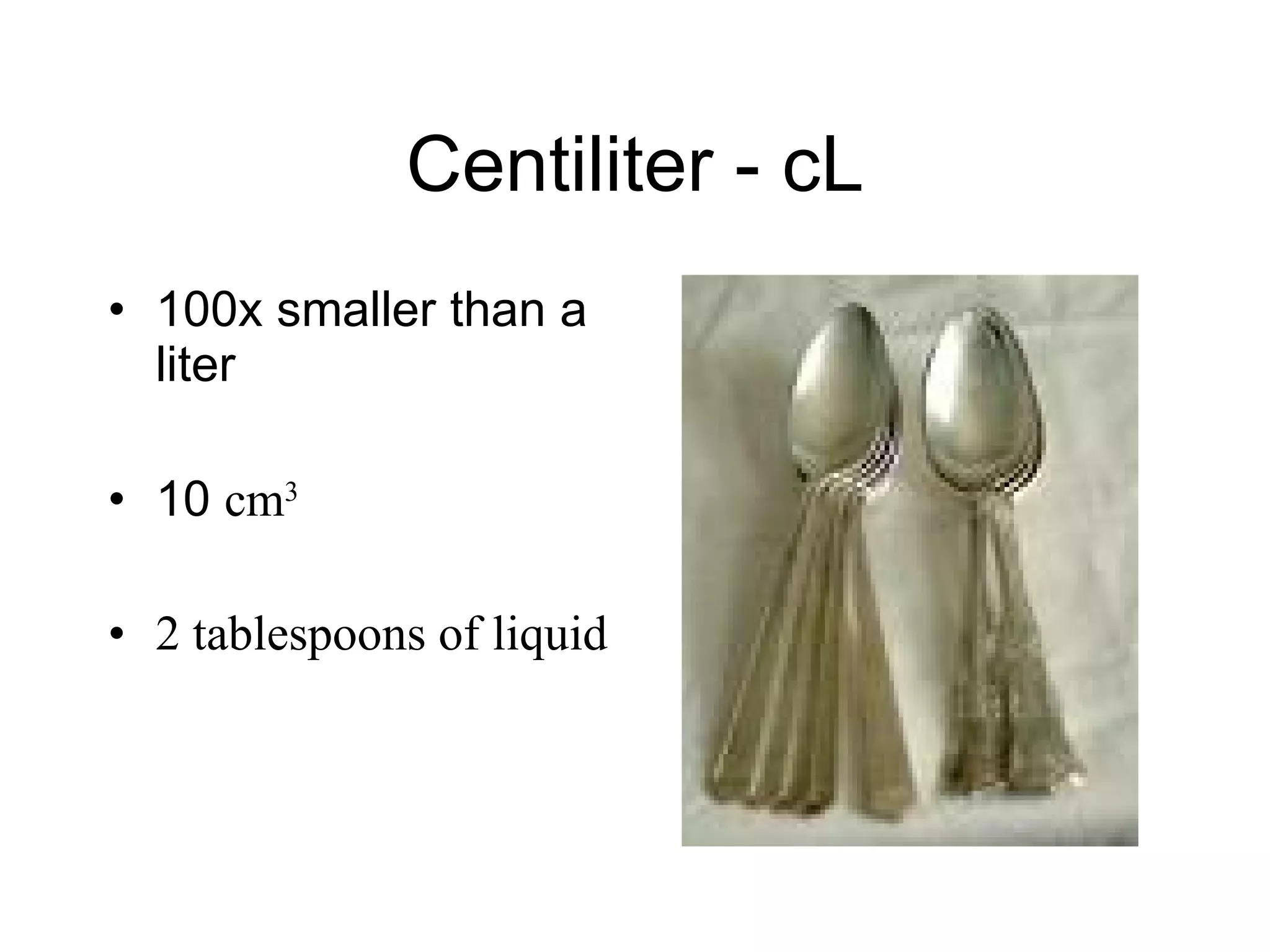
Centiliter - cL 100x smaller than a liter 10  cm 3 2 tablespoons of liquid
Milliliter - mL 1000x smaller than a liter 1  cm 3 Volume of a cube of sugar
Microliter - uL 1,000,000x smaller than a liter 0.001  cm 3 Crystal of table salt
nanoLiter - nL 1,000,000,000x smaller than a liter. 0.000001  cm 3

Metric System

  • 1.
    Introduction to Matterand the Metric System 7 th Grade Physical Science Mr. Riordan
  • 2.
    What is Matter?Matter is all things that we can see, touch, and smell in our daily lives.
  • 3.
    Matter is whatthe universe is made of
  • 4.
    We are madeof matter
  • 5.
    Matter has properties. A property is a characteristic of something that helps identify it, and which makes it unique. Properties describe an object .
  • 6.
    Properties of MatterThere are some properties of matter. These properties are mass, weight, volume, and density . Our working definition of matter is any substance that has mass and volume
  • 7.
    MASS Mass isthe amount of matter in an object . Mass is constant
  • 8.
    It cannot bechanged unless you add or remove matter from an object.
  • 9.
    The metric unitsthat are used to express mass are the gram (g), milligram (mg) , and the kilogram (kg).
  • 10.
    The amountof space an object takes up or occupies is called its volume.
  • 11.
    The metric unitsthat are used to express volume are the liter (L), milliliter (mL) , and the cubic centimeter (cm 3 ). Liters and milliliters are used to measure the volume of liquids . Cubic centimeters are used to measure the volume of solids .
  • 12.
    History of theMetric System Developed in Lyon, France, ~1670 Created to make consistent units for measurement Based on “powers of 10” …what does this mean?
  • 13.
    The Basic MetricUnits Meter : base unit for length Liter : base unit for volume Gram : base unit for mass
  • 14.
    Powers of 10Prefixes in front of the base unit tell if the measurement is greater or less than the base unit. Each prefix is a factor of ten . This makes it easy to convert between units.
  • 15.
    How big isa …. Kilometer? 1000x larger then a meter Meter? Height of a standard countertop Centimeter? 100x smaller then a meter, the width of a dime Millimeter? 1000x smaller then a meter, the thickness of a dime
  • 16.
    Metric Prefixes Kilo1000x Larger Smaller Base Units Kilo 1000 X larger Hecto 100 X larger Deka 10 X larger (no prefix) Meter Liter Gram Deci One Tenth 1/10 Centi One Hundreth 1/100 Milli One Thousanth 1/1000
  • 17.
    Using a RulerWhat is the length of the blue arrow?
  • 18.
    Using a RulerALWAYS measure with the starting point at the “0” mark!
  • 19.
    Kilometer - km1000 times larger than a meter. 12 blocks less than a mile. Main span of GW bridge
  • 20.
    Hectameter - hm100x larger than a meter. Height of Statue of Liberty from base to torch
  • 21.
    Decameter - dam10 x larger than a meter Length of a school bus
  • 22.
    Meter - mLength of a meter stick. Height of a counter top
  • 23.
    Decimeter - dm10x smaller than a meter. Height of a can of soda.
  • 24.
    Centimeter - cm100x smaller than a meter ½ width of a dime
  • 25.
    Millimeter - mm1000x smaller than a meter The thickness of a dime
  • 26.
    Micrometer - um1,000,000x smaller than a meter. diameter of a bacteria cell
  • 27.
    Nanometer - nm1,000,000,000x smaller than a meter. Thickness of a DNA molecule.
  • 28.
    Kilogram - kg1000x heavier than a gram Mass of a liter of orange juice.
  • 29.
    Hectogram - hg100x heavier than a gram. Mass of a stick of butter.
  • 30.
    Decagram - dkg10 x heavier than a gram Mass of 2 nickels
  • 31.
    Gram - gMass of a paper clip
  • 32.
    Decigram - dg10 x lighter than a gram. Mass of 10 grains of salt
  • 33.
    Centigram - cg100x lighter than a gram. Mass of a single grain of salt.
  • 34.
    Milligram - mg1,000x lighter than a gram. Mass of a mosquito
  • 35.
    Microgram - ug1,000,000x lighter than a gram Mass of a flour particle
  • 36.
    Nanogram - ng1,000,000,000x lighter than a gram Mass of a human cell.
  • 37.
    Kiloliter - kL1000x larger than a liter Volume of a fridge 1,000,000 cm 3
  • 38.
    Hectoliter - hL100x larger than a liter. 100,000 cm 3 Volume of two kitchen trashcans
  • 39.
    Decaliter - dkL10 x larger than a liter. 10,000 cm 3 Volume of 3 gallons of milk
  • 40.
    Liter - L100 cm 3 Volume of 3 cans of soda
  • 41.
    Deciliter - dL10x smaller than a liter. 100 cm 3 Volume of a dixie cup
  • 42.
    Centiliter - cL100x smaller than a liter 10 cm 3 2 tablespoons of liquid
  • 43.
    Milliliter - mL1000x smaller than a liter 1 cm 3 Volume of a cube of sugar
  • 44.
    Microliter - uL1,000,000x smaller than a liter 0.001 cm 3 Crystal of table salt
  • 45.
    nanoLiter - nL1,000,000,000x smaller than a liter. 0.000001 cm 3