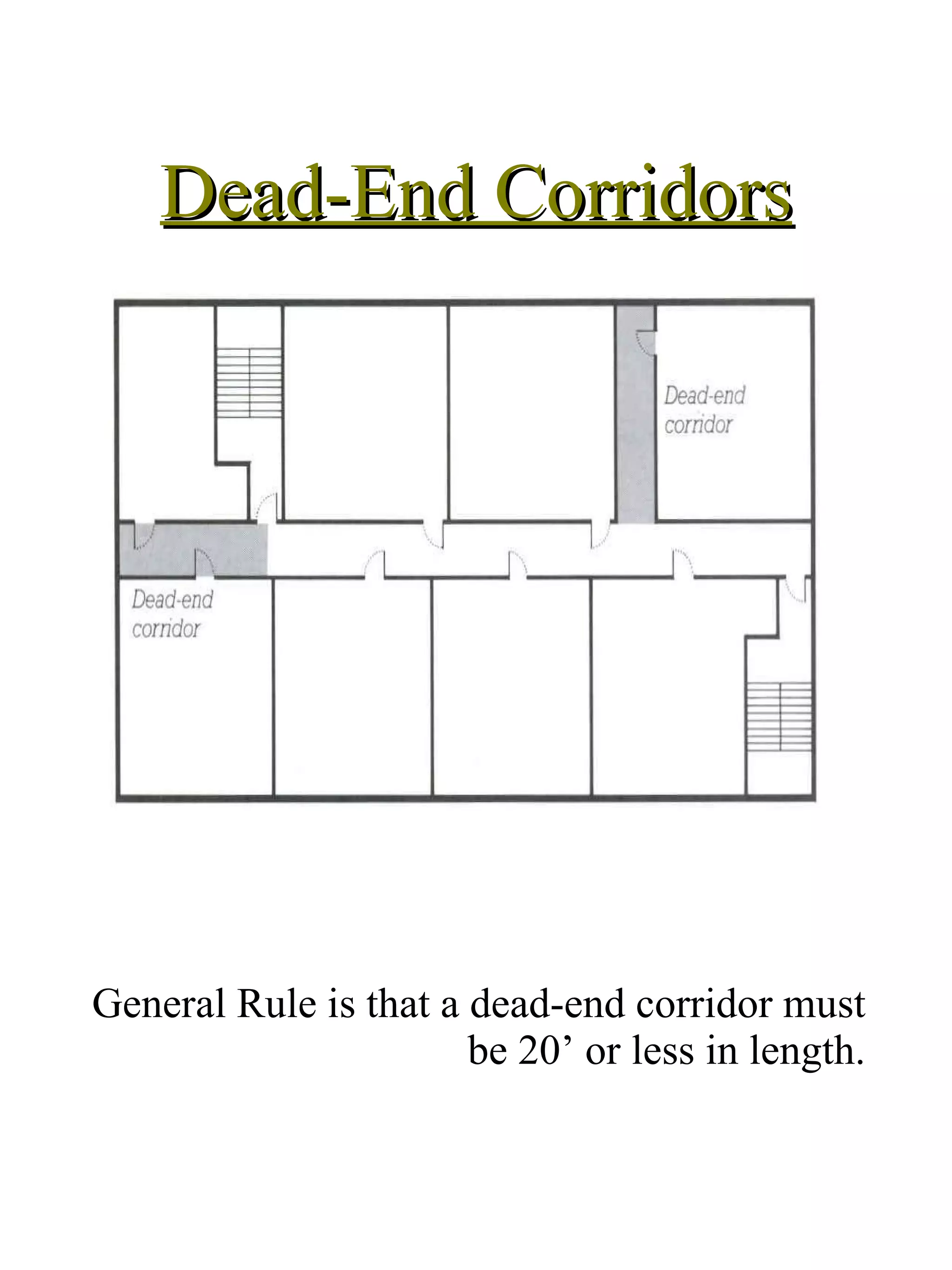
This document summarizes key components of a building's means of egress system including exit access, exits, and exit discharge. It discusses requirements for distance between exits, dead-end corridors, maximum travel distance, doors, exit stairways, and exit passageways as outlined in building codes. Requirements include a minimum distance between exits of half the building diagonal, no more than 20 foot dead-end corridors, and maximum travel distances depending on building occupancy and path of egress. Exit components like stairways must have fire-rated enclosures and doors.
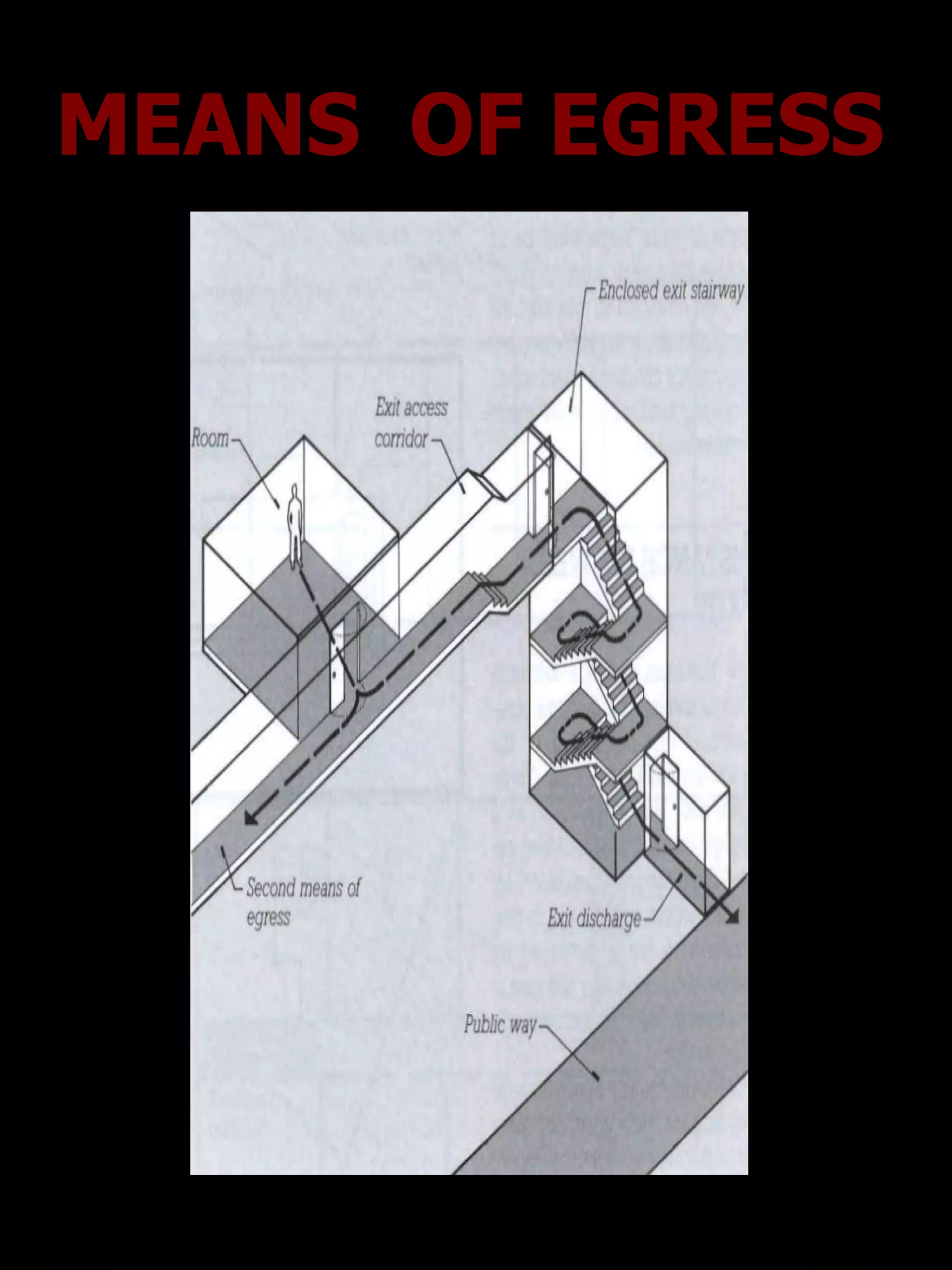
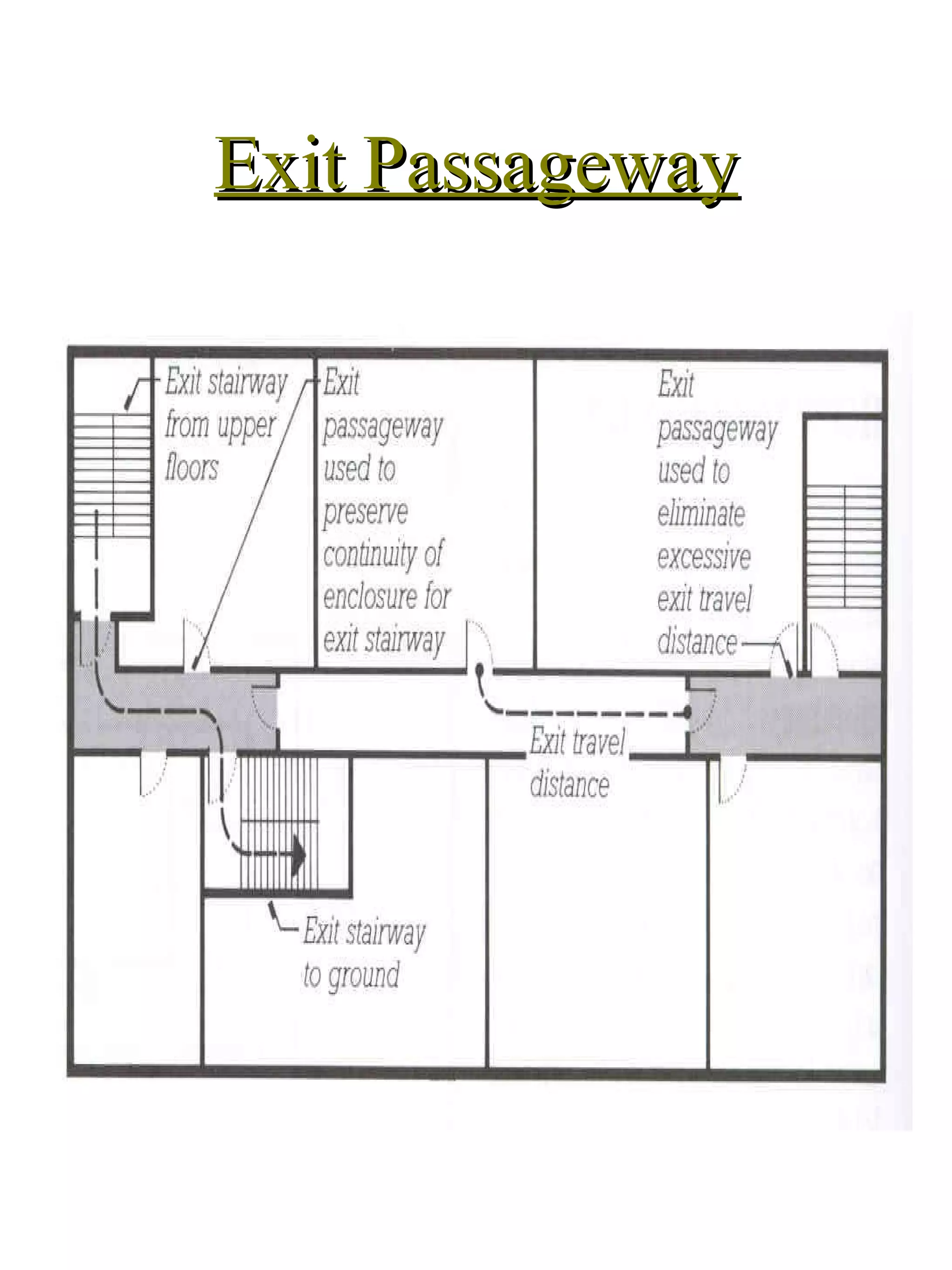
Means of EgressComponents of an Egress System Exit Access – a corridor, an aisle, a path across a room, or a short stair or ramp that conducts the occupants of a building to an exit. Exit – a protected means of evacuation (door opening, an enclosed and protected exit passageway leading to a door, or an enclosed exit stair or ramp) from an exit access to a safe discharge point, must be of 2 hour construction with self closing doors rated at 1 1/2 hrs. Exit Discharge – a means (door, protected exit corridor, path across a ground floor vestibule or lobby) of moving from an exit to a safe discharge point (public way or other large open area.)
3.
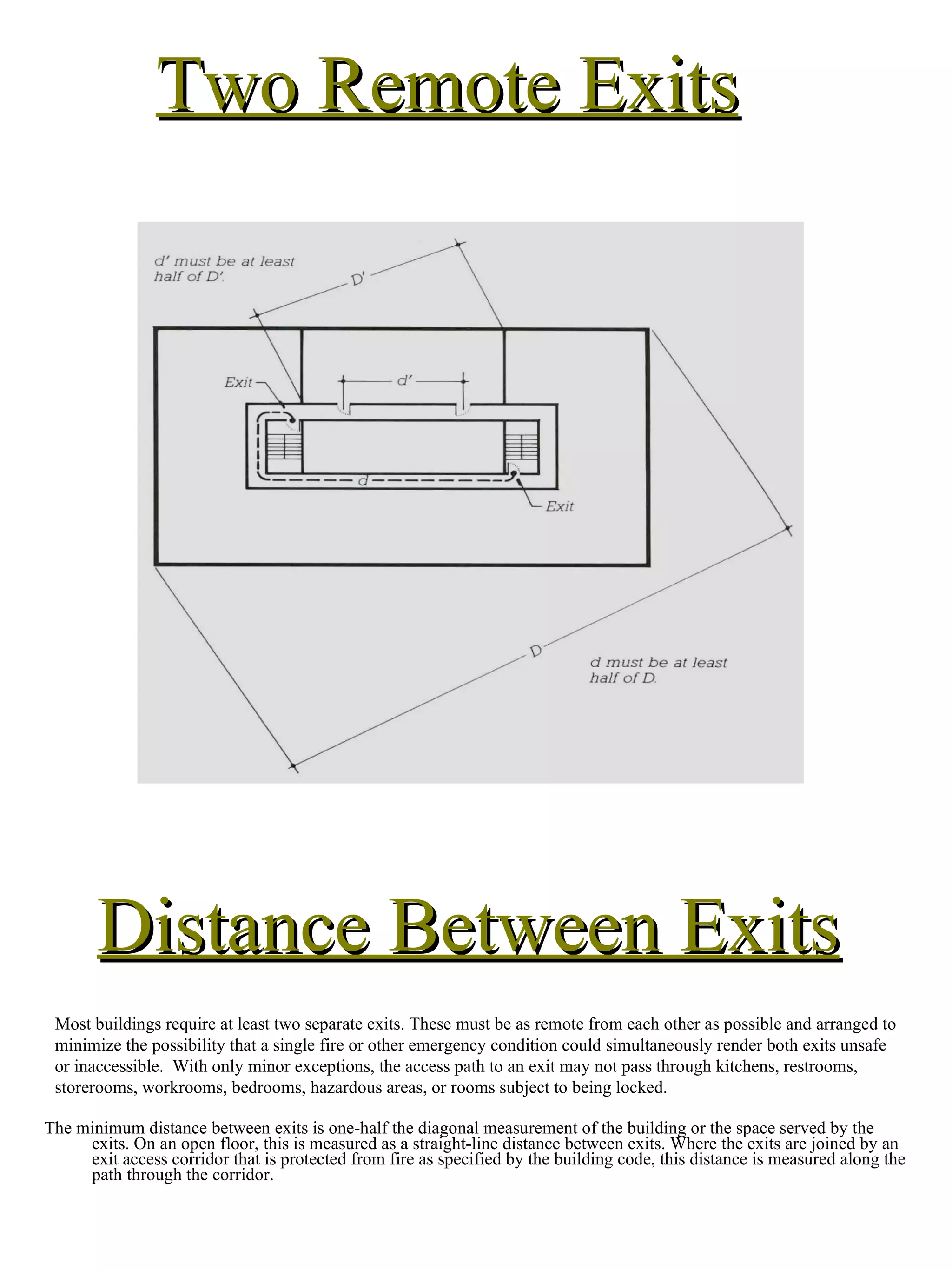
Distance Between ExitsThe minimum distance between exits is one-half the diagonal measurement of the building or the space served by the exits. On an open floor, this is measured as a straight-line distance between exits. Where the exits are joined by an exit access corridor that is protected from fire as specified by the building code, this distance is measured along the path through the corridor. Most buildings require at least two separate exits. These must be as remote from each other as possible and arranged to minimize the possibility that a single fire or other emergency condition could simultaneously render both exits unsafe or inaccessible. With only minor exceptions, the access path to an exit may not pass through kitchens, restrooms, storerooms, workrooms, bedrooms, hazardous areas, or rooms subject to being locked. Two Remote Exits
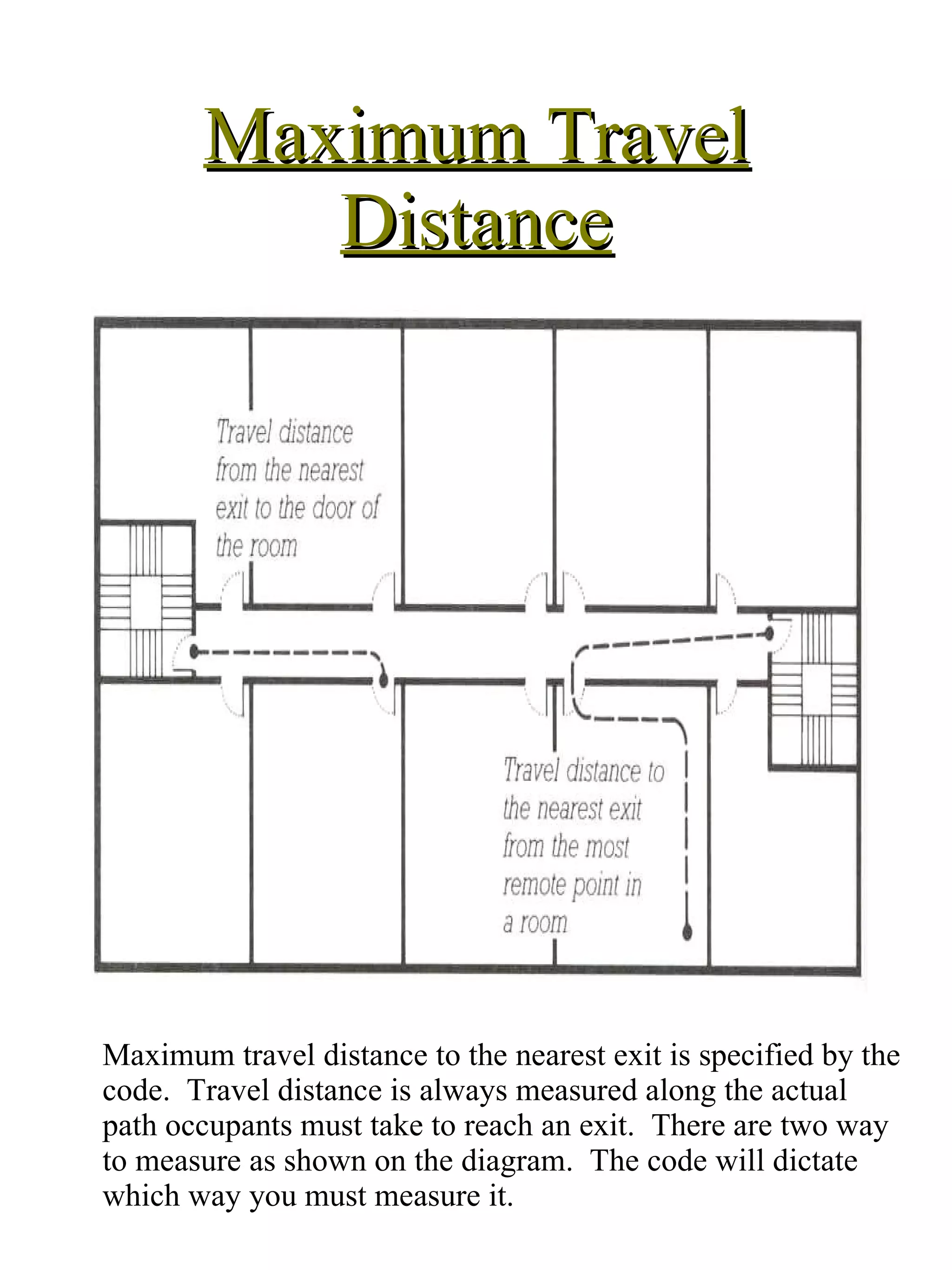
Maximum Travel DistanceMaximum travel distance to the nearest exit is specified by the code. Travel distance is always measured along the actual path occupants must take to reach an exit. There are two way to measure as shown on the diagram. The code will dictate which way you must measure it.
6.
Doors Doors shouldalways swing in the direction of egress travel in all buildings except single family dwellings and in all rooms except those with fewer than 50 occupants. Exit access corridors must be enclosed in fire-resistant walls and accessed via fire-resistant doors. One-hour walls with 20-minute doors are required in most buildings.
7.
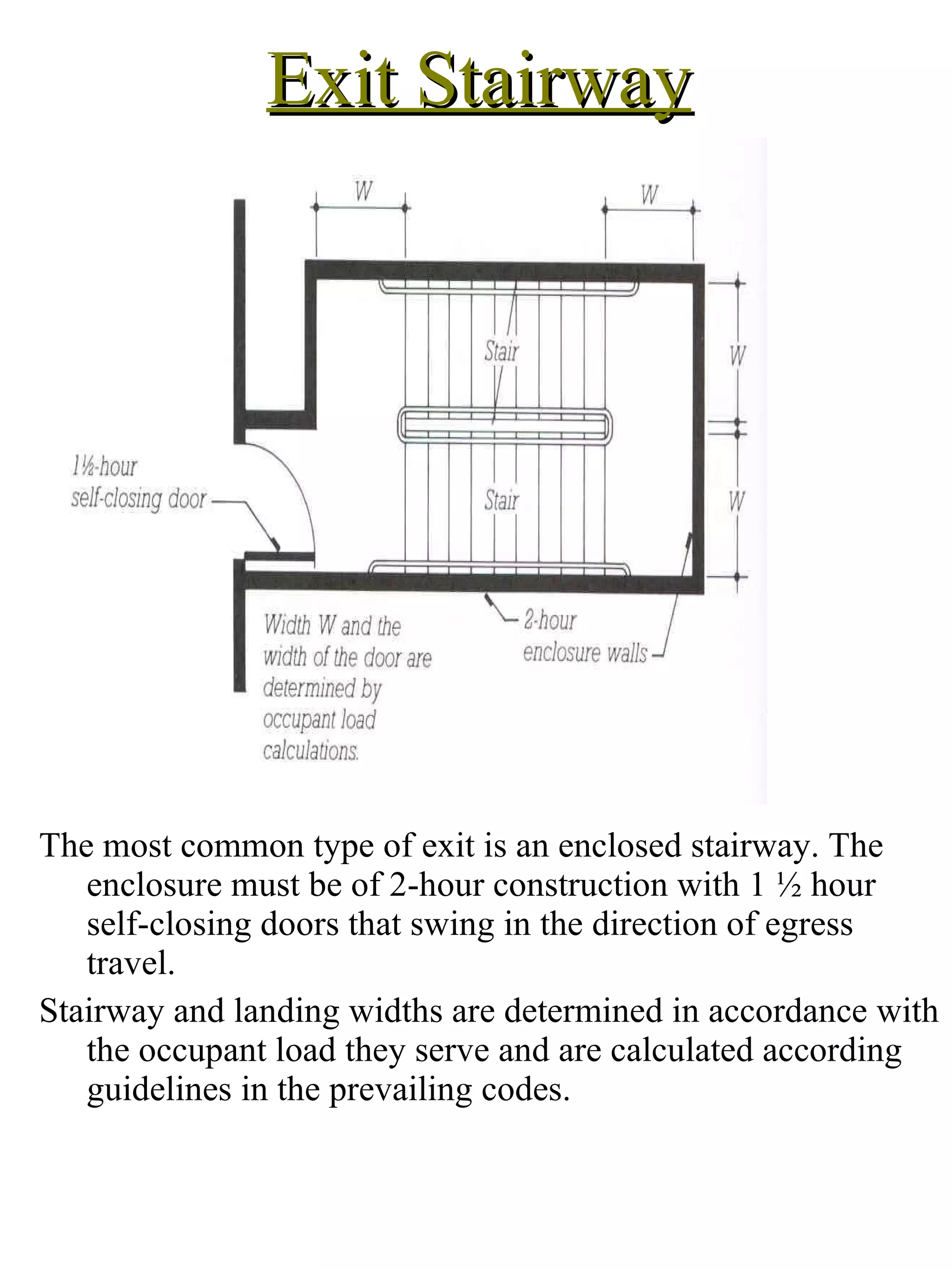
Exit Stairway Themost common type of exit is an enclosed stairway. The enclosure must be of 2-hour construction with 1 ½ hour self-closing doors that swing in the direction of egress travel. Stairway and landing widths are determined in accordance with the occupant load they serve and are calculated according guidelines in the prevailing codes.