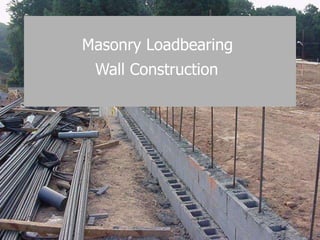
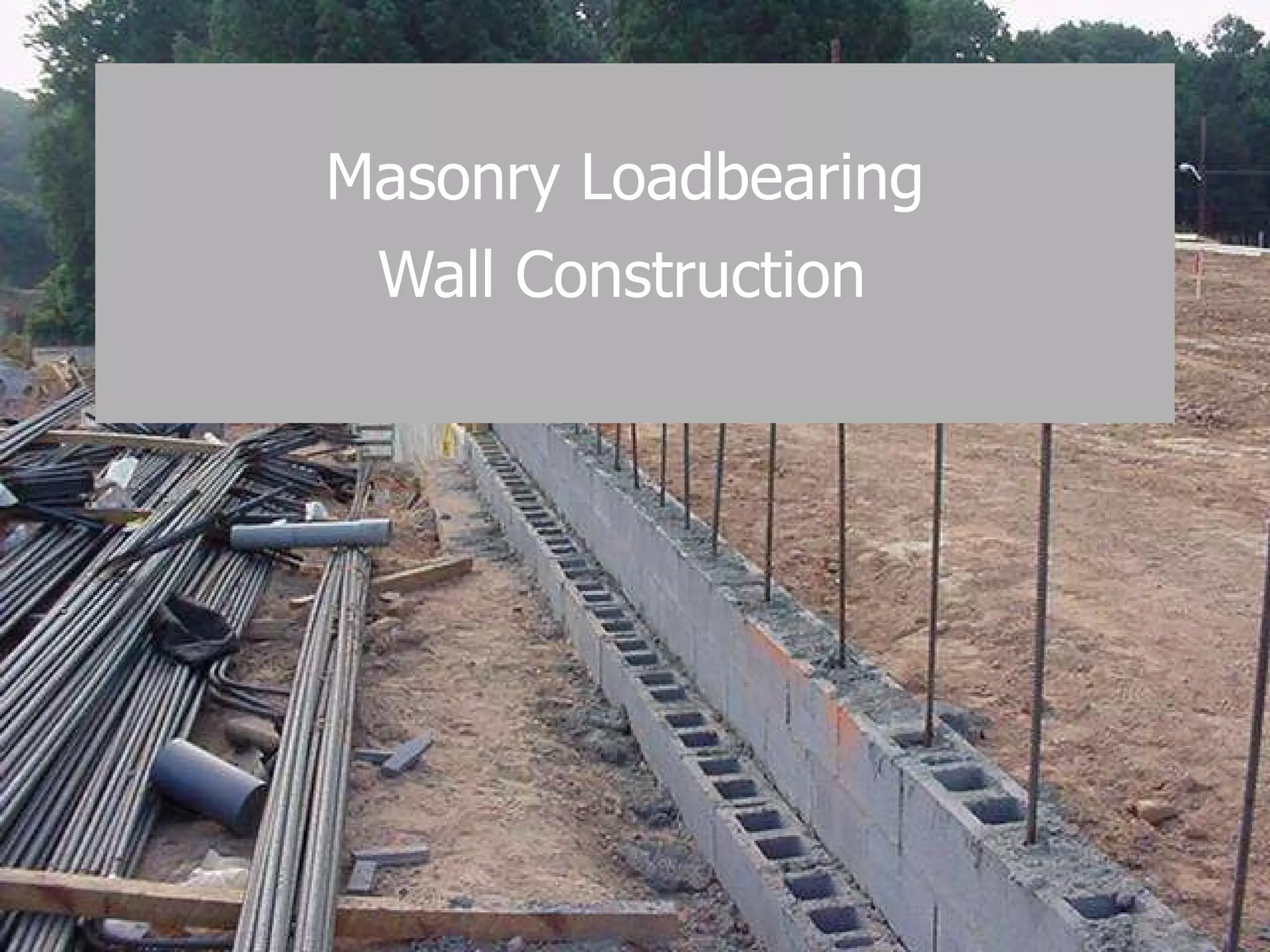
Masonry Loadbearing  Wall Construction
Masonry Wall Types Reinforced or Un-reinforced Reinforcing Increases Load Carrying Capacity Uses: Low Rise Construction, Foundations One Type or Composite Masonry Walls Composite; Two Wythes of Different Material Typ. - CMU & Brick Solid or Cavity Walls
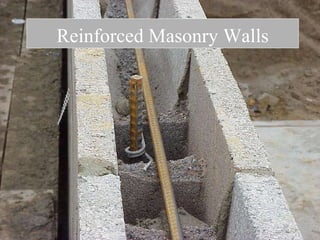
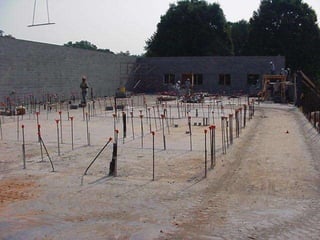
Reinforced Masonry Walls
 
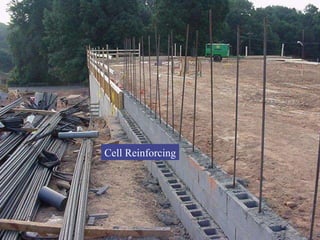
Cell Reinforcing
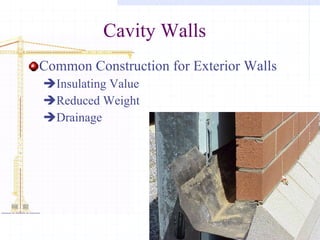
Cavity Walls Common Construction for Exterior Walls Insulating Value Reduced Weight Drainage
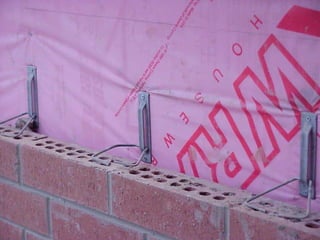
Cavity Wall Construction Inner Wythe or support wall Air Space (Insulation & Drainage) Outer Wythe of Masonry Masonry Ties to hold the Wythes together
 
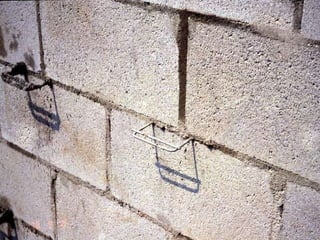
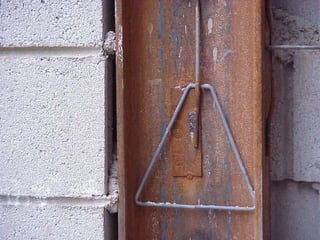
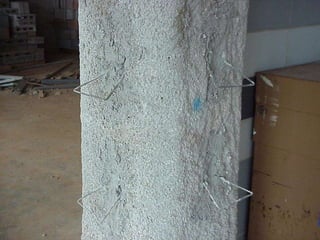
Masonry Veneer Anchors


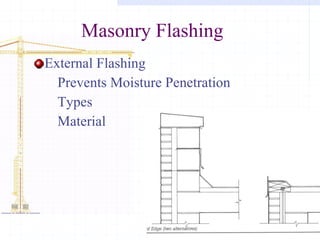
Masonry Flashing  External Flashing Prevents Moisture Penetration Types Material
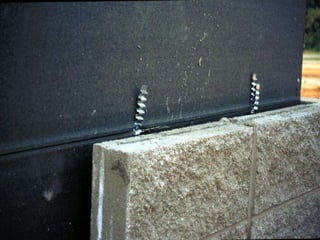
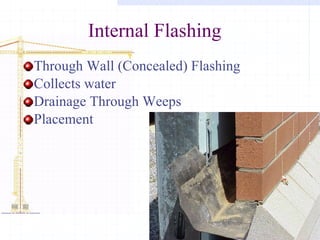
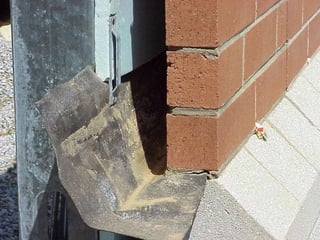
Internal Flashing Through Wall (Concealed) Flashing Collects water Drainage Through Weeps Placement
 
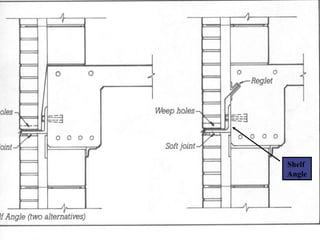
Shelf  Angle
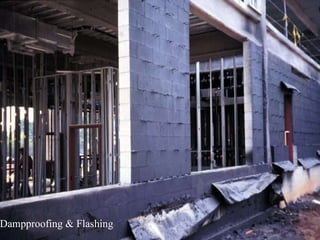
Dampproofing & Flashing
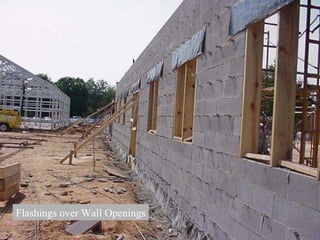
Flashings over Wall Openings
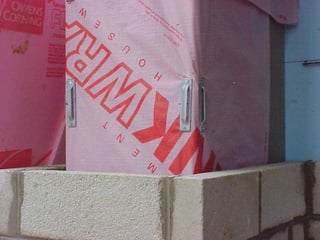
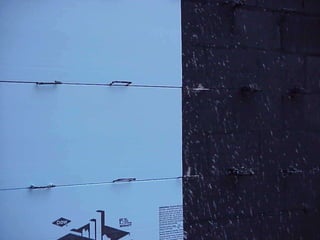
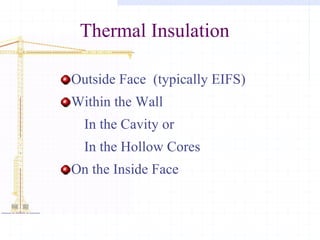
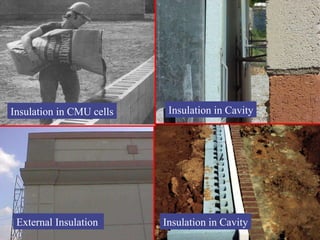
Thermal Insulation Outside Face  (typically EIFS) Within the Wall In the Cavity or In the Hollow Cores On the Inside Face
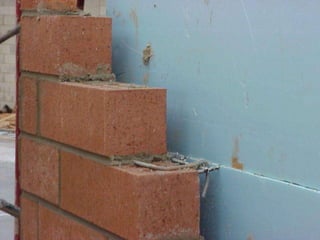
Insulation in CMU cells Insulation in Cavity Insulation in Cavity External Insulation
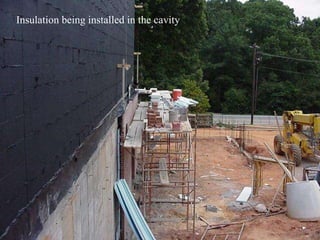
Insulation being installed in the cavity
Masonry Construction Masonry and Wood Masonry and Steel Masonry and Concrete
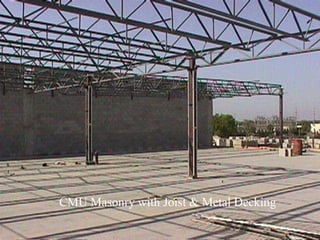
CMU Masonry with Joist & Metal Decking
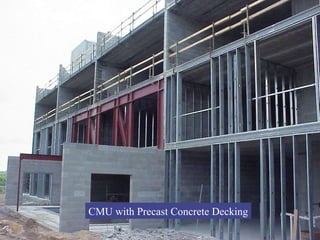
CMU with Precast Concrete Decking
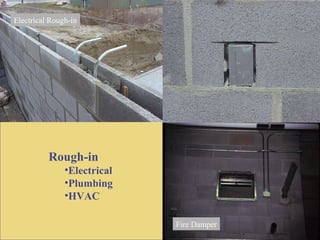
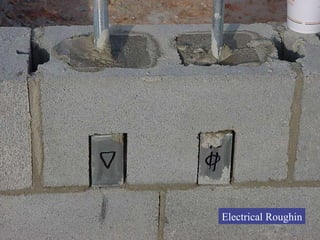
MPE Rough-In Rough-in Electrical Plumbing HVAC Fire Damper Electrical Rough-in
Electrical Roughin
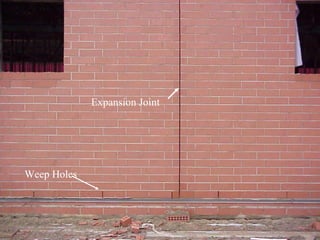
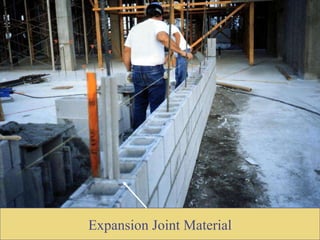
Expansion & Contraction Structure Movement, Masonry Changes Expansion Joints Within Masonry Wall Two-way Movement @ Change in Thickness, Height, or Openings Isolation Joints
Expansion Joint Weep Holes
Expansion Joint Material
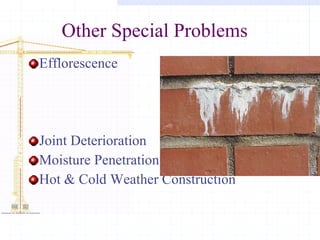
Other Special Problems Efflorescence Joint Deterioration Moisture Penetration Hot & Cold Weather Construction
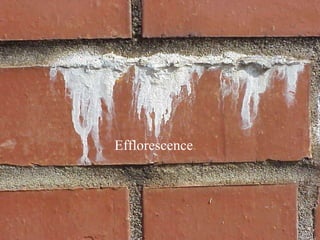
Efflorescence
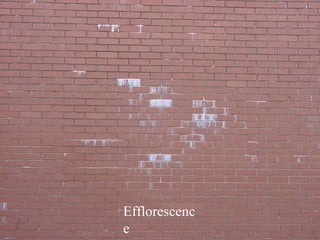
Efflorescence
Masonry and the Codes Masonry often used as a fire separation wall Used with Steel and Concrete Decks - Type 1&2

Masonry part 3

Editor's Notes

  • #4 Reinforcing increases Loadbearing Capacity
  • #6 Reinforcing placed in CMU cells and cells filled with concrete Reinforcing placement determined by structural designer
  • #18 External Flashing Prevents Moisture Penetration Types CAP FLASHING - TOP OF WALLS EDGE OF ROOFS COUNTER FLASHING WALL / ROOF INTERSECTION OFTEN TWO PIECES - ONE IN WALL / ONE ATTACHED Material SHEET METAL COPPER SS PLASTICS & COMPOSITES
  • #19 “Through Wall” (Concealed) Flashing CONTINUOUS SHEET OF COPPER, PLASTIC, RUBBER/BITUMINOUS ATTACHED TO BACKUP WALL & RUN THROUGH TO THE OUTSIDE OF THE MASONRY Collects water WATER THAT HAS PENETRATED WALL ALLOWS IT DRAIN THROUGH “WEEPS” ACCOMPANIED BY WEEPS Drainage Through “Weeps” PLACED 24 TO 32 in o.c. ROPE, PLASTIC, METAL (ALSO CAN JUST STOP MORTAR) > 1/4 IN. Placement @ BOTTOM OF WALL CAVITY @ INTERUPTIONS OF CAVITY OVER DOORS / WINDOWS WINDOW SILLS SHELF ANGLES -
  • #30 Electrical WALL OUTLETS, SWITCHES “ BUILT INTO” WALL HORIZONTAL - SLEEVES Plumbing NOT BUILT INTO WALL (COPPER, CI, PVC) SLEEVES FOR HORIZONTAL PENETRATIONS HVAC TYPICALLY NOT BUILT INTO WALL SLEEVES FOR HORIZONTAL PENETRATIONS MAY REQUIRE FIRE DAMPERS
  • #32 Structure Movement, Masonry Changes WEIGHT / LOADING MASONRY - THERMAL EXPANSION/CONTRAC MUST PROVIDE FOR - OR CRACKING Expansion Joints Within Masonry Wall Two-way Movement @ Change in Thickness, Height, or Openings JT REINFORCING / MORTAR MUST BE INTERUPTED Isolation Joints @ DISSIMALR MATERIALS
  • #35 Efflorescence FLUFFY WHITE POWDER @ SURFACE WATER SOLUBLE SALTS CAN BE CLEANED WATER INFILTRATION Mortar Joint Deterioration FREEZE THAW DELAY BY PROPER JOINT PROFILE TUCK POINTING - RACK OUT AND REPLACE Moisture Penetration COVERED PROPER JOINTS AND INSTALLATION COATINGS, MATERIAL SELECTION CAVITY CONSTRUCTION Cold Weather Construction MORTAR CAN’T FREEZE UNTIL CURED ENCLOSURES (HEATED) ADMIXTURES TO SPEED SETTING TIME Hot Weather – Mortar may dry out excessively