
Making progress
motivates workers?


        www.create-learning.com
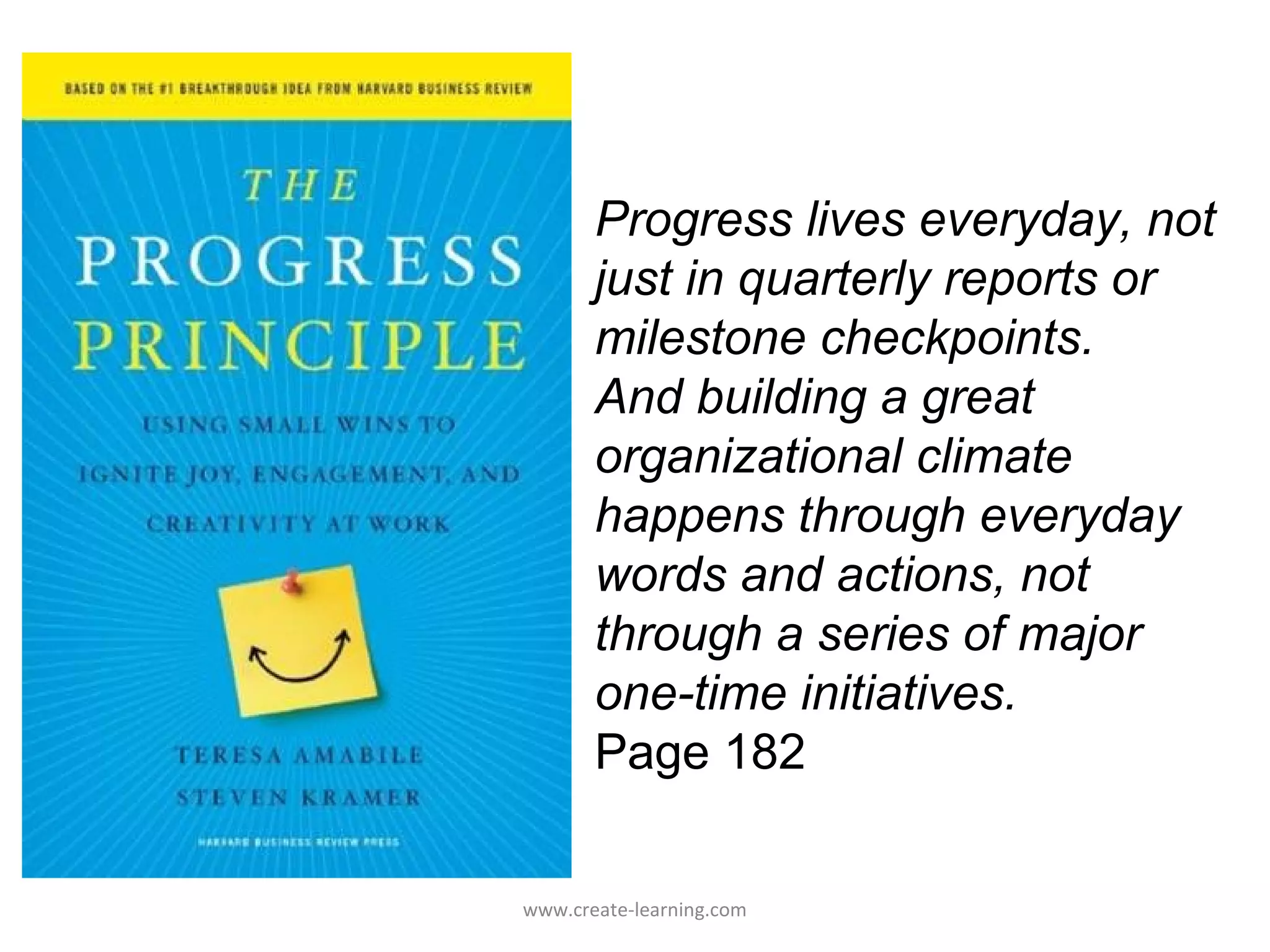
Progress lives everyday, not
       just in quarterly reports or
       milestone checkpoints.
       And building a great
       organizational climate
       happens through everyday
       words and actions, not
       through a series of major
       one-time initiatives.
       Page 182

www.create-learning.com
Leaders need to be
aware of how they rob
meaning from
peoples’ work.


      www.create-learning.com
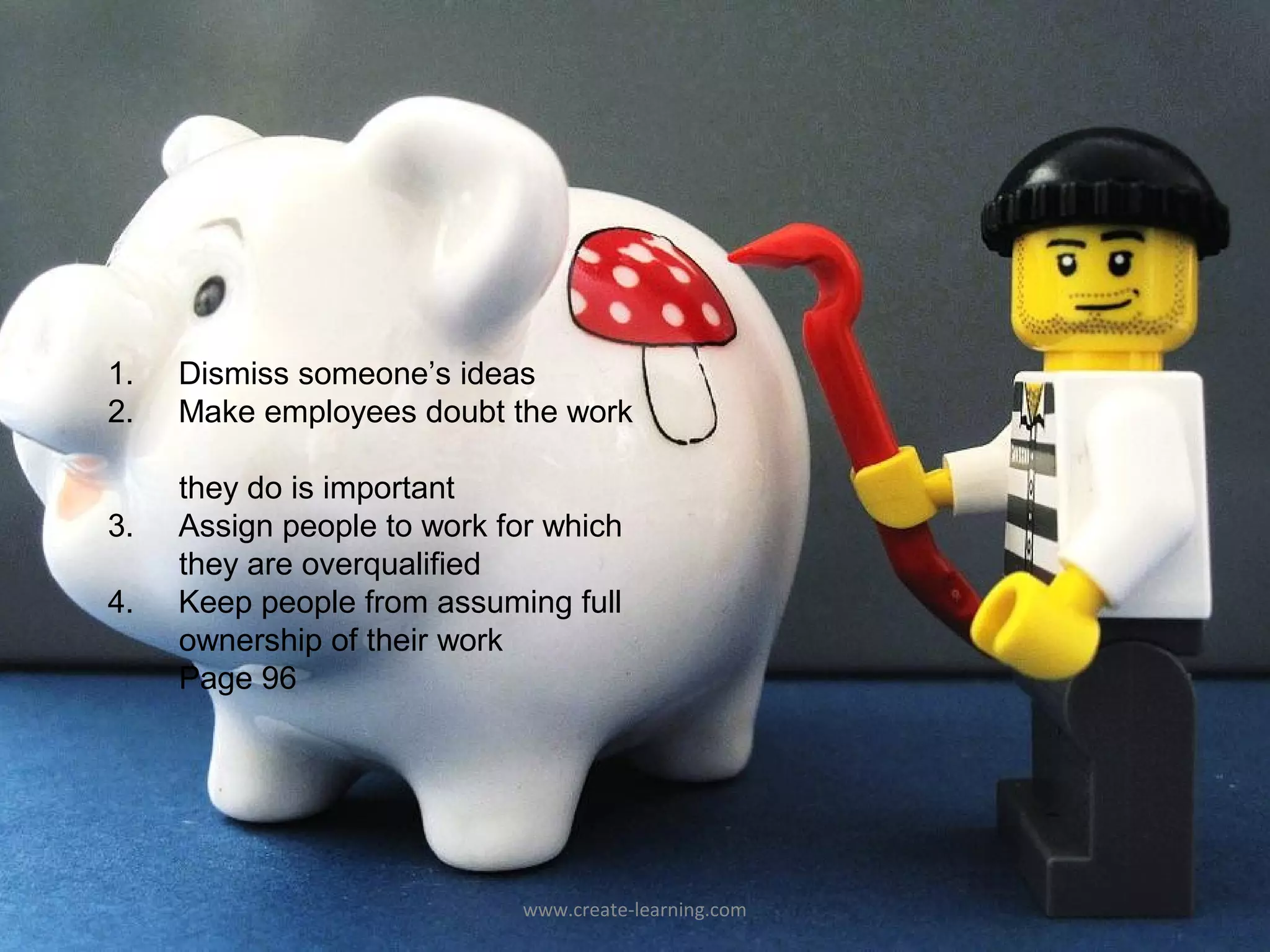
1.   Dismiss someone’s ideas
2.   Make employees doubt the work

     they do is important
3.   Assign people to work for which
     they are overqualified
4.   Keep people from assuming full
     ownership of their work
     Page 96


                             www.create-learning.com
Most people have strong intrinsic motivation
to do their work, at least early in their
careers. That motivation exists and
continues, until something gets in the way.
This has a startling implication:
as long as the work is meaningful, managers
do not have to spend time coming up with
ways to motivate people to do that work.


                www.create-learning.com
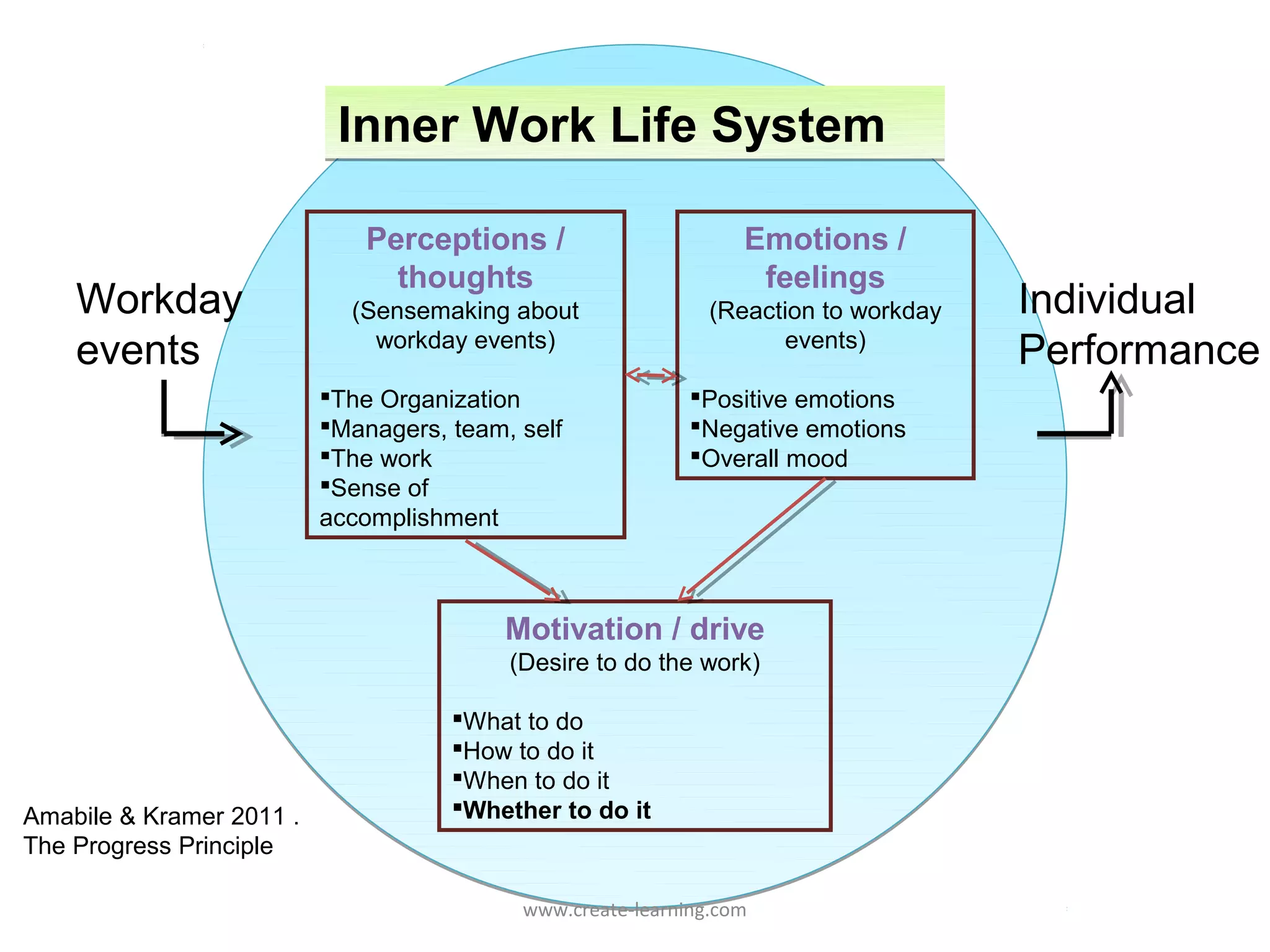
Inner Work Life System

                              Perceptions /                      Emotions /
                                thoughts                          feelings
    Workday                 (Sensemaking about                (Reaction to workday   Individual
    events                    workday events)                       events)
                                                                                     Performance
                          The Organization                 Positive emotions
                          Managers, team, self             Negative emotions
                          The work                         Overall mood
                          Sense of
                          accomplishment


                                          Motivation / drive
                                          (Desire to do the work)

                                     What to do
                                     How to do it
                                     When to do it
Amabile & Kramer 2011 .              Whether to do it
The Progress Principle

                                           www.create-learning.com
The power of setbacks to diminish
happiness is more than twice as strong
   as the power of progress to boost
               happiness.
  The power of setbacks to increase
frustration is more than three times as
  strong as the power of progress to
          decrease frustration.
                Page 92.


              www.create-learning.com
If the setback resulted simply from the
difficult nature of the work itself, negative
inner work life turned positive as people
began to overcome the challenge, either on
their own or with help.
Page 75


                 www.create-learning.com
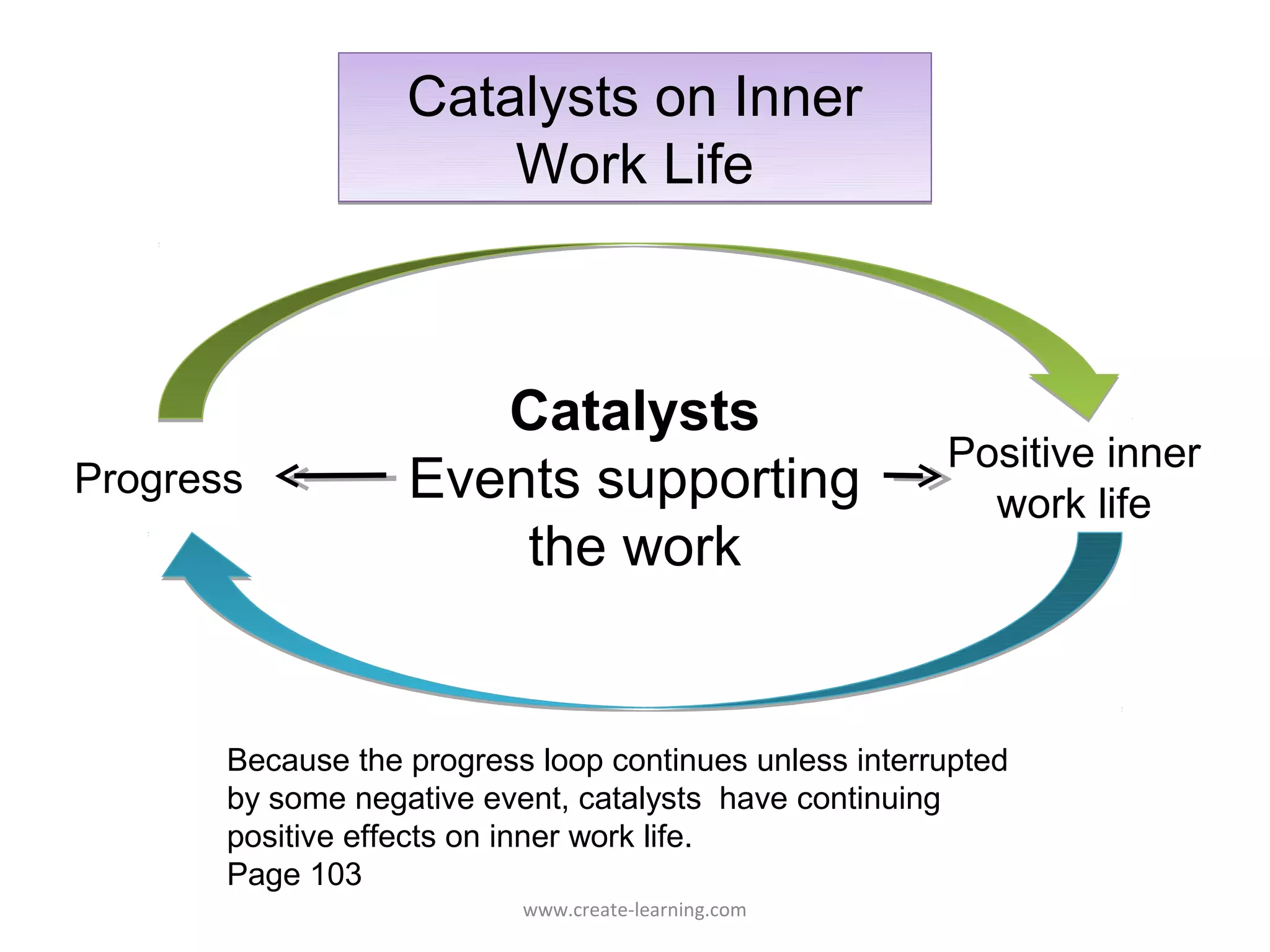
Catalysts on Inner
                       Work Life


                      Catalysts
                                                        Positive inner
Progress           Events supporting                      work life
                       the work


       Because the progress loop continues unless interrupted
       by some negative event, catalysts have continuing
       positive effects on inner work life.
       Page 103
                           www.create-learning.com
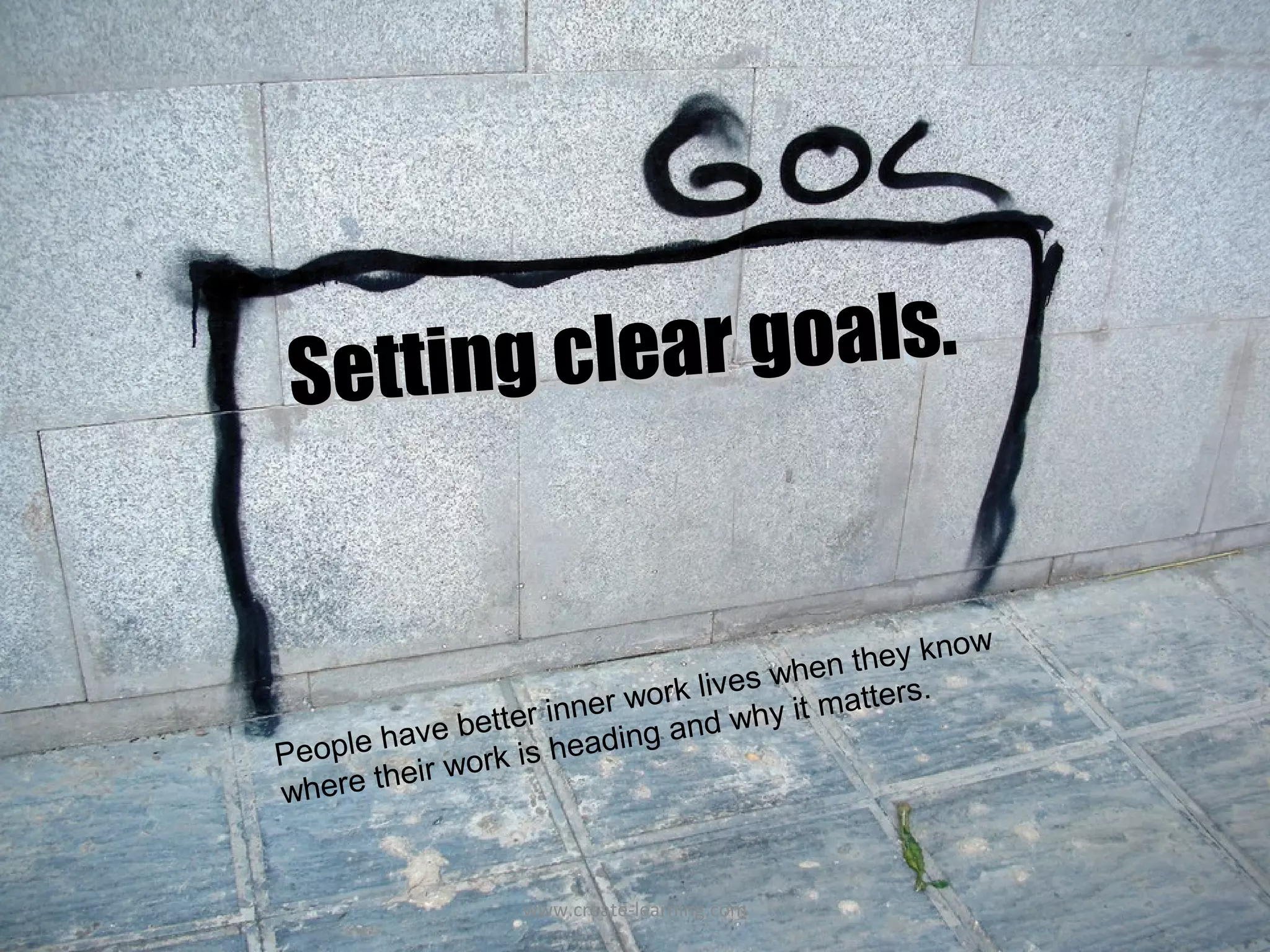
Setting cl ear goals.


                                                    now
                                     whe  n they k
                          work lives          ters.
             better inner     nd wh  y it mat
People have k is heading a
            wor
where their


                  www.create-learning.com
Setting clear
                          goals can
                          backfire if it
                          amounts to
                          nothing more
                          than telling
                          people what to
                          do and how to
                          do it.


www.create-learning.com
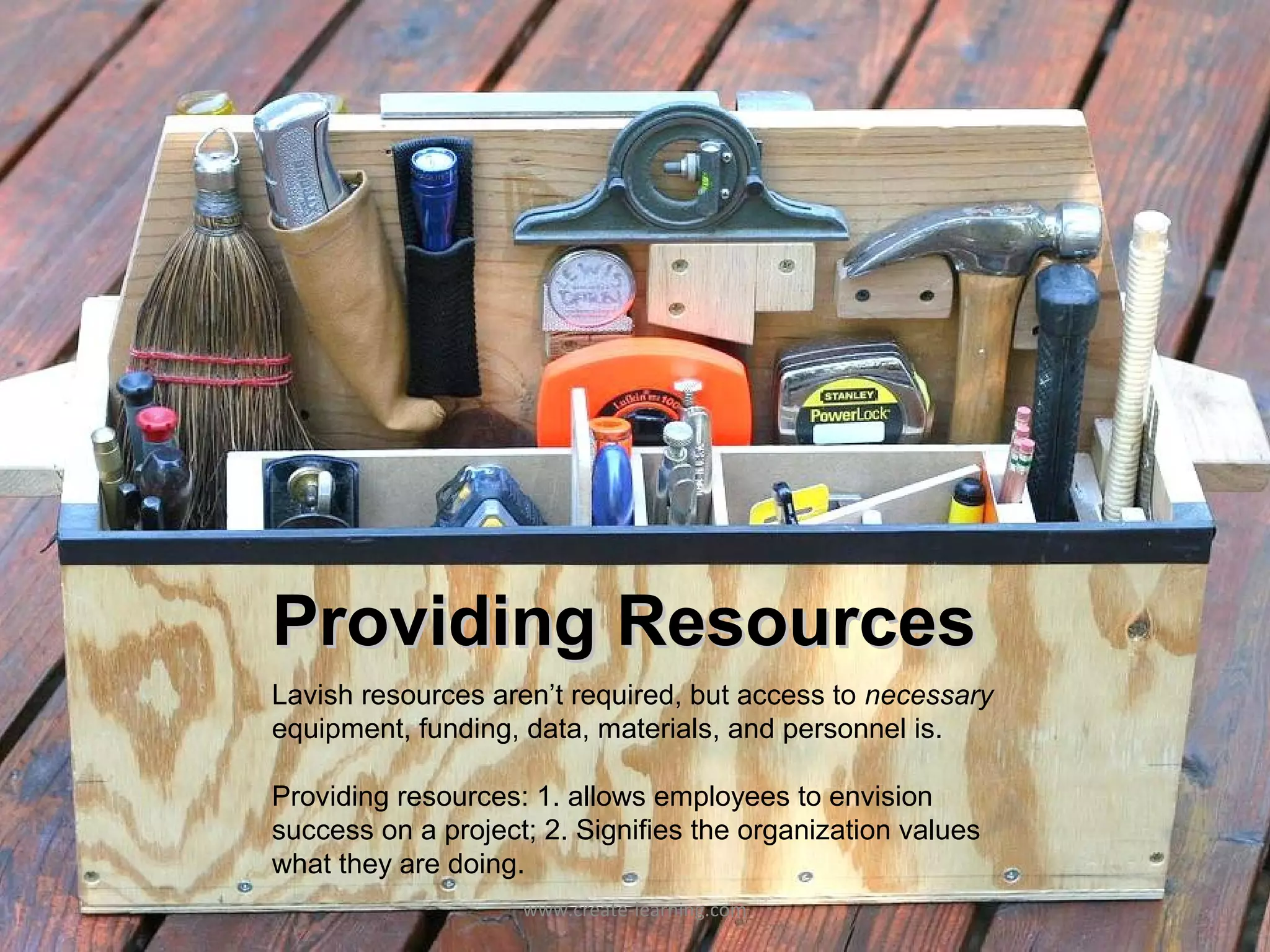
Providing Resources
Lavish resources aren’t required, but access to necessary
equipment, funding, data, materials, and personnel is.

Providing resources: 1. allows employees to envision
success on a project; 2. Signifies the organization values
what they are doing.
                    www.create-learning.com
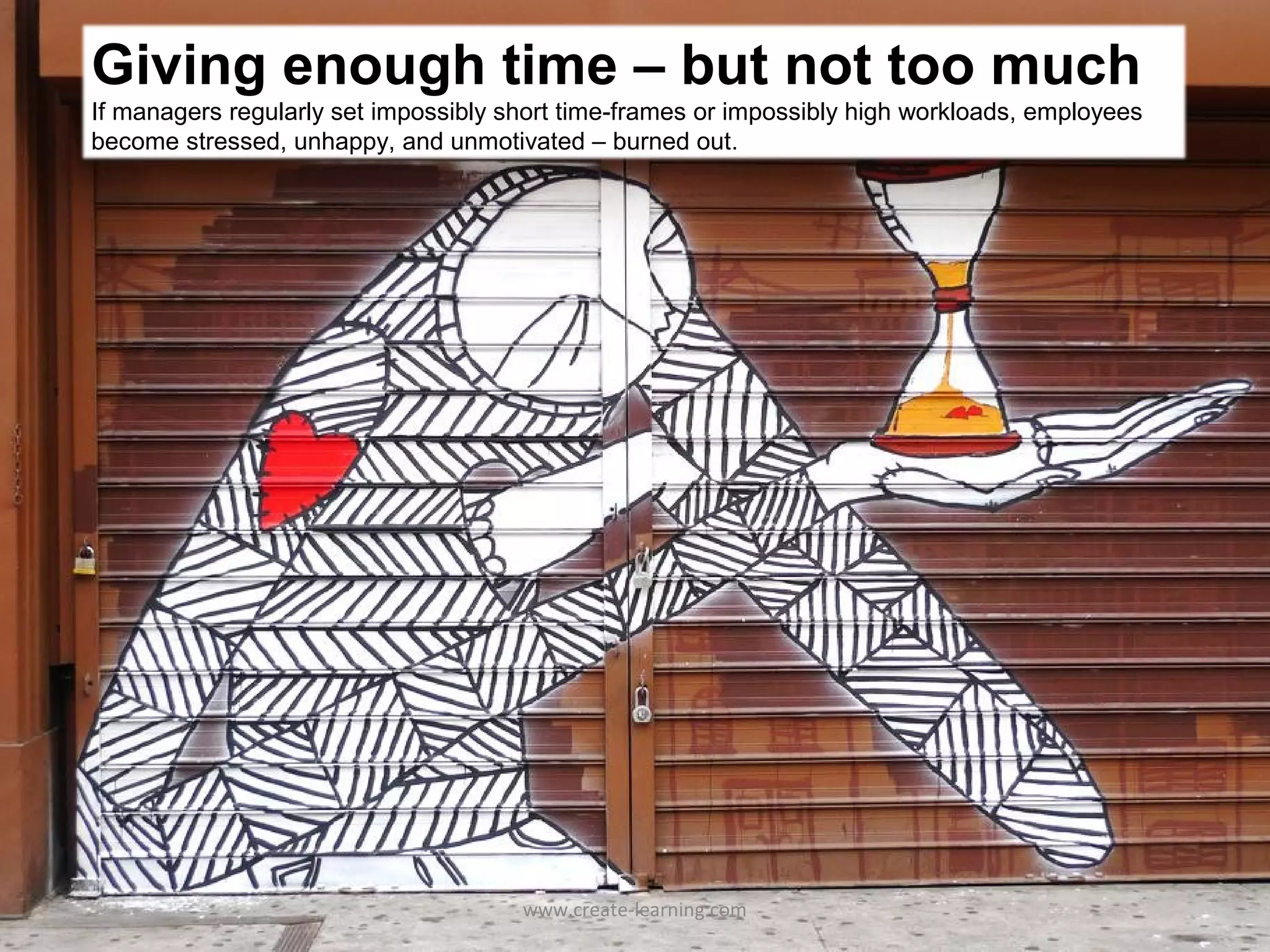
Giving enough time – but not too much
If managers regularly set impossibly short time-frames or impossibly high workloads, employees
become stressed, unhappy, and unmotivated – burned out.


                                      www.create-learning.com
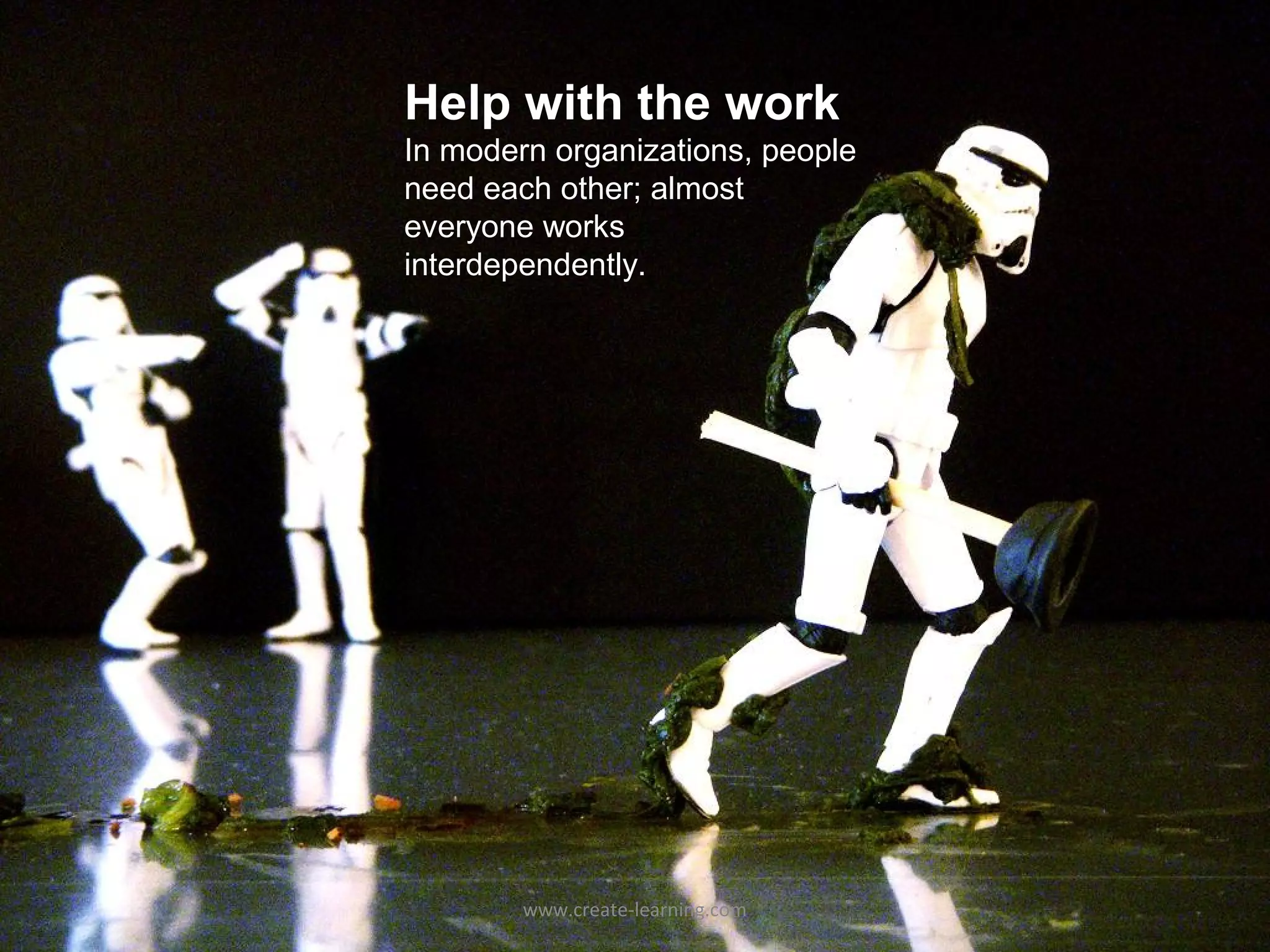
Help with the work
In modern organizations, people
need each other; almost
everyone works
interdependently.


        www.create-learning.com
Learning from problems and successes.
No matter how skilled people are, or how well designed and well executed their project,
problems and failures are inevitable in complex, creative work. Work improves when
people can determine ways to overcome and learn from them.
Successes matter, even small ones; People lose motivation when success is ignored,
or when its true value is questioned.
                                  www.create-learning.com
Allowing ideas to flow
People have some of their best days at work when ideas
about projects flowed freely within the team and across
the organization.
Ideas flowed best when managers listened to workers,
encouraged vigorous debate of diverse perspectives,
and respected constructive critiques – even of
themselves.


                                   www.create-learning.com
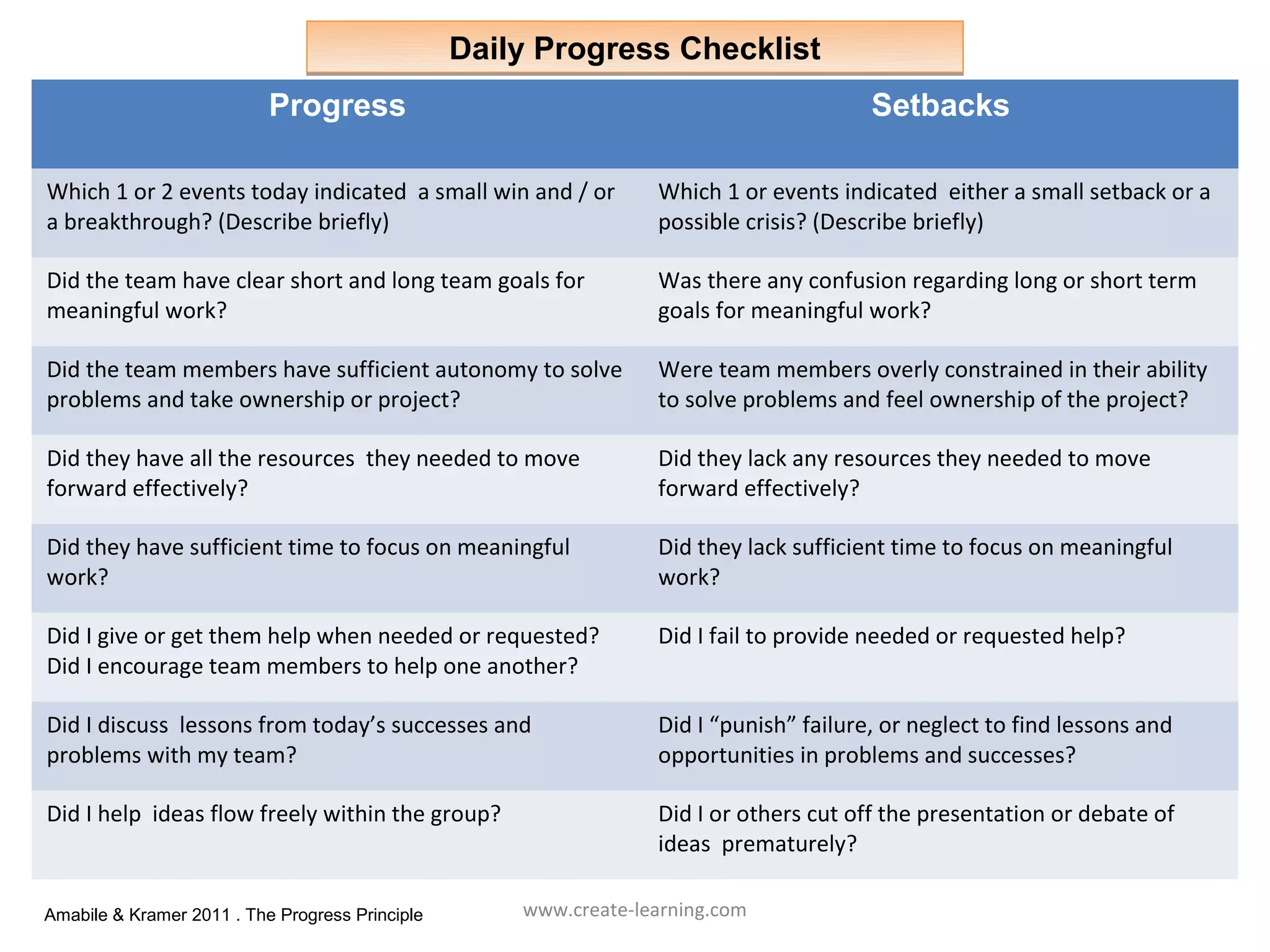
Daily Progress Checklist
                           Progress                                                     Setbacks

Which 1 or 2 events today indicated a small win and / or          Which 1 or events indicated either a small setback or a
a breakthrough? (Describe briefly)                                possible crisis? (Describe briefly)

Did the team have clear short and long team goals for             Was there any confusion regarding long or short term
meaningful work?                                                  goals for meaningful work?

Did the team members have sufficient autonomy to solve            Were team members overly constrained in their ability
problems and take ownership or project?                           to solve problems and feel ownership of the project?

Did they have all the resources they needed to move               Did they lack any resources they needed to move
forward effectively?                                              forward effectively?

Did they have sufficient time to focus on meaningful              Did they lack sufficient time to focus on meaningful
work?                                                             work?

Did I give or get them help when needed or requested?             Did I fail to provide needed or requested help?
Did I encourage team members to help one another?

Did I discuss lessons from today’s successes and                  Did I “punish” failure, or neglect to find lessons and
problems with my team?                                            opportunities in problems and successes?

Did I help ideas flow freely within the group?                    Did I or others cut off the presentation or debate of
                                                                  ideas prematurely?

Amabile & Kramer 2011 . The Progress Principle       www.create-learning.com
Progress                             Setbacks


           www.create-learning.com
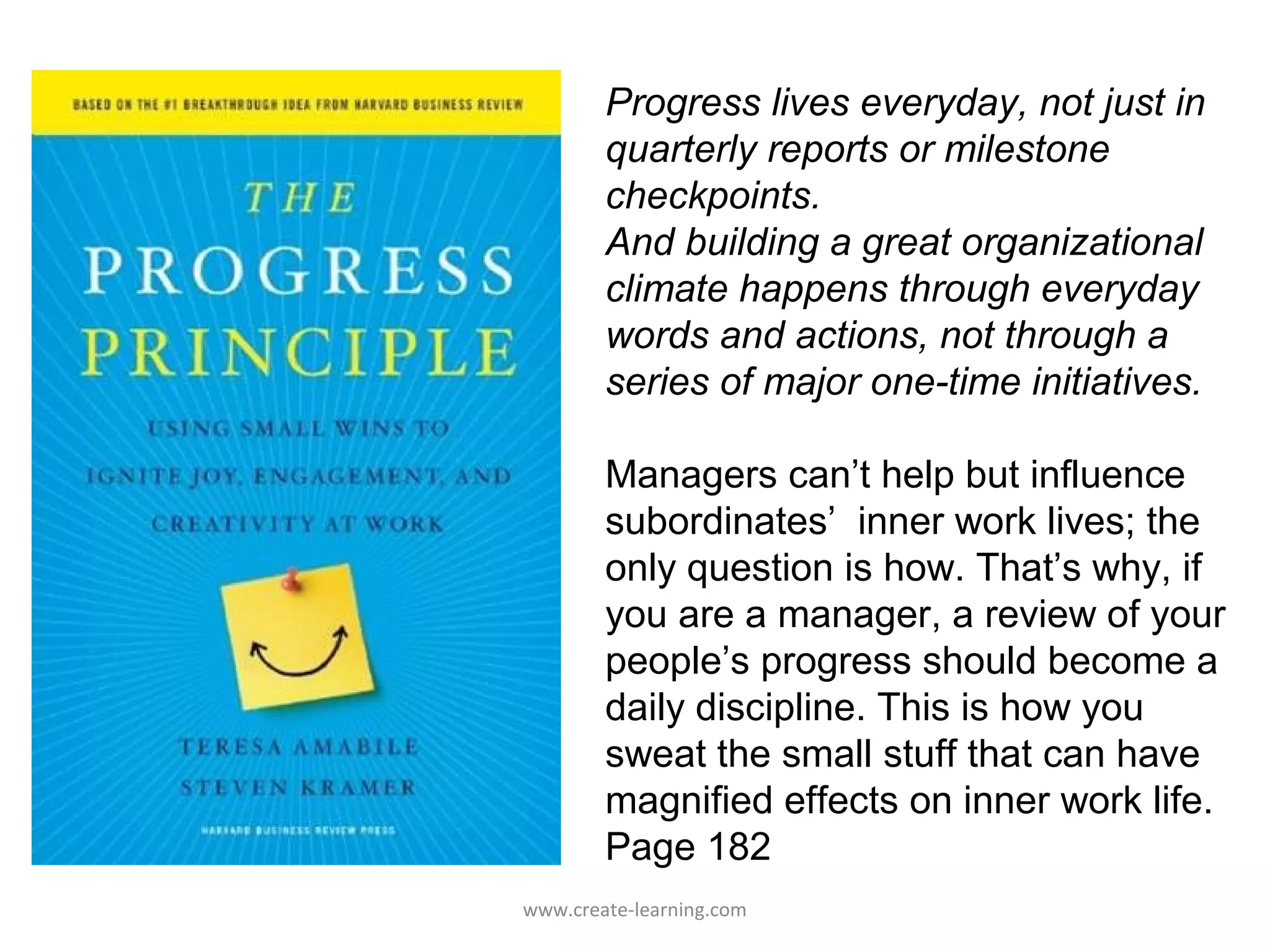
Progress lives everyday, not just in
        quarterly reports or milestone
        checkpoints.
        And building a great organizational
        climate happens through everyday
        words and actions, not through a
        series of major one-time initiatives.

        Managers can’t help but influence
        subordinates’ inner work lives; the
        only question is how. That’s why, if
        you are a manager, a review of your
        people’s progress should become a
        daily discipline. This is how you
        sweat the small stuff that can have
        magnified effects on inner work life.
        Page 182
www.create-learning.com
M
m ak
 ot i n
   iv g
     at p
       es ro
         w gre
          or s
            ke s
              rs
                .


www.create-learning.com
Images in order of appearance

http://www.flickr.com/photos/glenirah/3423920296/
http://www.flickr.com/photos/pasukaru76/5296559285/
http://www.flickr.com/photos/alyssafilmmaker/3600372591/
http://www.flickr.com/photos/daquellamanera/355061741/
http://www.flickr.com/photos/31878512@N06/3904638720/
http://www.flickr.com/photos/usefulguy/226362564/
http://www.flickr.com/photos/cuttlefish/3845733822/
http://www.flickr.com/photos/jdhancock/3572350703/
http://www.flickr.com/photos/bramus/3249196137/
http://www.flickr.com/photos/krikit/2657180934/
http://www.flickr.com/photos/sfajane/5112023570/


                                www.create-learning.com

Making Progress Motivates Workers

  • 1.
    Making progress motivates workers? www.create-learning.com
  • 2.
    Progress lives everyday,not just in quarterly reports or milestone checkpoints. And building a great organizational climate happens through everyday words and actions, not through a series of major one-time initiatives. Page 182 www.create-learning.com
  • 3.
    Leaders need tobe aware of how they rob meaning from peoples’ work. www.create-learning.com
  • 4.
    1. Dismiss someone’s ideas 2. Make employees doubt the work they do is important 3. Assign people to work for which they are overqualified 4. Keep people from assuming full ownership of their work Page 96 www.create-learning.com
  • 5.
    Most people havestrong intrinsic motivation to do their work, at least early in their careers. That motivation exists and continues, until something gets in the way. This has a startling implication: as long as the work is meaningful, managers do not have to spend time coming up with ways to motivate people to do that work. www.create-learning.com
  • 6.
    Inner Work LifeSystem Perceptions / Emotions / thoughts feelings Workday (Sensemaking about (Reaction to workday Individual events workday events) events) Performance The Organization Positive emotions Managers, team, self Negative emotions The work Overall mood Sense of accomplishment Motivation / drive (Desire to do the work) What to do How to do it When to do it Amabile & Kramer 2011 . Whether to do it The Progress Principle www.create-learning.com
  • 7.
    The power ofsetbacks to diminish happiness is more than twice as strong as the power of progress to boost happiness. The power of setbacks to increase frustration is more than three times as strong as the power of progress to decrease frustration. Page 92. www.create-learning.com
  • 8.
    If the setbackresulted simply from the difficult nature of the work itself, negative inner work life turned positive as people began to overcome the challenge, either on their own or with help. Page 75 www.create-learning.com
  • 9.
    Catalysts on Inner Work Life Catalysts Positive inner Progress Events supporting work life the work Because the progress loop continues unless interrupted by some negative event, catalysts have continuing positive effects on inner work life. Page 103 www.create-learning.com
  • 10.
    Setting cl eargoals. now whe n they k work lives ters. better inner nd wh y it mat People have k is heading a wor where their www.create-learning.com
  • 11.
    Setting clear goals can backfire if it amounts to nothing more than telling people what to do and how to do it. www.create-learning.com
  • 12.
    Providing Resources Lavish resourcesaren’t required, but access to necessary equipment, funding, data, materials, and personnel is. Providing resources: 1. allows employees to envision success on a project; 2. Signifies the organization values what they are doing. www.create-learning.com
  • 13.
    Giving enough time– but not too much If managers regularly set impossibly short time-frames or impossibly high workloads, employees become stressed, unhappy, and unmotivated – burned out. www.create-learning.com
  • 14.
    Help with thework In modern organizations, people need each other; almost everyone works interdependently. www.create-learning.com
  • 15.
    Learning from problemsand successes. No matter how skilled people are, or how well designed and well executed their project, problems and failures are inevitable in complex, creative work. Work improves when people can determine ways to overcome and learn from them. Successes matter, even small ones; People lose motivation when success is ignored, or when its true value is questioned. www.create-learning.com
  • 16.
    Allowing ideas toflow People have some of their best days at work when ideas about projects flowed freely within the team and across the organization. Ideas flowed best when managers listened to workers, encouraged vigorous debate of diverse perspectives, and respected constructive critiques – even of themselves. www.create-learning.com
  • 17.
    Daily Progress Checklist Progress Setbacks Which 1 or 2 events today indicated a small win and / or Which 1 or events indicated either a small setback or a a breakthrough? (Describe briefly) possible crisis? (Describe briefly) Did the team have clear short and long team goals for Was there any confusion regarding long or short term meaningful work? goals for meaningful work? Did the team members have sufficient autonomy to solve Were team members overly constrained in their ability problems and take ownership or project? to solve problems and feel ownership of the project? Did they have all the resources they needed to move Did they lack any resources they needed to move forward effectively? forward effectively? Did they have sufficient time to focus on meaningful Did they lack sufficient time to focus on meaningful work? work? Did I give or get them help when needed or requested? Did I fail to provide needed or requested help? Did I encourage team members to help one another? Did I discuss lessons from today’s successes and Did I “punish” failure, or neglect to find lessons and problems with my team? opportunities in problems and successes? Did I help ideas flow freely within the group? Did I or others cut off the presentation or debate of ideas prematurely? Amabile & Kramer 2011 . The Progress Principle www.create-learning.com
  • 18.
    Progress Setbacks www.create-learning.com
  • 19.
    Progress lives everyday,not just in quarterly reports or milestone checkpoints. And building a great organizational climate happens through everyday words and actions, not through a series of major one-time initiatives. Managers can’t help but influence subordinates’ inner work lives; the only question is how. That’s why, if you are a manager, a review of your people’s progress should become a daily discipline. This is how you sweat the small stuff that can have magnified effects on inner work life. Page 182 www.create-learning.com
  • 20.
    M m ak oti n iv g at p es ro w gre or s ke s rs . www.create-learning.com
  • 21.
    Images in orderof appearance http://www.flickr.com/photos/glenirah/3423920296/ http://www.flickr.com/photos/pasukaru76/5296559285/ http://www.flickr.com/photos/alyssafilmmaker/3600372591/ http://www.flickr.com/photos/daquellamanera/355061741/ http://www.flickr.com/photos/31878512@N06/3904638720/ http://www.flickr.com/photos/usefulguy/226362564/ http://www.flickr.com/photos/cuttlefish/3845733822/ http://www.flickr.com/photos/jdhancock/3572350703/ http://www.flickr.com/photos/bramus/3249196137/ http://www.flickr.com/photos/krikit/2657180934/ http://www.flickr.com/photos/sfajane/5112023570/ www.create-learning.com