

The Progress
  Principle

Bret L. Simmons, Ph.D.
www.bretlsimmons.com
   Presentation for
Arvato Digital Services
  November 3, 2011
Evidence-Based
 Management
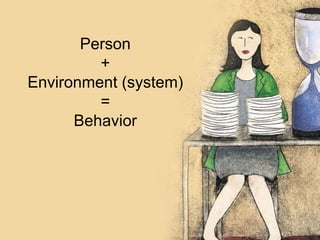
Person
         +
Environment (system)
         =
      Behavior
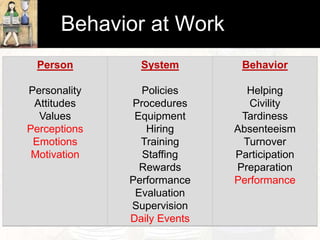
Behavior at Work
 Person         System        Behavior

Personality     Policies       Helping
 Attitudes    Procedures        Civility
  Values       Equipment      Tardiness
Perceptions      Hiring      Absenteeism
 Emotions       Training      Turnover
 Motivation     Staffing     Participation
                Rewards      Preparation
              Performance    Performance
               Evaluation
              Supervision
              Daily Events
Inner Work Life Effect:
“People do better work when they are happy, have
positive views of the organization and its people, and
are motivated primarily by the work itself.” (p, 47)
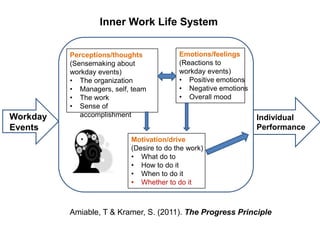
Inner Work Life System

          Perceptions/thoughts            Emotions/feelings
          (Sensemaking about              (Reactions to
          workday events)                 workday events)
          • The organization              • Positive emotions
          • Managers, self, team          • Negative emotions
          • The work                      • Overall mood
          • Sense of
Workday      accomplishment                                     Individual
Events                                                          Performance
                           Motivation/drive
                           (Desire to do the work)
                           • What do to
                           • How to do it
                           • When to do it
                           • Whether to do it


          Amiable, T & Kramer, S. (2011). The Progress Principle
Key Points
• Even seemingly mundane events –
  such as small wins and minor
  setbacks – can exert potent
  influence on inner work life
• Negative events are more
  powerful than positive events, all
  else being equal
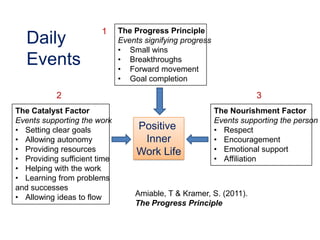
1     The Progress Principle
   Daily                      Events signifying progress
                              • Small wins
   Events                     • Breakthroughs
                              • Forward movement
                              • Goal completion

           2                                                          3
The Catalyst Factor                                        The Nourishment Factor
Events supporting the work                                 Events supporting the person
• Setting clear goals              Positive                • Respect
• Allowing autonomy                 Inner                  • Encouragement
• Providing resources              Work Life               • Emotional support
• Providing sufficient time                                • Affiliation
• Helping with the work
• Learning from problems
and successes
• Allowing ideas to flow          Amiable, T & Kramer, S. (2011).
                                  The Progress Principle
Progress Principle
• Any manager’s job description
  should start with facilitating
  subordinates progress every day
  (p. 89)
• Self-efficacy
• Meaningful work
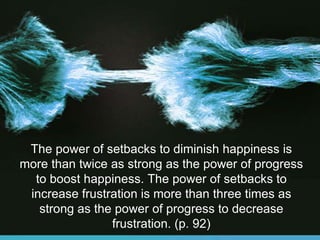
The power of setbacks to diminish happiness is
more than twice as strong as the power of progress
  to boost happiness. The power of setbacks to
 increase frustration is more than three times as
   strong as the power of progress to decrease
                frustration. (p. 92)
Meaning Killers
• Dismiss someone’s ideas
• Make employees doubt the work
  they do is important
• Assign people to work for which
  they are overqualified
• Keep people from assuming full
  ownership of their work
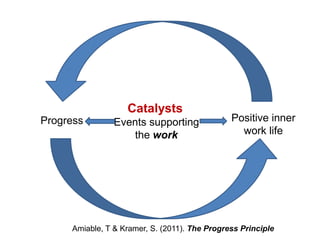
Catalysts
Progress        Events supporting              Positive inner
                   the work                      work life


     Amiable, T & Kramer, S. (2011). The Progress Principle
Culture of Catalysts


• Consideration for people and their ideas. Do
  managers at all levels honor the dignity of employees,
  value their ideas, and serve as examples of civil
  discourse?
• Coordination. Are systems and procedures (e.g.
  performance evaluation) designed to facilitate
  coordination or competition between individuals and
  groups?
• Communication. Open, honest, and respectful
  communication is perhaps the most powerful force for
  sustaining progress, coordinating work, establishing
  trust, and helping people understand that what they
  think and do matters.
Inhibitors
• Unclear goals
• Micro-management
• Lack of resources (e.g. information, equipment,
  funding, personnel, training)
• Time pressure
• Punishment (vs. learning) from problems or
  mistakes
• Shut down open discussion
• Increased workload + decreased control
Nourishers/Toxins
• Respect / disrespect
• Encouragement / discouragement
• Emotional support / emotional
  neglect
• Affiliation / antagonism
Team Leaders /
Immediate Supervisors
Whatever your level in the organization … you bear
 some responsibility for the inner work lives of the
           people around you (p. 181)
Recommendations
•   Systematic awareness
•   Stay tuned everyday
•   Target support
•   Check in – don’t check-up
•   Events change the culture
•   Tend to your own inner work life
Focus on daily progress in
    meaningful work
Use a Checklist!
Inner Work Life System

          Perceptions/thoughts            Emotions/feelings
          (Sensemaking about              (Reactions to
          workday events)                 workday events)
          • The organization              • Positive emotions
          • Managers, self, team          • Negative emotions
          • The work                      • Overall mood
          • Sense of
Workday      accomplishment                                     Individual
Events                                                          Performance
                           Motivation/drive
                           (Desire to do the work)
                           • What do to
                           • How to do it
                           • When to do it
                           • Whether to do it


          Amiable, T & Kramer, S. (2011). The Progress Principle
How do we change how people
      behave at work?
Your Questions
The Progress
   Principle


Bret L. Simmons, Ph.D.
www.bretlsimmons.com
 simmonsb@unr.edu
    (775) 336-9576

Inner work life

  • 1.
    The Progress Principle Bret L. Simmons, Ph.D. www.bretlsimmons.com Presentation for Arvato Digital Services November 3, 2011
  • 2.
  • 3.
    Person + Environment (system) = Behavior
  • 4.
    Behavior at Work Person System Behavior Personality Policies Helping Attitudes Procedures Civility Values Equipment Tardiness Perceptions Hiring Absenteeism Emotions Training Turnover Motivation Staffing Participation Rewards Preparation Performance Performance Evaluation Supervision Daily Events
  • 5.
    Inner Work LifeEffect: “People do better work when they are happy, have positive views of the organization and its people, and are motivated primarily by the work itself.” (p, 47)
  • 6.
    Inner Work LifeSystem Perceptions/thoughts Emotions/feelings (Sensemaking about (Reactions to workday events) workday events) • The organization • Positive emotions • Managers, self, team • Negative emotions • The work • Overall mood • Sense of Workday accomplishment Individual Events Performance Motivation/drive (Desire to do the work) • What do to • How to do it • When to do it • Whether to do it Amiable, T & Kramer, S. (2011). The Progress Principle
  • 7.
    Key Points • Evenseemingly mundane events – such as small wins and minor setbacks – can exert potent influence on inner work life • Negative events are more powerful than positive events, all else being equal
  • 8.
    1 The Progress Principle Daily Events signifying progress • Small wins Events • Breakthroughs • Forward movement • Goal completion 2 3 The Catalyst Factor The Nourishment Factor Events supporting the work Events supporting the person • Setting clear goals Positive • Respect • Allowing autonomy Inner • Encouragement • Providing resources Work Life • Emotional support • Providing sufficient time • Affiliation • Helping with the work • Learning from problems and successes • Allowing ideas to flow Amiable, T & Kramer, S. (2011). The Progress Principle
  • 9.
    Progress Principle • Anymanager’s job description should start with facilitating subordinates progress every day (p. 89) • Self-efficacy • Meaningful work
  • 10.
    The power ofsetbacks to diminish happiness is more than twice as strong as the power of progress to boost happiness. The power of setbacks to increase frustration is more than three times as strong as the power of progress to decrease frustration. (p. 92)
  • 11.
    Meaning Killers • Dismisssomeone’s ideas • Make employees doubt the work they do is important • Assign people to work for which they are overqualified • Keep people from assuming full ownership of their work
  • 12.
    Catalysts Progress Events supporting Positive inner the work work life Amiable, T & Kramer, S. (2011). The Progress Principle
  • 13.
    Culture of Catalysts •Consideration for people and their ideas. Do managers at all levels honor the dignity of employees, value their ideas, and serve as examples of civil discourse? • Coordination. Are systems and procedures (e.g. performance evaluation) designed to facilitate coordination or competition between individuals and groups? • Communication. Open, honest, and respectful communication is perhaps the most powerful force for sustaining progress, coordinating work, establishing trust, and helping people understand that what they think and do matters.
  • 14.
    Inhibitors • Unclear goals •Micro-management • Lack of resources (e.g. information, equipment, funding, personnel, training) • Time pressure • Punishment (vs. learning) from problems or mistakes • Shut down open discussion • Increased workload + decreased control
  • 15.
    Nourishers/Toxins • Respect /disrespect • Encouragement / discouragement • Emotional support / emotional neglect • Affiliation / antagonism
  • 16.
  • 17.
    Whatever your levelin the organization … you bear some responsibility for the inner work lives of the people around you (p. 181)
  • 18.
    Recommendations • Systematic awareness • Stay tuned everyday • Target support • Check in – don’t check-up • Events change the culture • Tend to your own inner work life
  • 19.
    Focus on dailyprogress in meaningful work
  • 20.
  • 21.
    Inner Work LifeSystem Perceptions/thoughts Emotions/feelings (Sensemaking about (Reactions to workday events) workday events) • The organization • Positive emotions • Managers, self, team • Negative emotions • The work • Overall mood • Sense of Workday accomplishment Individual Events Performance Motivation/drive (Desire to do the work) • What do to • How to do it • When to do it • Whether to do it Amiable, T & Kramer, S. (2011). The Progress Principle
  • 22.
    How do wechange how people behave at work?
  • 23.
  • 24.
    The Progress Principle Bret L. Simmons, Ph.D. www.bretlsimmons.com simmonsb@unr.edu (775) 336-9576