Literary Terms  You Should Know On your paper, write the definition, and  one  example for each term.
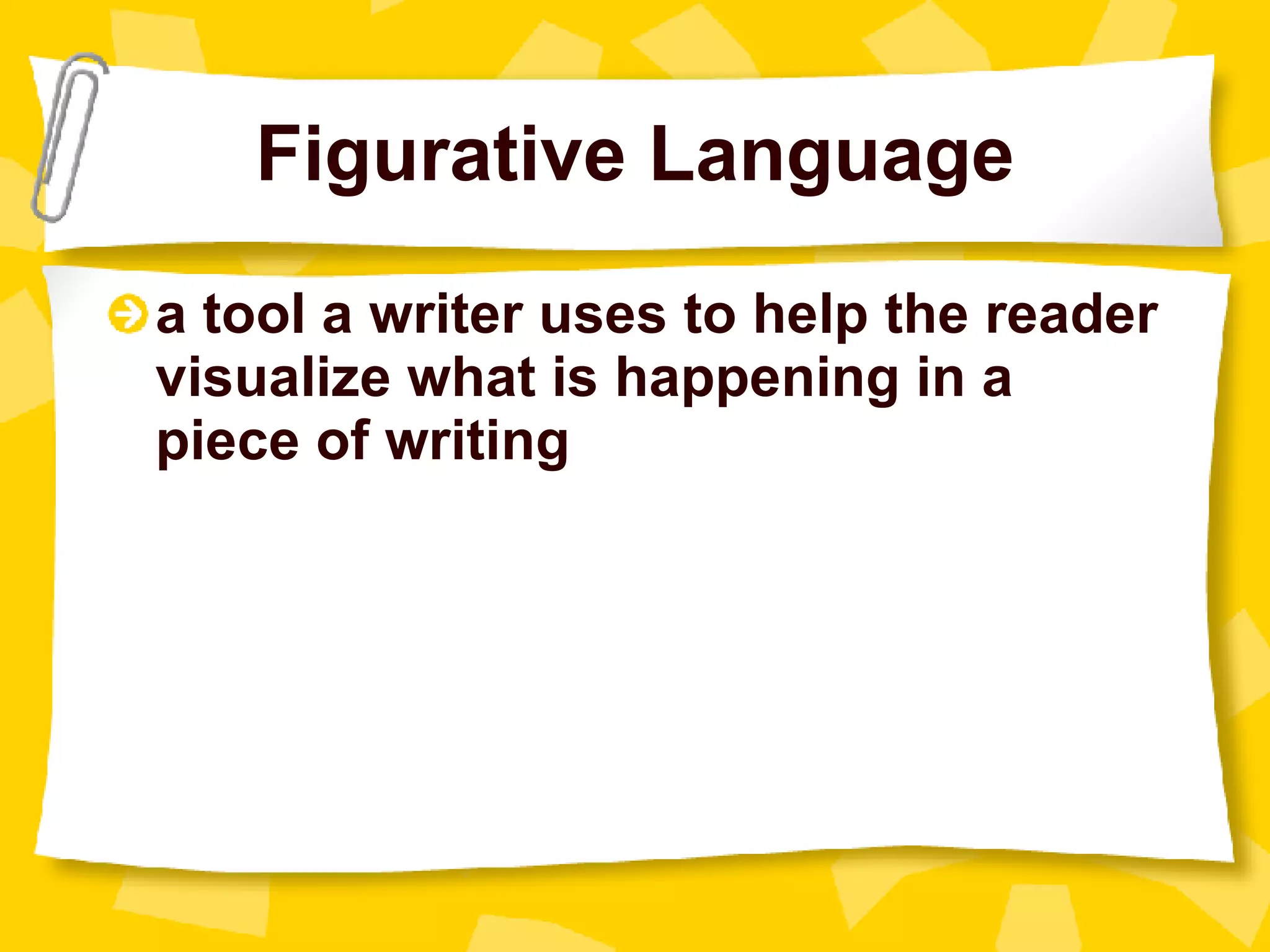
Figurative Language a tool a writer uses to help the reader visualize what is happening in a piece of writing
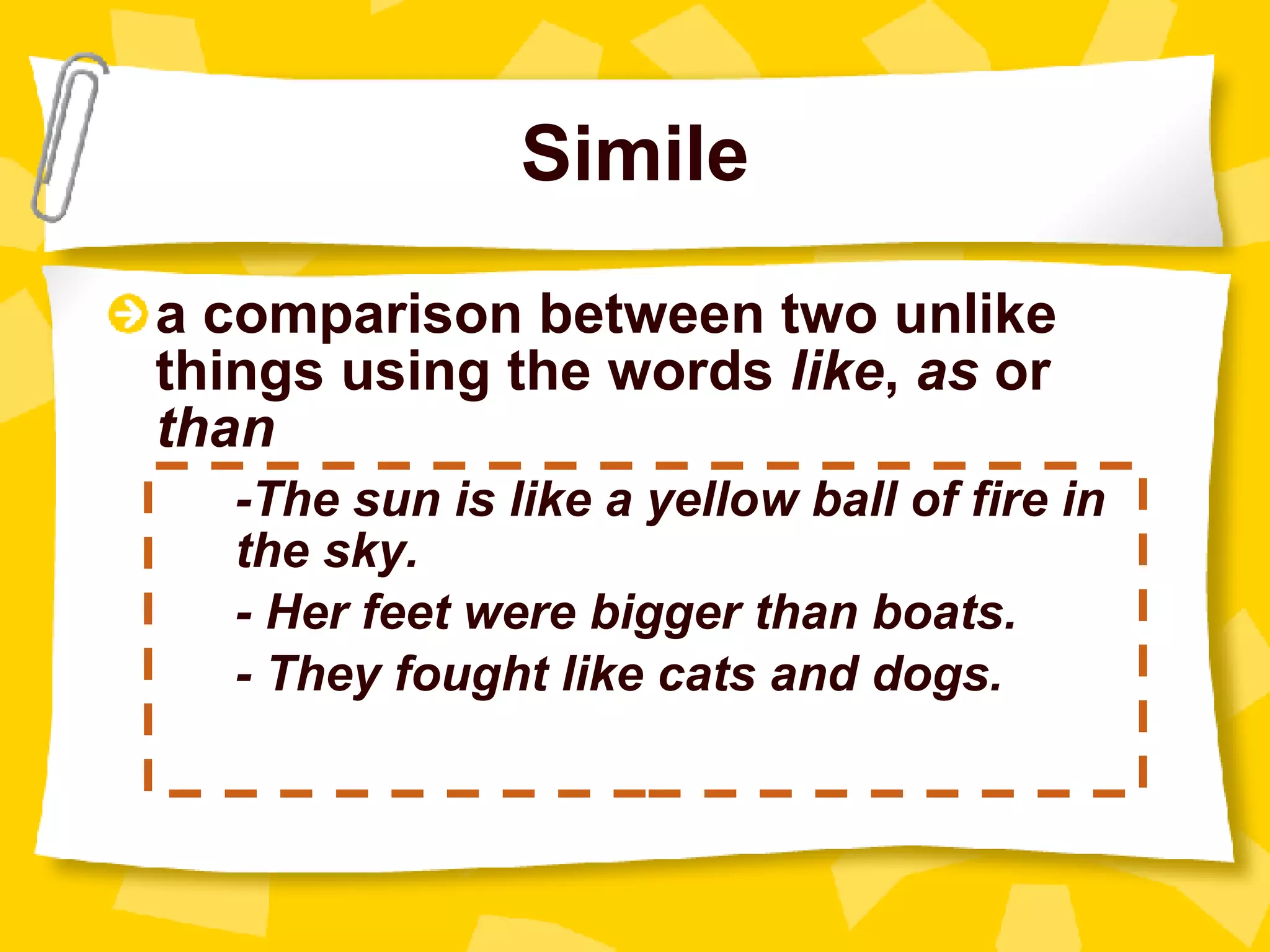
Simile a comparison between two unlike things using the words  like ,  as  or  than -The sun is like a yellow ball of fire in  the sky. - Her feet were bigger than boats. - They fought like cats and dogs.
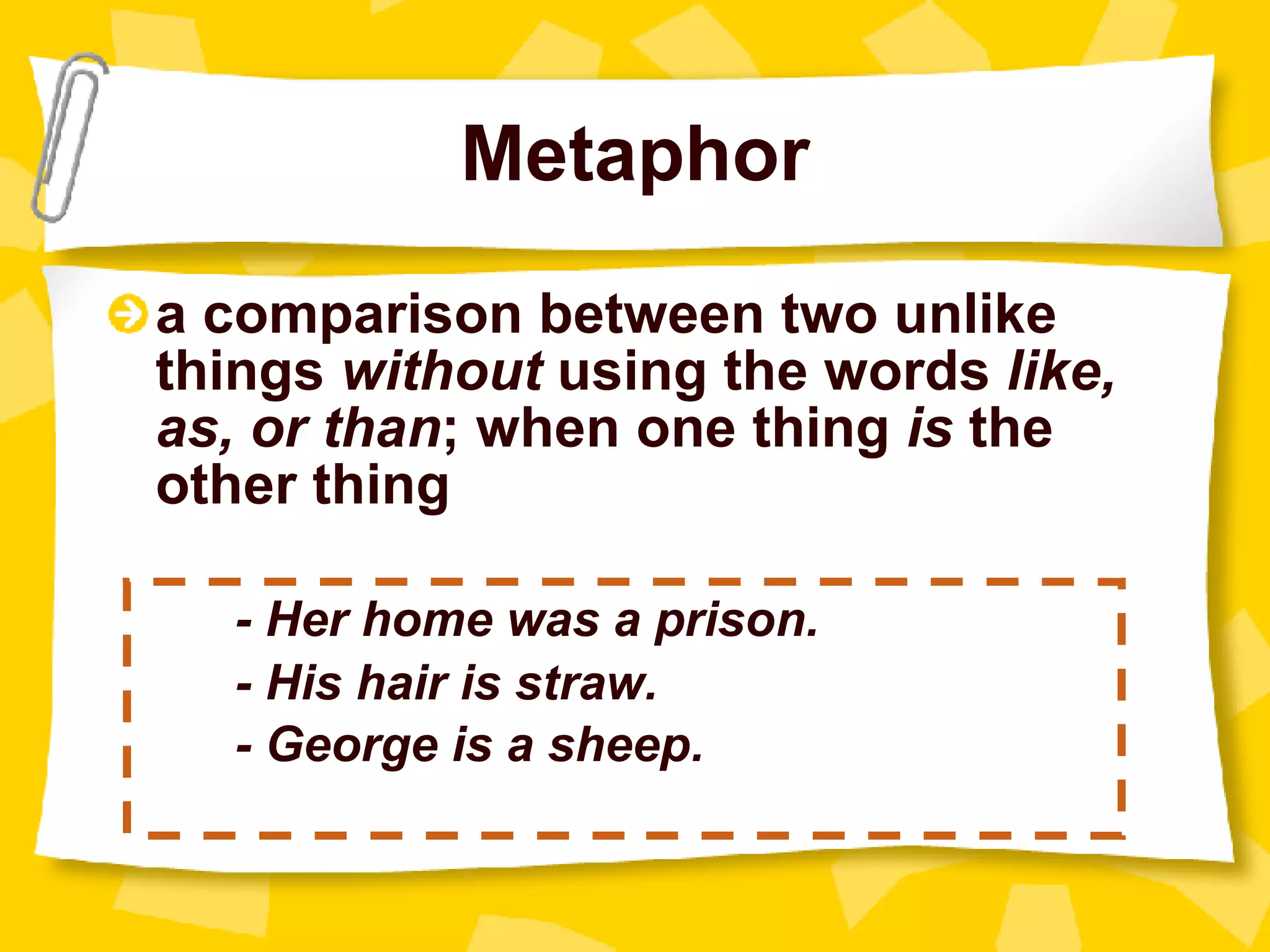
Metaphor a comparison between two unlike things  without  using the words  like, as, or than ; when one thing  is  the other thing - Her home was a prison. - His hair is straw. - George is a sheep.
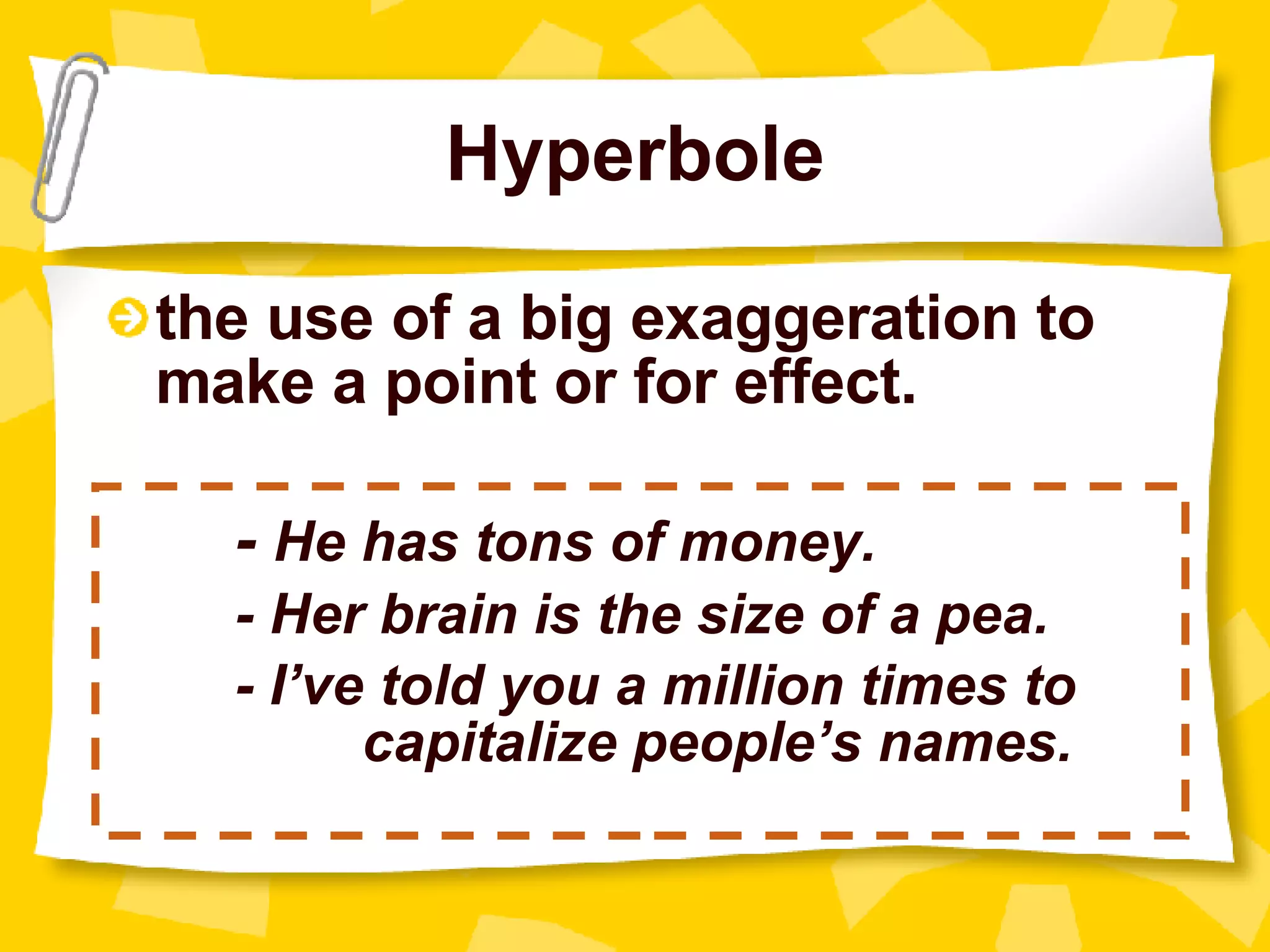
Hyperbole the use of a big exaggeration to make a point or for effect. -  He has tons of money. - Her brain is the size of a pea. - I’ve told you a million times to  capitalize people’s names.
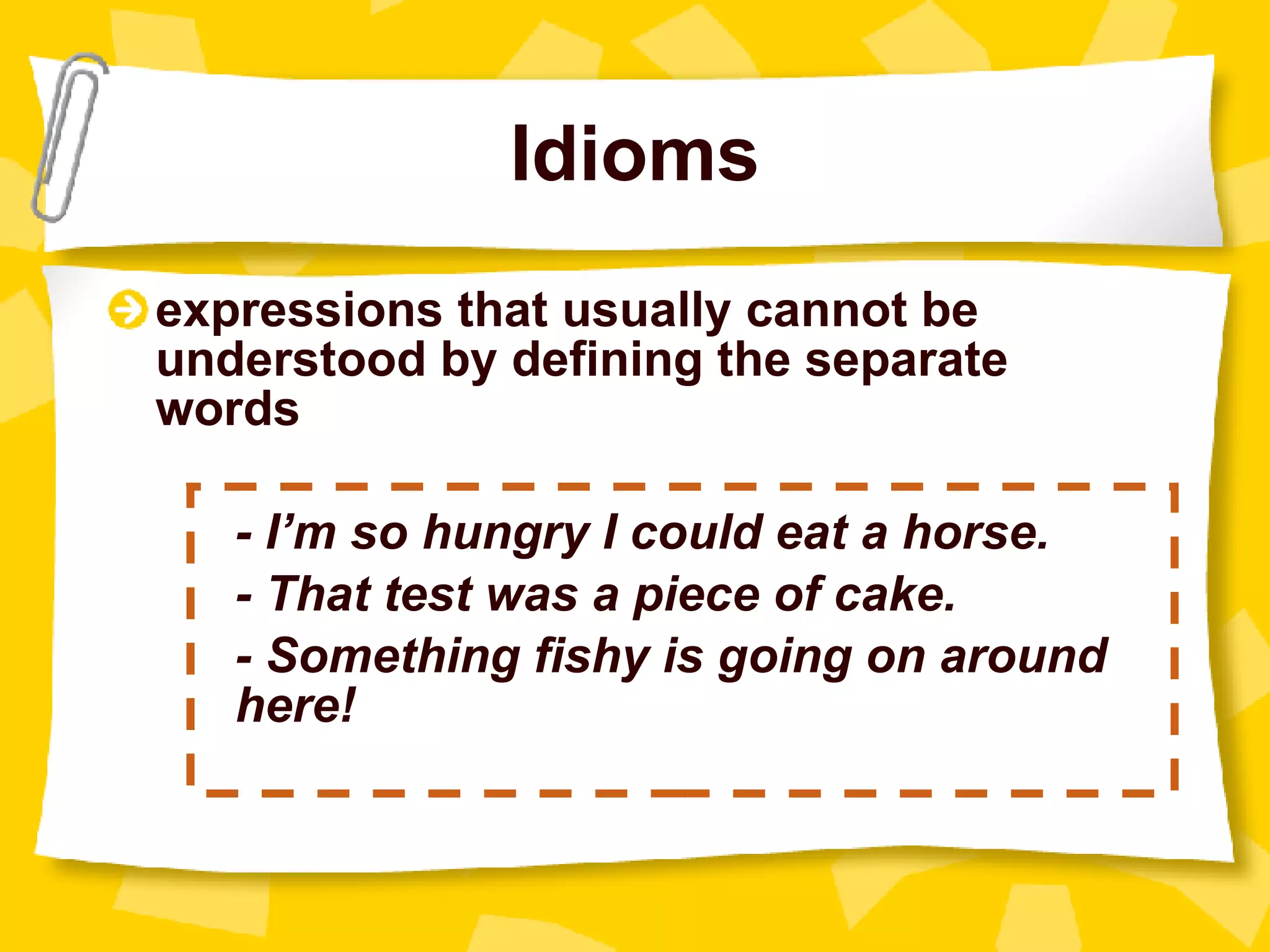
Idioms expressions that usually cannot be understood by defining the separate words - I’m so hungry I could eat a horse. - That test was a piece of cake. - Something fishy is going on around  here!
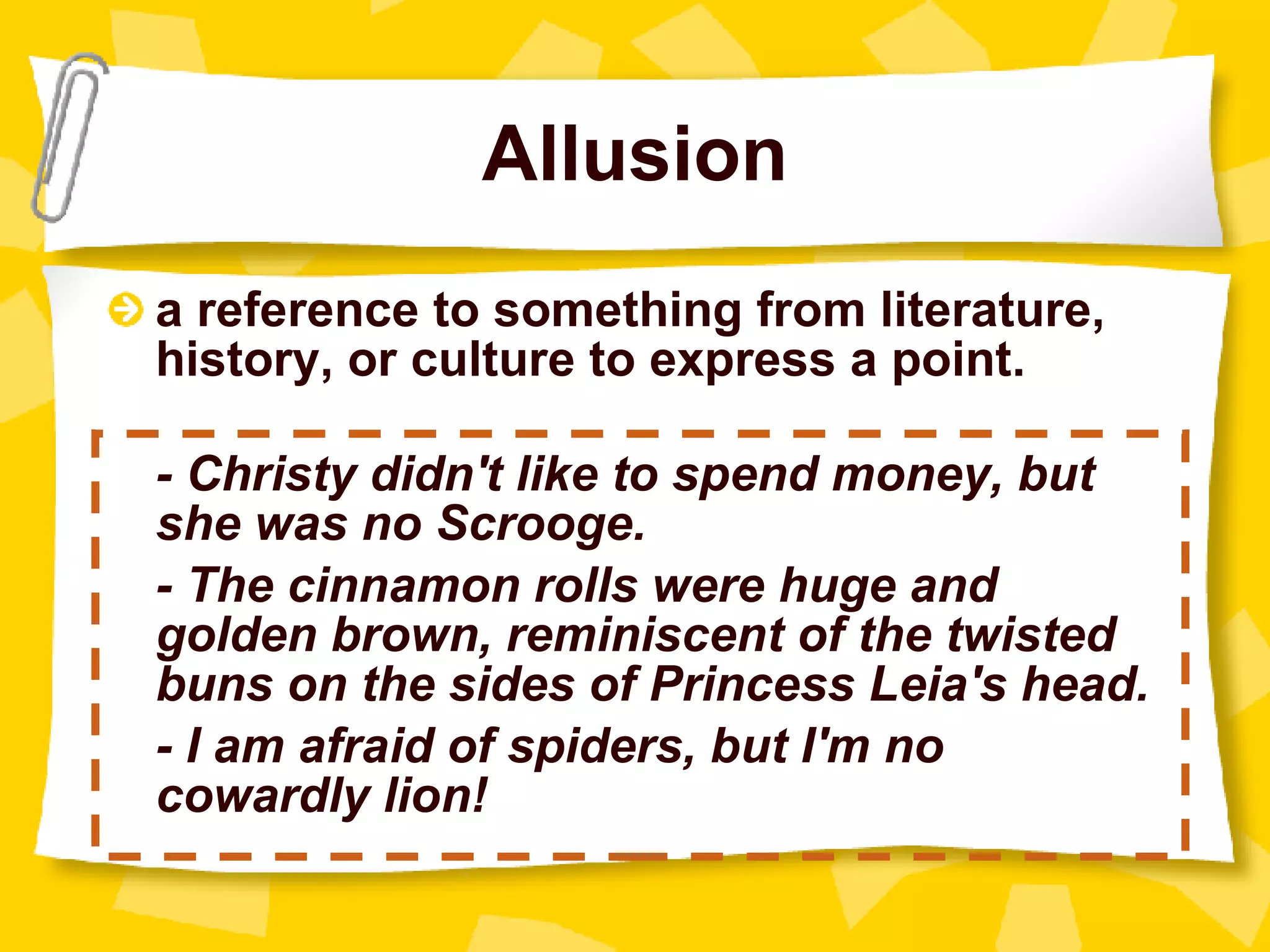
Allusion a reference to something from literature, history, or culture to express a point. - Christy didn't like to spend money, but she was no Scrooge. - The cinnamon rolls were huge and golden brown, reminiscent of the twisted buns on the sides of Princess Leia's head.   - I am afraid of spiders, but I'm no cowardly lion!
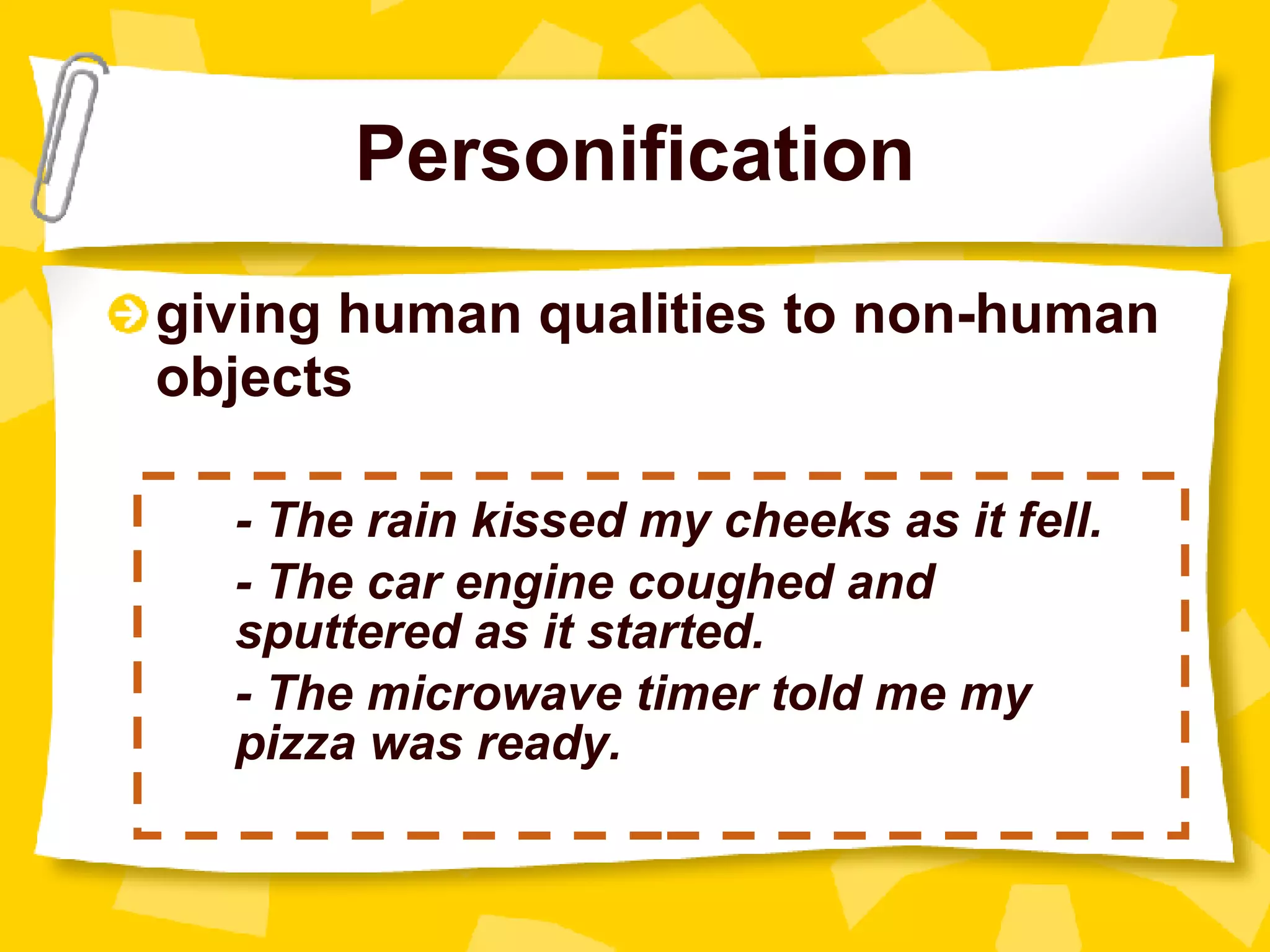
Personification giving human qualities to non-human objects - The rain kissed my cheeks as it fell. - The car engine coughed and  sputtered as it started. - The microwave timer told me my  pizza was ready.
Alliteration repetition of an initial consonant sound; there should be at least two repetitions in a row -  The wooly walrus wonders when we’ll  walk by. - Sally sells seashells by the seashore. - Peter Piper picks pickled peppers.
Onomatopoeia when a word sounds like what it represents - splash - drip - smush - splat
Imagery the use of vivid sensory description to create mental pictures.    - The room was dark and musty and  smelled like an old shoe. - The blueberries were as big as your  thumb and tasted like soot. - We heard the horses hoofs clatter on  the cobblestone street.

Figurative Language Terms

  • 1.
    Literary Terms You Should Know On your paper, write the definition, and one example for each term.
  • 2.
    Figurative Language atool a writer uses to help the reader visualize what is happening in a piece of writing
  • 3.
    Simile a comparisonbetween two unlike things using the words like , as or than -The sun is like a yellow ball of fire in the sky. - Her feet were bigger than boats. - They fought like cats and dogs.
  • 4.
    Metaphor a comparisonbetween two unlike things without using the words like, as, or than ; when one thing is the other thing - Her home was a prison. - His hair is straw. - George is a sheep.
  • 5.
    Hyperbole the useof a big exaggeration to make a point or for effect. - He has tons of money. - Her brain is the size of a pea. - I’ve told you a million times to capitalize people’s names.
  • 6.
    Idioms expressions thatusually cannot be understood by defining the separate words - I’m so hungry I could eat a horse. - That test was a piece of cake. - Something fishy is going on around here!
  • 7.
    Allusion a referenceto something from literature, history, or culture to express a point. - Christy didn't like to spend money, but she was no Scrooge. - The cinnamon rolls were huge and golden brown, reminiscent of the twisted buns on the sides of Princess Leia's head. - I am afraid of spiders, but I'm no cowardly lion!
  • 8.
    Personification giving humanqualities to non-human objects - The rain kissed my cheeks as it fell. - The car engine coughed and sputtered as it started. - The microwave timer told me my pizza was ready.
  • 9.
    Alliteration repetition ofan initial consonant sound; there should be at least two repetitions in a row - The wooly walrus wonders when we’ll walk by. - Sally sells seashells by the seashore. - Peter Piper picks pickled peppers.
  • 10.
    Onomatopoeia when aword sounds like what it represents - splash - drip - smush - splat
  • 11.
    Imagery the useof vivid sensory description to create mental pictures. - The room was dark and musty and smelled like an old shoe. - The blueberries were as big as your thumb and tasted like soot. - We heard the horses hoofs clatter on the cobblestone street.