Symbolism Meanings beyond the obvious
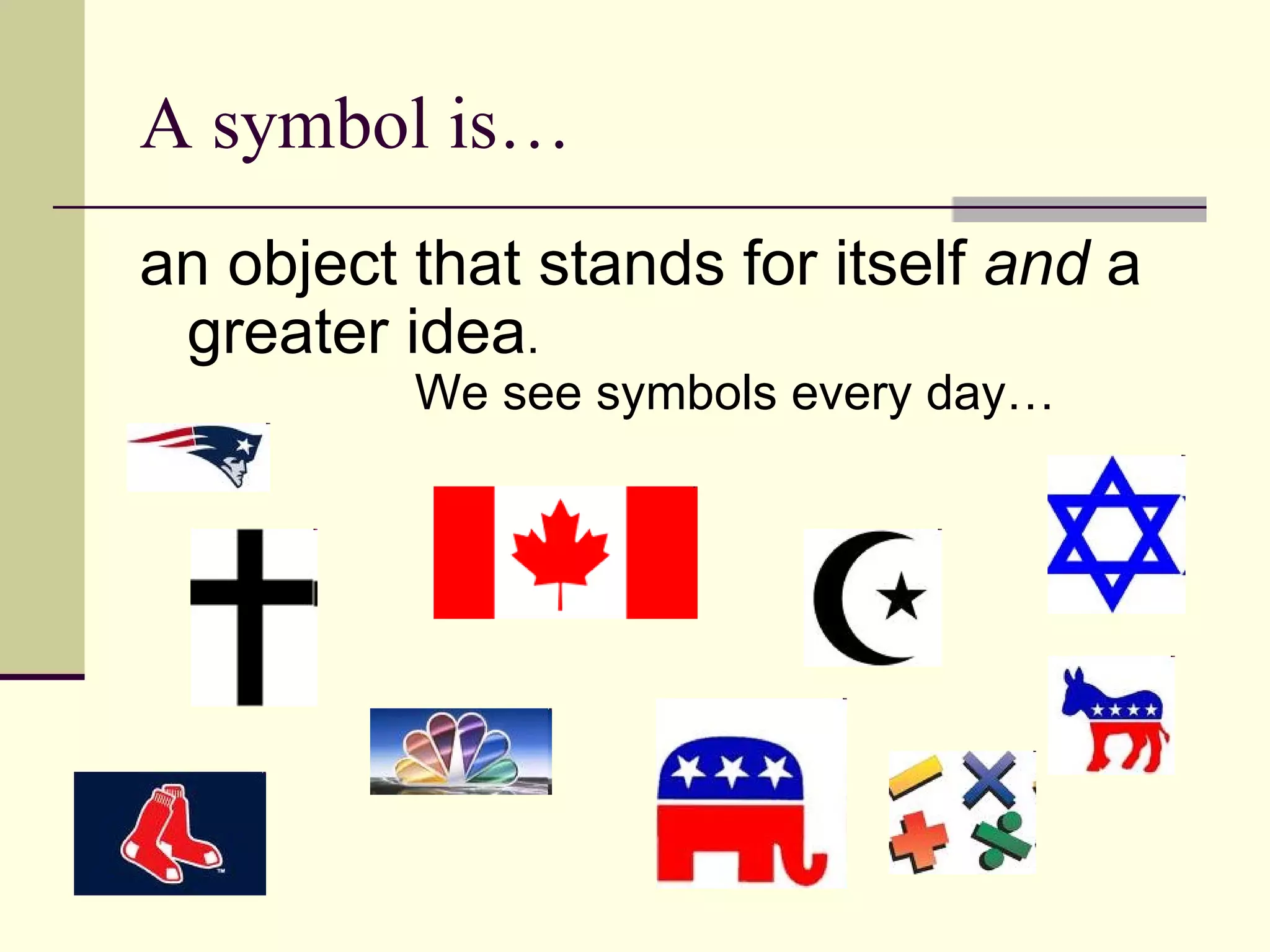
A symbol is… an object that stands for itself  and  a greater idea . We see symbols every day…
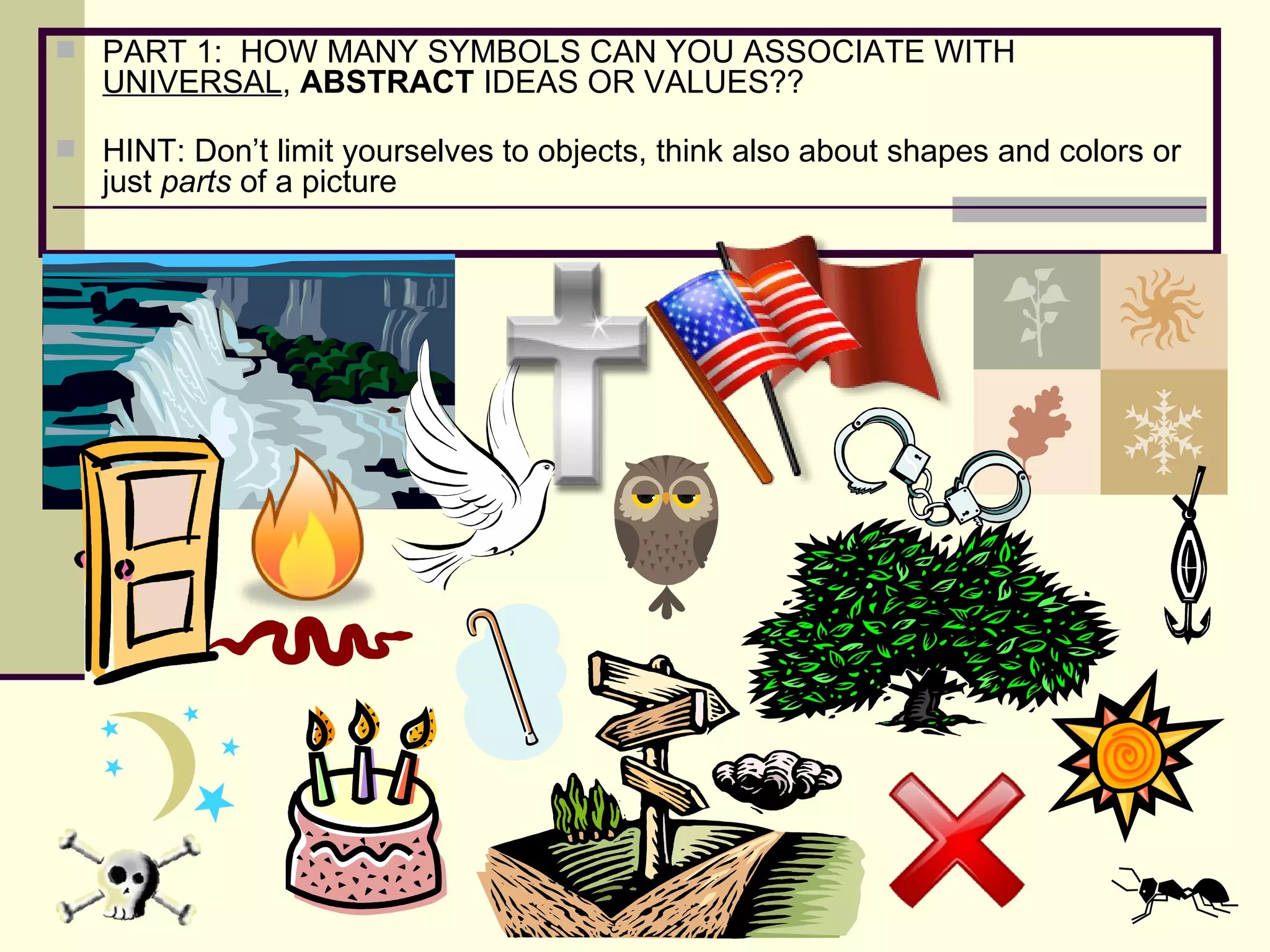
PART 1:  HOW MANY SYMBOLS CAN YOU ASSOCIATE WITH  UNIVERSAL ,  ABSTRACT  IDEAS OR VALUES?? HINT: Don’t limit yourselves to objects, think also about shapes and colors or just  parts  of a picture
In literature, symbolism… creates a direct, meaningful  link  between… a specific object, scene, character, or action and  abstract ideas, values, persons or ways of life.
Symbolism is be used to… Provide meaning beyond the obvious: Emphasize key ideas or themes: A river can represent the flow of life… …  or its depth may represent the unknown… …  the water might be purity… …  or there could be dangers beneath the surface.
Draw attention to the plot: A walk into a tunnel – or change from day to night – could show movement from good to evil, or that something bad is coming… A storm at a critical moment can represent the intense emotion and trouble… And dawn may show the end of conflict, the “start of a new day.”
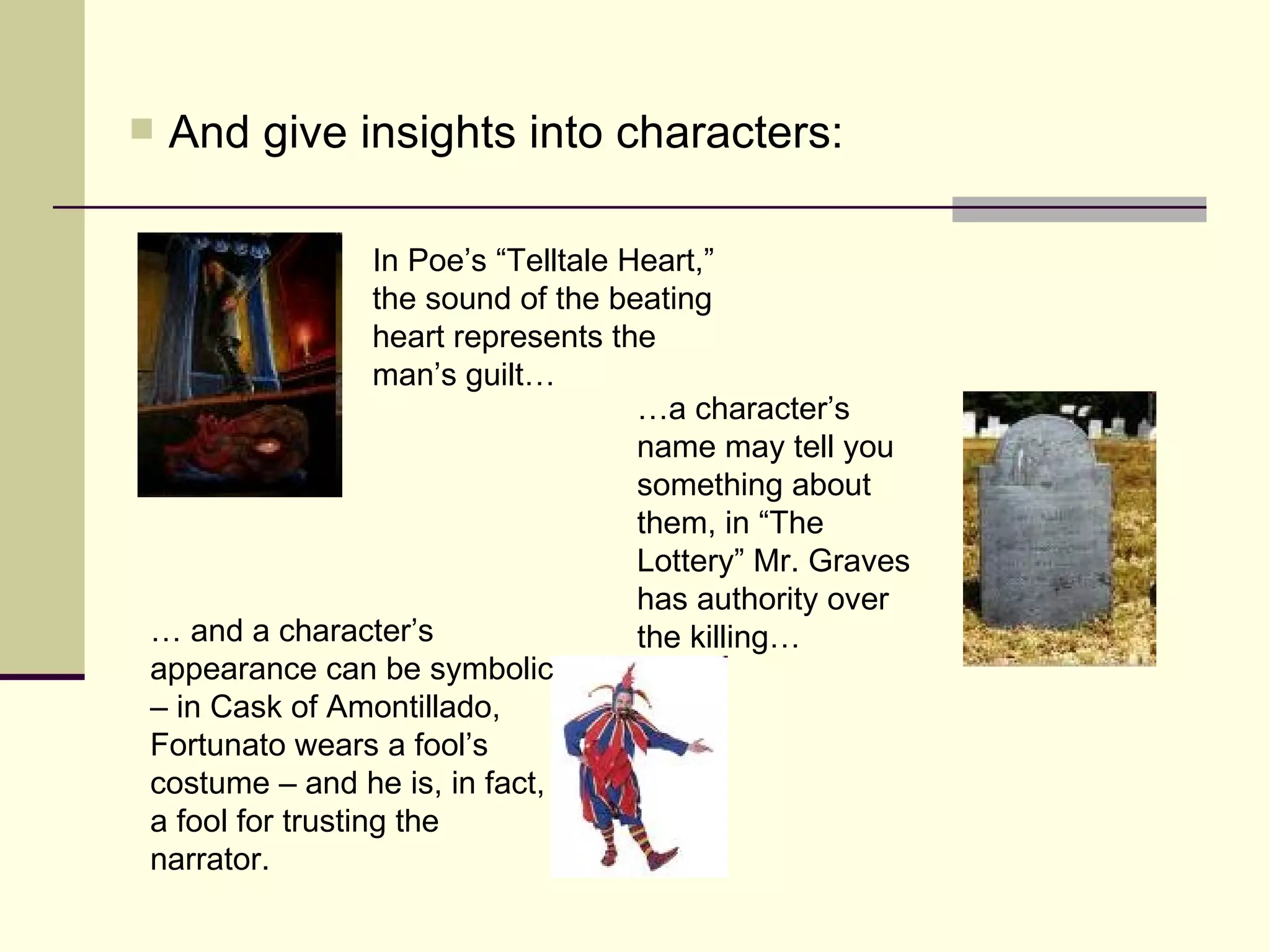
And give insights into characters: In Poe’s “Telltale Heart,” the sound of the beating heart represents the man’s guilt… … a character’s name may tell you something about them, in “The Lottery” Mr. Graves has authority over the killing… …  and a character’s appearance can be symbolic – in Cask of Amontillado, Fortunato wears a fool’s costume – and he is, in fact, a fool for trusting the narrator.
How can you spot a symbol? There’s no one way, but some things to look for are: Colors or objects that are used repeatedly: if it’s mentioned often, it’s probably important Unusual character names Objects / creatures that have cultural meanings (lions = strength, owls = wisdom, etc.)
One warning… Many “symbols” are personal interpretations – and unintended by the author! Consider this dialogue from Peanuts: Lucy:  “ Do you always have the people’s hands behind their back to symbolize your shyness?” So… don’t go crazy with this stuff!  It’s all open to interpretation… Charlie Brown:  “ No, I just don’t know how to draw hands.”
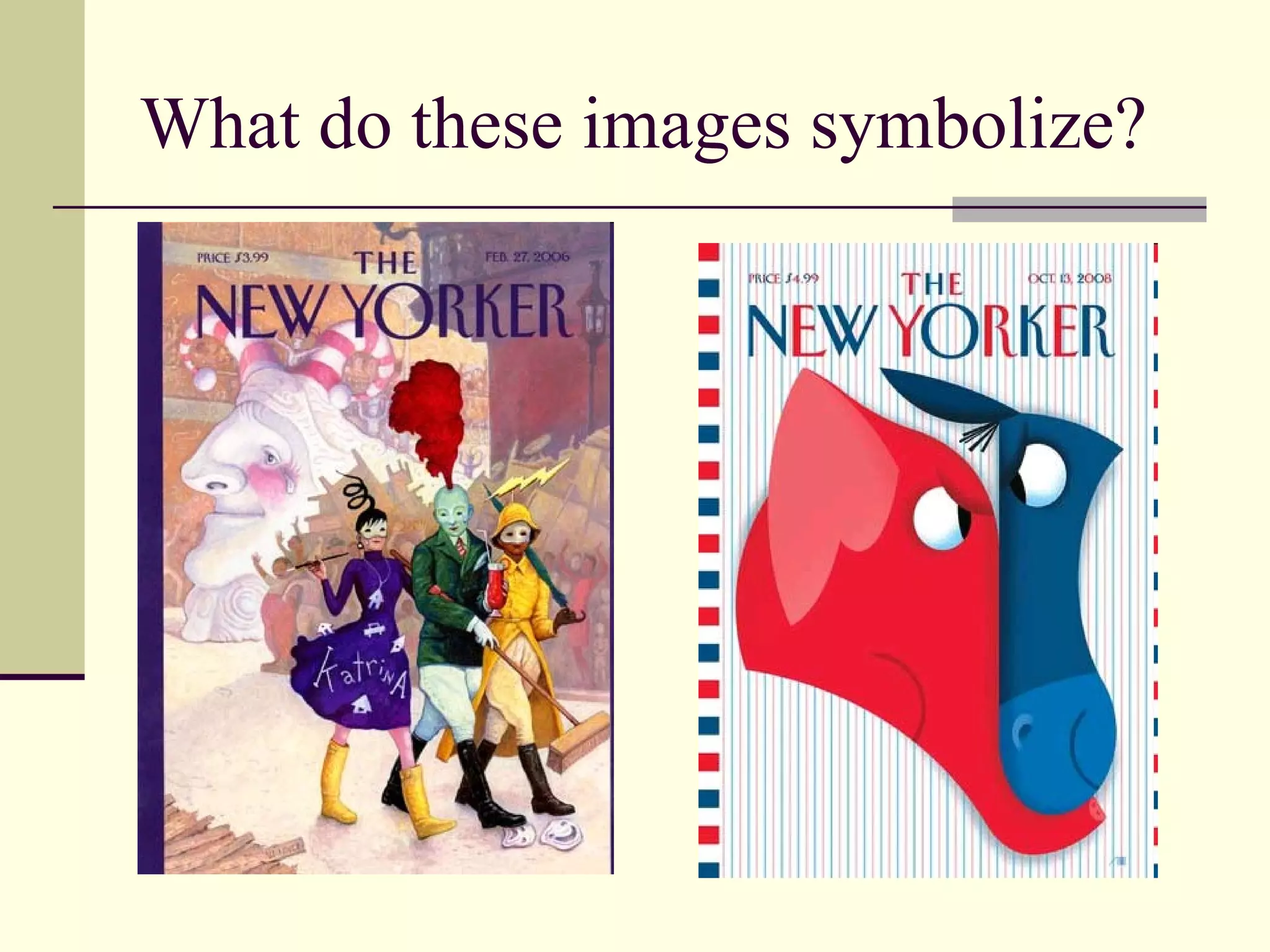
What do these images symbolize?
And these…
And these…
The end.  

Symbolism

  • 1.
  • 2.
    A symbol is…an object that stands for itself and a greater idea . We see symbols every day…
  • 3.
    PART 1: HOW MANY SYMBOLS CAN YOU ASSOCIATE WITH UNIVERSAL , ABSTRACT IDEAS OR VALUES?? HINT: Don’t limit yourselves to objects, think also about shapes and colors or just parts of a picture
  • 4.
    In literature, symbolism…creates a direct, meaningful link between… a specific object, scene, character, or action and abstract ideas, values, persons or ways of life.
  • 5.
    Symbolism is beused to… Provide meaning beyond the obvious: Emphasize key ideas or themes: A river can represent the flow of life… … or its depth may represent the unknown… … the water might be purity… … or there could be dangers beneath the surface.
  • 6.
    Draw attention tothe plot: A walk into a tunnel – or change from day to night – could show movement from good to evil, or that something bad is coming… A storm at a critical moment can represent the intense emotion and trouble… And dawn may show the end of conflict, the “start of a new day.”
  • 7.
    And give insightsinto characters: In Poe’s “Telltale Heart,” the sound of the beating heart represents the man’s guilt… … a character’s name may tell you something about them, in “The Lottery” Mr. Graves has authority over the killing… … and a character’s appearance can be symbolic – in Cask of Amontillado, Fortunato wears a fool’s costume – and he is, in fact, a fool for trusting the narrator.
  • 8.
    How can youspot a symbol? There’s no one way, but some things to look for are: Colors or objects that are used repeatedly: if it’s mentioned often, it’s probably important Unusual character names Objects / creatures that have cultural meanings (lions = strength, owls = wisdom, etc.)
  • 9.
    One warning… Many“symbols” are personal interpretations – and unintended by the author! Consider this dialogue from Peanuts: Lucy: “ Do you always have the people’s hands behind their back to symbolize your shyness?” So… don’t go crazy with this stuff! It’s all open to interpretation… Charlie Brown: “ No, I just don’t know how to draw hands.”
  • 10.
    What do theseimages symbolize?
  • 11.
  • 12.
  • 13.