Literary Devicesby Amber Haller
What is a literary device?
Literary devices help to construct the author’s meaning.
Literary devices help to define the author’s/reader’s purpose.
Literary devices are found in all types of writing:
Fiction
Nonfiction
Poetry
Did you know that…
symbolism is a literary device…
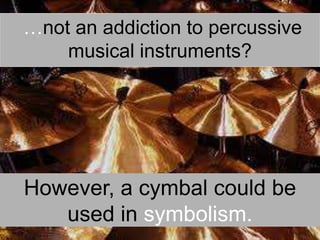
 …not an addiction to percussive musical instruments?However, a cymbal could be used in symbolism.
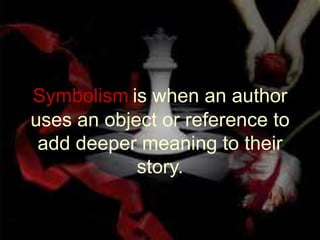
Symbolismis when an author uses an object or reference to add deeper meaning to their story.
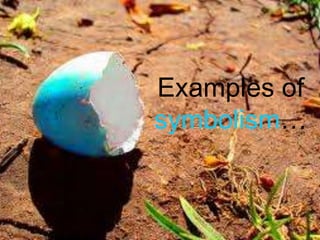
Examples of symbolism…
Storms often represent conflict or high emotions.
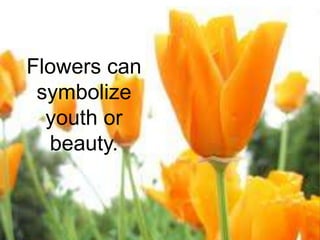
Flowers can symbolize youth or beauty.
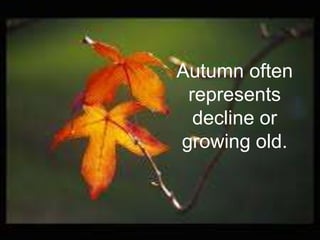
Autumn often represents decline or growing old.
Popular novels/poems that contain symbolism…
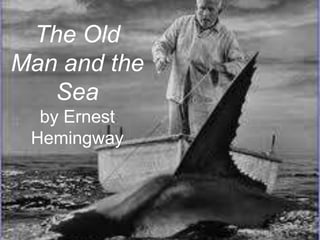
The Old Man and the Sea by Ernest Hemingway
Of Mice and Menby John Steinbeck
The Ravenby Edgar Allan Poe
What is another popular literary device?
Imagery
Imagery refers to descriptive language that evokes sensory experience...
Imagery can be visual: “a blinding sun.”
Imagery can also be auditory:“the chiming of the bells.”
Imagery can appeal to taste: “the bland taste of starchy bananas.”
Imagery can convey a scent:“the aroma of dirty sweat socks.”
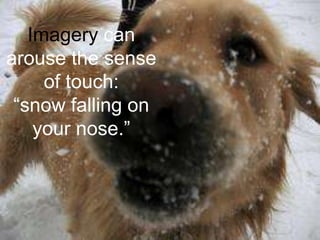
Imagery can arouse the sense of touch:“snow falling on your nose.”
Popular literary works that contain imagery…
Macbethby William Shakespeare
The Great Gatsbyby F. Scott Fitzgerald
Preludesby T.S. Eliot
Are you aware…
that simile is a literary device and a figure of speech?
Similes indirectly compare two different things…
by using the words “like”, “as”, or “than”.
Examples of similes…
“as proud as a peacock”
“fight like a lion”
“slower than a turtle”
Popular literature that contains similes…
To Kill a Mockingbirdby Harper Lee
The Catcher in the Ryeby J.D. Salinger
Birchesby Robert Frost
To wrap things up…
Can you think of an example of symbolism in literature?
Can you think of a way to use imagery in writing to evoke the senses?
Can you think of a simile?
The End

Literary devices power point