BROUGHT TO YOU BY THE
LEARNING COMMONS
APA Made Easy
What is APA style?
 Style of the American Psychological Association
 System for referencing sources
 Used in social sciences and other fields
 Shows your credibility
 Shows accountability
 Protects you from accusation of plagiarism
What We’ll Cover
 Format of the paper
 Handling in-text citations
 References
General Format
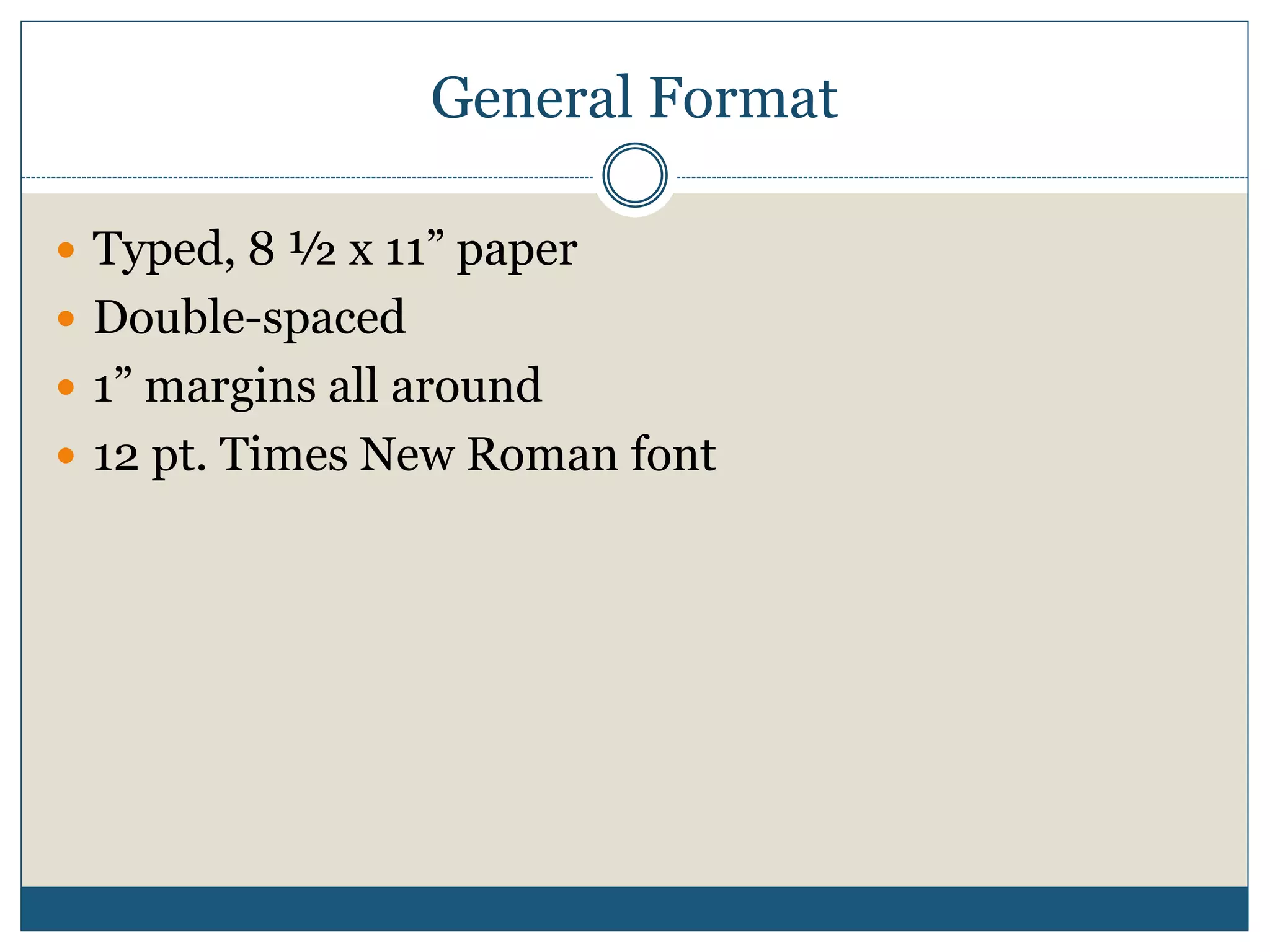
 Typed, 8 ½ x 11” paper
 Double-spaced
 1” margins all around
 12 pt. Times New Roman font
General Format
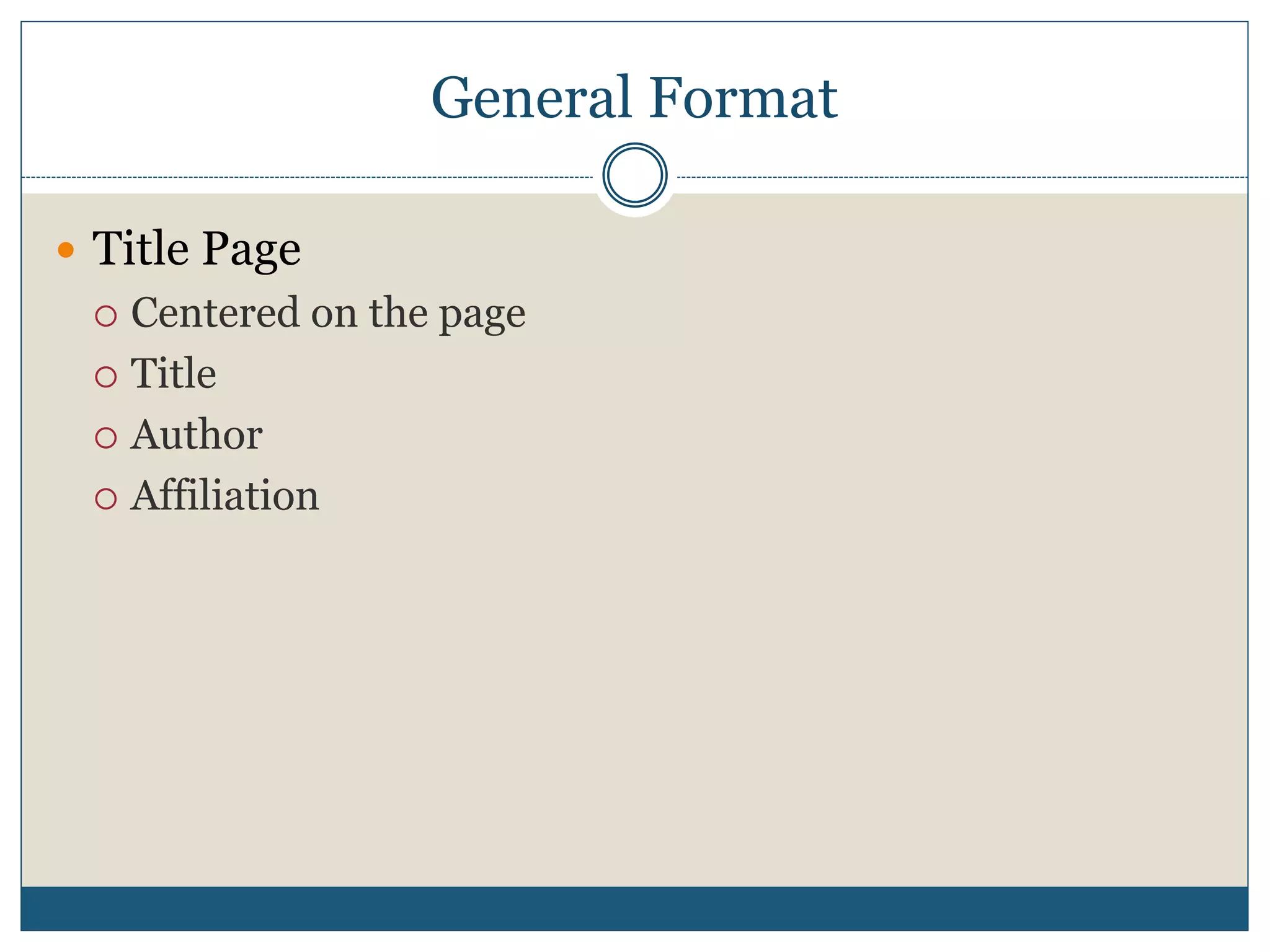
 Title Page
 Centered on the page
 Title
 Author
 Affiliation
General Format
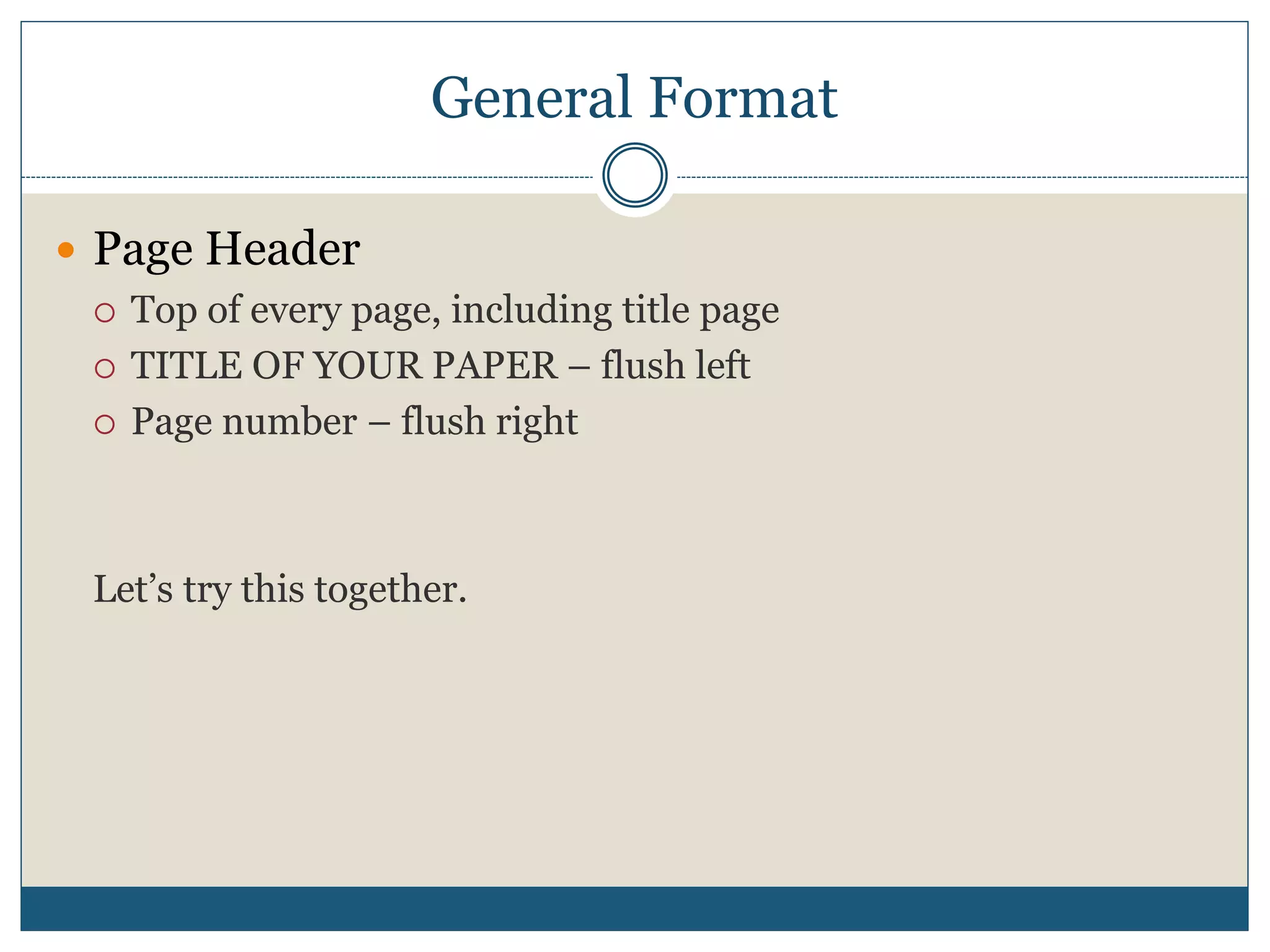
 Page Header
 Top of every page, including title page
 TITLE OF YOUR PAPER – flush left
 Page number – flush right
Let’s try this together.
IN-TEXT CITATIONS
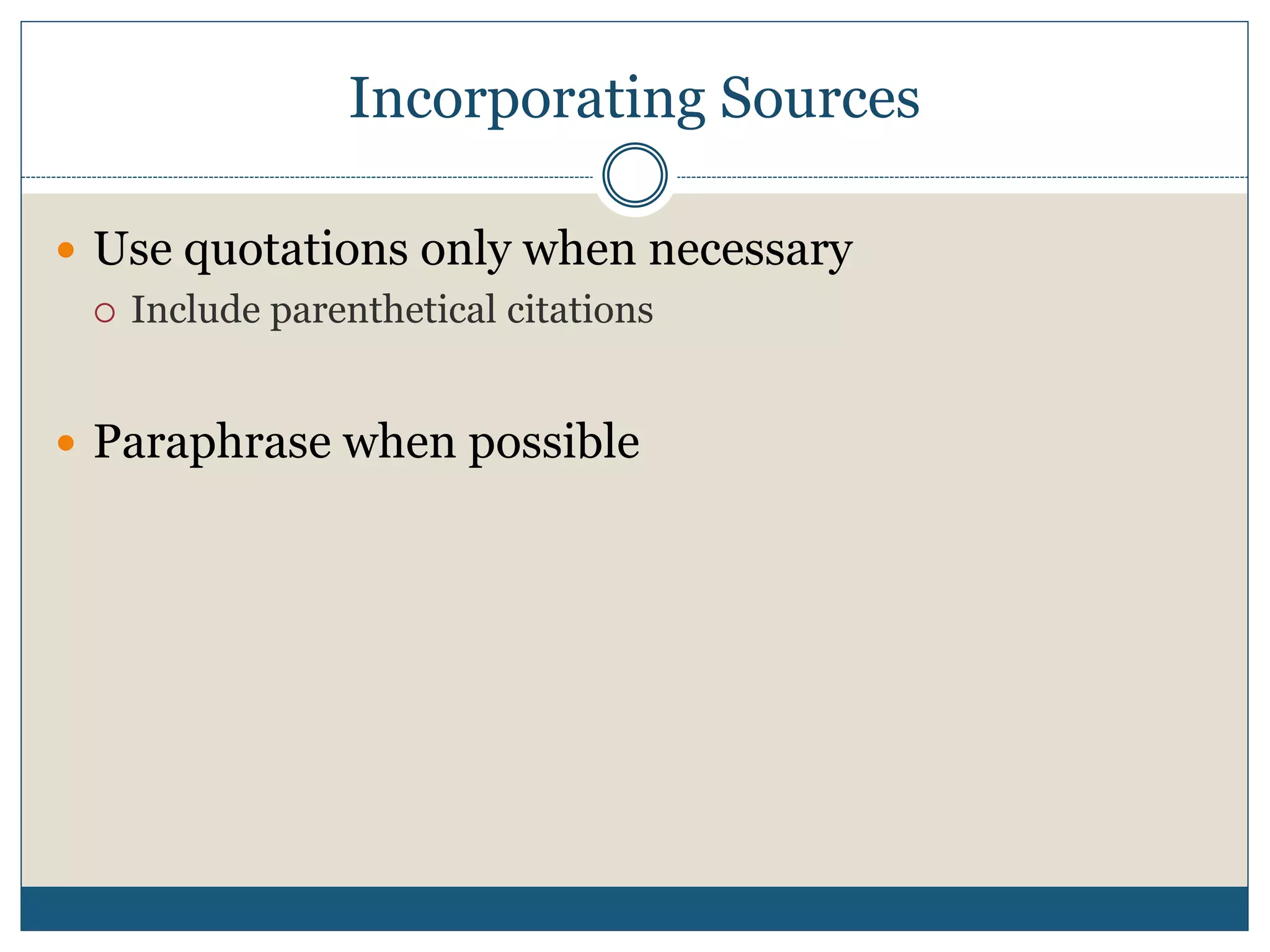
Incorporating Sources
 Use quotations only when necessary
 Include parenthetical citations
 Paraphrase when possible
In-Text Citations – One Author
 Note the author’s surname and year
Kessler (2003) found that among epidemiological
samples…
Early onset results in a more persistent and severe
course (Kessler, 2003).
In-Text Citations - Direct Quotes
Interpreting these results, Robbins et al. (2003) suggested
that the “therapists in dropout cases may have inadvertently
validated parental negativity about the adolescent without
adequately responding to the adolescent’s needs or concerns”
(p. 541), contributing to an overall climate of negativity.
In-Text Citations – Multiple Authors
 When a work has two authors, cite both names in
every reference
Basu and Jones (2007) state…
 When a work has 3 to 5 authors -
Kisangau, Lyaruu, Hoseau, and Joseph (2009)… [first
reference in paper]
Kisangau et al. (1998) concluded…. [subsequent
references in paper]
In-Text Citations
 No page? Use the paragraph number (i.e., para 4).
 No author? Use the shortened title.
REFERENCES
References
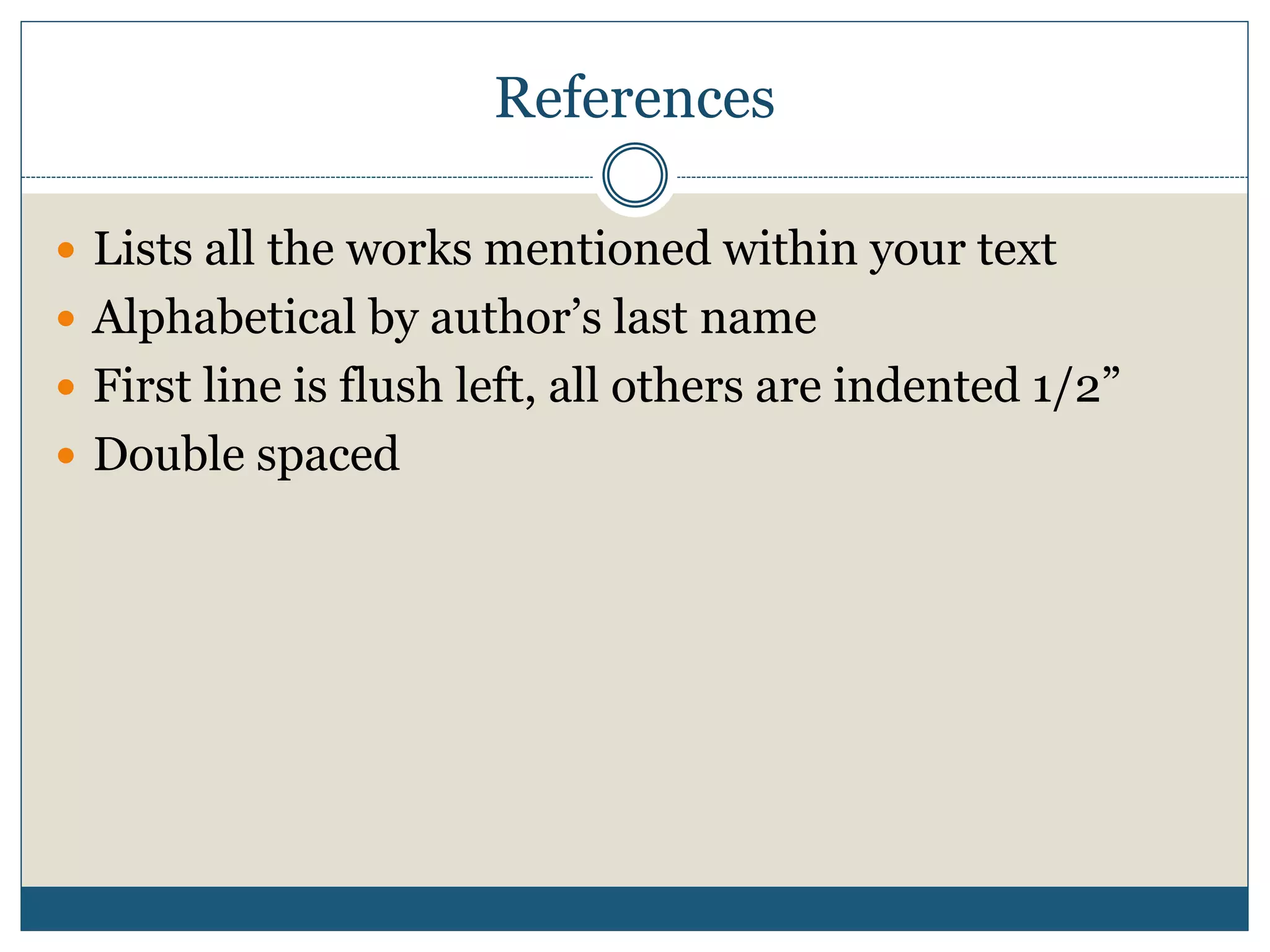
 Lists all the works mentioned within your text
 Alphabetical by author’s last name
 First line is flush left, all others are indented 1/2”
 Double spaced
Reference List Basic Rules
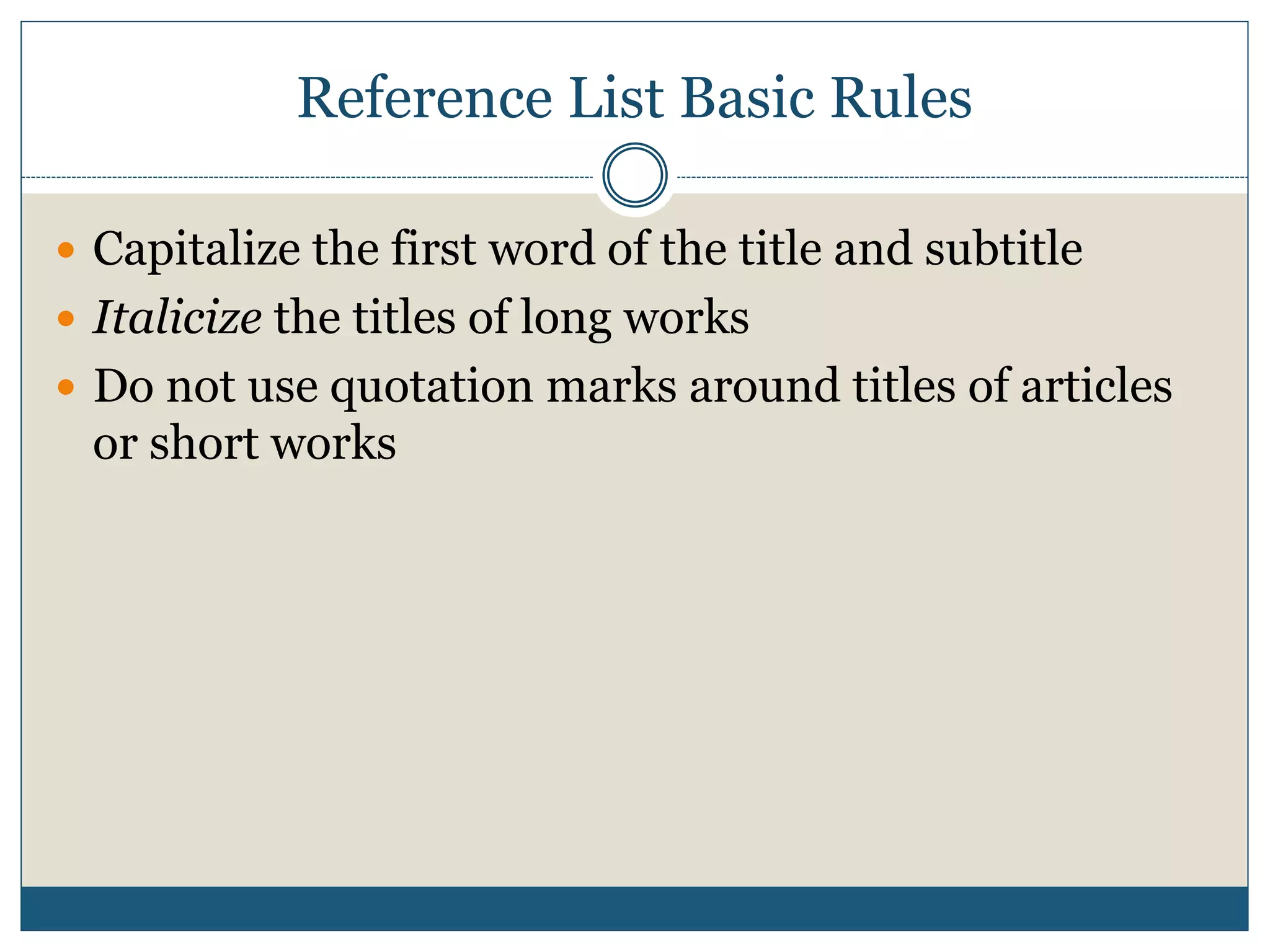
 Capitalize the first word of the title and subtitle
 Italicize the titles of long works
 Do not use quotation marks around titles of articles
or short works
Book Entry
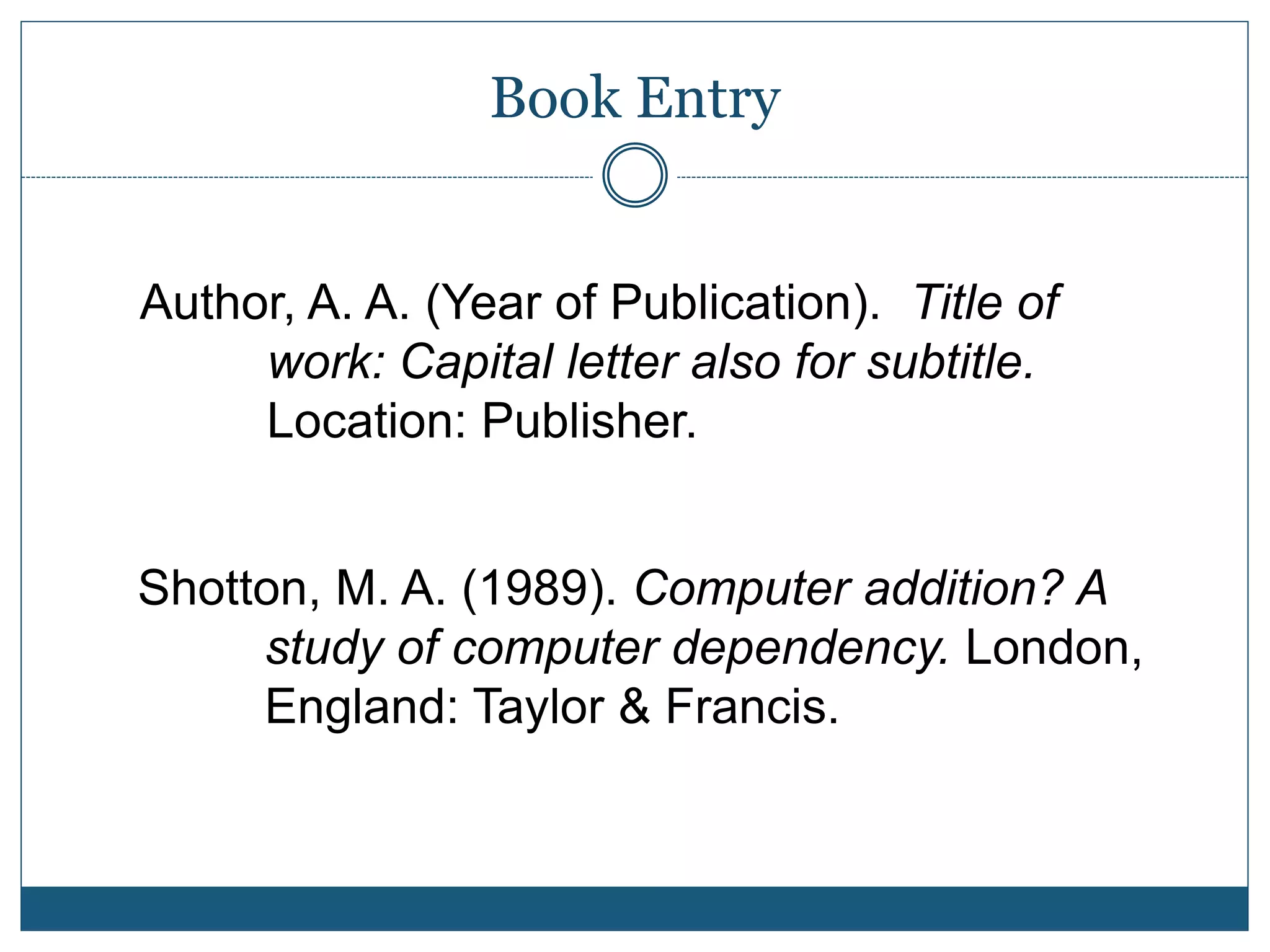
Author, A. A. (Year of Publication). Title of
work: Capital letter also for subtitle.
Location: Publisher.
Shotton, M. A. (1989). Computer addition? A
study of computer dependency. London,
England: Taylor & Francis.
Journal Article - Print
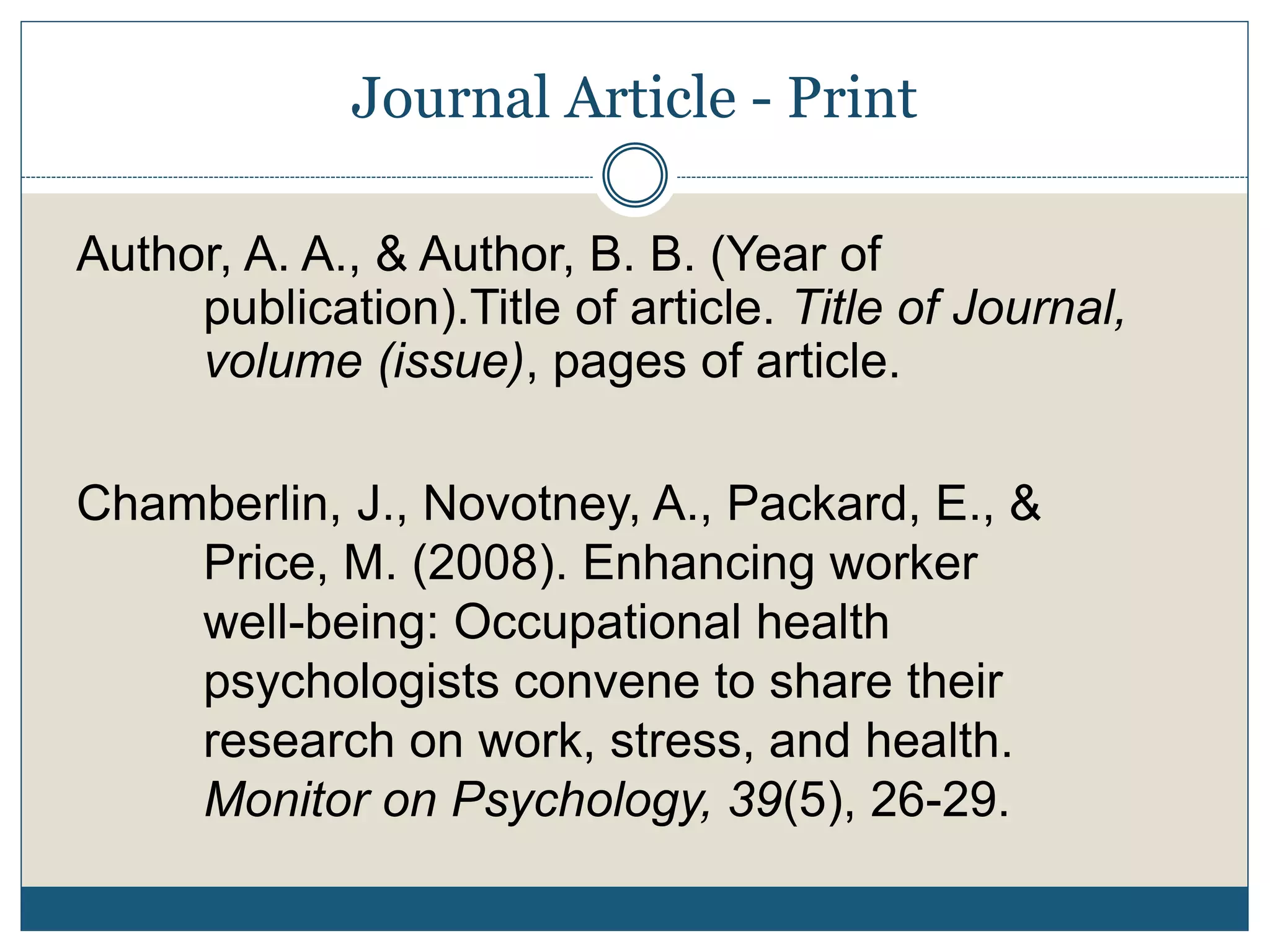
Author, A. A., & Author, B. B. (Year of
publication).Title of article. Title of Journal,
volume (issue), pages of article.
Chamberlin, J., Novotney, A., Packard, E., &
Price, M. (2008). Enhancing worker
well-being: Occupational health
psychologists convene to share their
research on work, stress, and health.
Monitor on Psychology, 39(5), 26-29.
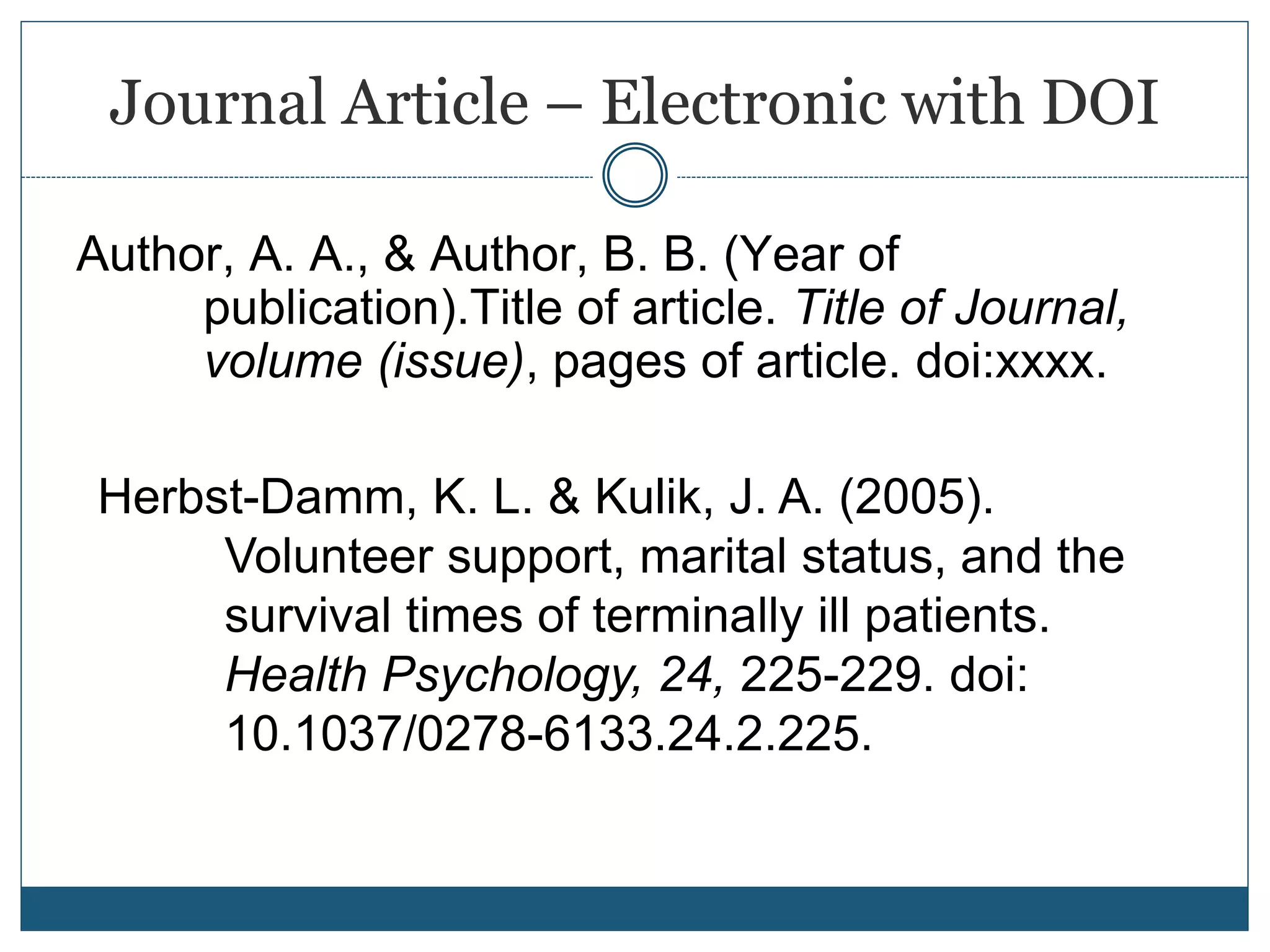
Journal Article – Electronic with DOI
Author, A. A., & Author, B. B. (Year of
publication).Title of article. Title of Journal,
volume (issue), pages of article. doi:xxxx.
Herbst-Damm, K. L. & Kulik, J. A. (2005).
Volunteer support, marital status, and the
survival times of terminally ill patients.
Health Psychology, 24, 225-229. doi:
10.1037/0278-6133.24.2.225.
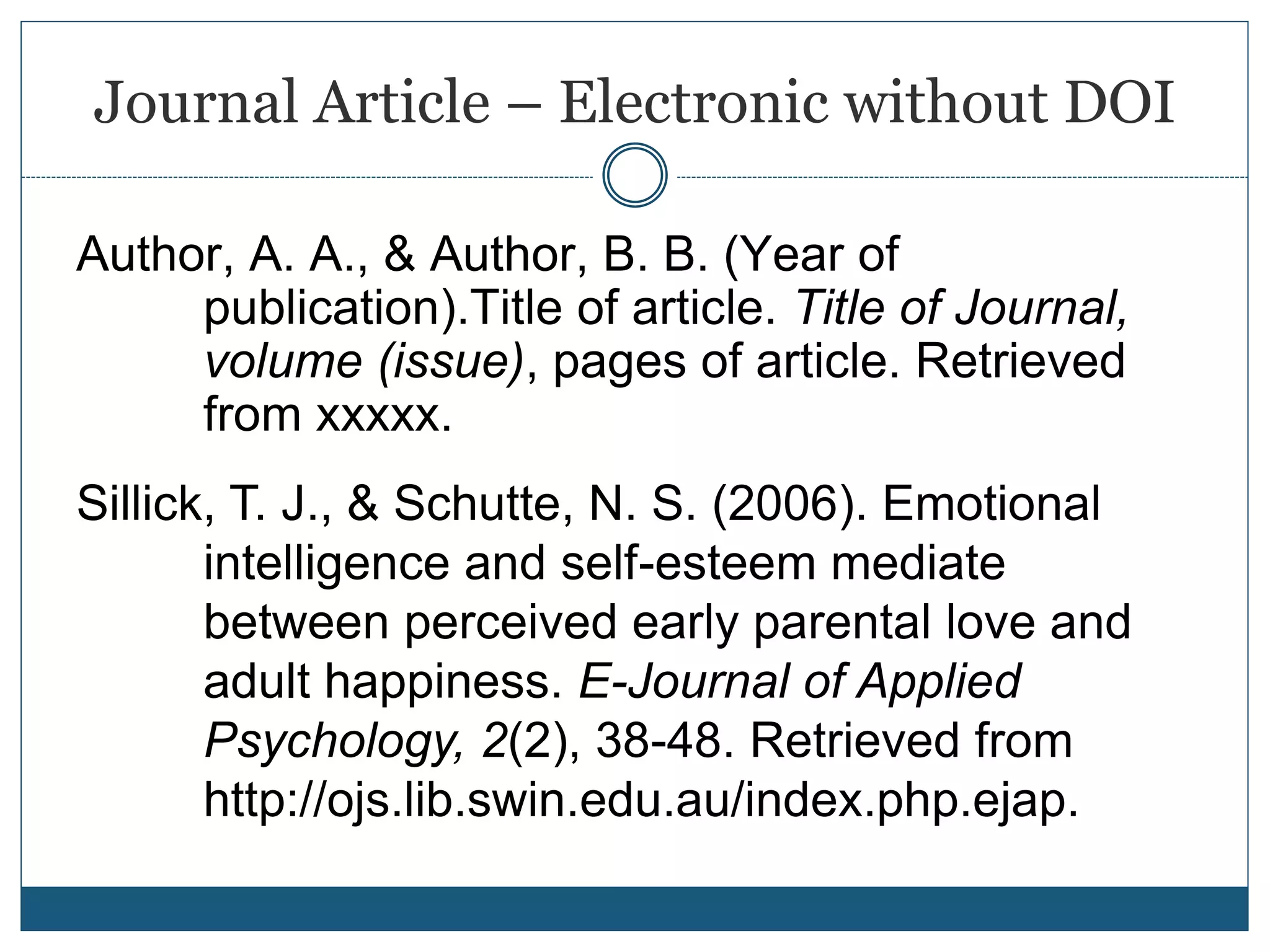
Journal Article – Electronic without DOI
Author, A. A., & Author, B. B. (Year of
publication).Title of article. Title of Journal,
volume (issue), pages of article. Retrieved
from xxxxx.
Sillick, T. J., & Schutte, N. S. (2006). Emotional
intelligence and self-esteem mediate
between perceived early parental love and
adult happiness. E-Journal of Applied
Psychology, 2(2), 38-48. Retrieved from
http://ojs.lib.swin.edu.au/index.php.ejap.
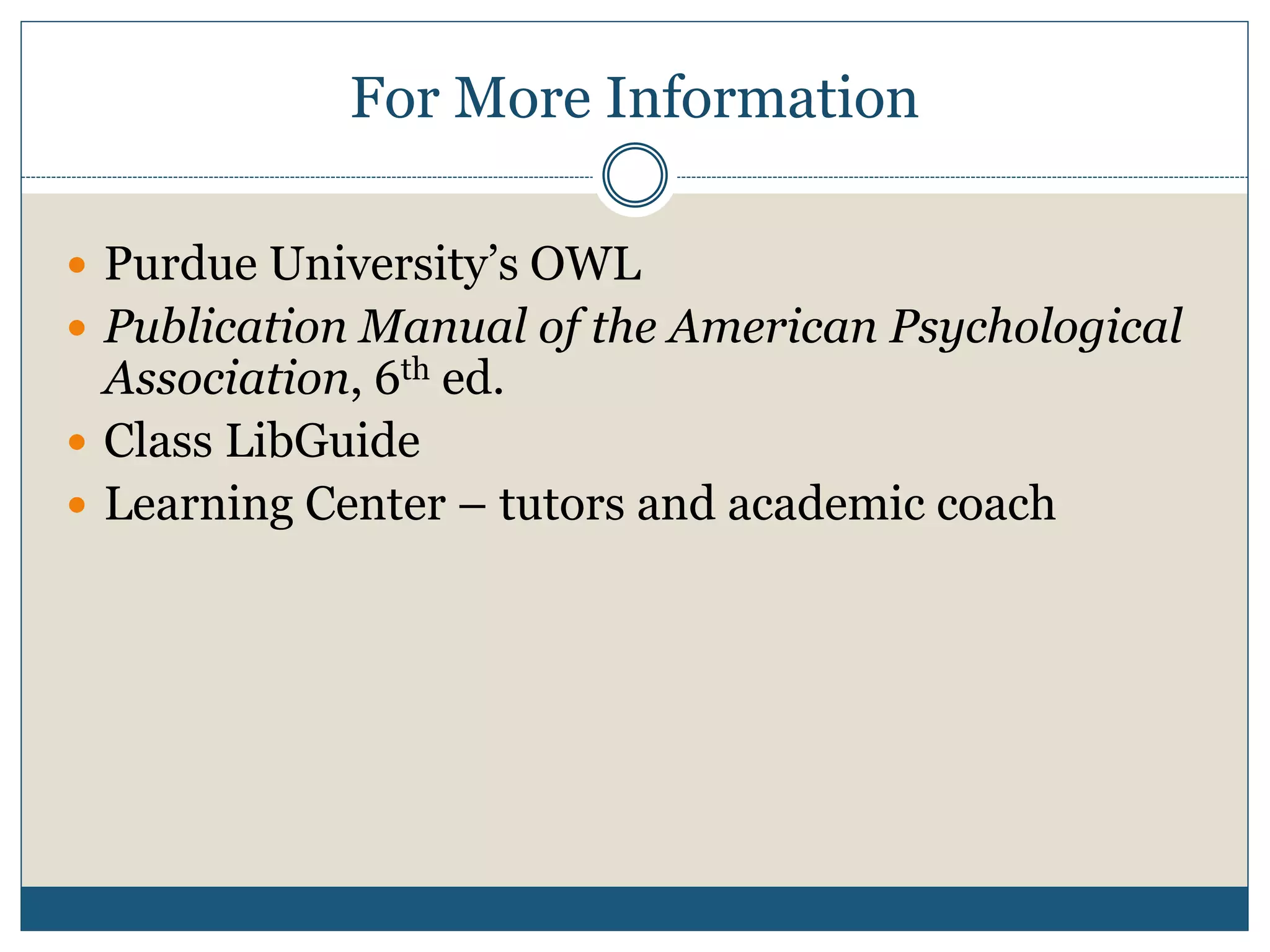
For More Information
 Purdue University’s OWL
 Publication Manual of the American Psychological
Association, 6th ed.
 Class LibGuide
 Learning Center – tutors and academic coach
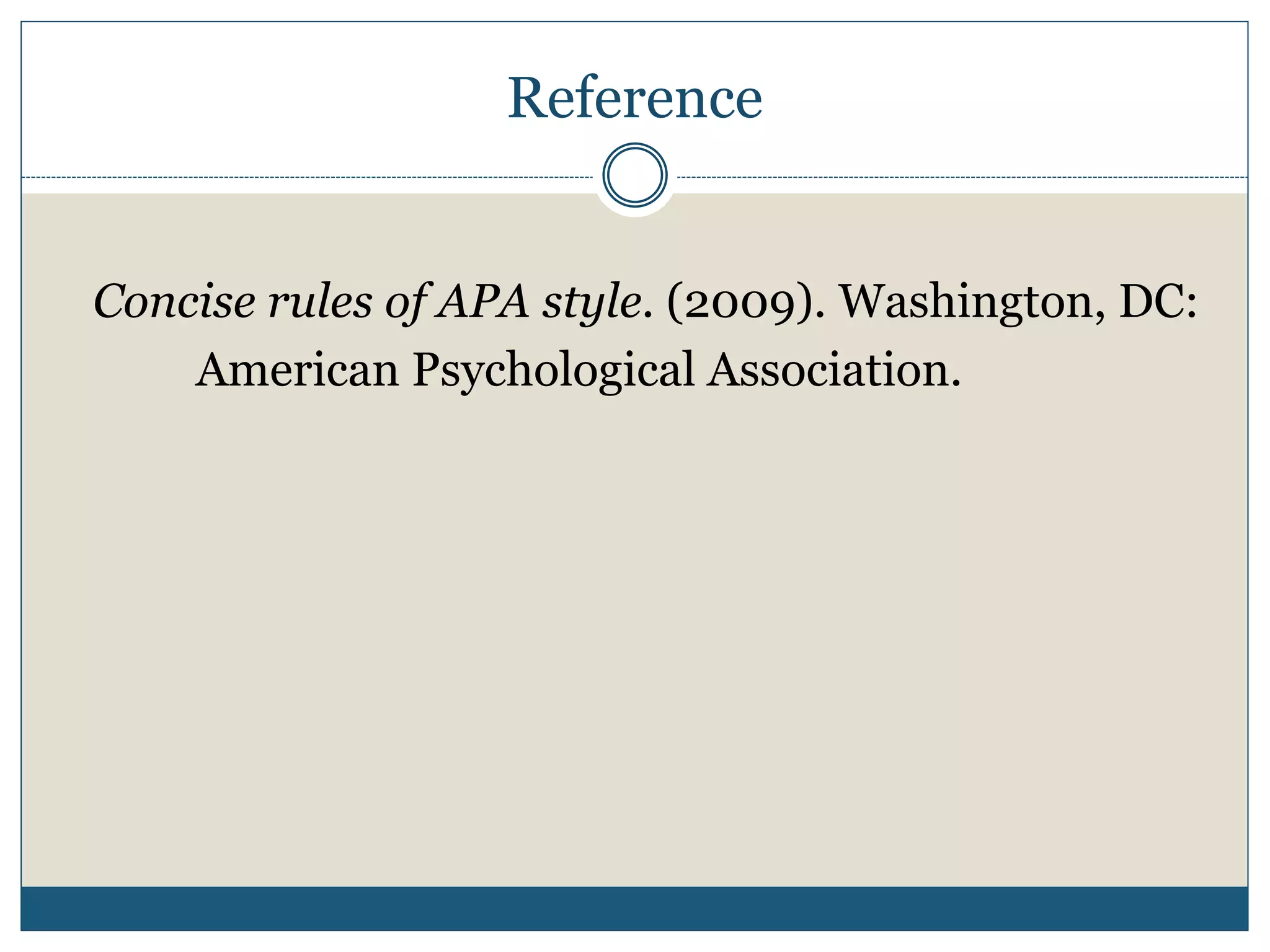
Reference
Concise rules of APA style. (2009). Washington, DC:
American Psychological Association.

APA Made Easy

  • 1.
    BROUGHT TO YOUBY THE LEARNING COMMONS APA Made Easy
  • 2.
    What is APAstyle?  Style of the American Psychological Association  System for referencing sources  Used in social sciences and other fields  Shows your credibility  Shows accountability  Protects you from accusation of plagiarism
  • 3.
    What We’ll Cover Format of the paper  Handling in-text citations  References
  • 4.
    General Format  Typed,8 ½ x 11” paper  Double-spaced  1” margins all around  12 pt. Times New Roman font
  • 5.
    General Format  TitlePage  Centered on the page  Title  Author  Affiliation
  • 6.
    General Format  PageHeader  Top of every page, including title page  TITLE OF YOUR PAPER – flush left  Page number – flush right Let’s try this together.
  • 7.
  • 8.
    Incorporating Sources  Usequotations only when necessary  Include parenthetical citations  Paraphrase when possible
  • 9.
    In-Text Citations –One Author  Note the author’s surname and year Kessler (2003) found that among epidemiological samples… Early onset results in a more persistent and severe course (Kessler, 2003).
  • 10.
    In-Text Citations -Direct Quotes Interpreting these results, Robbins et al. (2003) suggested that the “therapists in dropout cases may have inadvertently validated parental negativity about the adolescent without adequately responding to the adolescent’s needs or concerns” (p. 541), contributing to an overall climate of negativity.
  • 11.
    In-Text Citations –Multiple Authors  When a work has two authors, cite both names in every reference Basu and Jones (2007) state…  When a work has 3 to 5 authors - Kisangau, Lyaruu, Hoseau, and Joseph (2009)… [first reference in paper] Kisangau et al. (1998) concluded…. [subsequent references in paper]
  • 12.
    In-Text Citations  Nopage? Use the paragraph number (i.e., para 4).  No author? Use the shortened title.
  • 13.
  • 14.
    References  Lists allthe works mentioned within your text  Alphabetical by author’s last name  First line is flush left, all others are indented 1/2”  Double spaced
  • 15.
    Reference List BasicRules  Capitalize the first word of the title and subtitle  Italicize the titles of long works  Do not use quotation marks around titles of articles or short works
  • 16.
    Book Entry Author, A.A. (Year of Publication). Title of work: Capital letter also for subtitle. Location: Publisher. Shotton, M. A. (1989). Computer addition? A study of computer dependency. London, England: Taylor & Francis.
  • 17.
    Journal Article -Print Author, A. A., & Author, B. B. (Year of publication).Title of article. Title of Journal, volume (issue), pages of article. Chamberlin, J., Novotney, A., Packard, E., & Price, M. (2008). Enhancing worker well-being: Occupational health psychologists convene to share their research on work, stress, and health. Monitor on Psychology, 39(5), 26-29.
  • 18.
    Journal Article –Electronic with DOI Author, A. A., & Author, B. B. (Year of publication).Title of article. Title of Journal, volume (issue), pages of article. doi:xxxx. Herbst-Damm, K. L. & Kulik, J. A. (2005). Volunteer support, marital status, and the survival times of terminally ill patients. Health Psychology, 24, 225-229. doi: 10.1037/0278-6133.24.2.225.
  • 19.
    Journal Article –Electronic without DOI Author, A. A., & Author, B. B. (Year of publication).Title of article. Title of Journal, volume (issue), pages of article. Retrieved from xxxxx. Sillick, T. J., & Schutte, N. S. (2006). Emotional intelligence and self-esteem mediate between perceived early parental love and adult happiness. E-Journal of Applied Psychology, 2(2), 38-48. Retrieved from http://ojs.lib.swin.edu.au/index.php.ejap.
  • 20.
    For More Information Purdue University’s OWL  Publication Manual of the American Psychological Association, 6th ed.  Class LibGuide  Learning Center – tutors and academic coach
  • 21.
    Reference Concise rules ofAPA style. (2009). Washington, DC: American Psychological Association.

Editor's Notes

  • #19 DOI:digital object identifier