INTERACTION FUNCTION II
Receptors and effectors
Transmitting, analyzing and working out responses.
RECEPTORS
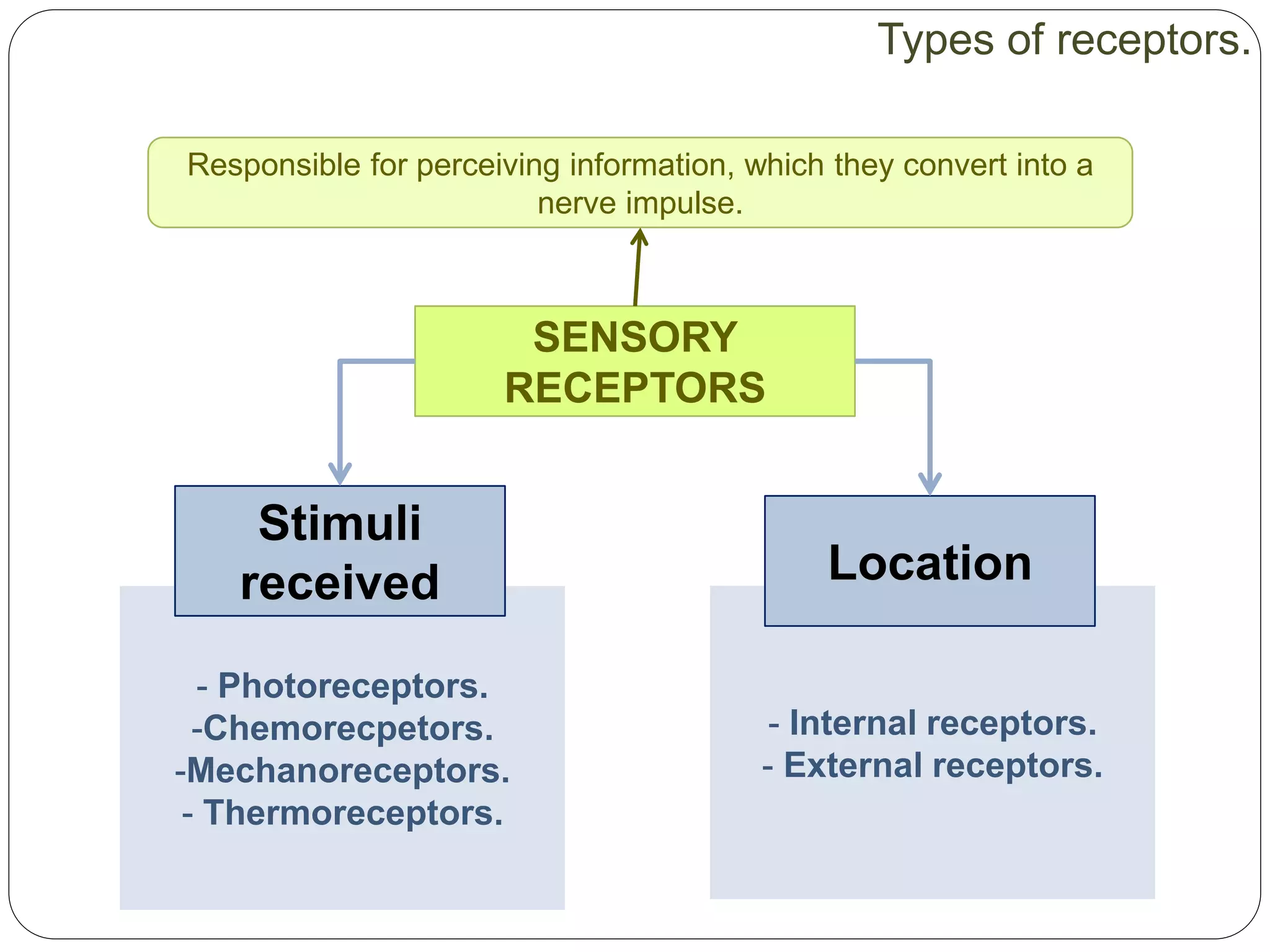
- Internal receptors.
- External receptors.
- Photoreceptors.
-Chemorecpetors.
-Mechanoreceptors.
- Thermoreceptors.
SENSORY
RECEPTORS
Responsible for perceiving information, which they convert into a
nerve impulse.
Stimuli
received Location
Types of receptors.
RECEPTORS
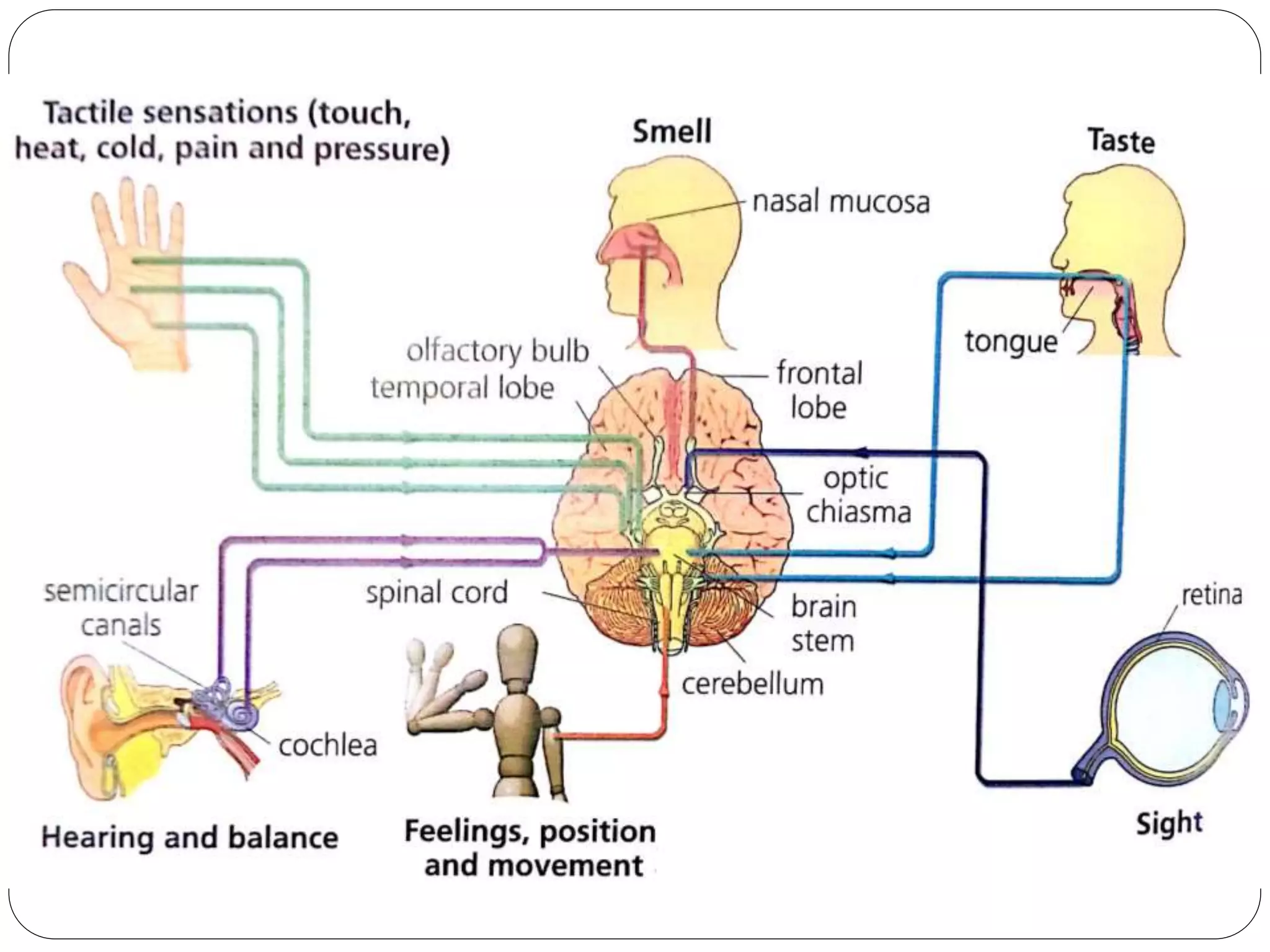
 They receive information from the environment
(stimuli).
 Receptors are usually neurons, but can also be other
types of cells, modified.
 Stimuli can be varied: light, sound, heat and cold,
pressure, chemical molecules (CO2, O2, sugar in
blood), position.
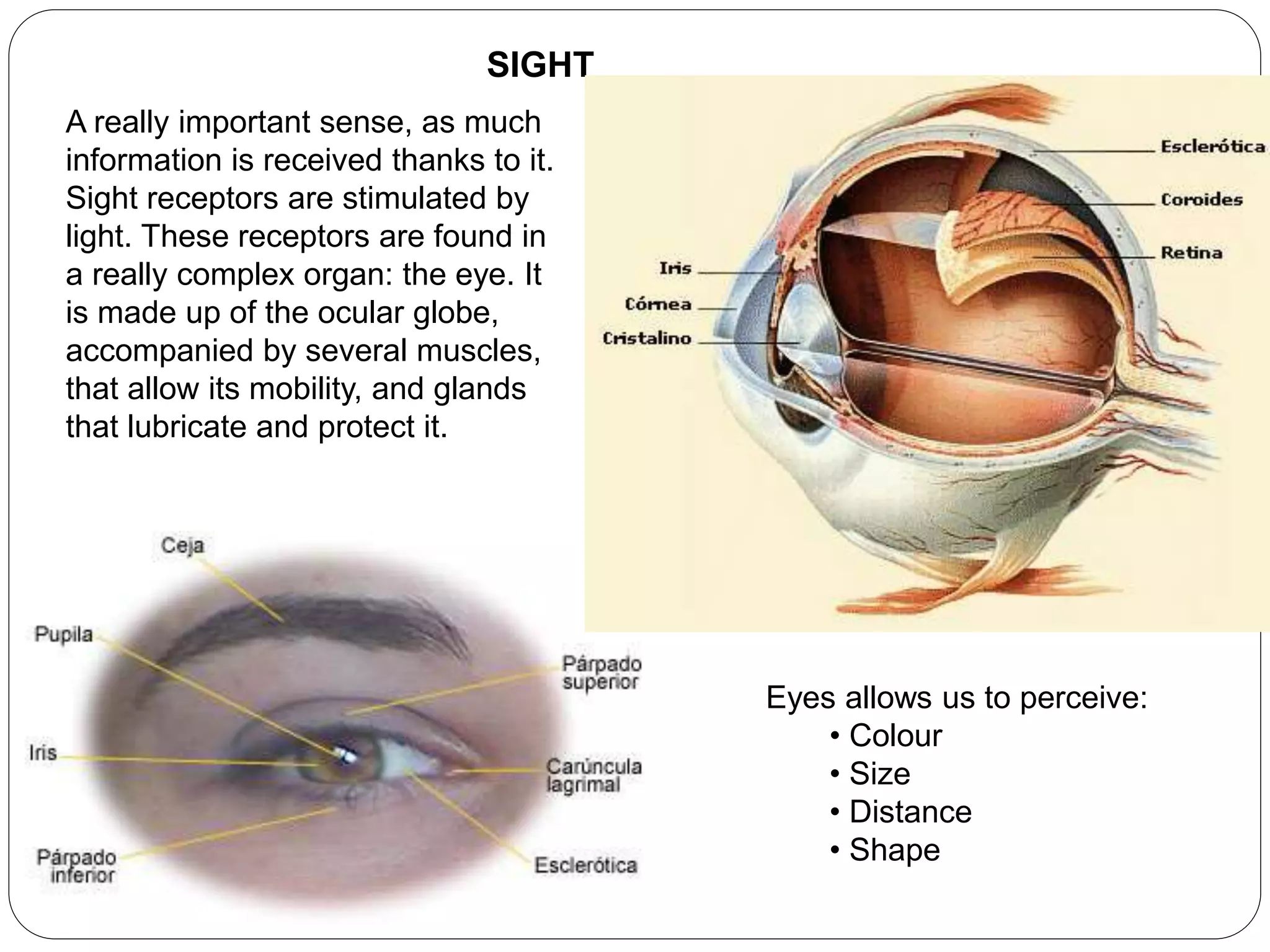
SIGHT
A really important sense, as much
information is received thanks to it.
Sight receptors are stimulated by
light. These receptors are found in
a really complex organ: the eye. It
is made up of the ocular globe,
accompanied by several muscles,
that allow its mobility, and glands
that lubricate and protect it.
Eyes allows us to perceive:
• Colour
• Size
• Distance
• Shape
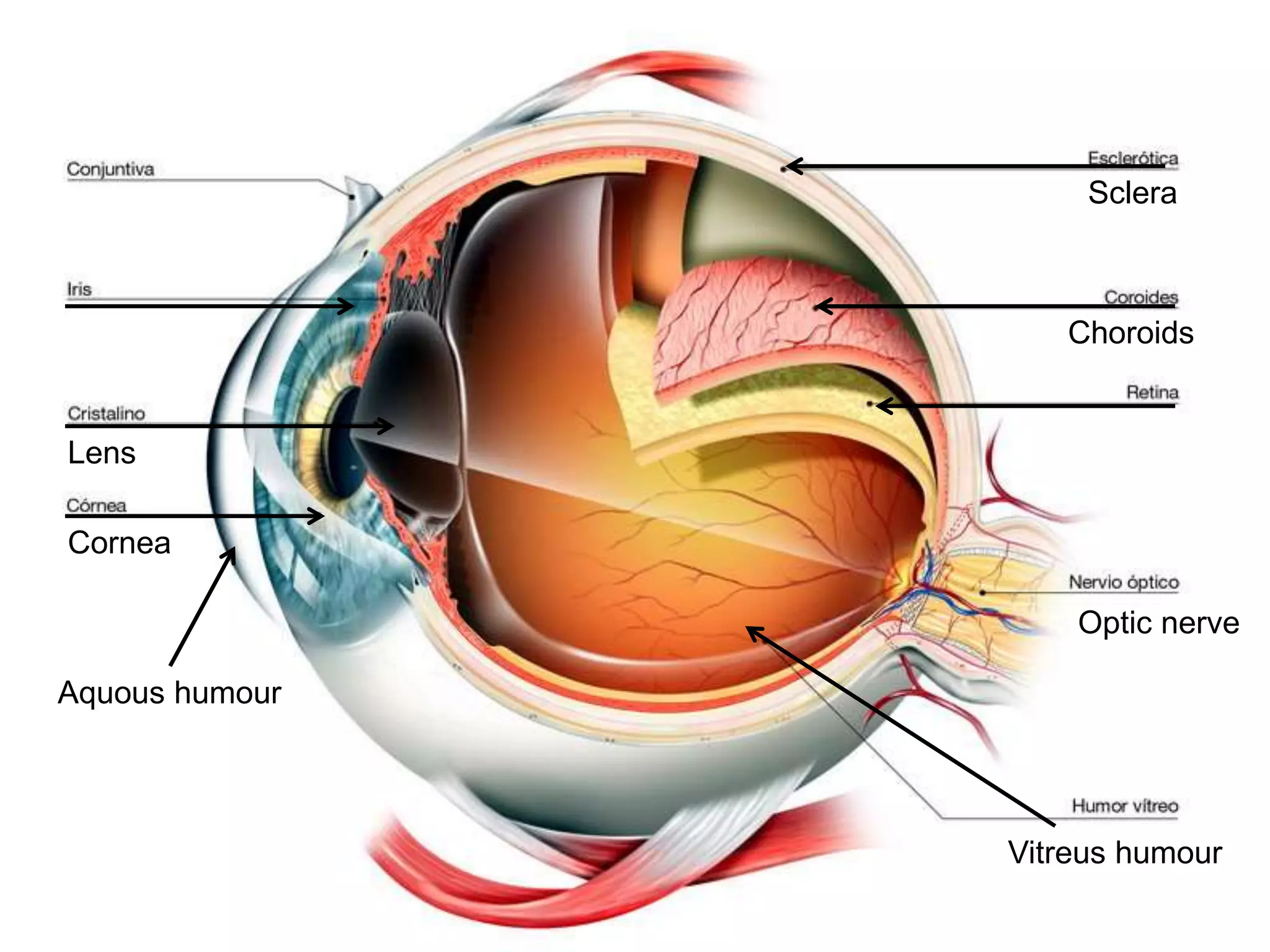
Parts:
 GLOBE:
 Cornea
 Iris
 Sclera (esclerótica)
 Choroid (coroides) [iris, pupil]
 Aquous humour (humor acuoso)
 Vitreous humour (humor vítreo)
 Lens
 Retina [cells: rods, and cones]
 ACCESORY ORGANS
 Eyelids (párpados)
 Eyelashes (pestañas)
 Eyebrow (cejas)
 Ocular muscles
 Lacrimal glands
Description and functions in
your book.
Lens
Cornea
Choroids
Sclera
Optic nerve
Vitreus humour
Aquous humour
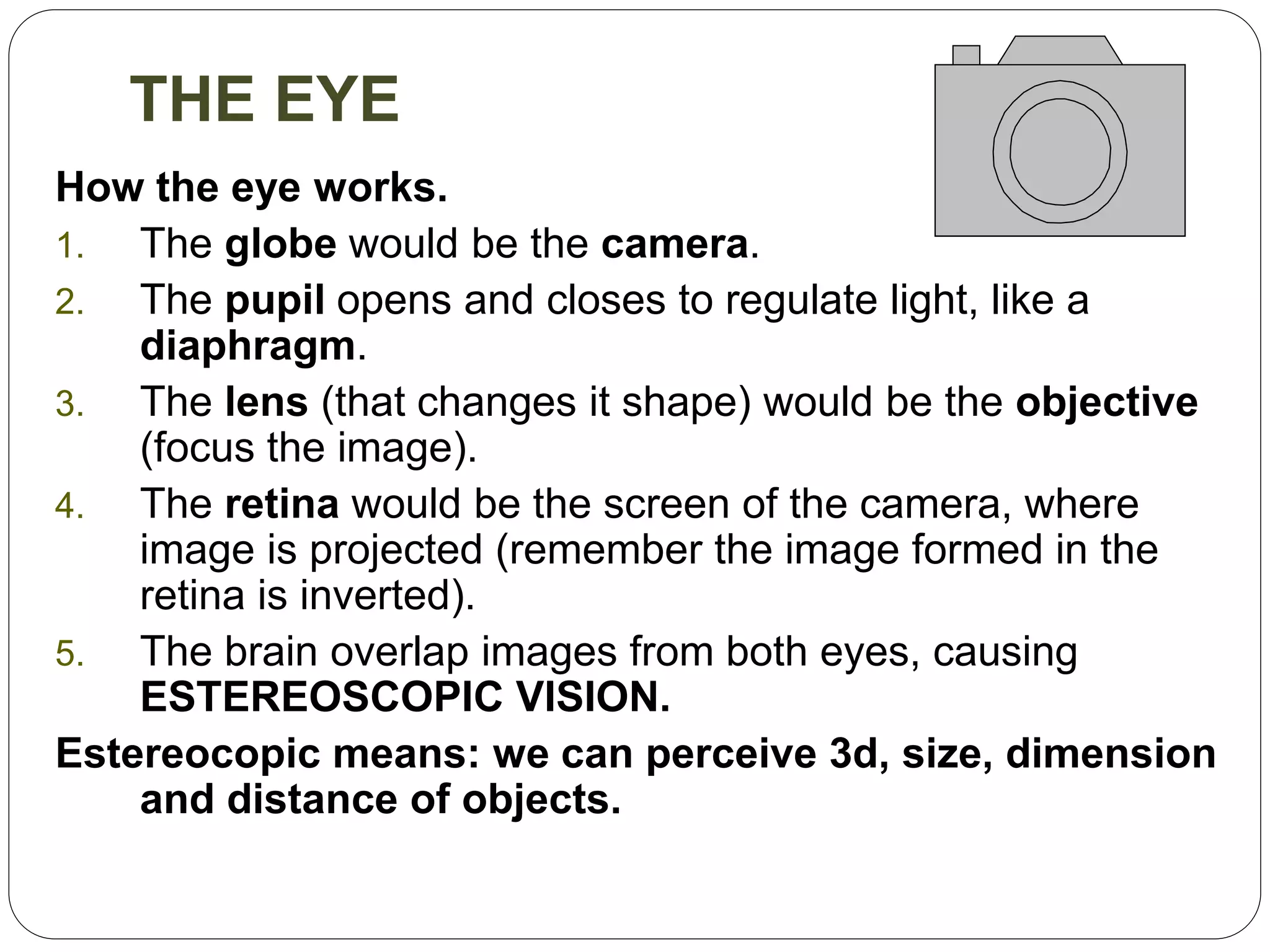
THE EYE
How the eye works.
1. The globe would be the camera.
2. The pupil opens and closes to regulate light, like a
diaphragm.
3. The lens (that changes it shape) would be the objective
(focus the image).
4. The retina would be the screen of the camera, where
image is projected (remember the image formed in the
retina is inverted).
5. The brain overlap images from both eyes, causing
ESTEREOSCOPIC VISION.
Estereocopic means: we can perceive 3d, size, dimension
and distance of objects.
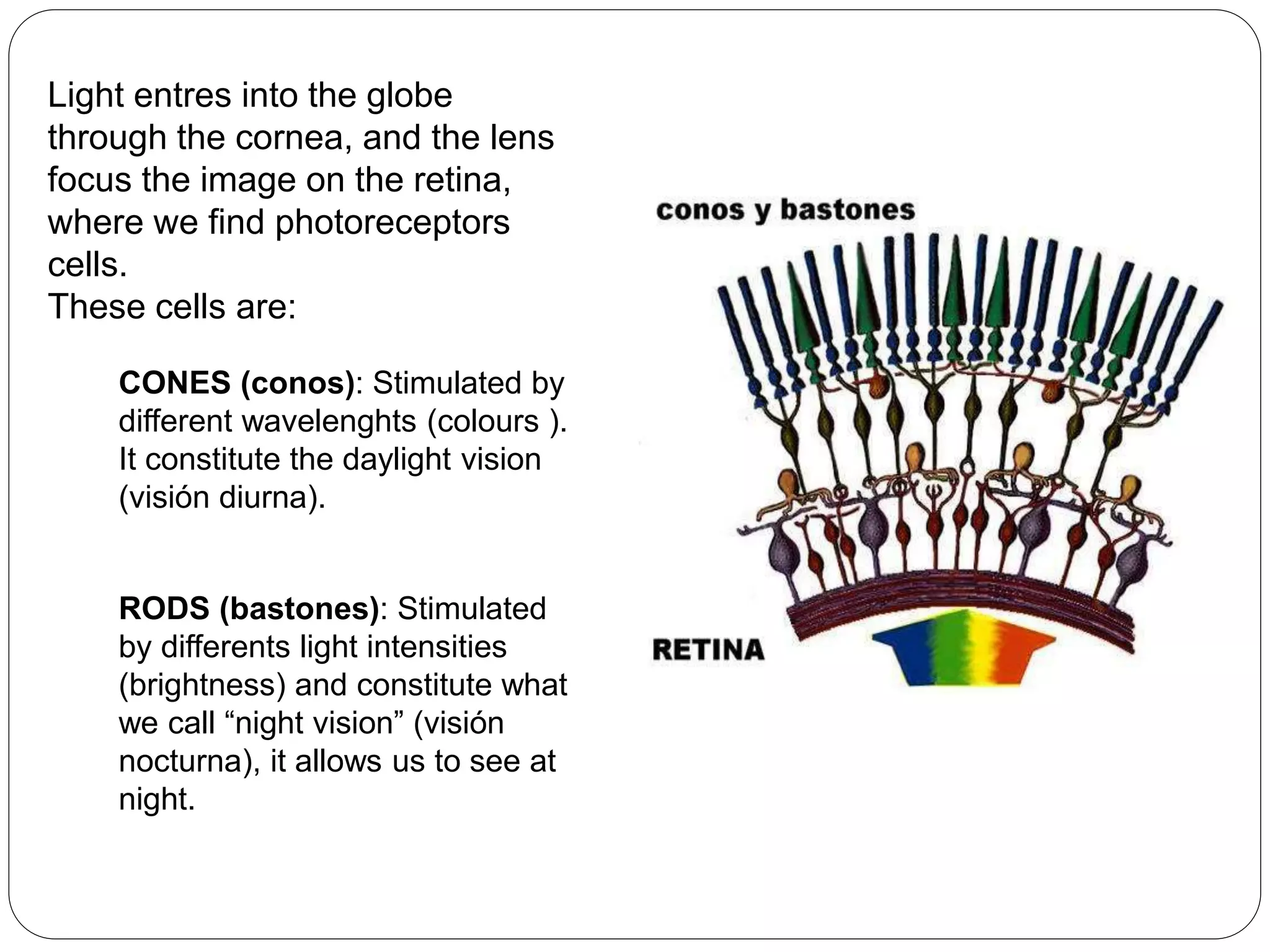
Light entres into the globe
through the cornea, and the lens
focus the image on the retina,
where we find photoreceptors
cells.
These cells are:
CONES (conos): Stimulated by
different wavelenghts (colours ).
It constitute the daylight vision
(visión diurna).
RODS (bastones): Stimulated
by differents light intensities
(brightness) and constitute what
we call “night vision” (visión
nocturna), it allows us to see at
night.
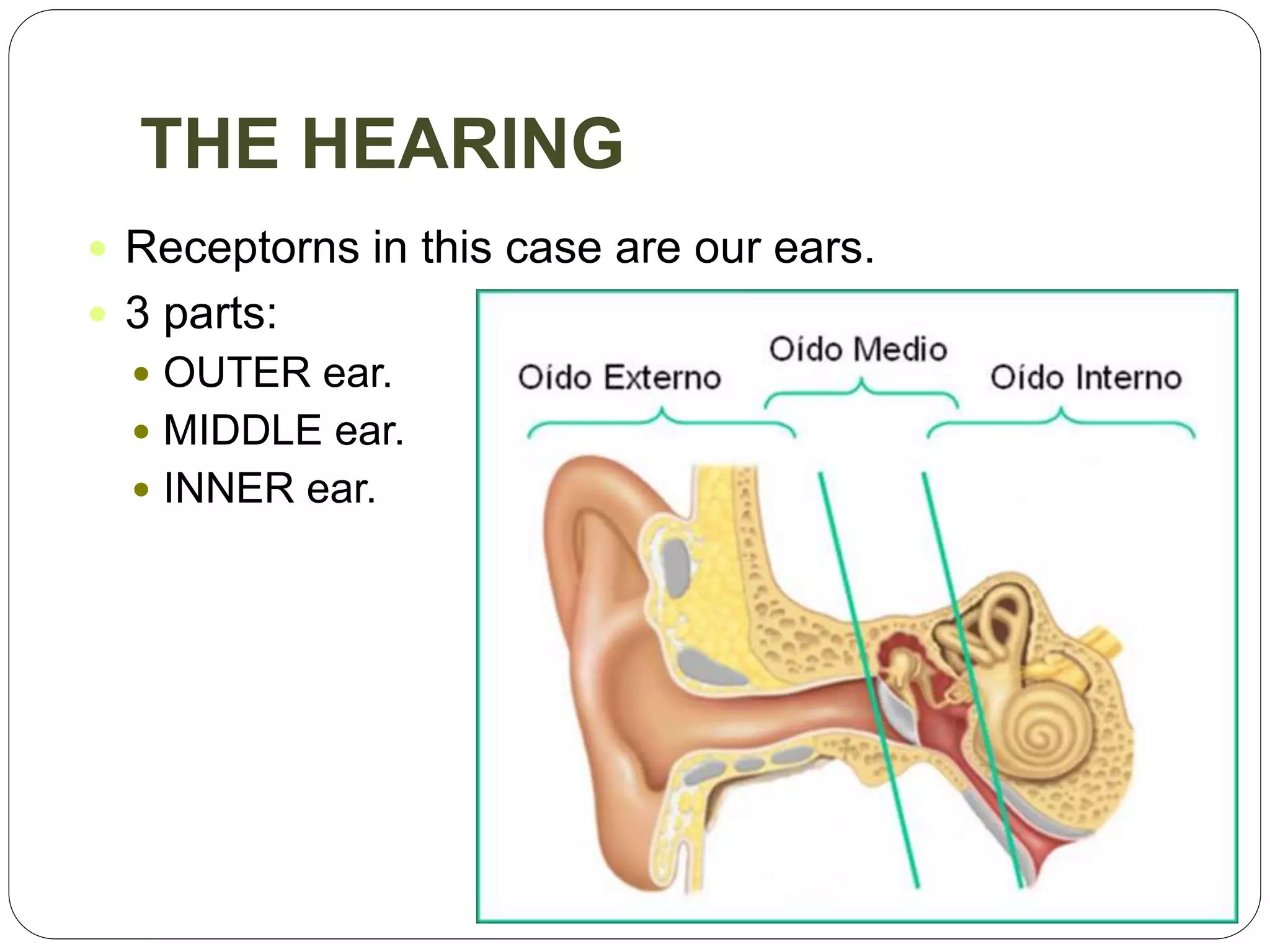
THE HEARING
 Receptorns in this case are our ears.
 3 parts:
 OUTER ear.
 MIDDLE ear.
 INNER ear.
THE EAR
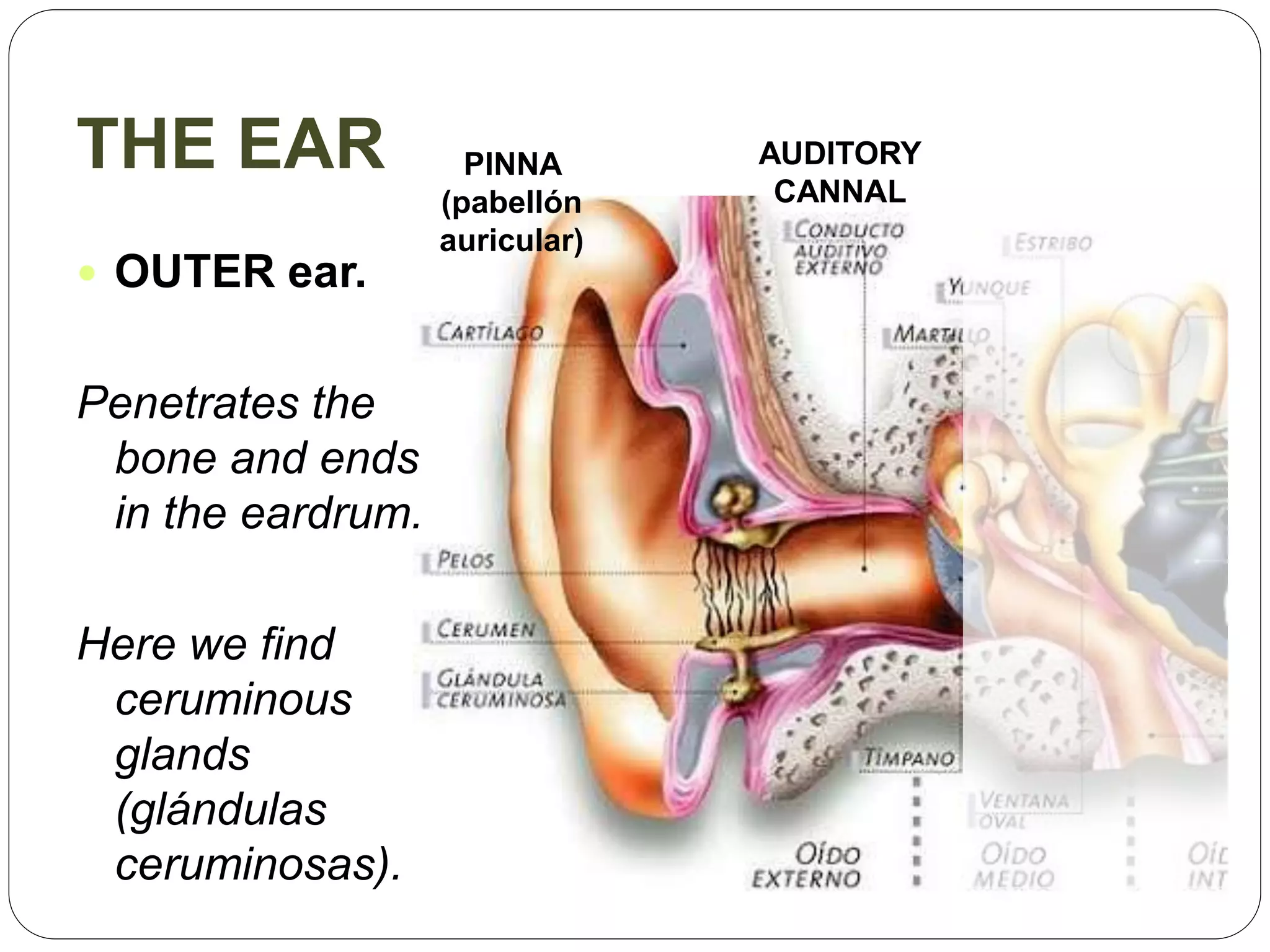
 OUTER ear.
Penetrates the
bone and ends
in the eardrum.
Here we find
ceruminous
glands
(glándulas
ceruminosas).
PINNA
(pabellón
auricular)
AUDITORY
CANNAL
THE EAR
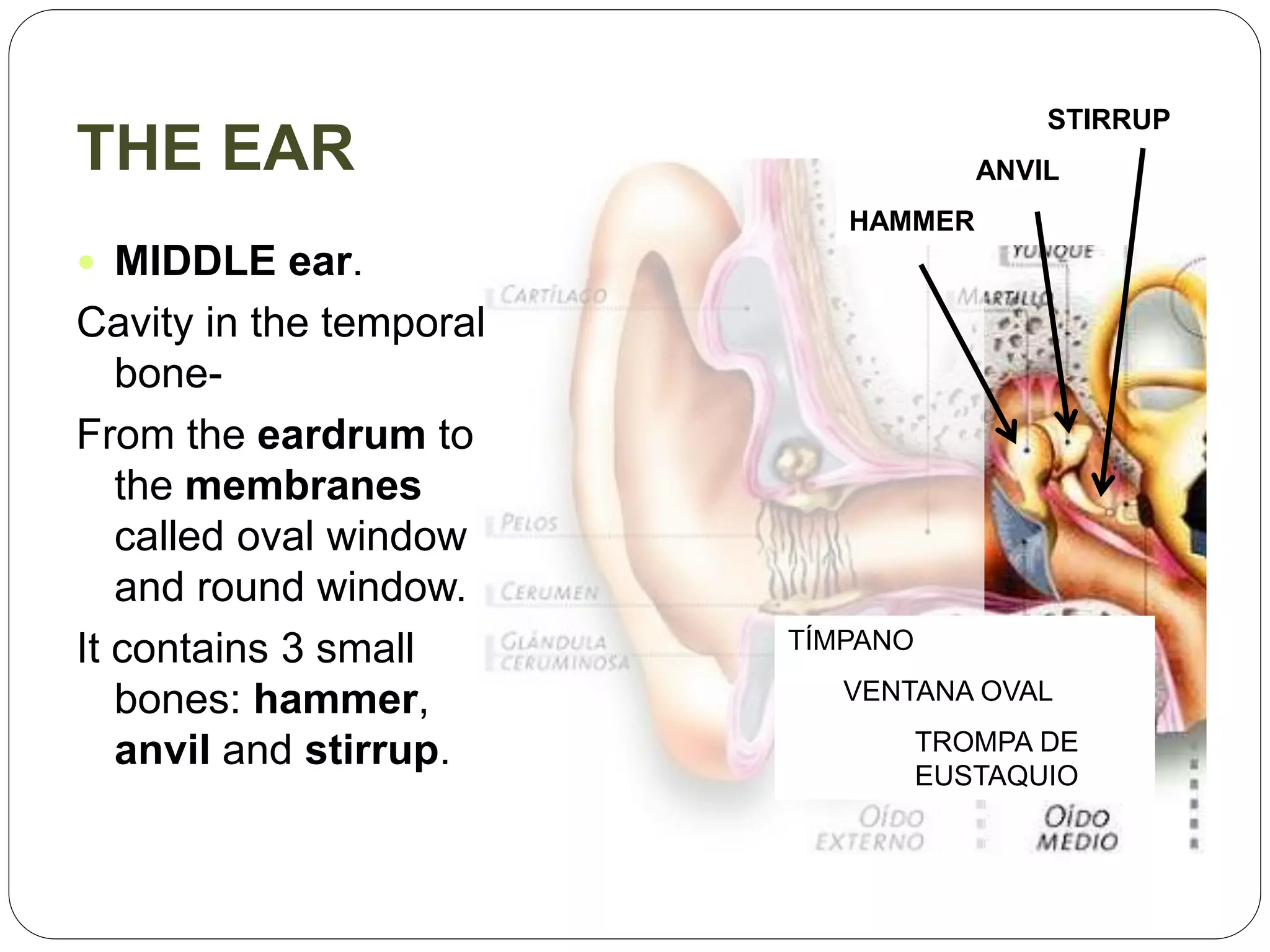
STIRRUP
ANVIL
HAMMER
TÍMPANO
VENTANA OVAL
TROMPA DE
EUSTAQUIO
 MIDDLE ear.
Cavity in the temporal
bone-
From the eardrum to
the membranes
called oval window
and round window.
It contains 3 small
bones: hammer,
anvil and stirrup.
THE EAR
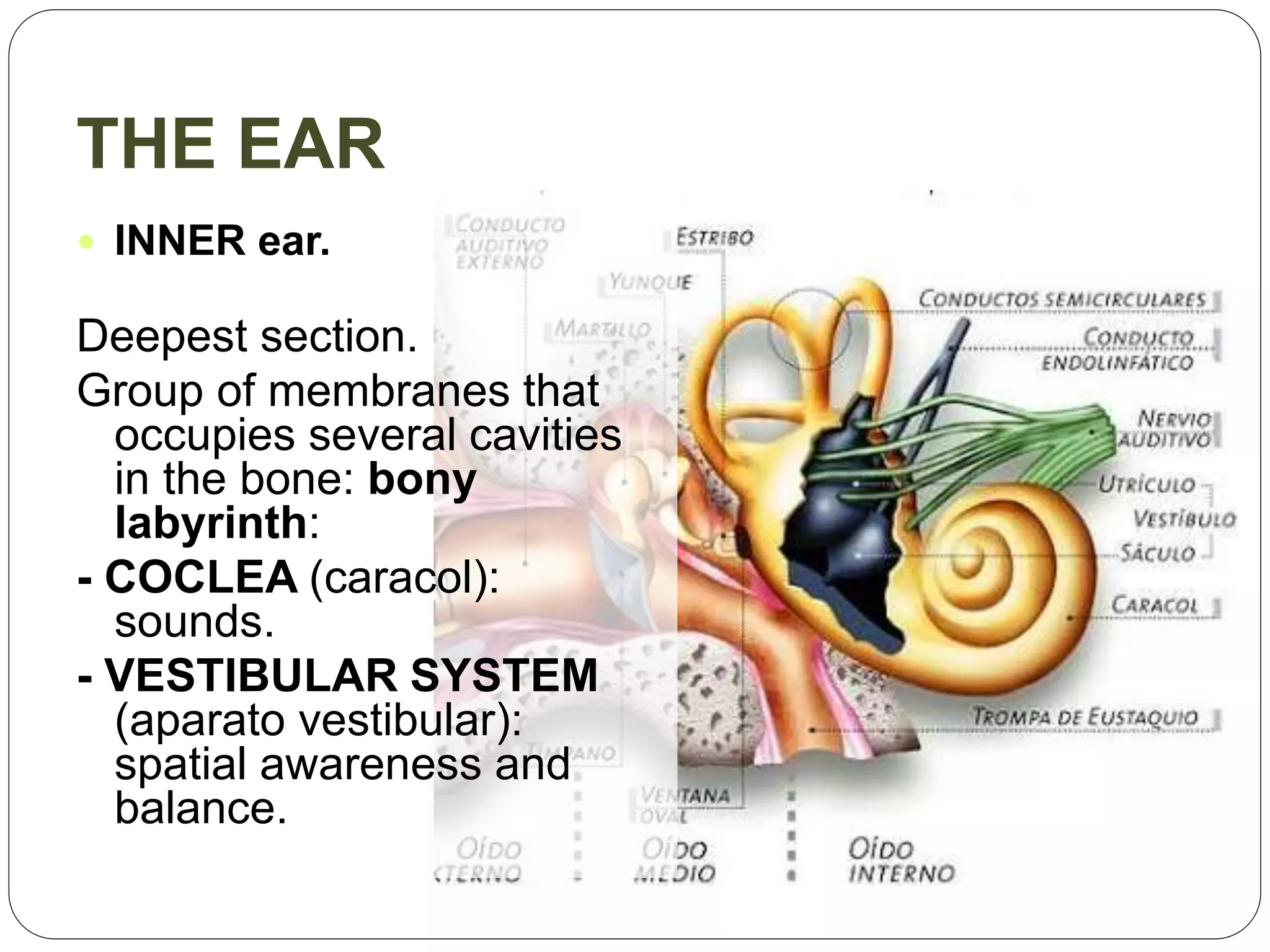
 INNER ear.
Deepest section.
Group of membranes that
occupies several cavities
in the bone: bony
labyrinth:
- COCLEA (caracol):
sounds.
- VESTIBULAR SYSTEM
(aparato vestibular):
spatial awareness and
balance.
THE EAR
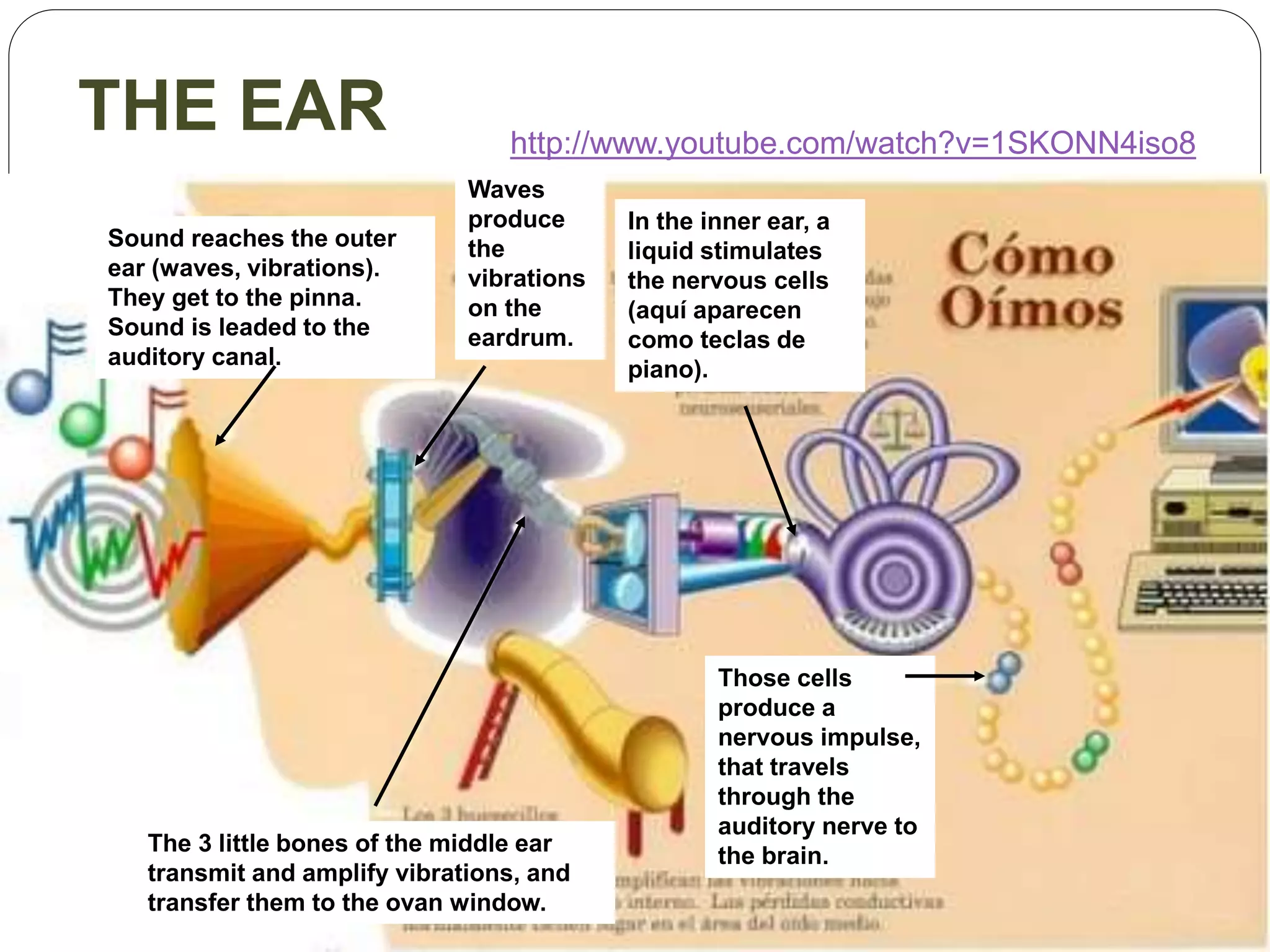
In the inner ear, a
liquid stimulates
the nervous cells
(aquí aparecen
como teclas de
piano).
Those cells
produce a
nervous impulse,
that travels
through the
auditory nerve to
the brain.
Waves
produce
the
vibrations
on the
eardrum.
Sound reaches the outer
ear (waves, vibrations).
They get to the pinna.
Sound is leaded to the
auditory canal.
The 3 little bones of the middle ear
transmit and amplify vibrations, and
transfer them to the ovan window.
http://www.youtube.com/watch?v=1SKONN4iso8
BALANCE
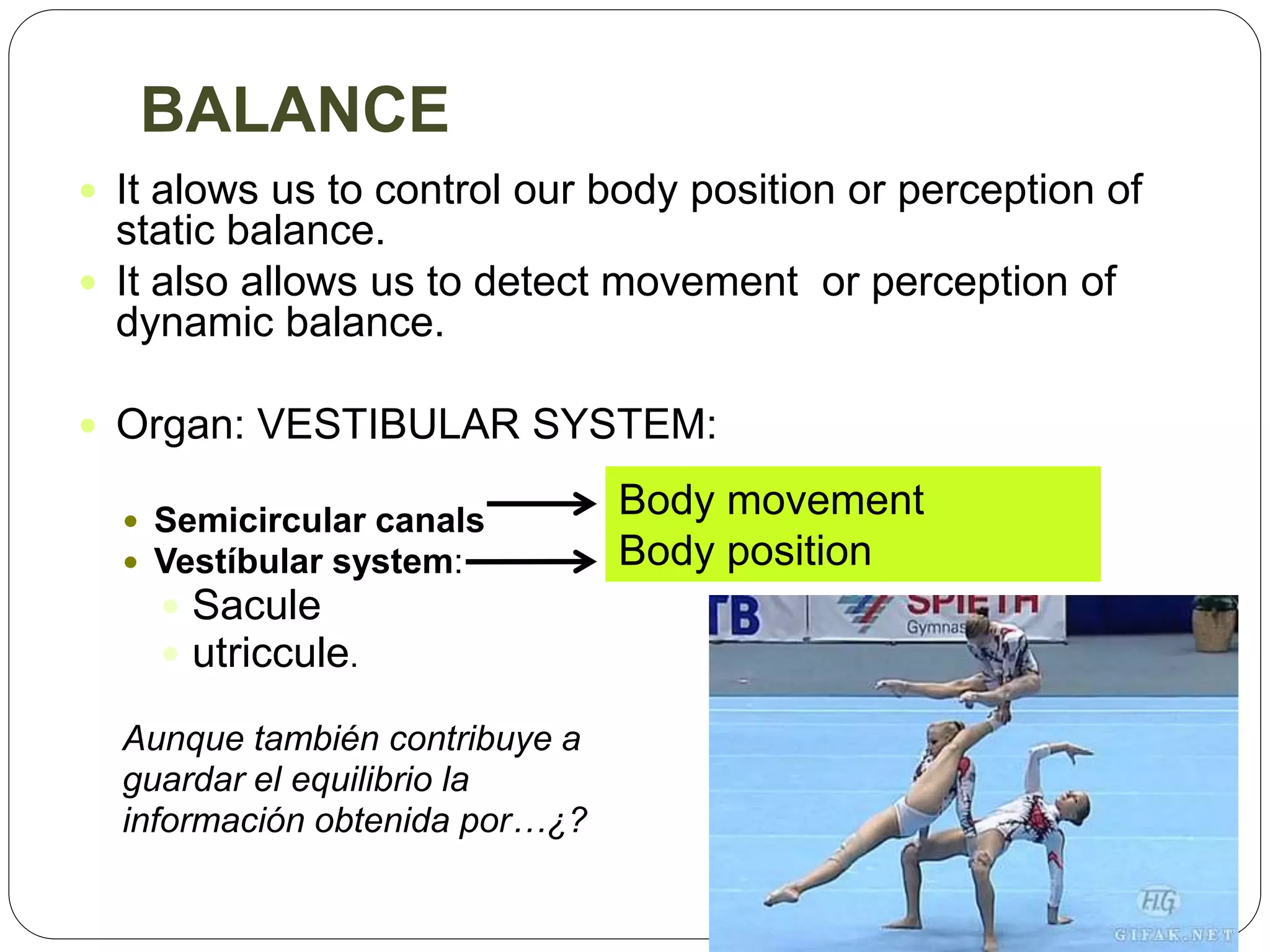
 It alows us to control our body position or perception of
static balance.
 It also allows us to detect movement or perception of
dynamic balance.
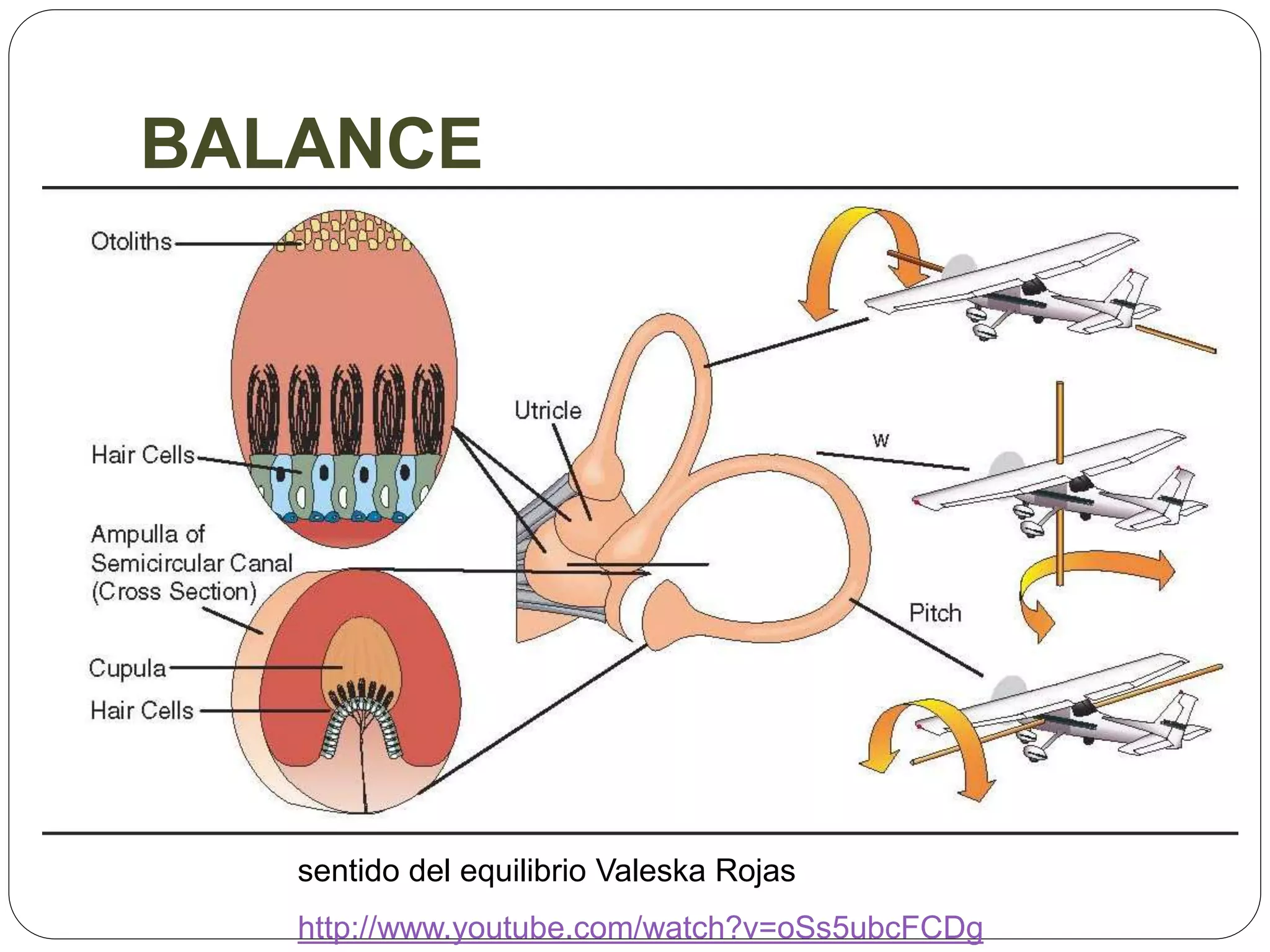
 Organ: VESTIBULAR SYSTEM:
 Semicircular canals
 Vestíbular system:
 Sacule
 utriccule.
Aunque también contribuye a
guardar el equilibrio la
información obtenida por…¿?
Body movement
Body position
BALANCE
sentido del equilibrio Valeska Rojas
http://www.youtube.com/watch?v=oSs5ubcFCDg
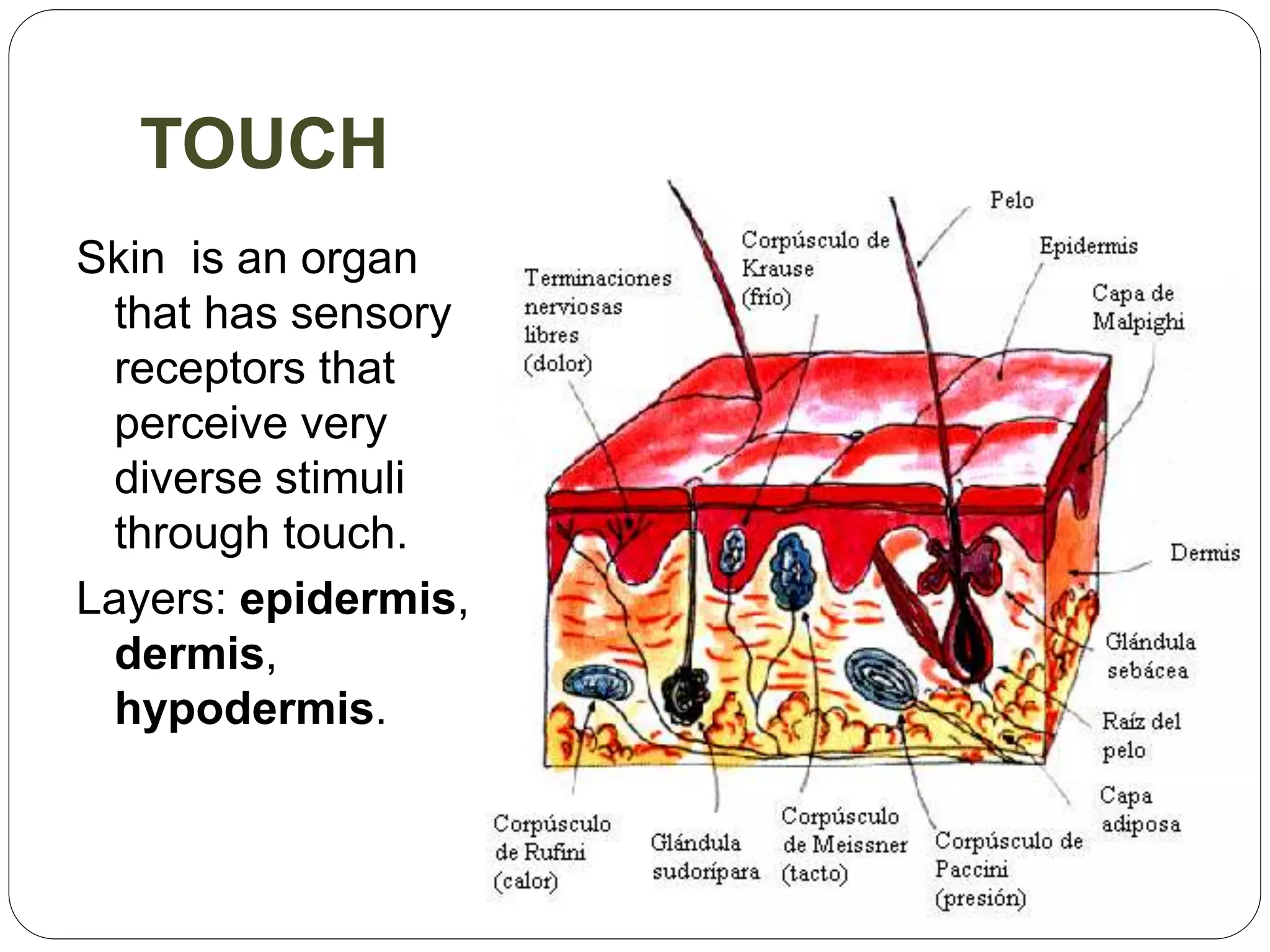
TOUCH
Skin is an organ
that has sensory
receptors that
perceive very
diverse stimuli
through touch.
Layers: epidermis,
dermis,
hypodermis.
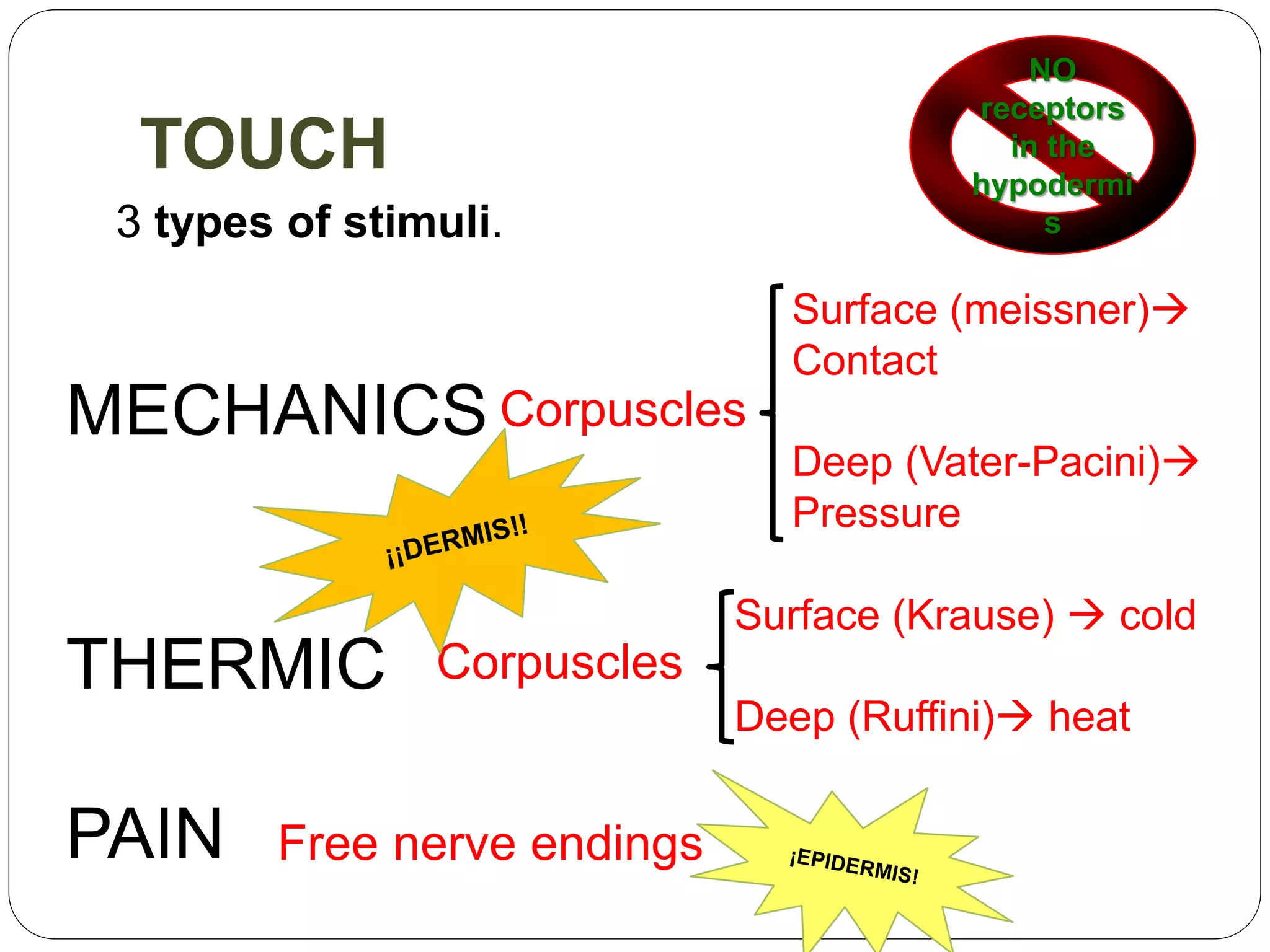
TOUCH
3 types of stimuli.
MECHANICS
THERMIC
PAIN
Corpuscles
Corpuscles
Free nerve endings
Surface (meissner)
Contact
Deep (Vater-Pacini)
Pressure
Surface (Krause)  cold
Deep (Ruffini) heat
NO
receptors
in the
hypodermi
s
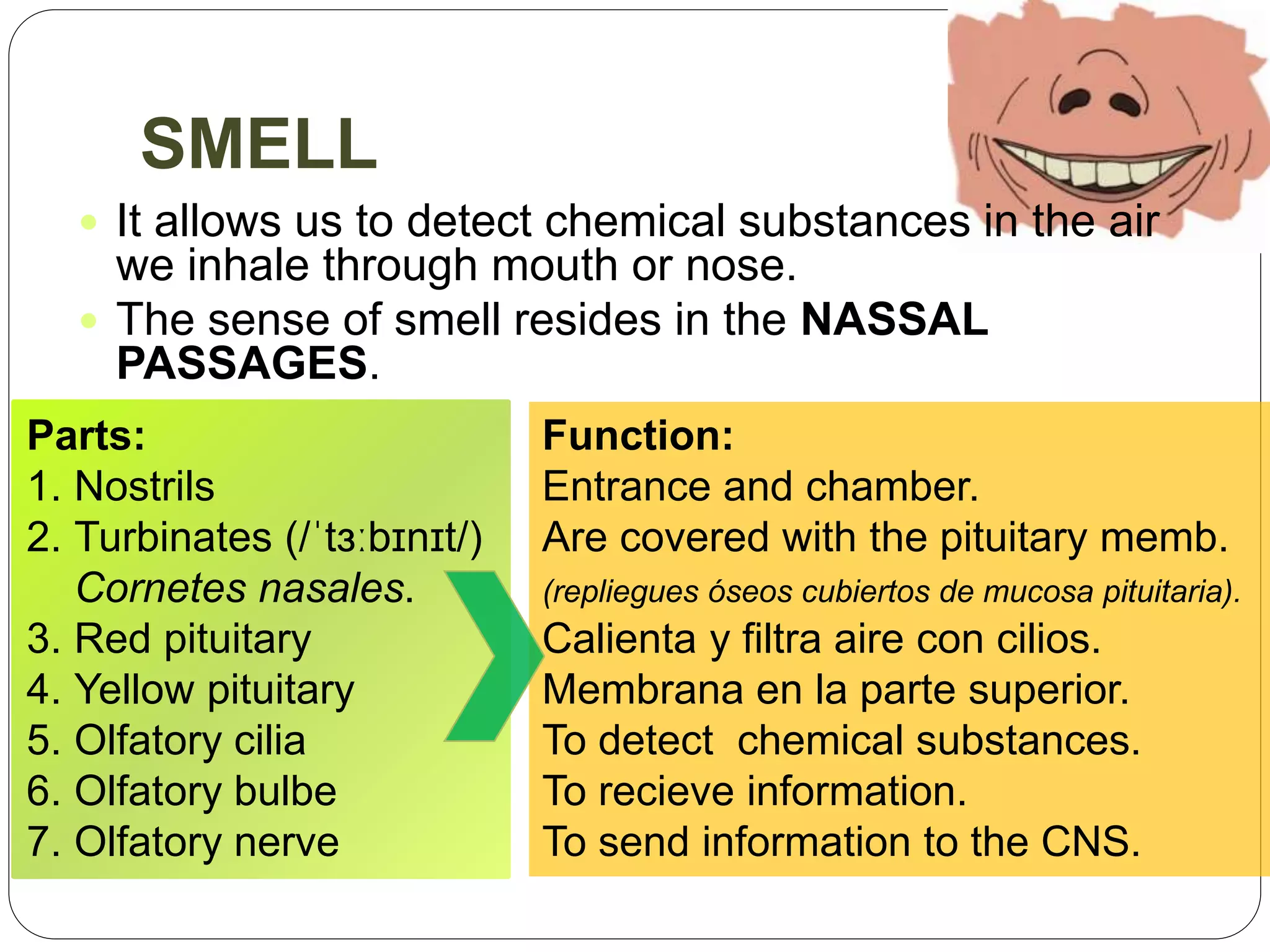
SMELL
 It allows us to detect chemical substances in the air
we inhale through mouth or nose.
 The sense of smell resides in the NASSAL
PASSAGES.
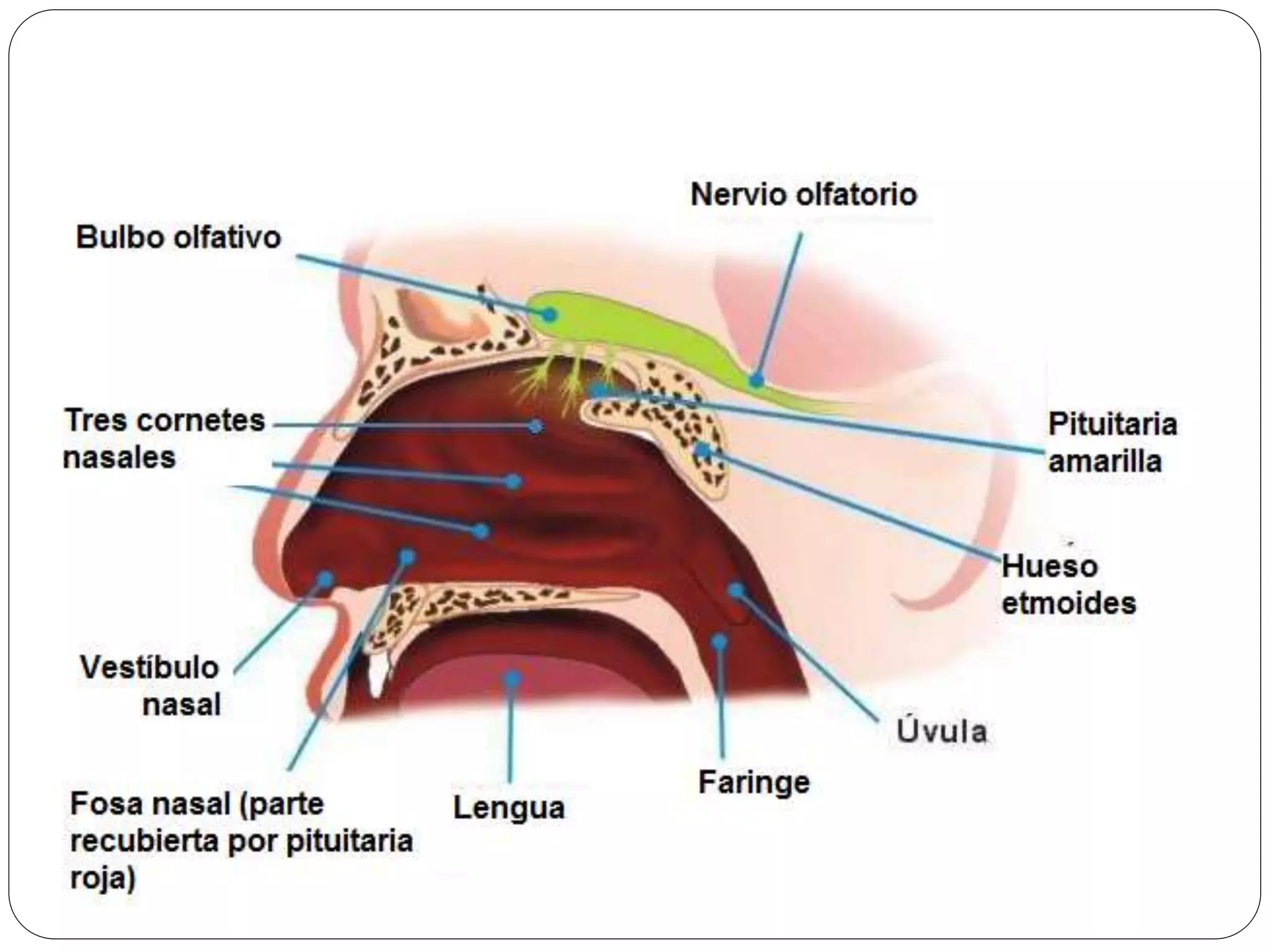
Parts:
1. Nostrils
2. Turbinates (/ˈtɜːbɪnɪt/)
Cornetes nasales.
3. Red pituitary
4. Yellow pituitary
5. Olfatory cilia
6. Olfatory bulbe
7. Olfatory nerve
Function:
Entrance and chamber.
Are covered with the pituitary memb.
(repliegues óseos cubiertos de mucosa pituitaria).
Calienta y filtra aire con cilios.
Membrana en la parte superior.
To detect chemical substances.
To recieve information.
To send information to the CNS.
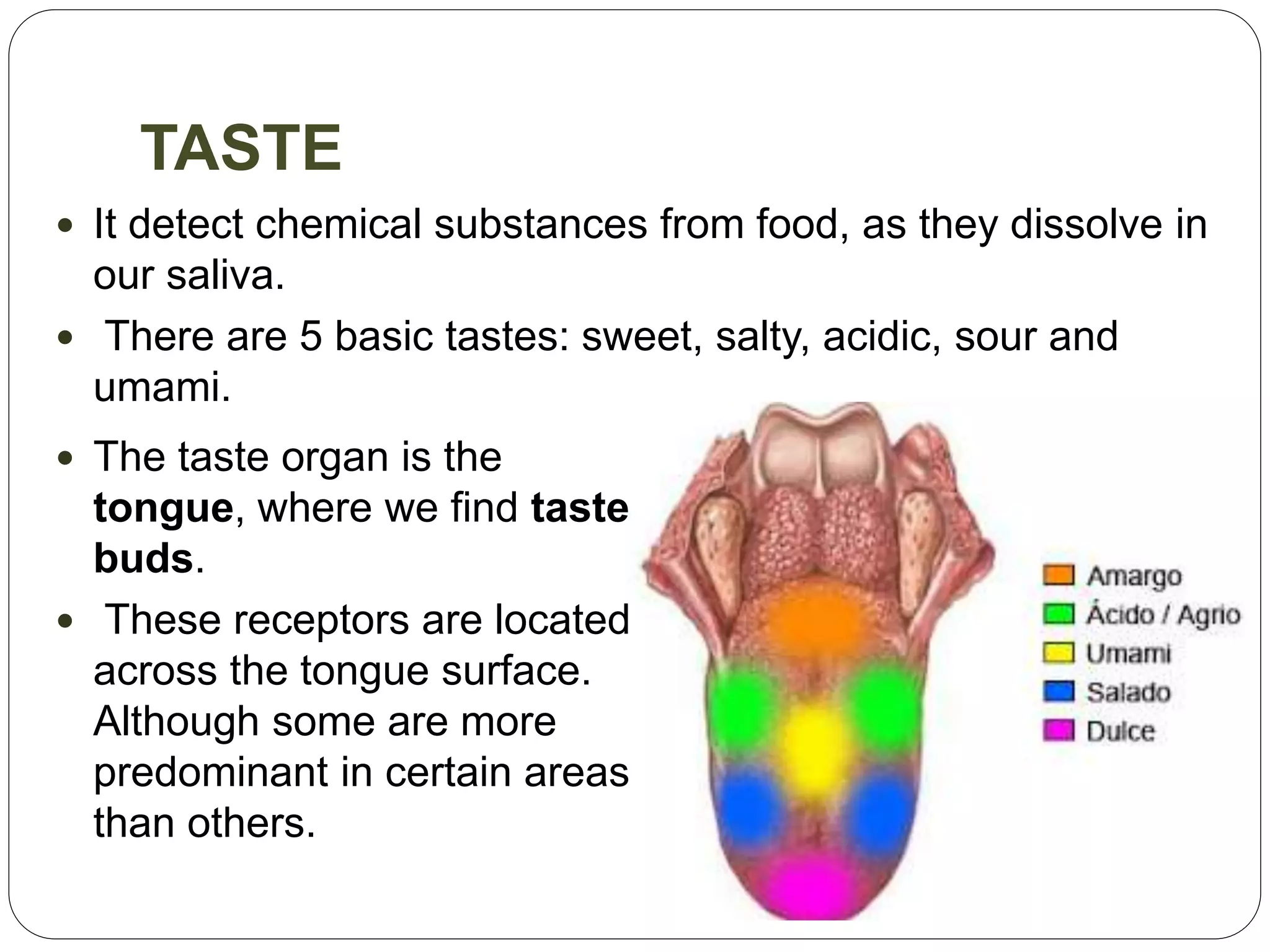
TASTE
 It detect chemical substances from food, as they dissolve in
our saliva.
 There are 5 basic tastes: sweet, salty, acidic, sour and
umami.
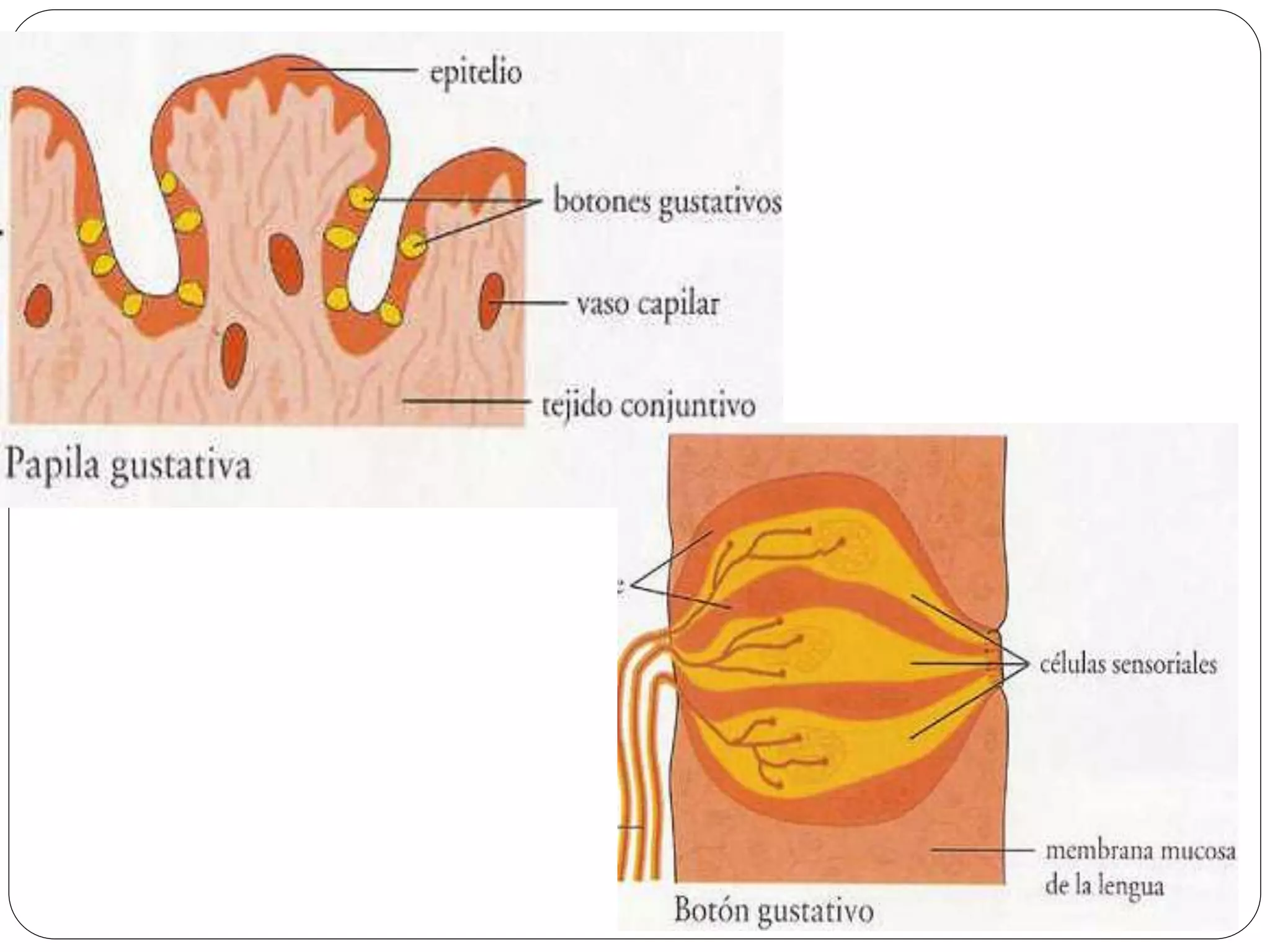
 The taste organ is the
tongue, where we find taste
buds.
 These receptors are located
across the tongue surface.
Although some are more
predominant in certain areas
than others.
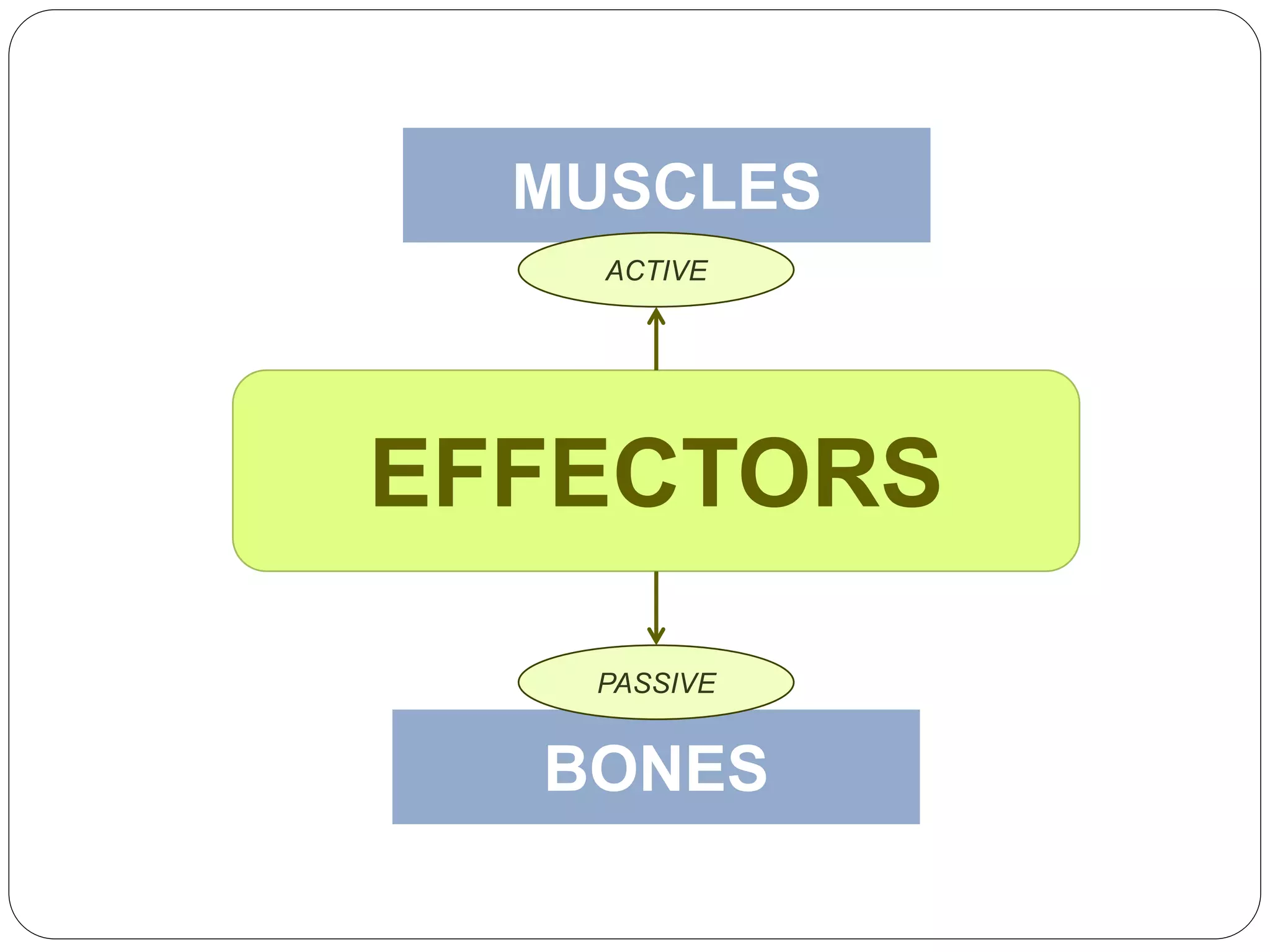
BONES
MUSCLES
EFFECTORS
ACTIVE
PASSIVE
SKELETAL
SYSTEM
Function
Formed by
Protects soft tissues. Mineral salts reserve.
Allows movement. Provides structure.
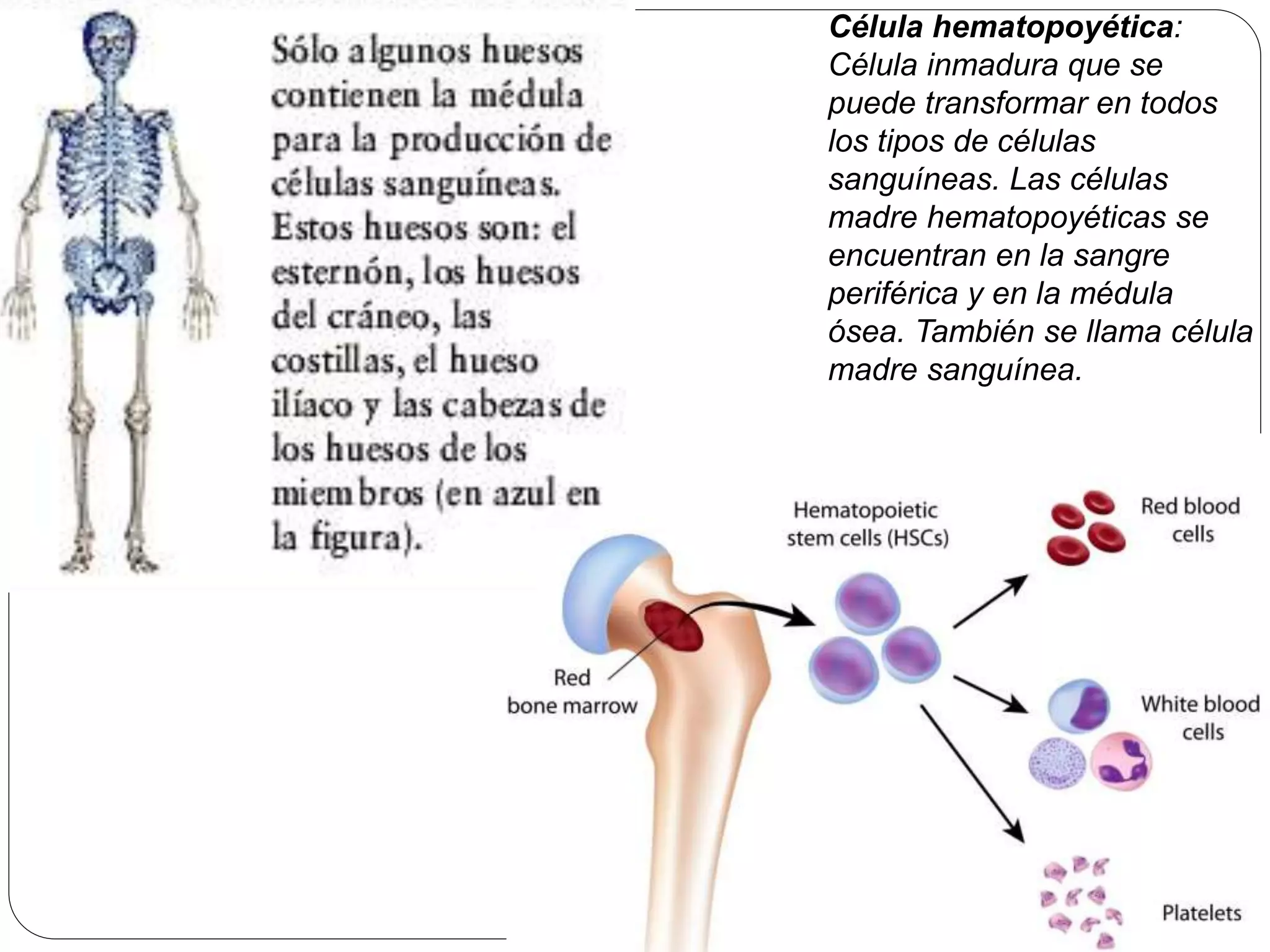
Produces blood cells.
Without calcium salts.
Some bones have this substances
while we are growing.
CARTILAGUES
BONES
Harder, as they have calcium salts.
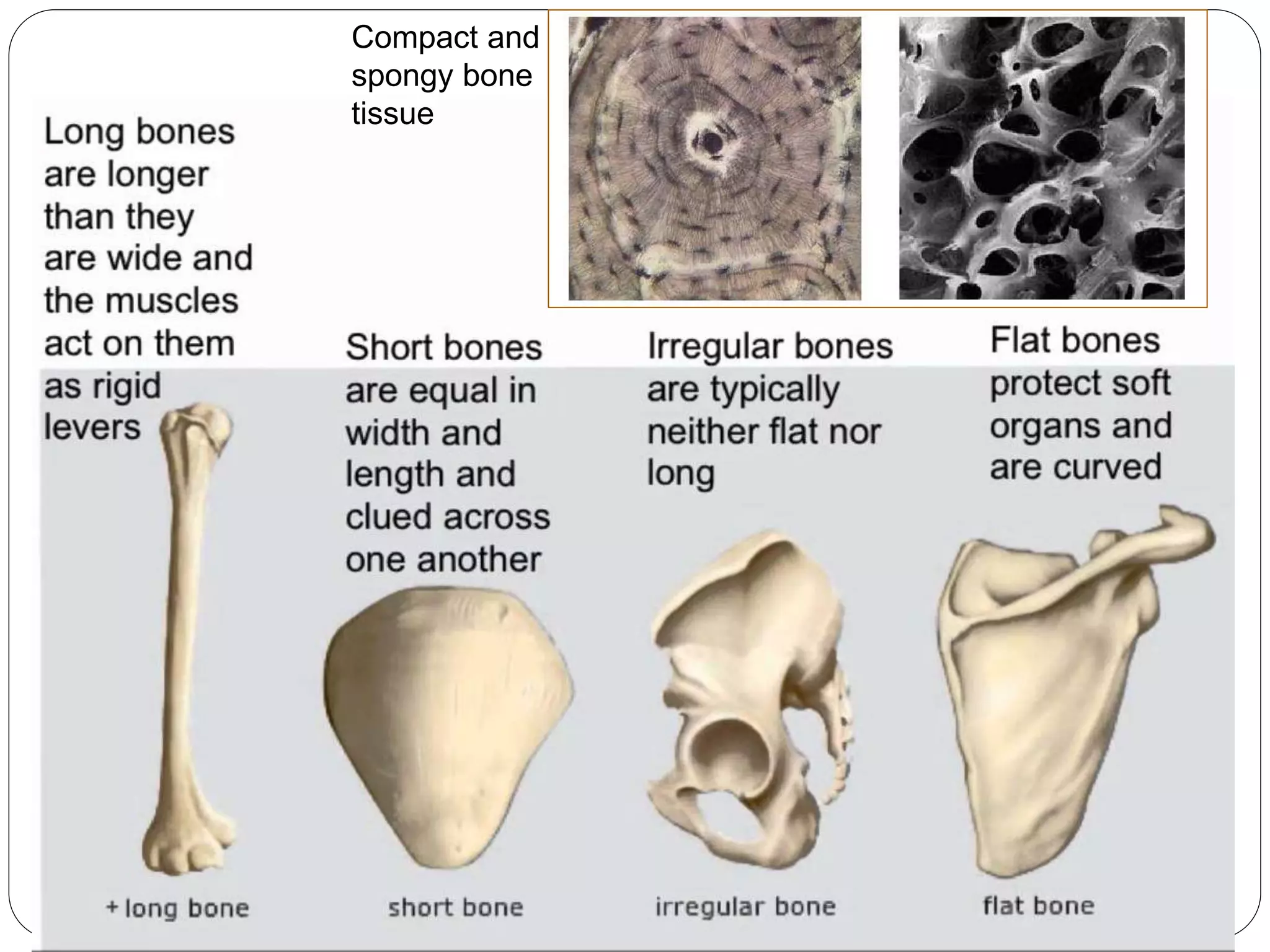
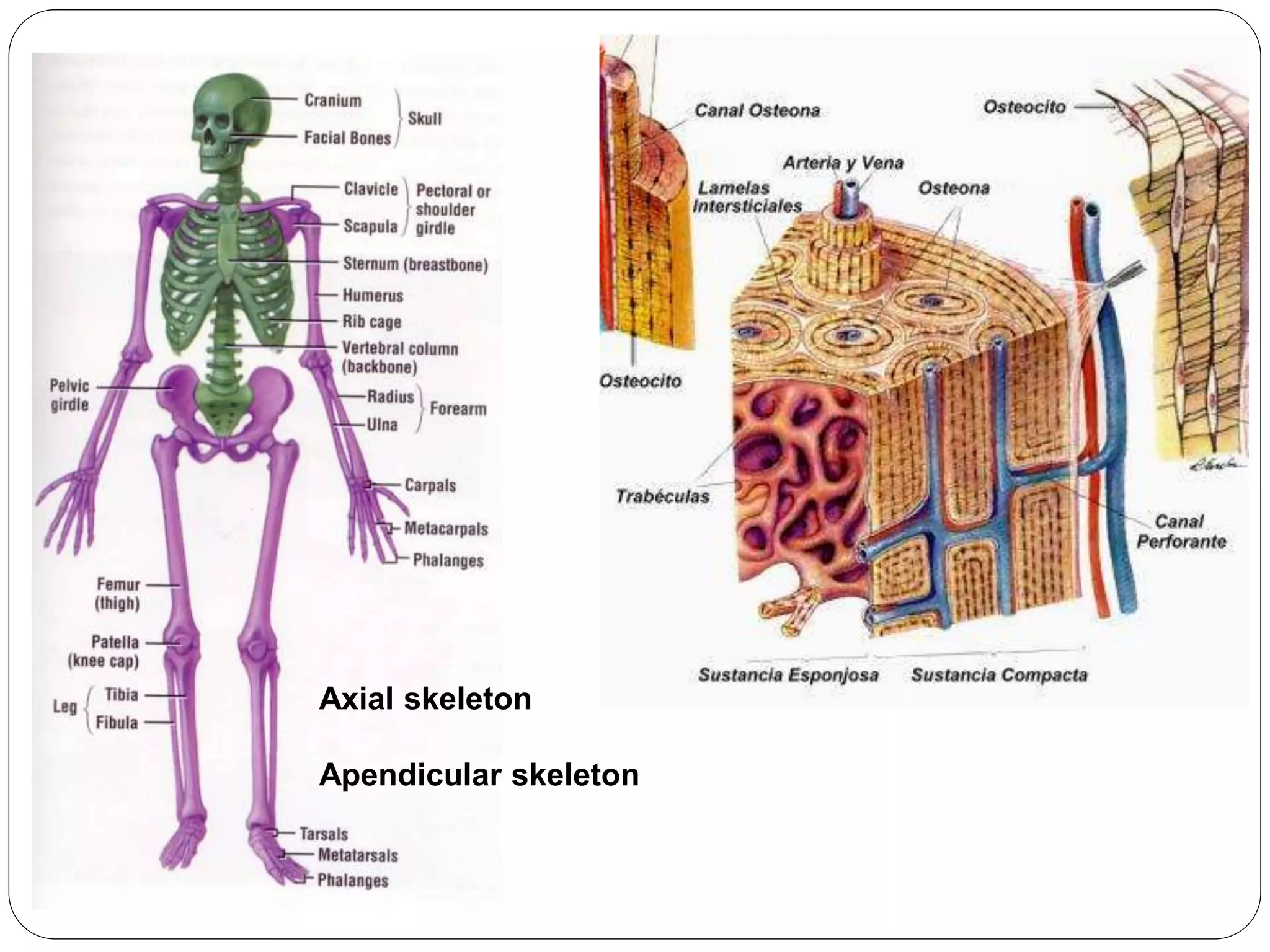
Bone tissue that can by SPONGY
(with cavities) or
COMPACT bone tissue.
Types: SHORT, LONG, FLAT or
IRREGULAR bones.
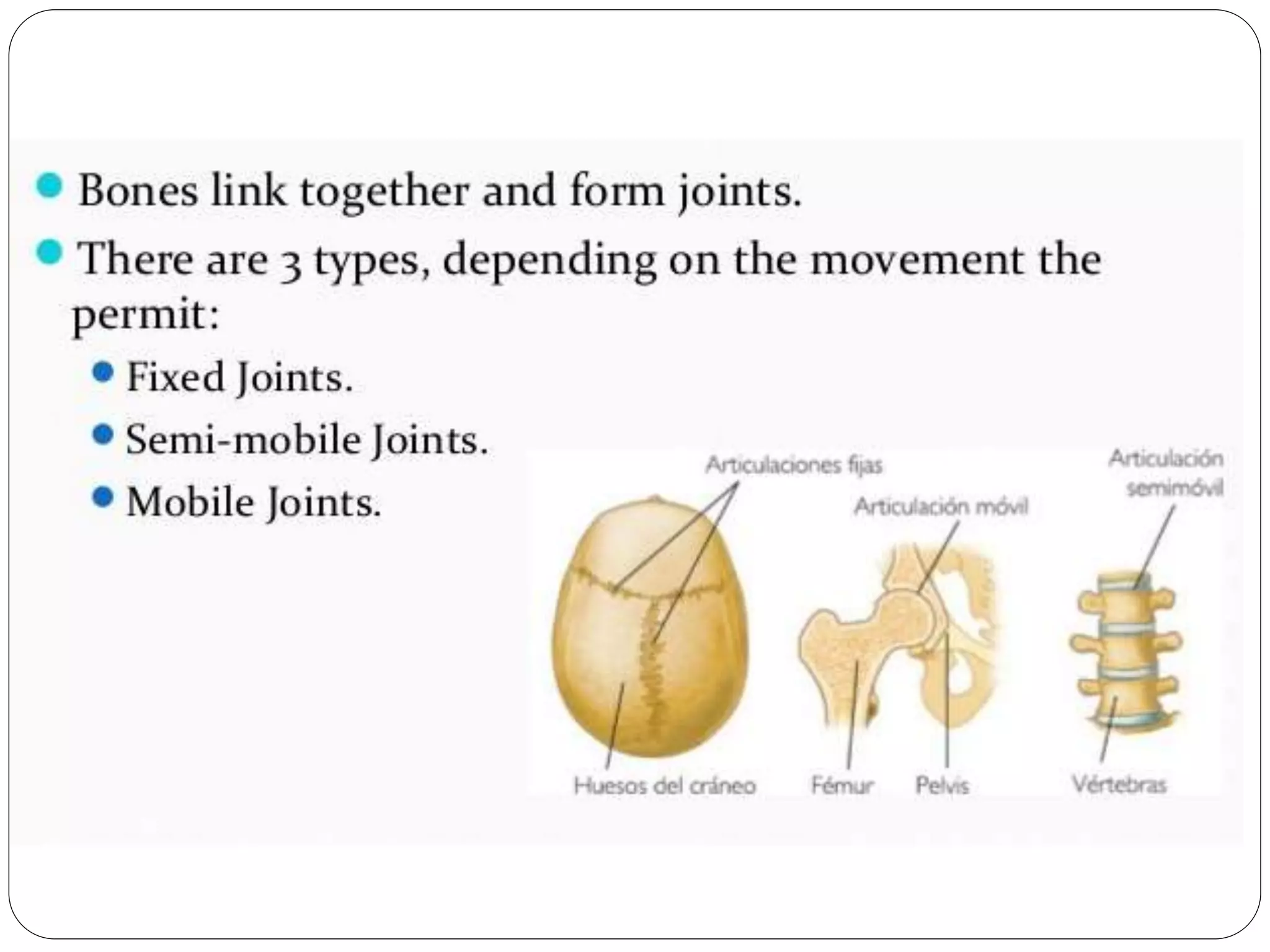
They join through JOINTS.
Compact and
spongy bone
tissue
Axial skeleton
Apendicular skeleton
Célula hematopoyética:
Célula inmadura que se
puede transformar en todos
los tipos de células
sanguíneas. Las células
madre hematopoyéticas se
encuentran en la sangre
periférica y en la médula
ósea. También se llama célula
madre sanguínea.
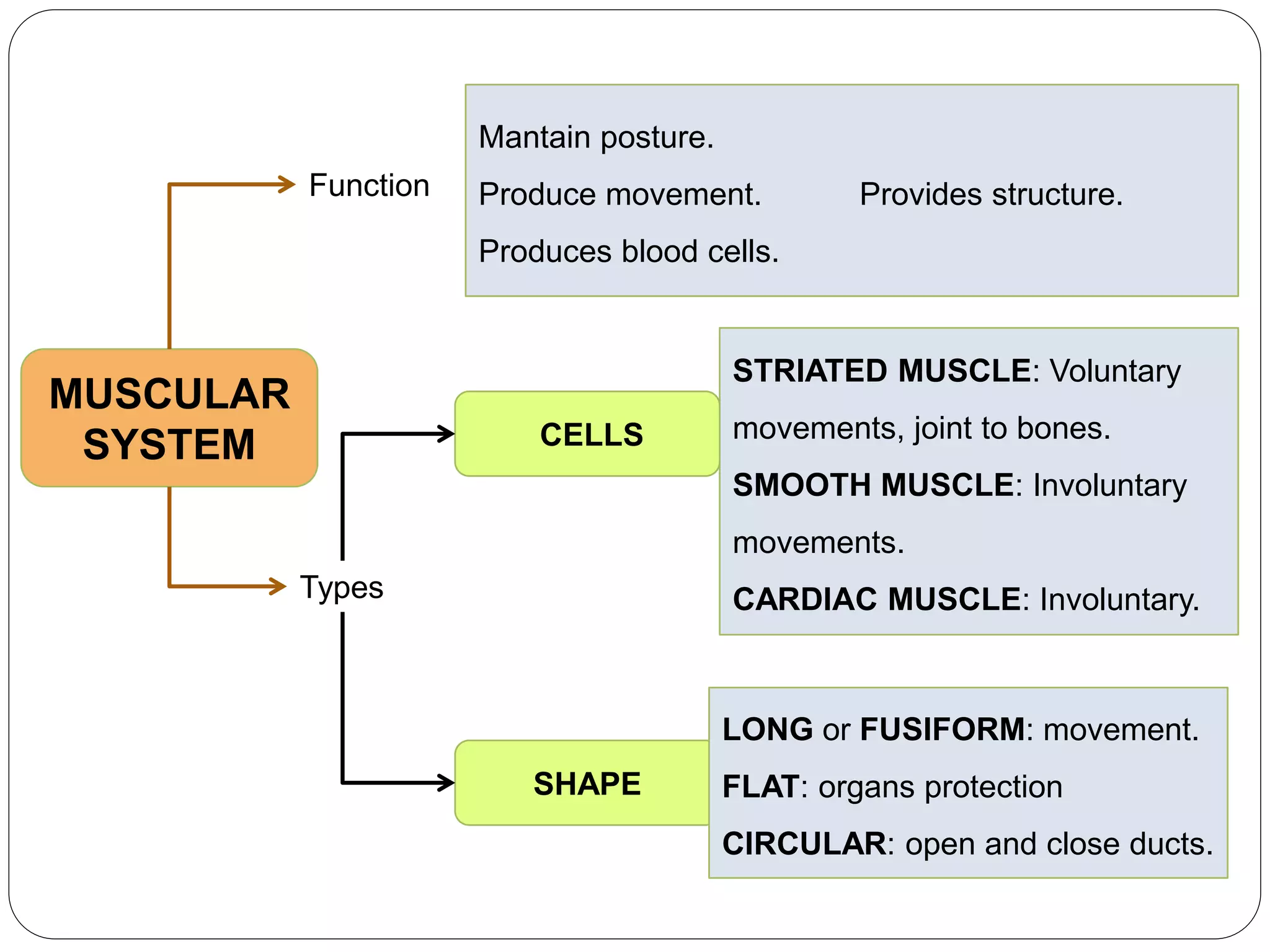
MUSCULAR
SYSTEM
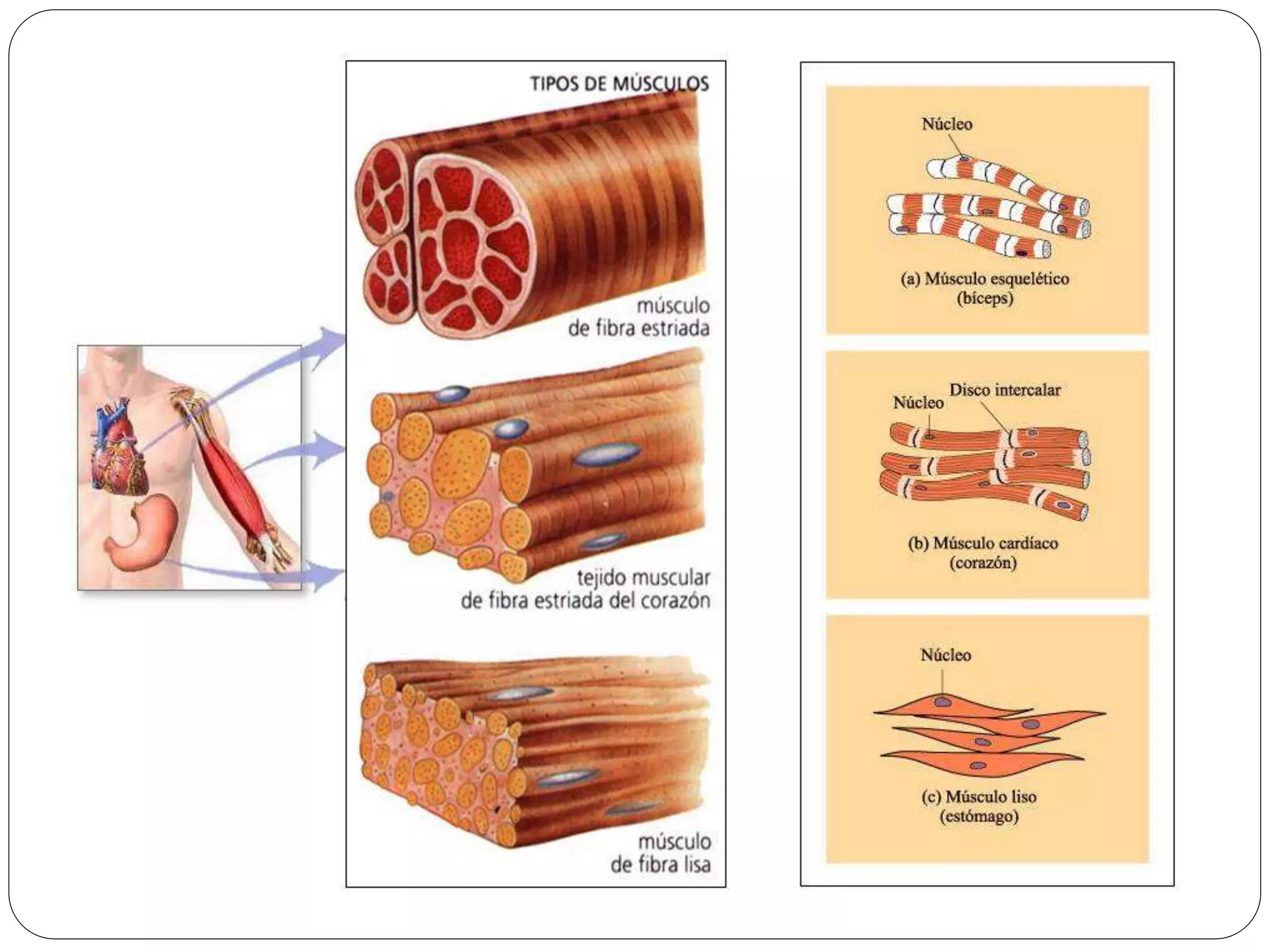
Function
Types
Mantain posture.
Produce movement. Provides structure.
Produces blood cells.
STRIATED MUSCLE: Voluntary
movements, joint to bones.
SMOOTH MUSCLE: Involuntary
movements.
CARDIAC MUSCLE: Involuntary.
CELLS
SHAPE
LONG or FUSIFORM: movement.
FLAT: organs protection
CIRCULAR: open and close ducts.
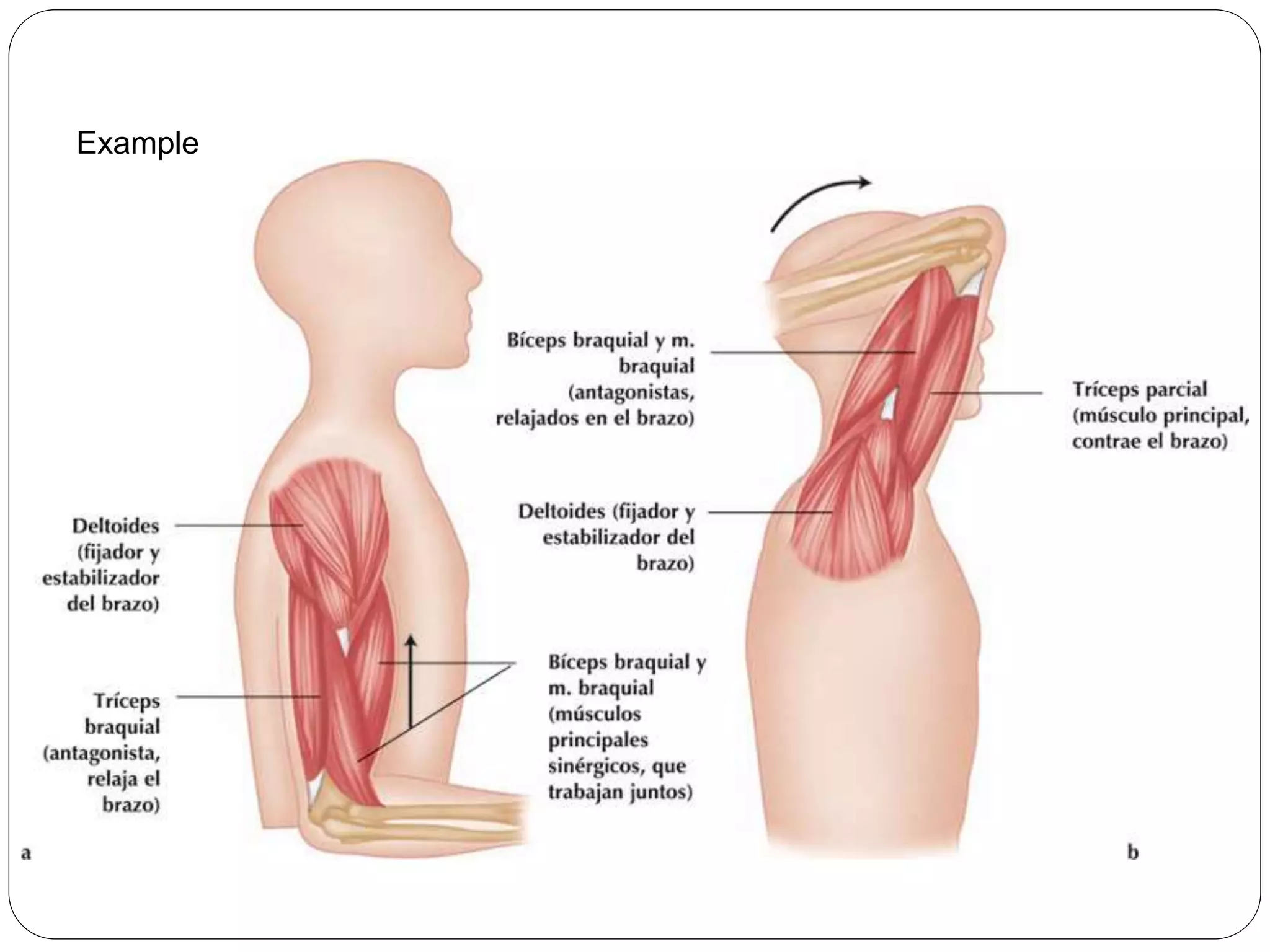
PERFORMING MOVEMENT: Muscle contraction.
Agonists perform one unique movement.
Antagonists perform movements in opposite directions.
Example
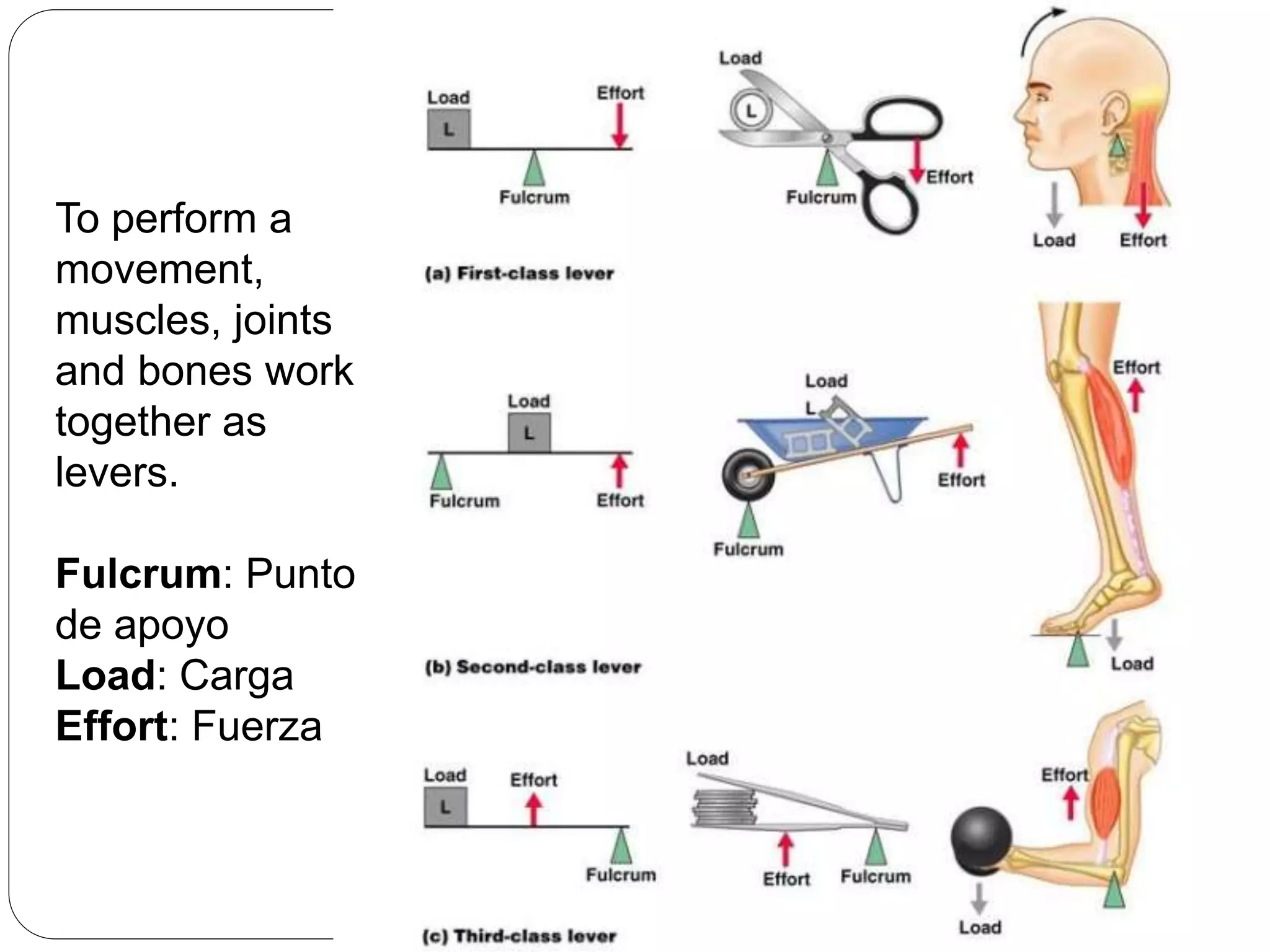
To perform a
movement,
muscles, joints
and bones work
together as
levers.
Fulcrum: Punto
de apoyo
Load: Carga
Effort: Fuerza
Interaction function II. Receptors and effectors.

Interaction function II. Receptors and effectors.

  • 1.
    INTERACTION FUNCTION II Receptorsand effectors Transmitting, analyzing and working out responses.
  • 2.
  • 3.
    - Internal receptors. -External receptors. - Photoreceptors. -Chemorecpetors. -Mechanoreceptors. - Thermoreceptors. SENSORY RECEPTORS Responsible for perceiving information, which they convert into a nerve impulse. Stimuli received Location Types of receptors.
  • 5.
    RECEPTORS  They receiveinformation from the environment (stimuli).  Receptors are usually neurons, but can also be other types of cells, modified.  Stimuli can be varied: light, sound, heat and cold, pressure, chemical molecules (CO2, O2, sugar in blood), position.
  • 6.
    SIGHT A really importantsense, as much information is received thanks to it. Sight receptors are stimulated by light. These receptors are found in a really complex organ: the eye. It is made up of the ocular globe, accompanied by several muscles, that allow its mobility, and glands that lubricate and protect it. Eyes allows us to perceive: • Colour • Size • Distance • Shape
  • 7.
    Parts:  GLOBE:  Cornea Iris  Sclera (esclerótica)  Choroid (coroides) [iris, pupil]  Aquous humour (humor acuoso)  Vitreous humour (humor vítreo)  Lens  Retina [cells: rods, and cones]  ACCESORY ORGANS  Eyelids (párpados)  Eyelashes (pestañas)  Eyebrow (cejas)  Ocular muscles  Lacrimal glands Description and functions in your book.
  • 8.
  • 9.
    THE EYE How theeye works. 1. The globe would be the camera. 2. The pupil opens and closes to regulate light, like a diaphragm. 3. The lens (that changes it shape) would be the objective (focus the image). 4. The retina would be the screen of the camera, where image is projected (remember the image formed in the retina is inverted). 5. The brain overlap images from both eyes, causing ESTEREOSCOPIC VISION. Estereocopic means: we can perceive 3d, size, dimension and distance of objects.
  • 10.
    Light entres intothe globe through the cornea, and the lens focus the image on the retina, where we find photoreceptors cells. These cells are: CONES (conos): Stimulated by different wavelenghts (colours ). It constitute the daylight vision (visión diurna). RODS (bastones): Stimulated by differents light intensities (brightness) and constitute what we call “night vision” (visión nocturna), it allows us to see at night.
  • 11.
    THE HEARING  Receptornsin this case are our ears.  3 parts:  OUTER ear.  MIDDLE ear.  INNER ear.
  • 12.
    THE EAR  OUTERear. Penetrates the bone and ends in the eardrum. Here we find ceruminous glands (glándulas ceruminosas). PINNA (pabellón auricular) AUDITORY CANNAL
  • 13.
    THE EAR STIRRUP ANVIL HAMMER TÍMPANO VENTANA OVAL TROMPADE EUSTAQUIO  MIDDLE ear. Cavity in the temporal bone- From the eardrum to the membranes called oval window and round window. It contains 3 small bones: hammer, anvil and stirrup.
  • 14.
    THE EAR  INNERear. Deepest section. Group of membranes that occupies several cavities in the bone: bony labyrinth: - COCLEA (caracol): sounds. - VESTIBULAR SYSTEM (aparato vestibular): spatial awareness and balance.
  • 15.
    THE EAR In theinner ear, a liquid stimulates the nervous cells (aquí aparecen como teclas de piano). Those cells produce a nervous impulse, that travels through the auditory nerve to the brain. Waves produce the vibrations on the eardrum. Sound reaches the outer ear (waves, vibrations). They get to the pinna. Sound is leaded to the auditory canal. The 3 little bones of the middle ear transmit and amplify vibrations, and transfer them to the ovan window. http://www.youtube.com/watch?v=1SKONN4iso8
  • 16.
    BALANCE  It alowsus to control our body position or perception of static balance.  It also allows us to detect movement or perception of dynamic balance.  Organ: VESTIBULAR SYSTEM:  Semicircular canals  Vestíbular system:  Sacule  utriccule. Aunque también contribuye a guardar el equilibrio la información obtenida por…¿? Body movement Body position
  • 17.
    BALANCE sentido del equilibrioValeska Rojas http://www.youtube.com/watch?v=oSs5ubcFCDg
  • 18.
    TOUCH Skin is anorgan that has sensory receptors that perceive very diverse stimuli through touch. Layers: epidermis, dermis, hypodermis.
  • 19.
    TOUCH 3 types ofstimuli. MECHANICS THERMIC PAIN Corpuscles Corpuscles Free nerve endings Surface (meissner) Contact Deep (Vater-Pacini) Pressure Surface (Krause)  cold Deep (Ruffini) heat NO receptors in the hypodermi s
  • 20.
    SMELL  It allowsus to detect chemical substances in the air we inhale through mouth or nose.  The sense of smell resides in the NASSAL PASSAGES. Parts: 1. Nostrils 2. Turbinates (/ˈtɜːbɪnɪt/) Cornetes nasales. 3. Red pituitary 4. Yellow pituitary 5. Olfatory cilia 6. Olfatory bulbe 7. Olfatory nerve Function: Entrance and chamber. Are covered with the pituitary memb. (repliegues óseos cubiertos de mucosa pituitaria). Calienta y filtra aire con cilios. Membrana en la parte superior. To detect chemical substances. To recieve information. To send information to the CNS.
  • 22.
    TASTE  It detectchemical substances from food, as they dissolve in our saliva.  There are 5 basic tastes: sweet, salty, acidic, sour and umami.  The taste organ is the tongue, where we find taste buds.  These receptors are located across the tongue surface. Although some are more predominant in certain areas than others.
  • 24.
  • 25.
    SKELETAL SYSTEM Function Formed by Protects softtissues. Mineral salts reserve. Allows movement. Provides structure. Produces blood cells. Without calcium salts. Some bones have this substances while we are growing. CARTILAGUES BONES Harder, as they have calcium salts. Bone tissue that can by SPONGY (with cavities) or COMPACT bone tissue. Types: SHORT, LONG, FLAT or IRREGULAR bones. They join through JOINTS.
  • 26.
  • 27.
  • 29.
    Célula hematopoyética: Célula inmaduraque se puede transformar en todos los tipos de células sanguíneas. Las células madre hematopoyéticas se encuentran en la sangre periférica y en la médula ósea. También se llama célula madre sanguínea.
  • 31.
    MUSCULAR SYSTEM Function Types Mantain posture. Produce movement.Provides structure. Produces blood cells. STRIATED MUSCLE: Voluntary movements, joint to bones. SMOOTH MUSCLE: Involuntary movements. CARDIAC MUSCLE: Involuntary. CELLS SHAPE LONG or FUSIFORM: movement. FLAT: organs protection CIRCULAR: open and close ducts.
  • 34.
    PERFORMING MOVEMENT: Musclecontraction. Agonists perform one unique movement. Antagonists perform movements in opposite directions.
  • 35.
  • 36.
    To perform a movement, muscles,joints and bones work together as levers. Fulcrum: Punto de apoyo Load: Carga Effort: Fuerza