Presented By:-
Farhan Asim
Varsha Kapoor
Saumya Kamboj
Prashant Awasthi
Ankit Vaswani
Pooja Pandey
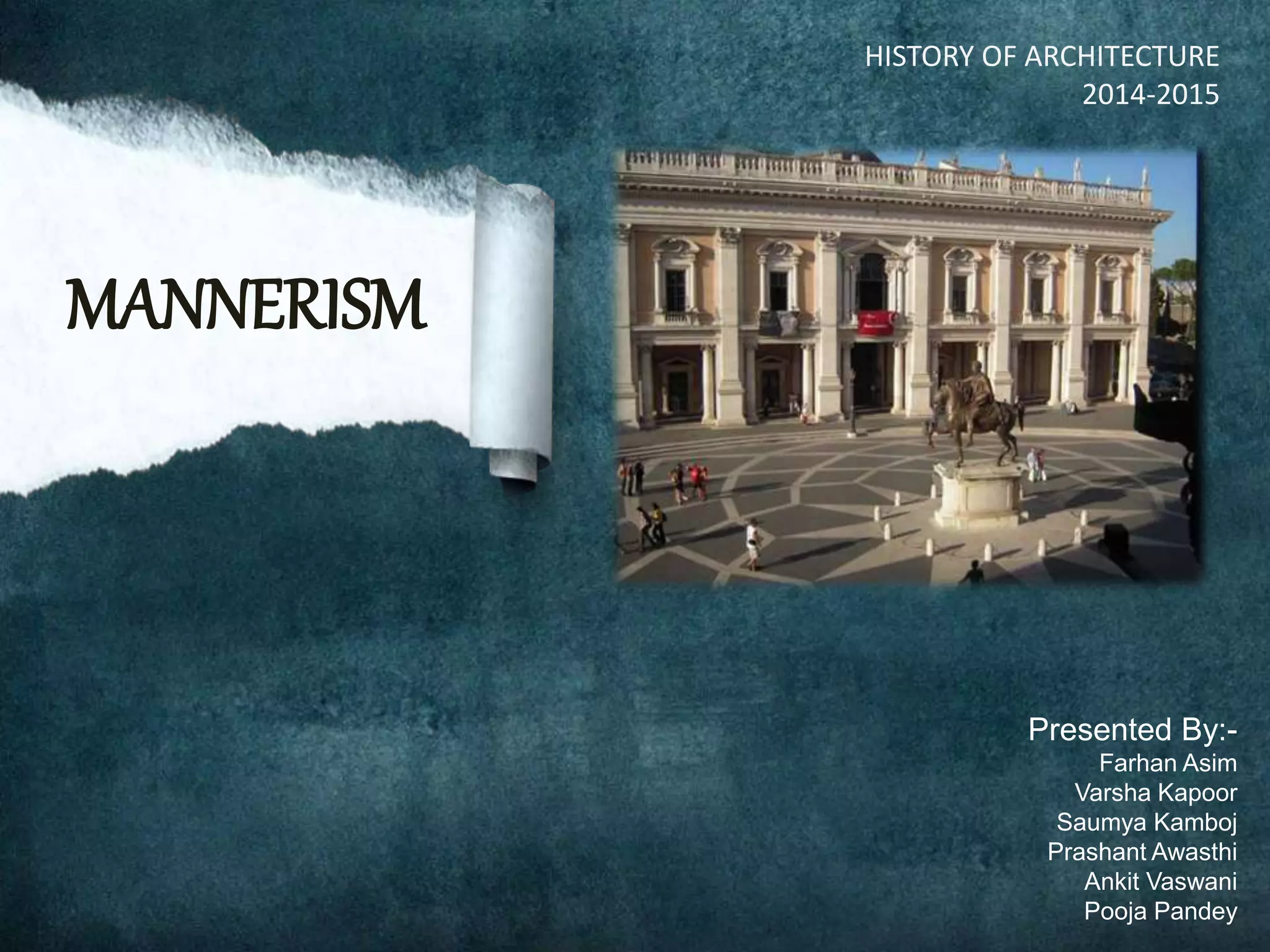
MANNERISM
HISTORY OF ARCHITECTURE
2014-2015
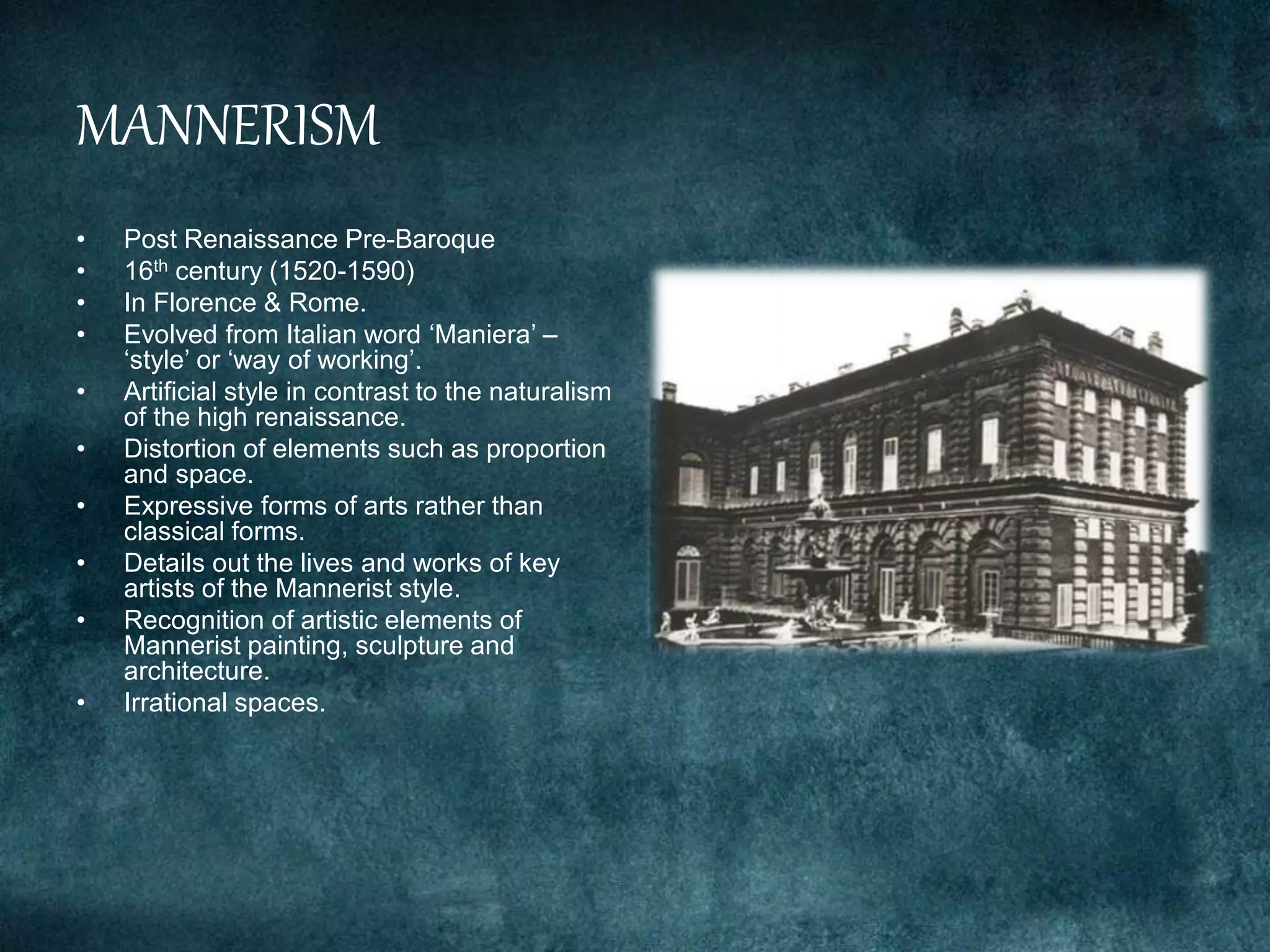
MANNERISM
• Post Renaissance Pre-Baroque
• 16th century (1520-1590)
• In Florence & Rome.
• Evolved from Italian word ‘Maniera’ –
‘style’ or ‘way of working’.
• Artificial style in contrast to the naturalism
of the high renaissance.
• Distortion of elements such as proportion
and space.
• Expressive forms of arts rather than
classical forms.
• Details out the lives and works of key
artists of the Mannerist style.
• Recognition of artistic elements of
Mannerist painting, sculpture and
architecture.
• Irrational spaces.
MANNERISM – basic features
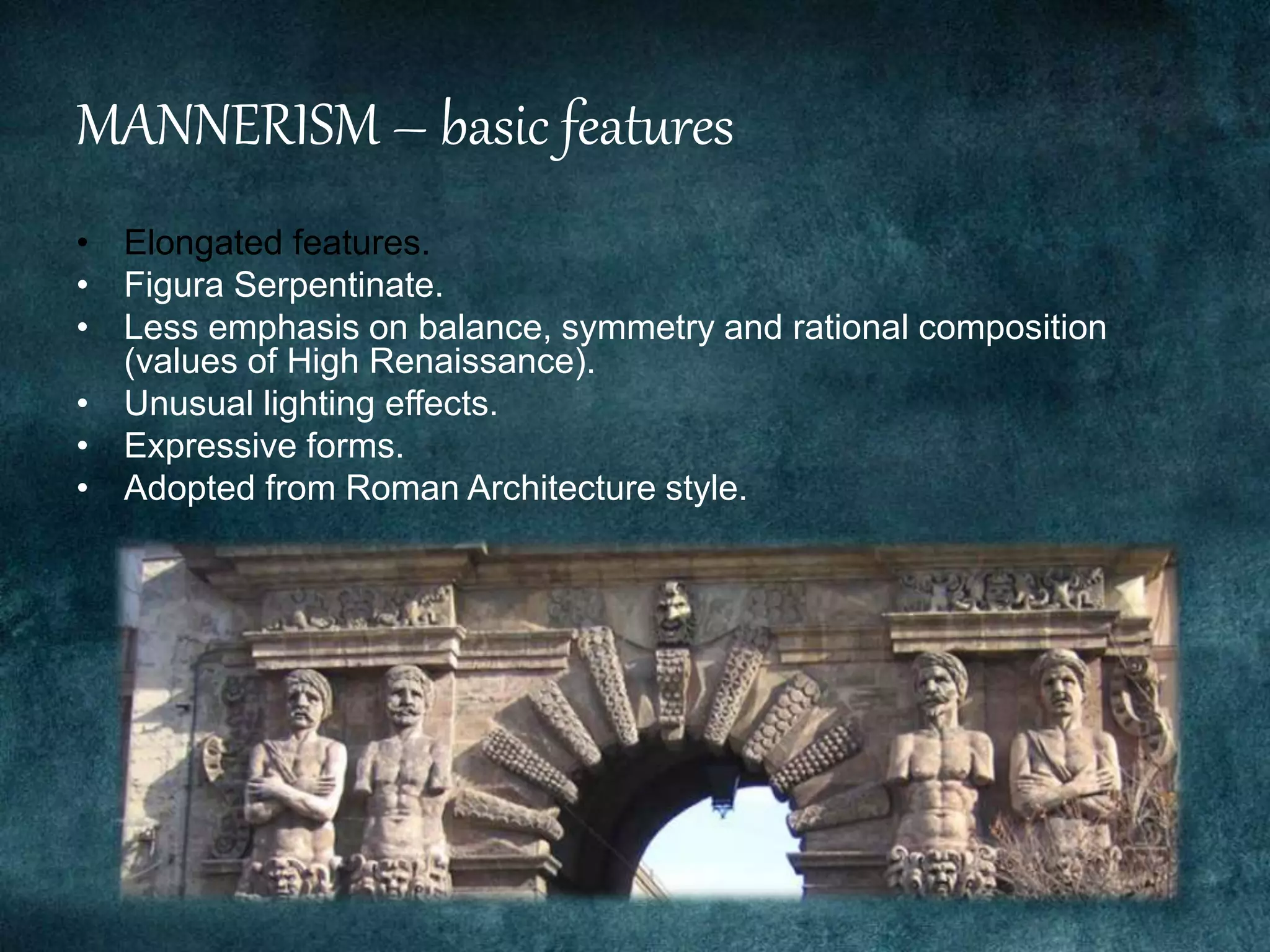
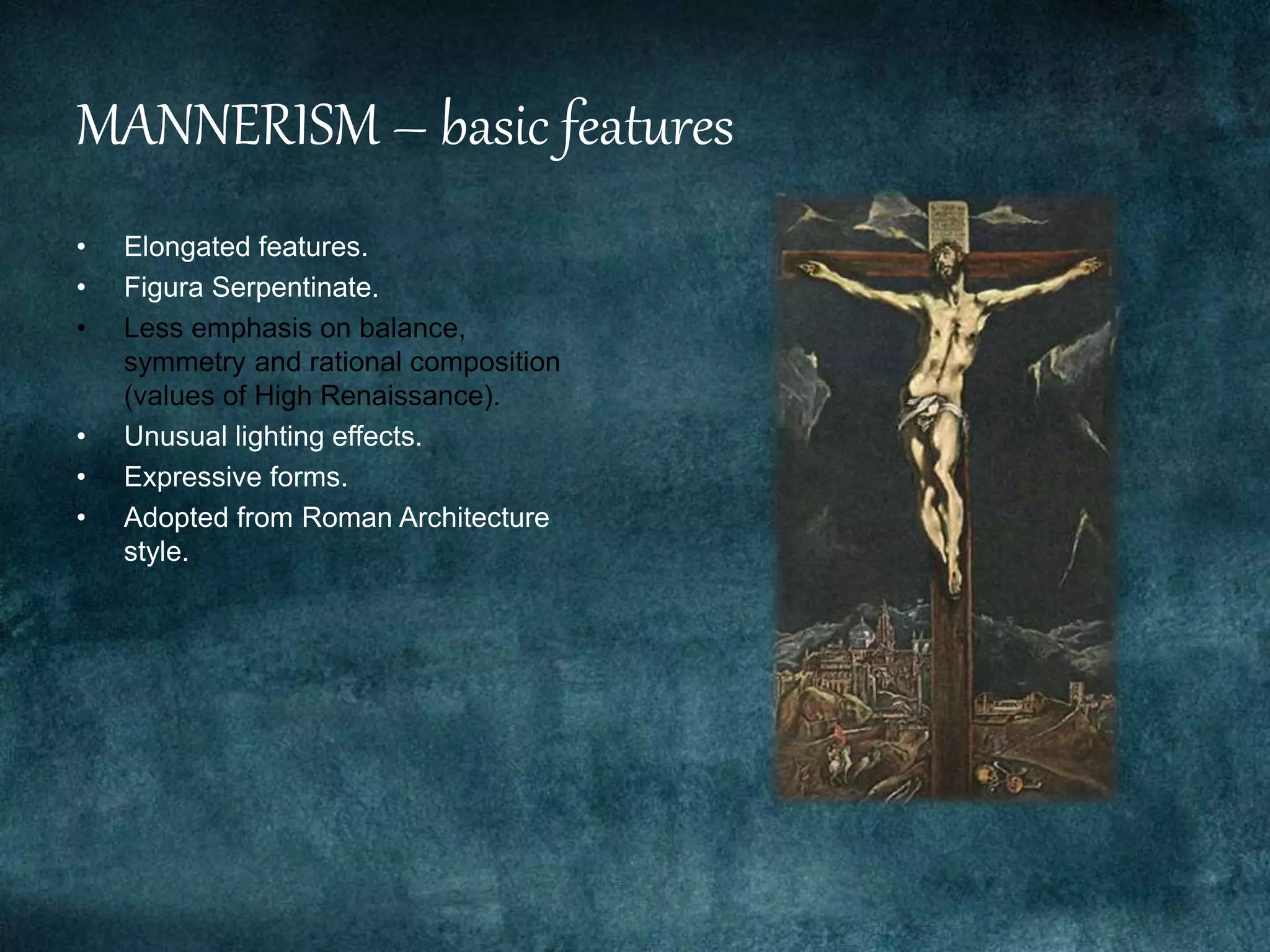
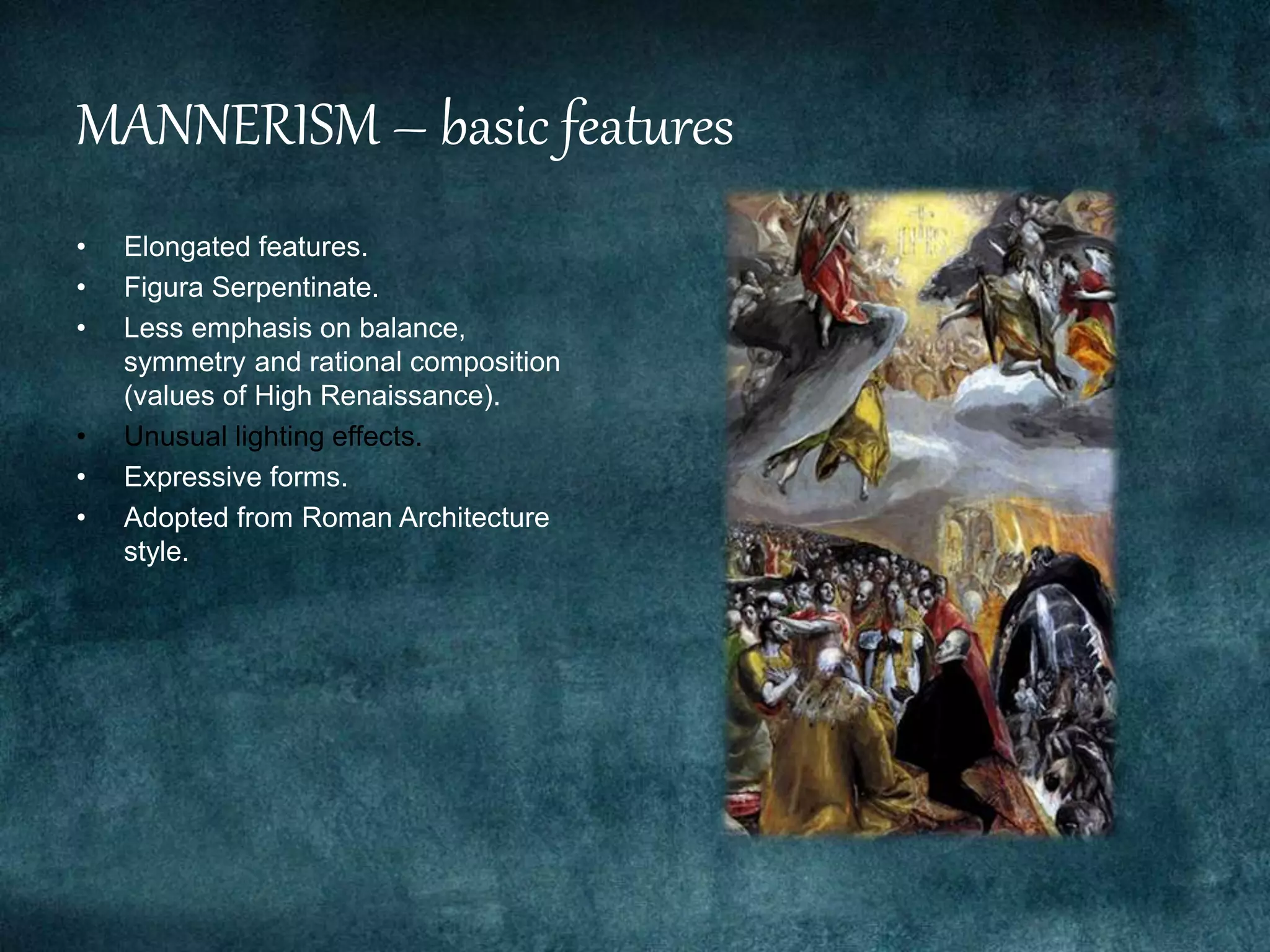
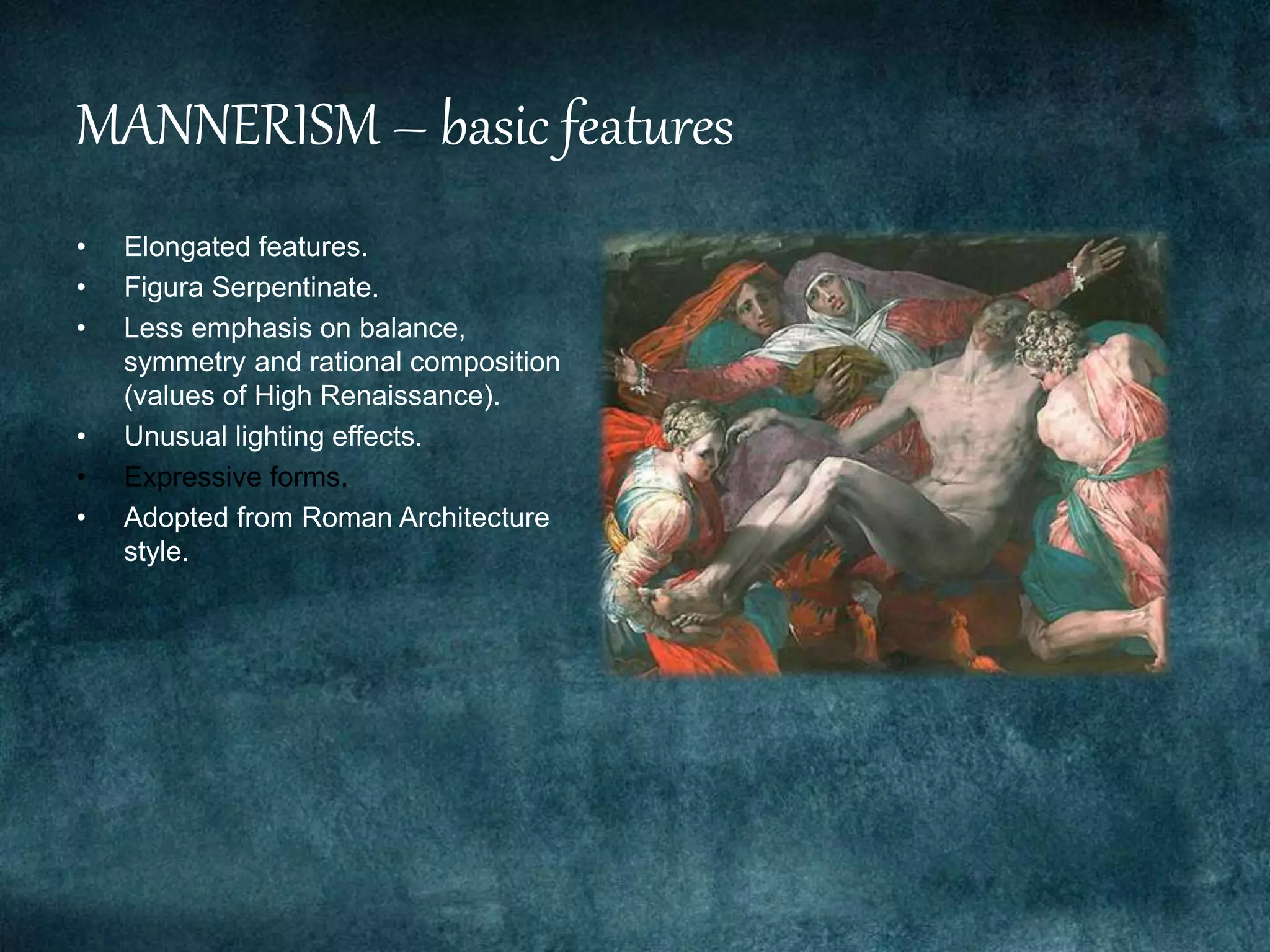
• Elongated features.
• Figura Serpentinate.
• Less emphasis on balance, symmetry and rational composition
(values of High Renaissance).
• Unusual lighting effects.
• Expressive forms.
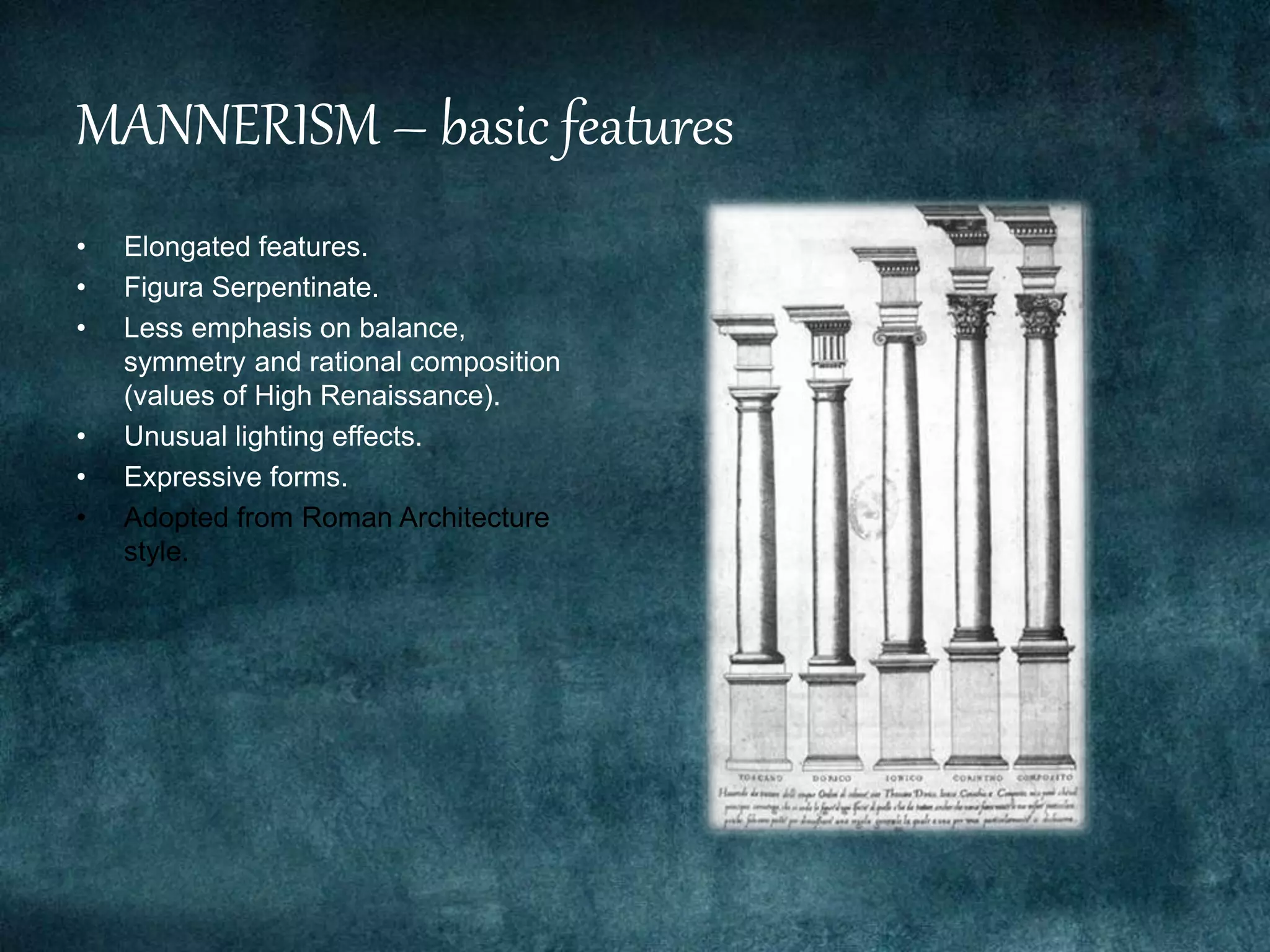
• Adopted from Roman Architecture style.
MANNERISM – basic features
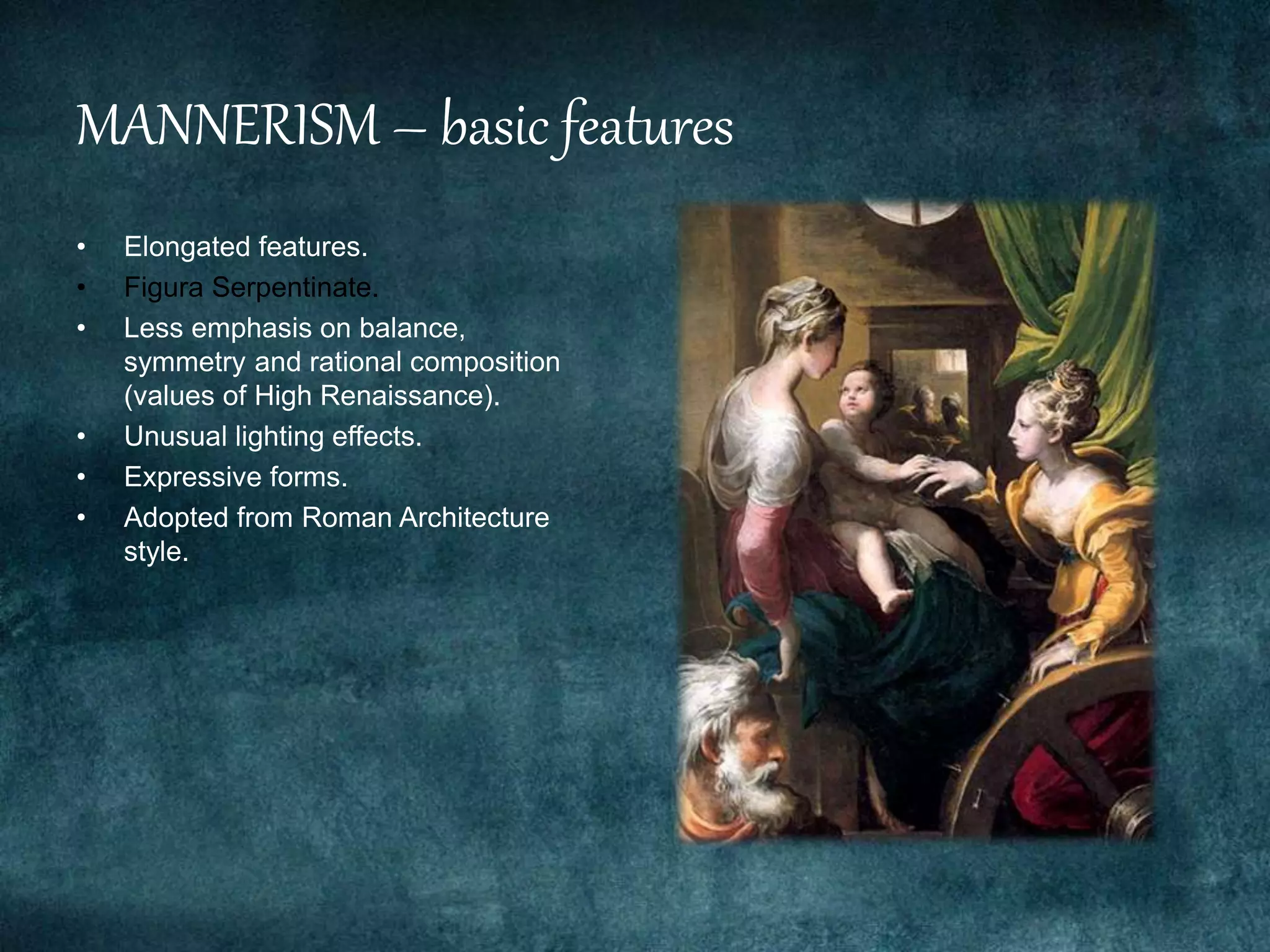
• Elongated features.
• Figura Serpentinate.
• Less emphasis on balance,
symmetry and rational composition
(values of High Renaissance).
• Unusual lighting effects.
• Expressive forms.
• Adopted from Roman Architecture
style.
MANNERISM – basic features
• Elongated features.
• Figura Serpentinate.
• Less emphasis on balance,
symmetry and rational composition
(values of High Renaissance).
• Unusual lighting effects.
• Expressive forms.
• Adopted from Roman Architecture
style.
MANNERISM – basic features
• Elongated features.
• Figura Serpentinate.
• Less emphasis on balance,
symmetry and rational composition
(values of High Renaissance).
• Unusual lighting effects.
• Expressive forms.
• Adopted from Roman Architecture
style.
MANNERISM – basic features
• Elongated features.
• Figura Serpentinate.
• Less emphasis on balance,
symmetry and rational composition
(values of High Renaissance).
• Unusual lighting effects.
• Expressive forms.
• Adopted from Roman Architecture
style.
MANNERISM – basic features
• Elongated features.
• Figura Serpentinate.
• Less emphasis on balance,
symmetry and rational composition
(values of High Renaissance).
• Unusual lighting effects.
• Expressive forms.
• Adopted from Roman Architecture
style.
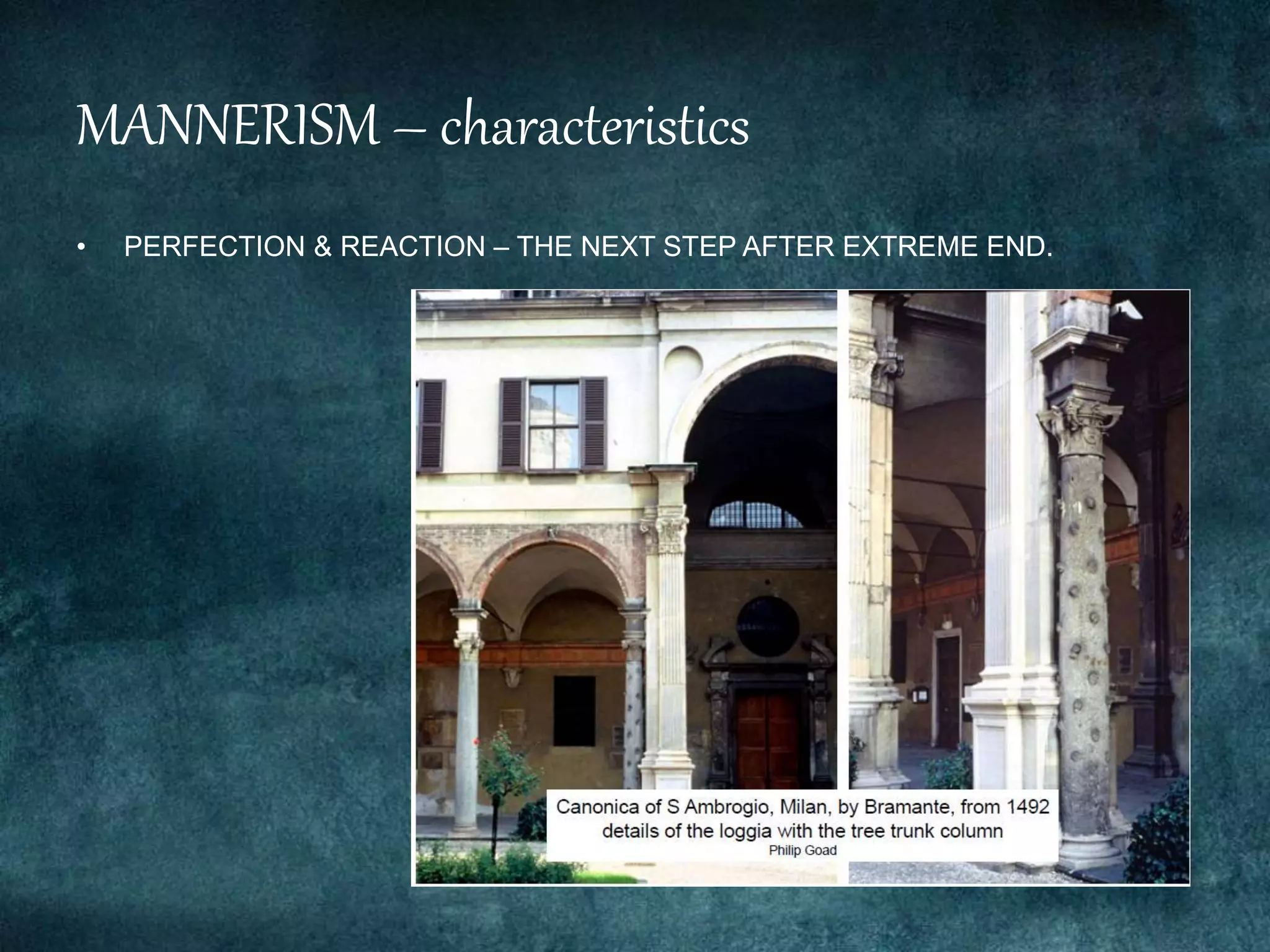
MANNERISM – characteristics
• PERFECTION & REACTION – THE NEXT STEP AFTER EXTREME END.
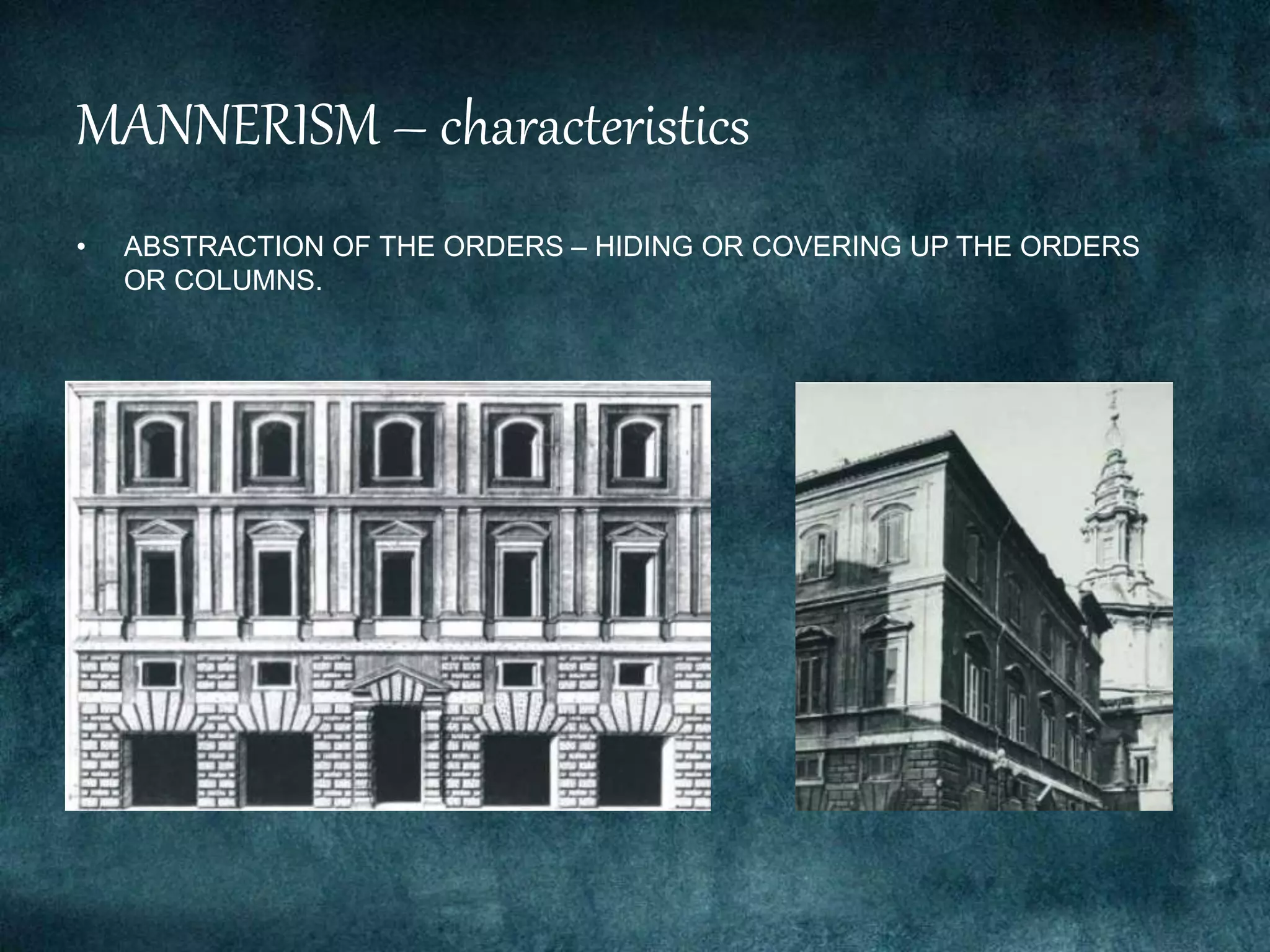
MANNERISM – characteristics
• ABSTRACTION OF THE ORDERS – HIDING OR COVERING UP THE ORDERS
OR COLUMNS.
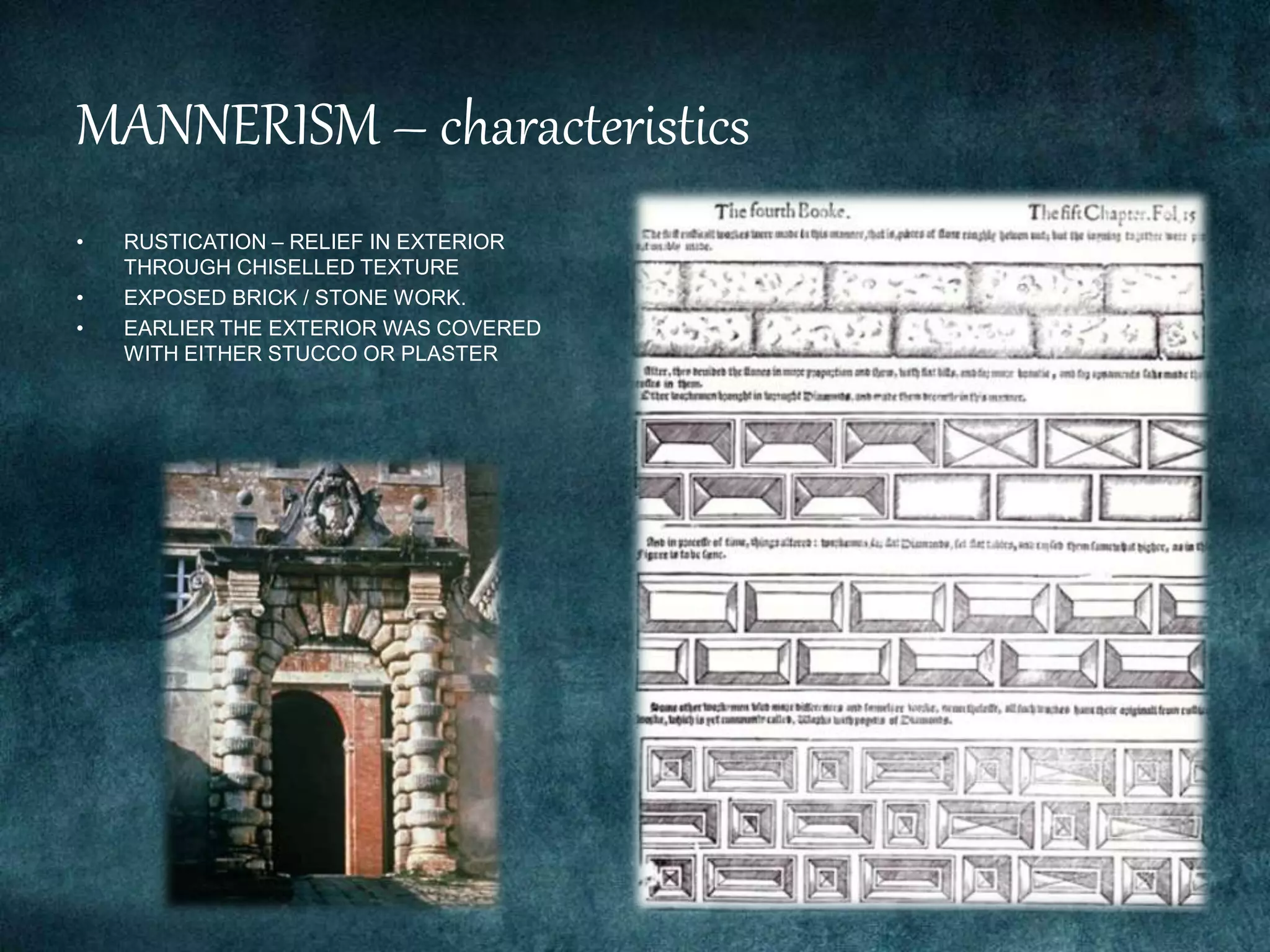
MANNERISM – characteristics
• RUSTICATION – RELIEF IN EXTERIOR
THROUGH CHISELLED TEXTURE
• EXPOSED BRICK / STONE WORK.
• EARLIER THE EXTERIOR WAS COVERED
WITH EITHER STUCCO OR PLASTER
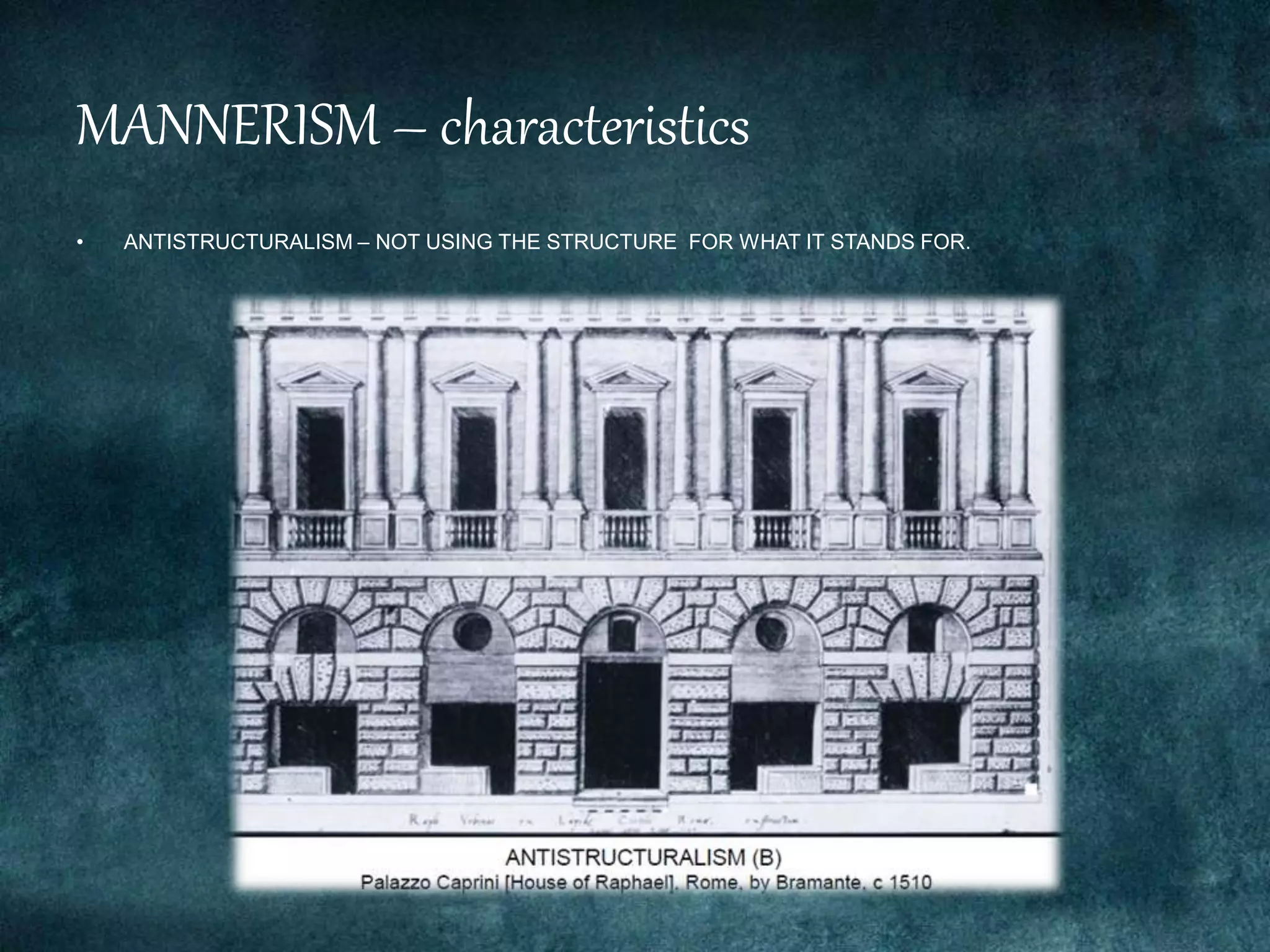
MANNERISM – characteristics
• ANTISTRUCTURALISM – NOT USING THE STRUCTURE FOR WHAT IT STANDS FOR.
MANNERISM – characteristics
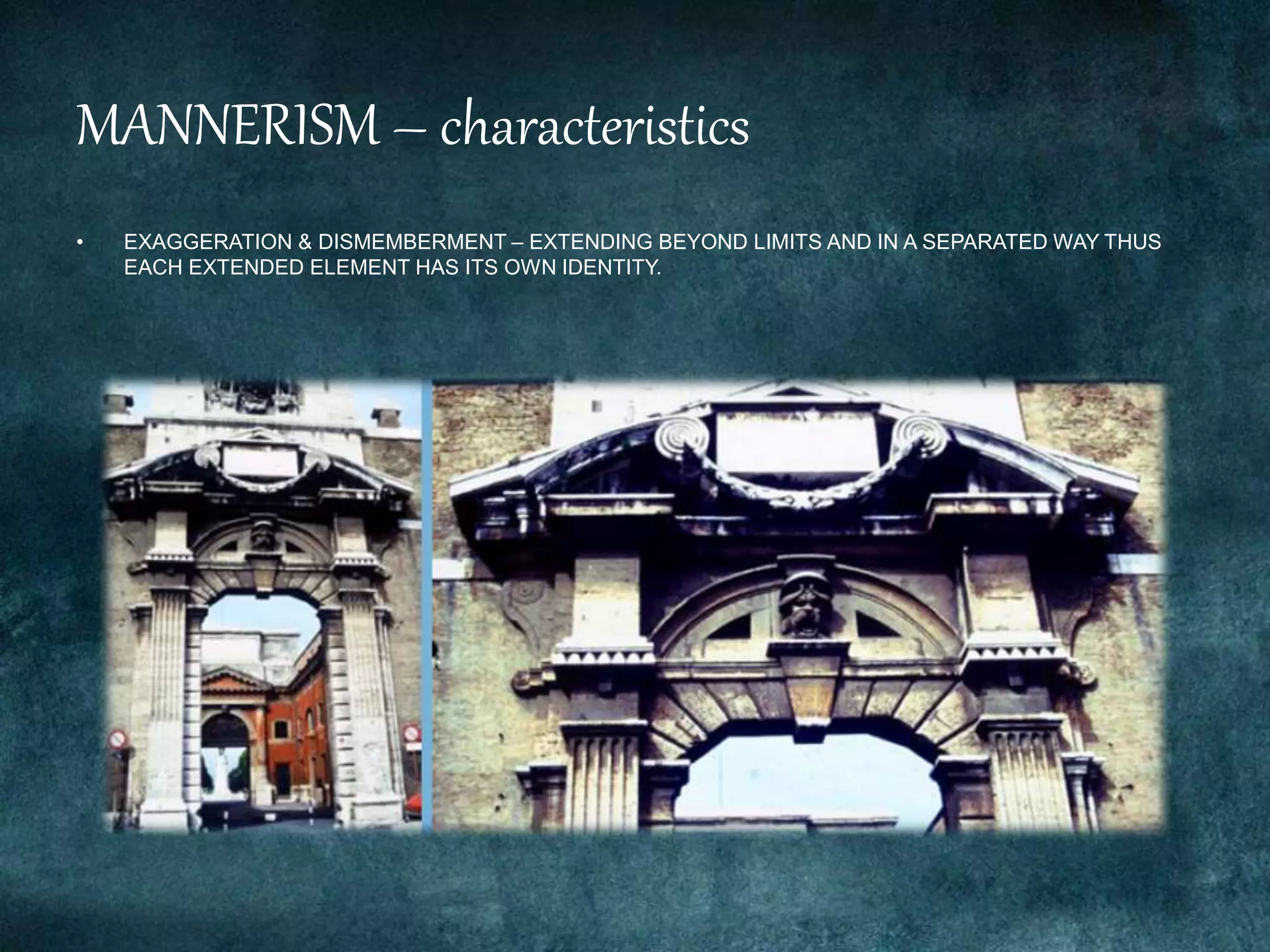
• EXAGGERATION & DISMEMBERMENT – EXTENDING BEYOND LIMITS AND IN A SEPARATED WAY THUS
EACH EXTENDED ELEMENT HAS ITS OWN IDENTITY.

Mannerism

  • 1.
    Presented By:- Farhan Asim VarshaKapoor Saumya Kamboj Prashant Awasthi Ankit Vaswani Pooja Pandey MANNERISM HISTORY OF ARCHITECTURE 2014-2015
  • 2.
    MANNERISM • Post RenaissancePre-Baroque • 16th century (1520-1590) • In Florence & Rome. • Evolved from Italian word ‘Maniera’ – ‘style’ or ‘way of working’. • Artificial style in contrast to the naturalism of the high renaissance. • Distortion of elements such as proportion and space. • Expressive forms of arts rather than classical forms. • Details out the lives and works of key artists of the Mannerist style. • Recognition of artistic elements of Mannerist painting, sculpture and architecture. • Irrational spaces.
  • 3.
    MANNERISM – basicfeatures • Elongated features. • Figura Serpentinate. • Less emphasis on balance, symmetry and rational composition (values of High Renaissance). • Unusual lighting effects. • Expressive forms. • Adopted from Roman Architecture style.
  • 4.
    MANNERISM – basicfeatures • Elongated features. • Figura Serpentinate. • Less emphasis on balance, symmetry and rational composition (values of High Renaissance). • Unusual lighting effects. • Expressive forms. • Adopted from Roman Architecture style.
  • 5.
    MANNERISM – basicfeatures • Elongated features. • Figura Serpentinate. • Less emphasis on balance, symmetry and rational composition (values of High Renaissance). • Unusual lighting effects. • Expressive forms. • Adopted from Roman Architecture style.
  • 6.
    MANNERISM – basicfeatures • Elongated features. • Figura Serpentinate. • Less emphasis on balance, symmetry and rational composition (values of High Renaissance). • Unusual lighting effects. • Expressive forms. • Adopted from Roman Architecture style.
  • 7.
    MANNERISM – basicfeatures • Elongated features. • Figura Serpentinate. • Less emphasis on balance, symmetry and rational composition (values of High Renaissance). • Unusual lighting effects. • Expressive forms. • Adopted from Roman Architecture style.
  • 8.
    MANNERISM – basicfeatures • Elongated features. • Figura Serpentinate. • Less emphasis on balance, symmetry and rational composition (values of High Renaissance). • Unusual lighting effects. • Expressive forms. • Adopted from Roman Architecture style.
  • 9.
    MANNERISM – characteristics •PERFECTION & REACTION – THE NEXT STEP AFTER EXTREME END.
  • 10.
    MANNERISM – characteristics •ABSTRACTION OF THE ORDERS – HIDING OR COVERING UP THE ORDERS OR COLUMNS.
  • 11.
    MANNERISM – characteristics •RUSTICATION – RELIEF IN EXTERIOR THROUGH CHISELLED TEXTURE • EXPOSED BRICK / STONE WORK. • EARLIER THE EXTERIOR WAS COVERED WITH EITHER STUCCO OR PLASTER
  • 12.
    MANNERISM – characteristics •ANTISTRUCTURALISM – NOT USING THE STRUCTURE FOR WHAT IT STANDS FOR.
  • 13.
    MANNERISM – characteristics •EXAGGERATION & DISMEMBERMENT – EXTENDING BEYOND LIMITS AND IN A SEPARATED WAY THUS EACH EXTENDED ELEMENT HAS ITS OWN IDENTITY.

Editor's Notes

  • #2 To view this presentation, first, turn up your volume and second, launch the self-running slide show.