A Seminar on 
HPLC Detectors 
1
INDEX 
 Introduction 
 Types 
 Characterization 
 Absorbance detector 
 Fluorescence detector 
 Refractive index 
 ELSD 
 Electrical conductivity detector 
 Electrochemical detector 
2
H 
P 
3 
igh 
erformance 
Liquid 
Chromatograph 
y
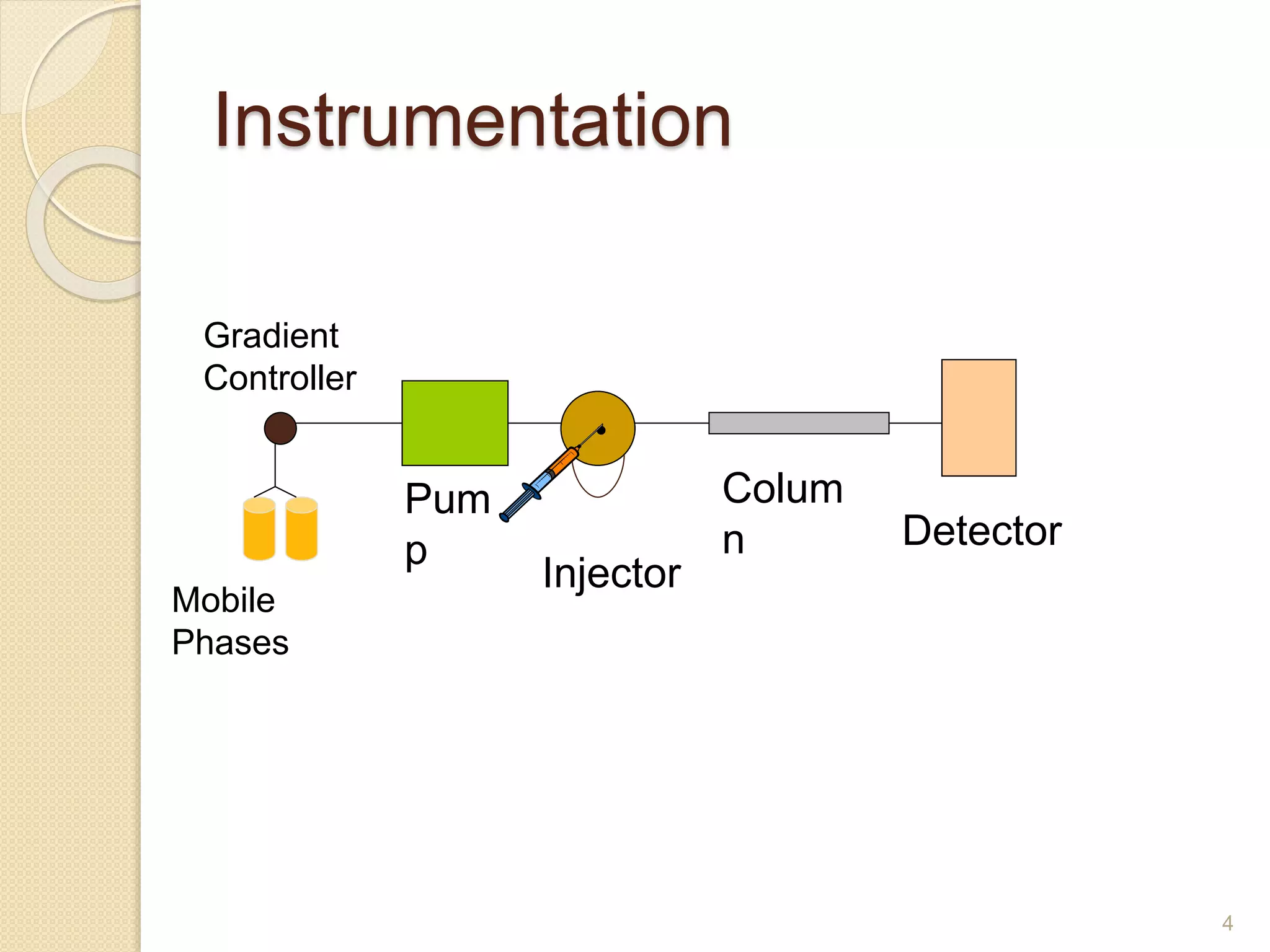
Instrumentation 
4 
Pum 
p 
Injector 
Colum 
n Detector 
Gradient 
Controller 
Mobile 
Phases 
•
What is detector 
 An instrument use to detect or 
observe 
 Sensitive universal detector for HPLC 
has not devised yet 
 Selection of detector is on the basis of 
analyte or sample under detection 
5
Detection in HPLC 
HPLC Detectors were common laboratory 
instrument 
◦ Usually a narrow linear range 
 Must be solvent -compatible, stable etc. 
 Universal--Respond to all analytes 
 Analyte Specific 
◦ Respond to specific properties of analytes 
 Non-destructive & Destructive 
6
1982 study 
 365 Papers 
 UV absorbance detector------71% 
 Fluorescence detector------- 15% 
 Refractive Index---------------- 5.4% 
 Electrochemical ----------------4.3% 
 Other measurements----------4.3% 
7
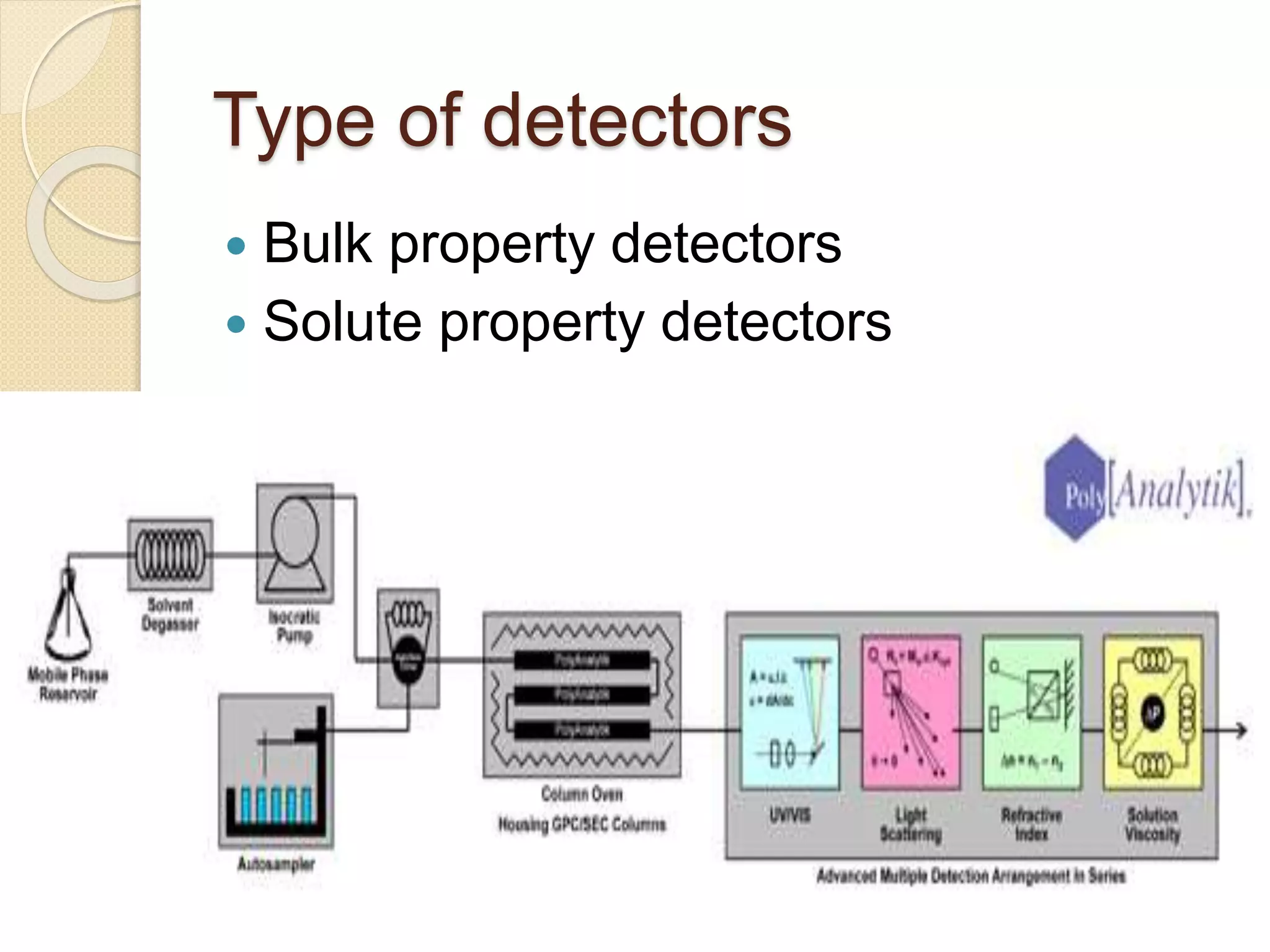
Type of detectors 
 Bulk property detectors 
 Solute property detectors 
8
Characterization of detector 
 Adequate sensitivity 
 Stability and reproducibility 
 Wide linear dynamic range 
 Short response time 
 Minimum volume detected easily to 
reduce zero 
 Similarity in response towards all 
analytes 
 Non-destructive 
9
Absorbance detectors 
UV/Visible detectors 
 Solute property detector 
 Three types 
Fixed wavelength detector 
Variable wavelength detector 
Diode array detector 
10
Properties of Absorbance 
Detector 
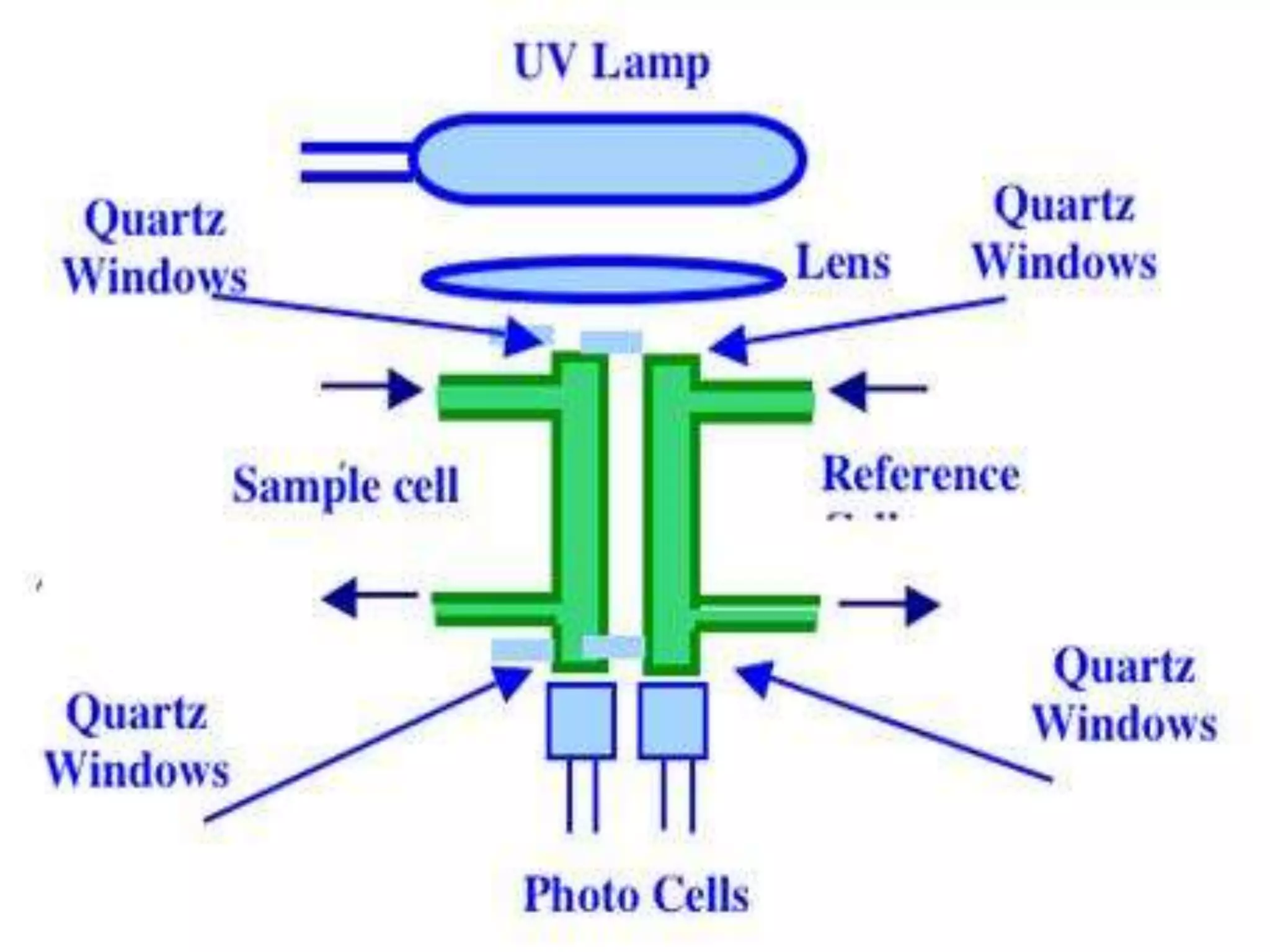
 Typical Z shaped. 
 Flow through cell for absorbance 
measurements on eluents. 
 Minimize extra column band 
broadening 
 Pressure less than 600psi. 
 Matched photoelectric detector. 
11
12
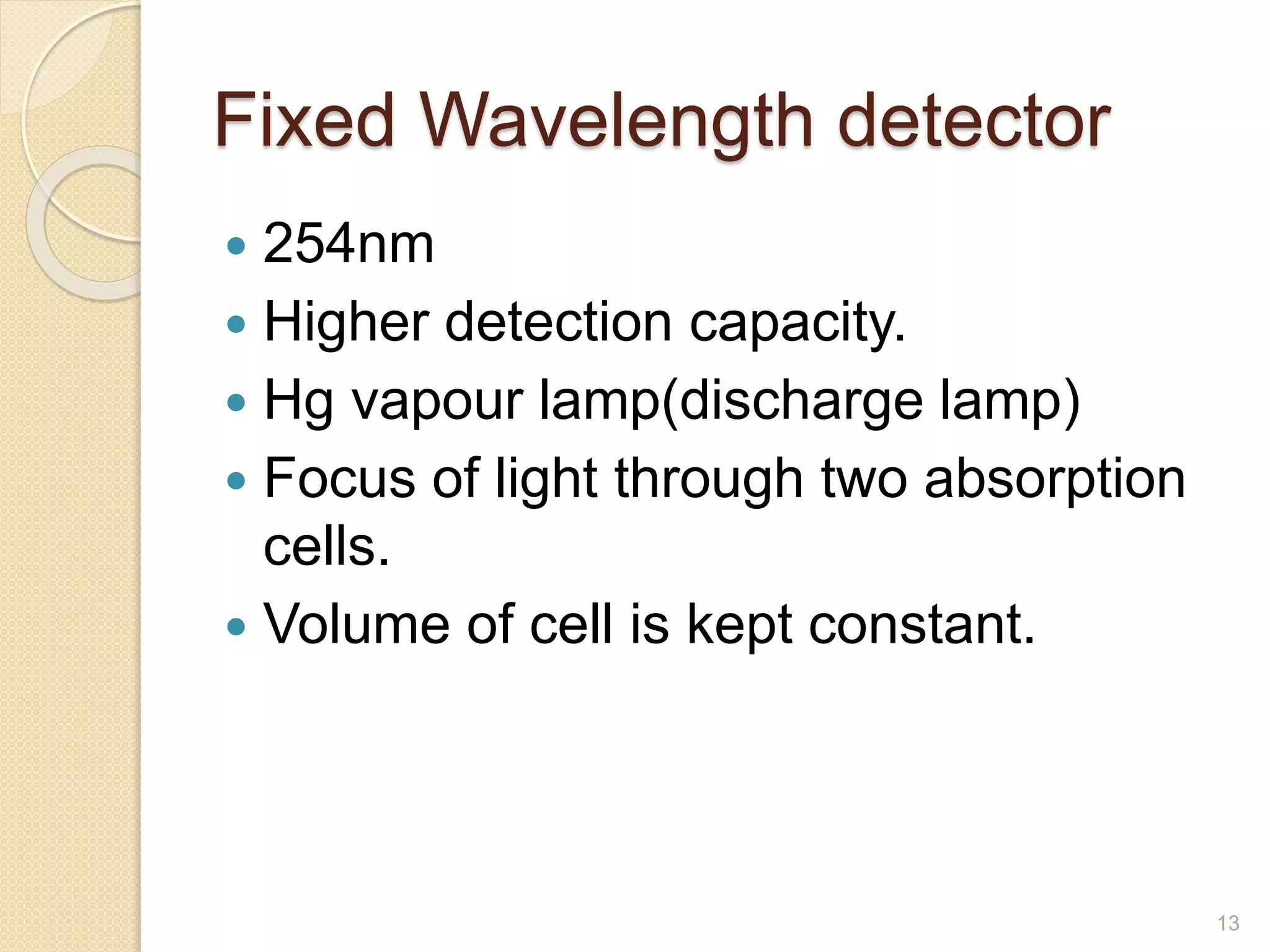
Fixed Wavelength detector 
 254nm 
 Higher detection capacity. 
 Hg vapour lamp(discharge lamp) 
 Focus of light through two absorption 
cells. 
 Volume of cell is kept constant. 
13
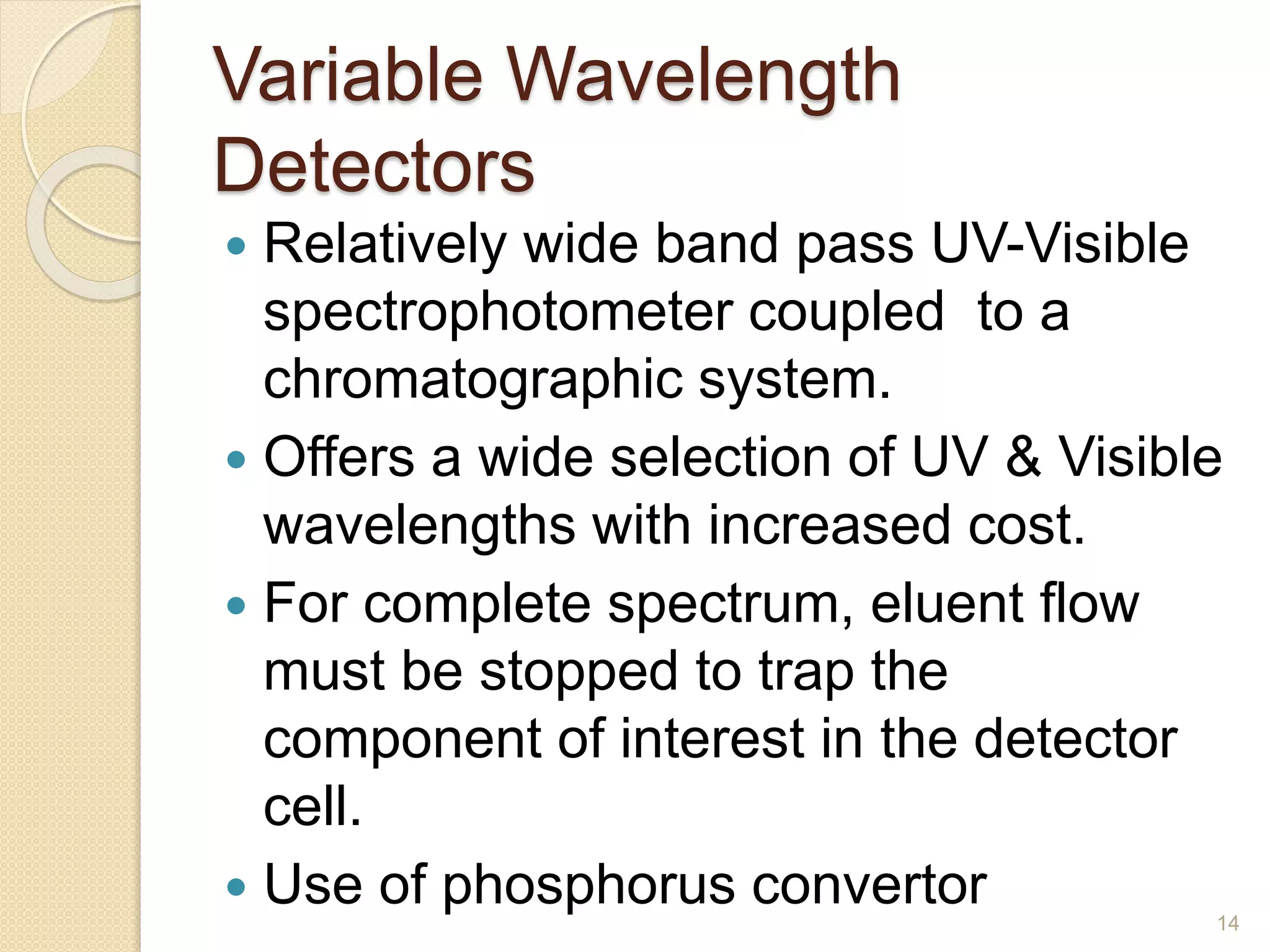
Variable Wavelength 
Detectors 
 Relatively wide band pass UV-Visible 
spectrophotometer coupled to a 
chromatographic system. 
 Offers a wide selection of UV & Visible 
wavelengths with increased cost. 
 For complete spectrum, eluent flow 
must be stopped to trap the 
component of interest in the detector 
cell. 
 Use of phosphorus convertor 
14
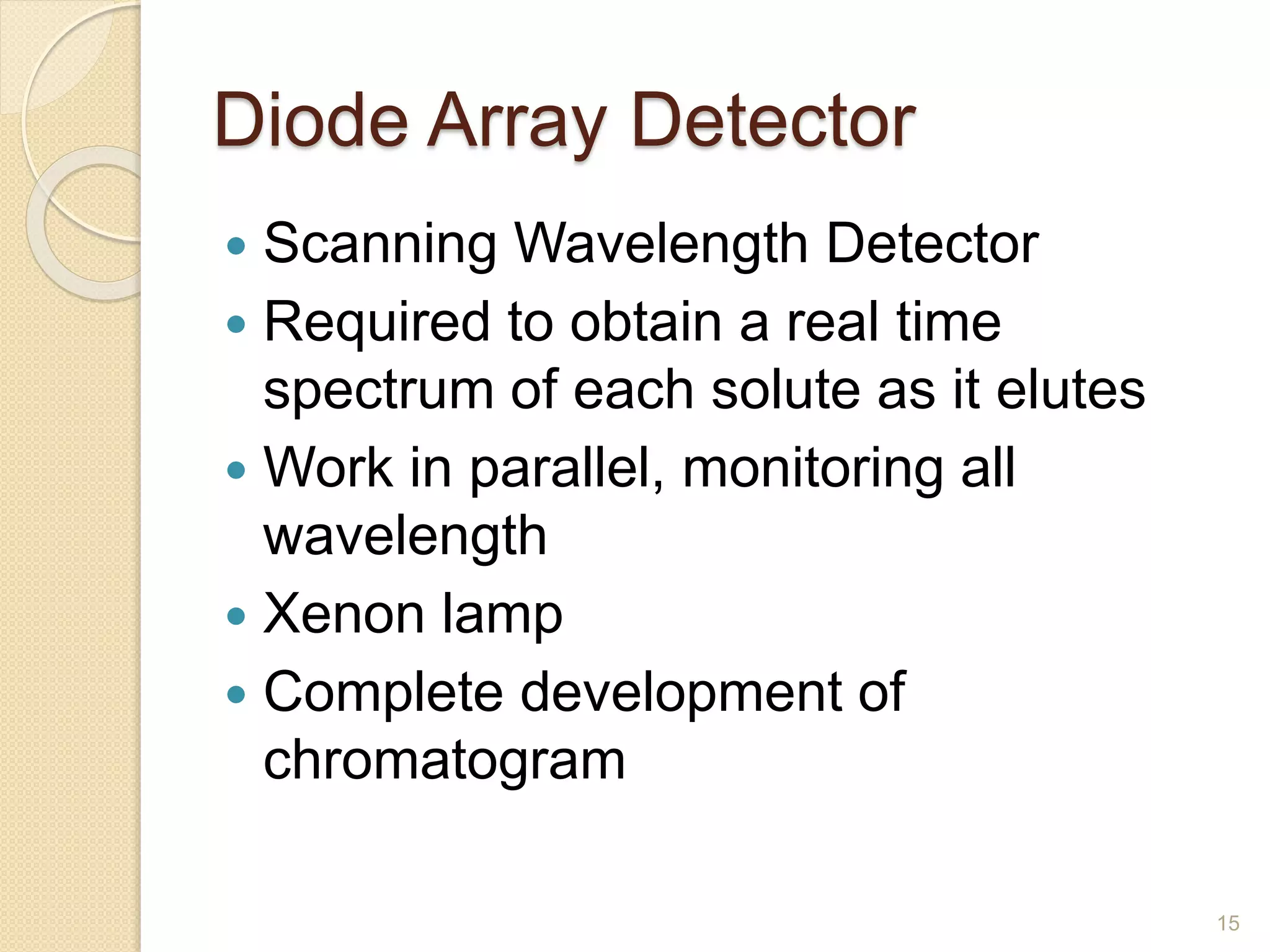
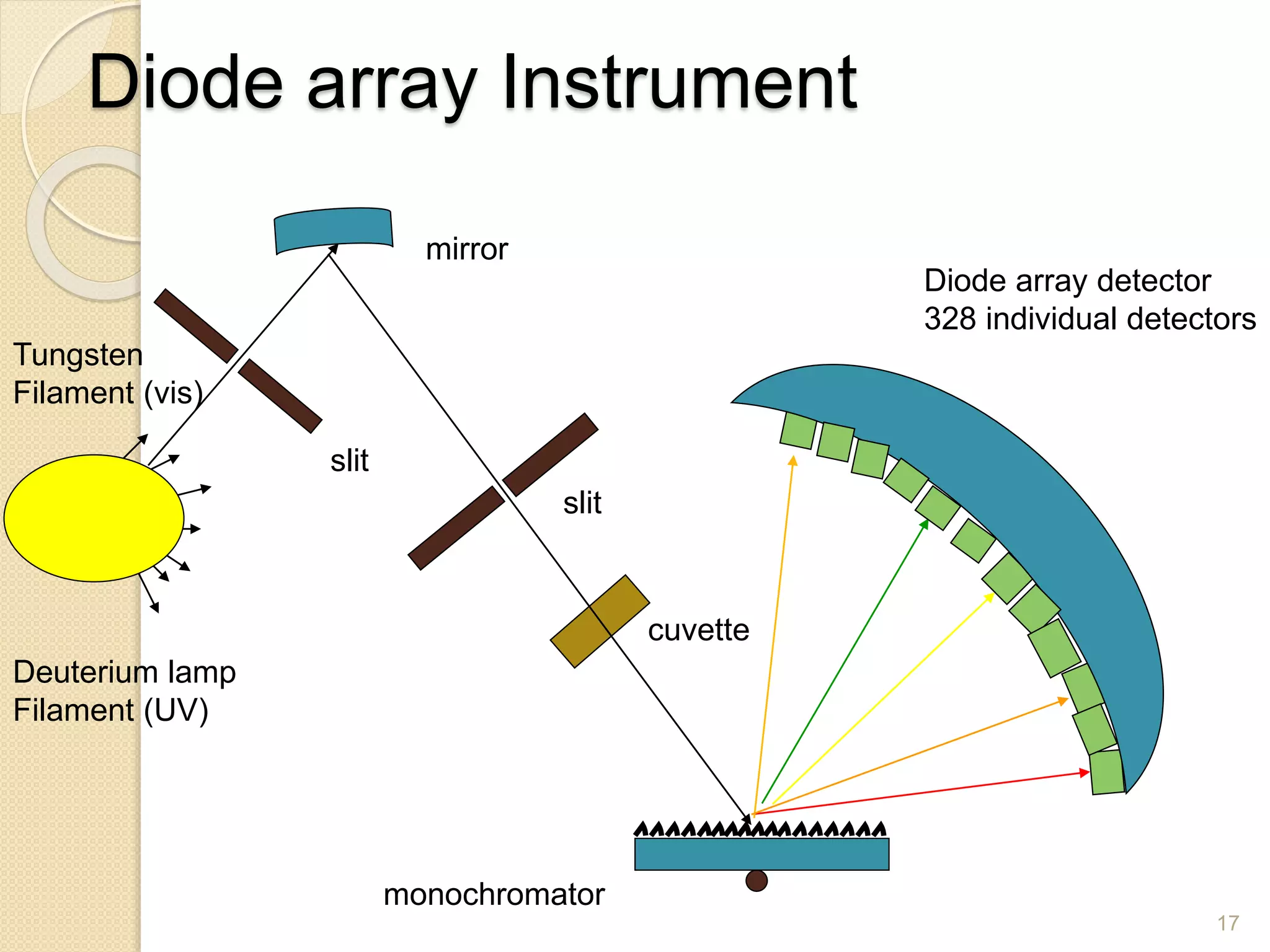
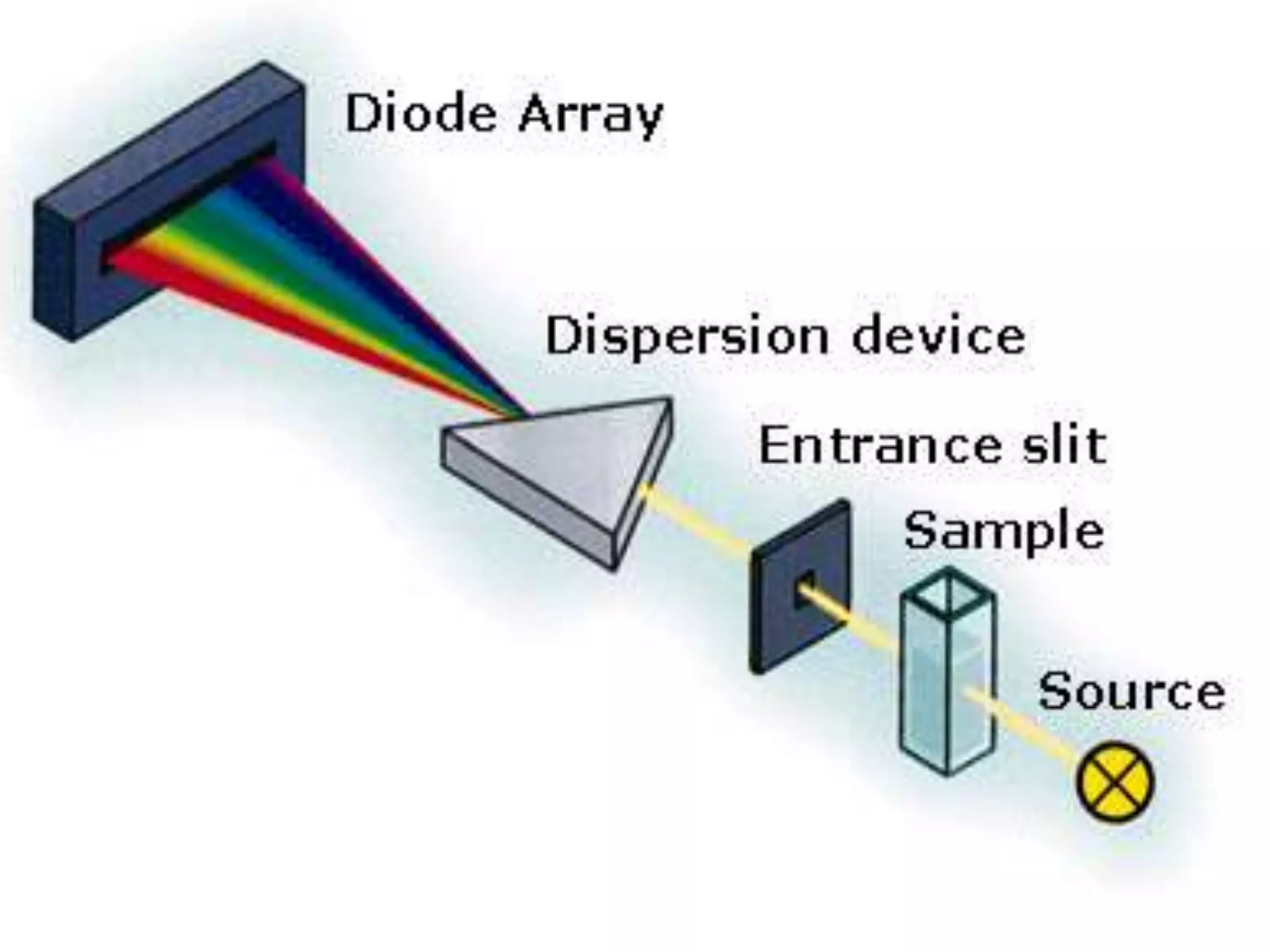
Diode Array Detector 
 Scanning Wavelength Detector 
 Required to obtain a real time 
spectrum of each solute as it elutes 
 Work in parallel, monitoring all 
wavelength 
 Xenon lamp 
 Complete development of 
chromatogram 
15
16
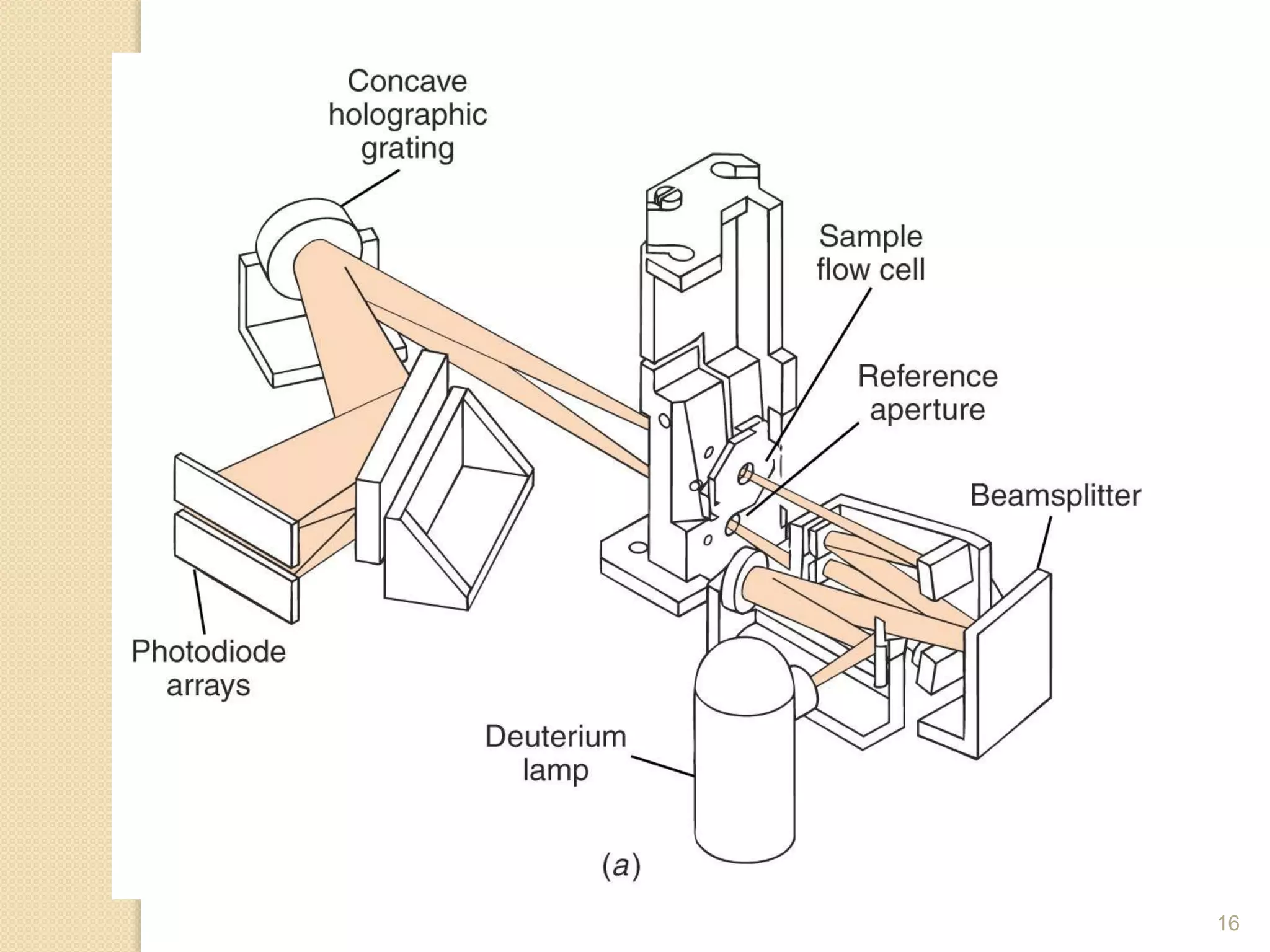
Diode array Instrument 
17 
cuvette 
Tungsten 
Filament (vis) 
slit 
Diode array detector 
328 individual detectors 
monochromator 
Deuterium lamp 
Filament (UV) 
slit 
mirror
18
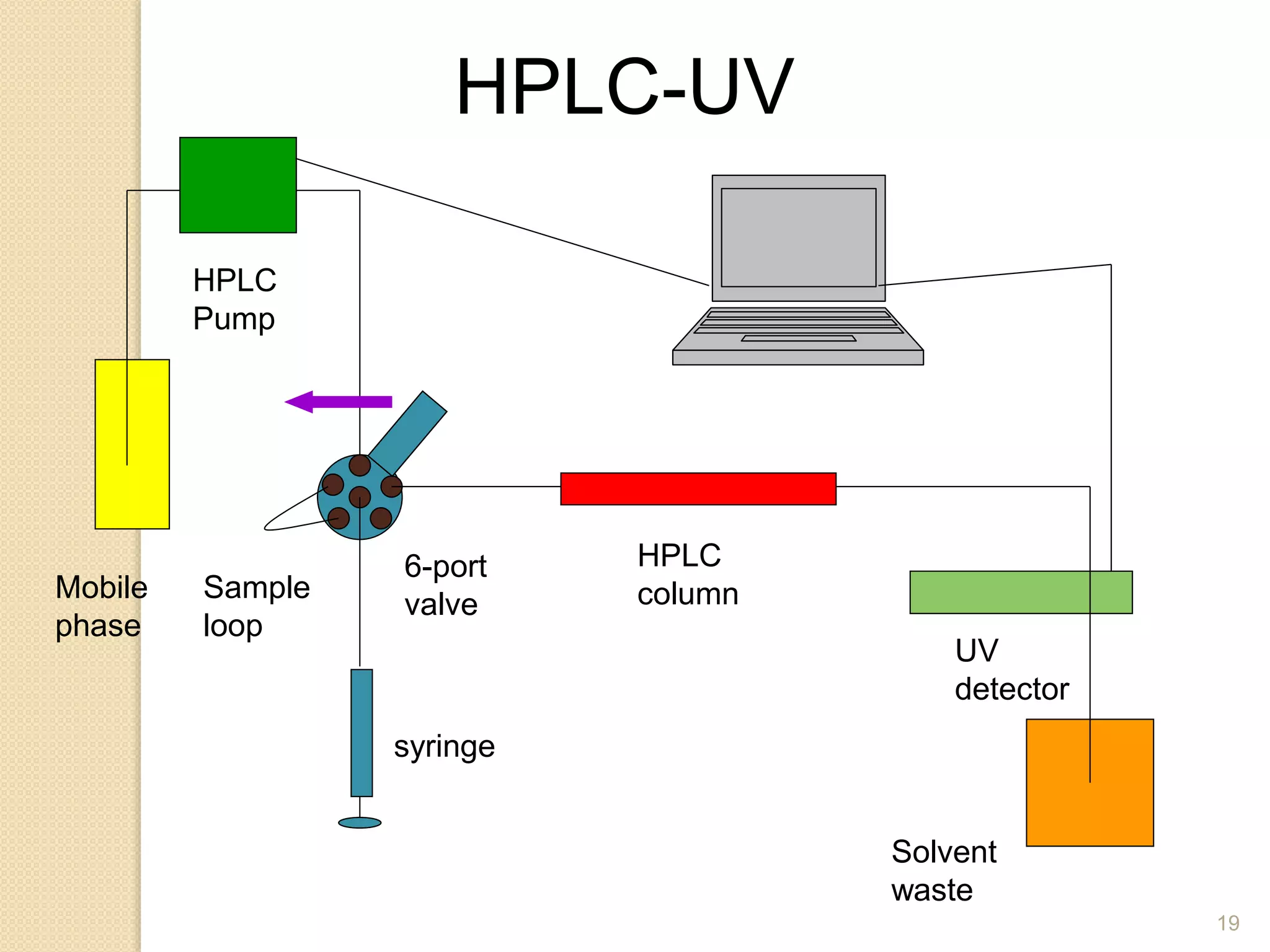
HPLC-UV 
Mobile 
phase 
HPLC 
Pump 
6-port 
valve 
syringe 
Sample 
loop 
HPLC 
column 
UV 
detector 
Solvent 
waste 
19
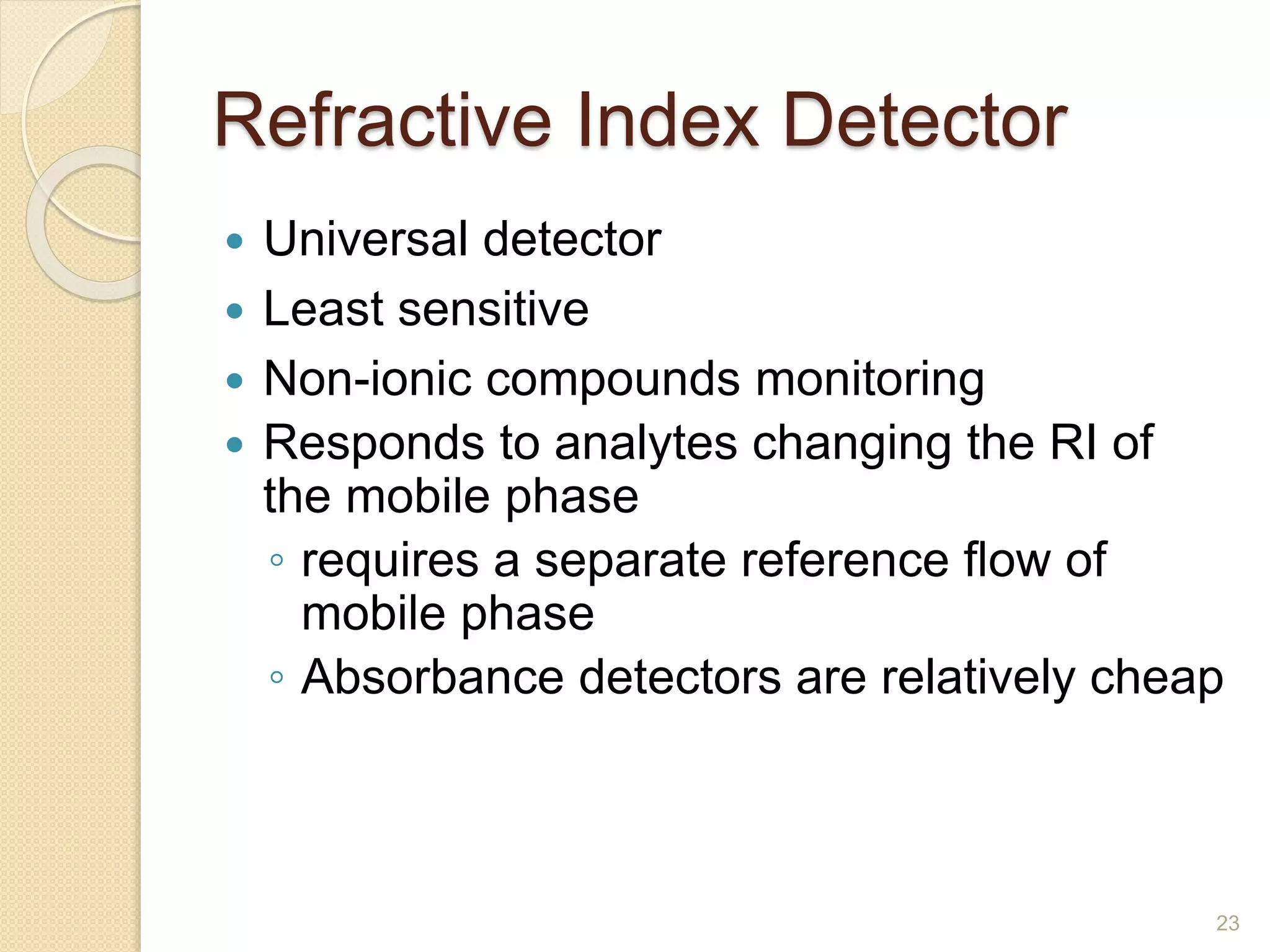
Fluorescence Detector 
 Detect those materials which will 
fluoresce or appropriate derivatisation 
made to fluorescence. 
 UV lamp provides the excitation 
radiation. 
 Light is focused by the quartz lens 
through the cell and another lens 
situated normal to incident light and 
focuses the fluorescent light on the 
photo cell. 
20
Contd……… 
 In a more sophisticated detector, the 
fluorescence spectrometer detector, a 
combination of 
 Ellipsoidal mirror 
 Toroidal mirror 
 Gratings 
 Beam splitter 
 Photocell 
21
excitation 
Mobile phase 
Excited state 
emission 
(S1) 
(S2) 
(S3) 
Ground state(S0) 
Hν (fluorescence) 
22
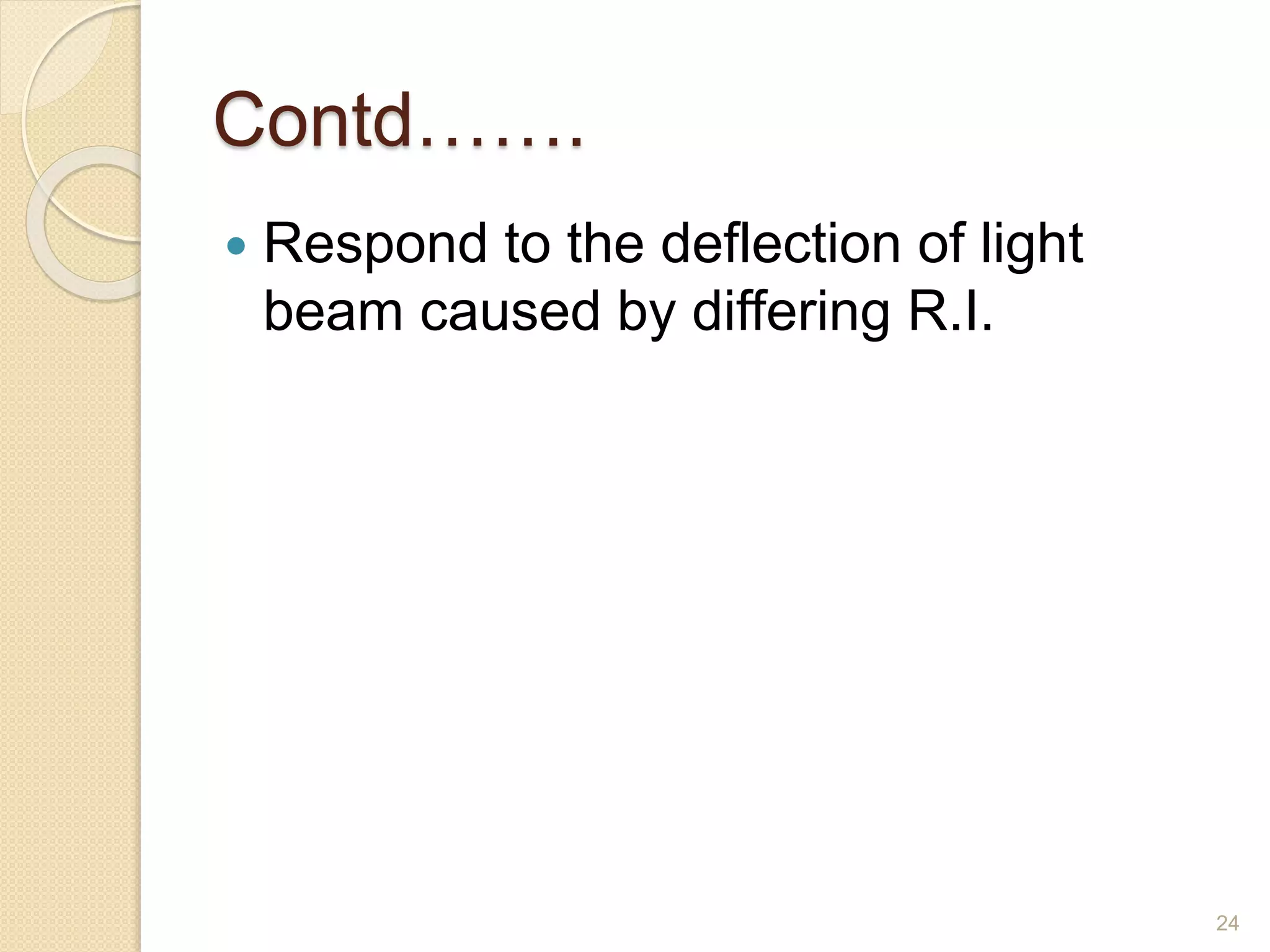
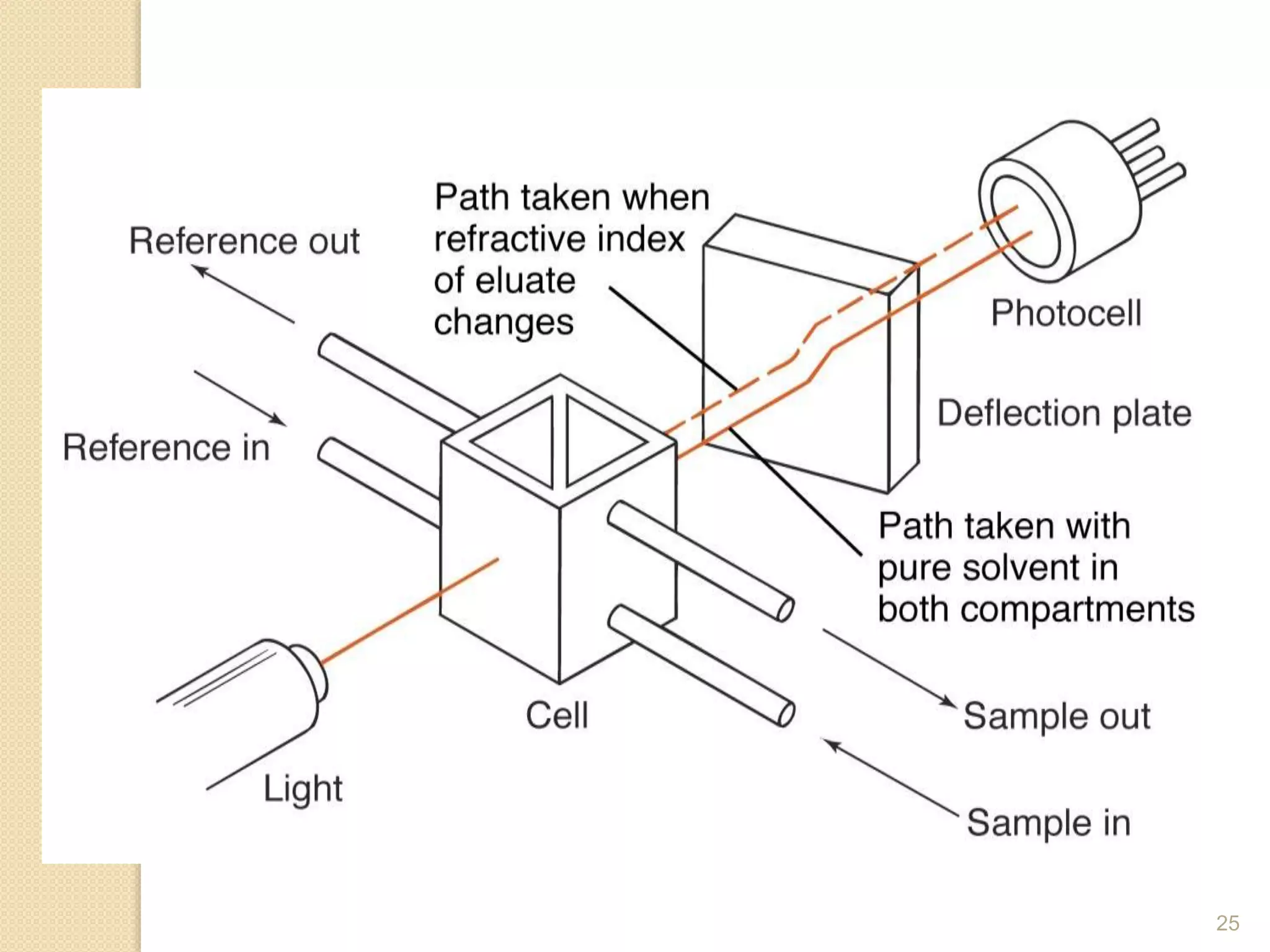
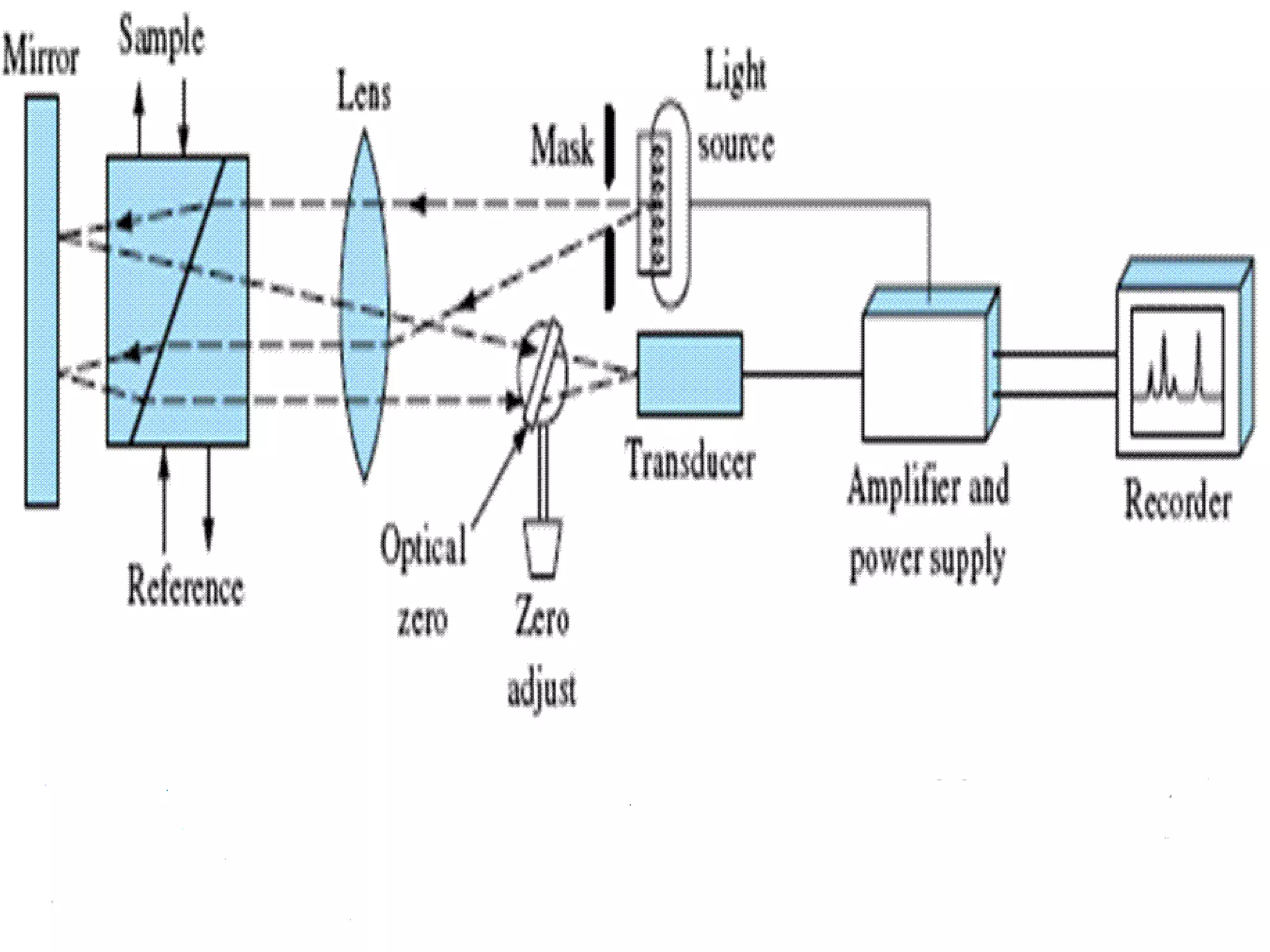
Refractive Index Detector 
 Universal detector 
 Least sensitive 
 Non-ionic compounds monitoring 
 Responds to analytes changing the RI of 
the mobile phase 
◦ requires a separate reference flow of 
mobile phase 
◦ Absorbance detectors are relatively cheap 
23
Contd……. 
 Respond to the deflection of light 
beam caused by differing R.I. 
24
25
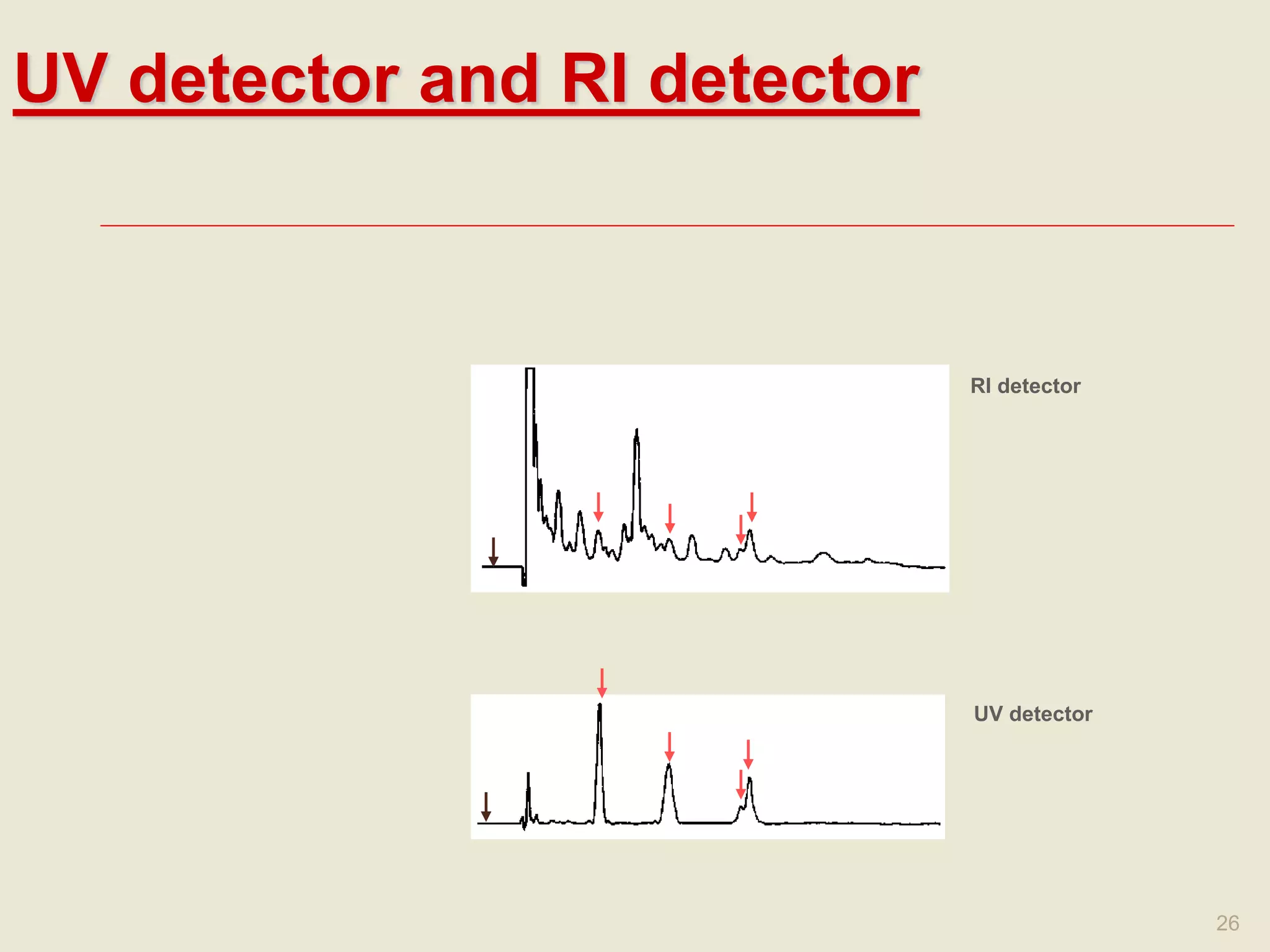
RI detector 
UV detector 
26 
UV detector and RI detector
27
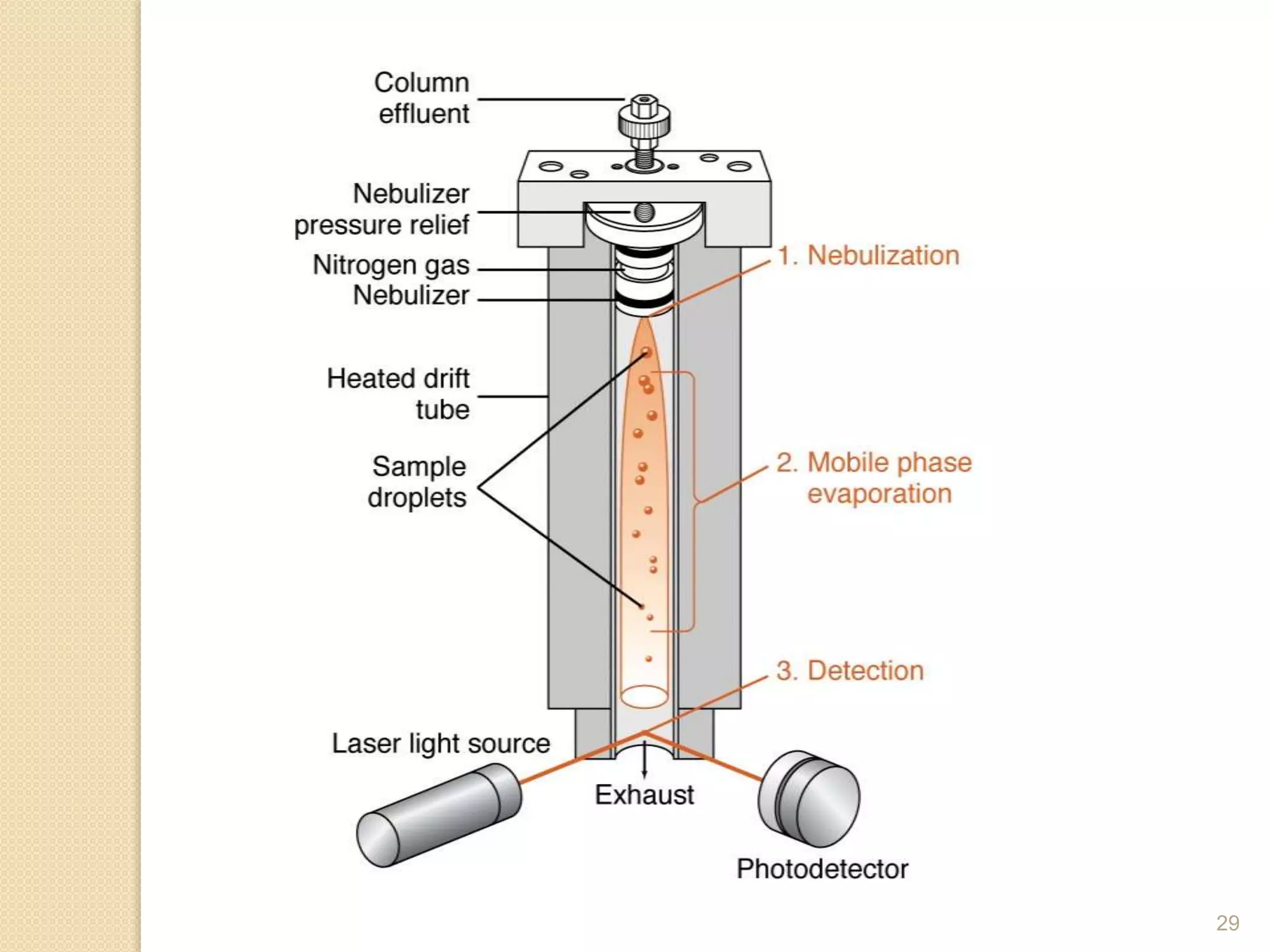
ELSD (Evaporative Light 
Scattering Detector) 
 Universal, destructive 
 Useful for large molecules and wide linear 
range. 
 Analytes are de-solvated in the detector. 
 Molecules pass through a large cuvette for 
a UV-VIS instrument. 
 The reduction in light intensity detected 
(due to scattering by the analytes) is 
measured. 
28
29
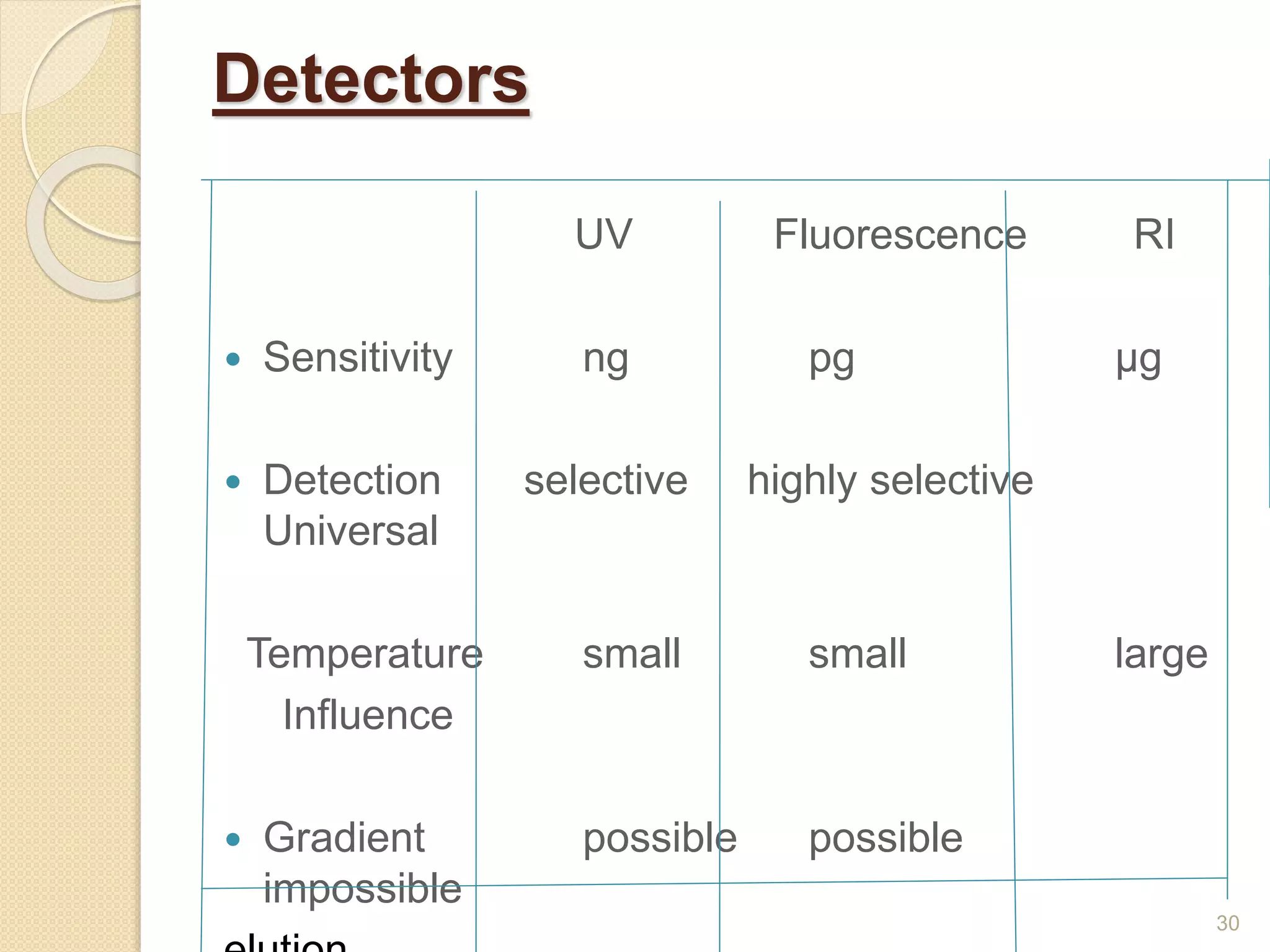
Detectors 
UV Fluorescence RI 
 Sensitivity ng pg μg 
 Detection selective highly selective 
Universal 
Temperature small small large 
Influence 
 Gradient possible possible 
impossible 
elution 
30
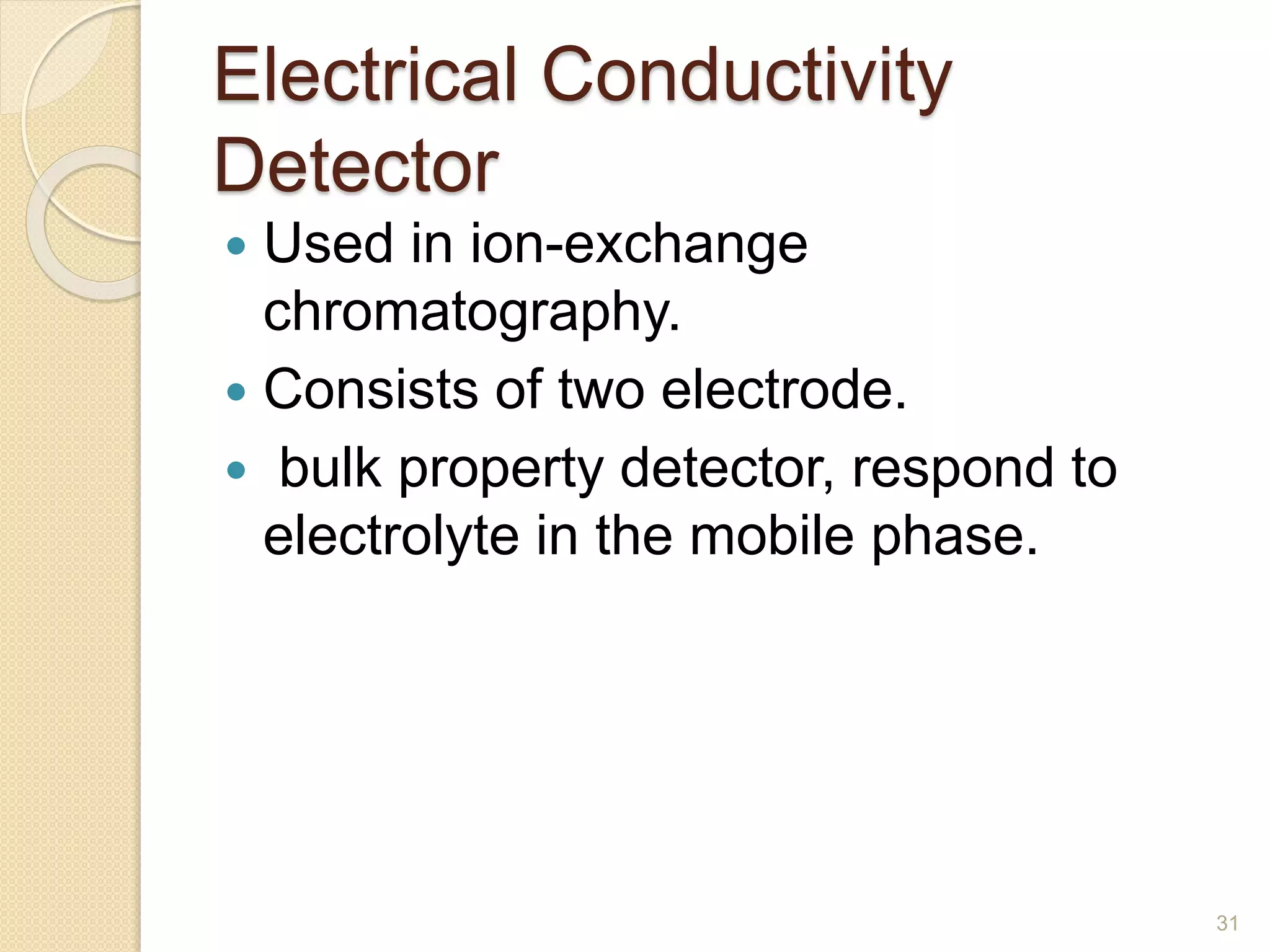
Electrical Conductivity 
Detector 
 Used in ion-exchange 
chromatography. 
 Consists of two electrode. 
 bulk property detector, respond to 
electrolyte in the mobile phase. 
31
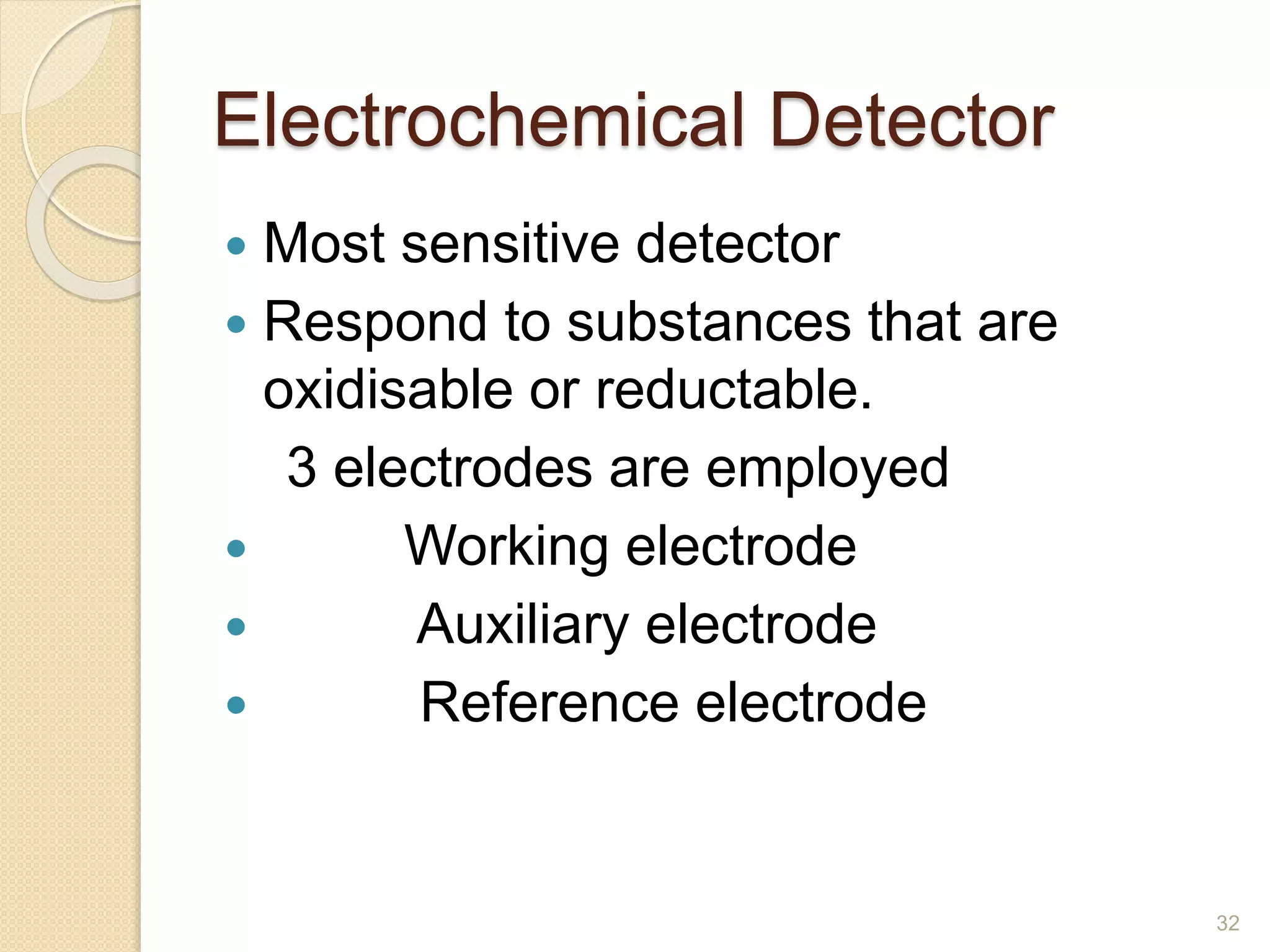
Electrochemical Detector 
 Most sensitive detector 
 Respond to substances that are 
oxidisable or reductable. 
3 electrodes are employed 
 Working electrode 
 Auxiliary electrode 
 Reference electrode 
32
REFERENCES 
 Chatwal R.Gurdeep, Anand K.Sham, 
Instrumental method of analysis 
2.625-2.626 
 Williards,Merritt,Dean,Settle 
Instrumental method of analysis 600- 
608 
 http://www.cem.msu.edu/~cem333/We 
ek16.pdf 
 Beckett A.H., Stenlake J.B. Practical 
Pharmaceutical chemistry 4th ed.,157& 
247 
33
Contd…. 
 Munson W.james Part-B vol.-2. 
Modern method of Pharmaceutical 
analysis Pg-73-77/ 
 WWW.Chromatography%20- 
%20Introductory%20theory.htm 
 Practical HPLC methods vol.2 
 Harvey David ,Modern analytical 
Chemistry pg-584-586 
34
Contd……. 
35 
 Levin S. Dr. Detection Qualification 
and types of detector used in HPLC
36 
THANK YOU

Detectors hplc

  • 1.
    A Seminar on HPLC Detectors 1
  • 2.
    INDEX  Introduction  Types  Characterization  Absorbance detector  Fluorescence detector  Refractive index  ELSD  Electrical conductivity detector  Electrochemical detector 2
  • 3.
    H P 3 igh erformance Liquid Chromatograph y
  • 4.
    Instrumentation 4 Pum p Injector Colum n Detector Gradient Controller Mobile Phases •
  • 5.
    What is detector  An instrument use to detect or observe  Sensitive universal detector for HPLC has not devised yet  Selection of detector is on the basis of analyte or sample under detection 5
  • 6.
    Detection in HPLC HPLC Detectors were common laboratory instrument ◦ Usually a narrow linear range  Must be solvent -compatible, stable etc.  Universal--Respond to all analytes  Analyte Specific ◦ Respond to specific properties of analytes  Non-destructive & Destructive 6
  • 7.
    1982 study 365 Papers  UV absorbance detector------71%  Fluorescence detector------- 15%  Refractive Index---------------- 5.4%  Electrochemical ----------------4.3%  Other measurements----------4.3% 7
  • 8.
    Type of detectors  Bulk property detectors  Solute property detectors 8
  • 9.
    Characterization of detector  Adequate sensitivity  Stability and reproducibility  Wide linear dynamic range  Short response time  Minimum volume detected easily to reduce zero  Similarity in response towards all analytes  Non-destructive 9
  • 10.
    Absorbance detectors UV/Visibledetectors  Solute property detector  Three types Fixed wavelength detector Variable wavelength detector Diode array detector 10
  • 11.
    Properties of Absorbance Detector  Typical Z shaped.  Flow through cell for absorbance measurements on eluents.  Minimize extra column band broadening  Pressure less than 600psi.  Matched photoelectric detector. 11
  • 12.
  • 13.
    Fixed Wavelength detector  254nm  Higher detection capacity.  Hg vapour lamp(discharge lamp)  Focus of light through two absorption cells.  Volume of cell is kept constant. 13
  • 14.
    Variable Wavelength Detectors  Relatively wide band pass UV-Visible spectrophotometer coupled to a chromatographic system.  Offers a wide selection of UV & Visible wavelengths with increased cost.  For complete spectrum, eluent flow must be stopped to trap the component of interest in the detector cell.  Use of phosphorus convertor 14
  • 15.
    Diode Array Detector  Scanning Wavelength Detector  Required to obtain a real time spectrum of each solute as it elutes  Work in parallel, monitoring all wavelength  Xenon lamp  Complete development of chromatogram 15
  • 16.
  • 17.
    Diode array Instrument 17 cuvette Tungsten Filament (vis) slit Diode array detector 328 individual detectors monochromator Deuterium lamp Filament (UV) slit mirror
  • 18.
  • 19.
    HPLC-UV Mobile phase HPLC Pump 6-port valve syringe Sample loop HPLC column UV detector Solvent waste 19
  • 20.
    Fluorescence Detector Detect those materials which will fluoresce or appropriate derivatisation made to fluorescence.  UV lamp provides the excitation radiation.  Light is focused by the quartz lens through the cell and another lens situated normal to incident light and focuses the fluorescent light on the photo cell. 20
  • 21.
    Contd………  Ina more sophisticated detector, the fluorescence spectrometer detector, a combination of  Ellipsoidal mirror  Toroidal mirror  Gratings  Beam splitter  Photocell 21
  • 22.
    excitation Mobile phase Excited state emission (S1) (S2) (S3) Ground state(S0) Hν (fluorescence) 22
  • 23.
    Refractive Index Detector  Universal detector  Least sensitive  Non-ionic compounds monitoring  Responds to analytes changing the RI of the mobile phase ◦ requires a separate reference flow of mobile phase ◦ Absorbance detectors are relatively cheap 23
  • 24.
    Contd…….  Respondto the deflection of light beam caused by differing R.I. 24
  • 25.
  • 26.
    RI detector UVdetector 26 UV detector and RI detector
  • 27.
  • 28.
    ELSD (Evaporative Light Scattering Detector)  Universal, destructive  Useful for large molecules and wide linear range.  Analytes are de-solvated in the detector.  Molecules pass through a large cuvette for a UV-VIS instrument.  The reduction in light intensity detected (due to scattering by the analytes) is measured. 28
  • 29.
  • 30.
    Detectors UV FluorescenceRI  Sensitivity ng pg μg  Detection selective highly selective Universal Temperature small small large Influence  Gradient possible possible impossible elution 30
  • 31.
    Electrical Conductivity Detector  Used in ion-exchange chromatography.  Consists of two electrode.  bulk property detector, respond to electrolyte in the mobile phase. 31
  • 32.
    Electrochemical Detector Most sensitive detector  Respond to substances that are oxidisable or reductable. 3 electrodes are employed  Working electrode  Auxiliary electrode  Reference electrode 32
  • 33.
    REFERENCES  ChatwalR.Gurdeep, Anand K.Sham, Instrumental method of analysis 2.625-2.626  Williards,Merritt,Dean,Settle Instrumental method of analysis 600- 608  http://www.cem.msu.edu/~cem333/We ek16.pdf  Beckett A.H., Stenlake J.B. Practical Pharmaceutical chemistry 4th ed.,157& 247 33
  • 34.
    Contd….  MunsonW.james Part-B vol.-2. Modern method of Pharmaceutical analysis Pg-73-77/  WWW.Chromatography%20- %20Introductory%20theory.htm  Practical HPLC methods vol.2  Harvey David ,Modern analytical Chemistry pg-584-586 34
  • 35.
    Contd……. 35 Levin S. Dr. Detection Qualification and types of detector used in HPLC
  • 36.