DR ANTHONY M CRASTO (Ph.D) PRINCIPAL SCIENTIST PROCESS RESEARCH DEC 2011 “ A SHORT PRESENTATION”
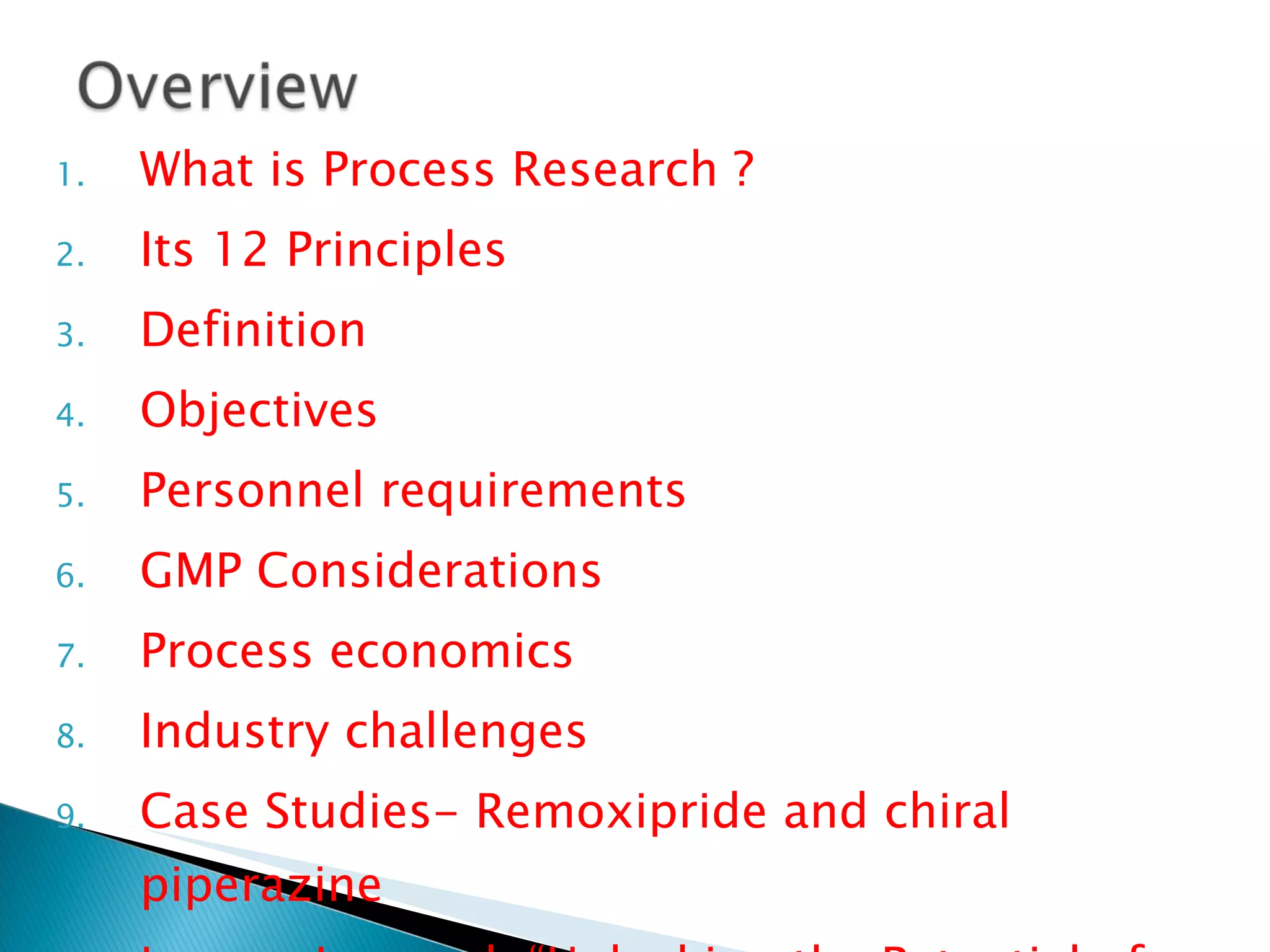
What is Process Research ? Its 12 Principles Definition Objectives Personnel requirements GMP Considerations Process economics Industry challenges Case Studies- Remoxipride and chiral piperazine Lesson Learned: “Unlocking the Potential of Process Innovation”
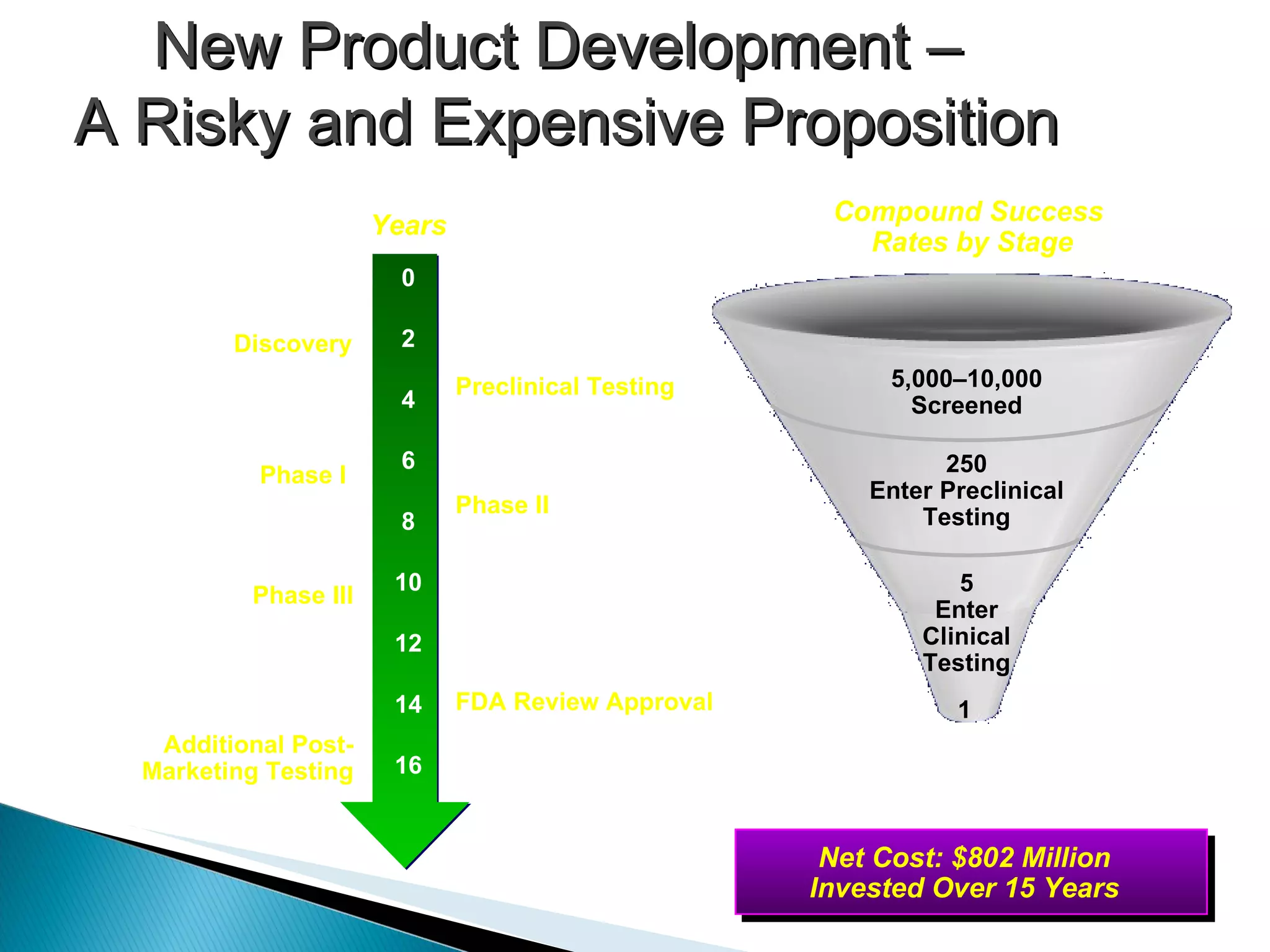
Net Cost: $802 Million  Invested Over 15 Years  5,000–10,000 Screened 250 Enter Preclinical Testing 5 Enter Clinical Testing 1 Compound Success  Rates by Stage 16 14 12 10 8 6 4 2 0 Phase II 100–300 Patient Volunteers Used to Look for Efficacy  and Side Effects Phase III 1,000–5,000 Patient Volunteers Used to Monitor Adverse Reactions to Long-Term Use FDA Review Approval Additional Post-Marketing Testing Phase I  20–80 Healthy Volunteers Used to Determine Safety and Dosage Preclinical Testing Laboratory and Animal Testing Discovery (2–10 Years) Years New Product Development –  A Risky and Expensive Proposition Approved by the FDA
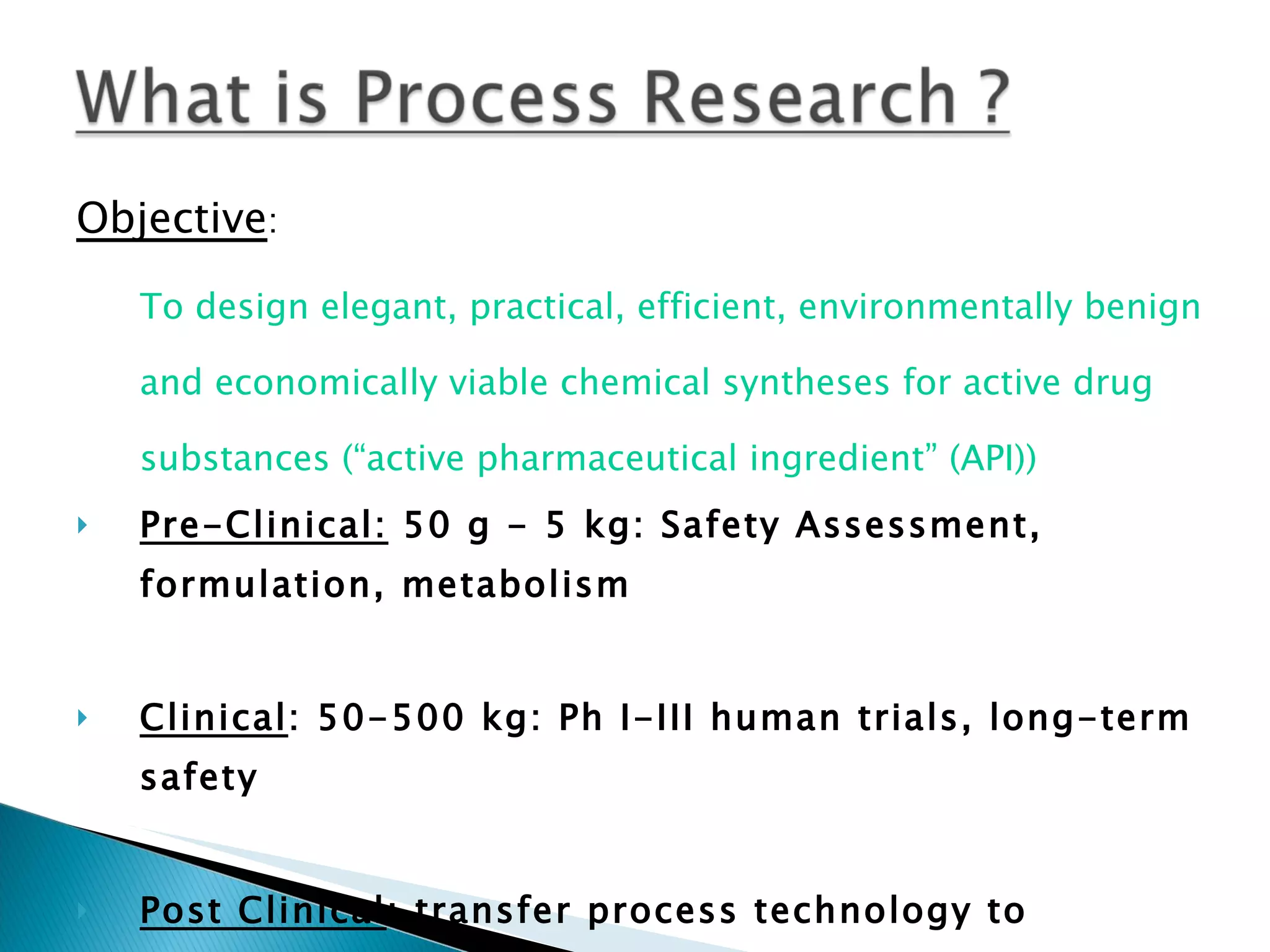
Objective :  To design elegant, practical, efficient, environmentally benign and economically viable chemical syntheses for active drug substances (“active pharmaceutical ingredient” (API)) Pre-Clinical:  50 g - 5 kg: Safety Assessment, formulation, metabolism Clinical : 50-500 kg: Ph I-III human trials, long-term safety Post Clinical : transfer process technology to  Manufacturing (1000 kg - metric ton quantities/yr; depending on dose)
Plant :-  It is a place were the 5 M’s like money, material, man, method and machine are brought together for the manufacturing of the products. Pilot Plant :-  It is the part of the pharmaceutical industry where a lab scale formula is transformed into a viable product by development of liable and practical procedure of manufacture. Scale-up :-  The art for designing of prototype using the data obtained from the pilot plant model. Lab scientist---next page
To carry out research and development activity in the field of Organic Chemistry, to make profit for the organization, motivate, guide & lead a team of bench scientists,  Conduct literature search, identify and execute new/novel routes for the synthesis, scale up from grams to kilo levels in lab., conduct pilot trials and assist in production upto ton levels. Carry out impurity profiles and assist in dossier writing.  All the above being done keeping in mind the regulatory, safety, environmental issues.  To keep in mind IPR issues and draft patents , Commercial aspects taken care are the time schedules, quality parameters and cost factors.  All this with a view of non  infringement and confidentiality. Simultaneously develop business acumen and convert to profits. file DMFS in US and EU, file patents and contribute to intellectual property Keep in mind polymorphism issues
To try the process on a model of proposed plant before committing large sum of money on a production unit. Examination of the formula to determine it’s ability to withstand Batch-scale and process modification. Evaluation and Validation for process and equipments  To identify the critical features of the process. Guidelines for production and process controls. To provide master manufacturing formula with instructions for manufacturing procedure. To avoid the scale-up problems.
Scientists with experience in lab, 20 litre scale, pilot plant operations as well as in actual production area are the most preferable As they have to understand the intent of the ICH, Pharmacopoel, Final API, Regulatory, IPM, GMP, formulator as well as understand the perspective of the production personnel. The group should have some personnel with engineering knowledge as well as scale up also involves engineering principles
“ The ideal chemical process is that which a one-armed operator can perform by pouring the reactants into a bath tub and collecting pure product from the drain hole” Sir John Conforth  (1975 Nobel Prize: Chemistry)
An amalgam of: Modern synthetic organic methodology Physicochemical properties Salt selection: based on stability, suitability Solid State Properties: Solvent dependant Crystal Morphology: internal shape-affects solubility, stability Crystal Habit:  external shape-affects flowability, mixability  Particle Size: can affect bioavailability Purification/Isolation technologies
Chemical Engineering principles: mixing, heat transfer, vessel configuration Practical Process Aspects: Safety Quality Cost Reproducibility Ruggedness
Equipment qualification Process validation Regularly schedule preventative maintenance Regularly process review & revalidation Relevant written standard operating procedures The use of competent technically qualified personnel
Adequate provision for training of personnel A well-defined technology transfer system  Validated cleaning procedures. An orderly arrangement of equipment so as to ease material flow & prevent cross- contamination
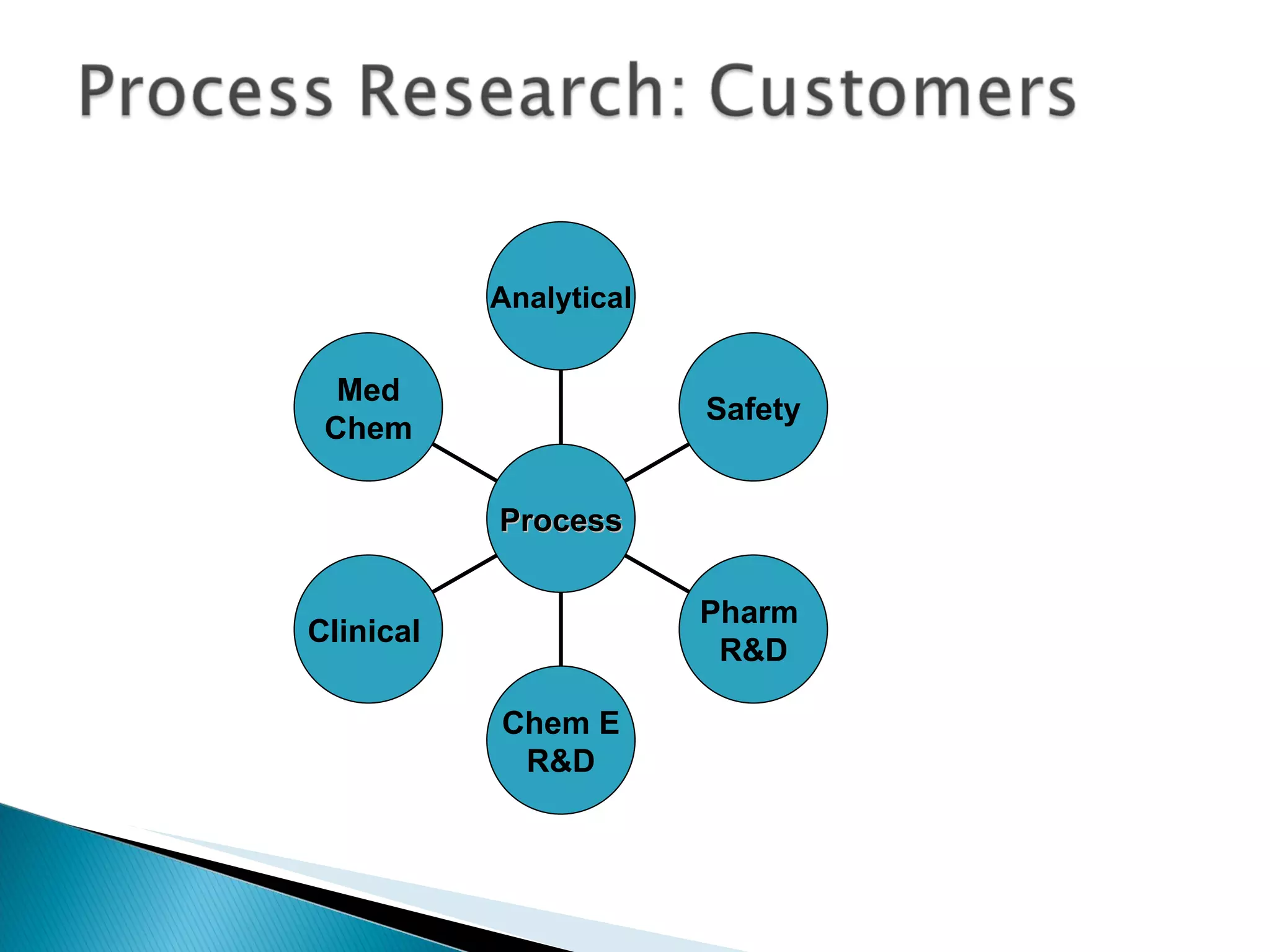
Med Chem Clinical  Chem E R&D Pharm  R&D Safety Analytical Process
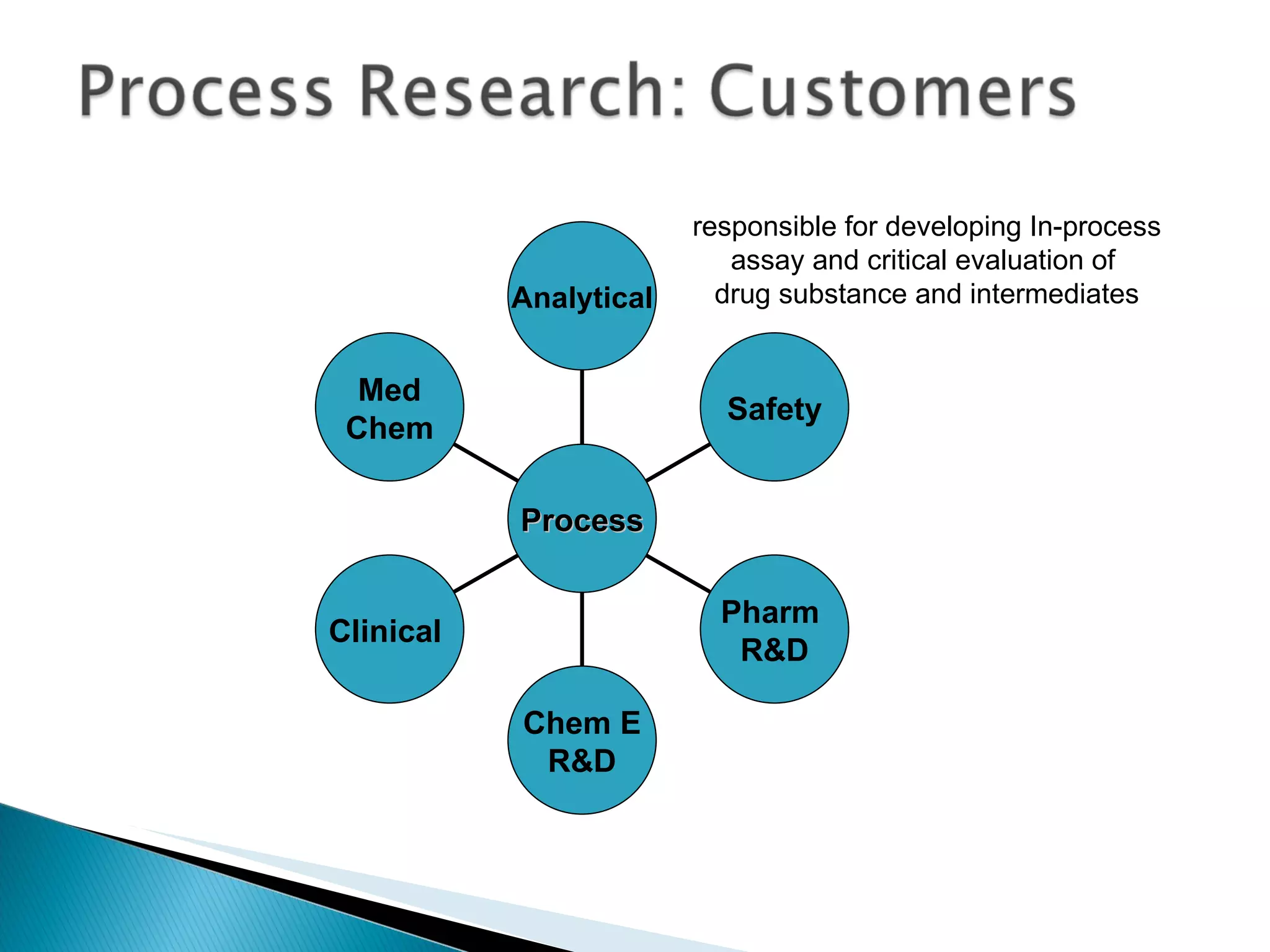
responsible for developing In-process assay and critical evaluation of  drug substance and intermediates Med Chem Clinical  Chem E R&D Pharm  R&D Safety Analytical Process
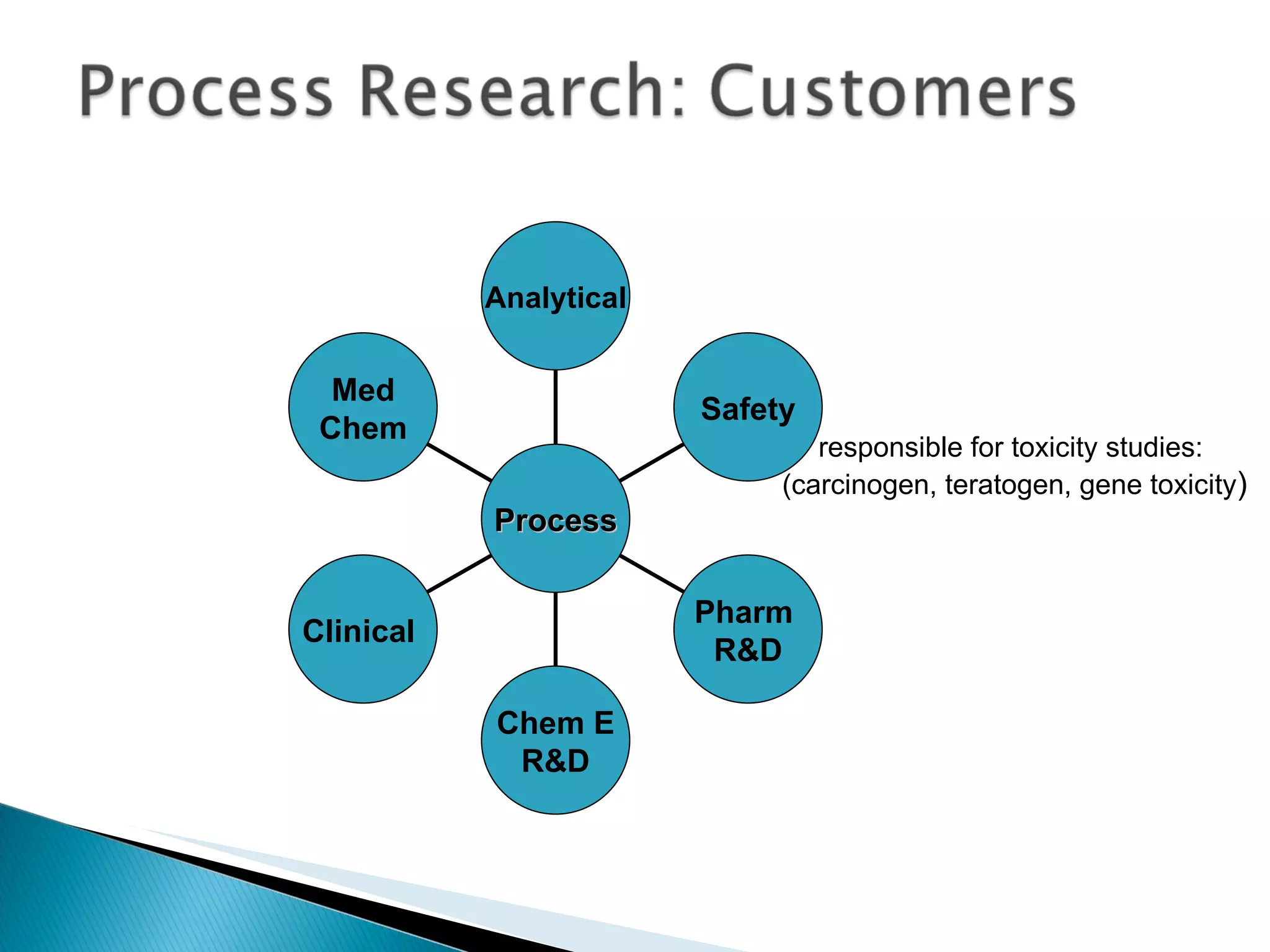
responsible for toxicity studies:  (carcinogen, teratogen, gene toxicity ) Med Chem Clinical  Chem E R&D Pharm  R&D Safety Analytical Process
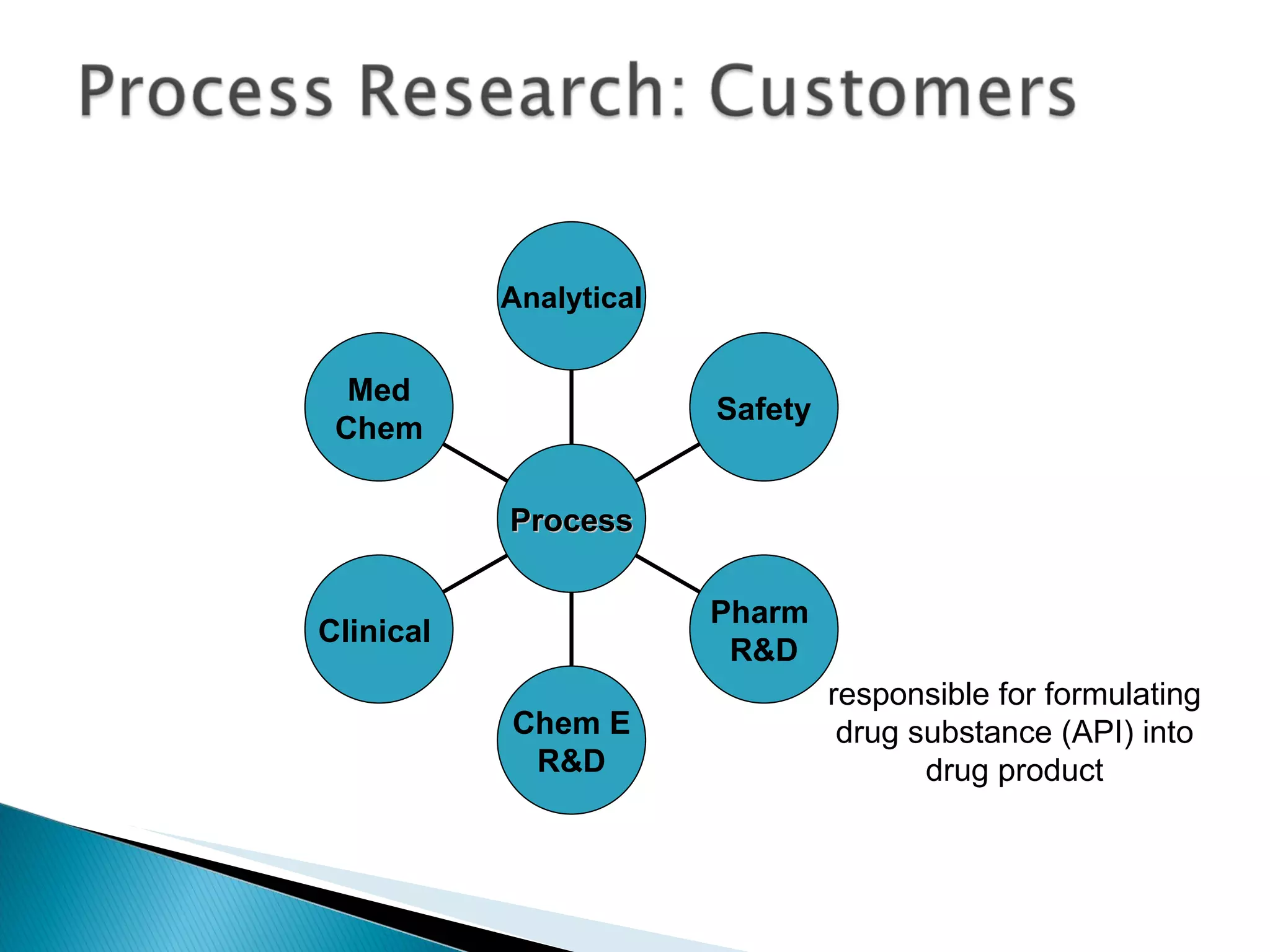
responsible for formulating drug substance (API) into drug product Med Chem Clinical  Chem E R&D Pharm  R&D Safety Analytical Process
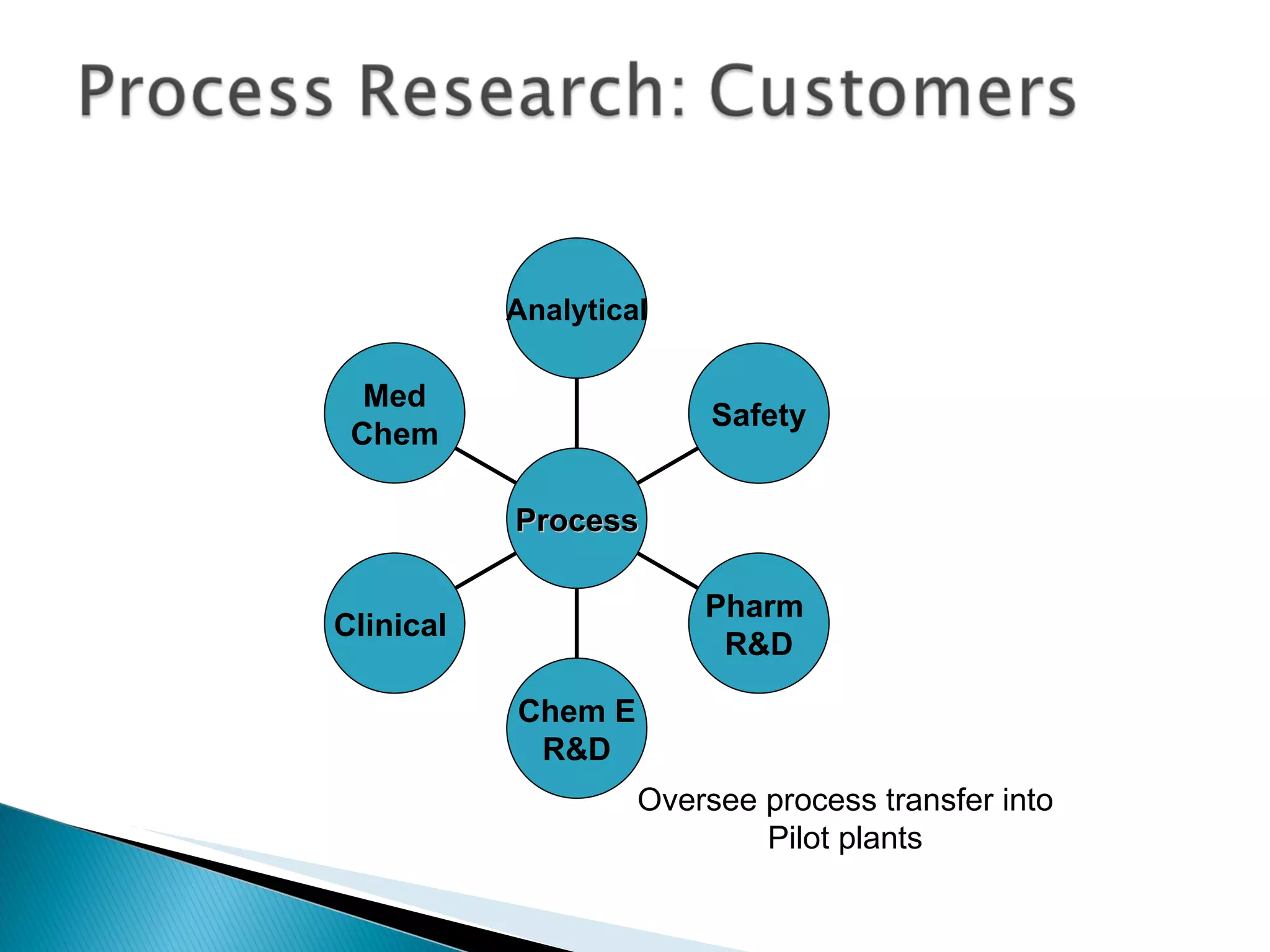
Oversee process transfer into Pilot plants Med Chem Clinical  Chem E R&D Pharm  R&D Safety Analytical Process
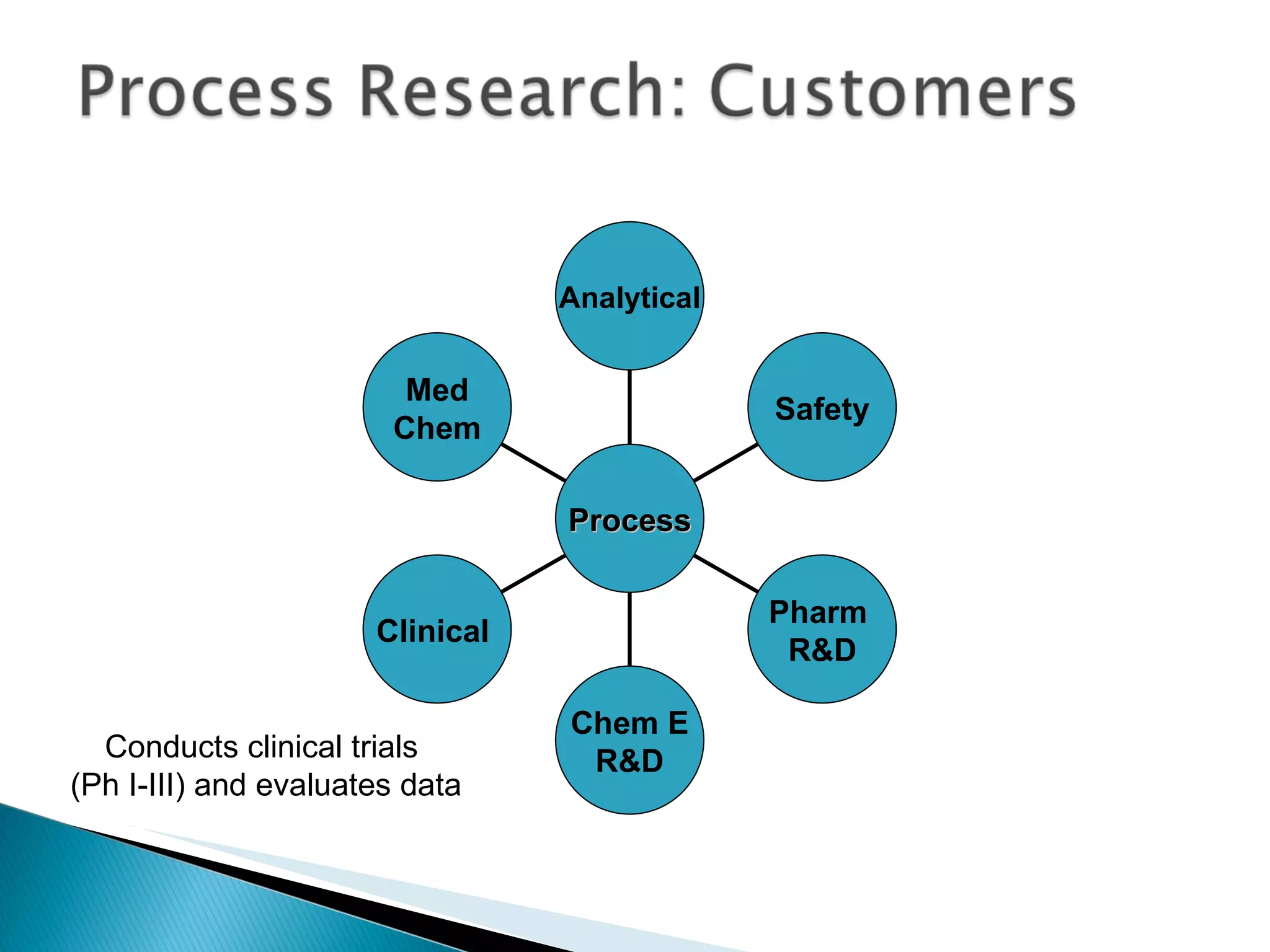
Conducts clinical trials  (Ph I-III) and evaluates data Med Chem Clinical  Chem E R&D Pharm  R&D Safety Analytical Process
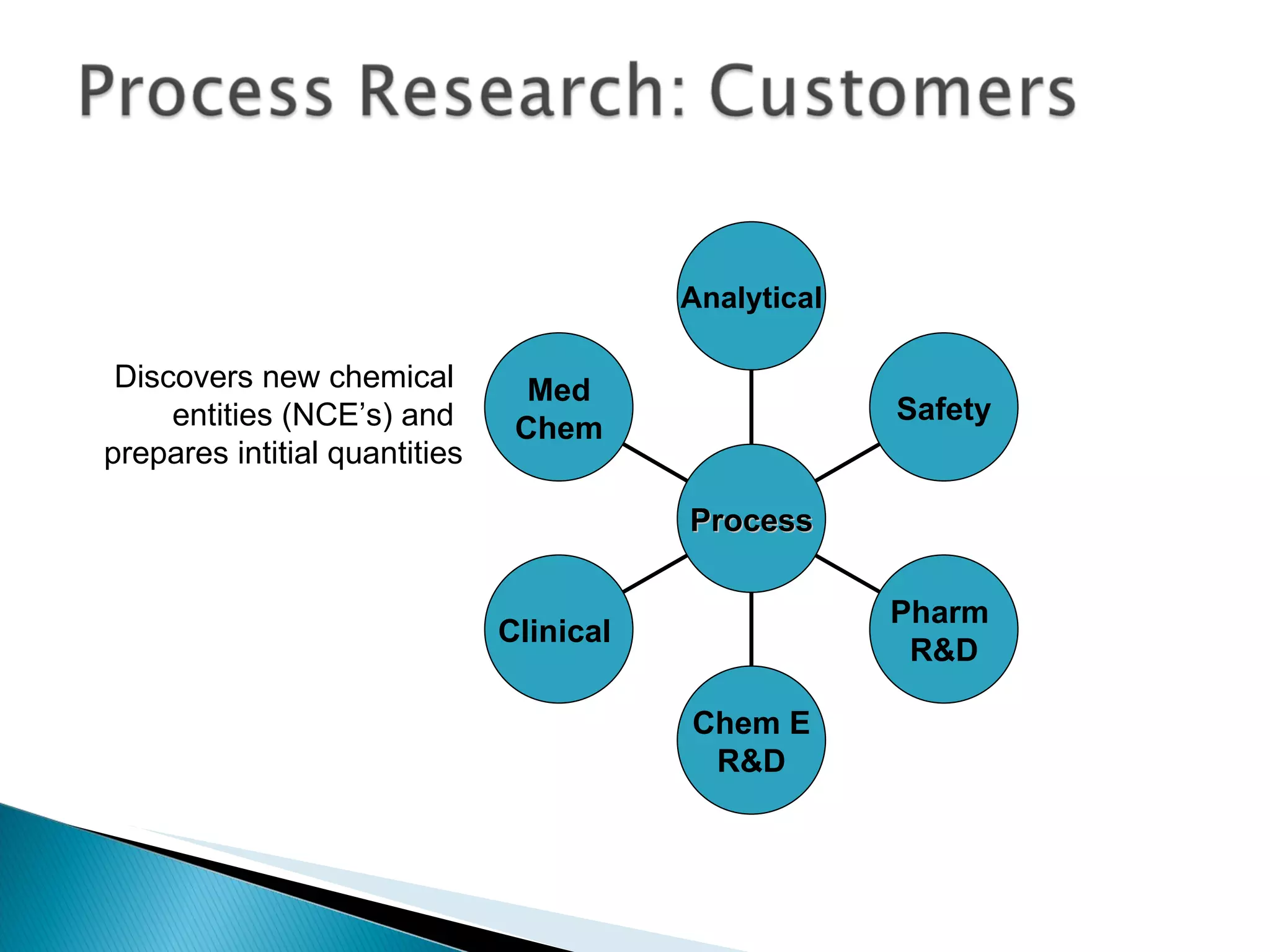
Discovers new chemical  entities (NCE’s) and  prepares intitial quantities Med Chem Clinical  Chem E R&D Pharm  R&D Safety Analytical Process
Patent :  drafting, inventorship, litigation Outsourcing :   work with vendors on tech transfer; setting specs; qualifying Regulatory :  drafting of NDA; process range finding Manufacturing:   transfer of process ‘ know-how’; oversee start-up
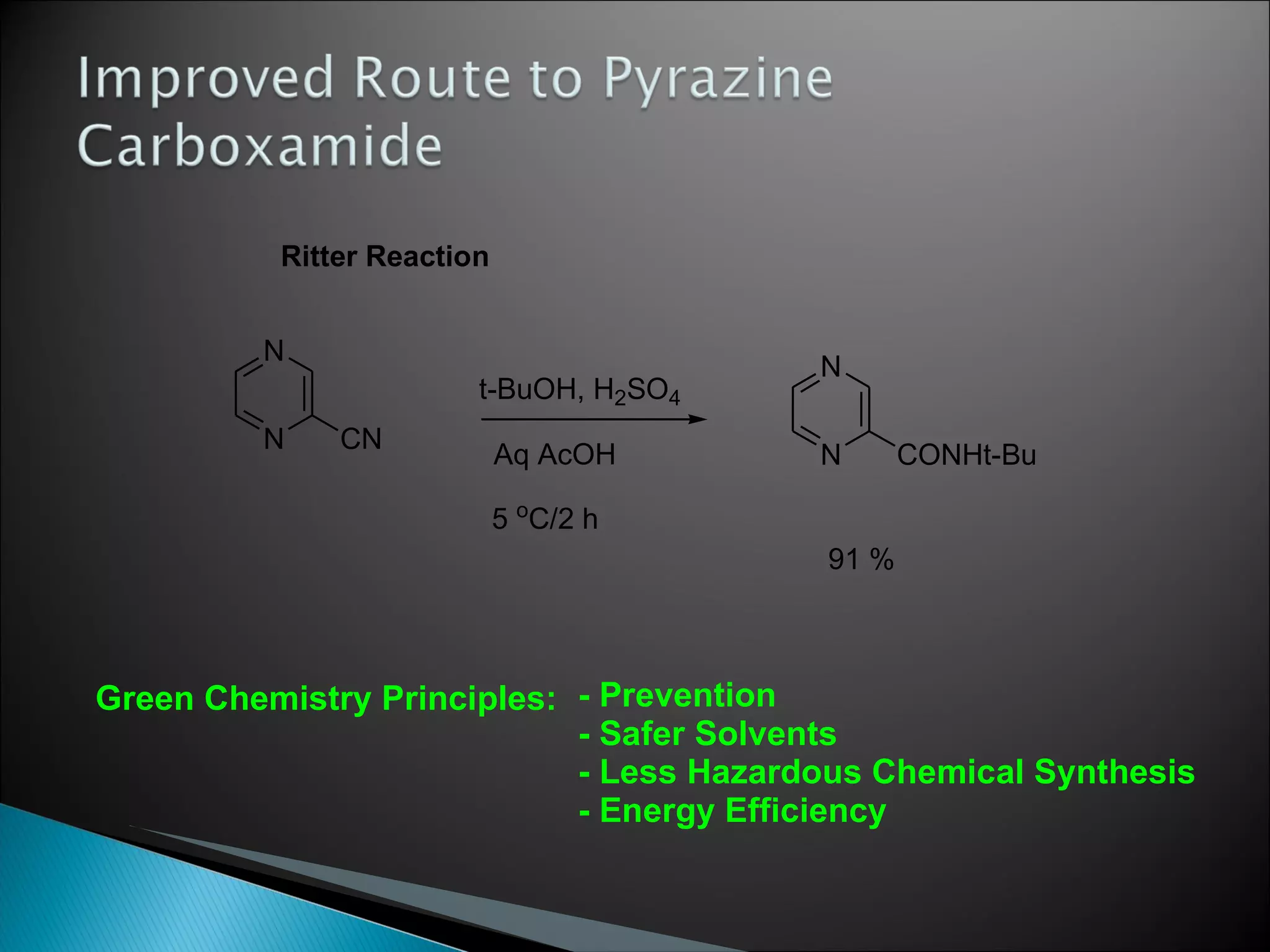
Prevention : It is better to prevent waste than to treat/clean up after its created. 2.  Atom Economy :  synthetic methods should be designed to incorporate all the atoms used in the process into the final product 3 .  Minimize Hazardous Conditions: Design process to avoid using reagents that pose safety threat  4.  Safer Chemistry-Accident Prevention: Design processes that minimize hazards to environment and human health
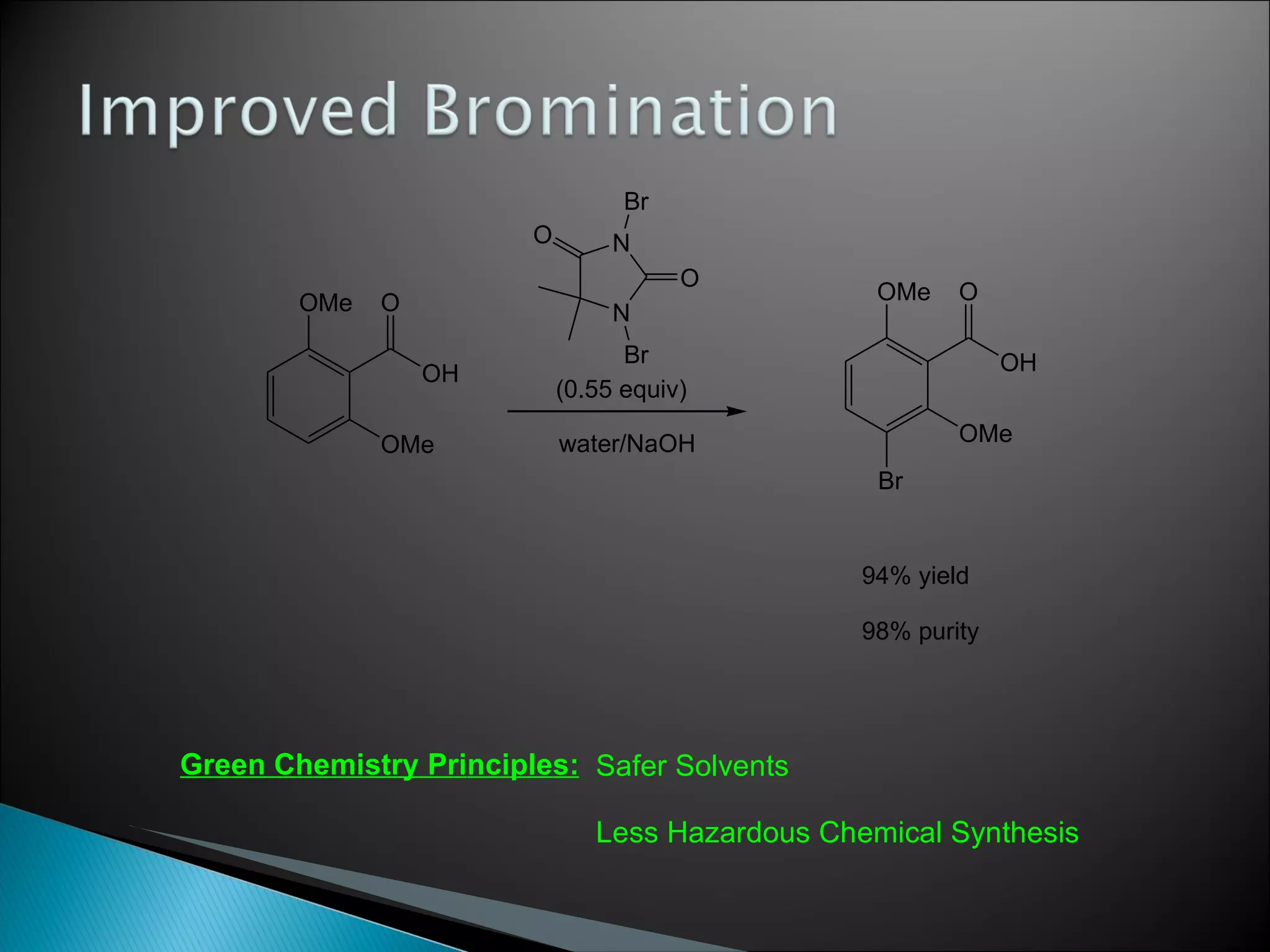
5 Design Safer Products:  Products should be designed to effect their desired function while minimizing toxicity Example: Use of single enantiomer drug vs racemate 6.  Use Safer Solvents/Auxiliaries Use of innocuous solvents should be considered (e.g. water, supercritical CO 2 ) Avoid use of unnecessary substances (e.g. drying agents, column chromatography)
7.  Design for Energy Efficiency: Energy requirements for a process should be recognized for environmental and economic impact Eg : avoid extreme cryogenics (-78  o C) Avoid prolonged reaction times 8.  Use of Renewable Raw Materials: Use a renewable source rather that depleting whenever technically and  economically feasible. eg: plant-derived RM; microbial reactions
9.  Minimize Derivatization : Avoid the use of protecting groups when possible as it add steps, requires extra reagents and generates more waste. 10.  Catalysis: Use of catalytic reagents is far superior than stoichiometric amounts Example: using air as a source of oxygen for oxidation reaction
11.  Design for Degradation: Ideally, process products and by-products should breakdown into innocuous materials and/or do not persist in the environment 12. Real Time Analysis: Analytical methods designed for ‘real-time’ In-process monitoring/control of a reaction Example:  Reactor-IR  (in-situ probe for monitoring reactions)
Process Economics -  Minimize inventory cost of API via: Low cost RM Productive/Efficient Reactions High Yield Highly concentrated Few Steps Short time cycles Few Vessels
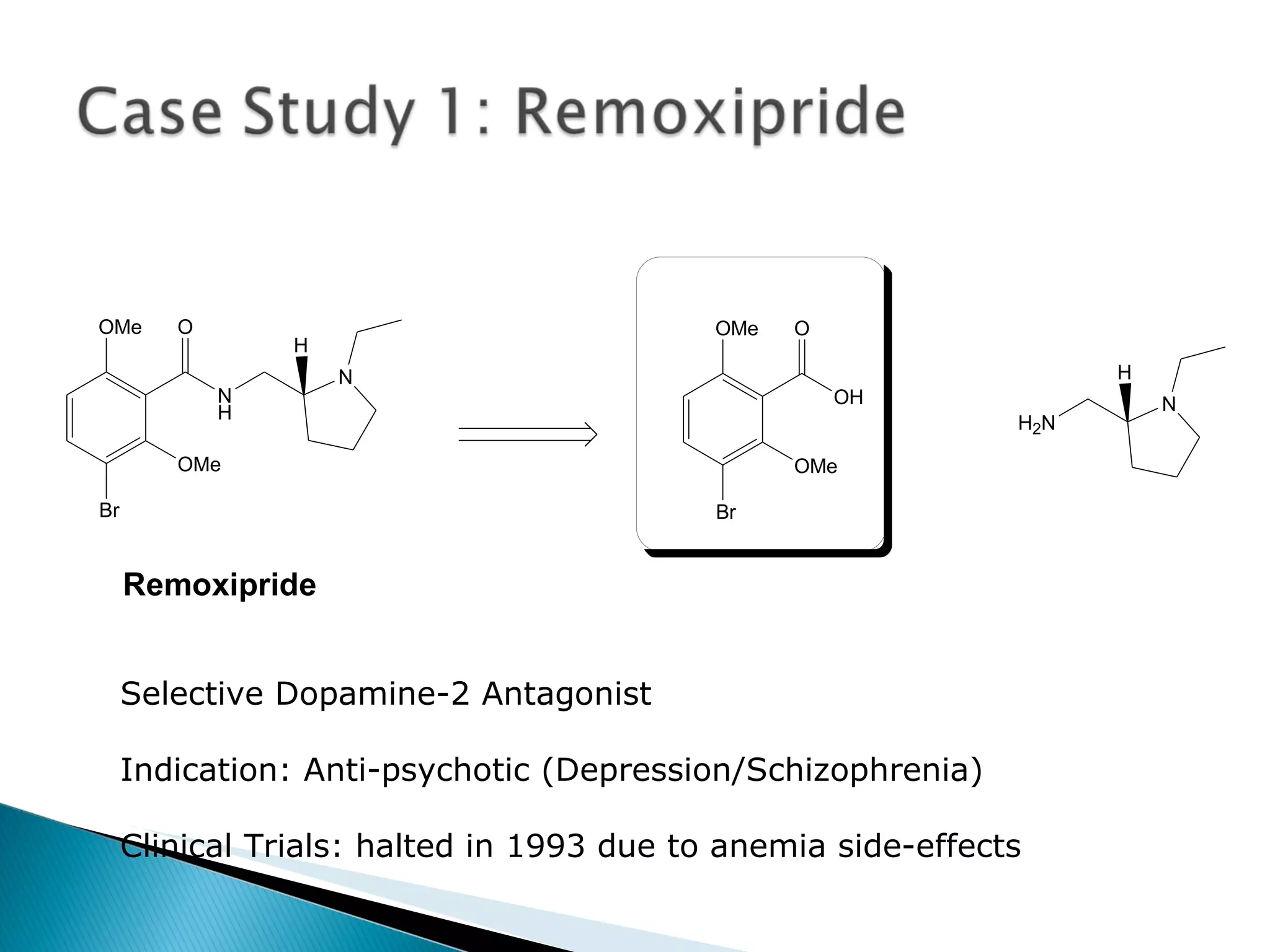
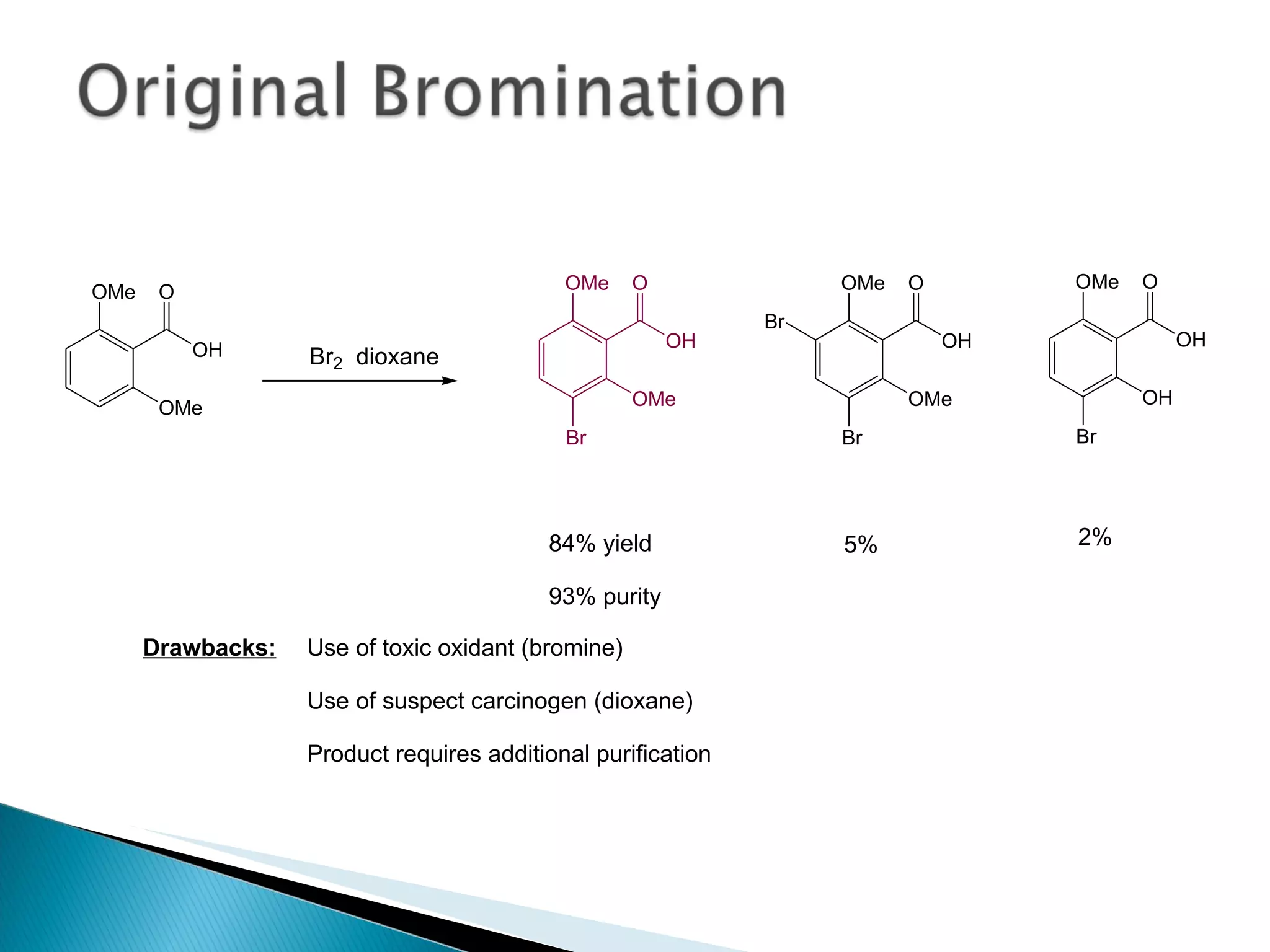
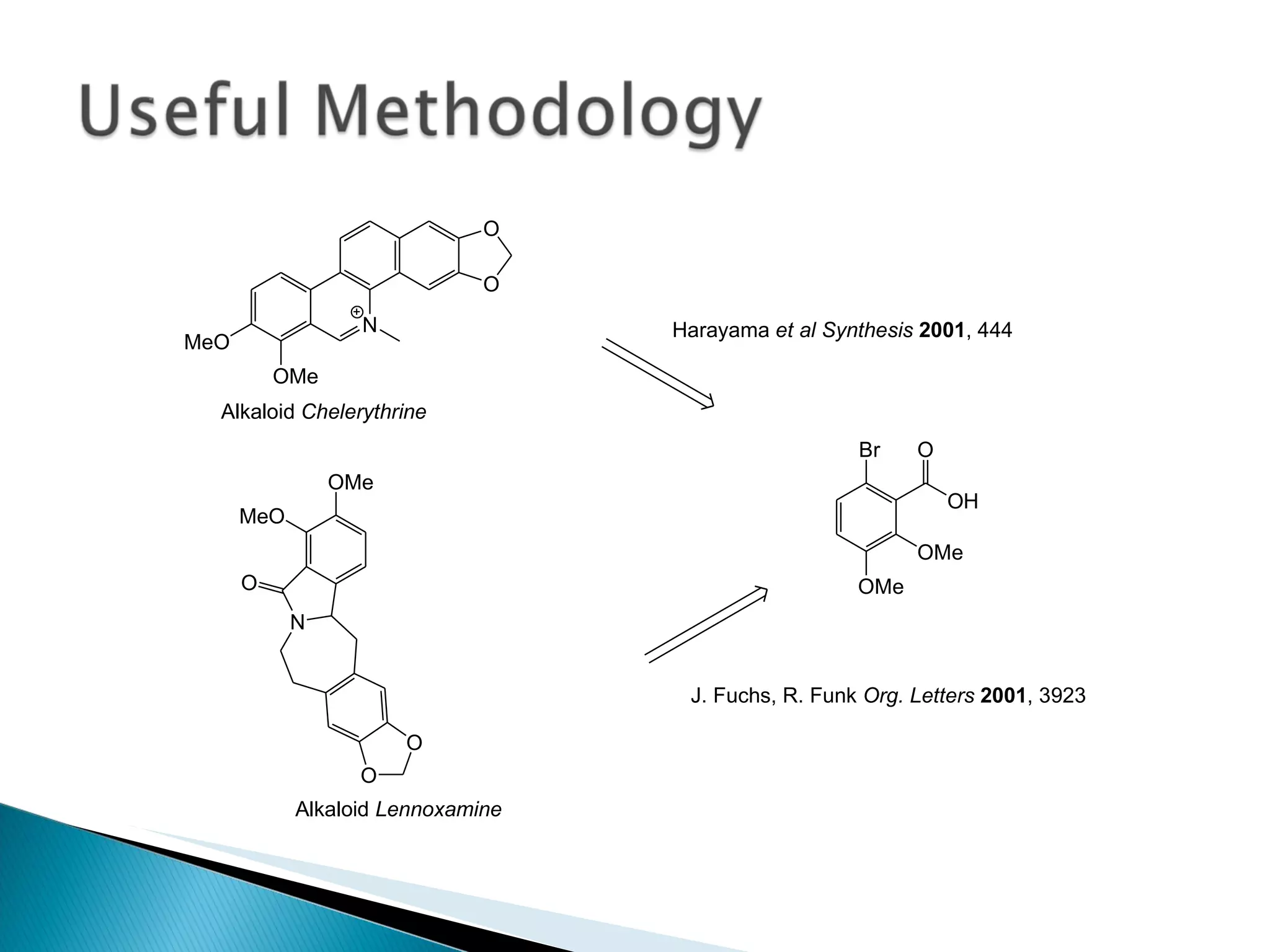
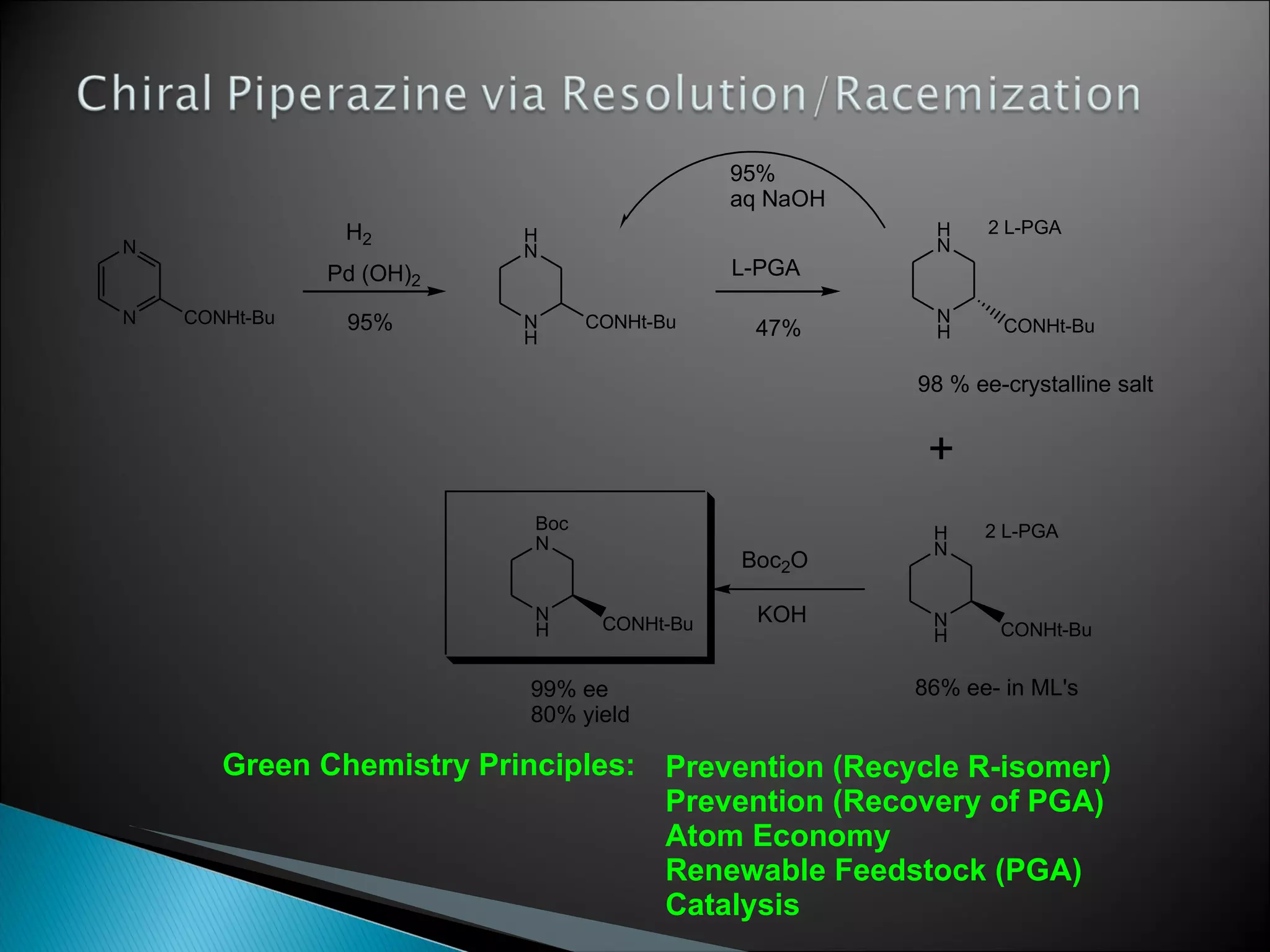
Remoxipride-----schizophrenia 2-Synthesis of Pyrazine Carboxamide a  CHIRAL PIPERAZINE –Ingredient of antivirals , ie virs
Selective Dopamine-2 Antagonist Indication: Anti-psychotic (Depression/Schizophrenia) Clinical Trials: halted in 1993 due to anemia side-effects
 
 
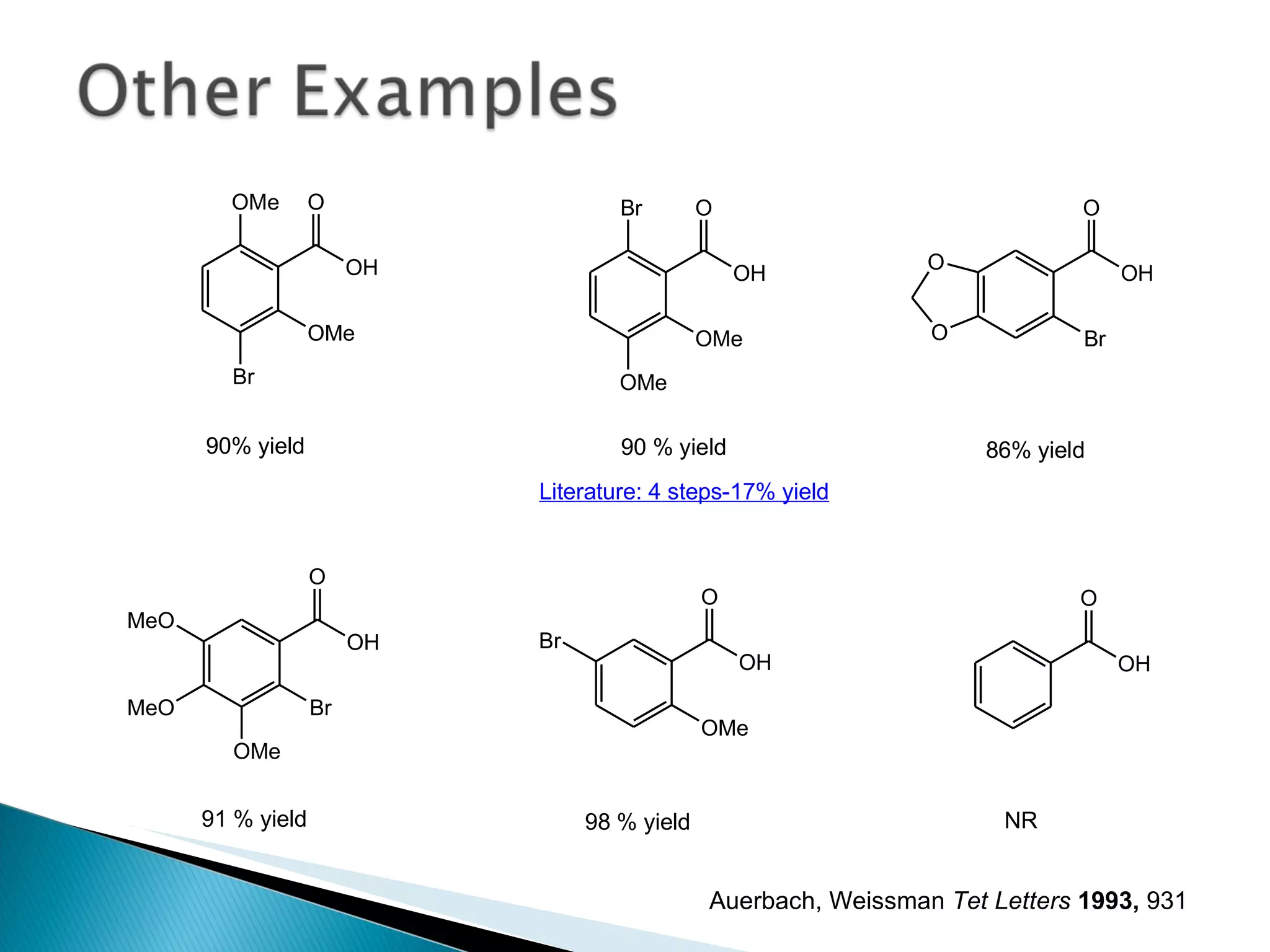
Auerbach, Weissman  Tet Letters   1993,  931
 
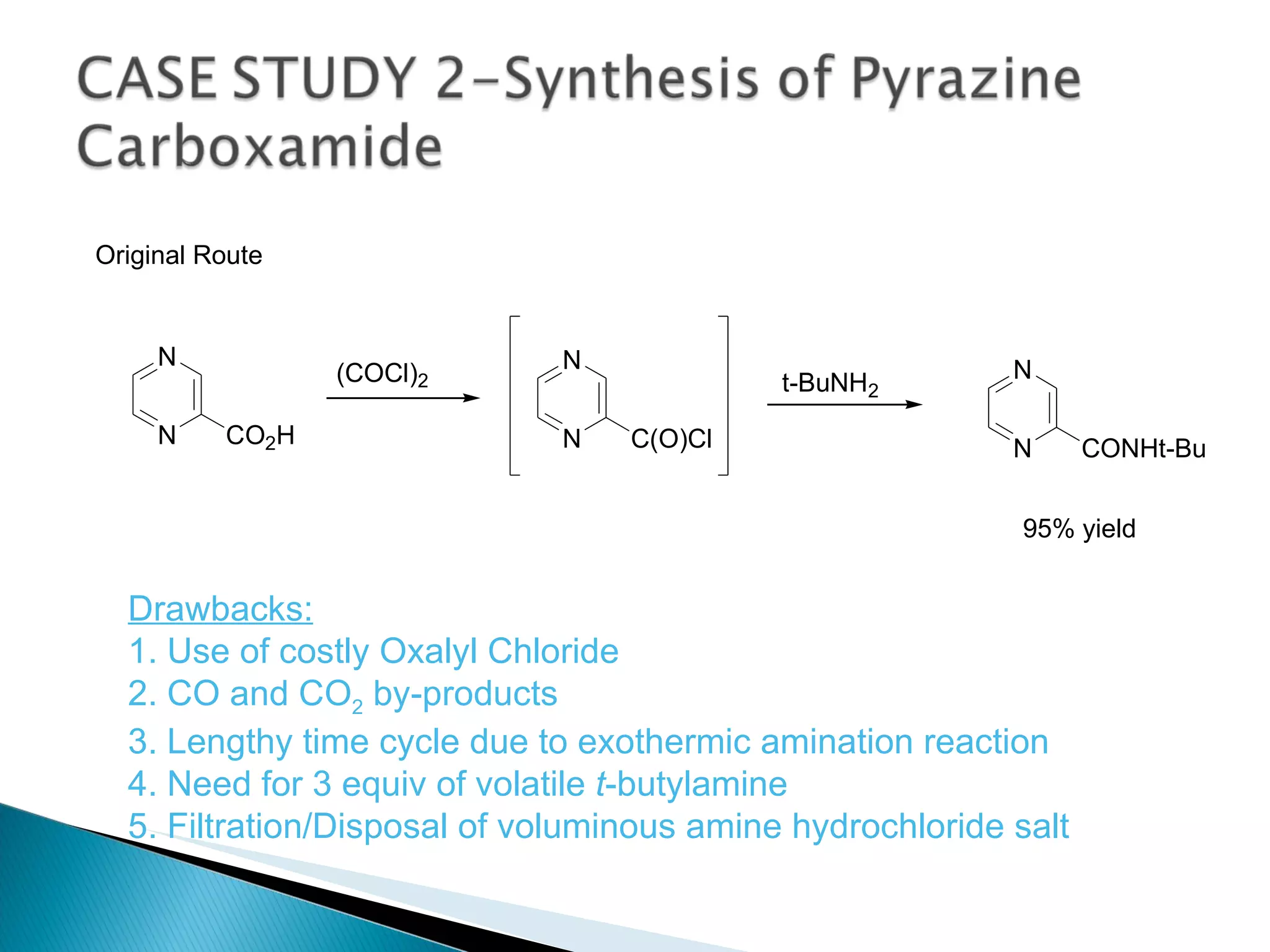
Drawbacks: 1. Use of costly Oxalyl Chloride 2. CO and CO 2  by-products 3. Lengthy time cycle due to exothermic amination reaction 4. Need for 3 equiv of volatile  t -butylamine 5. Filtration/Disposal of voluminous amine hydrochloride salt
 
A: 179/[124+127+73+73]  = 45 % B: 179/[105 + 98 +74 +18] = 61%
 
Increased Regulatory controls (FDA, EPA) Downward Pricing Pressure Greater Competition in treatment options More complex molecules Corporate consolidation Dwindling # of diseases to conquer
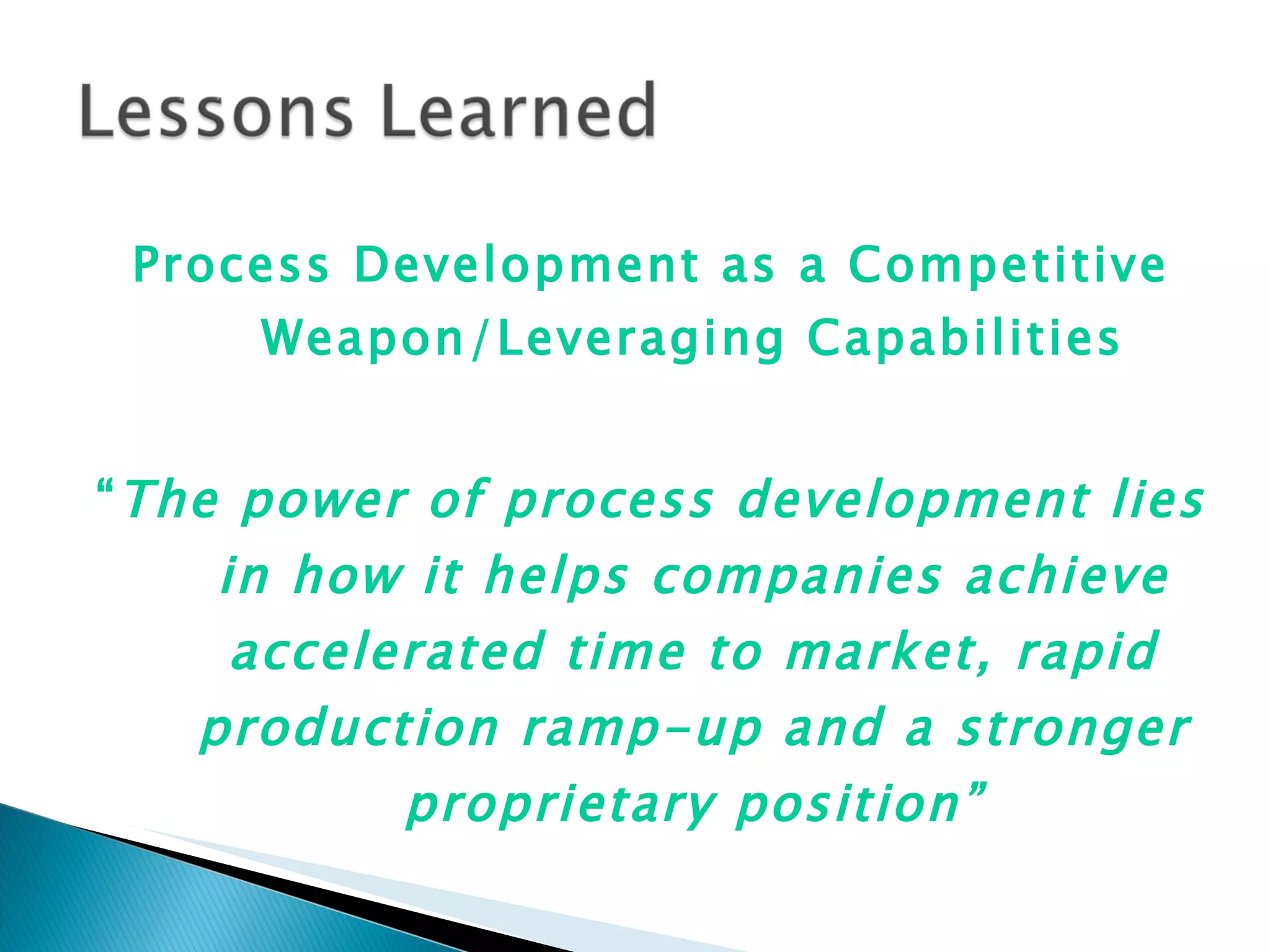
Process Development as a Competitive Weapon/Leveraging Capabilities “ The power of process development lies in how it helps companies achieve accelerated time to market, rapid production ramp-up and a stronger proprietary position”
“ A firm that can develop sophisticated process technologies more rapidly and with fewer development resources has strategic options that less capable competitors lack ”
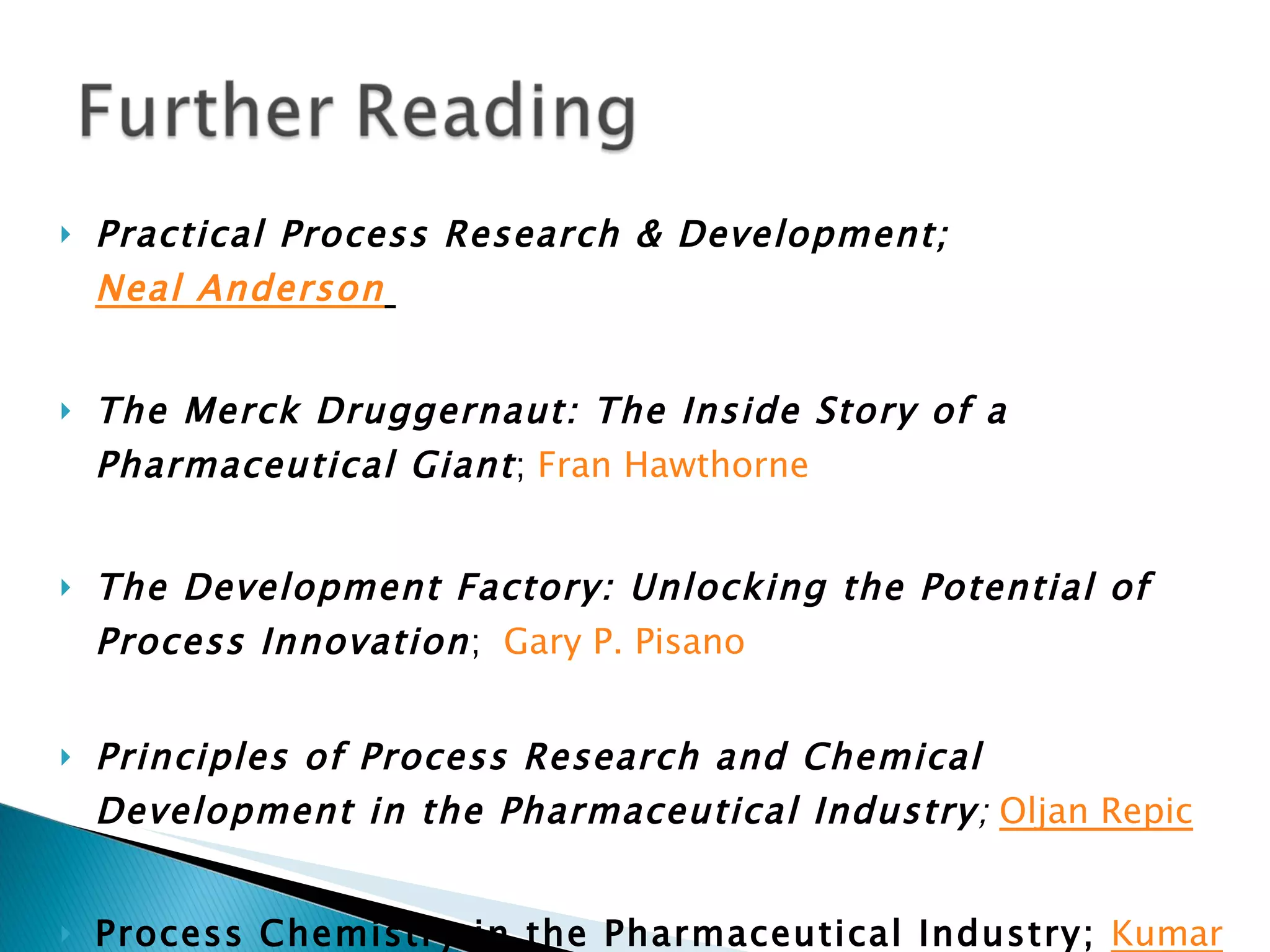
Practical Process Research & Development;  Neal Anderson   The Merck Druggernaut: The Inside Story of a Pharmaceutical Giant ;  Fran Hawthorne   The Development Factory: Unlocking the Potential of Process Innovation ;  Gary P. Pisano   Principles of Process Research and Chemical Development in the Pharmaceutical Industry ;  Oljan Repic Process Chemistry in the Pharmaceutical Industry;  Kumar Gadamasetti
THANKS

Process research overview

  • 1.
    DR ANTHONY MCRASTO (Ph.D) PRINCIPAL SCIENTIST PROCESS RESEARCH DEC 2011 “ A SHORT PRESENTATION”
  • 2.
    What is ProcessResearch ? Its 12 Principles Definition Objectives Personnel requirements GMP Considerations Process economics Industry challenges Case Studies- Remoxipride and chiral piperazine Lesson Learned: “Unlocking the Potential of Process Innovation”
  • 3.
    Net Cost: $802Million Invested Over 15 Years 5,000–10,000 Screened 250 Enter Preclinical Testing 5 Enter Clinical Testing 1 Compound Success Rates by Stage 16 14 12 10 8 6 4 2 0 Phase II 100–300 Patient Volunteers Used to Look for Efficacy and Side Effects Phase III 1,000–5,000 Patient Volunteers Used to Monitor Adverse Reactions to Long-Term Use FDA Review Approval Additional Post-Marketing Testing Phase I 20–80 Healthy Volunteers Used to Determine Safety and Dosage Preclinical Testing Laboratory and Animal Testing Discovery (2–10 Years) Years New Product Development – A Risky and Expensive Proposition Approved by the FDA
  • 4.
    Objective : To design elegant, practical, efficient, environmentally benign and economically viable chemical syntheses for active drug substances (“active pharmaceutical ingredient” (API)) Pre-Clinical: 50 g - 5 kg: Safety Assessment, formulation, metabolism Clinical : 50-500 kg: Ph I-III human trials, long-term safety Post Clinical : transfer process technology to Manufacturing (1000 kg - metric ton quantities/yr; depending on dose)
  • 5.
    Plant :- It is a place were the 5 M’s like money, material, man, method and machine are brought together for the manufacturing of the products. Pilot Plant :- It is the part of the pharmaceutical industry where a lab scale formula is transformed into a viable product by development of liable and practical procedure of manufacture. Scale-up :- The art for designing of prototype using the data obtained from the pilot plant model. Lab scientist---next page
  • 6.
    To carry outresearch and development activity in the field of Organic Chemistry, to make profit for the organization, motivate, guide & lead a team of bench scientists, Conduct literature search, identify and execute new/novel routes for the synthesis, scale up from grams to kilo levels in lab., conduct pilot trials and assist in production upto ton levels. Carry out impurity profiles and assist in dossier writing. All the above being done keeping in mind the regulatory, safety, environmental issues. To keep in mind IPR issues and draft patents , Commercial aspects taken care are the time schedules, quality parameters and cost factors. All this with a view of non infringement and confidentiality. Simultaneously develop business acumen and convert to profits. file DMFS in US and EU, file patents and contribute to intellectual property Keep in mind polymorphism issues
  • 7.
    To try theprocess on a model of proposed plant before committing large sum of money on a production unit. Examination of the formula to determine it’s ability to withstand Batch-scale and process modification. Evaluation and Validation for process and equipments To identify the critical features of the process. Guidelines for production and process controls. To provide master manufacturing formula with instructions for manufacturing procedure. To avoid the scale-up problems.
  • 8.
    Scientists with experiencein lab, 20 litre scale, pilot plant operations as well as in actual production area are the most preferable As they have to understand the intent of the ICH, Pharmacopoel, Final API, Regulatory, IPM, GMP, formulator as well as understand the perspective of the production personnel. The group should have some personnel with engineering knowledge as well as scale up also involves engineering principles
  • 9.
    “ The idealchemical process is that which a one-armed operator can perform by pouring the reactants into a bath tub and collecting pure product from the drain hole” Sir John Conforth (1975 Nobel Prize: Chemistry)
  • 10.
    An amalgam of:Modern synthetic organic methodology Physicochemical properties Salt selection: based on stability, suitability Solid State Properties: Solvent dependant Crystal Morphology: internal shape-affects solubility, stability Crystal Habit: external shape-affects flowability, mixability Particle Size: can affect bioavailability Purification/Isolation technologies
  • 11.
    Chemical Engineering principles:mixing, heat transfer, vessel configuration Practical Process Aspects: Safety Quality Cost Reproducibility Ruggedness
  • 12.
    Equipment qualification Processvalidation Regularly schedule preventative maintenance Regularly process review & revalidation Relevant written standard operating procedures The use of competent technically qualified personnel
  • 13.
    Adequate provision fortraining of personnel A well-defined technology transfer system Validated cleaning procedures. An orderly arrangement of equipment so as to ease material flow & prevent cross- contamination
  • 14.
    Med Chem Clinical Chem E R&D Pharm R&D Safety Analytical Process
  • 15.
    responsible for developingIn-process assay and critical evaluation of drug substance and intermediates Med Chem Clinical Chem E R&D Pharm R&D Safety Analytical Process
  • 16.
    responsible for toxicitystudies: (carcinogen, teratogen, gene toxicity ) Med Chem Clinical Chem E R&D Pharm R&D Safety Analytical Process
  • 17.
    responsible for formulatingdrug substance (API) into drug product Med Chem Clinical Chem E R&D Pharm R&D Safety Analytical Process
  • 18.
    Oversee process transferinto Pilot plants Med Chem Clinical Chem E R&D Pharm R&D Safety Analytical Process
  • 19.
    Conducts clinical trials (Ph I-III) and evaluates data Med Chem Clinical Chem E R&D Pharm R&D Safety Analytical Process
  • 20.
    Discovers new chemical entities (NCE’s) and prepares intitial quantities Med Chem Clinical Chem E R&D Pharm R&D Safety Analytical Process
  • 21.
    Patent : drafting, inventorship, litigation Outsourcing : work with vendors on tech transfer; setting specs; qualifying Regulatory : drafting of NDA; process range finding Manufacturing: transfer of process ‘ know-how’; oversee start-up
  • 22.
    Prevention : Itis better to prevent waste than to treat/clean up after its created. 2. Atom Economy : synthetic methods should be designed to incorporate all the atoms used in the process into the final product 3 . Minimize Hazardous Conditions: Design process to avoid using reagents that pose safety threat 4. Safer Chemistry-Accident Prevention: Design processes that minimize hazards to environment and human health
  • 23.
    5 Design SaferProducts: Products should be designed to effect their desired function while minimizing toxicity Example: Use of single enantiomer drug vs racemate 6. Use Safer Solvents/Auxiliaries Use of innocuous solvents should be considered (e.g. water, supercritical CO 2 ) Avoid use of unnecessary substances (e.g. drying agents, column chromatography)
  • 24.
    7. Designfor Energy Efficiency: Energy requirements for a process should be recognized for environmental and economic impact Eg : avoid extreme cryogenics (-78 o C) Avoid prolonged reaction times 8. Use of Renewable Raw Materials: Use a renewable source rather that depleting whenever technically and economically feasible. eg: plant-derived RM; microbial reactions
  • 25.
    9. MinimizeDerivatization : Avoid the use of protecting groups when possible as it add steps, requires extra reagents and generates more waste. 10. Catalysis: Use of catalytic reagents is far superior than stoichiometric amounts Example: using air as a source of oxygen for oxidation reaction
  • 26.
    11. Designfor Degradation: Ideally, process products and by-products should breakdown into innocuous materials and/or do not persist in the environment 12. Real Time Analysis: Analytical methods designed for ‘real-time’ In-process monitoring/control of a reaction Example: Reactor-IR (in-situ probe for monitoring reactions)
  • 27.
    Process Economics - Minimize inventory cost of API via: Low cost RM Productive/Efficient Reactions High Yield Highly concentrated Few Steps Short time cycles Few Vessels
  • 28.
    Remoxipride-----schizophrenia 2-Synthesis ofPyrazine Carboxamide a CHIRAL PIPERAZINE –Ingredient of antivirals , ie virs
  • 29.
    Selective Dopamine-2 AntagonistIndication: Anti-psychotic (Depression/Schizophrenia) Clinical Trials: halted in 1993 due to anemia side-effects
  • 30.
  • 31.
  • 32.
    Auerbach, Weissman Tet Letters 1993, 931
  • 33.
  • 34.
    Drawbacks: 1. Useof costly Oxalyl Chloride 2. CO and CO 2 by-products 3. Lengthy time cycle due to exothermic amination reaction 4. Need for 3 equiv of volatile t -butylamine 5. Filtration/Disposal of voluminous amine hydrochloride salt
  • 35.
  • 36.
    A: 179/[124+127+73+73] = 45 % B: 179/[105 + 98 +74 +18] = 61%
  • 37.
  • 38.
    Increased Regulatory controls(FDA, EPA) Downward Pricing Pressure Greater Competition in treatment options More complex molecules Corporate consolidation Dwindling # of diseases to conquer
  • 39.
    Process Development asa Competitive Weapon/Leveraging Capabilities “ The power of process development lies in how it helps companies achieve accelerated time to market, rapid production ramp-up and a stronger proprietary position”
  • 40.
    “ A firmthat can develop sophisticated process technologies more rapidly and with fewer development resources has strategic options that less capable competitors lack ”
  • 41.
    Practical Process Research& Development; Neal Anderson The Merck Druggernaut: The Inside Story of a Pharmaceutical Giant ; Fran Hawthorne The Development Factory: Unlocking the Potential of Process Innovation ; Gary P. Pisano Principles of Process Research and Chemical Development in the Pharmaceutical Industry ; Oljan Repic Process Chemistry in the Pharmaceutical Industry; Kumar Gadamasetti
  • 42.

Editor's Notes

  • #22 Regulatory- talk of CMC (“chemistry and manufacturing controls”) section