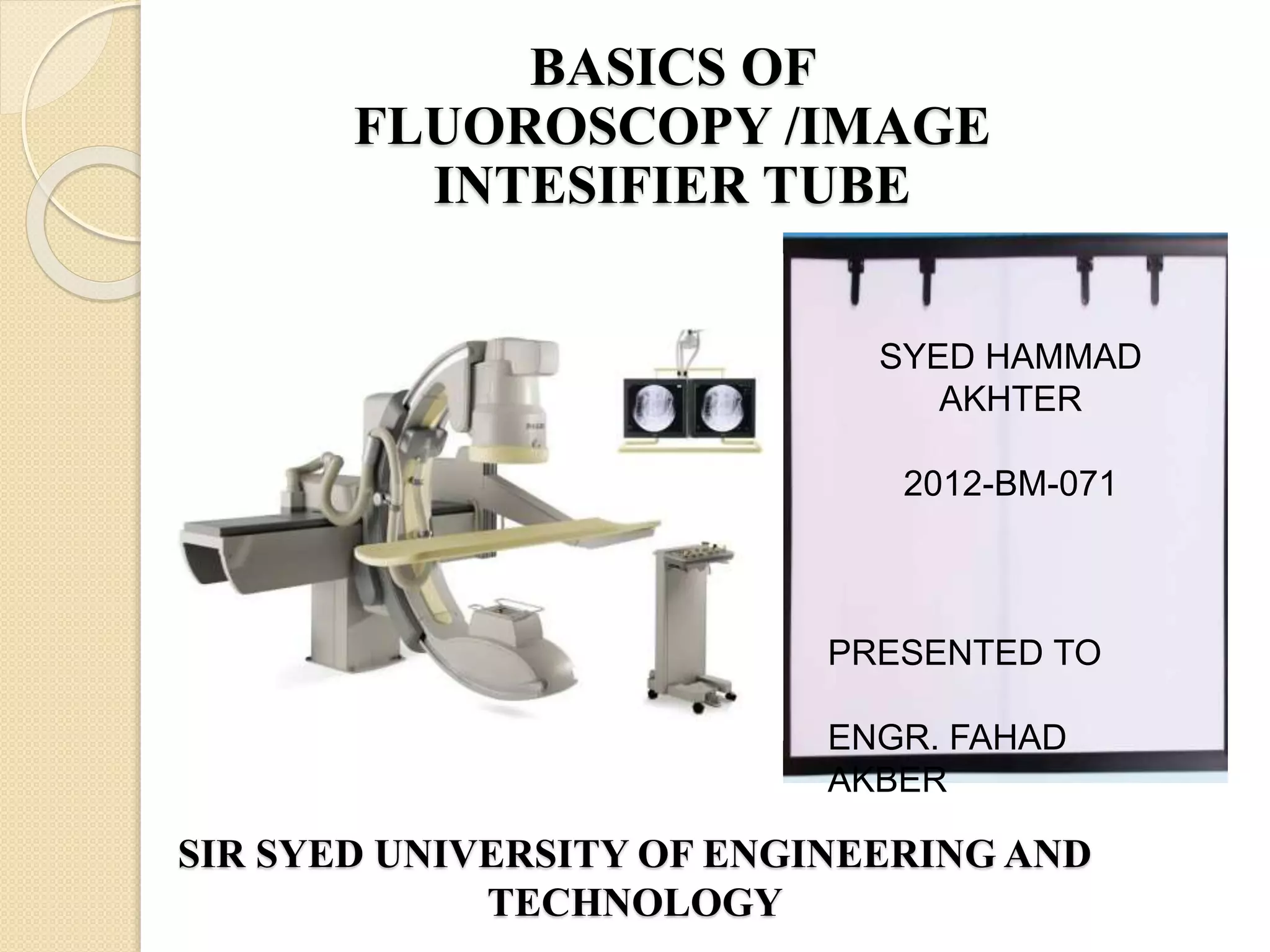
BASICS OF
FLUOROSCOPY /IMAGE
INTESIFIER TUBE
SIR SYED UNIVERSITY OF ENGINEERING AND
TECHNOLOGY
SYED HAMMAD
AKHTER
2012-BM-071
PRESENTED TO
ENGR. FAHAD
AKBER
What Is Fluoroscopy ?
 Study of moving body structures.
 Similar to an x-ray
 Fluoroscopy is also an imaging tool.
 Allows physicians to look at various
body systems
 Show continuous x-ray image
 Images taken quickly allow for this to
happen
 Shows movement of body parts
“Fluoroscopy is a common technique used by clinical
physicians to obtain real time images of moving body parts and
internal structures of a patient”
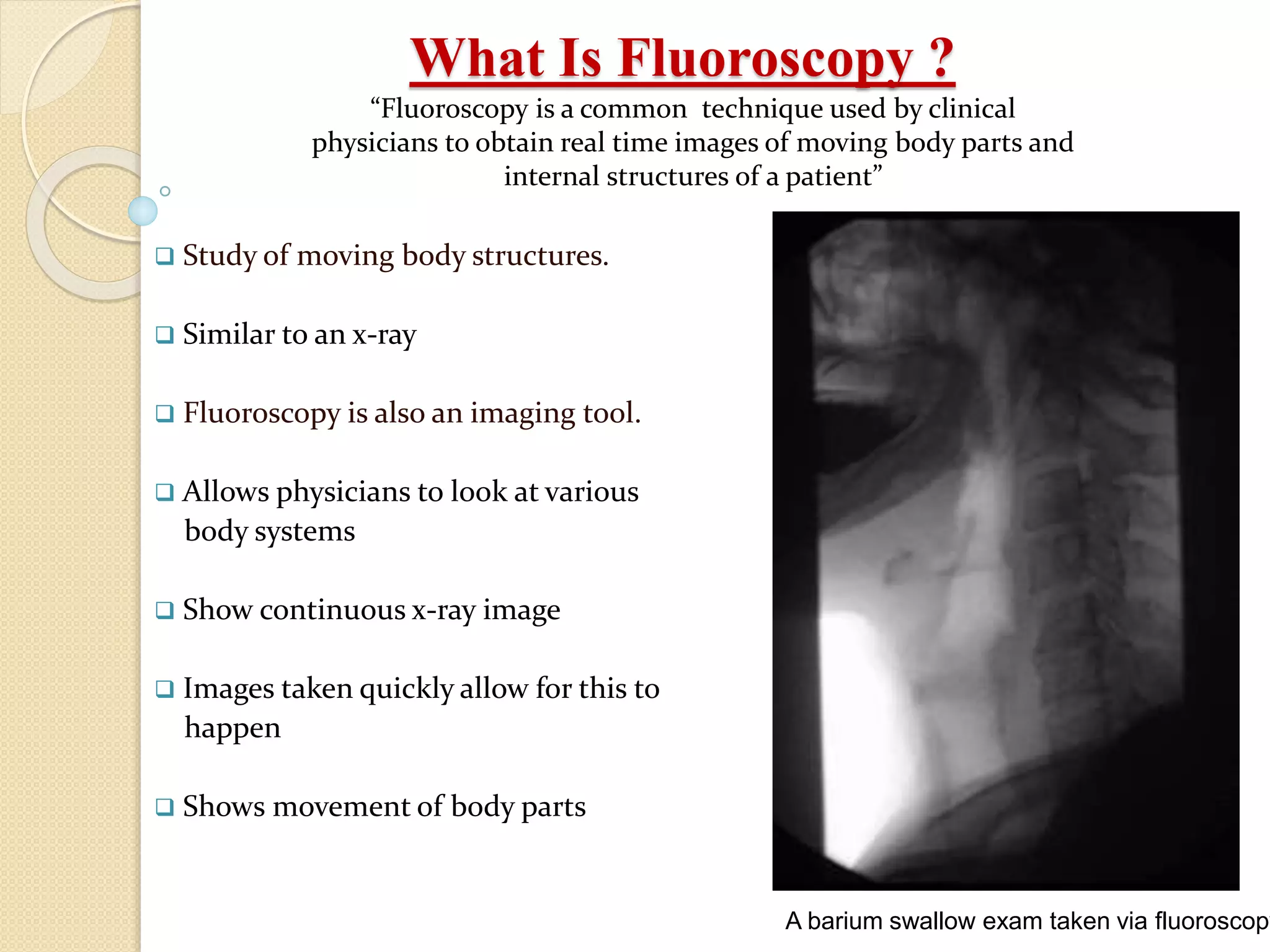
A barium swallow exam taken via fluoroscopy
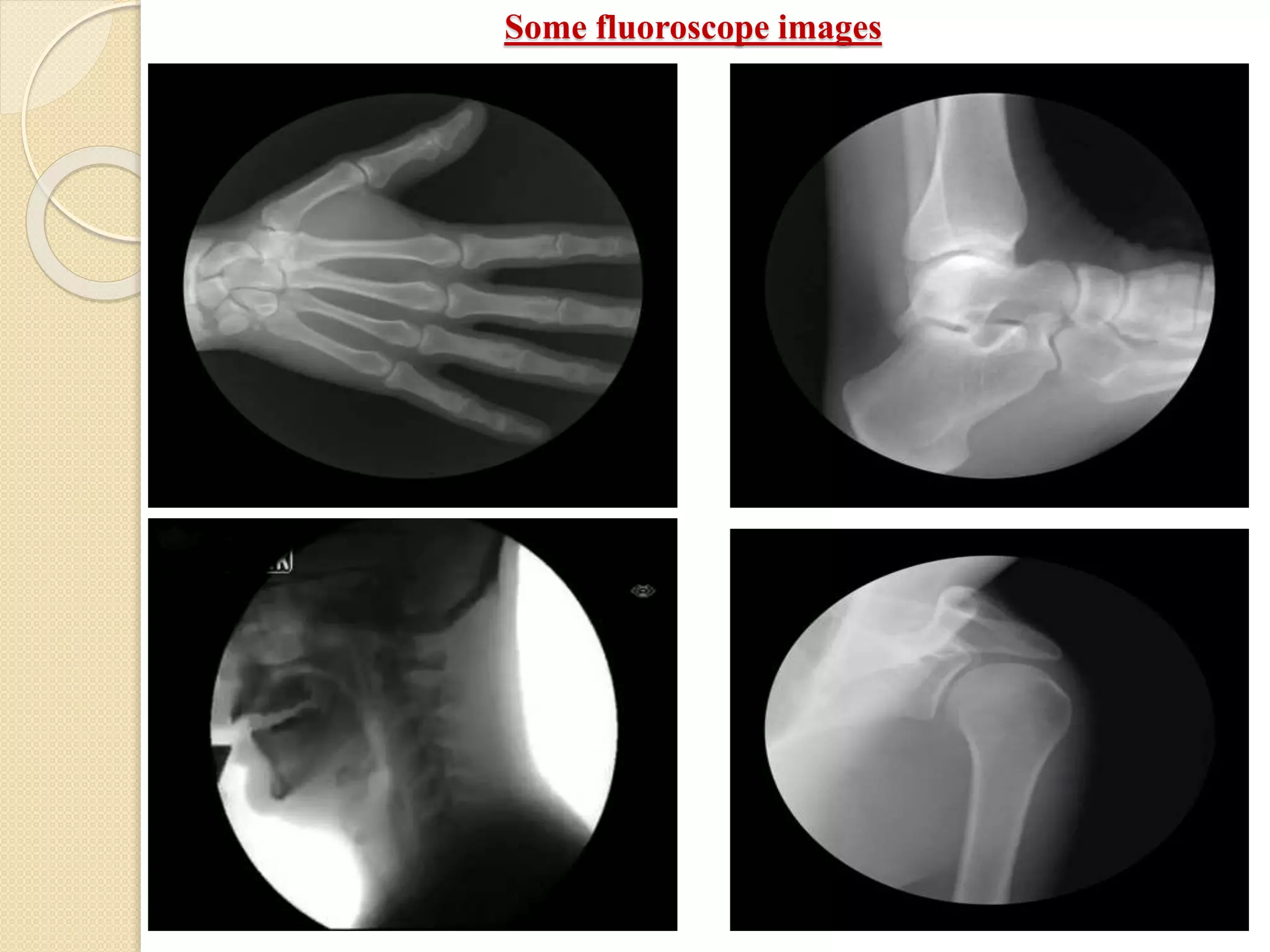
Some fluoroscope images
Why Fluoroscopy ?
ADVANTAGES OVER NORMAL X-RAY MACHINE
primary advantages
 Real time imaging
 No dark room required
Secondary advantages
 Mobile/moveable
 Easy to locomate as compared to x-
rays
Display motion images produced
at a maximum rate of 25-30 complete
images per second.
Brightness The principal advantage of
image intensified fluoro is an increased
brightness
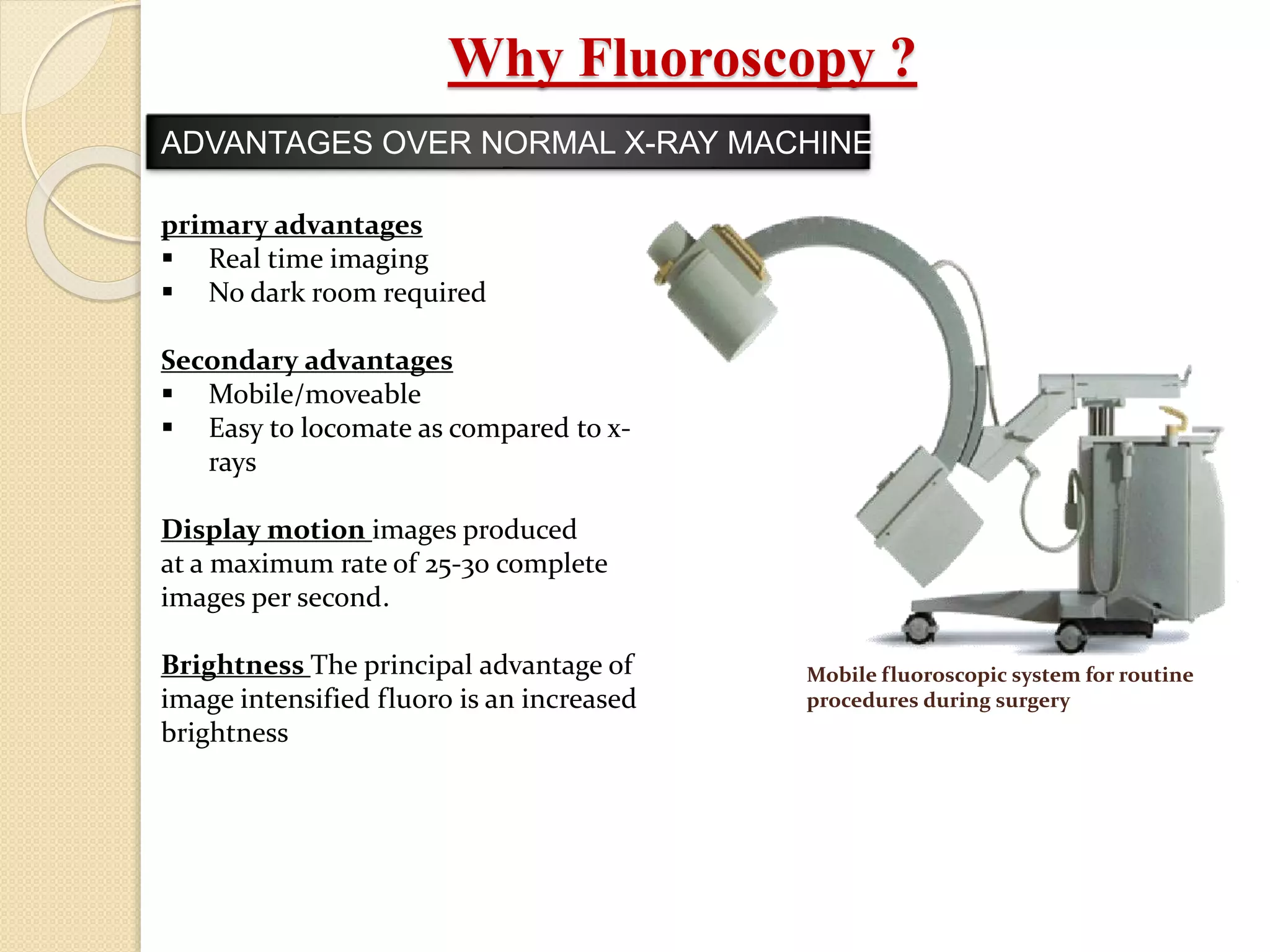
Mobile fluoroscopic system for routine
procedures during surgery
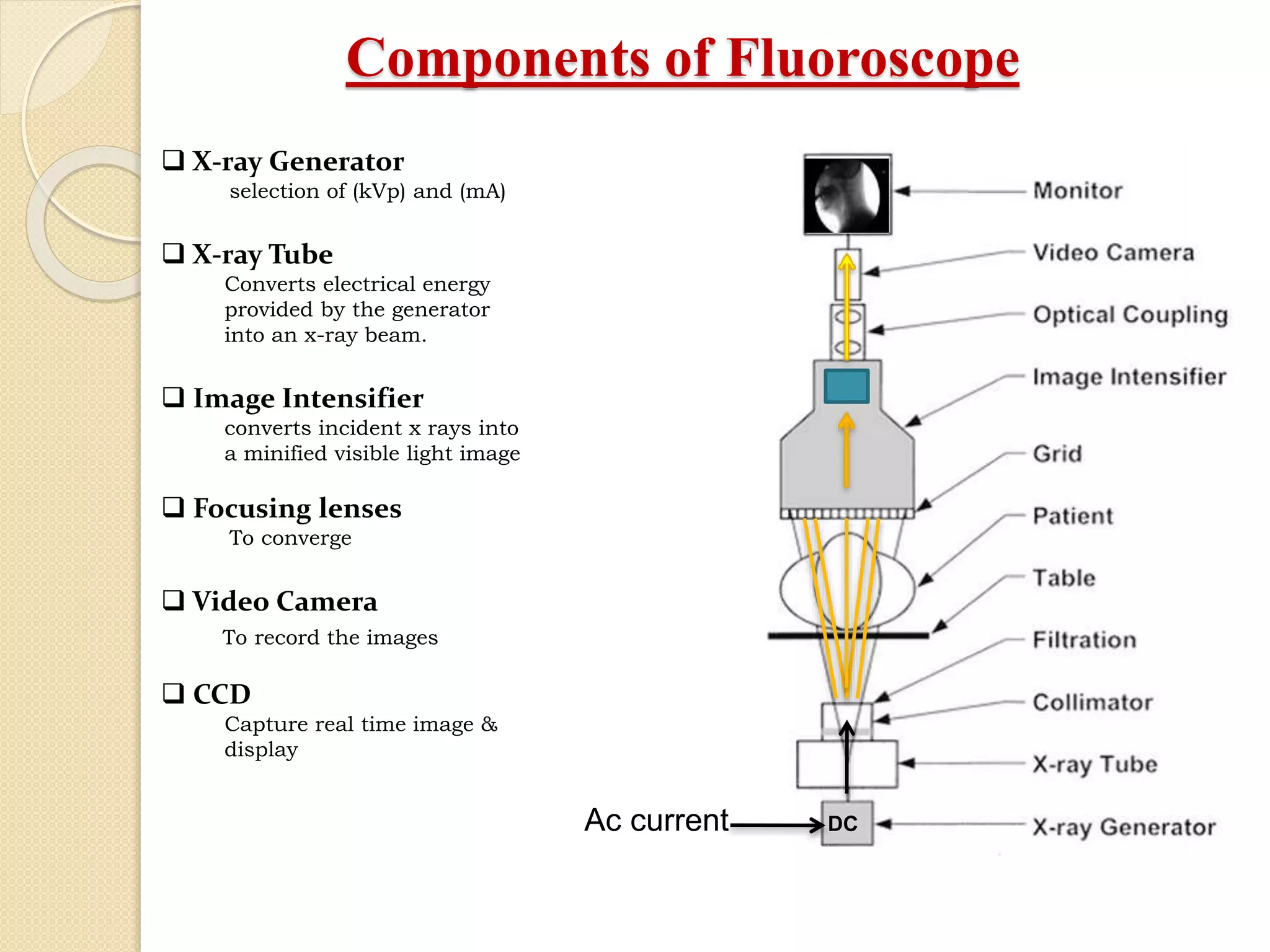
Components of Fluoroscope
 X-ray Generator
selection of (kVp) and (mA)
 X-ray Tube
Converts electrical energy
provided by the generator
into an x-ray beam.
 Image Intensifier
converts incident x rays into
a minified visible light image
 Focusing lenses
To converge
 Video Camera
To record the images
 CCD
Capture real time image &
display
Ac current DC
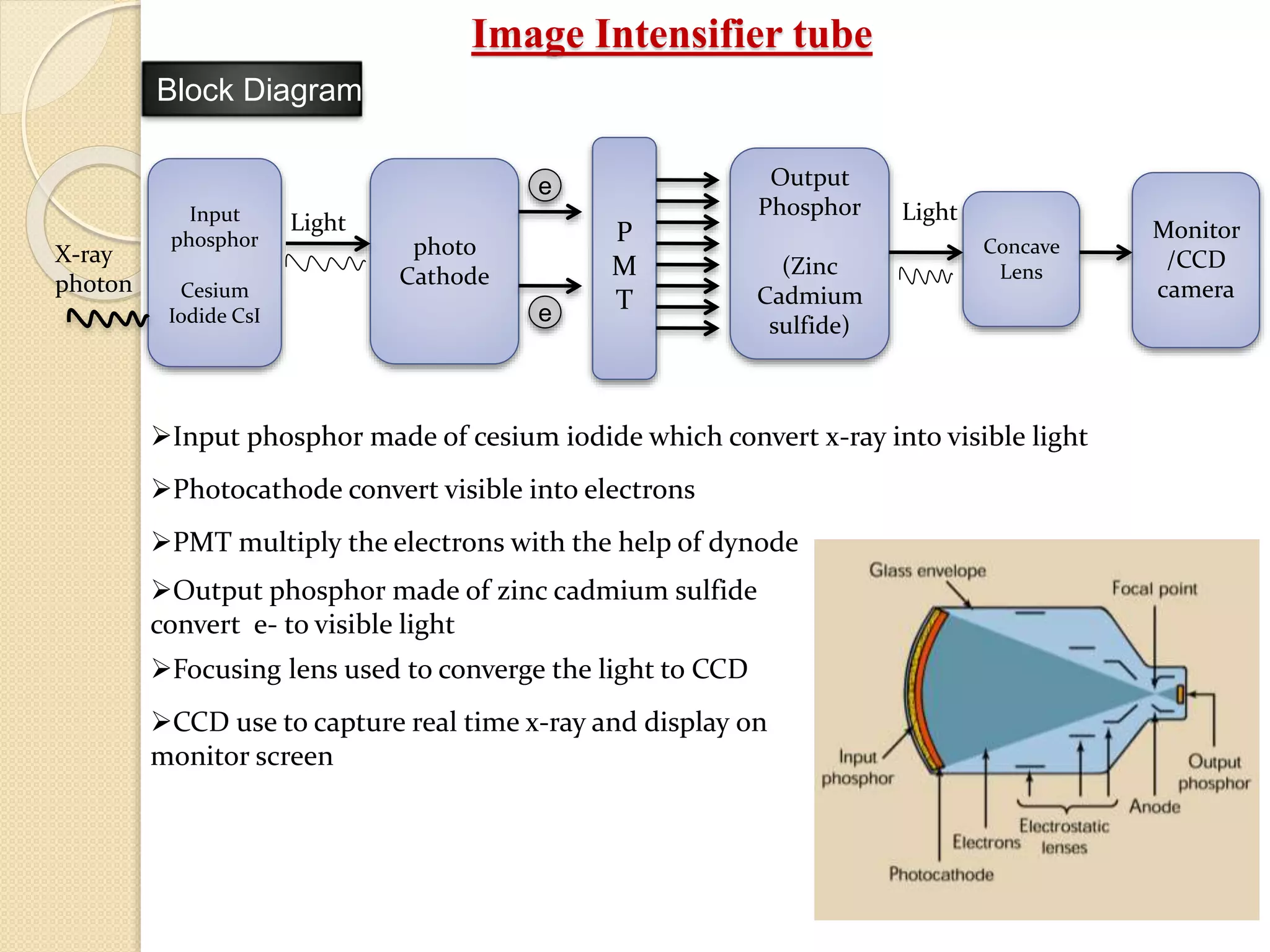
Image Intensifier tube
Input
phosphor
Cesium
Iodide CsI
photo
Cathode
P
M
T
Output
Phosphor
(Zinc
Cadmium
sulfide)
Concave
Lens
Monitor
/CCD
camera
Light
e
e
Light
X-ray
photon
Input phosphor made of cesium iodide which convert x-ray into visible light
Photocathode convert visible into electrons
PMT multiply the electrons with the help of dynode
Output phosphor made of zinc cadmium sulfide
convert e- to visible light
Focusing lens used to converge the light to CCD
CCD use to capture real time x-ray and display on
monitor screen
Block Diagram
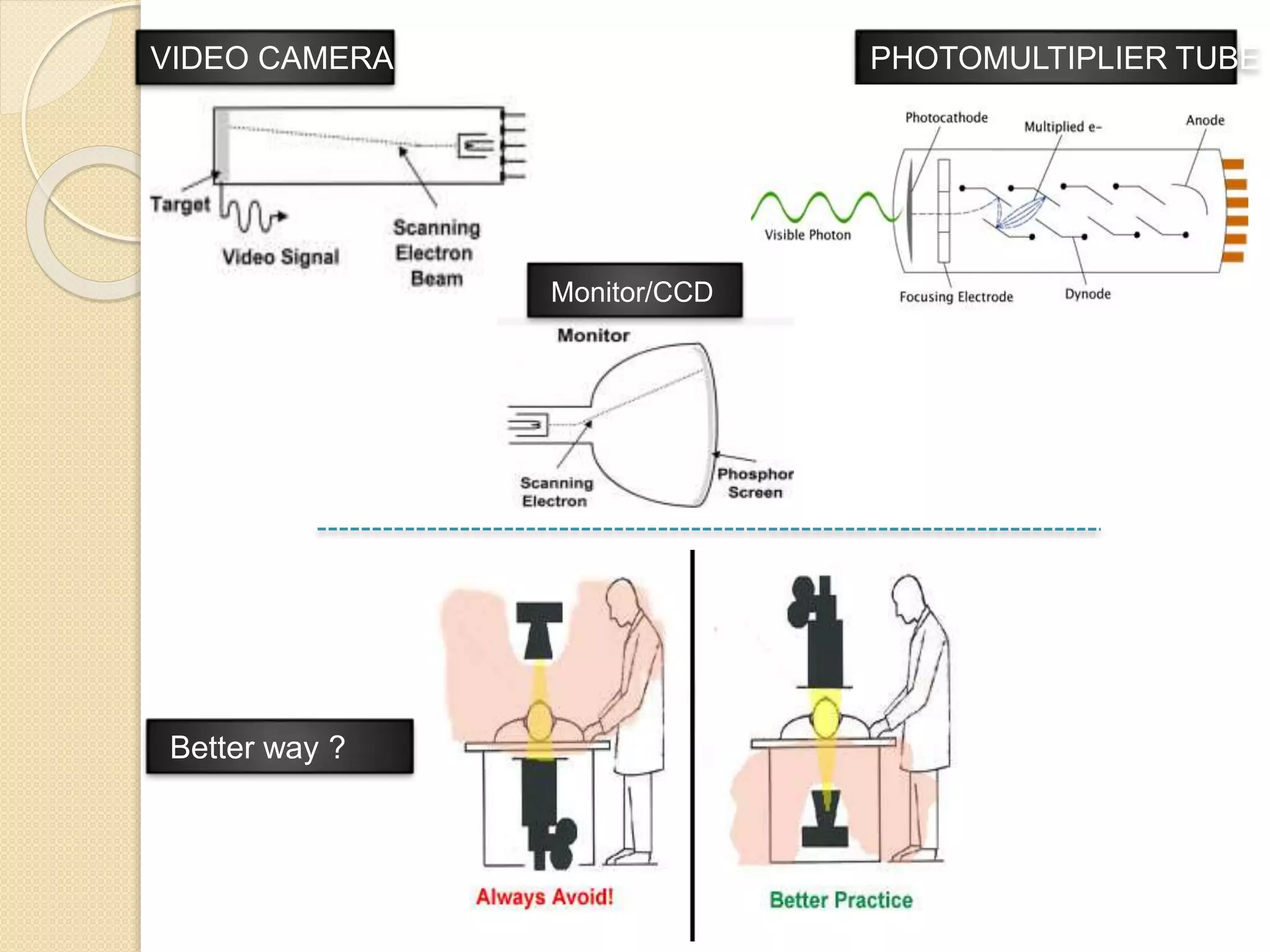
PHOTOMULTIPLIER TUBEVIDEO CAMERA
Monitor/CCD
Better way ?

Flouroscopy ppt

  • 1.
    BASICS OF FLUOROSCOPY /IMAGE INTESIFIERTUBE SIR SYED UNIVERSITY OF ENGINEERING AND TECHNOLOGY SYED HAMMAD AKHTER 2012-BM-071 PRESENTED TO ENGR. FAHAD AKBER
  • 2.
    What Is Fluoroscopy?  Study of moving body structures.  Similar to an x-ray  Fluoroscopy is also an imaging tool.  Allows physicians to look at various body systems  Show continuous x-ray image  Images taken quickly allow for this to happen  Shows movement of body parts “Fluoroscopy is a common technique used by clinical physicians to obtain real time images of moving body parts and internal structures of a patient” A barium swallow exam taken via fluoroscopy
  • 3.
  • 4.
    Why Fluoroscopy ? ADVANTAGESOVER NORMAL X-RAY MACHINE primary advantages  Real time imaging  No dark room required Secondary advantages  Mobile/moveable  Easy to locomate as compared to x- rays Display motion images produced at a maximum rate of 25-30 complete images per second. Brightness The principal advantage of image intensified fluoro is an increased brightness Mobile fluoroscopic system for routine procedures during surgery
  • 5.
    Components of Fluoroscope X-ray Generator selection of (kVp) and (mA)  X-ray Tube Converts electrical energy provided by the generator into an x-ray beam.  Image Intensifier converts incident x rays into a minified visible light image  Focusing lenses To converge  Video Camera To record the images  CCD Capture real time image & display Ac current DC
  • 6.
    Image Intensifier tube Input phosphor Cesium IodideCsI photo Cathode P M T Output Phosphor (Zinc Cadmium sulfide) Concave Lens Monitor /CCD camera Light e e Light X-ray photon Input phosphor made of cesium iodide which convert x-ray into visible light Photocathode convert visible into electrons PMT multiply the electrons with the help of dynode Output phosphor made of zinc cadmium sulfide convert e- to visible light Focusing lens used to converge the light to CCD CCD use to capture real time x-ray and display on monitor screen Block Diagram
  • 7.