Why librarians need to use social
             media
            Phil Bradley
What are we talking about?
• Let’s just not go there shall we?

• Definitions are less important than what you
  can do with it

• The activity, not the tool is the key

• Oh, if you really insist…
What is Web 2.0?
• Web 2.0 is a term often applied to a perceived
  ongoing transition of the World Wide Web
  from a collection of websites to a full-fledged
  computing platform serving web applications
  to end users. Ultimately Web 2.0 services are
  expected to replace desktop computing
  applications for many purposes.
  – Wikipedia entry
And ‘social media’?
The term Social Media refers to the use of web-based and
mobile technologies to turn communication into an
interactive dialogue. Andreas Kaplan and Michael Haenlein
define social media as "a group of Internet-based applications
that build on the ideological and technological foundations of
Web 2.0, and that allow the creation and exchange of
user-generated content.“ Social media are media for social
interaction, as a superset beyond social communication.
Enabled by ubiquitously accessible and scalable
communication techniques, social media substantially change
the way of communication between organizations,
communities, as well as individuals.


                          http://en.wikipedia.org/wiki/Social_media
The old way and the new way
Pre-Social Media                    Now and the near future
• Complicated                       • Simple
   – HTML, SEO, FTP – and that’s       – Tools exist to create pages
     before you even start!              and resources for you
• Computer based                    • Cloud based
   – Software and content on your      – Save directly onto internet
     machine or network                  servers, without even
                                         realising it!
• Installed software                • Browser based
   – You have to buy, install and      – You load the software when
     update the software                 you need it
The old way and the new way
• Solitary                     • Crowd based
   – You worked by yourself      – Easy to share
     & sharing was difficult       information eg b’marks
• Communication                • Communication
   – Difficult and limited       – Probably too many ways
                                   to communicate now!


               See the conversation prism!
http://www.theconversationprism.com/
The old way and the new way
• Data was in one place        • Data can be everywhere
   – The website ruled over       – Share data across
     everything                     different sites with 1
                                    click
• Control was through          • Control is dispersed
  the website                     – Weblogs, Twitter,
   – Promotion, information,        Facebook groups
     limited contact
• Consumption                  • Creation
   – Of data                      – Of data
The old way and the new way
• Web searching               • Internet searching
  – Websites, page ranking       – User Generated Content,
                                   value of the person
• Information had to be       • Information comes to
  tracked down                  the searcher
  – Searches run on a            – RSS feeds, news
    regular basis, slow and        curation, alerting
    laborious                      services
• Information                 • Information
  – Badged, owned,               – Out in the wild, in
    controlled                     different places, formats
The old way and the new way
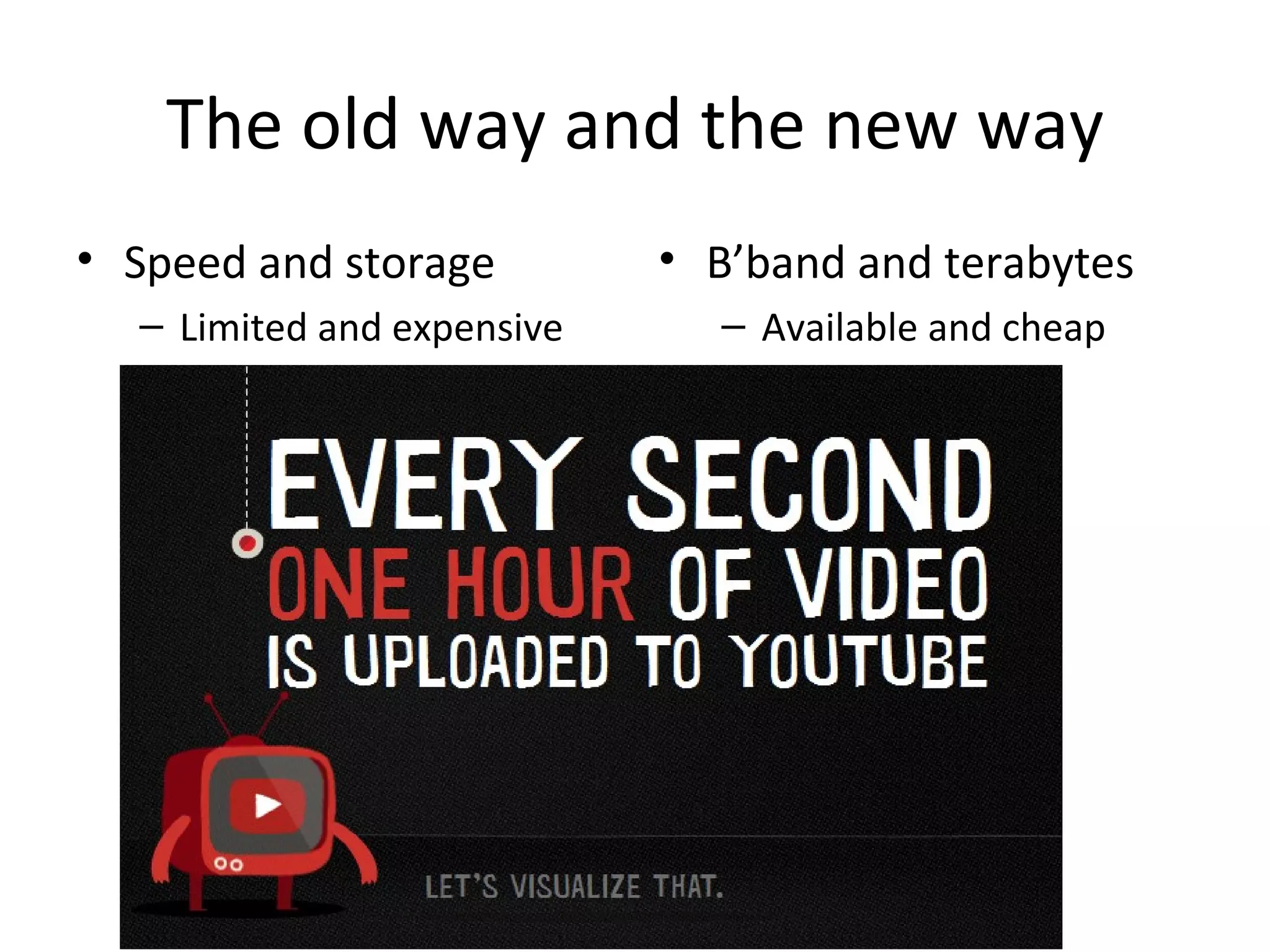
• Speed and storage         • B’band and terabytes
  – Limited and expensive     – Available and cheap
The old way and the new way
• Getting it right              • Getting it fast
   – Mistakes cost money           – Speed is really important
• Desktops were king            • Access is key
   – Activity focussed around      – Laptops, notebooks,
     the machine                     smartphones, smart tvs
Fall in desktop purchase
The old way and the new way
• Web 1.0 was about              • Social media is about
  limitations                      free access to
   – Control in the hands of a     information
     few
• Strict and clear roles         • Roles now blurred
Yes… but?
• “It’s vacuous marketing hype”
• “Web 2.0 is totally silly”
• “Meaningless”
• “is made entirely of pretentious self serving
  morons.”
• “a lot of thin but very hot air blown at you by
  those who are convinced that having nothing
  to say is by no means a good reason to shut
  up.”
So…
• Is it a question of degrees of difference?
Or…
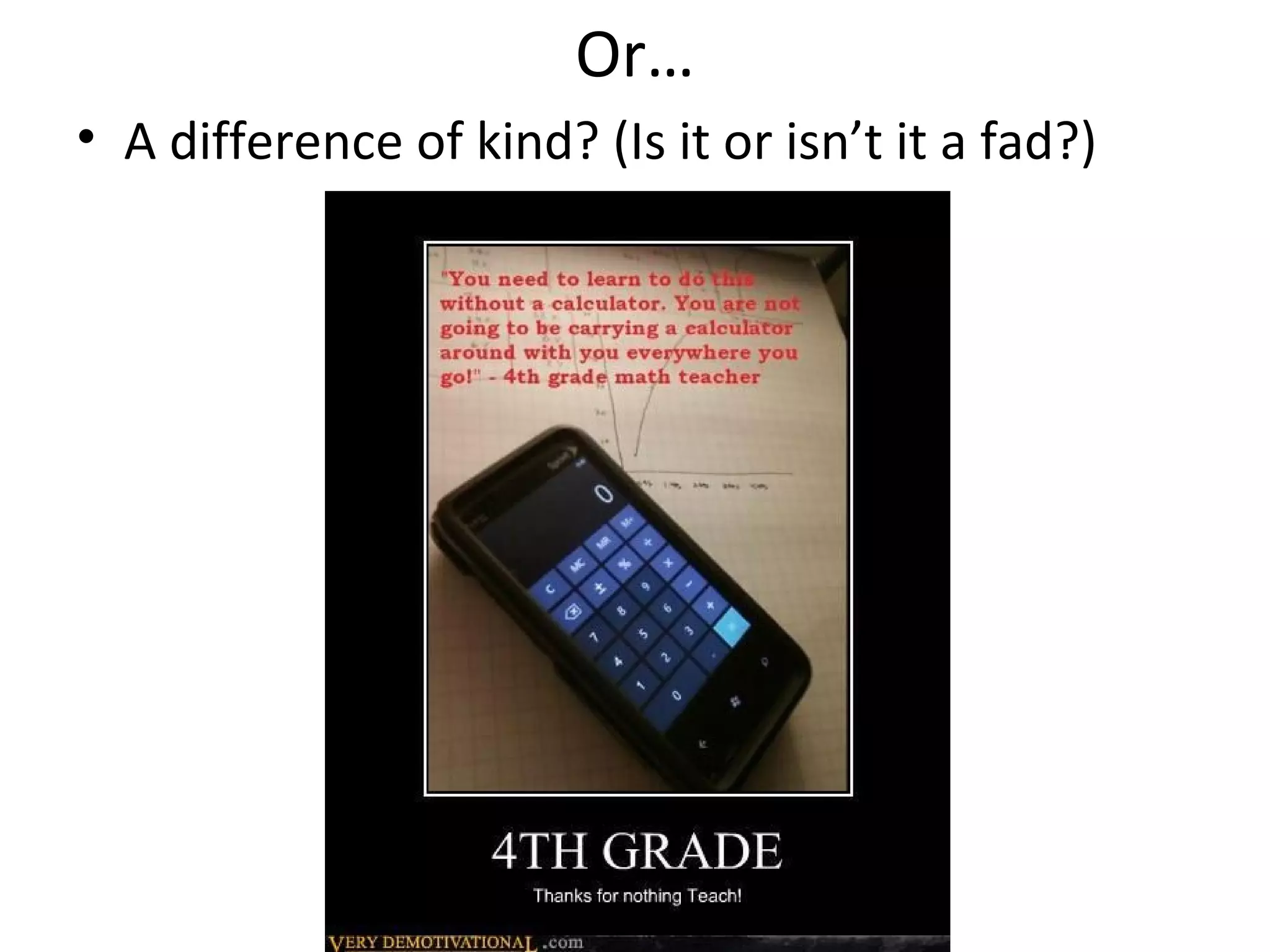
• A difference of kind? (Is it or isn’t it a fad?)
What does it mean in practice?
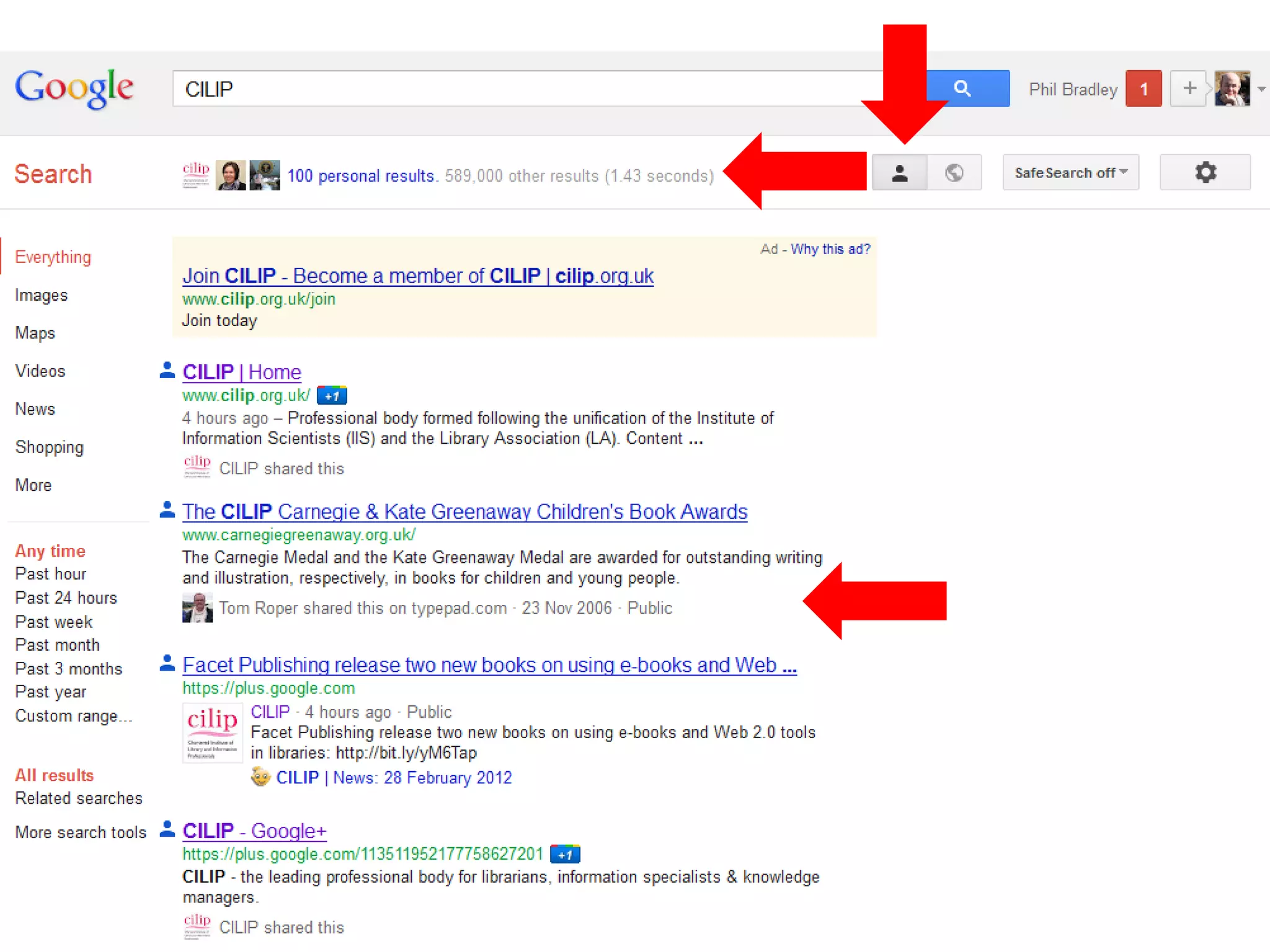
Social media in search
Social media in Google
Social affects results
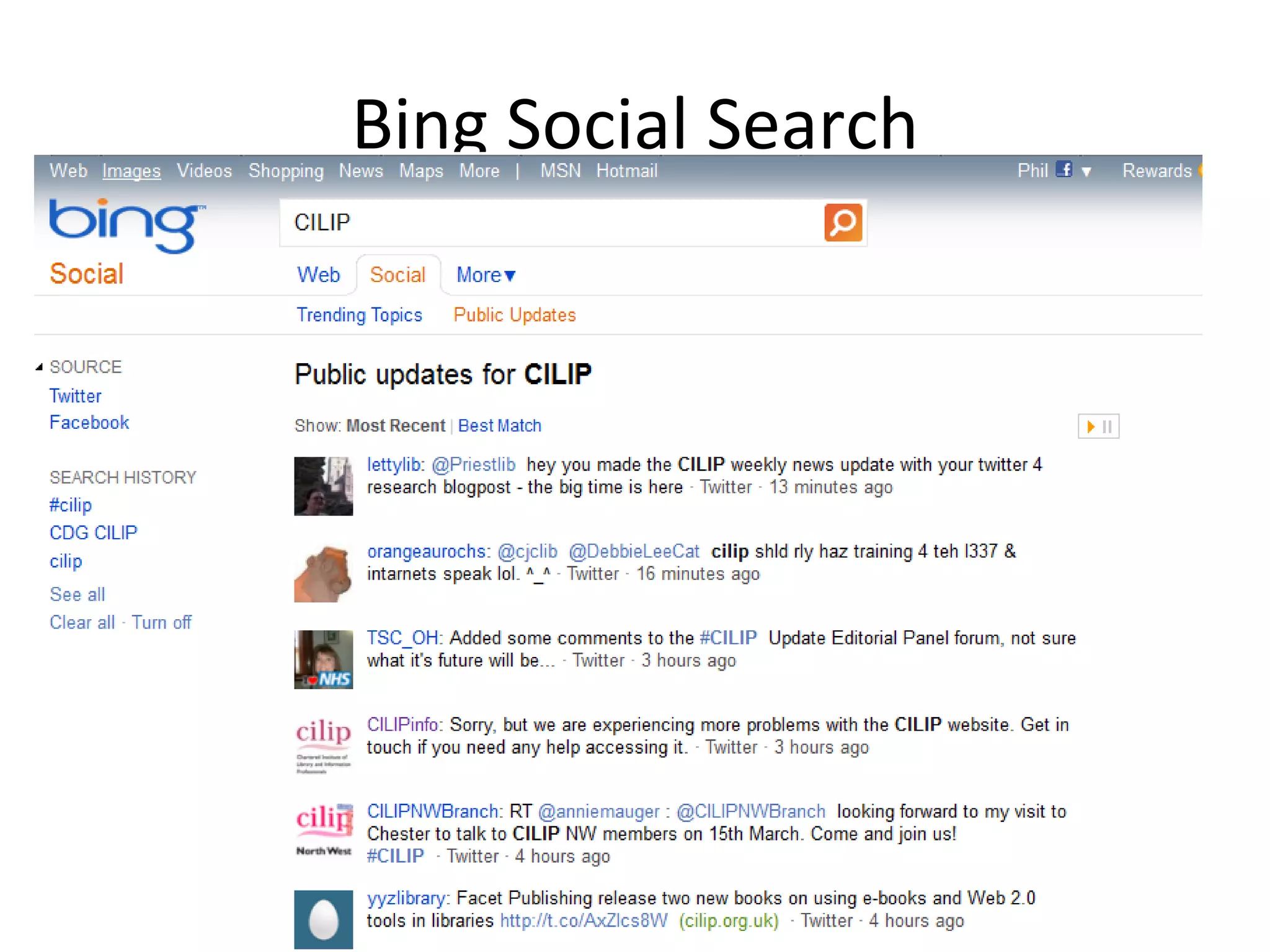
Bing Social Search
Blekko and Facebook
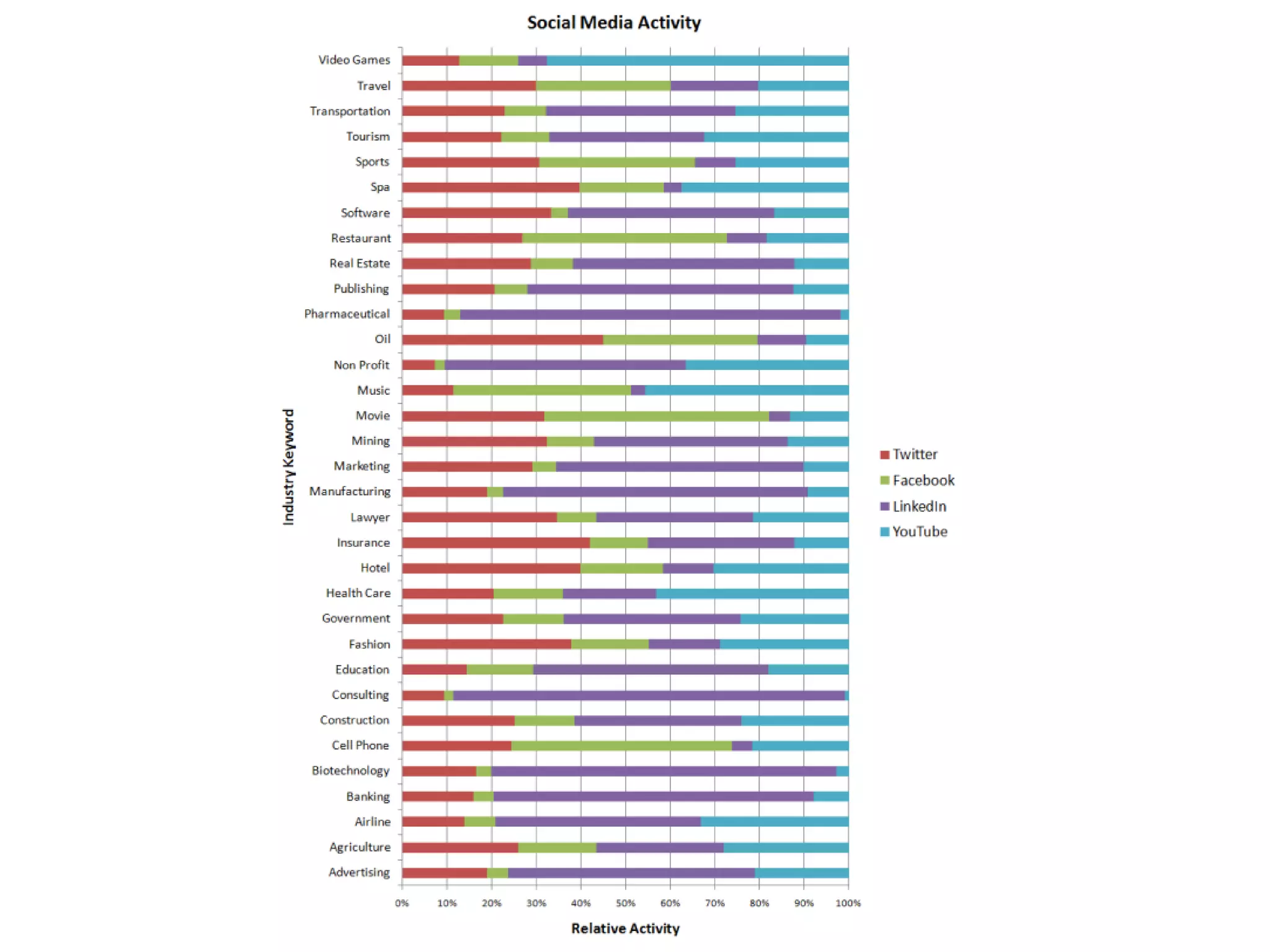
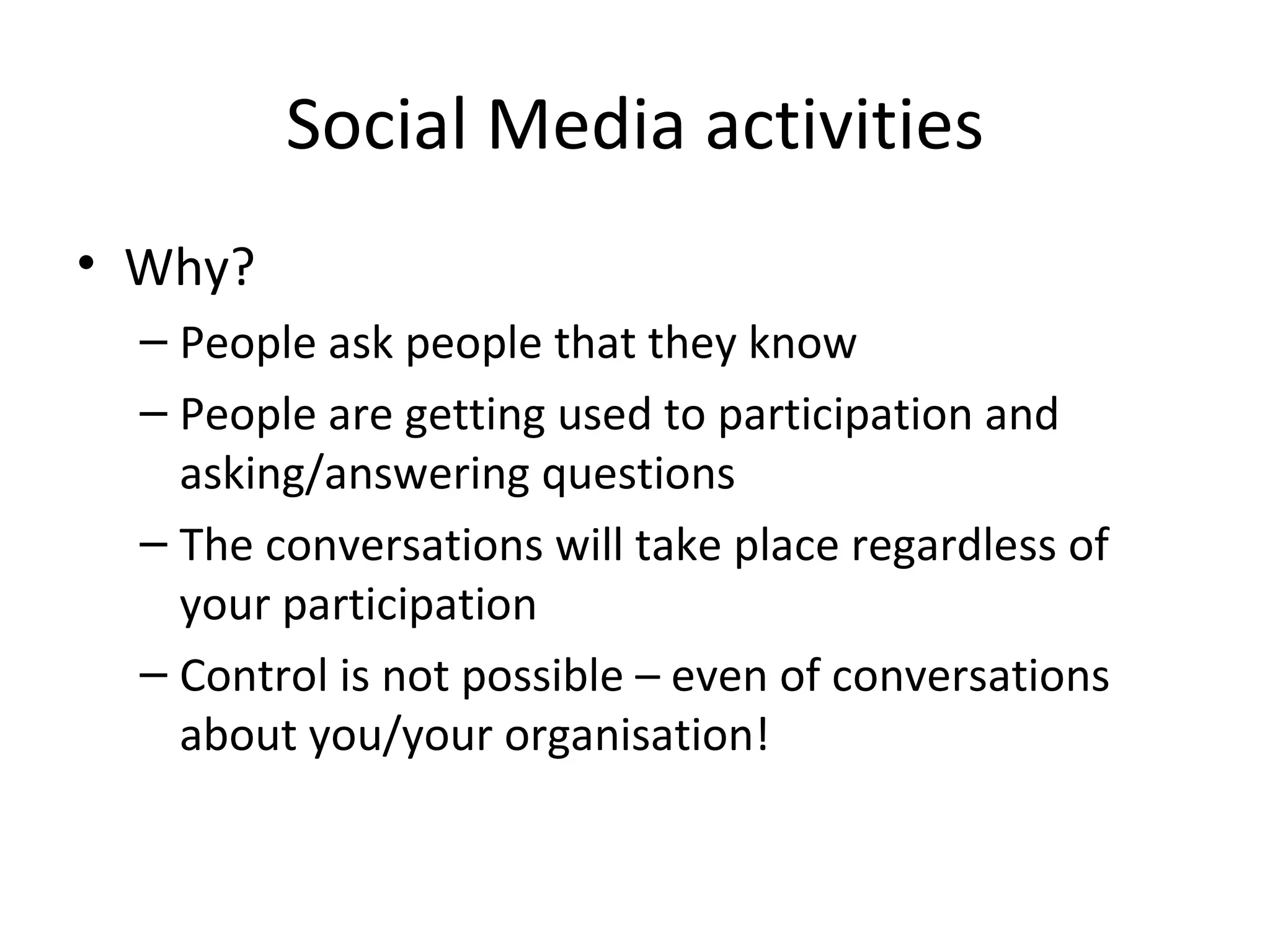
Social Media activities
• Why?
  – People ask people that they know
  – People are getting used to participation and
    asking/answering questions
  – The conversations will take place regardless of
    your participation
  – Control is not possible – even of conversations
    about you/your organisation!
Where do you need to be?
Google+
Google Reader
Facebook: People
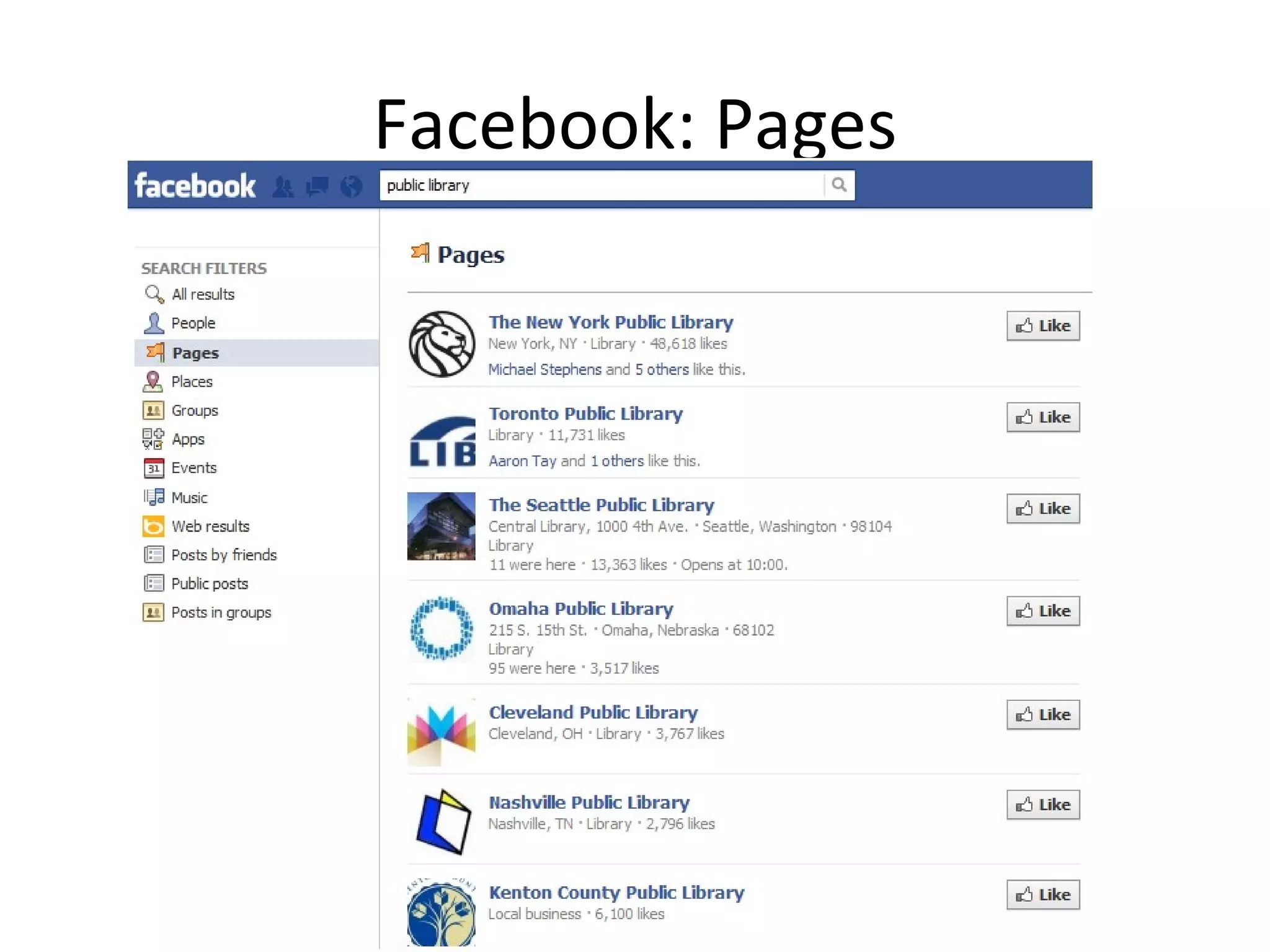
Facebook: Pages
Facebook: Places
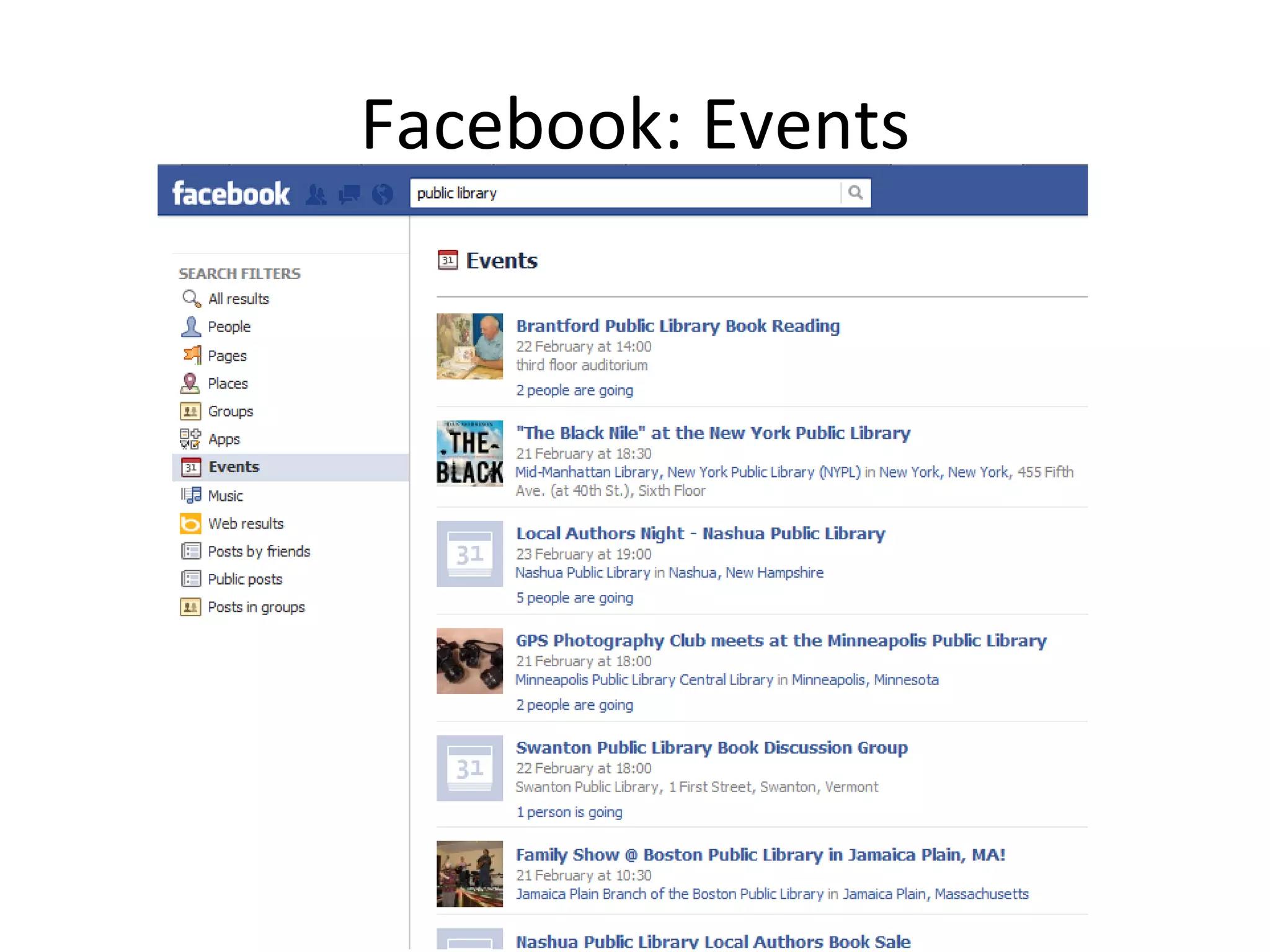
Facebook: Events
Facebook: Groups
Facebook: Library pages
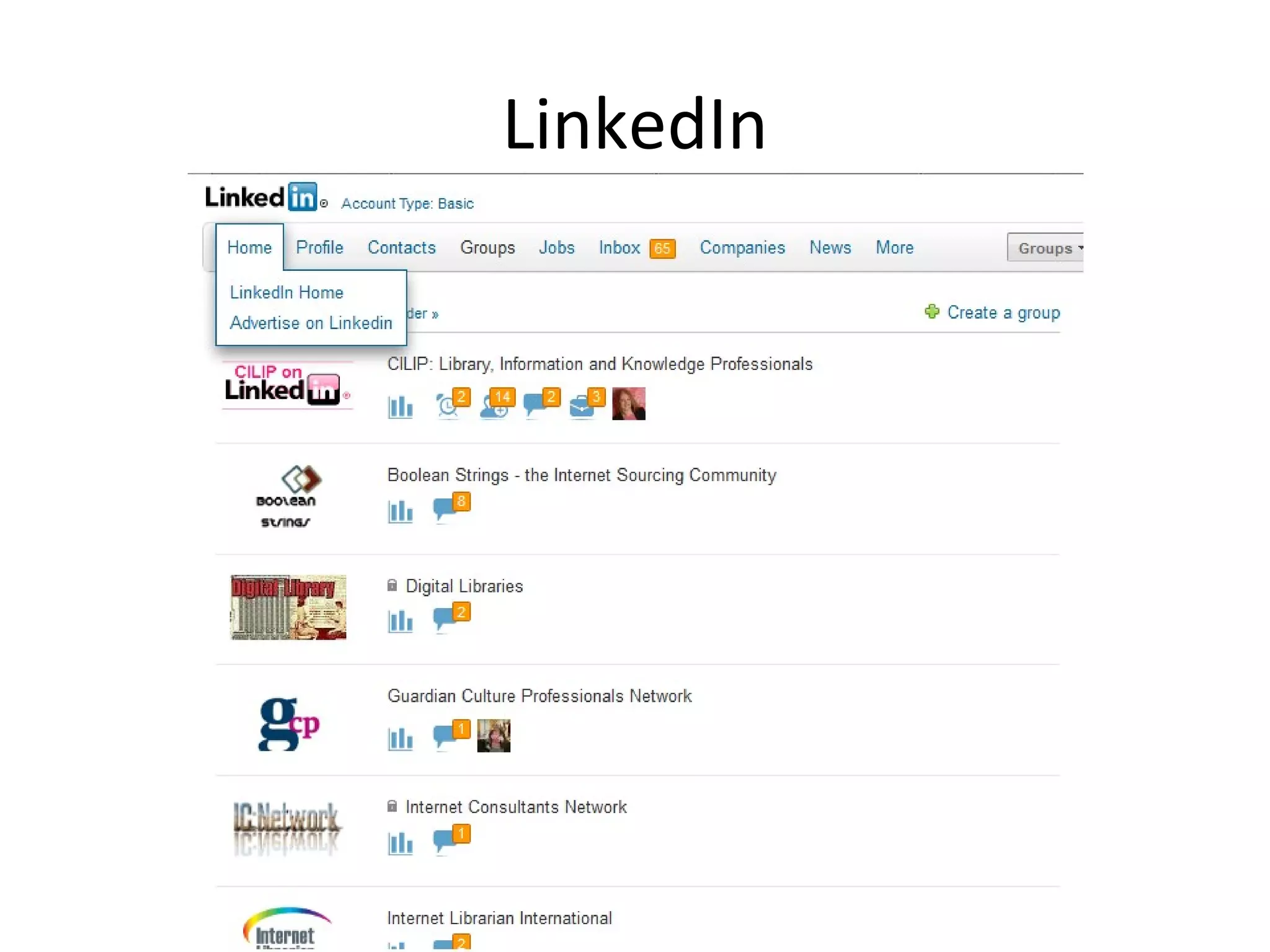
LinkedIn
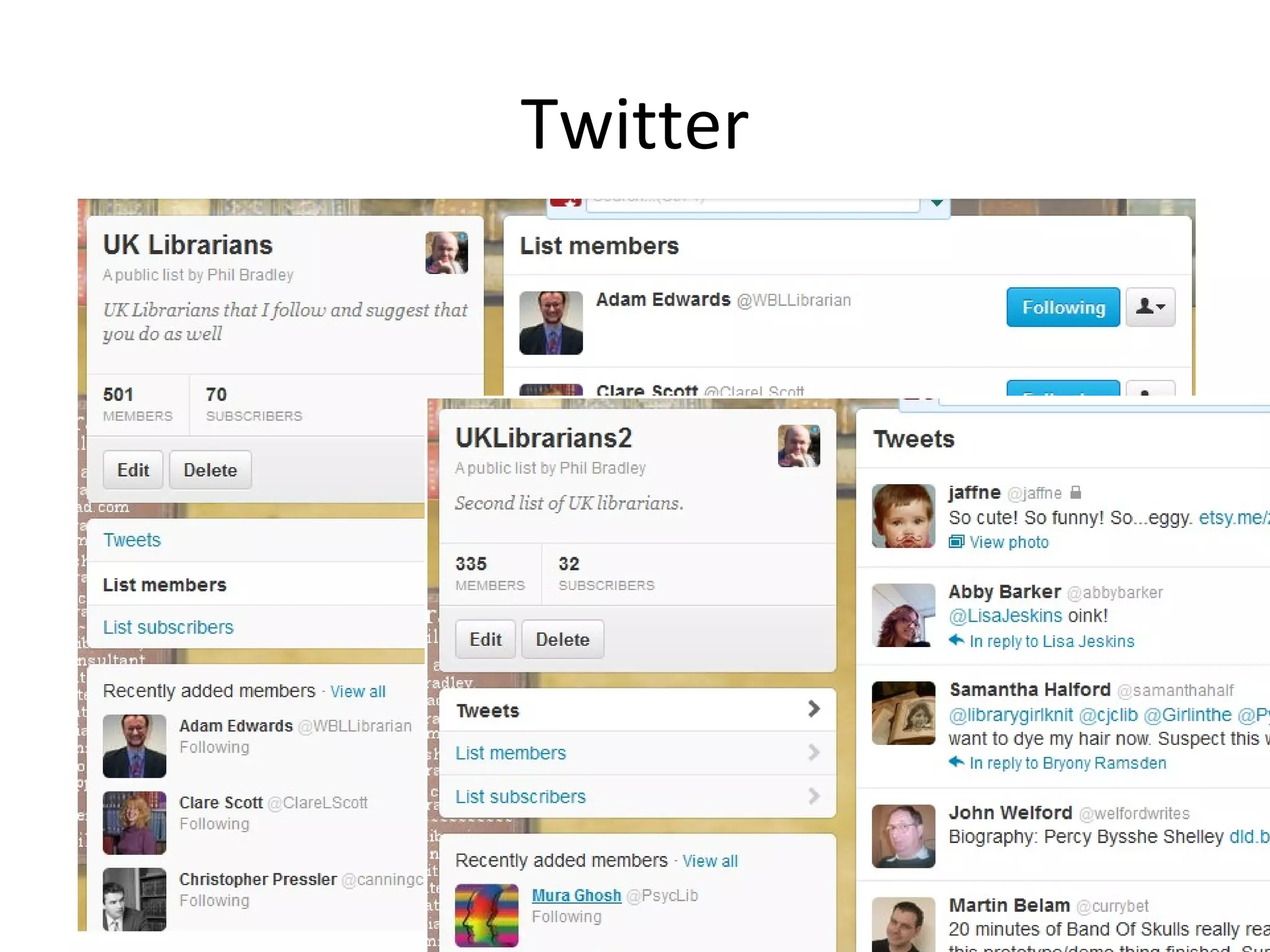
Twitter
Twitter Search
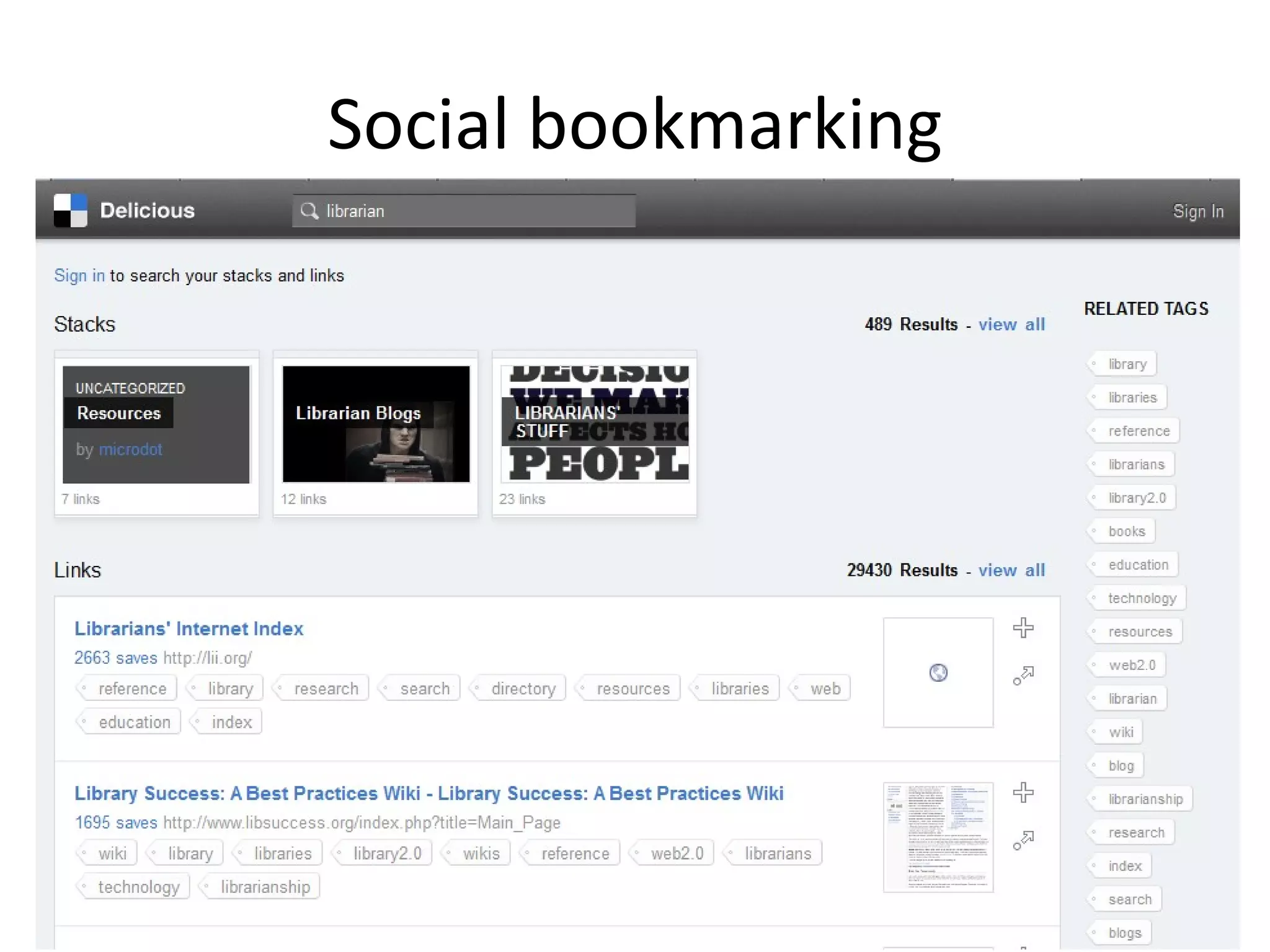
Social bookmarking
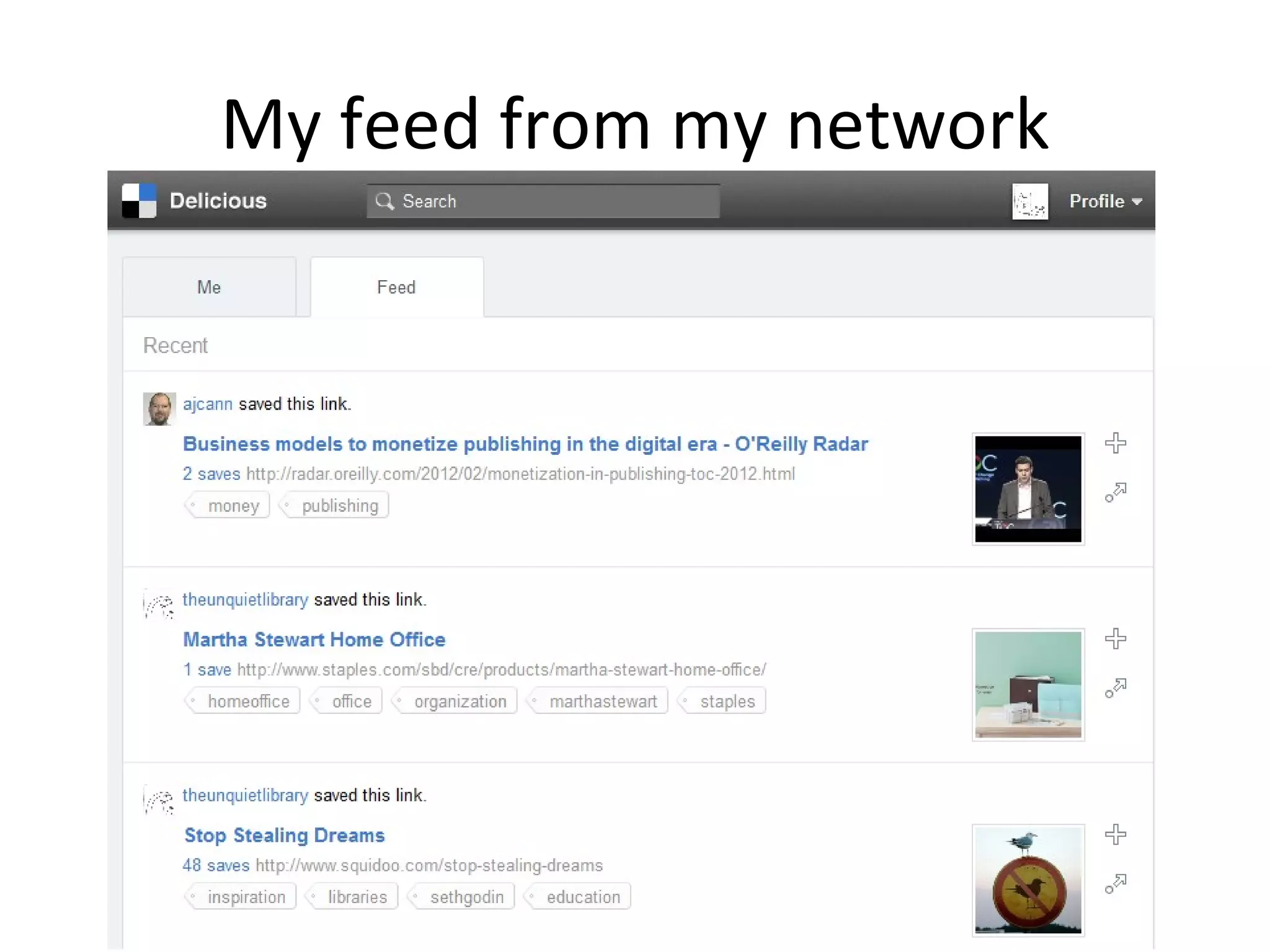
My feed from my network
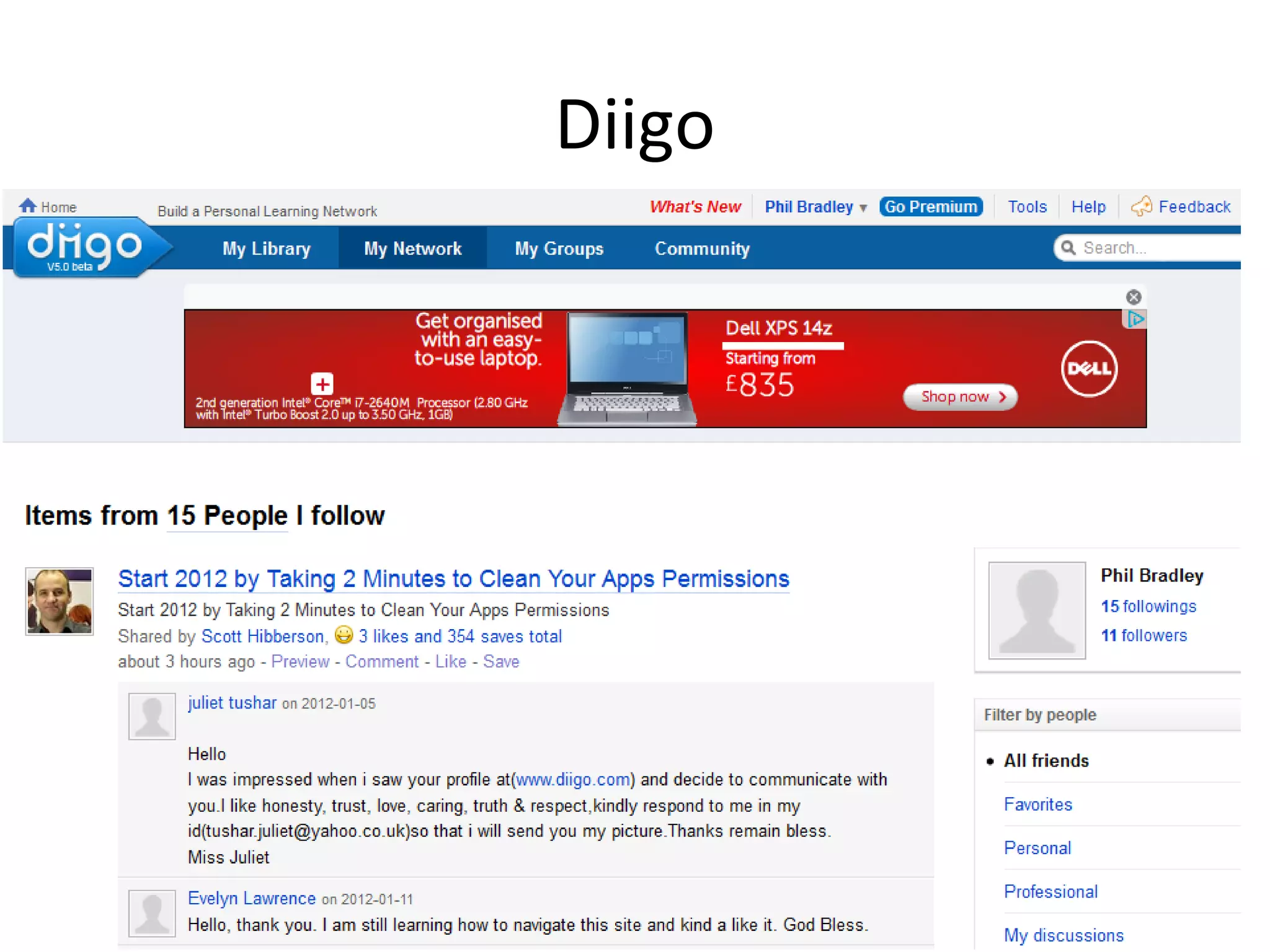
Diigo
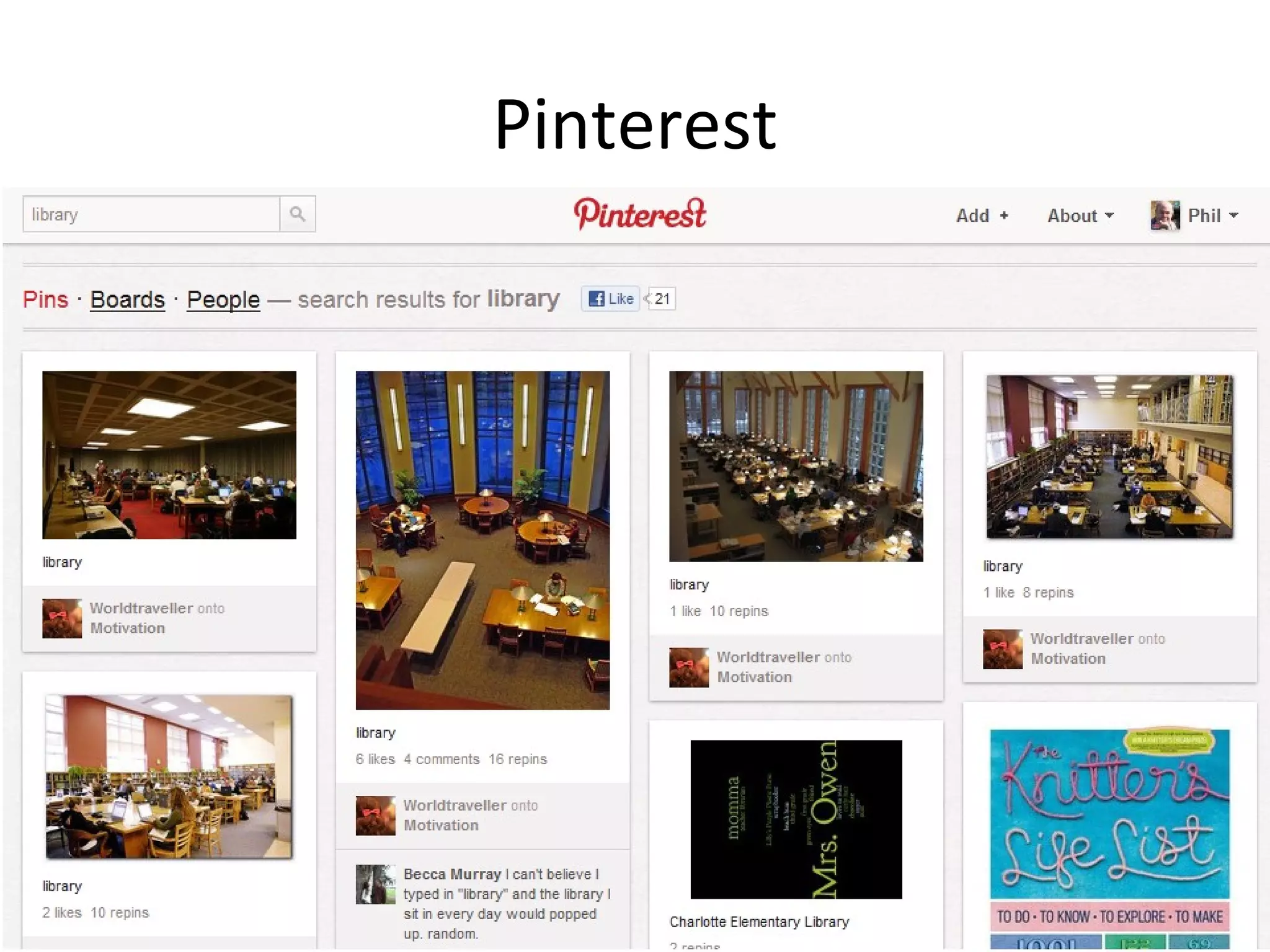
Pinterest
iPad/News curation resources
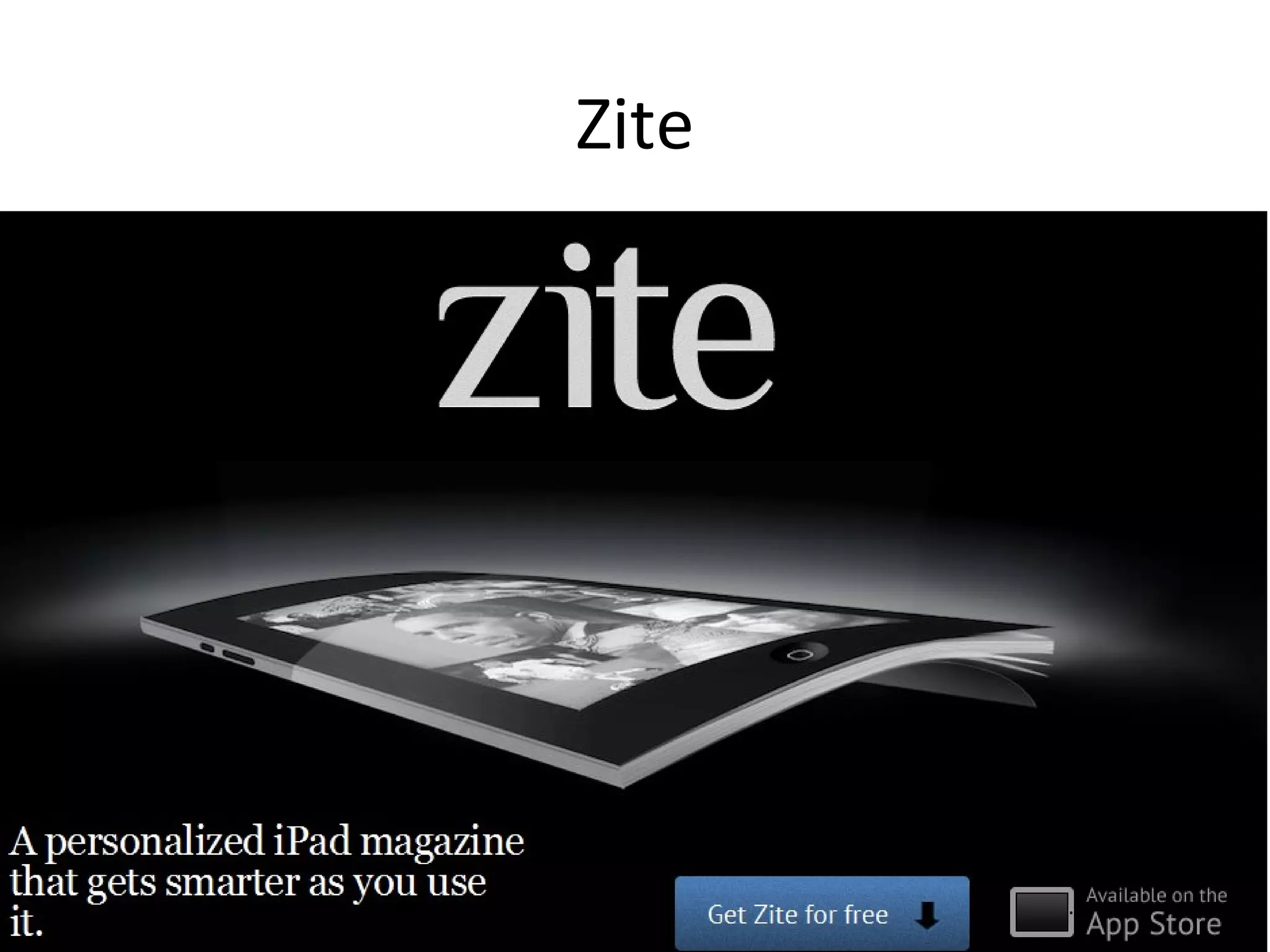
Zite
Zite top stories
FlipBoard
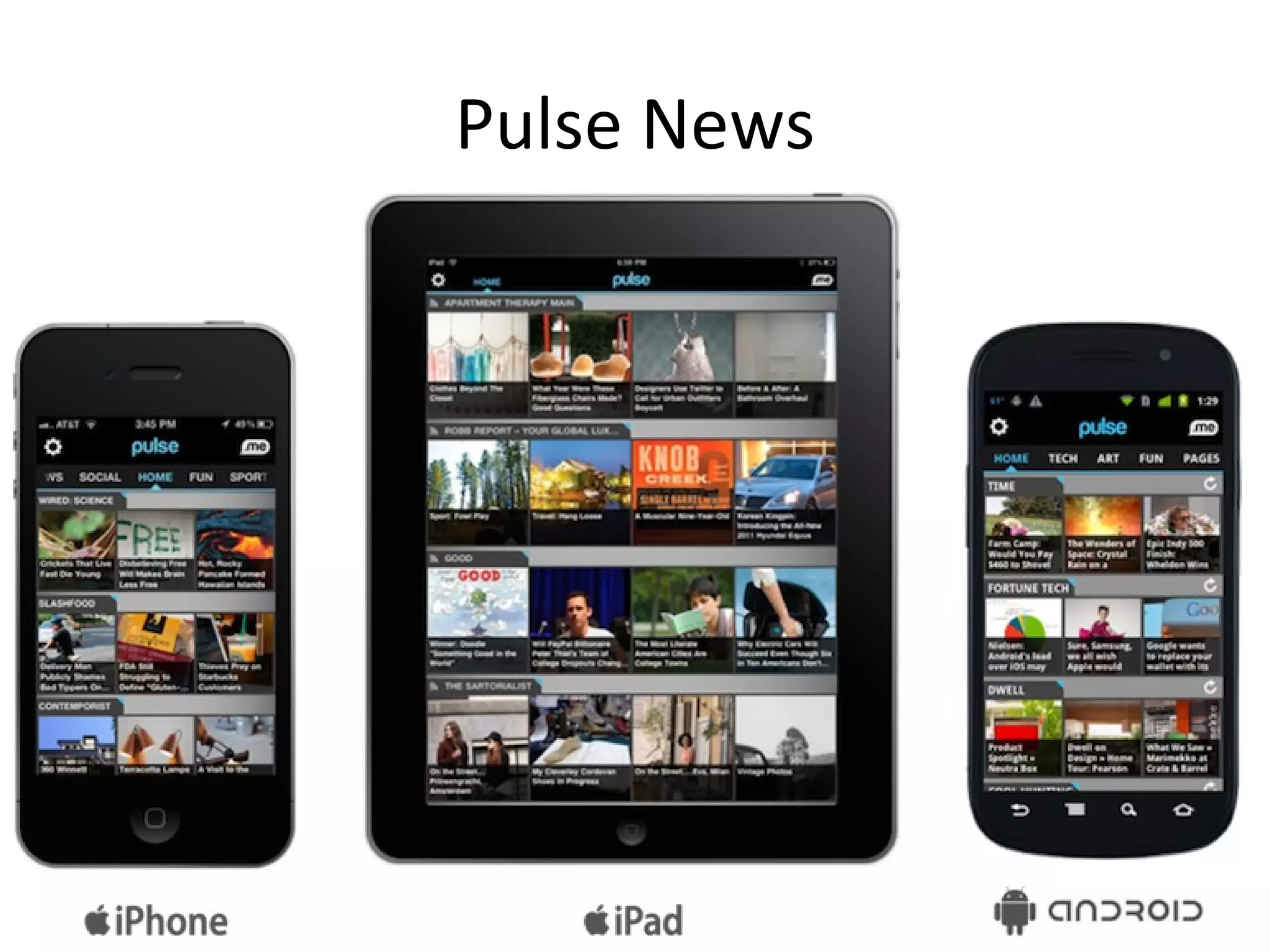
Pulse News
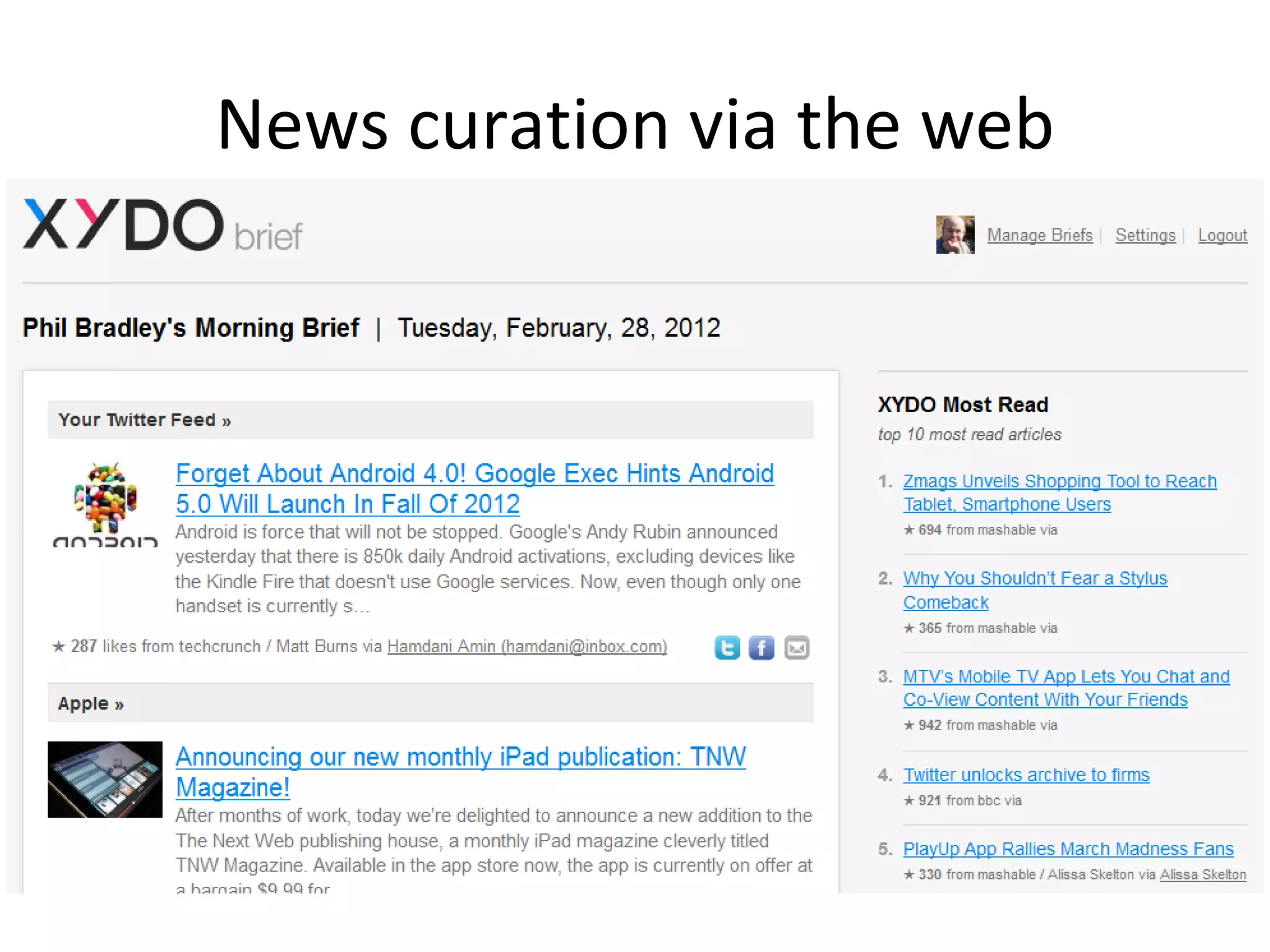
News curation via the web
News.me daily digest
Scoop.it
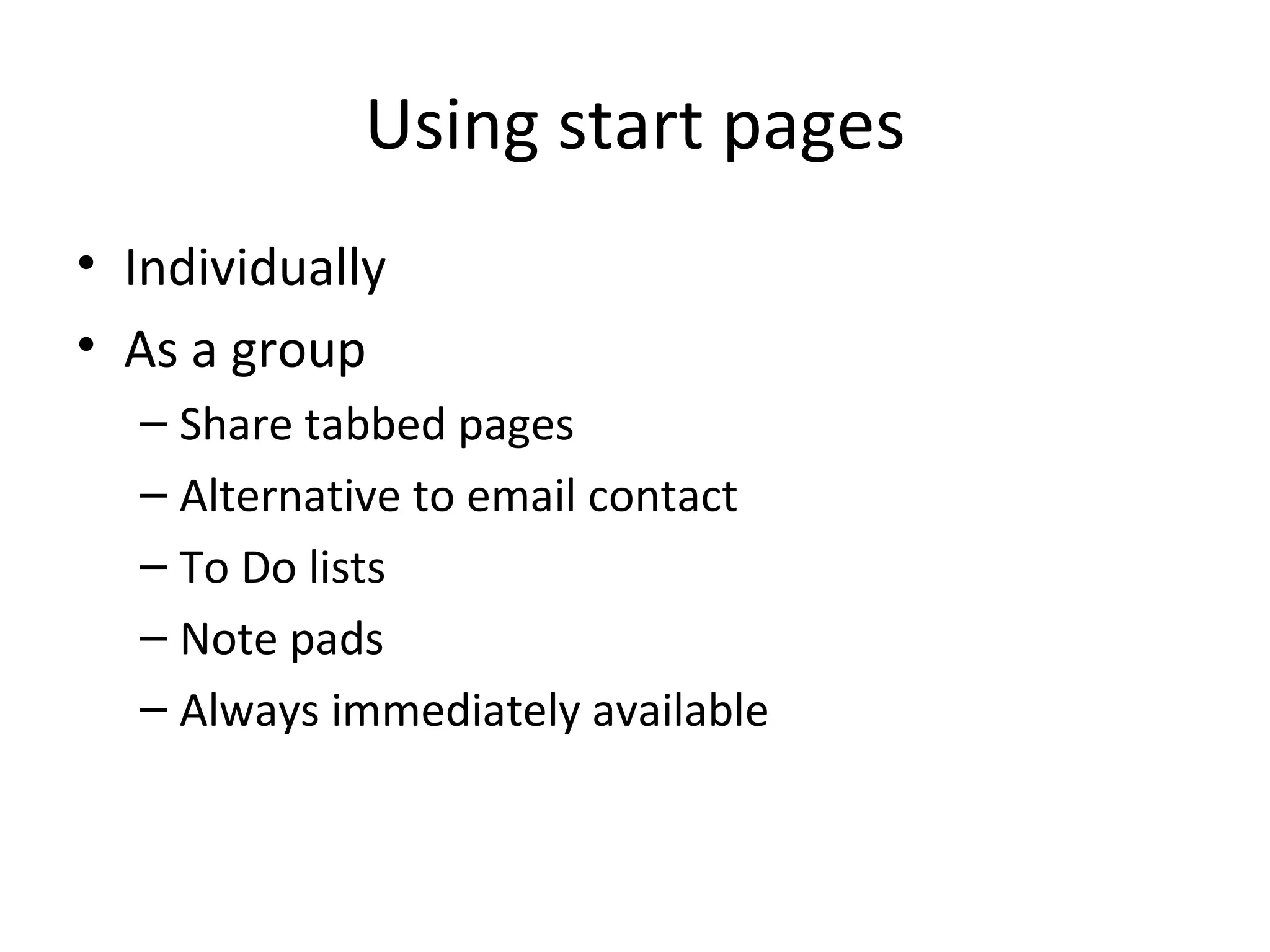
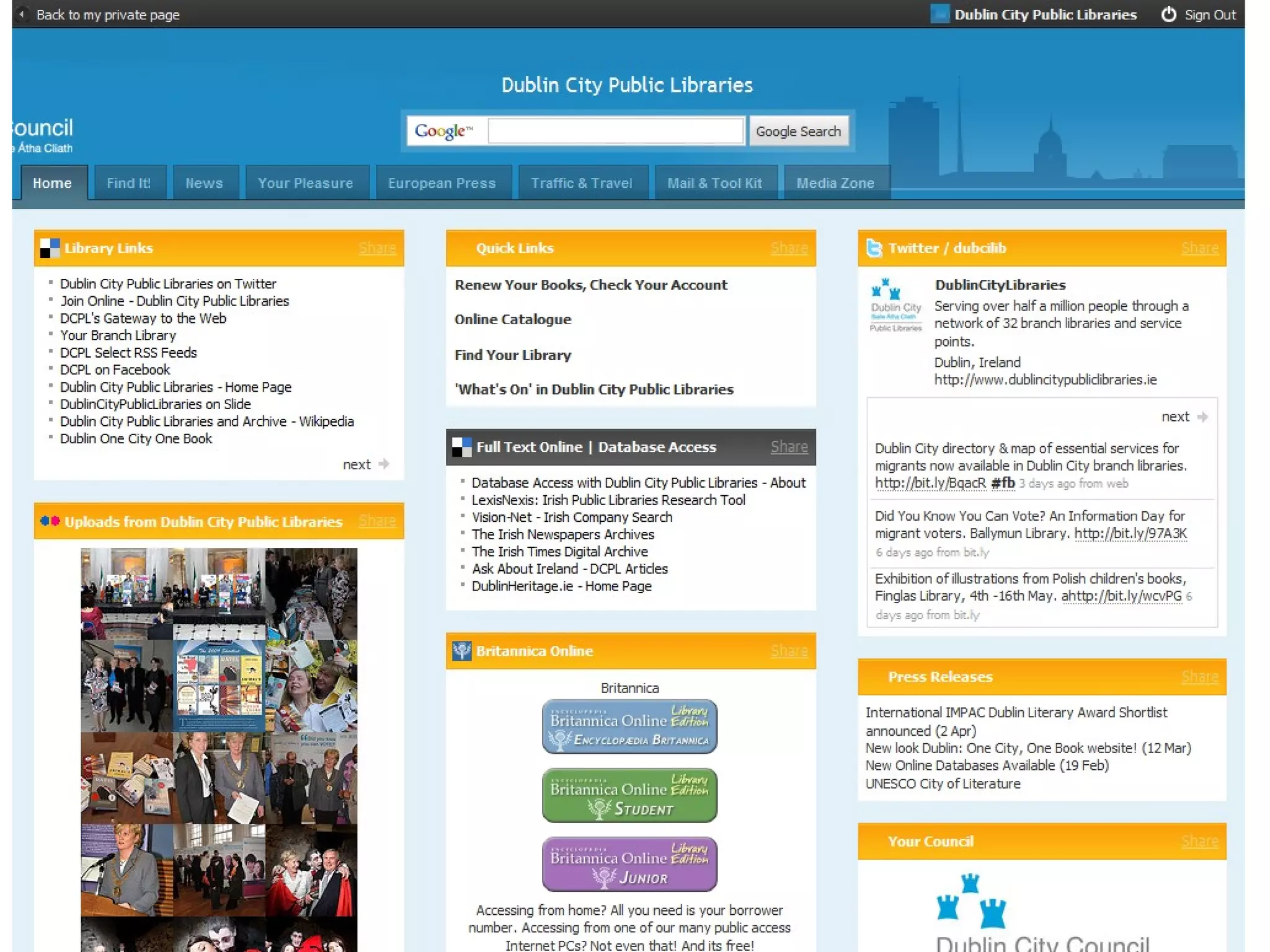
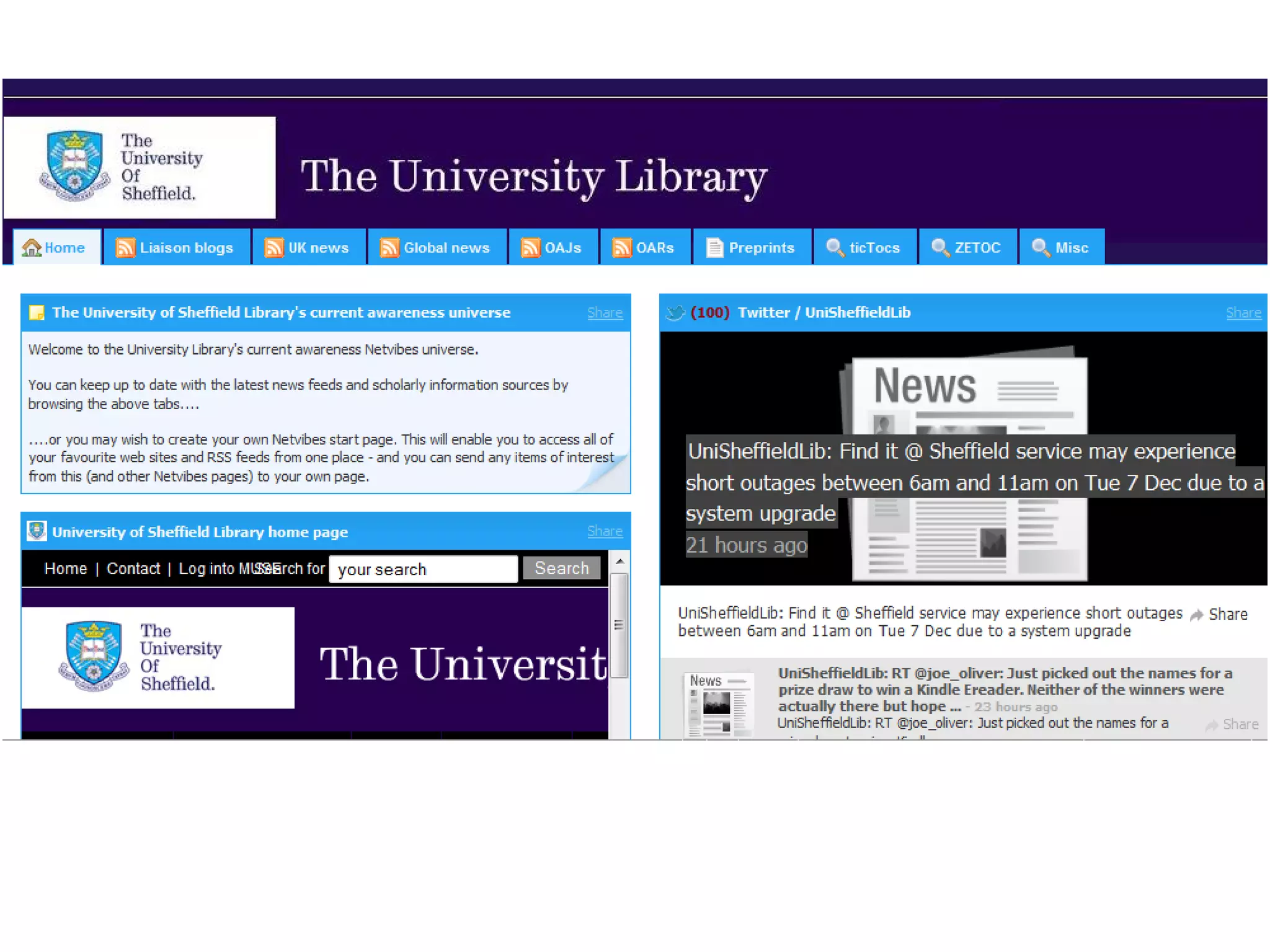
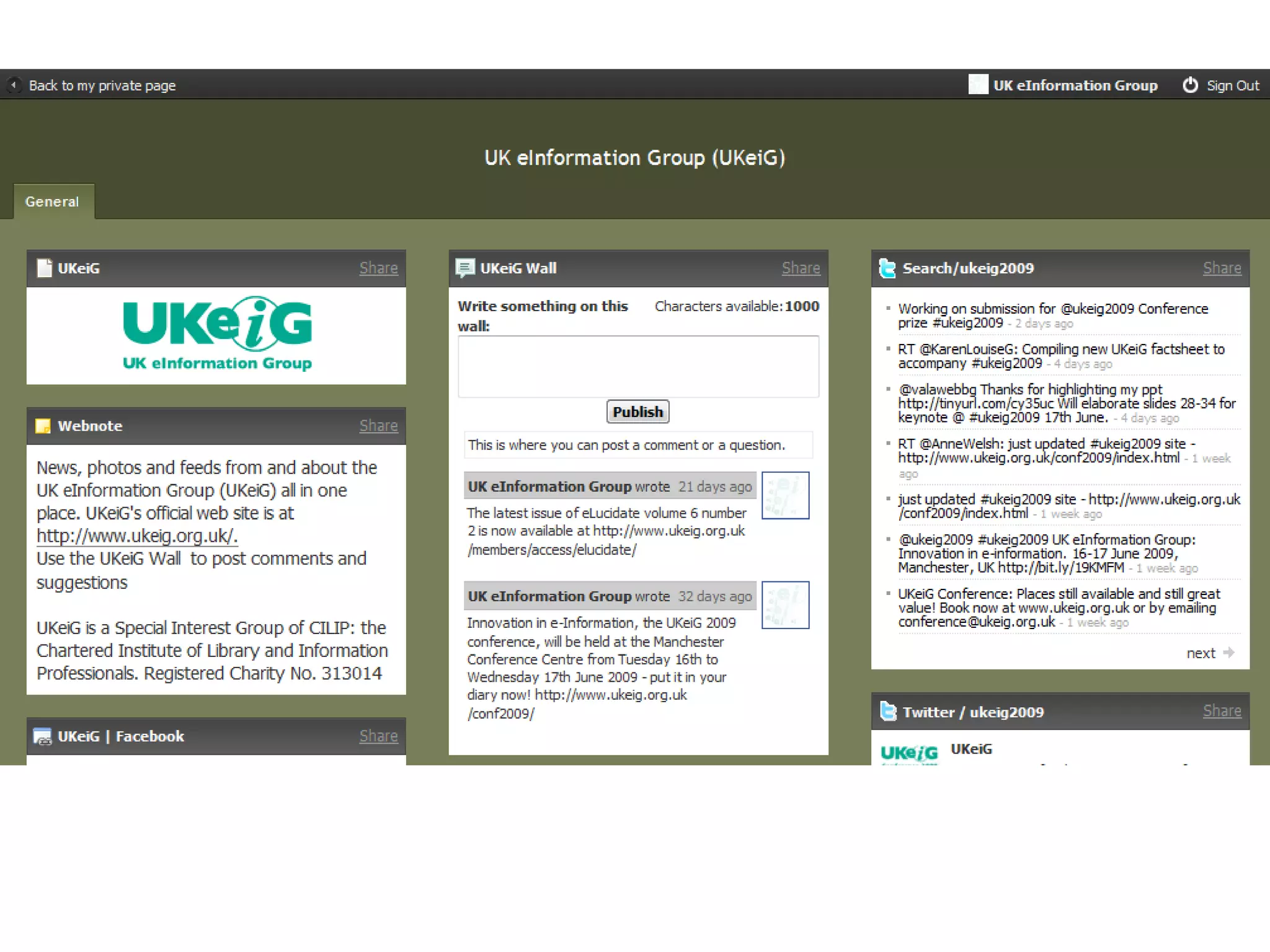
Using start pages
• Individually
• As a group
  – Share tabbed pages
  – Alternative to email contact
  – To Do lists
  – Note pads
  – Always immediately available
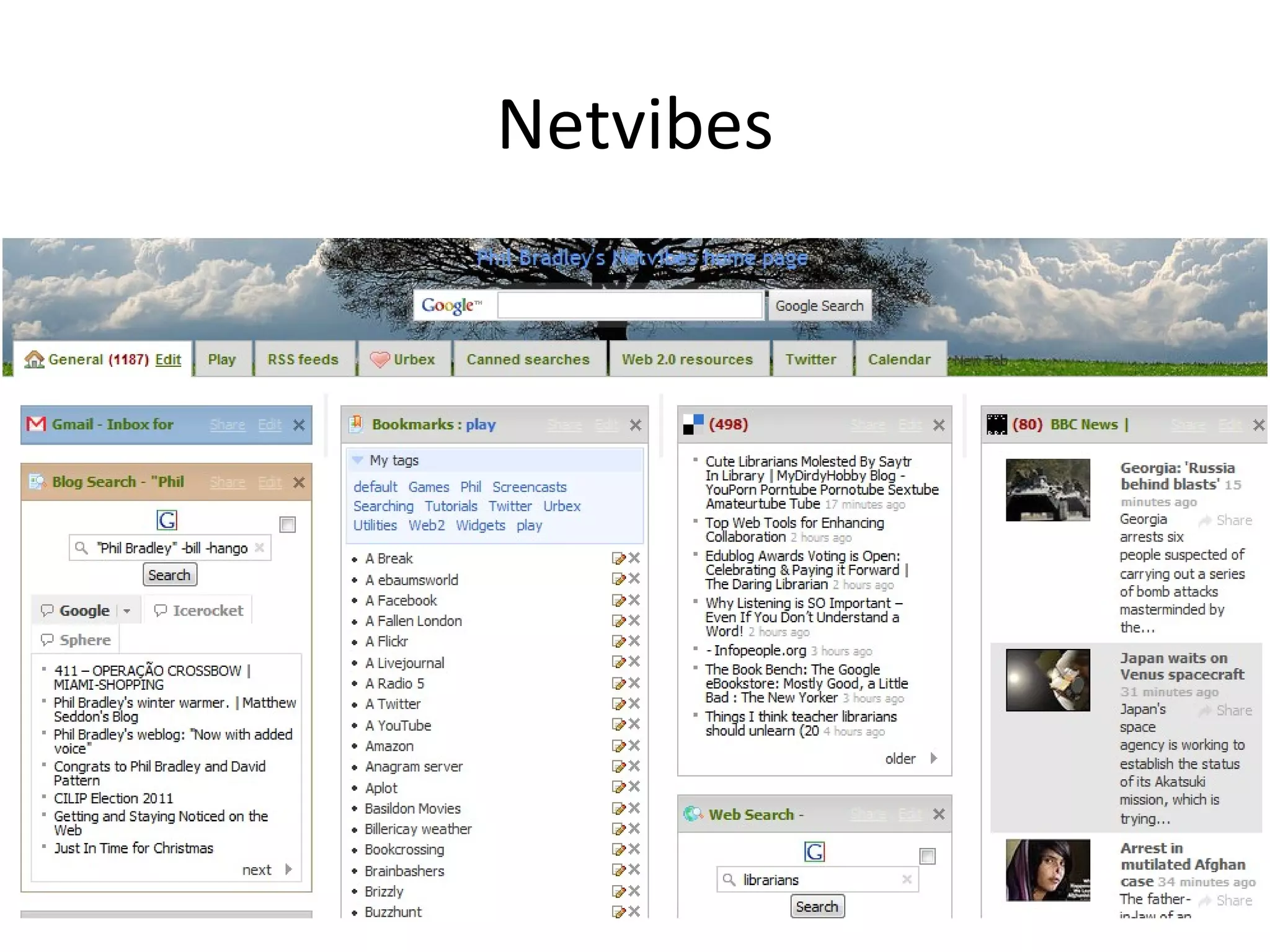
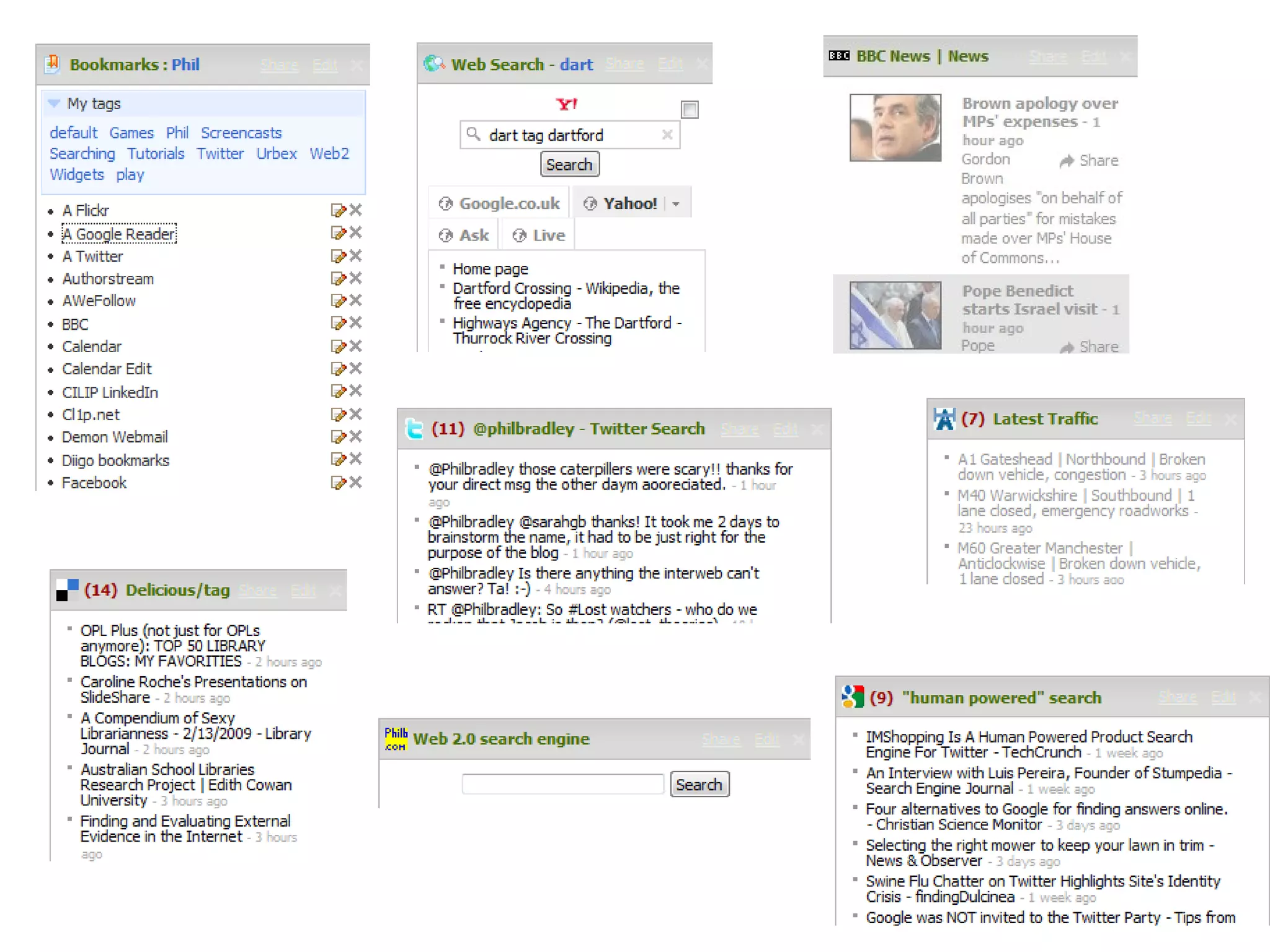
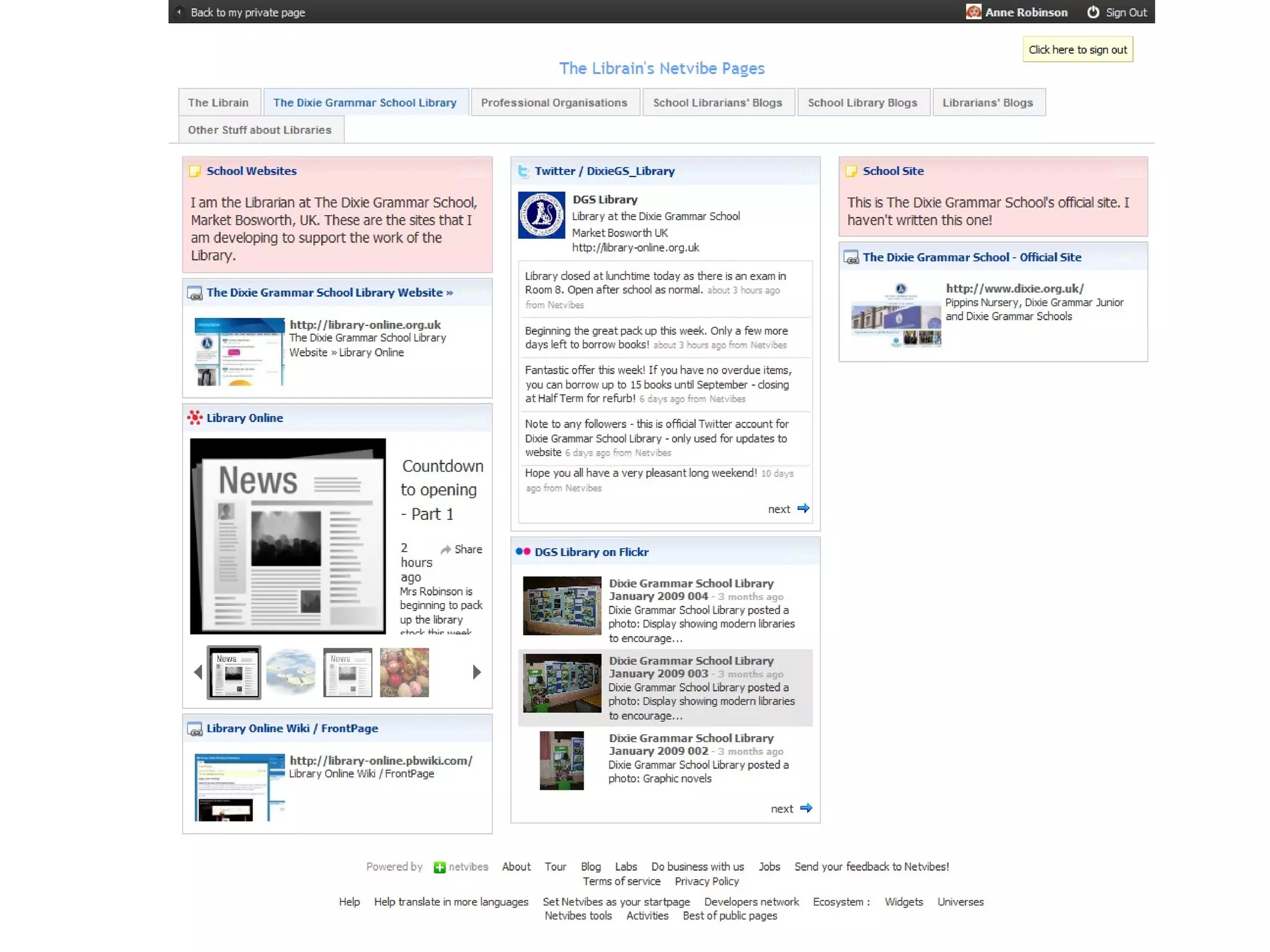
Netvibes
Collating content - Wikis
•   Create your own websites
•   Allow multiple authors
•   Instant updating, editing
•   Embed content from various sources
Example Wikis
•   LIS wiki
•   Library success wiki
•   Wikipedia
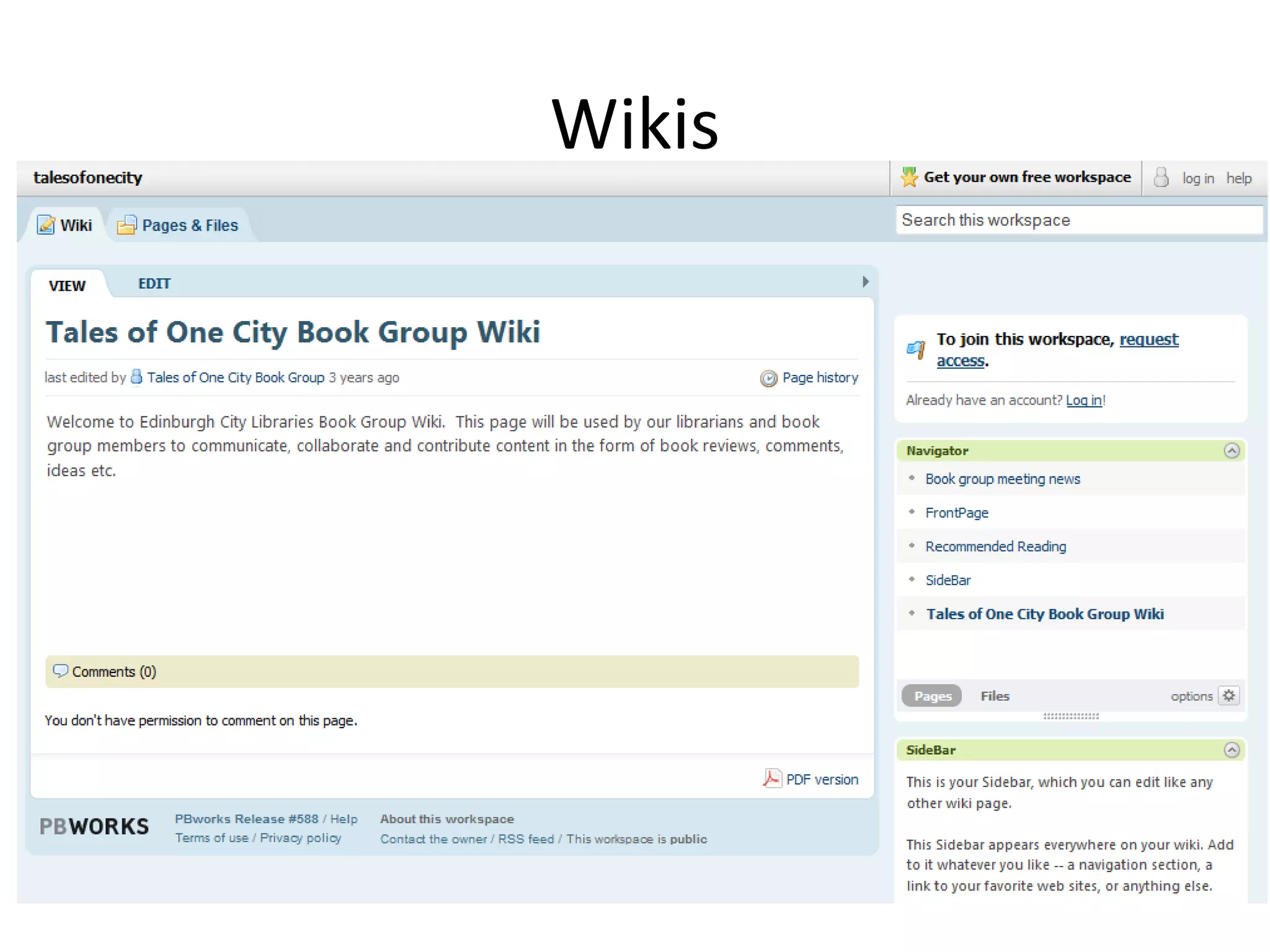
•   PB Works
•   Library Instruction wiki
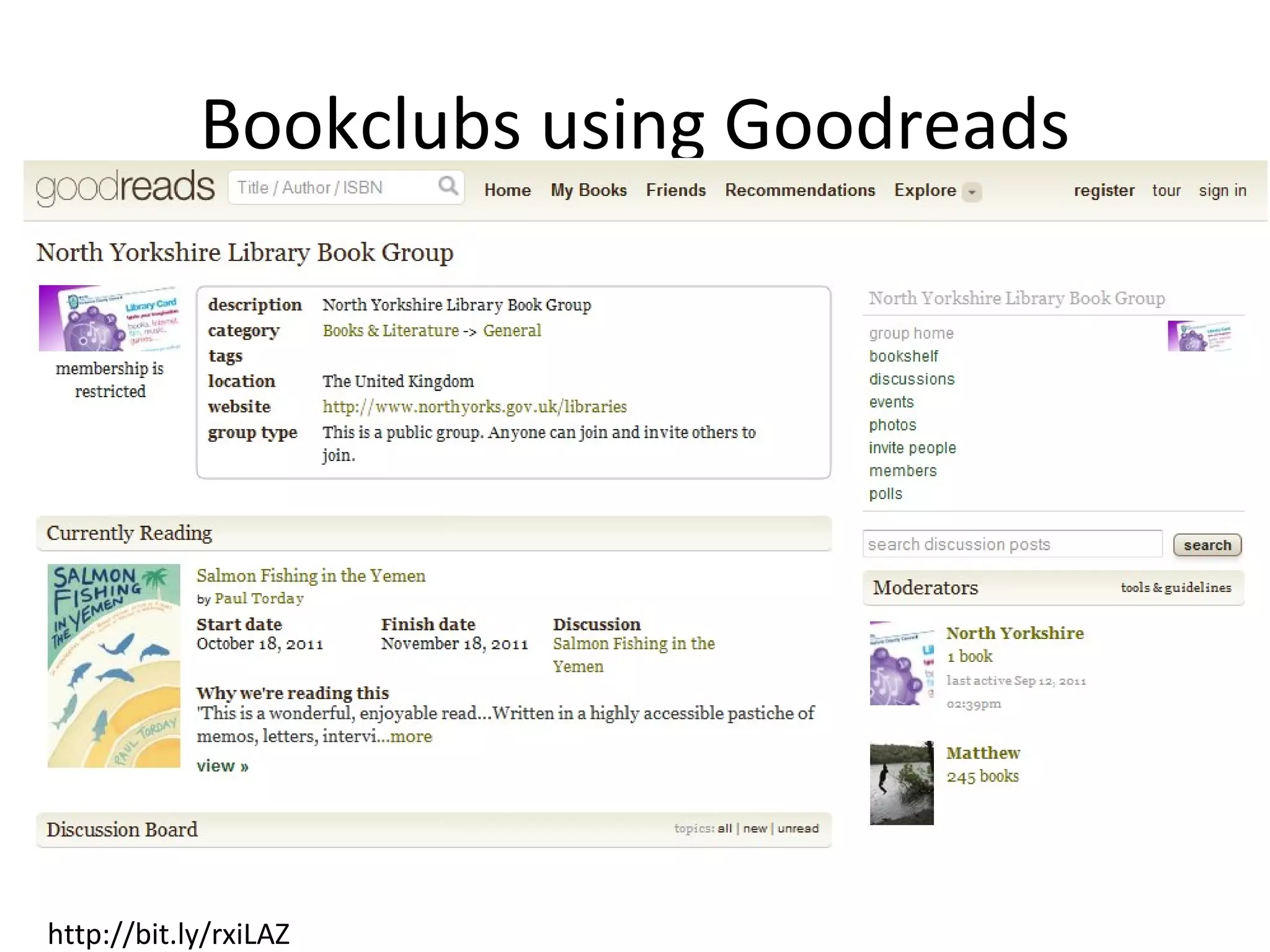
Bookclubs using Goodreads


http://bit.ly/rxiLAZ
Guiding Tools
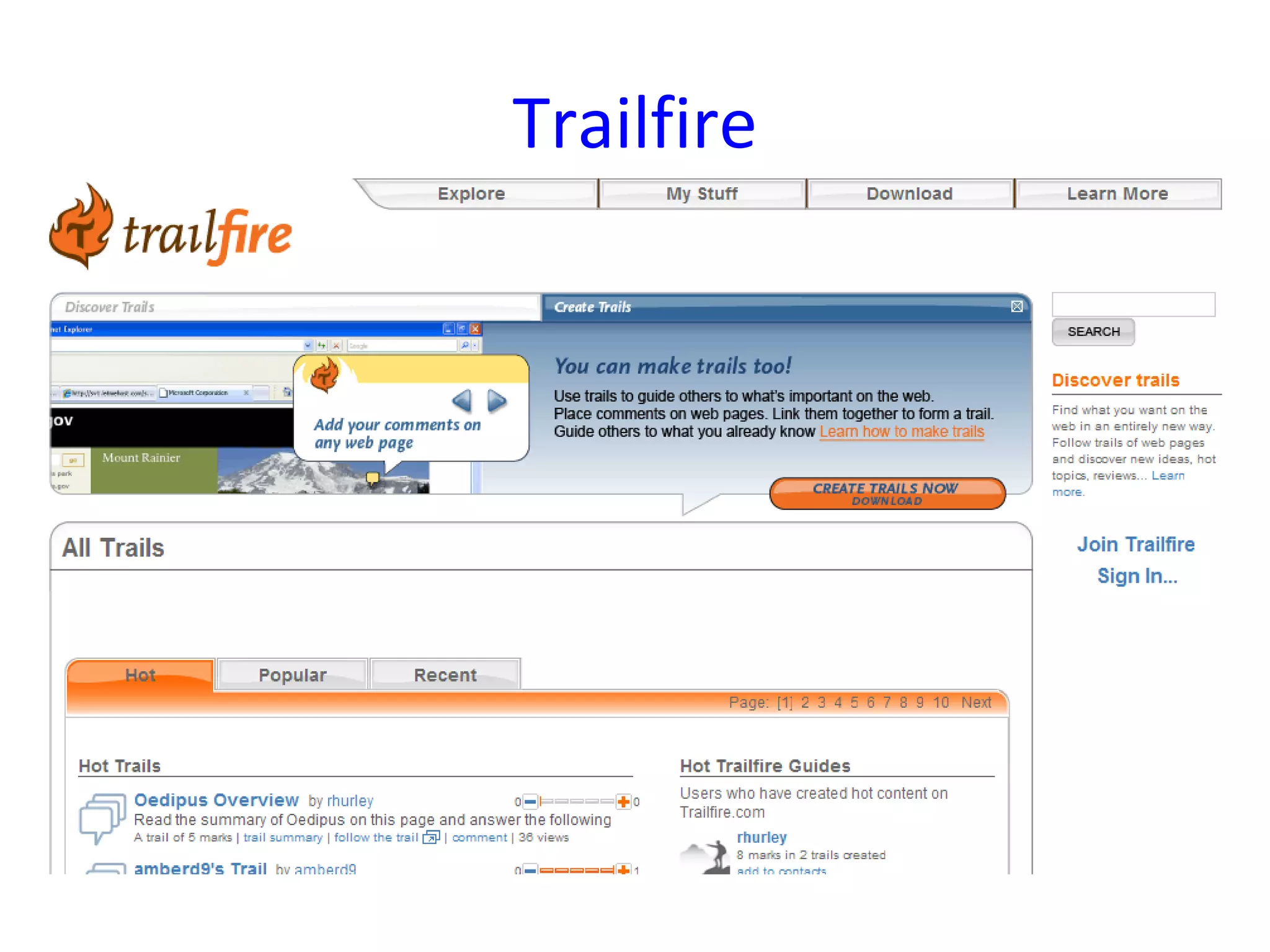
Trailfire
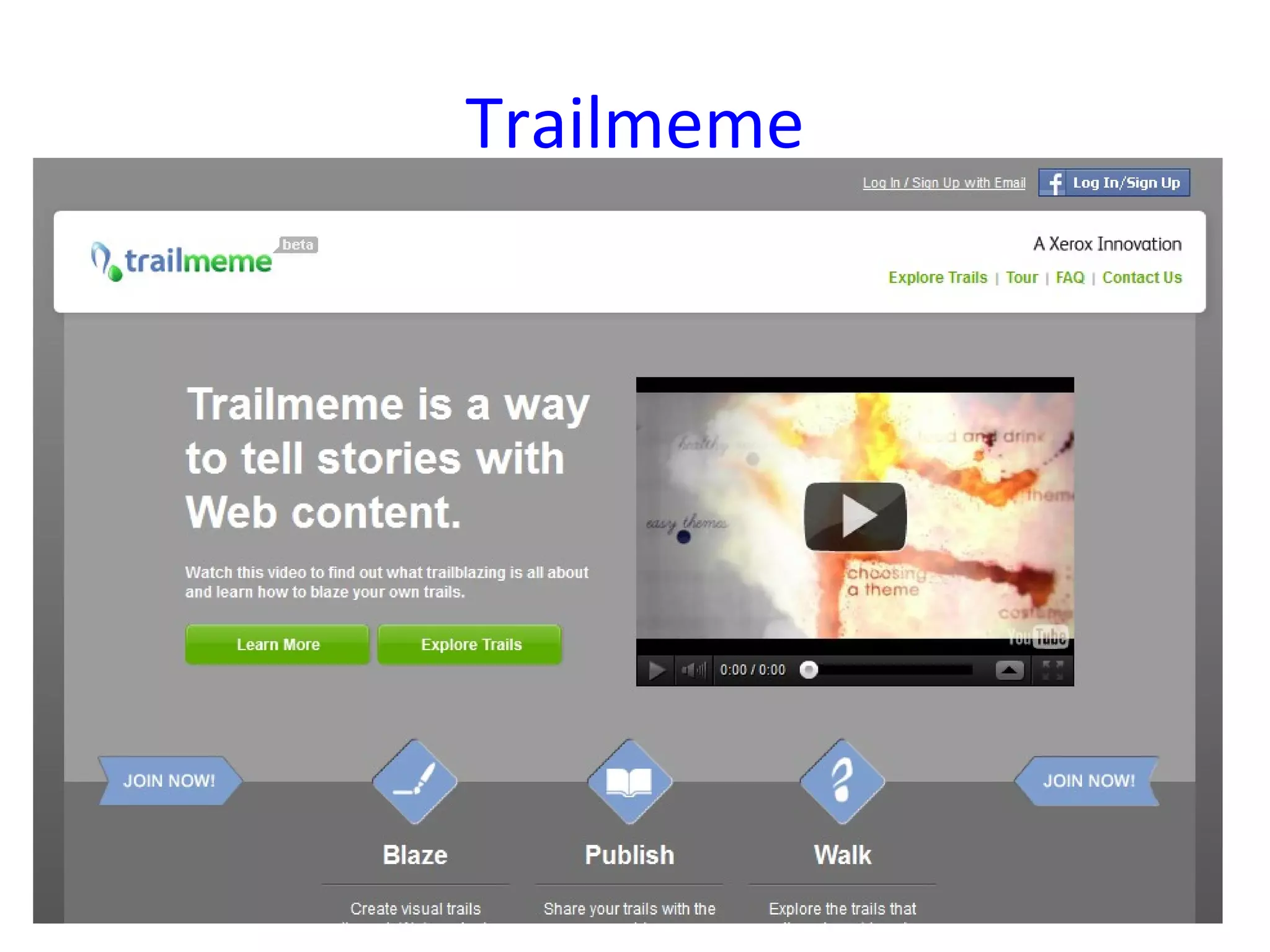
Trailmeme
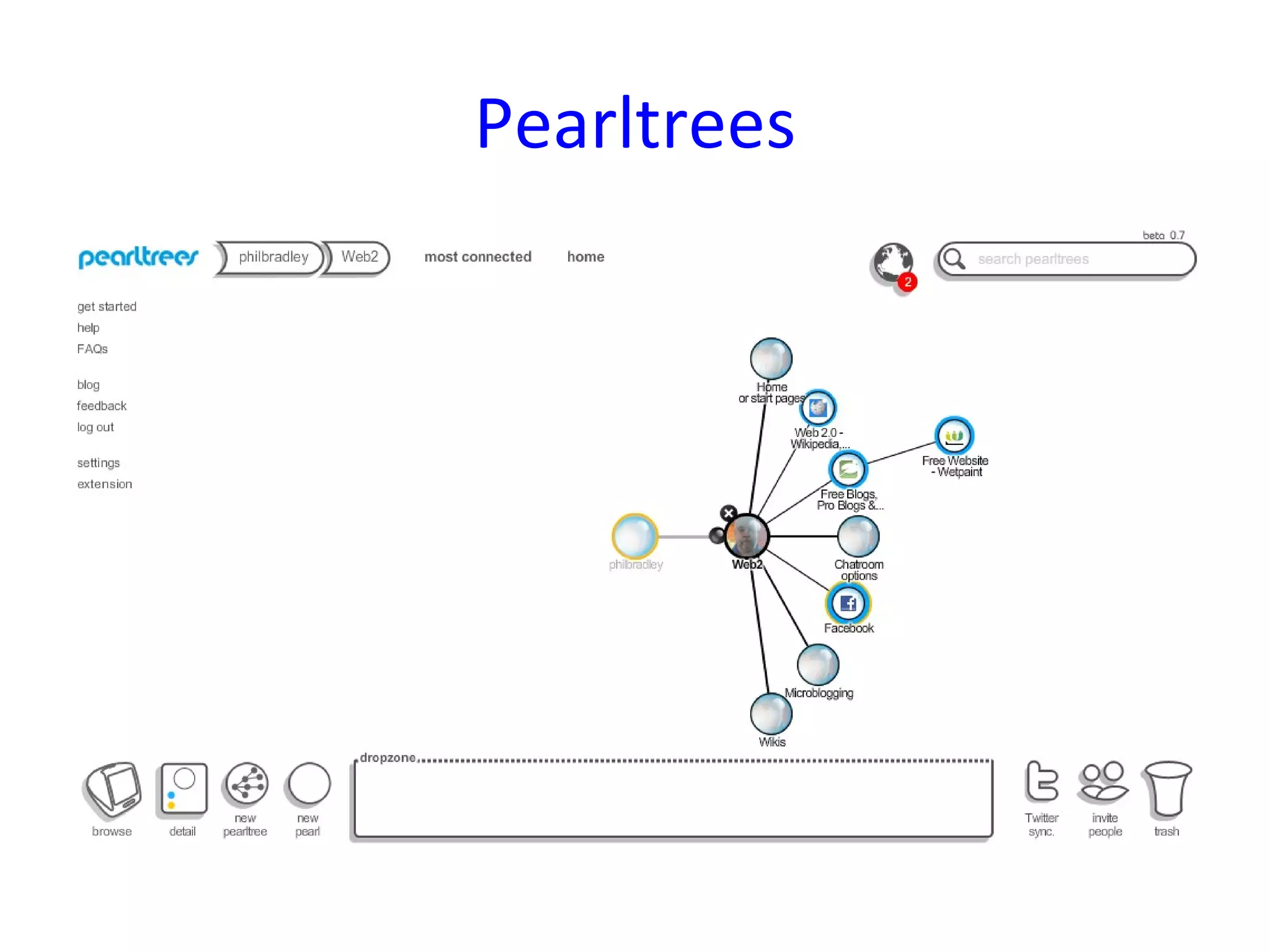
Pearltrees
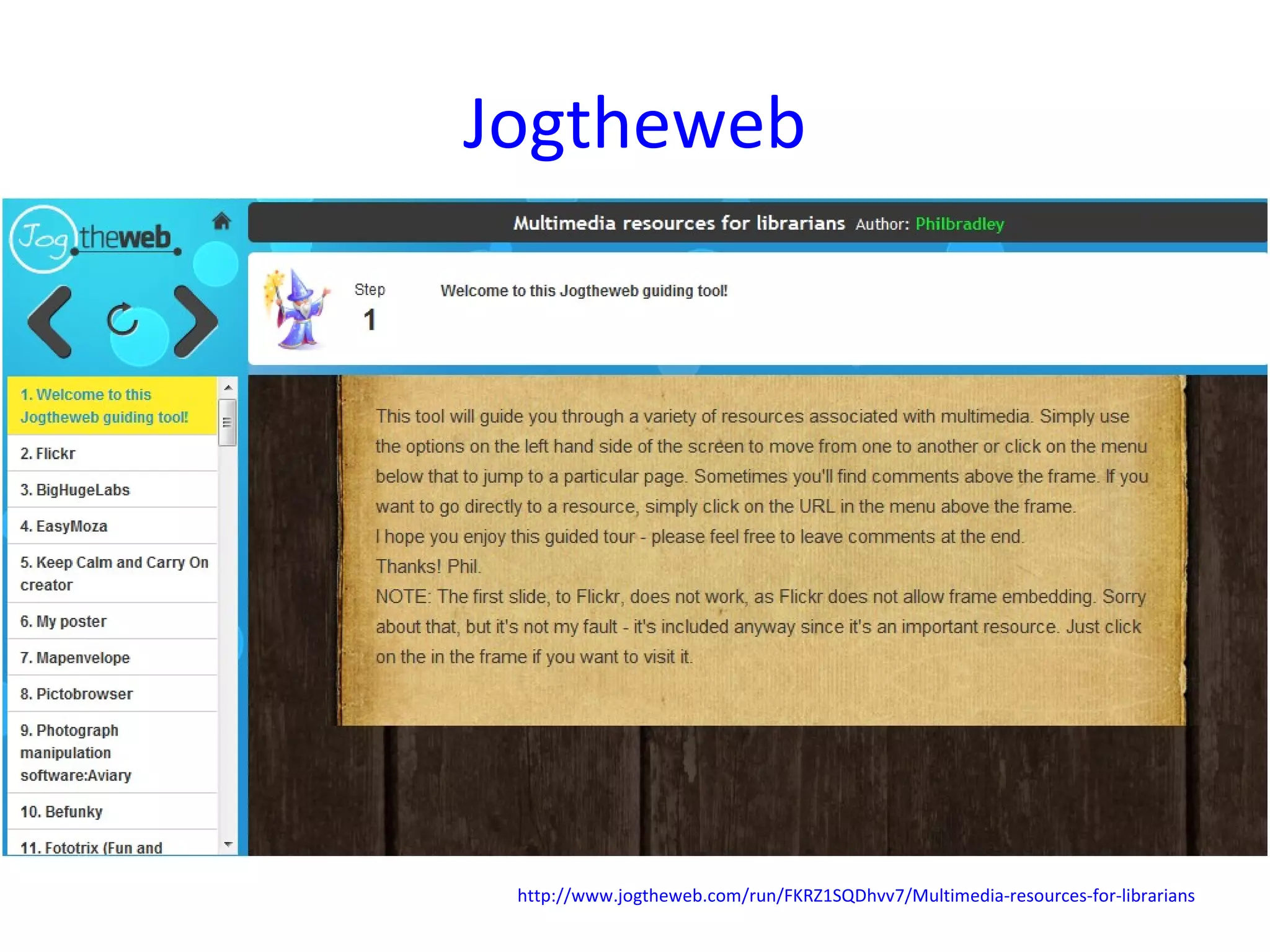
Jogtheweb


 http://www.jogtheweb.com/run/FKRZ1SQDhvv7/Multimedia-resources-for-librarians
LiveBinders
Museumbox
Presentations
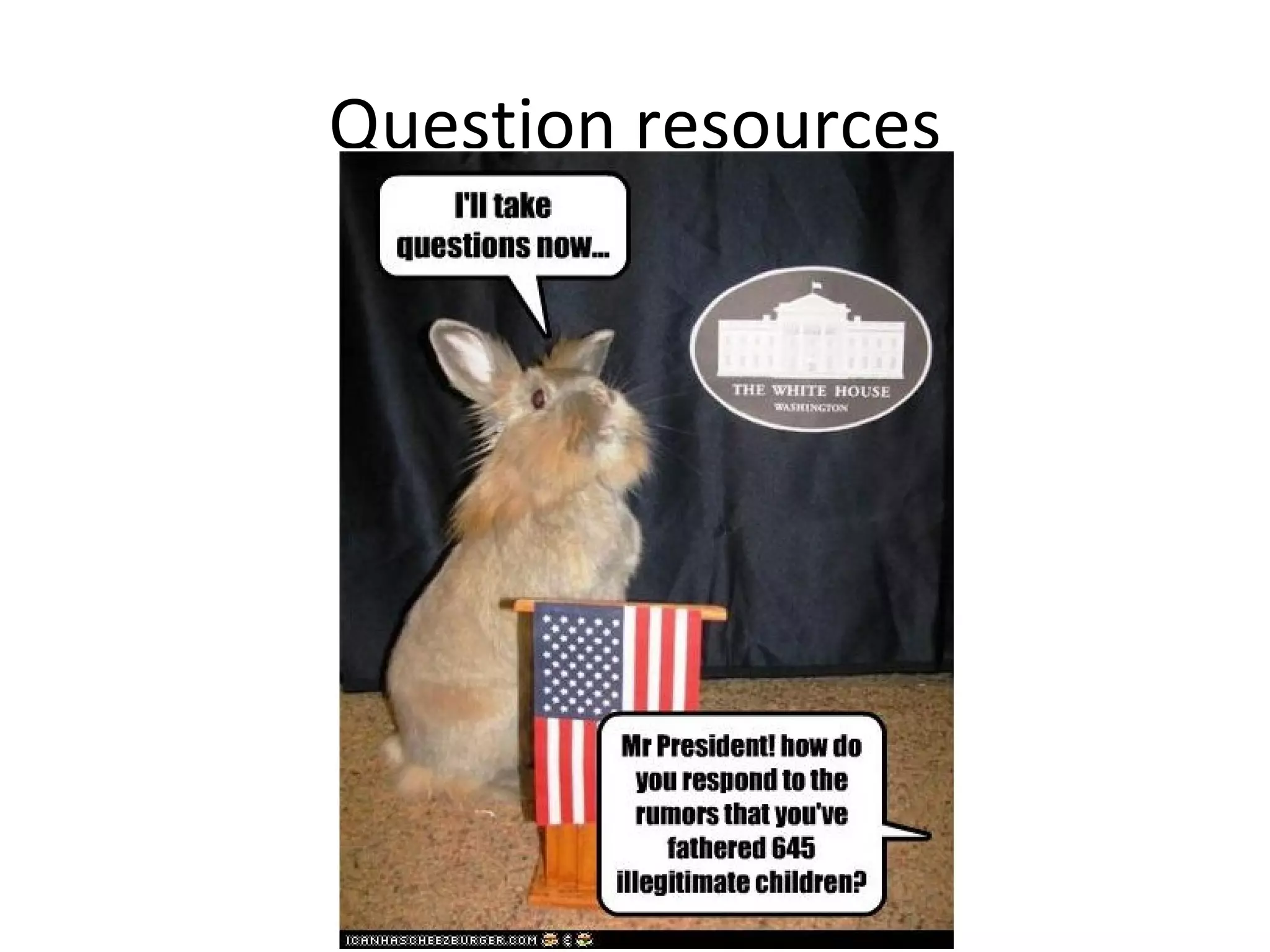
Question resources
Quora
Twitter advanced search
Flickr
Library Thing
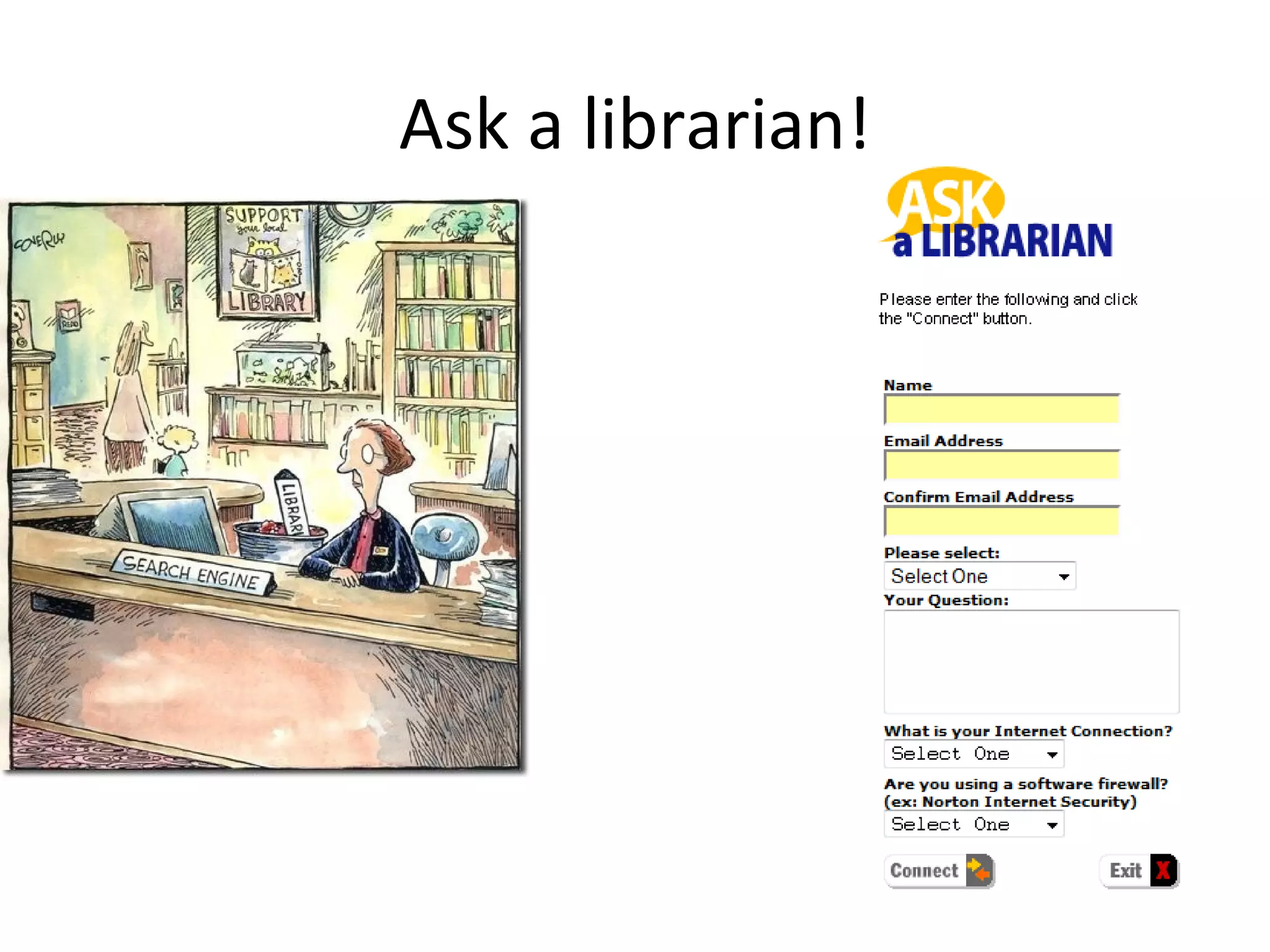
Ask a librarian!
Wikis
In summary
• Social results (that’s you!) are becoming more
  important
• You can affect rankings
• Go to where the conversations are
• Websites less valuable as time goes on
• People ask people they know
• It’s all just information!
Why librarians must use social media

Why librarians must use social media

  • 1.
    Why librarians needto use social media Phil Bradley
  • 2.
    What are wetalking about? • Let’s just not go there shall we? • Definitions are less important than what you can do with it • The activity, not the tool is the key • Oh, if you really insist…
  • 3.
    What is Web2.0? • Web 2.0 is a term often applied to a perceived ongoing transition of the World Wide Web from a collection of websites to a full-fledged computing platform serving web applications to end users. Ultimately Web 2.0 services are expected to replace desktop computing applications for many purposes. – Wikipedia entry
  • 4.
    And ‘social media’? Theterm Social Media refers to the use of web-based and mobile technologies to turn communication into an interactive dialogue. Andreas Kaplan and Michael Haenlein define social media as "a group of Internet-based applications that build on the ideological and technological foundations of Web 2.0, and that allow the creation and exchange of user-generated content.“ Social media are media for social interaction, as a superset beyond social communication. Enabled by ubiquitously accessible and scalable communication techniques, social media substantially change the way of communication between organizations, communities, as well as individuals. http://en.wikipedia.org/wiki/Social_media
  • 6.
    The old wayand the new way Pre-Social Media Now and the near future • Complicated • Simple – HTML, SEO, FTP – and that’s – Tools exist to create pages before you even start! and resources for you • Computer based • Cloud based – Software and content on your – Save directly onto internet machine or network servers, without even realising it! • Installed software • Browser based – You have to buy, install and – You load the software when update the software you need it
  • 7.
    The old wayand the new way • Solitary • Crowd based – You worked by yourself – Easy to share & sharing was difficult information eg b’marks • Communication • Communication – Difficult and limited – Probably too many ways to communicate now! See the conversation prism!
  • 8.
  • 9.
    The old wayand the new way • Data was in one place • Data can be everywhere – The website ruled over – Share data across everything different sites with 1 click • Control was through • Control is dispersed the website – Weblogs, Twitter, – Promotion, information, Facebook groups limited contact • Consumption • Creation – Of data – Of data
  • 10.
    The old wayand the new way • Web searching • Internet searching – Websites, page ranking – User Generated Content, value of the person • Information had to be • Information comes to tracked down the searcher – Searches run on a – RSS feeds, news regular basis, slow and curation, alerting laborious services • Information • Information – Badged, owned, – Out in the wild, in controlled different places, formats
  • 11.
    The old wayand the new way • Speed and storage • B’band and terabytes – Limited and expensive – Available and cheap
  • 12.
    The old wayand the new way • Getting it right • Getting it fast – Mistakes cost money – Speed is really important • Desktops were king • Access is key – Activity focussed around – Laptops, notebooks, the machine smartphones, smart tvs
  • 13.
  • 14.
    The old wayand the new way • Web 1.0 was about • Social media is about limitations free access to – Control in the hands of a information few • Strict and clear roles • Roles now blurred
  • 15.
    Yes… but? • “It’svacuous marketing hype” • “Web 2.0 is totally silly” • “Meaningless” • “is made entirely of pretentious self serving morons.” • “a lot of thin but very hot air blown at you by those who are convinced that having nothing to say is by no means a good reason to shut up.”
  • 16.
    So… • Is ita question of degrees of difference?
  • 17.
    Or… • A differenceof kind? (Is it or isn’t it a fad?)
  • 19.
    What does itmean in practice?
  • 22.
  • 23.
  • 24.
  • 25.
  • 26.
  • 28.
    Social Media activities •Why? – People ask people that they know – People are getting used to participation and asking/answering questions – The conversations will take place regardless of your participation – Control is not possible – even of conversations about you/your organisation!
  • 29.
    Where do youneed to be?
  • 31.
  • 32.
  • 33.
  • 34.
  • 35.
  • 36.
  • 37.
  • 38.
  • 39.
  • 40.
  • 41.
  • 42.
  • 43.
    My feed frommy network
  • 44.
  • 45.
  • 46.
  • 47.
  • 48.
  • 49.
  • 51.
  • 53.
  • 54.
  • 55.
  • 56.
    Using start pages •Individually • As a group – Share tabbed pages – Alternative to email contact – To Do lists – Note pads – Always immediately available
  • 57.
  • 64.
    Collating content -Wikis • Create your own websites • Allow multiple authors • Instant updating, editing • Embed content from various sources
  • 65.
    Example Wikis • LIS wiki • Library success wiki • Wikipedia • PB Works • Library Instruction wiki
  • 67.
  • 68.
  • 69.
  • 70.
  • 71.
  • 72.
  • 73.
  • 74.
  • 75.
  • 77.
  • 78.
  • 79.
  • 80.
  • 81.
  • 82.
  • 83.
  • 85.
    In summary • Socialresults (that’s you!) are becoming more important • You can affect rankings • Go to where the conversations are • Websites less valuable as time goes on • People ask people they know • It’s all just information!