A History of Windows
Damian Gordon
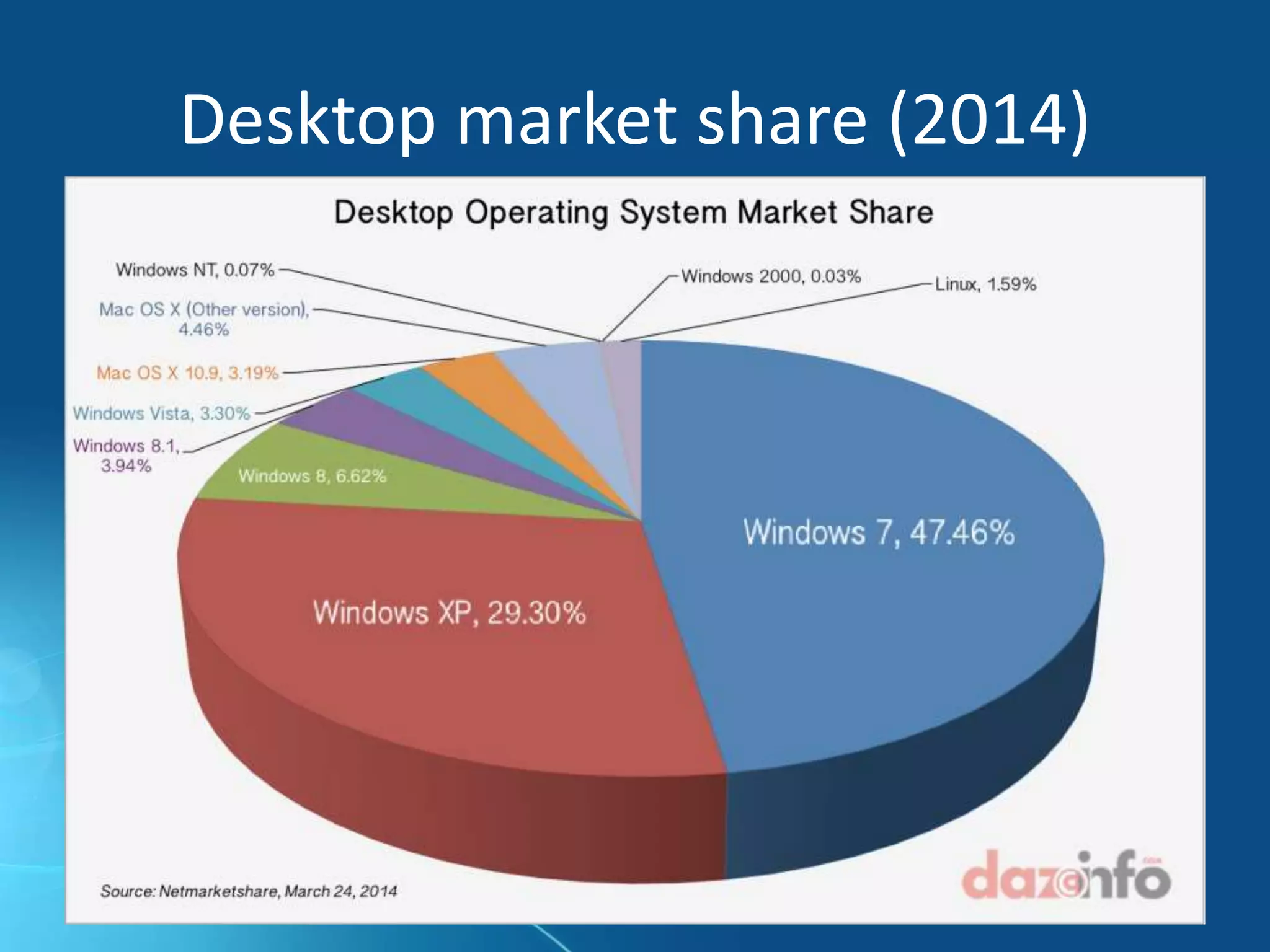
Desktop market share (2014)
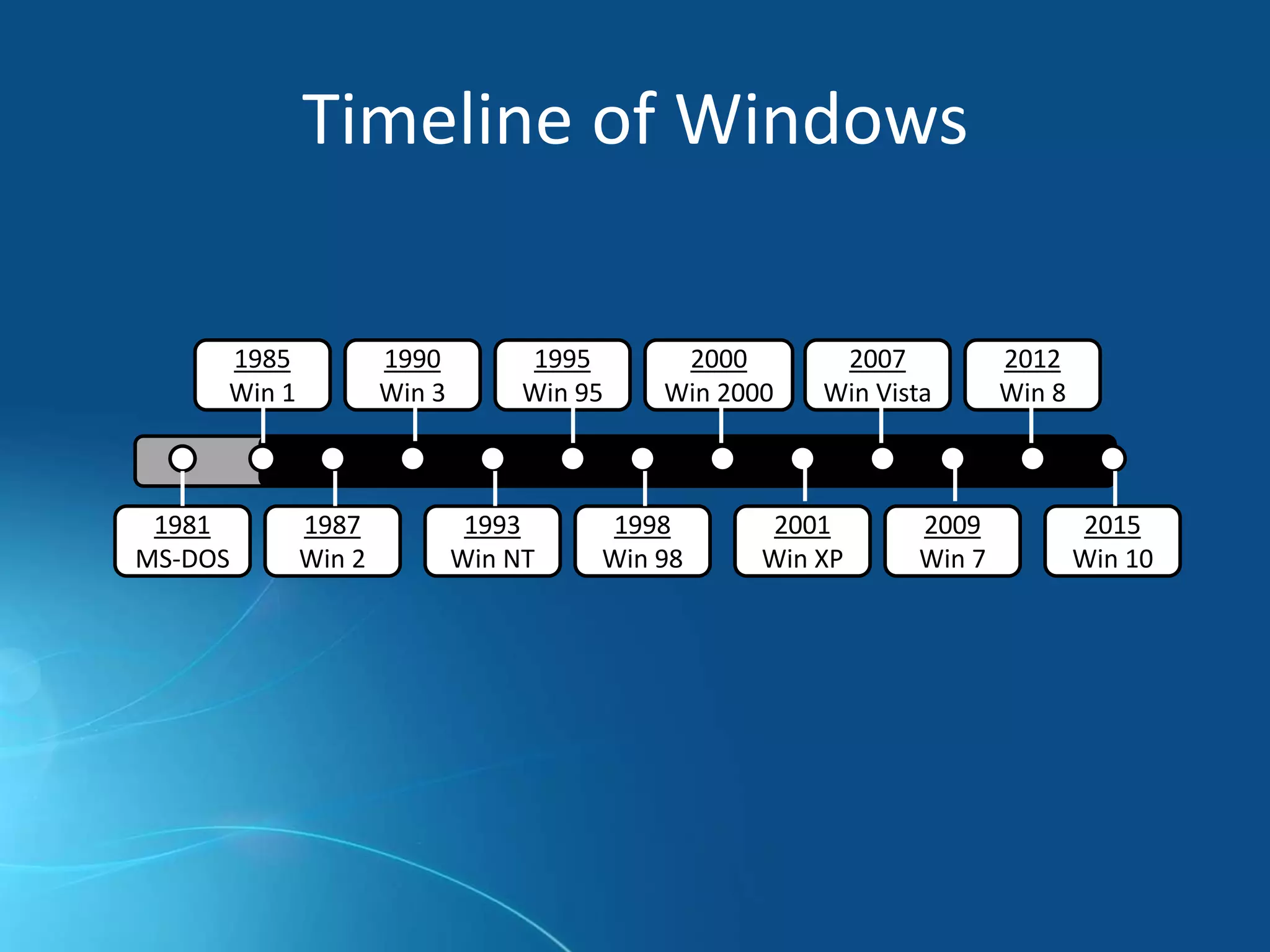
Timeline of Windows
1981
MS-DOS
1987
Win 2
1993
Win NT
1998
Win 98
2001
Win XP
2009
Win 7
2015
Win 10
1985
Win 1
1990
Win 3
1995
Win 95
2000
Win 2000
2007
Win Vista
2012
Win 8
2000
Win ME
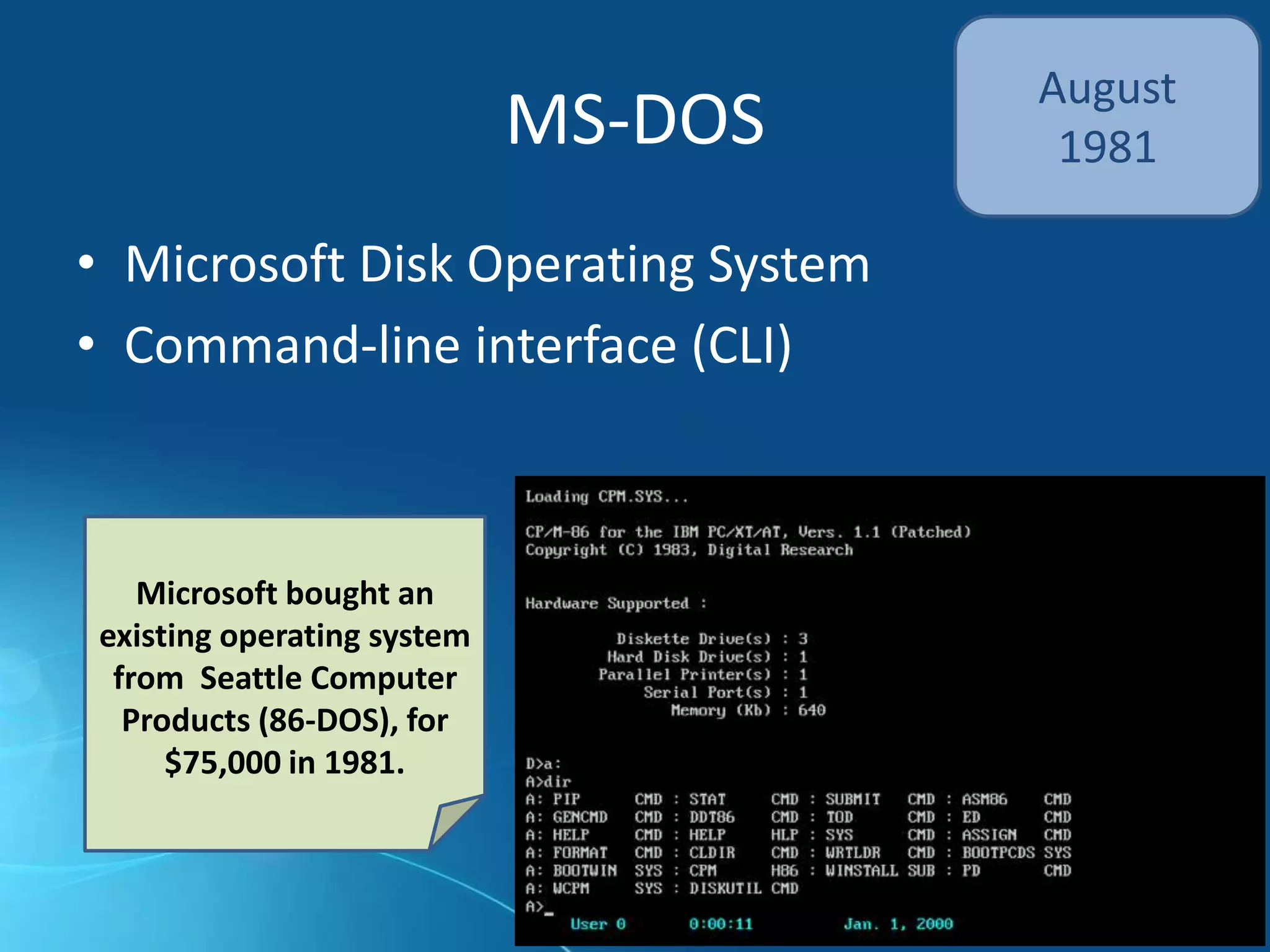
MS-DOS
• Microsoft Disk Operating System
• Command-line interface (CLI)
August
1981
Microsoft bought an
existing operating system
from Seattle Computer
Products (86-DOS), for
$75,000 in 1981.
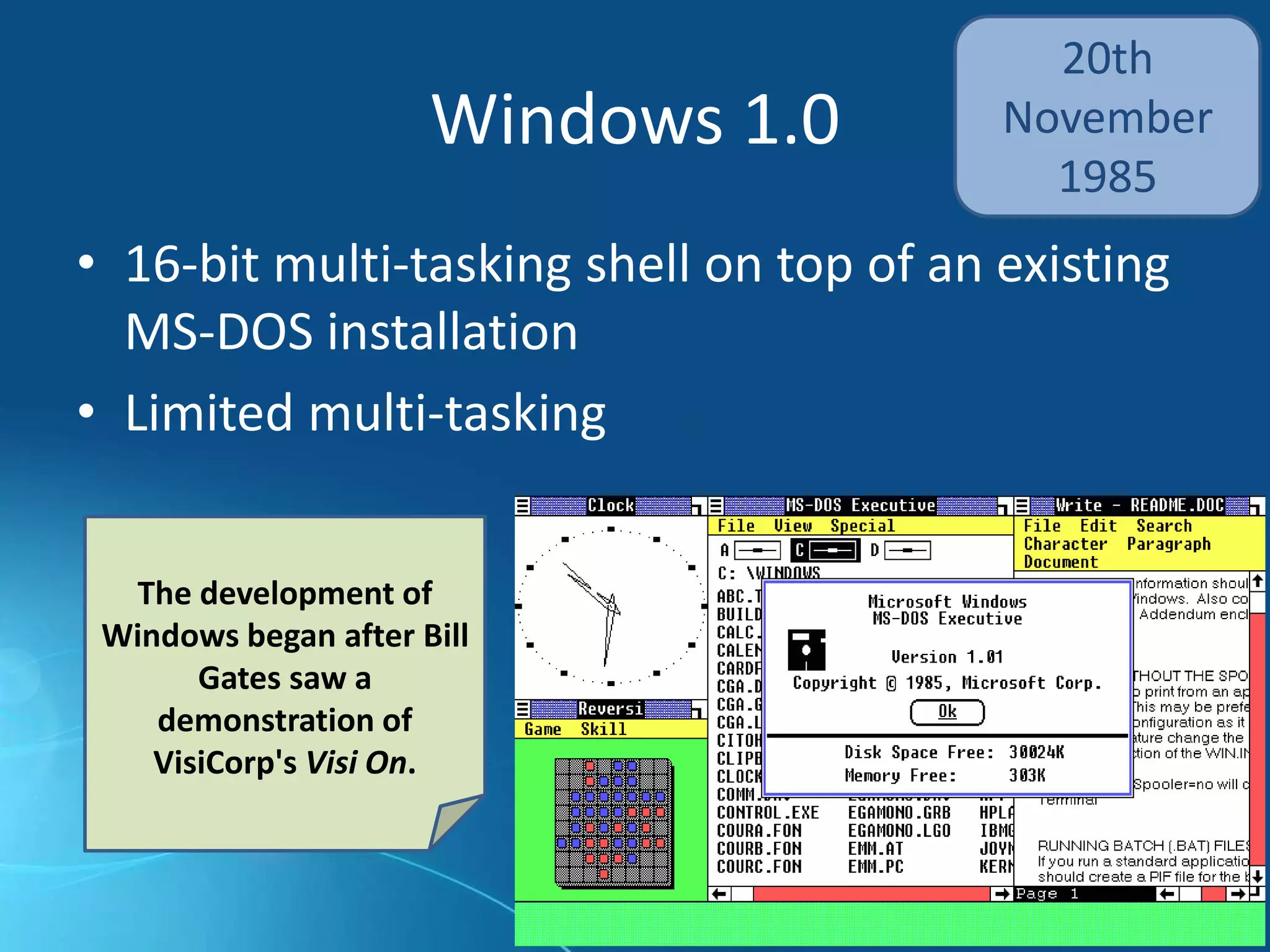
Windows 1.0
• 16-bit multi-tasking shell on top of an existing
MS-DOS installation
• Limited multi-tasking
20th
November
1985
The development of
Windows began after Bill
Gates saw a
demonstration of
VisiCorp's Visi On.
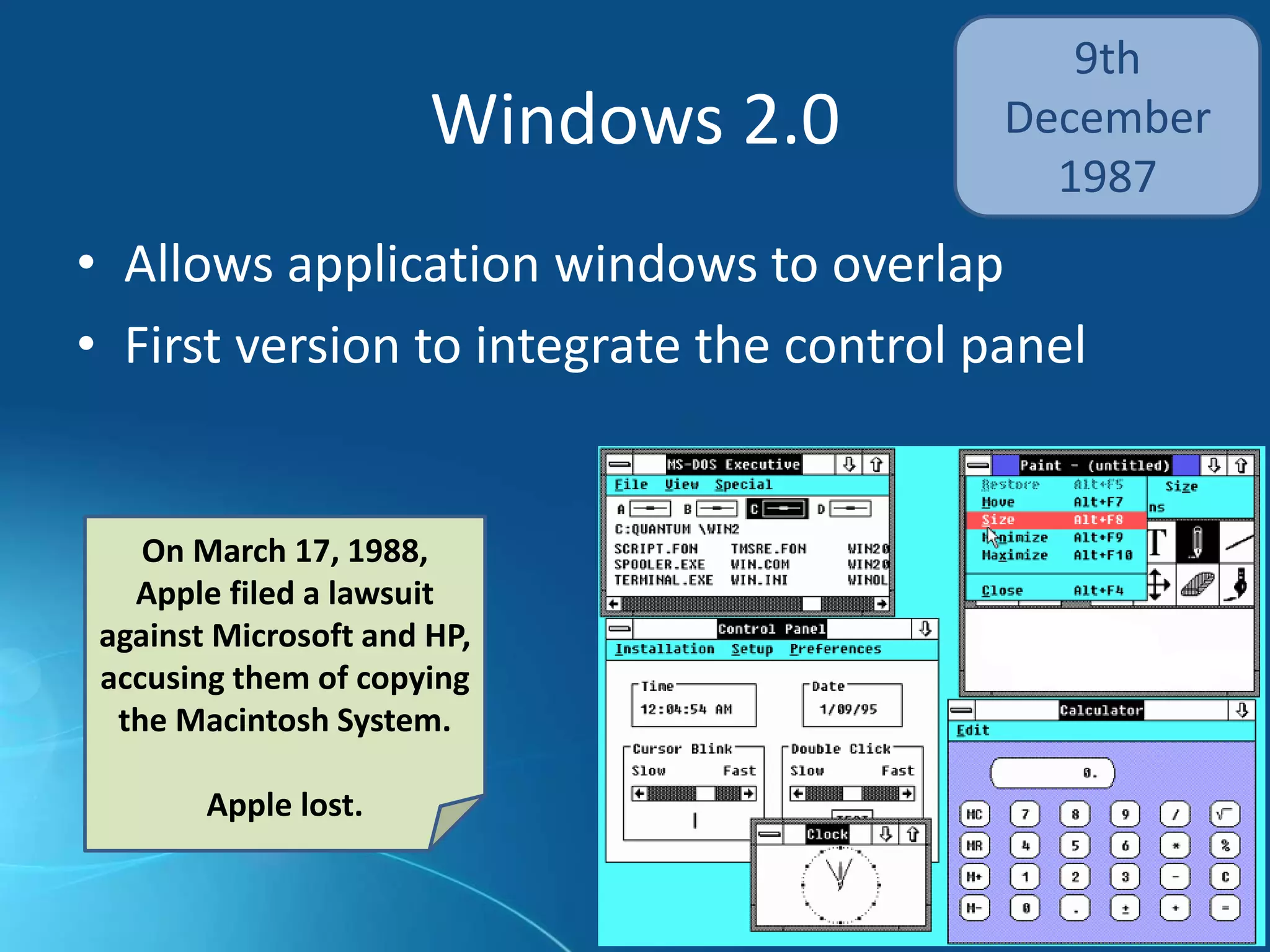
Windows 2.0
9th
December
1987
• Allows application windows to overlap
• First version to integrate the control panel
On March 17, 1988,
Apple filed a lawsuit
against Microsoft and HP,
accusing them of copying
the Macintosh System.
Apple lost.
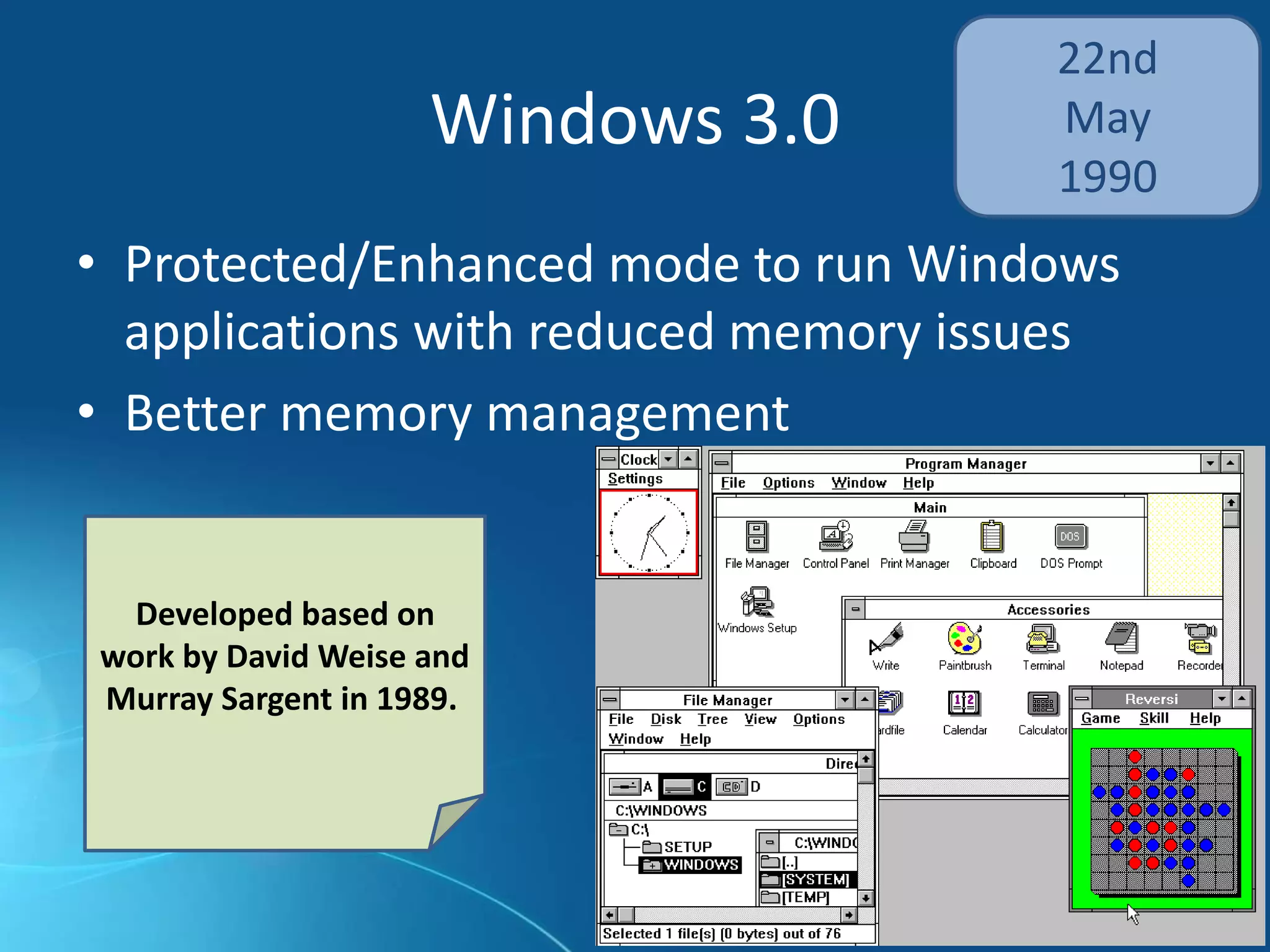
Windows 3.0
22nd
May
1990
• Protected/Enhanced mode to run Windows
applications with reduced memory issues
• Better memory management
Developed based on
work by David Weise and
Murray Sargent in 1989.
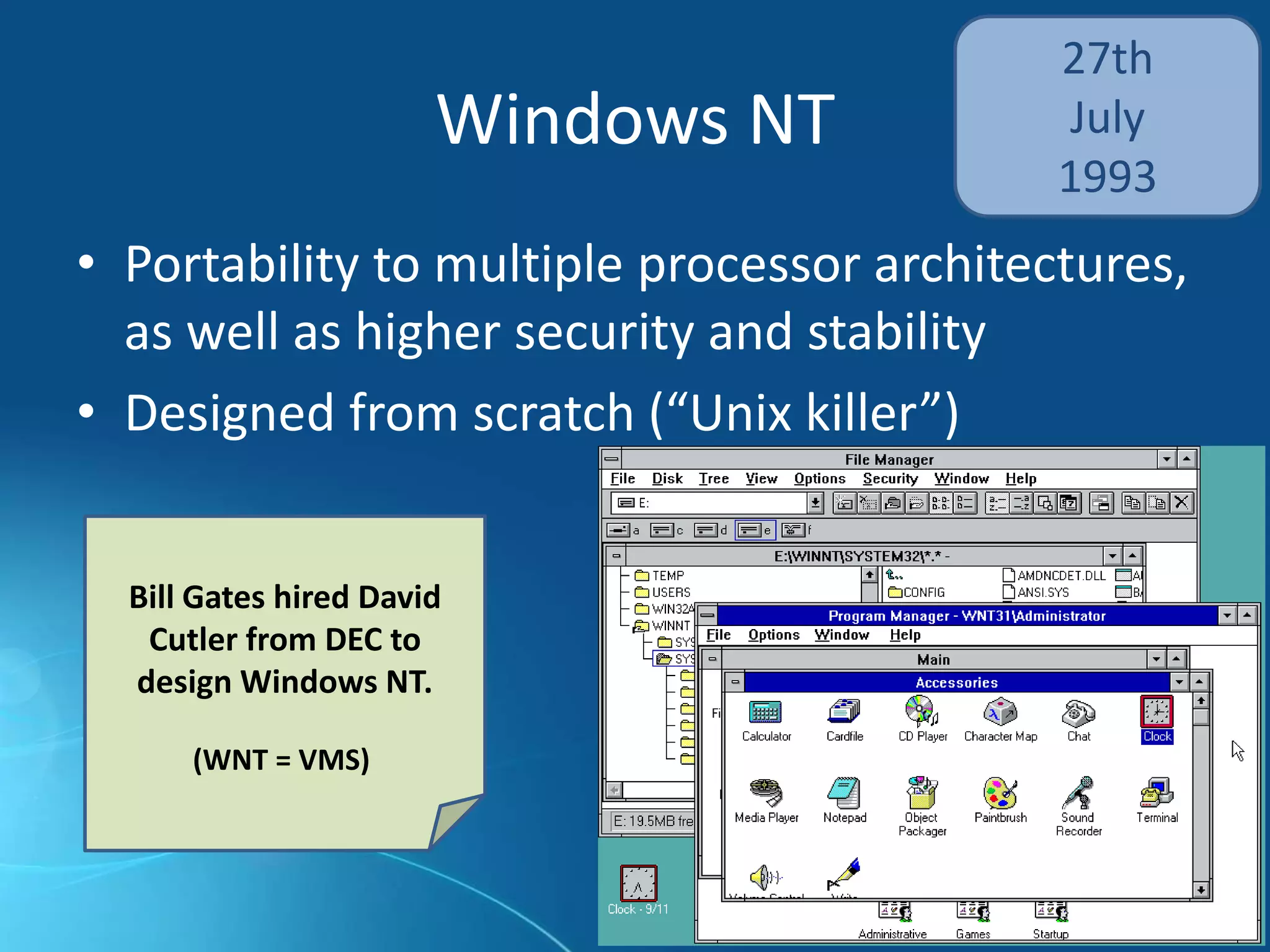
Windows NT
27th
July
1993
• Portability to multiple processor architectures,
as well as higher security and stability
• Designed from scratch (“Unix killer”)
Bill Gates hired David
Cutler from DEC to
design Windows NT.
(WNT = VMS)
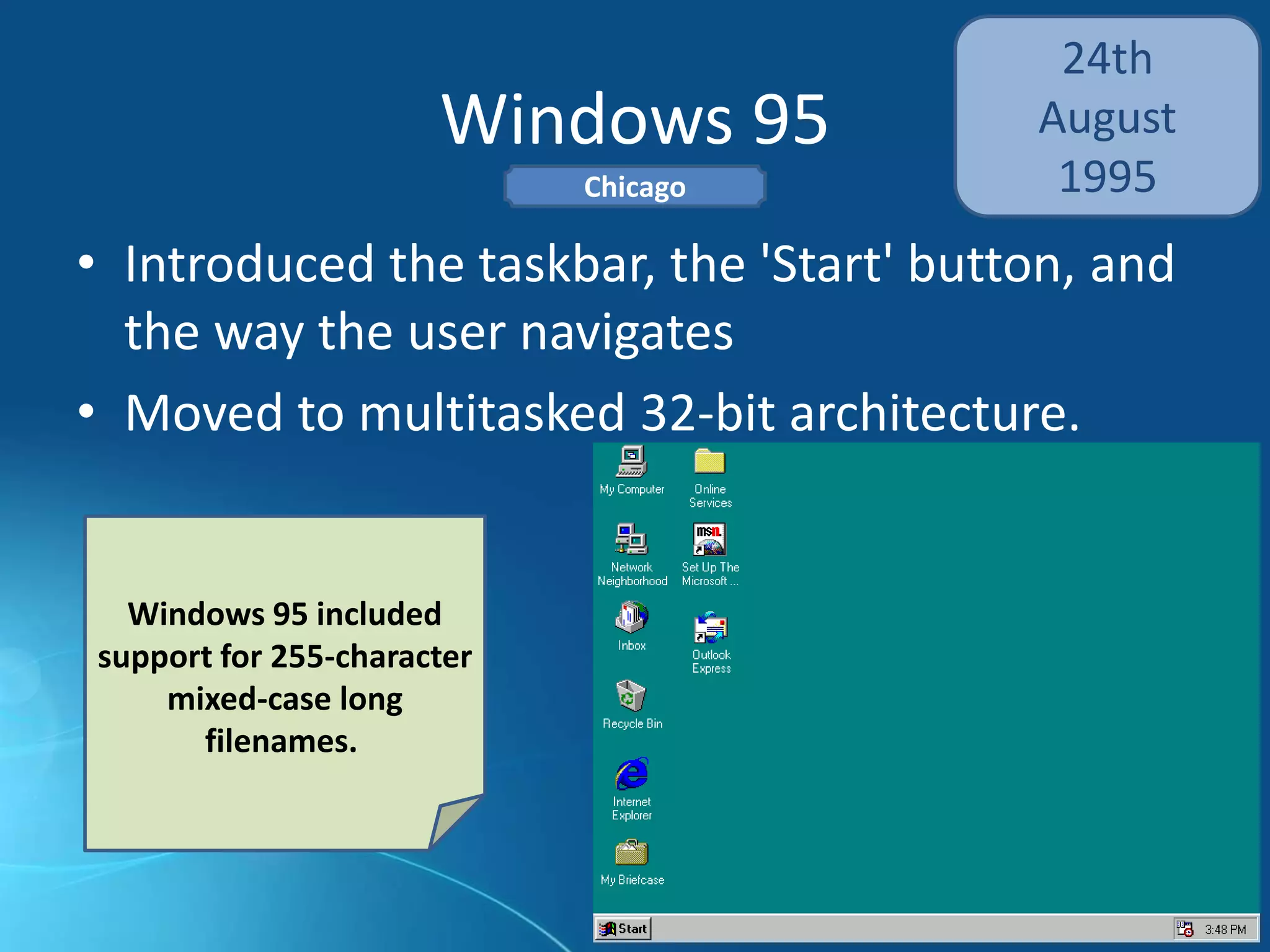
Windows 95
24th
August
1995
• Introduced the taskbar, the 'Start' button, and
the way the user navigates
• Moved to multitasked 32-bit architecture
Windows 95 included
support for 255-character
mixed-case long
filenames.
Chicago
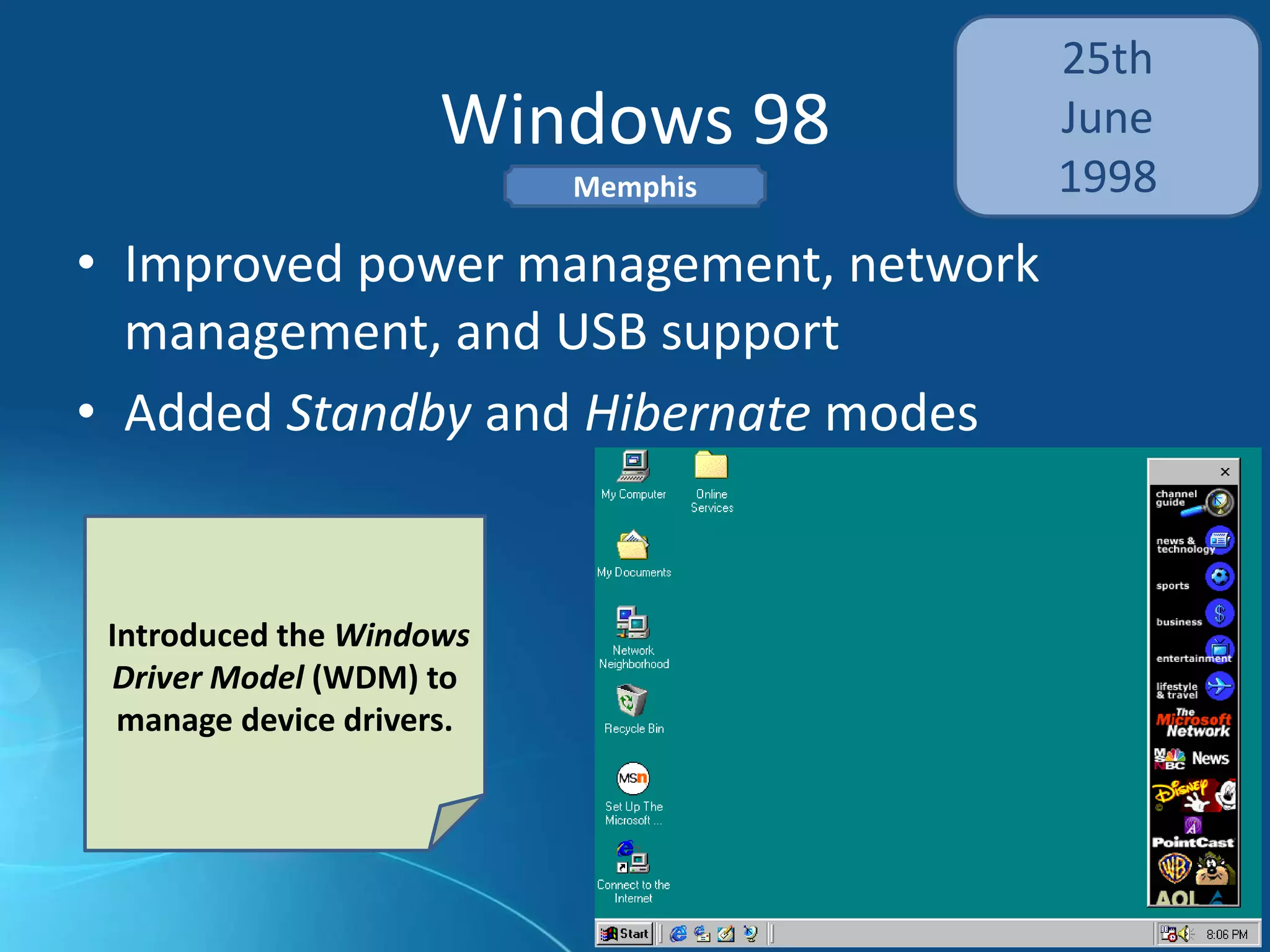
Windows 98
25th
June
1998
• Improved power management, network
management, and USB support
• Added Standby and Hibernate modes
Introduced the Windows
Driver Model (WDM) to
manage device drivers.
Memphis
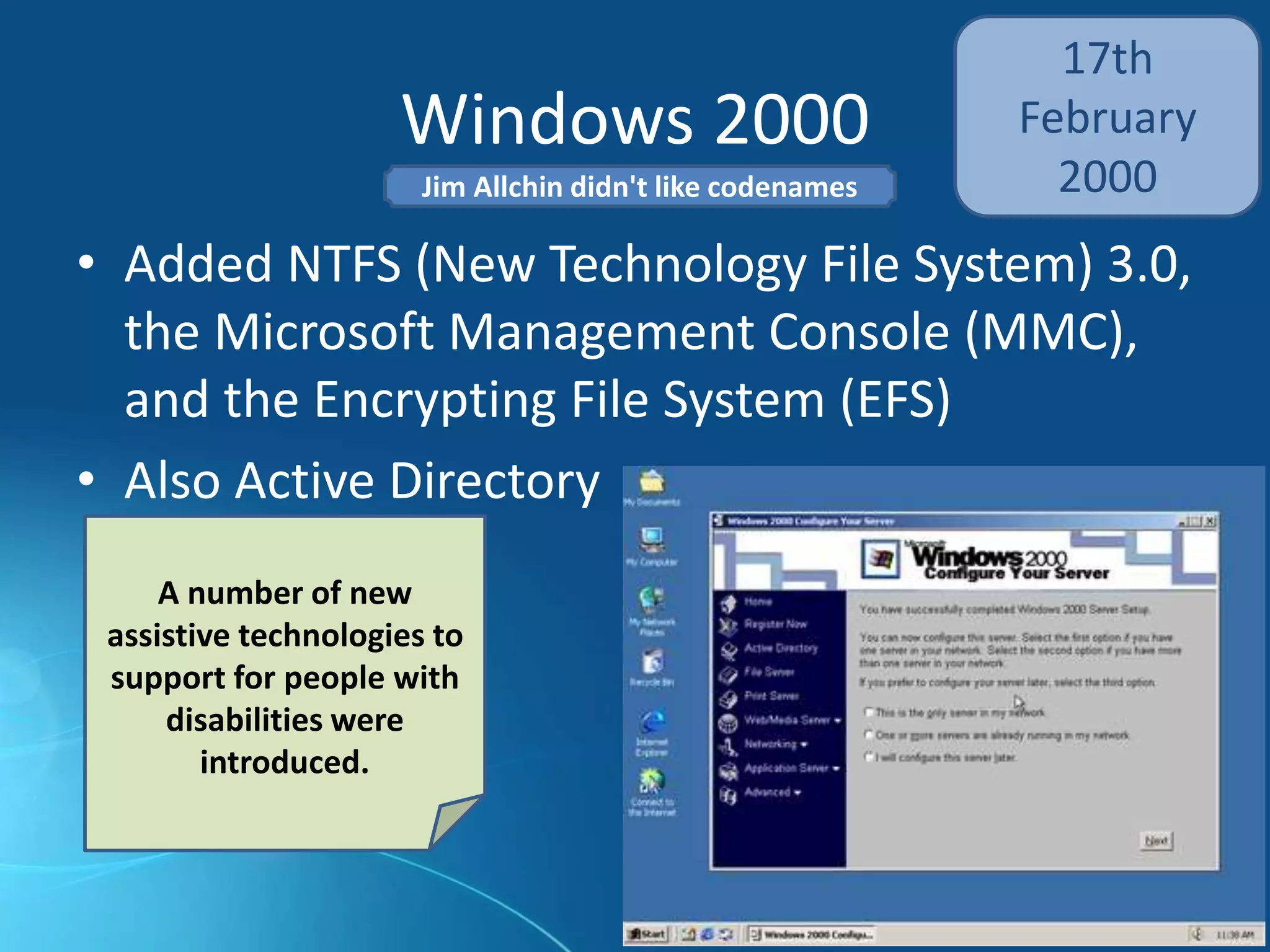
Windows 2000
17th
February
2000
• Added NTFS (New Technology File System) 3.0,
the Microsoft Management Console (MMC),
and the Encrypting File System (EFS)
• Also Active Directory
A number of new
assistive technologies to
support for people with
disabilities were
introduced.
Jim Allchin didn't like codenames
Windows ME
14th
September
2000
• Introduced a System Restore feature, and
improved digital media and networking tools
• Restricted access to real mode MS-DOS
Criticized for speed and
stability issues, a PC
World article dubbed
Windows ME the
"Mistake Edition“
(Very short shelf-life)
Millennium
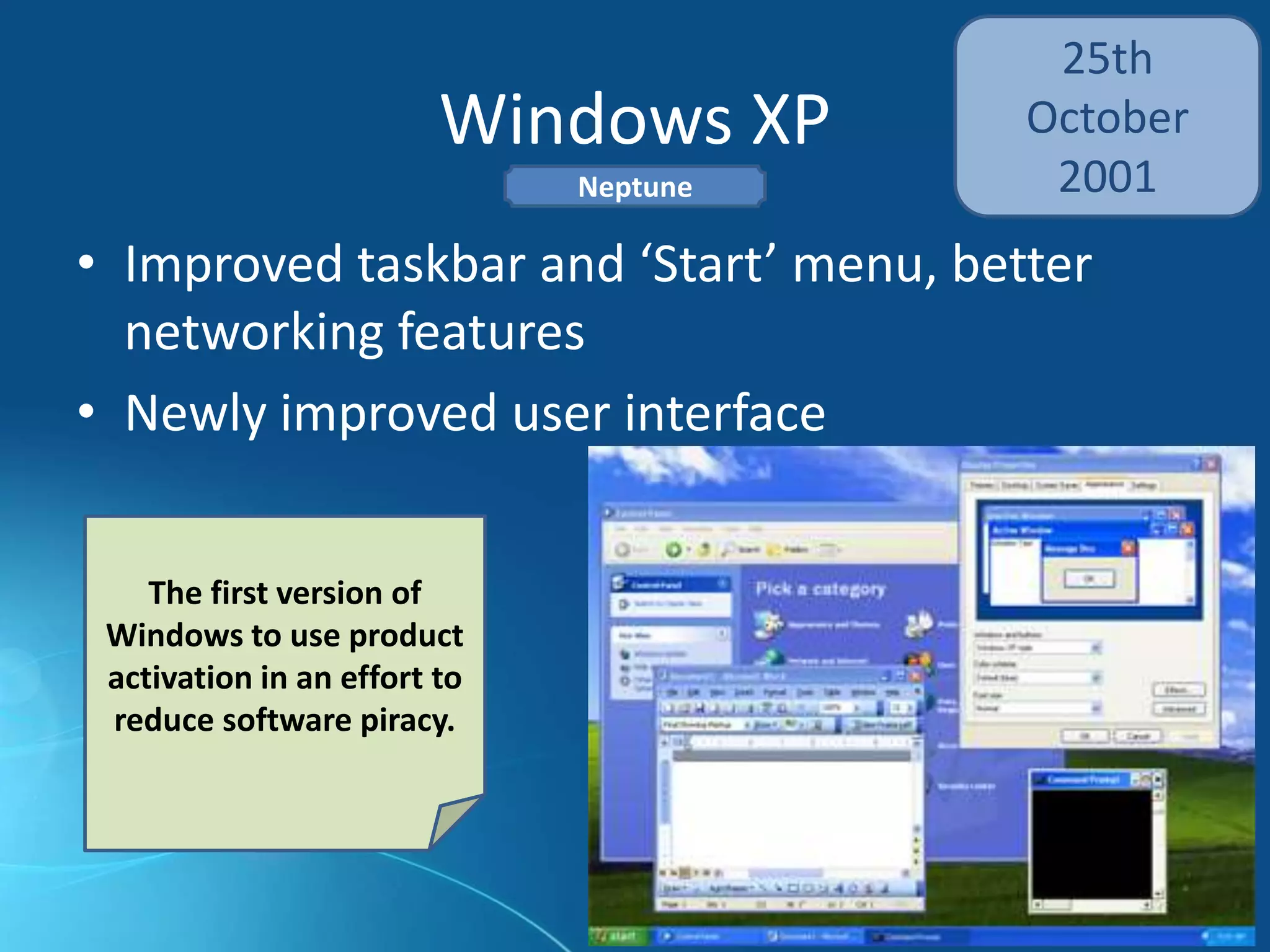
Windows XP
25th
October
2001
• Improved taskbar and ‘Start’ menu, better
networking features
• Newly improved user interface
The first version of
Windows to use product
activation in an effort to
reduce software piracy.
Neptune
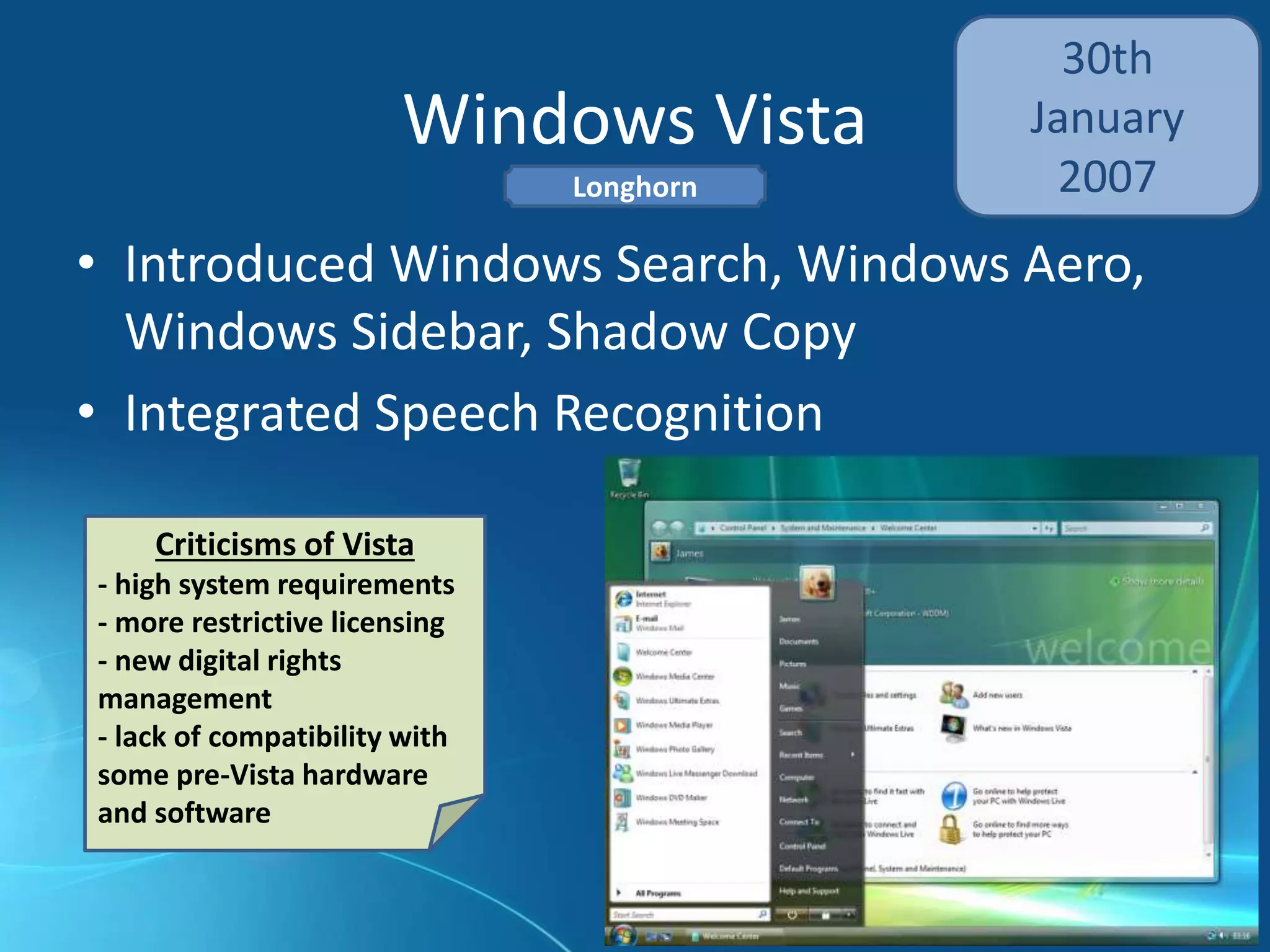
Windows Vista
30th
January
2007
• Introduced Windows Search, Windows Aero,
Windows Sidebar, Shadow Copy
• Integrated Speech Recognition
Criticisms of Vista
- high system requirements
- more restrictive licensing
- new digital rights
management
- lack of compatibility with
some pre-Vista hardware
and software
Longhorn
Windows 7
22nd
October
2009
• Support for virtual hard disks, better multi-
core processors performance, and kernel
• Improved touch and handwriting recognition
Intended to address
criticisms faced by
Windows Vista, such as
performance
improvements
Blackcomb
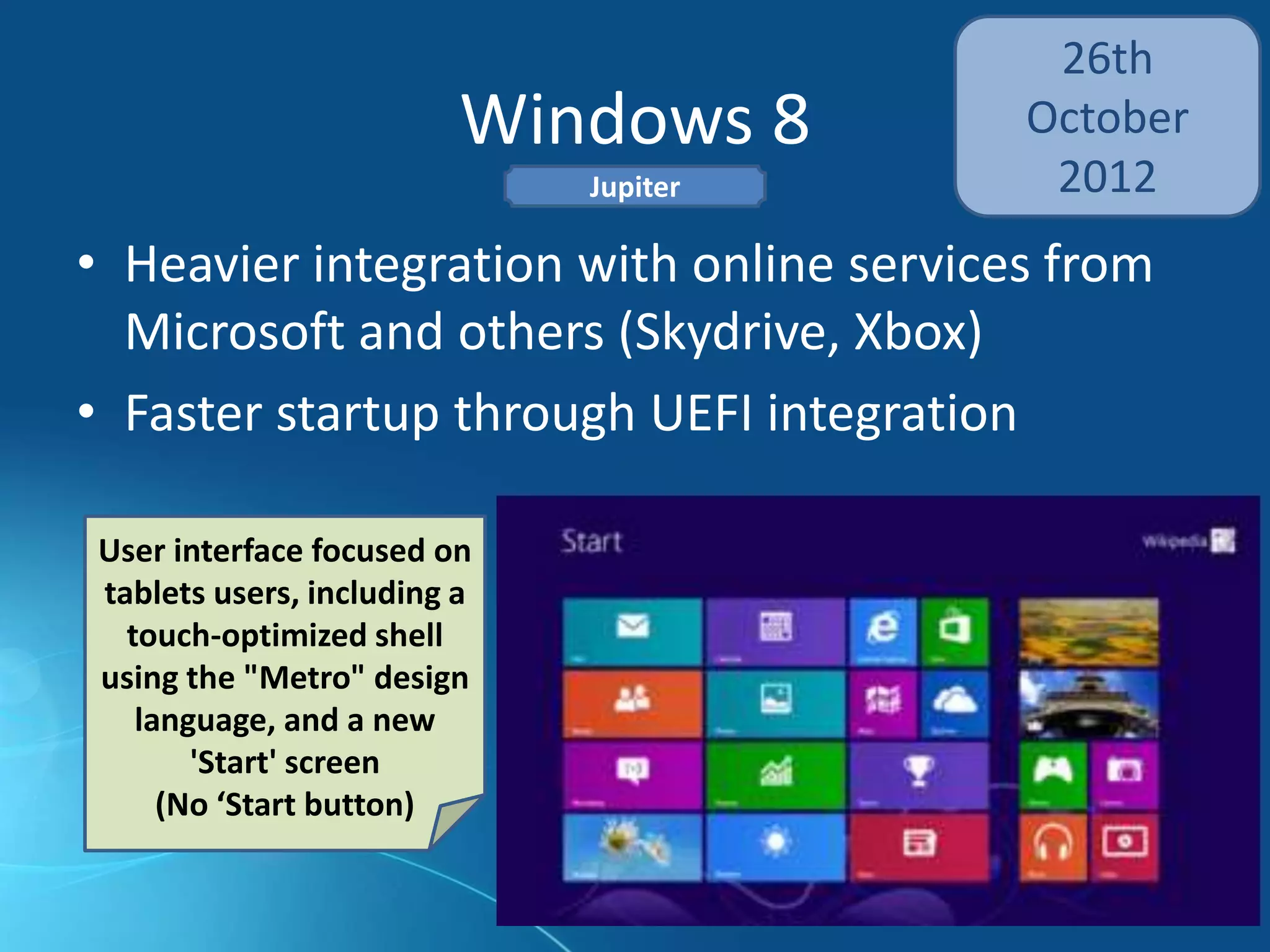
Windows 8
26th
October
2012
• Heavier integration with online services from
Microsoft and others (Skydrive, Xbox)
• Faster startup through UEFI integration
User interface focused on
tablets users, including a
touch-optimized shell
using the "Metro" design
language, and a new
'Start' screen
(No ‘Start button)
Jupiter
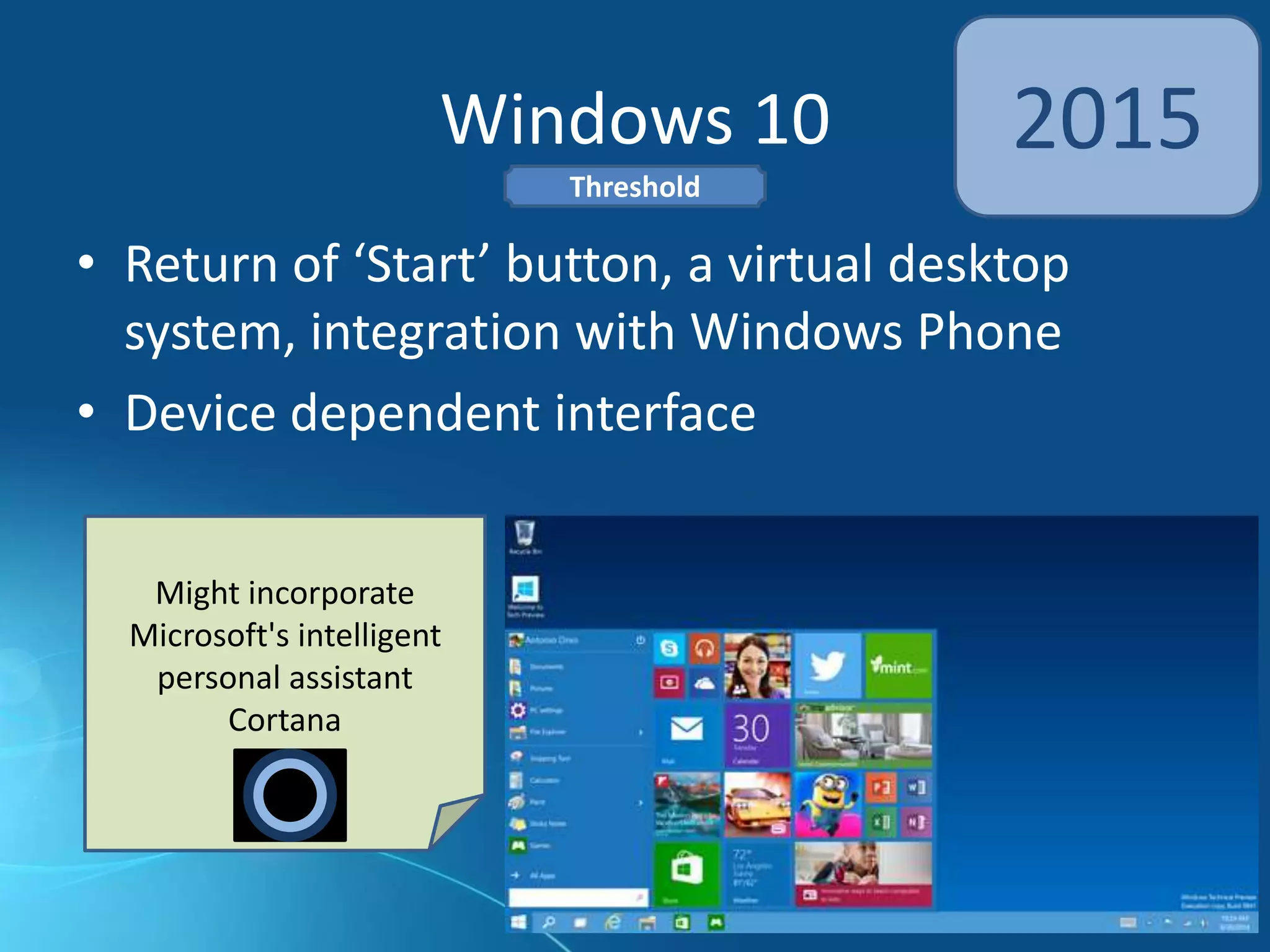
Windows 10 2015
• Return of ‘Start’ button, a virtual desktop
system, integration with Windows Phone
• Device dependent interface
Might incorporate
Microsoft's intelligent
personal assistant
Cortana
Threshold

A History of Microsoft Windows

  • 1.
    A History ofWindows Damian Gordon
  • 3.
  • 4.
    Timeline of Windows 1981 MS-DOS 1987 Win2 1993 Win NT 1998 Win 98 2001 Win XP 2009 Win 7 2015 Win 10 1985 Win 1 1990 Win 3 1995 Win 95 2000 Win 2000 2007 Win Vista 2012 Win 8 2000 Win ME
  • 5.
    MS-DOS • Microsoft DiskOperating System • Command-line interface (CLI) August 1981 Microsoft bought an existing operating system from Seattle Computer Products (86-DOS), for $75,000 in 1981.
  • 6.
    Windows 1.0 • 16-bitmulti-tasking shell on top of an existing MS-DOS installation • Limited multi-tasking 20th November 1985 The development of Windows began after Bill Gates saw a demonstration of VisiCorp's Visi On.
  • 7.
    Windows 2.0 9th December 1987 • Allowsapplication windows to overlap • First version to integrate the control panel On March 17, 1988, Apple filed a lawsuit against Microsoft and HP, accusing them of copying the Macintosh System. Apple lost.
  • 8.
    Windows 3.0 22nd May 1990 • Protected/Enhancedmode to run Windows applications with reduced memory issues • Better memory management Developed based on work by David Weise and Murray Sargent in 1989.
  • 9.
    Windows NT 27th July 1993 • Portabilityto multiple processor architectures, as well as higher security and stability • Designed from scratch (“Unix killer”) Bill Gates hired David Cutler from DEC to design Windows NT. (WNT = VMS)
  • 10.
    Windows 95 24th August 1995 • Introducedthe taskbar, the 'Start' button, and the way the user navigates • Moved to multitasked 32-bit architecture Windows 95 included support for 255-character mixed-case long filenames. Chicago
  • 11.
    Windows 98 25th June 1998 • Improvedpower management, network management, and USB support • Added Standby and Hibernate modes Introduced the Windows Driver Model (WDM) to manage device drivers. Memphis
  • 12.
    Windows 2000 17th February 2000 • AddedNTFS (New Technology File System) 3.0, the Microsoft Management Console (MMC), and the Encrypting File System (EFS) • Also Active Directory A number of new assistive technologies to support for people with disabilities were introduced. Jim Allchin didn't like codenames
  • 13.
    Windows ME 14th September 2000 • Introduceda System Restore feature, and improved digital media and networking tools • Restricted access to real mode MS-DOS Criticized for speed and stability issues, a PC World article dubbed Windows ME the "Mistake Edition“ (Very short shelf-life) Millennium
  • 14.
    Windows XP 25th October 2001 • Improvedtaskbar and ‘Start’ menu, better networking features • Newly improved user interface The first version of Windows to use product activation in an effort to reduce software piracy. Neptune
  • 15.
    Windows Vista 30th January 2007 • IntroducedWindows Search, Windows Aero, Windows Sidebar, Shadow Copy • Integrated Speech Recognition Criticisms of Vista - high system requirements - more restrictive licensing - new digital rights management - lack of compatibility with some pre-Vista hardware and software Longhorn
  • 16.
    Windows 7 22nd October 2009 • Supportfor virtual hard disks, better multi- core processors performance, and kernel • Improved touch and handwriting recognition Intended to address criticisms faced by Windows Vista, such as performance improvements Blackcomb
  • 17.
    Windows 8 26th October 2012 • Heavierintegration with online services from Microsoft and others (Skydrive, Xbox) • Faster startup through UEFI integration User interface focused on tablets users, including a touch-optimized shell using the "Metro" design language, and a new 'Start' screen (No ‘Start button) Jupiter
  • 18.
    Windows 10 2015 •Return of ‘Start’ button, a virtual desktop system, integration with Windows Phone • Device dependent interface Might incorporate Microsoft's intelligent personal assistant Cortana Threshold