Evolution of Windows
Babu Jayaraj
Foundation
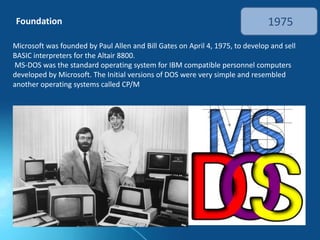
Microsoft was founded by Paul Allen and Bill Gates on April 4, 1975, to develop and sell
BASIC interpreters for the Altair 8800.
MS-DOS was the standard operating system for IBM compatible personnel computers
developed by Microsoft. The Initial versions of DOS were very simple and resembled
another operating systems called CP/M
1975
Microsoft Windows has been seen 9 major versions since its first
release in 1985
Over 29 years later, windows looks very different but somehow familiar with
elements that have survived the test of time, increases in computing power and –
most recently a shift from the keyboard and mouse to the touchscreen.
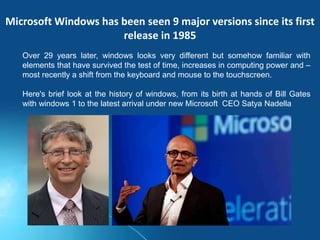
Here's brief look at the history of windows, from its birth at hands of Bill Gates
with windows 1 to the latest arrival under new Microsoft CEO Satya Nadella
MS-DOS
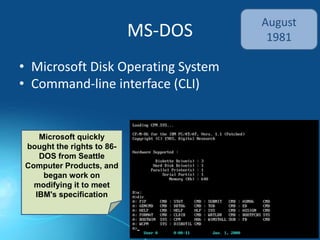
• Microsoft Disk Operating System
• Command-line interface (CLI)
August
1981
Microsoft quickly
bought the rights to 86-
DOS from Seattle
Computer Products, and
began work on
modifying it to meet
IBM's specification
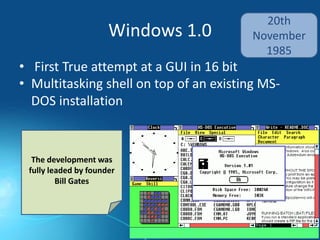
Windows 1.0
• First True attempt at a GUI in 16 bit
• Multitasking shell on top of an existing MS-
DOS installation
20th
November
1985
The development was
fully leaded by founder
Bill Gates
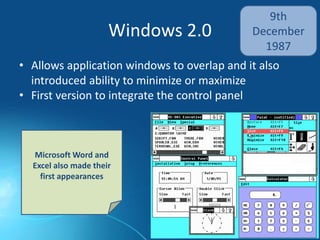
Windows 2.0
9th
December
1987
• Allows application windows to overlap and it also
introduced ability to minimize or maximize
• First version to integrate the control panel
Microsoft Word and
Excel also made their
first appearances
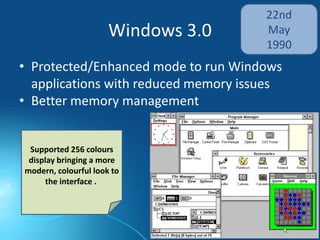
Windows 3.0
22nd
May
1990
• Protected/Enhanced mode to run Windows
applications with reduced memory issues
• Better memory management
Supported 256 colours
display bringing a more
modern, colourful look to
the interface .
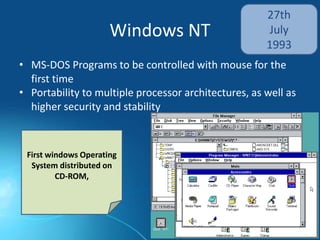
Windows NT
27th
July
1993
• MS-DOS Programs to be controlled with mouse for the
first time
• Portability to multiple processor architectures, as well as
higher security and stability
First windows Operating
System distributed on
CD-ROM,
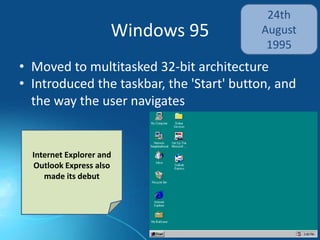
Windows 95
24th
August
1995
• Moved to multitasked 32-bit architecture
• Introduced the taskbar, the 'Start' button, and
the way the user navigates
Internet Explorer and
Outlook Express also
made its debut
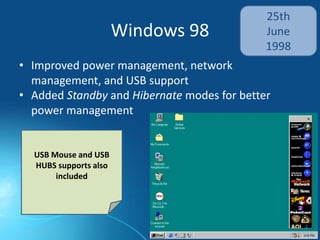
Windows 98
25th
June
1998
• Improved power management, network
management, and USB support
• Added Standby and Hibernate modes for better
power management
USB Mouse and USB
HUBS supports also
included
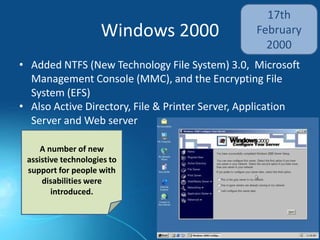
Windows 2000
17th
February
2000
• Added NTFS (New Technology File System) 3.0, Microsoft
Management Console (MMC), and the Encrypting File
System (EFS)
• Also Active Directory, File & Printer Server, Application
Server and Web server
A number of new
assistive technologies to
support for people with
disabilities were
introduced.
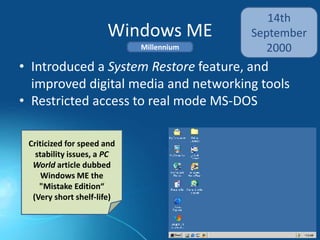
Windows ME
14th
September
2000
• Introduced a System Restore feature, and
improved digital media and networking tools
• Restricted access to real mode MS-DOS
Criticized for speed and
stability issues, a PC
World article dubbed
Windows ME the
"Mistake Edition“
(Very short shelf-life)
Millennium
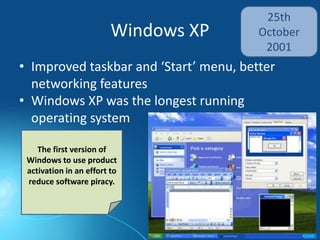
Windows XP
25th
October
2001
• Improved taskbar and ‘Start’ menu, better
networking features
• Windows XP was the longest running
operating system
The first version of
Windows to use product
activation in an effort to
reduce software piracy.
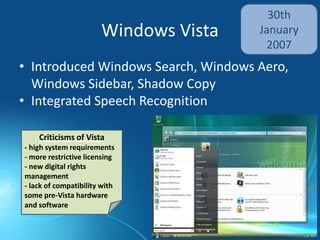
Windows Vista
30th
January
2007
• Introduced Windows Search, Windows Aero,
Windows Sidebar, Shadow Copy
• Integrated Speech Recognition
Criticisms of Vista
- high system requirements
- more restrictive licensing
- new digital rights
management
- lack of compatibility with
some pre-Vista hardware
and software
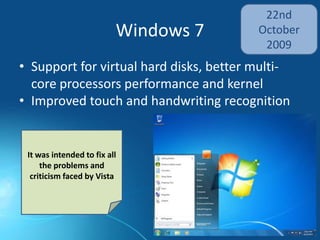
Windows 7
22nd
October
2009
• Support for virtual hard disks, better multi-
core processors performance and kernel
• Improved touch and handwriting recognition
It was intended to fix all
the problems and
criticism faced by Vista
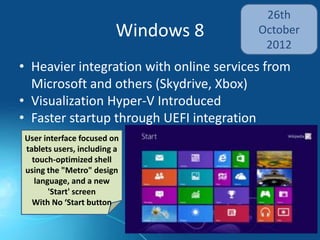
Windows 8
26th
October
2012
• Heavier integration with online services from
Microsoft and others (Skydrive, Xbox)
• Visualization Hyper-V Introduced
• Faster startup through UEFI integration
User interface focused on
tablets users, including a
touch-optimized shell
using the "Metro" design
language, and a new
'Start' screen
With No ‘Start button
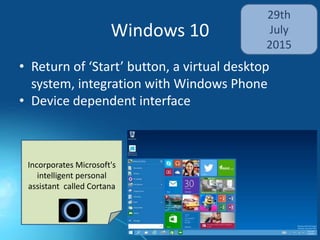
Windows 10
29th
July
2015
• Return of ‘Start’ button, a virtual desktop
system, integration with Windows Phone
• Device dependent interface
Incorporates Microsoft's
intelligent personal
assistant called Cortana
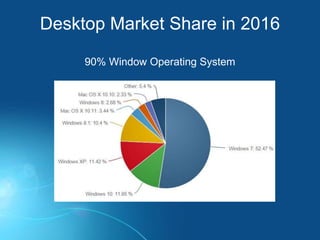
Desktop Market Share in 2016
90% Window Operating System
Thank You

Evolution of Windows

  • 1.
  • 2.
    Foundation Microsoft was foundedby Paul Allen and Bill Gates on April 4, 1975, to develop and sell BASIC interpreters for the Altair 8800. MS-DOS was the standard operating system for IBM compatible personnel computers developed by Microsoft. The Initial versions of DOS were very simple and resembled another operating systems called CP/M 1975
  • 3.
    Microsoft Windows hasbeen seen 9 major versions since its first release in 1985 Over 29 years later, windows looks very different but somehow familiar with elements that have survived the test of time, increases in computing power and – most recently a shift from the keyboard and mouse to the touchscreen. Here's brief look at the history of windows, from its birth at hands of Bill Gates with windows 1 to the latest arrival under new Microsoft CEO Satya Nadella
  • 4.
    MS-DOS • Microsoft DiskOperating System • Command-line interface (CLI) August 1981 Microsoft quickly bought the rights to 86- DOS from Seattle Computer Products, and began work on modifying it to meet IBM's specification
  • 5.
    Windows 1.0 • FirstTrue attempt at a GUI in 16 bit • Multitasking shell on top of an existing MS- DOS installation 20th November 1985 The development was fully leaded by founder Bill Gates
  • 6.
    Windows 2.0 9th December 1987 • Allowsapplication windows to overlap and it also introduced ability to minimize or maximize • First version to integrate the control panel Microsoft Word and Excel also made their first appearances
  • 7.
    Windows 3.0 22nd May 1990 • Protected/Enhancedmode to run Windows applications with reduced memory issues • Better memory management Supported 256 colours display bringing a more modern, colourful look to the interface .
  • 8.
    Windows NT 27th July 1993 • MS-DOSPrograms to be controlled with mouse for the first time • Portability to multiple processor architectures, as well as higher security and stability First windows Operating System distributed on CD-ROM,
  • 9.
    Windows 95 24th August 1995 • Movedto multitasked 32-bit architecture • Introduced the taskbar, the 'Start' button, and the way the user navigates Internet Explorer and Outlook Express also made its debut
  • 10.
    Windows 98 25th June 1998 • Improvedpower management, network management, and USB support • Added Standby and Hibernate modes for better power management USB Mouse and USB HUBS supports also included
  • 11.
    Windows 2000 17th February 2000 • AddedNTFS (New Technology File System) 3.0, Microsoft Management Console (MMC), and the Encrypting File System (EFS) • Also Active Directory, File & Printer Server, Application Server and Web server A number of new assistive technologies to support for people with disabilities were introduced.
  • 12.
    Windows ME 14th September 2000 • Introduceda System Restore feature, and improved digital media and networking tools • Restricted access to real mode MS-DOS Criticized for speed and stability issues, a PC World article dubbed Windows ME the "Mistake Edition“ (Very short shelf-life) Millennium
  • 13.
    Windows XP 25th October 2001 • Improvedtaskbar and ‘Start’ menu, better networking features • Windows XP was the longest running operating system The first version of Windows to use product activation in an effort to reduce software piracy.
  • 14.
    Windows Vista 30th January 2007 • IntroducedWindows Search, Windows Aero, Windows Sidebar, Shadow Copy • Integrated Speech Recognition Criticisms of Vista - high system requirements - more restrictive licensing - new digital rights management - lack of compatibility with some pre-Vista hardware and software
  • 15.
    Windows 7 22nd October 2009 • Supportfor virtual hard disks, better multi- core processors performance and kernel • Improved touch and handwriting recognition It was intended to fix all the problems and criticism faced by Vista
  • 16.
    Windows 8 26th October 2012 • Heavierintegration with online services from Microsoft and others (Skydrive, Xbox) • Visualization Hyper-V Introduced • Faster startup through UEFI integration User interface focused on tablets users, including a touch-optimized shell using the "Metro" design language, and a new 'Start' screen With No ‘Start button
  • 17.
    Windows 10 29th July 2015 • Returnof ‘Start’ button, a virtual desktop system, integration with Windows Phone • Device dependent interface Incorporates Microsoft's intelligent personal assistant called Cortana
  • 18.
    Desktop Market Sharein 2016 90% Window Operating System
  • 19.