WINDOWS OPERATING SYSTEM
GENERATION
Ashok Sinch
Given by
Xitij sir
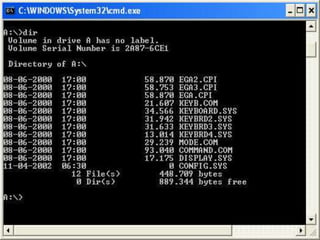
MS-Dos
 Short for Microsoft Disk operating system,
MS-DOS is a non-graphical command line
operating system created for IBM compatible
computers that was first introduced in August
1981.
 Unlike Microsoft Windows, which most users
are familiar with today, MS-DOS requires the
user to type commands instead of using a
mouse.
History of Windows
 Microsoft Windows operating system was
developed by Microsoft to overcome the limitation
of its own MS-DOS operating system.
 First successful version were Windows 3.0,
released in 1990.
 Subsequently released version were
Windows 95, Windows 98, Windows 2000,
Windows XP, Windows XP Professional and
Windows Vista.
 Microsoft initially announced the Windows
product seven years earlier and released the first
version in 1983.
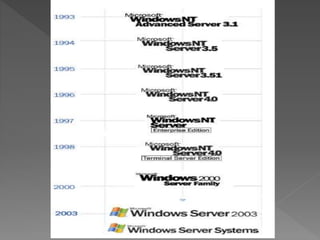
WINDOWS OPERATING SYSTEM
 1985: windows 1.0
 1987: windows 2.0
 1990: windows 3.0
 1993: windows NT 3.1
 1993: windows NT Advanced
 1993: windows For Workgroups 3.11
 1994: windows NT Workstation 3.5
 1994: windows NT server 3.5
 1995: windows 95
 1995: windows NT server 3.51
 1996: windows NT server 4.0
 1996: windows NT workstation 4.0
 1997: windows NT server 4.0 enterprise edition
 1998: windows 98
 1998: windows NT server 4.0 terminal server
edition
 1999: windows 98 second edition
 2000: windows ME (millennium edition)
 2000: windows 2000 server family
 2001: windows XP
 2001: windows XP Professional
 2001: windows XP 64-bit edition
 2002: windows XP media center edition
 2002: windows XP Tablet PC edition
 2003: windows server 2003
 2003: 64-bit operating systems
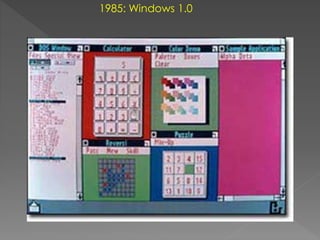
1985: Windows 1.0
 The first version of Windows provided a new
software environment for developing and running
applications that use bitmap displays and mouse
pointing devices.
 With Windows, users moved a mouse to point
and click their way through tasks, such as starting
applications.
 The product included a set of desktop
applications, including the MS-DOS file
management program, a calendar, card file,
notepad, calculator, clock, and
telecommunications programs, which helped users
manage day-to-day activities.
1985: Windows 1.0
1990: Windows 3.0
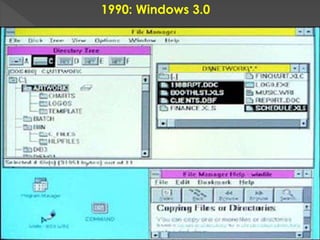
 The third major release of the Windows platform
from Microsoft offered improved performance,
advanced graphics with 16 colors, and full support
of the more powerful Intel 386 processor.
 A new wave of 386 PCs helped drive the
popularity of Windows 3.0, which offered a wide
range of useful features and capabilities, including:
• Program Manager, File Manager, and Print
Manager.
• A completely rewritten application development
environment.
• An improved set of Windows icons.
1990: Windows 3.0
1993: Windows NT 3.1
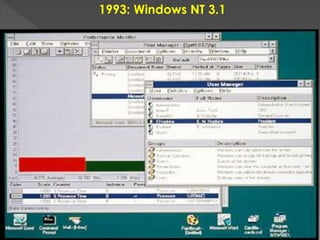
 When Microsoft Windows NT® was released to
manufacturing on July 27, 1993, Microsoft met an
important milestone: the completion of a project
begun in the late 1980s to build an advanced new
operating system from scratch.
 "Windows NT represents nothing less than a
fundamental change in the way that companies
can address their business computing
requirements," Microsoft Chairman Bill Gates said at
its release.
1993: Windows NT 3.1
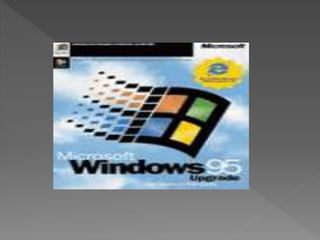
1995: Windows 95
 Released 08/1995
 Computer: 100% IBM Compatible
 Processor: 386 DX or higher
 Memory: 4MB RAM 35MB Hard disk drive
 Drives: CD-ROM or Floppy
 Sound: Sound Blaster compatible Sound Card.
 Video: VGA or higher-resolution
 Controls: Microsoft keyboard / Mouse
 operating system: DOS 5.0 and Higher
 Price: $70.00 - $90.00
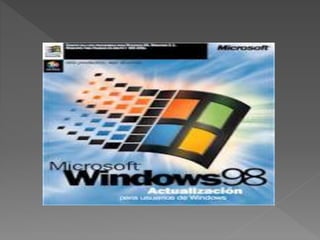
1998: Windows 98
Computer: 100% IBM Compatible
Processor: 486DX/66 MHz or Higher processor
Memory: 16 MB of RAM
Drives: Approximately 195MB; can take up to
295MB
CD-ROM or Floppy
Sound: Standard Sound card for sound capability.
Video: VGA or higher-resolution
Controls: 100% compatible Microsoft keyboard /
Mouse
operating system: Windows 3.x, 3.1x or Windows 95
to upgrade
DirectX: Includes DirectX 5.0
Price: $80.00 - $100.00
2000: Windows Millennium Edition
(Windows Me)
 Designed for home computer users,
Windows Me offered consumers numerous
music, video, and home networking
enhancements and reliability improvements.
 For example, to help consumers
troubleshoot their systems, the System Restore
feature let users roll back their PC software
configuration to a date or time before a
problem occurred.
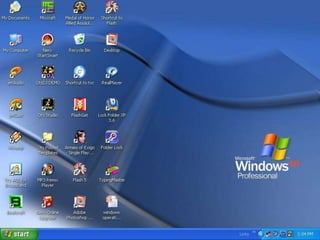
2001: Windows XP
 With the release of Windows XP in October 2001,
Microsoft merged its two Windows operating system
lines for consumers and businesses, uniting them
around the Windows 2000 code base.
 The "XP" in Windows XP stands for "experience,"
symbolizing the innovative experiences that
Windows can offer to personal computer users.
 With Windows XP, home users can work with and
enjoy music, movies, messaging, and photos with
their computer
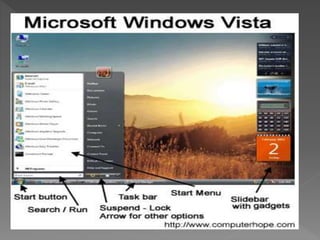
Microsoft Windows Vista
 Windows Vista
Released January 30, 2007
 Vista Premium-Ready PCs
 Computer: 100% IBM Compatible
 Processor: 1GHz Intel-compatible
 Memory: 1GB RAM
 Drives: 40GB disk space
DVD Drive
 Sound: Standard Sound card for sound
capability.
 DirectX 9.0 compatible video card.
 64,128,256 MB of Video RAM
 Controls: 100% compatible Microsoft Keyboard /
Mouse.
 Operating System: Windows 2000 / XP to
upgrade.
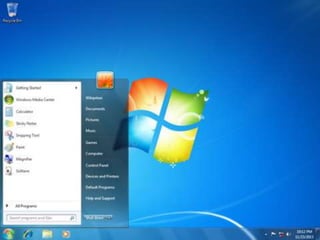
 Windows 7 is a personal computer
operating system developed by
Microsoft as part of Windows NT family of
operating systems.
 Development of 7 occurred as early as
2006 under the codename "Blackcomb".
 Windows 7 was released to
manufacturing on July 22, 2009, and
became generally available on October
22, 2009.
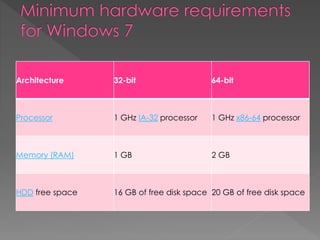
Architecture 32-bit 64-bit
Processor 1 GHz IA-32 processor 1 GHz x86-64 processor
Memory (RAM) 1 GB 2 GB
HDD free space 16 GB of free disk space 20 GB of free disk space
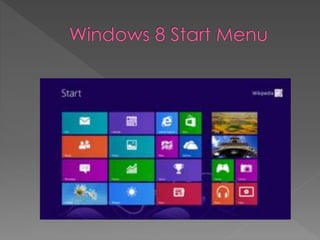
 Windows 8 is a personal computer
operating system developed by Microsoft
as part of Windows NT family of operating
systems.
 The operating system was released to
manufacturing on August 1, 2012, and was
released for general availability on October
26, 2012
 Windows 8 introduced major changes to
the operating system's platform and user
interface to improve its user experience on
tablets, where Windows was now
competing with mobile operating systems
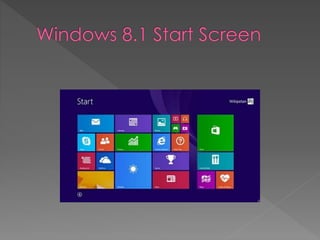
 Windows 8.1 is a version of Windows NT
family of operating systems and an
upgrade for Windows 8
 Windows 8.1 is available free of charge
for retail copies of Windows 8 and
Windows RT users via Windows Store.
All the best

Windows Operating System

  • 1.
  • 2.
    MS-Dos  Short forMicrosoft Disk operating system, MS-DOS is a non-graphical command line operating system created for IBM compatible computers that was first introduced in August 1981.  Unlike Microsoft Windows, which most users are familiar with today, MS-DOS requires the user to type commands instead of using a mouse.
  • 4.
    History of Windows Microsoft Windows operating system was developed by Microsoft to overcome the limitation of its own MS-DOS operating system.  First successful version were Windows 3.0, released in 1990.  Subsequently released version were Windows 95, Windows 98, Windows 2000, Windows XP, Windows XP Professional and Windows Vista.  Microsoft initially announced the Windows product seven years earlier and released the first version in 1983.
  • 5.
    WINDOWS OPERATING SYSTEM 1985: windows 1.0  1987: windows 2.0  1990: windows 3.0  1993: windows NT 3.1  1993: windows NT Advanced  1993: windows For Workgroups 3.11  1994: windows NT Workstation 3.5  1994: windows NT server 3.5  1995: windows 95  1995: windows NT server 3.51  1996: windows NT server 4.0  1996: windows NT workstation 4.0  1997: windows NT server 4.0 enterprise edition  1998: windows 98
  • 6.
     1998: windowsNT server 4.0 terminal server edition  1999: windows 98 second edition  2000: windows ME (millennium edition)  2000: windows 2000 server family  2001: windows XP  2001: windows XP Professional  2001: windows XP 64-bit edition  2002: windows XP media center edition  2002: windows XP Tablet PC edition  2003: windows server 2003  2003: 64-bit operating systems
  • 7.
    1985: Windows 1.0 The first version of Windows provided a new software environment for developing and running applications that use bitmap displays and mouse pointing devices.  With Windows, users moved a mouse to point and click their way through tasks, such as starting applications.  The product included a set of desktop applications, including the MS-DOS file management program, a calendar, card file, notepad, calculator, clock, and telecommunications programs, which helped users manage day-to-day activities.
  • 8.
  • 9.
    1990: Windows 3.0 The third major release of the Windows platform from Microsoft offered improved performance, advanced graphics with 16 colors, and full support of the more powerful Intel 386 processor.  A new wave of 386 PCs helped drive the popularity of Windows 3.0, which offered a wide range of useful features and capabilities, including: • Program Manager, File Manager, and Print Manager. • A completely rewritten application development environment. • An improved set of Windows icons.
  • 10.
  • 11.
    1993: Windows NT3.1  When Microsoft Windows NT® was released to manufacturing on July 27, 1993, Microsoft met an important milestone: the completion of a project begun in the late 1980s to build an advanced new operating system from scratch.  "Windows NT represents nothing less than a fundamental change in the way that companies can address their business computing requirements," Microsoft Chairman Bill Gates said at its release.
  • 12.
  • 13.
    1995: Windows 95 Released 08/1995  Computer: 100% IBM Compatible  Processor: 386 DX or higher  Memory: 4MB RAM 35MB Hard disk drive  Drives: CD-ROM or Floppy  Sound: Sound Blaster compatible Sound Card.  Video: VGA or higher-resolution  Controls: Microsoft keyboard / Mouse  operating system: DOS 5.0 and Higher  Price: $70.00 - $90.00
  • 15.
    1998: Windows 98 Computer:100% IBM Compatible Processor: 486DX/66 MHz or Higher processor Memory: 16 MB of RAM Drives: Approximately 195MB; can take up to 295MB CD-ROM or Floppy Sound: Standard Sound card for sound capability. Video: VGA or higher-resolution Controls: 100% compatible Microsoft keyboard / Mouse operating system: Windows 3.x, 3.1x or Windows 95 to upgrade DirectX: Includes DirectX 5.0 Price: $80.00 - $100.00
  • 17.
    2000: Windows MillenniumEdition (Windows Me)  Designed for home computer users, Windows Me offered consumers numerous music, video, and home networking enhancements and reliability improvements.  For example, to help consumers troubleshoot their systems, the System Restore feature let users roll back their PC software configuration to a date or time before a problem occurred.
  • 18.
    2001: Windows XP With the release of Windows XP in October 2001, Microsoft merged its two Windows operating system lines for consumers and businesses, uniting them around the Windows 2000 code base.  The "XP" in Windows XP stands for "experience," symbolizing the innovative experiences that Windows can offer to personal computer users.  With Windows XP, home users can work with and enjoy music, movies, messaging, and photos with their computer
  • 21.
    Microsoft Windows Vista Windows Vista Released January 30, 2007  Vista Premium-Ready PCs  Computer: 100% IBM Compatible  Processor: 1GHz Intel-compatible  Memory: 1GB RAM  Drives: 40GB disk space DVD Drive  Sound: Standard Sound card for sound capability.  DirectX 9.0 compatible video card.  64,128,256 MB of Video RAM
  • 22.
     Controls: 100%compatible Microsoft Keyboard / Mouse.  Operating System: Windows 2000 / XP to upgrade.
  • 24.
     Windows 7is a personal computer operating system developed by Microsoft as part of Windows NT family of operating systems.  Development of 7 occurred as early as 2006 under the codename "Blackcomb".  Windows 7 was released to manufacturing on July 22, 2009, and became generally available on October 22, 2009.
  • 25.
    Architecture 32-bit 64-bit Processor1 GHz IA-32 processor 1 GHz x86-64 processor Memory (RAM) 1 GB 2 GB HDD free space 16 GB of free disk space 20 GB of free disk space
  • 28.
     Windows 8is a personal computer operating system developed by Microsoft as part of Windows NT family of operating systems.  The operating system was released to manufacturing on August 1, 2012, and was released for general availability on October 26, 2012  Windows 8 introduced major changes to the operating system's platform and user interface to improve its user experience on tablets, where Windows was now competing with mobile operating systems
  • 30.
     Windows 8.1is a version of Windows NT family of operating systems and an upgrade for Windows 8  Windows 8.1 is available free of charge for retail copies of Windows 8 and Windows RT users via Windows Store.
  • 32.