*On November 10, 1983, Bill Gates started Microsoft with Paul
    Allen

* Microsoft announced Microsoft Windows, an extension of the
    MS-DOS operating system that would provide a graphical
    operating environment for PC users.

*   With Windows, the graphical user interface (GUI) era at
    Microsoft had begun.
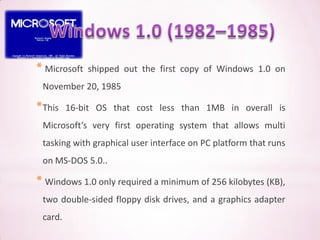
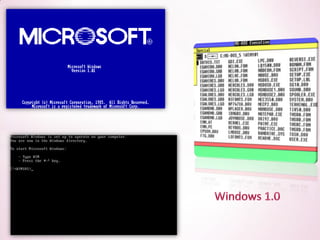
* Microsoft   shipped out the first copy of Windows 1.0 on
 November 20, 1985

* This   16-bit OS that cost less than 1MB in overall is
 Microsoft’s very first operating system that allows multi
 tasking with graphical user interface on PC platform that runs
 on MS-DOS 5.0..

* Windows 1.0 only required a minimum of 256 kilobytes (KB),
 two double-sided floppy disk drives, and a graphics adapter
 card.
* The   first version of Microsoft Windows included a simple
 graphics painting program called Windows Paint; Windows
 Write, a simple word processor; an appointment "calendar"; a
 "card-filer"; a "notepad"; a "clock"; a "control panel"; a
 "computer terminal"; "Clipboard"; and RAM driver

* Windows 1.0 was not a complete operating system, but rather
 an "operating environment" that extended MS-DOS, and
 shared the latter's inherent flaws and problems
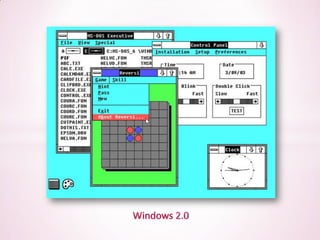
*Microsoft Windows version 2 came out on 9 December
 1987, and proved slightly more popular than its
 predecessor

* Microsoft's new   graphical applications, Excel and Word
 for Windows. They could be run from MS-DOS, executing
 Windows for the duration of their activity, and closing
 down Windows upon exit.

*Control Panel made its first appearance in Windows 2.0.
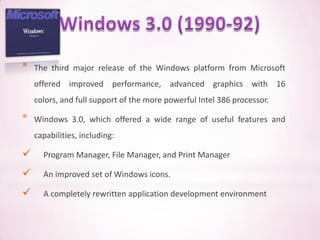
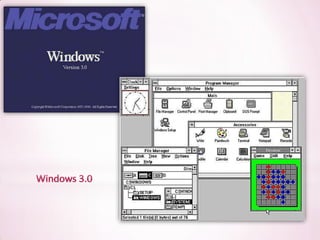
*   The third major release of the Windows platform from Microsoft
    offered improved performance, advanced graphics with 16
    colors, and full support of the more powerful Intel 386 processor.

*   Windows 3.0, which offered a wide range of useful features and
    capabilities, including:

     Program Manager, File Manager, and Print Manager

     An improved set of Windows icons.

     A completely rewritten application development environment
* Windows NT was the first Windows operating system to combine
 support for high-end, client/server business applications with the
 industry's leading personal productivity applications.

* Windows NT 3.1 was a 32-bit operating system .
* New   features included a preemptive multitasking scheduler for
 Windows–based applications, domain server security.

* support   for multiple processor architectures, and the NTFS file
 system

* Windows NT was originally called “Portable Systems”
* Windows 95 was the successor to the three existing general-purpose
 desktop operating systems from Microsoft—Windows 3.1, Windows
 for Workgroups, and MS-DOS

* The   32-bit operating system also offered enhanced multimedia
 capabilities, more powerful features for mobile computing, and
 integrated networking

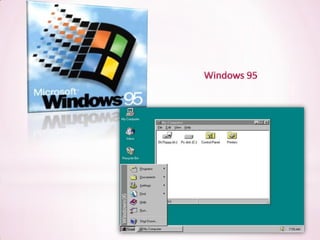
* Windows    95 featured     the     first   appearance    of the     Start
 menu, taskbar, and minimize, maximize, and close buttons on each
 window

* Windows    95,   with   built-in    Internet   support    and     dial-up
 networking, marked the coming of the Internet Age
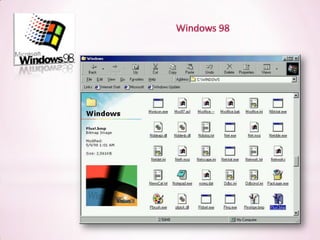
* Windows 98 was the upgrade from Windows 95. Described as an
 operating system that "Works Better, Plays Better," Windows 98
 was the first version of Windows designed specifically for
 consumers.
* Other   features are replacement of Internet Explorer 4.0 with
 Internet Explorer 5.0. Also included is Internet Connection
 Sharing, which allows multiple computers on a LAN to share a
 single Internet connection through NAT.
* Windows 98 was the first Windows system that supported DVD
 discs and universal serial bus (USB) devices
* Windows 98 was the last version based on MS-DOS
*Windows 2000 Professional was also designed to replace
 Windows 95, Windows 98, and Windows NT Workstation
 4.0 on all business desktops and laptops.

*Among other improvements, Windows 2000 Professional
 simplified hardware installation by adding support for a
 wide variety of new Plug and Play hardware, including
 advanced    networking    and   wireless    products,   USB
 devices, IEEE 1394 devices, and infrared devices.
*Designed for home computer users, Windows Me offered
 consumers numerous music, video, and home networking
 enhancements and reliability improvements.

*Windows   Movie Maker provided users with the tools to
 digitally edit, save, and share home videos. And with
 Microsoft Windows Media Player 7 technologies, users
 could find, organize, and play digital media easily.

*Windows Me was the last Microsoft operating system to
 be based on the Windows 95 code base
* Between the original launch of Windows and the release of Windows XP,
 about one billion PCs were shipped worldwide
* Windows XP was compiled from 45 million lines of code
* Windows XP is heavily based on the Windows NT and 2000 core
* The "XP" in Windows XP stands for "experience," symbolizing   the
 innovative experiences that Windows can offer to personal computer
 users.
* Windows     XP introduced several new features to the Windows line,
 including:
  * Fast user switching
  * Remote Desktop Functionality.
  * Support for most DSL modems as well as networking over FireWire,
    and Bluetooth
* More  than 1.5 million devices were compatible with Windows
 Vista at launch
* Vista had the longest startup/logon music ever.
* Seven years in the making, the OS, released on Jan. 30, 2007 to
 consumers and Nov. 30, 2006 to business users
* Windows   Vista intended to have enhanced security by
 introducing a new restricted user mode called User Account
 Control, replacing the "administrator-by-default" philosophy of
 Windows XP
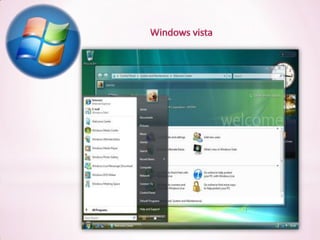
* Vista also features new graphics features, the Windows Aero GUI
 , new applications.
*a revised and more secure version of Internet Explorer, a new
 version of Windows Media player, and a large number of
 underlying architectural changes.
* The   next version of Windows is already in beta and is likely to ship in
  2009.

* Windows    7 is the next major release after Windows Vista and was
  planned for a three-year development timeframe

* Some features of Windows 7 are faster boot-up, Device Stage, Windows
  PowerShell, improved window management, home group networking,
  multiple thumbnails for combined taskbar buttons, and better power
  management for notebooks.

* Windows    sold 240 million in 2010 which means that Microsoft sold
  more than 6 lakhs Windows 7 copies per day, 27,397 copies per hour,
  and 7.6 copies each second

* Windows 7 has largest users share among all other OS   about 41.35%
* Theoperating system was released to manufacturing on
 August 1, 2012, and was released for general availability on
 October 26, 2012
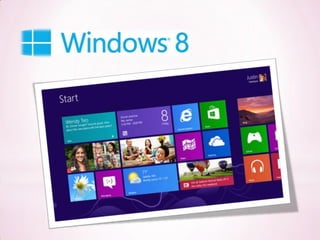
* Windows 8 introduces a new touch-friendly shell and user
 interface based on Microsoft's "Metro" design
 language, featuring a new Start screen with a grid of
 dynamically updating tiles that represent applications
* Windows 8 is available in 109 different languages.
* Windows 8 works with files of up to 16 exbibytes , which
 equates to 687 million Blu-Rays
* Estimates
          suggest roughly 4.5 billion people will use
 Windows 8 in the future.
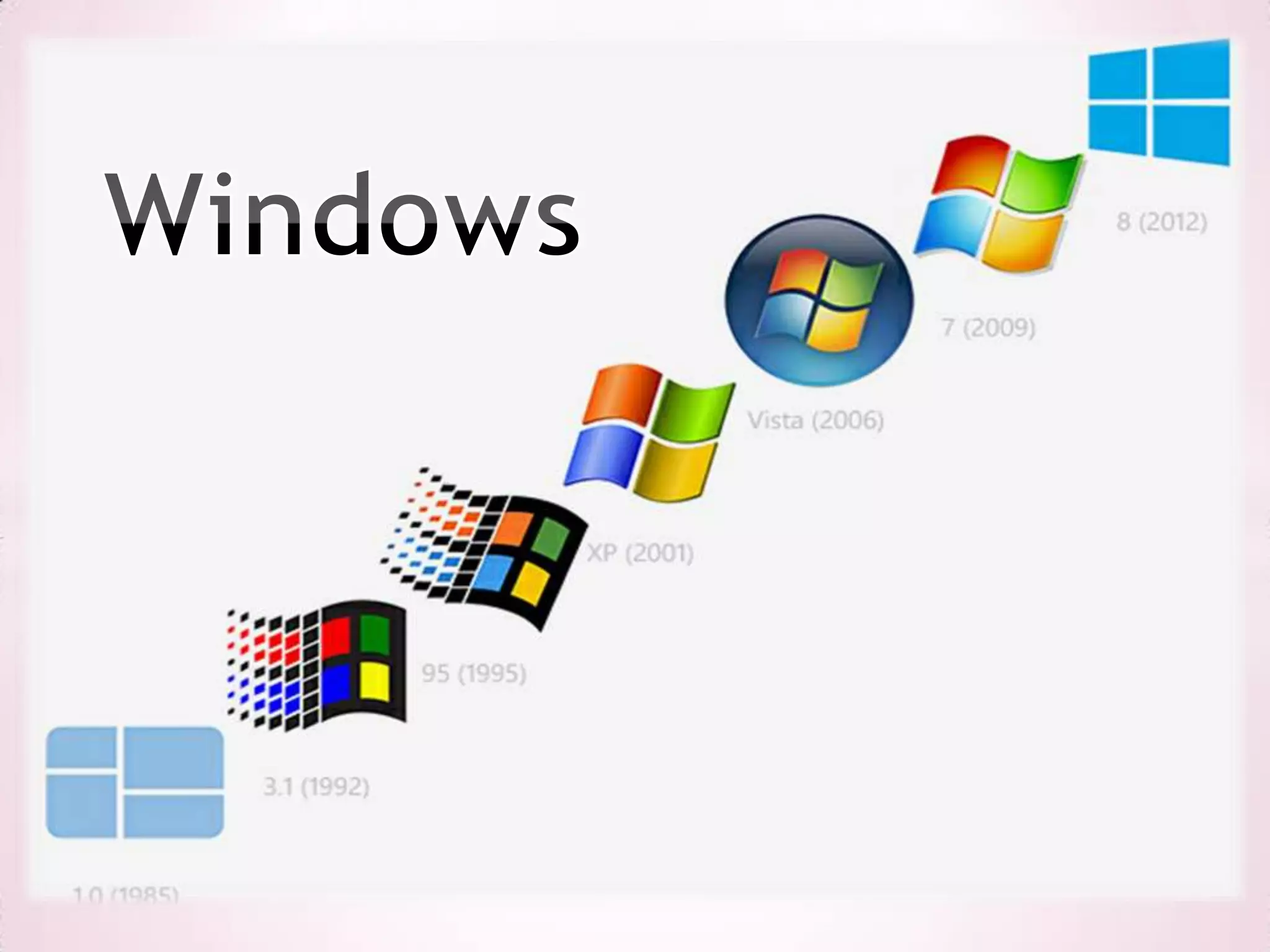
Windows
Windows

Windows

  • 3.
    *On November 10,1983, Bill Gates started Microsoft with Paul Allen * Microsoft announced Microsoft Windows, an extension of the MS-DOS operating system that would provide a graphical operating environment for PC users. * With Windows, the graphical user interface (GUI) era at Microsoft had begun.
  • 4.
    * Microsoft shipped out the first copy of Windows 1.0 on November 20, 1985 * This 16-bit OS that cost less than 1MB in overall is Microsoft’s very first operating system that allows multi tasking with graphical user interface on PC platform that runs on MS-DOS 5.0.. * Windows 1.0 only required a minimum of 256 kilobytes (KB), two double-sided floppy disk drives, and a graphics adapter card.
  • 5.
    * The first version of Microsoft Windows included a simple graphics painting program called Windows Paint; Windows Write, a simple word processor; an appointment "calendar"; a "card-filer"; a "notepad"; a "clock"; a "control panel"; a "computer terminal"; "Clipboard"; and RAM driver * Windows 1.0 was not a complete operating system, but rather an "operating environment" that extended MS-DOS, and shared the latter's inherent flaws and problems
  • 7.
    *Microsoft Windows version2 came out on 9 December 1987, and proved slightly more popular than its predecessor * Microsoft's new graphical applications, Excel and Word for Windows. They could be run from MS-DOS, executing Windows for the duration of their activity, and closing down Windows upon exit. *Control Panel made its first appearance in Windows 2.0.
  • 9.
    * The third major release of the Windows platform from Microsoft offered improved performance, advanced graphics with 16 colors, and full support of the more powerful Intel 386 processor. * Windows 3.0, which offered a wide range of useful features and capabilities, including:  Program Manager, File Manager, and Print Manager  An improved set of Windows icons.  A completely rewritten application development environment
  • 11.
    * Windows NTwas the first Windows operating system to combine support for high-end, client/server business applications with the industry's leading personal productivity applications. * Windows NT 3.1 was a 32-bit operating system . * New features included a preemptive multitasking scheduler for Windows–based applications, domain server security. * support for multiple processor architectures, and the NTFS file system * Windows NT was originally called “Portable Systems”
  • 12.
    * Windows 95was the successor to the three existing general-purpose desktop operating systems from Microsoft—Windows 3.1, Windows for Workgroups, and MS-DOS * The 32-bit operating system also offered enhanced multimedia capabilities, more powerful features for mobile computing, and integrated networking * Windows 95 featured the first appearance of the Start menu, taskbar, and minimize, maximize, and close buttons on each window * Windows 95, with built-in Internet support and dial-up networking, marked the coming of the Internet Age
  • 14.
    * Windows 98was the upgrade from Windows 95. Described as an operating system that "Works Better, Plays Better," Windows 98 was the first version of Windows designed specifically for consumers. * Other features are replacement of Internet Explorer 4.0 with Internet Explorer 5.0. Also included is Internet Connection Sharing, which allows multiple computers on a LAN to share a single Internet connection through NAT. * Windows 98 was the first Windows system that supported DVD discs and universal serial bus (USB) devices * Windows 98 was the last version based on MS-DOS
  • 16.
    *Windows 2000 Professionalwas also designed to replace Windows 95, Windows 98, and Windows NT Workstation 4.0 on all business desktops and laptops. *Among other improvements, Windows 2000 Professional simplified hardware installation by adding support for a wide variety of new Plug and Play hardware, including advanced networking and wireless products, USB devices, IEEE 1394 devices, and infrared devices.
  • 17.
    *Designed for homecomputer users, Windows Me offered consumers numerous music, video, and home networking enhancements and reliability improvements. *Windows Movie Maker provided users with the tools to digitally edit, save, and share home videos. And with Microsoft Windows Media Player 7 technologies, users could find, organize, and play digital media easily. *Windows Me was the last Microsoft operating system to be based on the Windows 95 code base
  • 18.
    * Between theoriginal launch of Windows and the release of Windows XP, about one billion PCs were shipped worldwide * Windows XP was compiled from 45 million lines of code * Windows XP is heavily based on the Windows NT and 2000 core * The "XP" in Windows XP stands for "experience," symbolizing the innovative experiences that Windows can offer to personal computer users. * Windows XP introduced several new features to the Windows line, including: * Fast user switching * Remote Desktop Functionality. * Support for most DSL modems as well as networking over FireWire, and Bluetooth
  • 19.
    * More than 1.5 million devices were compatible with Windows Vista at launch * Vista had the longest startup/logon music ever. * Seven years in the making, the OS, released on Jan. 30, 2007 to consumers and Nov. 30, 2006 to business users * Windows Vista intended to have enhanced security by introducing a new restricted user mode called User Account Control, replacing the "administrator-by-default" philosophy of Windows XP * Vista also features new graphics features, the Windows Aero GUI , new applications. *a revised and more secure version of Internet Explorer, a new version of Windows Media player, and a large number of underlying architectural changes.
  • 21.
    * The next version of Windows is already in beta and is likely to ship in 2009. * Windows 7 is the next major release after Windows Vista and was planned for a three-year development timeframe * Some features of Windows 7 are faster boot-up, Device Stage, Windows PowerShell, improved window management, home group networking, multiple thumbnails for combined taskbar buttons, and better power management for notebooks. * Windows sold 240 million in 2010 which means that Microsoft sold more than 6 lakhs Windows 7 copies per day, 27,397 copies per hour, and 7.6 copies each second * Windows 7 has largest users share among all other OS about 41.35%
  • 22.
    * Theoperating systemwas released to manufacturing on August 1, 2012, and was released for general availability on October 26, 2012 * Windows 8 introduces a new touch-friendly shell and user interface based on Microsoft's "Metro" design language, featuring a new Start screen with a grid of dynamically updating tiles that represent applications * Windows 8 is available in 109 different languages. * Windows 8 works with files of up to 16 exbibytes , which equates to 687 million Blu-Rays * Estimates suggest roughly 4.5 billion people will use Windows 8 in the future.