Innovations in Eddy Current
        Technology
    by Curtis Desselles


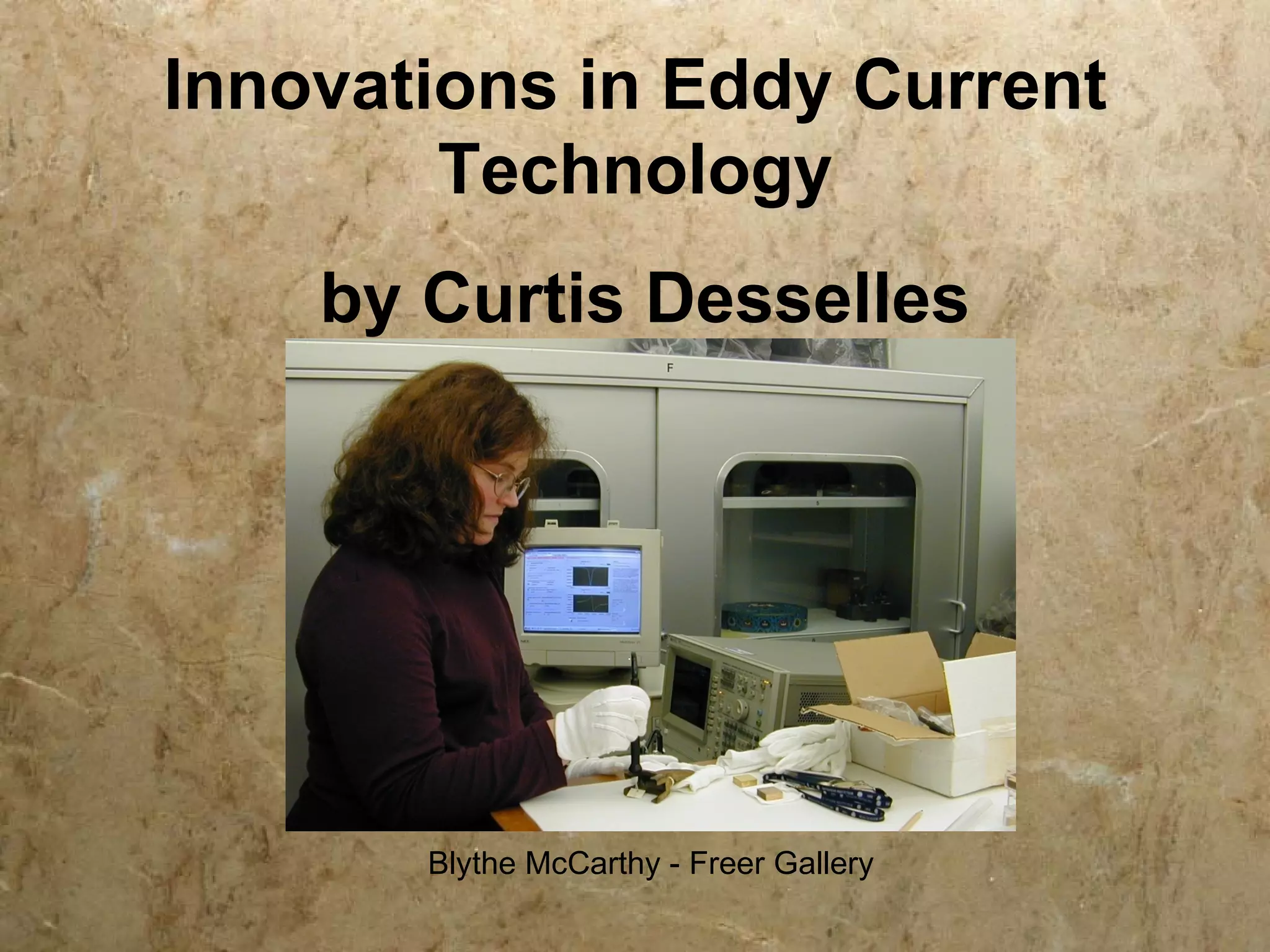
       Blythe McCarthy - Freer Gallery
Valuable information about cultural materials
   is not always visible to the naked eye.


Tattoodjj, “Statue of Prometheus”, June 8, 2008,
 online image, Flickr. Rockefeller Center, NY.


                                                   Opacity, “statue of Bastet, gilded bronze, Late
                                                   Period”, March 8, 2009, online image, flickr.
Northwestern State University & NCPTT are
continuing research into use of eddy current testing
               on cultural heritage.


          NCPTT, Photograph courtesy of Jason Church
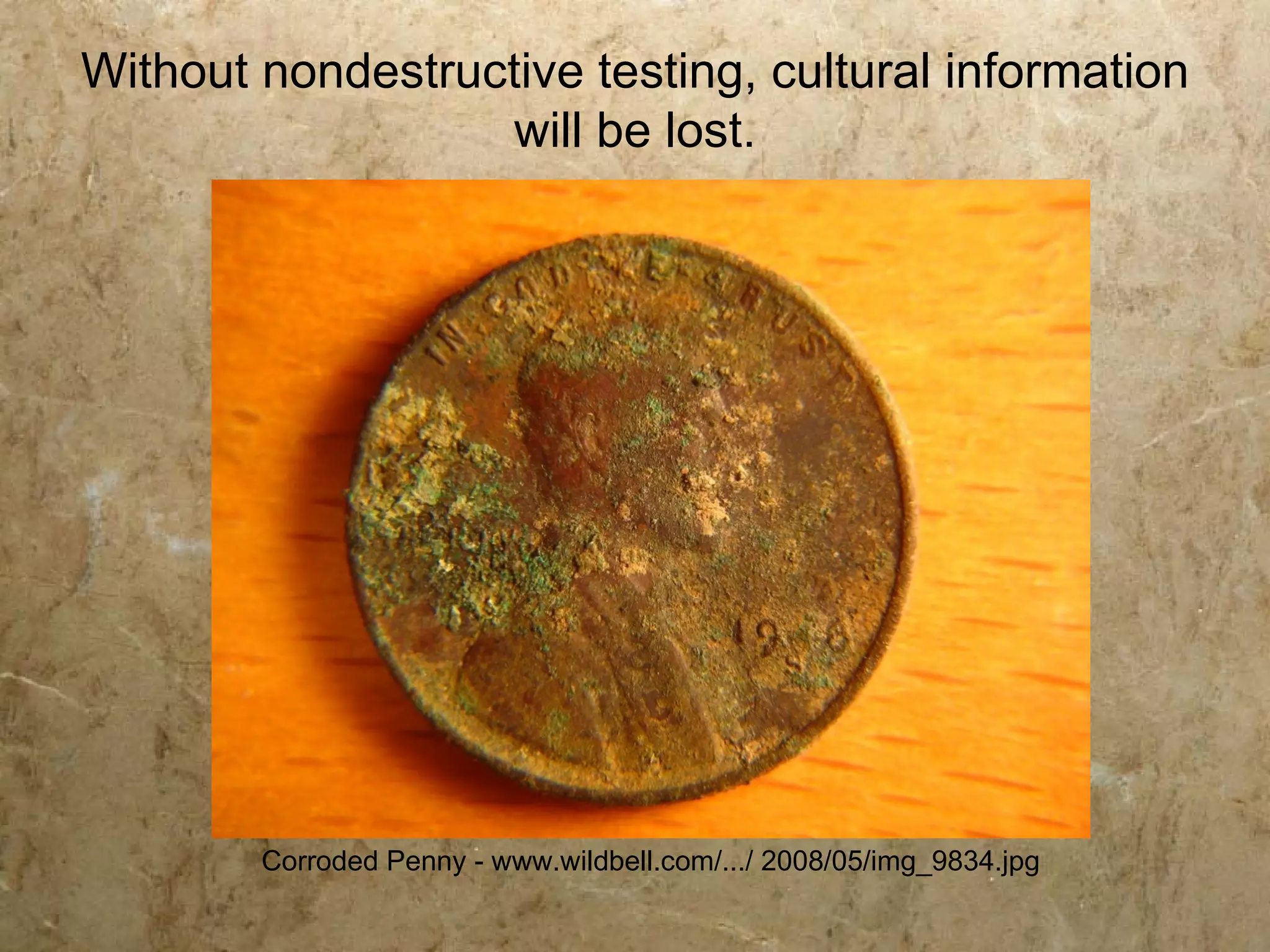
Without nondestructive testing, cultural information
                  will be lost.


        Corroded Penny - www.wildbell.com/.../ 2008/05/img_9834.jpg
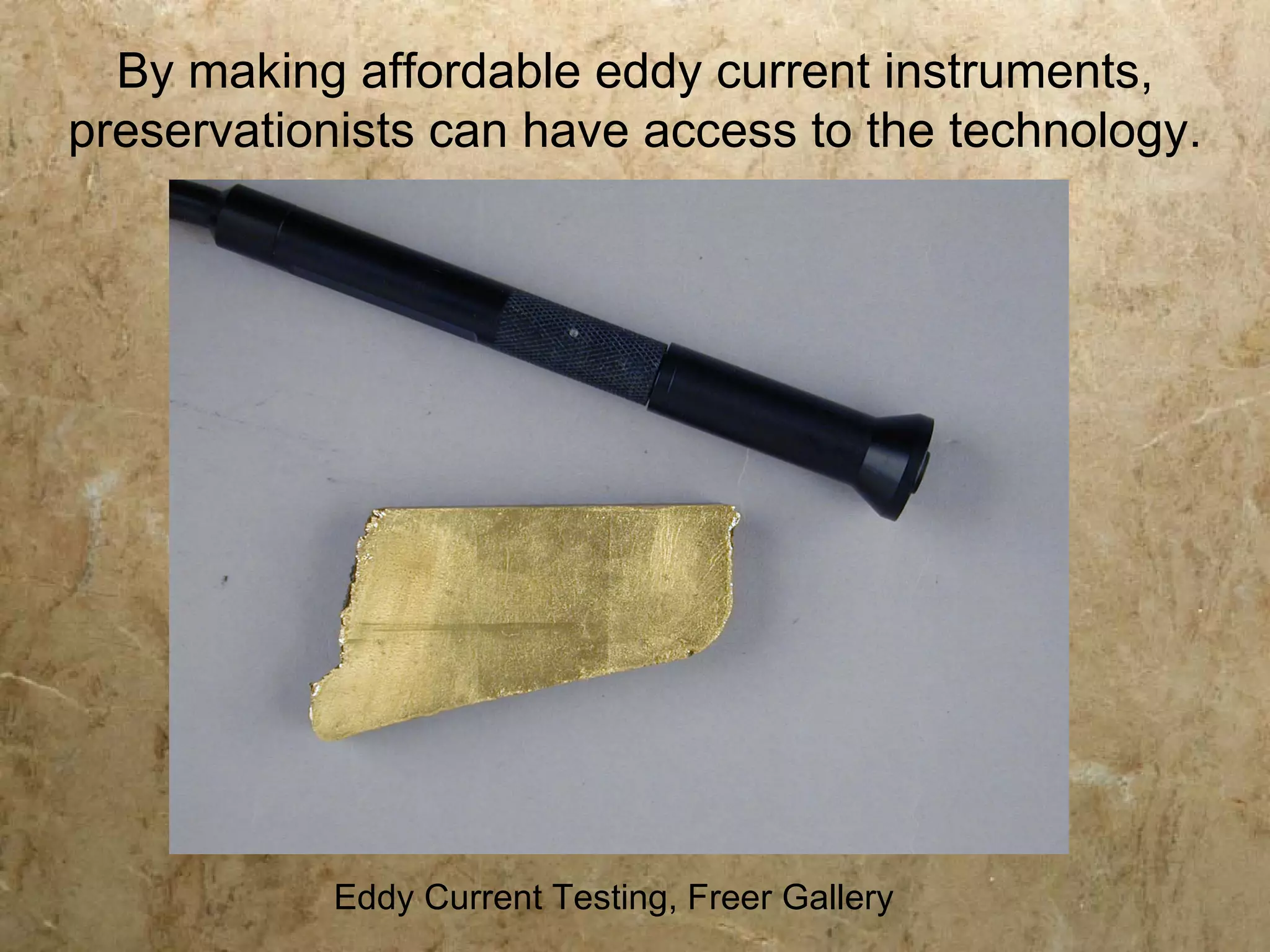
By making affordable eddy current instruments,
preservationists can have access to the technology.


           Eddy Current Testing, Freer Gallery
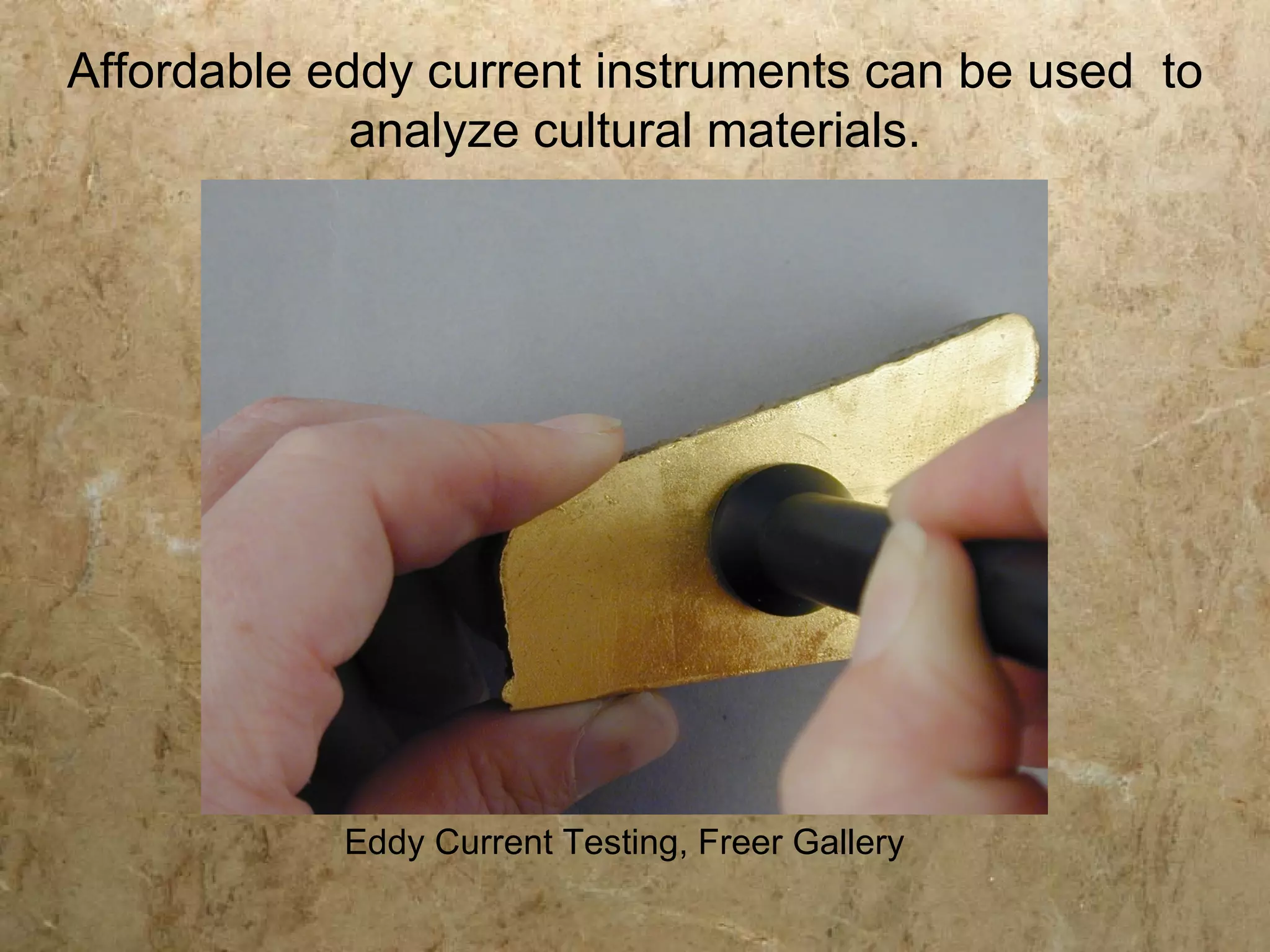
Affordable eddy current instruments can be used to
             analyze cultural materials.


            Eddy Current Testing, Freer Gallery
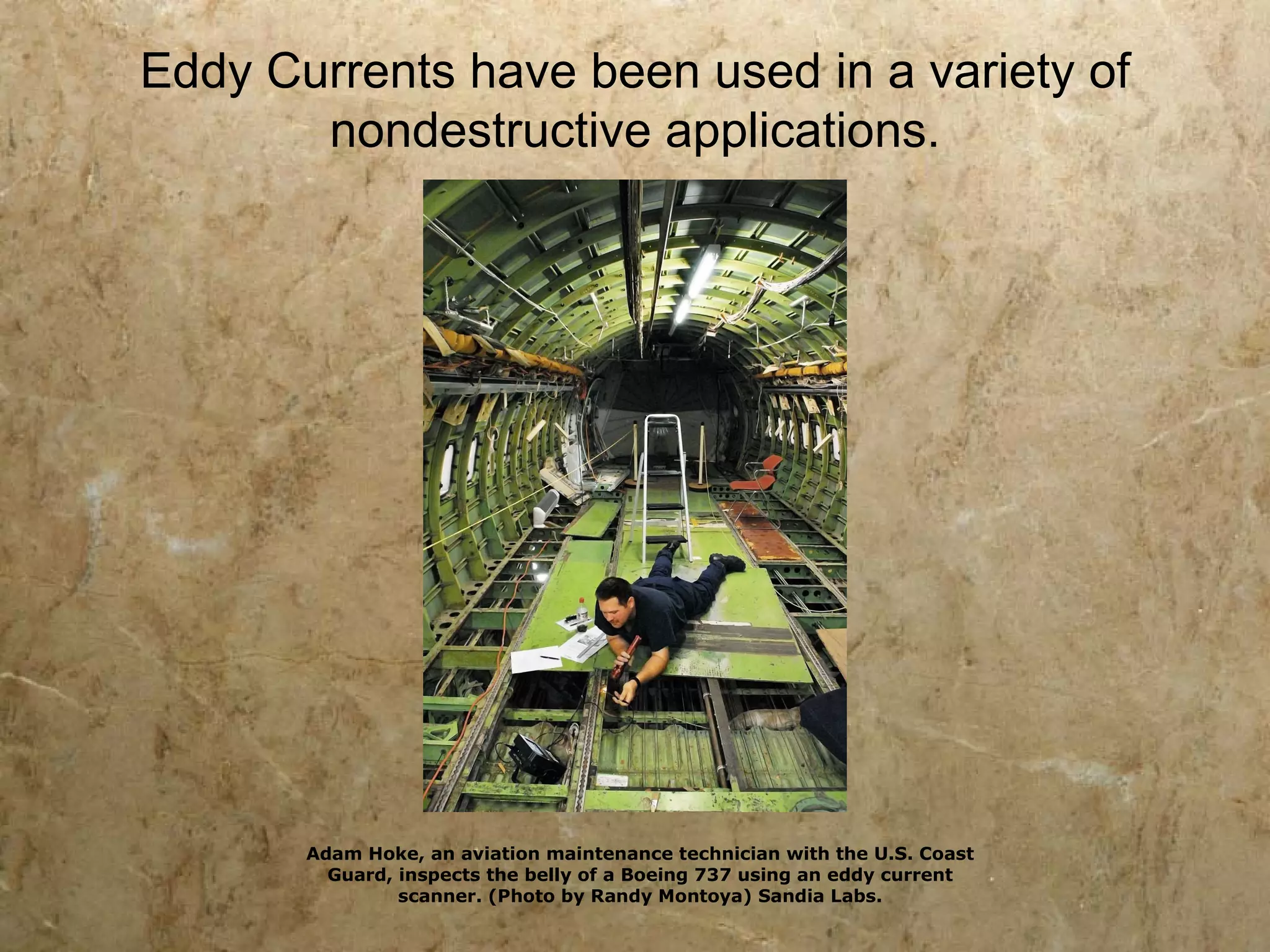
Eddy Currents have been used in a variety of
       nondestructive applications.


       Adam Hoke, an aviation maintenance technician with the U.S. Coast
         Guard, inspects the belly of a Boeing 737 using an eddy current
                scanner. (Photo by Randy Montoya) Sandia Labs.
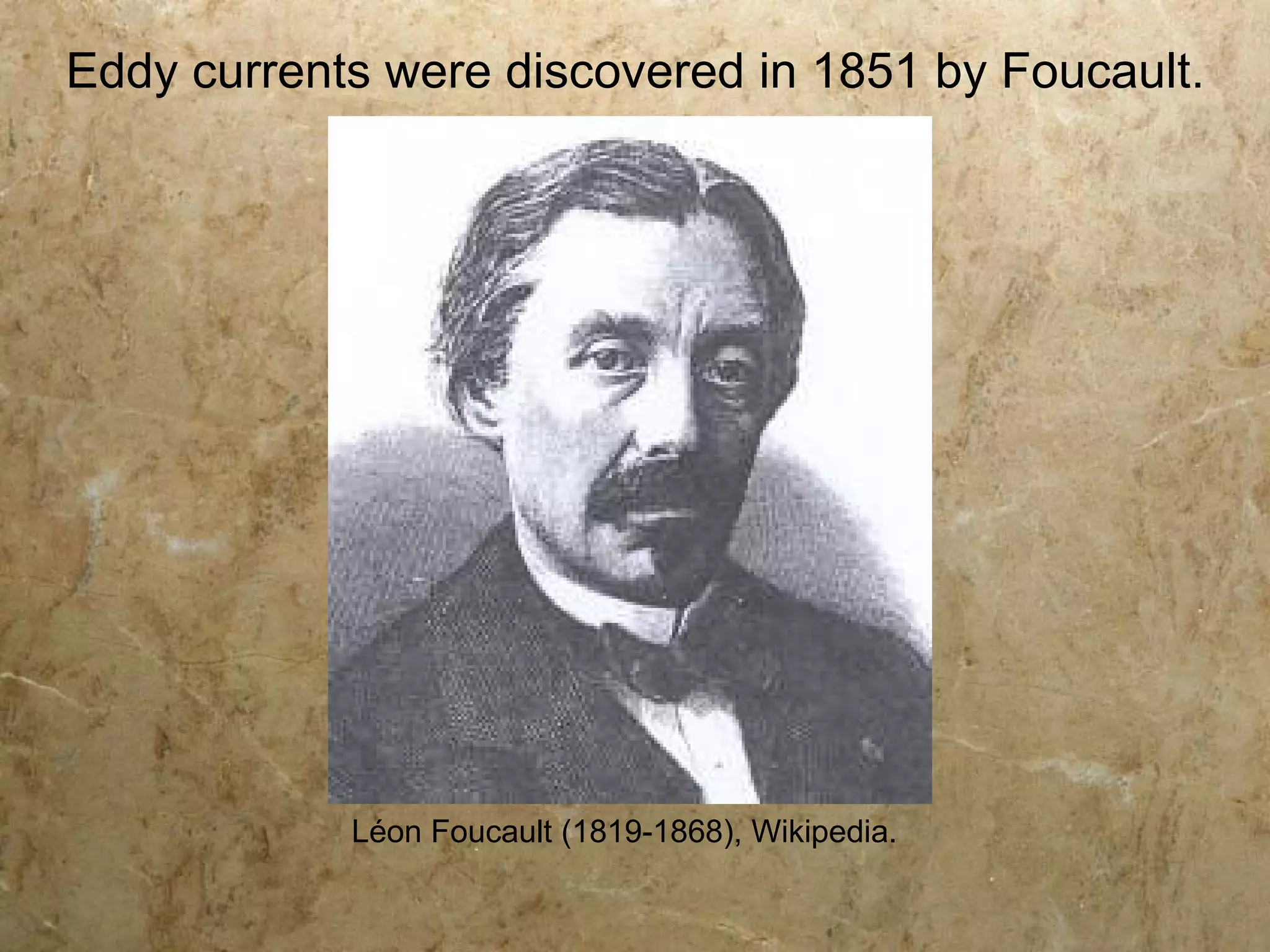
Eddy currents were discovered in 1851 by Foucault.


            Léon Foucault (1819-1868), Wikipedia.
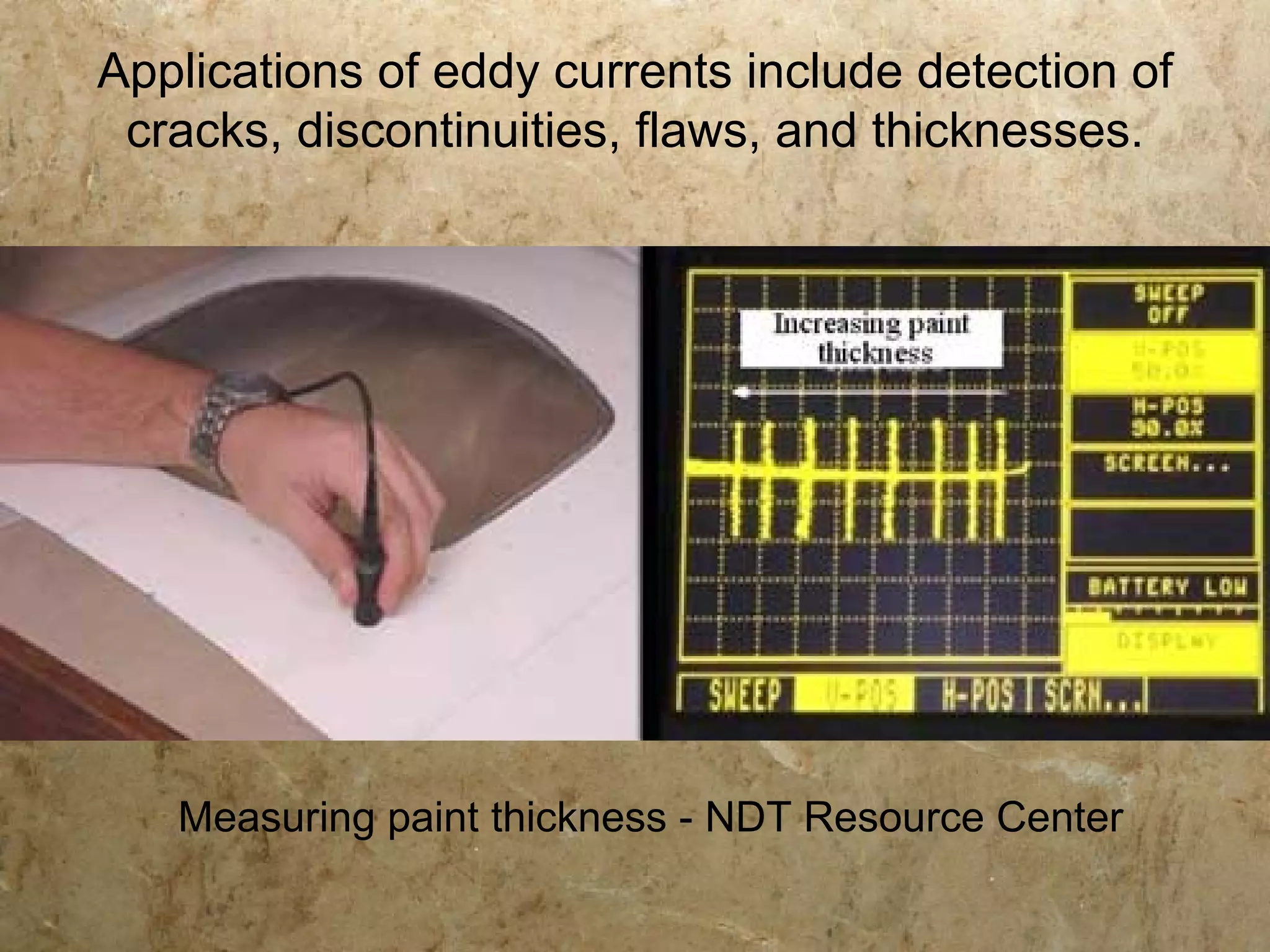
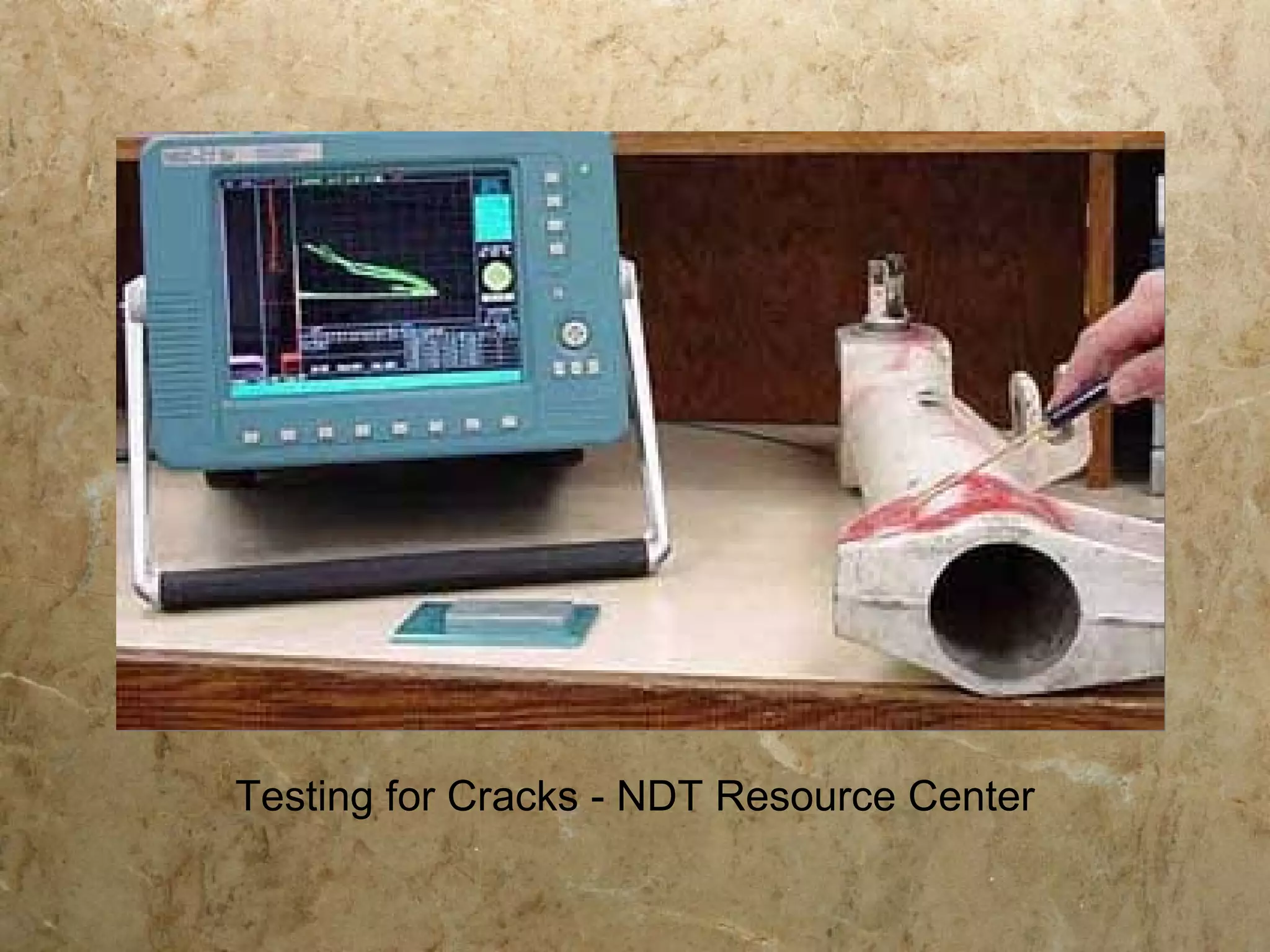
Applications of eddy currents include detection of
 cracks, discontinuities, flaws, and thicknesses.


   Measuring paint thickness - NDT Resource Center
Testing for Cracks - NDT Resource Center
Voltage
 is a measurement of the energy
  contained within an electric
  field, or an electric circuit, at a
  given point, measured in volts
Current
 a flow of electricity through a
  conductor, measured in
  amperes
Resistance
 a material's opposition to the
  flow of electric current,
  measured in ohms
Capacitance
 a capacitor is an electronic
  component used for storing
  charge and energy, measured
  in farads
Inductance
 a measure of the reaction of
  electrical components
  (especially coils) to changes in
  current flow by creating a
  magnetic field and inducing a
  voltage. Its unit is the henry
Conductance
 a measure of a material's ability
  to conduct electric charge; the
  reciprocal of the resistance,
  measures in Siemens
Impedance
 the total effective resistance in
  an electric circuit to the flow of
  an alternating current
Reactance
 opposition to the flow of
  alternating current caused by
  the inductance and capacitance
  in a circuit rather than by
  resistance.
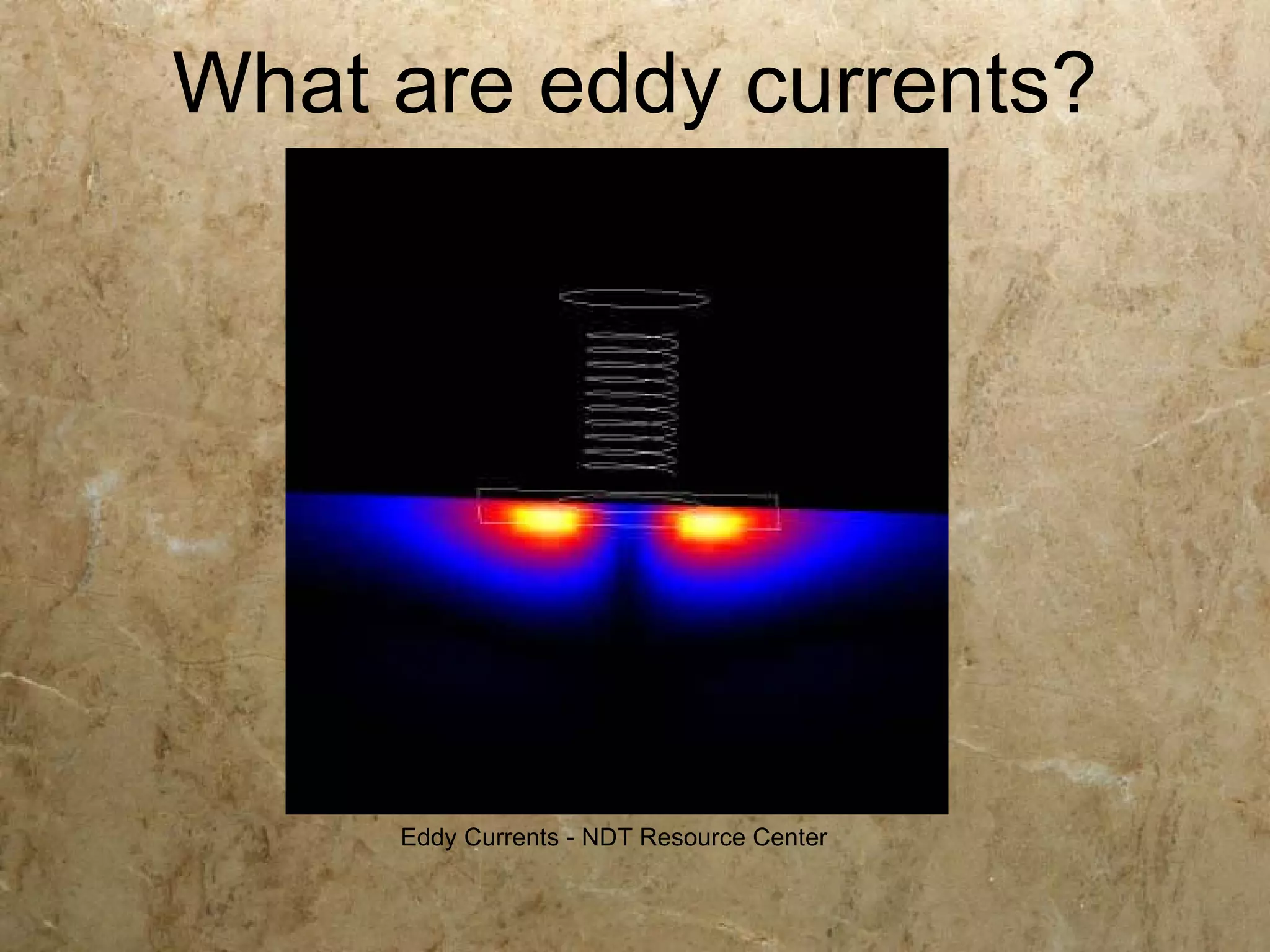
What are eddy currents?


     Eddy Currents - NDT Resource Center
Eddy currents are analogous to a flowing stream.


        EDDIES IN THE OYASHIO CURRENT, G. K. Vallis, Princeton University
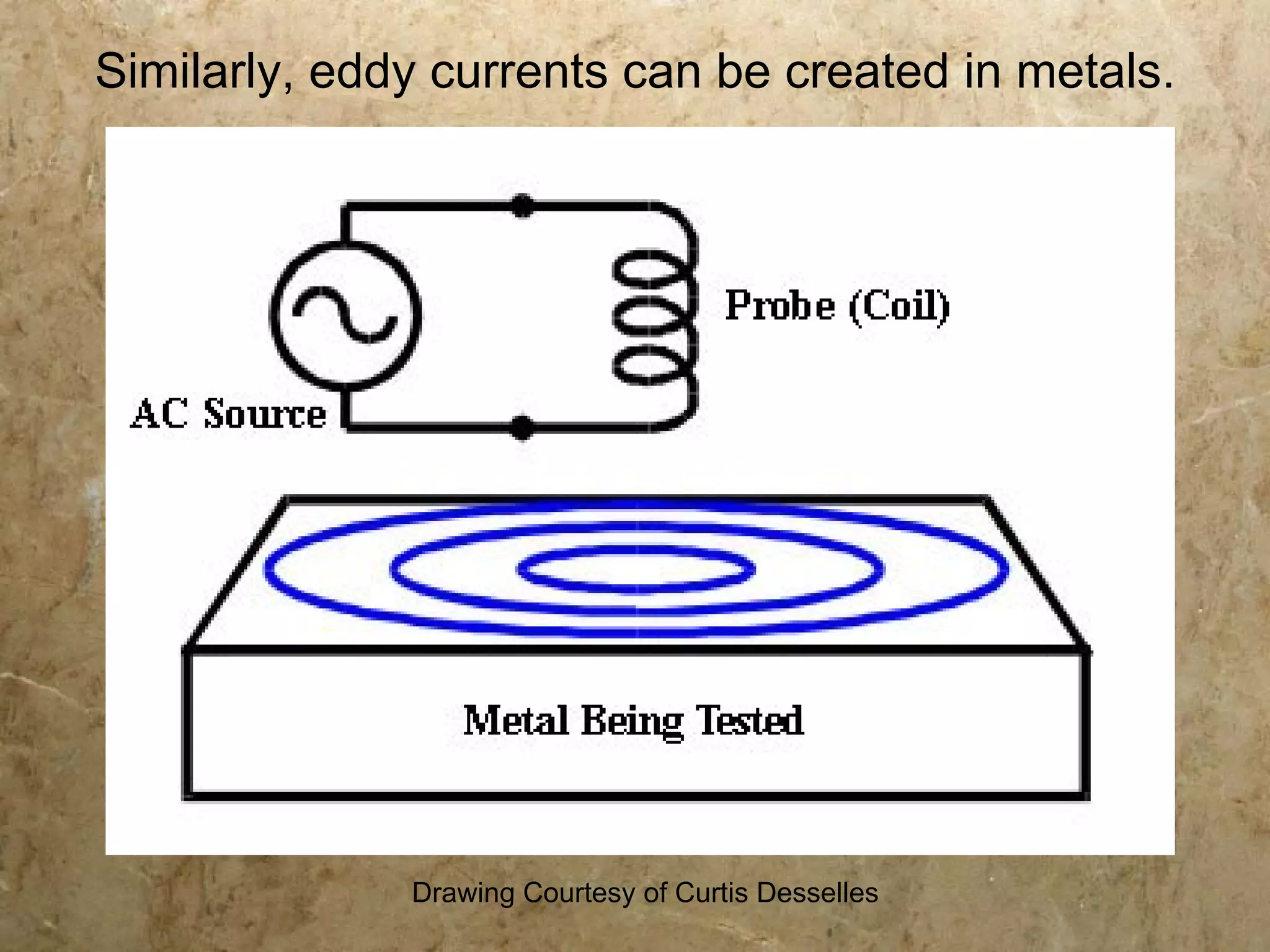
Similarly, eddy currents can be created in metals.


              Drawing Courtesy of Curtis Desselles
Here are the steps to construct an
affordable eddy current analyzer.


         Chichen Itza - Travelblog.org
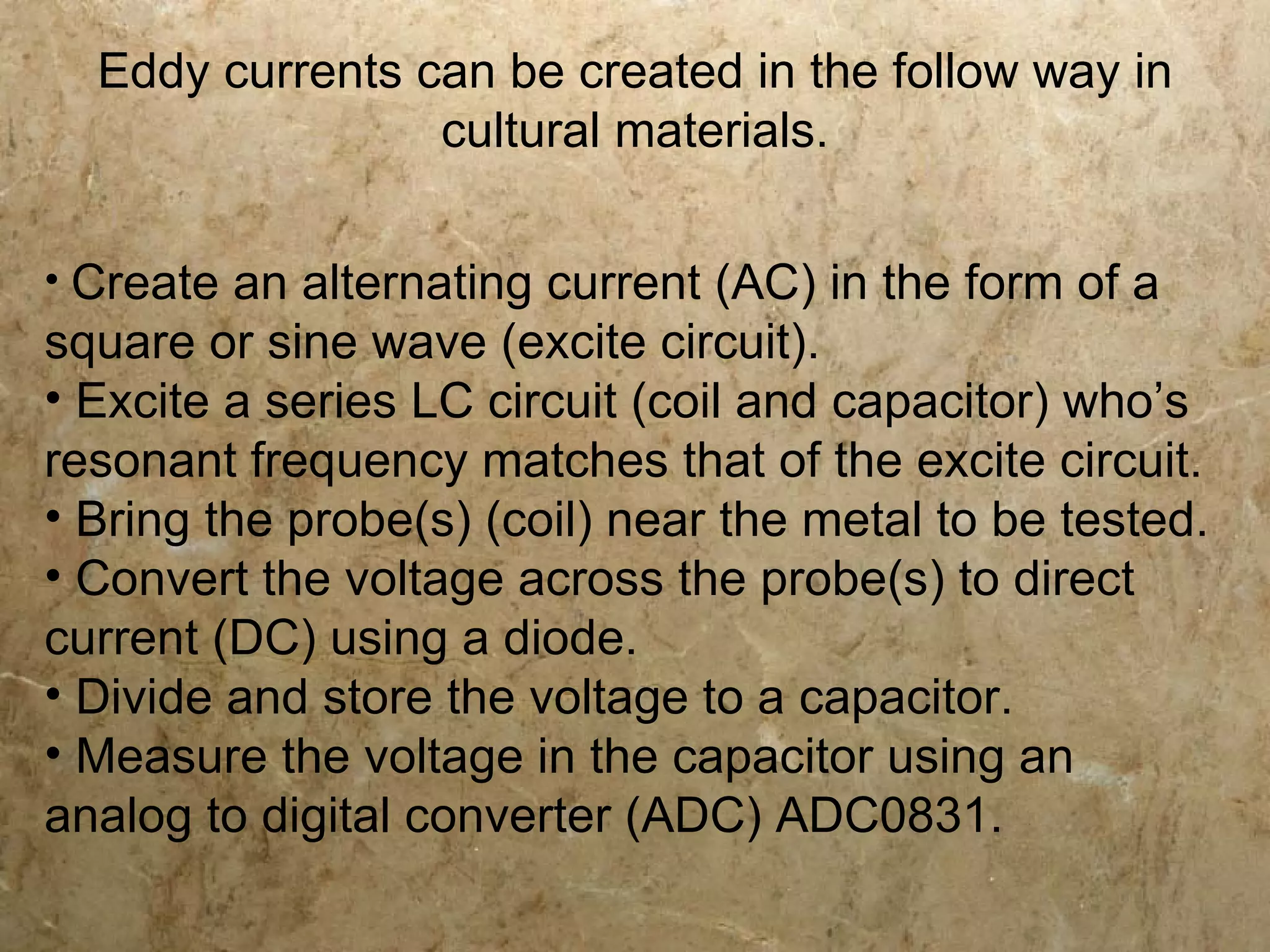
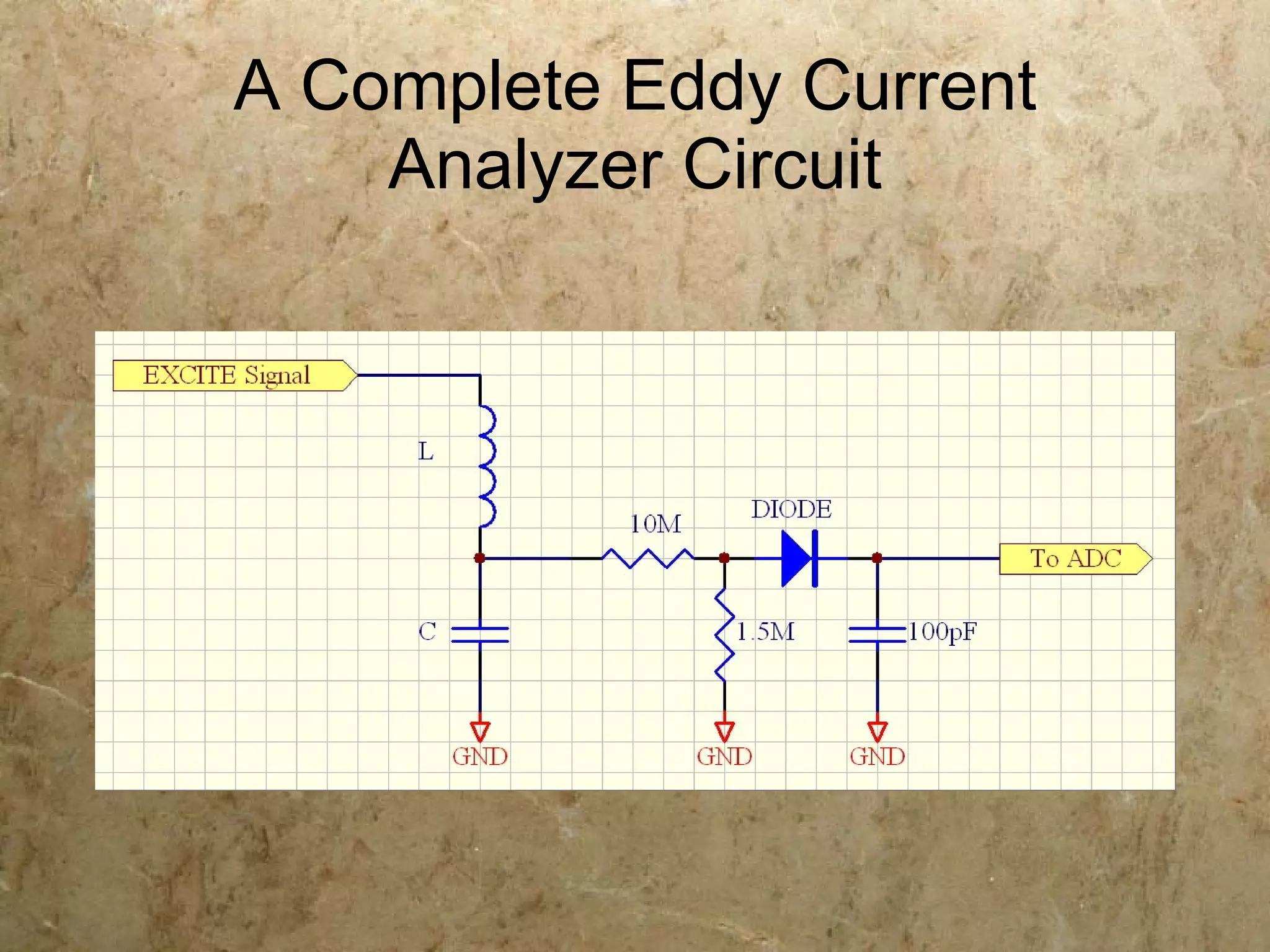
Eddy currents can be created in the follow way in
                 cultural materials.

• Create an alternating current (AC) in the form of a
square or sine wave (excite circuit).
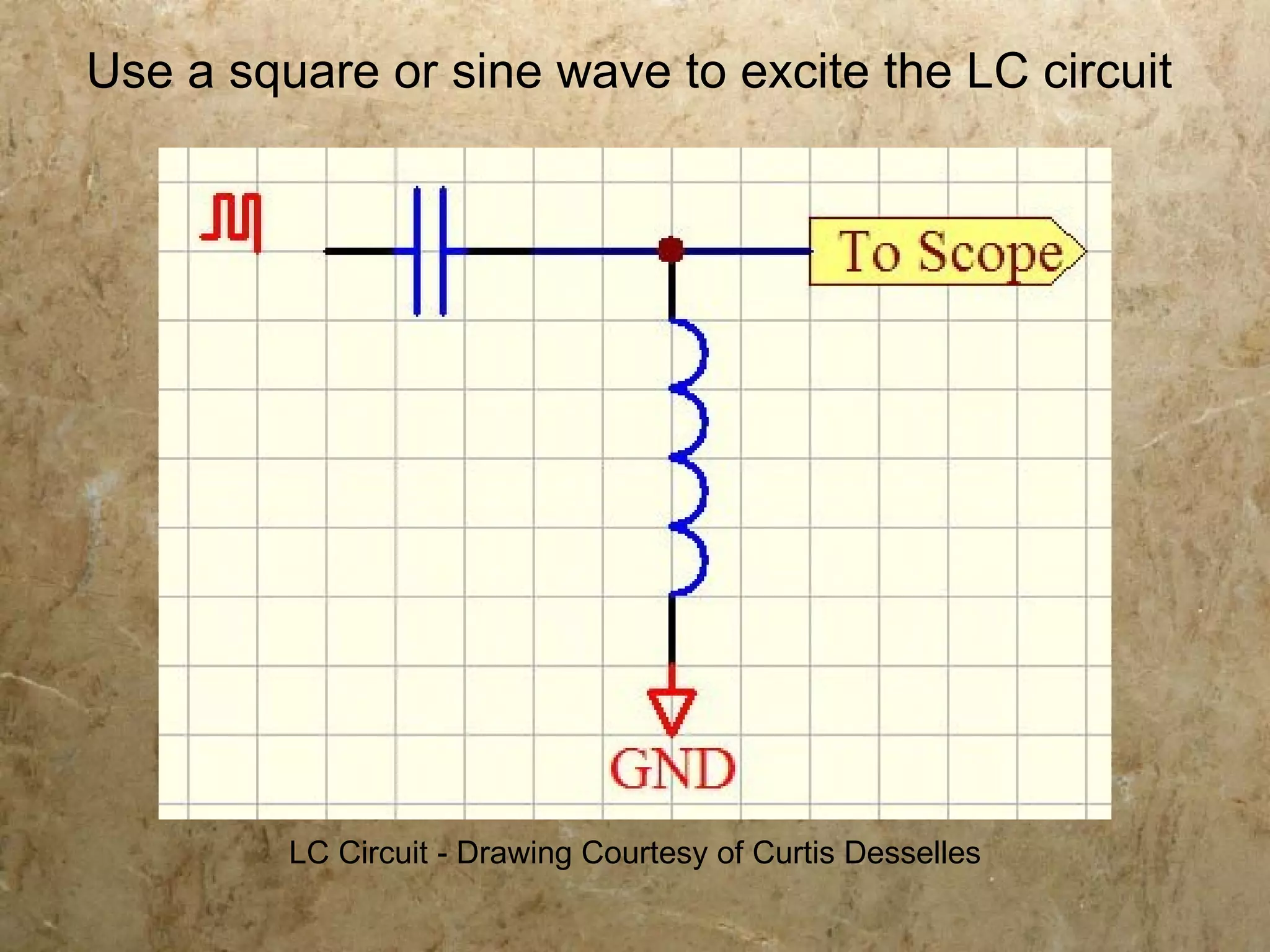
• Excite a series LC circuit (coil and capacitor) who’s
resonant frequency matches that of the excite circuit.
• Bring the probe(s) (coil) near the metal to be tested.
• Convert the voltage across the probe(s) to direct
current (DC) using a diode.
• Divide and store the voltage to a capacitor.
• Measure the voltage in the capacitor using an
analog to digital converter (ADC) ADC0831.
A Complete Eddy Current
    Analyzer Circuit
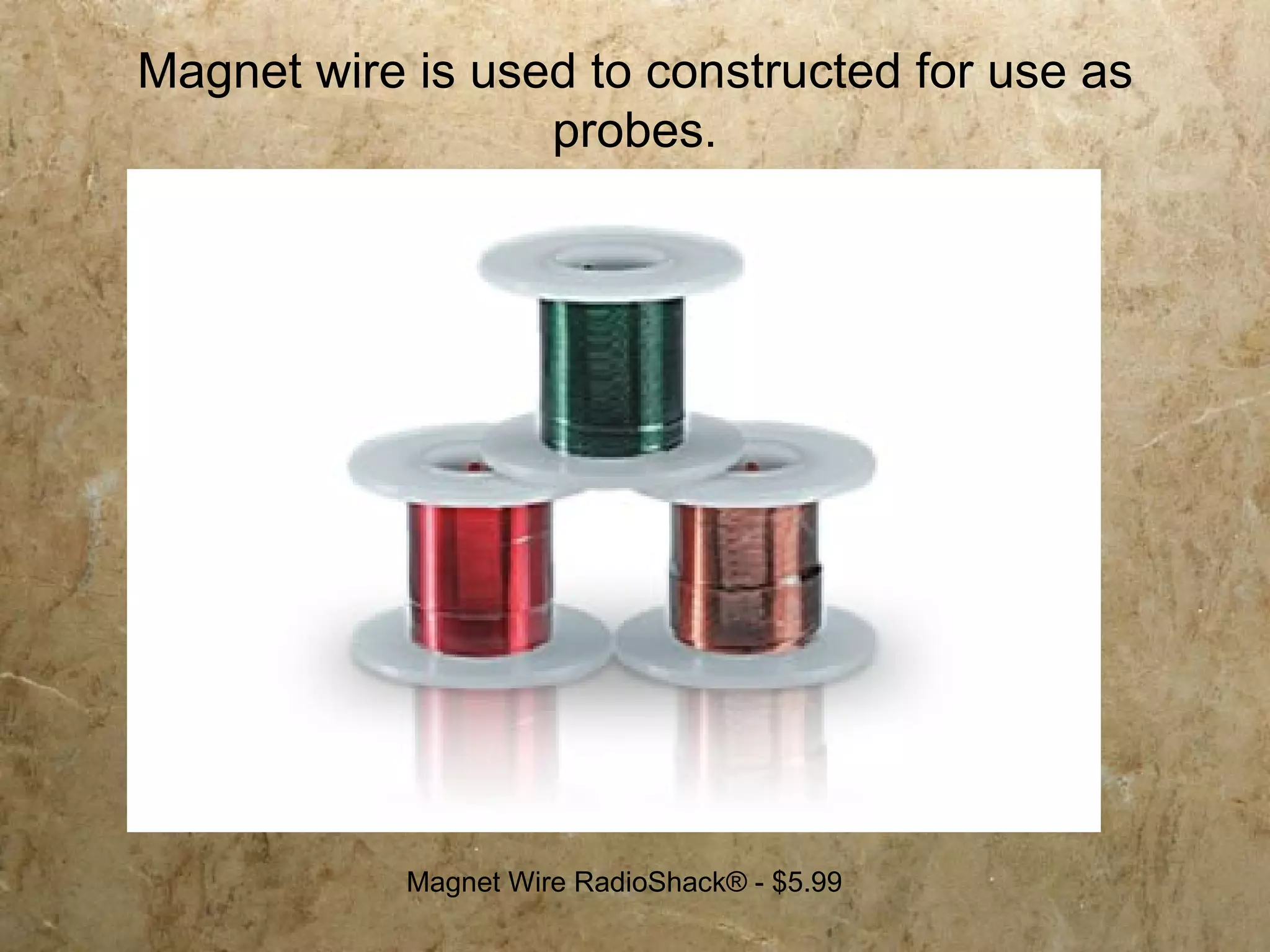
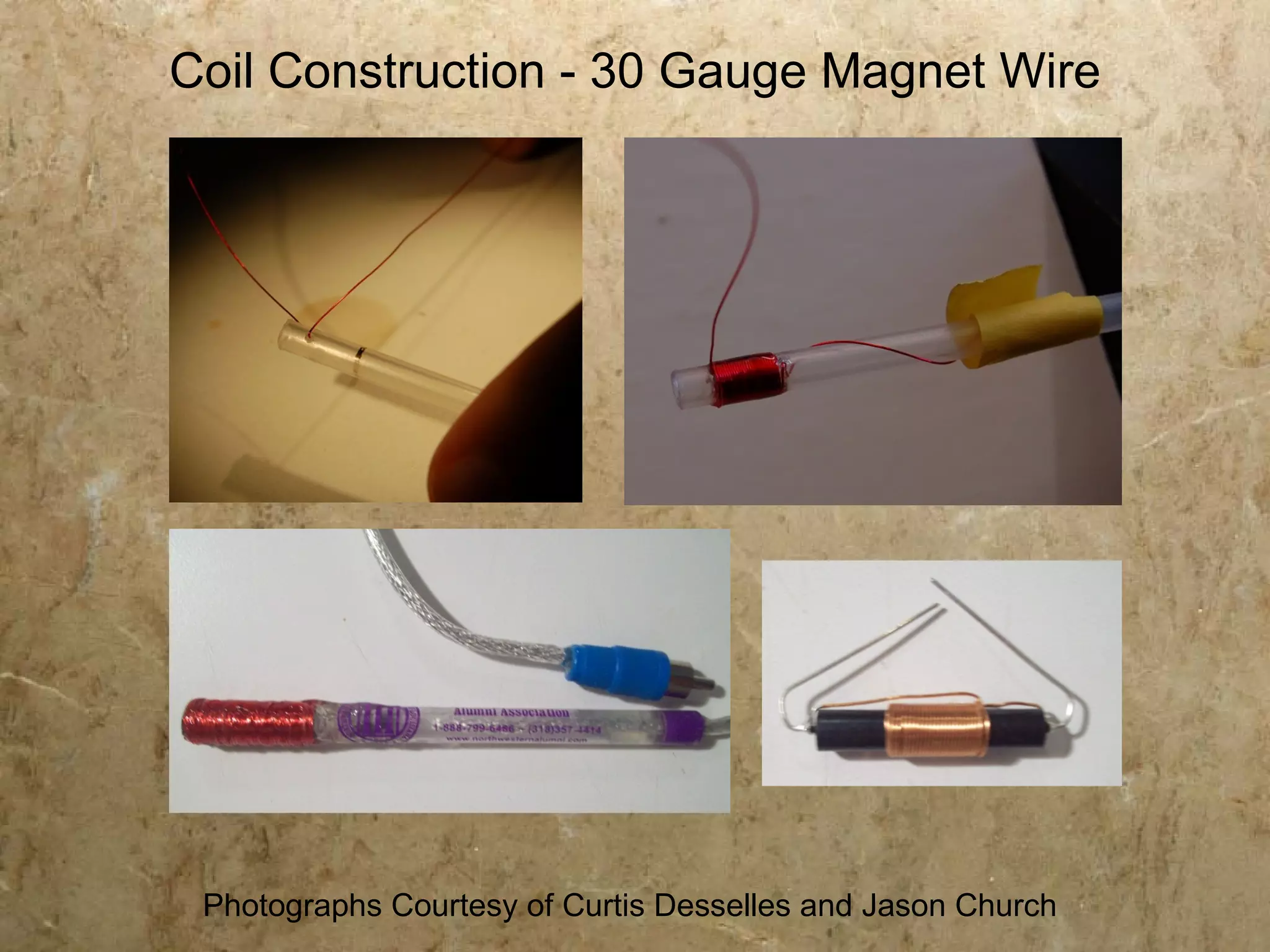
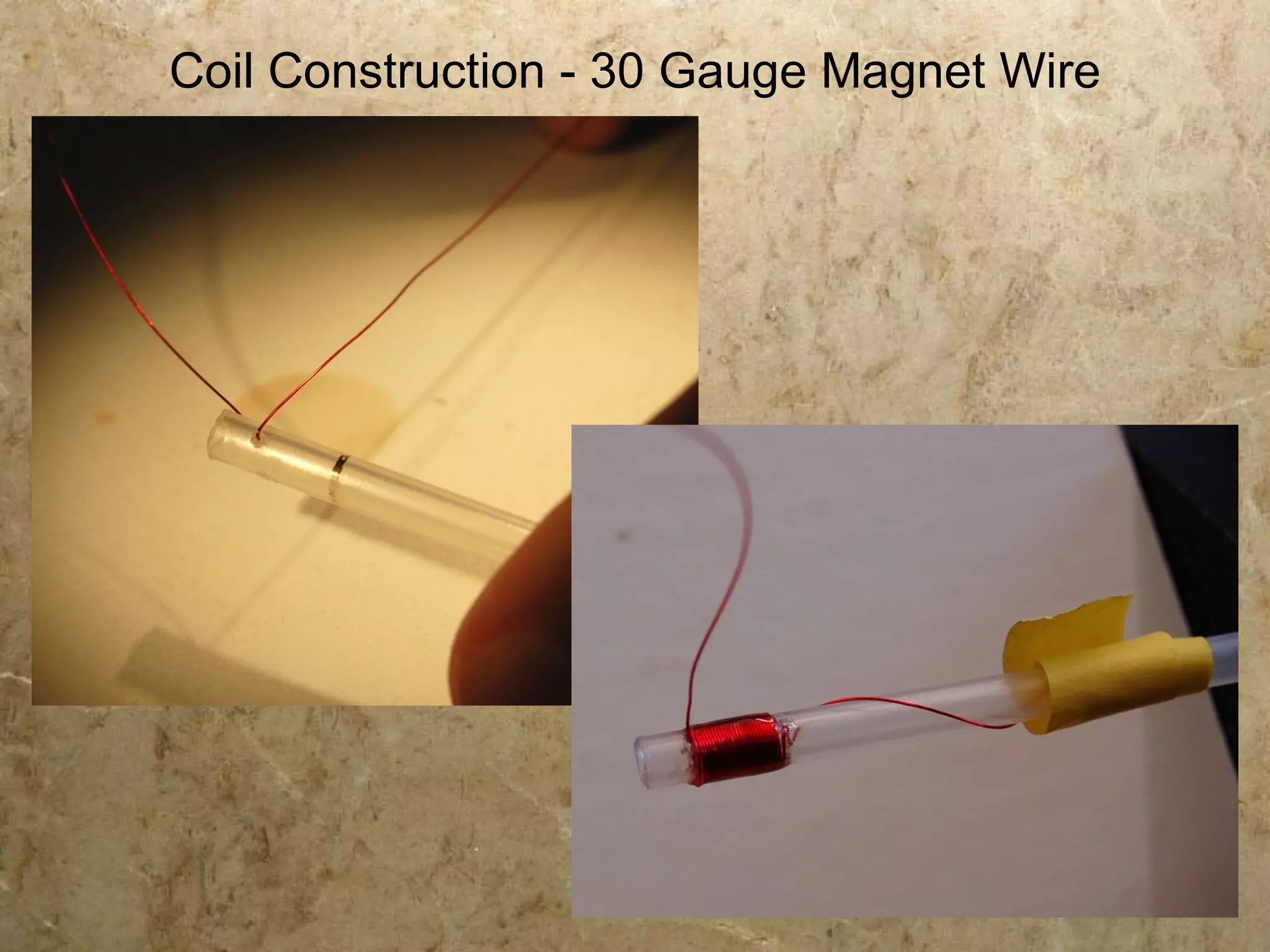
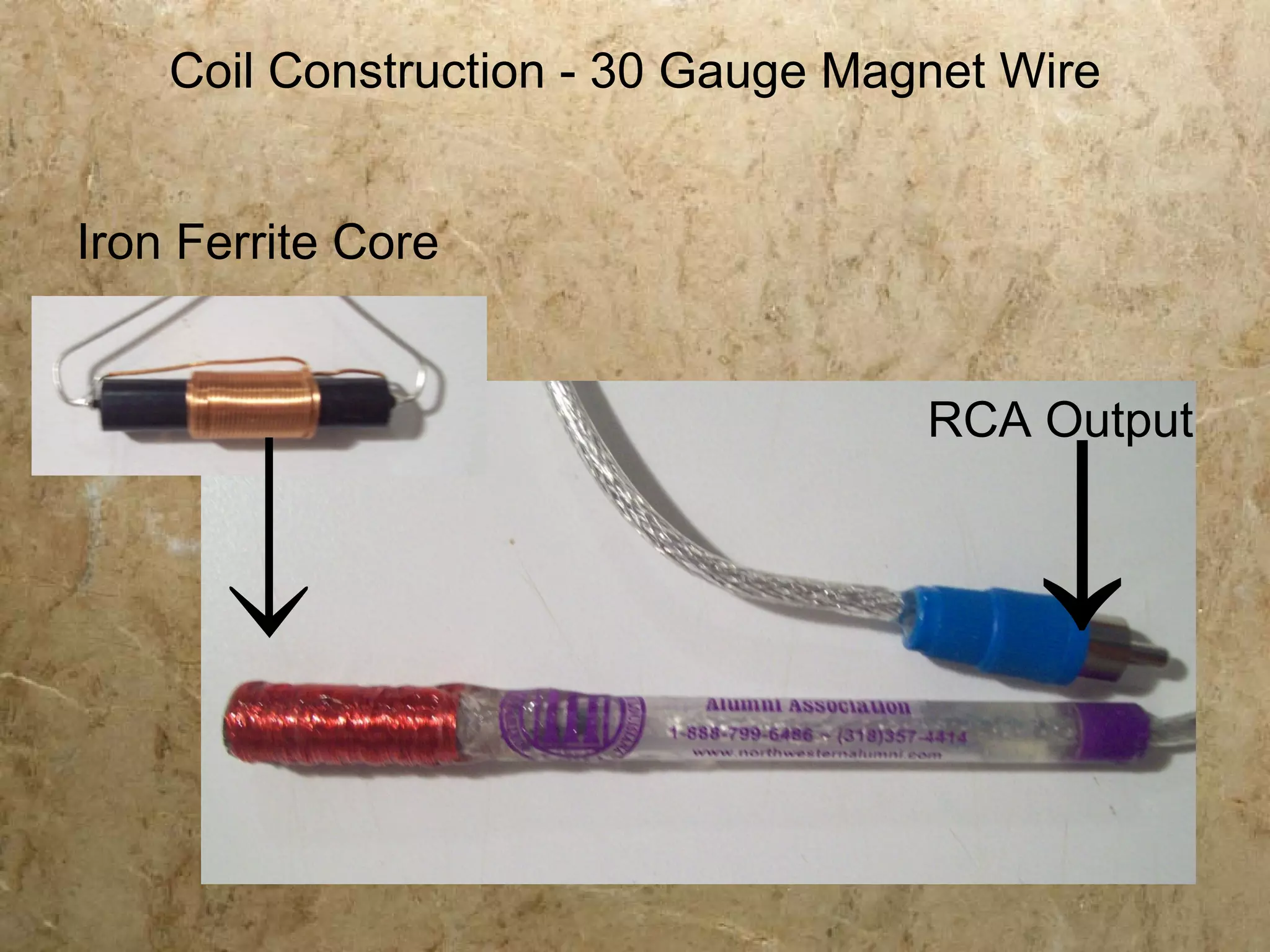
Magnet wire is used to constructed for use as
                  probes.


            Magnet Wire RadioShack® - $5.99
Coil Construction - 30 Gauge Magnet Wire


 Photographs Courtesy of Curtis Desselles and Jason Church
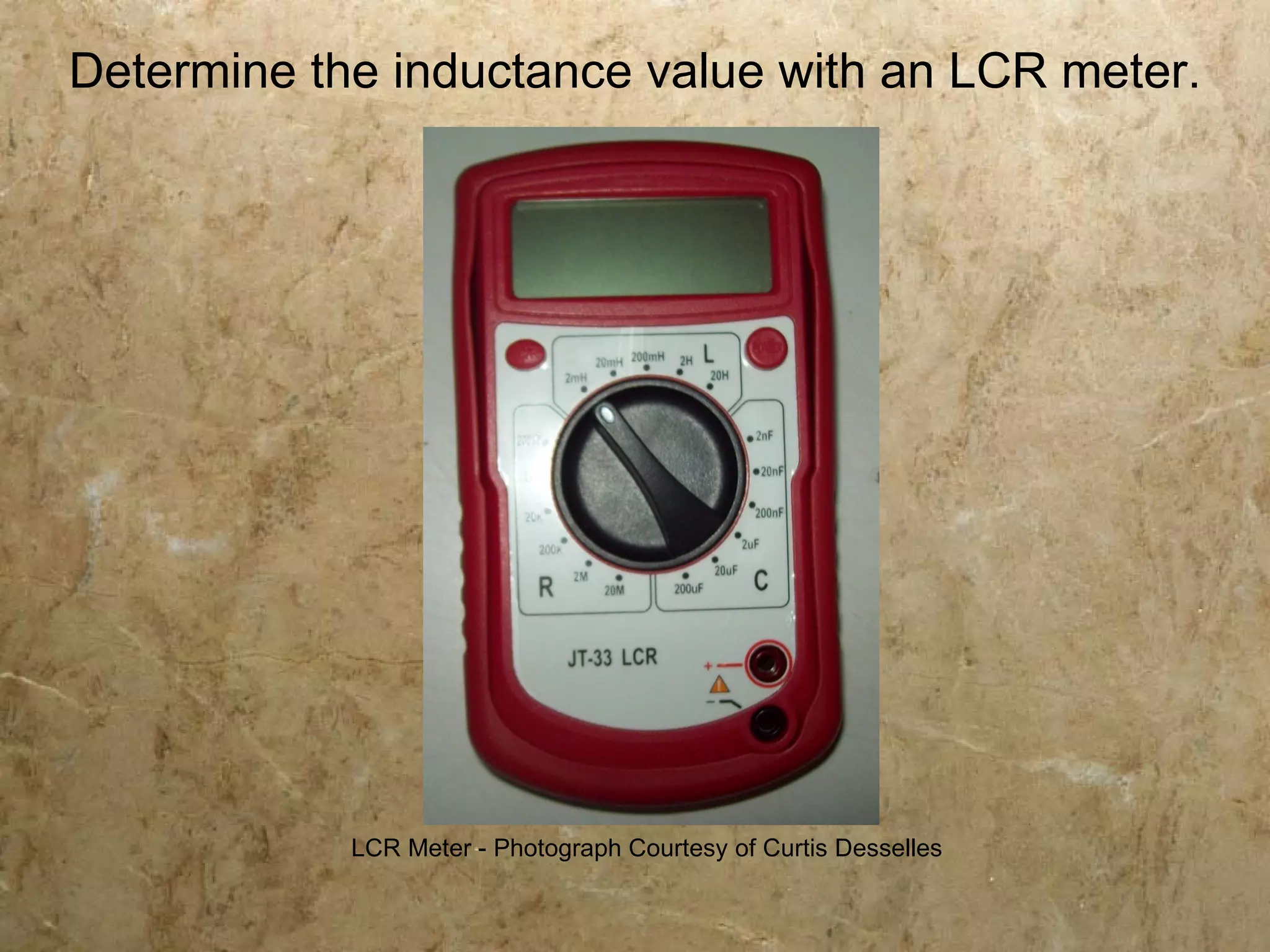
Determine the inductance value with an LCR meter.


            LCR Meter - Photograph Courtesy of Curtis Desselles
Use a square or sine wave to excite the LC circuit


         LC Circuit - Drawing Courtesy of Curtis Desselles
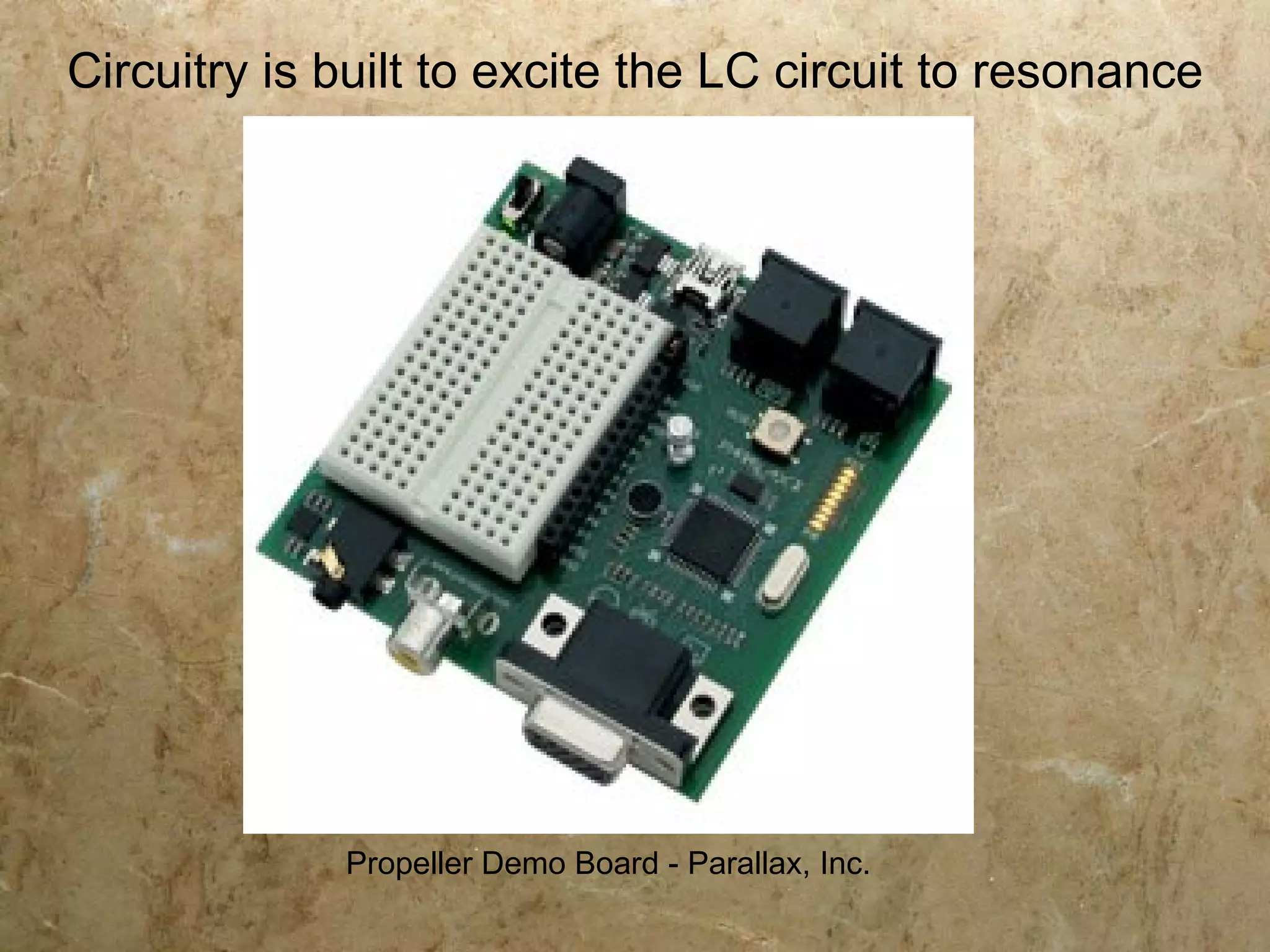
Circuitry is built to excite the LC circuit to resonance


             Propeller Demo Board - Parallax, Inc.
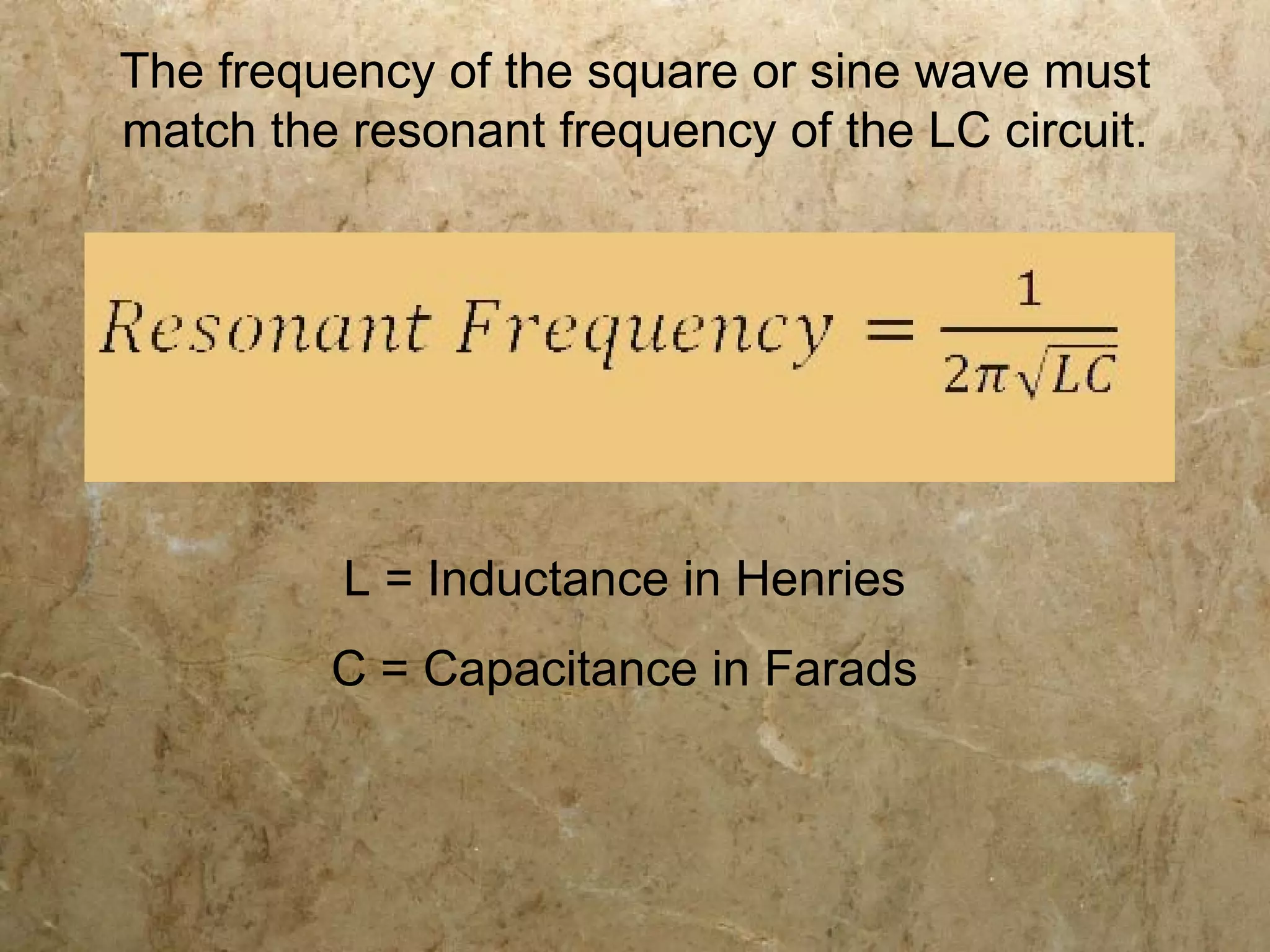
The frequency of the square or sine wave must
match the resonant frequency of the LC circuit.


          L = Inductance in Henries
         C = Capacitance in Farads
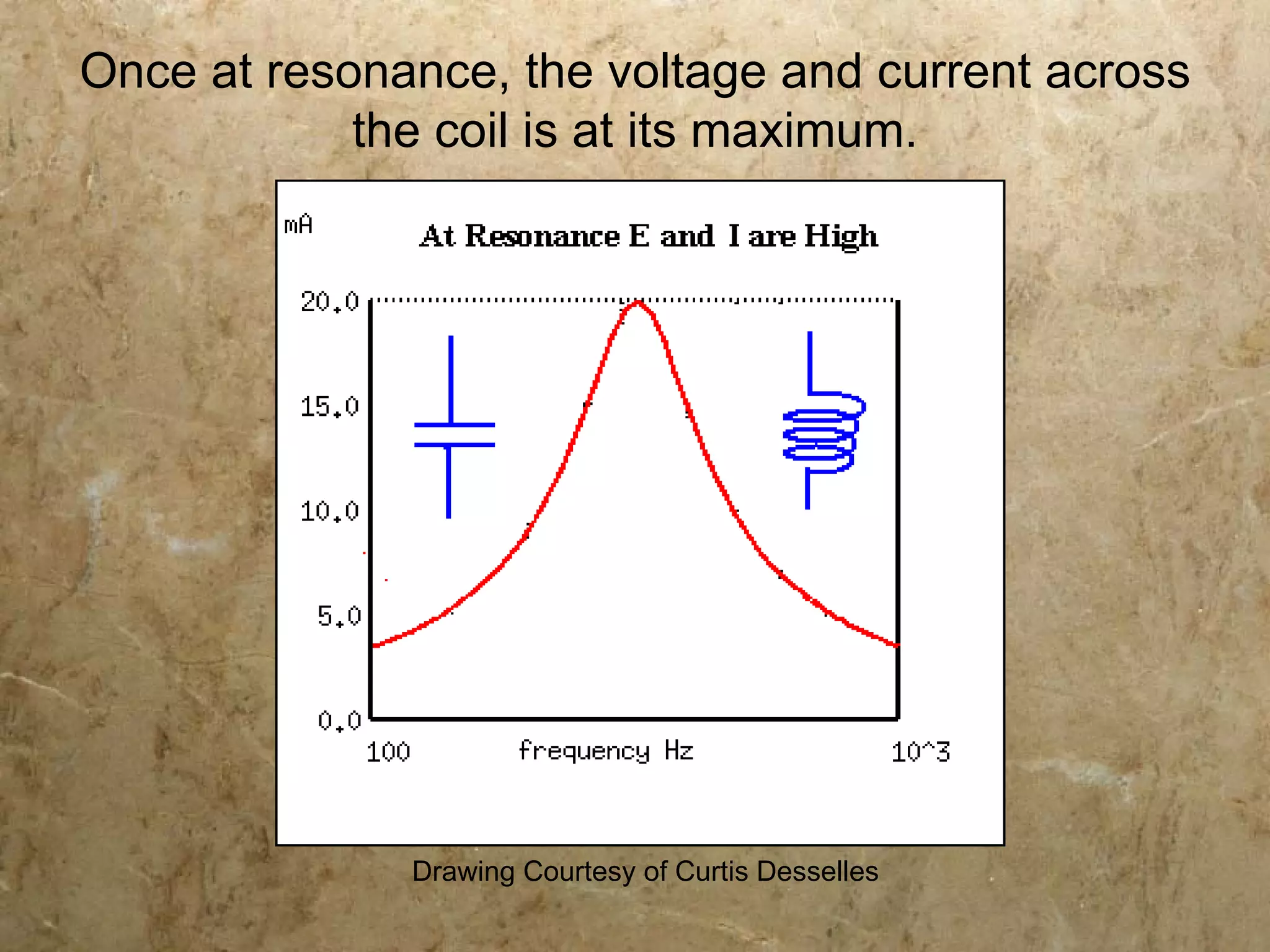
Once at resonance, the voltage and current across
            the coil is at its maximum.


              Drawing Courtesy of Curtis Desselles
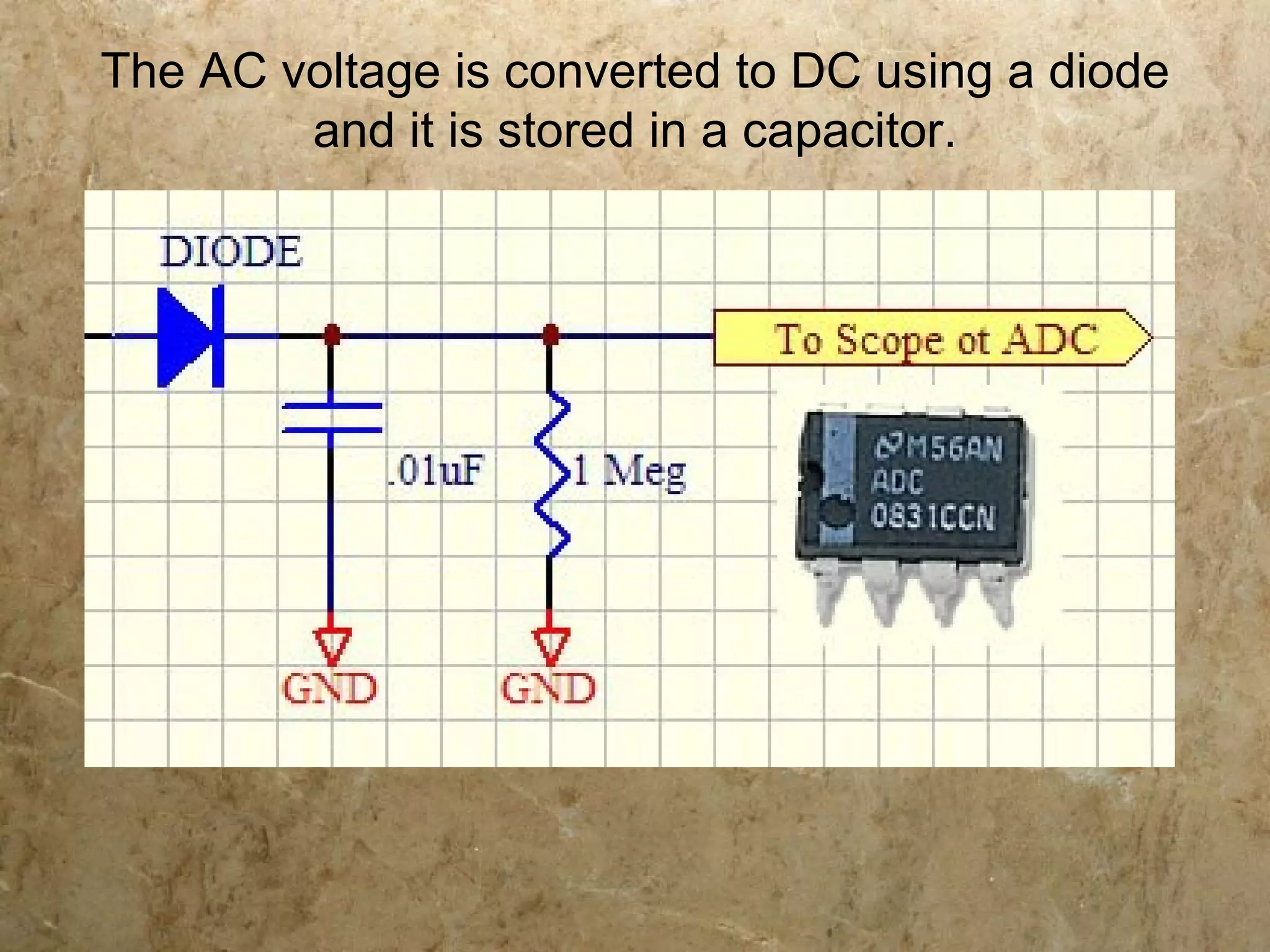
The AC voltage is converted to DC using a diode
        and it is stored in a capacitor.
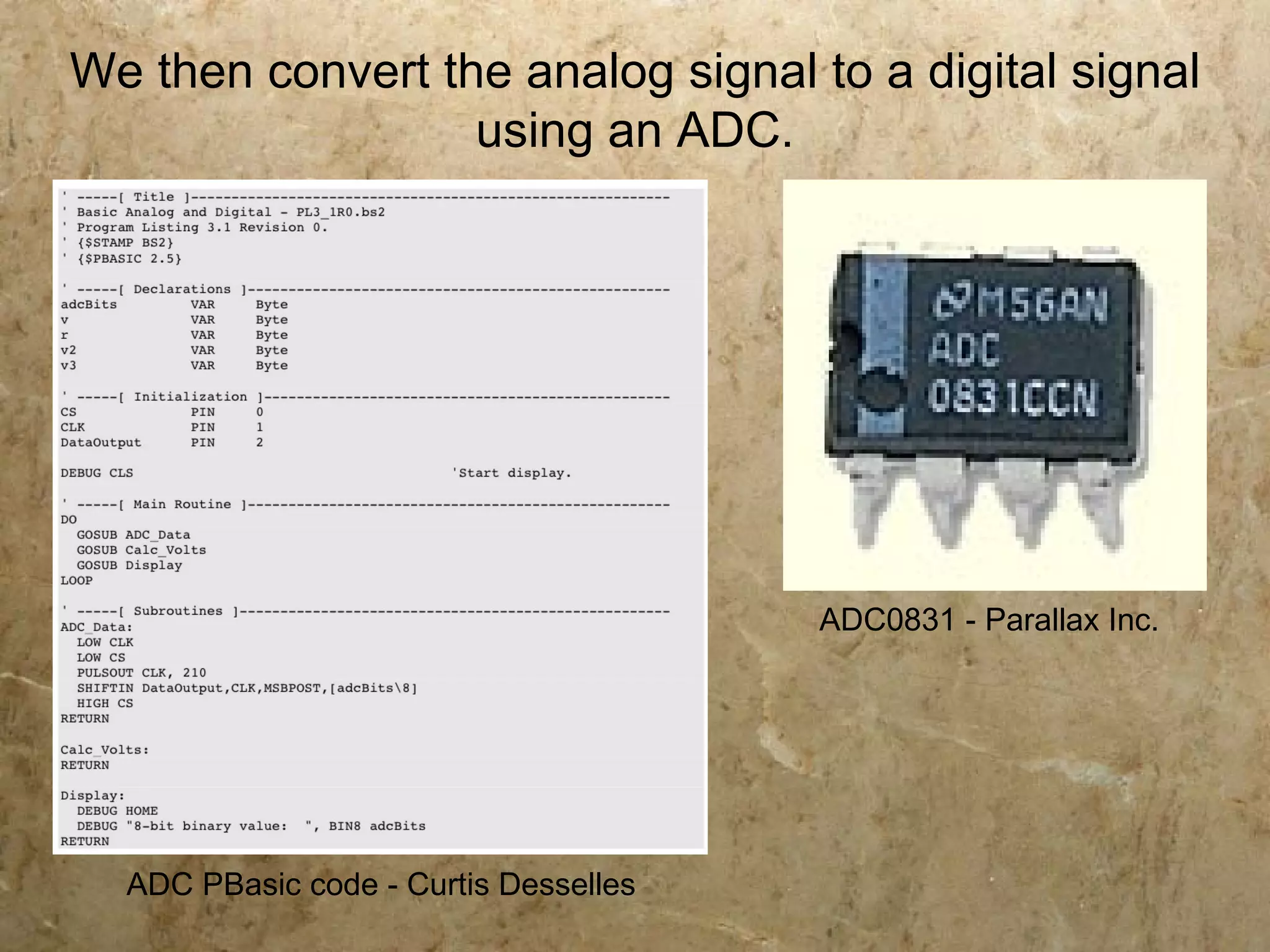
We then convert the analog signal to a digital signal
                  using an ADC.


                                       ADC0831 - Parallax Inc.


  ADC PBasic code - Curtis Desselles
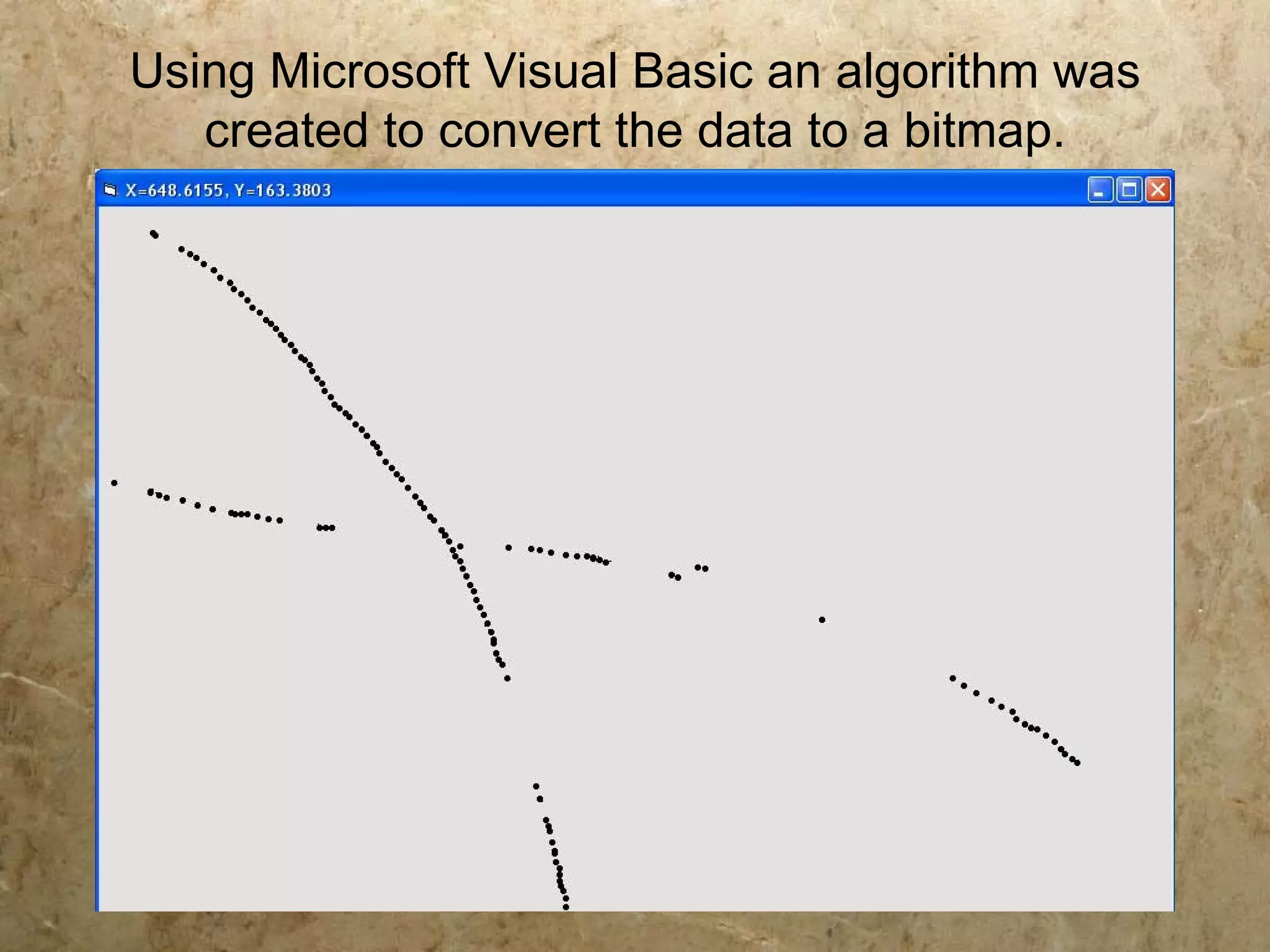
Using Microsoft Visual Basic an algorithm was
   created to convert the data to a bitmap.
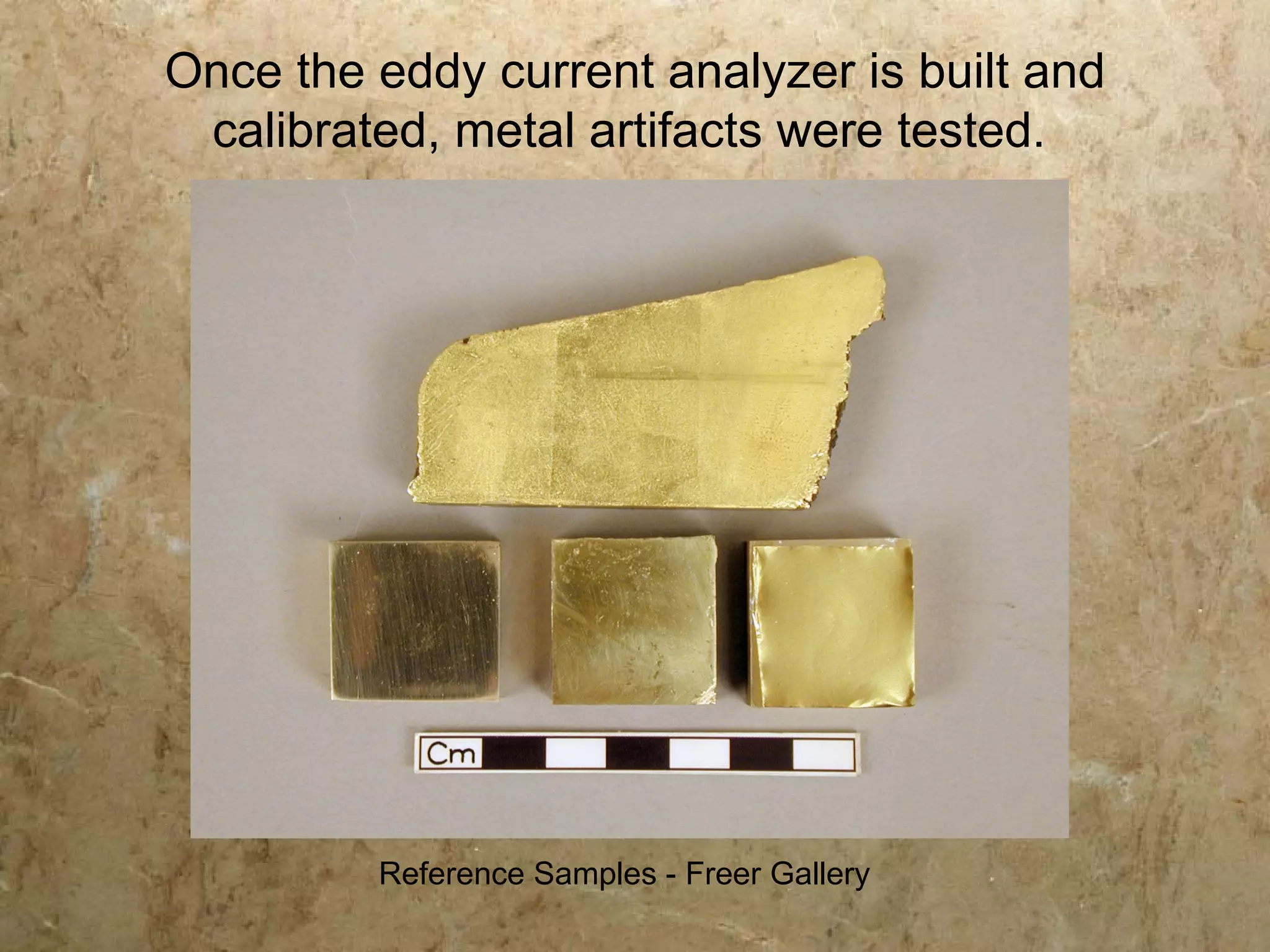
Once the eddy current analyzer is built and
 calibrated, metal artifacts were tested.


         Reference Samples - Freer Gallery
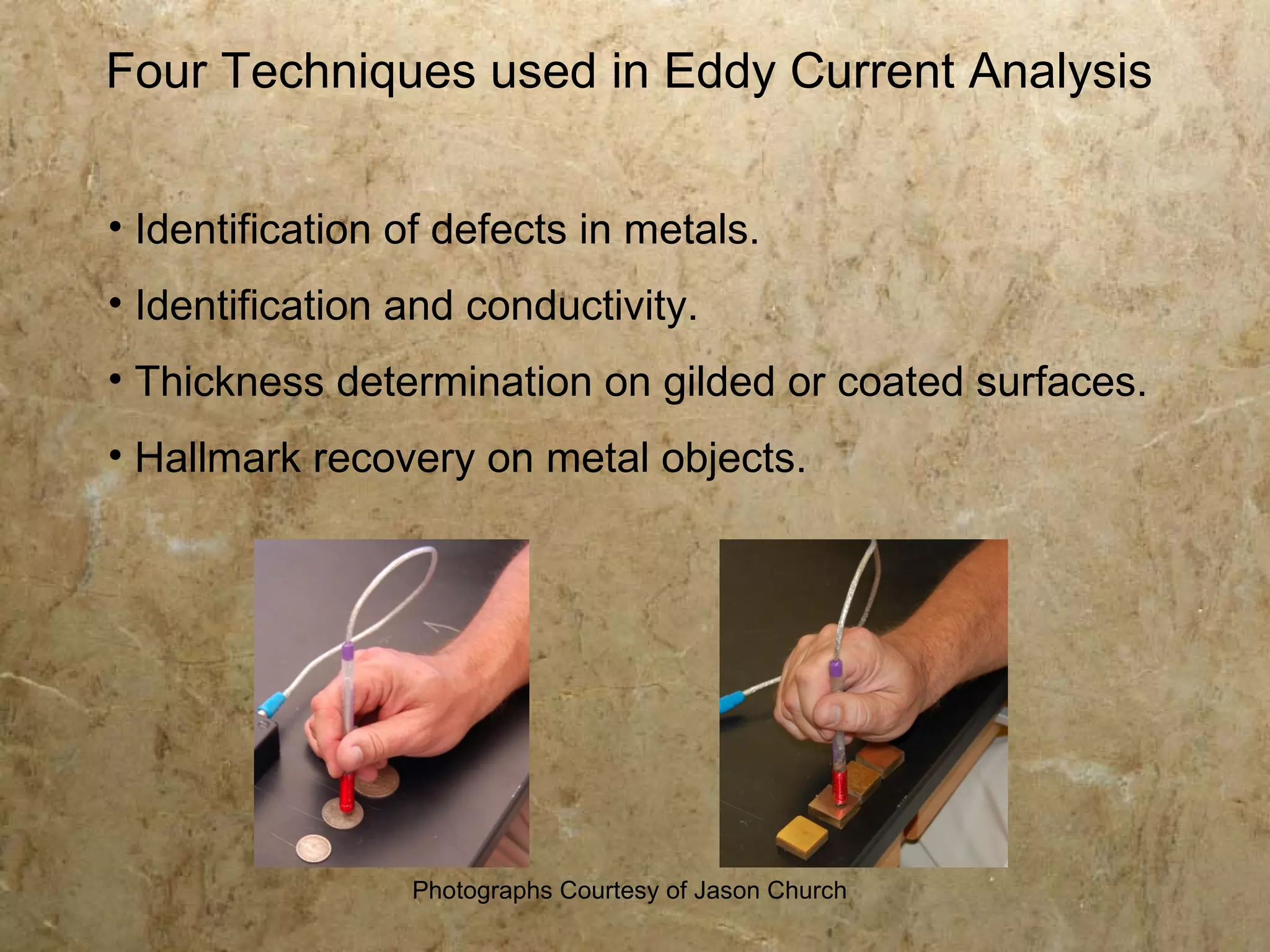
Four Techniques used in Eddy Current Analysis


• Identification of defects in metals.
• Identification and conductivity.
• Thickness determination on gilded or coated surfaces.
• Hallmark recovery on metal objects.


                 Photographs Courtesy of Jason Church
Four Techniques used in Eddy Current Analysis
      “Identification of defects in metals”
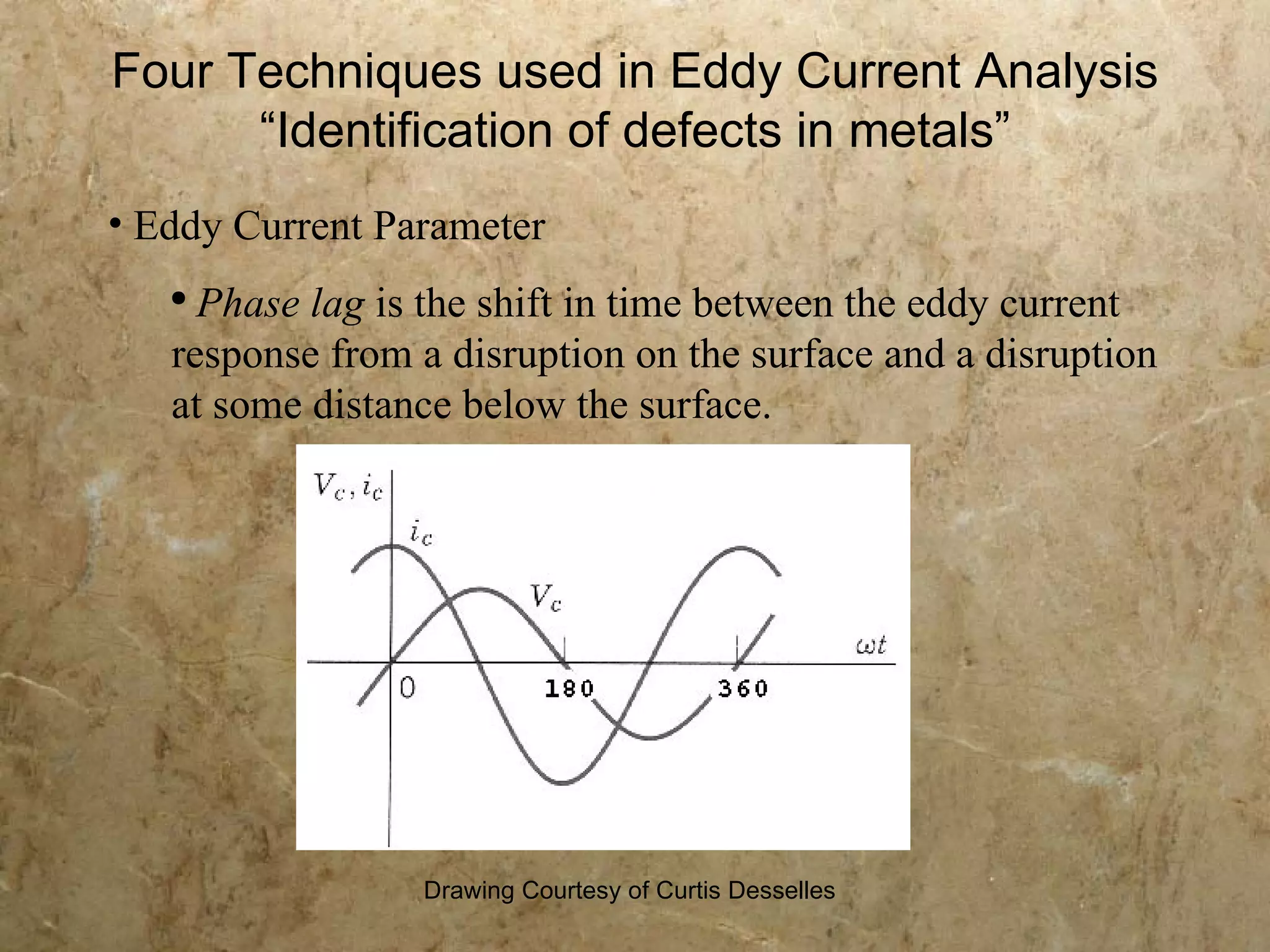
• Eddy Current Parameter
   ●
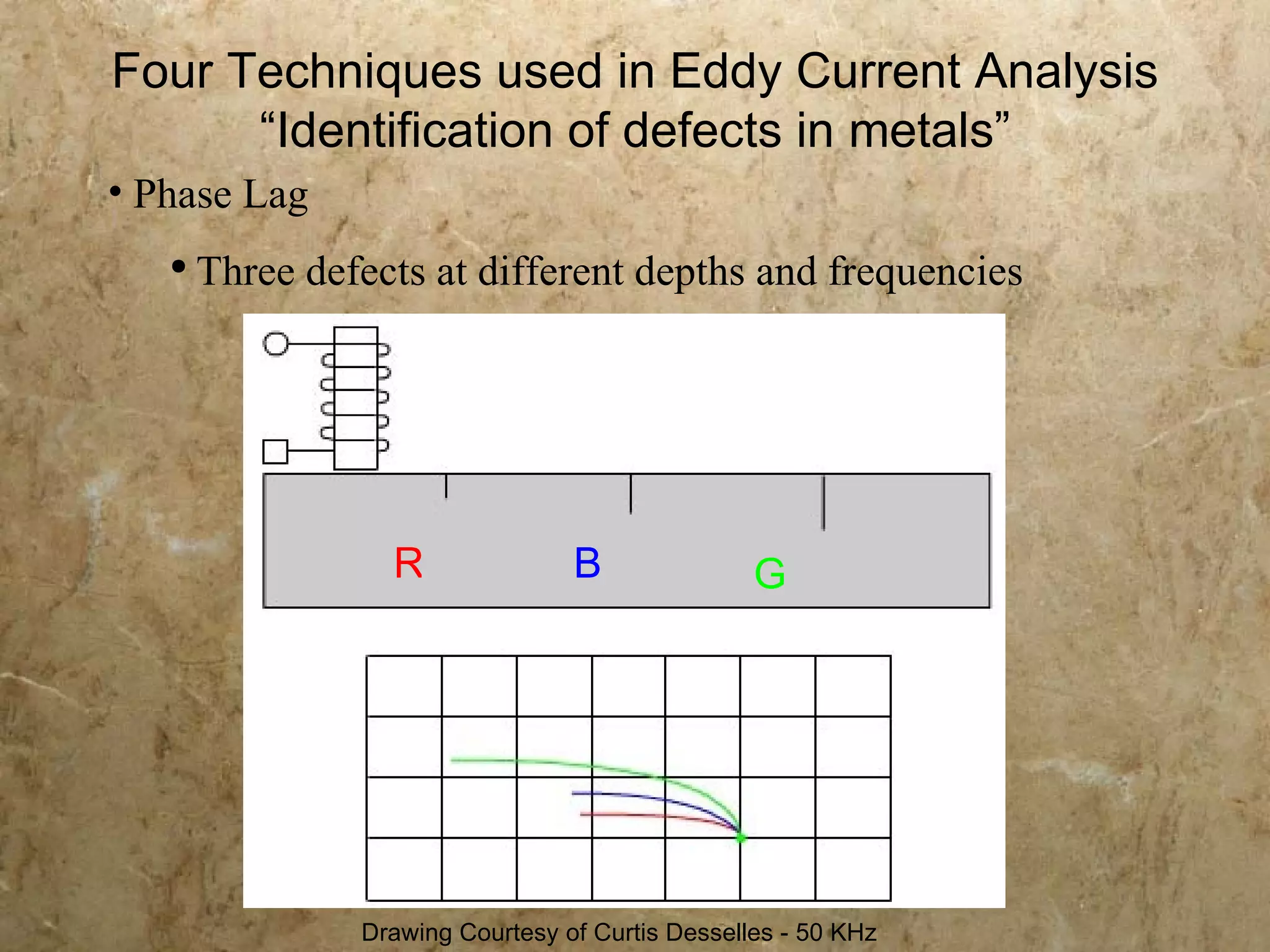
     Phase lag is the shift in time between the eddy current
   response from a disruption on the surface and a disruption
   at some distance below the surface.


                 Drawing Courtesy of Curtis Desselles
Four Techniques used in Eddy Current Analysis
      “Identification of defects in metals”
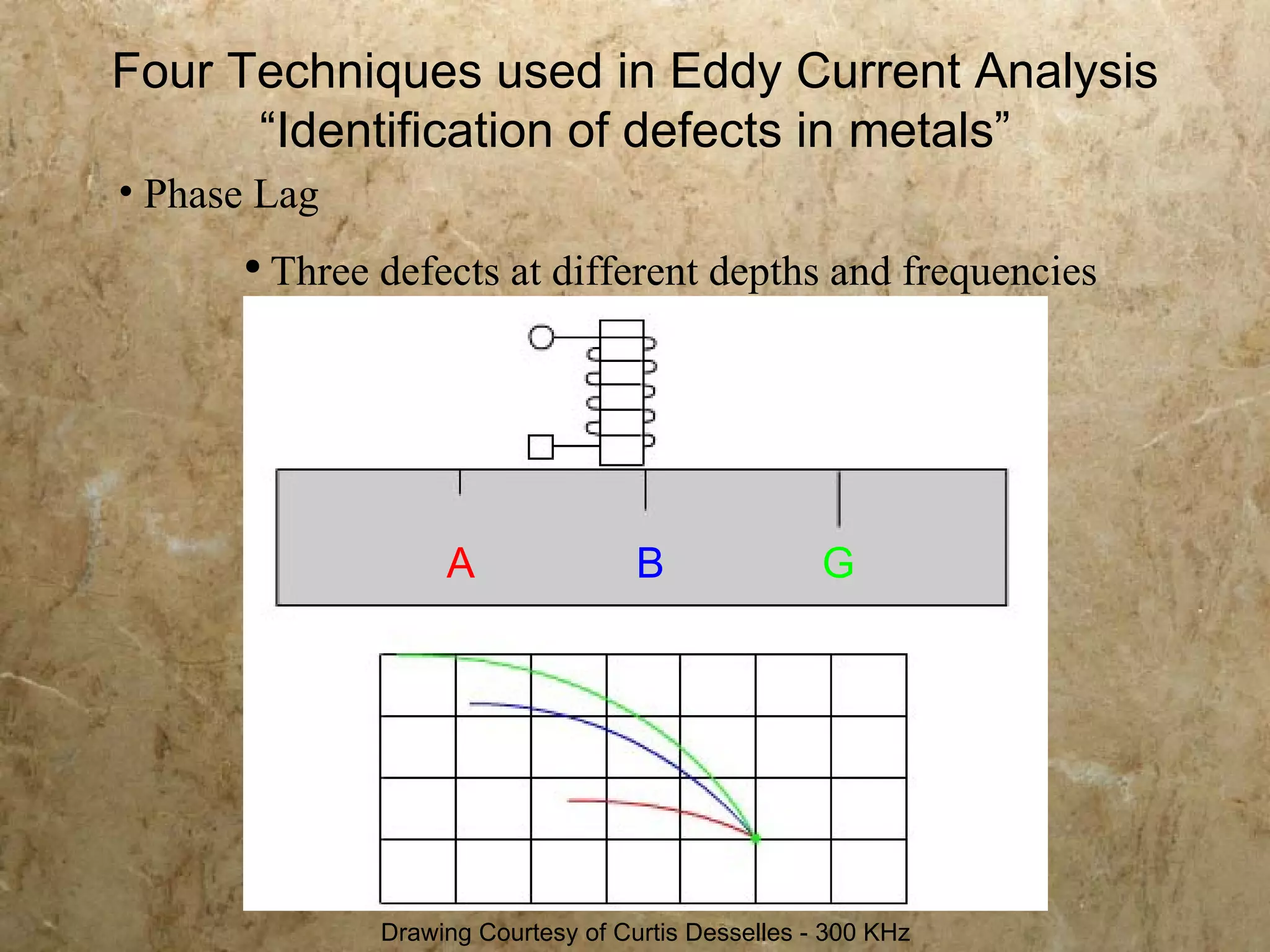
• Phase Lag
   ●
       Three defects at different depths and frequencies


                  R               B               G


                Drawing Courtesy of Curtis Desselles - 50 KHz
Four Techniques used in Eddy Current Analysis
      “Identification of defects in metals”
• Phase Lag
      ●
          Three defects at different depths and frequencies


                     A                B               G


                Drawing Courtesy of Curtis Desselles - 300 KHz
Four Techniques used in Eddy Current Analysis
      “Identification of defects in metals”
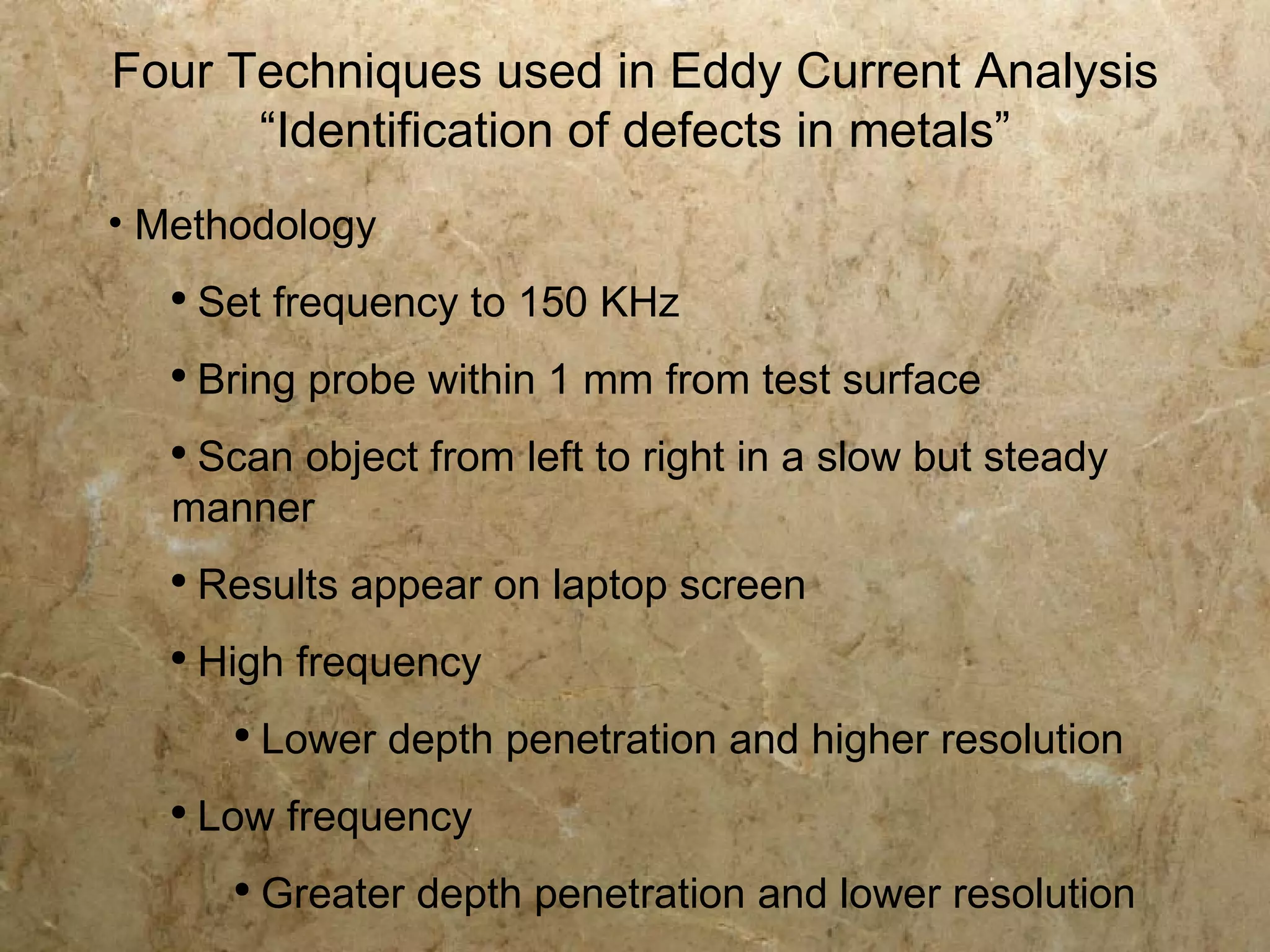
• Methodology
   ●
       Set frequency to 150 KHz
   ●
       Bring probe within 1 mm from test surface
   ●
    Scan object from left to right in a slow but steady
   manner
   ●
       Results appear on laptop screen
   ●
       High frequency
        ●
            Lower depth penetration and higher resolution
   ●
       Low frequency
        ●
            Greater depth penetration and lower resolution
Four Techniques used in Eddy Current Analysis
      “Identification of defects in metals”
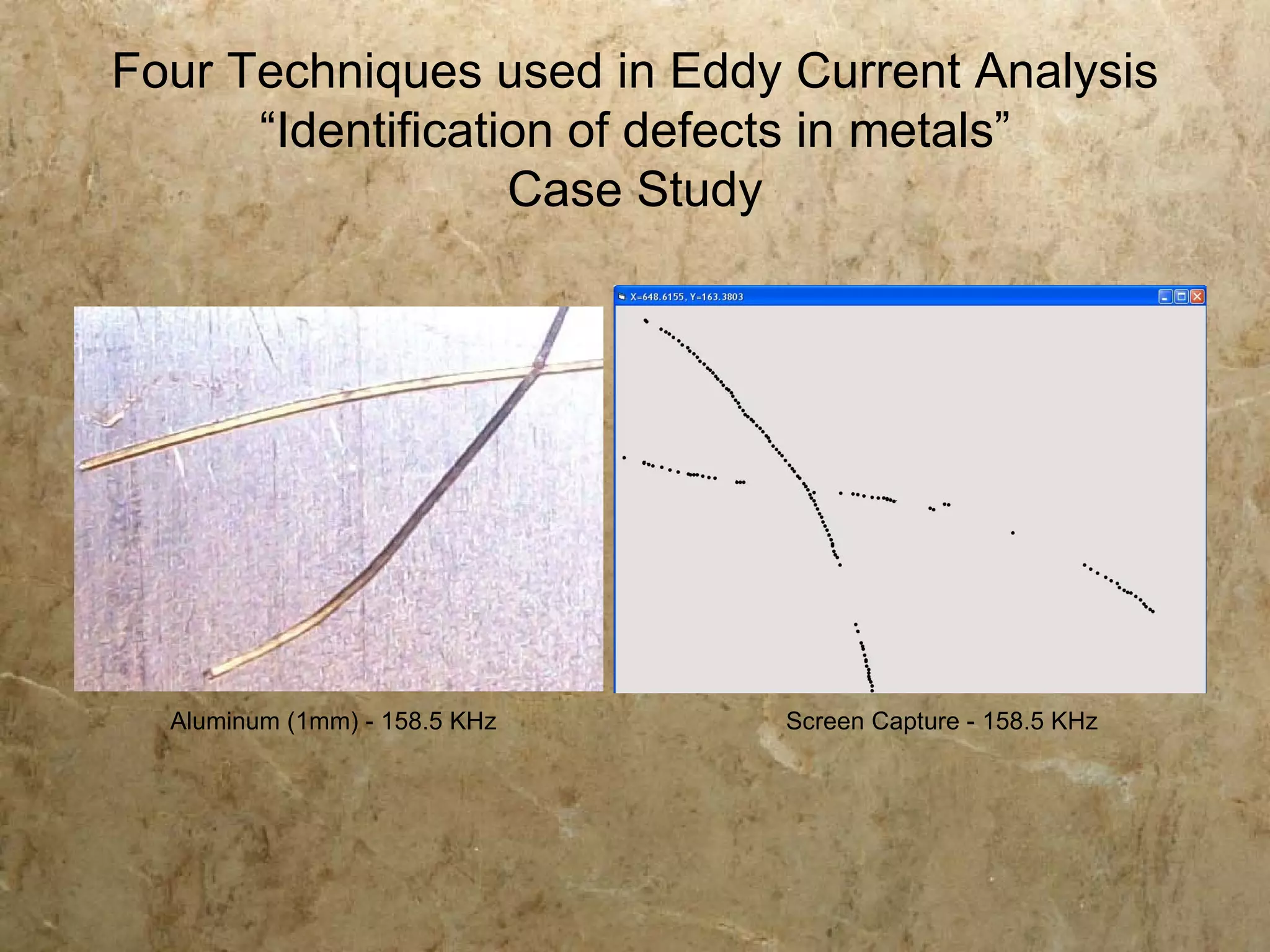
                   Case Study


  Aluminum (1mm) - 158.5 KHz   Screen Capture - 158.5 KHz
Four Techniques used in Eddy Current Analysis
        “Identification and Conductivity”
• Eddy Current Parameter
  ●
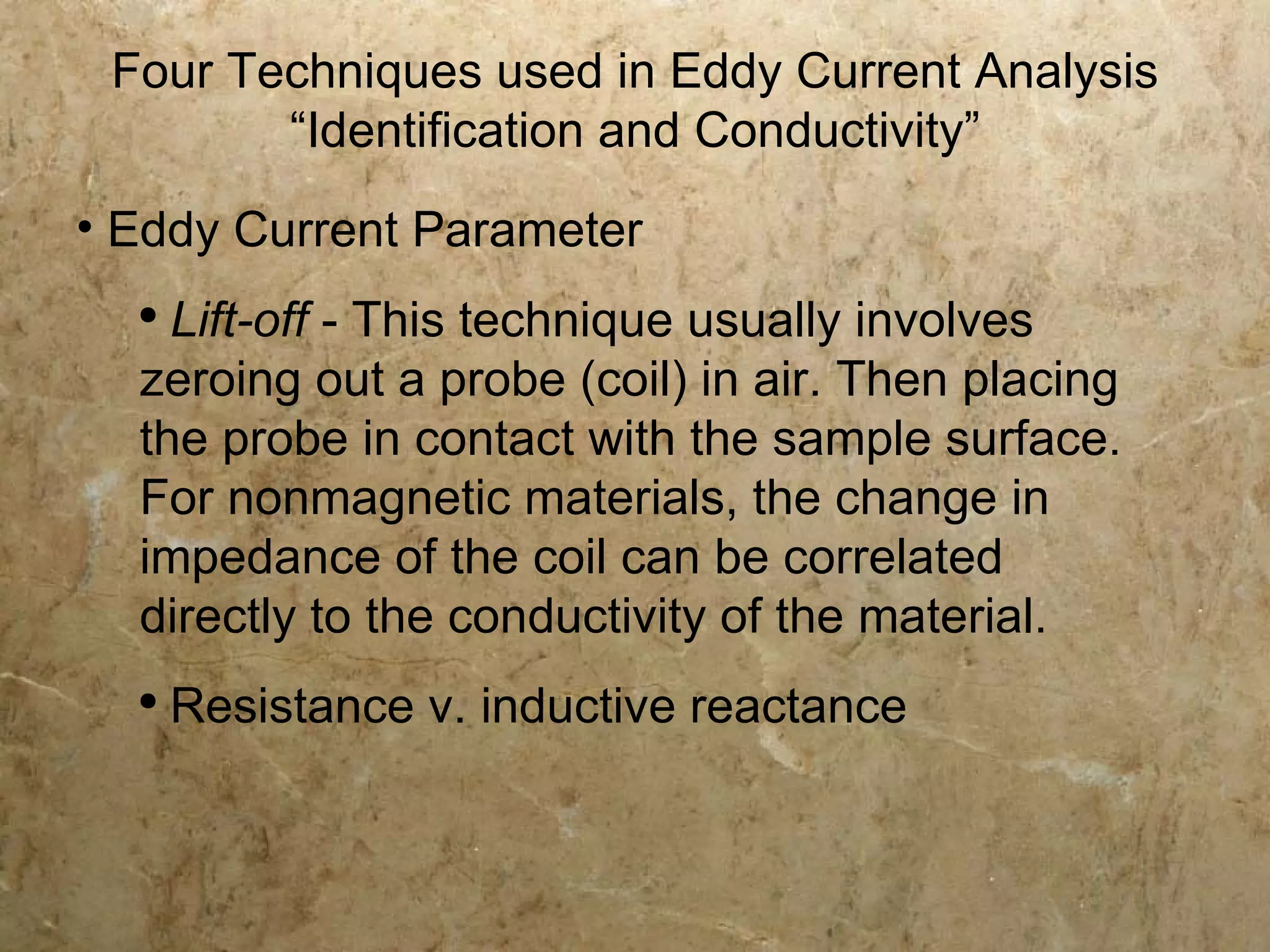
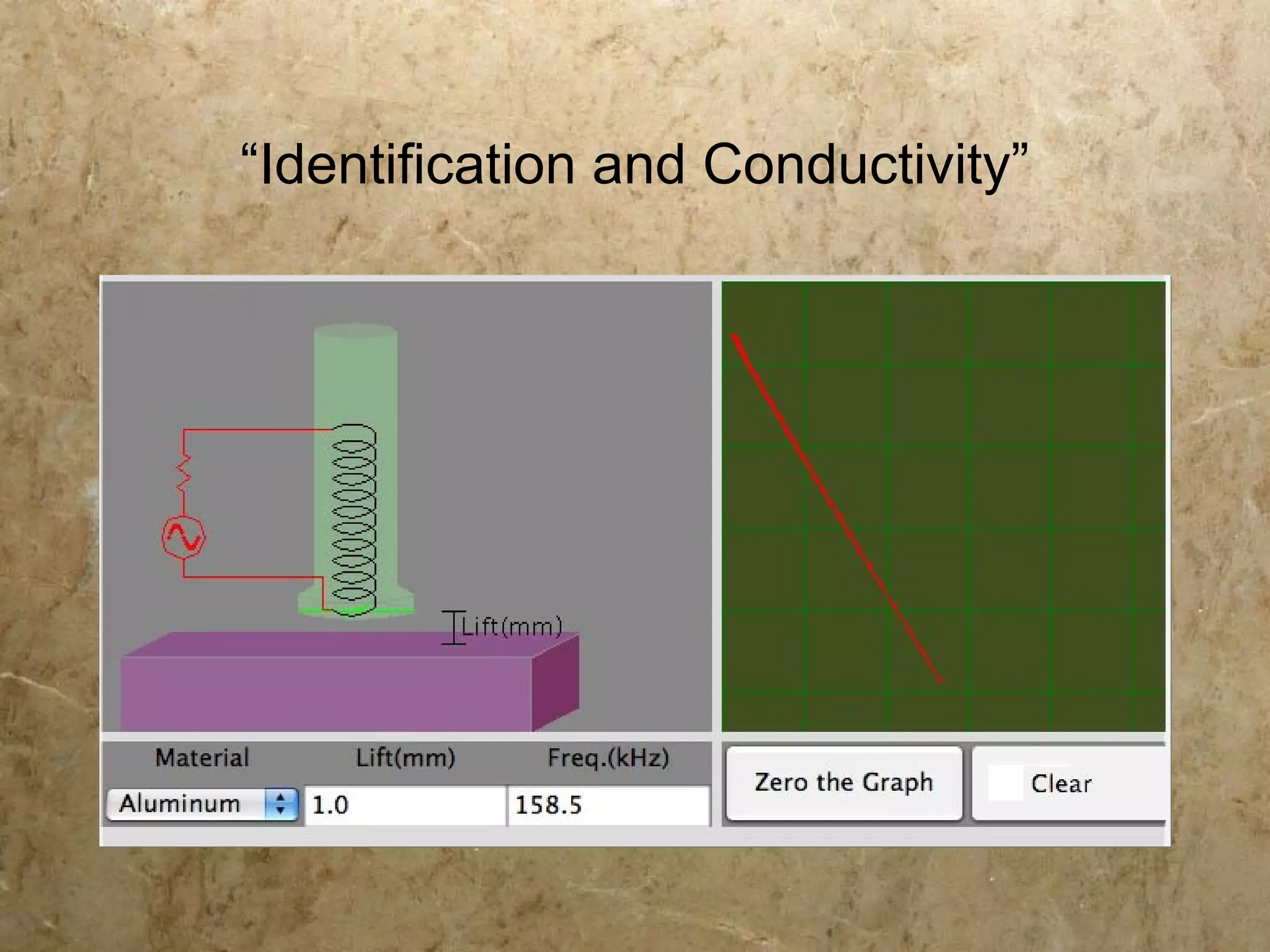
    Lift-off - This technique usually involves
  zeroing out a probe (coil) in air. Then placing
  the probe in contact with the sample surface.
  For nonmagnetic materials, the change in
  impedance of the coil can be correlated
  directly to the conductivity of the material.
  ●
      Resistance v. inductive reactance
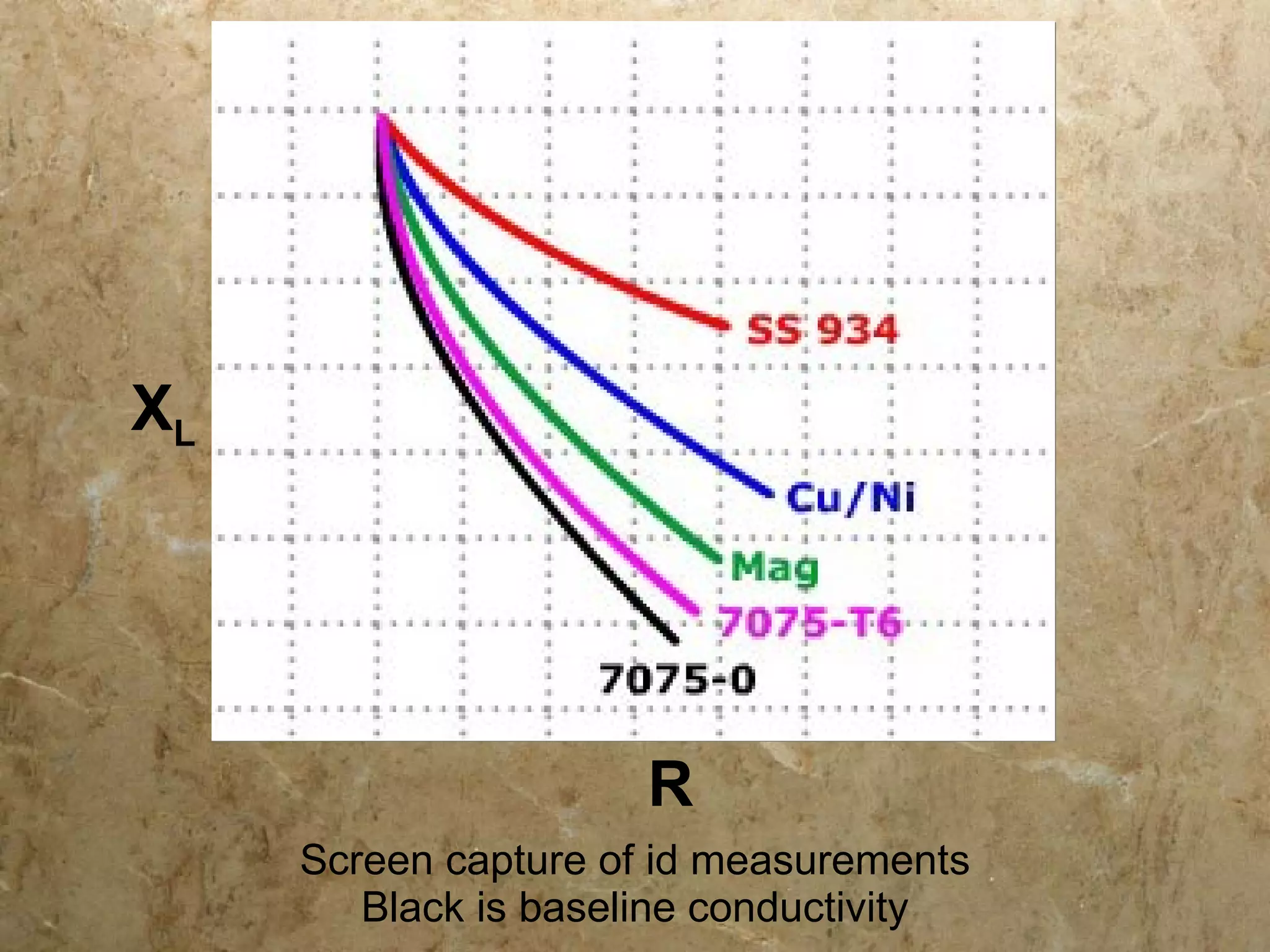
XL


                      R
     Screen capture of id measurements
        Black is baseline conductivity
Four Techniques used in Eddy Current Analysis
         “Identification and Conductivity”
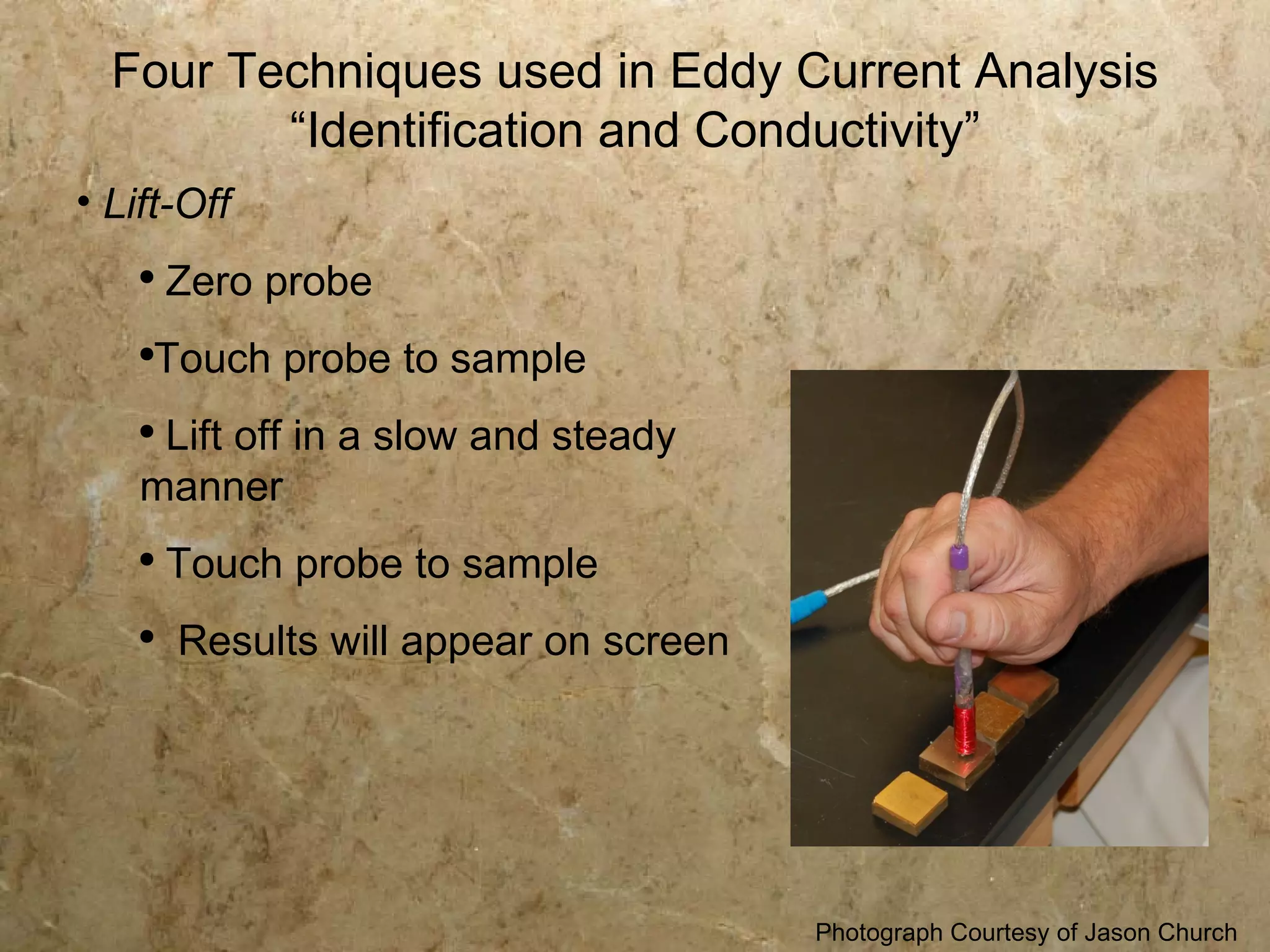
• Lift-Off
    ●
        Zero probe
    ●
     Touch probe to sample
    ●
     Lift off in a slow and steady
    manner
    ●
        Touch probe to sample
    ●
        Results will appear on screen


                                        Photograph Courtesy of Jason Church
“Identification and Conductivity”
Four Techniques used in Eddy Current Analysis
         “Thickness Measurements”
• Eddy Current Parameter
• Lift-Off
   ●
       Zero probe
   ●
    Touch probe to sample
   ●
       Lift off (1 mm) in a slow and steady manner
   ●
       Scan left to right
   ●
       Results will appear on screen
Four Techniques used in Eddy Current Analysis
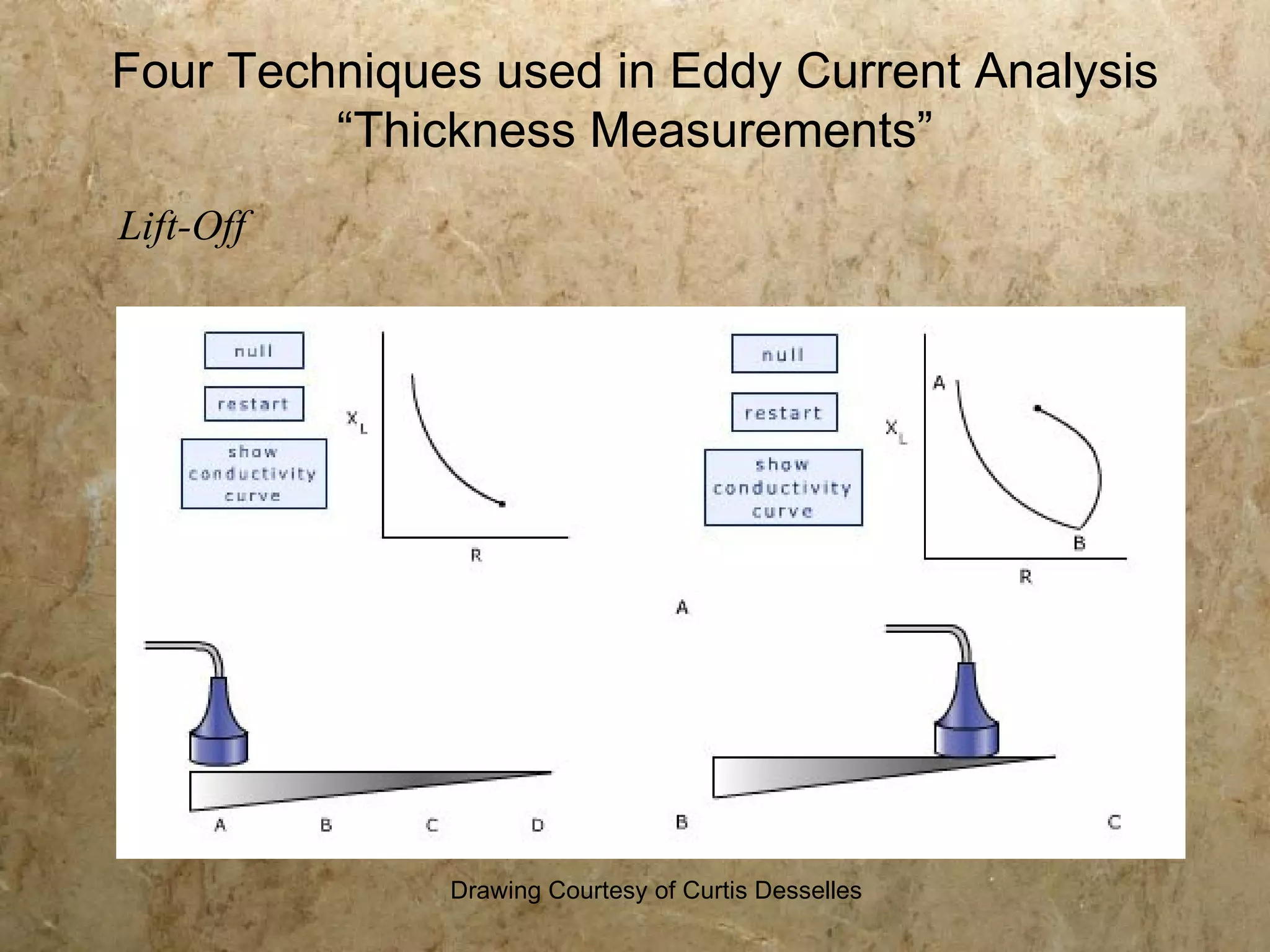
         “Thickness Measurements”
Lift-Off


              Drawing Courtesy of Curtis Desselles
Four Techniques used in Eddy Current Analysis
            “Recovery of Hallmarks”
• Eddy Current Parameter
  ●
    Phase lag is the shift in time between the
  eddy current response from a disruption on
  the surface and a disruption at some distance
  below the surface.
      ●
          Touch probe to sample
      ●
          Scan left to right
      ●
          Repeat scanning of entire object
      ●
          Results will appear on screen
Four Techniques used in Eddy Current Analysis
           “Recovery of Hallmarks”


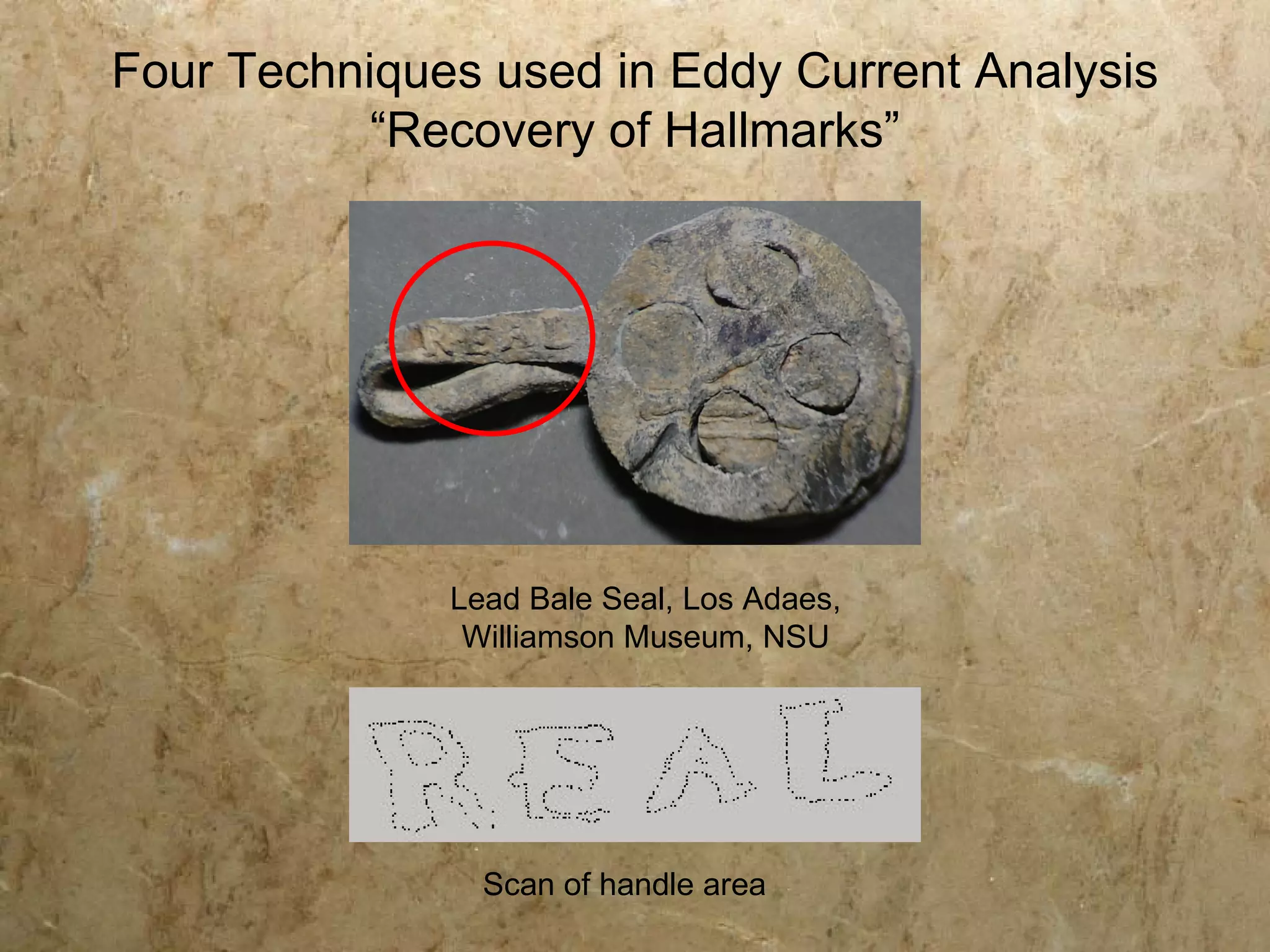
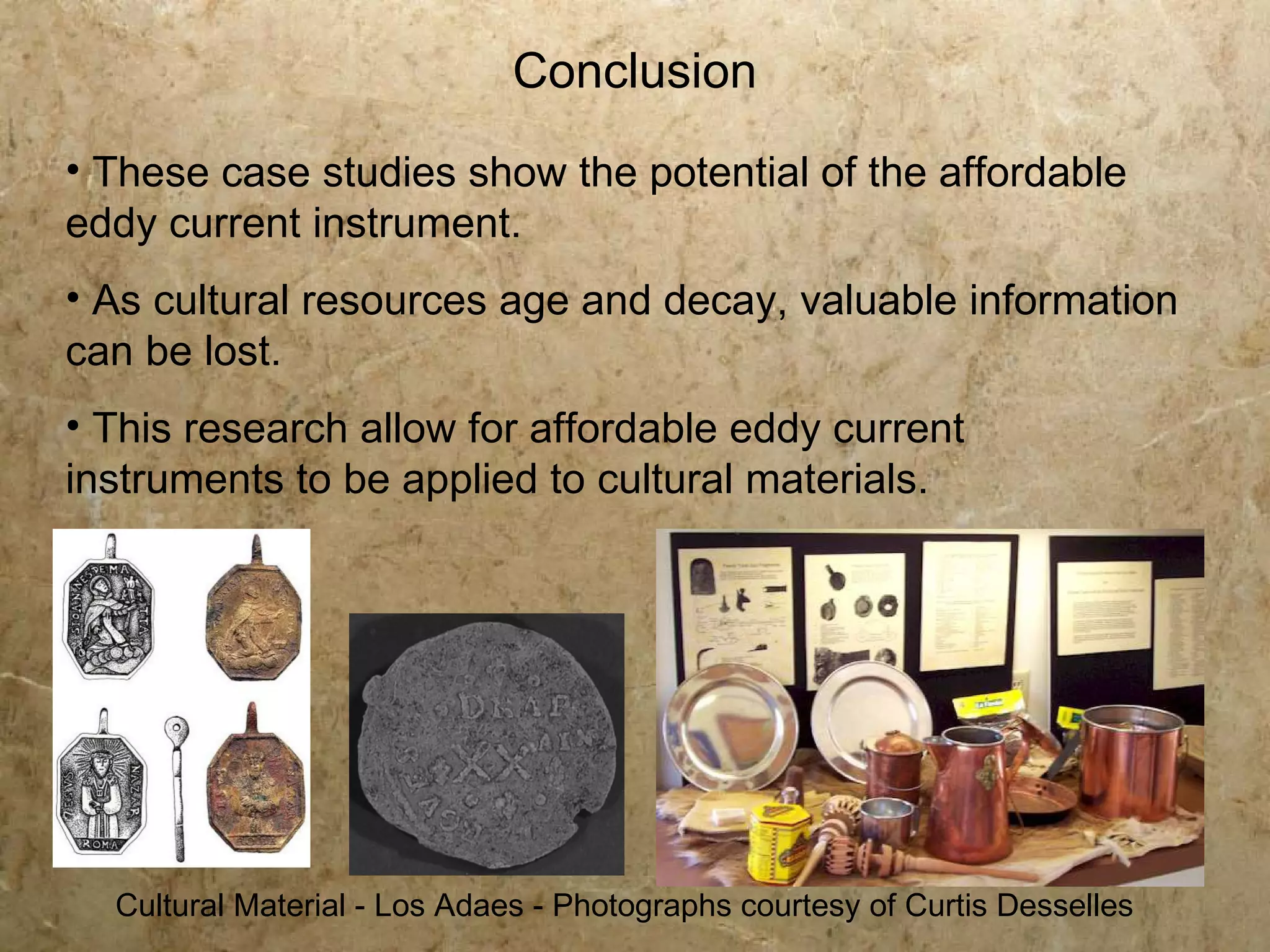
              Lead Bale Seal, Los Adaes,
               Williamson Museum, NSU


                Scan of handle area
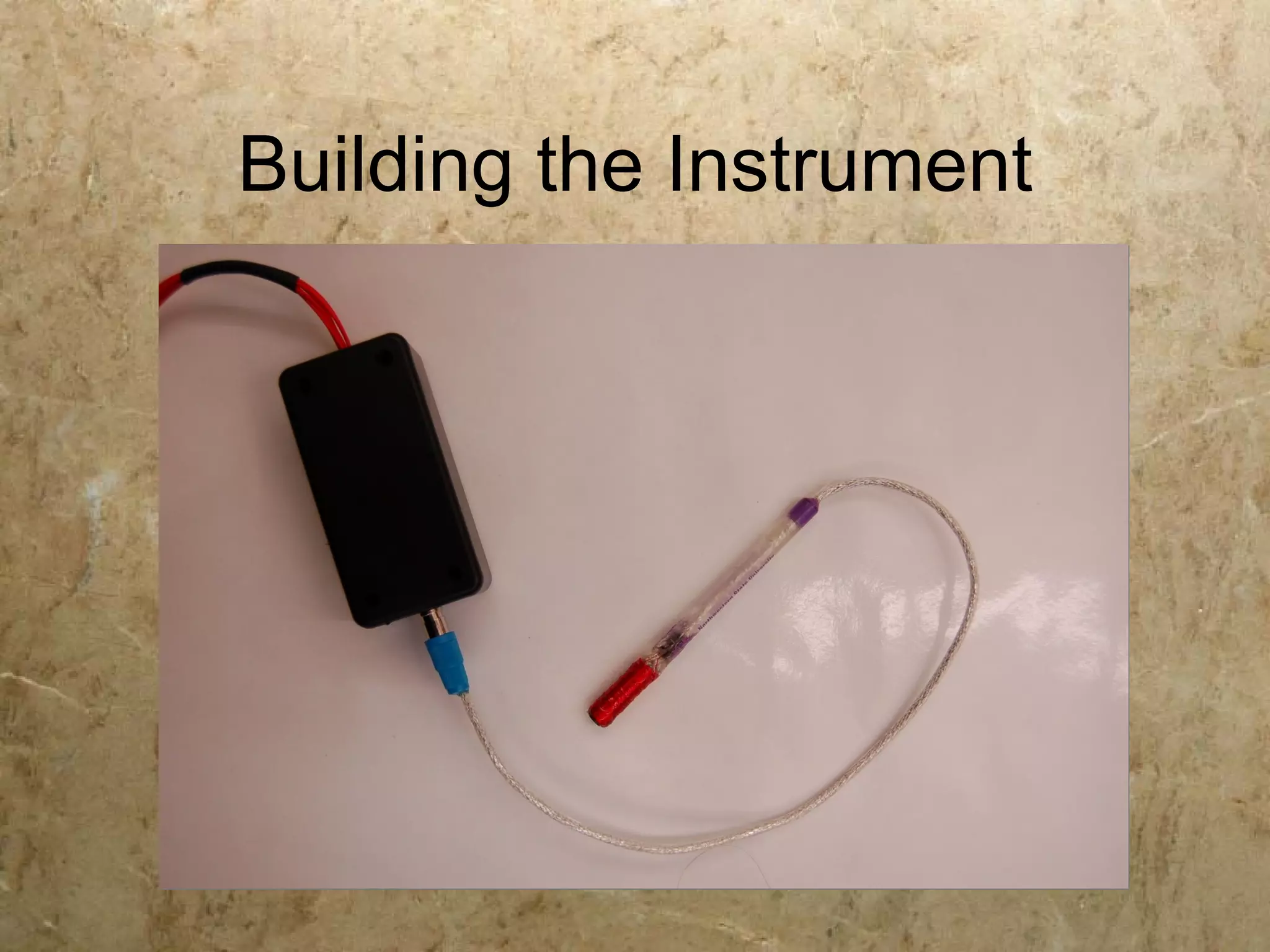
Building the Instrument
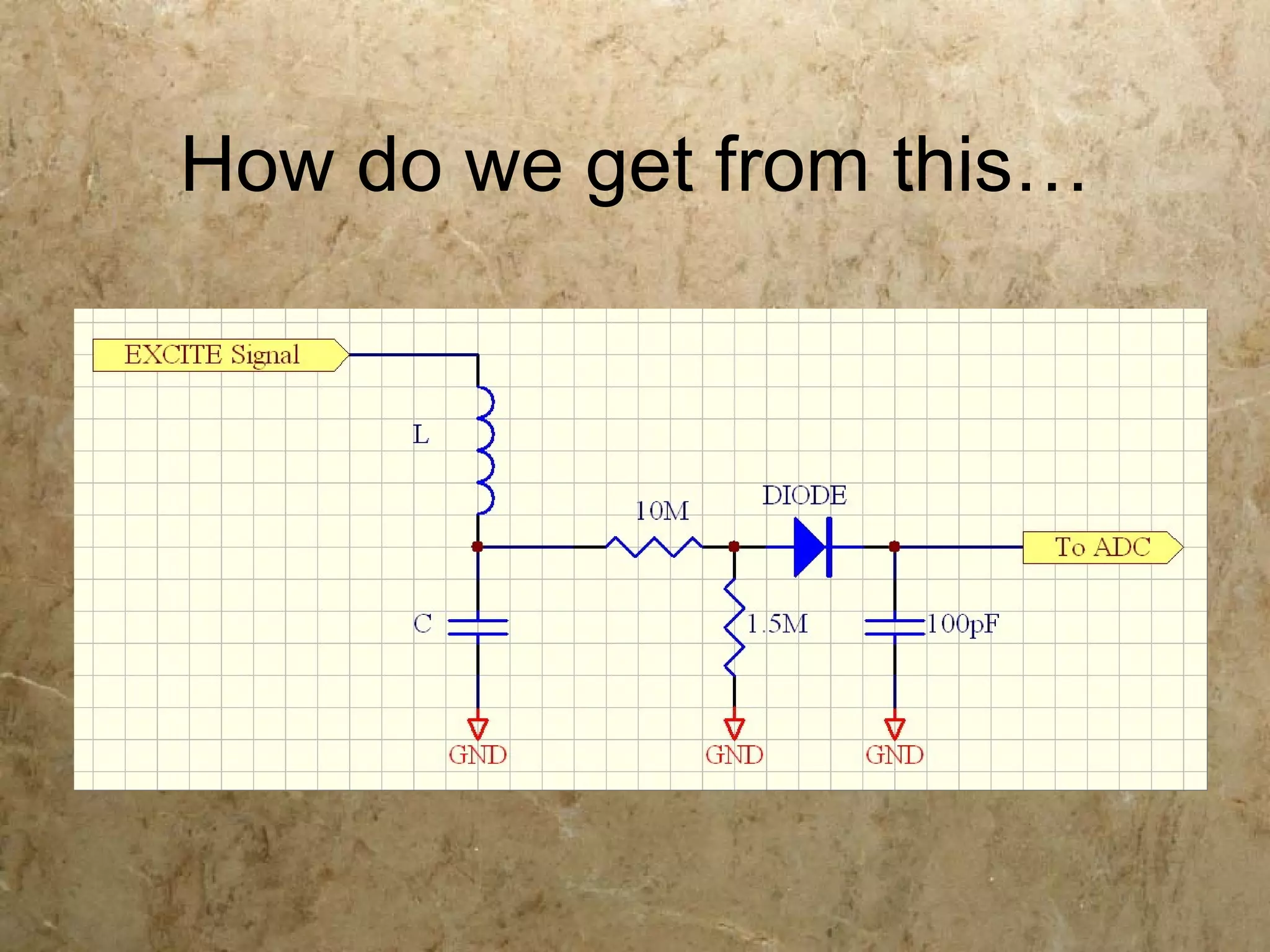
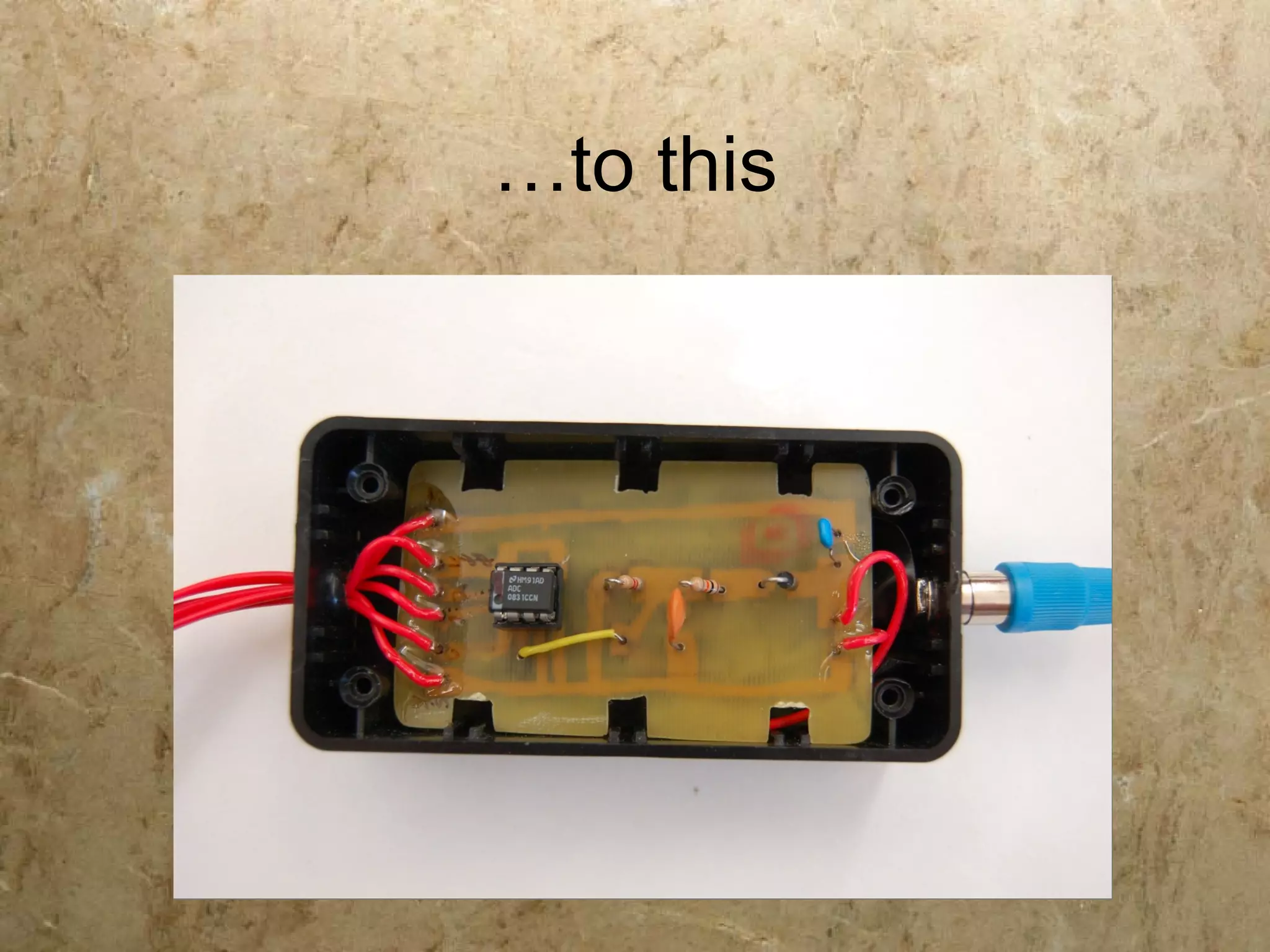
How do we get from this…
…to this
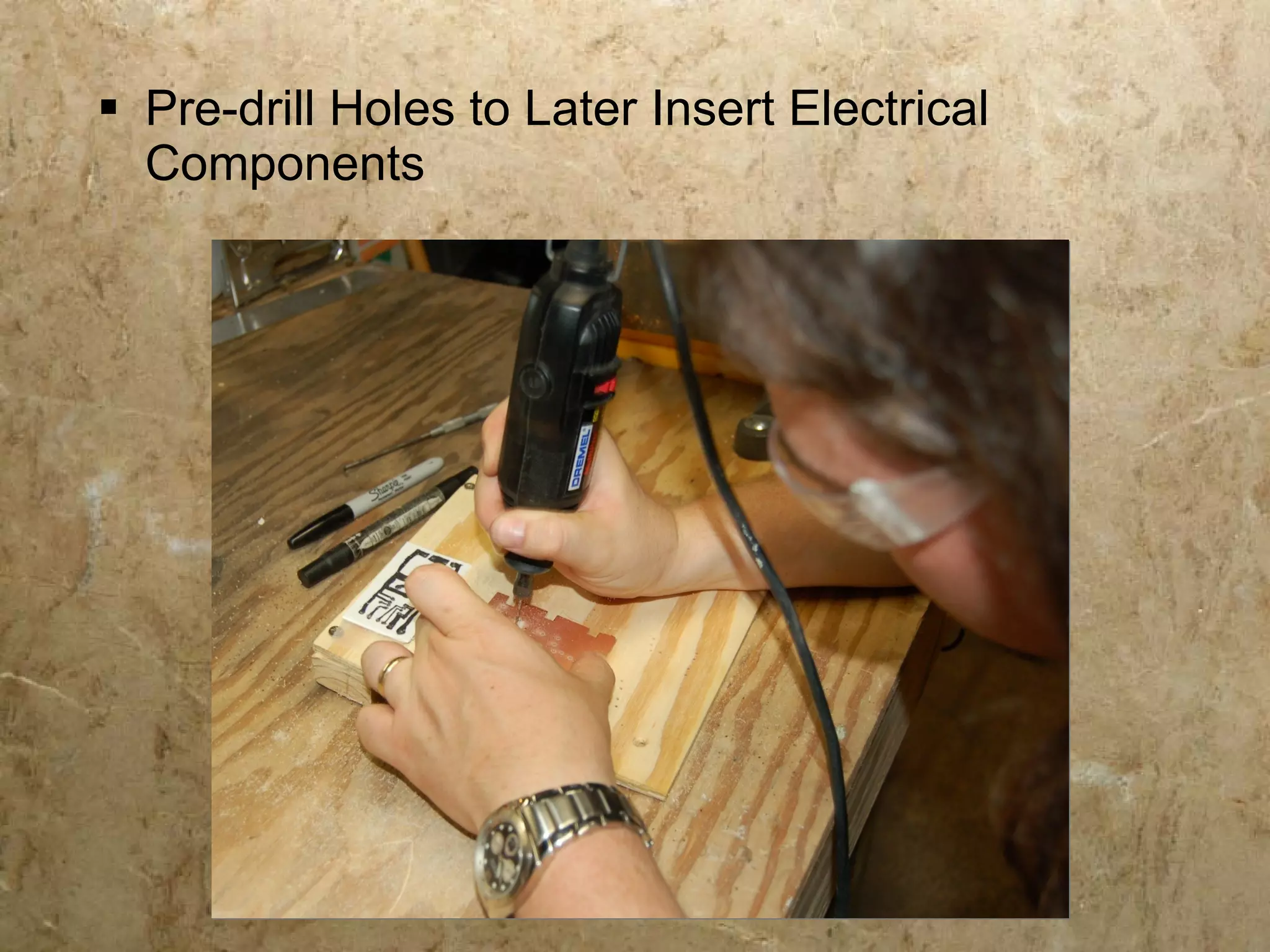
 Pre-drill Holes to Later Insert Electrical
  Components
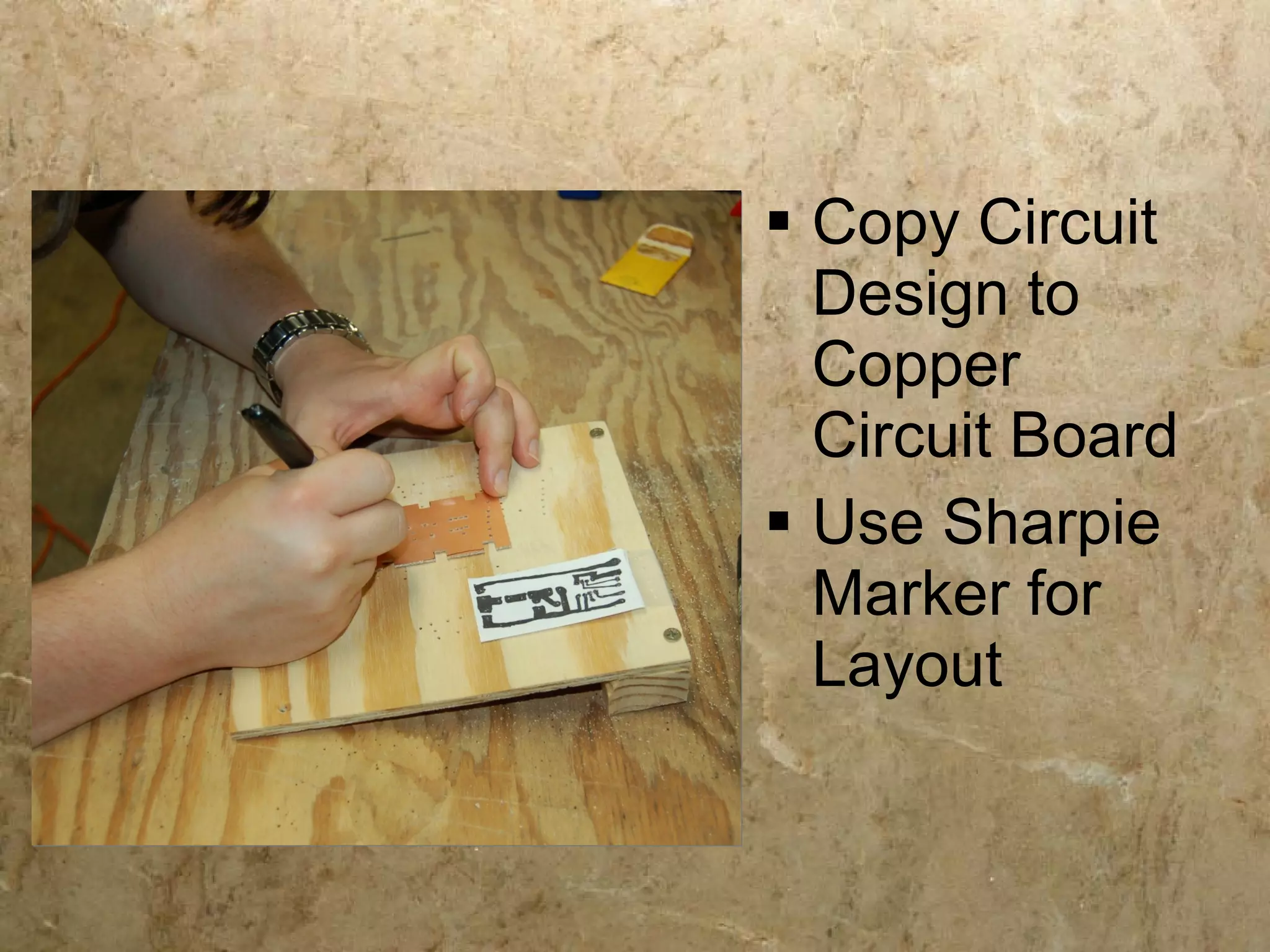
 Copy Circuit
  Design to
  Copper
  Circuit Board
 Use Sharpie
  Marker for
  Layout
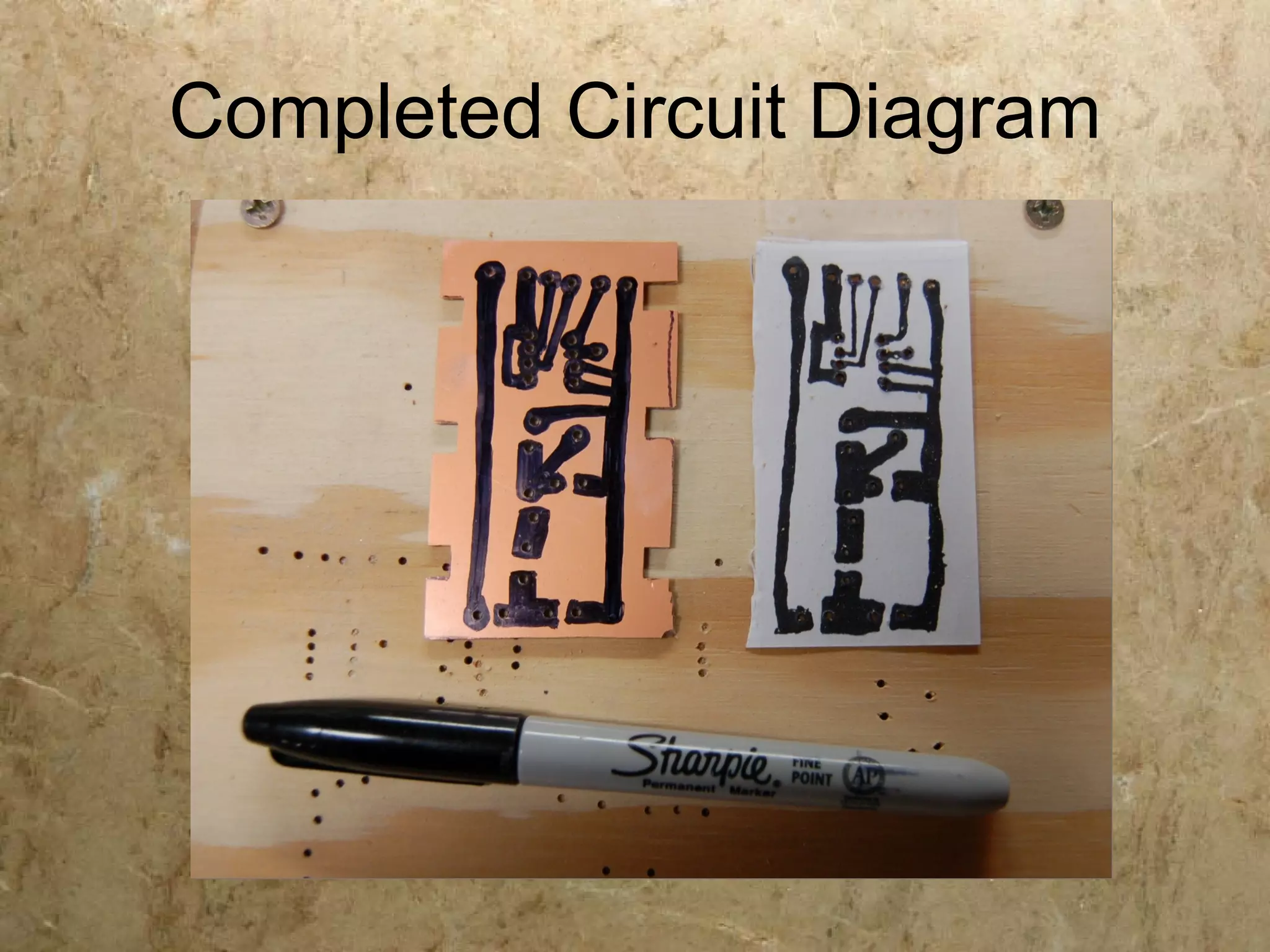
Completed Circuit Diagram
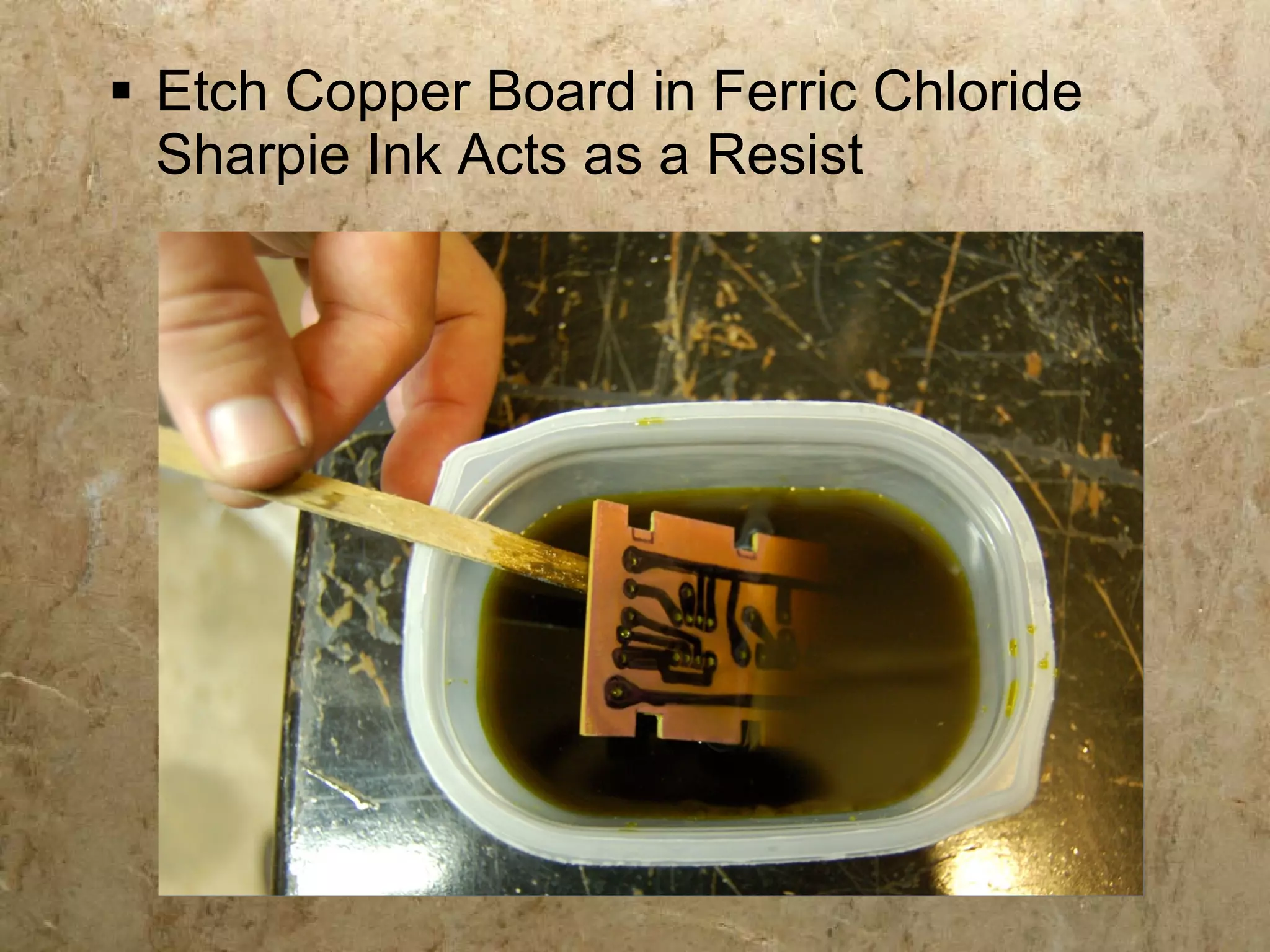
 Etch Copper Board in Ferric Chloride
  Sharpie Ink Acts as a Resist
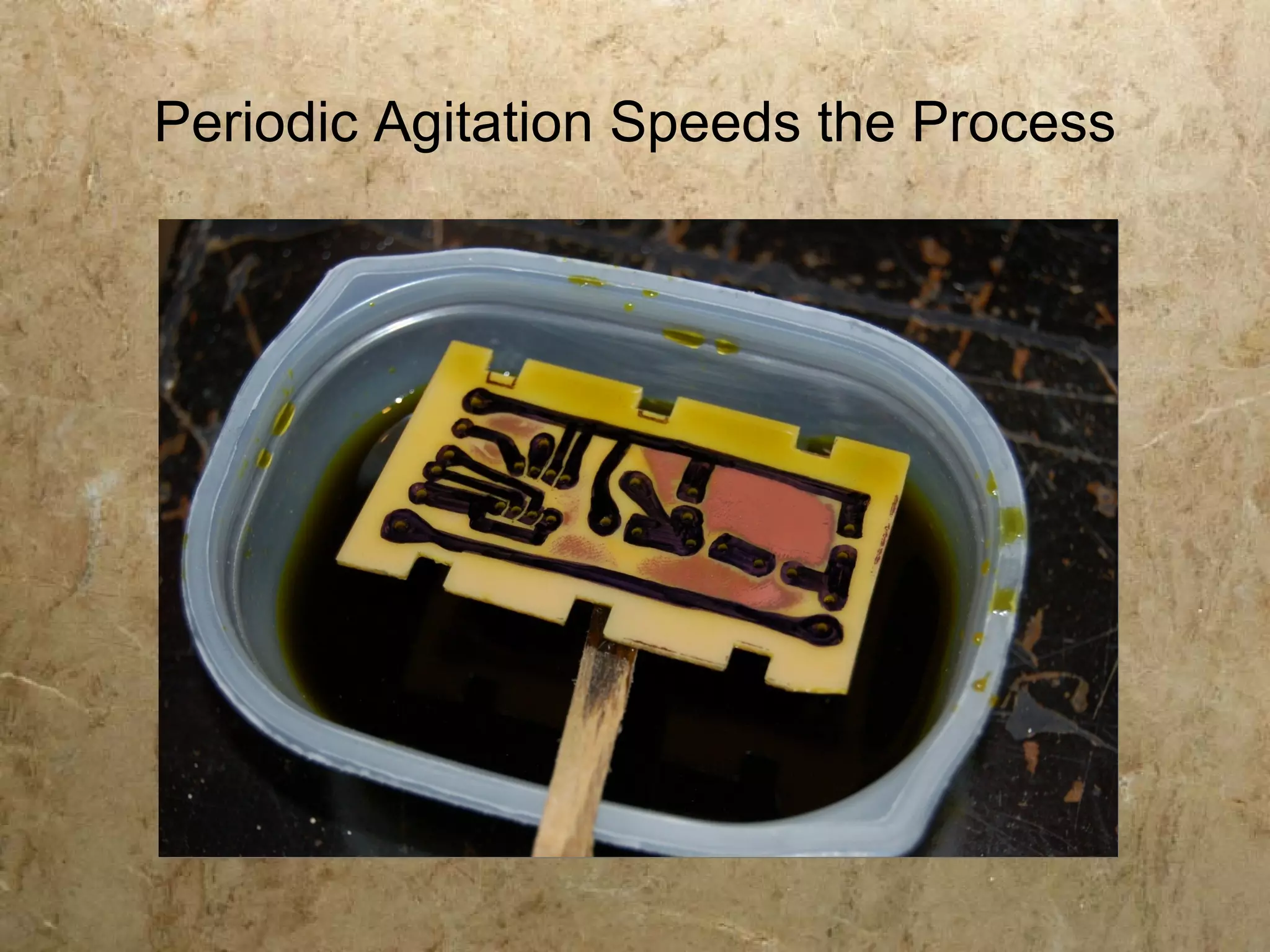
Periodic Agitation Speeds the Process
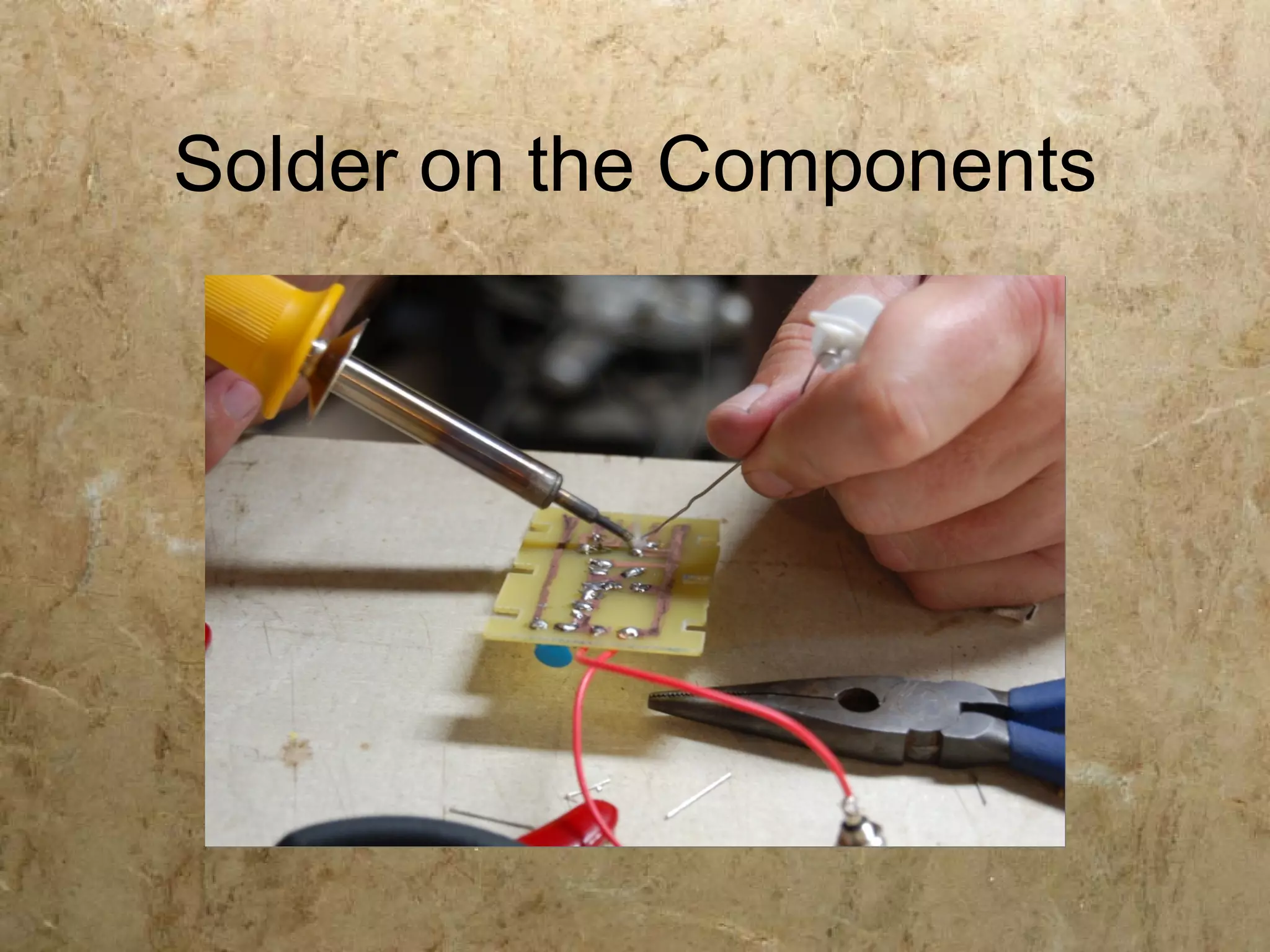
Solder on the Components
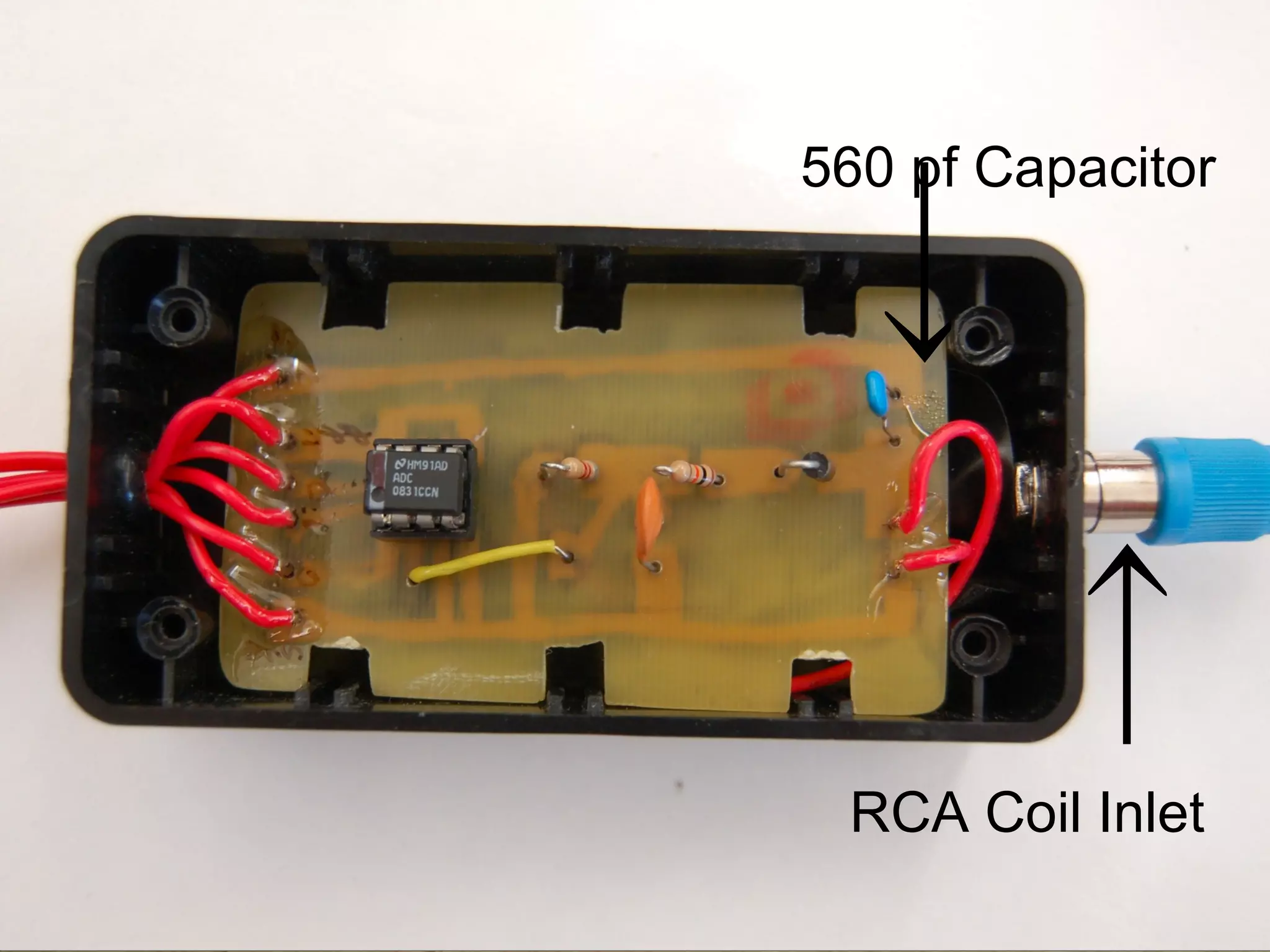
560 pf Capacitor

↓
        ↑
 RCA Coil Inlet
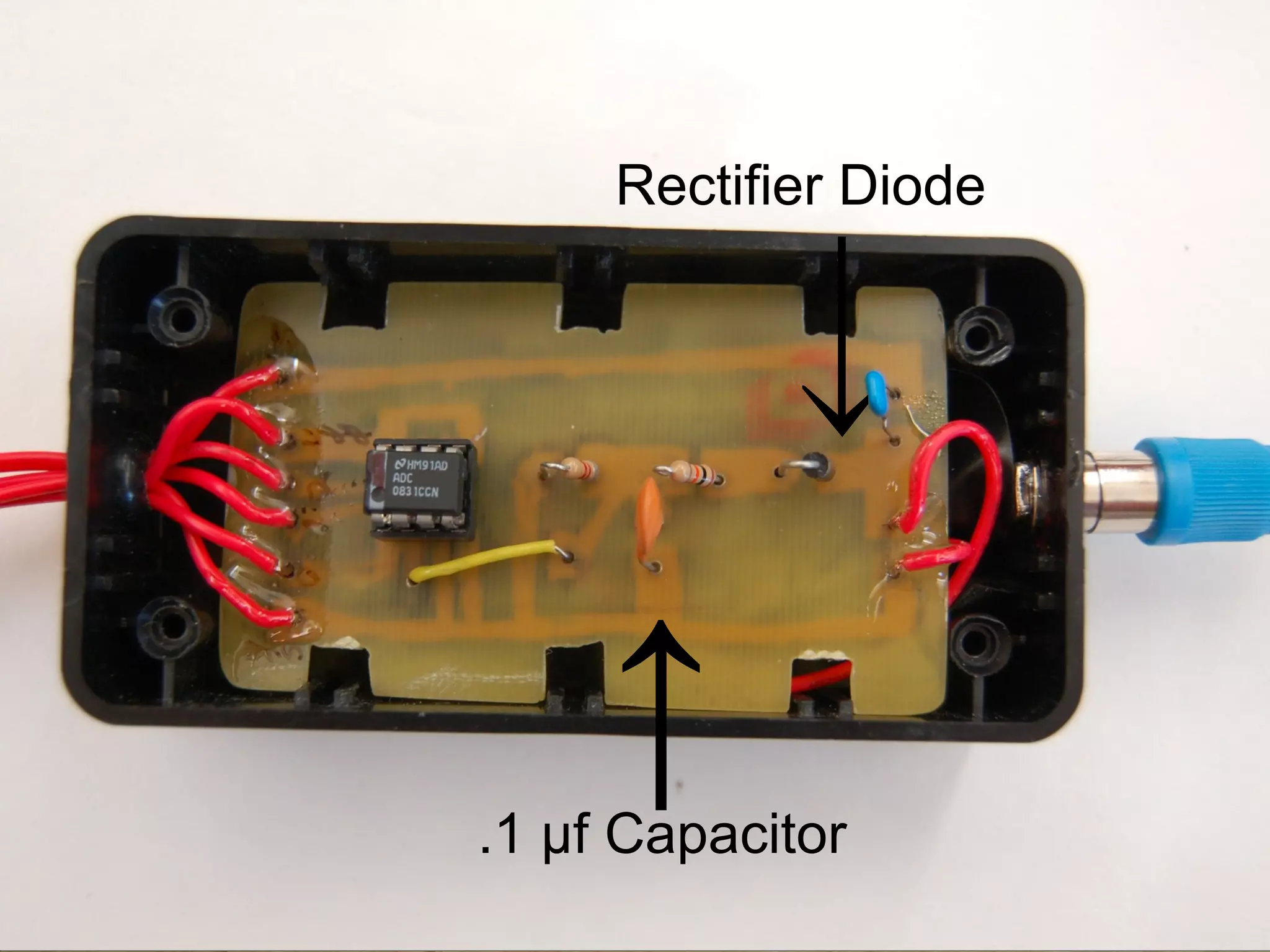
Rectifier Diode


          ↓
     ↑
.1 µf Capacitor
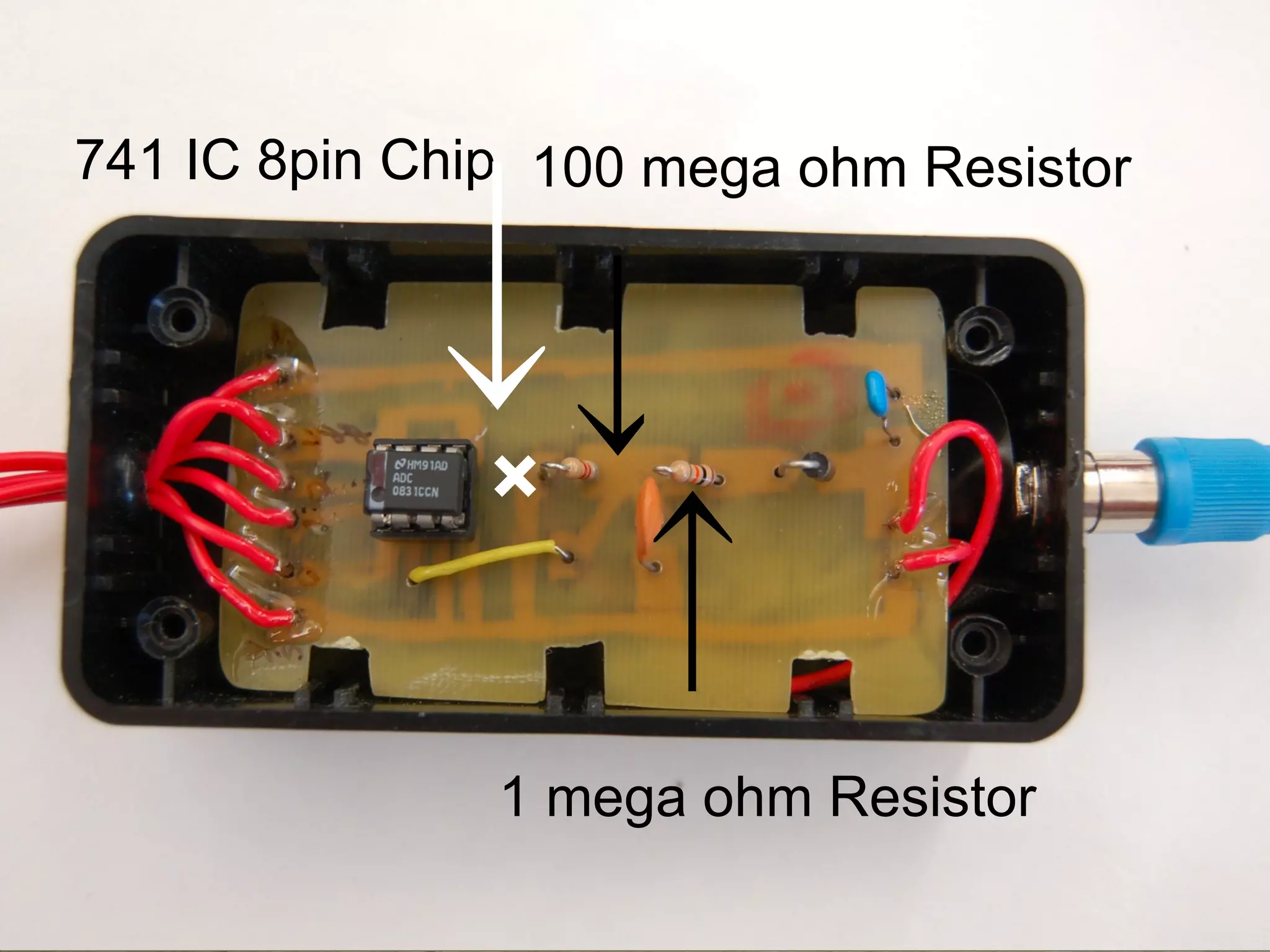
741 IC 8pin Chip 100 mega ohm Resistor


          ↓↓  ×
                  ↑
               1 mega ohm Resistor
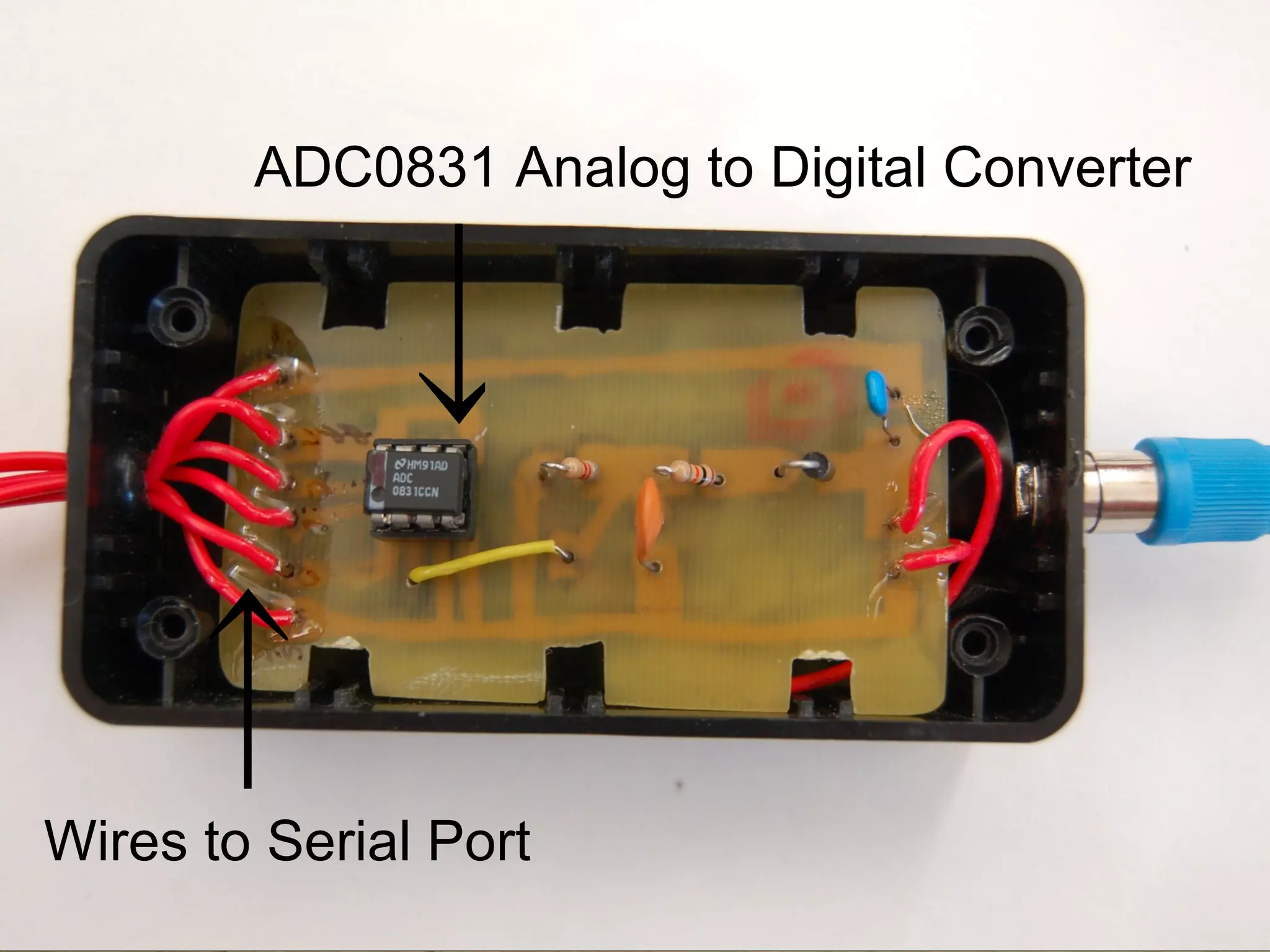
ADC0831 Analog to Digital Converter


            ↓
   ↑
Wires to Serial Port
Coil Construction - 30 Gauge Magnet Wire


Iron Ferrite Core


                                        ↓
                                    RCA Output


   ↓
Future Directions
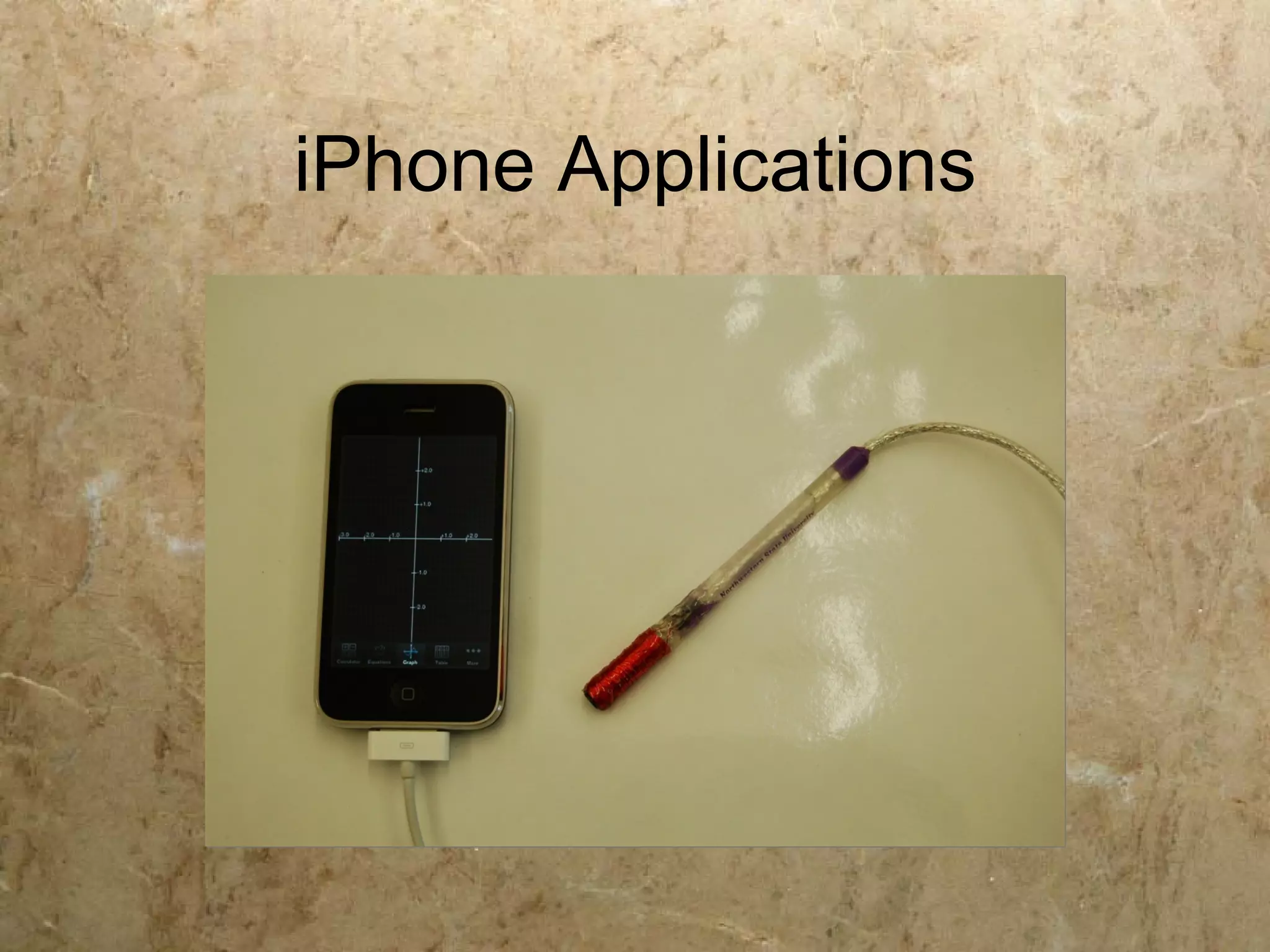
   iPhone Applications
   Tomographic Layers
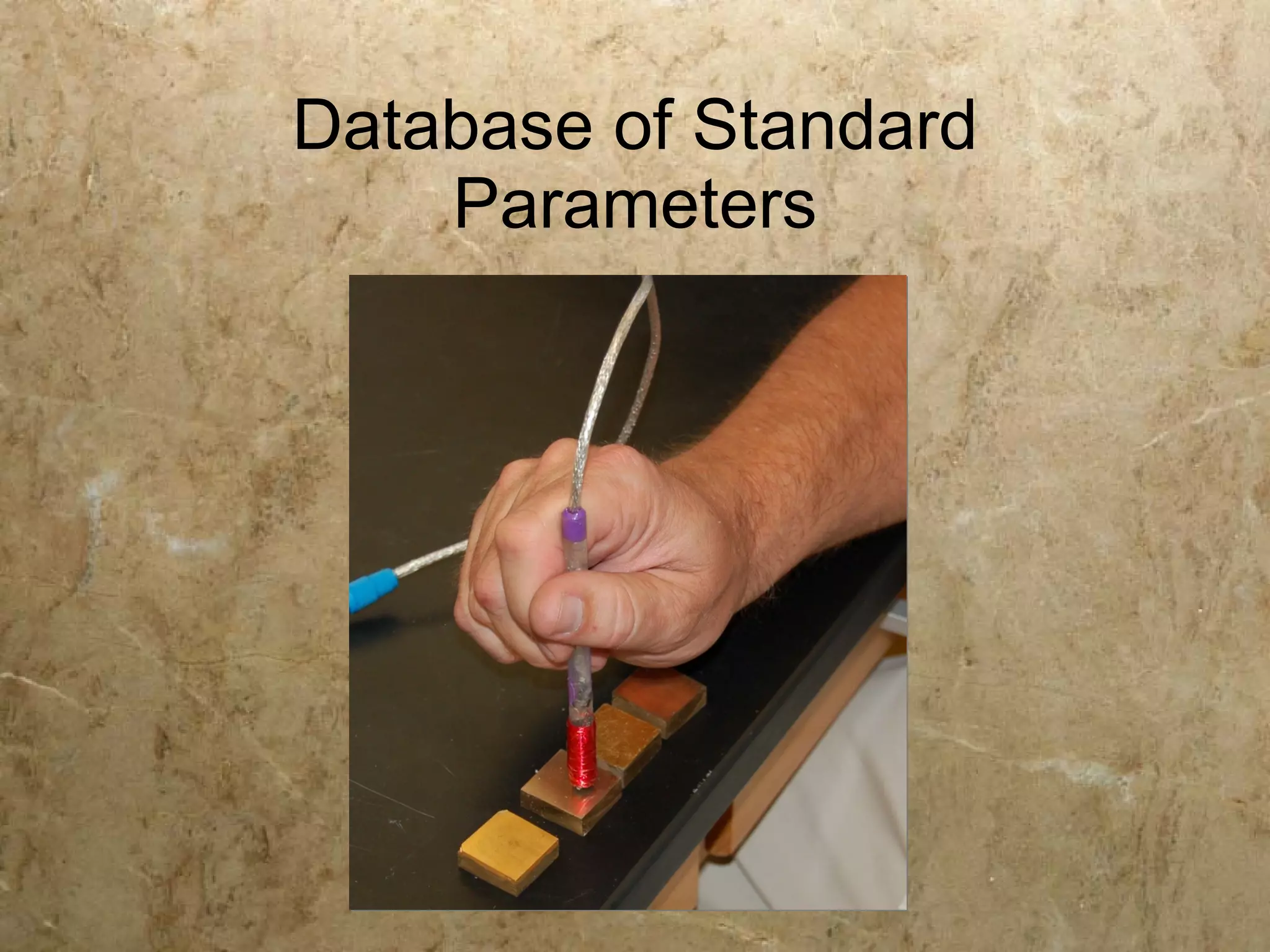
   Database of Standard Parameters
   Better Resolution
iPhone Applications
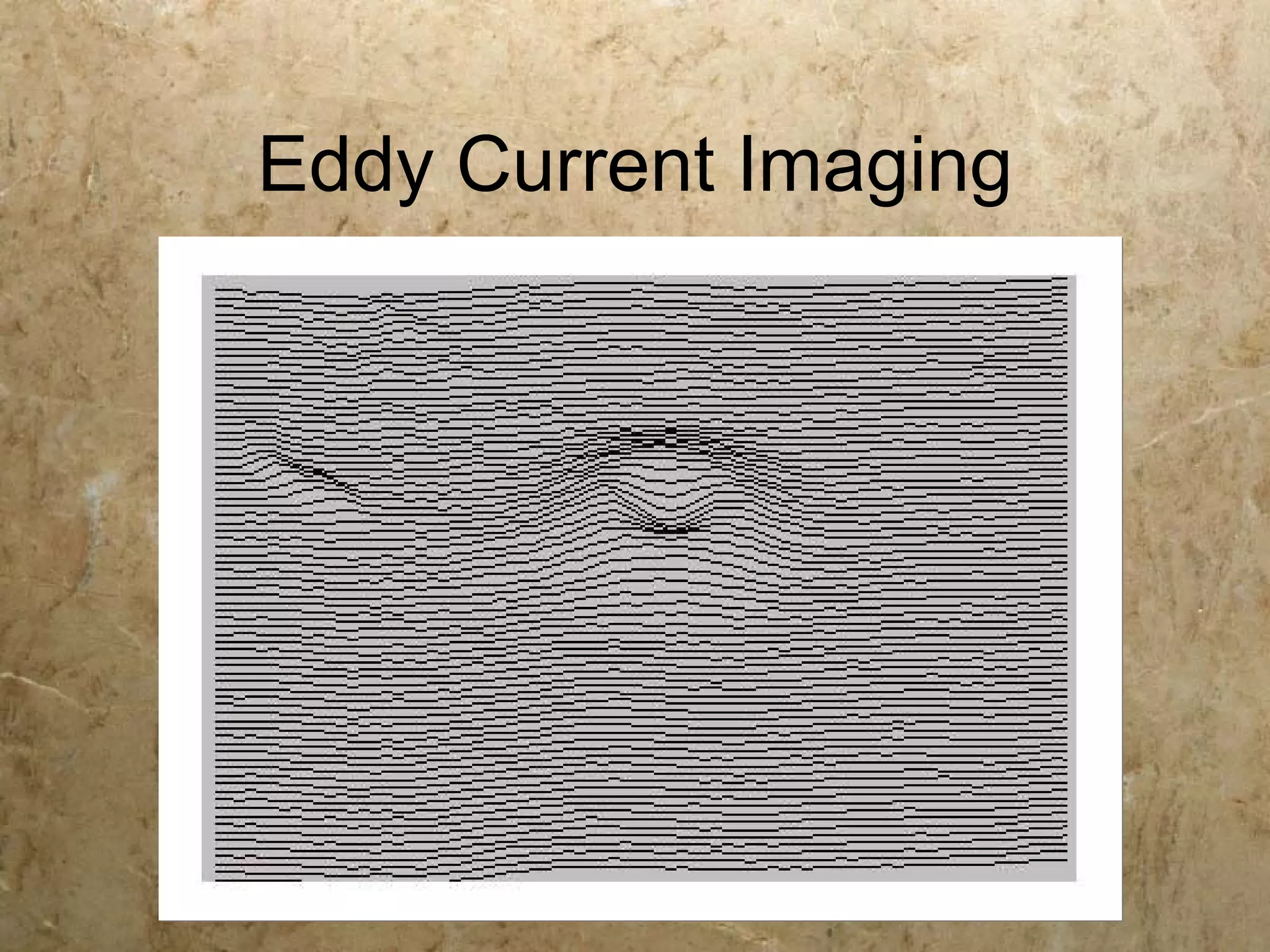
Eddy Current Imaging
Database of Standard
    Parameters
Conclusion
• These case studies show the potential of the affordable
eddy current instrument.
• As cultural resources age and decay, valuable information
can be lost.
• This research allow for affordable eddy current
instruments to be applied to cultural materials.


  Cultural Material - Los Adaes - Photographs courtesy of Curtis Desselles
Acknowledgements


• Northwestern State University of Louisiana (NSU)
• National Center for Preservation Technology and Training
(NCPTT)
• Dr. Mary Striegel
• Dr. Hiram Gregory
• Dr. ElizaBeth Guin
• Jason Church
• Houren Zhu

Eddy Current Metal Testing for Conservation

  • 1.
    Innovations in EddyCurrent Technology by Curtis Desselles Blythe McCarthy - Freer Gallery
  • 2.
    Valuable information aboutcultural materials is not always visible to the naked eye. Tattoodjj, “Statue of Prometheus”, June 8, 2008, online image, Flickr. Rockefeller Center, NY. Opacity, “statue of Bastet, gilded bronze, Late Period”, March 8, 2009, online image, flickr.
  • 3.
    Northwestern State University& NCPTT are continuing research into use of eddy current testing on cultural heritage. NCPTT, Photograph courtesy of Jason Church
  • 4.
    Without nondestructive testing,cultural information will be lost. Corroded Penny - www.wildbell.com/.../ 2008/05/img_9834.jpg
  • 5.
    By making affordableeddy current instruments, preservationists can have access to the technology. Eddy Current Testing, Freer Gallery
  • 6.
    Affordable eddy currentinstruments can be used to analyze cultural materials. Eddy Current Testing, Freer Gallery
  • 7.
    Eddy Currents havebeen used in a variety of nondestructive applications. Adam Hoke, an aviation maintenance technician with the U.S. Coast Guard, inspects the belly of a Boeing 737 using an eddy current scanner. (Photo by Randy Montoya) Sandia Labs.
  • 8.
    Eddy currents werediscovered in 1851 by Foucault. Léon Foucault (1819-1868), Wikipedia.
  • 9.
    Applications of eddycurrents include detection of cracks, discontinuities, flaws, and thicknesses. Measuring paint thickness - NDT Resource Center
  • 10.
    Testing for Cracks- NDT Resource Center
  • 11.
    Voltage  is ameasurement of the energy contained within an electric field, or an electric circuit, at a given point, measured in volts
  • 12.
    Current  a flowof electricity through a conductor, measured in amperes
  • 13.
    Resistance  a material'sopposition to the flow of electric current, measured in ohms
  • 14.
    Capacitance  a capacitoris an electronic component used for storing charge and energy, measured in farads
  • 15.
    Inductance  a measureof the reaction of electrical components (especially coils) to changes in current flow by creating a magnetic field and inducing a voltage. Its unit is the henry
  • 16.
    Conductance  a measureof a material's ability to conduct electric charge; the reciprocal of the resistance, measures in Siemens
  • 17.
    Impedance  the totaleffective resistance in an electric circuit to the flow of an alternating current
  • 18.
    Reactance  opposition tothe flow of alternating current caused by the inductance and capacitance in a circuit rather than by resistance.
  • 19.
    What are eddycurrents? Eddy Currents - NDT Resource Center
  • 20.
    Eddy currents areanalogous to a flowing stream. EDDIES IN THE OYASHIO CURRENT, G. K. Vallis, Princeton University
  • 21.
    Similarly, eddy currentscan be created in metals. Drawing Courtesy of Curtis Desselles
  • 22.
    Here are thesteps to construct an affordable eddy current analyzer. Chichen Itza - Travelblog.org
  • 23.
    Eddy currents canbe created in the follow way in cultural materials. • Create an alternating current (AC) in the form of a square or sine wave (excite circuit). • Excite a series LC circuit (coil and capacitor) who’s resonant frequency matches that of the excite circuit. • Bring the probe(s) (coil) near the metal to be tested. • Convert the voltage across the probe(s) to direct current (DC) using a diode. • Divide and store the voltage to a capacitor. • Measure the voltage in the capacitor using an analog to digital converter (ADC) ADC0831.
  • 24.
    A Complete EddyCurrent Analyzer Circuit
  • 25.
    Magnet wire isused to constructed for use as probes. Magnet Wire RadioShack® - $5.99
  • 26.
    Coil Construction -30 Gauge Magnet Wire Photographs Courtesy of Curtis Desselles and Jason Church
  • 27.
    Determine the inductancevalue with an LCR meter. LCR Meter - Photograph Courtesy of Curtis Desselles
  • 28.
    Use a squareor sine wave to excite the LC circuit LC Circuit - Drawing Courtesy of Curtis Desselles
  • 29.
    Circuitry is builtto excite the LC circuit to resonance Propeller Demo Board - Parallax, Inc.
  • 30.
    The frequency ofthe square or sine wave must match the resonant frequency of the LC circuit. L = Inductance in Henries C = Capacitance in Farads
  • 31.
    Once at resonance,the voltage and current across the coil is at its maximum. Drawing Courtesy of Curtis Desselles
  • 32.
    The AC voltageis converted to DC using a diode and it is stored in a capacitor.
  • 33.
    We then convertthe analog signal to a digital signal using an ADC. ADC0831 - Parallax Inc. ADC PBasic code - Curtis Desselles
  • 34.
    Using Microsoft VisualBasic an algorithm was created to convert the data to a bitmap.
  • 35.
    Once the eddycurrent analyzer is built and calibrated, metal artifacts were tested. Reference Samples - Freer Gallery
  • 36.
    Four Techniques usedin Eddy Current Analysis • Identification of defects in metals. • Identification and conductivity. • Thickness determination on gilded or coated surfaces. • Hallmark recovery on metal objects. Photographs Courtesy of Jason Church
  • 37.
    Four Techniques usedin Eddy Current Analysis “Identification of defects in metals” • Eddy Current Parameter ● Phase lag is the shift in time between the eddy current response from a disruption on the surface and a disruption at some distance below the surface. Drawing Courtesy of Curtis Desselles
  • 38.
    Four Techniques usedin Eddy Current Analysis “Identification of defects in metals” • Phase Lag ● Three defects at different depths and frequencies R B G Drawing Courtesy of Curtis Desselles - 50 KHz
  • 39.
    Four Techniques usedin Eddy Current Analysis “Identification of defects in metals” • Phase Lag ● Three defects at different depths and frequencies A B G Drawing Courtesy of Curtis Desselles - 300 KHz
  • 40.
    Four Techniques usedin Eddy Current Analysis “Identification of defects in metals” • Methodology ● Set frequency to 150 KHz ● Bring probe within 1 mm from test surface ● Scan object from left to right in a slow but steady manner ● Results appear on laptop screen ● High frequency ● Lower depth penetration and higher resolution ● Low frequency ● Greater depth penetration and lower resolution
  • 41.
    Four Techniques usedin Eddy Current Analysis “Identification of defects in metals” Case Study Aluminum (1mm) - 158.5 KHz Screen Capture - 158.5 KHz
  • 42.
    Four Techniques usedin Eddy Current Analysis “Identification and Conductivity” • Eddy Current Parameter ● Lift-off - This technique usually involves zeroing out a probe (coil) in air. Then placing the probe in contact with the sample surface. For nonmagnetic materials, the change in impedance of the coil can be correlated directly to the conductivity of the material. ● Resistance v. inductive reactance
  • 43.
    XL R Screen capture of id measurements Black is baseline conductivity
  • 44.
    Four Techniques usedin Eddy Current Analysis “Identification and Conductivity” • Lift-Off ● Zero probe ● Touch probe to sample ● Lift off in a slow and steady manner ● Touch probe to sample ● Results will appear on screen Photograph Courtesy of Jason Church
  • 45.
  • 46.
    Four Techniques usedin Eddy Current Analysis “Thickness Measurements” • Eddy Current Parameter • Lift-Off ● Zero probe ● Touch probe to sample ● Lift off (1 mm) in a slow and steady manner ● Scan left to right ● Results will appear on screen
  • 47.
    Four Techniques usedin Eddy Current Analysis “Thickness Measurements” Lift-Off Drawing Courtesy of Curtis Desselles
  • 48.
    Four Techniques usedin Eddy Current Analysis “Recovery of Hallmarks” • Eddy Current Parameter ● Phase lag is the shift in time between the eddy current response from a disruption on the surface and a disruption at some distance below the surface. ● Touch probe to sample ● Scan left to right ● Repeat scanning of entire object ● Results will appear on screen
  • 49.
    Four Techniques usedin Eddy Current Analysis “Recovery of Hallmarks” Lead Bale Seal, Los Adaes, Williamson Museum, NSU Scan of handle area
  • 50.
  • 51.
    How do weget from this…
  • 52.
  • 53.
     Pre-drill Holesto Later Insert Electrical Components
  • 54.
     Copy Circuit Design to Copper Circuit Board  Use Sharpie Marker for Layout
  • 55.
  • 56.
     Etch CopperBoard in Ferric Chloride Sharpie Ink Acts as a Resist
  • 57.
  • 58.
    Solder on theComponents
  • 59.
    560 pf Capacitor ↓ ↑ RCA Coil Inlet
  • 60.
    Rectifier Diode ↓ ↑ .1 µf Capacitor
  • 61.
    741 IC 8pinChip 100 mega ohm Resistor ↓↓ × ↑ 1 mega ohm Resistor
  • 62.
    ADC0831 Analog toDigital Converter ↓ ↑ Wires to Serial Port
  • 63.
    Coil Construction -30 Gauge Magnet Wire
  • 64.
    Coil Construction -30 Gauge Magnet Wire Iron Ferrite Core ↓ RCA Output ↓
  • 65.
    Future Directions  iPhone Applications  Tomographic Layers  Database of Standard Parameters  Better Resolution
  • 66.
  • 67.
  • 68.
  • 69.
    Conclusion • These casestudies show the potential of the affordable eddy current instrument. • As cultural resources age and decay, valuable information can be lost. • This research allow for affordable eddy current instruments to be applied to cultural materials. Cultural Material - Los Adaes - Photographs courtesy of Curtis Desselles
  • 70.
    Acknowledgements • Northwestern StateUniversity of Louisiana (NSU) • National Center for Preservation Technology and Training (NCPTT) • Dr. Mary Striegel • Dr. Hiram Gregory • Dr. ElizaBeth Guin • Jason Church • Houren Zhu