AMINA.P.E
2nd M Sc BPS
CBPST, KOCHI
Introduction to composites:
 Definition:A composite material can be defined as a
macroscopic combination of two or more distinct material
having arecogenisable interphase between them.
 It consist of a continuous phase & discontinuous phase.
 continuous phase is called matrix & discontinuous phase is
called reinforcement, which is stronger than the
continuous phase
Category of fibers &matrix for
composites:
 Fibers:
Natural fibers
Synthetic organic fibers
Aramid fiber
Polyethylene fiber
Synthetic inorganic fibers
Glass fibers
Alumina fibers
Boron fibers
Carbon fibers
Si C fibers
Whiskers(SiC is available in the form of whiskers, i.e., small
single crystals):A few tens of microns in length and less than
one micro in diameter.
 Matrix:
Polymer (polymeric composites)
Metals (metal matrix composites)
Ceramic (ceramic matrix composites)
Carbon (carbon/carbon composites)
Nanocomposites:
 Polymer nanocomposites are also called polymer nanostructured materials.
 They are materials of which composition includes at least one constituent with
dimensions less than 100 nm.
 Their feature is that the nanoscale constituents can drastically improve and/or
modify properties and functionality of the macroscopic material.
 A challenge in developing the nanocomposites is to make exceptional
properties (mechanical, optical, etc.) of the nanomaterials obvious at the
micro- and macroscale levels of the hosting bulk materials.
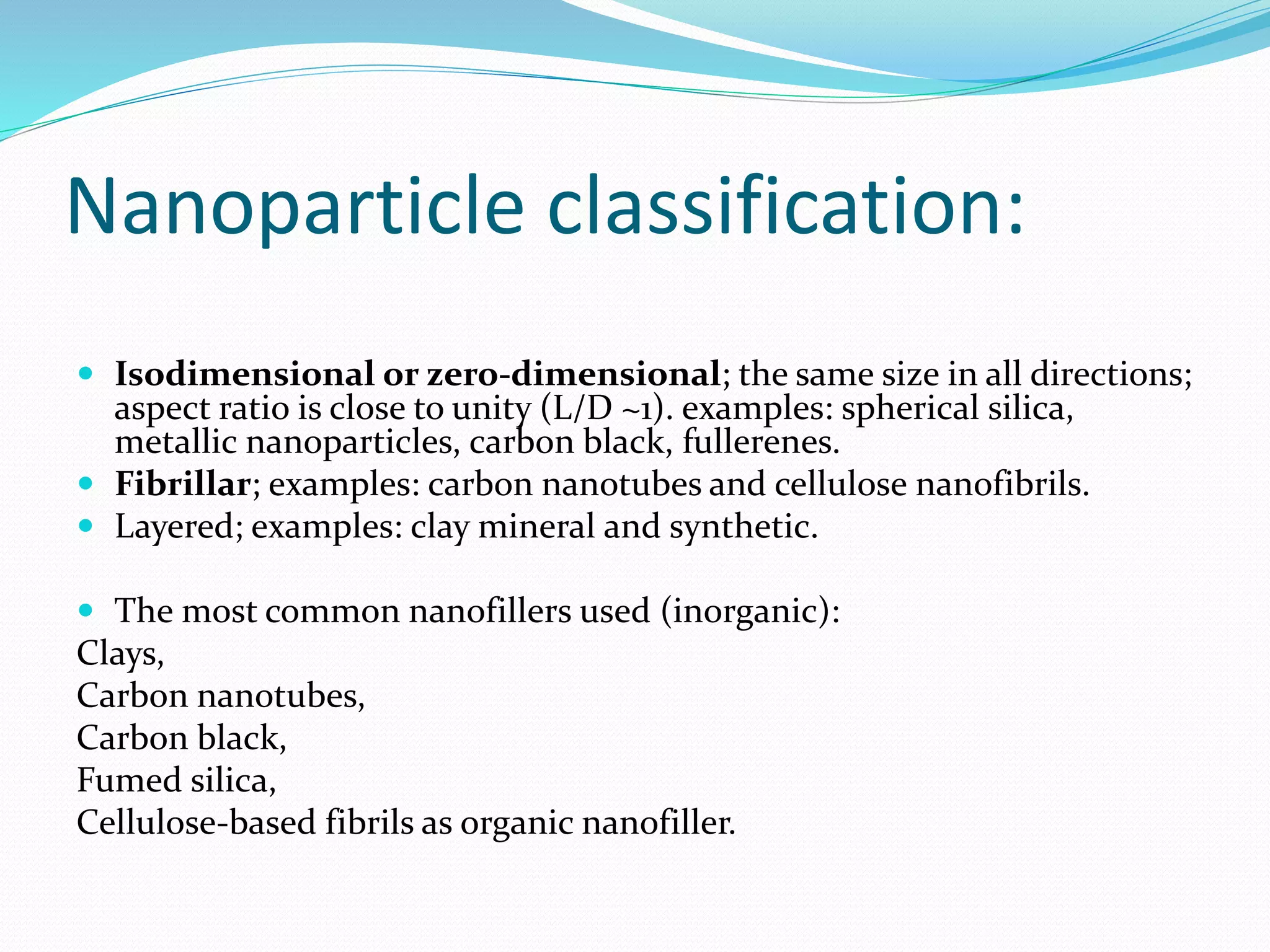
Nanoparticle classification:
 Isodimensional or zero-dimensional; the same size in all directions;
aspect ratio is close to unity (L/D ~1). examples: spherical silica,
metallic nanoparticles, carbon black, fullerenes.
 Fibrillar; examples: carbon nanotubes and cellulose nanofibrils.
 Layered; examples: clay mineral and synthetic.
 The most common nanofillers used (inorganic):
Clays,
Carbon nanotubes,
Carbon black,
Fumed silica,
Cellulose-based fibrils as organic nanofiller.
Basic preparation methods:
 Solution dispersion,
 Melt dispersion,
 Sol–gel processing,
 In situ polymerization,
 Self-assembly (layer-by-layer technique).
What is In Situ?
In situ is a Latin phrase which translates literally
to 'In position'.
8
What is In –situ technique?
 Involve a chemical reaction resulting in the formation
of a very fine and thermodynamically stable
reinforcing phase within a matrix.
In -situ polymerization process:
 Nanoparticles are dispersed in a liquid monomer or
relatively low-molecular-weight precursor as well as in
their solution.
 When a homogeneous mixture is formed, initiator is added
and it is exposed to appropriate source of heat, light, etc.
 The polymerization performed in situ results in the
nanocomposite.
 Polymers thus synthesized are called thermoset.
 Polymerization can be processed either within a mould cavity or
in some other in situ situation.
 Thermosets are usually covalently cross-linked that does not
allow them to reshape. They can be reused by granulating and
using as a filler.
 Nylon-6 was first used to develop nanocomposites by in situ
polymerziation of caprolactam monomer.
 Epoxy, phenolic, bismaleimide and cyanate polymers as
thermosets are applied to manufacture nanocomposites.
 To promote the crosslinking process, the curing of these
polymeric material usually needs the use of a hardener or
catalyst.
 In a case, for example, epoxies, such cross-linkers as
amines, anhydrides, and Lewis acids are applied.
 The disadvantage of use of curing agents is that they
modify the physical properties and influence the
functionality of nanocomposites.
Advantages :
• There is thermodynamic compatibility at the matrix-
reinforcement interface.
• Also, the reinforcement surfaces are likely to be free of
contamination~ Therefore, stronger matrix dispersion bond
can be achieved.
• Important for the preparation of insoluble and thermally
unstable polymer composites, which cannot be processed by
solution or melt processing.
• For preparation of polymer composites with high nanotube
loading, in-situ provides very good miscibility with almost any
types of polymers.
In -situ polymer processing:
• In-situ polymerization methods used to fabricate CNT-
PMMA composites by incorporating CNTs during the
course of polymerization of MMA.
• Basic starting materials:
1. Nanotubes
2. MMA monomer
• Method: In-situ free radical polymerization method
involves polymerization of monomer using a radical
initiator such as 2.2´-azobisisobutyronitrile (AIBN).
• CNTs are dispersed through ultrasonication in the
prepolymer.
 Adding CNT at prepolymer provides good dispersion in
the low viscosity of the prepolymer.
 As the polymerization progresses, the viscosity of the
solution increases and the polymer grows and wraps
around the dispersed CNTs.
 Benefits:
a) Higher interfacial strengths as CNTs interact with the
growing polymer, thus forming stronger CNT-polymer
bonds via non-covalent or covalent interactions.
b) Composites with enhanced mechanical, electrical
and tribological were obtained.
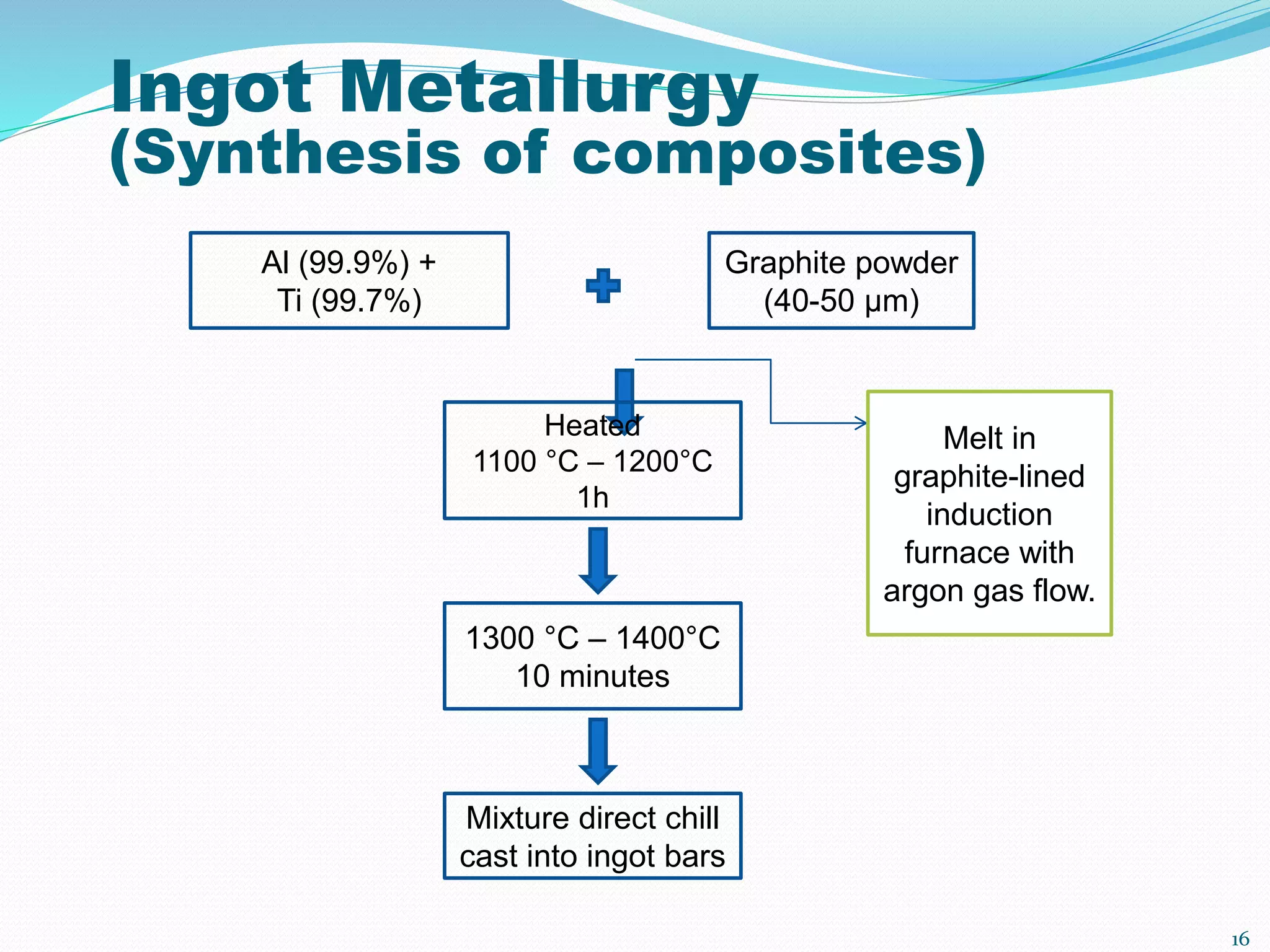
Ingot Metallurgy
(Synthesis of composites)
Al (99.9%) +
Ti (99.7%)
Graphite powder
(40-50 μm)
Heated
1100 °C – 1200°C
1h
1300 °C – 1400°C
10 minutes
Mixture direct chill
cast into ingot bars
Melt in
graphite-lined
induction
furnace with
argon gas flow.
16
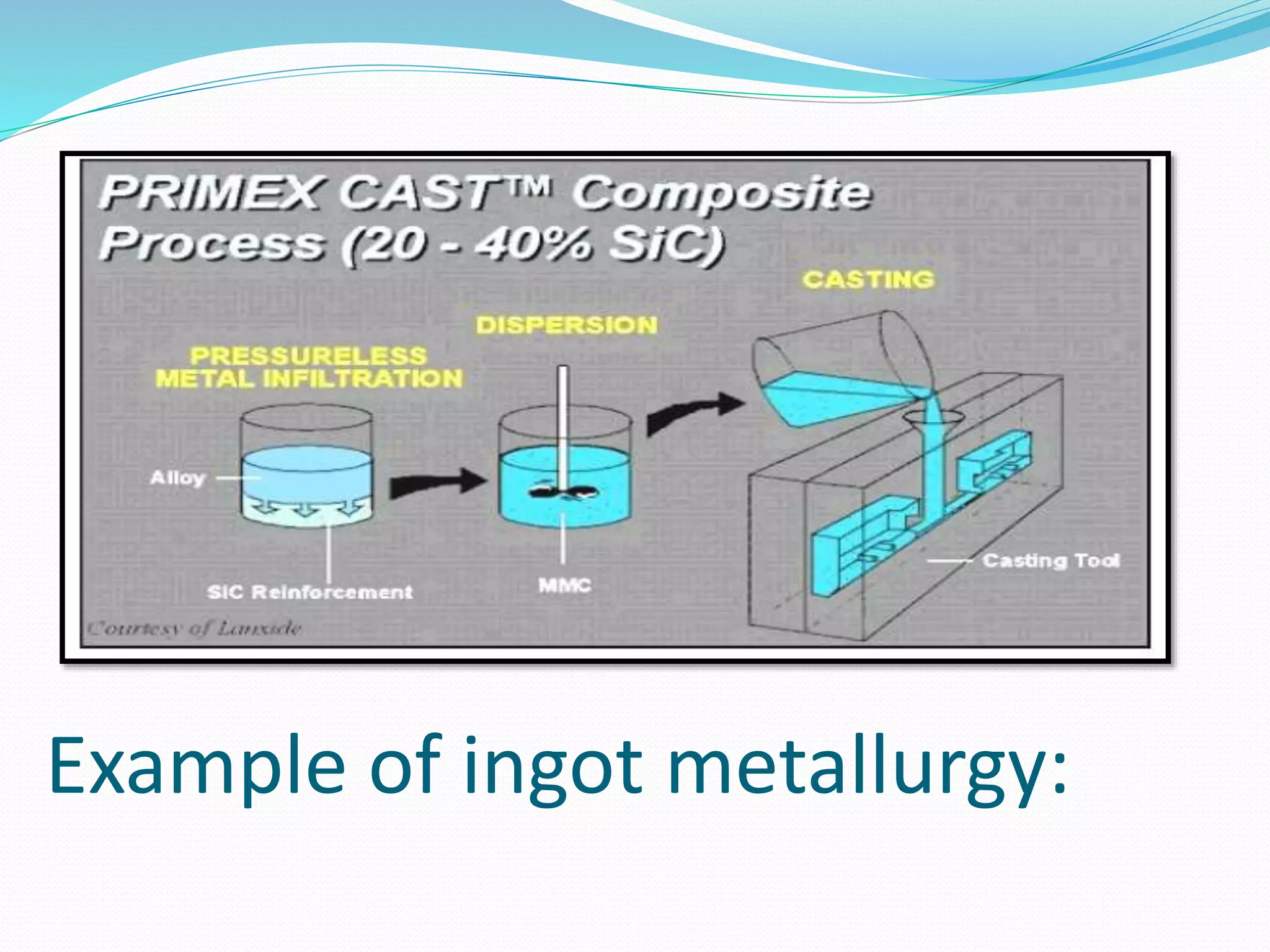
Example of ingot metallurgy:
PRECIPITATION
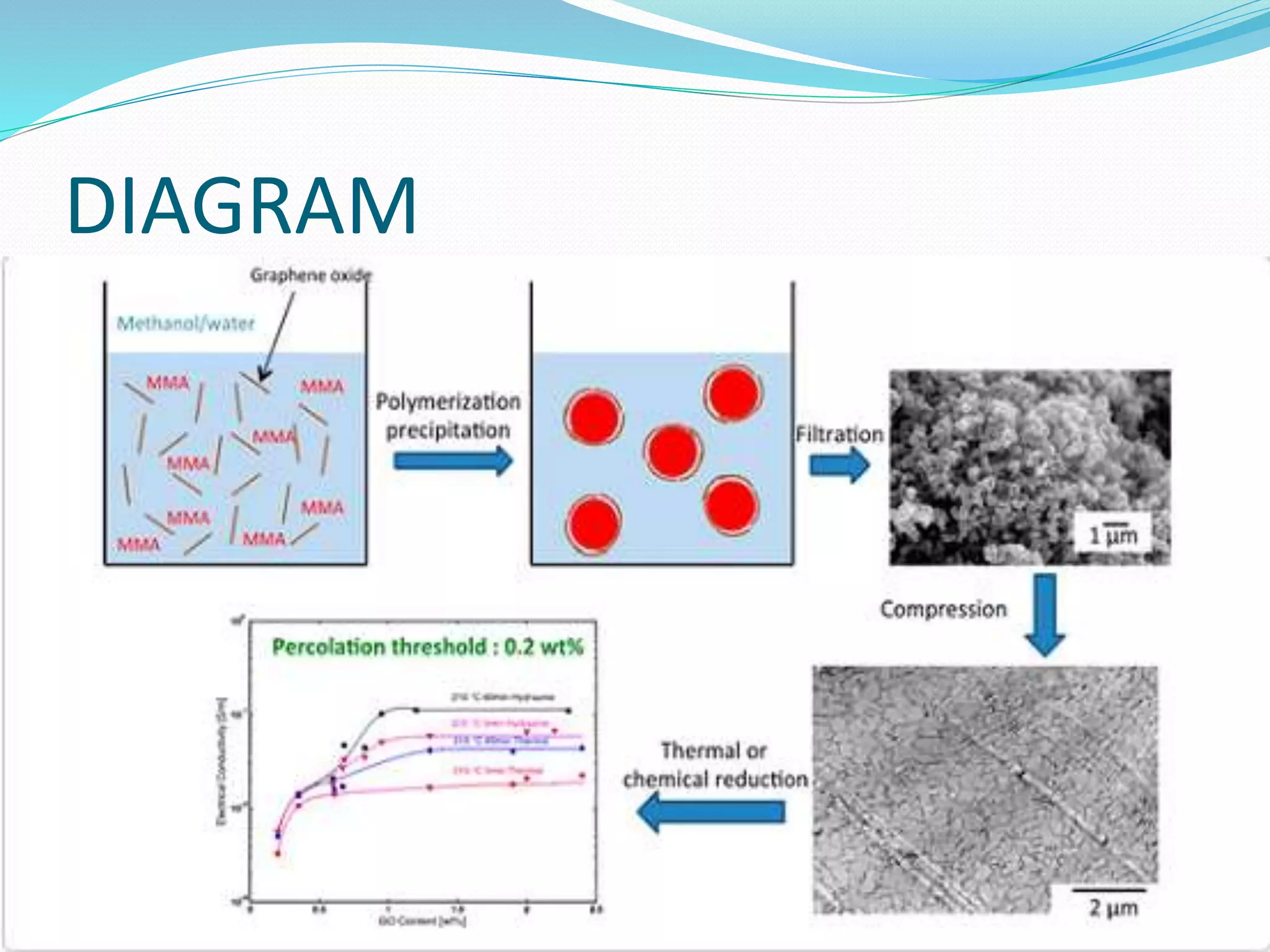
PMMA/GO COMPOSITE:
• The method for achieving controlled dispersion of graphene
oxide(GO) , in PMMA via the precipitation polymerisation
process in a water/methanol mixture.
• GO act as surfactant and adsorbs on the interface between
polymerised PMMA particles and solvent mixture.
• SEM confirmed that the precipitate consist of particles
surrounded by the GO sheets. Compression molding of the
precipitate yields a polymer nano composite with GO organized
into a regularly spaced 3D network which percolates at 0.2 wt %
GO.
DIAGRAM
In-situ polymerization

In-situ polymerization

  • 1.
    AMINA.P.E 2nd M ScBPS CBPST, KOCHI
  • 2.
    Introduction to composites: Definition:A composite material can be defined as a macroscopic combination of two or more distinct material having arecogenisable interphase between them.  It consist of a continuous phase & discontinuous phase.  continuous phase is called matrix & discontinuous phase is called reinforcement, which is stronger than the continuous phase
  • 3.
    Category of fibers&matrix for composites:  Fibers: Natural fibers Synthetic organic fibers Aramid fiber Polyethylene fiber Synthetic inorganic fibers Glass fibers Alumina fibers Boron fibers Carbon fibers Si C fibers Whiskers(SiC is available in the form of whiskers, i.e., small single crystals):A few tens of microns in length and less than one micro in diameter.
  • 4.
     Matrix: Polymer (polymericcomposites) Metals (metal matrix composites) Ceramic (ceramic matrix composites) Carbon (carbon/carbon composites)
  • 5.
    Nanocomposites:  Polymer nanocompositesare also called polymer nanostructured materials.  They are materials of which composition includes at least one constituent with dimensions less than 100 nm.  Their feature is that the nanoscale constituents can drastically improve and/or modify properties and functionality of the macroscopic material.  A challenge in developing the nanocomposites is to make exceptional properties (mechanical, optical, etc.) of the nanomaterials obvious at the micro- and macroscale levels of the hosting bulk materials.
  • 6.
    Nanoparticle classification:  Isodimensionalor zero-dimensional; the same size in all directions; aspect ratio is close to unity (L/D ~1). examples: spherical silica, metallic nanoparticles, carbon black, fullerenes.  Fibrillar; examples: carbon nanotubes and cellulose nanofibrils.  Layered; examples: clay mineral and synthetic.  The most common nanofillers used (inorganic): Clays, Carbon nanotubes, Carbon black, Fumed silica, Cellulose-based fibrils as organic nanofiller.
  • 7.
    Basic preparation methods: Solution dispersion,  Melt dispersion,  Sol–gel processing,  In situ polymerization,  Self-assembly (layer-by-layer technique).
  • 8.
    What is InSitu? In situ is a Latin phrase which translates literally to 'In position'. 8
  • 9.
    What is In–situ technique?  Involve a chemical reaction resulting in the formation of a very fine and thermodynamically stable reinforcing phase within a matrix.
  • 10.
    In -situ polymerizationprocess:  Nanoparticles are dispersed in a liquid monomer or relatively low-molecular-weight precursor as well as in their solution.  When a homogeneous mixture is formed, initiator is added and it is exposed to appropriate source of heat, light, etc.  The polymerization performed in situ results in the nanocomposite.  Polymers thus synthesized are called thermoset.
  • 11.
     Polymerization canbe processed either within a mould cavity or in some other in situ situation.  Thermosets are usually covalently cross-linked that does not allow them to reshape. They can be reused by granulating and using as a filler.  Nylon-6 was first used to develop nanocomposites by in situ polymerziation of caprolactam monomer.  Epoxy, phenolic, bismaleimide and cyanate polymers as thermosets are applied to manufacture nanocomposites.
  • 12.
     To promotethe crosslinking process, the curing of these polymeric material usually needs the use of a hardener or catalyst.  In a case, for example, epoxies, such cross-linkers as amines, anhydrides, and Lewis acids are applied.  The disadvantage of use of curing agents is that they modify the physical properties and influence the functionality of nanocomposites.
  • 13.
    Advantages : • Thereis thermodynamic compatibility at the matrix- reinforcement interface. • Also, the reinforcement surfaces are likely to be free of contamination~ Therefore, stronger matrix dispersion bond can be achieved. • Important for the preparation of insoluble and thermally unstable polymer composites, which cannot be processed by solution or melt processing. • For preparation of polymer composites with high nanotube loading, in-situ provides very good miscibility with almost any types of polymers.
  • 14.
    In -situ polymerprocessing: • In-situ polymerization methods used to fabricate CNT- PMMA composites by incorporating CNTs during the course of polymerization of MMA. • Basic starting materials: 1. Nanotubes 2. MMA monomer • Method: In-situ free radical polymerization method involves polymerization of monomer using a radical initiator such as 2.2´-azobisisobutyronitrile (AIBN). • CNTs are dispersed through ultrasonication in the prepolymer.
  • 15.
     Adding CNTat prepolymer provides good dispersion in the low viscosity of the prepolymer.  As the polymerization progresses, the viscosity of the solution increases and the polymer grows and wraps around the dispersed CNTs.  Benefits: a) Higher interfacial strengths as CNTs interact with the growing polymer, thus forming stronger CNT-polymer bonds via non-covalent or covalent interactions. b) Composites with enhanced mechanical, electrical and tribological were obtained.
  • 16.
    Ingot Metallurgy (Synthesis ofcomposites) Al (99.9%) + Ti (99.7%) Graphite powder (40-50 μm) Heated 1100 °C – 1200°C 1h 1300 °C – 1400°C 10 minutes Mixture direct chill cast into ingot bars Melt in graphite-lined induction furnace with argon gas flow. 16
  • 17.
    Example of ingotmetallurgy:
  • 18.
  • 19.
    PMMA/GO COMPOSITE: • Themethod for achieving controlled dispersion of graphene oxide(GO) , in PMMA via the precipitation polymerisation process in a water/methanol mixture. • GO act as surfactant and adsorbs on the interface between polymerised PMMA particles and solvent mixture. • SEM confirmed that the precipitate consist of particles surrounded by the GO sheets. Compression molding of the precipitate yields a polymer nano composite with GO organized into a regularly spaced 3D network which percolates at 0.2 wt % GO.
  • 20.