a   speed date with 
     design
     thinking
       Zaana Howard | QUT
zaana howard
                     associate lecturer | information systems school 
science and engineering faculty | queensland university of technology
                                                                    
                                 phd candidate | swinburne university


                                        tweeting?
               #VALA2012 #BCE @zaana
your mission: 


redesign the         

 grocery shopping
   experience 
       based on the experience
       of a group member.
	
  
start by gaining empathy.


    interview
                  3 mins
start by gaining empathy.

    interview again:


    dig deep
                  3 mins
reframe the problem.

capture findings
needs: what are they trying to do?


insights: what have you learned
 about the person?

                      4 mins
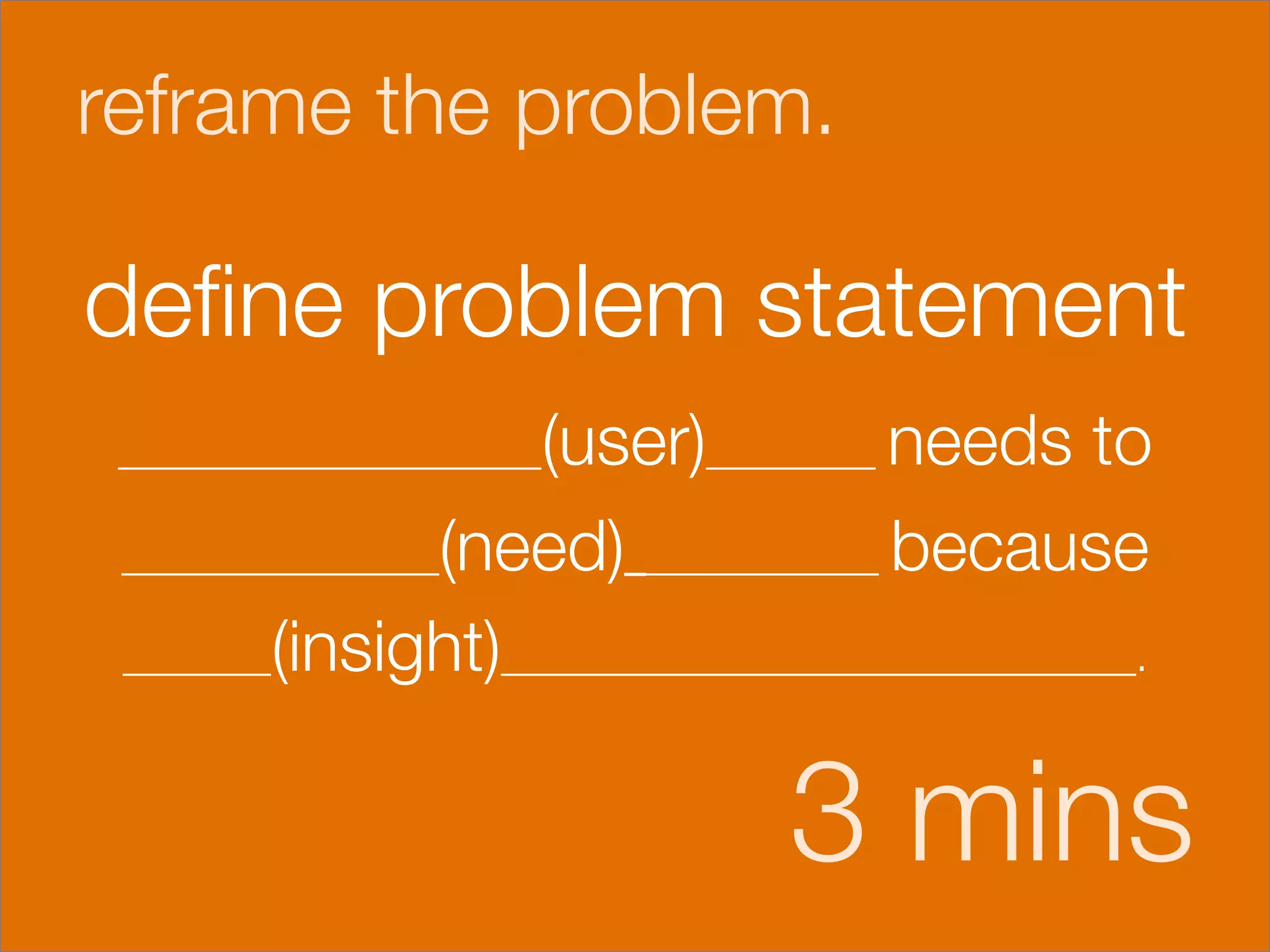
reframe the problem.


define problem statement
                      (user)________ needs to
    ____________________

    _______________(need)____________ because

    _______(insight)______________________________.


                                  3 mins
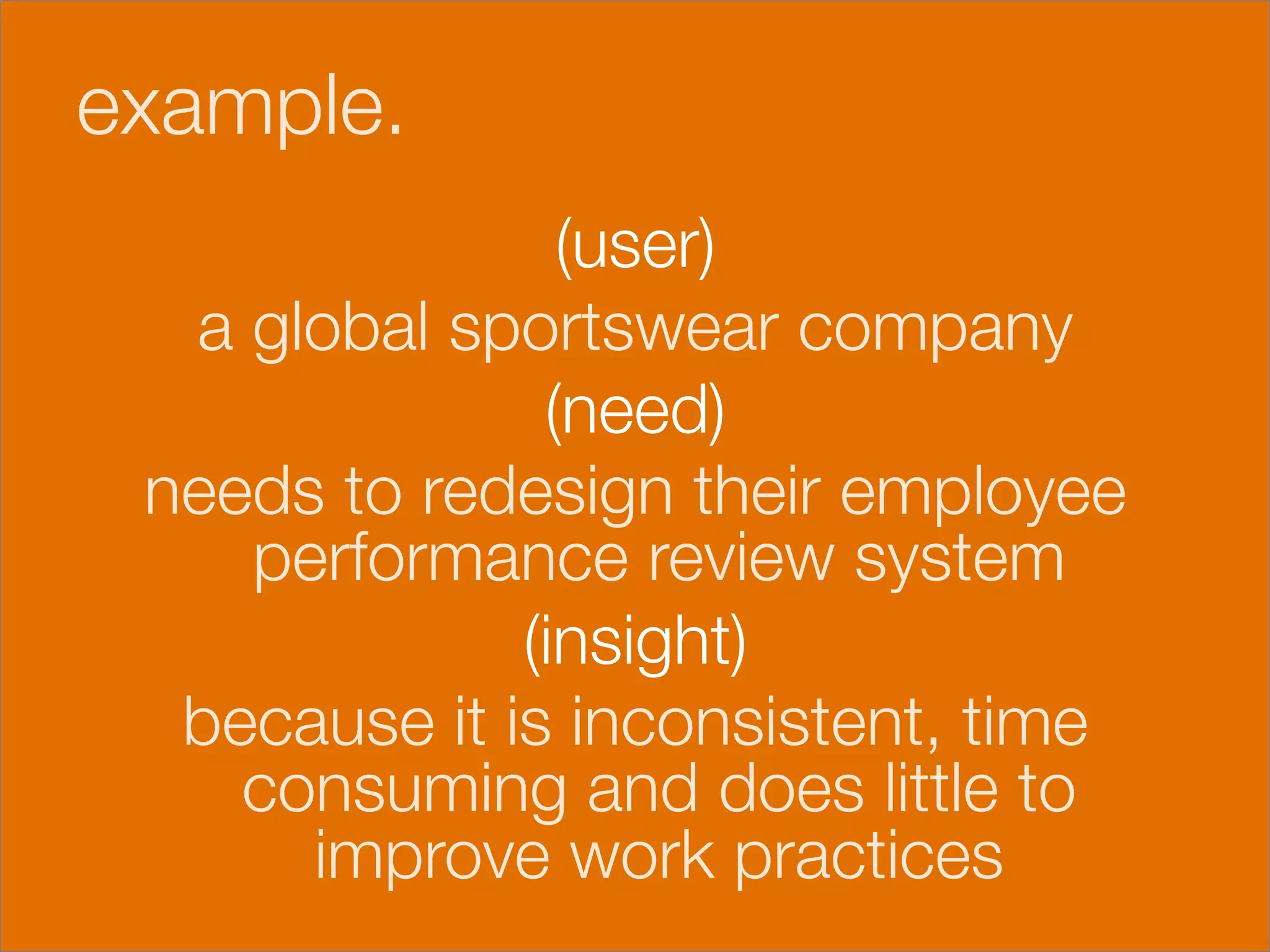
example.


                   (user) 
     a global sportswear company 
                  (need) 
    needs to redesign their employee
       performance review system 
                 (insight)
     because it is inconsistent, time
       consuming and does little to
         improve work practices
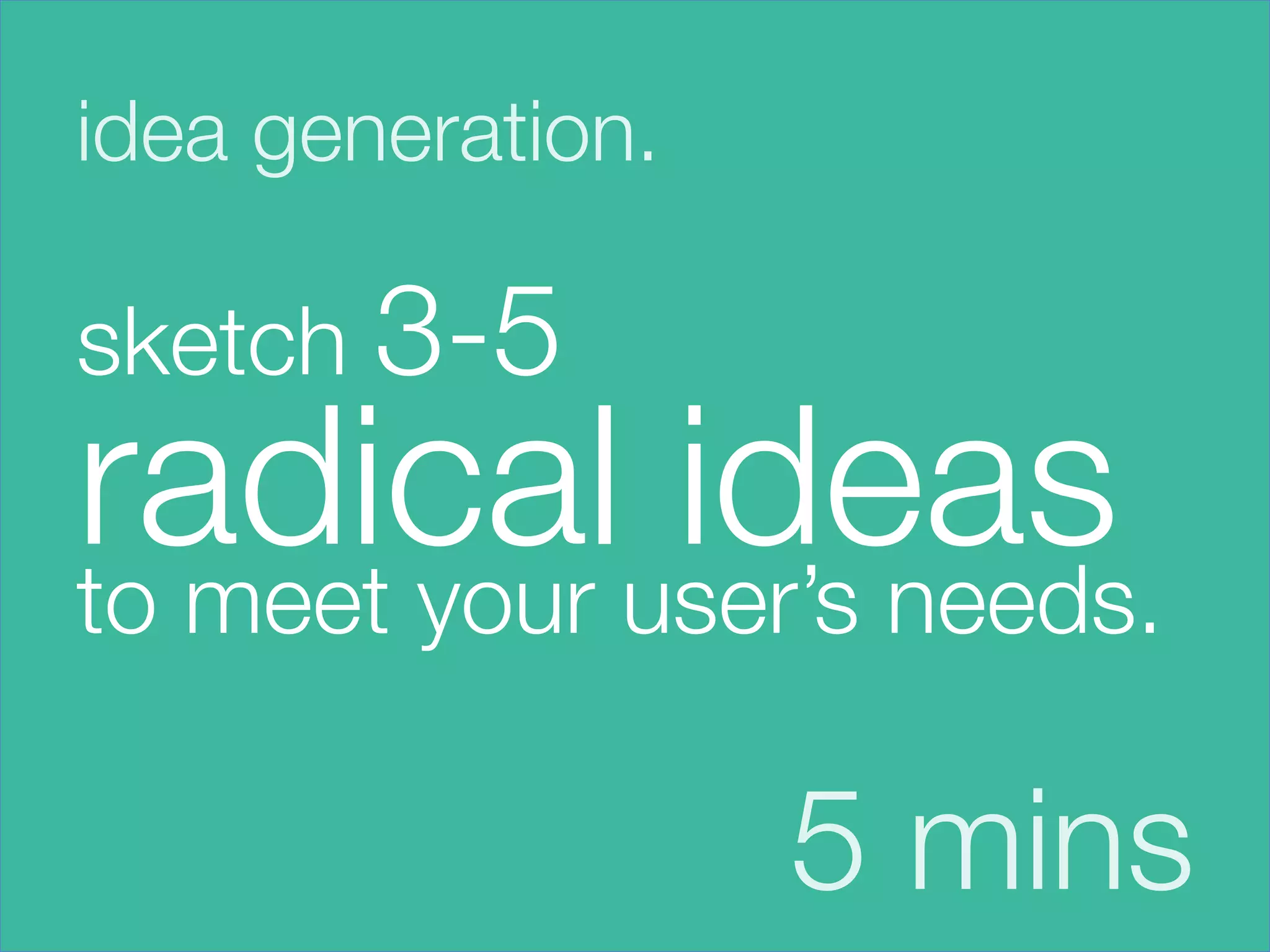
idea generation.


sketch 3-5    
radicaluser’s needs. 

to meet your
             ideas
                    5 mins
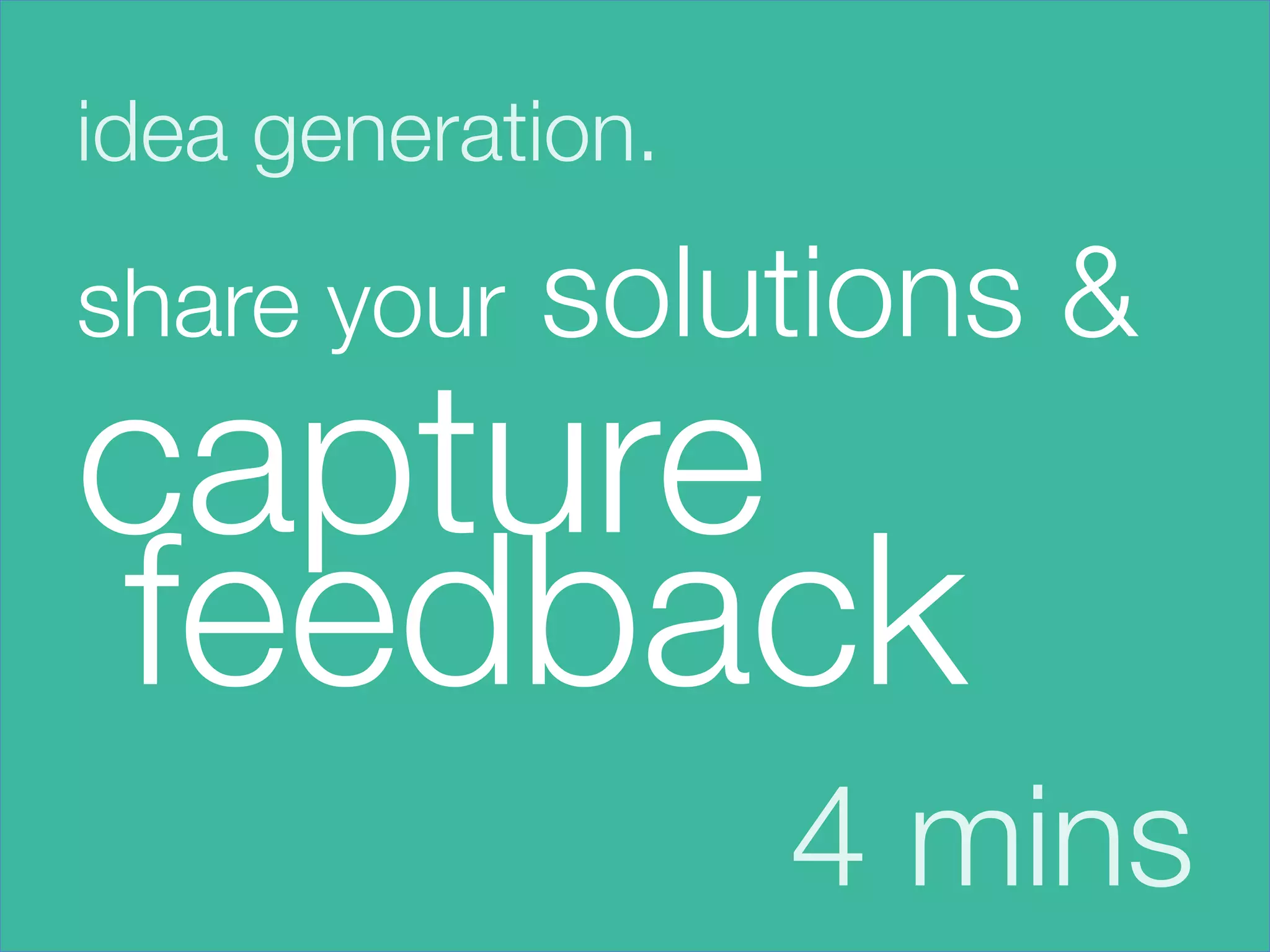
idea generation.


share your   solutions &
capture
feedback
                    4 mins
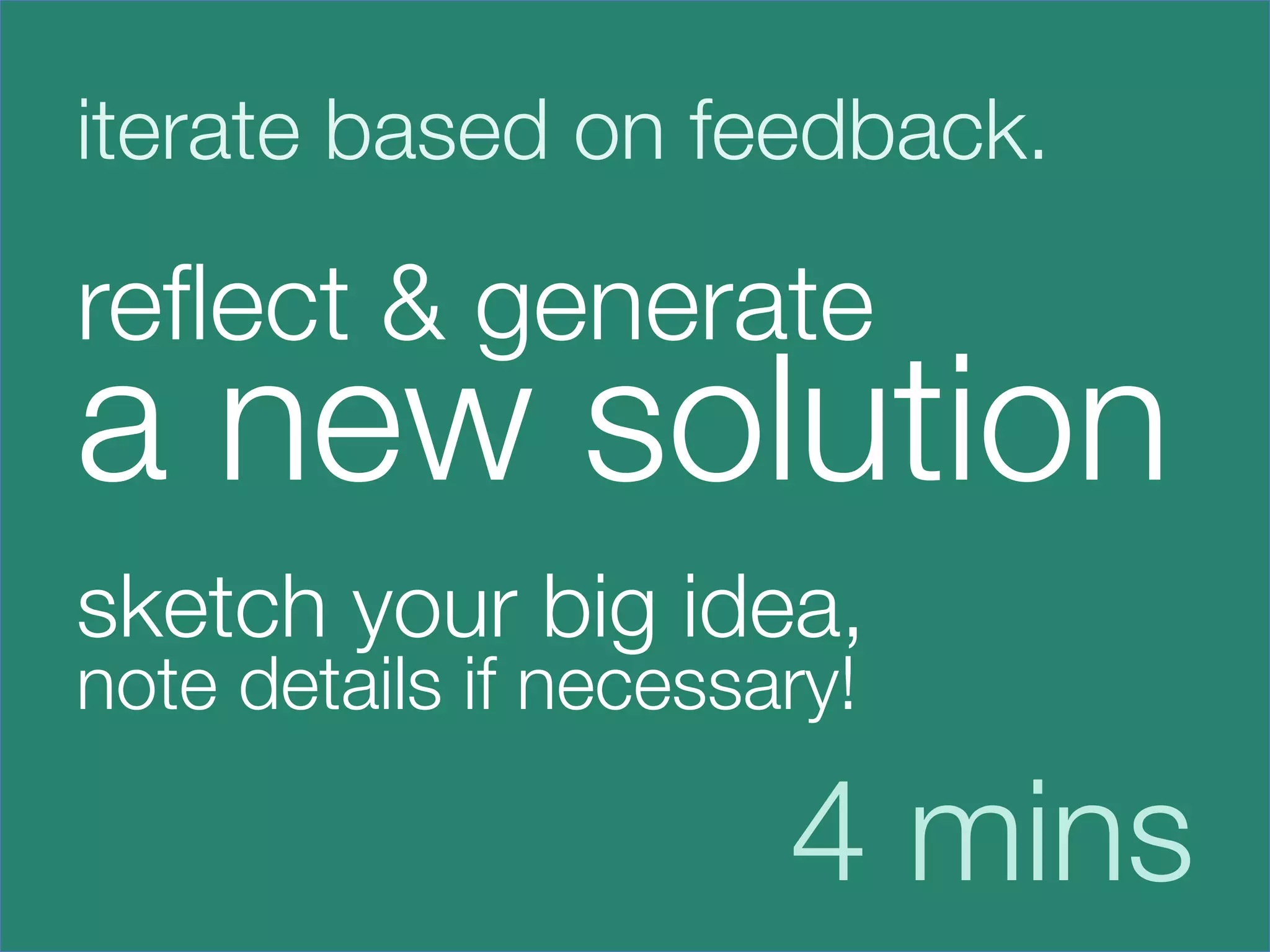
iterate based on feedback.

reflect & generate 
a new solution


sketch your big idea,
note details if necessary!


                        4 mins
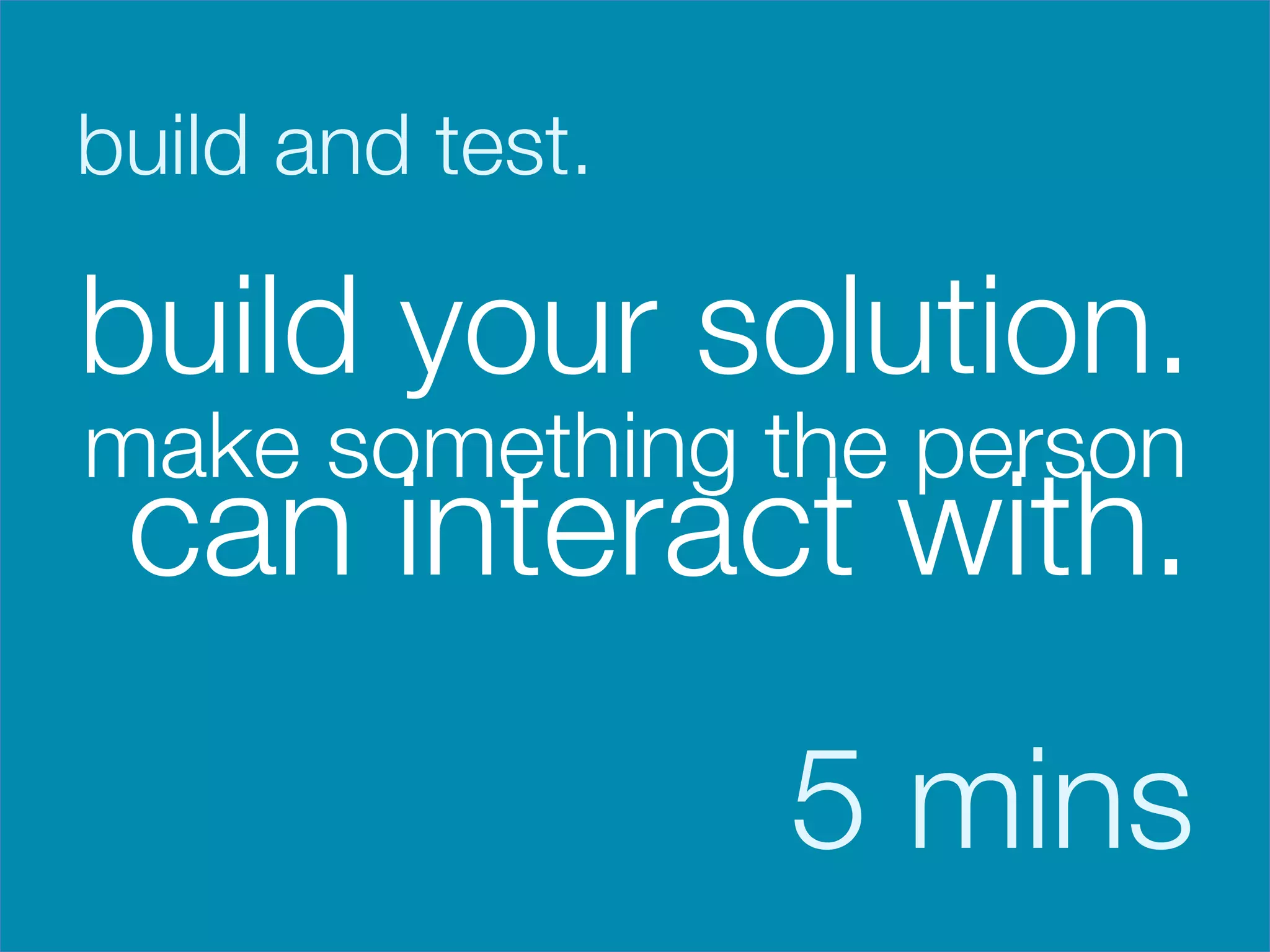
build and test.


build your solution.
make something the person
    can interact with.


                   5 mins
build and test.


share your solution
 & get feedback.

    what worked | what needs to be improved
            questions | ideas

                             4 mins
done!
  Adapted from ‘An introduction to design thinking: redesigning the gift giving
              experience’ by Hassno Platner Institute of Design at Stanford.
show 


& tell   

             each group
                       

        60 secs
quick
    a
look at the
process
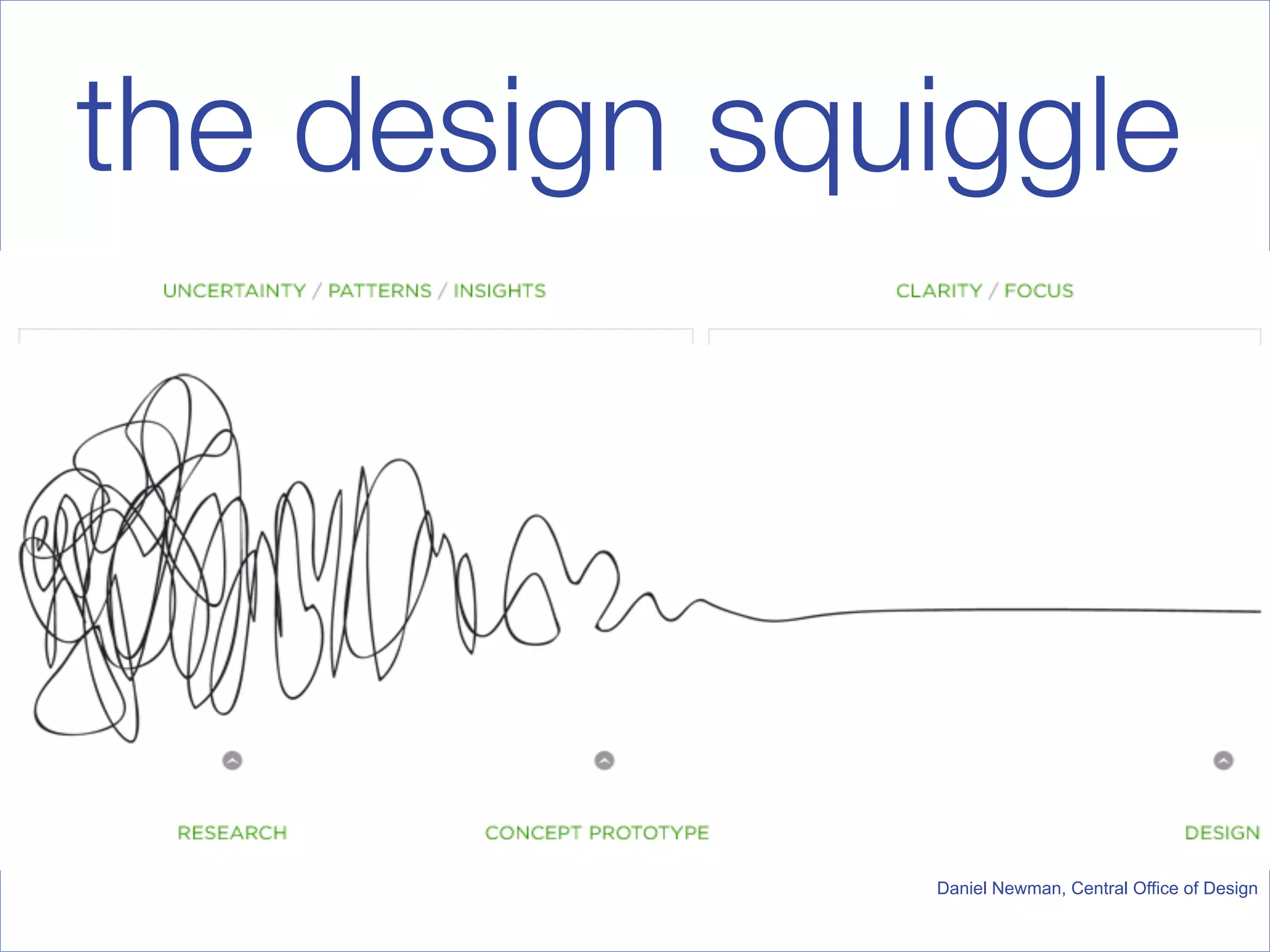
the design squiggle


               Daniel Newman, Central Office of Design
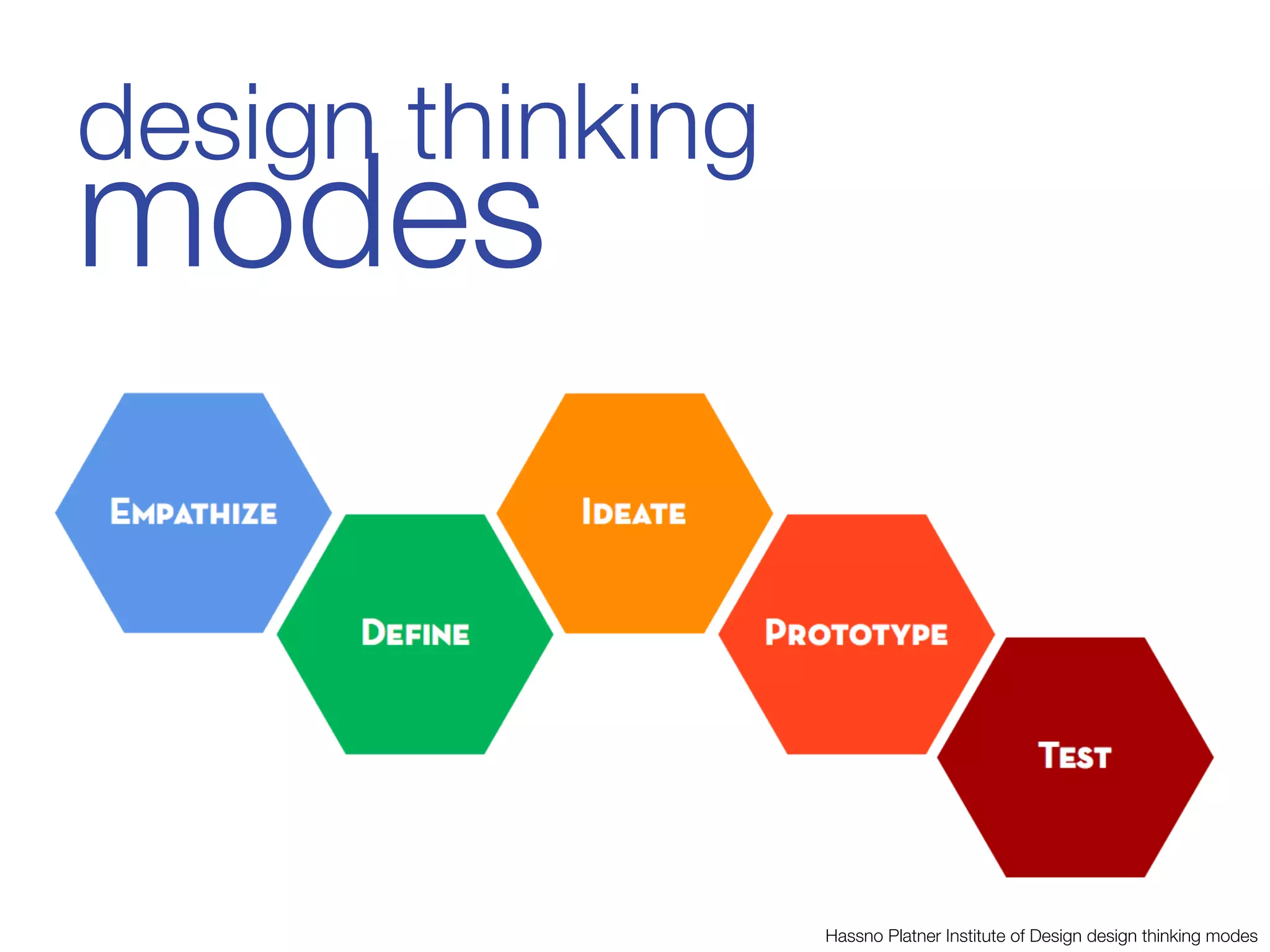
design thinking "
modes


                    Hassno Platner Institute of Design design thinking modes
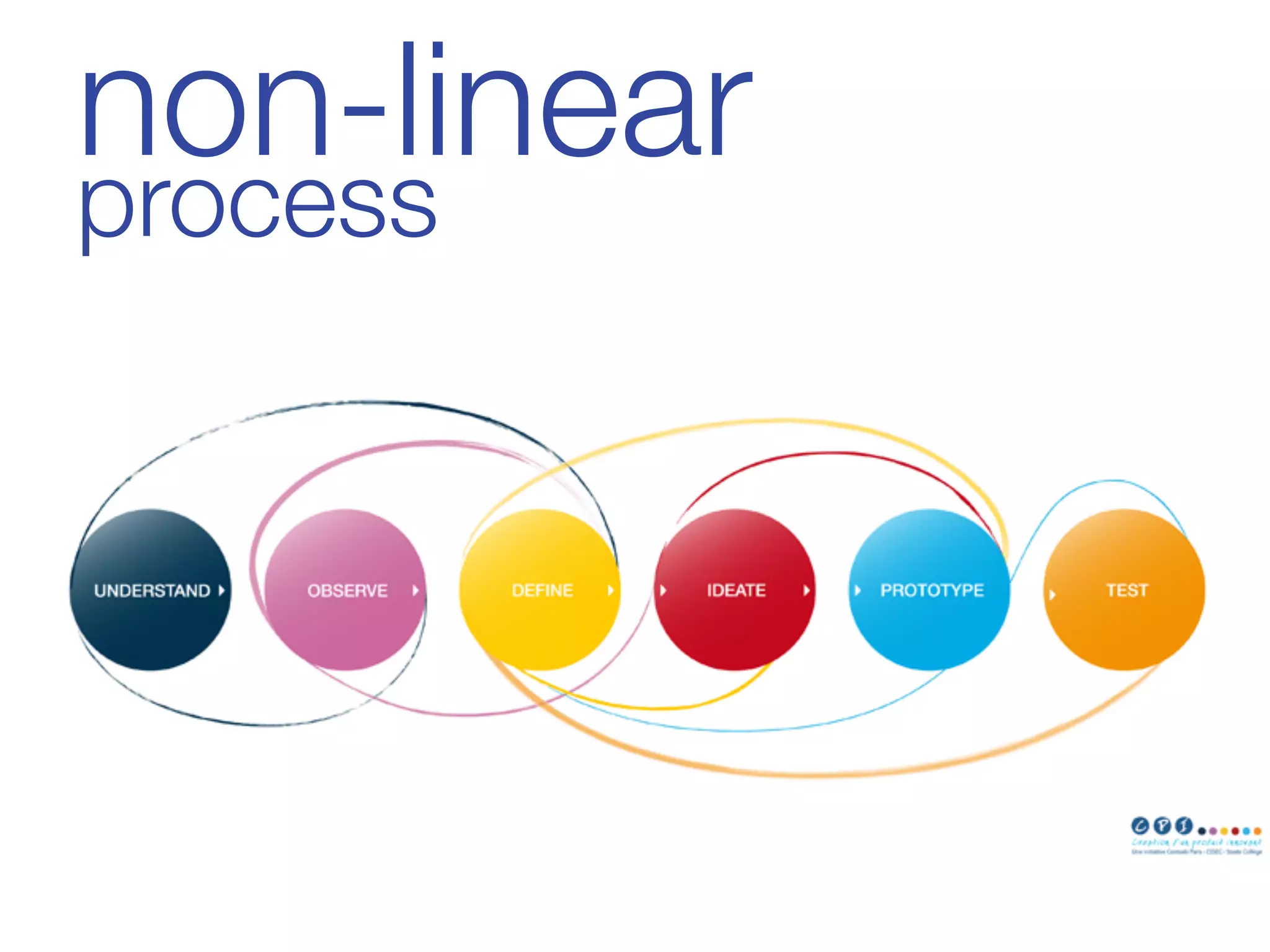
non-linear "
process
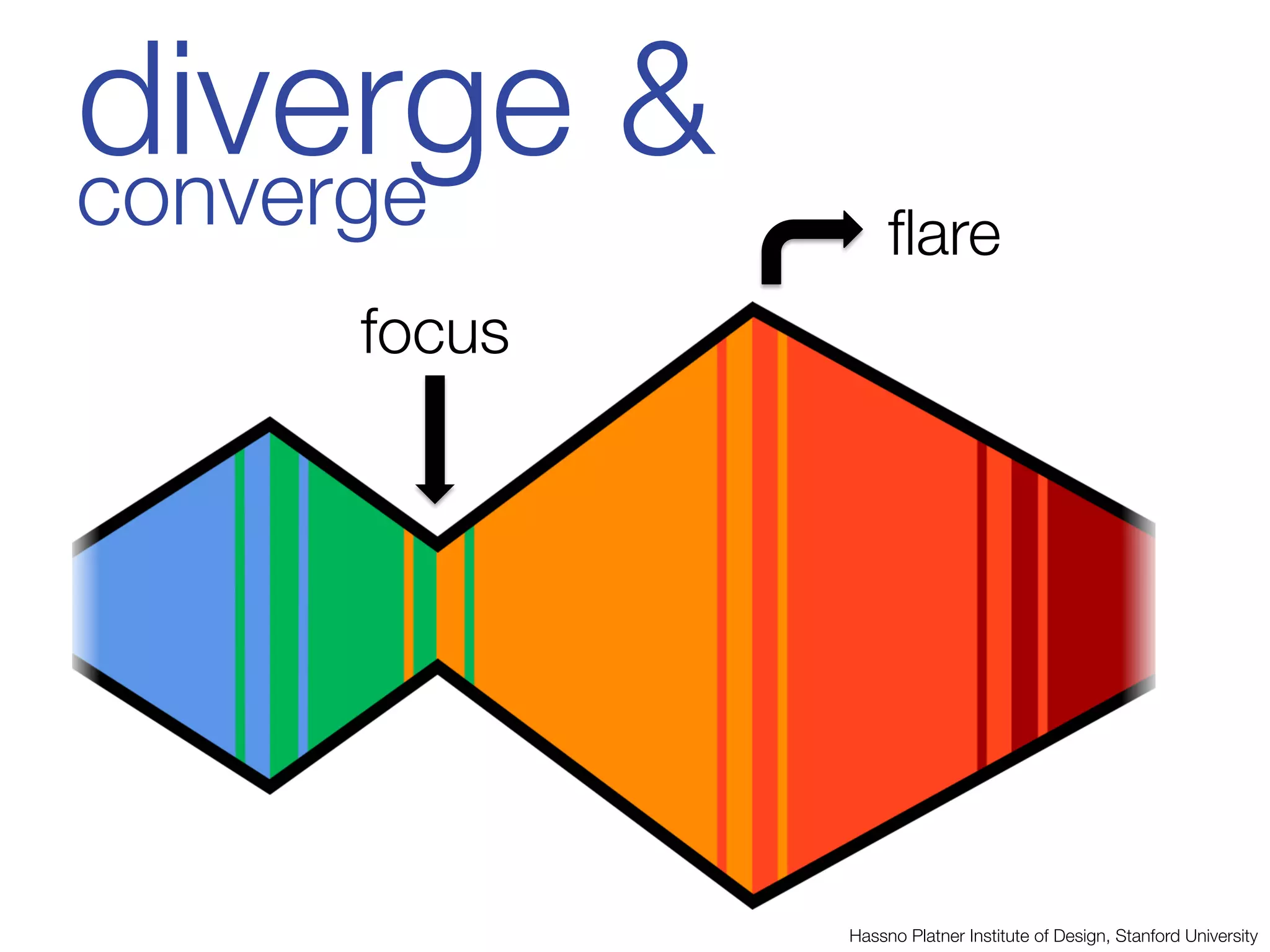
diverge & 
converge
          flare
    focus


              Hassno Platner Institute of Design, Stanford University
so…


    what is 
  design
thinking?
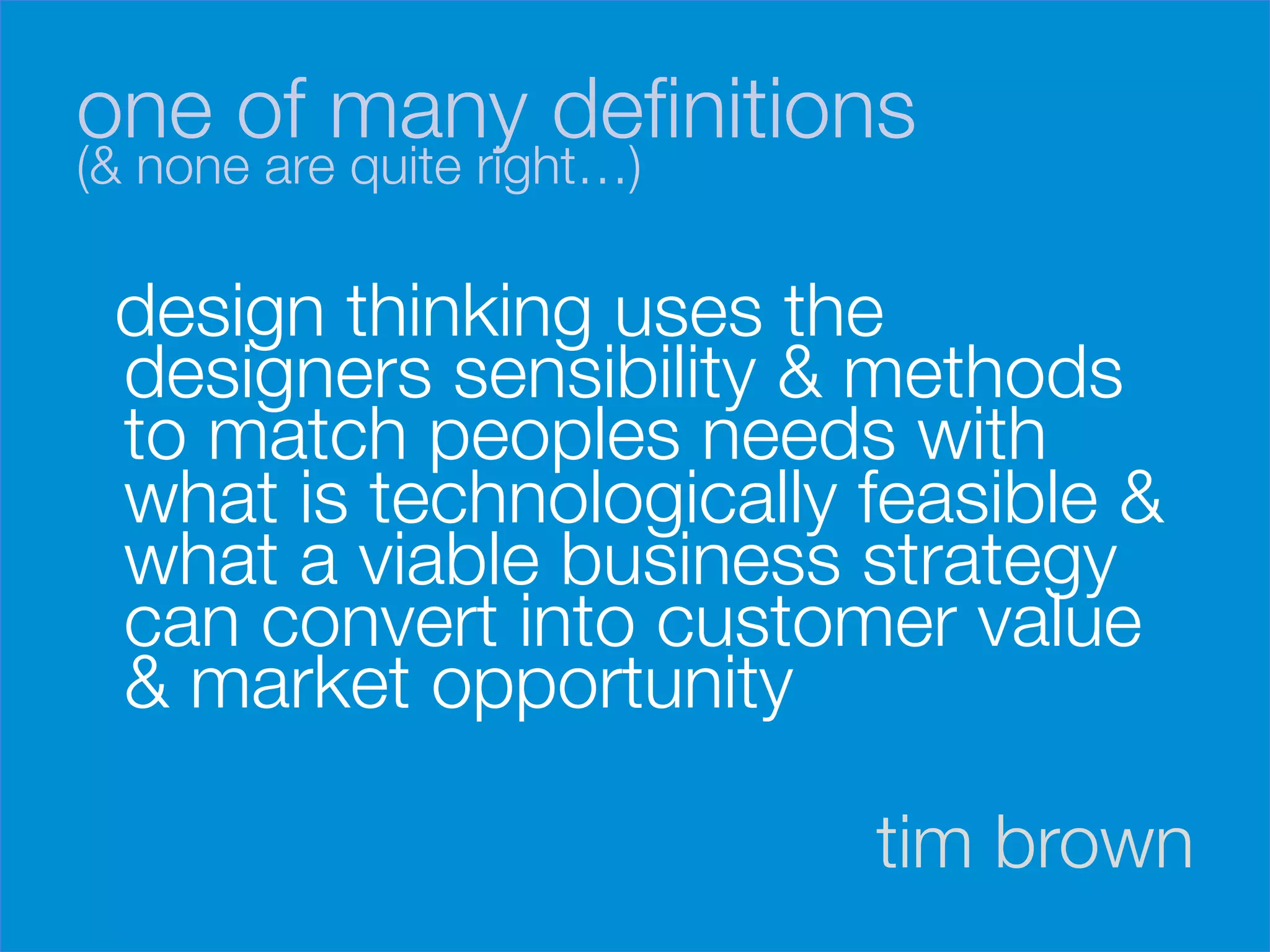
one of many definitions 
(& none are quite right…)

    design thinking uses the
    designers sensibility & methods
    to match peoples needs with
    what is technologically feasible &
    what a viable business strategy
    can convert into customer value
    & market opportunity

                             tim brown
design thinking uses a
      human centred, creative,
    iterative, practical approach
         to problem solving.

                         tim brown
design thinking taps
    into capacities we all
    have but are often
    overlooked by more
    conventional problem
    solving practices


                   tim brown
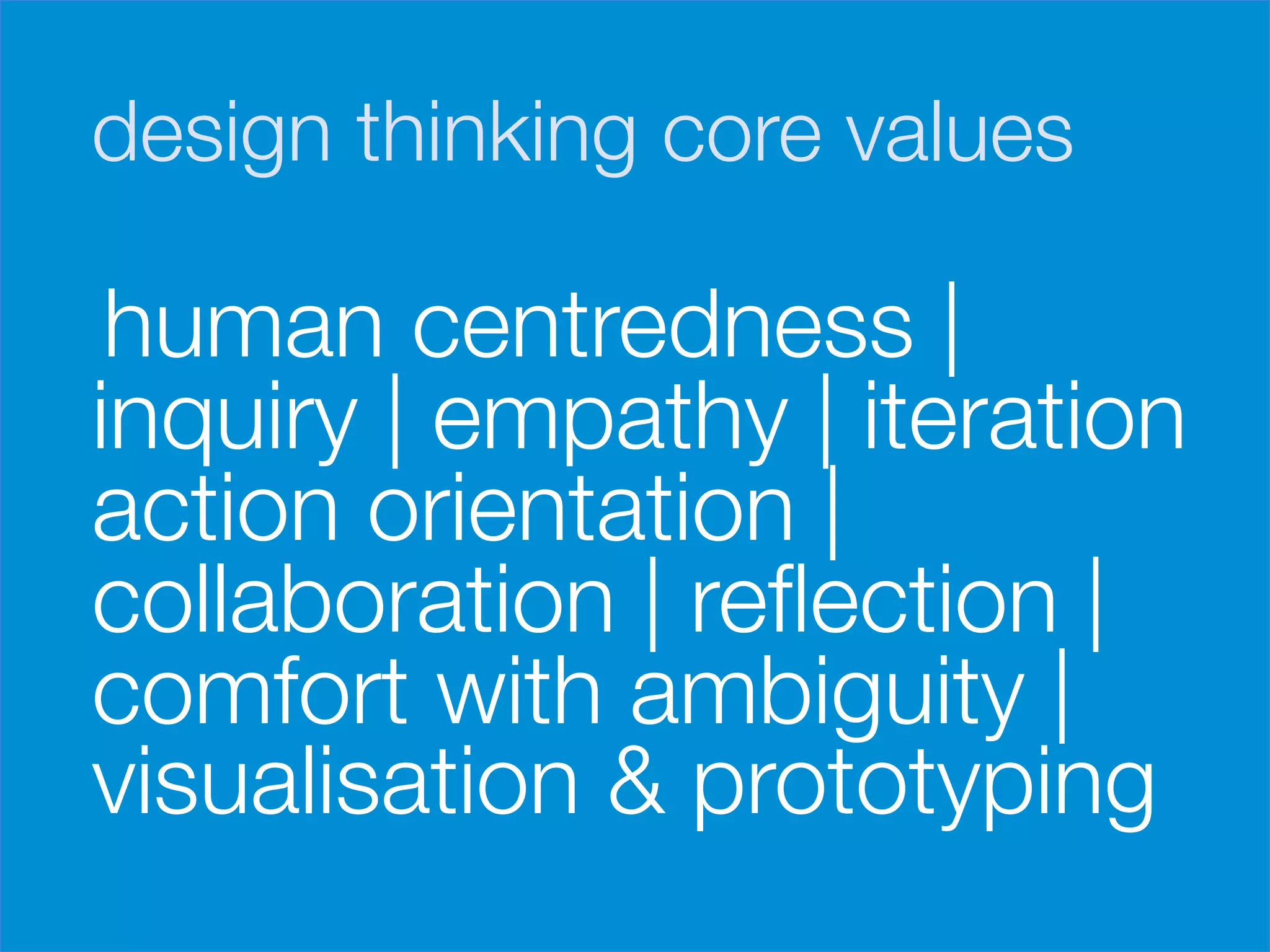
design thinking core values

     human centredness |
    inquiry | empathy | iteration
    action orientation |
    collaboration | reflection |
    comfort with ambiguity |
    visualisation & prototyping
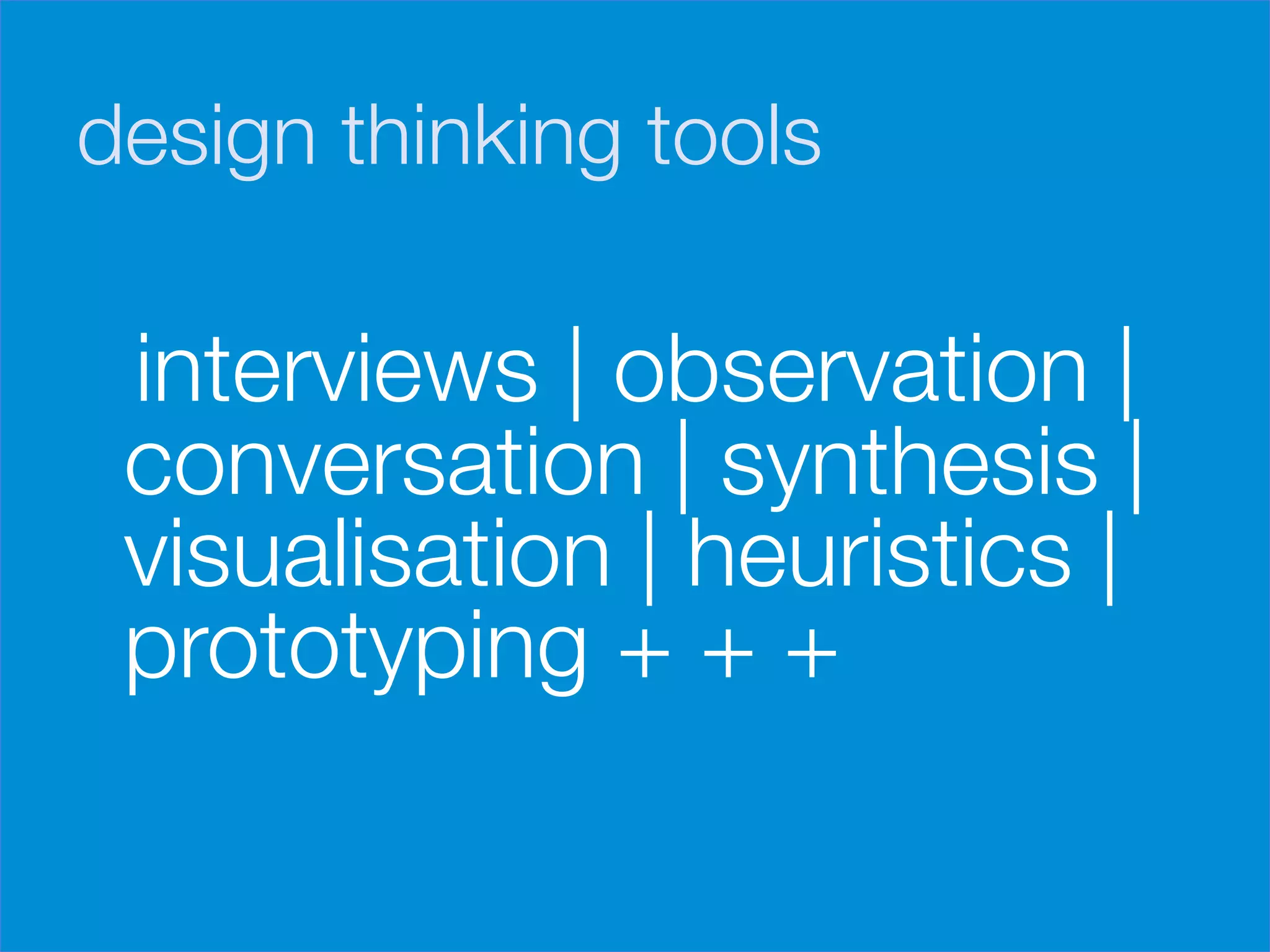
design thinking tools

       interviews | observation |
       conversation | synthesis |
       visualisation | heuristics |
       prototyping + + +


so…


    why 
  design
thinking?
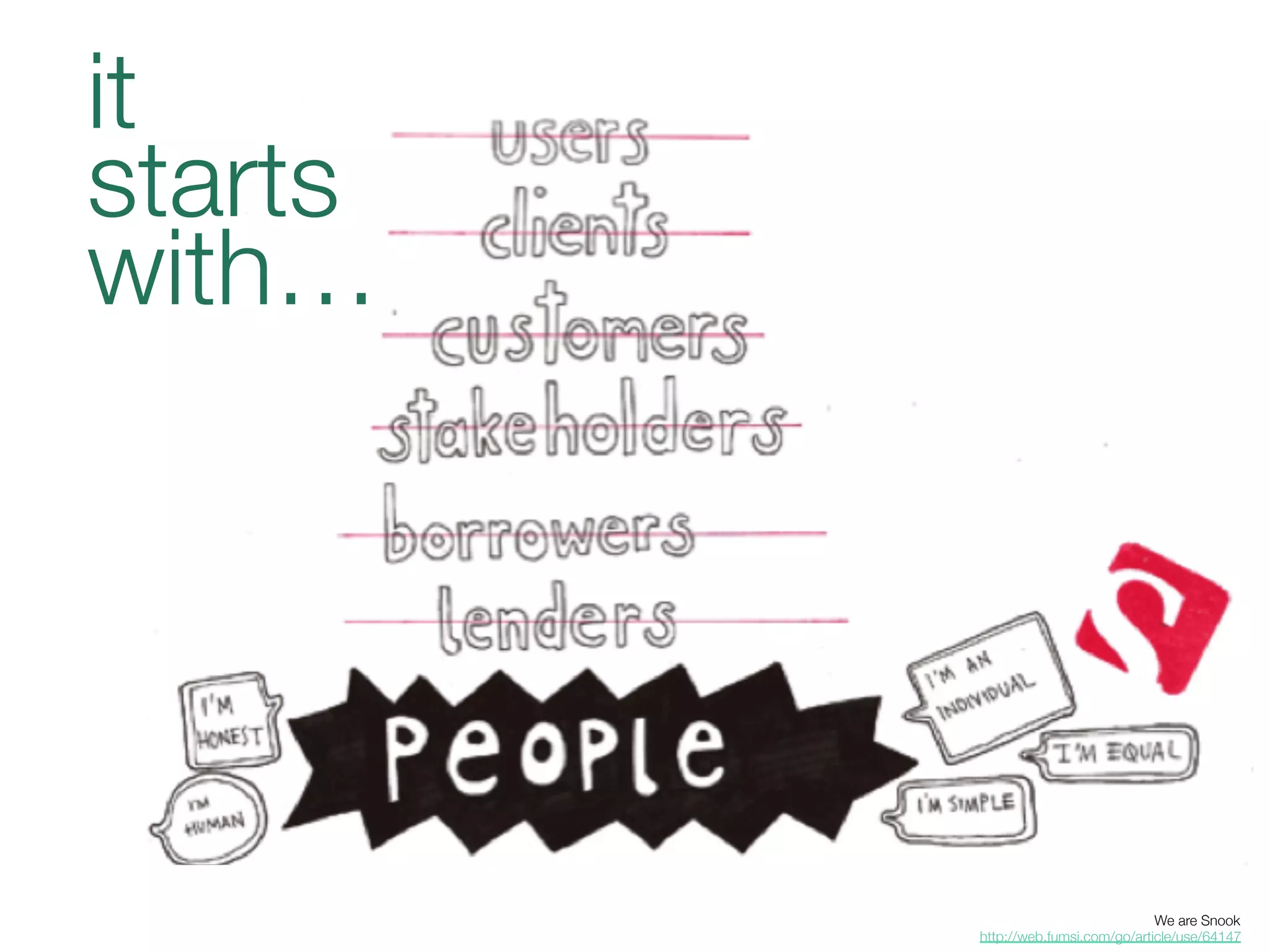
it
starts
with…


                                     We are Snook
         http://web.fumsi.com/go/article/use/64147
ultimately about
    understanding
          needs
we increasingly expect 
sophisticated experiences
  that are emotionally
  satisfying and meaningful…

design thinking is an
  approach for imagining
  these experiences


                                 Brown, 2008
so… 


    design thinking...
what for?
design thinking for

 solving wicked problems | 
designing (human) systems
 & services | organisational
 change & transformation |
social innovation | product
 development
micro


macro
engagement
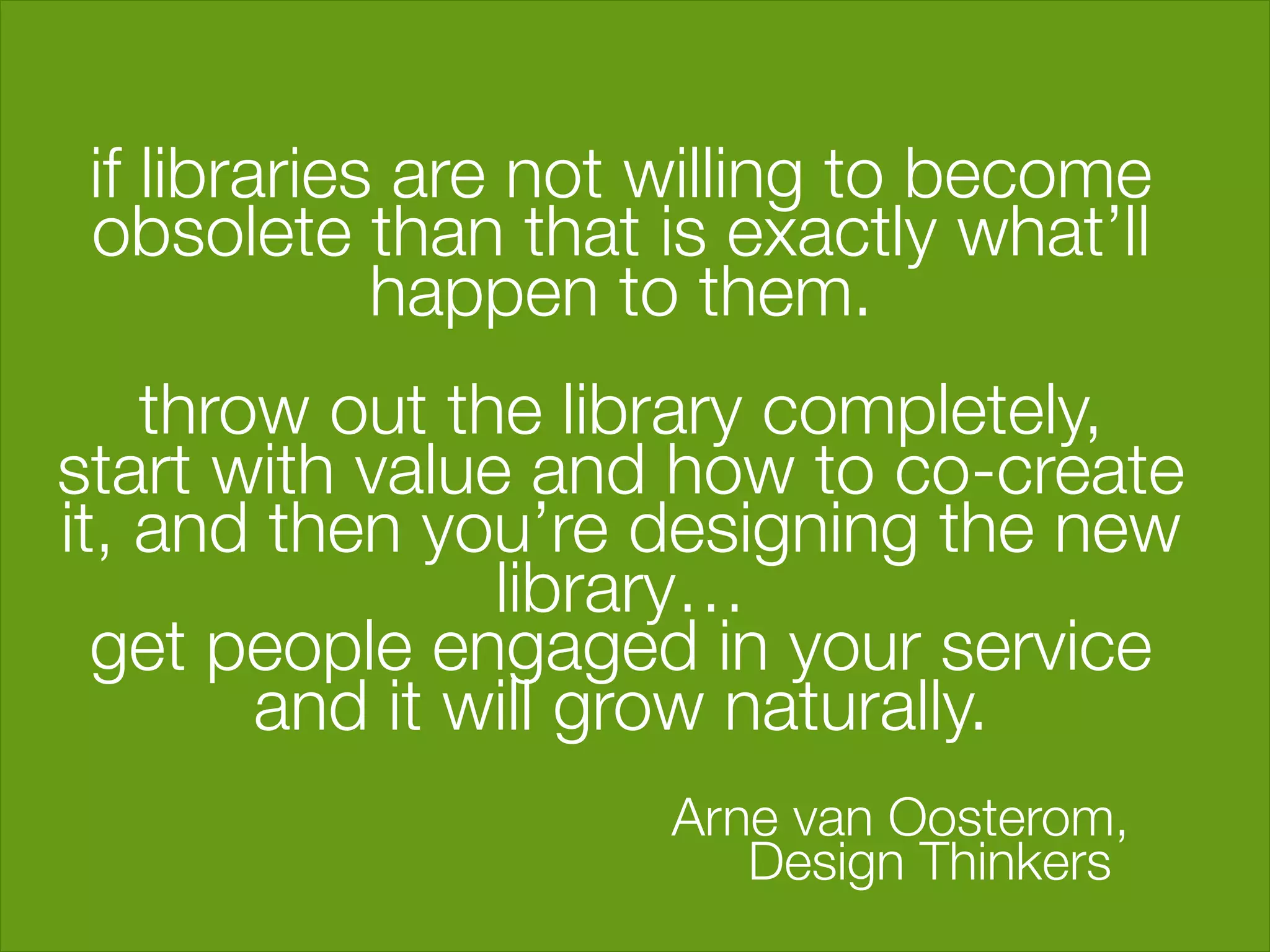
if libraries are not willing to become
  obsolete than that is exactly what’ll
              happen to them. "
                        "
     throw out the library completely, "
start with value and how to co-create
it, and then you’re designing the new
                  library…"
  get people engaged in your service
          and it will grow naturally."
                                     "
                        Arne van Oosterom, 
 
                           Design Thinkers"
                    "
so… 


    design thinking…
what next?
empathise
listen, share, 
contribute, 
reflect
be curious.
        ask why.
   rinse. repeat.
observe.
what? how? why?
reflect.
what works?
what doesn’t?
what could be
better?
experiment
    make, test, 
        reflect
where to from here?


it’s a choose
 
 
your own
    adventure
thankyou
       zaana howard
        z.howard@qut.edu.au
           zaanahoward.com
                    @zaana

A speed date with design thinking

  • 1.
    a speed date with design thinking Zaana Howard | QUT
  • 2.
    zaana howard associate lecturer | information systems school science and engineering faculty | queensland university of technology phd candidate | swinburne university tweeting? #VALA2012 #BCE @zaana
  • 3.
    your mission: redesignthe grocery shopping experience based on the experience of a group member.  
  • 4.
    start by gainingempathy. interview 3 mins
  • 5.
    start by gainingempathy. interview again: dig deep 3 mins
  • 6.
    reframe the problem. capturefindings needs: what are they trying to do? insights: what have you learned about the person? 4 mins
  • 7.
    reframe the problem. defineproblem statement (user)________ needs to ____________________ _______________(need)____________ because _______(insight)______________________________. 3 mins
  • 8.
    example. (user) a global sportswear company (need) needs to redesign their employee performance review system (insight) because it is inconsistent, time consuming and does little to improve work practices
  • 9.
    idea generation. sketch 3-5 radicaluser’s needs. to meet your ideas 5 mins
  • 10.
    idea generation. share your solutions & capture feedback 4 mins
  • 11.
    iterate based onfeedback. reflect & generate a new solution sketch your big idea, note details if necessary! 4 mins
  • 12.
    build and test. buildyour solution. make something the person can interact with. 5 mins
  • 13.
    build and test. shareyour solution & get feedback. what worked | what needs to be improved questions | ideas 4 mins
  • 14.
    done! Adaptedfrom ‘An introduction to design thinking: redesigning the gift giving experience’ by Hassno Platner Institute of Design at Stanford.
  • 15.
    show & tell each group 60 secs
  • 16.
    quick a look at the process
  • 17.
    the design squiggle Daniel Newman, Central Office of Design
  • 18.
    design thinking " modes Hassno Platner Institute of Design design thinking modes
  • 19.
  • 20.
    diverge & converge flare focus Hassno Platner Institute of Design, Stanford University
  • 21.
    so… what is design thinking?
  • 22.
    one of manydefinitions (& none are quite right…) design thinking uses the designers sensibility & methods to match peoples needs with what is technologically feasible & what a viable business strategy can convert into customer value & market opportunity tim brown
  • 23.
    design thinking usesa human centred, creative, iterative, practical approach to problem solving. tim brown
  • 24.
    design thinking taps into capacities we all have but are often overlooked by more conventional problem solving practices tim brown
  • 25.
    design thinking corevalues human centredness | inquiry | empathy | iteration action orientation | collaboration | reflection | comfort with ambiguity | visualisation & prototyping
  • 26.
    design thinking tools interviews | observation | conversation | synthesis | visualisation | heuristics | prototyping + + +    
  • 27.
    so… why design thinking?
  • 28.
    it starts with… We are Snook http://web.fumsi.com/go/article/use/64147
  • 29.
    ultimately about understanding needs
  • 30.
    we increasingly expect sophisticated experiences that are emotionally satisfying and meaningful… design thinking is an approach for imagining these experiences Brown, 2008
  • 31.
    so… design thinking... what for?
  • 32.
    design thinking for solving wicked problems | designing (human) systems & services | organisational change & transformation | social innovation | product development
  • 33.
  • 34.
  • 36.
    if libraries arenot willing to become obsolete than that is exactly what’ll happen to them. " " throw out the library completely, " start with value and how to co-create it, and then you’re designing the new library…" get people engaged in your service and it will grow naturally." " Arne van Oosterom, Design Thinkers"  "
  • 37.
    so… design thinking… what next?
  • 38.
  • 39.
    be curious. ask why. rinse. repeat.
  • 40.
  • 41.
  • 42.
    experiment make, test, reflect
  • 43.
    where to fromhere? it’s a choose your own adventure
  • 44.
    thankyou zaana howard z.howard@qut.edu.au zaanahoward.com @zaana