ECTROPION AND ENTROPION
     1. Ectropion
       •    Involutional
       •    Cicatricial
       •    Paralytic
       •    Mechanical

     2. Entropion
       •    Involutional
       •    Cicatricial
       •    Congenital
        •   Epiblepharon
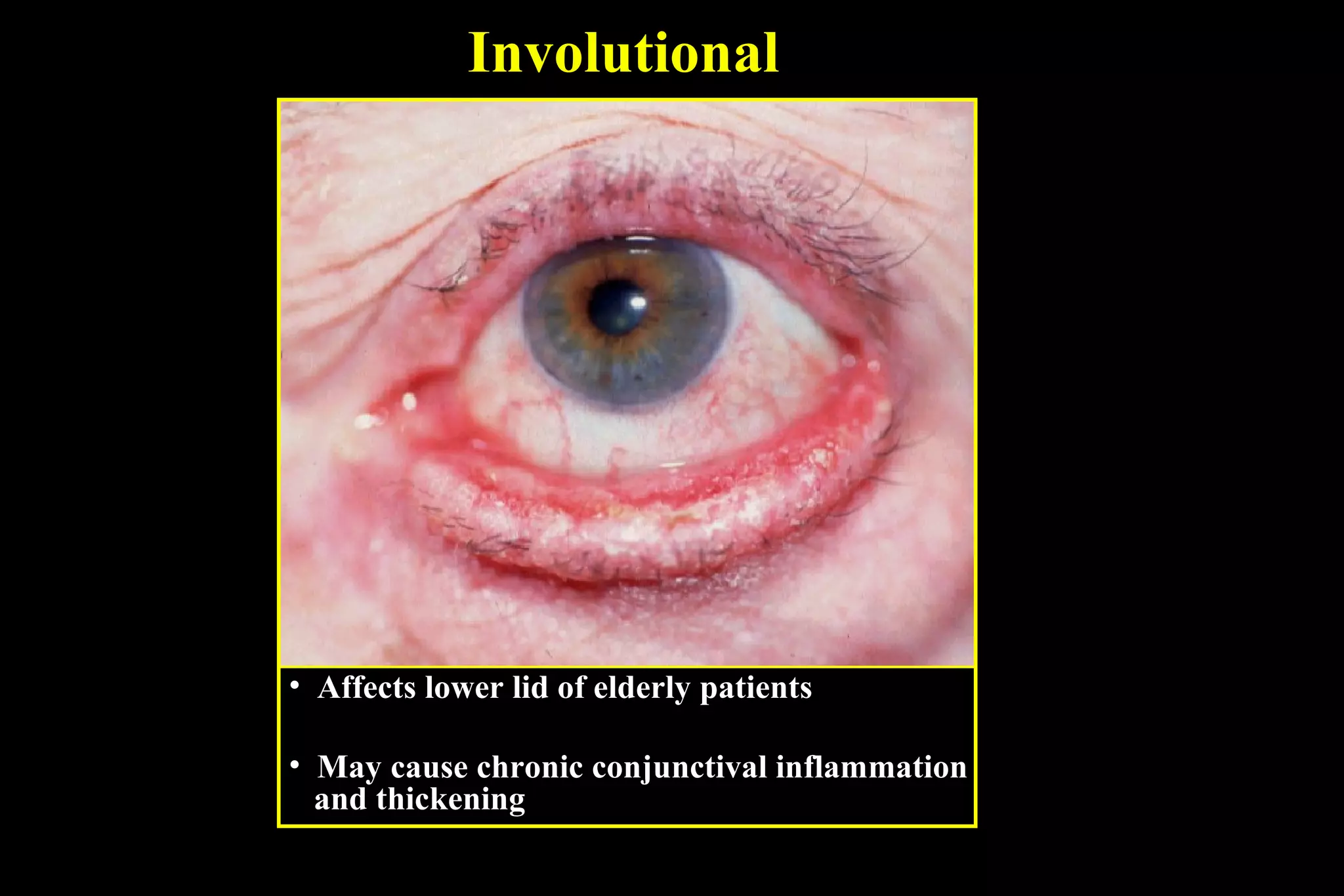
Involutional


• Affects lower lid of elderly patients

• May cause chronic conjunctival inflammation
  and thickening
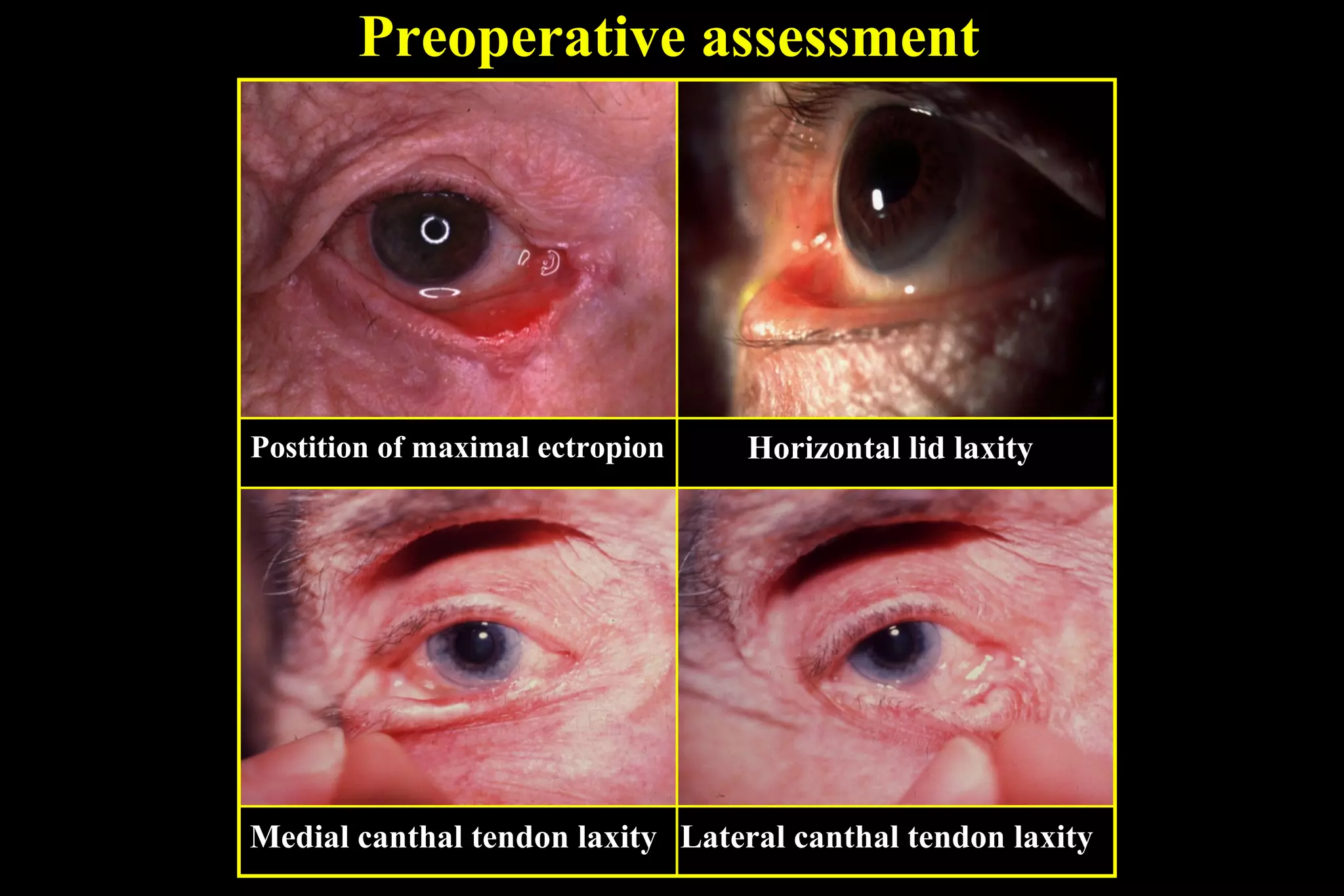
Preoperative assessment


Postition of maximal ectropion    Horizontal lid laxity


Medial canthal tendon laxity Lateral canthal tendon laxity
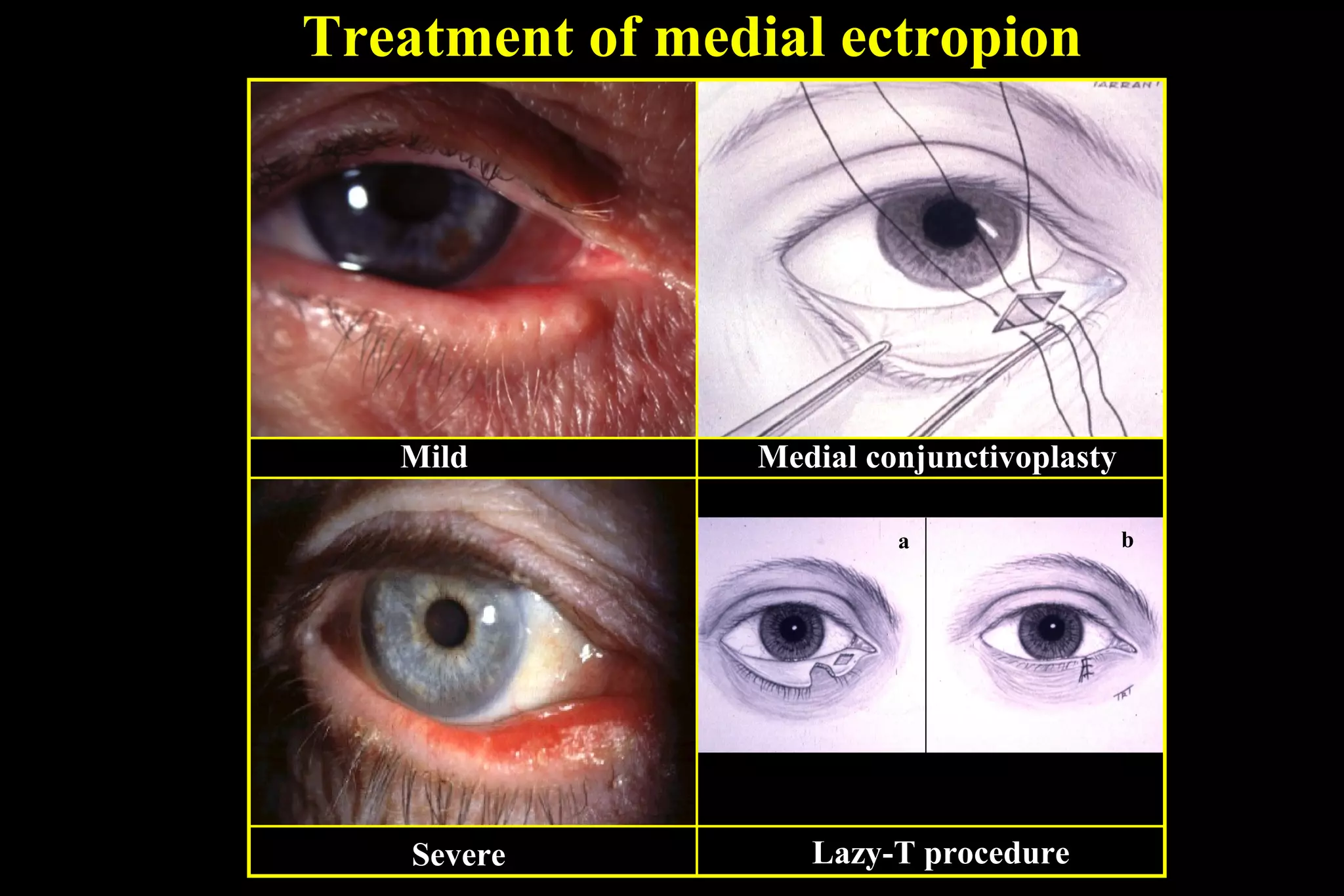
Treatment of medial ectropion


   Mild         Medial conjunctivoplasty

                         a                 b


    Severe         Lazy-T procedure
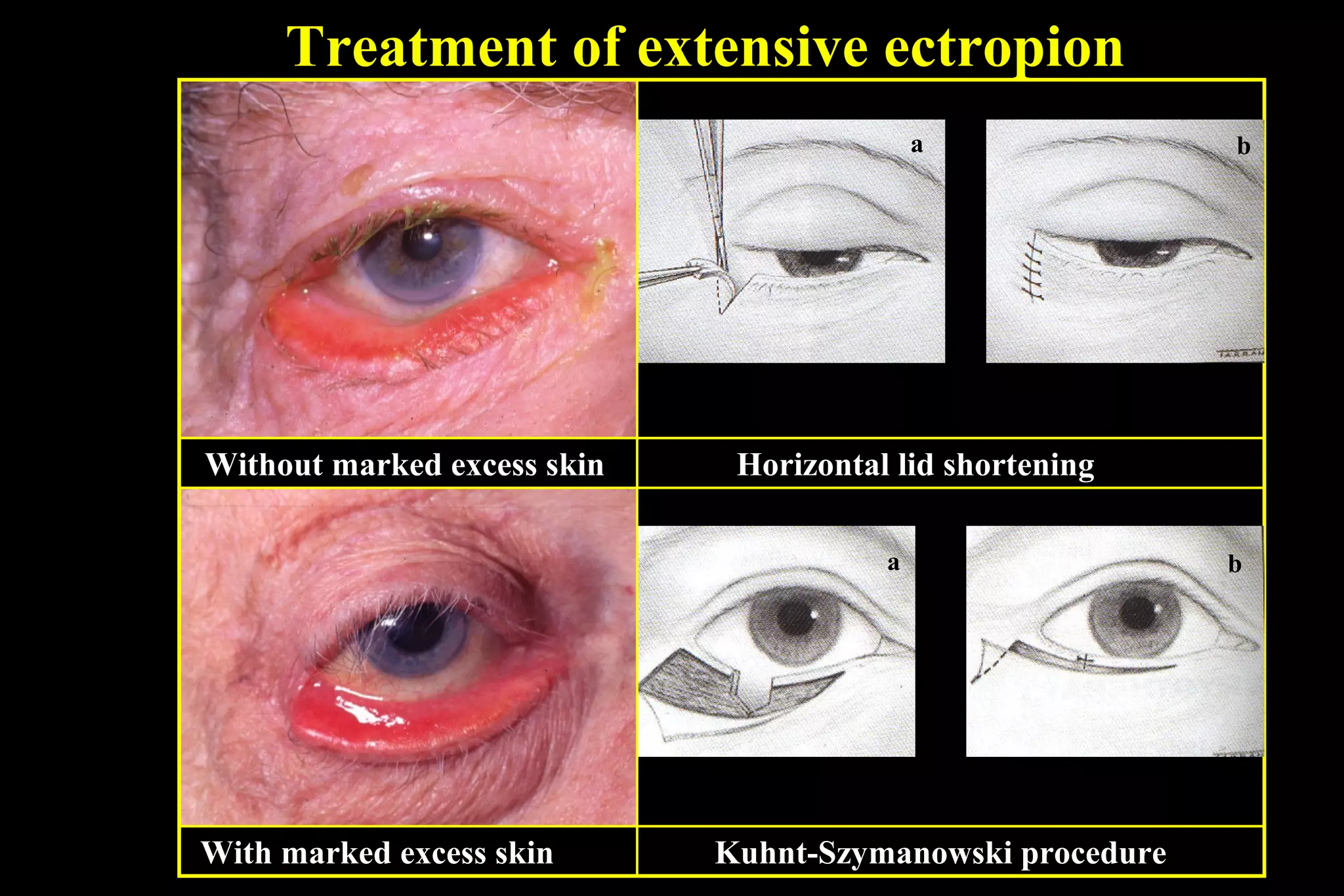
Treatment of extensive ectropion
                                            a              b


Without marked excess skin    Horizontal lid shortening

                                        a                  b


With marked excess skin      Kuhnt-Szymanowski procedure
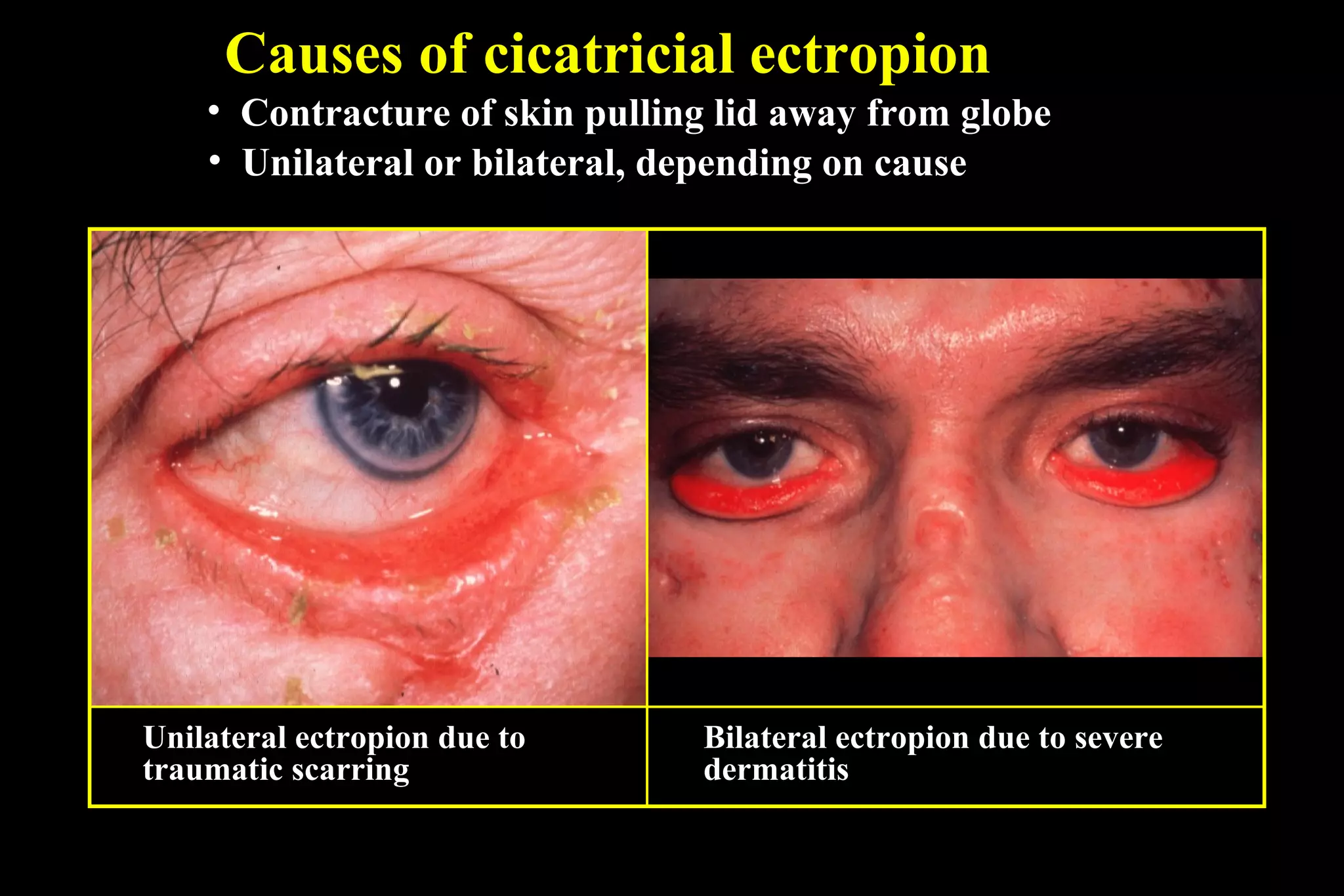
Causes of cicatricial ectropion
    • Contracture of skin pulling lid away from globe
    • Unilateral or bilateral, depending on cause


Unilateral ectropion due to     Bilateral ectropion due to severe
traumatic scarring              dermatitis
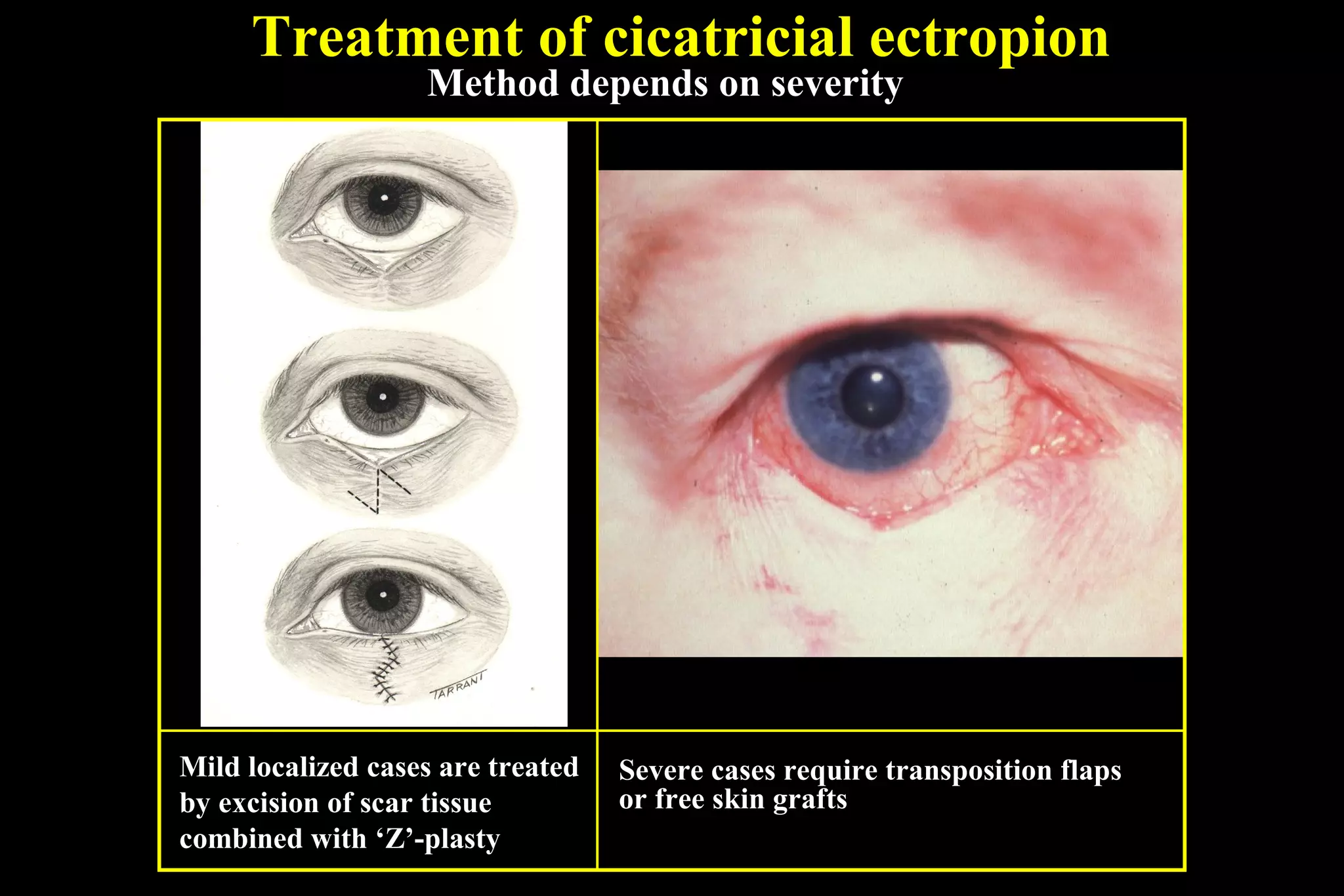
Treatment of cicatricial ectropion
                   Method depends on severity


Mild localized cases are treated   Severe cases require transposition flaps
by excision of scar tissue         or free skin grafts
combined with ‘Z’-plasty
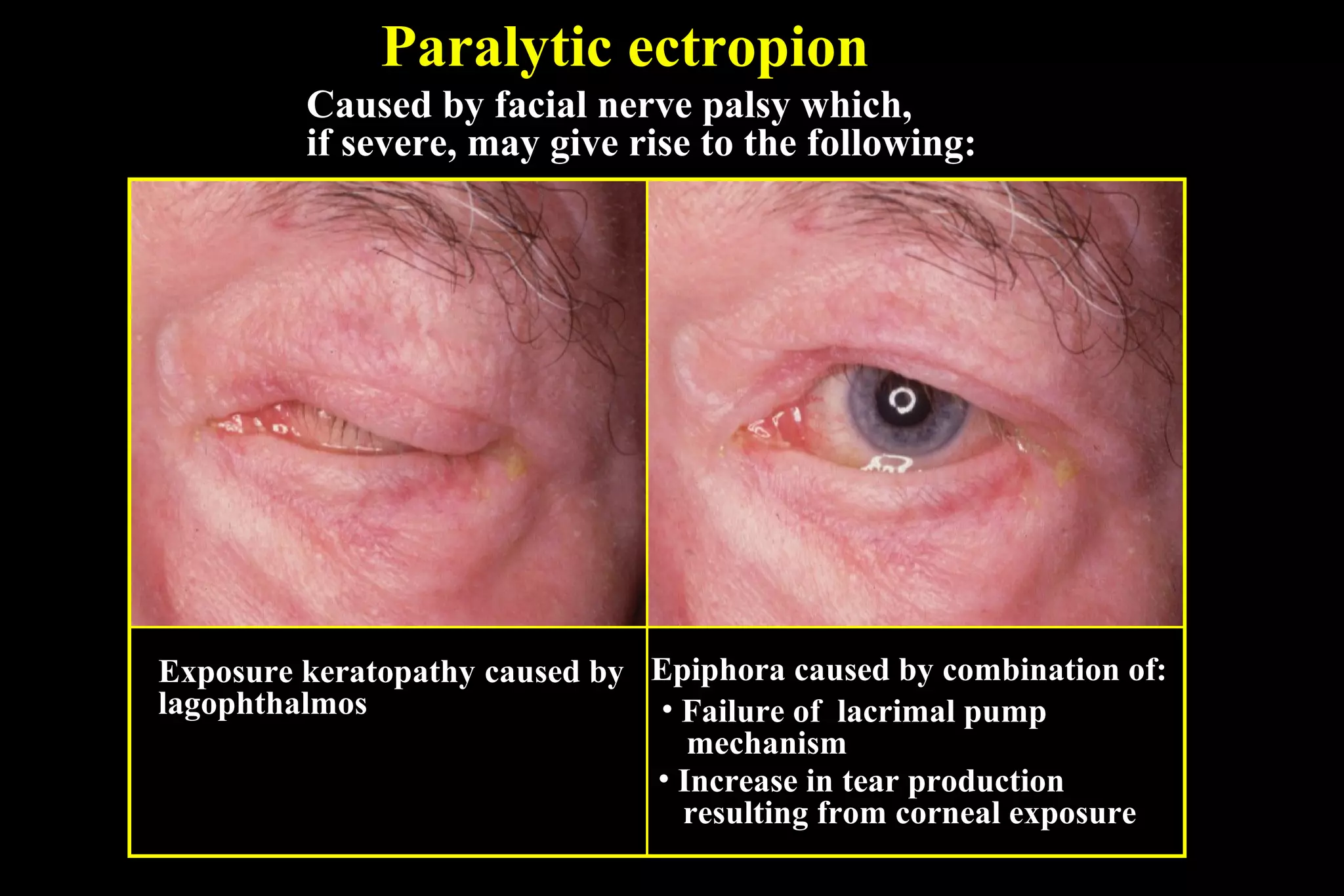
Paralytic ectropion
         Caused by facial nerve palsy which,
         if severe, may give rise to the following:


Exposure keratopathy caused by Epiphora caused by combination of:
lagophthalmos                  • Failure of lacrimal pump
                                  mechanism
                               • Increase in tear production
                                 resulting from corneal exposure
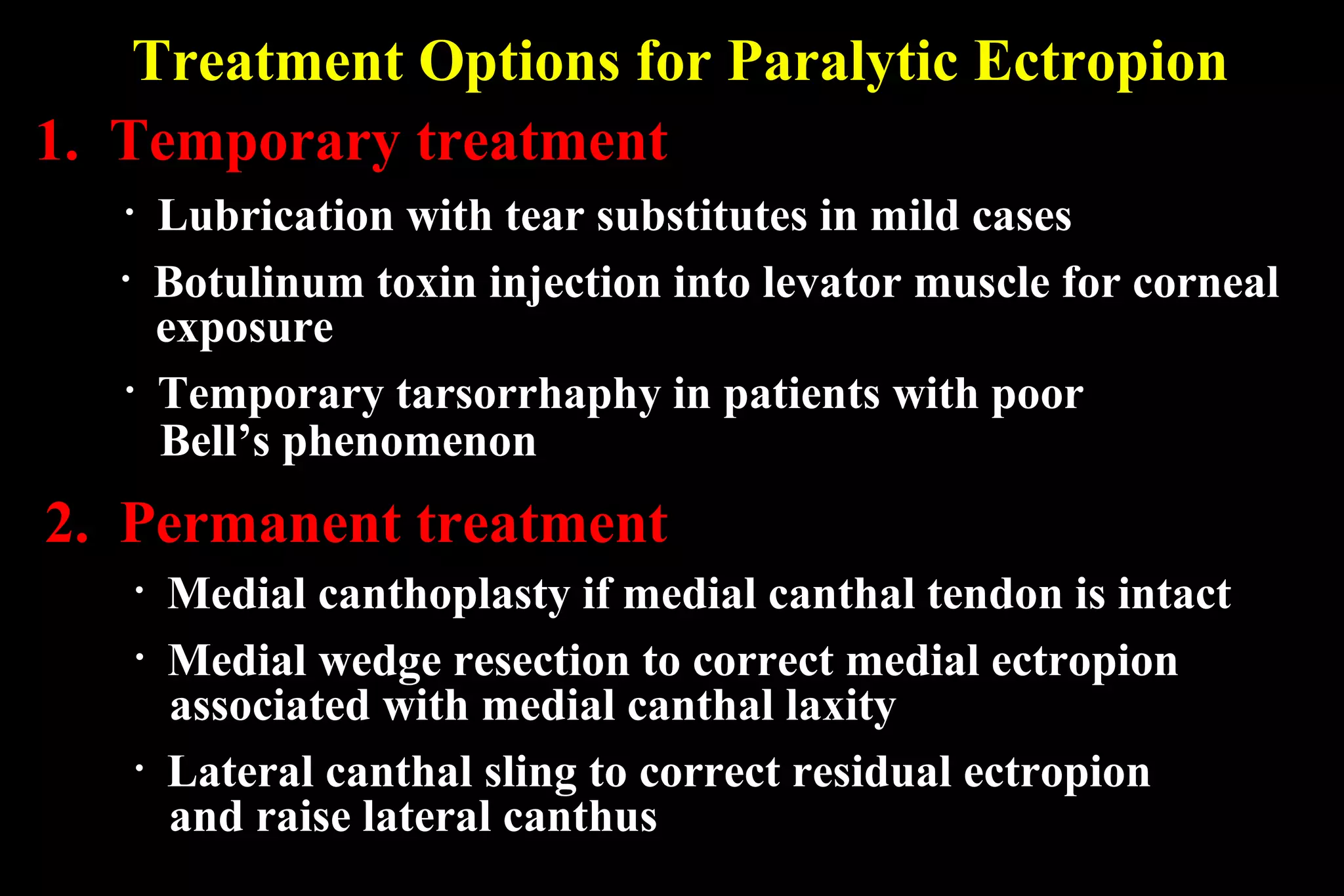
Treatment Options for Paralytic Ectropion
1. Temporary treatment
   •       Lubrication with tear substitutes in mild cases
   •       Botulinum toxin injection into levator muscle for corneal
           exposure
   •       Temporary tarsorrhaphy in patients with poor
           Bell’s phenomenon
2. Permanent treatment
       •   Medial canthoplasty if medial canthal tendon is intact
       •   Medial wedge resection to correct medial ectropion
           associated with medial canthal laxity
       •   Lateral canthal sling to correct residual ectropion
           and raise lateral canthus
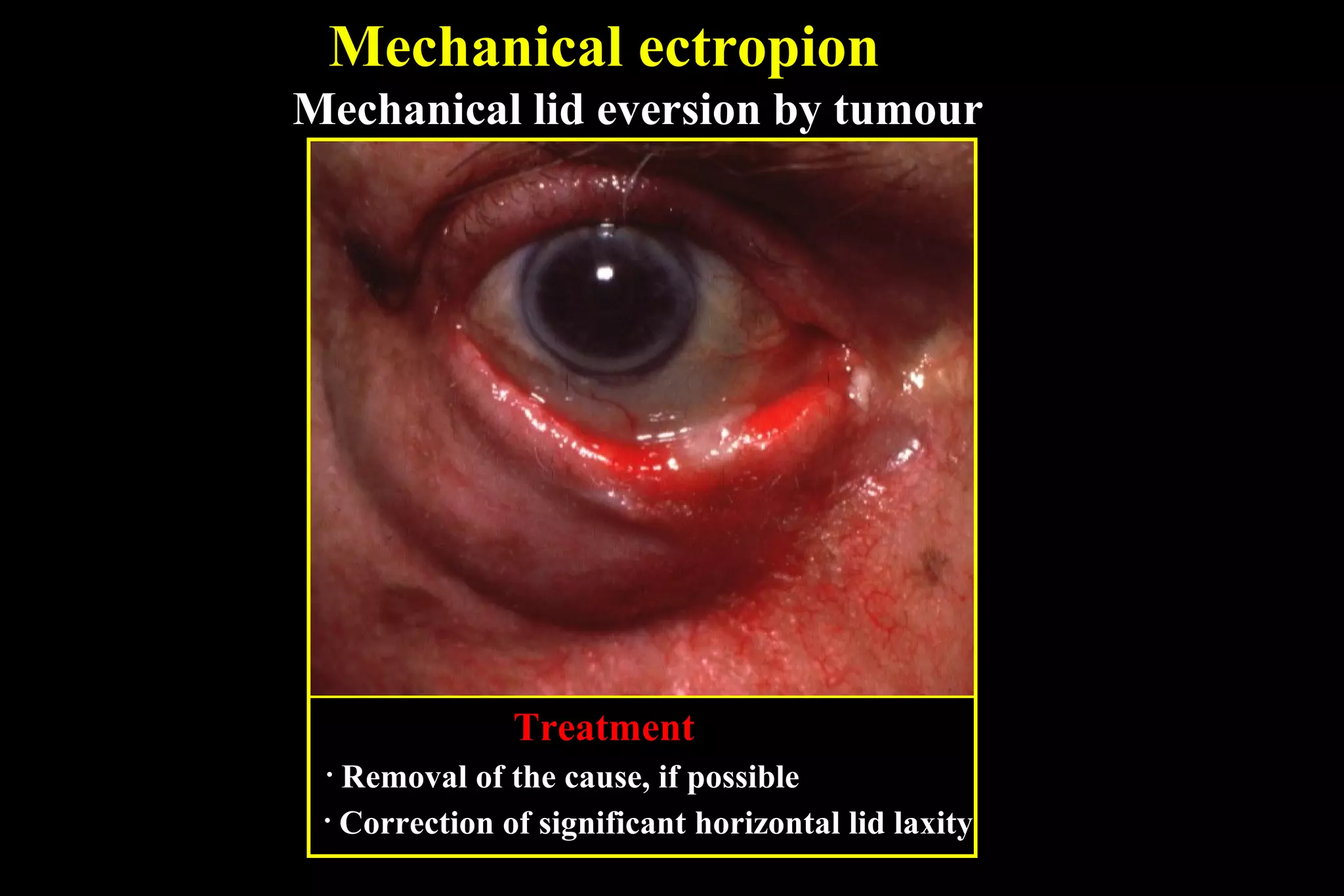
Mechanical ectropion
Mechanical lid eversion by tumour


               Treatment
 • Removal of the cause, if possible
 • Correction of significant horizontal lid laxity
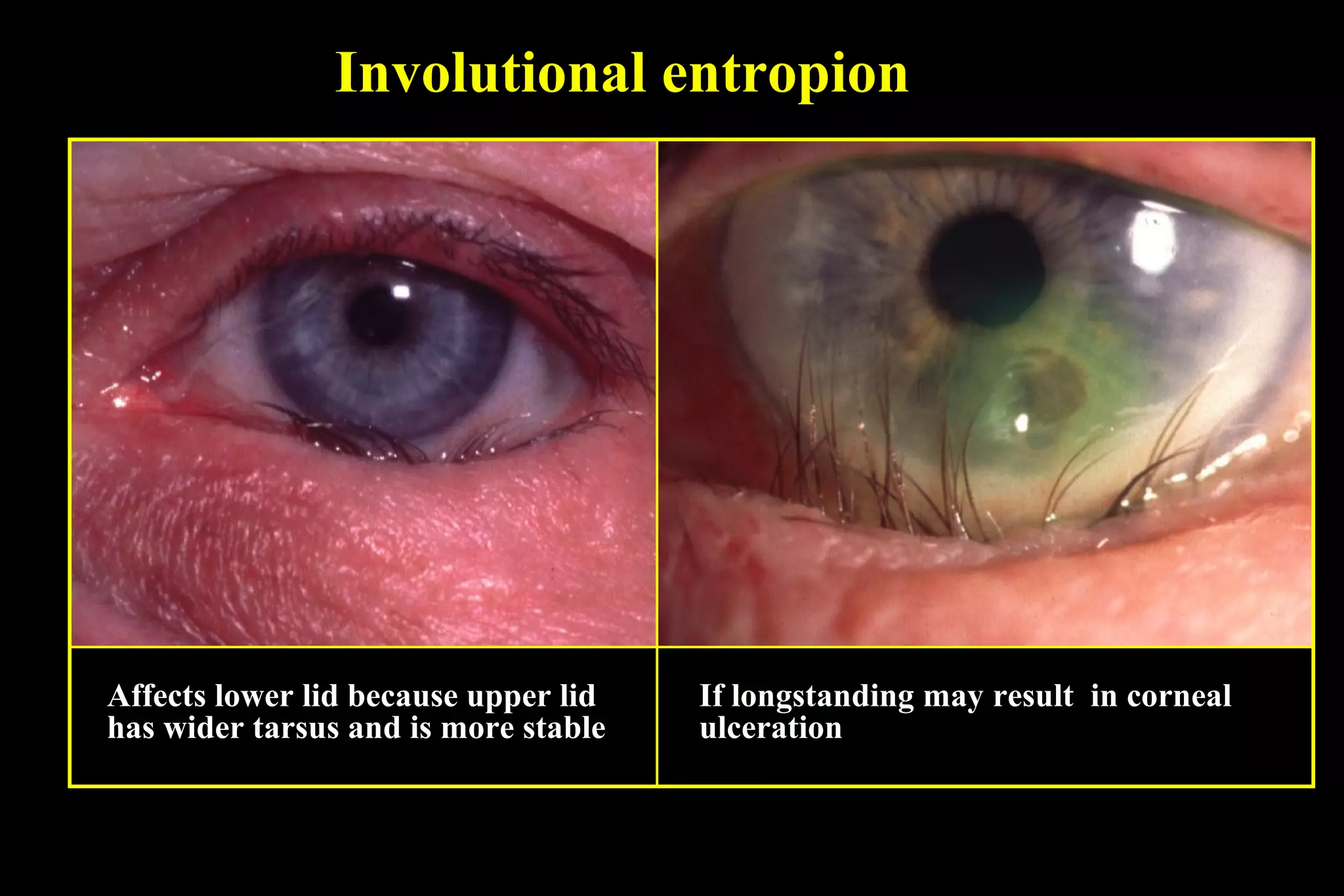
Involutional entropion


Affects lower lid because upper lid   If longstanding may result in corneal
has wider tarsus and is more stable   ulceration
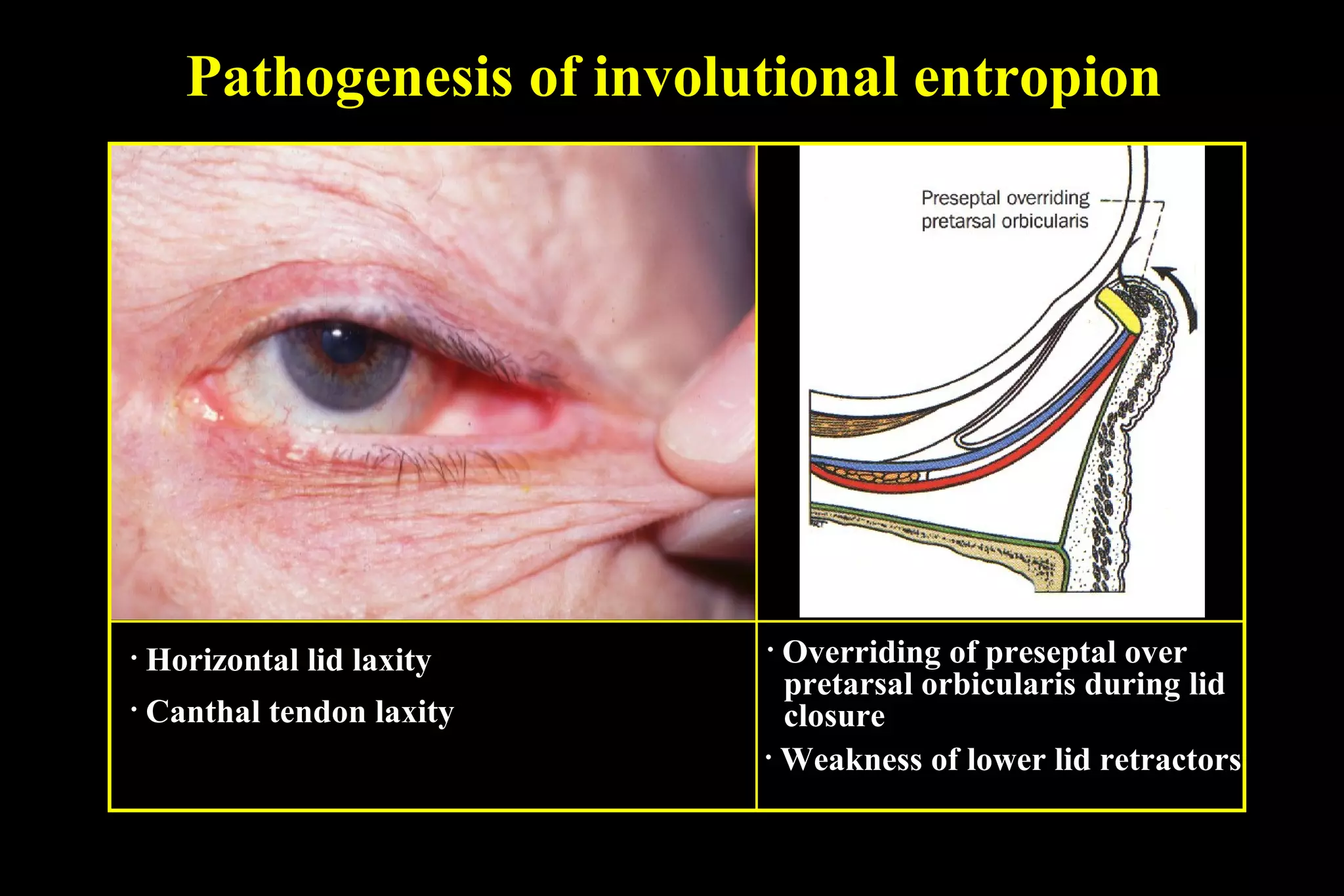
Pathogenesis of involutional entropion


•   Horizontal lid laxity   • Overriding of preseptal over
                              pretarsal orbicularis during lid
•   Canthal tendon laxity     closure
                            • Weakness of lower lid retractors
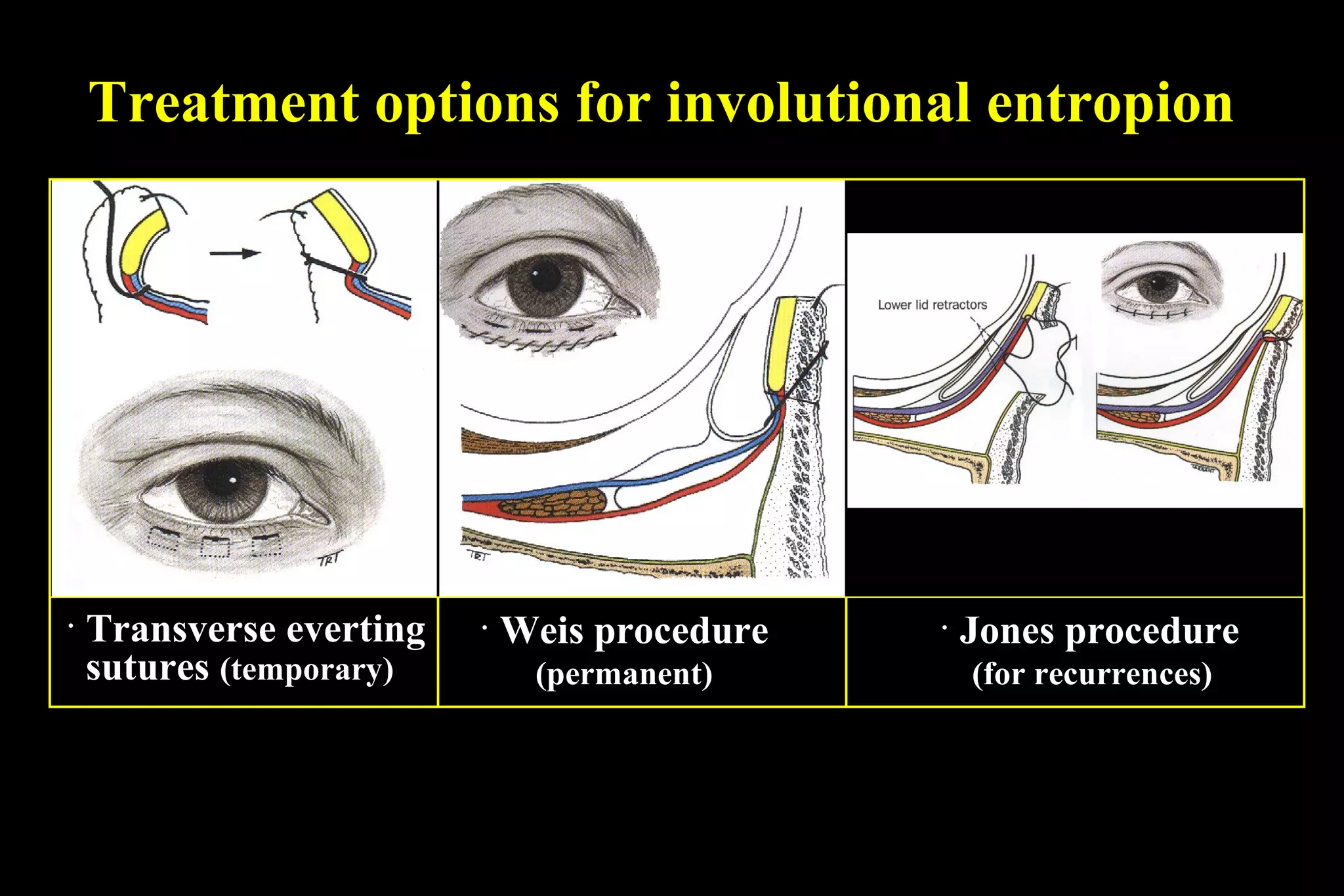
Treatment options for involutional entropion


· Transverse everting   · Weis procedure   · Jones procedure
  sutures (temporary)      (permanent)      (for recurrences)
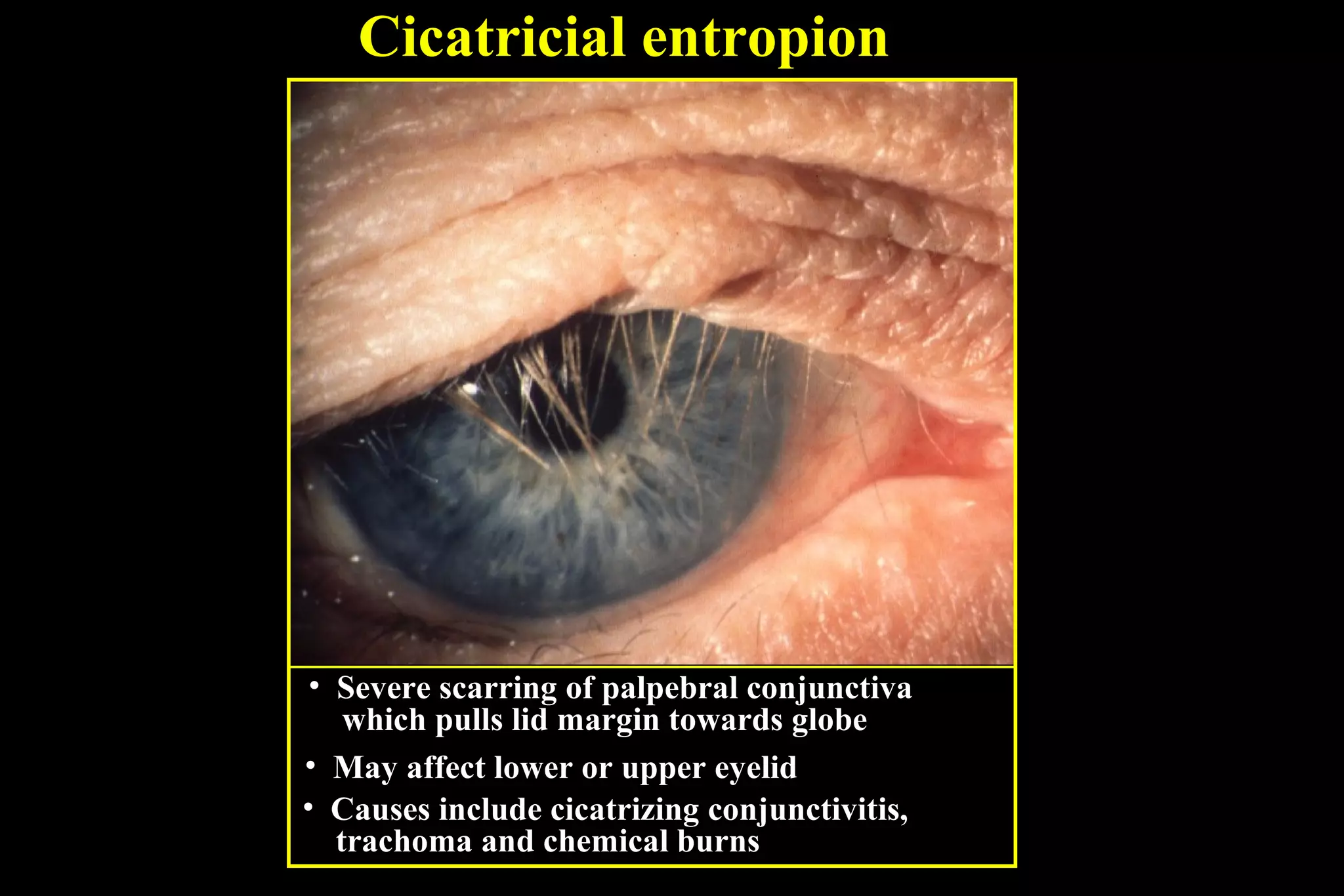
Cicatricial entropion


 • Severe scarring of palpebral conjunctiva
    which pulls lid margin towards globe
• May affect lower or upper eyelid
• Causes include cicatrizing conjunctivitis,
   trachoma and chemical burns
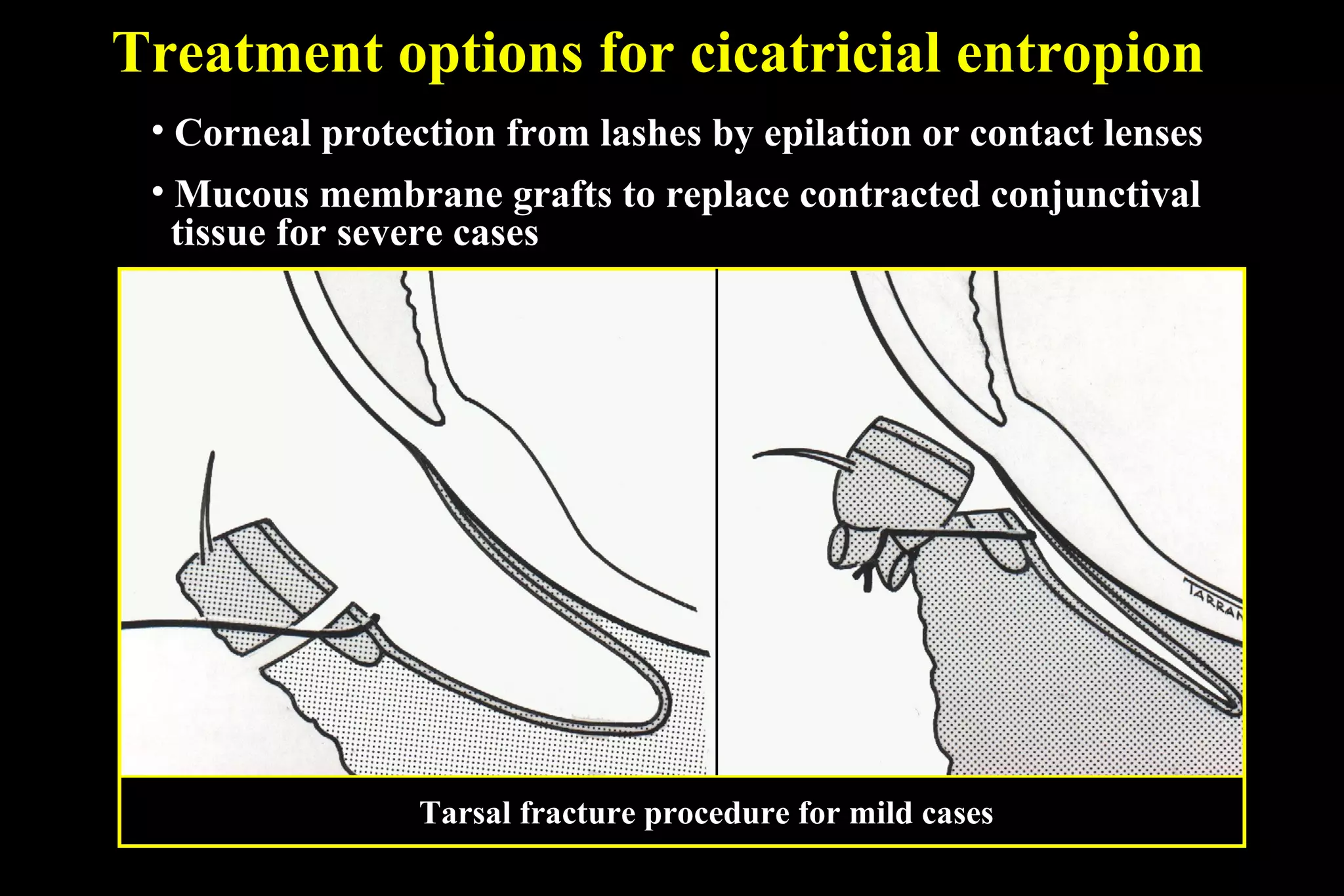
Treatment options for cicatricial entropion
 • Corneal protection from lashes by epilation or contact lenses
 • Mucous membrane grafts to replace contracted conjunctival
   tissue for severe cases


                 Tarsal fracture procedure for mild cases
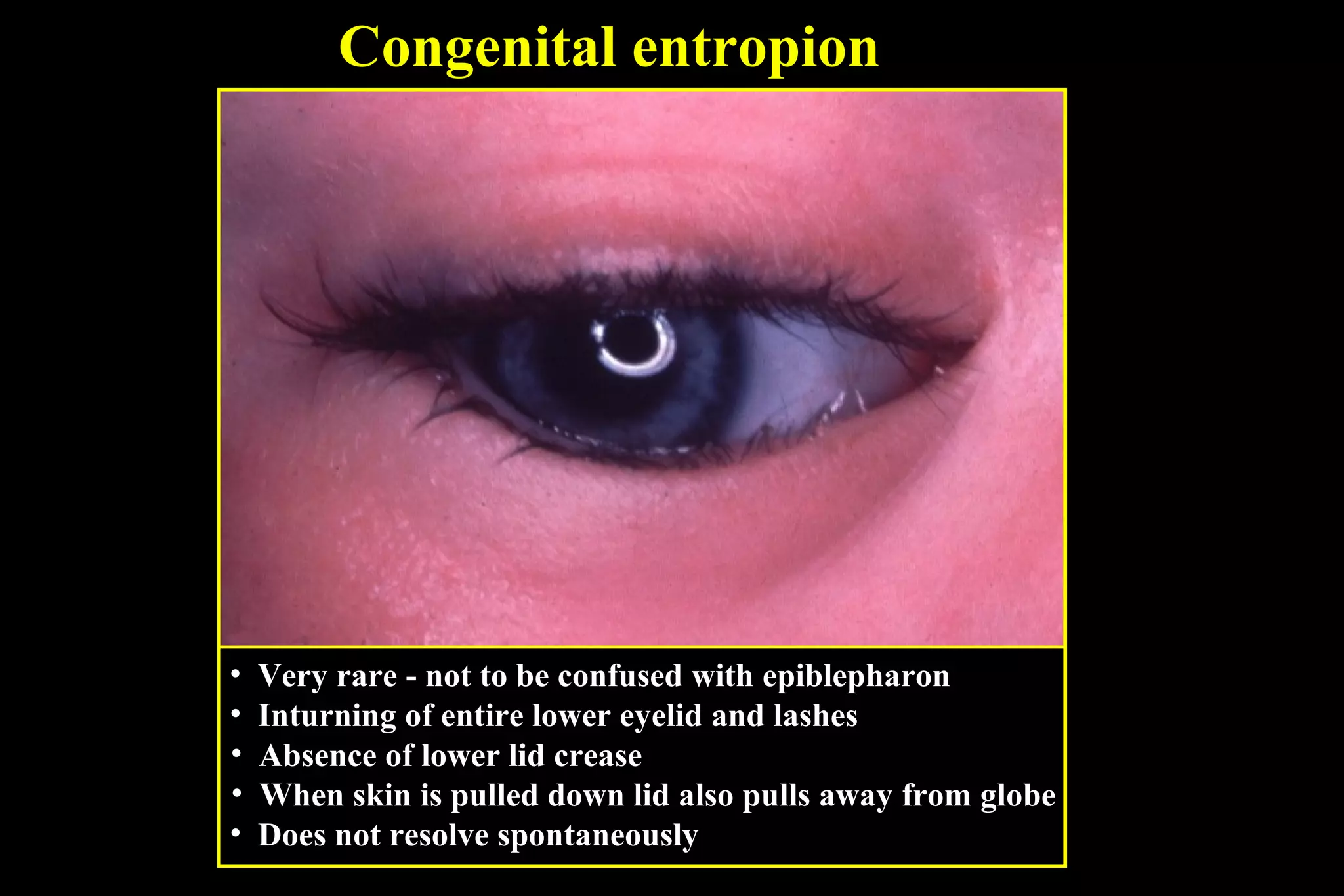
Congenital entropion


•   Very rare - not to be confused with epiblepharon
•   Inturning of entire lower eyelid and lashes
•   Absence of lower lid crease
•   When skin is pulled down lid also pulls away from globe
•   Does not resolve spontaneously
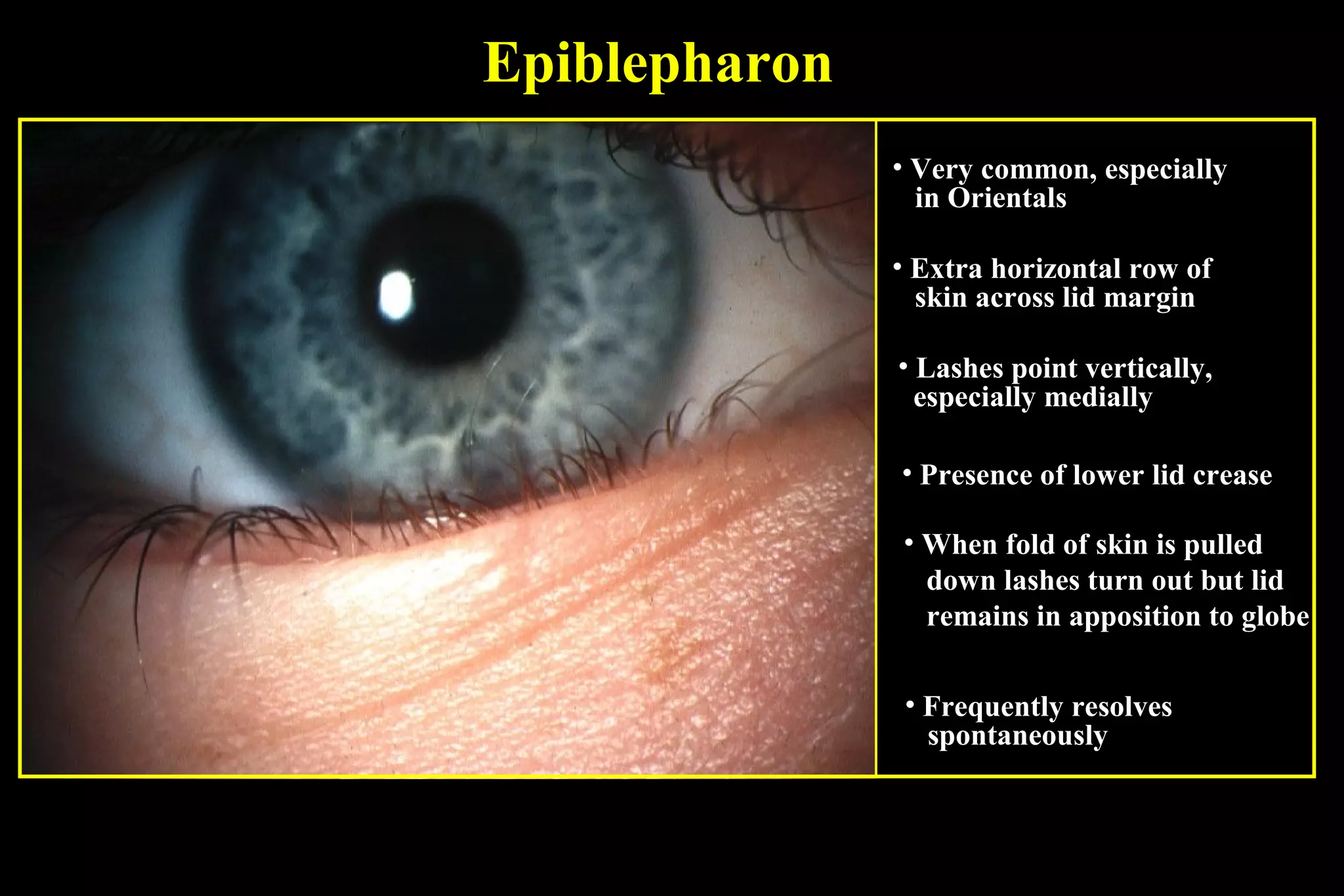
Epiblepharon
               • Very common, especially
                 in Orientals

               • Extra horizontal row of
                 skin across lid margin

               • Lashes point vertically,
                 especially medially

               • Presence of lower lid crease

               • When fold of skin is pulled
                 down lashes turn out but lid
                 remains in apposition to globe

                • Frequently resolves
                  spontaneously

ectropion & entropion

  • 1.
    ECTROPION AND ENTROPION 1. Ectropion • Involutional • Cicatricial • Paralytic • Mechanical 2. Entropion • Involutional • Cicatricial • Congenital • Epiblepharon
  • 2.
    Involutional • Affects lowerlid of elderly patients • May cause chronic conjunctival inflammation and thickening
  • 3.
    Preoperative assessment Postition ofmaximal ectropion Horizontal lid laxity Medial canthal tendon laxity Lateral canthal tendon laxity
  • 4.
    Treatment of medialectropion Mild Medial conjunctivoplasty a b Severe Lazy-T procedure
  • 5.
    Treatment of extensiveectropion a b Without marked excess skin Horizontal lid shortening a b With marked excess skin Kuhnt-Szymanowski procedure
  • 6.
    Causes of cicatricialectropion • Contracture of skin pulling lid away from globe • Unilateral or bilateral, depending on cause Unilateral ectropion due to Bilateral ectropion due to severe traumatic scarring dermatitis
  • 7.
    Treatment of cicatricialectropion Method depends on severity Mild localized cases are treated Severe cases require transposition flaps by excision of scar tissue or free skin grafts combined with ‘Z’-plasty
  • 8.
    Paralytic ectropion Caused by facial nerve palsy which, if severe, may give rise to the following: Exposure keratopathy caused by Epiphora caused by combination of: lagophthalmos • Failure of lacrimal pump mechanism • Increase in tear production resulting from corneal exposure
  • 9.
    Treatment Options forParalytic Ectropion 1. Temporary treatment • Lubrication with tear substitutes in mild cases • Botulinum toxin injection into levator muscle for corneal exposure • Temporary tarsorrhaphy in patients with poor Bell’s phenomenon 2. Permanent treatment • Medial canthoplasty if medial canthal tendon is intact • Medial wedge resection to correct medial ectropion associated with medial canthal laxity • Lateral canthal sling to correct residual ectropion and raise lateral canthus
  • 10.
    Mechanical ectropion Mechanical lideversion by tumour Treatment • Removal of the cause, if possible • Correction of significant horizontal lid laxity
  • 11.
    Involutional entropion Affects lowerlid because upper lid If longstanding may result in corneal has wider tarsus and is more stable ulceration
  • 12.
    Pathogenesis of involutionalentropion • Horizontal lid laxity • Overriding of preseptal over pretarsal orbicularis during lid • Canthal tendon laxity closure • Weakness of lower lid retractors
  • 13.
    Treatment options forinvolutional entropion · Transverse everting · Weis procedure · Jones procedure sutures (temporary) (permanent) (for recurrences)
  • 14.
    Cicatricial entropion •Severe scarring of palpebral conjunctiva which pulls lid margin towards globe • May affect lower or upper eyelid • Causes include cicatrizing conjunctivitis, trachoma and chemical burns
  • 15.
    Treatment options forcicatricial entropion • Corneal protection from lashes by epilation or contact lenses • Mucous membrane grafts to replace contracted conjunctival tissue for severe cases Tarsal fracture procedure for mild cases
  • 16.
    Congenital entropion • Very rare - not to be confused with epiblepharon • Inturning of entire lower eyelid and lashes • Absence of lower lid crease • When skin is pulled down lid also pulls away from globe • Does not resolve spontaneously
  • 17.
    Epiblepharon • Very common, especially in Orientals • Extra horizontal row of skin across lid margin • Lashes point vertically, especially medially • Presence of lower lid crease • When fold of skin is pulled down lashes turn out but lid remains in apposition to globe • Frequently resolves spontaneously