Dr. Salman Ahmad
PGR ophthalmology
Services hospital
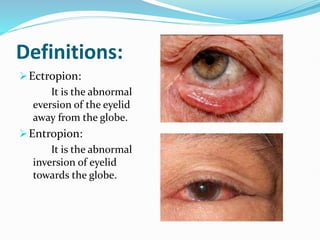
Definitions:
Ectropion:
It is the abnormal
eversion of the eyelid
away from the globe.
Entropion:
It is the abnormal
inversion of eyelid
towards the globe.
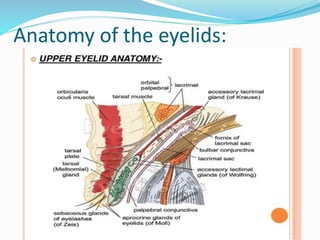
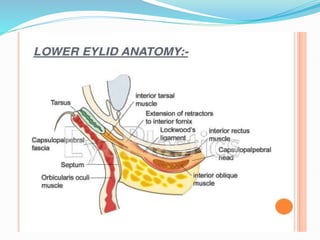
Anatomy of the eyelids:
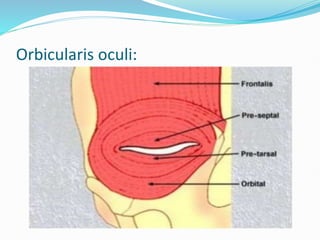
Orbicularis oculi:
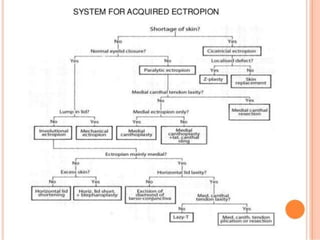
Ectropion:
Etiology:
 Involutional : Aging
 Paralytic : Seventh cranial nerve palsy
 Cicatricial : Chemical burn, surgery,lid laceration,scar
 Mechanical: Herniated orbial fat,eyelid tumors
 Allergic : Contact dermatitis
 Congenital: Fascial dysmorphic syndromes or isolated
abnormality
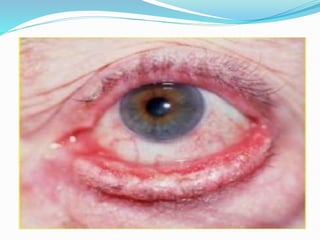
Involutional ectropion:
 Usually affects the lower lid of elderly patients.
Clinical presentation:
 Variable iritation
 Epiphora
 Recurrent infections
 Everted lid
 Conjunctival irritation/inflammation and keratinization.
Clinical assessment:
 Assess:
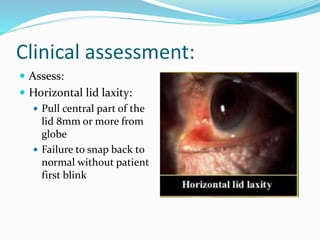
 Horizontal lid laxity:
 Pull central part of the
lid 8mm or more from
globe
 Failure to snap back to
normal without patient
first blink
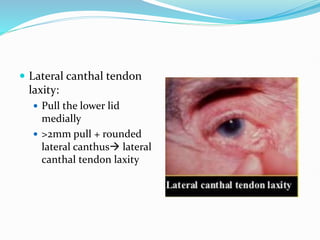
 Lateral canthal tendon
laxity:
 Pull the lower lid
medially
 >2mm pull + rounded
lateral canthus lateral
canthal tendon laxity
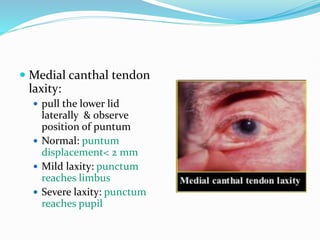
 Medial canthal tendon
laxity:
 pull the lower lid
laterally & observe
position of puntum
 Normal: puntum
displacement< 2 mm
 Mild laxity: punctum
reaches limbus
 Severe laxity: punctum
reaches pupil
Treatment :
 Depends on causation and the predominant location
of ectropion
 Generalized ectropion:
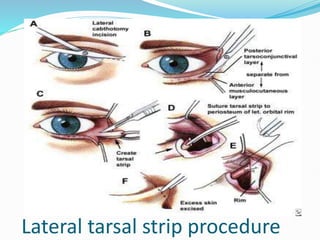
 Lateral tarsal strip procedure
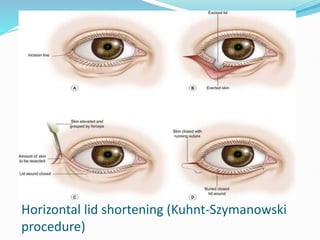
 Transconjuctival pentagon excision (kuhnt-
Szymzniwski procedure)
 Medial ectropion
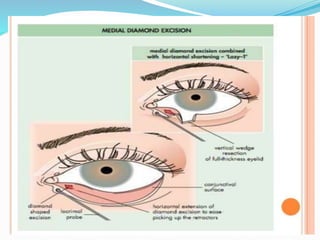
 Mild: medial spindle procedure(medial conjuctival
diamond excision)
 Severe: medial spindle procedure+tarsal strip/lateral
canthal sling/pentagon excision
Lateral tarsal strip procedure
Horizontal lid shortening (Kuhnt-Szymanowski
procedure)
Cicatricial ectropion:
 Occurs when scarring or contracture of the skin and
underlying tissues vertically shortens the anterior
lamella
 Causes :
 Burns
 Trauma
 Radiotherapy
 Dermatitis
 epiphora
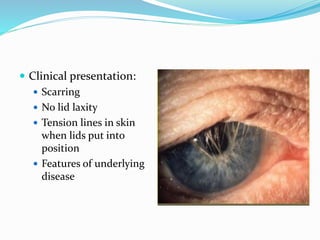
 Clinical presentation:
 Scarring
 No lid laxity
 Tension lines in skin
when lids put into
position
 Features of underlying
disease
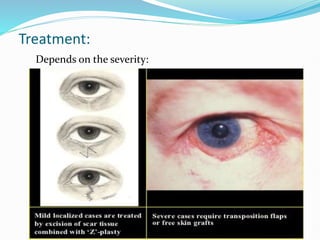
Treatment:
Depends on the severity:
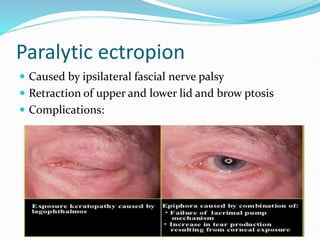
Paralytic ectropion
 Caused by ipsilateral fascial nerve palsy
 Retraction of upper and lower lid and brow ptosis
 Complications:
Treatment:
Temporary:
Lubrication:
 in mild ..along with taping of eyelids at night
Botulinum toxin injection
 To induce temporary ptosis
Temporary tarsorrhaphy:
 in poor Bells phenomenon patients
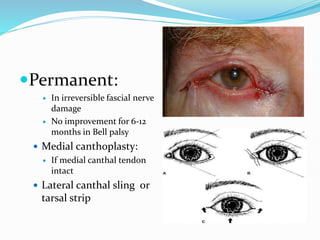
Permanent:
 In irreversible fascial nerve
damage
 No improvement for 6-12
months in Bell palsy
 Medial canthoplasty:
 If medial canthal tendon
intact
 Lateral canthal sling or
tarsal strip
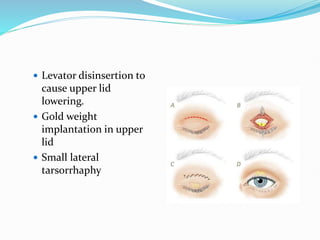
 Levator disinsertion to
cause upper lid
lowering.
 Gold weight
implantation in upper
lid
 Small lateral
tarsorrhaphy
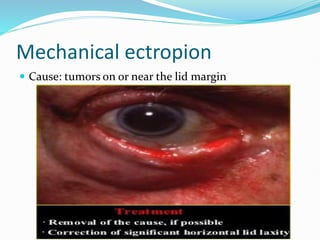
Mechanical ectropion
 Cause: tumors on or near the lid margin
Entropion:
 Abnormal inversion of the eye lid
 Abrasion of cornea ulceration, secondary infections
 Types:
 Involutional
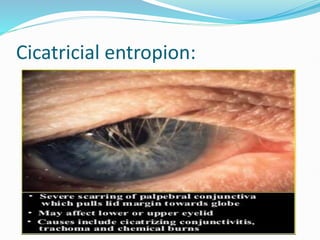
 Cictricial
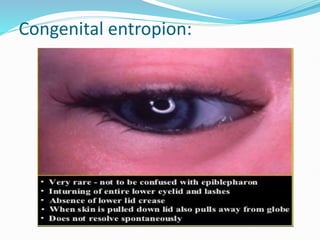
 Congenital
Involutional entropion:
 Age related mainly affects lower lid
 Results from inferior retractor dysfunction with tissue
laxity and possibly override of preseptal orbicularis over
pretarsal orbicularis
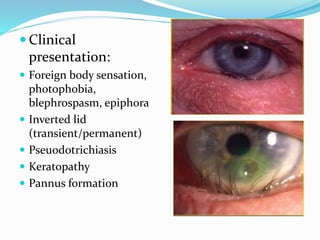
 Clinical
presentation:
 Foreign body sensation,
photophobia,
blephrospasm, epiphora
 Inverted lid
(transient/permanent)
 Pseuodotrichiasis
 Keratopathy
 Pannus formation
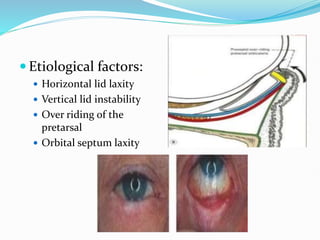
 Etiological factors:
 Horizontal lid laxity
 Vertical lid instability
 Over riding of the
pretarsal
 Orbital septum laxity
Treatment:
 Medical:
 Lubricants
 Taping
 Soft bandage contact lenses
 Orbicularis chemodenervation with botulinum toxin
injection
 Surgical:
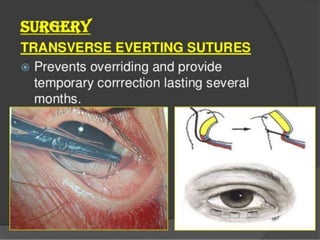
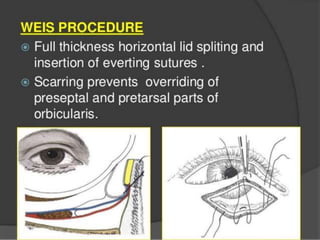
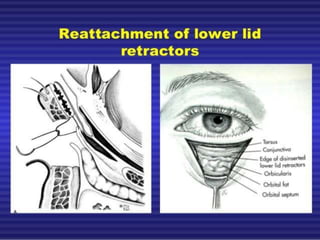
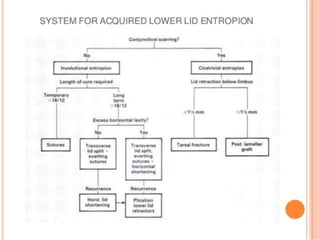
 Over-riding and disinsertion
 Transverse everting sutures
 Weis procedure
 Lower lid retractor disinsertion
 Horizontal lid laxity
 Lateral canthal sling
 Full thickness lateral pentagon excision(less common)
Cicatricial entropion:
 Treatment:
 Temporary
 Similar to involutional
 Permanent
 Surgical:
 Mild:
 tarsal fracture with anterior rotation of lid margin.
 Severe:
 replacing the deficient or keratinized conjunctiva+ replacing
the scarred and contracted tarsal plate with composite grafts
Congenital entropion:
Ectropion and Entropion.pptx

Ectropion and Entropion.pptx

  • 2.
    Dr. Salman Ahmad PGRophthalmology Services hospital
  • 3.
    Definitions: Ectropion: It is theabnormal eversion of the eyelid away from the globe. Entropion: It is the abnormal inversion of eyelid towards the globe.
  • 4.
  • 6.
  • 7.
    Ectropion: Etiology:  Involutional :Aging  Paralytic : Seventh cranial nerve palsy  Cicatricial : Chemical burn, surgery,lid laceration,scar  Mechanical: Herniated orbial fat,eyelid tumors  Allergic : Contact dermatitis  Congenital: Fascial dysmorphic syndromes or isolated abnormality
  • 8.
    Involutional ectropion:  Usuallyaffects the lower lid of elderly patients. Clinical presentation:  Variable iritation  Epiphora  Recurrent infections  Everted lid  Conjunctival irritation/inflammation and keratinization.
  • 10.
    Clinical assessment:  Assess: Horizontal lid laxity:  Pull central part of the lid 8mm or more from globe  Failure to snap back to normal without patient first blink
  • 11.
     Lateral canthaltendon laxity:  Pull the lower lid medially  >2mm pull + rounded lateral canthus lateral canthal tendon laxity
  • 12.
     Medial canthaltendon laxity:  pull the lower lid laterally & observe position of puntum  Normal: puntum displacement< 2 mm  Mild laxity: punctum reaches limbus  Severe laxity: punctum reaches pupil
  • 13.
    Treatment :  Dependson causation and the predominant location of ectropion  Generalized ectropion:  Lateral tarsal strip procedure  Transconjuctival pentagon excision (kuhnt- Szymzniwski procedure)  Medial ectropion  Mild: medial spindle procedure(medial conjuctival diamond excision)  Severe: medial spindle procedure+tarsal strip/lateral canthal sling/pentagon excision
  • 14.
  • 15.
    Horizontal lid shortening(Kuhnt-Szymanowski procedure)
  • 17.
    Cicatricial ectropion:  Occurswhen scarring or contracture of the skin and underlying tissues vertically shortens the anterior lamella  Causes :  Burns  Trauma  Radiotherapy  Dermatitis  epiphora
  • 18.
     Clinical presentation: Scarring  No lid laxity  Tension lines in skin when lids put into position  Features of underlying disease
  • 19.
  • 20.
    Paralytic ectropion  Causedby ipsilateral fascial nerve palsy  Retraction of upper and lower lid and brow ptosis  Complications:
  • 21.
    Treatment: Temporary: Lubrication:  in mild..along with taping of eyelids at night Botulinum toxin injection  To induce temporary ptosis Temporary tarsorrhaphy:  in poor Bells phenomenon patients
  • 22.
    Permanent:  In irreversiblefascial nerve damage  No improvement for 6-12 months in Bell palsy  Medial canthoplasty:  If medial canthal tendon intact  Lateral canthal sling or tarsal strip
  • 23.
     Levator disinsertionto cause upper lid lowering.  Gold weight implantation in upper lid  Small lateral tarsorrhaphy
  • 24.
    Mechanical ectropion  Cause:tumors on or near the lid margin
  • 25.
    Entropion:  Abnormal inversionof the eye lid  Abrasion of cornea ulceration, secondary infections  Types:  Involutional  Cictricial  Congenital
  • 26.
    Involutional entropion:  Agerelated mainly affects lower lid  Results from inferior retractor dysfunction with tissue laxity and possibly override of preseptal orbicularis over pretarsal orbicularis
  • 27.
     Clinical presentation:  Foreignbody sensation, photophobia, blephrospasm, epiphora  Inverted lid (transient/permanent)  Pseuodotrichiasis  Keratopathy  Pannus formation
  • 28.
     Etiological factors: Horizontal lid laxity  Vertical lid instability  Over riding of the pretarsal  Orbital septum laxity
  • 29.
    Treatment:  Medical:  Lubricants Taping  Soft bandage contact lenses  Orbicularis chemodenervation with botulinum toxin injection
  • 30.
     Surgical:  Over-ridingand disinsertion  Transverse everting sutures  Weis procedure  Lower lid retractor disinsertion  Horizontal lid laxity  Lateral canthal sling  Full thickness lateral pentagon excision(less common)
  • 34.
  • 35.
     Treatment:  Temporary Similar to involutional  Permanent  Surgical:  Mild:  tarsal fracture with anterior rotation of lid margin.  Severe:  replacing the deficient or keratinized conjunctiva+ replacing the scarred and contracted tarsal plate with composite grafts
  • 36.