BY
Dr. Gurumeet.C.Wadhawa
DEPARTMENT OF CHEMISTRY
K. B. P. College,Vashi,Navimumbai
Nef reaction
INTRODUCTION
3
Interconversion of functional groups represents an
important aspect in every process leading to the
synthesis of structurally defined compounds
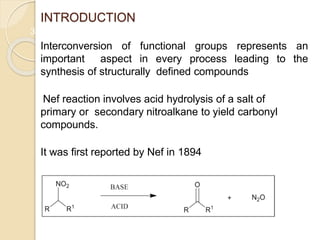
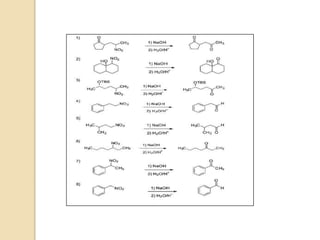
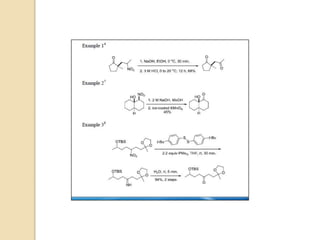
Nef reaction involves acid hydrolysis of a salt of
primary or secondary nitroalkane to yield carbonyl
compounds.
It was first reported by Nef in 1894
In 1893, M. Konovalov observed that the treatment of the potassium
salt of 1-phenylnitroethane with dilute acid (AcOH, H2SO4) led to the
formation of 1-phenylnitroethane and acetophenone.
In 1894, J.U. Nef systematically studied the acidic hydrolysis of
several nitroparaffin sodium salts, while he was completely unaware of
Konovalov's experiments, and showed that the major product of all
these reactions were the corresponding carbonyl compounds.
Since Nef demonstrated the generality of this transformation, which he
discovered independently, the conversion of nitroalkanes into the
corresponding carbonyl compounds is known as the Nef reaction
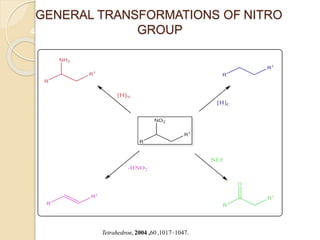
GENERAL TRANSFORMATIONS OF NITRO
GROUP
4
Tetrahedron, 2004 ,60 ,1017–1047.
HISTORY
5
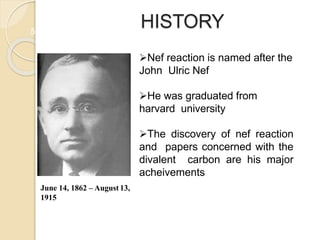
Nef reaction is named after the
John Ulric Nef
He was graduated from
harvard university
The discovery of nef reaction
and papers concerned with the
divalent carbon are his major
acheivements
June 14, 1862 – August 13,
1915
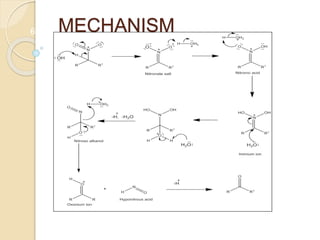
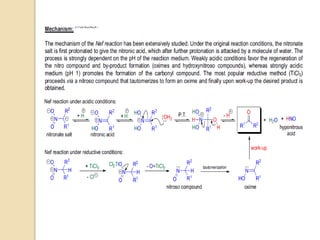
MECHANISM
6
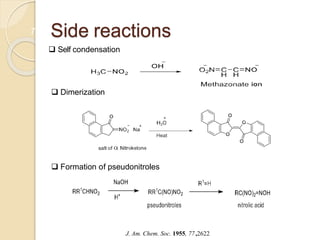
Side reactions
7
 Self condensation
 Dimerization
 Formation of pseudonitroles
J. Am. Chem. Soc. 1955, 77,2622
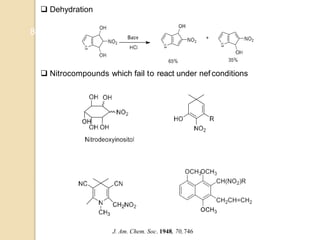
 Dehydration
8
 Nitrocompounds which fail to react under nef conditions
J. Am. Chem. Soc. 1948, 70,746
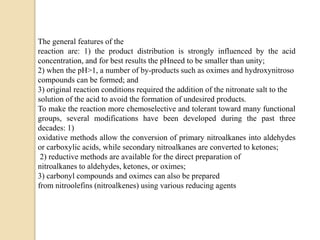
The general features of the
reaction are: 1) the product distribution is strongly influenced by the acid
concentration, and for best results the pHneed to be smaller than unity;
2) when the pH>1, a number of by-products such as oximes and hydroxynitroso
compounds can be formed; and
3) original reaction conditions required the addition of the nitronate salt to the
solution of the acid to avoid the formation of undesired products.
To make the reaction more chemoselective and tolerant toward many functional
groups, several modifications have been developed during the past three
decades: 1)
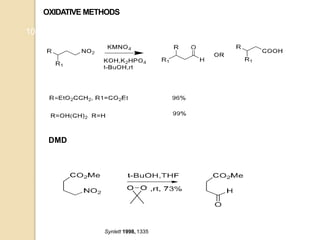
oxidative methods allow the conversion of primary nitroalkanes into aldehydes
or carboxylic acids, while secondary nitroalkanes are converted to ketones;
2) reductive methods are available for the direct preparation of
nitroalkanes to aldehydes, ketones, or oximes;
3) carbonyl compounds and oximes can also be prepared
from nitroolefins (nitroalkenes) using various reducing agents
9
MODIFIED NEF REACTIONS
OXIDATIVE METHODS
10
DMD
Synlett 1998, 1335
11
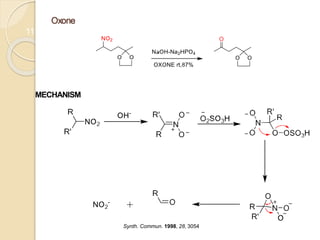
Oxone
Synth. Commun. 1998, 28, 3054
MECHANISM
12
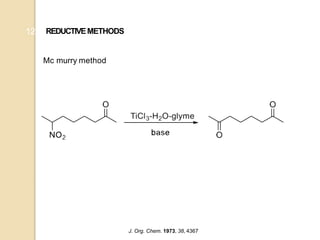
Mc murry method
REDUCTIVEMETHODS
J. Org. Chem. 1973, 38, 4367
13
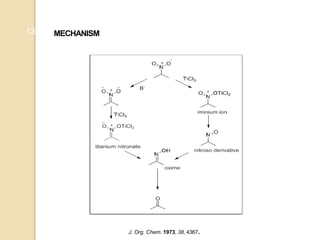
J. Org. Chem. 1973, 38, 4367.
MECHANISM
14
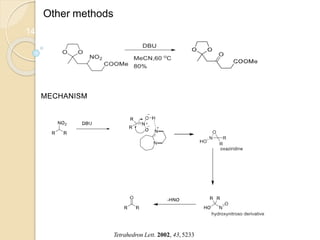
Other methods
Tetrahedron Lett. 2002, 43, 5233
15
APPLICATIONS
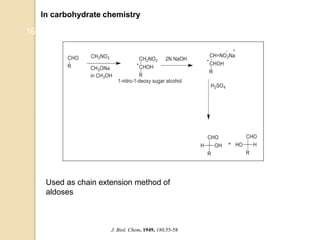
In carbohydrate chemistry
16
Used as chain extension method of
aldoses
J. Biol. Chem. 1949, 180,55-58
17
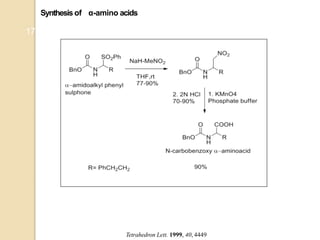
Synthesis of α-amino acids
Tetrahedron Lett. 1999, 40, 4449
18
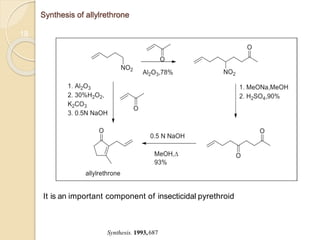
Synthesis of allylrethrone
It is an important component of insecticidal pyrethroid
Synthesis. 1993,687
18
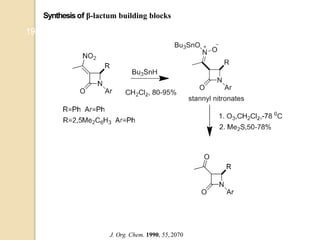
Synthesisof β-lactum building blocks
19
J. Org. Chem. 1990, 55, 2070
Conclusion
 Nef reaction dates back a century ago but still it has
significance due to its applicability in conversion of
nitrocompounds to carbonyl compounds
 Modified nef reactions uses oxidising and reducing agents which helps in the
synthesis ofvarious biologically active
compounds
 It also has applications in carbohydrate chemistry as a
 chain-extension method of aldoses
20
References
1. Nef, J. U. Ann. 1894, 280, 263-342. John Ulrich Nef (186-1915) was born in
Switzerland
and immigrated to the US at the age of four with his parents. He went to Munich,
Germany to study with Adolf von Baeyer, earning a Ph.D. In 1886. Back to the
States, he served as a professor at Purdue University, Clark University, and the
University
of Chicago. The Nef reaction was discovered at Clark University in Worcester,
Massachusetts. Nef was temperamental and impulsive, suffering from a couple of
mental breakdowns. He was also highly individualistic, and had never published with
a coworker save for three early articles.
2. Pinnick, H. W. Org. React. 1990, 38, 655. (Review).
3. Adam, W.; Makosza, M.; Saha-Moeller, C. R.; Zhao, C.-G. Synlett 1998, 1335–
1336.
4. Thominiaux, C.; Rousse, S.; Desmaele, D.; d’Angelo, J.; Riche, C. Tetrahedron:
Asymmetry 1999, 10, 2015–2021.
5. Capecchi, T.; de Koning, C. B.; Michael, J. P. J. Chem. Soc., Perkin Trans. 1 2000,
2681–2688.
6. Ballini, R.; Bosica, G.; Fiorini, D.; Petrini, M. Tetrahedron Lett. 2002, 43, 5233–
5235.
7. Chung, W. K.; Chiu, P. Synlett 2005, 55–58.
8. Wolfe, J. P. Nef reaction. In Name Reactions for Functional Group
Transformations;
Li, J. J., Ed.; Wiley: Hoboken, NJ, 2007, pp 645􀀐652. (Review).
9. Burés, J.; Vilarrasa, J. Tetrahedron Lett. 2008, 49, 441–444.
21

Nef reaction

  • 1.
    BY Dr. Gurumeet.C.Wadhawa DEPARTMENT OFCHEMISTRY K. B. P. College,Vashi,Navimumbai Nef reaction
  • 2.
    INTRODUCTION 3 Interconversion of functionalgroups represents an important aspect in every process leading to the synthesis of structurally defined compounds Nef reaction involves acid hydrolysis of a salt of primary or secondary nitroalkane to yield carbonyl compounds. It was first reported by Nef in 1894
  • 3.
    In 1893, M.Konovalov observed that the treatment of the potassium salt of 1-phenylnitroethane with dilute acid (AcOH, H2SO4) led to the formation of 1-phenylnitroethane and acetophenone. In 1894, J.U. Nef systematically studied the acidic hydrolysis of several nitroparaffin sodium salts, while he was completely unaware of Konovalov's experiments, and showed that the major product of all these reactions were the corresponding carbonyl compounds. Since Nef demonstrated the generality of this transformation, which he discovered independently, the conversion of nitroalkanes into the corresponding carbonyl compounds is known as the Nef reaction
  • 4.
    GENERAL TRANSFORMATIONS OFNITRO GROUP 4 Tetrahedron, 2004 ,60 ,1017–1047.
  • 5.
    HISTORY 5 Nef reaction isnamed after the John Ulric Nef He was graduated from harvard university The discovery of nef reaction and papers concerned with the divalent carbon are his major acheivements June 14, 1862 – August 13, 1915
  • 6.
  • 8.
    Side reactions 7  Selfcondensation  Dimerization  Formation of pseudonitroles J. Am. Chem. Soc. 1955, 77,2622
  • 9.
     Dehydration 8  Nitrocompoundswhich fail to react under nef conditions J. Am. Chem. Soc. 1948, 70,746
  • 10.
    The general featuresof the reaction are: 1) the product distribution is strongly influenced by the acid concentration, and for best results the pHneed to be smaller than unity; 2) when the pH>1, a number of by-products such as oximes and hydroxynitroso compounds can be formed; and 3) original reaction conditions required the addition of the nitronate salt to the solution of the acid to avoid the formation of undesired products. To make the reaction more chemoselective and tolerant toward many functional groups, several modifications have been developed during the past three decades: 1) oxidative methods allow the conversion of primary nitroalkanes into aldehydes or carboxylic acids, while secondary nitroalkanes are converted to ketones; 2) reductive methods are available for the direct preparation of nitroalkanes to aldehydes, ketones, or oximes; 3) carbonyl compounds and oximes can also be prepared from nitroolefins (nitroalkenes) using various reducing agents
  • 11.
  • 12.
  • 13.
  • 14.
    12 Mc murry method REDUCTIVEMETHODS J.Org. Chem. 1973, 38, 4367
  • 15.
    13 J. Org. Chem.1973, 38, 4367. MECHANISM
  • 16.
  • 20.
  • 21.
    In carbohydrate chemistry 16 Usedas chain extension method of aldoses J. Biol. Chem. 1949, 180,55-58
  • 22.
    17 Synthesis of α-aminoacids Tetrahedron Lett. 1999, 40, 4449
  • 23.
    18 Synthesis of allylrethrone Itis an important component of insecticidal pyrethroid Synthesis. 1993,687 18
  • 24.
    Synthesisof β-lactum buildingblocks 19 J. Org. Chem. 1990, 55, 2070
  • 25.
    Conclusion  Nef reactiondates back a century ago but still it has significance due to its applicability in conversion of nitrocompounds to carbonyl compounds  Modified nef reactions uses oxidising and reducing agents which helps in the synthesis ofvarious biologically active compounds  It also has applications in carbohydrate chemistry as a  chain-extension method of aldoses 20
  • 26.
    References 1. Nef, J.U. Ann. 1894, 280, 263-342. John Ulrich Nef (186-1915) was born in Switzerland and immigrated to the US at the age of four with his parents. He went to Munich, Germany to study with Adolf von Baeyer, earning a Ph.D. In 1886. Back to the States, he served as a professor at Purdue University, Clark University, and the University of Chicago. The Nef reaction was discovered at Clark University in Worcester, Massachusetts. Nef was temperamental and impulsive, suffering from a couple of mental breakdowns. He was also highly individualistic, and had never published with a coworker save for three early articles. 2. Pinnick, H. W. Org. React. 1990, 38, 655. (Review). 3. Adam, W.; Makosza, M.; Saha-Moeller, C. R.; Zhao, C.-G. Synlett 1998, 1335– 1336. 4. Thominiaux, C.; Rousse, S.; Desmaele, D.; d’Angelo, J.; Riche, C. Tetrahedron: Asymmetry 1999, 10, 2015–2021. 5. Capecchi, T.; de Koning, C. B.; Michael, J. P. J. Chem. Soc., Perkin Trans. 1 2000, 2681–2688. 6. Ballini, R.; Bosica, G.; Fiorini, D.; Petrini, M. Tetrahedron Lett. 2002, 43, 5233– 5235. 7. Chung, W. K.; Chiu, P. Synlett 2005, 55–58. 8. Wolfe, J. P. Nef reaction. In Name Reactions for Functional Group Transformations; Li, J. J., Ed.; Wiley: Hoboken, NJ, 2007, pp 645􀀐652. (Review). 9. Burés, J.; Vilarrasa, J. Tetrahedron Lett. 2008, 49, 441–444.
  • 27.