LANGUAGE VARIETIES
By Lilian Rivera Zenoff
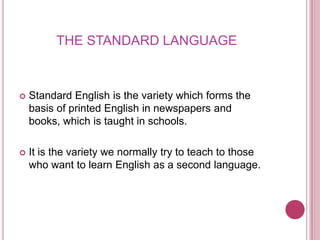
THE STANDARD LANGUAGE


   Standard English is the variety which forms the
    basis of printed English in newspapers and
    books, which is taught in schools.

   It is the variety we normally try to teach to those
    who want to learn English as a second language.
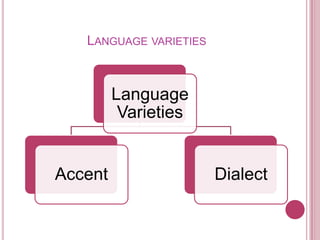
LANGUAGE VARIETIES


         Language
          Varieties


Accent                  Dialect
LANGUAGE VARIETIES

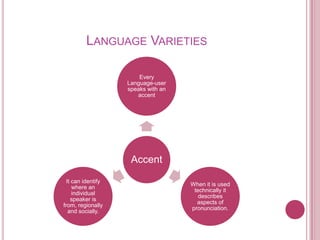
                        Every
                    Language-user
                    speaks with an
                       accent


                     Accent
  It can identify
                                     When it is used
     where an
                                      technically it
     individual
                                        describes
    speaker is
                                       aspects of
from, regionally
                                     pronunciation.
   and socially.
LANGUAGE VARIETIES

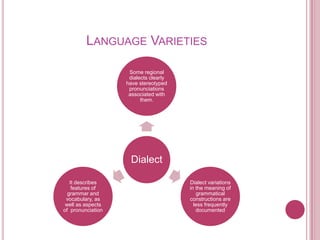
                    Some regional
                    dialects clearly
                   have stereotyped
                    pronunciations
                    associated with
                         them.


                    Dialect

   It describes                        Dialect variations
    features of                        in the meaning of
  grammar and                              grammatical
 vocabulary, as                        constructions are
 well as aspects                         less frequently
of pronunciation                          documented
LANGUAGE VARIETIES

   Isogloss: It represents a boundary between the
    areas with regard to that one particular linguistic
    item.

   When a number of isoglosses come together, we
    can refer to a dialect boundary.

   The drawing of isoglosses and dialect boundaries is
    quite useful in establishing a broad view of regional
    dialects.
LANGUAGE VARIETIES

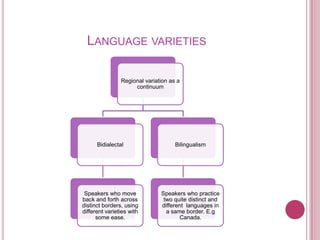
                Regional variation as a
                     continuum


      Bidialectal                    Bilingualism


 Speakers who move             Speakers who practice
back and forth across           two quite distinct and
distinct borders, using        different languages in
different varieties with         a same border. E.g
      some ease.                      Canada.
LANGUAGE PLANNING
   Goverment, legal and educational bodies in many
    countries have to plan which varieties of the languages
    spoken in the country are to be used for official
    business.

   The process os “selection” is followed by “codification” in
    which basic grammars, dictionaries and written models
    are used to establish the Standard Variety.

   The process of “implementation” is largely a matter of
    goverment attempts to encourage use of the
    Standard, and “acceptance” is the final stage when a
    substancial majority of the population have come to use
    the Estándar and think of it as the national language
    playing part of their national identity.
LANGUAGE VARIETIES


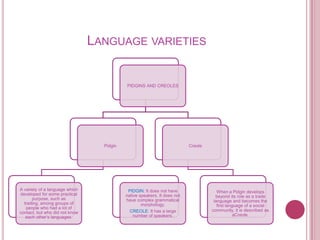
                                           PIDGINS AND CREOLES


                                  Pidgin                                  Creole


A variety of a language which               PIDGIN: It does not have                  When a Pidgin develops
developed for some practical               native speakers. It does not              beyond its role as a trade
      purpose, such as                     have complex grammatical                 language and becomes the
  trading, among groups of                         morphology.                        first language of a social
   people who had a lot of
                                             CREOLE: It has a large                community, it is described as
contact, but who did not know
                                               number of speakers.                              aCreole.
   each other’s languages.

Language varieties

  • 1.
  • 2.
    THE STANDARD LANGUAGE  Standard English is the variety which forms the basis of printed English in newspapers and books, which is taught in schools.  It is the variety we normally try to teach to those who want to learn English as a second language.
  • 3.
    LANGUAGE VARIETIES Language Varieties Accent Dialect
  • 4.
    LANGUAGE VARIETIES Every Language-user speaks with an accent Accent It can identify When it is used where an technically it individual describes speaker is aspects of from, regionally pronunciation. and socially.
  • 5.
    LANGUAGE VARIETIES Some regional dialects clearly have stereotyped pronunciations associated with them. Dialect It describes Dialect variations features of in the meaning of grammar and grammatical vocabulary, as constructions are well as aspects less frequently of pronunciation documented
  • 6.
    LANGUAGE VARIETIES  Isogloss: It represents a boundary between the areas with regard to that one particular linguistic item.  When a number of isoglosses come together, we can refer to a dialect boundary.  The drawing of isoglosses and dialect boundaries is quite useful in establishing a broad view of regional dialects.
  • 7.
    LANGUAGE VARIETIES Regional variation as a continuum Bidialectal Bilingualism Speakers who move Speakers who practice back and forth across two quite distinct and distinct borders, using different languages in different varieties with a same border. E.g some ease. Canada.
  • 8.
    LANGUAGE PLANNING  Goverment, legal and educational bodies in many countries have to plan which varieties of the languages spoken in the country are to be used for official business.  The process os “selection” is followed by “codification” in which basic grammars, dictionaries and written models are used to establish the Standard Variety.  The process of “implementation” is largely a matter of goverment attempts to encourage use of the Standard, and “acceptance” is the final stage when a substancial majority of the population have come to use the Estándar and think of it as the national language playing part of their national identity.
  • 9.
    LANGUAGE VARIETIES PIDGINS AND CREOLES Pidgin Creole A variety of a language which PIDGIN: It does not have When a Pidgin develops developed for some practical native speakers. It does not beyond its role as a trade purpose, such as have complex grammatical language and becomes the trading, among groups of morphology. first language of a social people who had a lot of CREOLE: It has a large community, it is described as contact, but who did not know number of speakers. aCreole. each other’s languages.