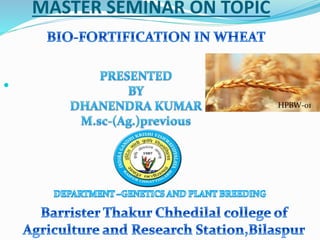


MASTER SEMINAR ON TOPIC

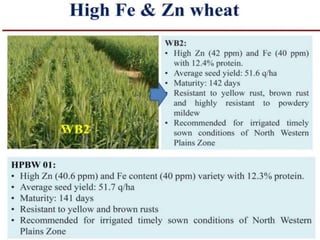
HPBW-01
HIGHLIGHTS
 Introduction of Topic
 What is Bio-fortification and why we need Bio-fortification
 Bio-fortification and their Objective
 Important of micronutrient in human health
 Data of Hidden hunger Problem in India
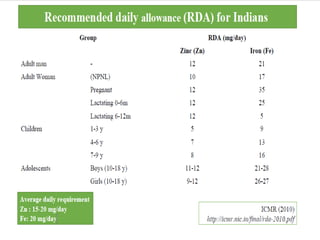
 Recommended daily allowance of micronutrient
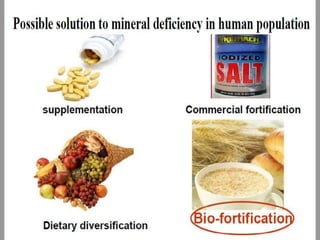
 Possible solution to reducing the malnutrition problem
 Target crop for Bio-fortification
 Introduction of wheat and their Genotype
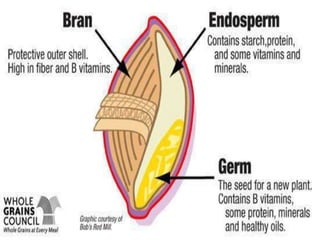
 Nutritive value of wheat grain
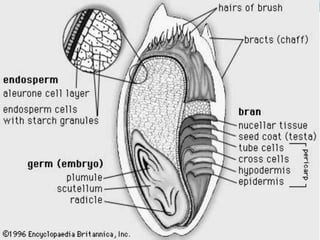
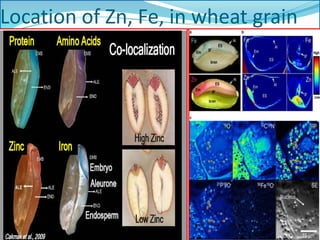
 Location of iron ,zinc, & protein in wheat grain
 Different Approaches for increase the micronutrient in wheat
and other cereal crop’s.
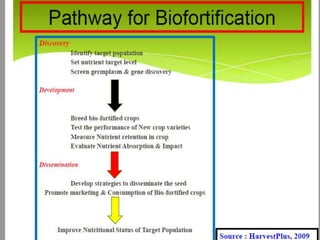
 Breeding procedure and Bio-fortification pathway in wheat
 Achievements of Bio-fortification in wheat
 Conclusion & References
What is Biofortification
 Bio-fortification:
 Greek word “bios” means “life” and Latin word
“fortificare” means “make strong”.
 Bio-fortification is a method of breeding crops to increase
their nutritional value
 Bio-fortification refers to increasing genetically the bio-
available mineral content of food crops (Brinch-Pederson et
al., 2007).
 Bio-fortification differs from ordinary fortification because it
focuses on making plant foods more nutritious as the plants
are growing, rather than having nutrients added to the foods
when they are being processed.
Importance of Bio-fortification
 Some points present here to clearly identified role of crop bio
fortification …….
 To overcome the mal-nutrition's in human beings
 To increment of nutritional quality in daily diets
 To improvement of plant or crop quality and increment of
variability in Germplasm
 Bio-fortification for important crop plants through
biotechnological applications is a cost-effective and
sustainable solution for alleviating malnutrition etc.,.
 Indian Parliament recently has passed a budget which
includes $15 million for bio-fortification (DBT) Direct benefit
transfer for
rice, wheat and maize over five years.
 why we need bio-fortification
 This study evaluate the inheritance of zinc, iron , protein in
wheat and their genetic background and utilized in the
wheat bio-fortification breeding program that uses diverse
genetic resources, including landraces, recreated synthetic
hexaploids , T. spelta and pre-breeding lines. And
Identification of Wheat Genotype(Lines) With Higher Zinc
, iron Efficiency.
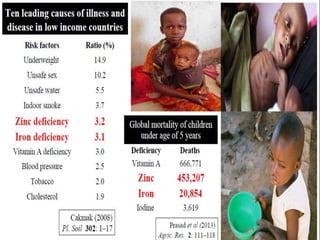
 Micronutrient deficiency, also known as hidden hunger, is
one of the most important challenges facing humanity
today. It is caused by a lack of essential vitamins and
minerals (primarily vitamin A, iron, and zinc) in the diet
and currently affects more than two billion people
worldwide (White and Broadley, 2009; WHO, 2017).
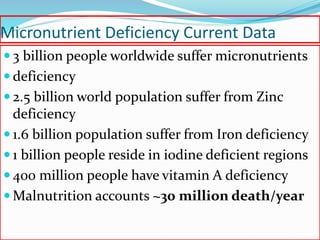
Micronutrient Deficiency Current Data
 3 billion people worldwide suffer micronutrients
 deficiency
 2.5 billion world population suffer from Zinc
deficiency
 1.6 billion population suffer from Iron deficiency
 1 billion people reside in iodine deficient regions
 400 million people have vitamin A deficiency
 Malnutrition accounts ~30 million death/year
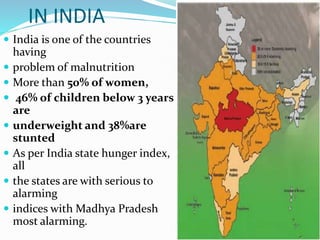
IN INDIA
 India is one of the countries
having
 problem of malnutrition
 More than 50% of women,
 46% of children below 3 years
are
 underweight and 38%are
stunted
 As per India state hunger index,
all
 the states are with serious to
alarming
 indices with Madhya Pradesh
most alarming.
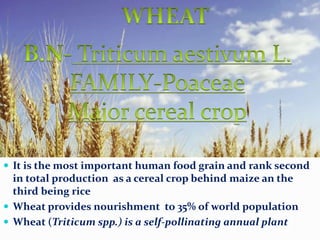
 It is the most important human food grain and rank second
in total production as a cereal crop behind maize an the
third being rice
 Wheat provides nourishment to 35% of world population
 Wheat (Triticum spp.) is a self-pollinating annual plant
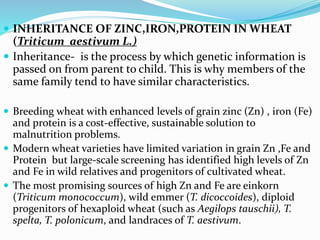
 INHERITANCE OF ZINC,IRON,PROTEIN IN WHEAT
(Triticum aestivum L.)
 Inheritance- is the process by which genetic information is
passed on from parent to child. This is why members of the
same family tend to have similar characteristics.
 Breeding wheat with enhanced levels of grain zinc (Zn) , iron (Fe)
and protein is a cost-effective, sustainable solution to
malnutrition problems.
 Modern wheat varieties have limited variation in grain Zn ,Fe and
Protein but large-scale screening has identified high levels of Zn
and Fe in wild relatives and progenitors of cultivated wheat.
 The most promising sources of high Zn and Fe are einkorn
(Triticum monococcum), wild emmer (T. dicoccoides), diploid
progenitors of hexaploid wheat (such as Aegilops tauschii), T.
spelta, T. polonicum, and landraces of T. aestivum.
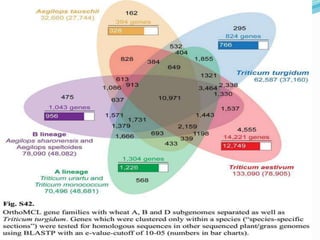
Wheat genome – Introduction
 Wheat genome –
Modern Bread Wheat (Triticum aestivum L.)
Hexaploid (AABBDD) 2n=6x=42
Genome Size of 17 Gb
>80% repeats, 2% coding sequence
High sequence similarity within sub
genomes –A/B/D
Location of Zn, Fe, in wheat grain
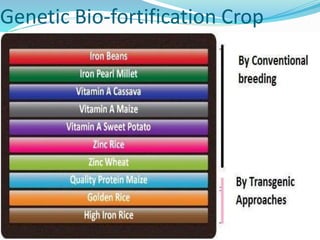
Genetic Bio-fortification Crop
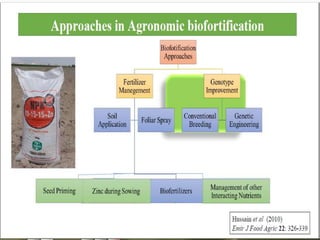
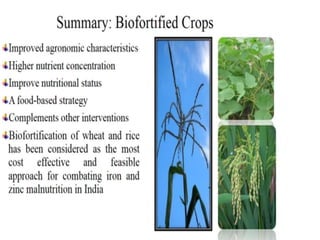
 Bio-fortification is a strategy that involves the use of plant
breeding or agronomic practices to increase the density of
essential nutrients in the edible part of staple crops that may help
to combat deficiencies among poor people who survive on main
staples such as cereals .
 Agronomic bio-fortification is a fertilizer-based approach that
relies on soil and/or foliar application of micronutrients either
alone or in combination with other fertilizers. It is well-
established that a Zn fertilizer strategy is an effective way to bio-
fortify cereal crops with Zn, but recurrent cost is involved
(Cakmak and Kutman, 2018).
 Genetic bio-fortification is a strategy that uses plant
breeding
 techniques to produce staple food crops with higher
micronutrient levels, reducing levels of anti-nutrients and
increasing the levels of substances that promote nutrient
absorption
 Advantage
 Easily applicable
 Affordable in the target populations
Breeding Target
 The amount of Fe, Zn and Vit A required in a bio-fortified
crop for
 significant impact on nutritional status Breeding Target
 ‘Baseline’ = amount obtained from varieties consumed
by target population=
 ‘Increment’ = amount to be added by breeding
Germplasma still below the 100% target levels.
 three main cereals even if breeding would concentrate on
increasing iron levels No direct breeding efforts for iron for
rice, wheat and maize under HarvestPlus II
 Transgenic approach is only option.
Transgenic strategies to increase
bioavailable forms of iron and zinc
 A step change in our ability to biofortify crops has come from a much better
understanding of how plants take up and distribute micronutrients, mainly
through the identification of genes for mineral transport and the biosynthesis
of organic metal chelators.
 This knowledge has been exploited in modern biotechnology approaches,
demonstrating that it is possible to increase iron and zinc levels, not only in the
wholegrain but also specifically in the starchy endosperm.
 In fact, this shows that there is no biological reason why iron and zinc cannot
be concentrated in the starchy endosperm and hence white flour
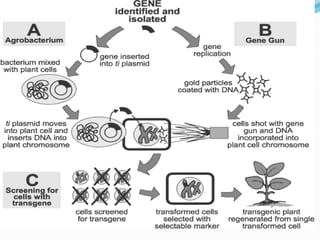
 The proof‐of‐concept of transgenic approaches was initially demonstrated in
rice. Increased expression of NAS3, one of three genes encoding nicotianamine
synthase (NAS), led to a 2.2‐fold increase in the concentration of zinc and a
2.9‐fold increase in the concentration of iron in the grain (Lee et al. 2009).
 Furthermore, feeding anaemic mice this enriched rice resulted in greater
increases in haemoglobin and haematocrit (the volume of red blood cells in
blood) compared to when conventional rice was fed. This high bioavailability
results from the fact that the starchy endosperm cells do not store phytate. The
initial transgenic work on NAS in rice led to similar studies in other cereals
including wheat
Breeding strategy for Wheat
Low genetic variation in cultivated wheat
for Zn/Fe
 Wild relatives (T. speltoides, T. tauschii,
(emmer wheat and landraces) known to
have upto 190 ppm
 Recreated synthetics, wild and landraces
are being used as Progenitor for high Zn/Fe
 Limited backcross approach to
introgression high Zn genes into elite
wheat
 Selected bulk scheme- Most effective
method
 2nd round of breeding using wide-cross
derived lines with
better yielding parents
 A rapid, High-throughput, non-destructive
XRF machine being used for fast-track
Zn/Fe analysis
CONCLUSION
Given the severity of mineral malnutrition in humans
worldwide, bio-fortification of micronutrients, especially
Fe and Zn, in cereals must be encouraged. Although
agronomic strategies (e.g., fertilizer strategy) can also
increase micronutrient concentrations in wheat grain,
conventional breeding strategies are always regarded as
a more sustainable and cost-effective solution to reduce
mineral malnutrition in the long run. However, there are
still many challenges.
Refrences
 ARTICLE -Review: Breeding wheat for enhanced micronutrients
Yunfeng Xu1, Diaoguo An1,3, Hongjie Li2, and Hongxing Xu1
 1Center for Agricultural Resources Research, Institute of Genetics and
Developmental Biology, Chinese Academy
 ARTICLE - Difference in protein content of wheat (Triticum aestivum
L.): Effect on
 functional, pasting, color and antioxidant properties
 Sneh Punia a, Kawaljit Singh Sandhu a,b,⇑, Anil Kumar Siroha a
 BOOK-Genetic Resources of Triticum
Karl Hammer and Helmut Knüpffer
 BOOK --Wheat and Flour Testing Methods: A Guide to Understanding
Wheat and Flour Quality: Version 2
ARTICLE- See discussions, stats, and author profiles for this publication
at: https://www.researchgate.net/publication/301263023 Wheat
Breeding and Genetics
THANKYOU
Wheat Biofortification Initiatives
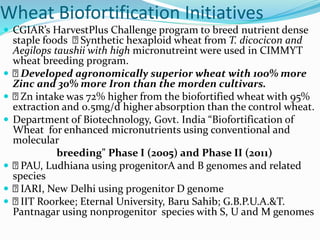
 CGIAR’s HarvestPlus Challenge program to breed nutrient dense
staple foods Synthetic hexaploid wheat from T. dicocicon and
Aegilops taushii with high micronutreint were used in CIMMYT
wheat breeding program.
 Developed agronomically superior wheat with 100% more
Zinc and 30% more Iron than the morden cultivars.
 Zn intake was 72% higher from the biofortified wheat with 95%
extraction and 0.5mg/d higher absorption than the control wheat.
 Department of Biotechnology, Govt. India “Biofortification of
Wheat for enhanced micronutrients using conventional and
molecular
breeding" Phase I (2005) and Phase II (2011)
 PAU, Ludhiana using progenitorA and B genomes and related
species
 IARI, New Delhi using progenitor D genome
 IIT Roorkee; Eternal University, Baru Sahib; G.B.P.U.A.&T.
Pantnagar using nonprogenitor species with S, U and M genomes
Food is the
moral
right of all
who are
born into
this world
-- Borlaug

Zinc iron wheat biofortification

  • 1.
    MASTER SEMINAR ONTOPIC  HPBW-01
  • 2.
    HIGHLIGHTS  Introduction ofTopic  What is Bio-fortification and why we need Bio-fortification  Bio-fortification and their Objective  Important of micronutrient in human health  Data of Hidden hunger Problem in India  Recommended daily allowance of micronutrient  Possible solution to reducing the malnutrition problem  Target crop for Bio-fortification  Introduction of wheat and their Genotype  Nutritive value of wheat grain  Location of iron ,zinc, & protein in wheat grain  Different Approaches for increase the micronutrient in wheat and other cereal crop’s.  Breeding procedure and Bio-fortification pathway in wheat  Achievements of Bio-fortification in wheat  Conclusion & References
  • 3.
    What is Biofortification Bio-fortification:  Greek word “bios” means “life” and Latin word “fortificare” means “make strong”.  Bio-fortification is a method of breeding crops to increase their nutritional value  Bio-fortification refers to increasing genetically the bio- available mineral content of food crops (Brinch-Pederson et al., 2007).  Bio-fortification differs from ordinary fortification because it focuses on making plant foods more nutritious as the plants are growing, rather than having nutrients added to the foods when they are being processed.
  • 4.
    Importance of Bio-fortification Some points present here to clearly identified role of crop bio fortification …….  To overcome the mal-nutrition's in human beings  To increment of nutritional quality in daily diets  To improvement of plant or crop quality and increment of variability in Germplasm  Bio-fortification for important crop plants through biotechnological applications is a cost-effective and sustainable solution for alleviating malnutrition etc.,.  Indian Parliament recently has passed a budget which includes $15 million for bio-fortification (DBT) Direct benefit transfer for rice, wheat and maize over five years.
  • 5.
     why weneed bio-fortification  This study evaluate the inheritance of zinc, iron , protein in wheat and their genetic background and utilized in the wheat bio-fortification breeding program that uses diverse genetic resources, including landraces, recreated synthetic hexaploids , T. spelta and pre-breeding lines. And Identification of Wheat Genotype(Lines) With Higher Zinc , iron Efficiency.  Micronutrient deficiency, also known as hidden hunger, is one of the most important challenges facing humanity today. It is caused by a lack of essential vitamins and minerals (primarily vitamin A, iron, and zinc) in the diet and currently affects more than two billion people worldwide (White and Broadley, 2009; WHO, 2017).
  • 7.
    Micronutrient Deficiency CurrentData  3 billion people worldwide suffer micronutrients  deficiency  2.5 billion world population suffer from Zinc deficiency  1.6 billion population suffer from Iron deficiency  1 billion people reside in iodine deficient regions  400 million people have vitamin A deficiency  Malnutrition accounts ~30 million death/year
  • 8.
    IN INDIA  Indiais one of the countries having  problem of malnutrition  More than 50% of women,  46% of children below 3 years are  underweight and 38%are stunted  As per India state hunger index, all  the states are with serious to alarming  indices with Madhya Pradesh most alarming.
  • 13.
     It isthe most important human food grain and rank second in total production as a cereal crop behind maize an the third being rice  Wheat provides nourishment to 35% of world population  Wheat (Triticum spp.) is a self-pollinating annual plant
  • 16.
     INHERITANCE OFZINC,IRON,PROTEIN IN WHEAT (Triticum aestivum L.)  Inheritance- is the process by which genetic information is passed on from parent to child. This is why members of the same family tend to have similar characteristics.  Breeding wheat with enhanced levels of grain zinc (Zn) , iron (Fe) and protein is a cost-effective, sustainable solution to malnutrition problems.  Modern wheat varieties have limited variation in grain Zn ,Fe and Protein but large-scale screening has identified high levels of Zn and Fe in wild relatives and progenitors of cultivated wheat.  The most promising sources of high Zn and Fe are einkorn (Triticum monococcum), wild emmer (T. dicoccoides), diploid progenitors of hexaploid wheat (such as Aegilops tauschii), T. spelta, T. polonicum, and landraces of T. aestivum.
  • 17.
    Wheat genome –Introduction  Wheat genome – Modern Bread Wheat (Triticum aestivum L.) Hexaploid (AABBDD) 2n=6x=42 Genome Size of 17 Gb >80% repeats, 2% coding sequence High sequence similarity within sub genomes –A/B/D
  • 21.
    Location of Zn,Fe, in wheat grain
  • 23.
  • 25.
     Bio-fortification isa strategy that involves the use of plant breeding or agronomic practices to increase the density of essential nutrients in the edible part of staple crops that may help to combat deficiencies among poor people who survive on main staples such as cereals .  Agronomic bio-fortification is a fertilizer-based approach that relies on soil and/or foliar application of micronutrients either alone or in combination with other fertilizers. It is well- established that a Zn fertilizer strategy is an effective way to bio- fortify cereal crops with Zn, but recurrent cost is involved (Cakmak and Kutman, 2018).  Genetic bio-fortification is a strategy that uses plant breeding  techniques to produce staple food crops with higher micronutrient levels, reducing levels of anti-nutrients and increasing the levels of substances that promote nutrient absorption  Advantage  Easily applicable  Affordable in the target populations
  • 27.
    Breeding Target  Theamount of Fe, Zn and Vit A required in a bio-fortified crop for  significant impact on nutritional status Breeding Target  ‘Baseline’ = amount obtained from varieties consumed by target population=  ‘Increment’ = amount to be added by breeding Germplasma still below the 100% target levels.  three main cereals even if breeding would concentrate on increasing iron levels No direct breeding efforts for iron for rice, wheat and maize under HarvestPlus II  Transgenic approach is only option.
  • 28.
    Transgenic strategies toincrease bioavailable forms of iron and zinc  A step change in our ability to biofortify crops has come from a much better understanding of how plants take up and distribute micronutrients, mainly through the identification of genes for mineral transport and the biosynthesis of organic metal chelators.  This knowledge has been exploited in modern biotechnology approaches, demonstrating that it is possible to increase iron and zinc levels, not only in the wholegrain but also specifically in the starchy endosperm.  In fact, this shows that there is no biological reason why iron and zinc cannot be concentrated in the starchy endosperm and hence white flour  The proof‐of‐concept of transgenic approaches was initially demonstrated in rice. Increased expression of NAS3, one of three genes encoding nicotianamine synthase (NAS), led to a 2.2‐fold increase in the concentration of zinc and a 2.9‐fold increase in the concentration of iron in the grain (Lee et al. 2009).  Furthermore, feeding anaemic mice this enriched rice resulted in greater increases in haemoglobin and haematocrit (the volume of red blood cells in blood) compared to when conventional rice was fed. This high bioavailability results from the fact that the starchy endosperm cells do not store phytate. The initial transgenic work on NAS in rice led to similar studies in other cereals including wheat
  • 30.
    Breeding strategy forWheat Low genetic variation in cultivated wheat for Zn/Fe  Wild relatives (T. speltoides, T. tauschii, (emmer wheat and landraces) known to have upto 190 ppm  Recreated synthetics, wild and landraces are being used as Progenitor for high Zn/Fe  Limited backcross approach to introgression high Zn genes into elite wheat  Selected bulk scheme- Most effective method  2nd round of breeding using wide-cross derived lines with better yielding parents  A rapid, High-throughput, non-destructive XRF machine being used for fast-track Zn/Fe analysis
  • 33.
    CONCLUSION Given the severityof mineral malnutrition in humans worldwide, bio-fortification of micronutrients, especially Fe and Zn, in cereals must be encouraged. Although agronomic strategies (e.g., fertilizer strategy) can also increase micronutrient concentrations in wheat grain, conventional breeding strategies are always regarded as a more sustainable and cost-effective solution to reduce mineral malnutrition in the long run. However, there are still many challenges.
  • 34.
    Refrences  ARTICLE -Review:Breeding wheat for enhanced micronutrients Yunfeng Xu1, Diaoguo An1,3, Hongjie Li2, and Hongxing Xu1  1Center for Agricultural Resources Research, Institute of Genetics and Developmental Biology, Chinese Academy  ARTICLE - Difference in protein content of wheat (Triticum aestivum L.): Effect on  functional, pasting, color and antioxidant properties  Sneh Punia a, Kawaljit Singh Sandhu a,b,⇑, Anil Kumar Siroha a  BOOK-Genetic Resources of Triticum Karl Hammer and Helmut Knüpffer  BOOK --Wheat and Flour Testing Methods: A Guide to Understanding Wheat and Flour Quality: Version 2 ARTICLE- See discussions, stats, and author profiles for this publication at: https://www.researchgate.net/publication/301263023 Wheat Breeding and Genetics
  • 35.
  • 36.
    Wheat Biofortification Initiatives CGIAR’s HarvestPlus Challenge program to breed nutrient dense staple foods Synthetic hexaploid wheat from T. dicocicon and Aegilops taushii with high micronutreint were used in CIMMYT wheat breeding program.  Developed agronomically superior wheat with 100% more Zinc and 30% more Iron than the morden cultivars.  Zn intake was 72% higher from the biofortified wheat with 95% extraction and 0.5mg/d higher absorption than the control wheat.  Department of Biotechnology, Govt. India “Biofortification of Wheat for enhanced micronutrients using conventional and molecular breeding" Phase I (2005) and Phase II (2011)  PAU, Ludhiana using progenitorA and B genomes and related species  IARI, New Delhi using progenitor D genome  IIT Roorkee; Eternal University, Baru Sahib; G.B.P.U.A.&T. Pantnagar using nonprogenitor species with S, U and M genomes
  • 37.
    Food is the moral rightof all who are born into this world -- Borlaug