Indian Institute of Technology, Kharagpur
Presented by
KANTHAMANI K.H
Contents:
1
• Introduction
• Objective
• Energy utilized over the life cycle of building
• Use of Technologies for making a building energy
efficient
• Methodology
• Conclusion
• References
In India, 30 to 40% of all primary energy is used in buildings
 The main aim of energy efficient building is to produce buildings
with a minimum of environmental impact
Plays a major role in minimizing overall energy consumption and
cost
Around the world, the private and business divisions utilize 2,589
Mtoe (Mega tonnes of oil equivalent) in energy, which represents
very nearly 40% of final energy use on the planet
INTRODUCTION 2
OBJECTIVE 3
To modulate the condition such that they are always within or as
close as possible to comfort zone
Increasing demand for building services and comfort levels, together
with the rise in time spent inside buildings, assure that the upward
trend in energy demand will continue in the future
For this reason, energy efficiency in buildings is today a prime
objective for energy policy at regional, national and international levels
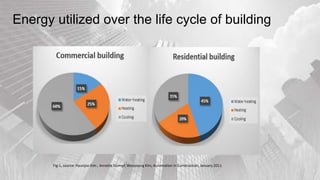
Energy utilized over the life cycle of building
Fig:1, source: Hyunjoo Kim , Annette Stumpf, Wooyoung Kim, Automation in Construction, January 2011.
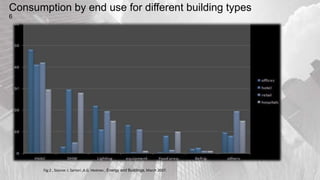
Consumption by end use for different building types
6
Fig:2 , Source: I. Sartori ,A.G. Hestnes , Energy and Buildings, March 2007.
percentage
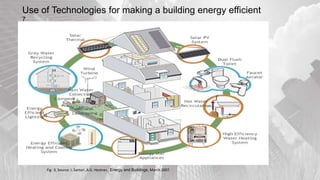
Fig -3, Source: I. Sartori ,A.G. Hestnes , Energy and Buildings, March 2007.
Use of Technologies for making a building energy efficient
7
Methodology
Data mining technique
8
Process of extraction of useful information and patterns from huge data and its
also called as knowledge discover process
Help project teams discover useful patterns to improve the energy efficiency of
building design during the design phase
Fault detection and diagnostics analytic tools provide insights into building
systems that help reduce energy consumption, improve building performance
and lower costs
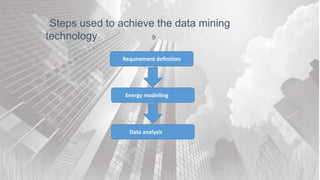
Steps used to achieve the data mining
technology 9
Requirement definition
Energy modelling
Data analysis
Energy Simulation in building design
9
 Allows architects and engineers to visualize, how energy is consumed and for what
reasons
 An energy model – allows comparative analysis between proposed design and
altered design, just providing with the scope of cutting down on energy usage
 Assists in availing green building certificates
Data mining functionalities
Characterization, discrimination, association, classification, clustering, outlier, and
trend analysis, etc.
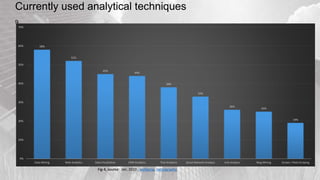
Currently used analytical techniques
9
Fig-4, source: Jan, 2010 , wolfgang, netnography.
58%
52%
45%
44%
38%
33%
26%
25%
19%
0%
10%
20%
30%
40%
50%
60%
70%
Data Mining Web Analytics Data Visulization CRM Analytics Text Analytics Social Network Analysis Link Analysis Blog Mining Screen / Web Scraping
Conclusion
10
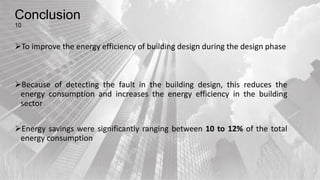
To improve the energy efficiency of building design during the design phase
Because of detecting the fault in the building design, this reduces the
energy consumption and increases the energy efficiency in the building
sector
Energy savings were significantly ranging between 10 to 12% of the total
energy consumption
References
11
 Thormark, C. (2002). A low energy building in a life cycle—its embodied energy, energy need for operation and
recycling potential. Building and environment, 37(4), 429-435
 Sartori, I., & Hestnes, A. G. (2007). Energy use in the life cycle of conventional and low-energy buildings: A review
article. Energy and buildings, 39(3), 249-257
 Kim, H., Stumpf, A., & Kim, W. (2011). Analysis of an energy efficient building design through data mining
approach. Automation in Construction, 20(1), 37-43
 Pérez-Lombard, L., Ortiz, J., & Pout, C. (2008). A review on buildings energy consumption information. Energy
and buildings, 40(3), 394-398
 Oldewurtel, F., Parisio, A., Jones, C. N., Gyalistras, D., Gwerder, M., Stauch, V., ... & Morari, M. (2012). Use of
model predictive control and weather forecasts for energy efficient building climate control. Energy and
Buildings, 45, 15-27

Energy efficient building

  • 1.
    Indian Institute ofTechnology, Kharagpur Presented by KANTHAMANI K.H
  • 2.
    Contents: 1 • Introduction • Objective •Energy utilized over the life cycle of building • Use of Technologies for making a building energy efficient • Methodology • Conclusion • References
  • 3.
    In India, 30to 40% of all primary energy is used in buildings  The main aim of energy efficient building is to produce buildings with a minimum of environmental impact Plays a major role in minimizing overall energy consumption and cost Around the world, the private and business divisions utilize 2,589 Mtoe (Mega tonnes of oil equivalent) in energy, which represents very nearly 40% of final energy use on the planet INTRODUCTION 2
  • 4.
    OBJECTIVE 3 To modulatethe condition such that they are always within or as close as possible to comfort zone Increasing demand for building services and comfort levels, together with the rise in time spent inside buildings, assure that the upward trend in energy demand will continue in the future For this reason, energy efficiency in buildings is today a prime objective for energy policy at regional, national and international levels
  • 5.
    Energy utilized overthe life cycle of building Fig:1, source: Hyunjoo Kim , Annette Stumpf, Wooyoung Kim, Automation in Construction, January 2011.
  • 6.
    Consumption by enduse for different building types 6 Fig:2 , Source: I. Sartori ,A.G. Hestnes , Energy and Buildings, March 2007. percentage
  • 7.
    Fig -3, Source:I. Sartori ,A.G. Hestnes , Energy and Buildings, March 2007. Use of Technologies for making a building energy efficient 7
  • 8.
    Methodology Data mining technique 8 Processof extraction of useful information and patterns from huge data and its also called as knowledge discover process Help project teams discover useful patterns to improve the energy efficiency of building design during the design phase Fault detection and diagnostics analytic tools provide insights into building systems that help reduce energy consumption, improve building performance and lower costs
  • 9.
    Steps used toachieve the data mining technology 9 Requirement definition Energy modelling Data analysis
  • 10.
    Energy Simulation inbuilding design 9  Allows architects and engineers to visualize, how energy is consumed and for what reasons  An energy model – allows comparative analysis between proposed design and altered design, just providing with the scope of cutting down on energy usage  Assists in availing green building certificates Data mining functionalities Characterization, discrimination, association, classification, clustering, outlier, and trend analysis, etc.
  • 11.
    Currently used analyticaltechniques 9 Fig-4, source: Jan, 2010 , wolfgang, netnography. 58% 52% 45% 44% 38% 33% 26% 25% 19% 0% 10% 20% 30% 40% 50% 60% 70% Data Mining Web Analytics Data Visulization CRM Analytics Text Analytics Social Network Analysis Link Analysis Blog Mining Screen / Web Scraping
  • 12.
    Conclusion 10 To improve theenergy efficiency of building design during the design phase Because of detecting the fault in the building design, this reduces the energy consumption and increases the energy efficiency in the building sector Energy savings were significantly ranging between 10 to 12% of the total energy consumption
  • 13.
    References 11  Thormark, C.(2002). A low energy building in a life cycle—its embodied energy, energy need for operation and recycling potential. Building and environment, 37(4), 429-435  Sartori, I., & Hestnes, A. G. (2007). Energy use in the life cycle of conventional and low-energy buildings: A review article. Energy and buildings, 39(3), 249-257  Kim, H., Stumpf, A., & Kim, W. (2011). Analysis of an energy efficient building design through data mining approach. Automation in Construction, 20(1), 37-43  Pérez-Lombard, L., Ortiz, J., & Pout, C. (2008). A review on buildings energy consumption information. Energy and buildings, 40(3), 394-398  Oldewurtel, F., Parisio, A., Jones, C. N., Gyalistras, D., Gwerder, M., Stauch, V., ... & Morari, M. (2012). Use of model predictive control and weather forecasts for energy efficient building climate control. Energy and Buildings, 45, 15-27