New Collection Launch | Marketing Plan22.10.2009
Situation analysis1
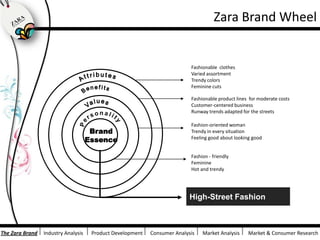
Zara Brand WheelFashionable  clothesVaried assortmentTrendy colorsFeminine cutsFashionable product lines  for moderate costsCustomer-centered businessRunway trends adapted for the streetsFashion-oriented womanTrendy in every situationFeeling good about looking goodFashion - friendlyFeminine Hot and trendyAttributesBenefitsValuesPersonalityBrand EssenceHigh-Street Fashion
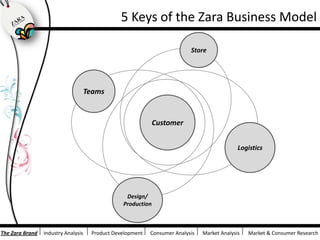
5 Keys of the Zara Business ModelStoreTeamsCustomerLogisticsDesign/Production
5 Keys of the Zara Business ModelCustomer“Main driving force behind the Zara brand.”Starting point for all Zara activitiesLead role in:Store design
Production
Logistics
Team Customer
s
5 Keys of the Zara Business ModelStoreStore“Meeting point between the customer and the Zara fashion offer.”1,520 stores collect information regarding customer demands.New products introduced twice a week.Top locations – 17 visits / year / customerMeticulously designed shop windowsMaximum attention to interior & exterior architechtual designAppropriate coordination of garmentsExcellent customer care
5 Keys of the Zara Business ModelDesign & Production“Inspiration comes from the street, music, art … but above all, the store.”Proximity of production facilitiesImmediate reaction to trends.Continuous work for all teams.Managers – teams – customer demand – forms, designs, fabrics, compliments1,186 suppliers, 200 desginersDesign/ Production
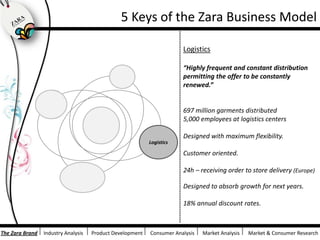
5 Keys of the Zara Business ModelLogistics“Highly frequent and constant distribution permitting the offer to be constantly renewed.”697 million garments distributed5,000 employees at logistics centersDesigned with maximum flexibility.Customer oriented.24h – receiving order to store delivery (Europe)Designed to absorb growth for next years.18% annual discount rates.Logistics
5 Keys of the Zara Business ModelTeams“Teams with vast sales knowledge geared to towards the customer.”89,112 professionalsCustomer oriented.Make the stores a pleasant environment.Apply corporate, social & environmental responsibility in day-to-day work.Teams
Zara’s Performance159 store openings in 20081,530 stores4 new countriesin 2008Brand Value:$ 8,609 MZARASales€ 6,824 Million73 countries
The IndustryHigh street fashion brand14Industry trendsDemocratization of luxuryInclusivenessStreet trendsDesigner housesKey success factorsDifferentiation & individualismNew fashion consumer
Customer Focused Product DevelopmentSaturated industryNeed to increase brand valueResponding to current industry trendsIdentifying the need for the product in the marketA full-shaped body is a beautiful body
Customer Focused Product DevelopmentMarket entry barriersSaturated industryDesign challengesNeed to increase brand valueExisting customer reactionsResponding to current industry trendsIdentifying the need for the product in the market“Fat is not fashionable” OpportunitiesChallenges
Consumer Analysis      Today’s fashion consumer:More choice, more educated, more savvy & demanding “New breed of shoppers”Loyalty, variety, freshness
Fashion Consumer Behavior AnalysisInterestGives pleasure & enjoyment Means of self-expressionInvolvementEmotionsBehavior
Fashion Consumer Behavior AnalysisInterestPurchasing experienceFun, fantasy, social or emotional gratificationHedonicsInvolvementEmotionsImpulse buyingBehavior
Fashion Consumer Behavior AnalysisInterestImportance:Consumers attach meaning to their clothes
Role of fashion in societyDrivers:Individual motives
Projecting a desired self-imageLinked to personal values & needs:Express and communicate value
Values guide consumer behavior
Types of values: personal, economic, aestheticHedonicsInvolvementEmotionsBehavior
Fashion Consumer Behavior AnalysisInterestPositive vs. negativeShorter decision times
More impulse buying
A feeling of being unconstrained
Desire to reward oneselfHow to generate positive emotions?Use the retail environment to positively influence moods:
suitable layouts
colors
effective sales personnel
emotionally uplifting atmosphereHedonicsInvolvementEmotionsBehaviorImpulse buying
Fashion Consumer Behavior AnalysisInterestImpulse buyingFashion oriented: strongly oriented to fashion involvement: providing sensory or experiential cues of fashion products.
Created by the symbolic interactions of the product & the consumer emotional experiences
Need to understand impulse buying behavior for fashion products from an experiential perspective = guidance in developing strategies HedonicsInvolvementEmotionsBehavior
Plus Size Consumer Analysis1 in 3 women are unhappy with the way clothes fit them141281610186222024unconfident confident
Plus Size Consumer BehaviorSelf esteem: important motivation driver for consumption Consumers tend to assign their own meanings to clothes.Clothing: overt consumer behavior
Market AnalysisSegment growth: 40% increase by 2014.Only 5% of retail space is dedicated to the +size products
Types of CompetitorsDedicated Ranges1Extension of Size Ranges2Designer Boutiques3E-commerce4
New Line PositioningHigh FashionBoutiquesZaraTorrid1H&M2High PriceLow Price3Charming ShoppersM&SDedicated Ranges4Extension of Size RangesJunoniaDesigner BoutiquesE-commerceLow Fashion
DifferentiationBrand awarenessNew in this segmentsBrand loyaltyMore experienced competitorsSize & growthLack of e-commerceHigh fashion for modest pricesWeaknessesStrengths
Market & Consumer ResearchGeneral objectivesDevelop a consumer focused product line and marketing strategy Reinforce customer focus as the key driver of the Zara brandSpecific objectivesStrategically segment the marketVisualize the impact of the new lineIntegrate consumer input into developmentStrategically plan the integration of the new line within the existing business model – use core competencies & reinforce brand values with a new twistConsistent with our current approach
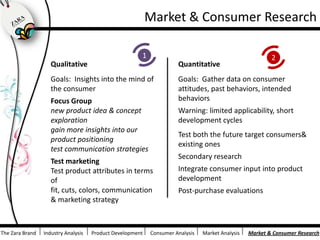
Market & Consumer Research12Qualitative Goals:  Insights into the mind of the consumerFocus Groupnew product idea & concept explorationgain more insights into our product positioningtest communication strategiesTest marketingTest product attributes in terms of fit, cuts, colors, communication  & marketing strategyQuantitativeGoals:  Gather data on consumer attitudes, past behaviors, intended behaviorsWarning: limited applicability, short development cyclesTest both the future target consumers& existing onesSecondary researchIntegrate consumer input into product developmentPost-purchase evaluations
Marketing focus2
Strategic Marketing ObjectivesOverall marketing objectives: increase customer equityIncrease consumer satisfaction, decrease dissatisfaction of the plus size consumerIncrease purchase frequency among plus size customersContinue to grow by extending the Zara fashion brandIncrease brand awareness and favorable attitudes among consumers
Zara for every woman STPPlus size, full shape body womenClothes that fit their body shape and make them look beautifulDemographicsPsychographicsBenefits soughtMain segmentInterested in fashion trendsConscious about their looksEnjoy shopping and socializingHectic lifestyleAged 18-40Work in big cities / pursuing higher-level education Mid-range income
Zara for every woman Positioning
Marketing strategy3
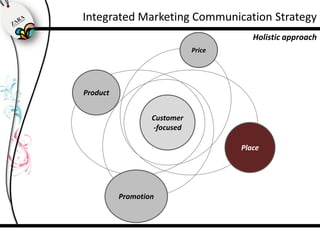
Integrated Marketing Communication StrategyHolistic approachPriceProductCustomer-focusedPlacePromotion
Customer-focused Product Feel product. High involvementBack to the drawing board	Design products that complement the full body shape	Incorporate consumer feedback on most salient attributes2) Product symbolism	Zara knows my body shape	I look good in Zara clothes	I feel beautiful
Customer-focused Product Feel product. High involvement3) Colors and material	Important choice for perceived quality of the products	Differentiate Zara from competitors	Bring a fresh look to the plus size segment4) The ZARA label	Feed on the existing Zara name and values associated with the brand	Aim at customer loyalty	Still away from the competitors the variety-seeking customer
Integrated Marketing Communication StrategyHolistic approachPriceProductCustomer-focusedPlacePromotion
Promotion StrategyMain communication objectivesInform about the new lineCreate positive emotions in connection to the new lineGenerate consumer interest and purchase intentionsAbove-the-line: Print advertisingBellow-the-line: Brand communicationPRInternetEventsMedia cooperation
Advertising StrategyConsistent with current strategyLess is moreMain communication messageUSP: The only true fashion brand to consider your body shapeEmotional appealSupport line launch only with print advertising
Advertising Idea Generationthe full body shape woman,ForZaraBrand nameTarget consumeris the fashion expertfor your wardrobeBrand characterProduct / Competitive Framethat          helps you look the best you can        becauseBrand promiseit takes the high fashion trends and adapts them for the REAL youSupportAdvertising Positioning Formula
Advertising Creative, Production & PlacementHigh fashion look Full shape body modelBody shape revealed: curved lines should not be hiddenMetaphor: dominance, power of the portrayed womenPeriperal cue: released sexuality , element of surprizeAd tonalityAd placementAd format
Advertising Creative, Production & PlacementCurvy is the new blackAd tonalityAd placementAd formatDouble page spreadMinimum copyZara logo

Zara Marketing Campaign Design

  • 1.
    New Collection Launch| Marketing Plan22.10.2009
  • 2.
  • 3.
    Zara Brand WheelFashionable clothesVaried assortmentTrendy colorsFeminine cutsFashionable product lines for moderate costsCustomer-centered businessRunway trends adapted for the streetsFashion-oriented womanTrendy in every situationFeeling good about looking goodFashion - friendlyFeminine Hot and trendyAttributesBenefitsValuesPersonalityBrand EssenceHigh-Street Fashion
  • 4.
    5 Keys ofthe Zara Business ModelStoreTeamsCustomerLogisticsDesign/Production
  • 5.
    5 Keys ofthe Zara Business ModelCustomer“Main driving force behind the Zara brand.”Starting point for all Zara activitiesLead role in:Store design
  • 6.
  • 7.
  • 8.
  • 9.
  • 10.
    5 Keys ofthe Zara Business ModelStoreStore“Meeting point between the customer and the Zara fashion offer.”1,520 stores collect information regarding customer demands.New products introduced twice a week.Top locations – 17 visits / year / customerMeticulously designed shop windowsMaximum attention to interior & exterior architechtual designAppropriate coordination of garmentsExcellent customer care
  • 12.
    5 Keys ofthe Zara Business ModelDesign & Production“Inspiration comes from the street, music, art … but above all, the store.”Proximity of production facilitiesImmediate reaction to trends.Continuous work for all teams.Managers – teams – customer demand – forms, designs, fabrics, compliments1,186 suppliers, 200 desginersDesign/ Production
  • 13.
    5 Keys ofthe Zara Business ModelLogistics“Highly frequent and constant distribution permitting the offer to be constantly renewed.”697 million garments distributed5,000 employees at logistics centersDesigned with maximum flexibility.Customer oriented.24h – receiving order to store delivery (Europe)Designed to absorb growth for next years.18% annual discount rates.Logistics
  • 15.
    5 Keys ofthe Zara Business ModelTeams“Teams with vast sales knowledge geared to towards the customer.”89,112 professionalsCustomer oriented.Make the stores a pleasant environment.Apply corporate, social & environmental responsibility in day-to-day work.Teams
  • 16.
    Zara’s Performance159 storeopenings in 20081,530 stores4 new countriesin 2008Brand Value:$ 8,609 MZARASales€ 6,824 Million73 countries
  • 17.
    The IndustryHigh streetfashion brand14Industry trendsDemocratization of luxuryInclusivenessStreet trendsDesigner housesKey success factorsDifferentiation & individualismNew fashion consumer
  • 18.
    Customer Focused ProductDevelopmentSaturated industryNeed to increase brand valueResponding to current industry trendsIdentifying the need for the product in the marketA full-shaped body is a beautiful body
  • 19.
    Customer Focused ProductDevelopmentMarket entry barriersSaturated industryDesign challengesNeed to increase brand valueExisting customer reactionsResponding to current industry trendsIdentifying the need for the product in the market“Fat is not fashionable” OpportunitiesChallenges
  • 20.
    Consumer Analysis Today’s fashion consumer:More choice, more educated, more savvy & demanding “New breed of shoppers”Loyalty, variety, freshness
  • 21.
    Fashion Consumer BehaviorAnalysisInterestGives pleasure & enjoyment Means of self-expressionInvolvementEmotionsBehavior
  • 22.
    Fashion Consumer BehaviorAnalysisInterestPurchasing experienceFun, fantasy, social or emotional gratificationHedonicsInvolvementEmotionsImpulse buyingBehavior
  • 23.
    Fashion Consumer BehaviorAnalysisInterestImportance:Consumers attach meaning to their clothes
  • 24.
    Role of fashionin societyDrivers:Individual motives
  • 25.
    Projecting a desiredself-imageLinked to personal values & needs:Express and communicate value
  • 26.
  • 27.
    Types of values:personal, economic, aestheticHedonicsInvolvementEmotionsBehavior
  • 28.
    Fashion Consumer BehaviorAnalysisInterestPositive vs. negativeShorter decision times
  • 29.
  • 30.
    A feeling ofbeing unconstrained
  • 31.
    Desire to rewardoneselfHow to generate positive emotions?Use the retail environment to positively influence moods:
  • 32.
  • 33.
  • 34.
  • 35.
  • 36.
    Fashion Consumer BehaviorAnalysisInterestImpulse buyingFashion oriented: strongly oriented to fashion involvement: providing sensory or experiential cues of fashion products.
  • 37.
    Created by thesymbolic interactions of the product & the consumer emotional experiences
  • 38.
    Need to understandimpulse buying behavior for fashion products from an experiential perspective = guidance in developing strategies HedonicsInvolvementEmotionsBehavior
  • 39.
    Plus Size ConsumerAnalysis1 in 3 women are unhappy with the way clothes fit them141281610186222024unconfident confident
  • 40.
    Plus Size ConsumerBehaviorSelf esteem: important motivation driver for consumption Consumers tend to assign their own meanings to clothes.Clothing: overt consumer behavior
  • 41.
    Market AnalysisSegment growth:40% increase by 2014.Only 5% of retail space is dedicated to the +size products
  • 42.
    Types of CompetitorsDedicatedRanges1Extension of Size Ranges2Designer Boutiques3E-commerce4
  • 43.
    New Line PositioningHighFashionBoutiquesZaraTorrid1H&M2High PriceLow Price3Charming ShoppersM&SDedicated Ranges4Extension of Size RangesJunoniaDesigner BoutiquesE-commerceLow Fashion
  • 44.
    DifferentiationBrand awarenessNew inthis segmentsBrand loyaltyMore experienced competitorsSize & growthLack of e-commerceHigh fashion for modest pricesWeaknessesStrengths
  • 45.
    Market & ConsumerResearchGeneral objectivesDevelop a consumer focused product line and marketing strategy Reinforce customer focus as the key driver of the Zara brandSpecific objectivesStrategically segment the marketVisualize the impact of the new lineIntegrate consumer input into developmentStrategically plan the integration of the new line within the existing business model – use core competencies & reinforce brand values with a new twistConsistent with our current approach
  • 46.
    Market & ConsumerResearch12Qualitative Goals: Insights into the mind of the consumerFocus Groupnew product idea & concept explorationgain more insights into our product positioningtest communication strategiesTest marketingTest product attributes in terms of fit, cuts, colors, communication & marketing strategyQuantitativeGoals: Gather data on consumer attitudes, past behaviors, intended behaviorsWarning: limited applicability, short development cyclesTest both the future target consumers& existing onesSecondary researchIntegrate consumer input into product developmentPost-purchase evaluations
  • 47.
  • 48.
    Strategic Marketing ObjectivesOverallmarketing objectives: increase customer equityIncrease consumer satisfaction, decrease dissatisfaction of the plus size consumerIncrease purchase frequency among plus size customersContinue to grow by extending the Zara fashion brandIncrease brand awareness and favorable attitudes among consumers
  • 49.
    Zara for everywoman STPPlus size, full shape body womenClothes that fit their body shape and make them look beautifulDemographicsPsychographicsBenefits soughtMain segmentInterested in fashion trendsConscious about their looksEnjoy shopping and socializingHectic lifestyleAged 18-40Work in big cities / pursuing higher-level education Mid-range income
  • 50.
    Zara for everywoman Positioning
  • 51.
  • 52.
    Integrated Marketing CommunicationStrategyHolistic approachPriceProductCustomer-focusedPlacePromotion
  • 53.
    Customer-focused Product Feelproduct. High involvementBack to the drawing board Design products that complement the full body shape Incorporate consumer feedback on most salient attributes2) Product symbolism Zara knows my body shape I look good in Zara clothes I feel beautiful
  • 54.
    Customer-focused Product Feelproduct. High involvement3) Colors and material Important choice for perceived quality of the products Differentiate Zara from competitors Bring a fresh look to the plus size segment4) The ZARA label Feed on the existing Zara name and values associated with the brand Aim at customer loyalty Still away from the competitors the variety-seeking customer
  • 55.
    Integrated Marketing CommunicationStrategyHolistic approachPriceProductCustomer-focusedPlacePromotion
  • 56.
    Promotion StrategyMain communicationobjectivesInform about the new lineCreate positive emotions in connection to the new lineGenerate consumer interest and purchase intentionsAbove-the-line: Print advertisingBellow-the-line: Brand communicationPRInternetEventsMedia cooperation
  • 57.
    Advertising StrategyConsistent withcurrent strategyLess is moreMain communication messageUSP: The only true fashion brand to consider your body shapeEmotional appealSupport line launch only with print advertising
  • 58.
    Advertising Idea Generationthefull body shape woman,ForZaraBrand nameTarget consumeris the fashion expertfor your wardrobeBrand characterProduct / Competitive Framethat helps you look the best you can becauseBrand promiseit takes the high fashion trends and adapts them for the REAL youSupportAdvertising Positioning Formula
  • 59.
    Advertising Creative, Production& PlacementHigh fashion look Full shape body modelBody shape revealed: curved lines should not be hiddenMetaphor: dominance, power of the portrayed womenPeriperal cue: released sexuality , element of surprizeAd tonalityAd placementAd format
  • 60.
    Advertising Creative, Production& PlacementCurvy is the new blackAd tonalityAd placementAd formatDouble page spreadMinimum copyZara logo

Editor's Notes

  • #5 Customer: Main driving force behind all ZARA activitiesUnlike the traditional fashion company business model, which starts at the designer’s drawing table, Inditex’s activity starts in the customer’s mind and continues in the store, where their fashion demands are gathered and the process begins. So that customers‘ expectations arrive in the store as quickly as possible, Inditex has a flexible, dynamic and innovative organisation which can take on newtrends and tastes in fashion in record time and at heady speeds. This link with the customer is not only considered from the fashion perspective It also covers the location and design of the stores, sited in the main shopping areas ofcities and conceived to guarantee a pleasant shoppingexperience. Furthermore, Inditex’s customer orientation is reflected in the prism of ethics and responsibility, both socially and environmentally, under which all the The customer plays the lead role in the store, design, production, logistics and all of Inditex’s teams of professionals.2. StoreThe key element in the business model: it is the meeting point between the customer and the chains’ fashion offer.acts as a source of inspiration for the chains’ design and sales teams. The information collected by the store teams regarding customerdemands starts the Inditex production process, which in the shortest possible time returns its latest fashion proposals to the store. All the Inditex stores receive new products twice a week.Top locations & Meticulously designed shop windows & Maximum attention to the interior and exterior architectural design & Appropriate coordination of garments & Excellent customer care.3. Design & productionInspiration comes from the street, music, art... but above all, the storeThe proximity of production facilitates an immediate reaction to new trends.All the chains have their own design and sales teams that conceive the collections in their entirety. Their work is not affected by seasons, but is continuous and starts with information processed at the stores on customers’ desires and impressions. Through the managers and their regional management teams, the creative teams and the sales staff are nourished by customer demands and work together to turn these desires into forms, designs, fabrics and compliments.1,186 suppliers & 300 designers4 LogisticsHighly frequent and constant distribution permitting the offer to be constantly renewed.697 million garments distributed5,000 employees at logistic centresThe distribution process is designed with maximum flexibility and customer orientation which governs all the Group’s actions. The Inditex logistics system is designed so that the time between receiving the order in the distribution centre until delivery in the store is on average 24 hours for European stores and a maximum of 48 hours for America or Asia.The current logistics organisation is designed to absorb growth for the next years.5 TeamsTeams with vast sales knowledge geared to towards the customerIf the customer is the driving force behind Inditex’s activity, the 89,112 professionals in the Group are the means by which our mission to meet customer demands is fulfilled. All employees, regardless of their proximity to the point of sale, share the same customer orientation, from thoseinvolved directly in the production process, such as designers, sales or logistics teams, to the professionals in corporate areas such as Human Resources, Systems or Finance, among others.The customer orientation of all the Inditex teams goes beyond just fashion. As well as their efforts to make the stores a pleasant environment in which the customer feels comfortable, for Inditex professionals the variables of corporate, social and environmental responsibility are always present in their day-to-day work.
  • #6 Customer: Main driving force behind all ZARA’s activityUnlike the traditional fashion company business model, which starts at the designer’s drawing table, Zara starts in the customer’s mind and continues in the store, where their fashion demands are gathered and the process begins. ZARA has a flexible, dynamic and innovative organisation which can take on new trends and tastes in fashion in record time and at heady speeds. This link with the customer is not only considered from the fashion perspective It also covers the location and design of the stores, sited in the main shopping areas ofcities and conceived to guarantee a pleasant shopping. ZARA’s customer orientation is reflected in the prism of ethics and responsibility, both socially and environmentally. The customer plays the lead role in the store, design, production, logistics and all of Inditex’s teams of professionals.
  • #8 2. StoreThe key element in the business model: it is the meeting point between the customer and the chains’ fashion offer.acts as a source of inspiration for the chains’ design and sales teams. The information collected by the store teams regarding customerdemands starts the Zara production process, which in the shortest possible time returns its latest fashion proposals to the store. All Zara stores receive new products twice a week.Top locations & Meticulously designed shop windows & Maximum attention to the interior and exterior architectural design & Appropriate coordination of garments & Excellent customer care.The location and design of the stores is customer focused, sited in the main shopping areas ofcities and conceived to guarantee a pleasant shopping.
  • #10 3. Design & productionInspiration comes from the street, music, art... but above all, the store. The proximity of production facilitates an immediate reaction to new trends.All the chains have their own design and sales teams that conceive the collections in their entirety. Their work is not affected by seasons, but is continuous and starts with information processed at the stores on customers’ desires and impressions. Through the managers and their regional management teams, the creative teams and the sales staff are nourished by customer demands and work together to turn these desires into forms, designs, fabrics and compliments.1,186 suppliers & 200 designers
  • #11 4 LogisticsHighly frequent and constant distribution permitting the offer to be constantly renewed.697 million garments distributed, 5,000 employees at logistic centresThe distribution process is designed with maximum flexibility and customer orientation which governs all the Group’s actions. The ZARA logistics system is designed so that the time between receiving the order in the distribution centre until delivery in the store is on average 24 hours for European stores and a maximum of 48 hours for America or Asia.The current logistics organisation is designed to absorb growth for the next years.
  • #13 5 TeamsTeams with vast sales knowledge geared to towards the customerIf the customer is the driving force behind ZARA activity, the 89,112 professionals in the Group are the means by which our mission to meet customer demands is fulfilled. All employees, regardless of their proximity to the point of sale, share the same customer orientation, from thoseinvolved directly in the production process, such as designers, sales or logistics teams, to the professionals in corporate areas such as Human Resources, Systems or Finance, among others.The customer orientation of all the ZARAteams goes beyond just fashion. As well as their efforts to make the stores a pleasant environment in which the customer feels comfortable, for ZARA professionals the variables of corporate, social and environmental responsibility are always present in their day-to-day work.
  • #15 Apparel In many senses, rising affluence, social mobility, the diversification of retail brands and consumer empowerment have all helped to democratise luxury, making it a key attribute of many brand propositions
  • #16 Because the target is the fashion conscious woman that does not want to Designs, cuts, colors & fit for the curvy woman
  • #17 Because the target is the fashion conscious woman that does not want to Designs, cuts, colors & fit for the curvy womanIncreased effort in designing: creativity, innovation, original thinkingExisting customers reacting to the new line“Fat is not fashionable” = CONSUMER RESEARCH
  • #18 Must ensure that shoppers are offered many options worth the price & shoppers will continue to frequent stores that offer a fresh experience each time they visit – KEY COMPETITIVE ADVANTAGE OF ZARAMore choice, more educated, more savvy & demanding – courtesy of internet, women’s fashion magazines, immediate info accessIn a climate as intensive & competitive as the fashion industry, understanding how consumer patterns evolve is paramountResult: new breed of shoppers – need to be attracted in a new way: convinced that fashion is worth investing inGiven this new consumer mindset, how can we attract them?LoyaltyVariety is criticalNewness is key
  • #19 In fashion marketing, involvement refers to the extent of interest in the product category: apparel & accessoriesWe want to encourage this aspect of involvement through our marketing materials: e.g. communication campaign suggesting that every shape is beautiful: you are what you wear.Thus, clothing is personally relevant for the consumer: makes the individual become involved in the product choiceConsumer interest in clothing:Gives pleasure & enjoyment – hedonistic perspective related to involvementHedonics: Suggests that purchasing experience may be more important than product acquisitionE.g. customers are more likely to engage in impulse buying when motivated by desires such as fun, fantasy, social or emotional gratificationHelps shape their image = means of self-expression – because of the symbolic product properties: vehicle that reflects self image and identity in both a personal and social contextInvolvement:Important because:Consumers attach meaning to their clothes Highlighted by the role of fashion in today’s societyDriven by: Individual motive to use certain products to project a desired self-imageLinked to personal values & needs:Use products to express and communicate our values to othersValues generate consumer goals and guide consumer making procesesImportant to understand the linkage between involvement & values (personal, economic, aesthetics)
  • #20 In fashion marketing, involvement refers to the extent of interest in the product category: apparel & accessoriesWe want to encourage this aspect of involvement through our marketing materials: e.g. communication campaign suggesting that every shape is beautiful: you are what you wear.Thus, clothing is personally relevant for the consumer: makes the individual become involved in the product choiceConsumer interest in clothing:Gives pleasure & enjoyment – hedonistic perspective related to involvementHedonics: Suggests that purchasing experience may be more important than product acquisitionE.g. customers are more likely to engage in impulse buying when motivated by desires such as fun, fantasy, social or emotional gratificationHelps shape their image = means of self-expression – because of the symbolic product properties: vehicle that reflects self image and identity in both a personal and social contextInvolvement:Important because:Consumers attach meaning to their clothes Highlighted by the role of fashion in today’s societyDriven by: Individual motive to use certain products to project a desired self-imageLinked to personal values & needs:Use products to express and communicate our values to othersValues generate consumer goals and guide consumer making procesesImportant to understand the linkage between involvement & values (personal, economic, aesthetics)
  • #21 In fashion marketing, involvement refers to the extent of interest in the product category: apparel & accessoriesWe want to encourage this aspect of involvement through our marketing materials: e.g. communication campaign suggesting that every shape is beautiful: you are what you wear.Thus, clothing is personally relevant for the consumer: makes the individual become involved in the product choiceInvolvement:Important because:Consumers attach meaning to their clothes Highlighted by the role of fashion in today’s societyDriven by: Individual motive to use certain products to project a desired self-imageLinked to personal values & needs:Use products to express and communicate our values to othersValues generate consumer goals and guide consumer making procesesImportant to understand the linkage between involvement & values (personal, economic, aesthetics)Involvement has also been traditionally connected to the role of emotions.
  • #22 E.g. customers are more likely to engage in impulse buying when motivated by desires such as fun, fantasy, social or emotional gratification
  • #23 In fashion marketing, involvement refers to the extent of interest in the product category: apparel & accessoriesWe want to encourage this aspect of involvement through our marketing materials: e.g. communication campaign suggesting that every shape is beautiful: you are what you wear.Thus, clothing is personally relevant for the consumer: makes the individual become involved in the product choiceConsumer interest in clothing:Gives pleasure & enjoyment – hedonistic perspective related to involvementHedonics: Suggests that purchasing experience may be more important than product acquisitionE.g. customers are more likely to engage in impulse buying when motivated by desires such as fun, fantasy, social or emotional gratificationHelps shape their image = means of self-expression – because of the symbolic product properties: vehicle that reflects self image and identity in both a personal and social contextInvolvement:Important because:Consumers attach meaning to their clothes Highlighted by the role of fashion in today’s societyDriven by: Individual motive to use certain products to project a desired self-imageLinked to personal values & needs:Use products to express and communicate our values to othersValues generate consumer goals and guide consumer making procesesImportant to understand the linkage between involvement & values (personal, economic, aesthetics)Involvement has also been traditionally connected to the role of emotions.Sudden compelling and hedonically complex buying behavior: the quickness of the decision process precludes thoughtful and deliberate consideration of alternatives
  • #24 Size 4 vs. 141 in 3 women are unhappy with the way clothes fit them * Francois imagesTaste revolution: full body shape women becoming more confident, experimenting with fashion and requiring more fashionable products
  • #25 Self esteem is especially important for our new target. Relevance of self-esteemEspecially important for the new targetImportant motivation drive for consumption – trying to accept product that increase self-esteemMeanings are assigned to products – not always what we intend them to beClothing: overt consumption behavior: makes consumers’ values & tastes accessible to others – need to improve the self-esteem of the plus size woman and give her the confidence to be herself in any situationHow?Means end chainAdd on for the fashion consumer behavior by highlighting the importance of self-esteem (affect) for our new target.
  • #26 Plus-size accounts for 20-25% of the sales of the overall women marketPlus-size clothing retail market for adults and children totaled $76 billion in 2006 (Global Information, Inc. ). Sales will continue to rise and reach the $100 billion mark by the year 2012 (Global Information, Inc. ). Segment growth: 40% increase by 2014.Only 5% of retail space is dedicated to the +size products
  • #30 The challenges we presented for developing the new line: risk of alienating current consumer, fighting the perception that fat is not fashionable, and correctly identifying the emotional needs and wants of the full body shape woman.In order to face these challenges effectively & because we are developing a new line, market & consumer research are important.Start with qua
  • #31 QualitativeInsights into the mind of the consumerStrategies for identifying customer needs / wants / attitudesFocus groups+size women: new product idea & concept exploration; gain more insights into our product positioning, test communication strategiesWarning! Must be repeated regularly to keep in line with changing consumer needsTest marketingTest product attributes in terms of fit, cuts, colors, communication & marketing strategyImportant: integrate feedback of own retailersHow: present products / drawings to potential consumers & to our retailersFocus groupnew line is welcomed by the participantsCuts that are complimenting body shapesDesigns that are trendy – feel that current competitor product offering is not fashionable enoughFrustration towards Zara & similar brands that promise fashion @ appealing prices but only for women of a certain shapeChoice of clothes has personal relevance / is effective cause they are conscious about their look – focus on extending the Zara image to make them feel includedConsumer SurveysCurrent customers have a positive attitude towards the new lineFits with the current Zara brand positioning80% of the survey + size women: admire the Zara brand and reported positive attitudes and future purchase intentions
  • #43 How we want to be positioned?
  • #49 Invite media