


Small Steps or Giant Leaps?
	Our goal is to offer an overview of the extant literature …	…  while trying to investigate under what conditions a radical or incremental innovation strategy is more suitable.Introduction
Garcia, R. & Calantone, R. (2002). A critical look at technological innovation typology and innovativeness terminology: A literature review. Choice of Literature
Banbury, C.M., & Mitchell, W. (1995). The effect of introducing important incremental innovations on market share and business survival. Brown, S.L. & Eisenhardt, K.M. (1997). The art of continuous change: Linking complexity theory and time-paced evolution in relentlessly shifting organizations. Choice of Literature
Chandy, R.K. & Tellis, G.J. (1998). Organizing for radical product innovation: The overlooked role of willingness to cannibalize. Chandy, R.K. & Tellis, G.J.. (2000). The incumbent's curse? Incumbency, size, and radical product innovationVeryzer, R.W. (1998). Discontinuous innovation and the new product development process. Choice of Literature
Kleinschmidt, E.J., & Cooper, R. G.. (1991). The Impact of Product Innovativeness on Performance. Choice of Literature
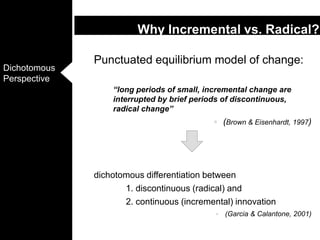
Punctuated equilibrium model of change: 	“long periods of small, incremental change are interrupted by brief periods of discontinuous, radical change” (Brown & Eisenhardt, 1997)dichotomous differentiation between 		1. discontinuous (radical) and 		2. continuous (incremental) innovation(Garcia & Calantone, 2001)Why Incremental vs. Radical?
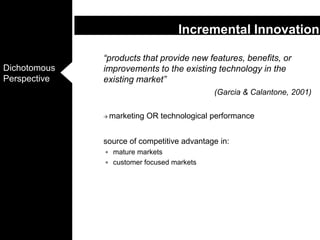
“products that provide new features, benefits, or improvements to the existing technology in the existing market” (Garcia & Calantone, 2001)-> marketing OR technological performance	source of competitive advantage in:mature marketscustomer focused marketsIncremental Innovation
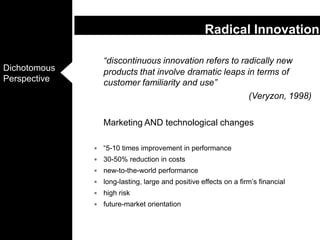
“discontinuous innovation refers to radically new products that involve dramatic leaps in terms of customer familiarity and use” (Veryzon, 1998)	Marketing AND technological changes“5-10 times improvement in performance30-50% reduction in costsnew-to-the-world performancelong-lasting, large and positive effects on a firm’s financialhigh riskfuture-market orientationRadical Innovation
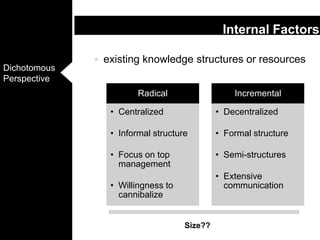
existing knowledge structures or resourcesInternal FactorsSize??
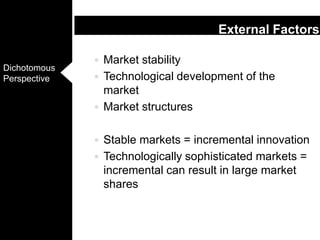
Market stabilityTechnological development of the marketMarket structuresStable markets = incremental innovationTechnologically sophisticated markets = incremental can result in large market sharesExternal Factors
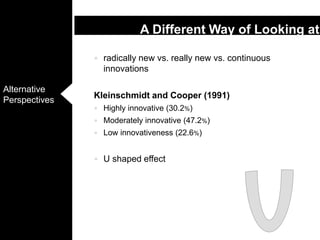
radically new vs. really new vs. continuous innovations Kleinschmidt and Cooper (1991)Highly innovative (30.2%) Moderately innovative (47.2%) Low innovativeness (22.6%)U shaped effectA Different Way of Looking at Innovation
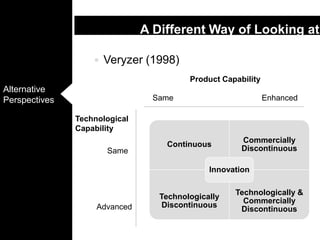
Veryzer (1998)A Different Way of Looking at InnovationProduct CapabilitySameEnhancedTechnological CapabilitySameAdvanced
Does it have to be white or black?Dichotomous vs. alternative view?Some Thoughts
Thank you for your input!
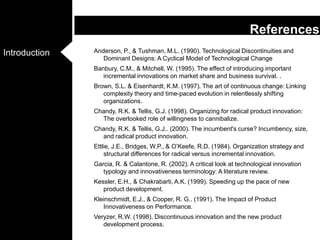
Anderson, P., & Tushman, M.L. (1990). Technological Discontinuities and Dominant Designs: A Cyclical Model of Technological ChangeBanbury, C.M., & Mitchell, W. (1995). The effect of introducing important incremental innovations on market share and business survival. . Brown, S.L. & Eisenhardt, K.M. (1997). The art of continuous change: Linking complexity theory and time-paced evolution in relentlessly shifting organizations. Chandy, R.K. & Tellis, G.J. (1998). Organizing for radical product innovation: The overlooked role of willingness to cannibalize. Chandy, R.K. & Tellis, G.J.. (2000). The incumbent's curse? Incumbency, size, and radical product innovation. Ettlie, J.E., Bridges, W.P., & O’Keefe, R.D. (1984). Organization strategy and structural differences for radical versus incremental innovation. Garcia, R. & Calantone, R. (2002). A critical look at technological innovation typology and innovativeness terminology: A literature review. Kessler, E.H., & Chakrabarti, A.K. (1999). Speeding up the pace of new product development. Kleinschmidt, E.J., & Cooper, R. G.. (1991). The Impact of Product Innovativeness on Performance. Veryzer, R.W. (1998). Discontinuous innovation and the new product development process. References

How to Innovate? Giant leaps or small steps?

  • 1.
    Small Steps orGiant Leaps?
  • 2.
    Our goal isto offer an overview of the extant literature … … while trying to investigate under what conditions a radical or incremental innovation strategy is more suitable.Introduction
  • 3.
    Garcia, R. &Calantone, R. (2002). A critical look at technological innovation typology and innovativeness terminology: A literature review. Choice of Literature
  • 4.
    Banbury, C.M., &Mitchell, W. (1995). The effect of introducing important incremental innovations on market share and business survival. Brown, S.L. & Eisenhardt, K.M. (1997). The art of continuous change: Linking complexity theory and time-paced evolution in relentlessly shifting organizations. Choice of Literature
  • 5.
    Chandy, R.K. &Tellis, G.J. (1998). Organizing for radical product innovation: The overlooked role of willingness to cannibalize. Chandy, R.K. & Tellis, G.J.. (2000). The incumbent's curse? Incumbency, size, and radical product innovationVeryzer, R.W. (1998). Discontinuous innovation and the new product development process. Choice of Literature
  • 6.
    Kleinschmidt, E.J., &Cooper, R. G.. (1991). The Impact of Product Innovativeness on Performance. Choice of Literature
  • 7.
    Punctuated equilibrium modelof change: “long periods of small, incremental change are interrupted by brief periods of discontinuous, radical change” (Brown & Eisenhardt, 1997)dichotomous differentiation between 1. discontinuous (radical) and 2. continuous (incremental) innovation(Garcia & Calantone, 2001)Why Incremental vs. Radical?
  • 8.
    “products that providenew features, benefits, or improvements to the existing technology in the existing market” (Garcia & Calantone, 2001)-> marketing OR technological performance source of competitive advantage in:mature marketscustomer focused marketsIncremental Innovation
  • 9.
    “discontinuous innovation refersto radically new products that involve dramatic leaps in terms of customer familiarity and use” (Veryzon, 1998) Marketing AND technological changes“5-10 times improvement in performance30-50% reduction in costsnew-to-the-world performancelong-lasting, large and positive effects on a firm’s financialhigh riskfuture-market orientationRadical Innovation
  • 10.
    existing knowledge structuresor resourcesInternal FactorsSize??
  • 11.
    Market stabilityTechnological developmentof the marketMarket structuresStable markets = incremental innovationTechnologically sophisticated markets = incremental can result in large market sharesExternal Factors
  • 12.
    radically new vs.really new vs. continuous innovations Kleinschmidt and Cooper (1991)Highly innovative (30.2%) Moderately innovative (47.2%) Low innovativeness (22.6%)U shaped effectA Different Way of Looking at Innovation
  • 13.
    Veryzer (1998)A DifferentWay of Looking at InnovationProduct CapabilitySameEnhancedTechnological CapabilitySameAdvanced
  • 14.
    Does it haveto be white or black?Dichotomous vs. alternative view?Some Thoughts
  • 15.
    Thank you foryour input!
  • 16.
    Anderson, P., &Tushman, M.L. (1990). Technological Discontinuities and Dominant Designs: A Cyclical Model of Technological ChangeBanbury, C.M., & Mitchell, W. (1995). The effect of introducing important incremental innovations on market share and business survival. . Brown, S.L. & Eisenhardt, K.M. (1997). The art of continuous change: Linking complexity theory and time-paced evolution in relentlessly shifting organizations. Chandy, R.K. & Tellis, G.J. (1998). Organizing for radical product innovation: The overlooked role of willingness to cannibalize. Chandy, R.K. & Tellis, G.J.. (2000). The incumbent's curse? Incumbency, size, and radical product innovation. Ettlie, J.E., Bridges, W.P., & O’Keefe, R.D. (1984). Organization strategy and structural differences for radical versus incremental innovation. Garcia, R. & Calantone, R. (2002). A critical look at technological innovation typology and innovativeness terminology: A literature review. Kessler, E.H., & Chakrabarti, A.K. (1999). Speeding up the pace of new product development. Kleinschmidt, E.J., & Cooper, R. G.. (1991). The Impact of Product Innovativeness on Performance. Veryzer, R.W. (1998). Discontinuous innovation and the new product development process. References