FAST
CHANGING
FASHION
ELITE
CLASS
BRAND
ZARA
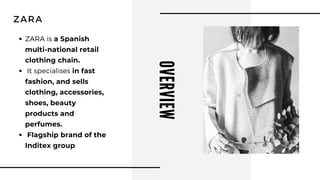
ZARA is a Spanish
multi-national retail
clothing chain.
It specialises in fast
fashion, and sells
clothing, accessories,
shoes, beauty
products and
perfumes.
Flagship brand of the
Inditex group
OVERVIEW
ZARA
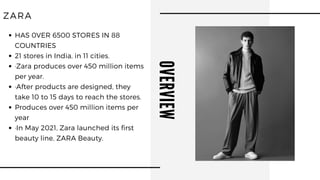
HAS 0VER 6500 STORES IN 88
COUNTRIES
21 stores in India, in 11 cities.
·Zara produces over 450 million items
per year.
·After products are designed, they
take 10 to 15 days to reach the stores.
Produces over 450 million items per
year
·In May 2021, Zara launched its first
beauty line, ZARA Beauty.
OVERVIEW
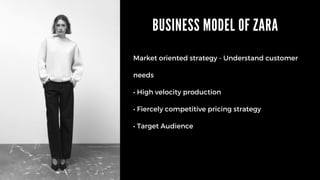
BUSINESS MODEL OF ZARA
Market oriented strategy - Understand customer
needs
• High velocity production
• Fiercely competitive pricing strategy
• Target Audience
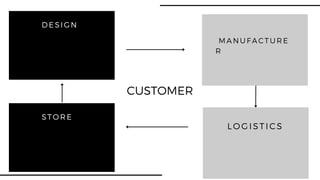
S T ORE
DE S I G N
MANUFACTURE
R
LOGISTICS
S T OR E
CUSTOMER
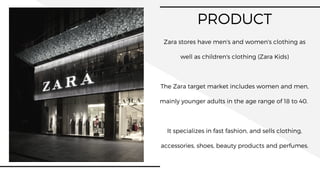
PRODUCT
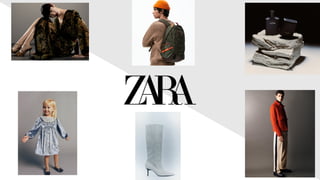
Zara stores have men's and women's clothing as
well as children's clothing (Zara Kids)
The Zara target market includes women and men,
mainly younger adults in the age range of 18 to 40.
It specializes in fast fashion, and sells clothing,
accessories, shoes, beauty products and perfumes.
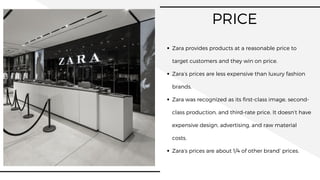
PRICE
Zara provides products at a reasonable price to
target customers and they win on price.
Zara’s prices are less expensive than luxury fashion
brands.
Zara was recognized as its first-class image, second-
class production, and third-rate price. It doesn’t have
expensive design, advertising, and raw material
costs.
Zara’s prices are about 1/4 of other brand’ prices.
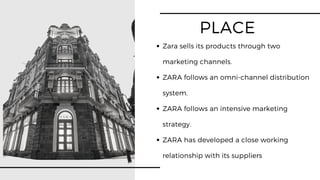
PLACE
Zara sells its products through two
marketing channels.
ZARA follows an omni-channel distribution
system.
ZARA follows an intensive marketing
strategy.
ZARA has developed a close working
relationship with its suppliers
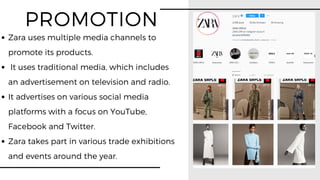
PROMOTION
Zara uses multiple media channels to
promote its products.
It uses traditional media, which includes
an advertisement on television and radio.
It advertises on various social media
platforms with a focus on YouTube,
Facebook and Twitter.
Zara takes part in various trade exhibitions
and events around the year.
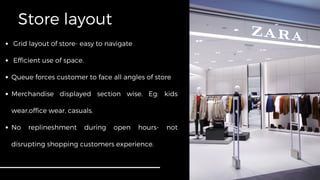
Store layout
Grid layout of store- easy to navigate
Efficient use of space.
Queue forces customer to face all angles of store
Merchandise displayed section wise. Eg: kids
wear,office wear, casuals.
No replineshment during open hours- not
disrupting shopping customers experience.
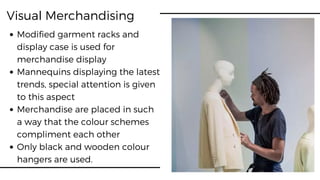
Visual Merchandising
Modified garment racks and
display case is used for
merchandise display
Mannequins displaying the latest
trends, special attention is given
to this aspect
Merchandise are placed in such
a way that the colour schemes
compliment each other
Only black and wooden colour
hangers are used.
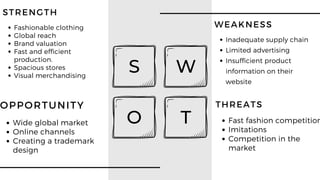
STRENGTH
Fashionable clothing
Global reach
Brand valuation
Fast and efficient
production.
Spacious stores
Visual merchandising
OPPORTUNITY
Wide global market
Online channels
Creating a trademark
design
WEAKNESS
Inadequate supply chain
Limited advertising
Insufficient product
information on their
website
THREATS
Fast fashion competition
Imitations
Competition in the
market
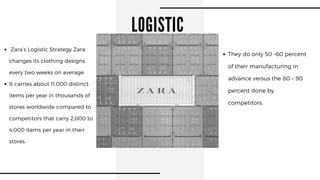
LOGISTIC
Zara’s Logistic Strategy Zara
changes its clothing designs
every two weeks on average.
It carries about 11,000 distinct
items per year in thousands of
stores worldwide compared to
competitors that carry 2,000 to
4,000 items per year in their
stores.
They do only 50 –60 percent
of their manufacturing in
advance versus the 80 – 90
percent done by
competitors.
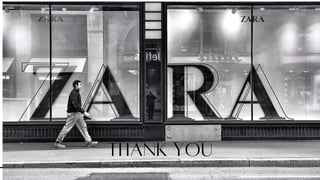
THANK YOU

PPT on Zara

  • 1.
  • 2.
    ZARA ZARA is aSpanish multi-national retail clothing chain. It specialises in fast fashion, and sells clothing, accessories, shoes, beauty products and perfumes. Flagship brand of the Inditex group OVERVIEW
  • 3.
    ZARA HAS 0VER 6500STORES IN 88 COUNTRIES 21 stores in India, in 11 cities. ·Zara produces over 450 million items per year. ·After products are designed, they take 10 to 15 days to reach the stores. Produces over 450 million items per year ·In May 2021, Zara launched its first beauty line, ZARA Beauty. OVERVIEW
  • 4.
    BUSINESS MODEL OFZARA Market oriented strategy - Understand customer needs • High velocity production • Fiercely competitive pricing strategy • Target Audience
  • 5.
    S T ORE DES I G N MANUFACTURE R LOGISTICS S T OR E CUSTOMER
  • 6.
    PRODUCT Zara stores havemen's and women's clothing as well as children's clothing (Zara Kids) The Zara target market includes women and men, mainly younger adults in the age range of 18 to 40. It specializes in fast fashion, and sells clothing, accessories, shoes, beauty products and perfumes.
  • 8.
    PRICE Zara provides productsat a reasonable price to target customers and they win on price. Zara’s prices are less expensive than luxury fashion brands. Zara was recognized as its first-class image, second- class production, and third-rate price. It doesn’t have expensive design, advertising, and raw material costs. Zara’s prices are about 1/4 of other brand’ prices.
  • 9.
    PLACE Zara sells itsproducts through two marketing channels. ZARA follows an omni-channel distribution system. ZARA follows an intensive marketing strategy. ZARA has developed a close working relationship with its suppliers
  • 10.
    PROMOTION Zara uses multiplemedia channels to promote its products. It uses traditional media, which includes an advertisement on television and radio. It advertises on various social media platforms with a focus on YouTube, Facebook and Twitter. Zara takes part in various trade exhibitions and events around the year.
  • 11.
    Store layout Grid layoutof store- easy to navigate Efficient use of space. Queue forces customer to face all angles of store Merchandise displayed section wise. Eg: kids wear,office wear, casuals. No replineshment during open hours- not disrupting shopping customers experience.
  • 13.
    Visual Merchandising Modified garmentracks and display case is used for merchandise display Mannequins displaying the latest trends, special attention is given to this aspect Merchandise are placed in such a way that the colour schemes compliment each other Only black and wooden colour hangers are used.
  • 14.
    STRENGTH Fashionable clothing Global reach Brandvaluation Fast and efficient production. Spacious stores Visual merchandising OPPORTUNITY Wide global market Online channels Creating a trademark design WEAKNESS Inadequate supply chain Limited advertising Insufficient product information on their website THREATS Fast fashion competition Imitations Competition in the market
  • 15.
    LOGISTIC Zara’s Logistic StrategyZara changes its clothing designs every two weeks on average. It carries about 11,000 distinct items per year in thousands of stores worldwide compared to competitors that carry 2,000 to 4,000 items per year in their stores. They do only 50 –60 percent of their manufacturing in advance versus the 80 – 90 percent done by competitors.
  • 16.