Knowledge Modelling in Various
applications in Traffic Systems
Presented by : Yomna Hassan
Submitted to : Dr. Hesham Hassan
 Techniques of Knowledge Modelling
 Difference in knowledge modelling techniques
 Generic Tasks in Traffic Systems
 CommonKADS in Traffic Systems
 MAS CommonKADS
 DVO CommonKADS model
 Conclusions
Contents
 Generic Tasks
 CommonKADS
Techniques of Knowledge Modelling
 Generic Tasks focus mainly on knowledge part of the
system
 CommonKADS includes the organizational structure
of the whole system, tasks and communications, and
knowledge model.
 CommonKADS is more adaptive to existence of
intelligence within the system structure
Difference in knowledge modelling
techniques
CommonKADS in Traffic
Systems
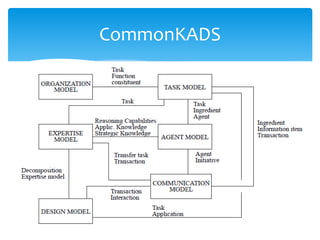
CommonKADS
organization model
task model
agent model
knowledge-
intensive
task
communication
model
knowledge
model
design
model
requirements
specification
for interaction functions
requirements
specification
for reasoning functions
task selected in feasibility study
and further detailed in
Task and Agent Models
Knowledge Categories
Generic Traffic System
 In this modelling context, which reveals an activity based on experiences (i.e. cases) reusing
 locate the incident reusing activity into the global control activity.
 identify relevant descriptors of the incident case model.
 identify discriminant index to organize the case base.
 define a similarity metric for matching.
 register knowledge necessary to adapt solution part of the selected case, in order to
solve the current problem.
 Elicitation sessions of the expertise, in the control room, are based on different methods:
document analysis, interviews, repertory grids, traffic manager's activities analysis and
results of the activity (problem reports).
 Each method presents an own goal and allows, generally, to obtain a particular type of
knowledge. Therefore, it is necessary to use these methods concurrently, one cancelling out
the drawbacks of others taken apart, benefiting the qualities of each one
Knowledge Elicitation
 From interviews with traffic management experts, we
have found that a large part of their knowledge is
episodic. That is, the expert solves a new problem by
relating the current network situation to his previous
experiences.
 These experiences are sometimes specific incidents,
with real dates and places, and sometimes general
classes of similar occasions.
Knowledge Elicitation (Cont’d)
Traffic system Domain architecture
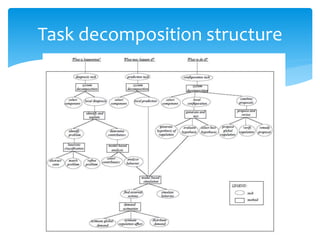
Task decomposition structure
primitive inferences of the
knowledge model
 Focus on human –computer not computer-computer
interactions
 A restricted form of dynamic task assignment can be
done
 Multi-partner transactions not dealt with naturally
 Therefore a new model: coordination model is
proposed
Disadvantages of CommonKADS in
Multi-agent systems
 MAS-CommonKADS extends the knowledge
engineering methodology CommonKADS with
techniques from object oriented and protocol
engineering methodologies.
MAS-CommonKADS
Mas commonkads
 Existence of dynamic traffic systems
 Crowd-sourcing dependent
Dynamic Virtual
Organization Creation for Traffic
Systems
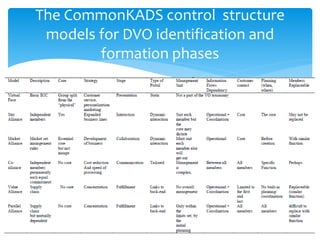
The CommonKADS control structure
models for DVO identification and
formation phases
1. Yassa, Morcous. "Utilizing CommonKADS as Problem-Solving and Decision-Making for
Supporting Dynamic Virtual Organization Creation." IAES International Journal of Artificial
Intelligence (IJ-AI) 3.1 (2014).
2. Davidsson, Paul. "Intelligent Transport and Energy Systems Using Agent
Technology." Twelfth Scandinavian Conference on Artificial Intelligence: SCAI 2013. Vol. 257.
IOS Press, 2013.
3. Gascuena, Jose M., and Antonio Fernández-Caballero. "On the use of agent technology in
intelligent, multisensory and distributed surveillance." Knowledge Engineering Review 26.2
(2011): 191-208.
4. Abreu, Bruno, et al. "Video-based multi-agent traffic surveillance system."Intelligent
Vehicles Symposium, 2000. IV 2000. Proceedings of the IEEE. IEEE, 2000.
5. Caulier, Patrice, and Bernard Houriez. "A case-based reasoning approach in network traffic
control." Systems, Man and Cybernetics, 1995. Intelligent Systems for the 21st Century., IEEE
International Conference on. Vol. 2. IEEE, 1995.
6. Dieng, Rose, et al. "Building of a corporate memory for traffic-accident analysis." AI
magazine 19.4 (1998): 81.
7. Molina, Martin, J. O. S. E. F. A. HERN Á, and JOS É. CUENA. "A structure of problem-solving
methods for real-time decision support in traffic control."International Journal of Human-
Computer Studies 49.4 (1998): 577-600.
8. Iglesias, Carlos A., et al. "A methodological proposal for multiagent systems development
extending CommonKADS." Proceedings of the 10th Banff knowledge acquisition for
knowledge-based systems workshop. Vol. 1. 1996.
References

Knowledge Modeling in Various applications in Traffic Systems

  • 1.
    Knowledge Modelling inVarious applications in Traffic Systems Presented by : Yomna Hassan Submitted to : Dr. Hesham Hassan
  • 2.
     Techniques ofKnowledge Modelling  Difference in knowledge modelling techniques  Generic Tasks in Traffic Systems  CommonKADS in Traffic Systems  MAS CommonKADS  DVO CommonKADS model  Conclusions Contents
  • 3.
     Generic Tasks CommonKADS Techniques of Knowledge Modelling
  • 4.
     Generic Tasksfocus mainly on knowledge part of the system  CommonKADS includes the organizational structure of the whole system, tasks and communications, and knowledge model.  CommonKADS is more adaptive to existence of intelligence within the system structure Difference in knowledge modelling techniques
  • 5.
  • 6.
    CommonKADS organization model task model agentmodel knowledge- intensive task communication model knowledge model design model requirements specification for interaction functions requirements specification for reasoning functions task selected in feasibility study and further detailed in Task and Agent Models
  • 7.
  • 8.
  • 9.
     In thismodelling context, which reveals an activity based on experiences (i.e. cases) reusing  locate the incident reusing activity into the global control activity.  identify relevant descriptors of the incident case model.  identify discriminant index to organize the case base.  define a similarity metric for matching.  register knowledge necessary to adapt solution part of the selected case, in order to solve the current problem.  Elicitation sessions of the expertise, in the control room, are based on different methods: document analysis, interviews, repertory grids, traffic manager's activities analysis and results of the activity (problem reports).  Each method presents an own goal and allows, generally, to obtain a particular type of knowledge. Therefore, it is necessary to use these methods concurrently, one cancelling out the drawbacks of others taken apart, benefiting the qualities of each one Knowledge Elicitation
  • 10.
     From interviewswith traffic management experts, we have found that a large part of their knowledge is episodic. That is, the expert solves a new problem by relating the current network situation to his previous experiences.  These experiences are sometimes specific incidents, with real dates and places, and sometimes general classes of similar occasions. Knowledge Elicitation (Cont’d)
  • 11.
  • 12.
  • 13.
    primitive inferences ofthe knowledge model
  • 14.
     Focus onhuman –computer not computer-computer interactions  A restricted form of dynamic task assignment can be done  Multi-partner transactions not dealt with naturally  Therefore a new model: coordination model is proposed Disadvantages of CommonKADS in Multi-agent systems
  • 15.
     MAS-CommonKADS extendsthe knowledge engineering methodology CommonKADS with techniques from object oriented and protocol engineering methodologies. MAS-CommonKADS
  • 18.
  • 19.
     Existence ofdynamic traffic systems  Crowd-sourcing dependent Dynamic Virtual Organization Creation for Traffic Systems
  • 20.
    The CommonKADS controlstructure models for DVO identification and formation phases
  • 21.
    1. Yassa, Morcous."Utilizing CommonKADS as Problem-Solving and Decision-Making for Supporting Dynamic Virtual Organization Creation." IAES International Journal of Artificial Intelligence (IJ-AI) 3.1 (2014). 2. Davidsson, Paul. "Intelligent Transport and Energy Systems Using Agent Technology." Twelfth Scandinavian Conference on Artificial Intelligence: SCAI 2013. Vol. 257. IOS Press, 2013. 3. Gascuena, Jose M., and Antonio Fernández-Caballero. "On the use of agent technology in intelligent, multisensory and distributed surveillance." Knowledge Engineering Review 26.2 (2011): 191-208. 4. Abreu, Bruno, et al. "Video-based multi-agent traffic surveillance system."Intelligent Vehicles Symposium, 2000. IV 2000. Proceedings of the IEEE. IEEE, 2000. 5. Caulier, Patrice, and Bernard Houriez. "A case-based reasoning approach in network traffic control." Systems, Man and Cybernetics, 1995. Intelligent Systems for the 21st Century., IEEE International Conference on. Vol. 2. IEEE, 1995. 6. Dieng, Rose, et al. "Building of a corporate memory for traffic-accident analysis." AI magazine 19.4 (1998): 81. 7. Molina, Martin, J. O. S. E. F. A. HERN Á, and JOS É. CUENA. "A structure of problem-solving methods for real-time decision support in traffic control."International Journal of Human- Computer Studies 49.4 (1998): 577-600. 8. Iglesias, Carlos A., et al. "A methodological proposal for multiagent systems development extending CommonKADS." Proceedings of the 10th Banff knowledge acquisition for knowledge-based systems workshop. Vol. 1. 1996. References